
विश्वशांती महाकाली मंदिर
ओसरा, ता./जि. भरुच
Vishwashanti Mahakali Temple
Osara, Tal./Dist. Bharuch
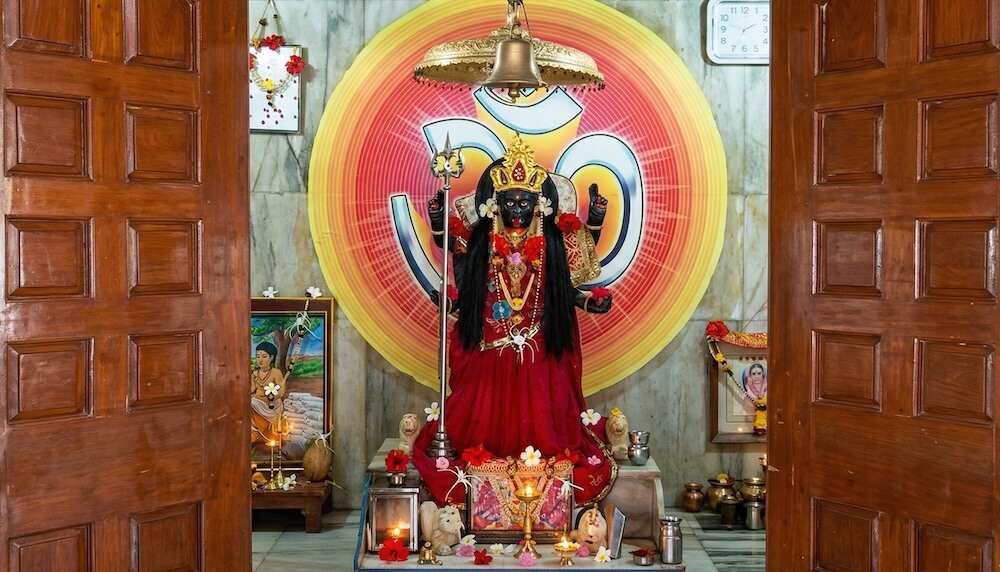 In Osara of Bharuch taluka stands a temple where the opportunity for divine ‘darshan’ (holy viewing) is granted only on Tuesdays, Guru Purnima and during the sacred period of Navratri—and then too only from sunrise to sunset. This sacred shrine is known as the Vishwashanti Mahakali Temple. Devotees hold an unshakeable conviction that on these specific days, Goddess Kalika Mata of Pavagadh manifests herself here in person. The original seat of the Goddess is situated in the basement of the temple, accessible to the faithful only on Jyeshtha Shuddha Dashami and Guru Purnima.
 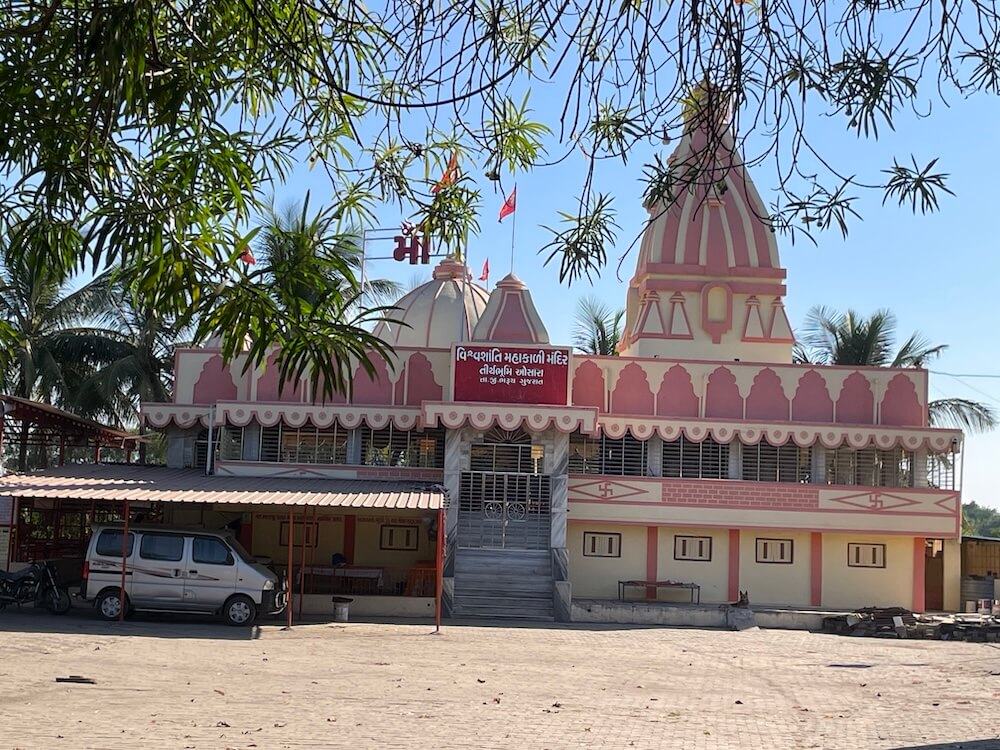 A distinctive feature of this temple is that no donation of any kind is accepted here in the form of money.
According to Pauranik traditions, Kalika is a form of Mahakali Devi. In the ‘Kalika Purana’ it is said that Kalika Devi was born from the womb of Mahamaya. As per references in the Mahabharat, Kalika is the daughter of Daksha Prajapati and the wife of Kashyap Rishi. In the ‘Devi Mahatmya’ it is stated that the primal nature, Adimaya Bhagwati Mahalakshmi, created two forms—Mahakali from the ‘tamoguna’ (the quality of darkness/inertia) and Mahasaraswati from ‘sattvaguna’ (the quality of purity/light). Thereafter Mahalakshmi instructed Mahakali and Mahasaraswati each to produce, in accordance with their own qualities, one pair of male and female. From this, the universe and the world were created. 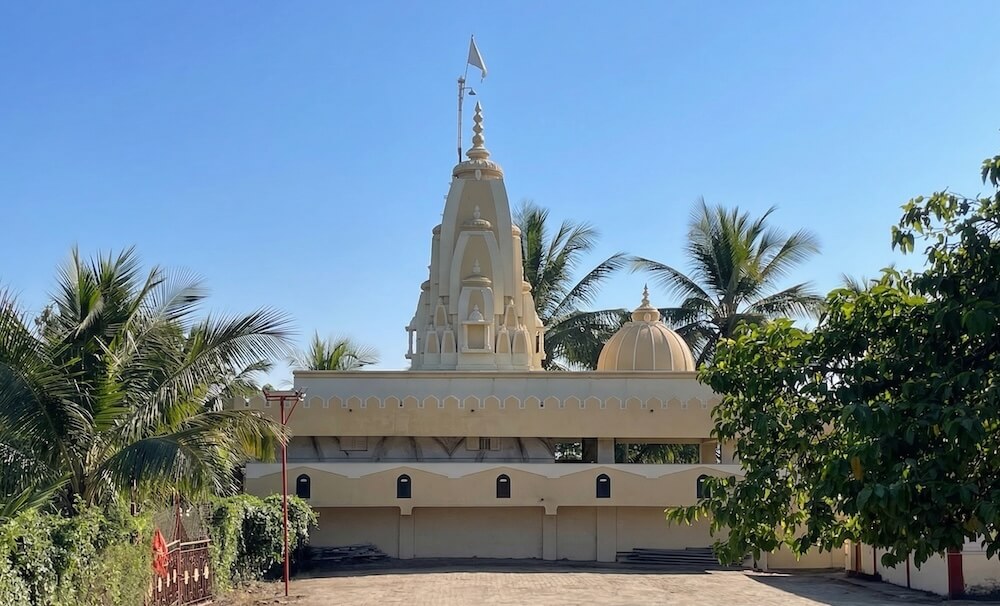 Thus, it is believed that Mahakali is not only the destroyer but also Vishwajanani (Mother of the Universe) and the nurturer of all existence.
The history of this temple is entwined with the life of Mansinghbhai. He was a devoted follower of Kalika Mata of Pavagadh. About 57 kilometres from Dabhoi in Vadodara district stands the ancient temple of Mahakali at Pavagadh. It is regarded as one of the Devi’s 51 Shaktipithas. A legend is told of Pavagadh that during the war between Shri Ram and Ravan, as Hanuman flew carrying the Dronagiri mountain, a fragment of that mountain broke off and fell to the earth. This very fragment is said to be Pavagadh. 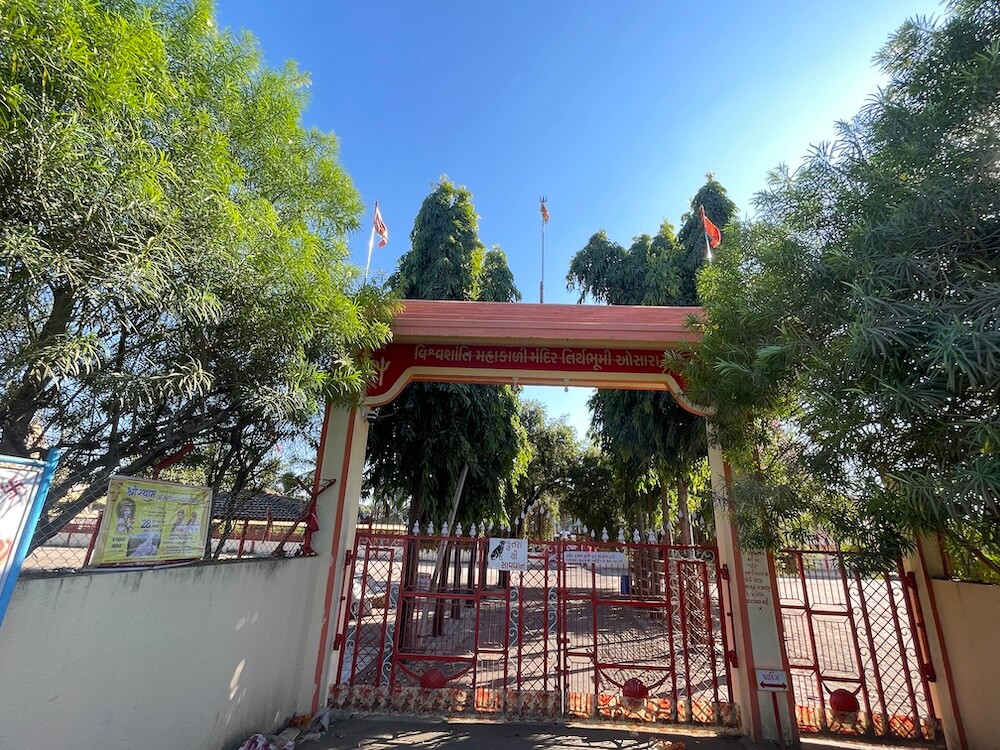 Mansinghbhai would regularly go on foot for darshan of Kalika Mata at that temple. Pleased with his devotion, the Devi one day appeared to him in a dream and said, ‘I myself shall come to Osara.’ Accordingly, in 1976, on the day of Jyeshtha Shuddha Dashami, at 7.30 in the morning, the Devi manifested here. It is believed she has resided here ever since.
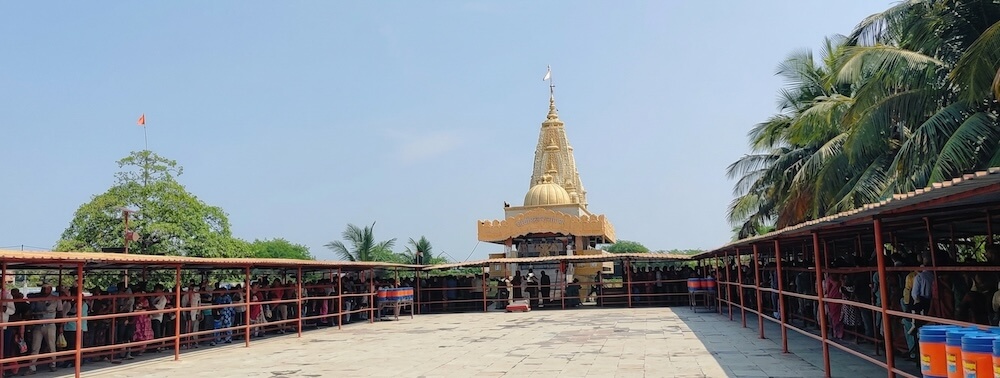
The temple is situated within an expansive courtyard one kilometre from Osara village. In the tall boundary wall of the compound, there is a grand entrance gateway. Trees and gardens lend this precinct a pleasant beauty. In front of the temple, to the left, there is a magnificent railed pathway for orderly management of devotees’ queues and also a roofed mandap. The two-storey temple itself is a harmonious blend of ‘Nagara’ architecture and modern construction. Its grand structure consists of an ‘praveshmandap’ (entrance porch),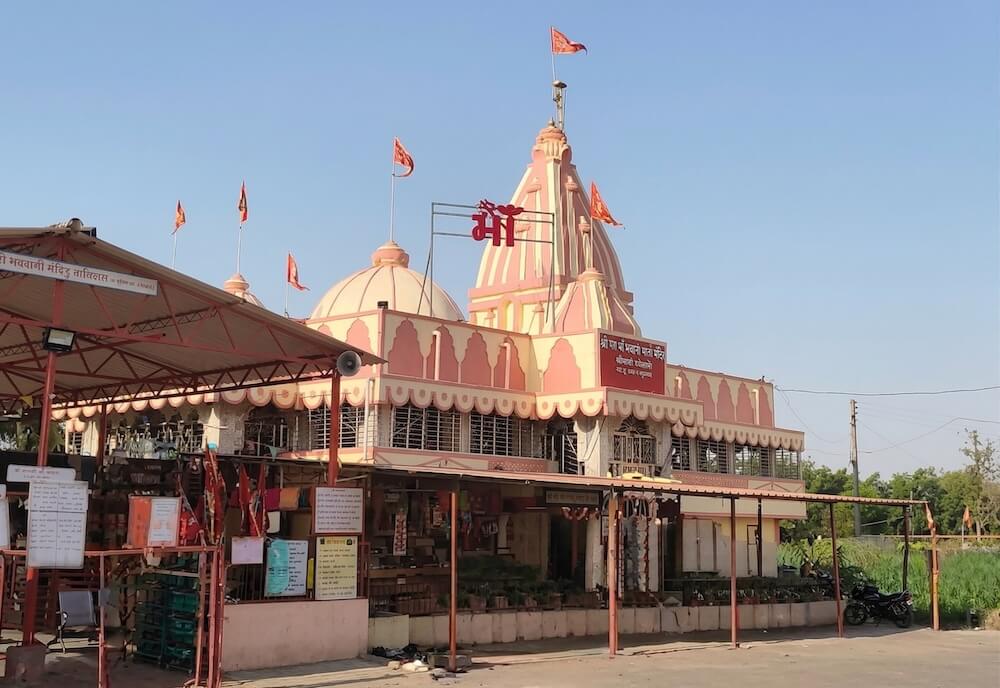 ‘sabhamandap’ (assembly hall) and ‘garbhagriha’ (sanctum sanctorum). Small spires adorn the entrance porches while a large domed ‘shikhara’ crowns the assembly hall. The ‘sabhamandap’ is spacious and semi-open, featuring a ‘pradakshina’ (circumambulation) path around the sanctum. Near the entrance to the garbhagriha is the seat of Bhairav. Above the garbhagriha entrance, in the centre of the upper portion, is the place of Ganesh. Inside the sanctum, a beautiful idol of the Goddess, carved from black marble, is enshrined. Depicted with her tongue extended and a silver crown upon her head, the Goddess has flowing tresses and holds various ‘ayudhas’ (weapons) in her hands and beneath her feet lies a demon. To the left of the idol stands a trishul.
  With the purpose that peace may prevail in the world and that asuri shaktis (demonic forces) may be destroyed, an akhand jyot (eternal flame) has been kept alight in this temple since 1986.
In the basement of the temple lies the Devi’s original sacred seat. Here there is also the Gurugadi. Within the temple precincts stands a shrine to Baba Kaliveer, who is considered the brother of the Goddess. 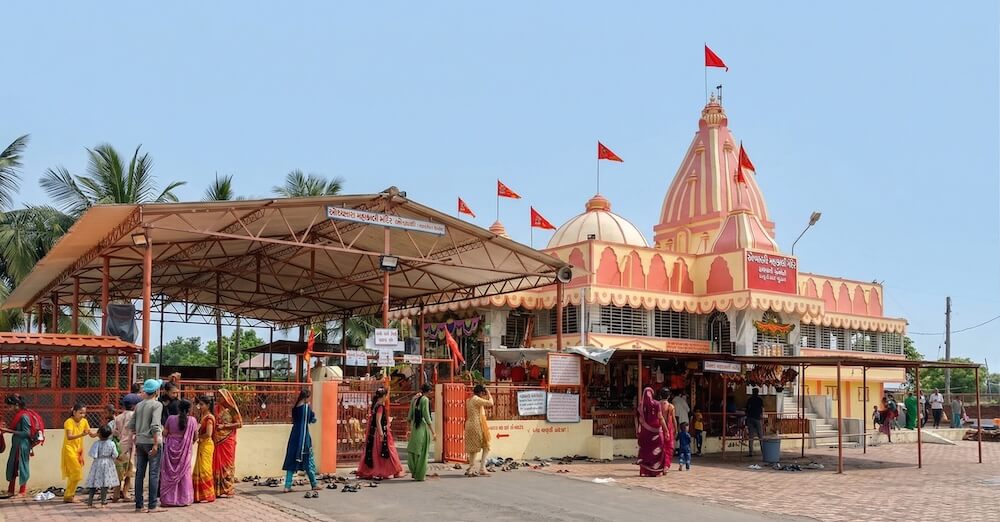 This shrine houses a marble idol of Baba Kaliveer and remains open from 6:00 am to 8:00 pm on the last Sunday of every month. The memorial shrines, or ‘samadhis’, of Mansinghbhai and Shantaba are also located within the temple complex.
The Vishwashanti Temple is open every Tuesday from 6.30 a.m. to 7.30 p.m. On Tuesdays, aarti is performed here in the morning and in the evening. Here in the morning and evening, there is also recitation of the ‘Kumkum Bawani’ composed by Mansinghbhai. On Guru Purnima and Jyeshtha Shuddha Dashami, ‘darshan’ is available from 6.30 am to 3.15 pm.
Mansinghbhai’s descendant Kaushikbhai bears responsibility for the management of this temple. Believing this site to be as significant as Pavagadh and that the resident Goddess fulfils all heartfelt desires, thousands of devotees from across Gujarat stand in long queues every Tuesday to bow before her. Many observe a fast on this day and some undertake a special ‘vrat’ (vow) spanning five or eleven Tuesdays. During the Chaitri and Sharadiya Navratri festivals, the temple remains open for all nine days. On the day of Ashtami during Navratri, various religious programmes and ‘Shanti Havan’ (peace rituals) are conducted. Many pilgrims observe a fast from Shravan Shuddha Chaturdashi to Ashwin Shuddha Ashtami. On Tuesdays, the path to the temple is lined with numerous stalls selling worship materials and the road outside the main gate teems with vendors offering flowers and ‘prasad’ (consecrated offerings).
Main Features :
- 15 km away from Bharuch
- ST (State Transport) bus facility available from Bharuch
- Private vehicles can reach up to the temple parking
- Accommodation and breakfast facilities are available in the vicinity
- Contact: Temple Office, Mo. 6261451307
मंदिरे
Temples
मंदिर
-
कोटेश्वर महादेव मंदिर कदोद, ता. भरुच, जि. भरुच
अधिक माहितीKoteshwar Mahadev Temple Kadod, Tal. Bharuch, Dist. Bharuch
View Detailsकोटेश्वर महादेव मंदिर कडोद, ताल. भरूच, जिला. भरूच
विवरण देखें -
धर्मेश्वर महादेव मंदिर धर्मशाळा-झानोर, ता. भरुच, जि. भरुच
अधिक माहितीDharmeshwar Mahadev Temple Dharmashala-Jhanor, Tal. Bharuch, Dist. Bharuch
View Detailsधर्मेश्वर महादेव मंदिर धर्मशाला-झानोर, ताल. भरूच, जिला. भरूच
विवरण देखें -
साईबाबा मंदिर रामवाटिका सोसायटी, झाडेश्वर, ता./जि. भरुच
अधिक माहितीSai Baba Temple Ramvatika Society, Zadeshwar, Tal./Dist. Bharuch
View Detailsसाईं बाबा मंदिर रामवाटिका सोसायटी, जादेश्वर, ताल./जिला. भरूच
विवरण देखें