
कोटेश्वर महादेव मंदिर
कदोद, ता. भरुच, जि. भरुच
Koteshwar Mahadev Temple
Kadod, Tal. Bharuch, Dist. Bharuch
 The Koteshwar Mahadev Temple, situated upon the hallowed banks of the River Narmada at Kadod, remains a site of profound spiritual significance for thousands of devotees. Sanctified by the arduous eighteen-year penance of the demon king Banasur, this sacred ground possesses a singular spiritual anchorage that defines its unique identity. A major attraction of this pilgrimage centre is the grand fair held during the month of ‘Adhik Vaishakh’ (an intercalary month in the Hindu calendar). Furthermore, it serves as an essential resting place for the pilgrims undertaking the ‘Narmada Parikrama’ (the ritual circumambulation of the holy river).
The existence of this ancient temple at Kadod has been documented across several centuries.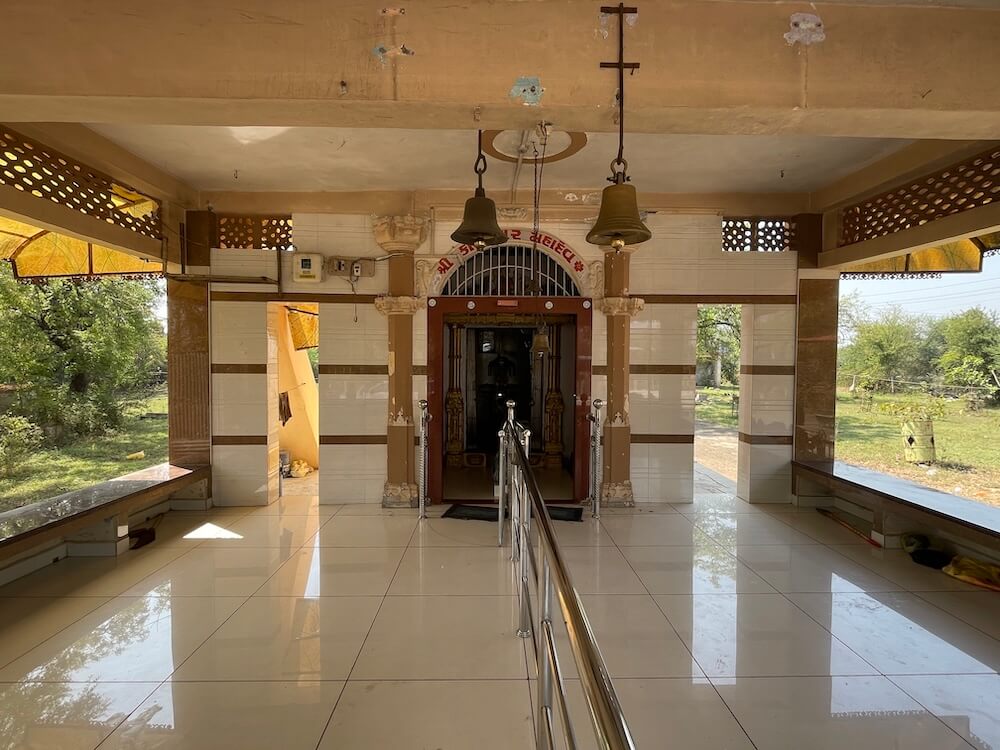 Various historical records mention that this region was situated along a prominent trade route of antiquity, during which time the temple functioned as a primary cultural hub for the surrounding areas. Throughout the medieval period, the shrine witnessed numerous political and social upheavals. Local lore recounts that in the fifteenth century, the armies of Mahmud Begada, the sixth Sultan of Gujarat, launched an assault upon the temple. It is said that whilst the foreign soldiers attempted to desecrate and shatter the sacred ‘Shivalinga’ (the iconic representation of Lord Shiva) with the strikes of their swords, their efforts were entirely futile.
Detailed descriptions regarding the spiritual majesty of various ‘Tirthas’ (pilgrimage sites) and ‘Shivalingas’ along the Narmada banks are found within the ‘Narmada Purana’ and the ‘Reva Khanda’ of the ‘Skanda Purana’. 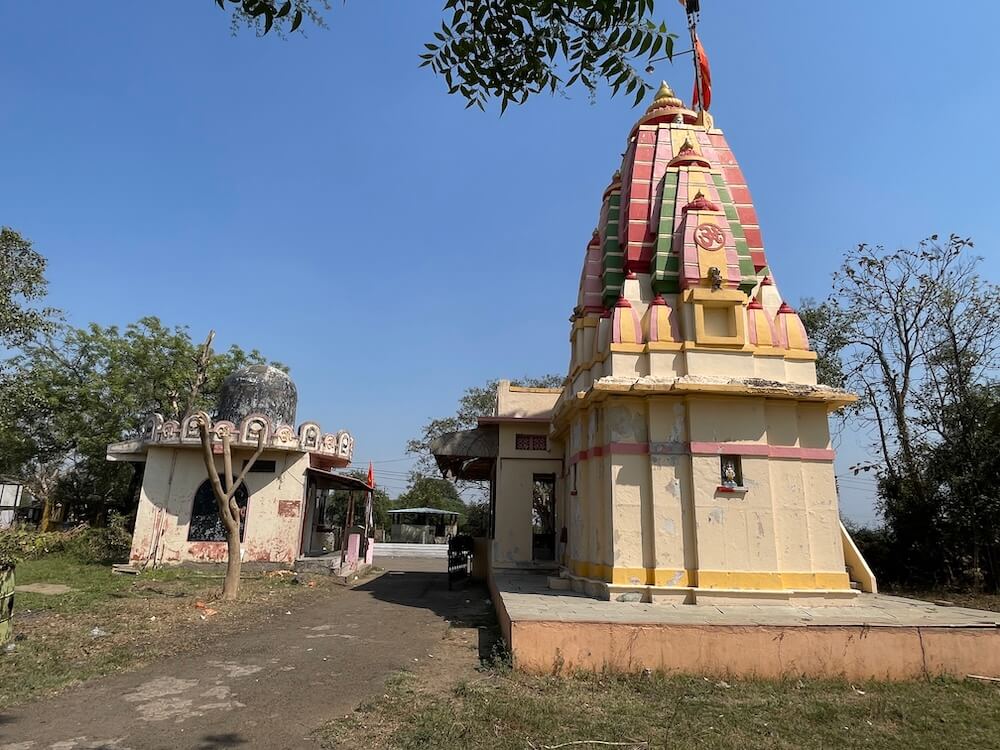 As the Narmada is also known by the name ‘Reva’, this particular section of the scriptures is titled the ‘Reva Khanda’. According to these sacred texts, the demon Banasur resided here and performed rigorous adoration of Lord Shiva for a full eighteen years. By the strength of this penance, he attained several divine ‘Siddhis’ (supernatural powers). To express his devotion, Banasur would fashion one hundred and twenty-five thousand ‘Shivalingas’ from clay every day and immerse them into the waters of the Narmada following his evening prayers. It is widely believed that it was this Banasur who installed the principal ‘Shivalinga’ at this site.
It is further believed that Lord Shiva assumed ‘Koti’ (crores) of forms at this location to protect his devotees, which led to the deity being addressed as ‘Koteshwar’. 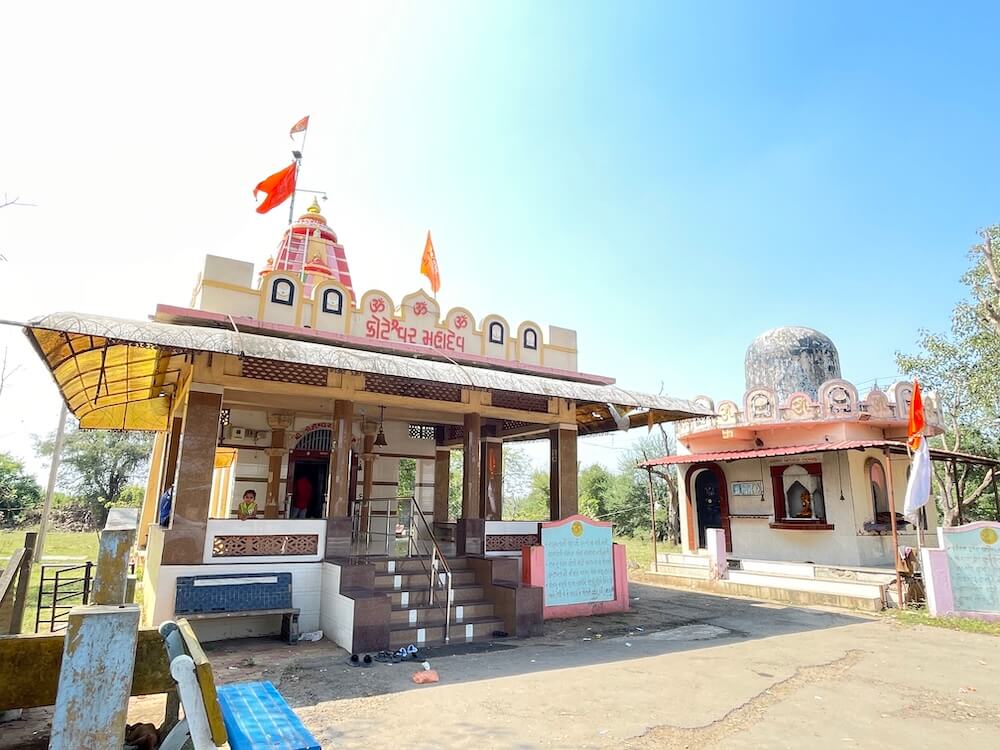 According to Hindu theology, the religious importance of this region is considered as sacred as that of Varanasi in Northern India. The primary ‘Shivalinga’ here is ‘Swayambhu’ (self-manifested). It is revered for fulfilling the heart’s desires of the faithful. In various ‘Puranas’, this holy site is referred to as a ‘Mokshadayaka’ (granter of salvation) destination.
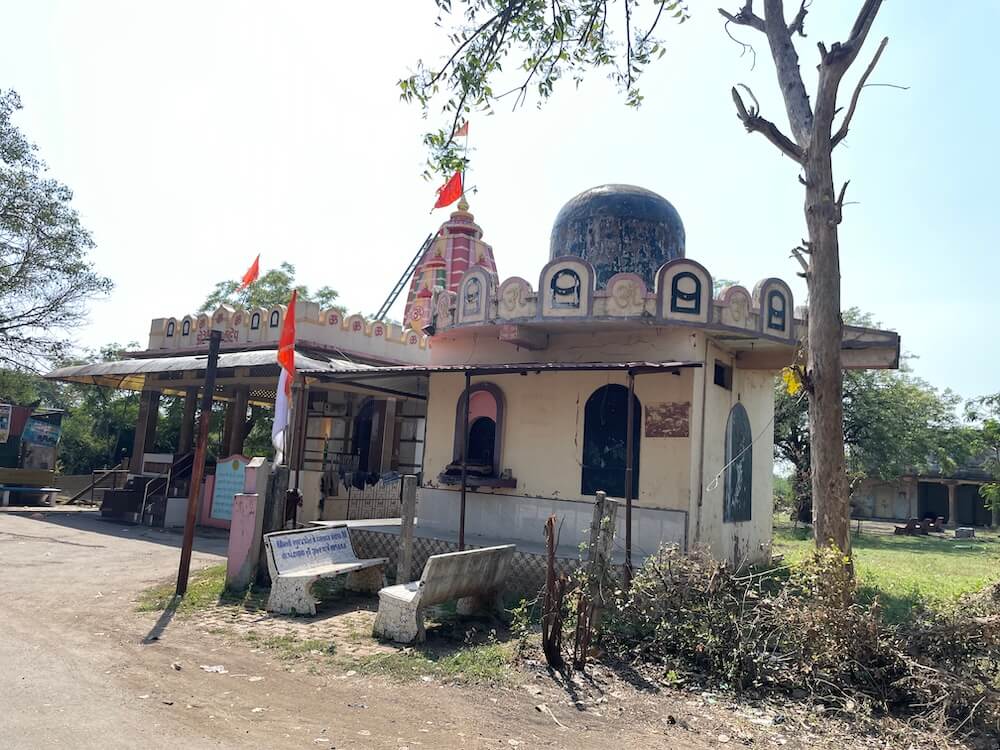
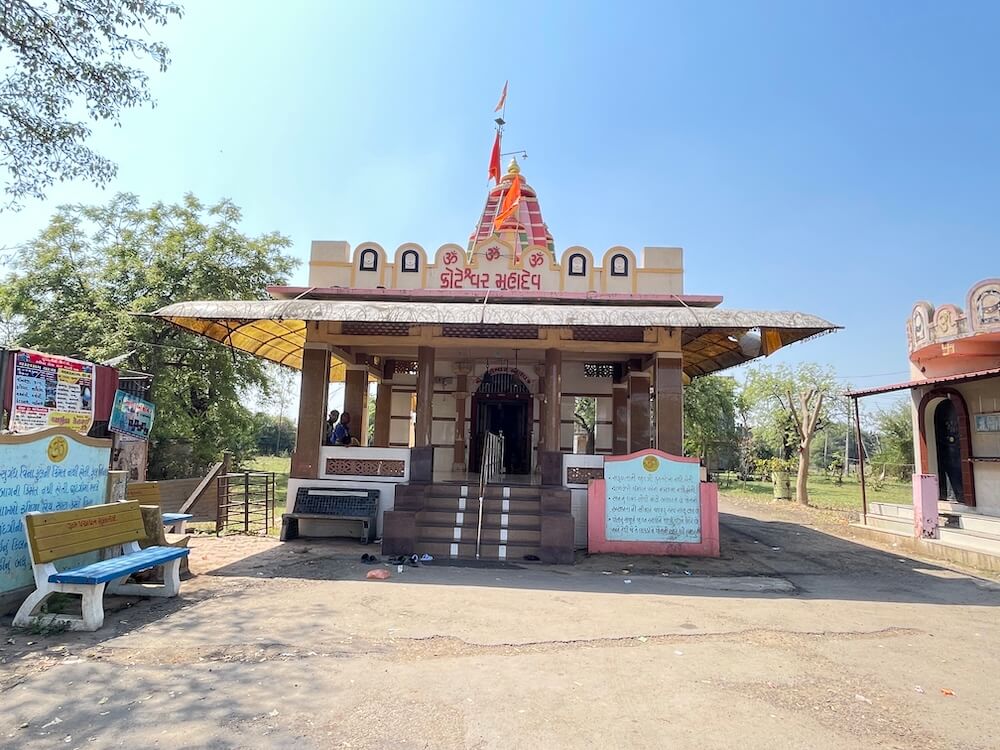
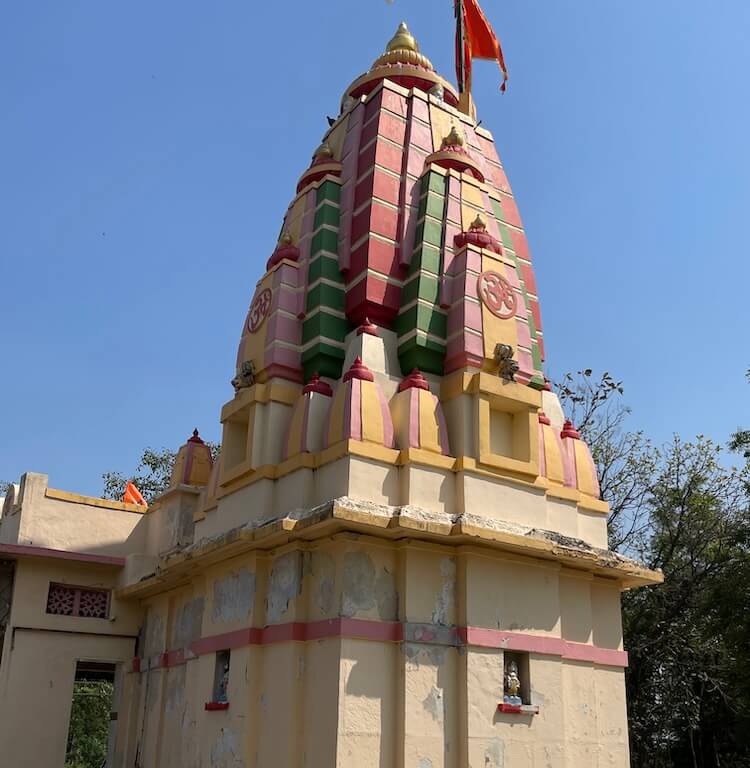
The temple is located at the outskirts of Kadod village, a mere three kilometres from the famous village of Shuklatirth and approximately one kilometre from the main channel of the River Narmada. Set apart from the main residential clusters along a tranquil road, the temple precincts are shaded by several ancient and spreading trees. The shrine, which was originally modest in size, 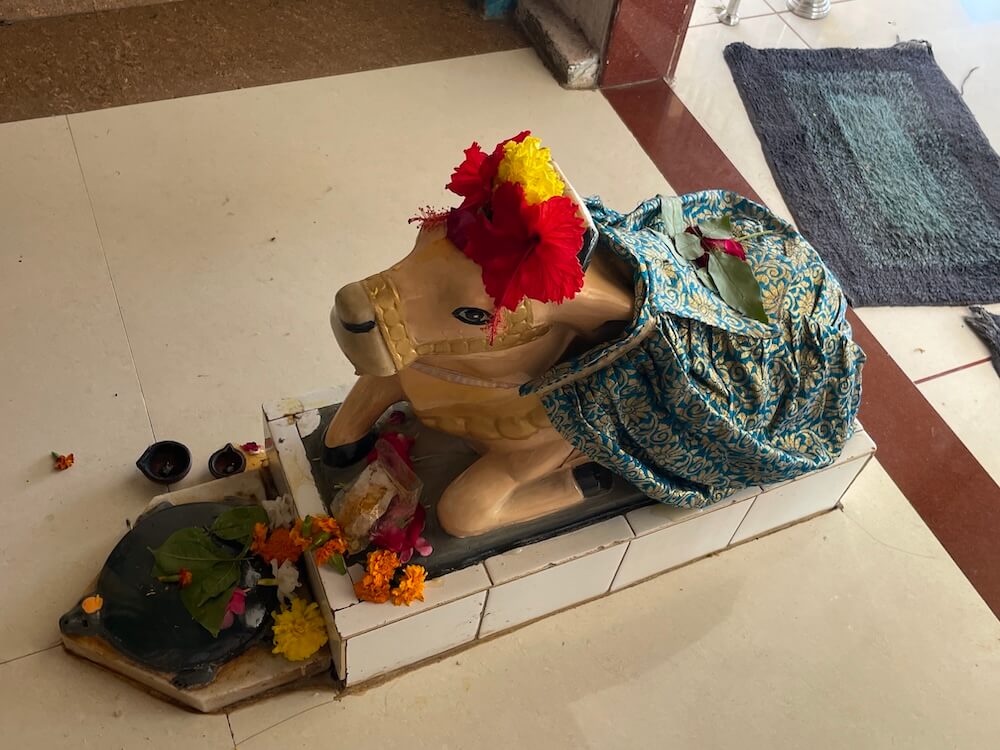 attained its current resplendent form following a restoration conducted some years ago.
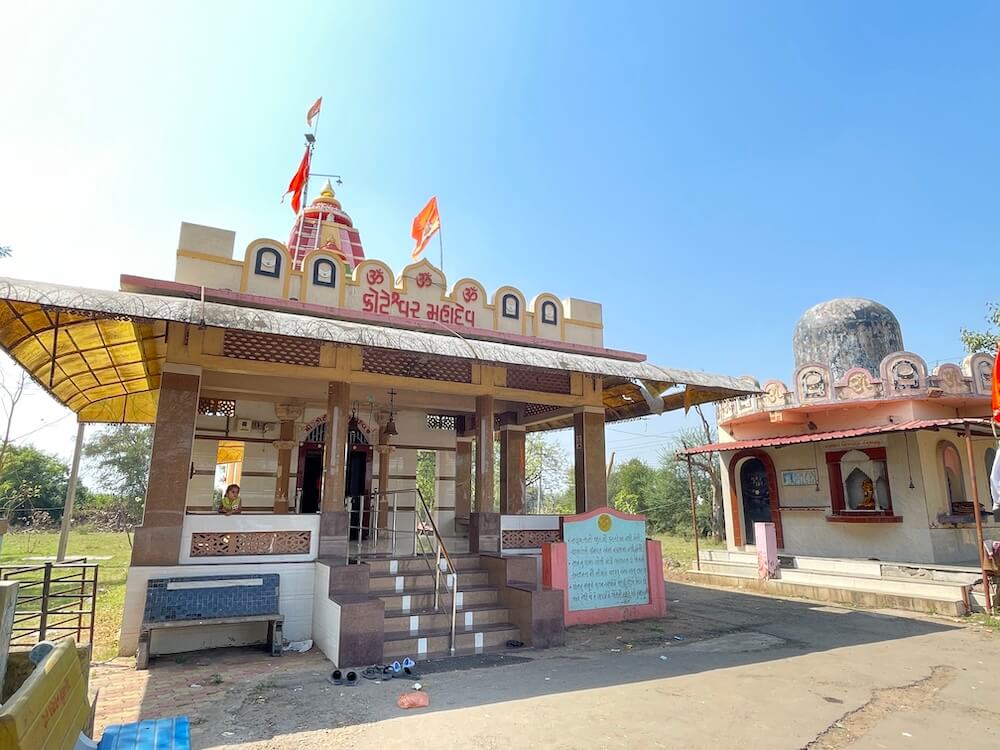
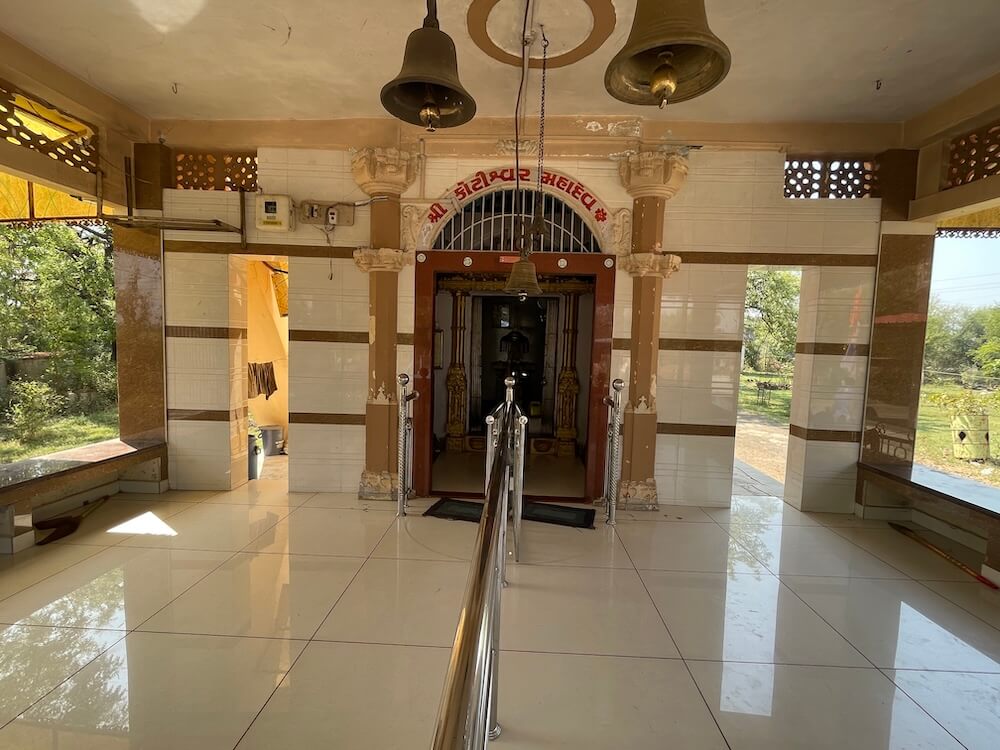
The temple courtyard is equipped with benches for the comfort of devotees. The architectural composition follows a traditional plan consisting of a ‘Sabhamandap’ (assembly hall), ‘Antaral’ (vestibule) and ‘Garbhagriha’ (sanctum sanctorum). From the courtyard, one ascends five steps to enter the semi-open assembly hall situated upon an elevated ‘Jagati’ (plinth). This hall features ‘Kakshasanas’ (stone benches with backrests) on three sides, excluding the side facing the sanctum. A ‘Pradakshina’ (circumambulation) path leads from the hall around the vestibule and the sanctum. The entrance to the vestibule is adorned with ‘Stambhashakha’ (ornamental pillar-work). Within the vestibule, a pedestal holds a sculpture of ‘Nandi’ (the sacred bull) and a tortoise, whilst niches in the right and left walls enshrine the idols of Hanuman and Ganpati respectively.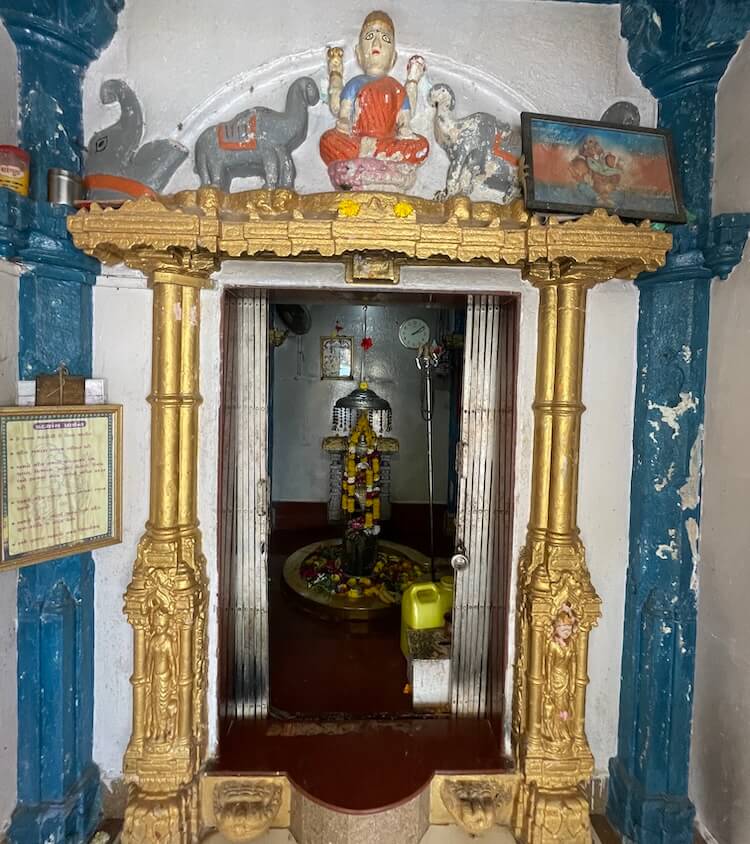
The doorframes of the sanctum sanctorum exhibit exquisite carvings. Sculptures of ‘Dwarpals’ (gatekeepers) flank the doorposts, with ‘Kirtimukhas’ (grotesque mask-like motifs signifying glory) carved at the base. The ‘Uttaranga’ (lintel) features a sculpture of ‘Gajalaxmi’. Typically, Goddess Laxmi is depicted with an elephant on either side. A unique feature of this particular carving is the presence of two elephants on each side of the Goddess.
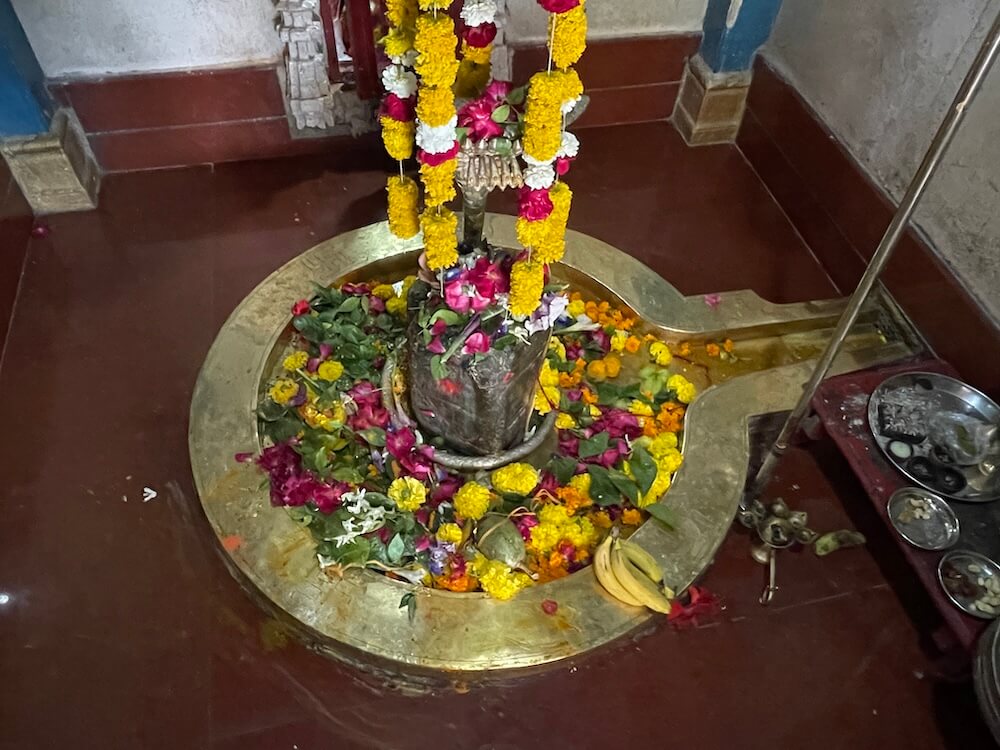
In the sanctum, the original marble ‘Shiva Pind’ has been encased in ‘Panchdhatu’ (an alloy of five sacred metals). The ‘Shivalinga’, set within a large ‘Shalunka’ (pedestal), possesses a somewhat square shape and is sheltered by a canopy in the form of a hooded serpent. A ‘Galantika’ (a suspended vessel) allows for the continuous ritual dripping of water upon the deity. A niche in the wall behind the ‘Shivalinga’ serves as the station for Narmada Mata. The sanctum is crowned by an attractive ‘Urushringa’ style spire, topped with a two-tier ‘Amalak’ (fluted stone disc) and a ‘Kalasha’ (pinnacle).
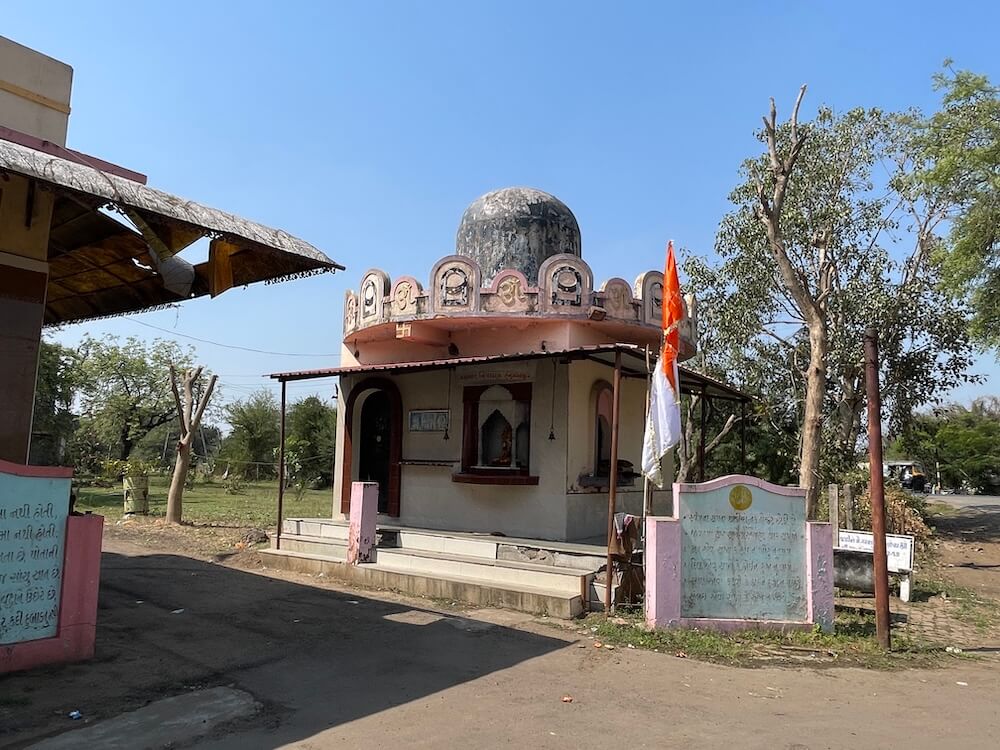 To the right of the main courtyard stands another Shiva shrine. The spire above the sanctum of this smaller temple is uniquely shaped like a ‘Shivalinga’. Within a small shrine near the entrance wall on the right, there resides an idol of ‘Akasmat Nivaran Hanuman’ (Hanuman who averts sudden calamities). This shrine is also said to be of great antiquity.
Various festivals and auspicious days are celebrated with immense fervour at the Koteshwar Mahadev Temple. ‘Mahashivratri’ stands as the most significant annual celebration, during which vast throngs of devotees gather to catch a glimpse of the ‘Shivalinga’. The occasion is marked by diverse religious rituals, the continuous chanting of divine names and ‘Kirtans’ (devotional songs). On every Monday of the month of ‘Shravan’, 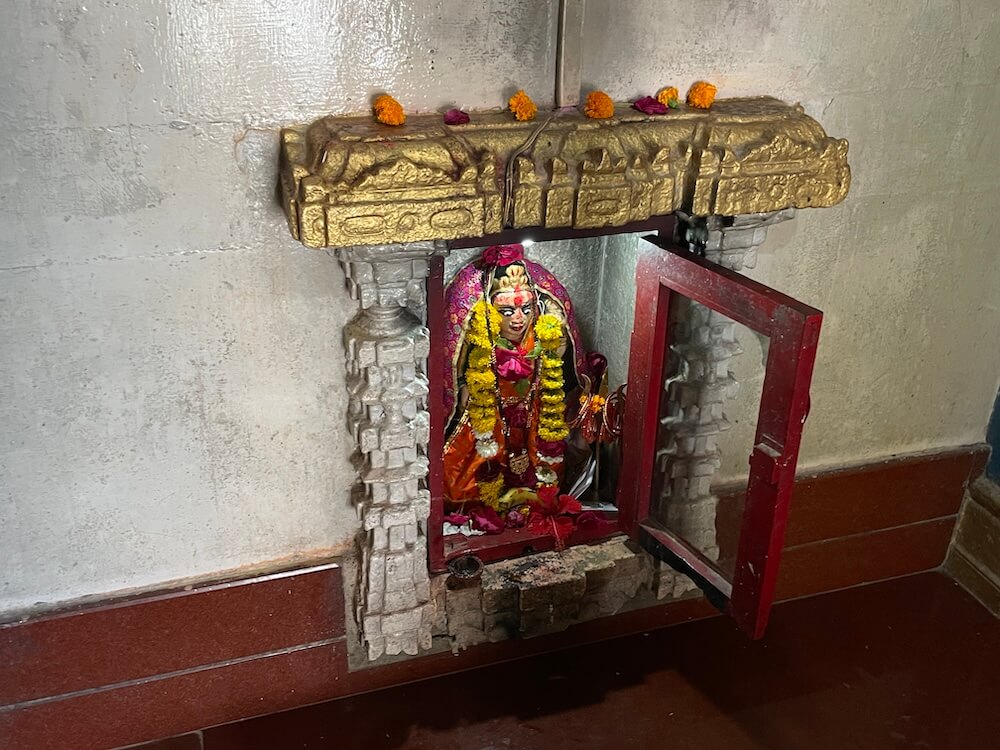 devotees arrive in large numbers to perform ‘Abhishek’ (ritual bathing) of the sacred ‘Shivalinga’ with water and milk.
A defining characteristic of this temple is the magnificent fair held during the month of ‘Adhik Vaishakh’ every 18 or 19 years. For this month-long fair, thousands of pilgrims from every corner of the state travel to this holy site amidst chants of ‘Har Har Mahadev’. The district administration makes special arrangements for the convenience of the pilgrims, including water, healthcare and accommodation facilities. Offering ‘Bel’ (wood-apple) leaves to the Koteshwar Mahadev during this period is considered exceptionally meritorious.
On the day of ‘Gurupurnima’, a great multitude of devotees visit the shrine. As the temple lies on the route of the ‘Narmada Parikrama’, it has become a vital place of repose for the ‘Parikramavasis’ (pilgrims on the circuit). Free accommodation is provided for these pilgrims at the ashram located near the temple. The pilgrims prepare their own meals using the ‘Shidha’ (dry rations) provided by the ashram. Devotees may seek the ‘Darshan’ (holy sight) of Koteshwar Mahadev daily from 6 am until 8 pm.
Useful Information
- Located at 7 km from Bharuch
- ST bus facilities available from Bharuch
- Private vehicles can reach the temple directly
- Accommodation and breakfast facilities available in the vicinity
कोटेश्वर महादेव मंदिर
कडोद, ताल. भरूच, जिला. भरूच
मंदिरे
Temples
मंदिर
-
धर्मेश्वर महादेव मंदिर धर्मशाळा-झानोर, ता. भरुच, जि. भरुच
अधिक माहितीDharmeshwar Mahadev Temple Dharmashala-Jhanor, Tal. Bharuch, Dist. Bharuch
View Detailsधर्मेश्वर महादेव मंदिर धर्मशाला-झानोर, ताल. भरूच, जिला. भरूच
विवरण देखें -
साईबाबा मंदिर रामवाटिका सोसायटी, झाडेश्वर, ता./जि. भरुच
अधिक माहितीSai Baba Temple Ramvatika Society, Zadeshwar, Tal./Dist. Bharuch
View Detailsसाईं बाबा मंदिर रामवाटिका सोसायटी, जादेश्वर, ताल./जिला. भरूच
विवरण देखें -
सिद्धिविनायक मंदिर मकतमपूर, ता./जि. भरुच
अधिक माहितीSiddhivinayak Temple Maktampur, Tal./Dist. Bharuch
View Detailsसिद्धिविनायक मंदिर मकतमपुर, ताल./जिला. भरूच
विवरण देखें