
धर्मेश्वर महादेव मंदिर
धर्मशाळा-झानोर, ता. भरुच, जि. भरुच
Dharmeshwar Mahadev Temple
Dharmashala-Jhanor, Tal. Bharuch, Dist. Bharuch
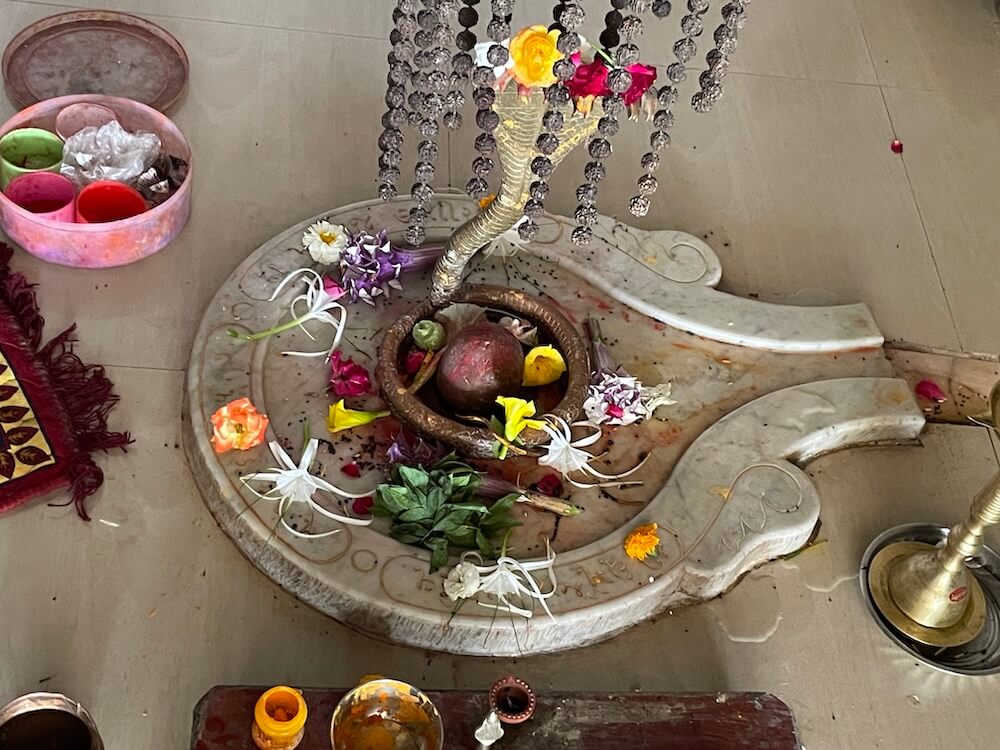 Nestled upon the sanctified banks of the River Narmada at Dharmashala village, the venerable Dharmeshwar Mahadev Temple stands as a paramount sanctuary of devotion for the faithful. Local lore recounts that during the period of their exile in incognito, Yudhishthira, the eldest of the Pandava princes, consecrated the Shivalinga at this very site and performed ‘Pind-dan’ (rites for the salvation of ancestors) upon this hallowed ground to ensure the spiritual liberation of his forebears.
It is a profound belief amongst devotees that engaging in ‘Pind-dan’, observing penance, performing ‘Jap’ (meditative chanting) and offering charity in this sacred region blessed by the proximity of the Narmada, yields merit equivalent to the performance of the ‘Ashvamedha Yagna’ (an ancient horse-sacrifice ritual of imperial sovereignty). 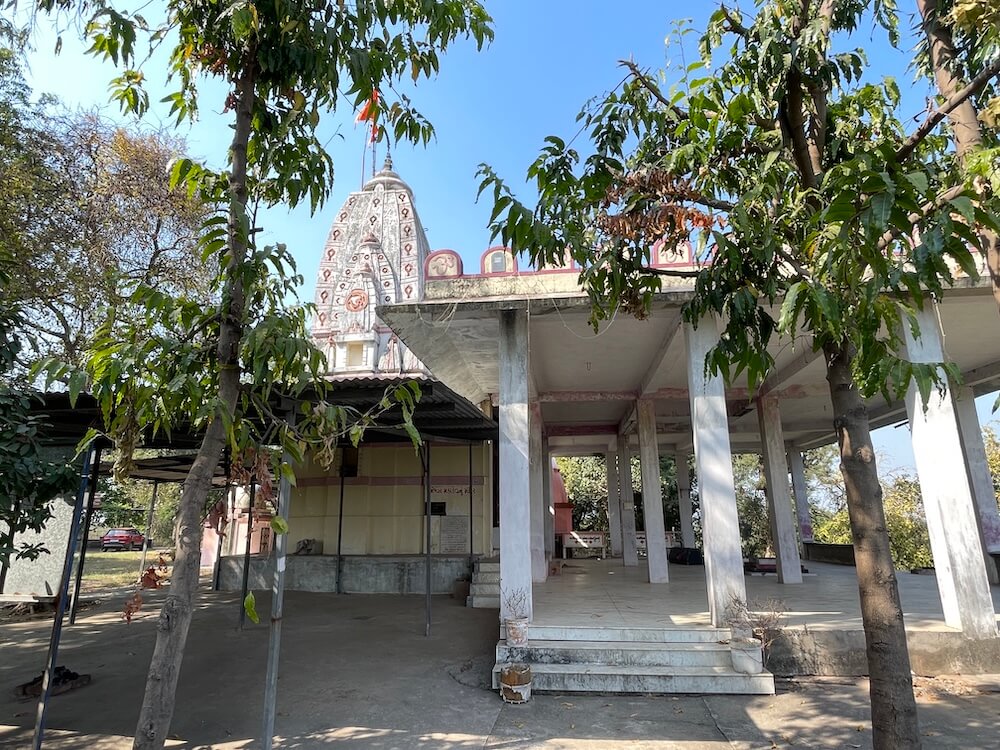 Every eighteen years, during the intercalary month of ‘Adhik Ashadh’, the temple precincts host a magnificent fair, which draws thousands of pilgrims from Bharuch and neighbouring districts, who arrive to seek the divine blessings of the Lord.
The cultural and historical tapestry of the Bharuch district is both ancient and opulent. In antiquity, this city was known as ‘Bhrigukacch’, named after the residence of the great Sage Bhrigu. Greek merchants historically referred to it as ‘Barygaza’. The River Narmada served as a vital maritime artery in the ancient Indian trade routes and during those times, the temples in the Dharmashala vicinity functioned not merely as religious hubs but also as essential resting places for weary travellers. In the eighteenth century, the influence of the Maratha Empire and particularly the Gaekwad dynasty of Baroda was significantly felt across Bharuch and the Narmada belt. 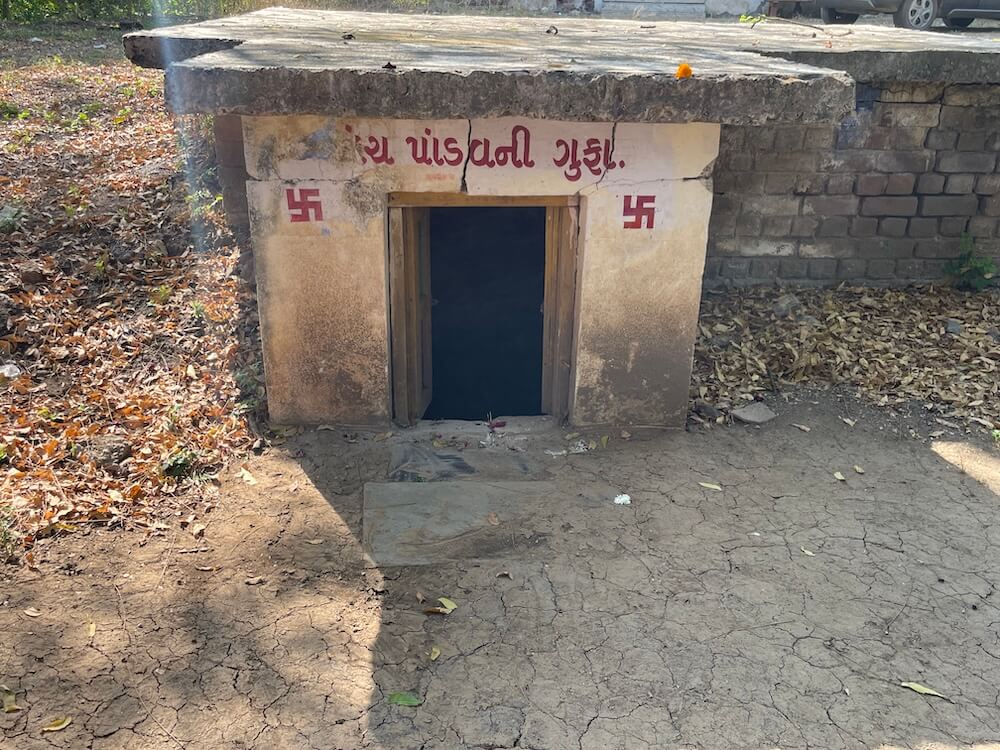 Following the decline of the Mughal Empire, the Marathas asserted control over this region and undertook the restoration of numerous ancient temples along the riverbanks to foster a renaissance of Hindu culture. This endeavour encompassed several pilgrimage sites within Bharuch. Given the spiritual weight of the ‘Narmada Parikrama’ (circumambulation of the river) and associated religious ceremonies, the importance of this area remained unparalleled. The extant structure of the Dharmeshwar Mahadev Temple exhibits a discernible influence of Maratha architectural aesthetics and it is generally believed to date back to the latter half of the seventeenth or eighteenth century. This site attained historical prominence as a crucial halt for pilgrims traversing the Narmada circumambulation path.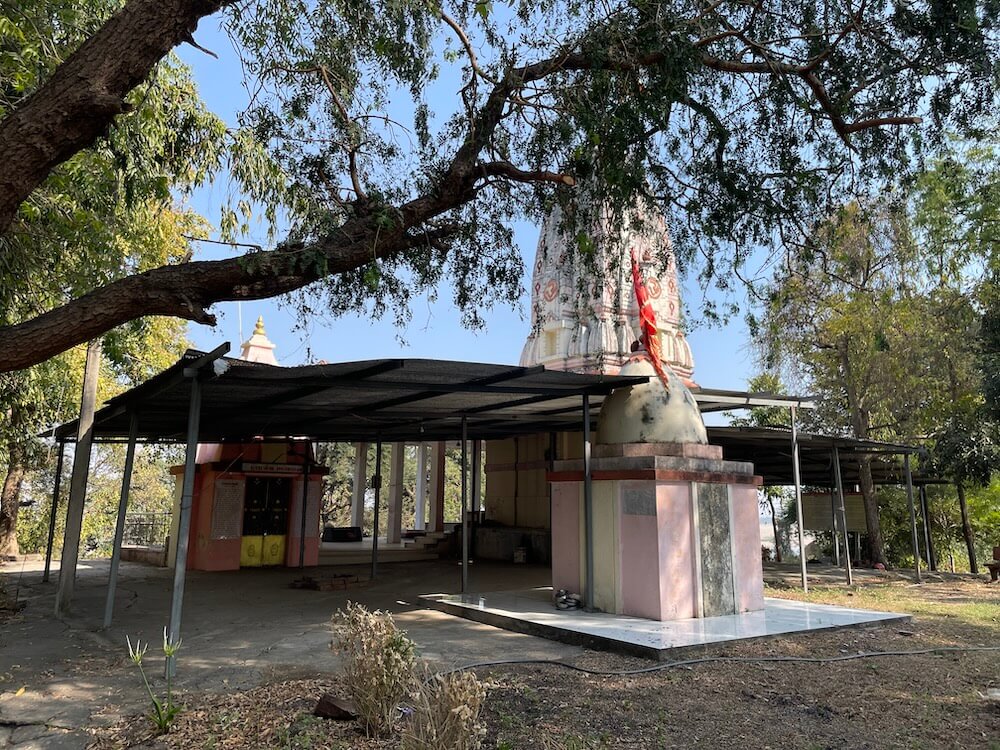
According to Puranic references and local folklore, the Pandavas, having lost their kingdom and possessions in a game of dice against the Kauravas during the ‘Dvapara Yuga’, were compelled to endure twelve years of forest exile followed by one year of living in concealment. During this tenure, the Pandavas resided at Dharmapur, the pilgrimage site known today as Dharmashala. It is said that during their stay, the brothers established five Shiva temples at five distinct locations. These include the Dharmeshwar Mahadev at Dharmashala, Aranyeshwar Mahadev at Orpatar, Tilkeshwar Mahadev at Tarsali, Nandkeshwar Mahadev at Nand and Balkeshwar Mahadev at Jhanor. As Yudhishthira himself consecrated the Shivalinga here, the temple acquired the name Dharmeshwar Mahadev. The site remains famously sought after for the performance of ancestral rites.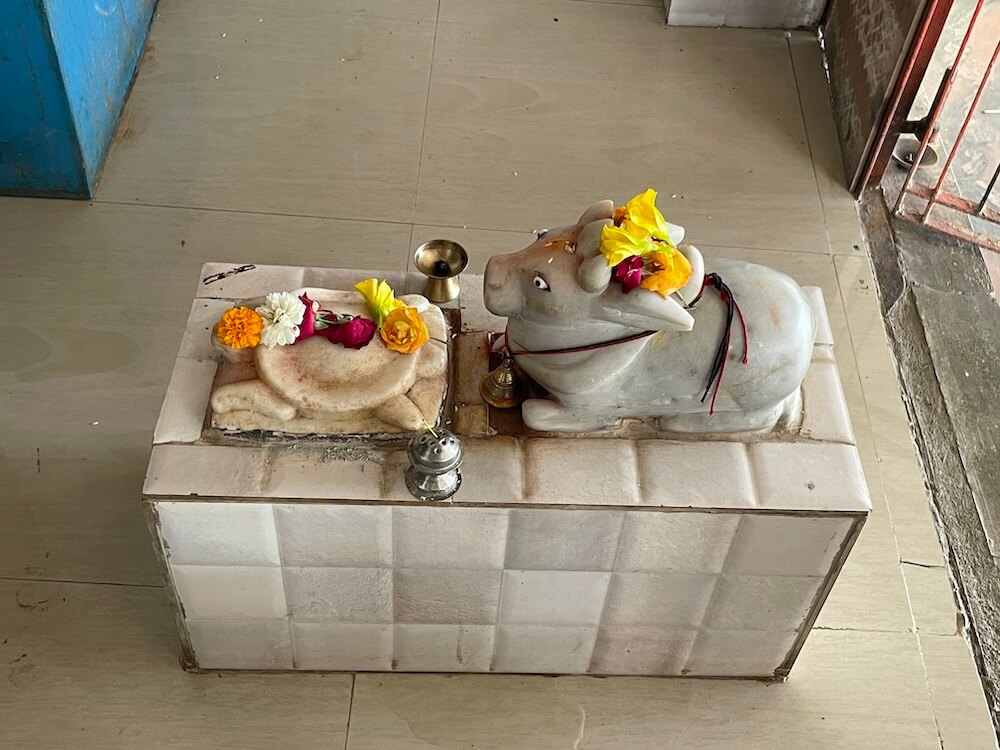
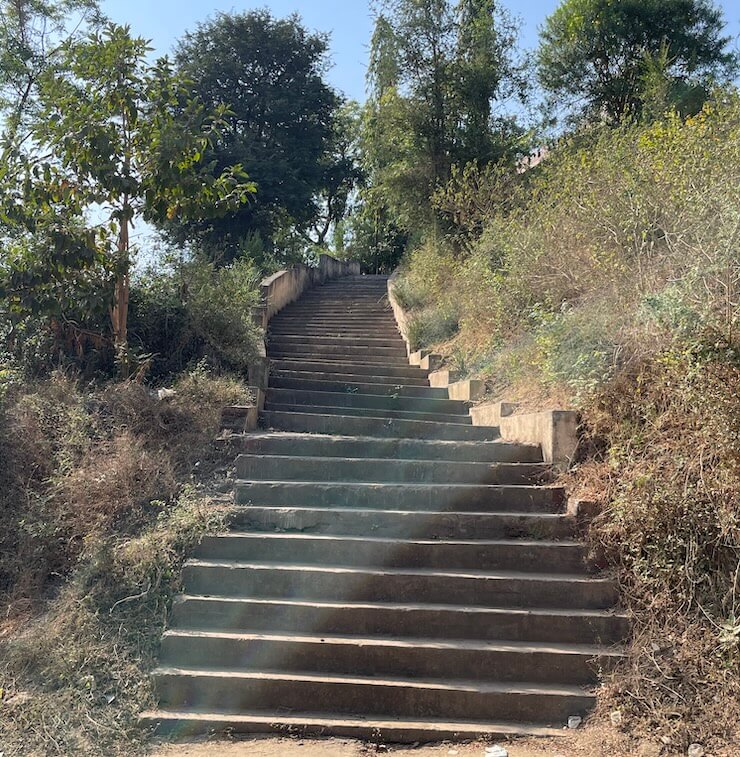
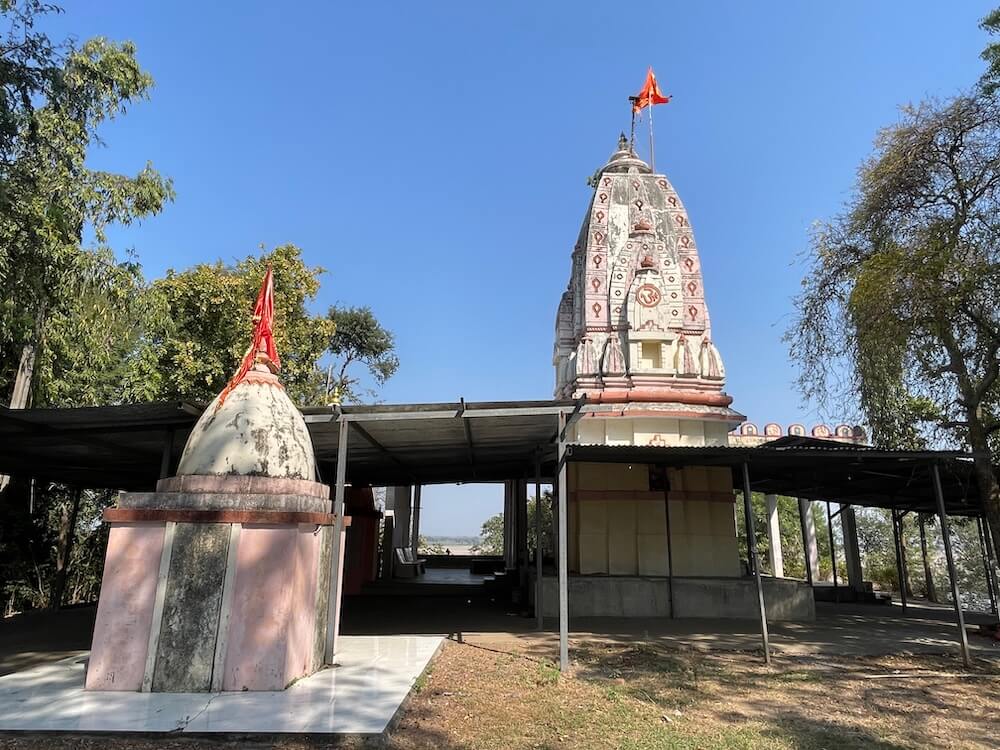
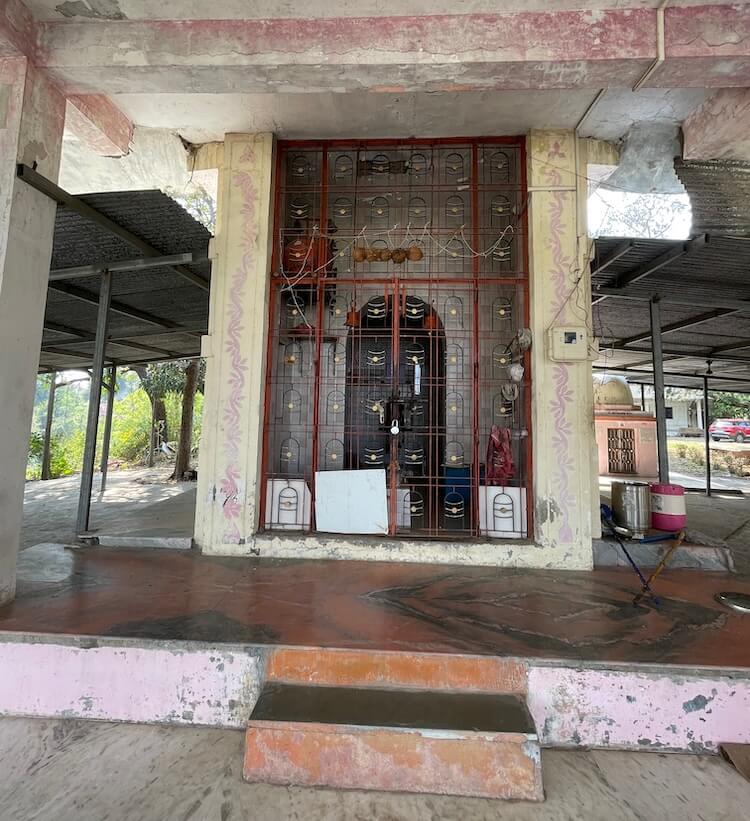
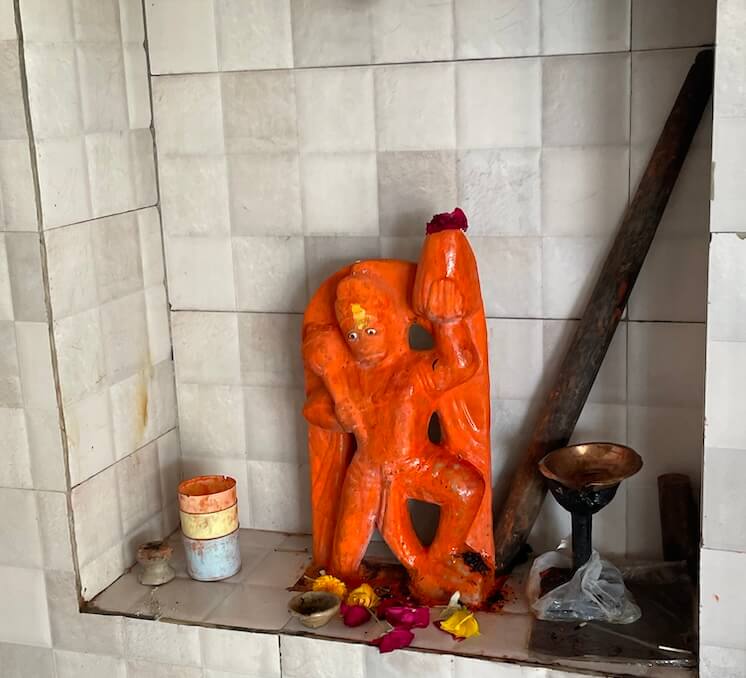
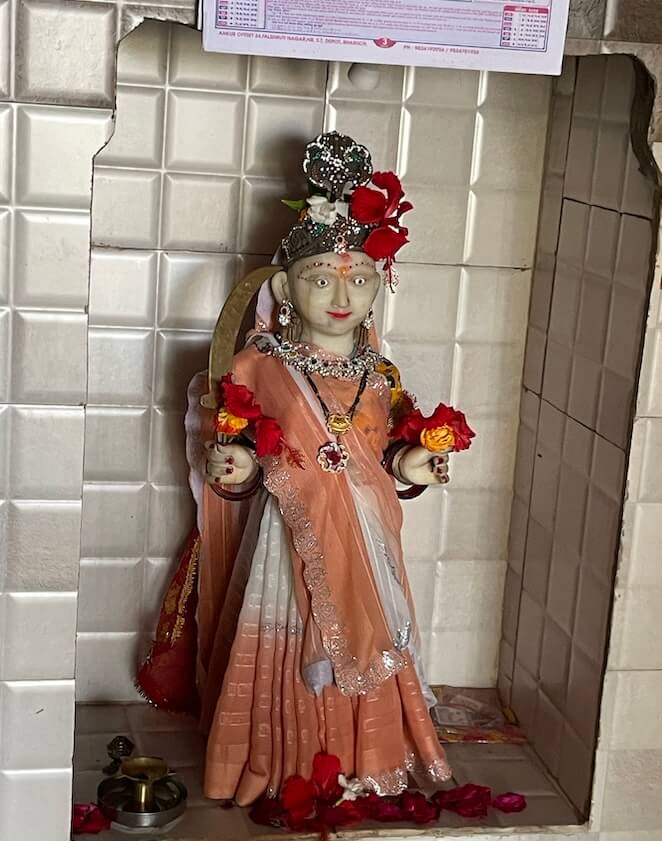
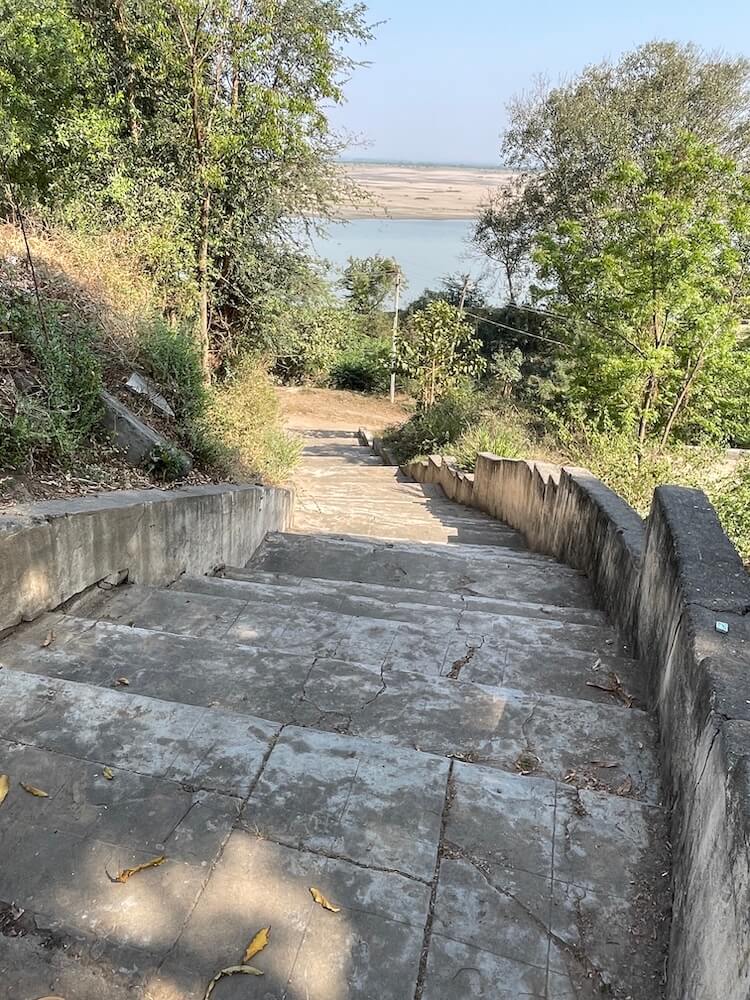
The temple at Dharmashala is ensconced within a landscape of lush natural beauty. Situated on the northern bank of the River Narmada, the temple is traditionally approached by a flight of approximately twenty-five steps, although a road has now been constructed to allow vehicles to reach the temple directly. The stairway is flanked by dense and vibrant greenery and the temple grounds are shaded by several ancient trees. The steps lead into the main courtyard, which is paved and covered by a protective tin shed to shield devotees from the elements. The architectural layout of the temple comprises a large semi-open ‘Sabhamandap’ (assembly hall), an ‘Antaral’ (vestibule) and the ‘Garbhagriha’ (sanctum sanctorum). 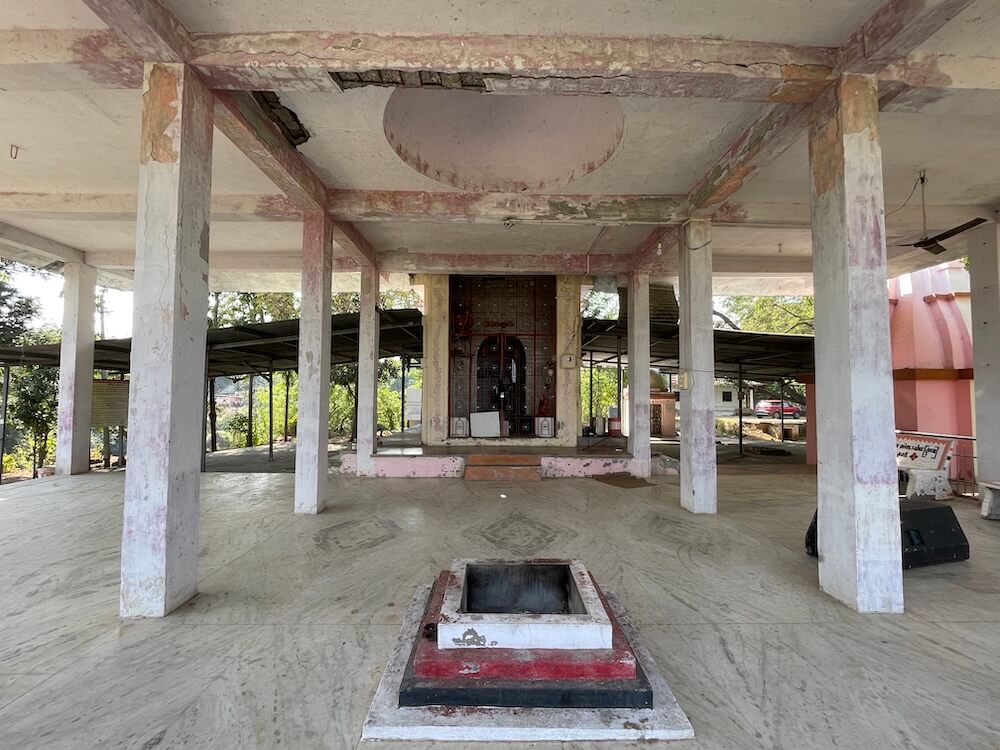 This assembly hall was an addition made in later years to the front of the original temple structure. At the heart of the ‘Sabhamandap’ lies a ‘Havankund’ (sacrificial fire pit). From here, two steps lead up to the elevated vestibule, where sculptures of Nandi and a tortoise are placed upon a central pedestal. Niches within the left and right walls house the idols of Ganpati and Hanuman. Within the sanctum sanctorum sits a marble ‘Shivpindi’ (the symbolic form of Lord Shiva), sheltered by a canopy in the form of a five-metal serpent. Behind the Shivalinga, a niche in the rear wall enshrines an idol of Narmada Mata. The temple is crowned by a soaring spire in the ‘Urushringa’ style, topped with a two-tier ‘Amalak’ (fluted stone disc) and a ‘Kalasha’ (pinnacle).
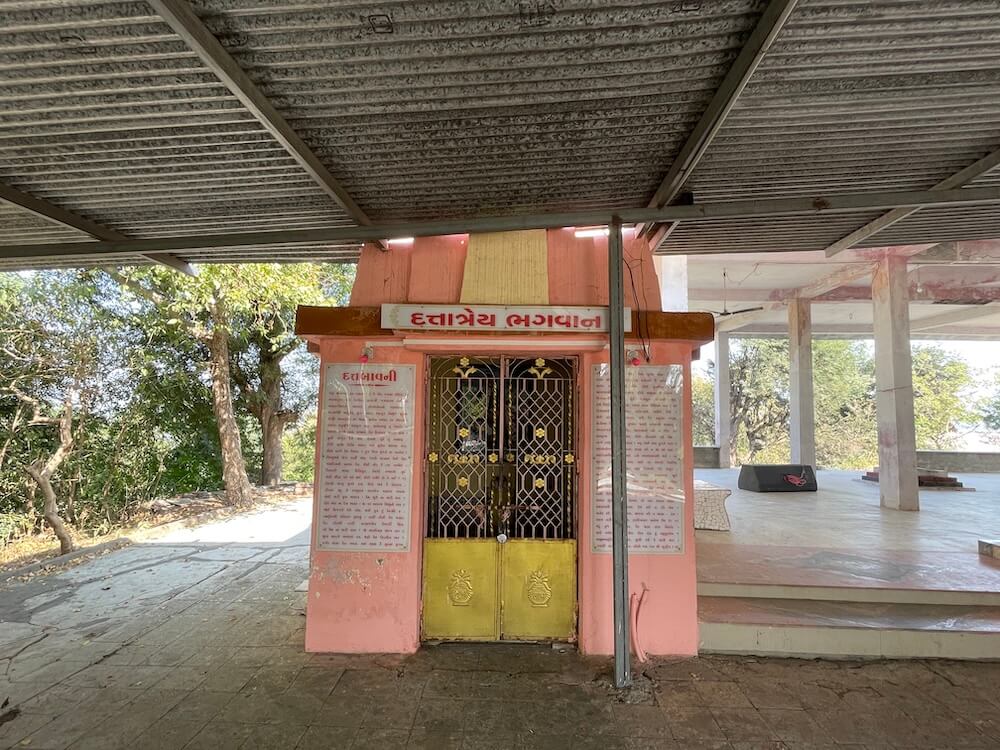
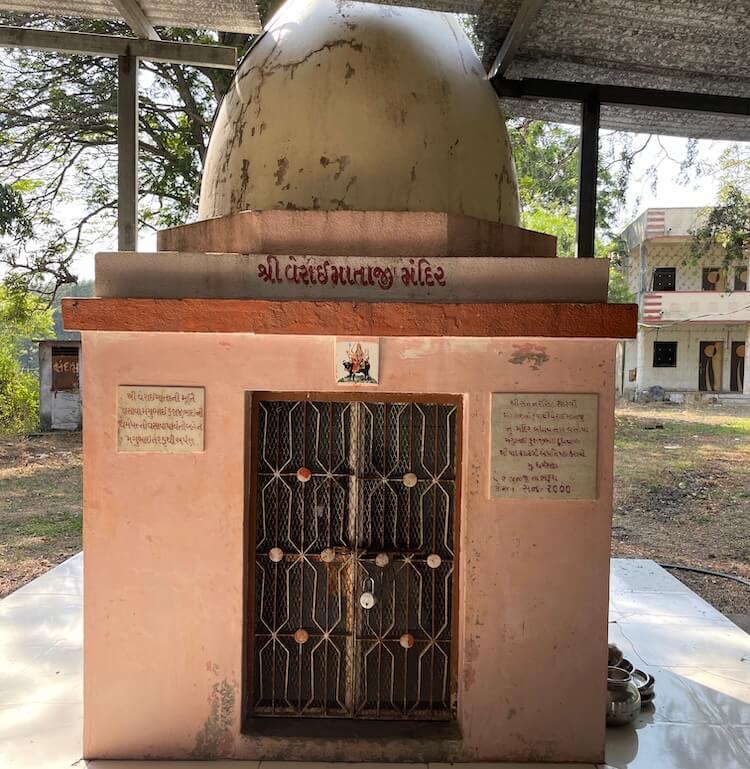
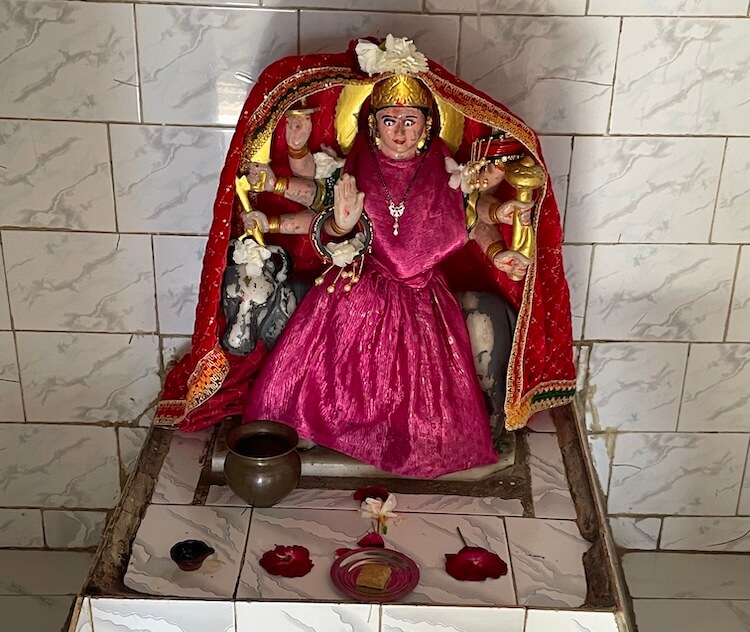
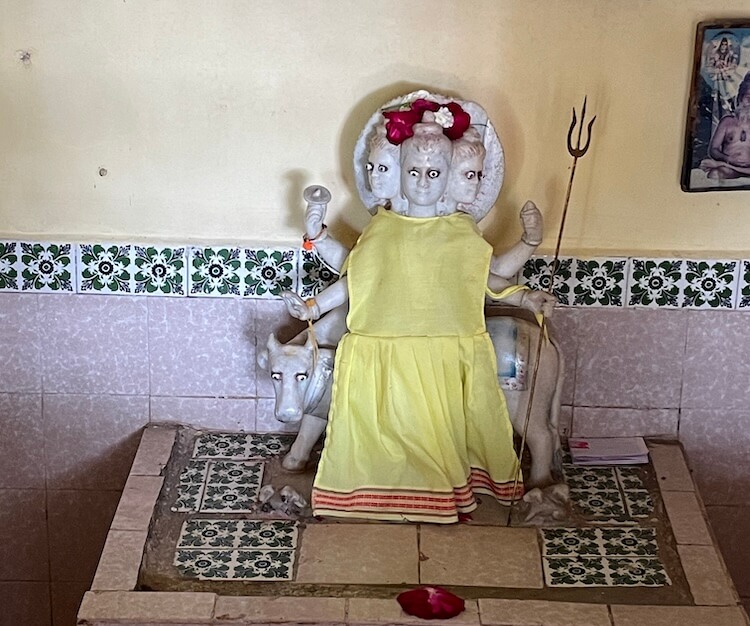 To the rear of the main temple lies an ancient cave. Legend suggests that the Pandavas utilised this subterranean passage to travel between the five Shiva temples along the Narmada banks. The upper and internal sections of this cave have since been reinforced with cement and concrete and steps have been provided for those wishing to descend. Furthermore, the courtyard features independent shrines dedicated to Dattatreya and Varai Mata.
Various religious festivals and ceremonies are celebrated with immense fervour at the Dharmeshwar Mahadev Temple throughout the year. As Yudhishthira is said to have established the Shivalinga during the month of ‘Adhik Ashadh’, a grand fair is organised here every eighteen years to commemorate this event. It is traditionally believed that if one bathes in the Narmada during this fair and walks upon the earth in wet garments, the ancestors receive satisfaction corresponding to every drop of water that falls. During the holy month of ‘Shravan’, one thousand and eight ‘Bel’ leaves are offered daily to the Shivalinga accompanied by ‘Abhishek’ (ritual bathing) using milk and the sacred waters of the Narmada. On the occasion of ‘Mahashivratri’, the ‘Rudrabhishek’ is performed with great ceremony. Large crowds of devotees also gather for ‘Darshan’ (holy viewing) on ‘Somvati Amavasya’. The temple remains open for devotees daily from six o’clock in the morning until eight o’clock in the evening.
Useful Information
- Located at 23 km from Bharuch
- ST bus facilities available from Bharuch
- Private vehicles can reach the temple directly
- Accommodation and breakfast facilities are available in the vicinity
धर्मेश्वर महादेव मंदिर
धर्मशाला-झानोर, ताल. भरूच, जिला. भरूच
मंदिरे
Temples
मंदिर
-
कोटेश्वर महादेव मंदिर कदोद, ता. भरुच, जि. भरुच
अधिक माहितीKoteshwar Mahadev Temple Kadod, Tal. Bharuch, Dist. Bharuch
View Detailsकोटेश्वर महादेव मंदिर कडोद, ताल. भरूच, जिला. भरूच
विवरण देखें -
साईबाबा मंदिर रामवाटिका सोसायटी, झाडेश्वर, ता./जि. भरुच
अधिक माहितीSai Baba Temple Ramvatika Society, Zadeshwar, Tal./Dist. Bharuch
View Detailsसाईं बाबा मंदिर रामवाटिका सोसायटी, जादेश्वर, ताल./जिला. भरूच
विवरण देखें -
सिद्धिविनायक मंदिर मकतमपूर, ता./जि. भरुच
अधिक माहितीSiddhivinayak Temple Maktampur, Tal./Dist. Bharuch
View Detailsसिद्धिविनायक मंदिर मकतमपुर, ताल./जिला. भरूच
विवरण देखें