
साईबाबा मंदिर
रामवाटिका सोसायटी, झाडेश्वर, ता./जि. भरुच
Sai Baba Temple
Ramvatika Society, Zadeshwar, Tal./Dist. Bharuch
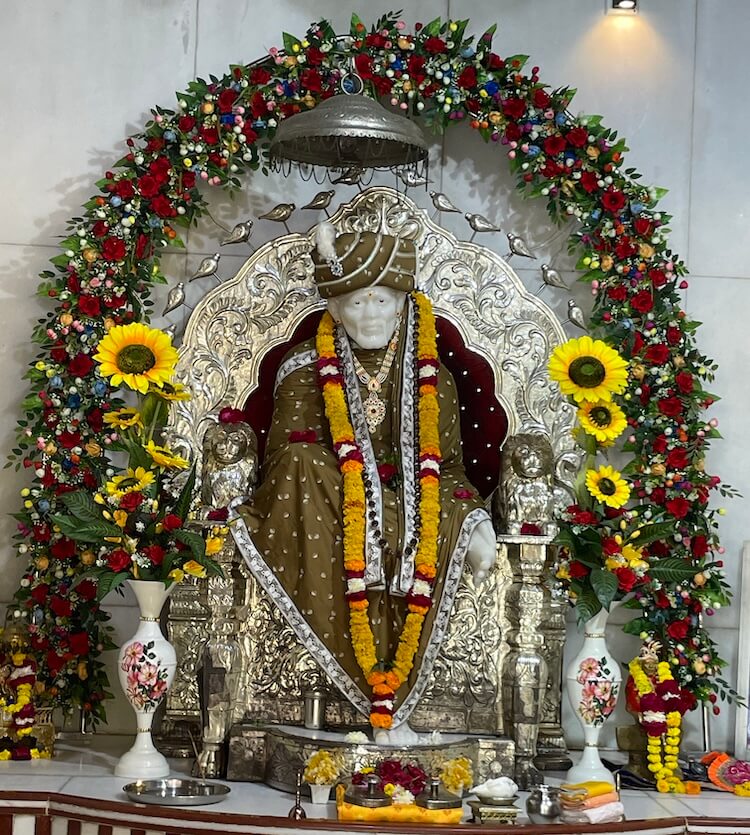 Sai Baba of Shirdi was a 20th-century saint who propagated the supreme truth of ‘Sab ka Malik Ek’ (One God governs all) and strengthened the noble ideal of religious tolerance by teaching that all faiths ultimately lead to the same Divine Being. Millions of people across diverse religions and sects – including Hindus, Muslims, Parsis, Sikhs and Jains – revere Sai Baba as Bhagwan. Just as in India, many grand temples dedicated to Sai Baba exist abroad. Situated at Zadeshwar near Bharuch is a beautiful temple dedicated to this Saint of Shirdi. This temple witnesses a steady stream of devotees every morning and evening.
The history of Shirdi Sai Baba states that he was born in 1838 at Pathri in the Parbhani district of Maharashtra. It is said that this fact is mentioned in the ‘Sai Charitra’ (biography of Sai, first published in 1929) by Govind Raghunath Dabholkar (Hemadpant), who had the privilege of personal association with Sai Baba himself. However, the Shirdi Sai Sansthan maintains the position that the exact birthplace of Sai Baba remains unknown. According to scholars at Pathri, Sai Baba’s original name was Haribhau Bhusari. 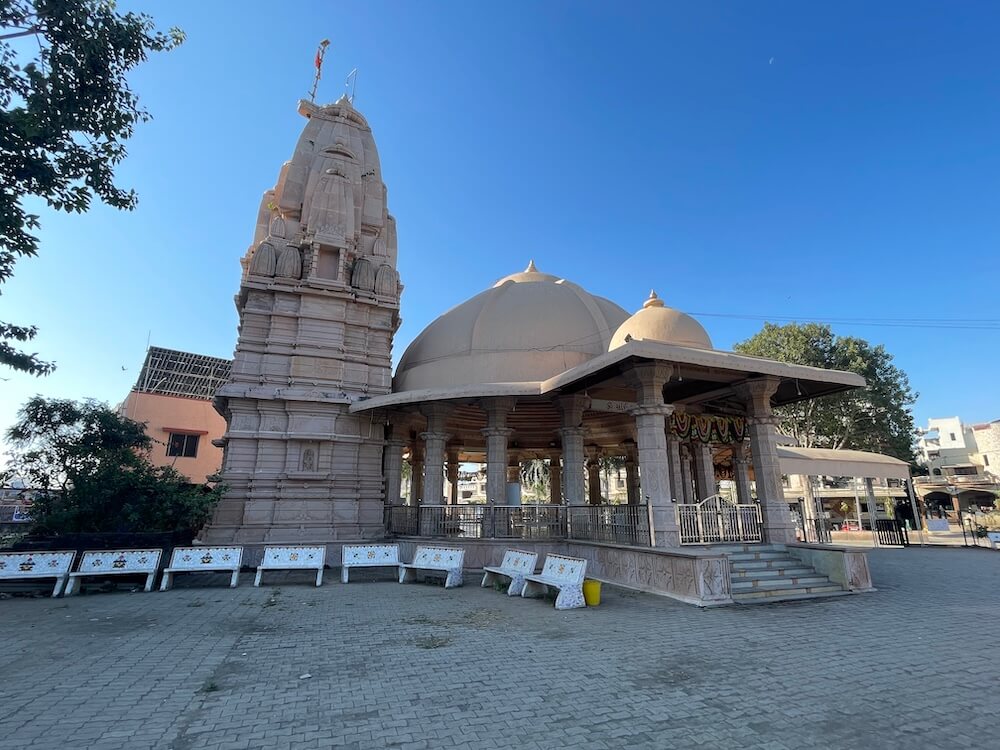 His father had placed him in a ‘fakir’s’ (Muslim ascetic) bag during his childhood. Sai Baba’s elder brother was also a ‘fakir’ and he exerted a profound influence on Baba. At the age of eighteen, Sai Baba arrived in Shirdi. Shirdi became the ‘Karmabhumi’ (place of spiritual action) where he eventually passed away on 15 October 1918.
Followers of Sai Baba, who preached the principles of ‘Shraddha’ (faith) and ‘Saburi’ (patience) along with love, forgiveness, compassion and inner peace, are now spread across the globe. The first temple dedicated to Sai Baba was established in 1922 at Kavilgaon in the Kudal taluka of Sindhudurg district. This was the first place where an idol of Sai Baba was consecrated. Later, in 1954, the idol that currently graces the Samadhi Mandir in Shirdi was installed. 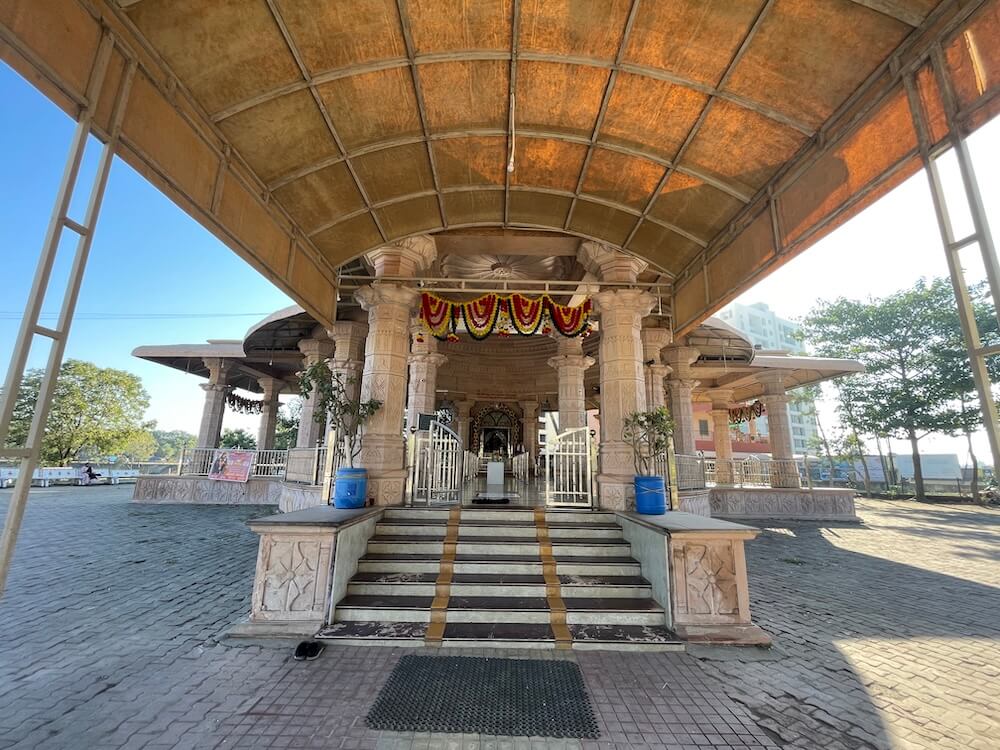 Since then, Sai temples have been erected in various locations throughout the country. This magnificent temple of Sai Baba stands near Bharuch.
According to Puranik legends, Bharuch, also known as Bhriguakachchha was established by the sage Bhrigu. This city possesses an ancient history dating back to the 4th century BC. By the 1st century AD, it was a renowned port. The ‘Periplus of the Erythraean Sea’, a travelogue written by an anonymous sailor in the latter half of the 1st century AD (circa 60 AD), mentions Bharuch as ‘Barygaza’. It describes the site as a major port of entry into India. The Chinese traveller Yuan Chwang, who visited India in the 7th century AD, also made mention of Bharuch. He noted that at that time, there were ten temples and ten monasteries housing 300 monks. 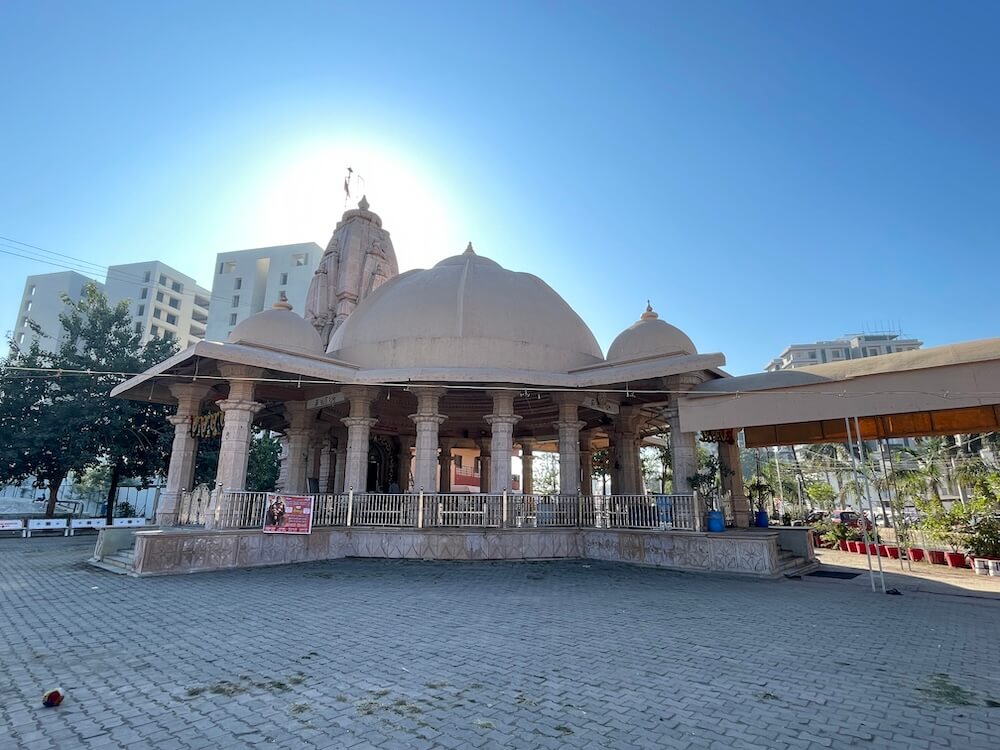 Near the Zadeshwar Gate in Bharuch lies the temple of Somnath. Legend has it that King Bali performed the ‘Dashashwamedh Yajna’ (ten-horse sacrifice) here. According to the myth, King Bali became immensely powerful due to this sacrifice. The gods feared he would seize the kingdom of heaven. Consequently, Lord Vishnu assumed the ‘Vamanavatara’ (dwarf incarnation). Vamana asked King Bali for three paces of land as alms. Once Bali granted the request, Vamana covered the entire earth with one step and the entire sky with the second. When no space remained for the third step, King Bali offered his own head. Vamana placed his foot upon Bali’s head and sent him to the ‘Patala’ (netherworld). This event is said to have occurred in Bharuch, a story also mentioned in the ‘Gazetteer of Surat and Bharuch’.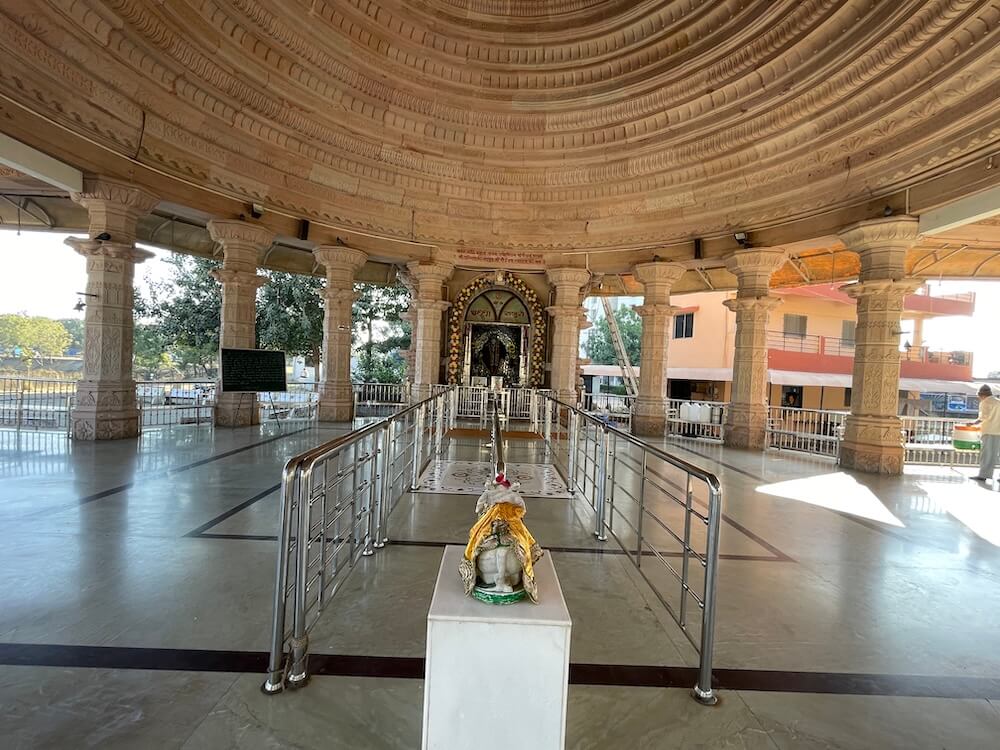
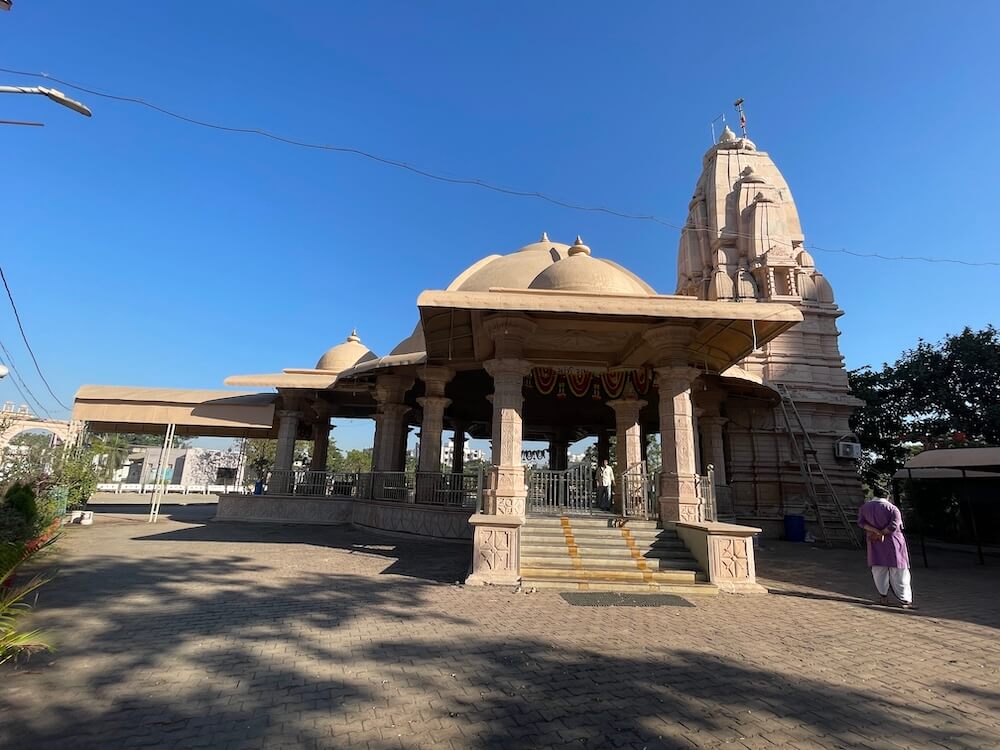
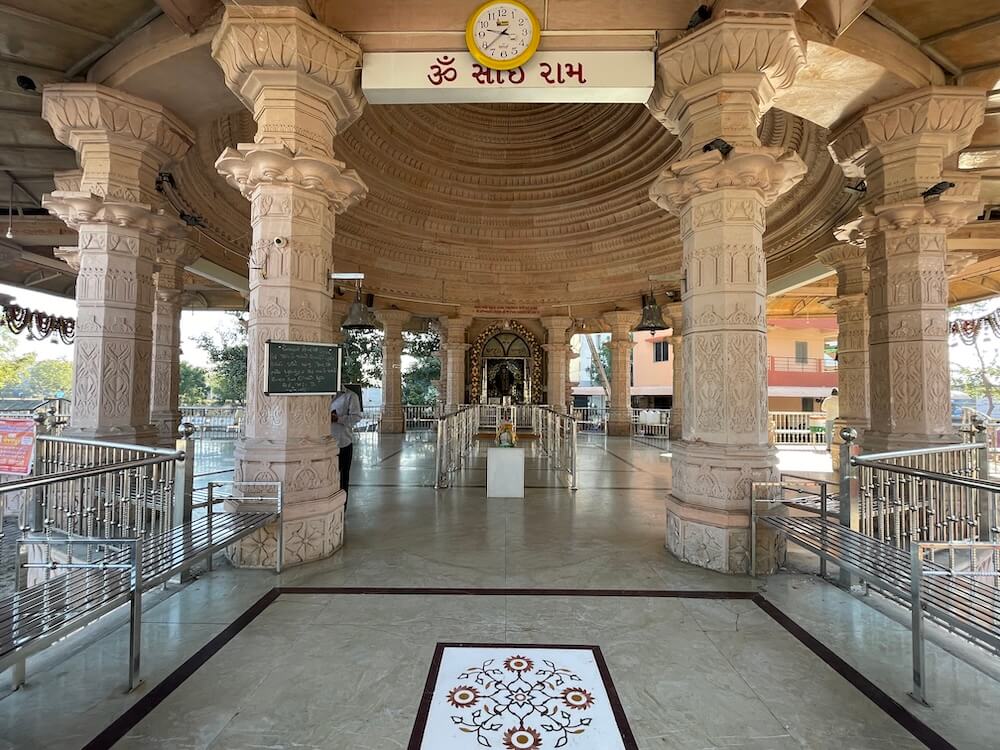
The Sai Baba Temple is located in Zadeshwar, five kilometres from this historically and mythologically significant city. The temple is situated in a spacious courtyard adjacent to a small lake. The courtyard is paved with stone blocks and provided with excellent seating arrangements for devotees. Built in the style of Swaminarayan temples, the structure is fashioned from Rajasthani red sandstone. The temple architecture comprises a Mukhamandap (entrance porch), Ardhamandap (antechamber), Sabhamandap (assembly hall) and Garbhagriha (sanctum sanctorum). The sanctum is topped with an ‘Urushringa’ style spire featuring an Amalaka (fluted stone disc) and a Kalash (pinnacle). The entrance porches and assembly hall are crowned with domed spires. The temple pillars are adorned with exquisite carvings.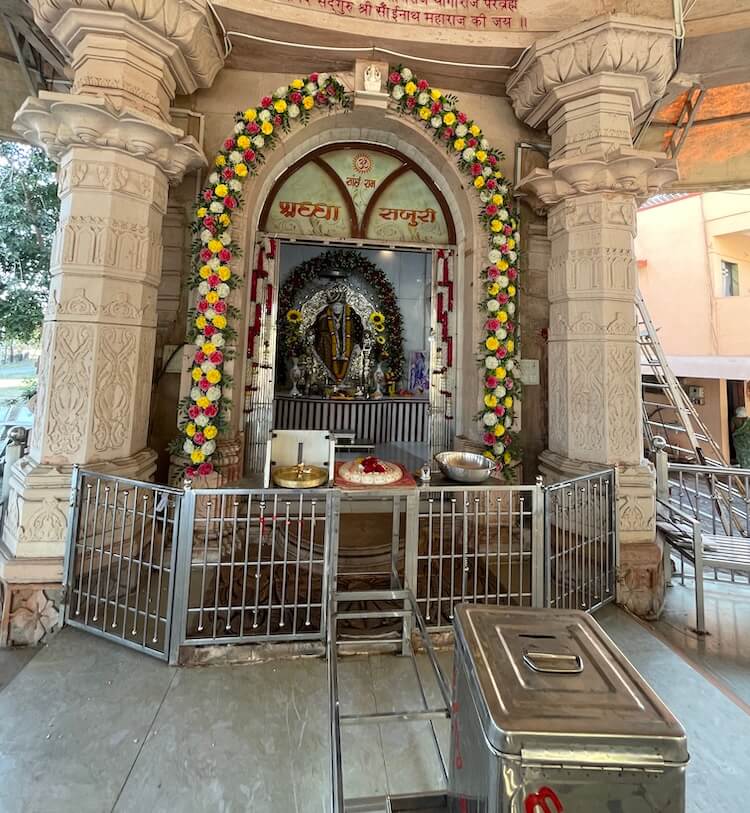
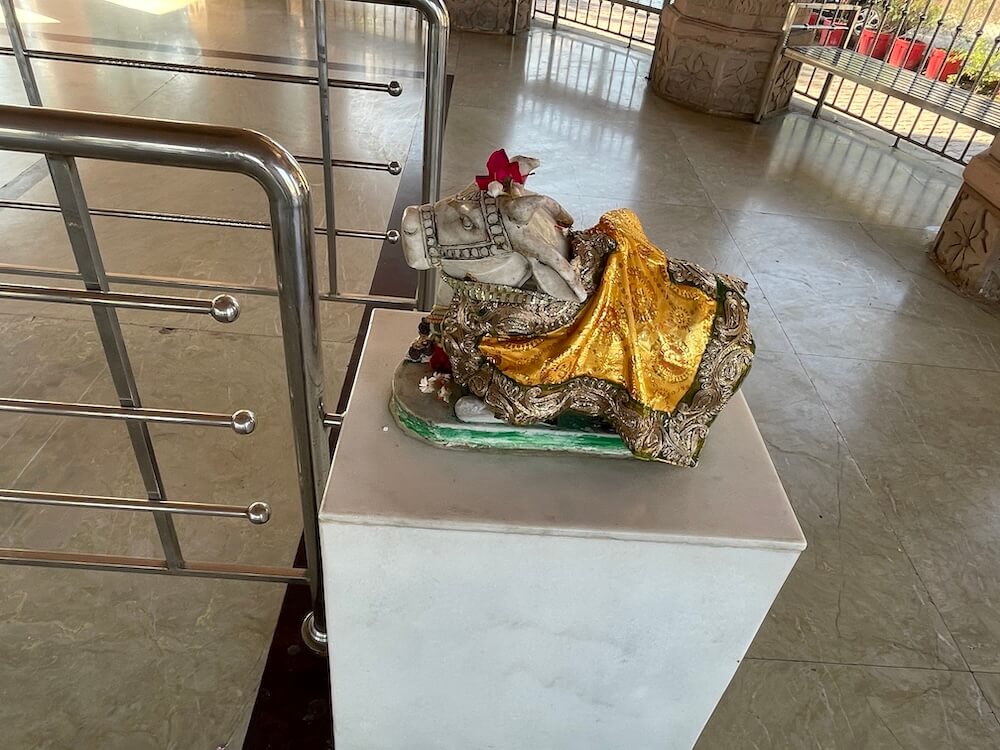
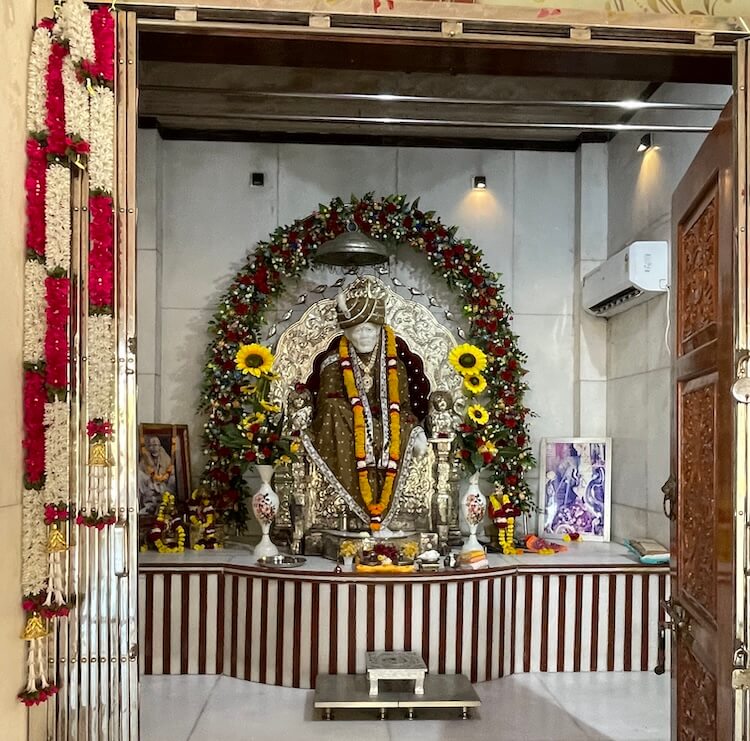
A large tin shed has been erected in front of the temple for the convenience of devotees. From here, one enters the Mukhamandap by ascending seven steps. The Sabhamandap is an open-style hall where a statue of Nandi is seated. Stainless steel railings have been installed here to manage the flow of crowds. The entrance to the Garbhagriha is arch-shaped. Inside the sanctum, a beautiful idol of Sai Baba is enthroned upon a marble pedestal. This silver throne features intricate decorative work. Sacred ‘padukas’ (footwear) are situated before the marble idol. To the left of the main idol are small metal idols of Ganesha and Shri Krishna and to the right is a metal idol of Sai Baba.
Devotees may visit the temple for Darshan (sacred viewing) from 6:00 am until 9:00 pm. Ritual prayers and Aarti (ceremony of light) are conducted in the morning and evening. It is noted that local devotees participate in these Aartis in large numbers. Various festivals are celebrated with great enthusiasm at this temple. The number of visitors increases significantly on Sundays, Thursdays and public holidays. During the festival held on the occasion of ‘Guru Purnima’, various religious programmes are organised.
Useful Information
- 5 km away from Bharuch
- ST (State Transport) bus facility available from Bharuch
- Private vehicles can reach up to the temple parking
- Accommodation and breakfast facilities are available in the vicinity
- Contact : Temple Office, Mo. : 75883 75204
साईं बाबा मंदिर
रामवाटिका सोसायटी, जादेश्वर, ताल./जिला. भरूच
मंदिरे
Temples
मंदिर
-
कोटेश्वर महादेव मंदिर कदोद, ता. भरुच, जि. भरुच
अधिक माहितीKoteshwar Mahadev Temple Kadod, Tal. Bharuch, Dist. Bharuch
View Detailsकोटेश्वर महादेव मंदिर कडोद, ताल. भरूच, जिला. भरूच
विवरण देखें -
धर्मेश्वर महादेव मंदिर धर्मशाळा-झानोर, ता. भरुच, जि. भरुच
अधिक माहितीDharmeshwar Mahadev Temple Dharmashala-Jhanor, Tal. Bharuch, Dist. Bharuch
View Detailsधर्मेश्वर महादेव मंदिर धर्मशाला-झानोर, ताल. भरूच, जिला. भरूच
विवरण देखें -
सिद्धिविनायक मंदिर मकतमपूर, ता./जि. भरुच
अधिक माहितीSiddhivinayak Temple Maktampur, Tal./Dist. Bharuch
View Detailsसिद्धिविनायक मंदिर मकतमपुर, ताल./जिला. भरूच
विवरण देखें