
विश्व गायत्री अलखधाम
झाडेश्वर-भरूच, ता./जि. भरुच
Vishwa Gayatri Alakhdham
Zadeshwar-Bharuch, Tal./Dist. Bharuch
 Vishwa Gayatri Alakhdham is a vital religious sanctuary on the Narmada Parikrama (circumambulation of the river Narmada) route. It was established by Mahamandaleshwar Shri 1008 Alakhgiri Maharaj. He famously completed the river pilgrimage in a ‘Digambar’ (sky-clad or ascetic) state for three consecutive years. Legend says Lord Brahma himself established the Gayatri Pith and Brahma Pith here. Local lore recounts that approximately sixty years ago, Alakhgiri Maharaj was blessed with a divine vision of Mother Narmada, Mother Gayatri and the Saptarishis (the seven great celestial sages) at this very spot. Following this celestial revelation, Alakhgiri Maharaj restored the Brahma Pith and established the Vishwa Gayatri Alakhdham.
Devotees hold a profound belief that an ancient banyan tree adjacent to the temple’s Garbhagriha (sanctum sanctorum) serves as the abode of ‘Ardhanarinateshvara’ (the composite androgynous form of Shiva and Parvati).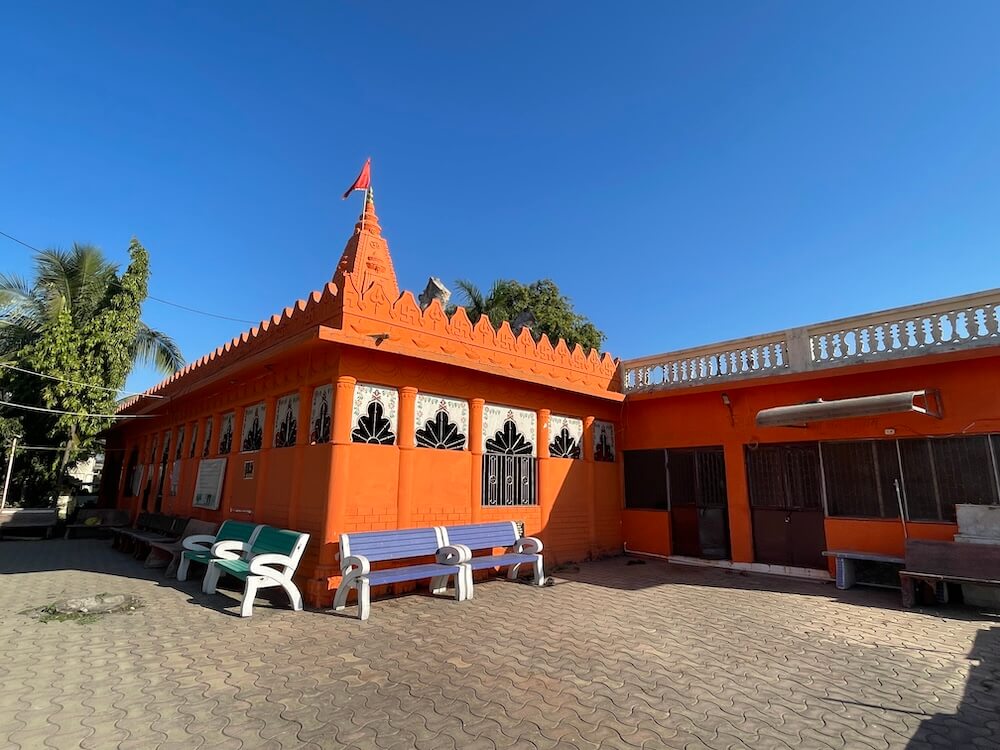 The legends regarding this ancient site suggest that Lord Brahma once visited the ashram of Sage Bhrigu at Pushkar Tirtha. There, Mata Narmada appeared before him and commanded him to perform the ‘Mahavirat Koti Gayatri Mahayajna’ and the ‘Dashashwamedh Yajna’ at Bhrigukshetra for the duration of an entire Yuga (epoch). Following her divine decree, Lord Brahma conducted the sacrifices at this holy site. It is said that thirty-three ‘koti’ (types) deities, eighty-eight thousand sages, eighty-four thousand ‘Siddhas’ and millions of ascetics performed penance here for an epoch. Subsequently, Lord Brahma established the Gayatri Pith and, inspired by Sage Bhrigu, the Brahma Pith. Later, Alakhgiri Maharaj undertook the restoration of these sacred seats to establish this magnificent ashram-temple.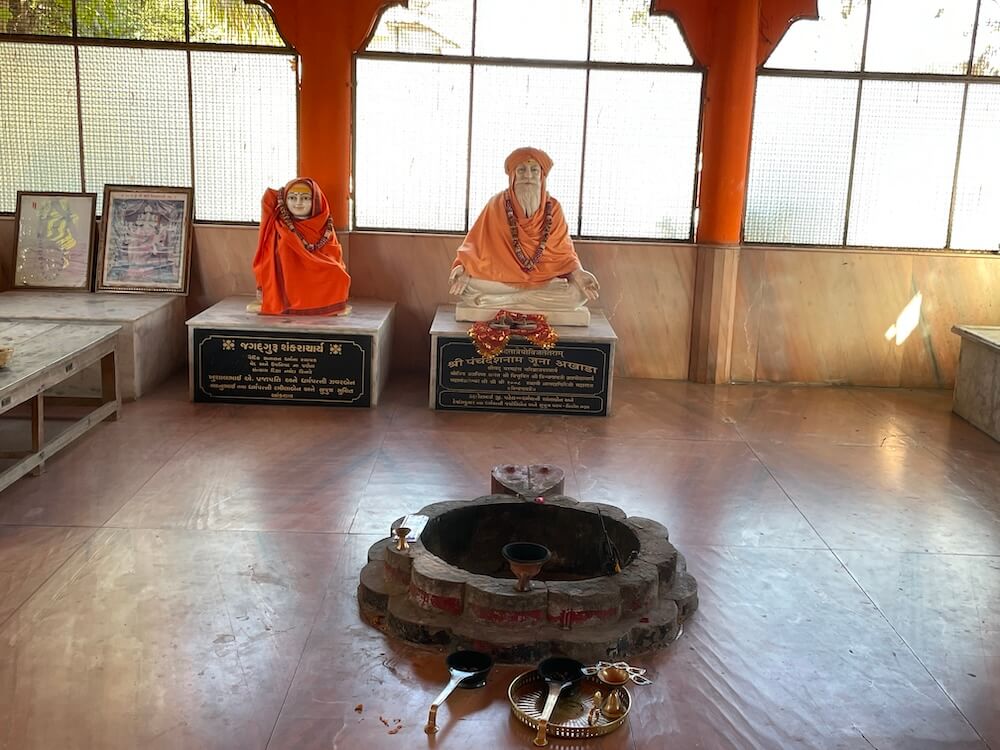
Regarding Alakhgiri Maharaj, he was born in 1939 in the village of Kod in Anand district. A devoted follower of Lord Krishna from childhood, it is said that he composed nearly 750 Krishna Bhajans (devotional songs) by the age of seven. His guru was Mahant Amritgiri Maharaj, the founder of the Kamandal Kund at Girnar. At the age of twelve, he travelled to Mount Kailash with his guru to perform penance at Mansarovar and worshipped Gayatri. Under his guru’s instructions, he completed twenty-four circumambulations of Girnar. Thereafter, observing a vow of silence, he performed the Narmada Parikrama in a ‘Digambar’ (unclothed) state for three years. Whilst engaged in penance here, he was granted visions of Goddess Narmada for three consecutive nights, followed by the appearance of the Saptarishis – Vasistha, Vishwamitra, Bhrigu, Gautam, 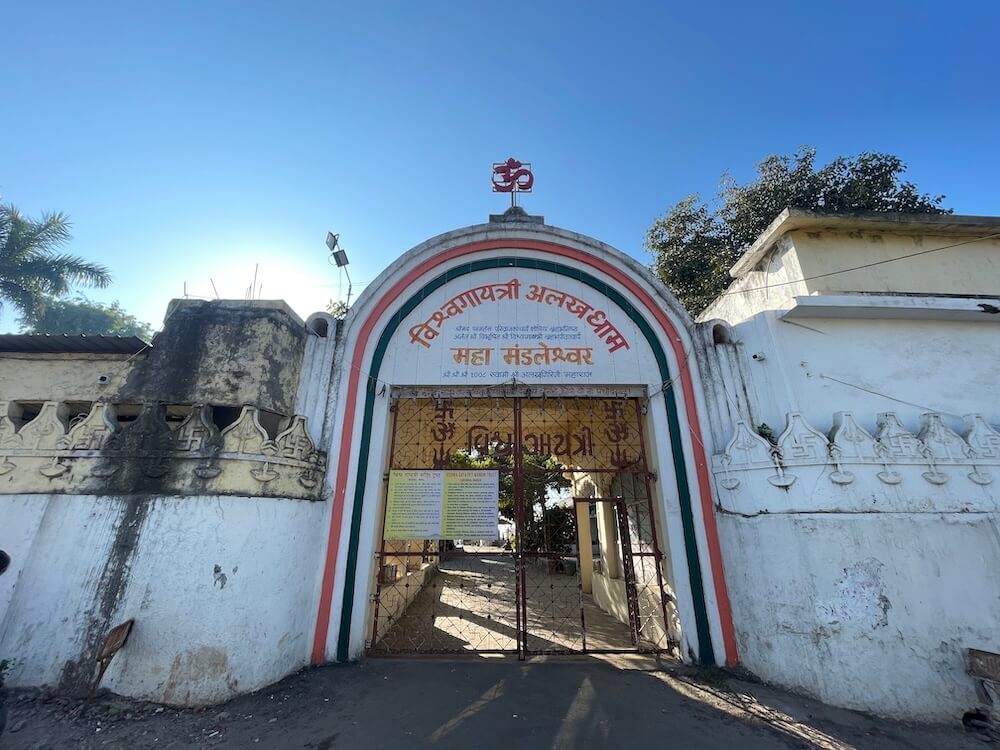 Yajnavalkya, Atri and Markandeya. Mother Gayatri then commanded him to restore the Brahma Pith. In 2001, he was conferred the title of ‘Mahamandaleshwar Shri 1008’. Alakhgiri Maharaj also served as the director of the ‘National Saint Committee’. He established eight ashrams in total, located in Kasod, Bharuch, Vadodara, Savli, Kanoda, Simdi and Khambhat in Gujarat, as well as one in the United States. He passed away on 30 June 2023 at the age of eighty-four.
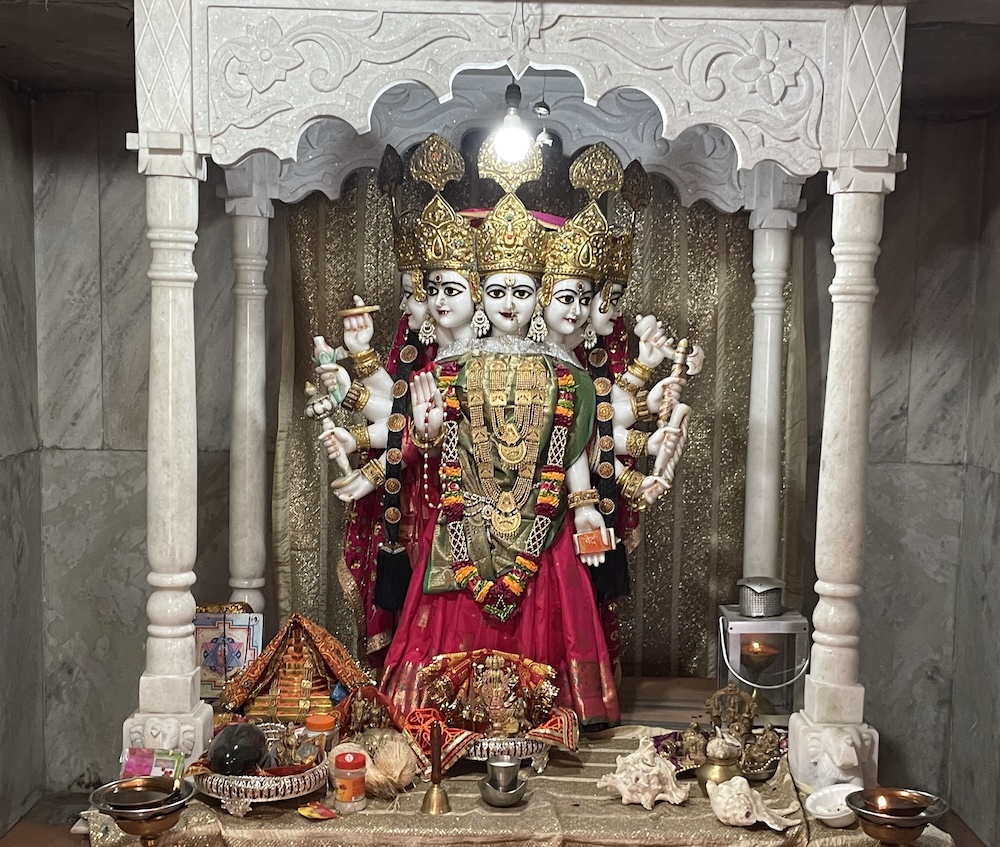
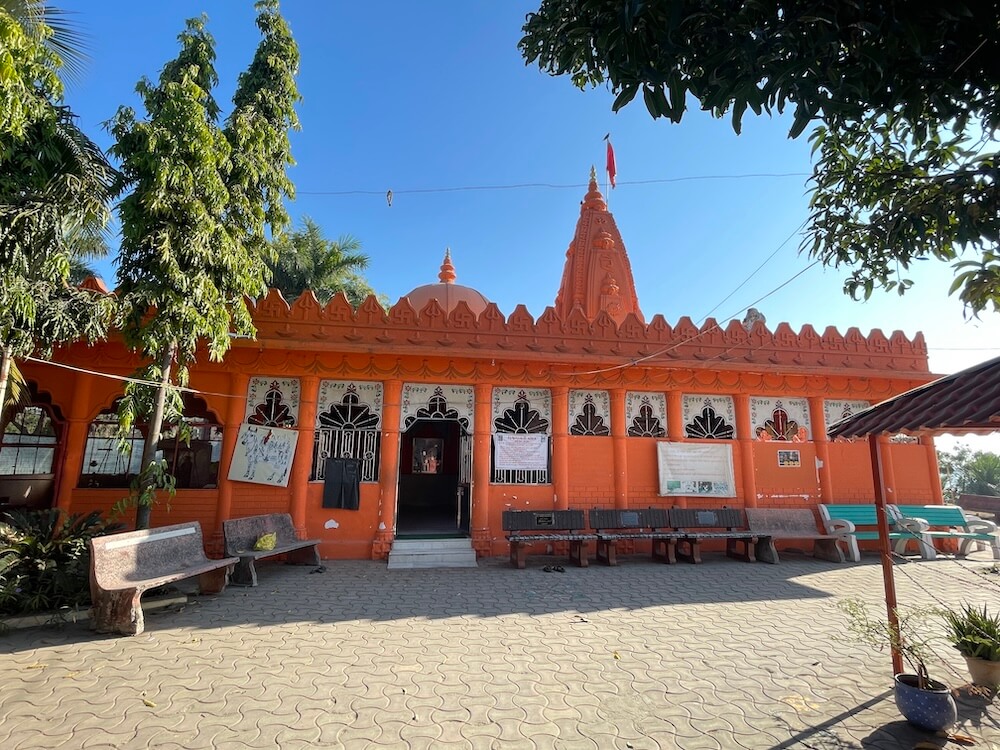
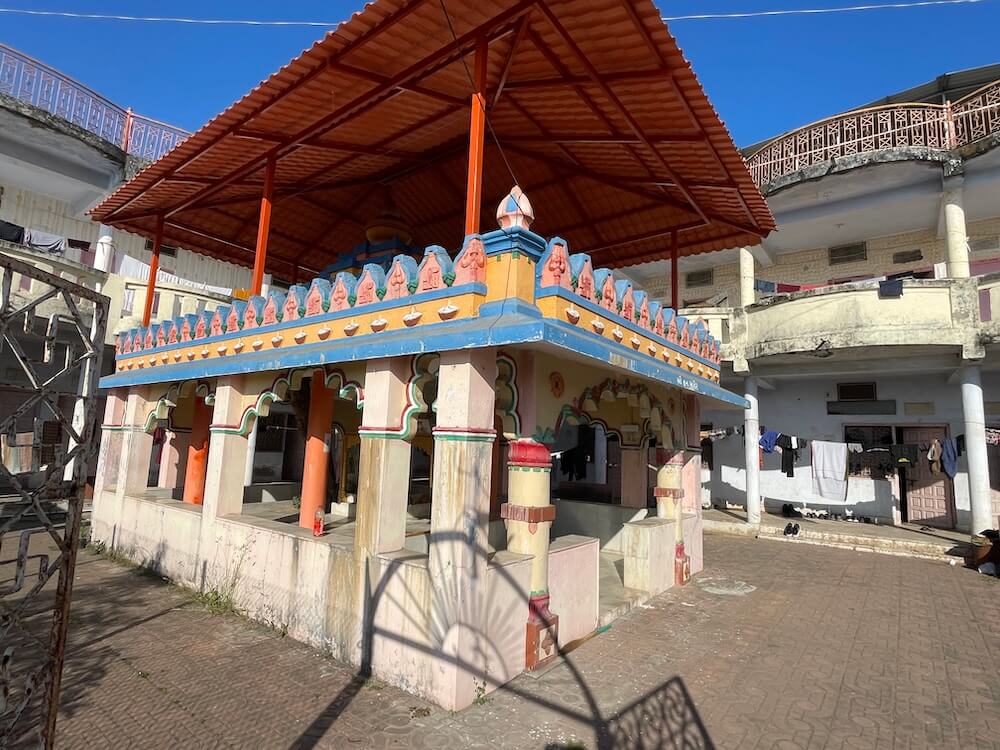
Vishwa Gayatri Alakhdham is situated within an expansive compound on the banks of the Narmada near the Cable Bridge at Sanskar Bunglow area. The ashram-temple is enclosed by a substantial wall featuring an arched gateway.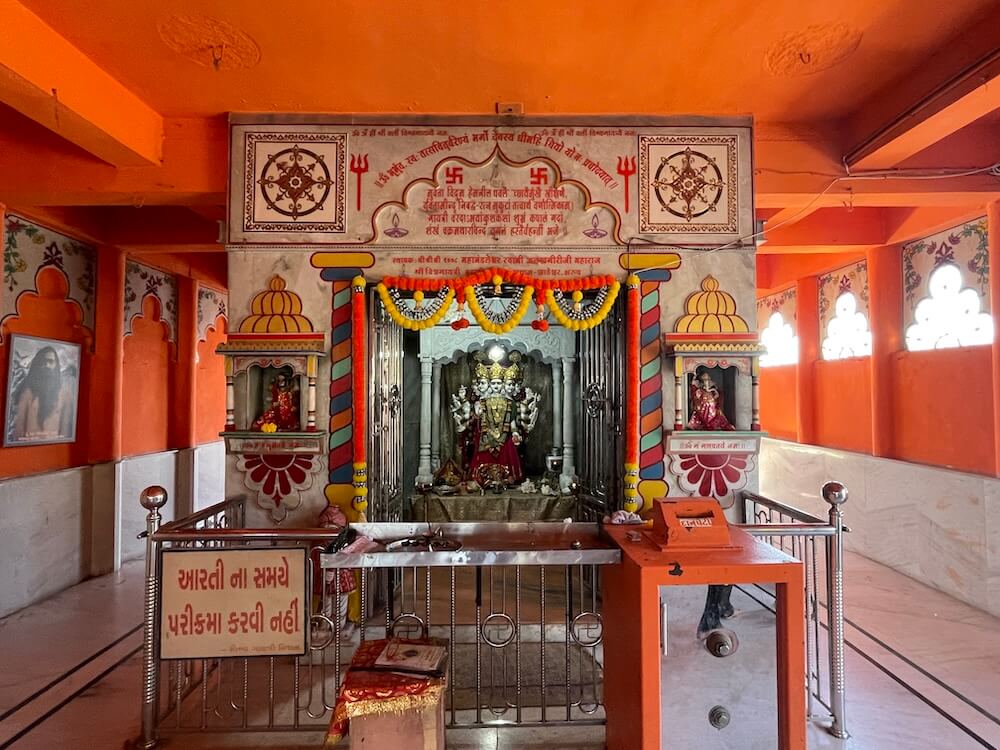 Proceeding along a paved path, the Vishwa Gayatri Temple structure stands to the left. Its architecture comprises a spacious Sabhamandap (assembly hall) and a sanctum sanctorum. The sanctum is crowned by a soaring Urushringa style spire, while the assembly hall features a domed roof. Within the Sabhamandap, portraits of Alakhgiri Maharaj, Bawajiram Maharaj, Amritgiri Maharaj and Sarveshwaranand Maharaj adorn the walls. On the front wall of the sanctum, Hanuman is enshrined in the left niche and Ganesha in the right. Sculptures of Dwarpals (celestial gatekeepers) guard the entrance pillars. Inside, upon a high Vajrapith (pedestal), within a marble canopy resides the idol of Goddess Gayatri. Carved from marble, this idol possesses five faces and ten arms. The deity is adorned with opulent silken garments and jewellery.
  Each of her five heads wears a golden crown and her hands hold various weapons, a lotus flower and the Vedas. A metal idol of the Goddess and a ‘Shri Yantra’ are placed before this central image.
Directly in front of the sanctum is a semi-open outer pavilion containing a central Homakunda (sacrificial fire pit). Here, idols of Adi Shankaracharya and Alakhgiri Maharaj are situated upon a pedestal. Alakhgiri Maharaj’s Padukas (sacred footwear) are placed upon his pedestal. To the right of this pavilion, marble niches house idols of Radha-Krishna and Goddess Narmada.
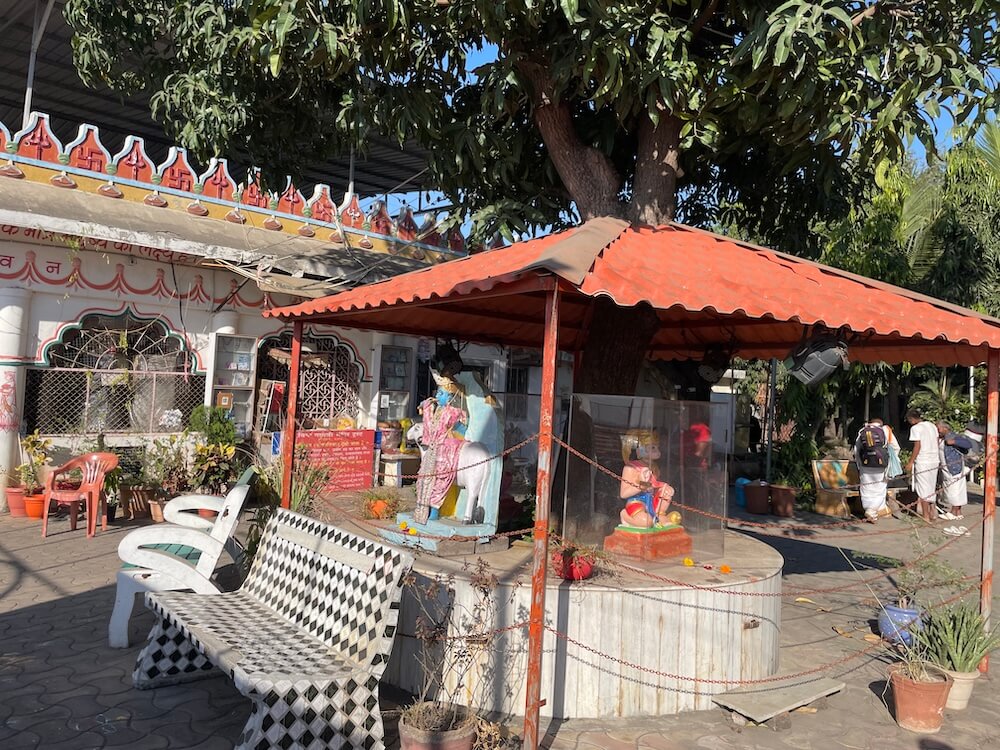
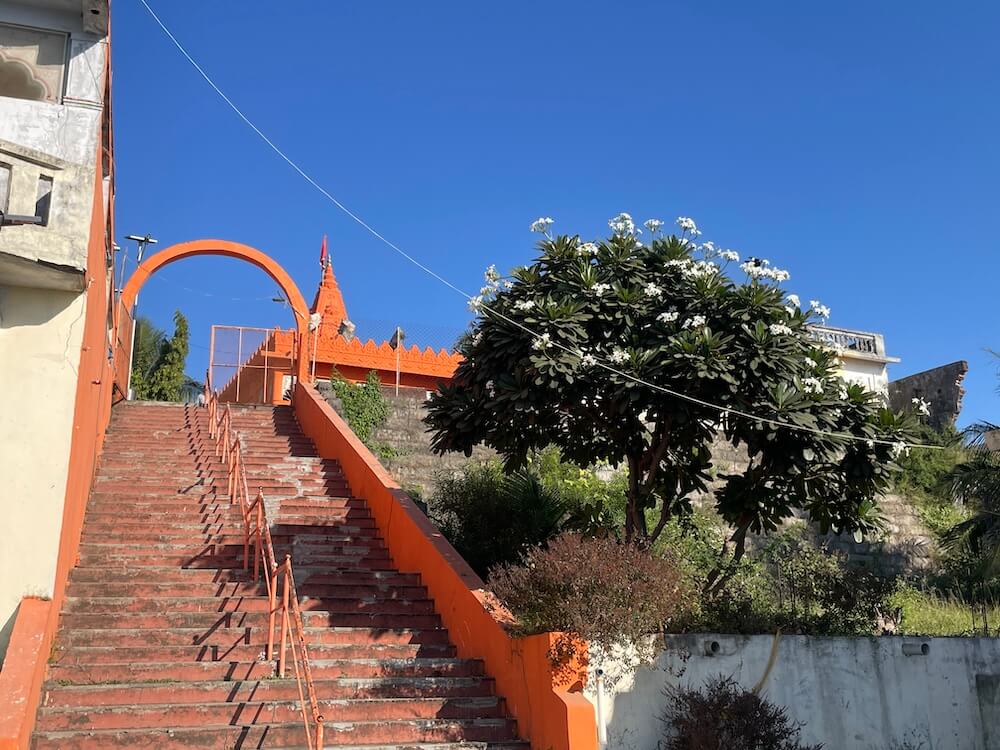
In front of the Vishwa Gayatri Temple, a raised stone platform beneath a tree enshrines Shani, Hanuman, Ganpati and Shri Krishna. From this platform, a path leads towards the Narmada ghat.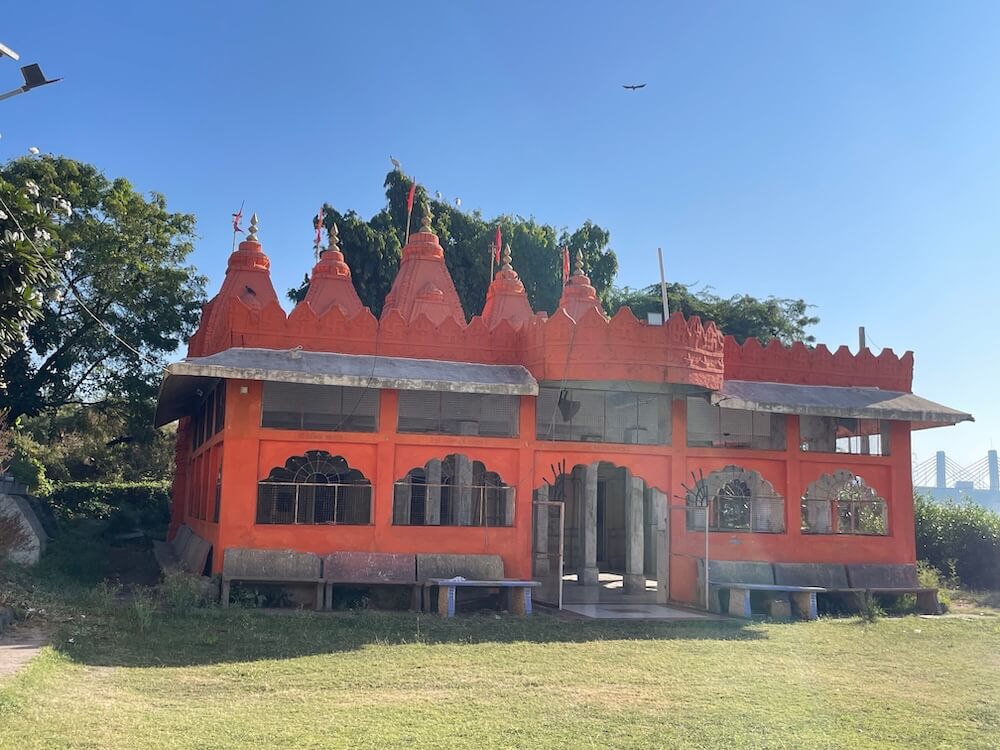 Descending forty-three steps through an entrance arch, one reaches a large open ground where the grand Panchadevi Temple stands to the left.
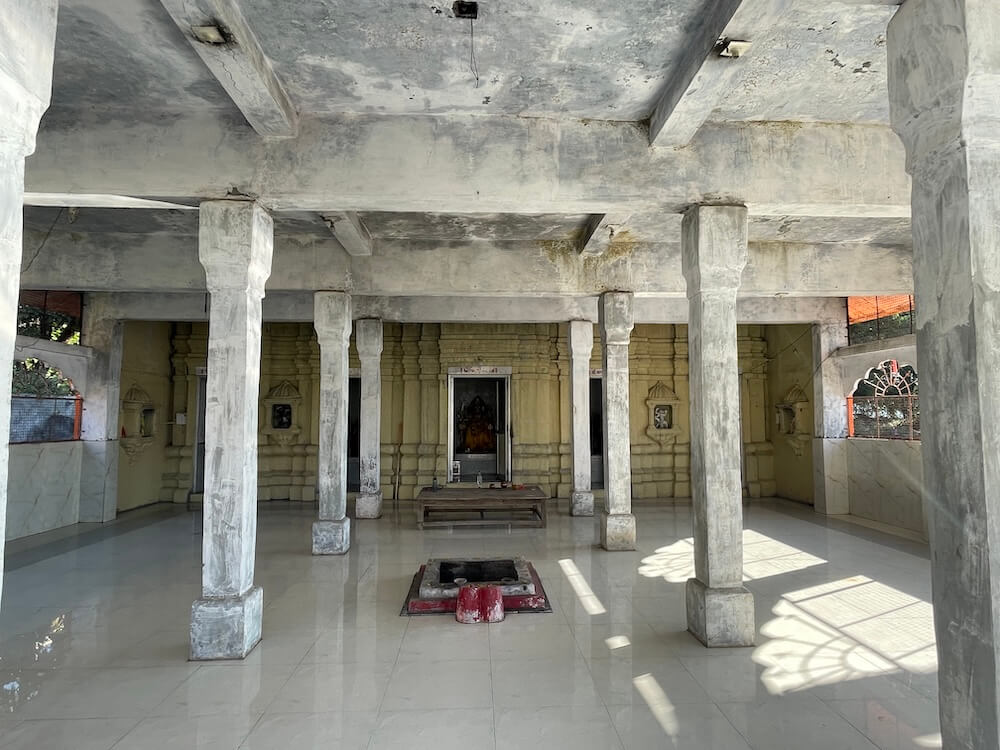
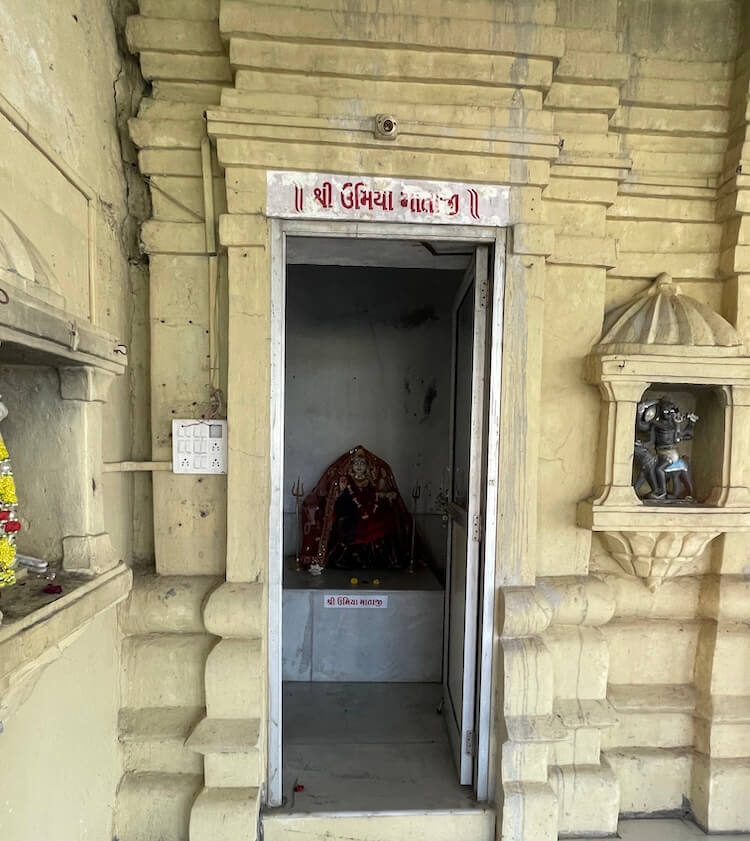
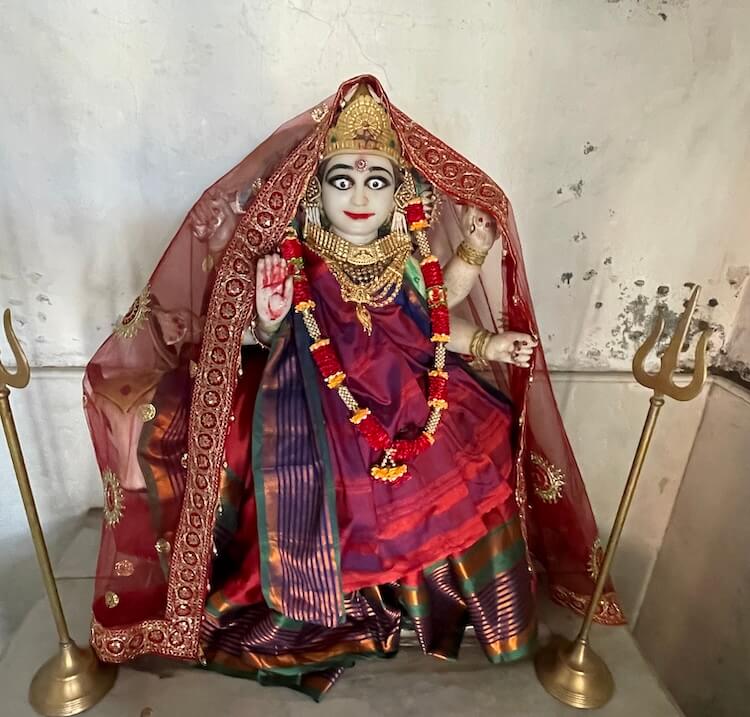
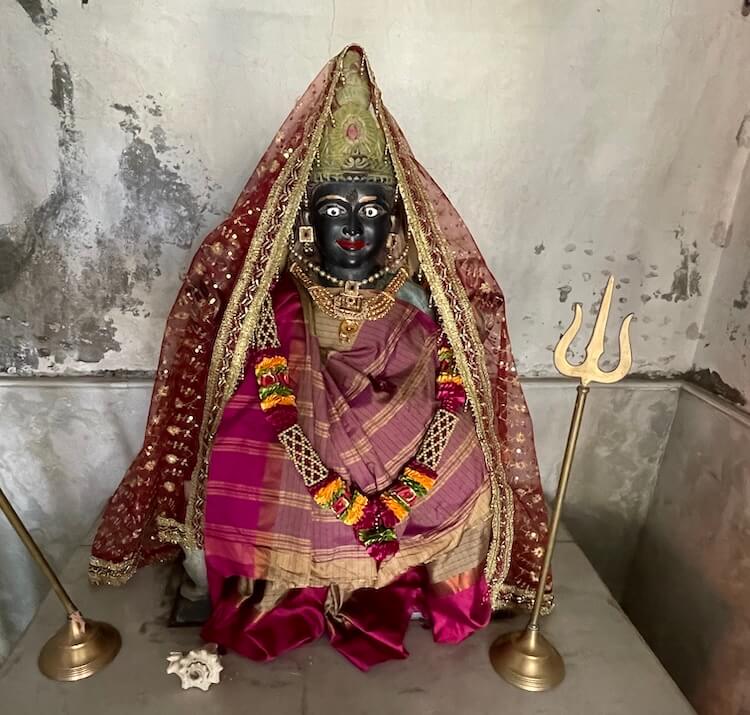
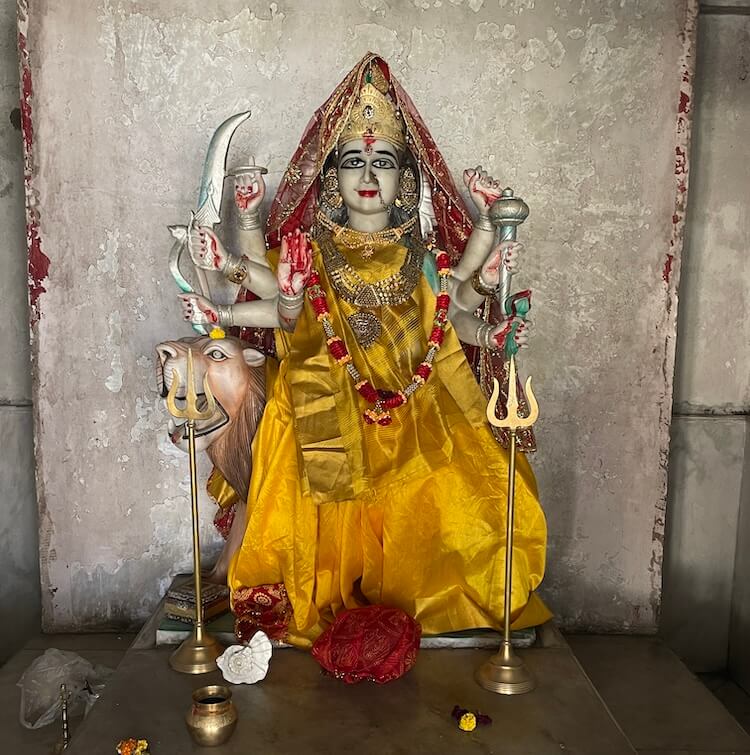
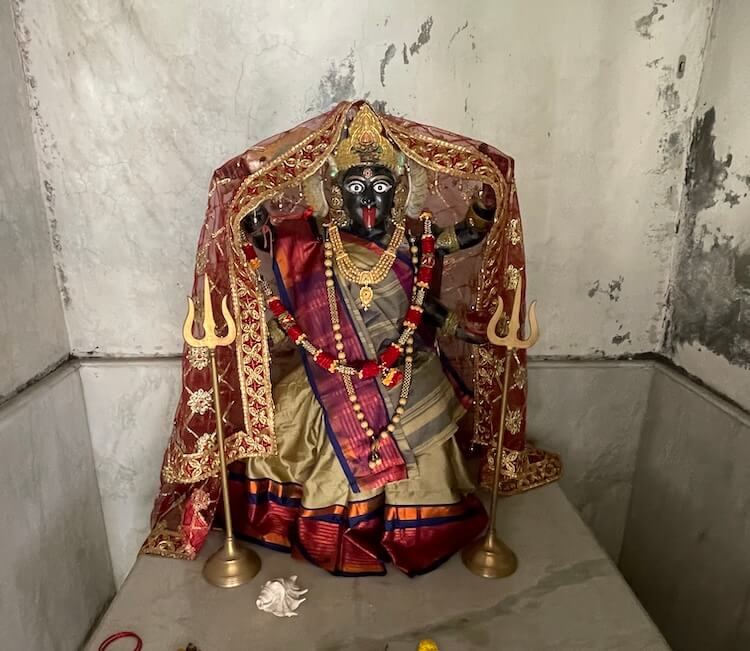
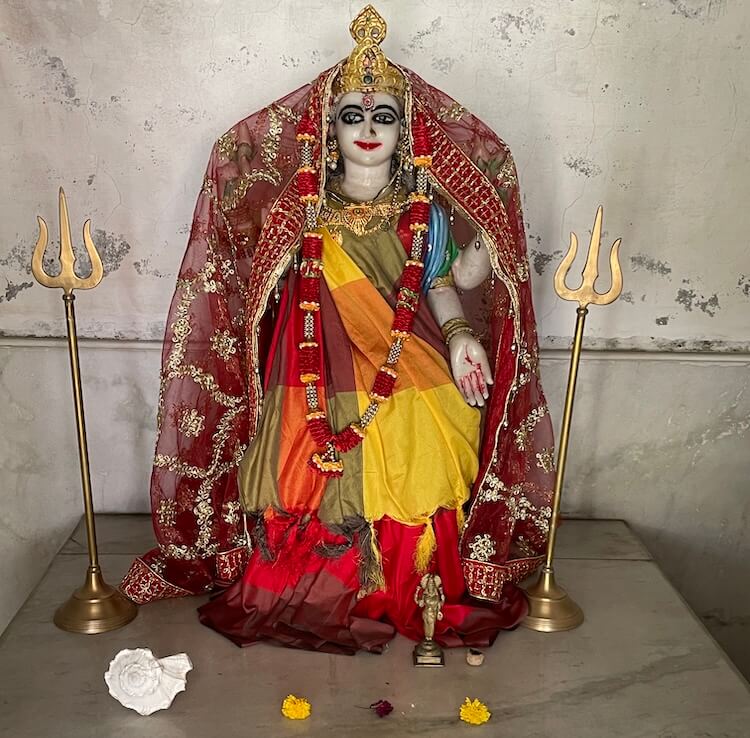
This two-storeyed temple features a large assembly hall built in a modern style, while the main temple retains a traditional architectural character. As the temple houses five sanctums, it is topped with five spires. A Havankunda (fire pit) sits at the centre of the assembly hall. Facing this are five adjacent sanctums, with niches on their front walls housing Hanuman, Kaal Bhairav and Ganpati. From left to right, the sanctums are dedicated to Umiya Mata, Annapurna Mata, Ambaji Mata, Mahakali and Mahalakshmi. The idol of Umiya Mata is of marble and four-armed, while Annapurna Mata is carved from black stone. Ambaji Mata is represented as eight-armed, holding a mace, conch, discus, 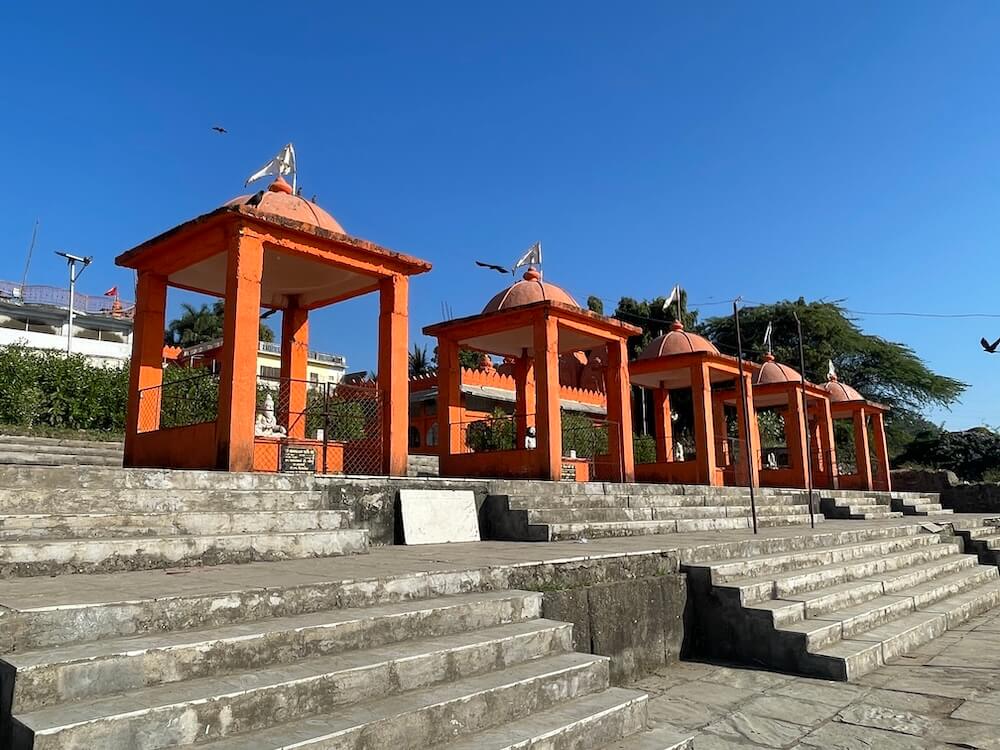 bow and flower whilst mounted upon a lion. Mahakali is fashioned from black stone and the four-armed Mahalakshmi is carved from marble.
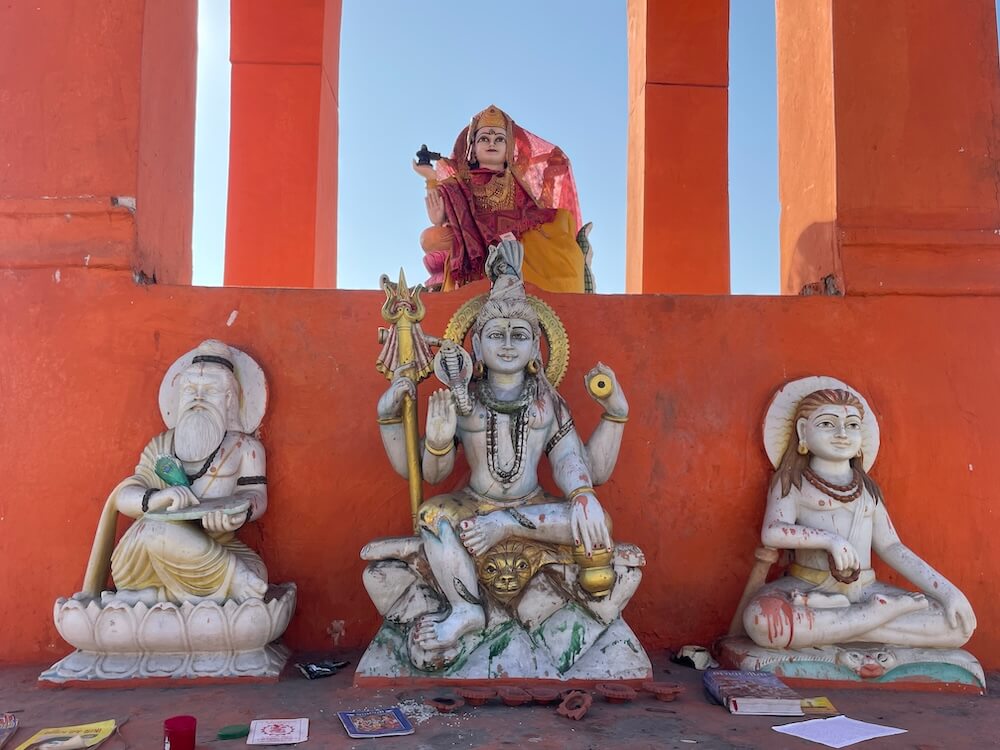
A short distance away lies the Narmada Ghat. Upon this ghat, square pavilions enshrine the idols of the seven sages: Markandeya, Atri, Yajnavalkya, Gautam, Bhrigu, Vishwamitra and Vasishtha. Further along, beneath a high pavilion near the water’s edge, is an idol of Mother Narmada seated upon a Makara (a crocodile). Adjacent to this pavilion, a platform houses the idols of Sage Mekal, Lord Shiva and Nathyogi Gorakhnath.
The Alakhdham complex also includes a Datta Temple and the Naradeshwar Mahadev Temple, the latter consecrated by Alakhgiri Maharaj himself. 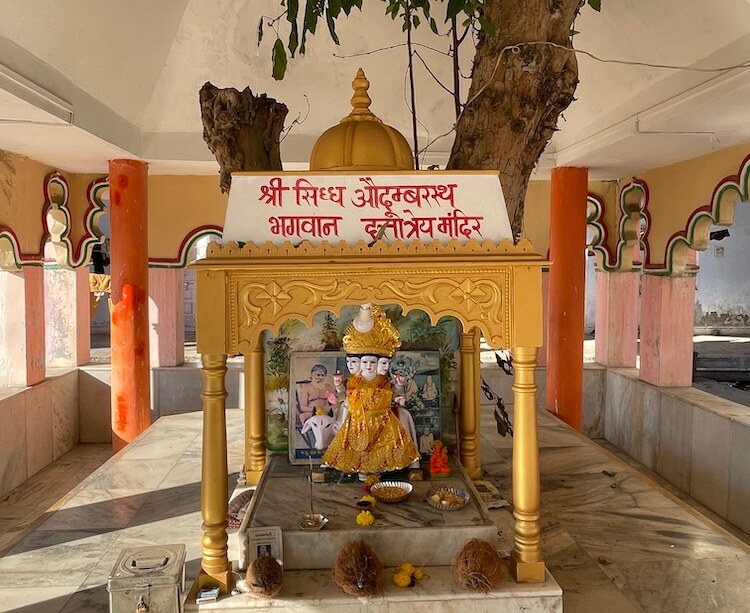 A Dharamshala (pilgrim rest house) within the premises provides lodging and meals for those performing the Narmada Parikrama. Various religious programmes are conducted in the Amrit Yogalaya near the rest house and the complex also maintains a Goshala (cowshed). A short distance from the cowshed is the sacred seat of Rang Avadhoot Maharaj.
Devotees may seek Darshan at the Vishwa Gayatri Alakhdham Temple from 5:00 am to 12:00 pm and from 4:00 pm to 8:00 pm. Various festivals are celebrated throughout the year, with special rituals performed during the month of Shravan. A ten-day festival is held here on the occasion of Narmada Jayanti. This festival features the ‘24-Kundi Gayatri Mahayajna’, the offering of a sari to the river Narmada, a Maha Aarti of Mother Narmada with four lakh lamps and Annakut (an offering of a mountain of food). A grand Pothi Yatra (scriptural procession) is also taken from the temple through the village. It is a firm belief amongst the faithful that offering a coconut, lamp, incense and a Sawa-ser (approximately 1.25 kg) of Sukhadi (a traditional sweet) to Goddess Gayatri on a Thursday or Sunday, followed by twenty-four circumambulations of the sanctum, ensures the fulfilment of all desires. Consequently, these two days (Thursday and Sunday) witness a significant influx of devotees.
Useful Information –
- 7 km away from Bharuch
- ST (State Transport) bus facility available from Bharuch
- Private vehicles can reach up to the temple parking
- Accommodation and breakfast facilities are available in the vicinity
- Contact : Temple Office, Mo. : +91 9427110975
विश्व गायत्री अलखधाम
ज़ादेश्वर-भरूच, ताल./जिला. भरूच
मंदिरे
Temples
मंदिर
-
कोटेश्वर महादेव मंदिर कदोद, ता. भरुच, जि. भरुच
अधिक माहितीKoteshwar Mahadev Temple Kadod, Tal. Bharuch, Dist. Bharuch
View Detailsकोटेश्वर महादेव मंदिर कडोद, ताल. भरूच, जिला. भरूच
विवरण देखें -
धर्मेश्वर महादेव मंदिर धर्मशाळा-झानोर, ता. भरुच, जि. भरुच
अधिक माहितीDharmeshwar Mahadev Temple Dharmashala-Jhanor, Tal. Bharuch, Dist. Bharuch
View Detailsधर्मेश्वर महादेव मंदिर धर्मशाला-झानोर, ताल. भरूच, जिला. भरूच
विवरण देखें -
साईबाबा मंदिर रामवाटिका सोसायटी, झाडेश्वर, ता./जि. भरुच
अधिक माहितीSai Baba Temple Ramvatika Society, Zadeshwar, Tal./Dist. Bharuch
View Detailsसाईं बाबा मंदिर रामवाटिका सोसायटी, जादेश्वर, ताल./जिला. भरूच
विवरण देखें