
Vireshwar Mahadev Temple
Sihunj, Tal. Mahemdavad, Dist. Kheda
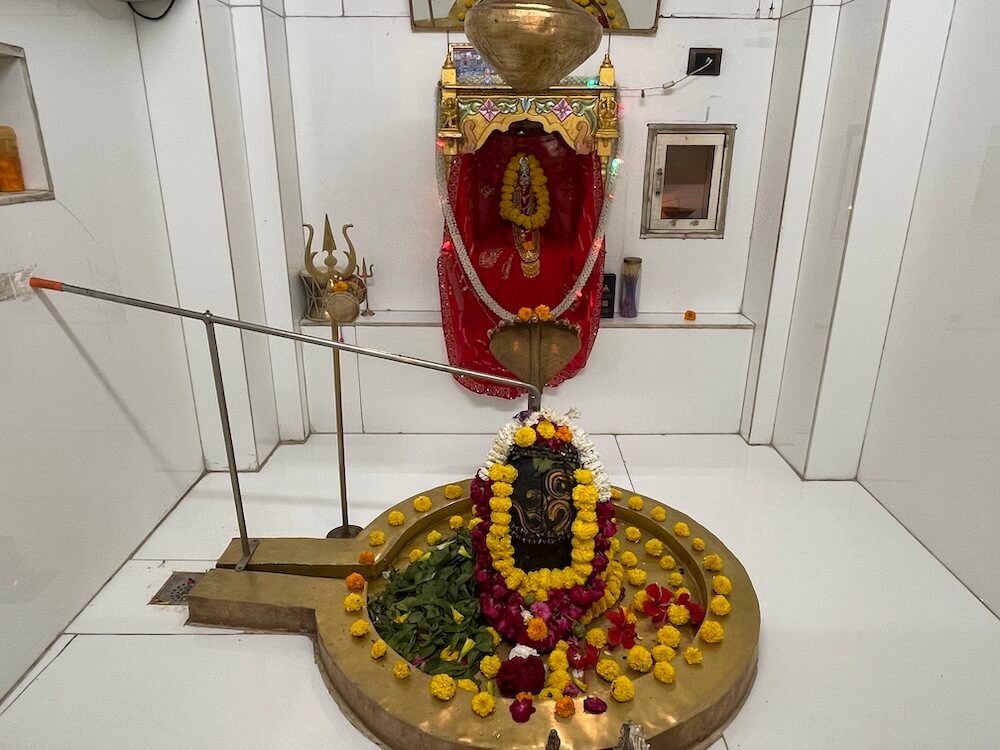 In the Gujarat region, the Kheda district is affectionately known as ‘Charotar’ – a name signifying either a land of golden leaves or a verdant pasture for kine. Within the Mahemdavad Taluka, where agriculture flourishes as the primary vocation due to the exceptionally fertile soil, the banks of the river Vatrak are graced by numerous shrines dedicated to Lord Shiva. Amongst these, the ancient Vireshwar Mahadev Temple in the village of Sihunj stands as a paramount sanctuary of faith. Revered as a symbol of devotion passed down through generations, Vireshwar Mahadev is widely celebrated as a deity who grants the ‘Manata’ (solemn vows) of his devotees. A distinctive and mystical feature of this temple is the perennial stream of water that flows continuously around the principal ‘Shivling’ (aniconic representation of Lord Shiva).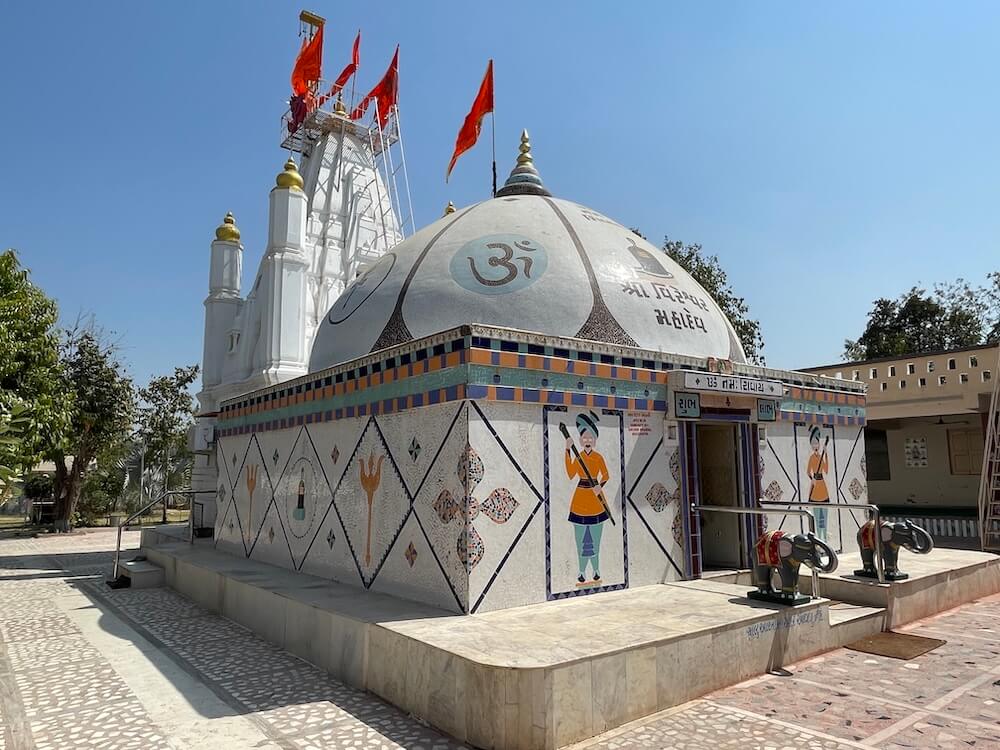
Historical scholars surmise that the Vireshwar Mahadev Temple, estimated to be six to seven hundred years old, was likely constructed during the Solanki or Vaghela dynasties of Gujarat. During the medieval period, the economic prosperity of Kheda— often called the ‘Golden Leaf’ district due to its tobacco production— fostered the creation of many artistically profound temples. It was during this era that Sultan Mahmud Begada, the founder of Mahemdavad city, led incursions against several Hindu shrines. Local historical records suggest that Sultan Begada himself caused damage to the ‘Shikhara’ (temple spire) of the Vireshwar Mahadev Temple.
 In the eighteenth century, the celebrated narrative poet Shamal Bhatt frequented the temple courtyard, immersing himself in ‘Saraswati-Sadhana’ (devotion to the Goddess of Learning). Born in 1694 in Gomtipur village in Ahmedabad district, Shamal Bhatt completed his religious education under his grandfather’s tutelage. Born to parents Vireshwar and Anandibai, he popularised the ‘Padyavarta’— a genre of narrative poetry based on folk legends. His literary repertoire, which often featured King Vikramaditya as the protagonist, comprises twenty-six major works, including ‘Singhasan Battisi’, ‘Baital Pachisi’, ‘Suda Bahoteri’, ‘Nand Battisi’, ‘Madan-Mohan’, ‘Padmavati’, ‘Rakhidas Charitra’, ‘Bhadra-Bhamini’ and ‘Chandra-Chandravati’. He is also credited with introducing the ‘Chappa’ poetic form to the Gujarati language.
 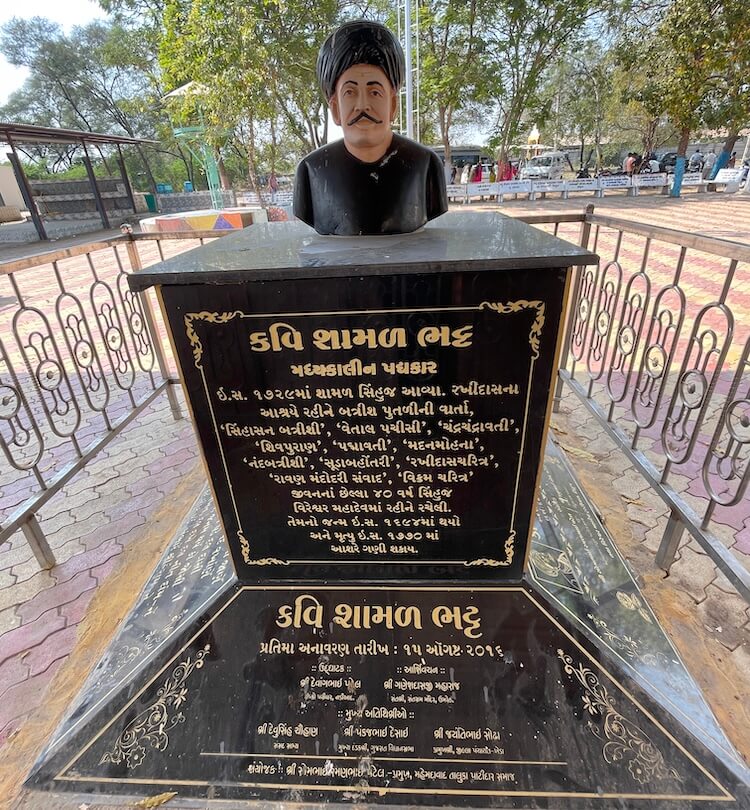 It is believed that his father was named Vireshwar in homage to the presiding deity of this very temple. Shamal Bhatt passed away in 1769.
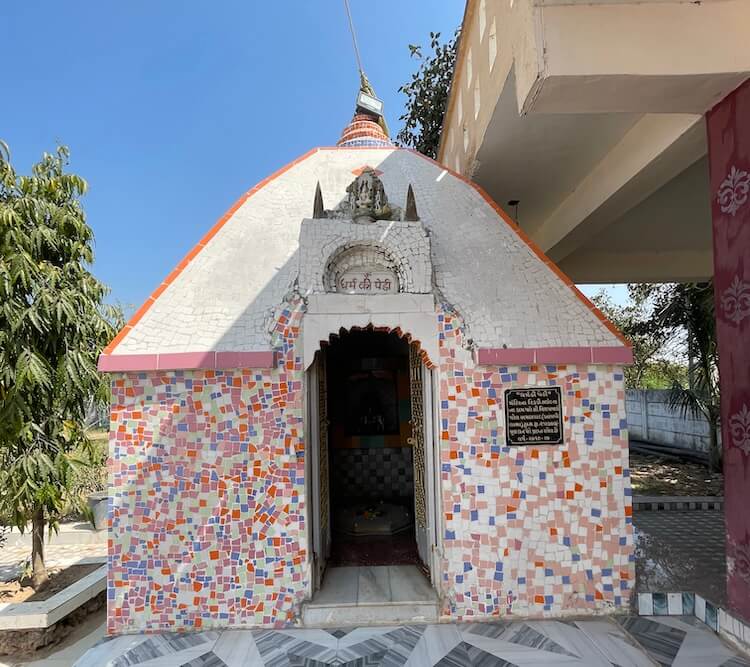
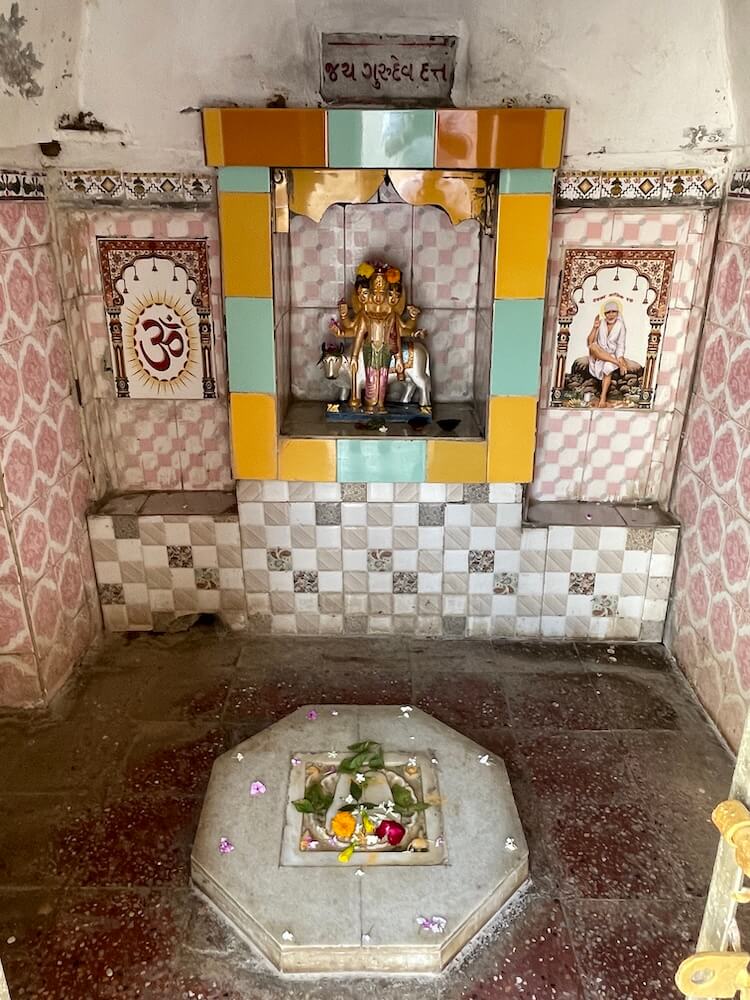
The local legend of the temple recounts that in antiquity, when the area surrounding Sihunj was a dense forest, cowherds would graze their cattle therein. They observed a milch cow that would daily release her milk over a specific spot. Upon excavating the earth at that site, a ‘Shivpind’ (auspicious stone of Shiva) was revealed to the astonishment of the locals. With the villagers’ collective efforts, a temple was subsequently erected to enshrine the manifested deity. Adjacent to the main structure stands a smaller shrine known as ‘Dharm ki Pedi’, housing ‘Padmapaduka’ (lotus footprints) upon the floor. Local tradition maintains that this is the sacred spot where Dharmaraja Yudhishthira rested during his period of exile in incognito.
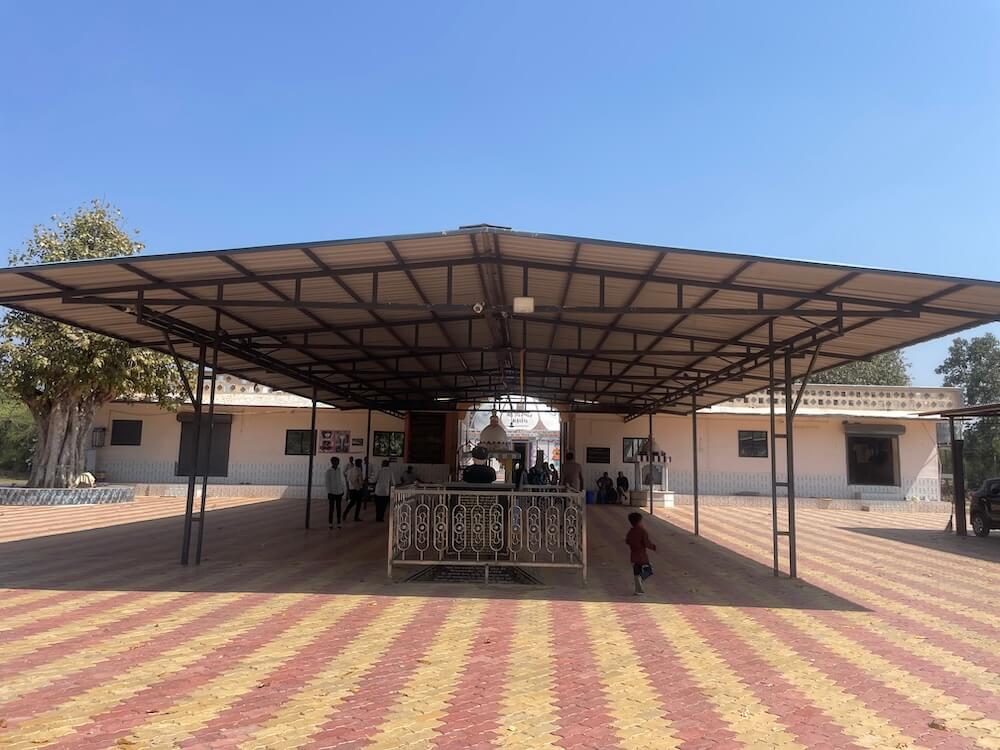
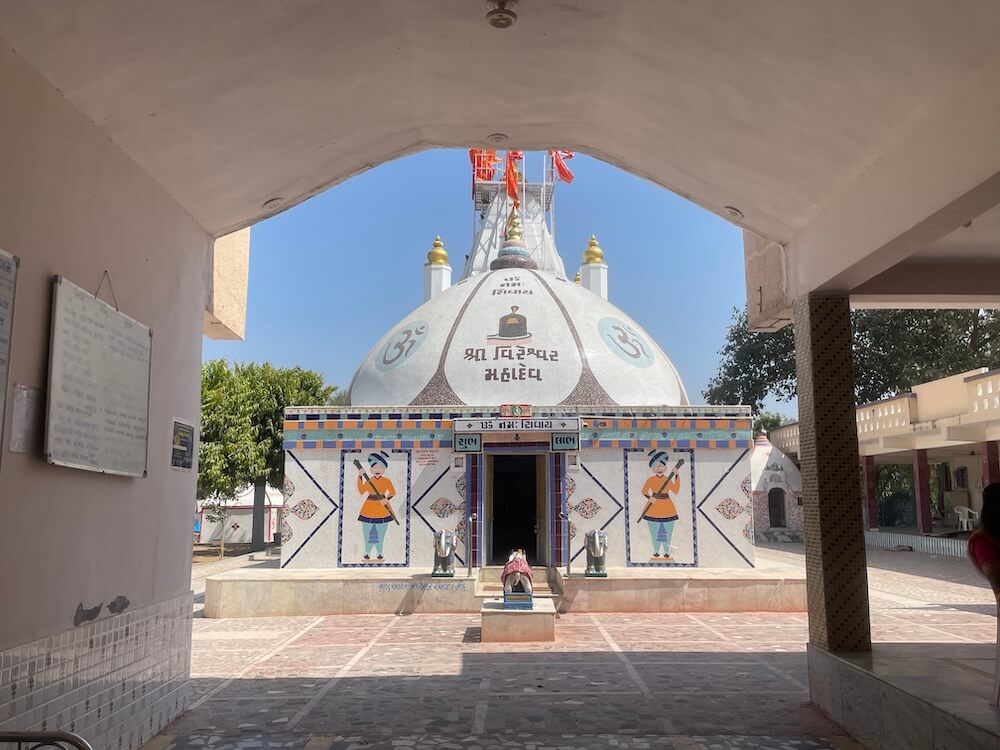
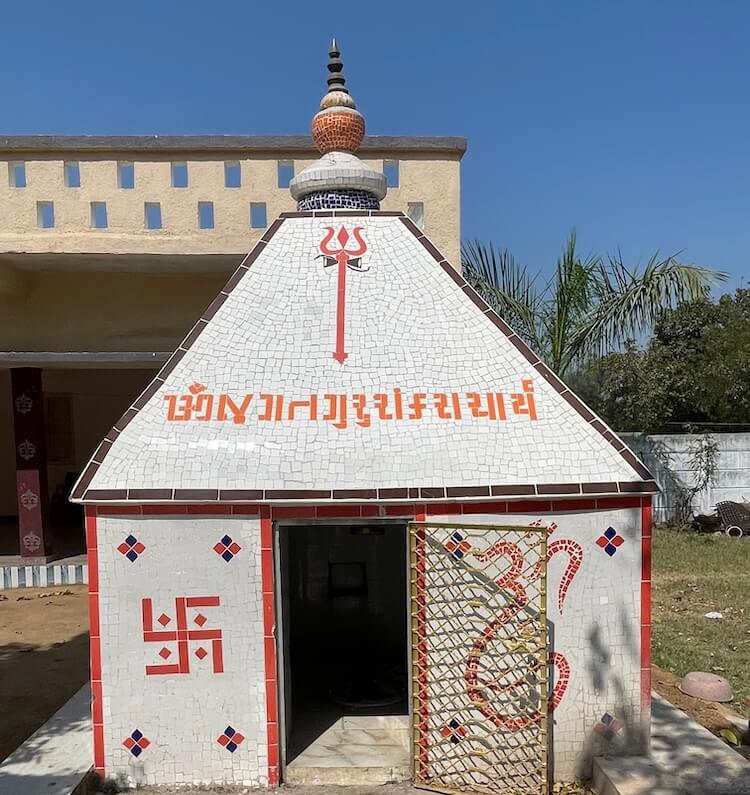
From the main road passing near Sihunj, a diversion leads towards the temple. A gateway marks the entrance, from which a narrow path proceeds directly to the sanctuary.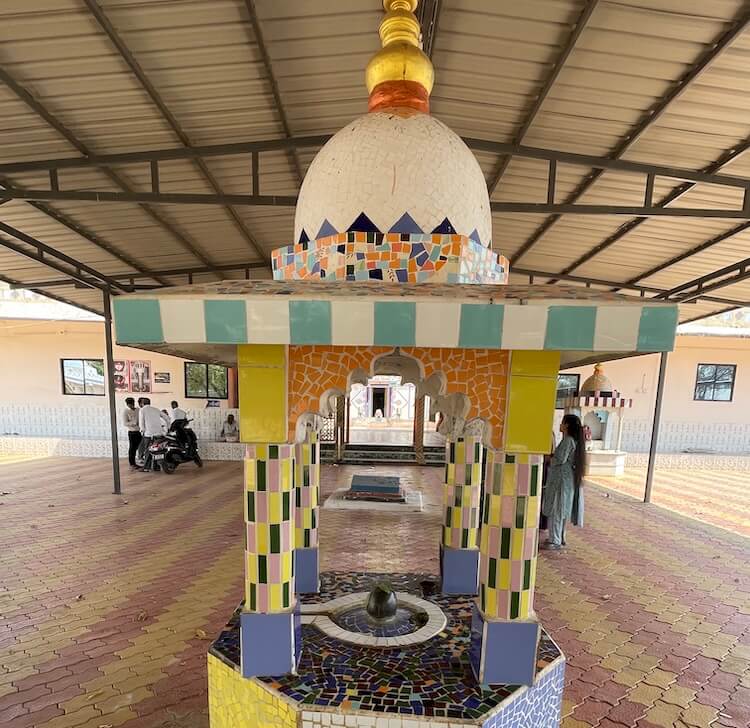 Upon entry, one arrives at a spacious courtyard paved with blocks, adorned with ‘Kadamba’ trees— which evoke memories of Shri Krishna— and an ancient well. The villagers maintain that the water in this well is ‘Akshay’ (inexhaustible). Fronting the temple is a ‘Rangmandap’ (porch) with a corrugated roof supported by iron pillars, housing a bust of the poet Shamal Bhatt. Within this porch, a ‘Shivpind’ is enshrined beneath a four-pillared canopy topped with a Shikhara and Kalashs (finials). Besides this canopy, there is a ‘Yagnakunda’ (sacrificial fire pit). The premises also accommodate the priests’ residences, the temple office and a cultural hall.
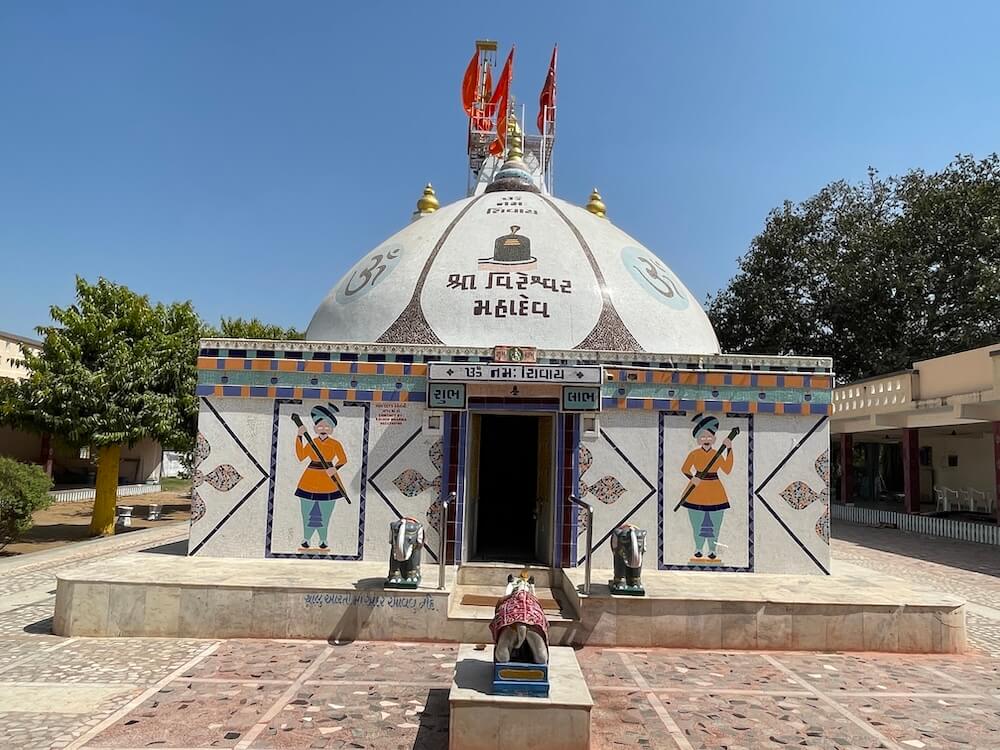
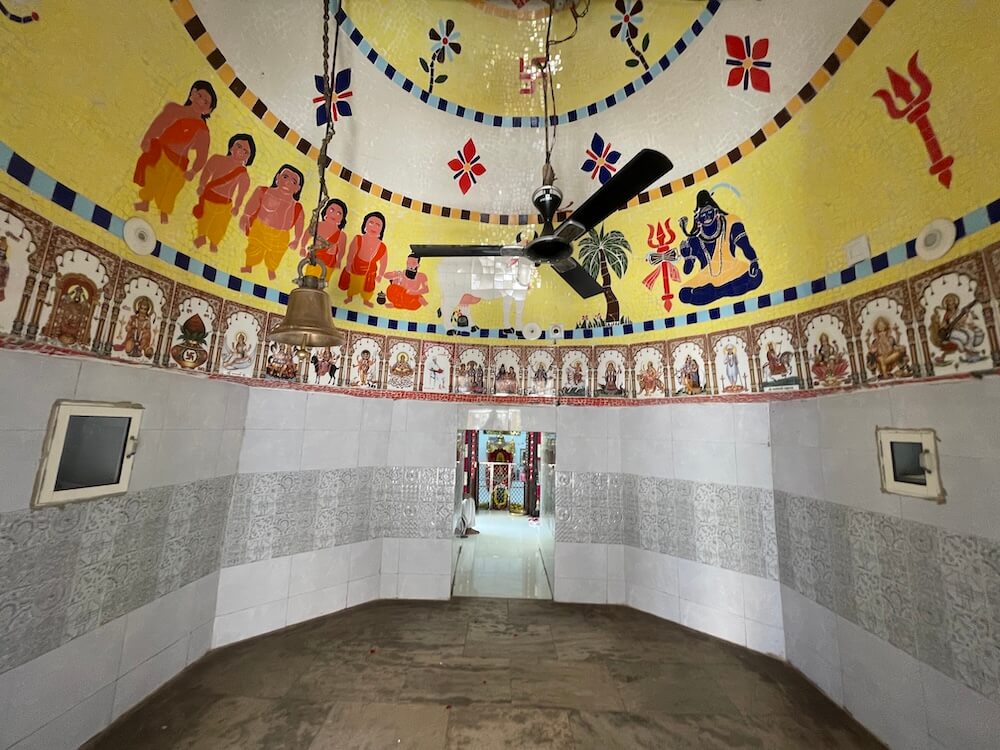
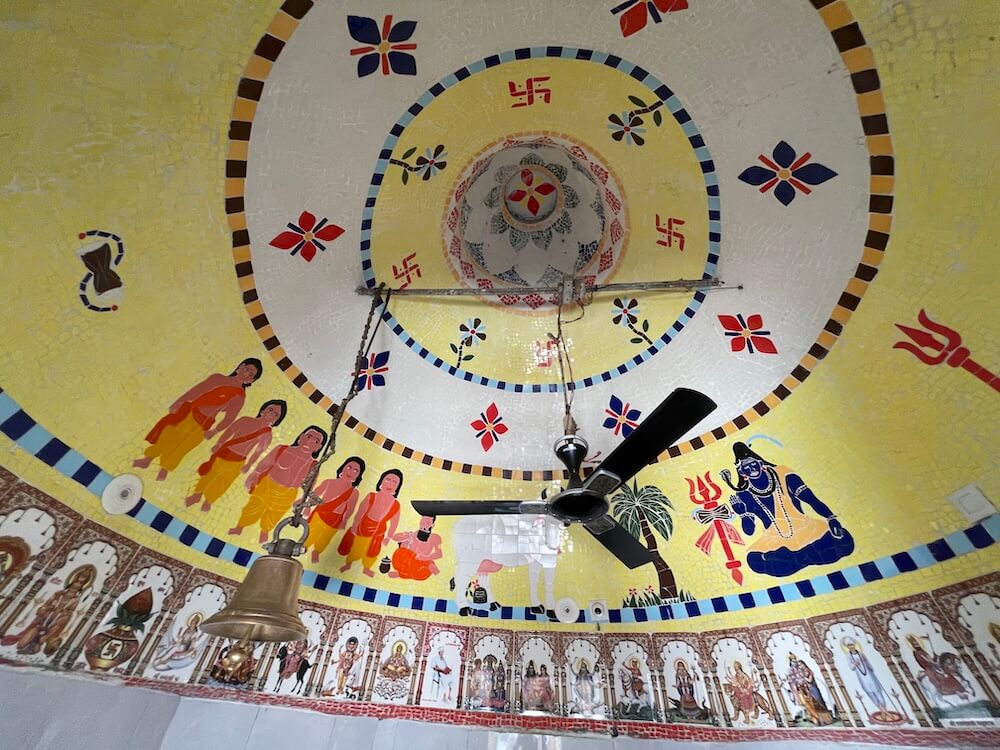
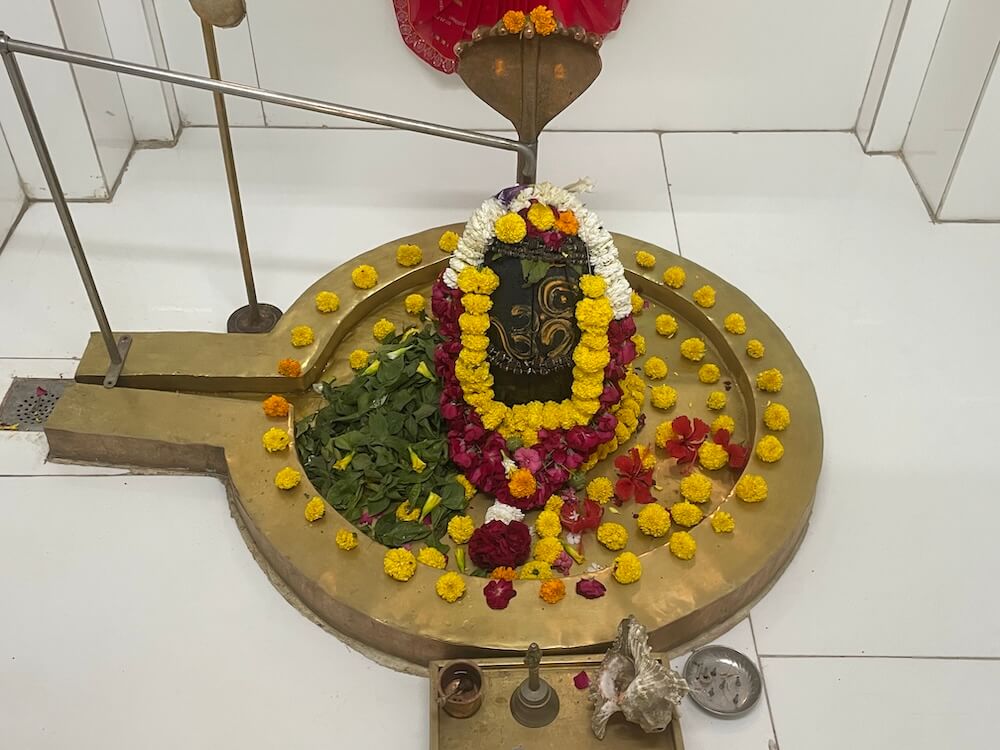
Influenced by the North Indian ‘Nagara’ style of architecture, the Vireshwar Mahadev Temple rests upon an ‘Adhishthana’ (plinth) approximately two feet high. The stone masonry of the main entrance features delicate carvings. The temple follows a traditional layout consisting of a Mukhamandap (entrance porch), Darshanmandap (viewing hall), Sabhamandap (assembly hall), Antaral (vestibule) and Garbhagriha (sanctum sanctorum). 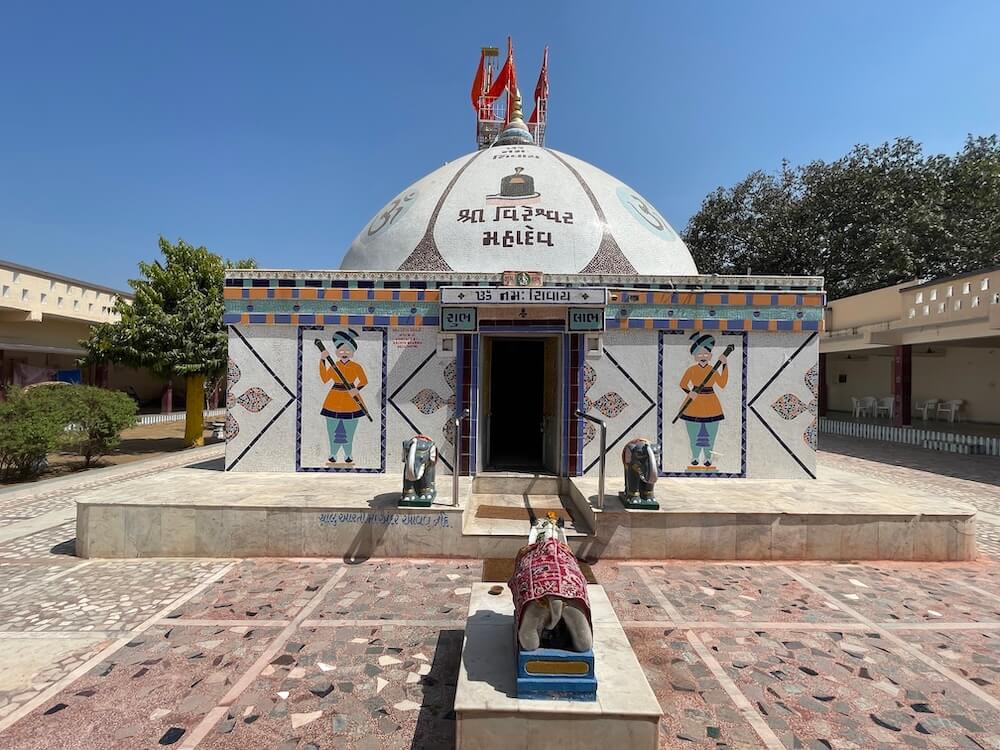 The Mukhamandap is supported by two ornate pillars. In the Darshanmandap, situated before the assembly hall entrance, an idol of ‘Nandi’ (the sacred bull) sits upon a pedestal, followed by a sculpture of a tortoise. The enclosed circular Sabhamandap features octagonal pillars carved with various deities and geometric patterns. Its ceiling is vibrantly painted with depictions of gods, foliage and fauna. Images of ‘Dwarpalas’ (gatekeepers) guard the entrance walls and the ‘Lalatabimba’ (central lintel) is engraved with a ‘Shivpind’. The ‘Garbhagriha’ is entered through a doorway encased in silver sheets, featuring engravings of Lord Ganesha and Goddess Lakshmi. At its heart, the ‘Shivpind’ is adorned with a brass casing and a copper cobra spreading its hood. An ‘Abhishek-patra’ (ritual vessel) hangs above and a trident stands nearby.
 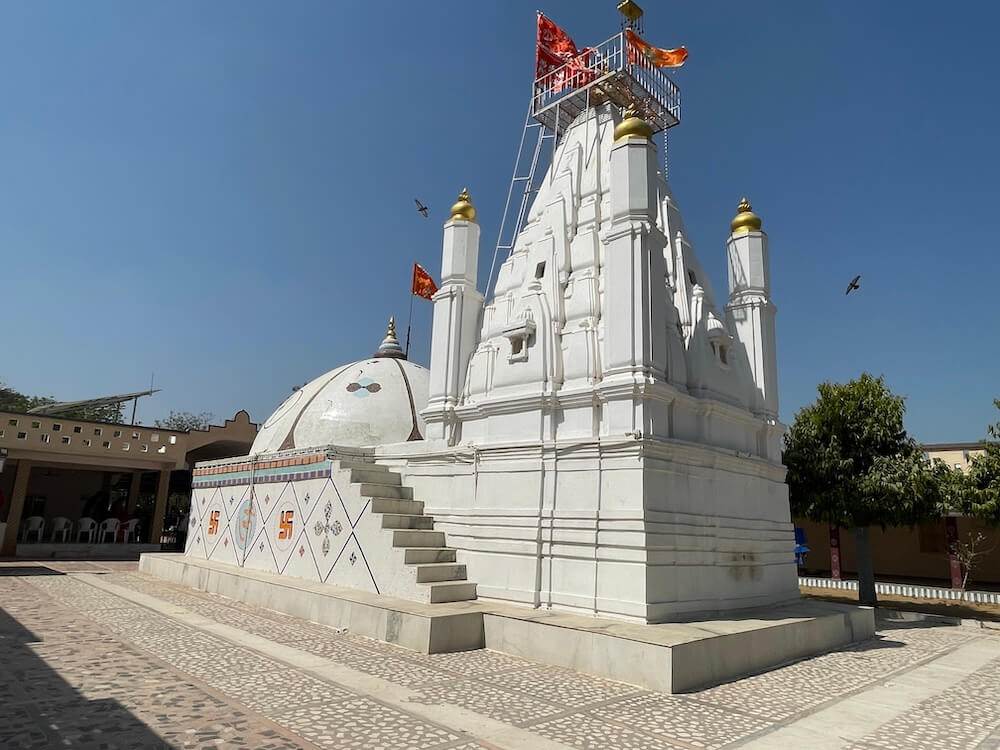 A niche in the rear wall of the sanctum houses an idol of Goddess Parvati.
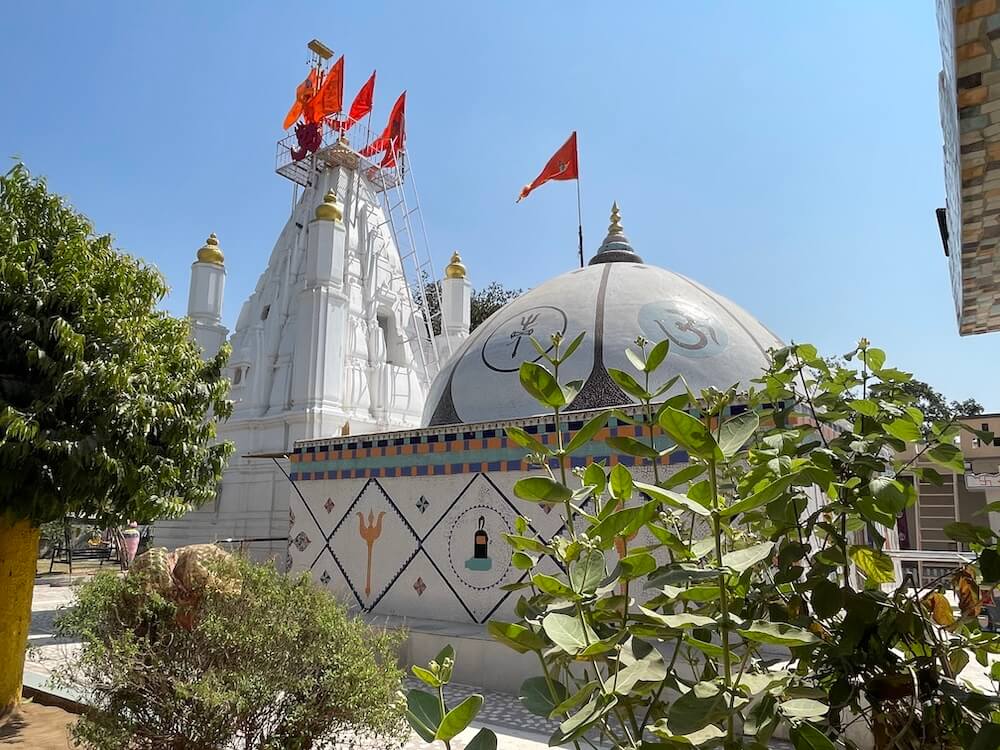
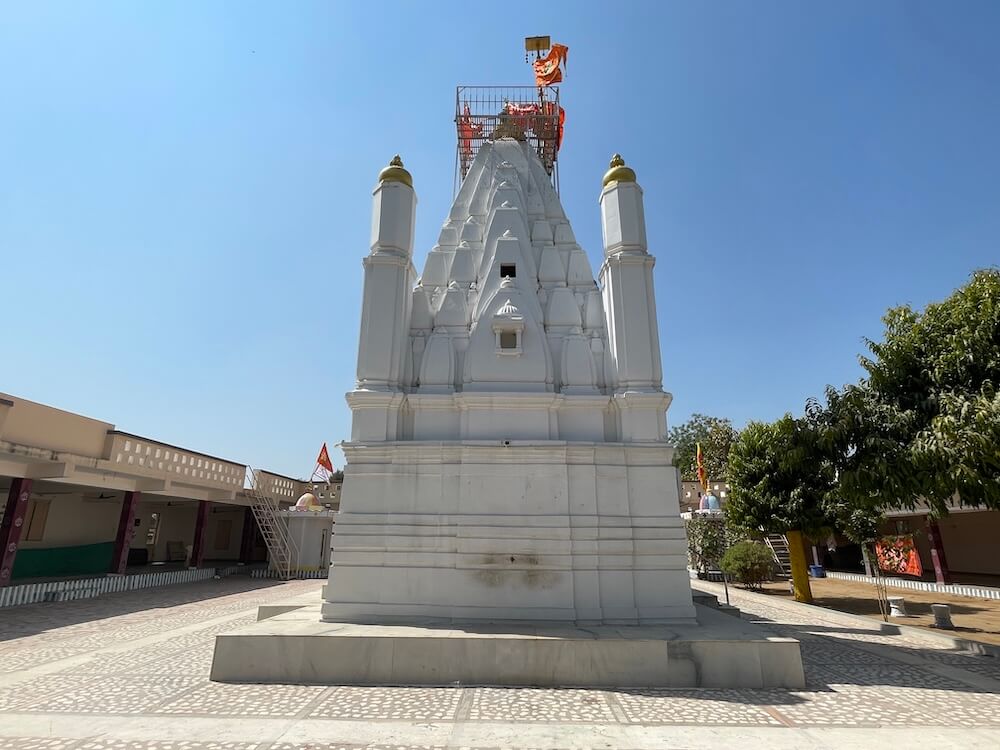
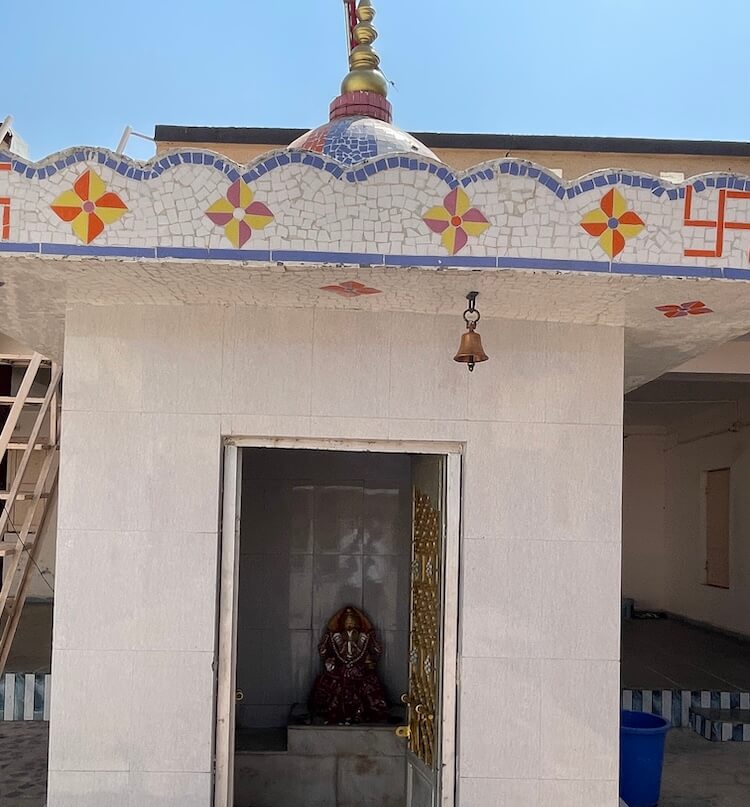
The exterior of the temple is equally refined. The domed roof of the Sabhamandap is topped with a ‘Stupika’ (pinnacle) and Kalasha. The four corners of the Garbhagriha roof are marked by subsidiary spires, each with an Amalaka (fluted disc) and Kalasha. The central Shikhara, rising between these four, is square-shaped and stepped in design, featuring niches with divine idols on all sides. Its summit is graced by an Amalaka, a gold-plated Kalasha and the ‘Dharmadhvaja’ (religious flag). The exterior walls, known as the ‘Jangha’, display various mythological episodes through intricate carvings. 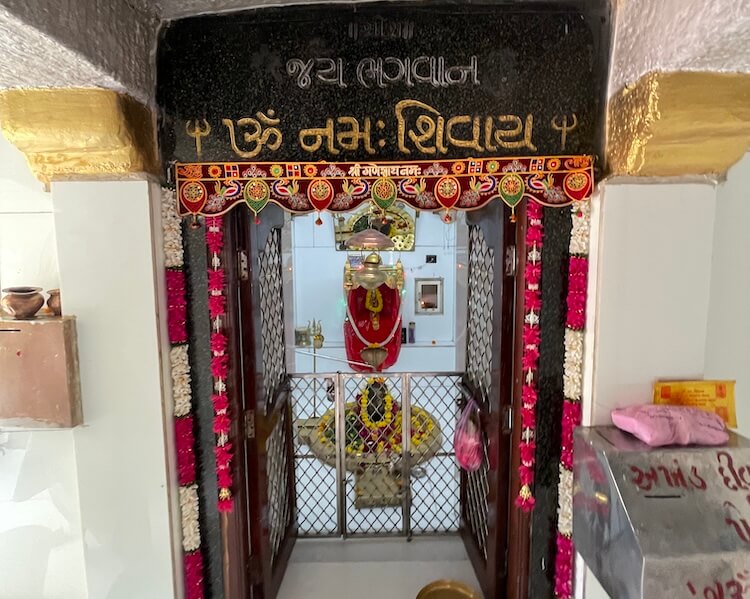 Adjacent to the main temple is the Jagadguru Shankaracharya Smruti Mandir, which also enshrines a ‘Shivpind’.
The temple is a hive of spiritual activity throughout the year. ‘Mahashivratra’ is the most significant annual festival, drawing thousands of devotees who form long queues from the early hours of dawn.
On this day, the ‘Shivpind’ is bathed in milk, curd and honey and offered ‘Bel-patra’ (leaves of the wood-apple tree). The night is marked by ‘Char Prahar Puja’ (four-stage nocturnal worship) and vigil. The festivities include ‘Bhajan’, ‘Kirtan’ and ‘Pravachan’ (discourses).
Mondays in the month of Shravan see a particular surge in pilgrims, while ‘Nag Panchami’, ‘Krishna Janmotsav’, ‘Chaitra Navratra’, ‘Dussehra’ and ‘Diwali’ are also celebrated with great enthusiasm. The temple is open for devotees daily from 6 am to 8 pm.
Useful Information
- Located at 14 km from Mahemdavad and 24 km from Kheda.
- GSRTC bus services are available from Mahemdavad.
- Private vehicles can reach the temple parking area directly.
- Accommodation and breakfast facilities are available in the vicinity.
- Contact – Prafullabhai Patel, President, Mob.- 9712612733; Ramabhai Parmar, Vice President, Mob. 9879974919
वीरेश्वर महादेव मंदिर
सिहुंज, ताल. महेमदावाद, जिला. खेड़ा
मंदिरे
Temples
मंदिर
-
भूमपुरा हनुमान मंदिर भूमापुरा, मोडज, ता. महेमदावाद, जि. खेडा
अधिक माहितीBhumapura Hanuman Temple Bhumapura, Modaj, Tal. Mahemdavad, Dist. Kheda
View Detailsभूमापुरा हनुमान मंदिर भूमापुरा, मोडाज, ताल. महेमदावाद, जिला. खेड़ा
विवरण देखें -
भाथीजी महाराज मंदिर फागवेल, ता. कापडवंज, जि. खेडा
अधिक माहितीBhathiji Maharaj Temple Phagvel, Tal. Kapadvanj, Dist. Kheda
View Detailsभथीजी महाराज मंदिर फागवेल, ताल. कपडवंज, जिला. खेड़ा
विवरण देखें -
केदारेश्वर महादेव मंदिर महादेवपुरा, ता. कठालाल, जि. खेडा
अधिक माहितीKedareswar Mahadev Temple Mahadevpura, Tal. Kathlal, Dist. Kheda
View Detailsकेदारेश्वर महादेव मंदिर महादेवपुरा, ताल. कठलाल, जिला. खेड़ा
विवरण देखें