
Kamnath Mahadev Temple
Radhu, Tal. Kheda, Dist. Kheda
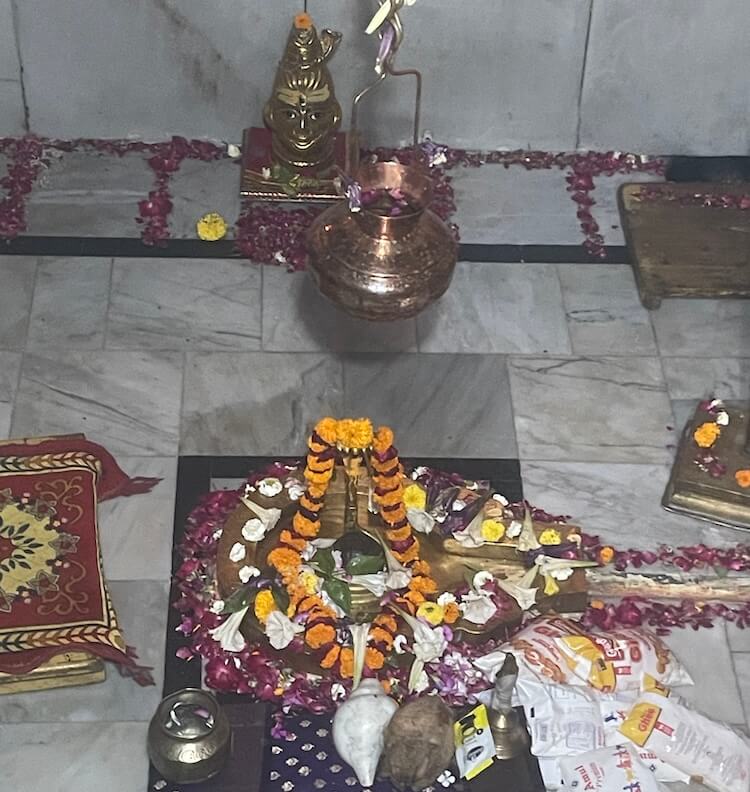 Situated upon the serene banks of the river Vatrak in the village of Radhu, the Kamnath Mahadev Temple stands as a profound sanctuary of faith for thousands of devotees. A singular and extraordinary feature of this temple is the tradition wherein Shivbhakts, upon the fulfilment of their Manata (vows), offer donations of Shuddha Ghee (pure clarified butter) according to their means. This sacred site upholds a remarkable legacy of preserving thousands of kilograms of Ghee in a single location. It is locally maintained that the Ghee stored here remains untainted even after the passage of centuries. According to the meticulous records of the temple administration, between 40,000 and 80,000 kilograms of ancient Ghee is preserved within the precincts to this day.
Historical chronicles suggest that the original foundation of the Kamnath Mahadev Temple dates back to Vikram Samvat 1445 (1388 CE). The prevailing legend recounts the devotion of one Jesangbhai Patel, a resident of Radhu, who would undertake a daily eight-kilometre pilgrimage on foot, 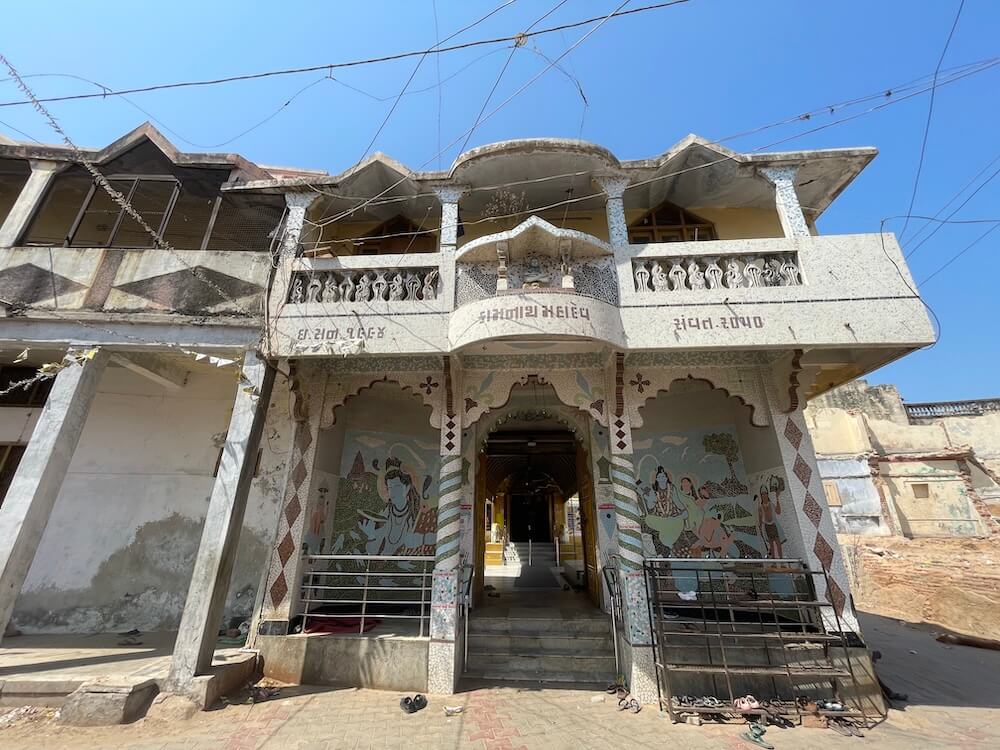 crossing the Vatrak river to seek Darshan (holy viewing) at the Shiva temple in the village of Punaj. Such was his piety that he would neither consume food nor water until he had paid his respects to the deity. In 1388 CE, the Vatrak river was gripped by a sudden and formidable flood, with the waters failing to recede for eight consecutive days. Finding it impossible to reach Punaj, Jesangbhai observed a rigorous fast, abstaining from all sustenance for the entire duration. Moved by his penance, Lord Mahadev gave him a Drishtant (divine vision), commanding him to fetch a Prajvalit Jyot (enkindled flame) from the Punaj temple and establish it in Radhu. The following day, accompanied by fellow villagers, Jesangbhai brought the Akhand Jyot (eternal flame) to Radhu. Despite the onslaught of wind and rain on the day of Shravan Vadya Dwadashi (the twelfth day of the waning moon in the month of Shravan),
 the flame kept burning. Initially enshrined within a modest earthen shrine, the Shivling (aniconic representation of Shiva) and the idol of Bhagwan Mahadev were consecrated with due Vedic rites. In later years, the present spacious temple was constructed through the collective financial contributions of the villagers.
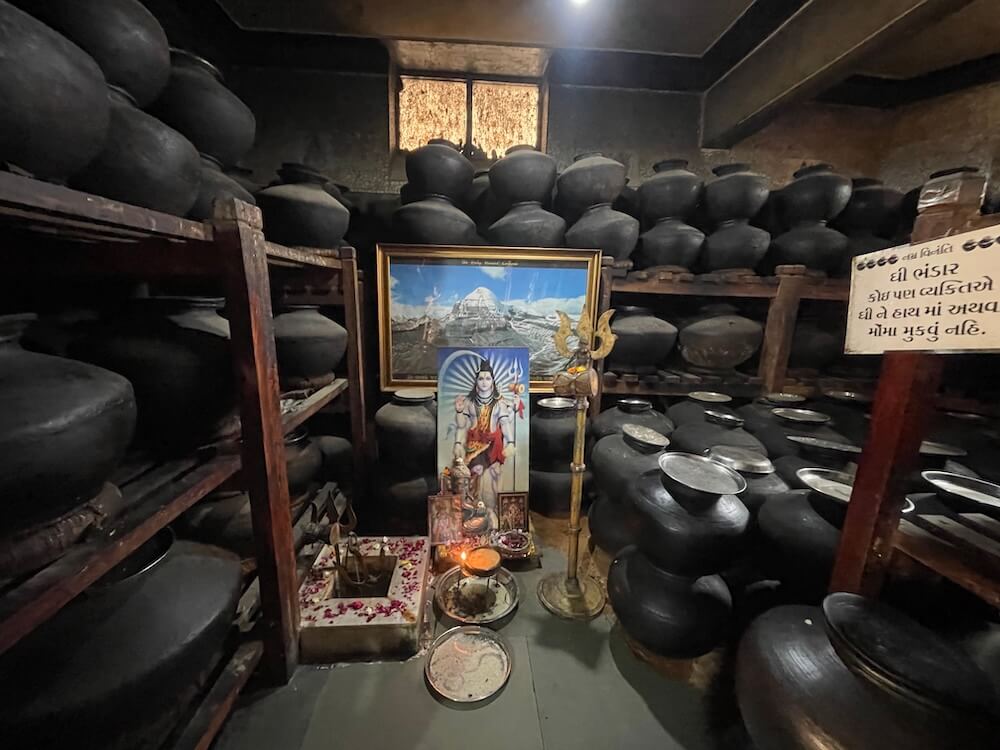
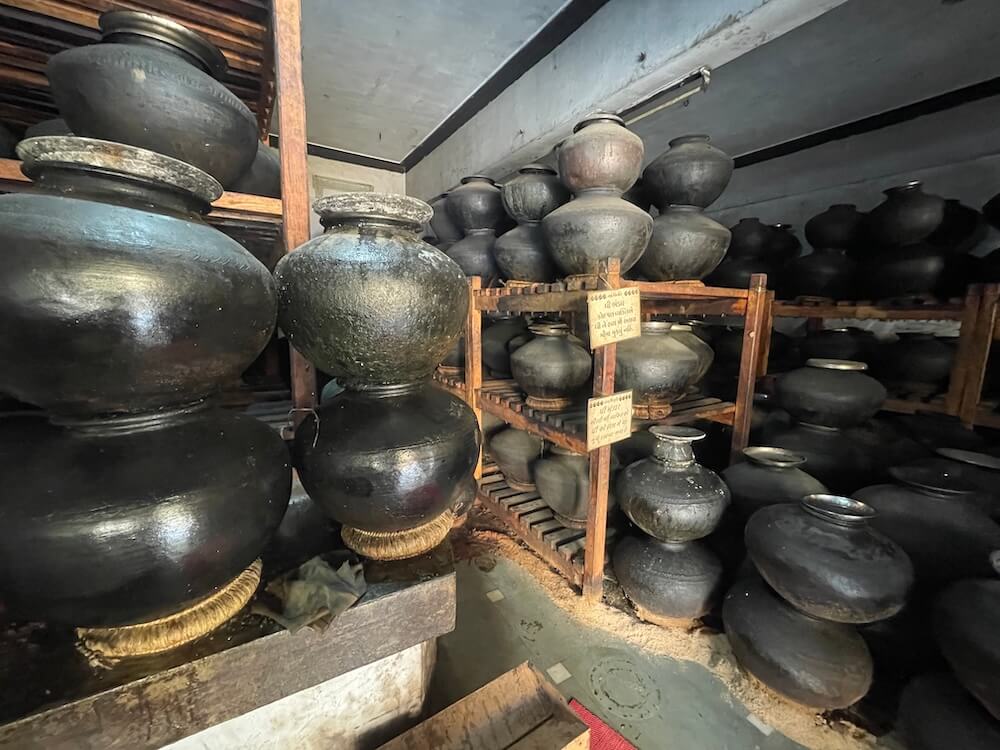
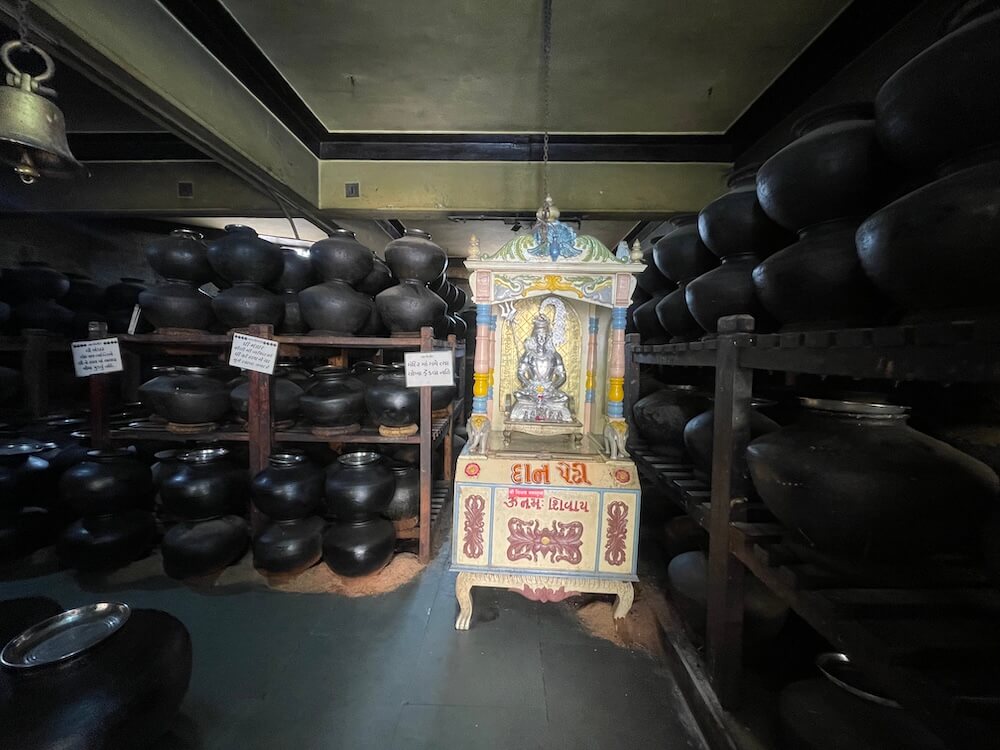
Even after more than 650 years, the same Akhand Jyot continues to burn brightly within the sanctum. On average, eight to ten kilograms of pure Ghee is consumed daily to sustain this flame. Remarkably, the temple has never had to purchase Ghee for this purpose. Devotees whose prayers have been answered voluntarily contribute pure Ghee, which is stored within the temple premises in hundreds of traditional earthen pots. It is claimed that this centuries-old Ghee, kept without any modern chemical preservation, 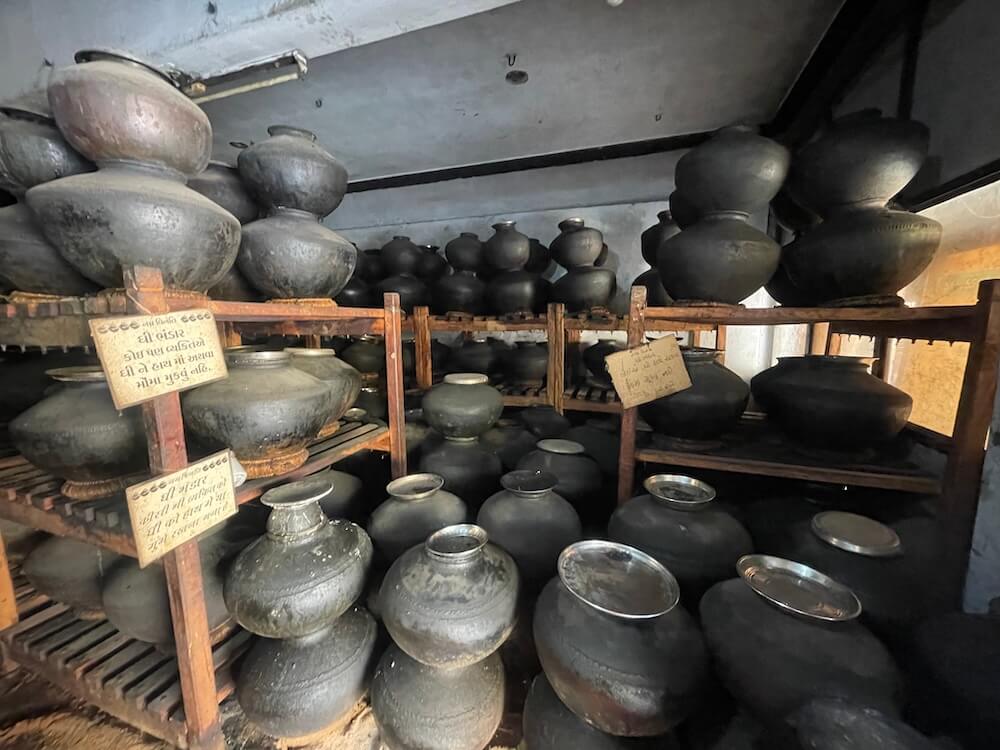 remains in excellent condition. Despite being stored in open pots, it is said that neither ants nor insects ever defile it. A tradition spanning generations dictates that this accumulated ancient Ghee is reserved exclusively for the Yagna (sacred fire ritual) performed during the holy month of Shravan.
According to local religious texts and references within the Shiva Purana, Kamnath Mahadev is revered as the granter of devotees’ desires. Pilgrims frequent the temple to make vows for the blessing of progeny or for deliverance from skin ailments. It is a customary practice for all other shrines, large and small, within Radhu village to use Ghee sourced from the Kamnath Mahadev Temple for their lamps. 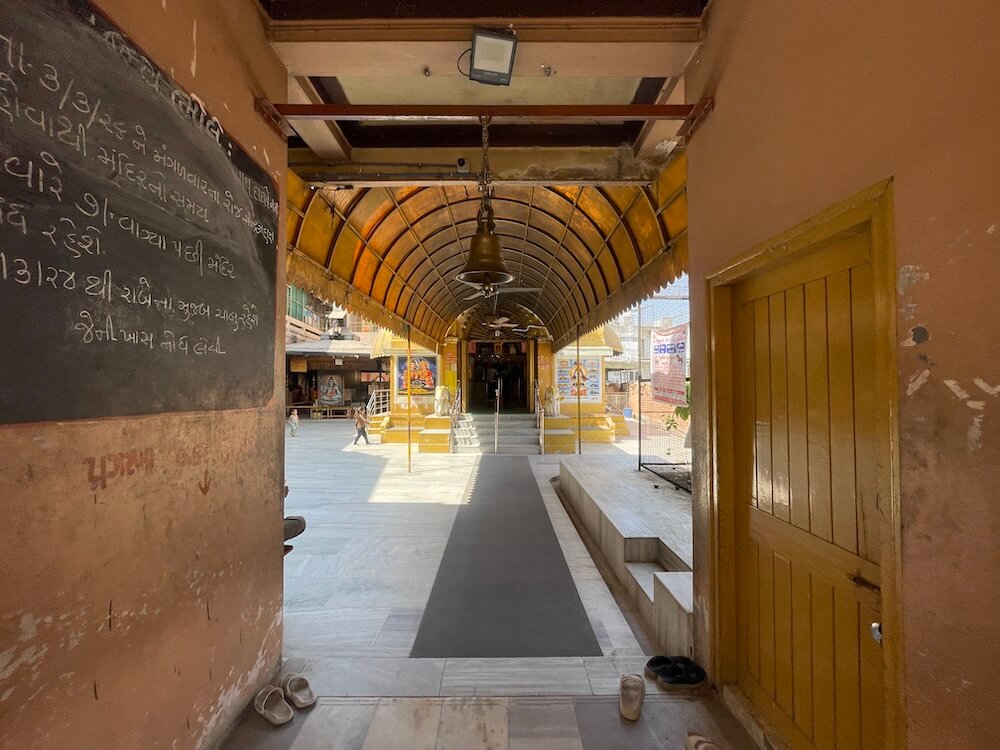 Furthermore, whenever a new temple is constructed in the surrounding villages, the Ghee for its inaugural Puja (ritual worship) is traditionally fetched from here. For centuries, the villagers have held the unwavering belief that offering Ghee at this shrine invites prosperity. With the ever-increasing number of devotees, the reserves of Ghee continue to grow steadily.
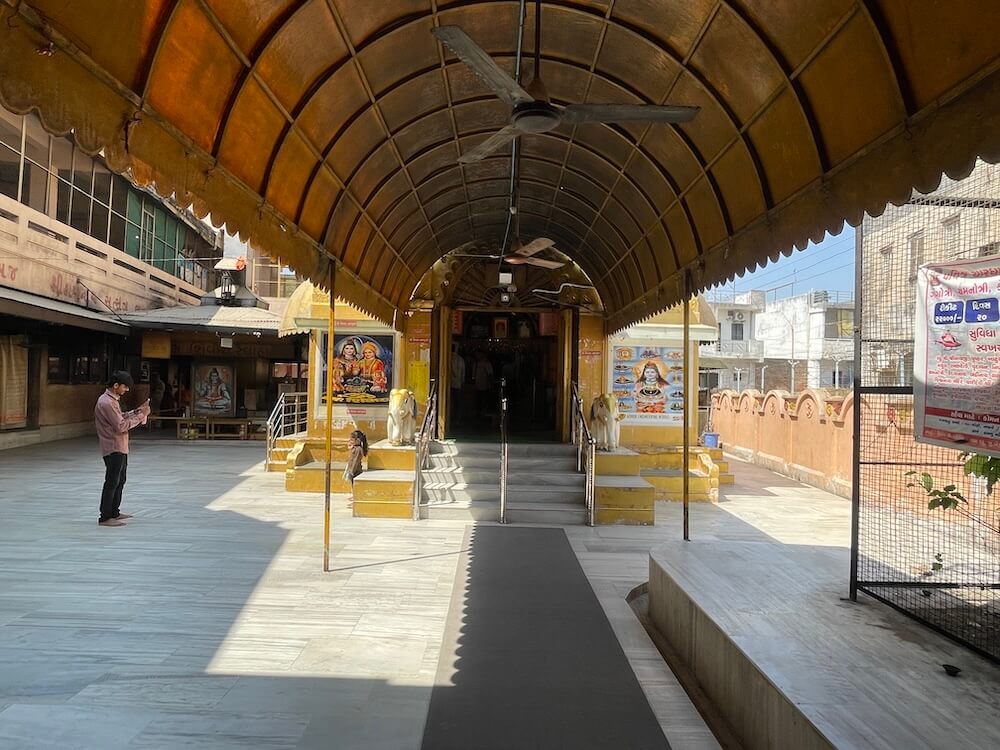
The temple complex, nestled on the riverbank, is expansive. Upon entering through the main gateway, one arrives at a courtyard that houses the temple office and rest facilities for pilgrims. Adjacent to the main structure within the courtyard are four large storehouses, where approximately 800 to 1,200 earthen pots are arranged in disciplined rows. Each pot holds about 50 kilograms of ghee. Situated between these storehouses and the temple is a grand Yagnashala (hall for fire rituals). 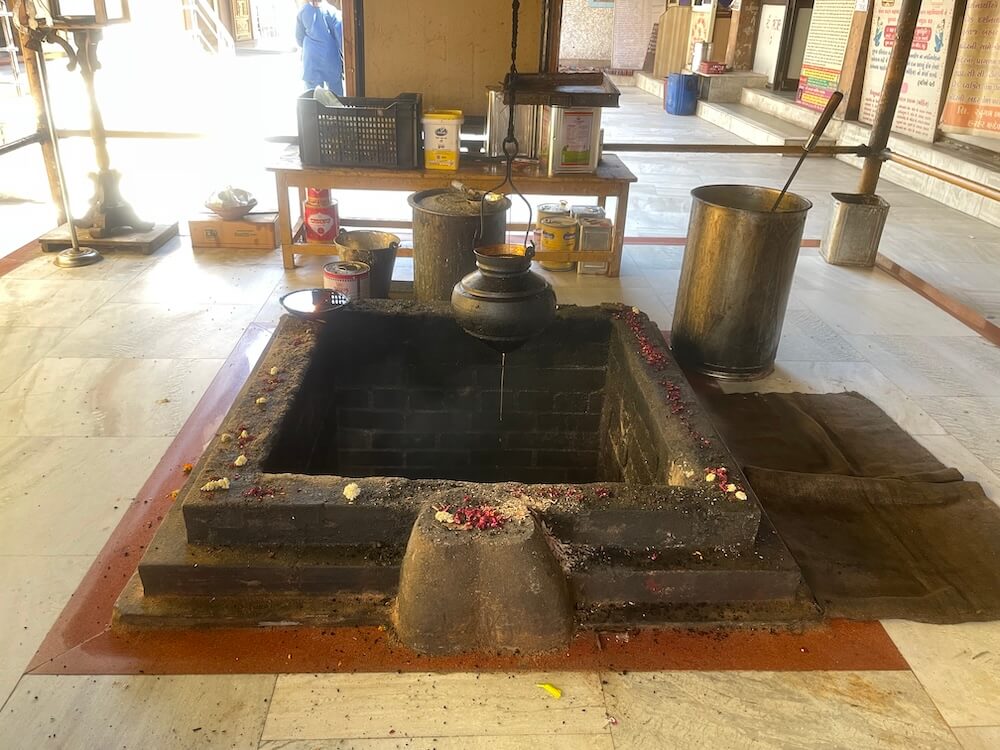 Within its Hom-kunda (sacrificial fire pit), a continuous stream of pure ghee is offered, filling the temple air with a distinct fragrance. On the floor above the ghee storehouse, a ‘Nishulk Annachhatra’ (free kitchen) operates in the name of Ravishankar Maharaj, providing Mahaprasad (blessed food) to the visiting faithful.
Radhu is also the birthplace of Ravishankar Maharaj, a distinguished figure who played a pivotal role in India’s struggle for independence. The memoirs of Ravishankar Maharaj, who worked under the guidance of Mahatma Gandhi, contain explicit mentions of this ancient Shiva temple.
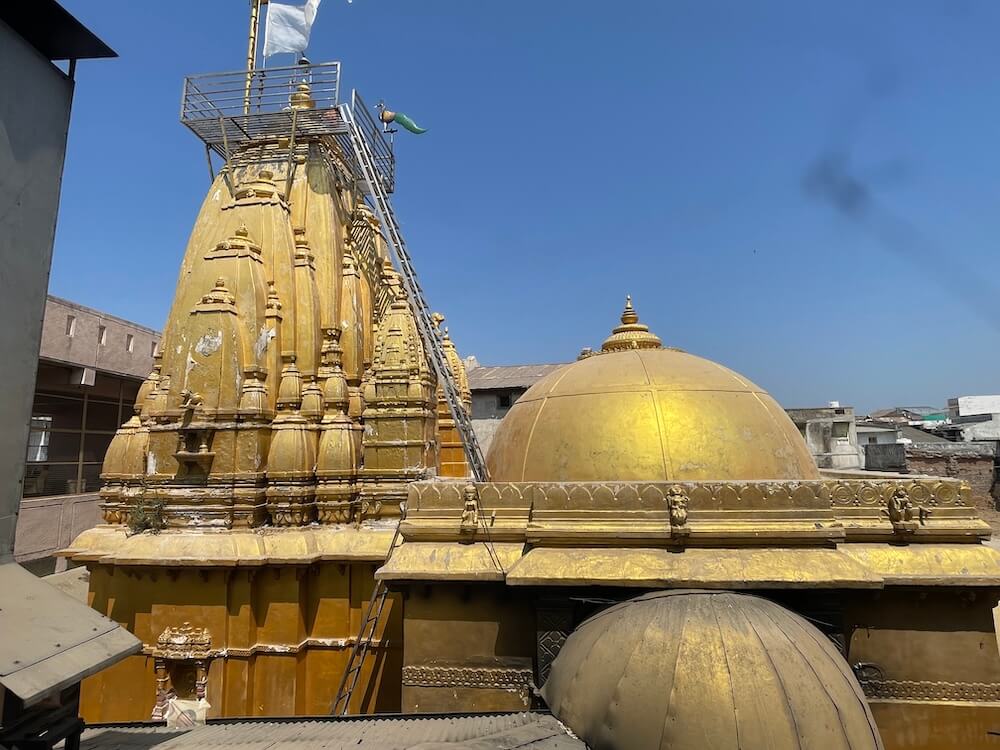
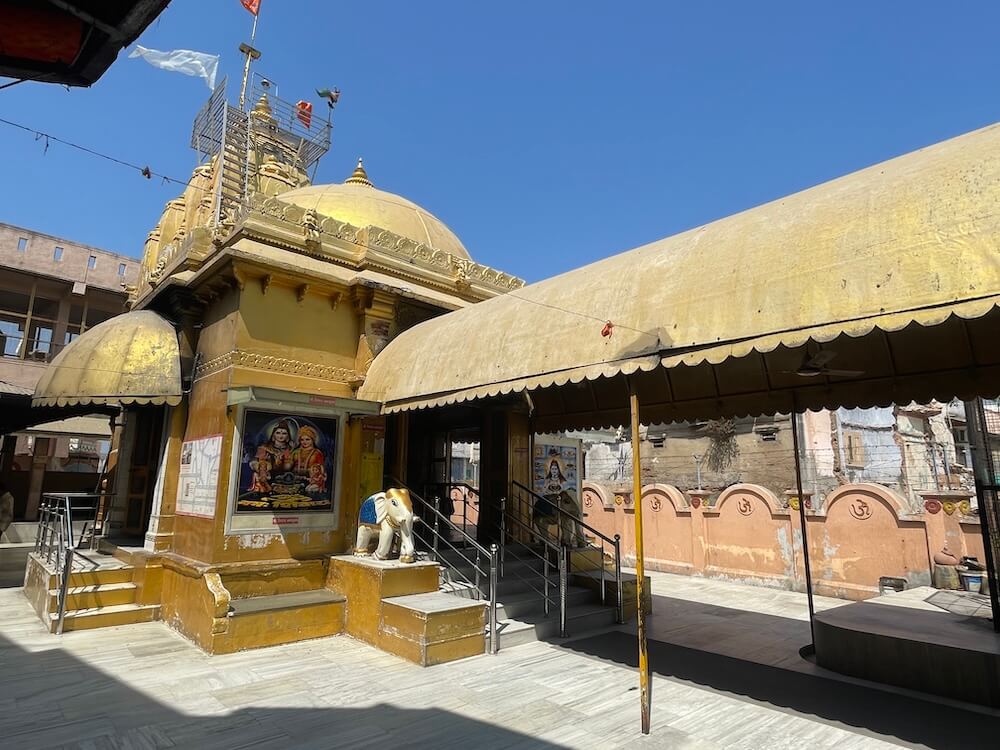
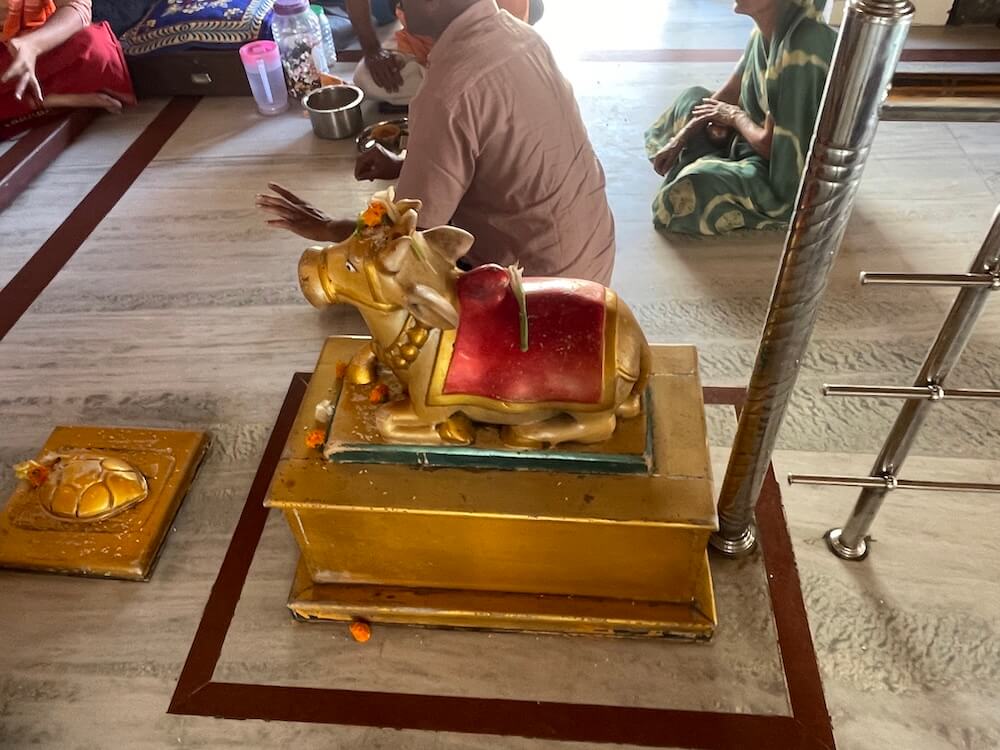
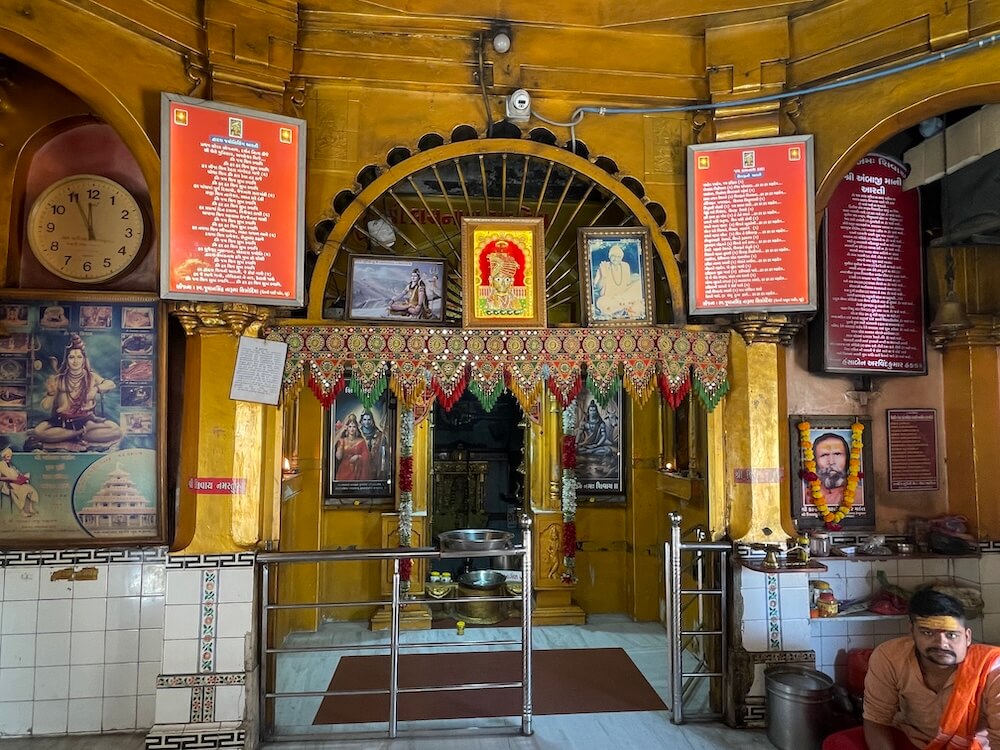
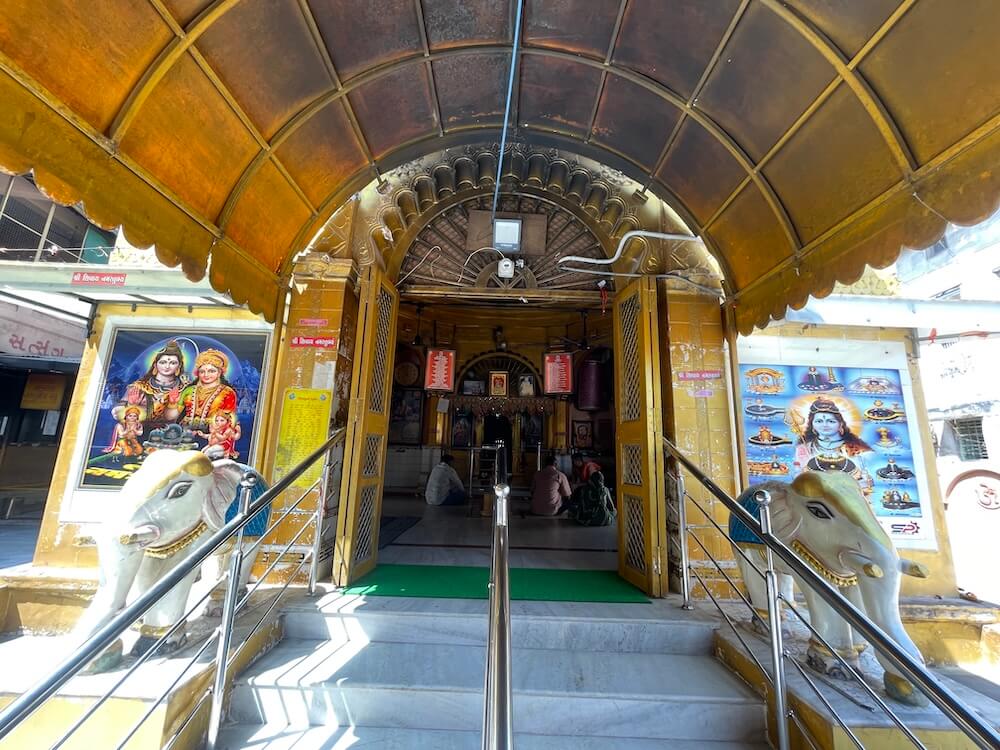 The construction of the Kamnath Temple is heavily influenced by Hindu temple architecture, specifically the ‘Maru-Gurjara’ style. The entrance is flanked by intricately carved Gajraj (regal elephants). The structure comprises a Sabhamandap (assembly hall), an Antaral (vestibule) and a Garbhagriha (sanctum sanctorum). Ascending five steps from the courtyard, one enters the Sabhamandap, which is built upon a raised Jagati (plinth). This enclosed hall features two doors on the left and right flanks. At its centre, upon a raised pedestal, sits the Nandi (sacred bull). Beyond this, in the Antaral, the niches flanking the sanctum entrance house an ancient stone idol of a Goddess on one side and Lord Ganesha on the other. The doorframes of the sanctum are adorned with sculptures of Dwarpalas (gatekeepers) at the base, alongside images of Shiva and Parvati.
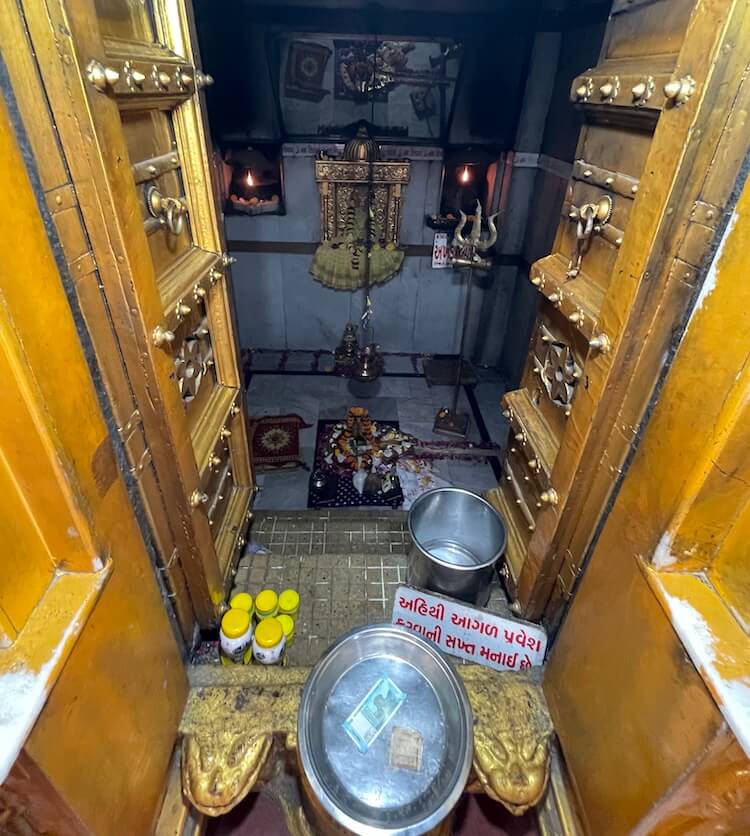 Descending four steps from the vestibule, one enters the sunken Garbhagriha. At its heart lies the Pindi (sacred stone) of Kamnath Mahadev, adorned with a central mask of the Lord. To the right of the Shivling, a large brass lamp holds the Akhand Jyot that has remained lit for centuries. Above the Sabhamandap sits a domed Shikhara (spire), while a tapering stone spire, rising to a height of 50 feet, crowns the Garbhagriha. The exterior of this spire is embellished with numerous smaller Urushringa (subsidiary) spires, culminating at the very peak with a magnificent golden Kalasha (finial).
The temple hosts a variety of religious observances throughout the year. During the month of Shravan, the Yagnashala becomes a hive of spiritual activity, with continuous Rudrabhishek (ritual bathing of the deity) and Havan (fire sacrifices) performed from six in the morning until seven in the evening. The ghee from the storehouses is utilised for these rituals. Each evening following the Yagna, the Aarti (ritual of lights) is performed. On the occasion of Mahashivratri, various Pujas are conducted from the early hours of dawn until late at night. The deity is taken through the village in a Palkhi (palanquin) for the Nagar Pradakshina (city procession). A grand fair is held on Shravan Vadya Dwadashi, drawing devotees from across the nation who arrive with the conviction that their heart’s desires will be fulfilled. Offerings of ghee range from a modest 100 grams to as much as 100 kilograms. Amongst the rural folk, Kamnath Mahadev is affectionately addressed by the name ‘Dada’. The temple is open for devotees daily from 6 am to to 9 pm.
Useful Information
- Located at 13 km from Kheda
- State Transport (GSRTC) bus services available from Kheda
- Private vehicles can reach the temple directly
- Accommodation and breakfast facilities are available in the vicinity
- Contact – Temple Office, Mob. 9998032900
कामनाथ महादेव मंदिर
राधू, ताल. खेड़ा, जिला. खेड़ा

मंदिरे
Temples
मंदिर
-
भूमपुरा हनुमान मंदिर भूमापुरा, मोडज, ता. महेमदावाद, जि. खेडा
अधिक माहितीBhumapura Hanuman Temple Bhumapura, Modaj, Tal. Mahemdavad, Dist. Kheda
View Detailsभूमापुरा हनुमान मंदिर भूमापुरा, मोडाज, ताल. महेमदावाद, जिला. खेड़ा
विवरण देखें -
भाथीजी महाराज मंदिर फागवेल, ता. कापडवंज, जि. खेडा
अधिक माहितीBhathiji Maharaj Temple Phagvel, Tal. Kapadvanj, Dist. Kheda
View Detailsभथीजी महाराज मंदिर फागवेल, ताल. कपडवंज, जिला. खेड़ा
विवरण देखें -
केदारेश्वर महादेव मंदिर महादेवपुरा, ता. कठालाल, जि. खेडा
अधिक माहितीKedareswar Mahadev Temple Mahadevpura, Tal. Kathlal, Dist. Kheda
View Detailsकेदारेश्वर महादेव मंदिर महादेवपुरा, ताल. कठलाल, जिला. खेड़ा
विवरण देखें