
नीलकंठेश्वर महादेव मंदिर
खेडा शहर, ता. खेडा, जि. खेडा
Neelkantheshwar Mahadev Temple
Kheda City, Tal. Kheda, Dist. Kheda
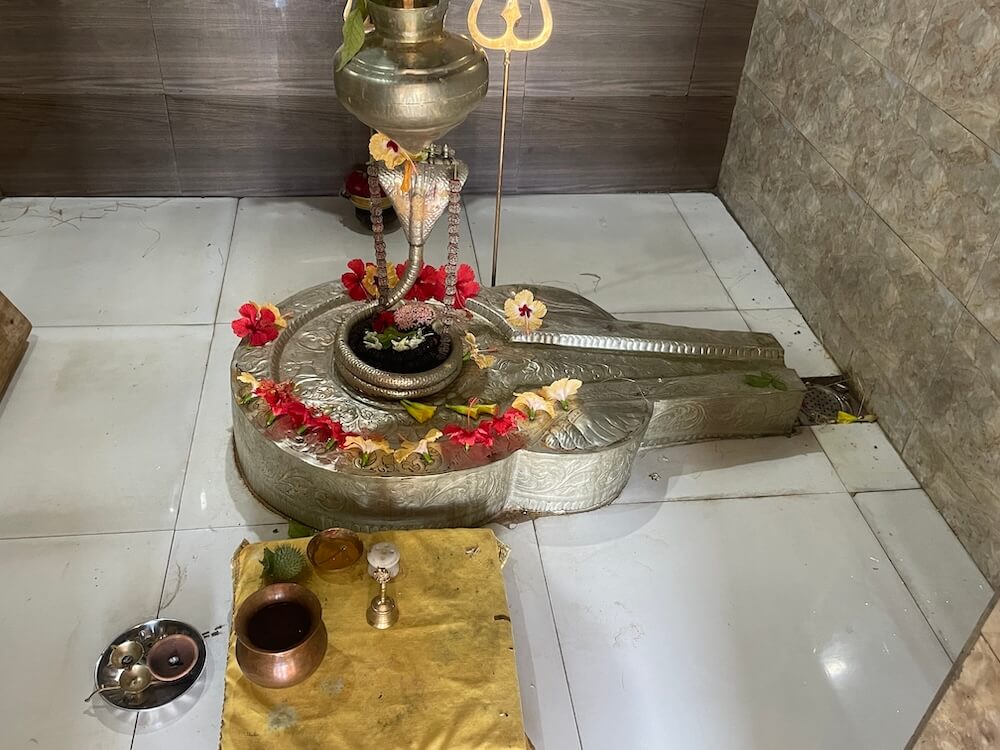
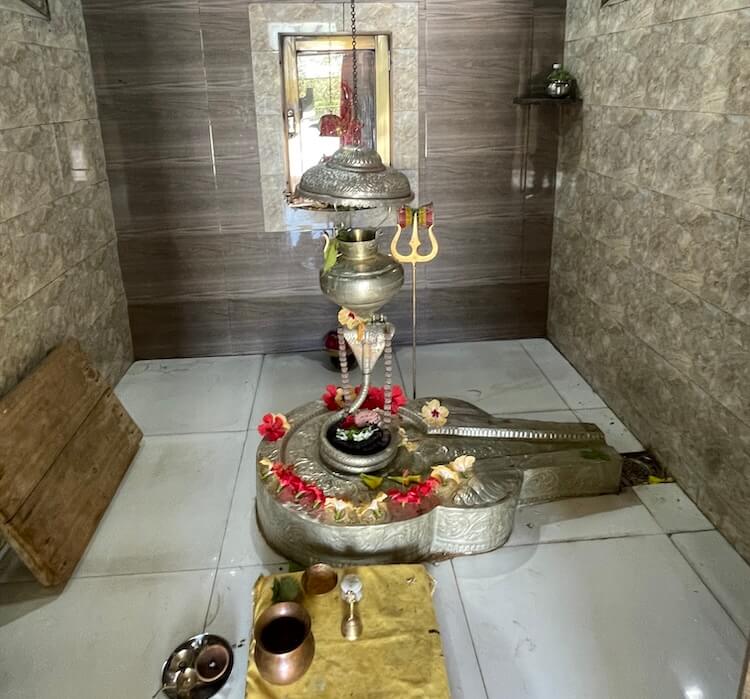
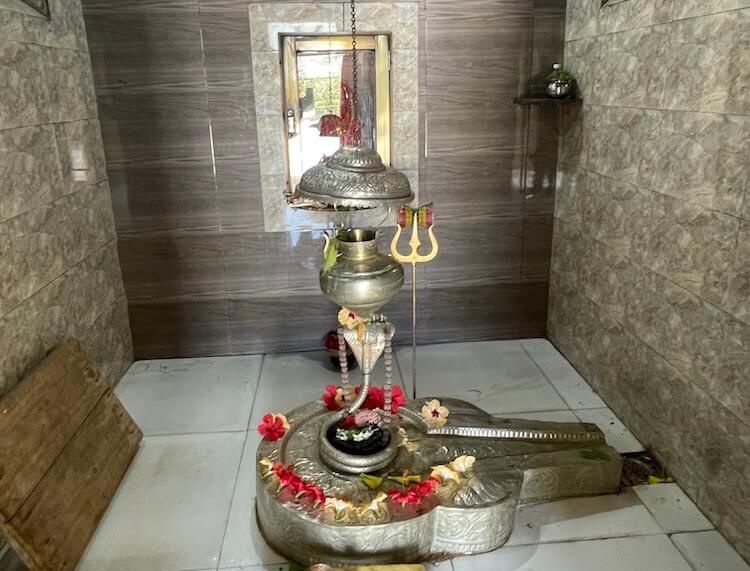 In the heart of Kheda city lies the venerable sanctuary of Neelkantheshwar Mahadev, dedicated to the Lord who consumed the Halahal (deadly cosmic poison) that emerged during the Samudra Manthan (churning of the ocean) performed by gods and demons in their quest for Amrit (the nectar of immortality). Devotees hold a profound belief that the Shivlinga (an iconic representation of Lord Shiva) enshrined here is Jagrut (spiritually awakened), possessing the divine grace to fulfil the heartfelt desires of those who serve with true devotion. Hundreds of pilgrims congregate here to perform Abhishek (ritual bathing of the deity) and to offer Bel-patra (leaves of the wood-apple tree) upon the sacred Shivpinda. Kheda district is graced with numerous ancient religious landmarks, including the Ranchhodrai Temple in Dakor, the Santram Temple and the Galteshwar Mahadev Temple.
 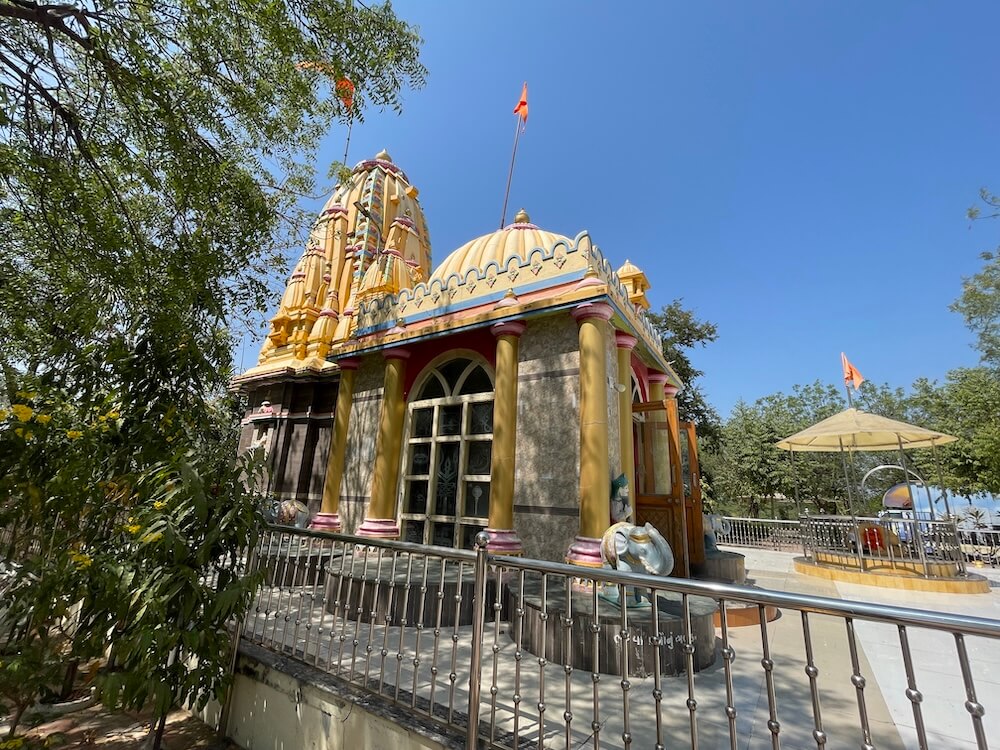 Among these, the Neelkantheshwar Mahadev Temple is considered a significant place of pilgrimage. Situated slightly apart from the city’s clamour in an area of natural abundance, this temple remains a cornerstone of faith for thousands.
Historical chronicles suggest that King Mularaja I of the Solanki dynasty vanquished the Chavda kings in 942 AD, subsequently establishing his independent sovereign state in Gujarat, with his capital at Anahilwad Patan— modern-day Patan. Following Mularaja, the Solanki lineage saw valiant rulers such as Bhimdev, Siddharaj Jaisingh and Kumarpal. It was during their illustrious reigns that architectural marvels like the Sun Temple at Modhera and ‘Rani ki Vav’ were erected.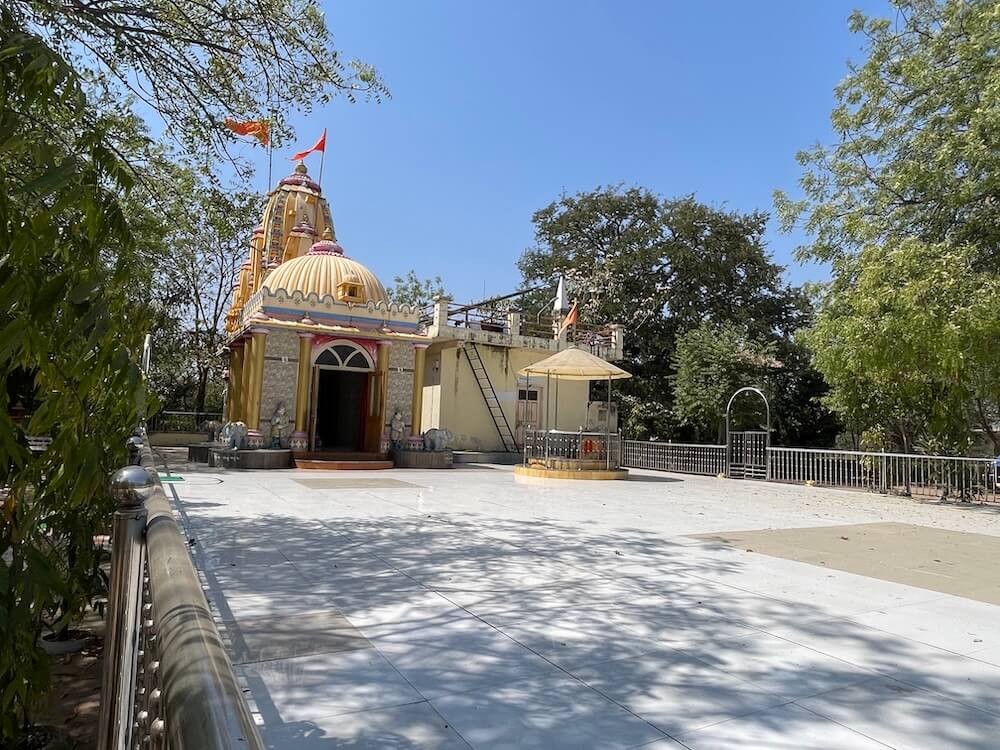 These monarchs were staunch Shivbhakts (devotees of Shiva) and their era witnessed the proliferation of Shiva temples across Gujarat. The Neelkantheshwar Mahadev Temple is considered an architectural legacy of that very epoch. Although no written records provide a definitive date of its founding, scholars estimate that this structure, believed to be some 700 to 800 years old, was built under the patronage of the Solanki kings.
According to a legend from the Shiva Purana, the gods and demons used Mount Mandar as a churning rod and the serpent Vasuki as a rope to churn the primordial ocean. This process yielded fourteen Ratnas (gems), but it also brought forth the lethal Halahal poison. Incapable of being endured by any being and threatening to annihilate the entire world, 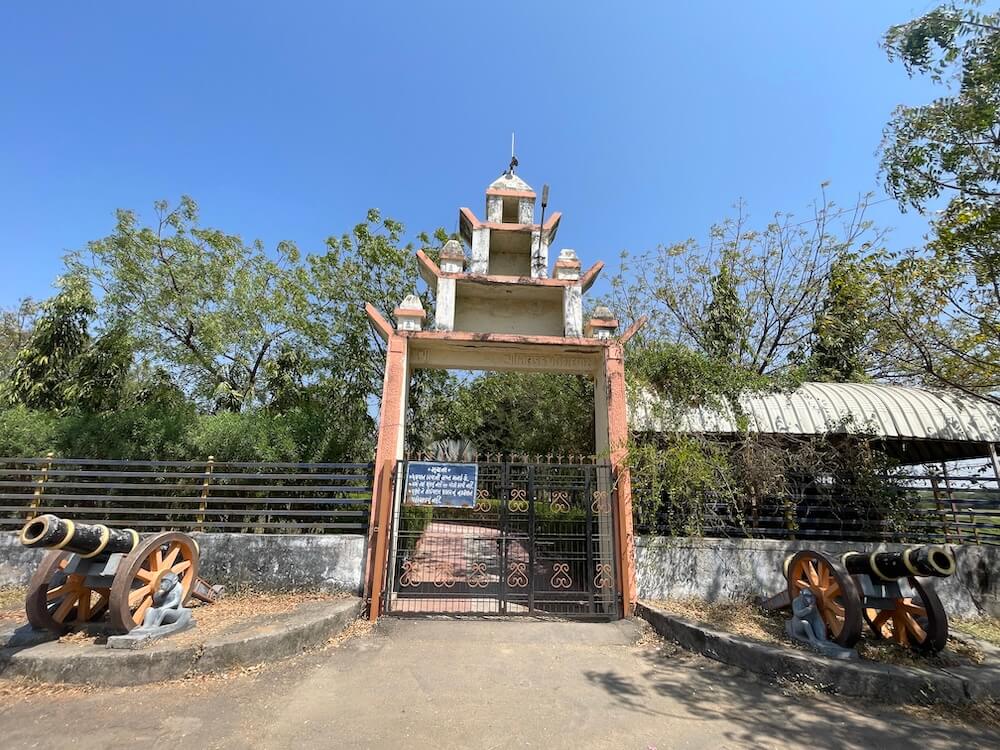 the deities implored Lord Mahadev to intervene. By consuming the venom, Mahadev averted the destruction of the universe. The poison, however, turned His throat blue, earning Him the epithet Neelkantheshwar— the Lord with the Blue Throat.
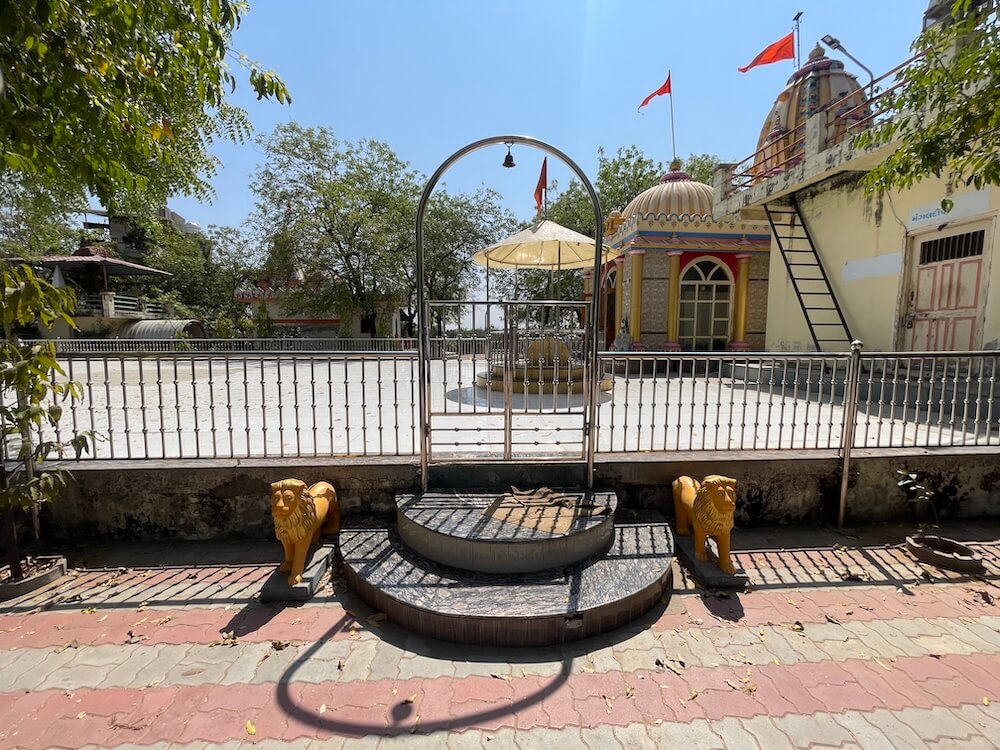
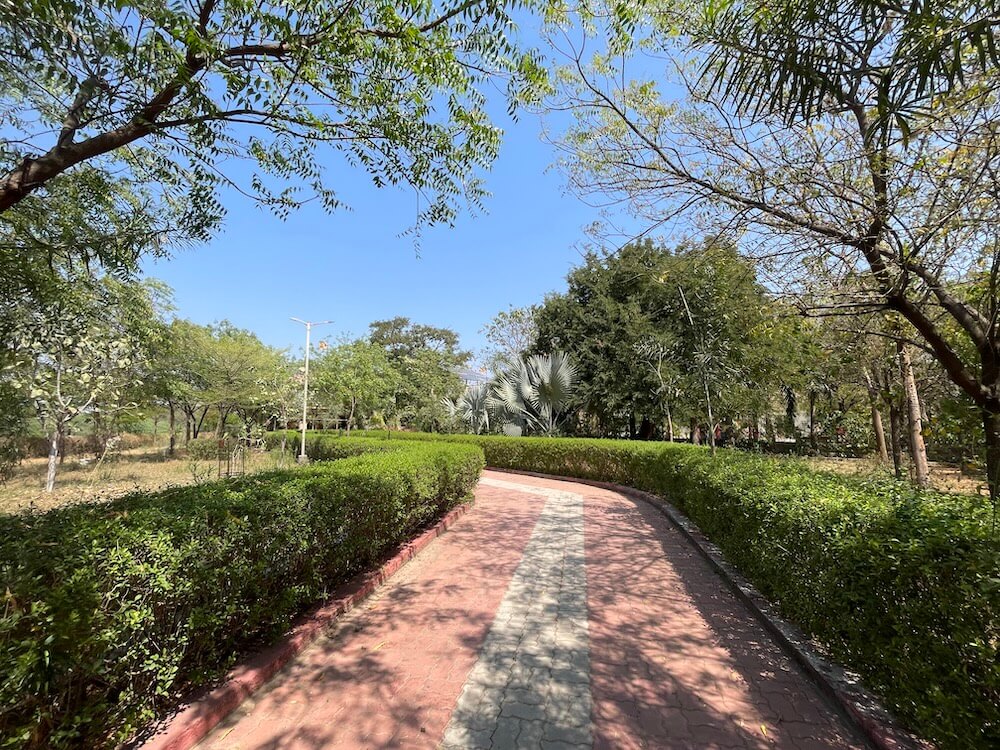
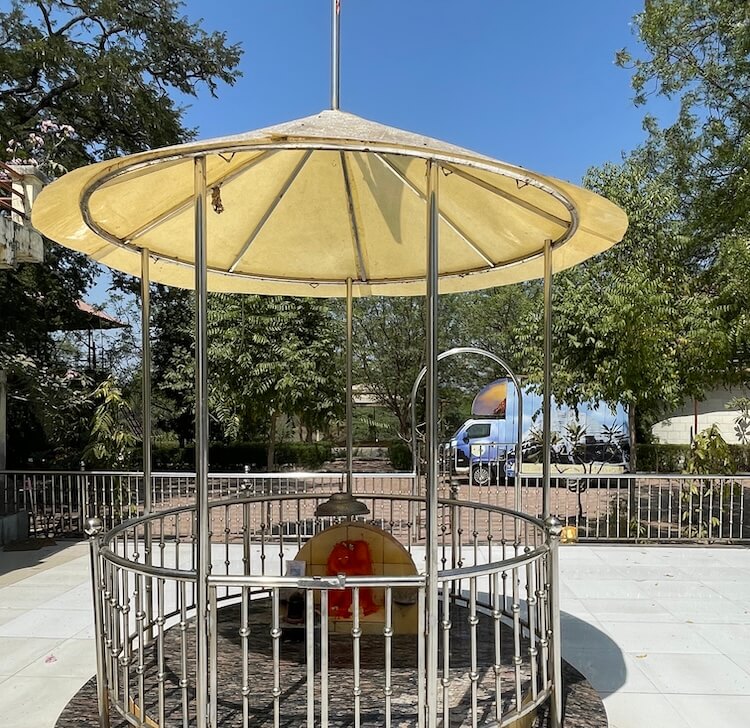
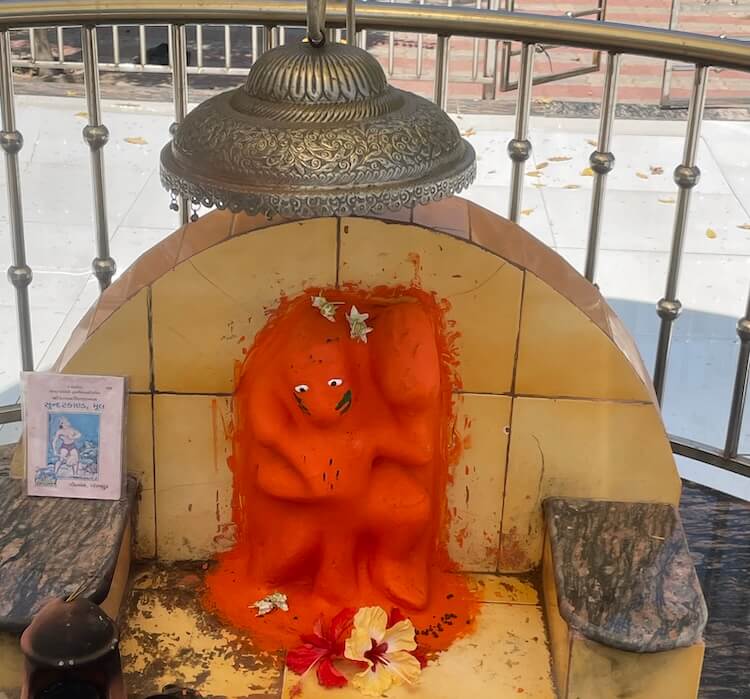
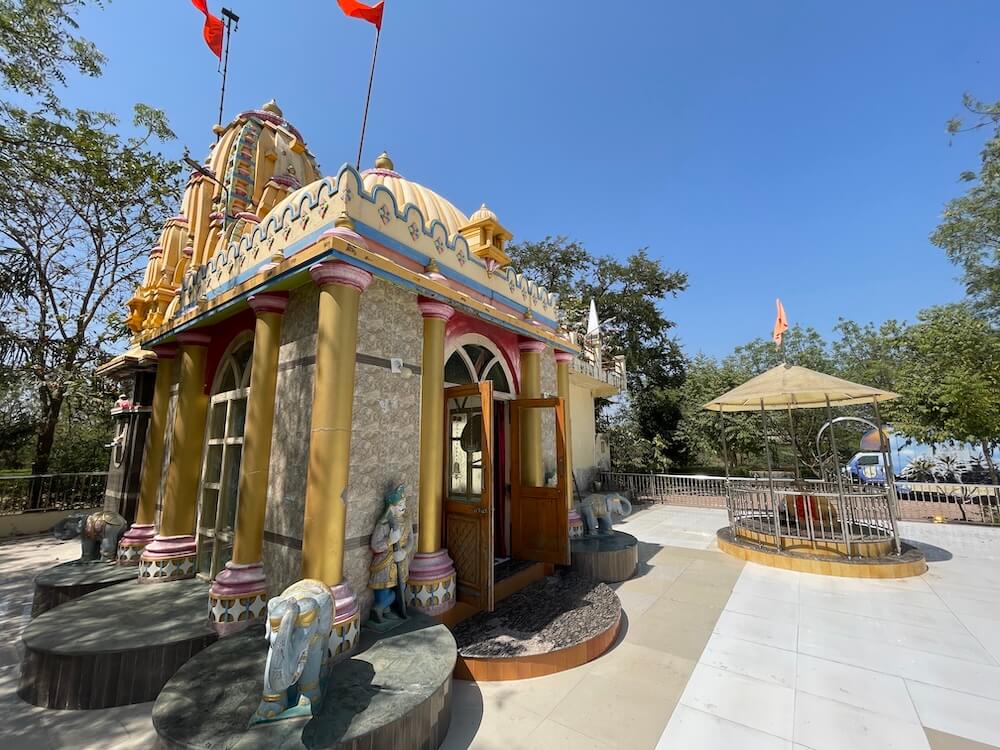
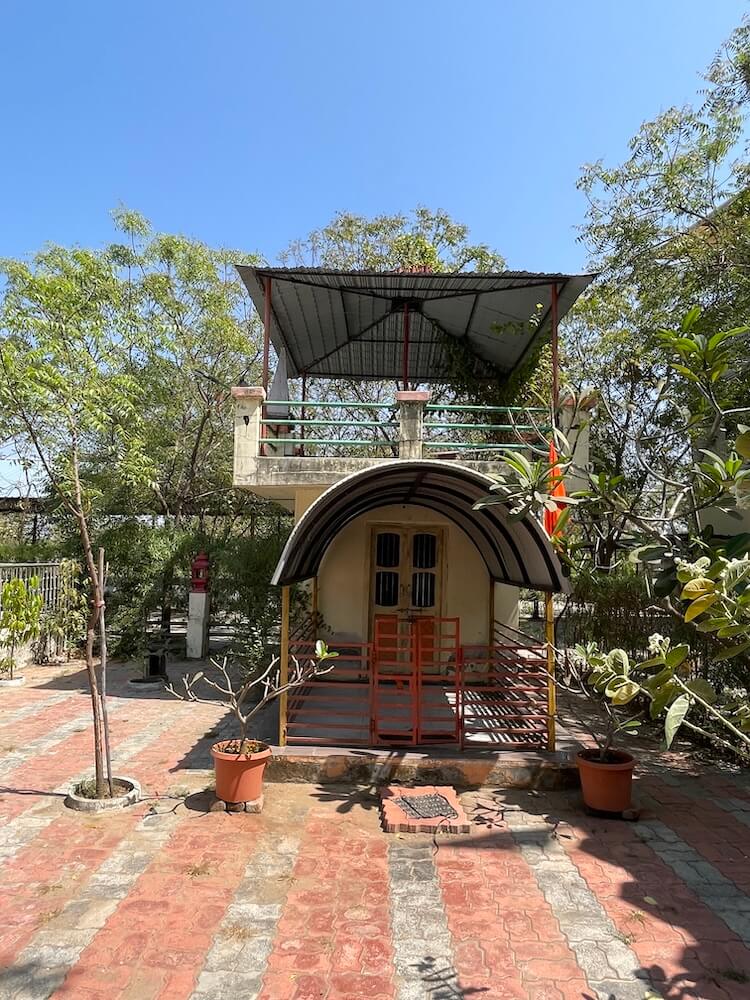
A well-paved road leads to the temple, located in a tranquil quarter of the city, flanked by verdant trees. The main entrance is set within a fortified perimeter wall surrounding the shrine. Guarding the portal are two replicas of cannons, adjacent to which stand Vanarshilpas (sculptures of monkeys). Within the expansive courtyard lies a garden meticulously adorned with ornamental plants and flowering shrubs. The pathway leading to the sanctum is paved with paver blocks and is sheltered by a vaulted corrugated-iron roof supported by sturdy iron pillars. 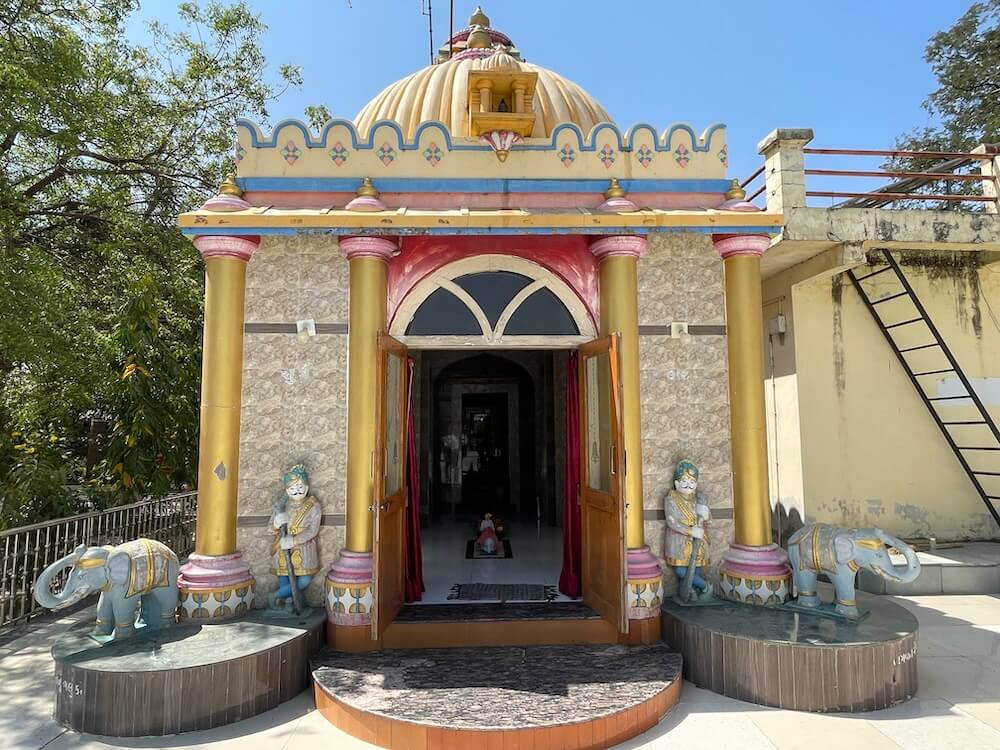 In the courtyard, an octagonal pedestal has been constructed, upon which rests a Swayambhu (self-manifested) stone idol of Lord Hanuman, consecrated with traditional vermillion.
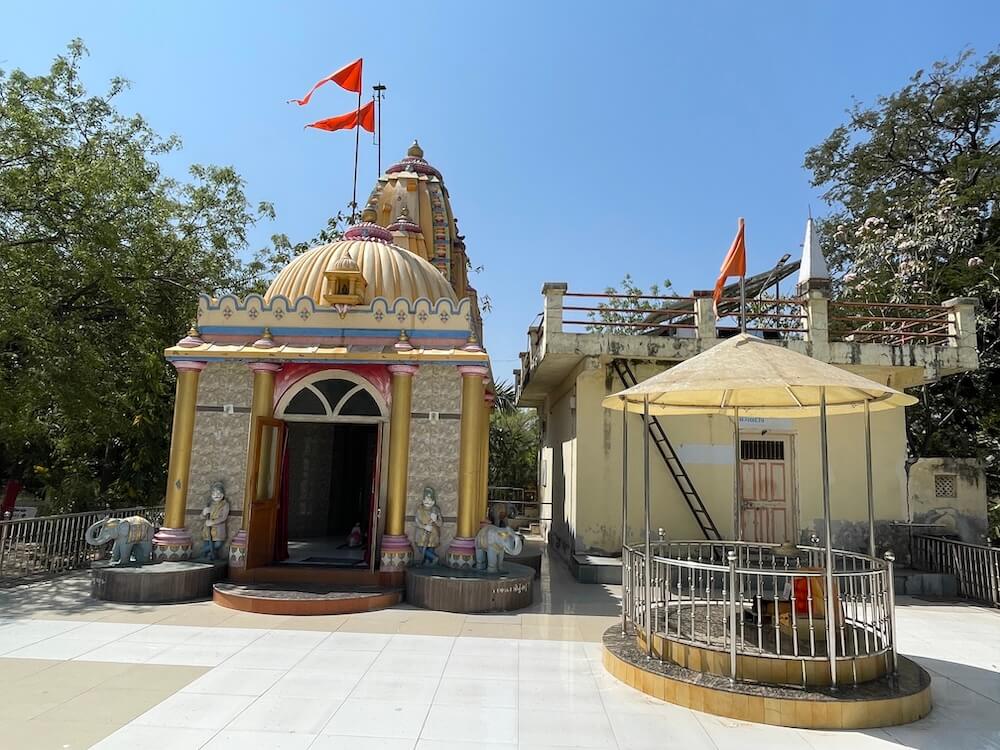
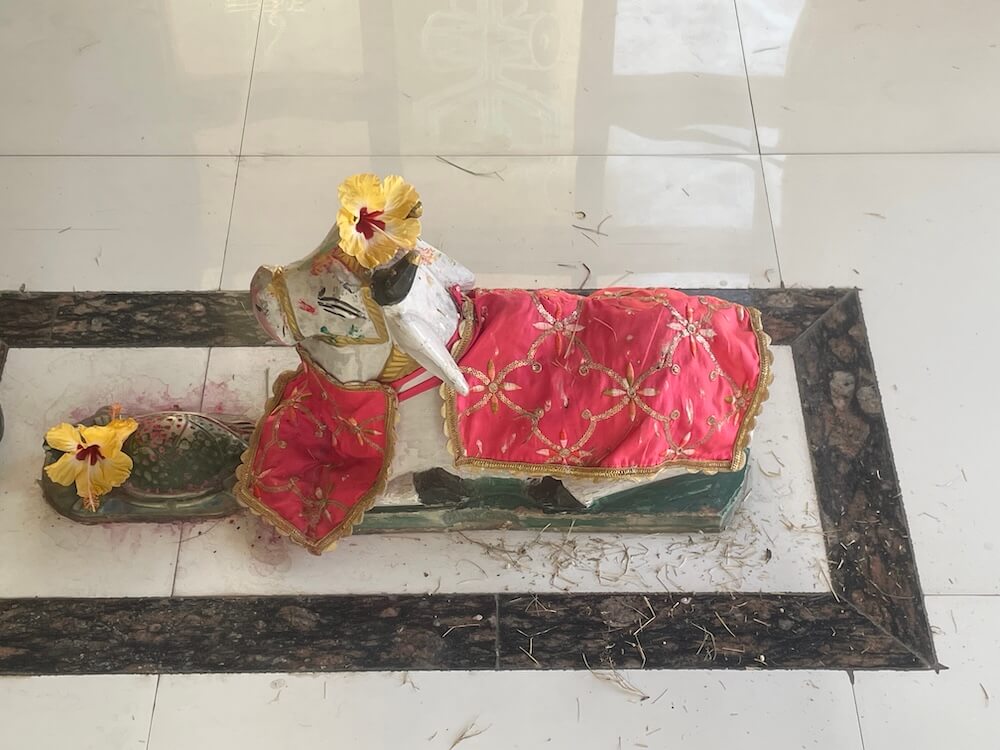
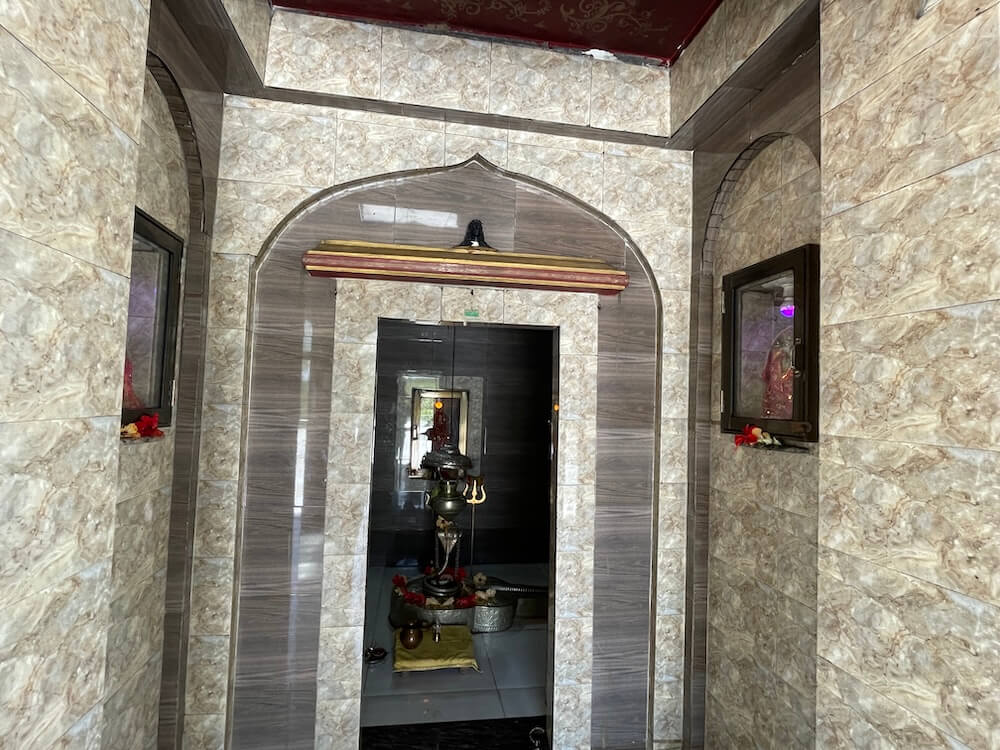
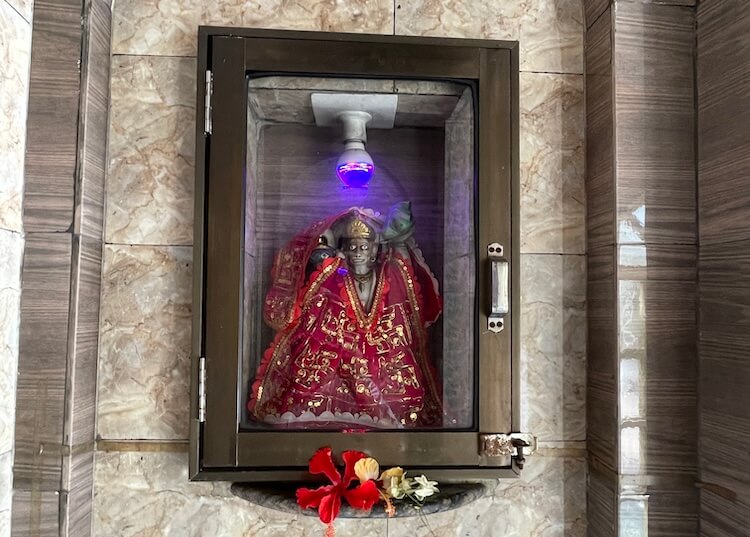
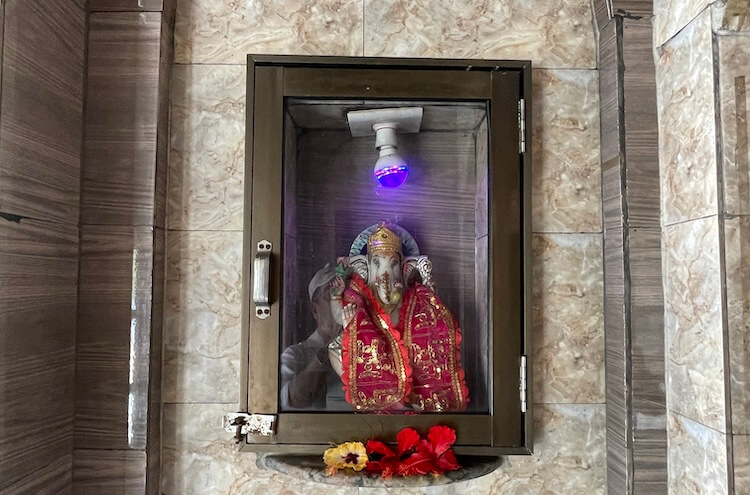
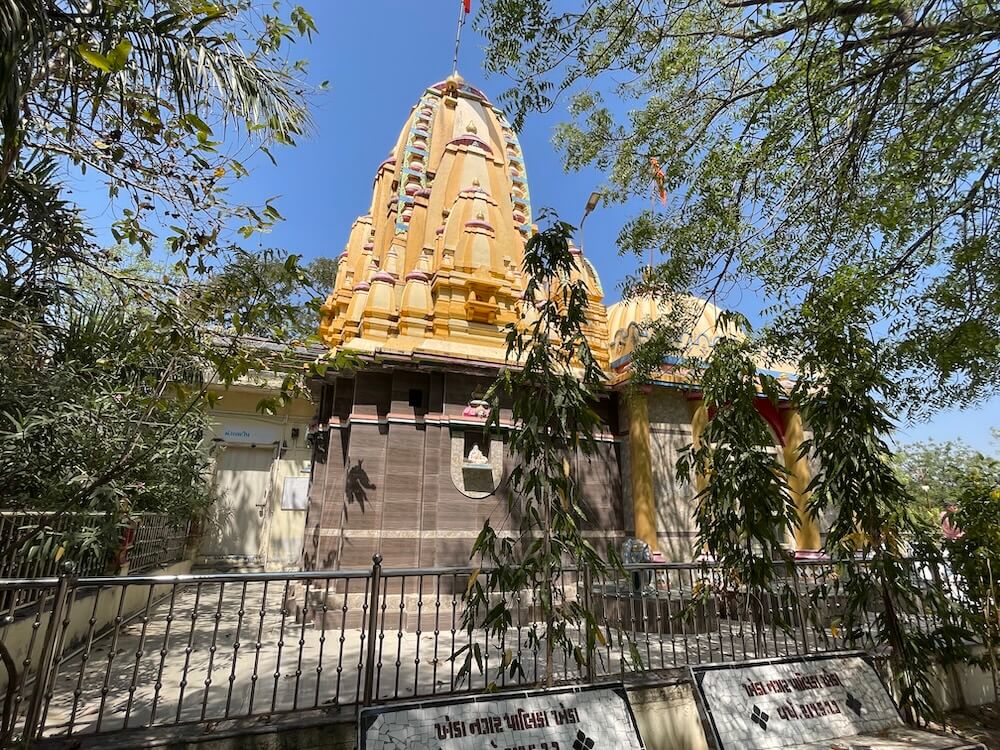
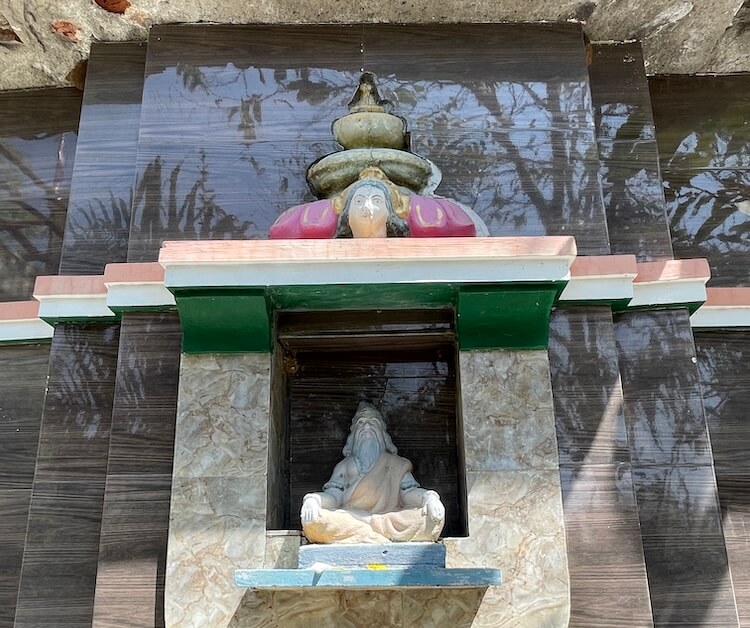
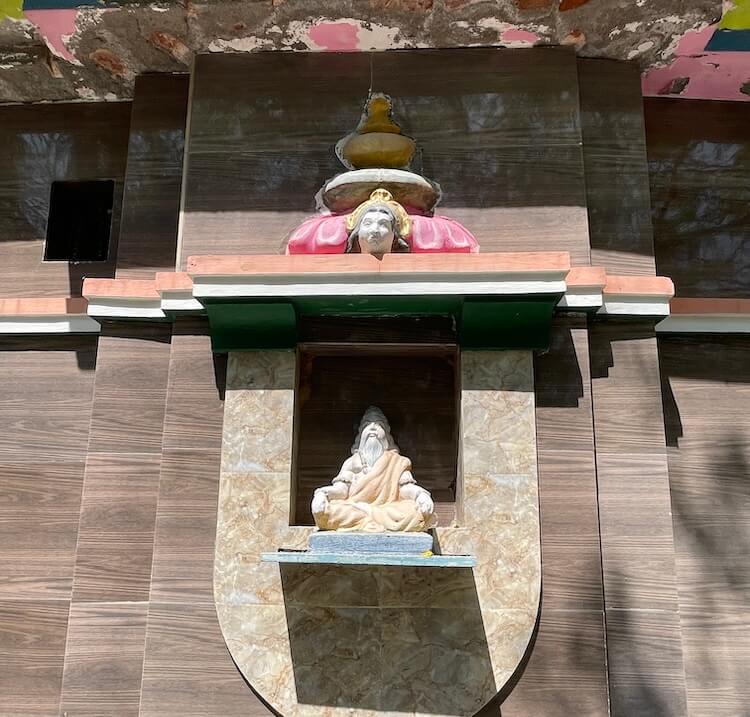
The Neelkantheshwar Temple follows a traditional architectural plan comprising a Sabhamandap (assembly hall), an Antaral (vestibule) and a Garbhagriha (sanctum sanctorum). The entrance to the assembly hall is flanked by Gajraj (elephant) sculptures and features intricately carved Dwarpalas (gatekeepers) upon the doorframes. An arched, semi-circular step leads into the hall, which is fitted with wooden doors containing transparent glass panes. Two additional doorways are situated on the right and left walls of the Sabhamandap. Within, a ceremonial Nagara (drum) rests in one corner, while a central pedestal bears the idol of Nandi (the sacred bull). The domed ceiling of the hall is adorned with an exquisite wheel-patterned carving. 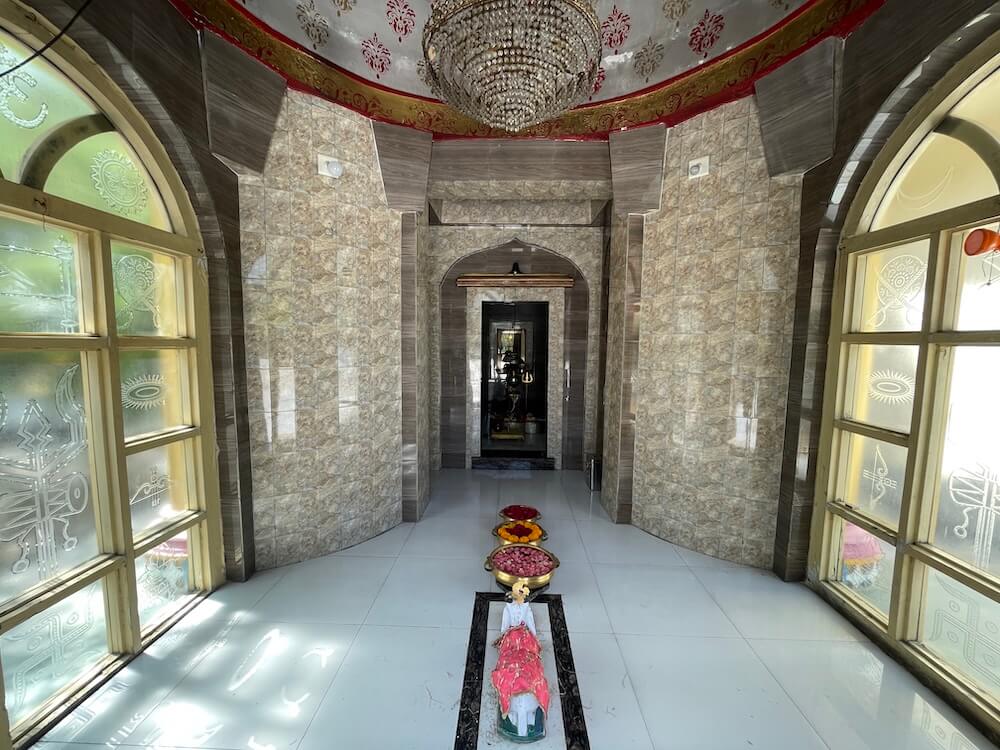 Within the Antaral preceding the sanctum, niches in the side walls house idols of Ganesha and Hanuman. Further in lies the main entrance to the Garbhagriha, where the Shivpinda is enshrined in the centre of the floor. A copper cobra spreads its hood over the Shivpinda and an Abhishek-patra (ritual vessel) hangs from the ceiling. A niche in the rear wall of the sanctum houses an idol of Parvati. The exterior walls feature niches containing various figures, including a sculpture of a Rishi (sage). The roof above the Sabhamandap features a domed Shikhara (spire) with an idol of Lord Mahadev in its front niche, topped by a Stupika (pinnacle) and a Kalasha (finial). Above the Garbhagriha rises a square-based, tapering spire adorned with various deities in its niches and several Urushringa (subsidiary) spires.
 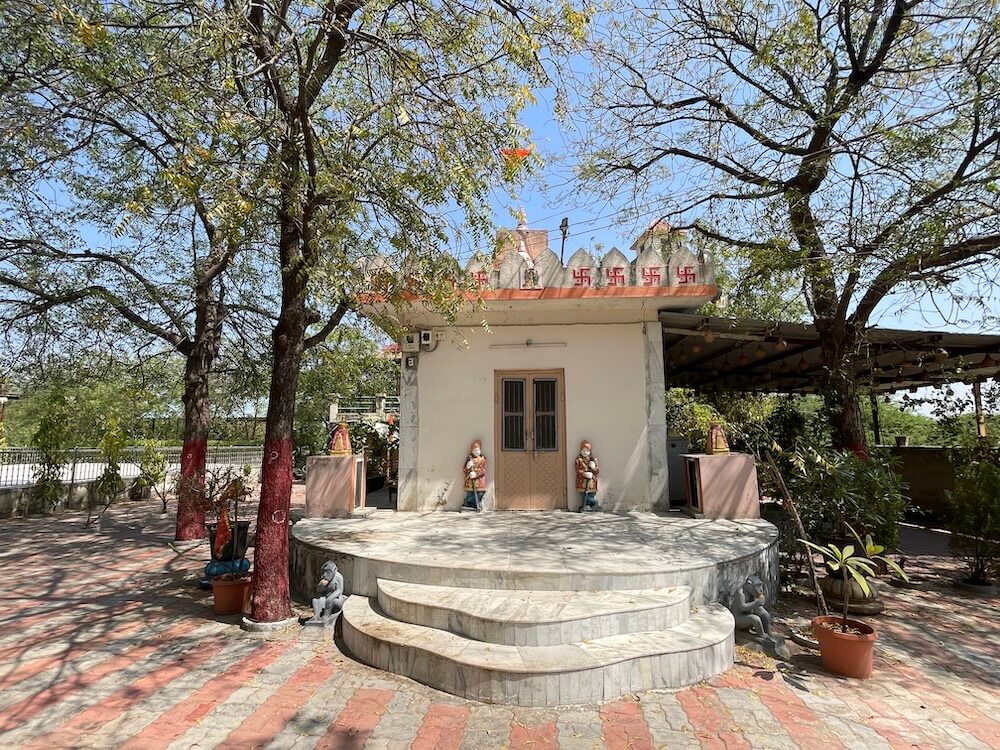 This main spire is crowned with a Stupika, a Kalasha and a Dhvajapataka (temple flag).
Adjacent to the Neelkantheshwar shrine, a temple dedicated to Lord Shri Ram stands upon an elevated Jagati (plinth). It is fronted by a raised courtyard, with Vanarshilpas flanking the access steps. On either side of this courtyard are small shrines housing idols of Garuda and Hanuman. The Ram Temple enshrines the idols of Shri Ram, Lakshman and Janaki, alongside various local deities.
The temple is the venue for elaborate religious festivities during Mahashivratri, the month of Shravan, Shri Krishna Janmotsav, Ram Navami and Hanuman Jayanti. Occasions such as Dussehra, Diwali and Kartik Purnima are also celebrated with great fervour. During the festival of lights, the entire precinct is illuminated with traditional oil lamps. Thousands of devotees from the surrounding regions visit during these times, participating in Bhajan, Kirtan, Pravachan (discourses), scriptural readings and the partaking of Mahaprasad (blessed food). The shrine experiences a significant influx of worshippers on Saturdays, Mondays, Tuesdays and full-moon days. Special Pujas (rituals) are meticulously organised every Monday of the holy month of Shravan. The temple remains open for devotees daily from 6 am to 12 pm and from 4 pm to 8.30 pm.
Useful Information
- Located at 1.5 km from Kheda Bus Station
- State Transport (GSRTC) bus services available to Kheda from various cities in the district
- Private vehicles can access the temple’s parking facility directly
- Numerous facilities for accommodation and breakfast are available in the vicinity
नीलकंठेश्वर महादेव मंदिर
खेड़ा सिटी, ताल. खेड़ा, जिला. खेड़ा
मंदिरे
Temples
मंदिर
-
भूमपुरा हनुमान मंदिर भूमापुरा, मोडज, ता. महेमदावाद, जि. खेडा
अधिक माहितीBhumapura Hanuman Temple Bhumapura, Modaj, Tal. Mahemdavad, Dist. Kheda
View Detailsभूमापुरा हनुमान मंदिर भूमापुरा, मोडाज, ताल. महेमदावाद, जिला. खेड़ा
विवरण देखें -
भाथीजी महाराज मंदिर फागवेल, ता. कापडवंज, जि. खेडा
अधिक माहितीBhathiji Maharaj Temple Phagvel, Tal. Kapadvanj, Dist. Kheda
View Detailsभथीजी महाराज मंदिर फागवेल, ताल. कपडवंज, जिला. खेड़ा
विवरण देखें -
केदारेश्वर महादेव मंदिर महादेवपुरा, ता. कठालाल, जि. खेडा
अधिक माहितीKedareswar Mahadev Temple Mahadevpura, Tal. Kathlal, Dist. Kheda
View Detailsकेदारेश्वर महादेव मंदिर महादेवपुरा, ताल. कठलाल, जिला. खेड़ा
विवरण देखें