
Khedia Hanuman Temple
Kheda City, Tal. Kheda, Dist. Kheda
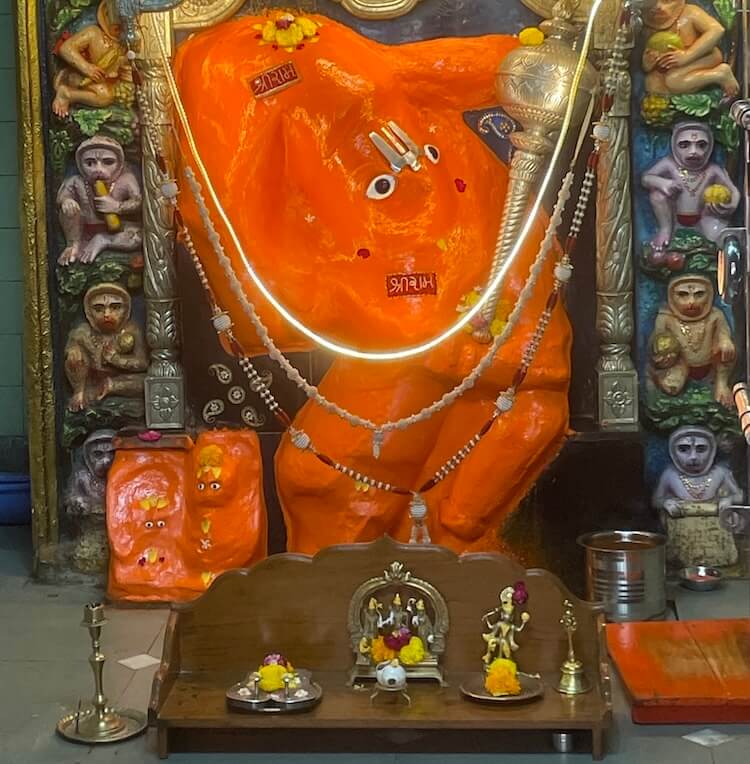 Kheda is a city of profound historical and ancient significance. During the medieval era, it flourished as a celebrated centre of commerce and religious devotion. The city witnessed a particular zenith of prosperity under the aegis of the Solanki emperors, a period during which numerous Hindu and Jain sanctuaries were erected. Amongst the Hindu edifices, those dedicated to Lord Mahadev, Lord Vishnu and Lord Hanuman are most prominent. Within this lineage of venerable shrines, the Khedia Hanuman Temple holds a position of singular renown. The presiding deity, Hanuman, is revered by the faithful as a ‘Jagrut’ (spiritually awake) divinity who graciously fulfils the heartfelt desires of his devotees. According to historians and archaeologists, the temple dates back over 13 centuries, with historical records recording its construction in 657 AD (Samvat 713).
Known by many names such as Maruti, Bajrang, Balbheem, Ramdoot, Kesarinandan, Anjaneya, Vajrang, Sankatmochan, 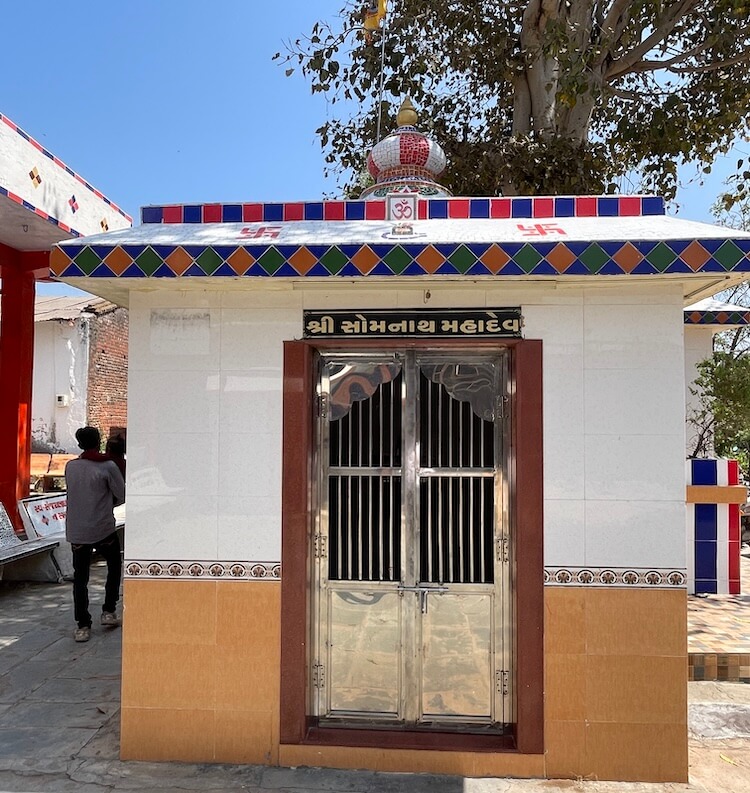 Mahavir, Maharudra and Hanumant; Hanuman is among the most revered deities. As one of the seven; immortal beings (Saptachiranjiva), his legends are plentiful. The Valmiki Ramayana portrays him as supremely brave, celibate and morally impeccable. Though the epic does not mention his offspring, other texts, such as the Jain epic Padmacharita and the 15th-century Anand Ramayana, describe his son, Makardhwaja. According to Puranic legend, after setting Ravana’s Lanka ablaze, Hanuman sought to extinguish the fire that had caught alight on his tail by plunging into the sea. At that time, a drop of his sweat fell into the ocean’s depths and was swallowed by a mighty sea creature known as the makara (crocodile). The divine radiance within that droplet impregnated the creature and from this miraculous conception was born a being whose upper body was that of a monkey and whose lower body resembled the makara.
  He came to be known as Makardhwaja.
Local lore recounts that in the Puranic era, this entire region formed part of the kingdom of Makardhwaja. It is said that Makardhwaja’s son, Mayurdhwaja, frequently visited the city of Kheda. On his journeys towards Kheda, his chariot would invariably become immobilised at a particular spot; the horses would refuse to proceed, halting firmly on that spot. Perturbed by this recurrent phenomenon, the King sought counsel from his ‘Rajguru’ (royal preceptor). The ‘Rajguru’ revealed that the site was a sacred abode of Hanuman himself, informing the King that a ‘Swayambhu’ (self-manifested) idol of the Lord lay concealed beneath the earth. Acting on this sage advice, the King ordered excavations that brought to light the divine image of Hanuman. In an act of profound gratitude towards his grandfather, the Lord Hanuman, Mayurdhwaja commissioned the erection of a temple at the site, thereby linking the provenance of this idol directly to the Puranic period.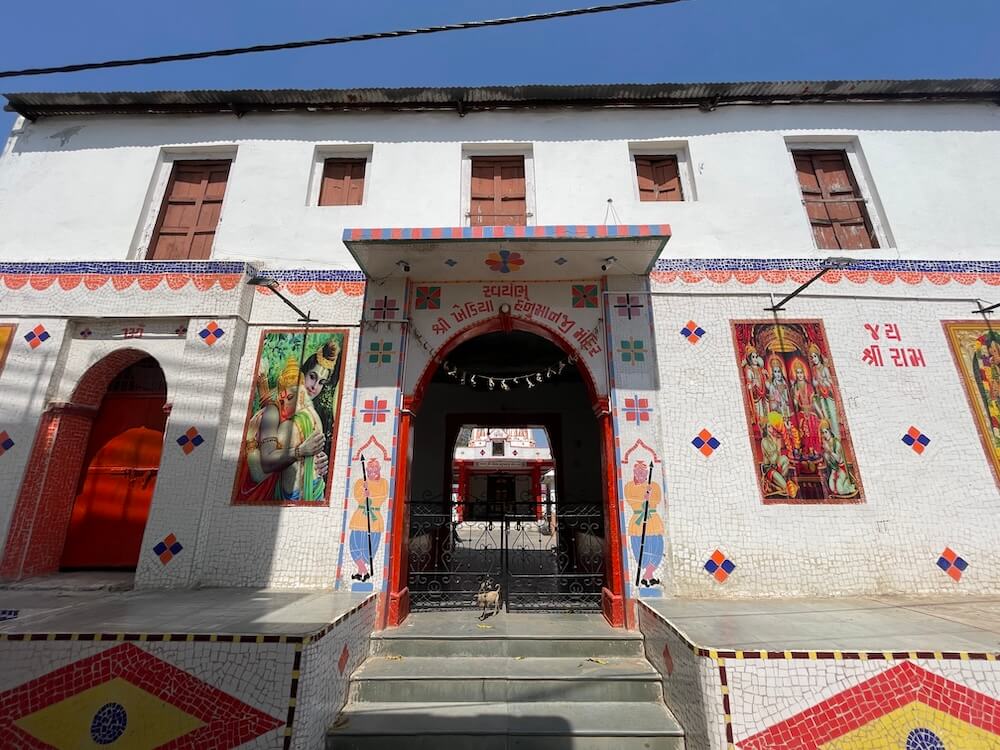
With the inexorable march of time, the idol once again became interred beneath the soil. Local residents, however, observed a persistent celestial radiance emanating from beneath a banyan tree in the vicinity on nights of the full moon. Eventually, an ascetic devotee of Hanuman sought out the shade of this banyan tree for his ‘Tapasya’ (penance). During his meditations, Lord Hanuman granted the sanyasi a ‘Drishtant’ (divine vision), disclosing his presence in idol form beneath the ground. Following this revelation, the sanyasi excavated the area and rediscovered the self-manifested idol. Having performed the ‘Pratishthana’ (consecration) with due Vedic rites, the ascetic monk oversaw the construction of a new temple to house the deity.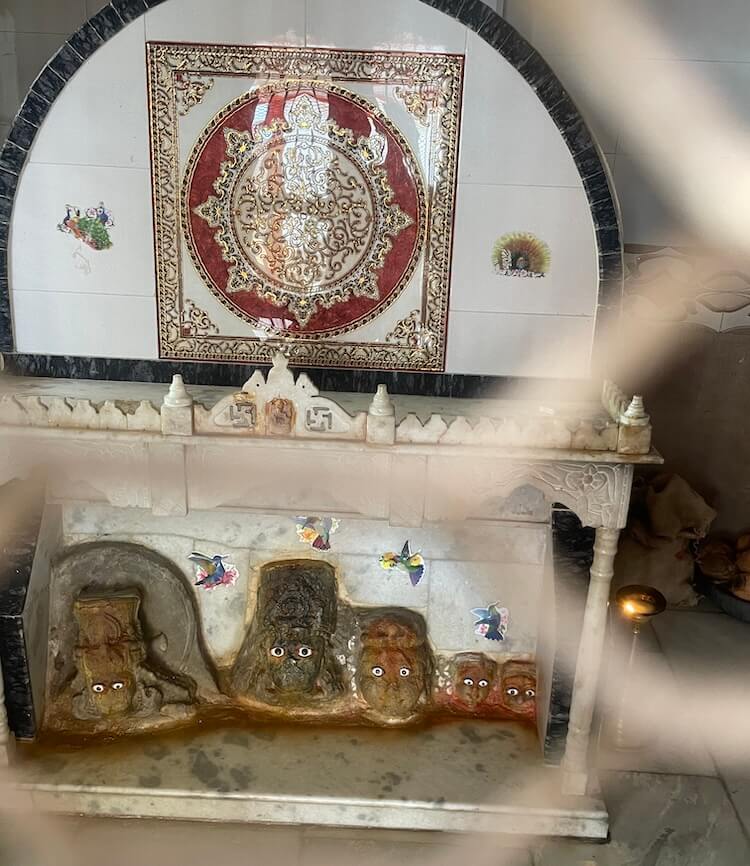
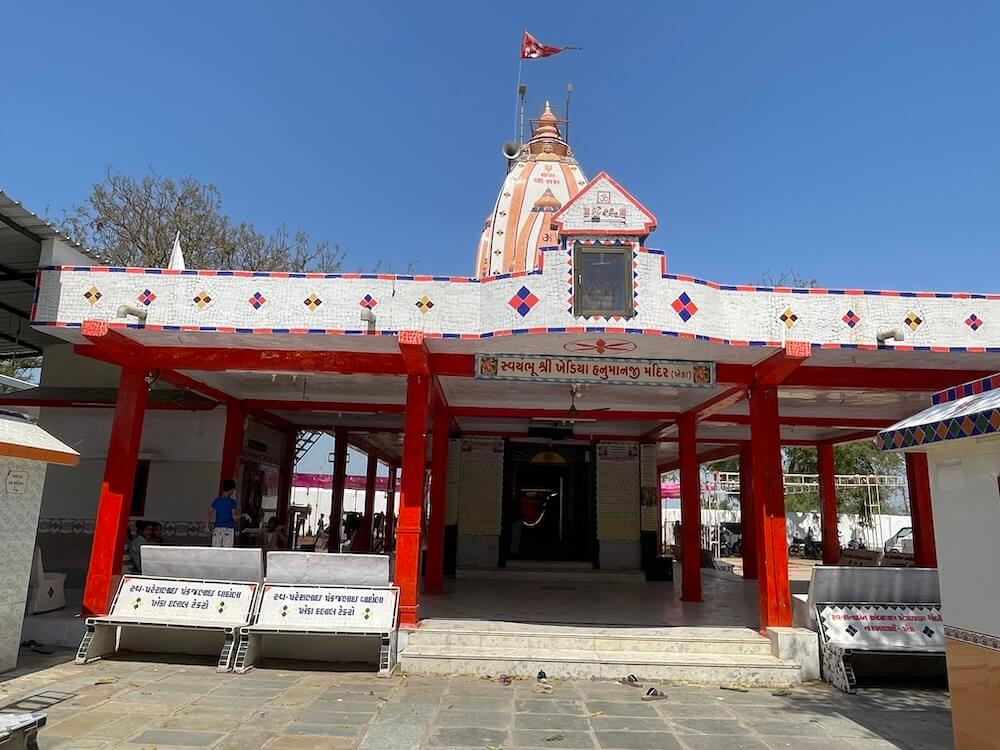
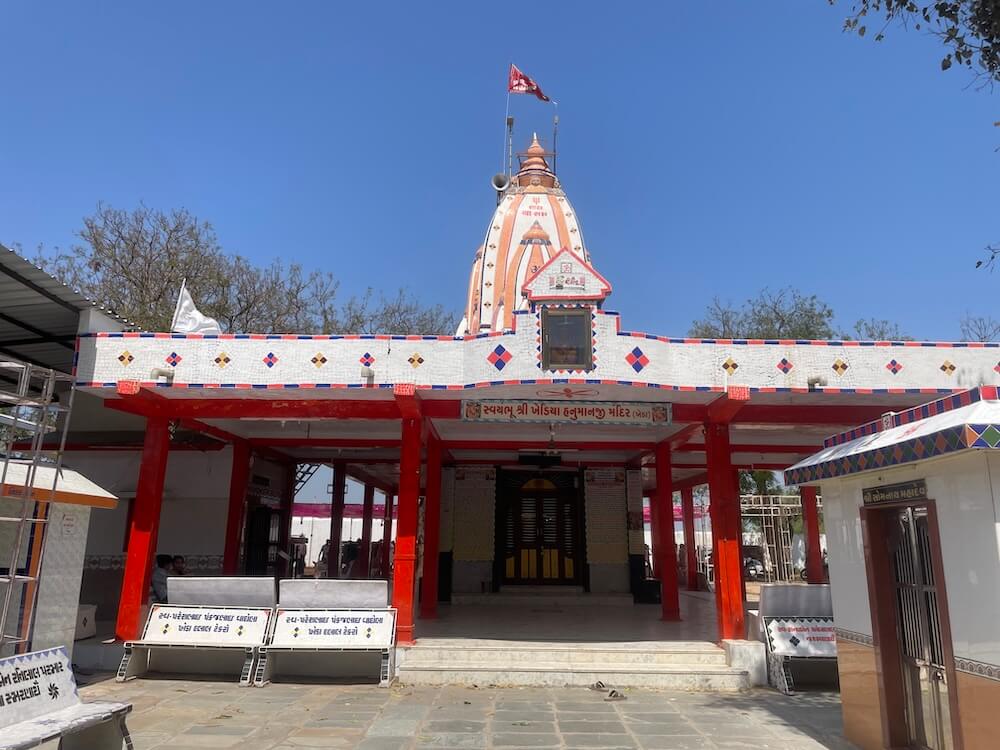
The temple is nestled in a tranquil setting on the outskirts of Kheda city, with the primary structure situated atop a hillock of moderate height known as ‘Hanuman Tekro’. A parking facility for vehicles is provided at the base. Entry to the temple courtyard is gained through a two-storeyed gateway set within the perimeter fortifications, the upper floor of which houses a ‘Nagarkhana’ (traditional drum house). The expansive courtyard is fully paved and features numerous seating arrangements for the repose of pilgrims. One section of the courtyard is graced by a ‘Tulsi-vrindavan’ (sacred basil shrine). Facing the main structure is an independent temple dedicated to Lord Mahadev, with an idol of Goddess Parvati enshrined in a niche within its rear wall. To the right of the principal shrine stands a dedicated ‘Tilak’ chamber.
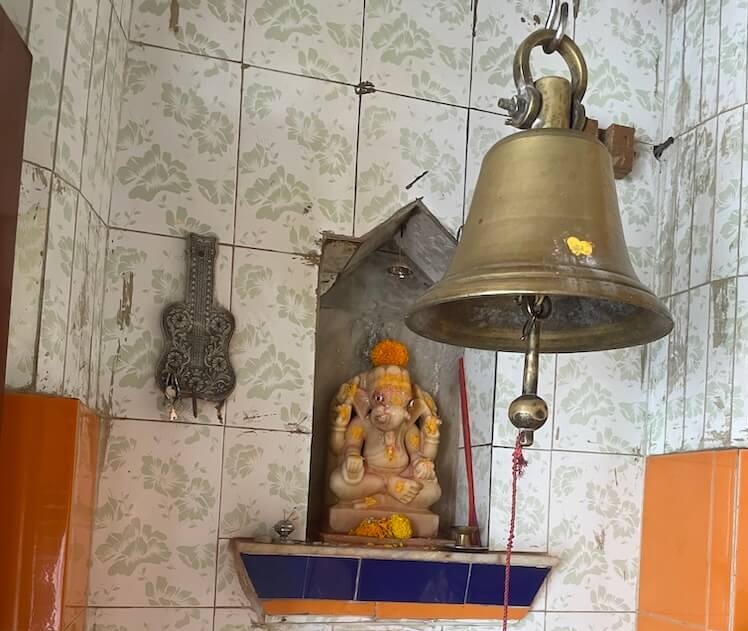
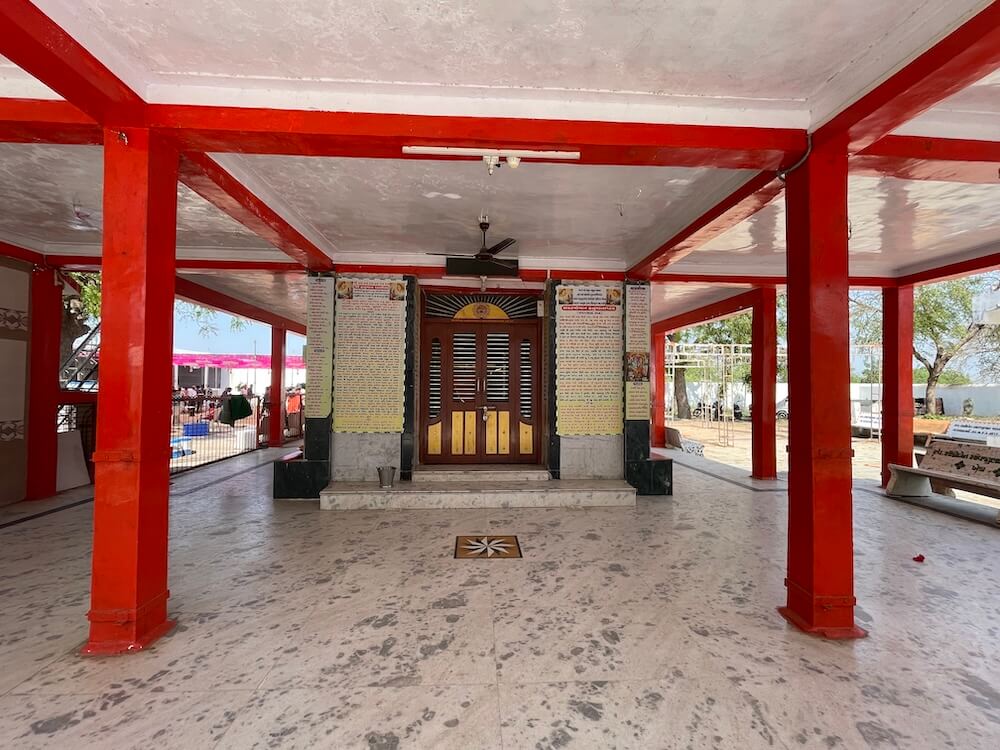
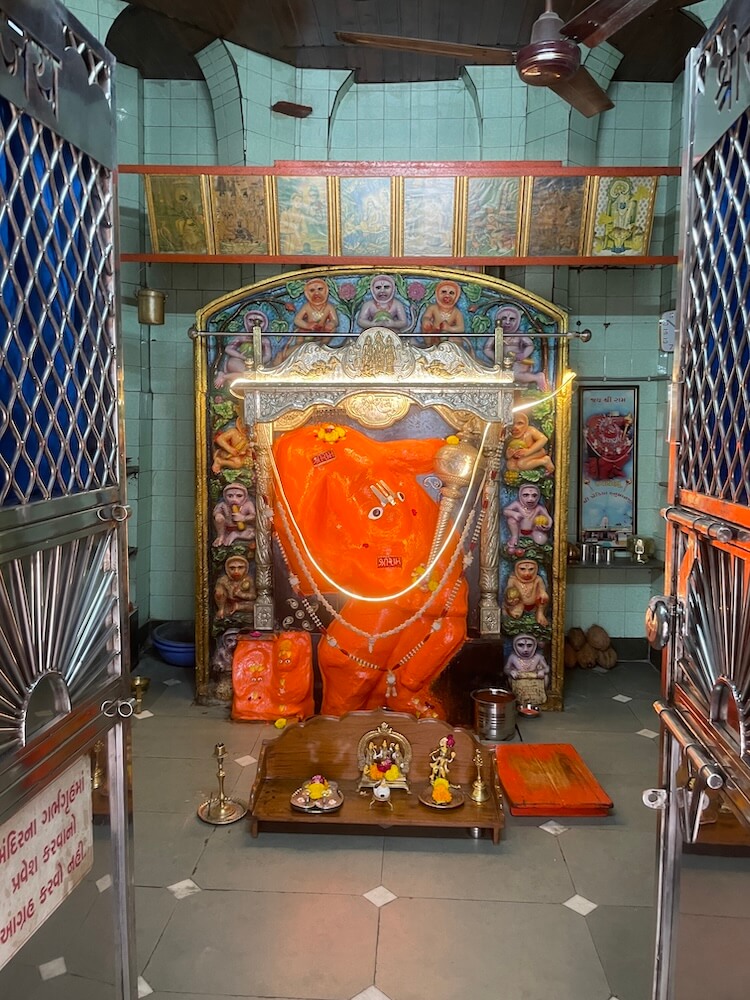
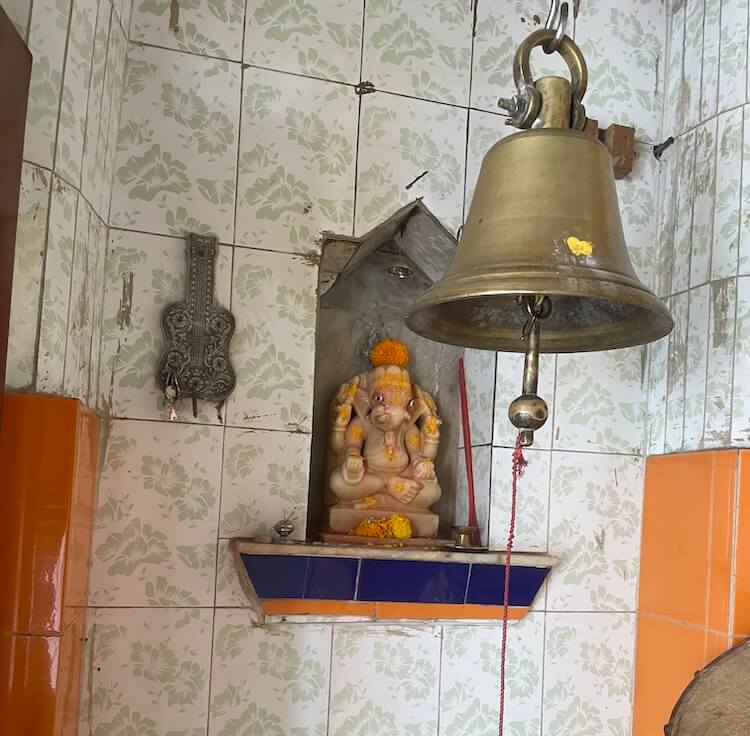
The architectural composition of the temple follows the traditional layout of a ‘Sabhamandap’ (assembly hall), ‘Antaral’ (vestibule) and ‘Garbhagriha’ (sanctum sanctorum). 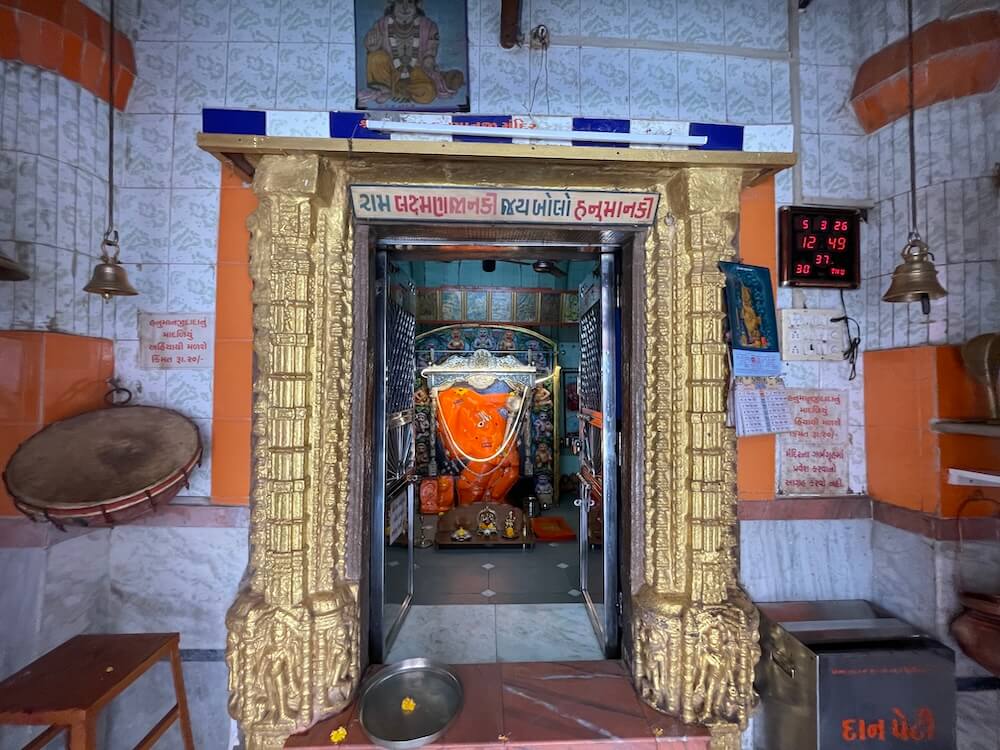 The ‘Sabhamandap’ is of a semi-open design, secured by a protective railing. The vestibule and sanctum are situated at the heart of this assembly hall. Notably, the entrance to the ‘Antaral’ is elevated above the hall floor, accessed by two steps. The lintel of this wooden-shuttered entrance is engraved with an image of the Sun. Within the vestibule, niches house idols of Lord Ganpati and other divinities. The doorframes of the sanctum sanctorum feature base carvings of Bhairav gatekeepers (Dwarpalas) and female attendants (Dwarsevikas). The frames are further embellished with intricate motifs of creepers, flowers and traditional pot-and-foliage patterns (Kumbhathar). A sculpture of Lord Ganesha graces the lintel of the sanctum. Inside, within a delicately carved silver frame (Makhar), resides the stone ‘Swayambhu’ idol of Hanuman,
  consecrated with vermillion. The deity, wielding a silver ‘Gada’ (mace) in one hand, is adorned with a silver crown, earrings and silver necklaces.
A ‘Pradakshinamarga’ (circumambulation path) surrounds the exterior of the vestibule and sanctum. The roof of the temple is bounded by a security parapet, featuring a niche with an idol of Hanuman on the side facing the entrance. Above the sanctum rises a tall, square-shaped, tapering ‘Shikhara’ (spire), with subsidiary towers (Angishikhar) adorning its four walls. The apex of the spire is crowned with an ‘Amalaka’ (fluted stone disc), upon which sits a ‘Kalasha’ (finial) and the temple banner.
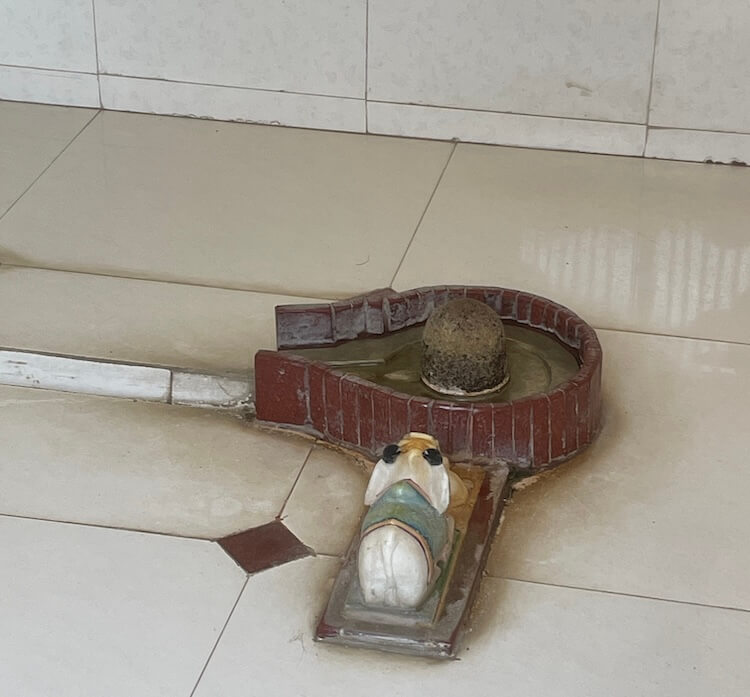
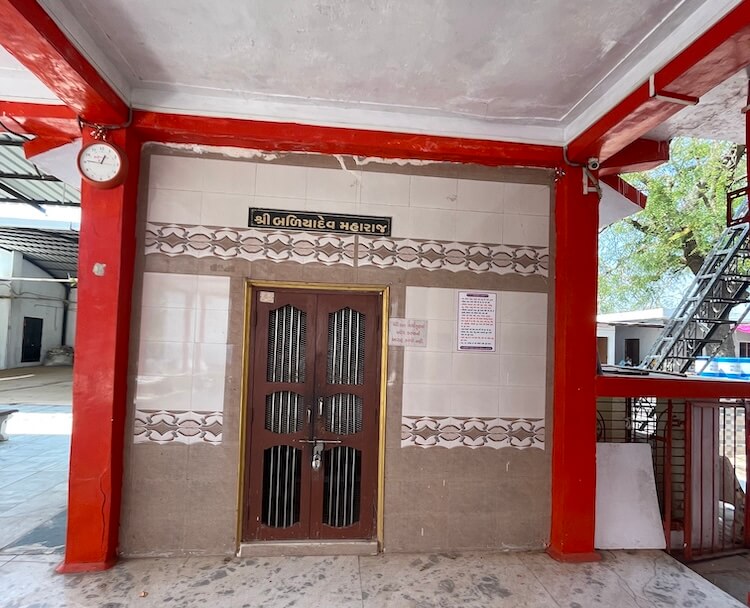
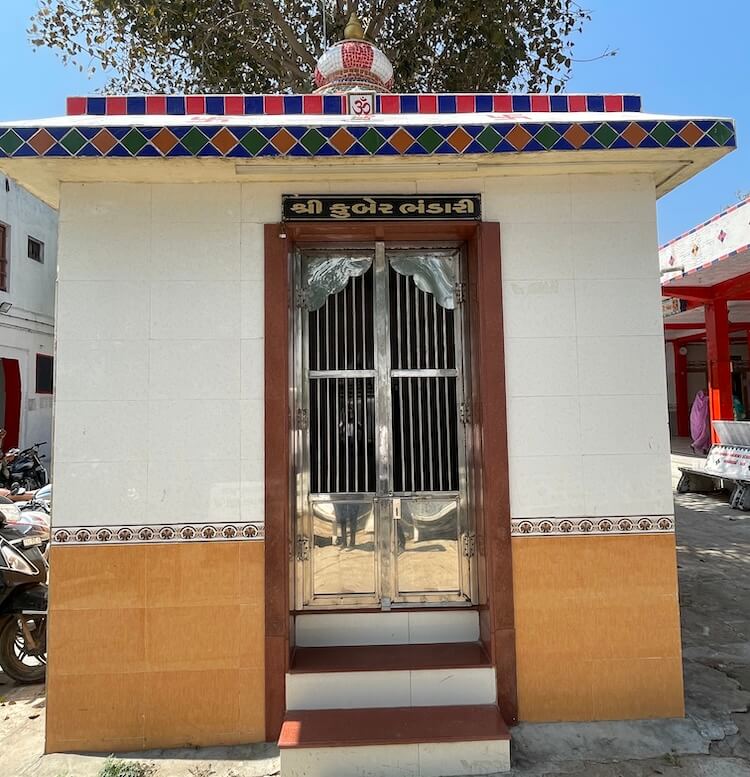
Adjacent to the assembly hall and to the left of the main temple is the shrine of Baniyadev Maharaj. It houses a marble ‘Makhar’ that enshrines Baniyadev’s image alongside other stone idols.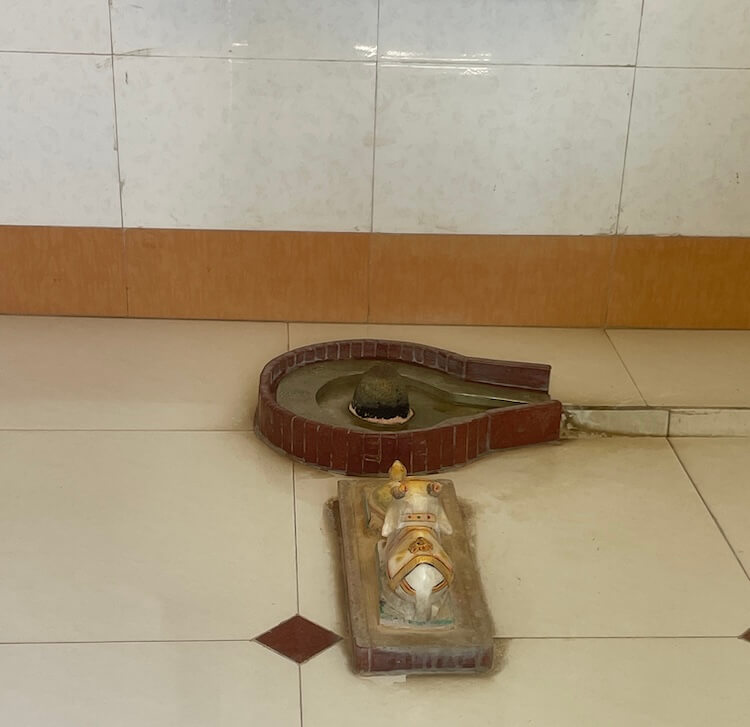 A silver ‘Shri Yantra’ is fixed upon the ceremonial headgear (Bashing) of this marble frame. A short distance away in the courtyard stands the Ramji Temple, featuring a three-tiered pedestal (Vajrapitha) with idols of Lord Ram, Lakshman and Janaki at the summit and other deities on the lower tiers. Nearby lies the Kuber Bhandari Temple, containing a ‘Shivpind’ (auspicious stone of Shiva) on the floor, fronted by a sculpture of ‘Nandi’ (the sacred bull) and a niche containing Goddess Durga.
The pre-eminent annual festival at the Khedia Hanuman Temple is ‘Kali Chaudas’, which is observed with great fervour over four consecutive days. The celebrations commence on ‘Dhanteras’ during the Diwali season and continue until ‘Bali Pratipada’. The second major celebration is Hanuman Jayanti, falling on the full moon of the month of Chaitra. On this occasion, a ‘Palkhi’ (palanquin) procession of the deity is taken out, accompanied by devotees dancing to the beat of drums and the jubilant scattering of ‘Gulal’ (red powder). Furthermore, festivals such as ‘Krishna Janmotsav’, ‘Ram Navami’, ‘Navratri’ and ‘Nag Panchami’ are celebrated with due devotion. The temple sees a sharp increase in pilgrims on Saturdays, Mondays, Tuesdays and full moons. The temple is open for devotees daily from 6:00 AM to 8:00 PM.
Useful Information
- Located at 1.5 km from Kheda Bus Station
- State Transport (GSRTC) bus services are available to Kheda from various cities in the district.
- Private vehicles can reach the temple parking area directly.
- Accommodation and breakfast facilities are available in the vicinity.
- Contact: – Temple Office, Mob. 8488810307
खेड़िया हनुमान मंदिर
खेड़ा सिटी, ताल. खेड़ा, जिला. खेड़ा
मंदिरे
Temples
मंदिर
-
भूमपुरा हनुमान मंदिर भूमापुरा, मोडज, ता. महेमदावाद, जि. खेडा
अधिक माहितीBhumapura Hanuman Temple Bhumapura, Modaj, Tal. Mahemdavad, Dist. Kheda
View Detailsभूमापुरा हनुमान मंदिर भूमापुरा, मोडाज, ताल. महेमदावाद, जिला. खेड़ा
विवरण देखें -
भाथीजी महाराज मंदिर फागवेल, ता. कापडवंज, जि. खेडा
अधिक माहितीBhathiji Maharaj Temple Phagvel, Tal. Kapadvanj, Dist. Kheda
View Detailsभथीजी महाराज मंदिर फागवेल, ताल. कपडवंज, जिला. खेड़ा
विवरण देखें -
केदारेश्वर महादेव मंदिर महादेवपुरा, ता. कठालाल, जि. खेडा
अधिक माहितीKedareswar Mahadev Temple Mahadevpura, Tal. Kathlal, Dist. Kheda
View Detailsकेदारेश्वर महादेव मंदिर महादेवपुरा, ताल. कठलाल, जिला. खेड़ा
विवरण देखें