
Masani Mata Temple
Sansoli, Tal. Mahemdavad, Dist. Kheda
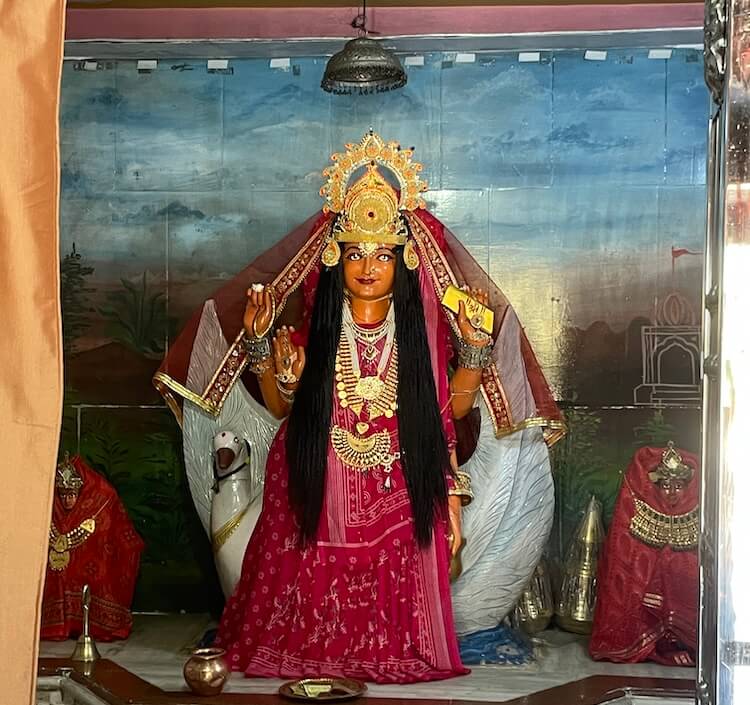 The deity ‘Masani Mata’, revered by the Tantric Shaktas, is the primary divinity of their tradition. She is considered an emanation of Sati, the consort of Lord Mahadev. According to legend, Sati immolated herself in Prajapati Daksha’s sacrificial fire. From the ensuing smoke, this Goddess emerged and earned the epithet ‘Dhumavati’. She is venerated across Gujarat, Maharashtra, Rajasthan, and Southern India. She is believed to reside in the ‘Smashan’ (cremation ground) on the outskirts of villages, serving as a vigilant guardian against malevolent spirits, epidemics, and dark forces. In Sansoli, a celebrated and ancient temple dedicated to this ‘Jagrut’ (spiritually active) Goddess stands on the banks of the river Vatrak. Devotees come with deep faith to seek deliverance from worldly troubles, marital obstacles, or legal issues concerning overseas travel. It is a firm belief that attending specific ‘Pujas’ (rituals) for five consecutive Sundays ensures the fulfilment of all desires.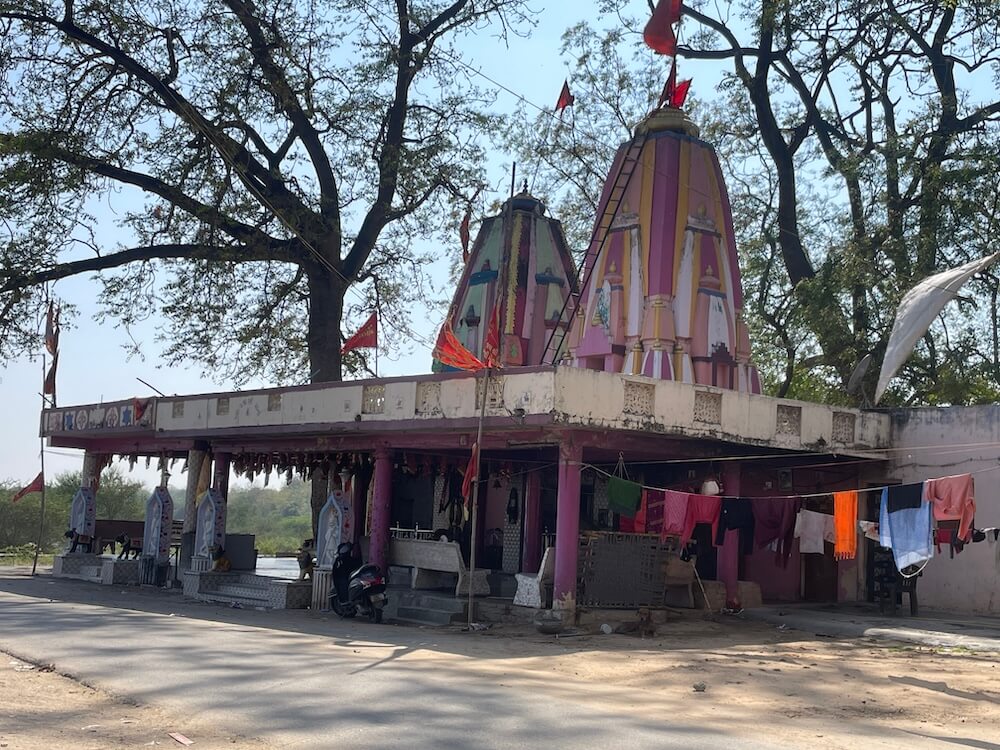
The mythological and spiritual lineage of the Goddess traces its roots to ancient folklore in Southern India. In the ‘Masaani Amman’ temple of Pollachi, Tamil Nadu, a fifteen-foot-long reclining idol of the deity is worshipped, bearing in her four hands a serpent-entwined ‘Damru’ (drum), a vessel of fire, a container of vermillion, and a ‘Trishul’ (trident). Identified with the ‘Adi Parashakti’ (primordial supreme power), she is often associated with deities such as Mariamman, Angala Devi, Isakki, and Karumari. According to one legend, an innocent woman was once sentenced to death for unknowingly eating a mango from King Nannan’s orchard. Following her sacrifice, the repentant villagers began worshipping her as a deity. It is conjectured that the name ‘Masaani’ is a corruption of ‘Ma-kani’—derived from the old Tamil words ‘Ma’ (mango) and ‘Kani’ (fruit).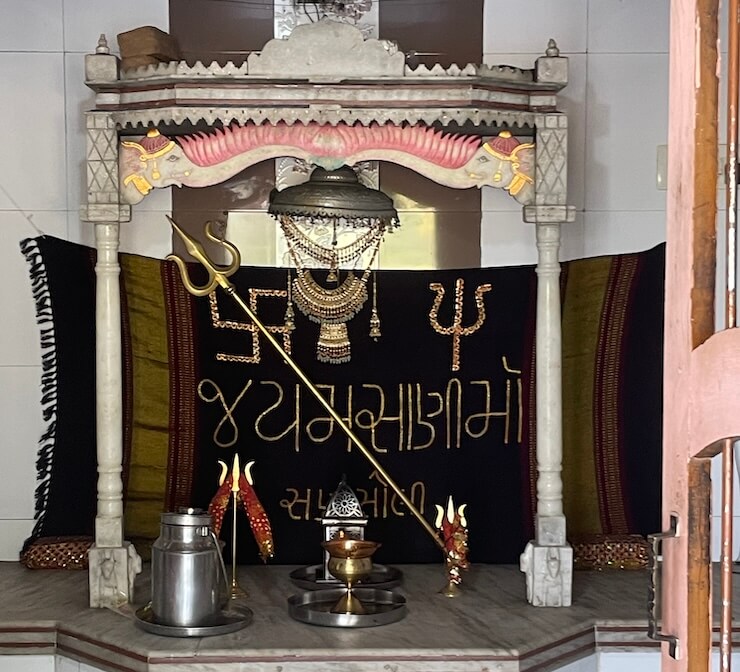 Conversely, some Sanskrit scholars suggest the name originated from ‘Smashani’ due to her association with the cremation grounds. At the Sansoli shrine, the Mother is primarily worshipped as a protector and a granter of ‘Manata’ (vows).
The temple boasts an antiquity of approximately four to five hundred years, though it has undergone extensive restoration in recent times. Situated on the riverbank, the village cremation ground lies but a short distance away. A captivating legend surrounds the ‘Trishul’ housed within the sanctum. It is said that in the year 2014, this metallic trident came floating down the Vatrak. For several days, it remained suspended upon the water near the opposite bank. Perceiving this as a divine portent, the villagers implored the temple priest to enshrine it. Before the gathered community, the priest made a solemn petition to the Goddess that if the trident were to float across to their side of the river, it would be established within her temple. 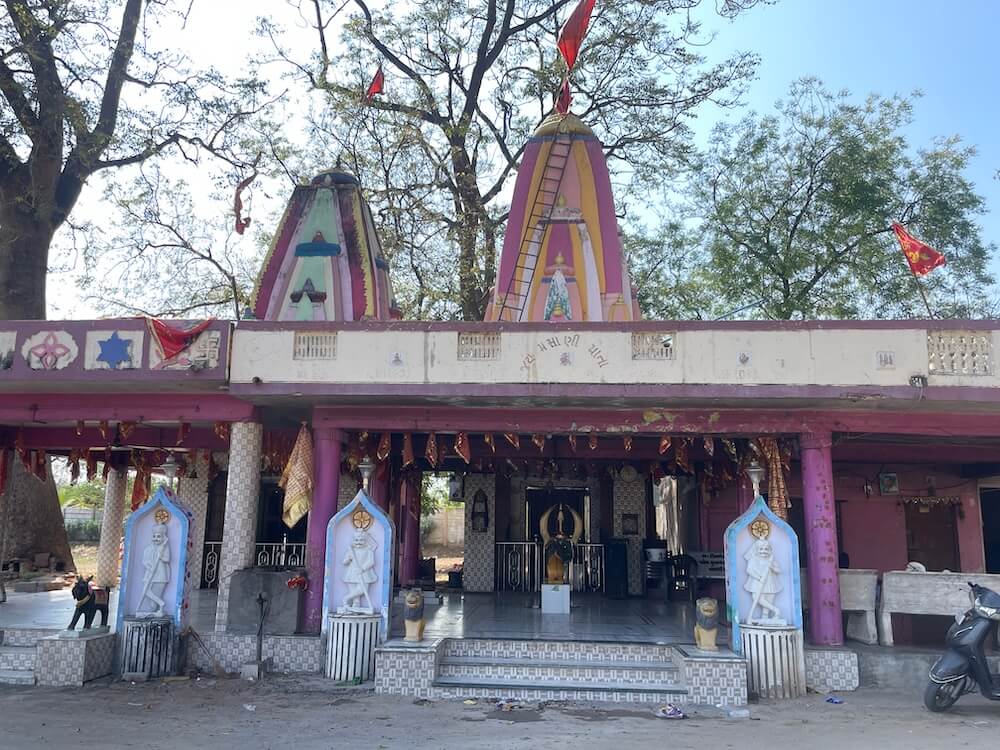 According to the local tale, that very night the trident drifted to the hither bank. The priests subsequently performed the consecration rites and placed it beside the idol of the Goddess.
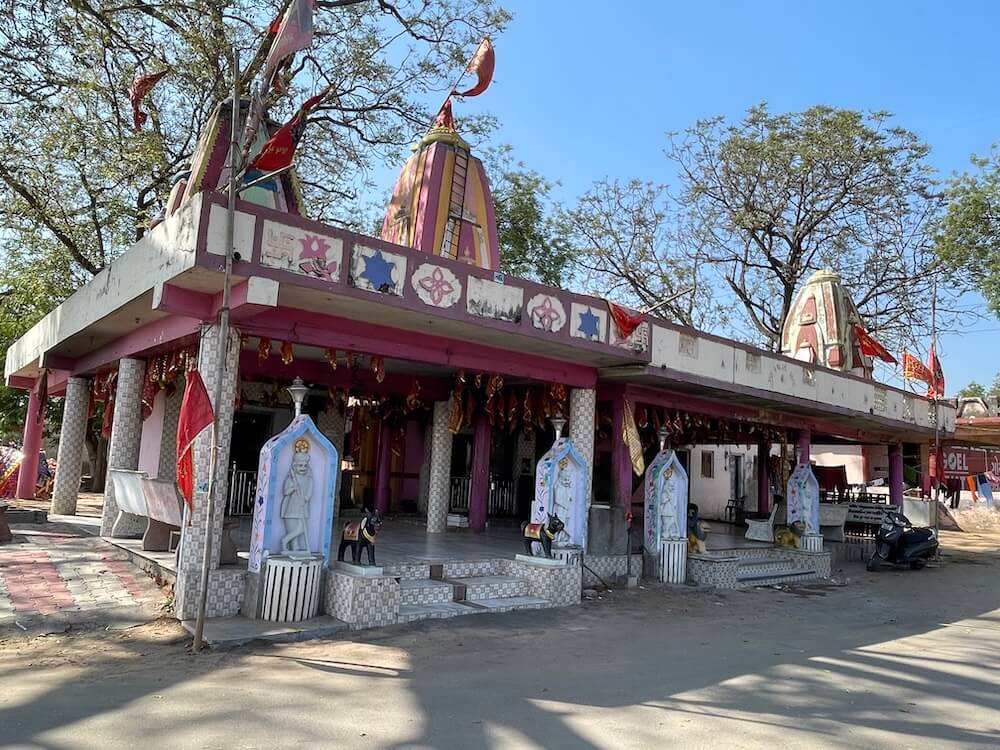
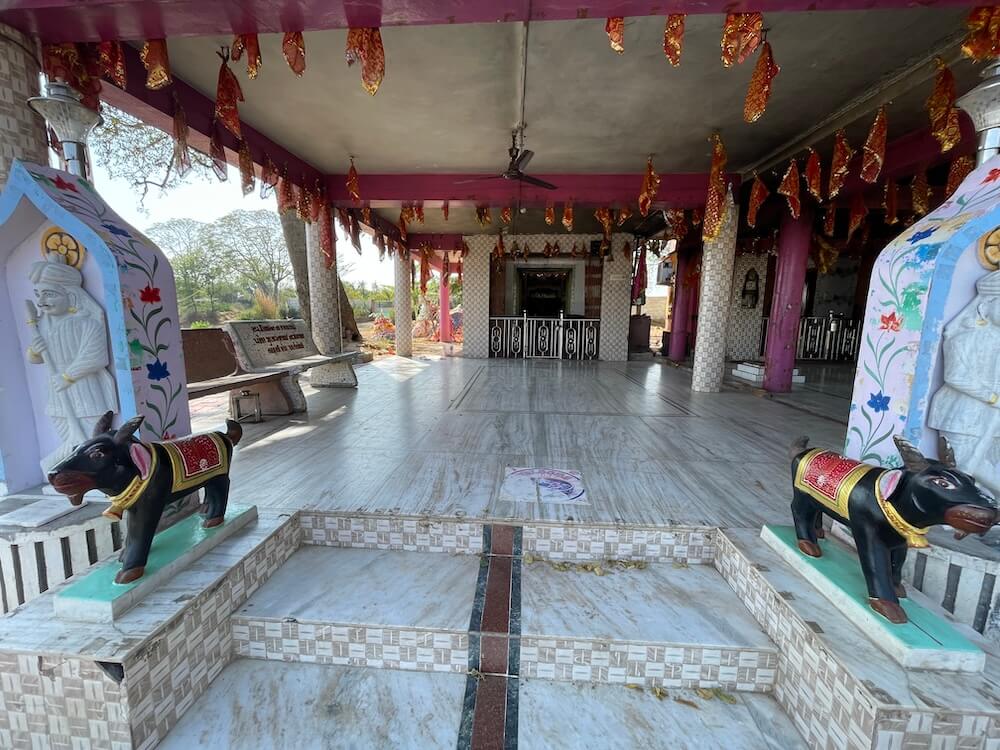
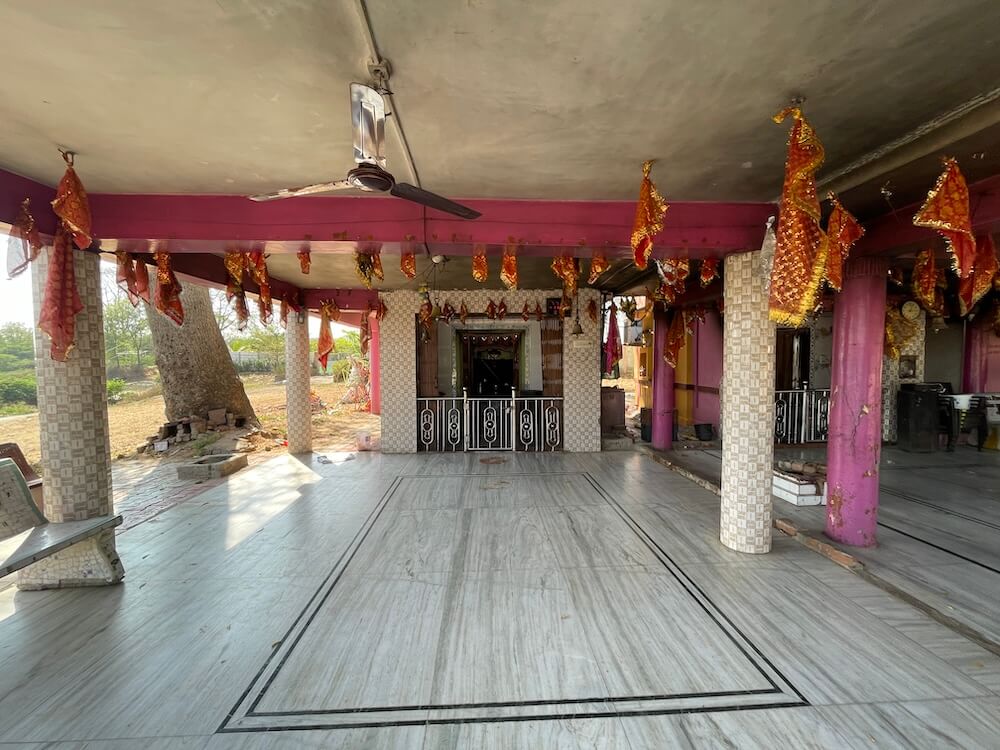
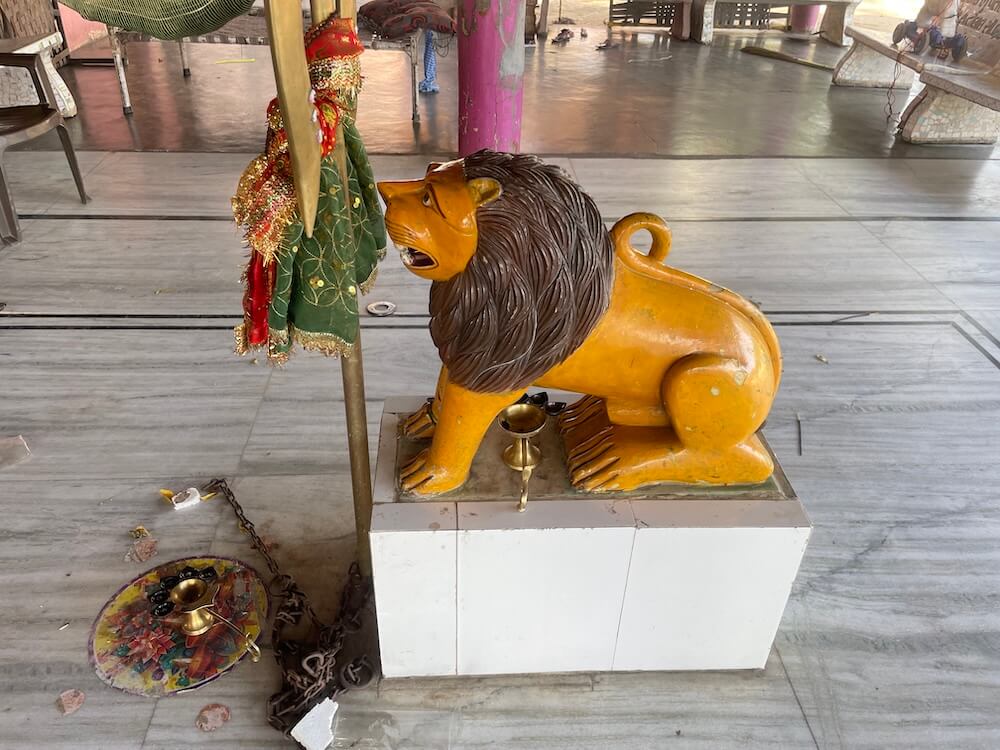
A well-paved road leads to the temple, which sits somewhat secluded from the village and is fronted by a spacious parking area. The architectural layout consists of a common ‘Sabhamandap’ (assembly hall) leading to two distinct ‘Garbhagrihas’ (sanctum sanctorums), each preceded by an ‘Antaral’ (vestibule). The hall is slightly elevated above the courtyard and features two entrances guarded by ‘Dwarpala’ (gatekeeper) sculptures. The first entrance is flanked by stone lions, while the steps on the left are guarded by ‘Aja’ (goat) sculptures. 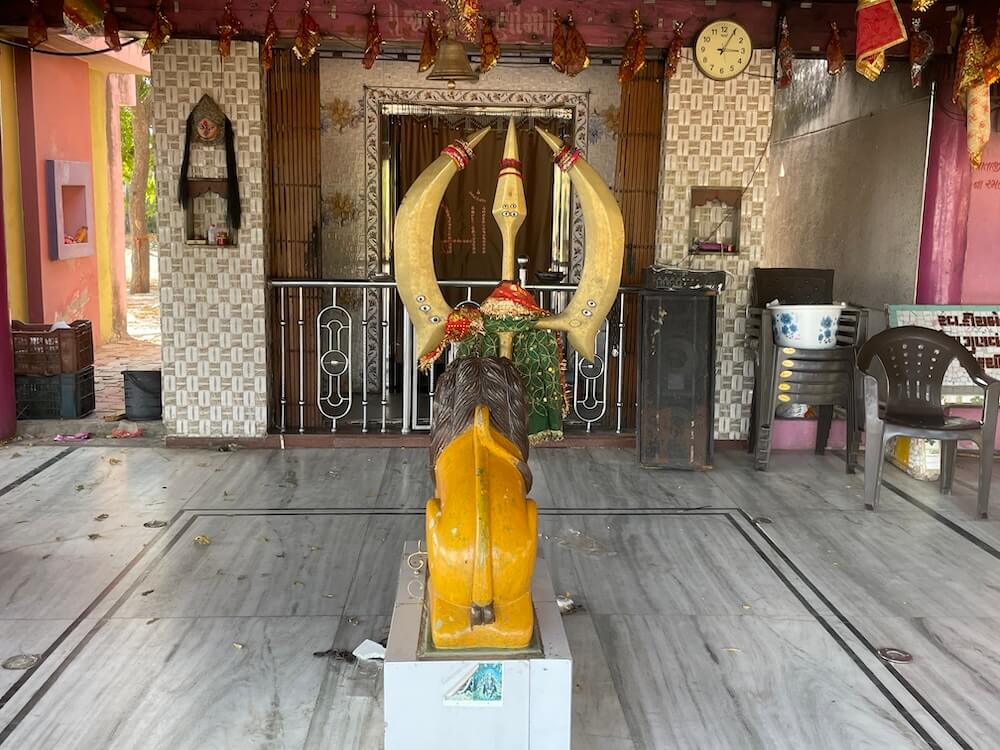 The ceiling of the hall is festooned with hundreds of ‘Chunris’ (sacred scarves) offered in fulfilment of vows. Within the hall, a ‘Yagnakunda’ (sacrificial fire pit) and seating for pilgrims are provided. Facing the sanctum entrance is a large sculpture of a lion, the Goddess’s ‘Vahana’ (mount), resting upon a ‘Vajrapitha’ (stone pedestal), fronted by a grand ‘Trishul’. Devotees believe that circumambulating this trident alleviates physical ailments and menstrual distress.
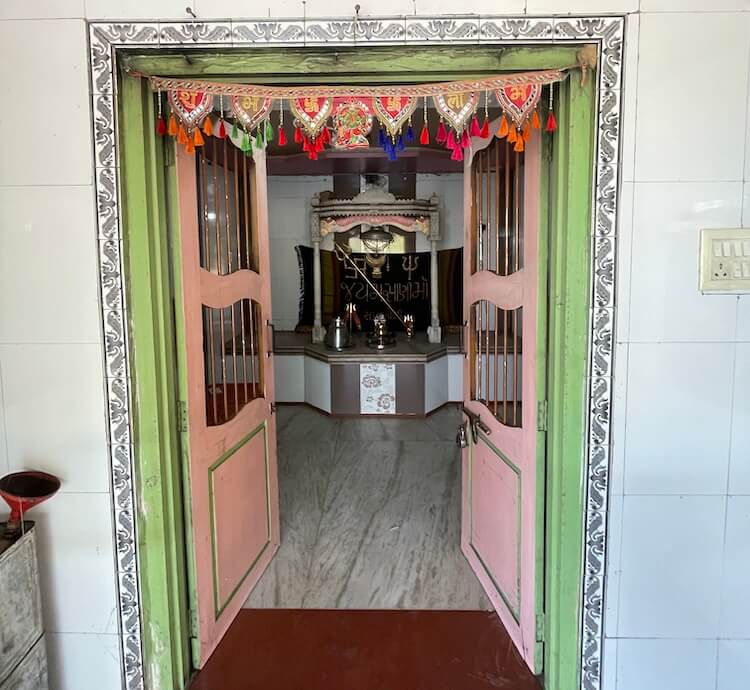
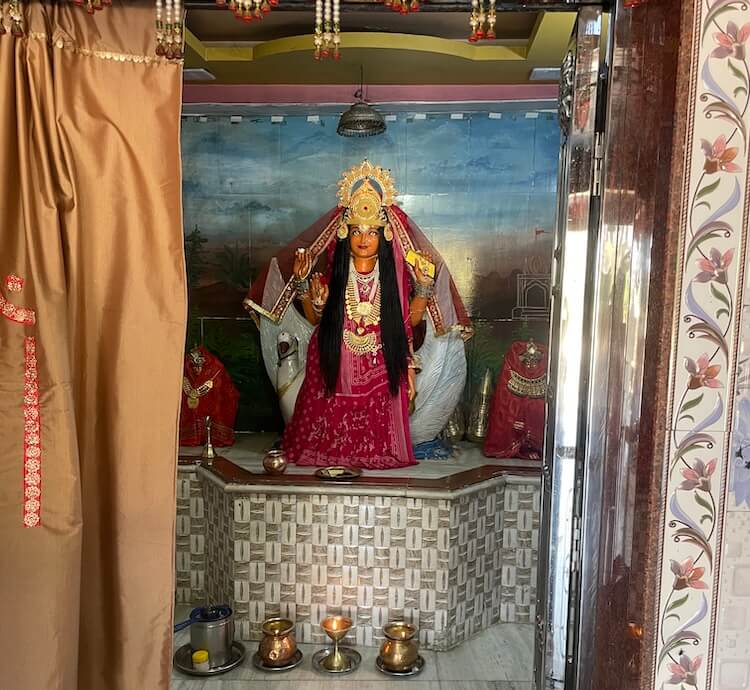
Beyond the stainless-steel railings of the vestibule lies the first sanctum, enshrining a four-armed idol of the Goddess seated upon a goat. Draped in fine clothes and ornaments, she wears a silver crown and holds the miraculous trident. She is flanked by two ancient idols, said to represent her auxiliary powers. 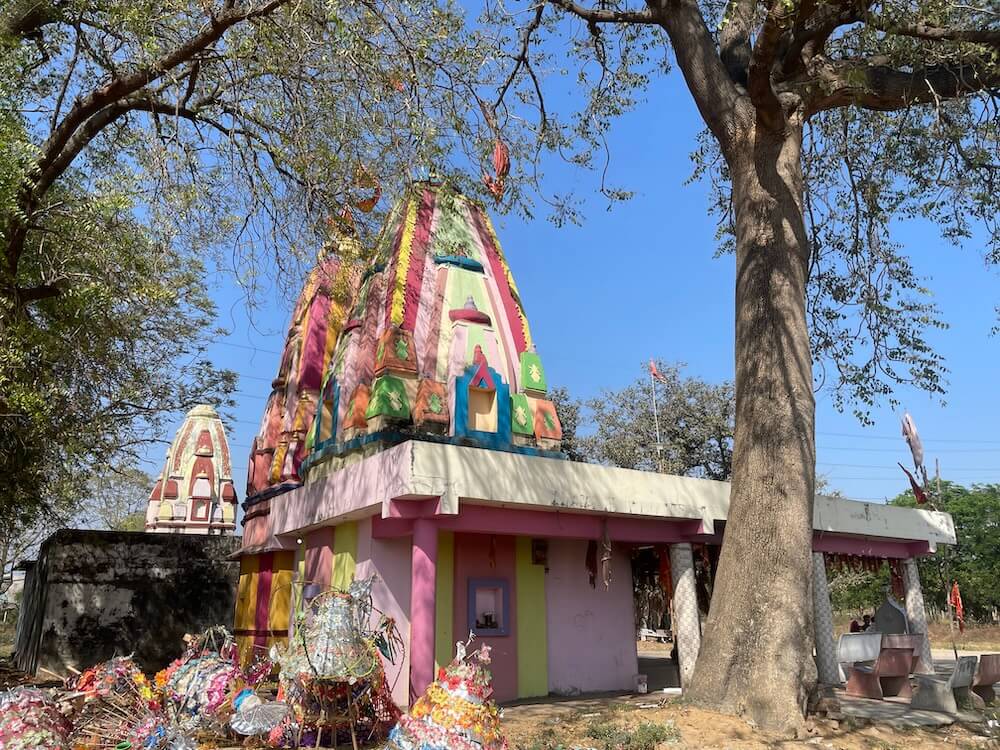 To the left sits the second sanctum, identical in design. However, it contains no idol, housing instead a ‘Trishul’ and an ‘Akhand Jyot’ (eternal flame). This is considered the original seat of the Goddess. Upon the pedestal here, silver replicas of goats are placed, and it is at this location that ritual animal sacrifices are traditionally performed. Both sanctums are crowned with square ‘Shikharas’ (spires) adorned with subsidiary towers, ‘Amalakas’ (fluted discs), and ‘Kalashas’ (finials).
The ‘Chaitra Purnima’ (full moon of the month of Chaitra) is celebrated with a grand annual fair, drawing thousands who come to discharge their vows. Offerings of ‘Chunris’, traditional cosmetics, dry fruits and ‘Bhaji-Bhakri’ (vegetables and flatbread) are made, alongside silver goat figurines. During the nine nights of ‘Navratra’, special ‘Aartis’ and ‘Garba’ dances are organised, culminating in vibrant celebrations on ‘Sharad Purnima’ when the precincts are brilliantly illuminated. The temple also hosts special observances during ‘Shravan’, ‘Makar Sankranti’ and ‘Mahashivratra’, on which days locals traditionally bathe in the Vatrak before seeking the Goddess’s blessing. While Tuesdays, Fridays and both new and full moon days see a large influx of visitors, every Sunday the temple grounds take on the bustling atmosphere of a local fair. The temple remains open for devotees daily from 6 AM to 8 PM.
Useful Information
- Located at 4 km from Mahemdavad and 16 km from Kheda.
- State Transport (GSRTC) bus services are available from Mahemdavad.
- Private vehicles can reach the temple parking area directly.
- Accommodation and breakfast facilities are available in the vicinity.
- Contact – Vijaybhai Pandya, Mob. 9574350815
मसानी माता मंदिर
संसोली, ताल. महेमदावाद, जिला. खेड़ा
मंदिरे
Temples
मंदिर
-
भूमपुरा हनुमान मंदिर भूमापुरा, मोडज, ता. महेमदावाद, जि. खेडा
अधिक माहितीBhumapura Hanuman Temple Bhumapura, Modaj, Tal. Mahemdavad, Dist. Kheda
View Detailsभूमापुरा हनुमान मंदिर भूमापुरा, मोडाज, ताल. महेमदावाद, जिला. खेड़ा
विवरण देखें -
भाथीजी महाराज मंदिर फागवेल, ता. कापडवंज, जि. खेडा
अधिक माहितीBhathiji Maharaj Temple Phagvel, Tal. Kapadvanj, Dist. Kheda
View Detailsभथीजी महाराज मंदिर फागवेल, ताल. कपडवंज, जिला. खेड़ा
विवरण देखें -
केदारेश्वर महादेव मंदिर महादेवपुरा, ता. कठालाल, जि. खेडा
अधिक माहितीKedareswar Mahadev Temple Mahadevpura, Tal. Kathlal, Dist. Kheda
View Detailsकेदारेश्वर महादेव मंदिर महादेवपुरा, ताल. कठलाल, जिला. खेड़ा
विवरण देखें