The entire region of the Kheda district is renowned by the name ‘Charotar’. Derived from the Sanskrit word ‘Charu’, the term Charotar signifies that which is beautiful. Blessed with fertile and verdant lands, the local dialect of this vicinity is referred to as Charotari. Perched upon an elevated tract of land at the confluence of the Vatrak and Shedhi rivers, the Somnath Mahadev Temple in Kheda city is regarded as a paramount centre of devotion for the faithful of the surrounding areas. As Lord Shiva is the personification of Vairagya (detachment) and Srijan (creation), it is the firm belief of devotees that his worship imparts courage amidst the tribulations of life. Indeed, references to this temple resonate through various folk songs of the land.
The history of Kheda city and its temple precincts is steeped in antiquity. In Sanskrit literature, the city is mentioned as ‘Khetaka’. In ancient times, this city served as the principal administrative hub of a vast region known as Khetaka Ahara or Mandala. Between 470 AD and 788 AD, the Maitraka kings of Vallabhi governed this territory. The name Khetaka appears in several of their copper-plate inscriptions. Following the decline of the Maitraka Empire, in 788 AD, King Karka II of the Rashtrakuta dynasty from the south expanded his kingdom northwards and shifted his capital to Khetaka. During the Chaulukya (Solanki) period, spanning roughly 950 AD to 1300 AD, temple architecture in Gujarat flourished. It is said that this temple, approximately 700 to 800 years old, was constructed during this very Chaulukya era. After 1299 AD, through the medieval period, the city was ruled by the Sultans of Delhi and Gujarat, the Mughals, and the Marathas. In 1803 AD, the British took possession of a portion of this district, naming it ‘Kaira’. By 1817 AD, the entire district came under British administration and became part of the Bombay Presidency.
The region also rendered a significant contribution to the nation’s struggle for independence, maintaining close associations with leaders such as Sardar Vallabhbhai Patel and Ravishankar Vyas. Detailed descriptions of the cultural life of the Kheda district and of this ancient temple are found in the Gujarat State Gazetteer. Although the headquarters of Kheda district was moved to Nadiad after Anand district was carved out in October 1997, the historical significance of Kheda city and its Somnath Temple remains undiminished.
According to mythological references, the name Somnath denotes the ‘Lord of the Moon’. The Moon Deity (Chandra-dev) had performed penance unto Lord Shiva at Prabhas Patan to seek liberation from the curse of King Daksha. This temple at Kheda is viewed as a symbol of that same faith. As Shiva is revered as Mahakal (the Great Lord of Time) and Mrityunjay (the Conqueror of Death), the Shivling (an iconic representation of Shiva) is worshipped here. A legend concerning the temple’s origin suggests that, in ancient times, this entire region was part of a dense forest known as Hidimb Van. Local cowherds would bring their cattle to these woods for grazing. When a particular milch cow in the herd suddenly ceased giving milk, a cowherd observed her closely. He noticed that upon entering the forest, the cow would go to a specific spot and spontaneously release her milk (panha). Upon sharing this with his companions, they excavated the site together and discovered a Shivpind. Despite exhaustive efforts, the Shivpind could not be uprooted from the earth, leading the cowherds to build a temple at that very spot with the villagers’ cooperation. The Swayambhu (self-manifested) Shivpind worshipped in the Garbhagriha (sanctum sanctorum) today is believed to be the one from that era.
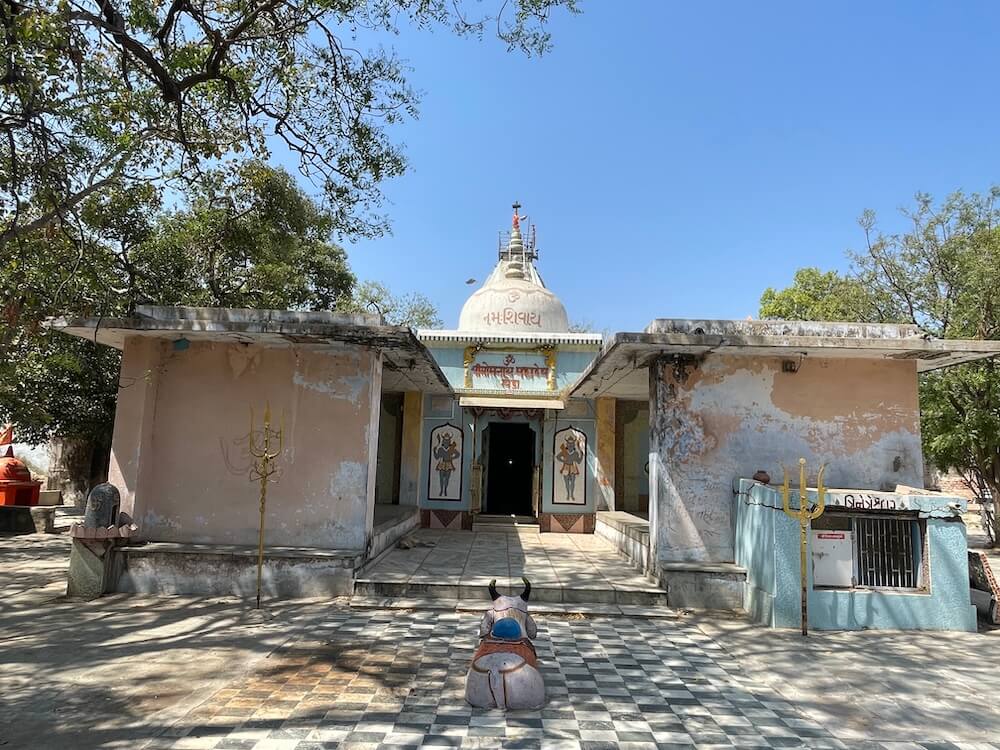
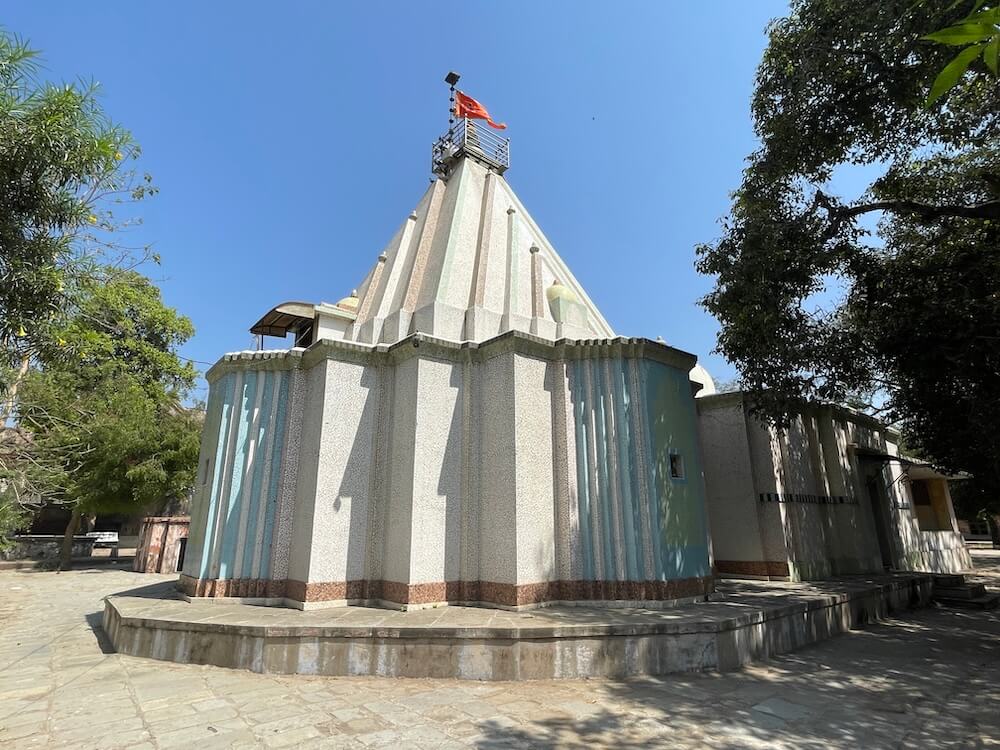
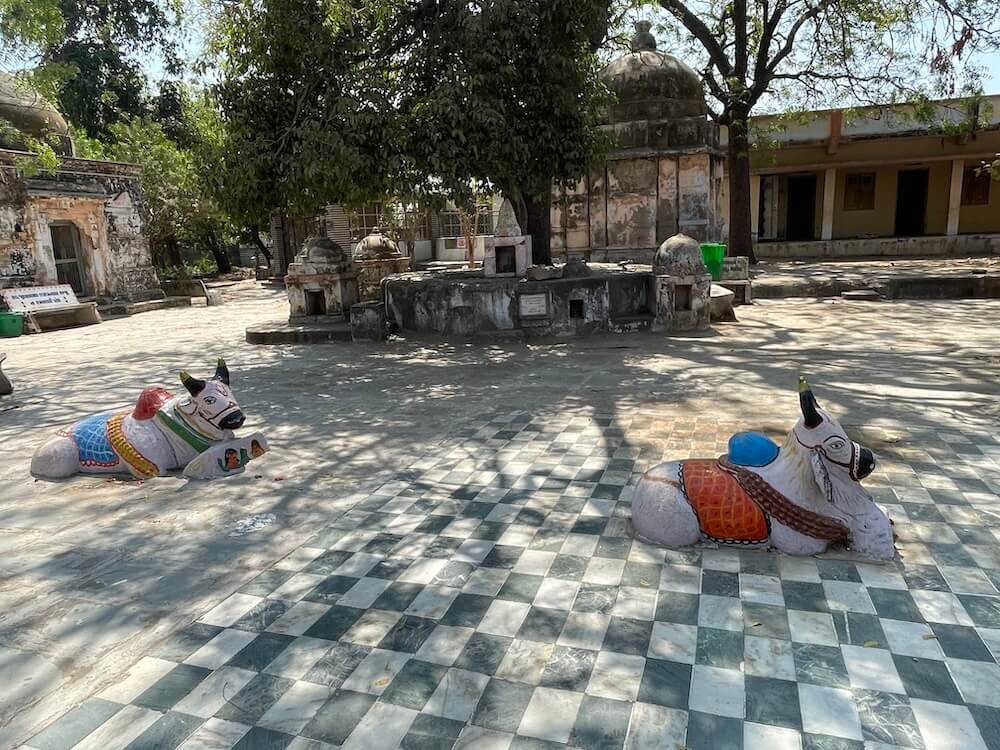
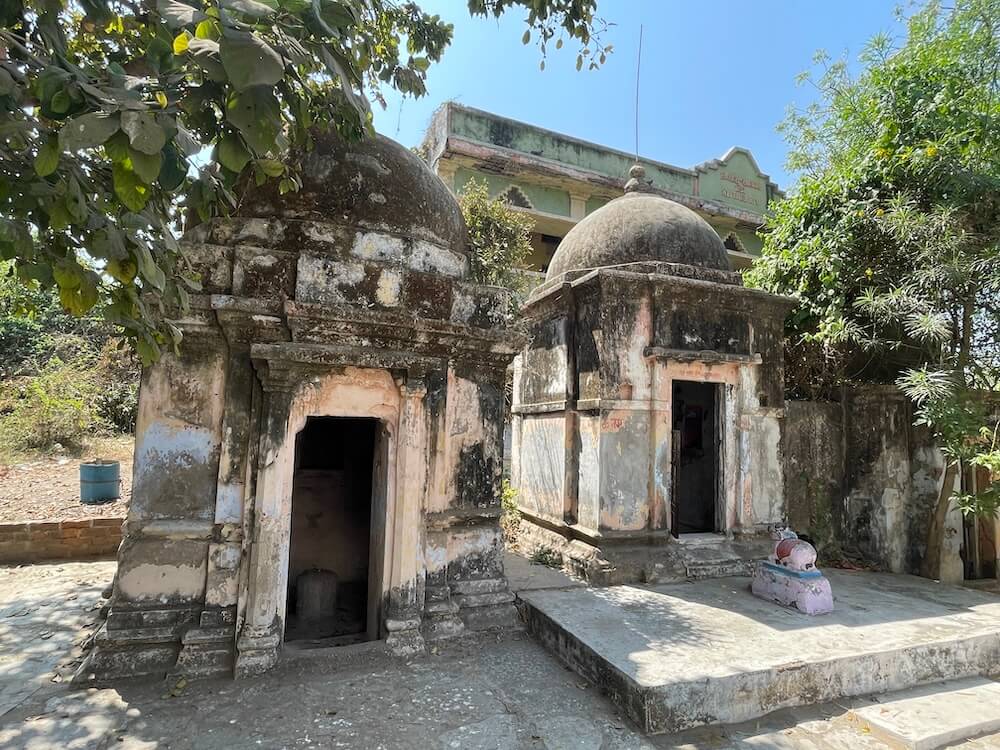
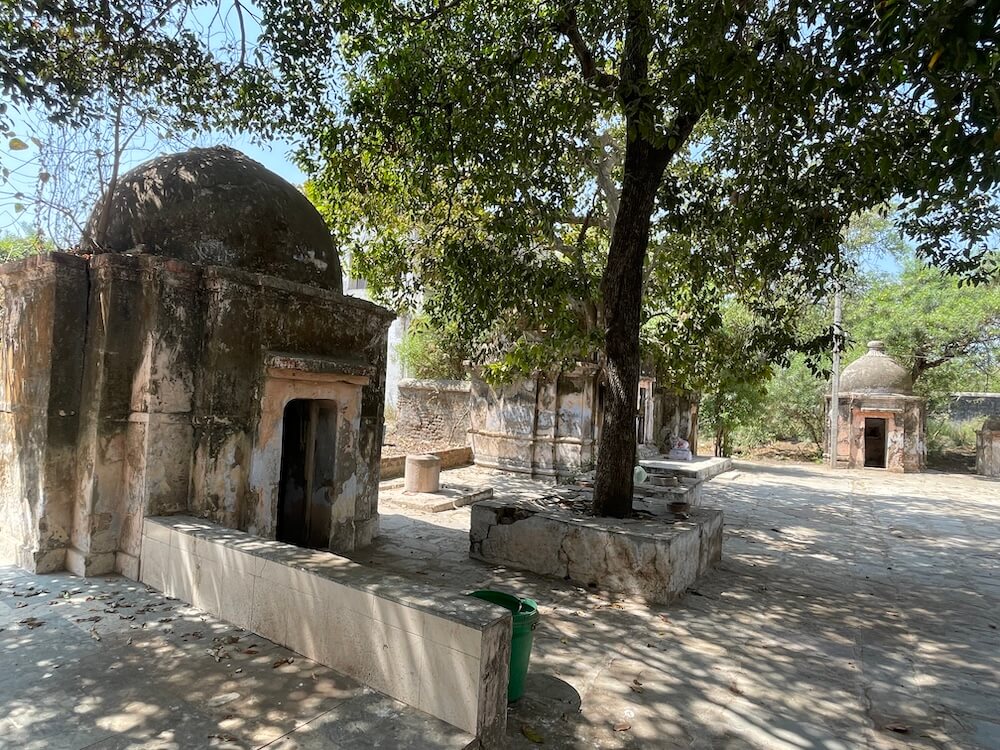
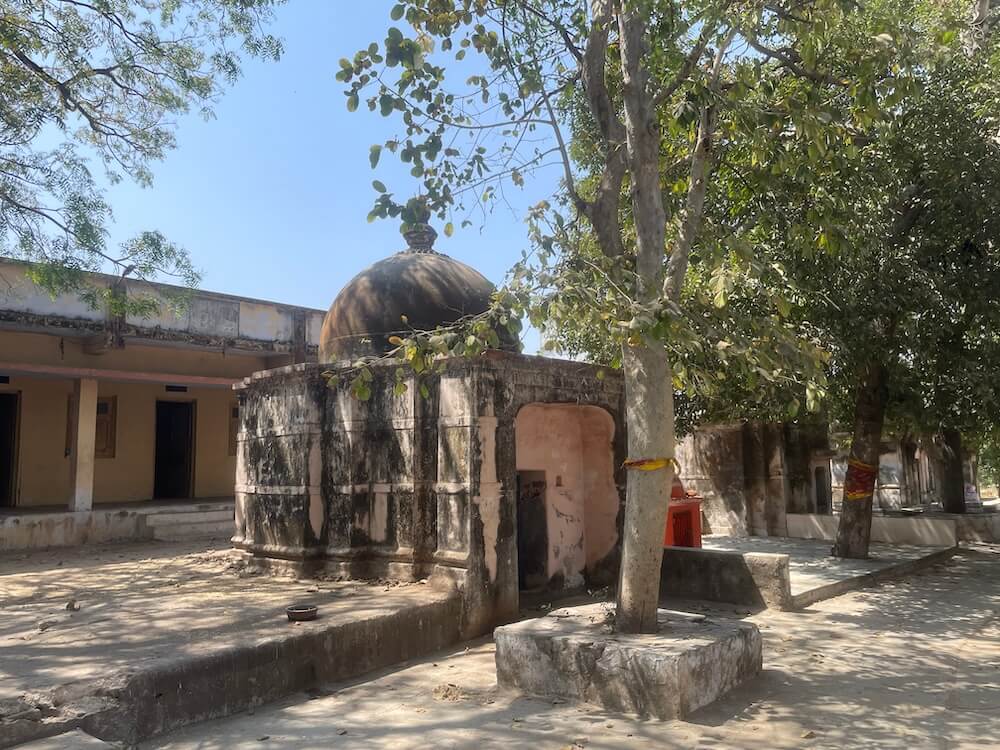
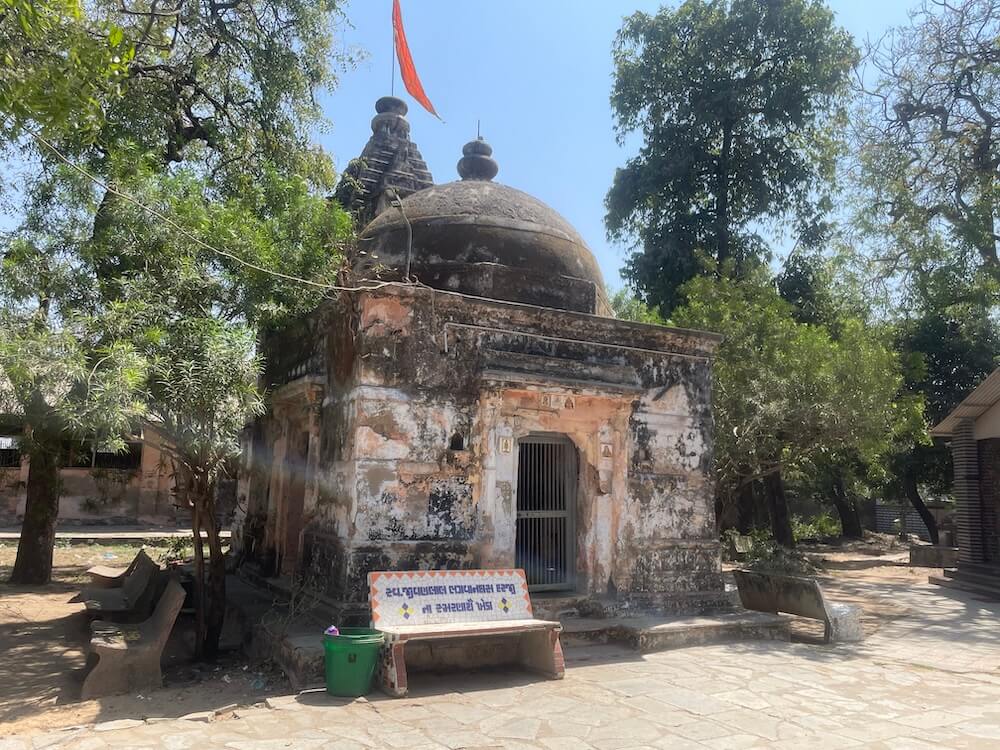
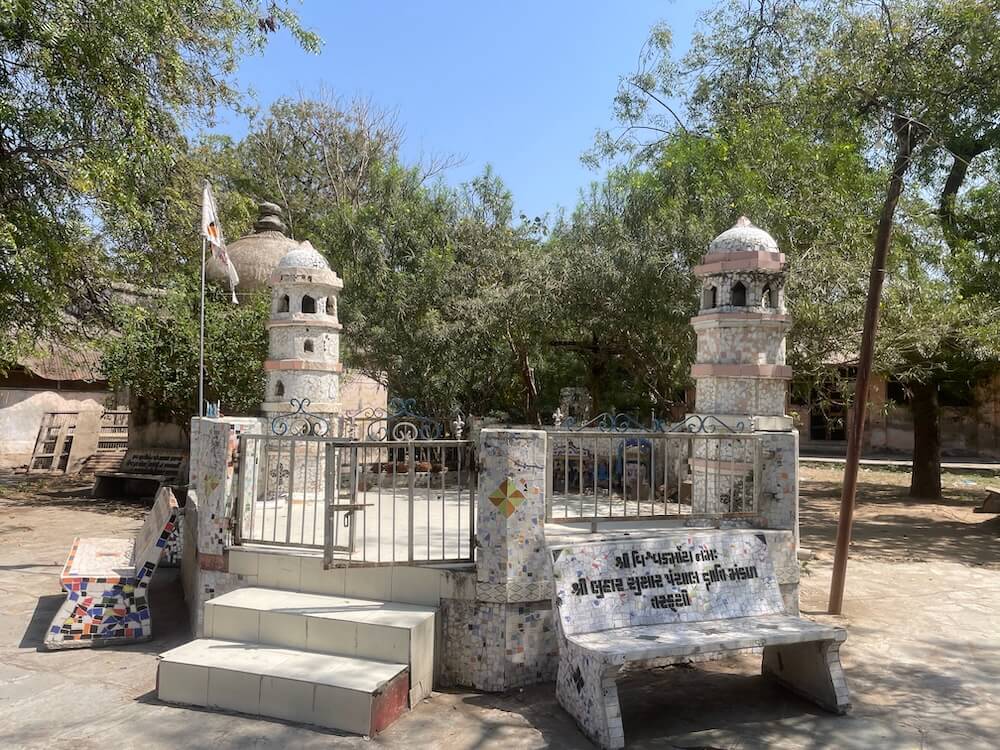
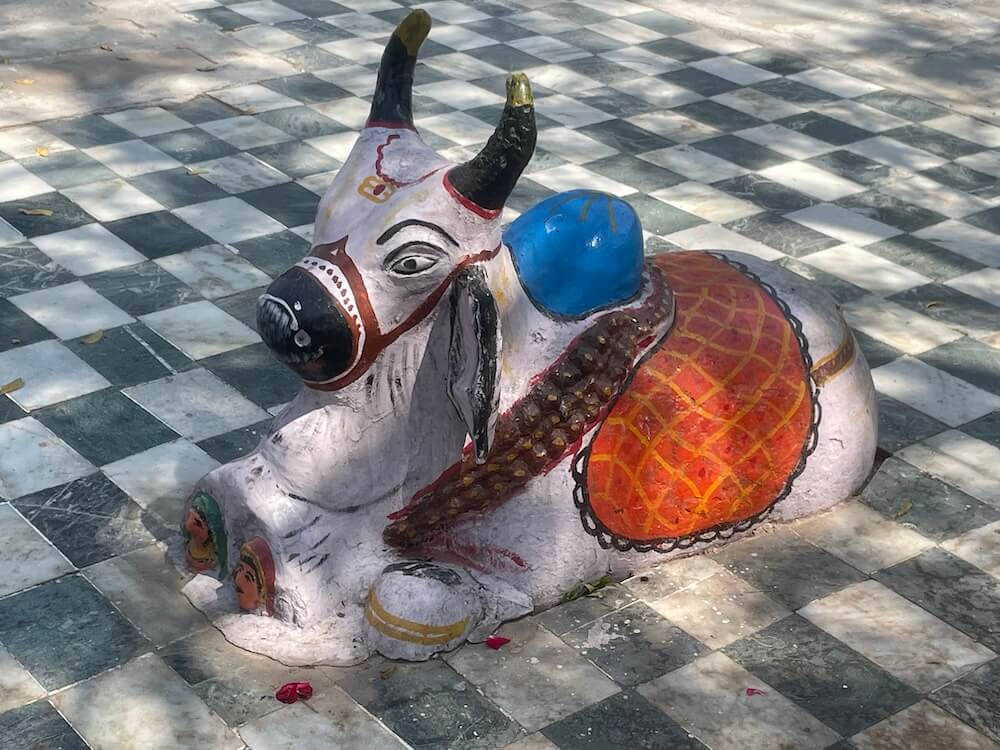
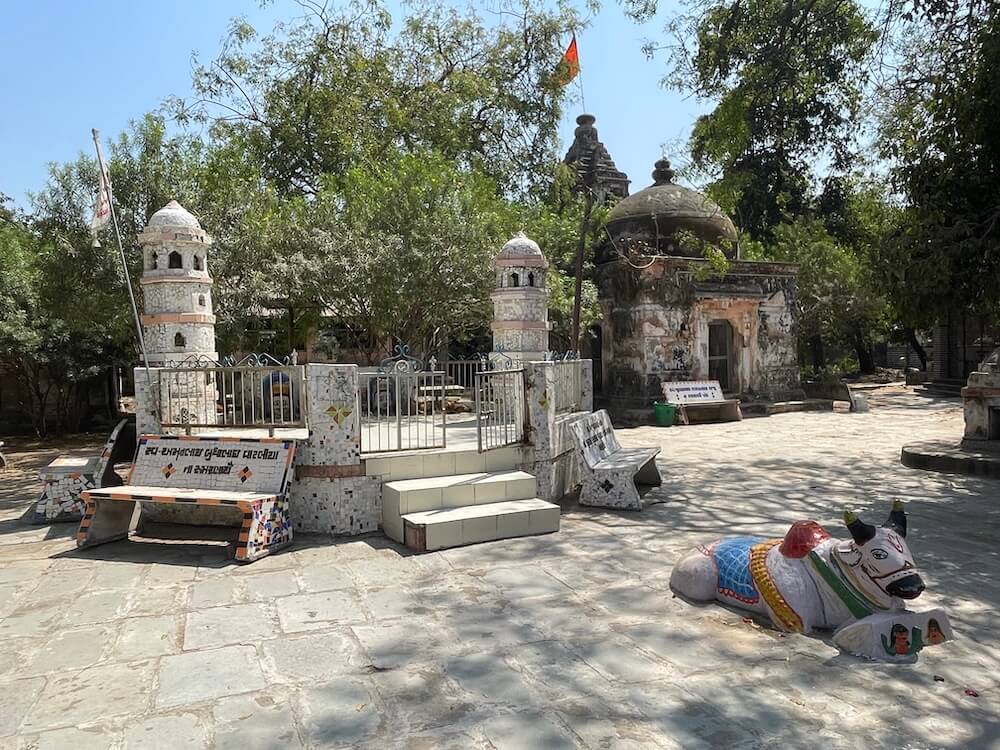
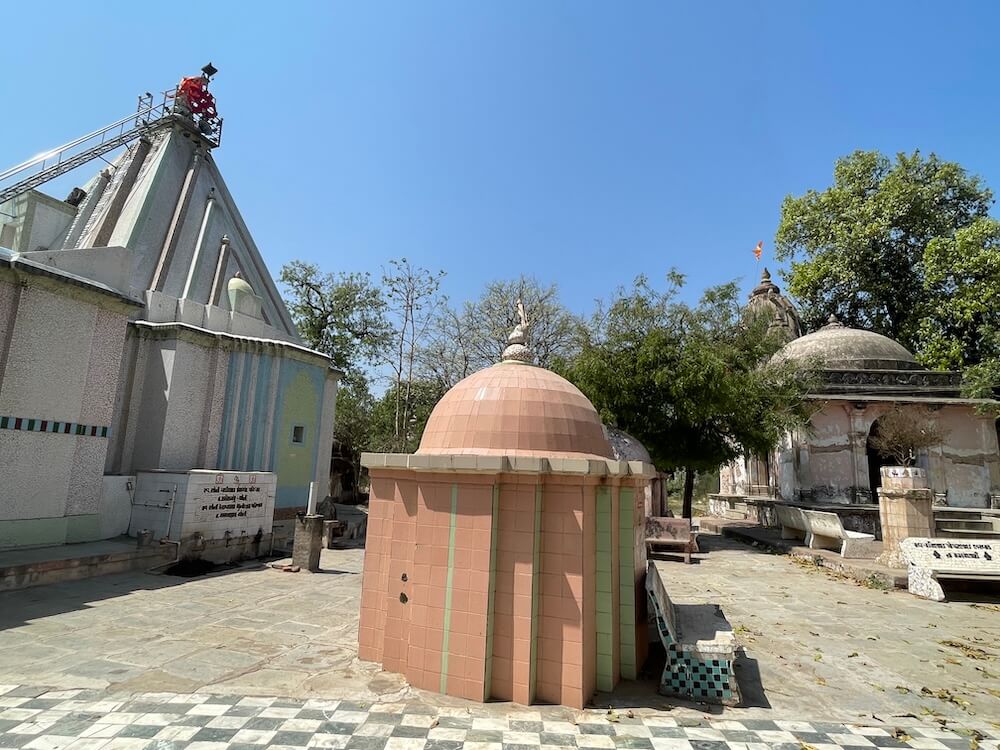
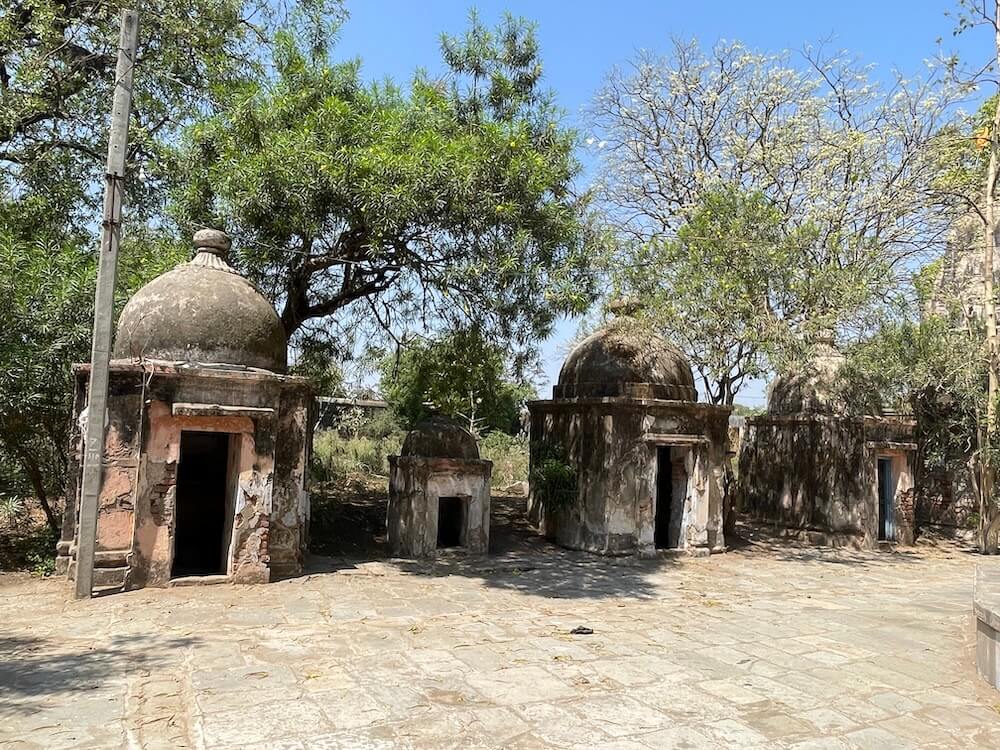
Situated alongside the main road, the temple is fronted by a spacious parking area. One enters the temple courtyard through a gateway set within the fortifications that surround it on all four sides. The gateway features wooden shutters on the exterior and iron shutters on the interior, with separate chambers for guards on either side. Within the expansive courtyard, seating arrangements for devotees are provided at various intervals. This courtyard also hosts a total of 125 large and small Shiva shrines. Scholars believe these shrines, constructed across different periods, are the Samadhis (memorial shrines) of departed priests. Some of these structures exhibit the traditional Maru-Gurjara architectural style, while others, built of burnt bricks, belong to more recent times. The primary temple structure comprises a Mukhamandap (entrance porch), a Sabhamandap (assembly hall), an Antaral (vestibule), and a Garbhagriha. Facing east, the temple entrance is preceded by two Nandi (sacred bull) sculptures, placed one behind the other. The entrance wall, adorned with carved wooden shutters, is adorned with paintings of Dwarpalas (gatekeepers). The Sabhamandap has two additional doors on the right and left sides. Within the assembly hall, an idol of Nandi rests upon a pedestal. In the Antaral leading to the sanctum, the Devakoshtakas (niches) on the right and left house idols of Ganesha and Hanuman. In the centre of the Garbhagriha floor lies the Swayambhu Shivpinda, over which a brass cobra spreads its hood. An Abhishek Patra (vessel for ritual pouring) and a silver canopy are seen suspended from the ceiling of the sanctum. In a niche on the rear wall of the sanctum, an idol of Parvati stands. The roof of the Sabhamandap is crowned by a domed spire, at the zenith of which sit two Amalakas (stone discs) supporting a Kalasha (finial). Above the Garbhagriha is a square-shaped, tapering spire adorned with numerous smaller subsidiary spires. The apex of the main spire also features an Amalaka and a Kalasha.
Among the various festivals celebrated throughout the year, the festival of Mahashivratri is observed here on a grand scale. On this occasion, devotees perform Abhishek (ritual bathing) of the Shivling with milk, honey, and water. Every Monday of the month of Shravan, crowds of the faithful gather for special Aarti (ritual of lights) and worship rites. A major celebration is held on Shravan Vadya Ashtami, which is Janmashtami. During Kartik Purnima or Dev Diwali, the temple is specially decorated with lamps. Throughout the period of Deepavali, the entire temple precinct is illuminated with lights. Additionally, special religious programmes are organised during Shri Krishna Janmotsav, Nag Panchami, Chaitra and Sharadiya Navratri, and Dussehra. The temple sees a surge of devotees on Mondays, Ekadashi, Pradosh, and on full moon (Purnima) and new moon (Amavasya) days. Aarti is performed daily at seven in the morning, twelve noon, and seven in the evening. In the early dawn hours, devotees perform circumambulations of the temple whilst singing hymns, a practice known as ‘Prabhat Pheri’. Devotees may seek Darshan (holy viewing) daily from six in the morning until ten at night.
Useful Information
Located at 600 metres from Kheda Bus Station
State Transport (GSRTC) bus services are available from Kheda
Private vehicles can reach the temple directly.
Accommodation and breakfast facilities are available in the vicinity.
Contact – Temple Office, Mob. 76073 52017
Somnath Mahadev Temple
Kheda City, Tal. Kheda, Dist. Kheda
The entire region of the Kheda district is renowned by the name ‘Charotar’. Derived from the Sanskrit word ‘Charu’, the term Charotar signifies that which is beautiful. Blessed with fertile and verdant lands, the local dialect of this vicinity is referred to as Charotari. Perched upon an elevated tract of land at the confluence of the Vatrak and Shedhi rivers, the Somnath Mahadev Temple in Kheda city is regarded as a paramount centre of devotion for the faithful of the surrounding areas. As Lord Shiva is the personification of Vairagya (detachment) and Srijan (creation), it is the firm belief of devotees that his worship imparts courage amidst the tribulations of life. Indeed, references to this temple resonate through various folk songs of the land.
The history of Kheda city and its temple precincts is steeped in antiquity. In Sanskrit literature, the city is mentioned as ‘Khetaka’. In ancient times, this city served as the principal administrative hub of a vast region known as Khetaka Ahara or Mandala. Between 470 AD and 788 AD, the Maitraka kings of Vallabhi governed this territory; the name Khetaka appears in several of their copper-plate inscriptions. Following the decline of the Maitraka Empire, in 788 AD, King Karka II of the Rashtrakuta dynasty from the south expanded his kingdom northwards and shifted his capital to Khetaka. During the Chaulukya (Solanki) period, spanning roughly 950 AD to 1300 AD, temple architecture in Gujarat flourished. It is said that this temple, approximately 700 to 800 years old, was constructed during this very Chaulukya era. After 1299 AD, through the medieval period, the city was ruled by the Sultans of Delhi and Gujarat, the Mughals, and the Marathas. In 1803 AD, the British took possession of a portion of this district, naming it ‘Kaira’. By 1817 AD, the entire district came under British administration and became part of the Bombay Presidency.
The region also rendered a significant contribution to the nation’s struggle for independence, maintaining close associations with leaders such as Sardar Vallabhbhai Patel and Ravishankar Vyas. Detailed descriptions of the cultural life of the Kheda district and of this ancient temple are found in the Gujarat State Gazetteer. Although the headquarters of Kheda district was moved to Nadiad after Anand district was carved out in October 1997, the historical significance of Kheda city and its Somnath Temple remains undiminished.
According to mythological references, the name Somnath denotes the ‘Lord of the Moon’. The Moon Deity (Chandra-dev) had performed penance unto Lord Shiva at Prabhas Patan to seek liberation from the curse of King Daksha. This temple at Kheda is viewed as a symbol of that same faith. As Shiva is revered as Mahakal (the Great Lord of Time) and Mrityunjay (the Conqueror of Death), the Shivling (an iconic representation of Shiva) is worshipped here. A legend concerning the temple’s origin suggests that, in ancient times, this entire region was part of a dense forest known as Hidimb Van. Local cowherds would bring their cattle to these woods for grazing. When a particular milch cow in the herd suddenly ceased giving milk, a cowherd observed her closely. He noticed that upon entering the forest, the cow would go to a specific spot and spontaneously release her milk (panha). Upon sharing this with his companions, they excavated the site together and discovered a Shivpinda. Despite exhaustive efforts, the Shivpinda could not be uprooted from the earth, leading the cowherds to build a temple at that very spot with the villagers’ cooperation. The Swayambhu (self-manifested) Shivpinda worshipped in the Garbhagriha (sanctum sanctorum) today is believed to be the one from that era.
Situated alongside the main road, the temple is fronted by a spacious parking area. One enters the temple courtyard through a gateway set within the fortifications that surround it on all four sides. The gateway features wooden shutters on the exterior and iron shutters on the interior, with separate chambers for guards on either side. Within the expansive courtyard, seating arrangements for devotees are provided at various intervals. This courtyard also hosts a total of 125 large and small Shiva shrines. Scholars believe these shrines, constructed across different periods, are the Samadhis (memorial shrines) of departed priests. Some of these structures exhibit the traditional Maru-Gurjara architectural style, while others, built of burnt bricks, belong to more recent times.
The primary temple structure comprises a Mukhamandap (entrance porch), a Sabhamandap (assembly hall), an Antaral (vestibule), and a Garbhagriha. Facing east, the temple entrance is preceded by two Nandi (sacred bull) sculptures, placed one behind the other. The entrance wall, adorned with carved wooden shutters, is adorned with paintings of Dwarpalas (gatekeepers). The Sabhamandap has two additional doors on the right and left sides. Within the assembly hall, an idol of Nandi rests upon a pedestal. In the Antaral leading to the sanctum, the Devakoshtakas (niches) on the right and left house idols of Ganesha and Hanuman. In the centre of the Garbhagriha floor lies the Swayambhu Shivpinda, over which a brass cobra spreads its hood. An Abhishek Patra (vessel for ritual pouring) and a silver canopy are seen suspended from the ceiling of the sanctum. In a niche on the rear wall of the sanctum, an idol of Parvati stands. The roof of the Sabhamandap is crowned by a domed spire, at the zenith of which sit two Amalakas (stone discs) supporting a Kalasha (finial). Above the Garbhagriha is a square-shaped, tapering spire adorned with numerous smaller subsidiary spires. The apex of the main spire also features an Amalaka and a Kalasha.
Among the various festivals celebrated throughout the year, the festival of Mahashivratri is observed here on a grand scale. On this occasion, devotees perform Abhishek (ritual bathing) of the Shivling with milk, honey, and water. Every Monday of the month of Shravan, crowds of the faithful gather for special Aarti (ritual of lights) and worship rites. A major celebration is held on Shravan Vadya Ashtami, which is Janmashtami. During Kartik Purnima or Dev Diwali, the temple is specially decorated with lamps. Throughout the period of Deepavali, the entire temple precinct is illuminated with lights. Additionally, special religious programmes are organised during Shri Krishna Janmotsav, Nag Panchami, Chaitra and Sharadiya Navratri, and Dussehra. The temple sees a surge of devotees on Mondays, Ekadashi, Pradosh, and on full moon (Purnima) and new moon (Amavasya) days. Aarti is performed daily at seven in the morning, twelve noon, and seven in the evening. In the early dawn hours, devotees perform circumambulations of the temple whilst singing hymns, a practice known as ‘Prabhat Pheri’. Devotees may seek Darshan (holy viewing) daily from six in the morning until ten at night.
Useful Information
Located at 600 metres from Kheda Bus Station
State Transport (GSRTC) bus services are available from Kheda
Private vehicles can reach the temple directly.
Accommodation and breakfast facilities are available in the vicinity.

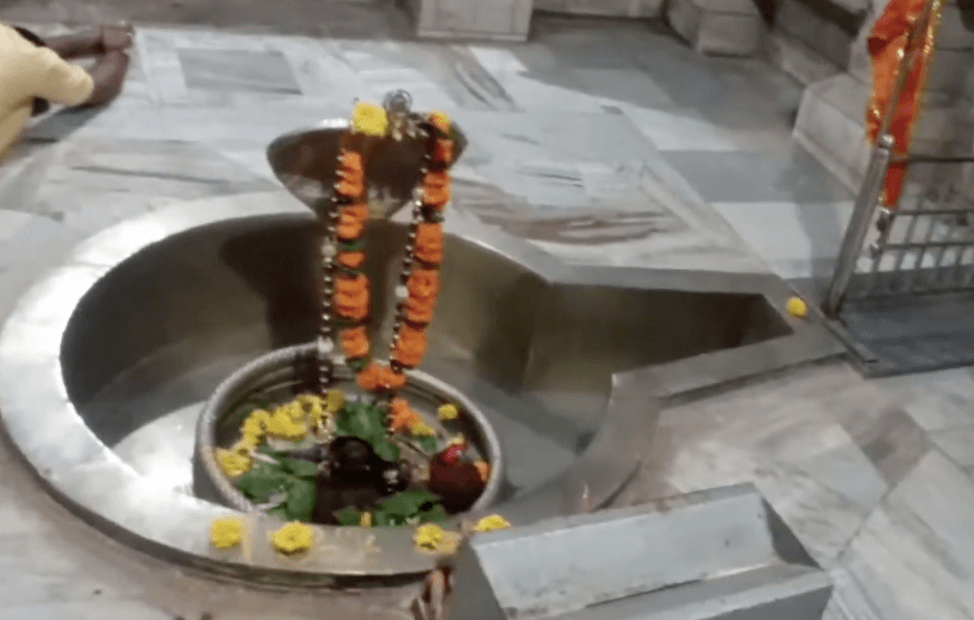
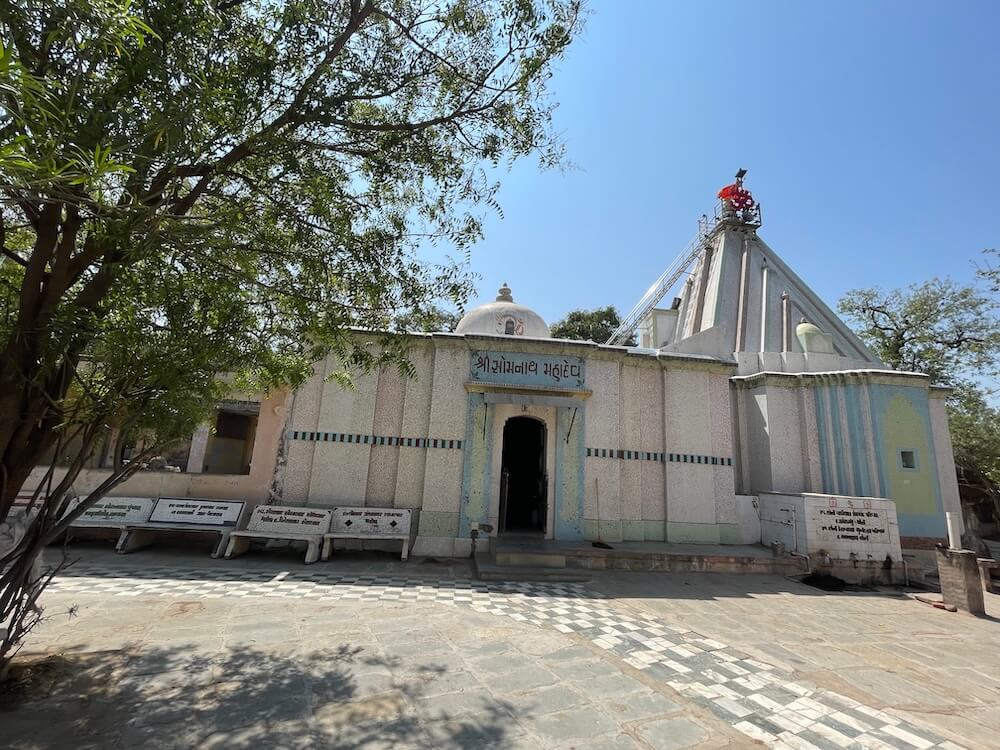
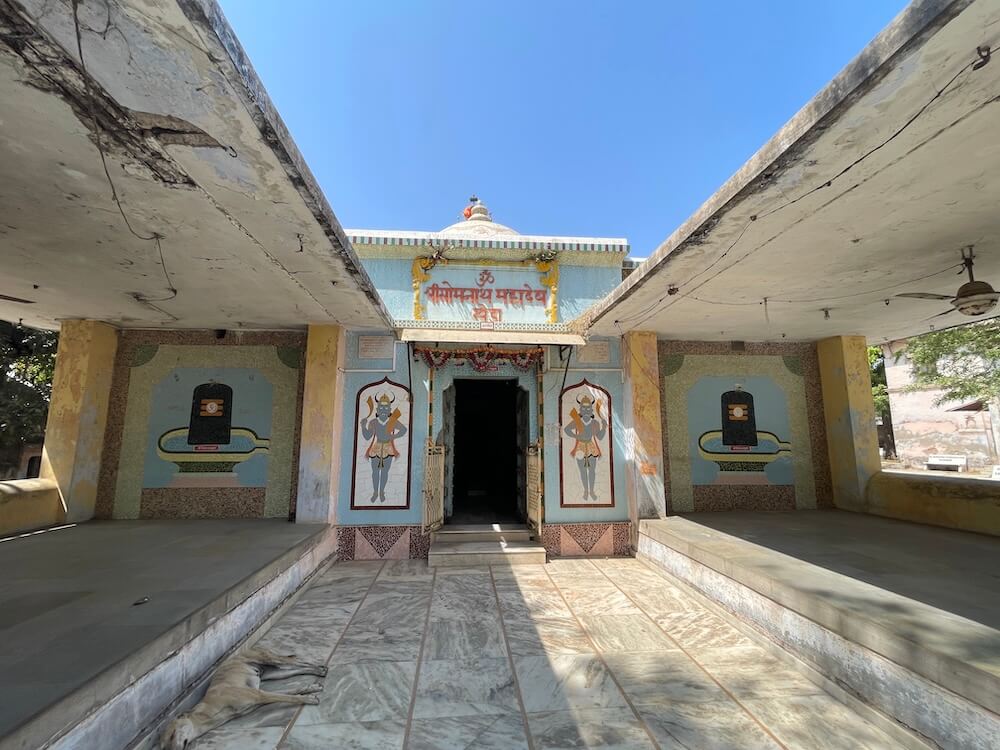
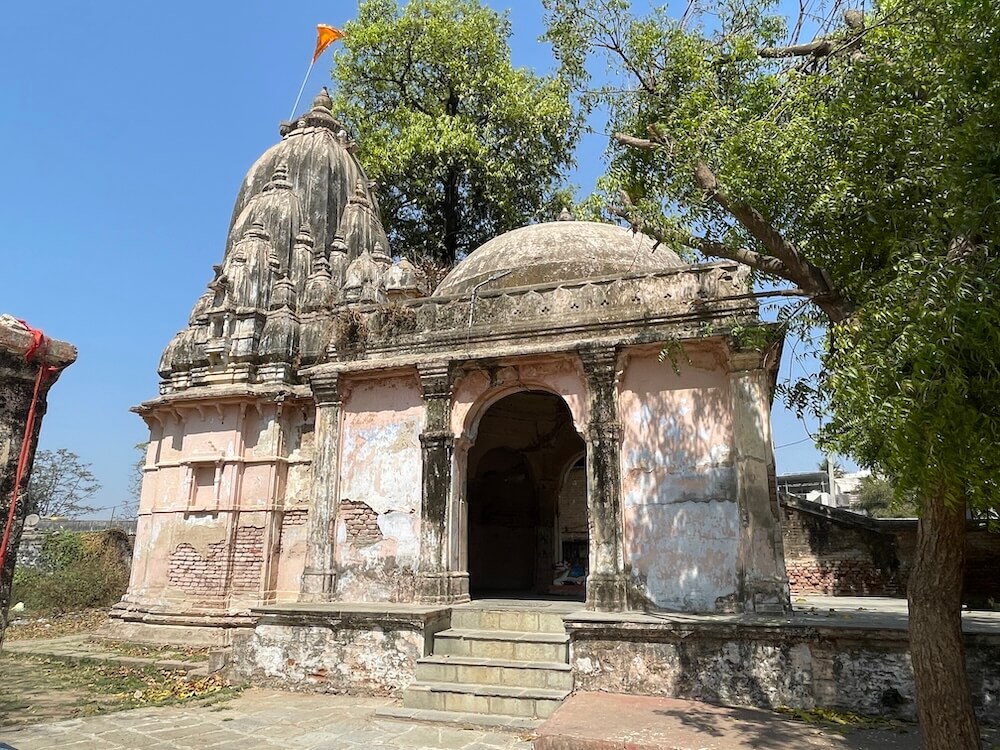
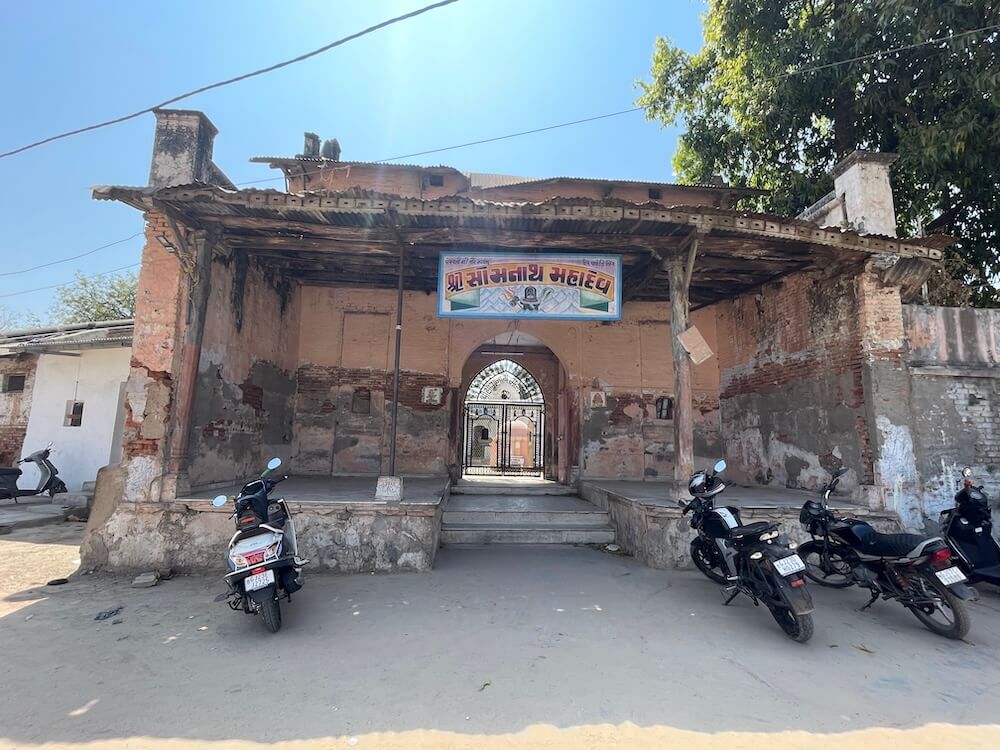
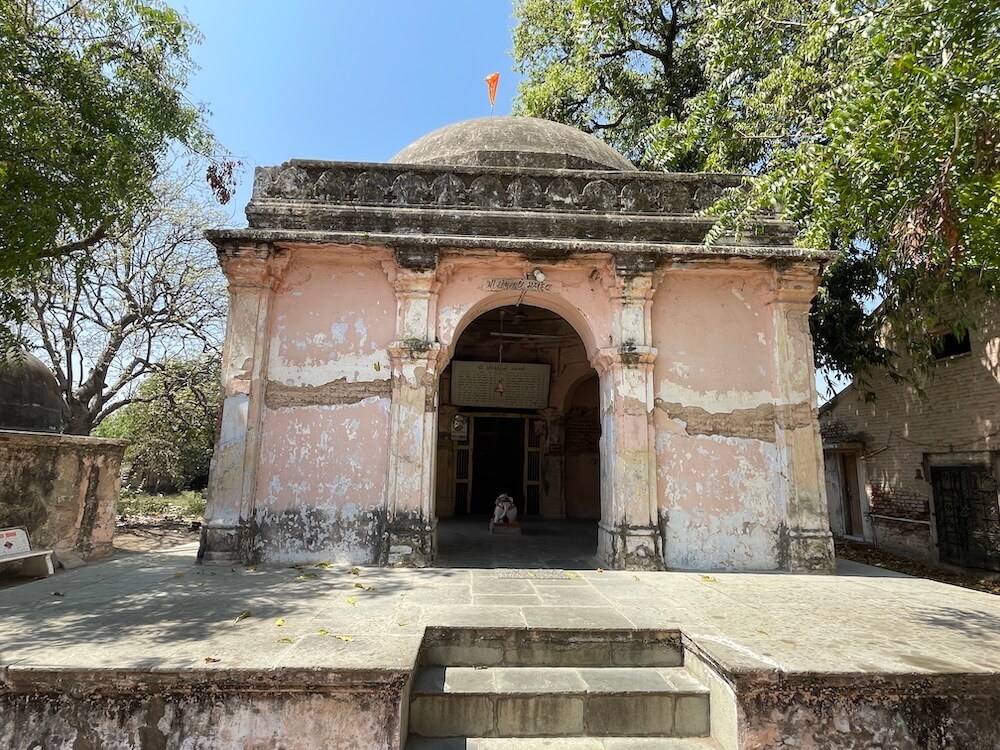 The entrance wall, adorned with carved wooden shutters, is adorned with paintings of Dwarpalas (gatekeepers). The Sabhamandap has two additional doors on the right and left sides. Within the assembly hall, an idol of Nandi rests upon a pedestal. In the Antaral leading to the sanctum, the Devakoshtakas (niches) on the right and left house idols of Ganesha and Hanuman. In the centre of the Garbhagriha floor lies the Swayambhu Shivpinda, over which a brass cobra spreads its hood. An Abhishek Patra (vessel for ritual pouring) and a silver canopy are seen suspended from the ceiling of the sanctum. In a niche on the rear wall of the sanctum, an idol of Parvati stands. The roof of the Sabhamandap is crowned by a domed spire, at the zenith of which sit two Amalakas (stone discs) supporting a Kalasha (finial).
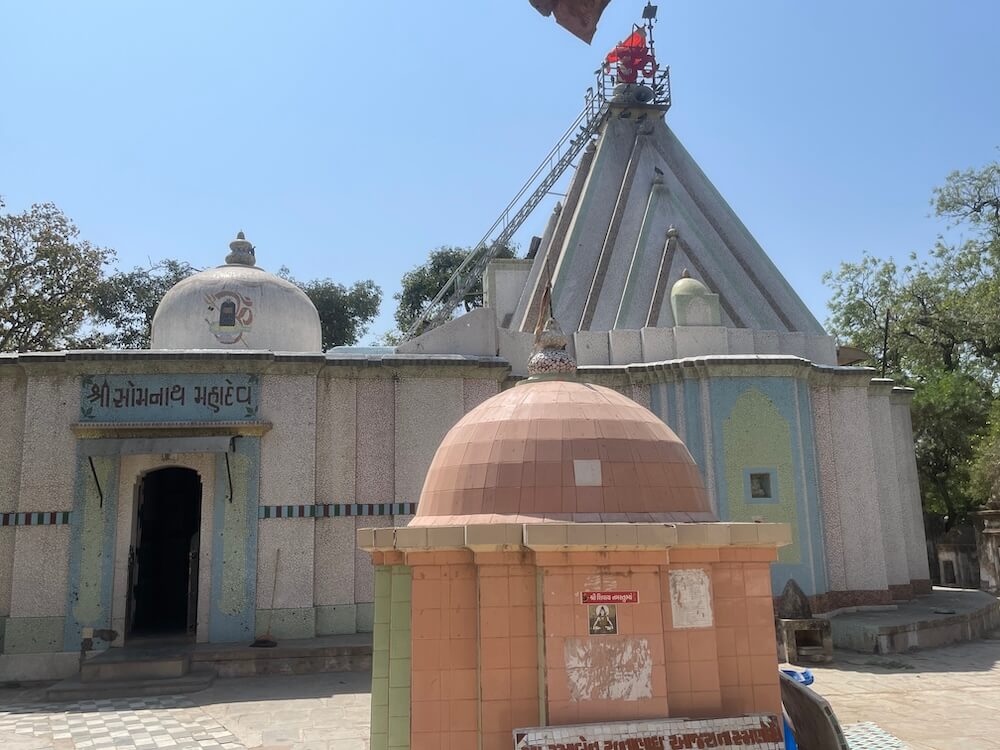 Above the Garbhagriha is a square-shaped, tapering spire adorned with numerous smaller subsidiary spires. The apex of the main spire also features an Amalaka and a Kalasha.