
वेण्णीमाला श्री राम लक्ष्मण स्वामी मंदिर
पामपाडी, जि. कोट्टायम
Vennimala Sri Rama Lakshmana Swamy Temple
Pampady, Dist. Kottayam
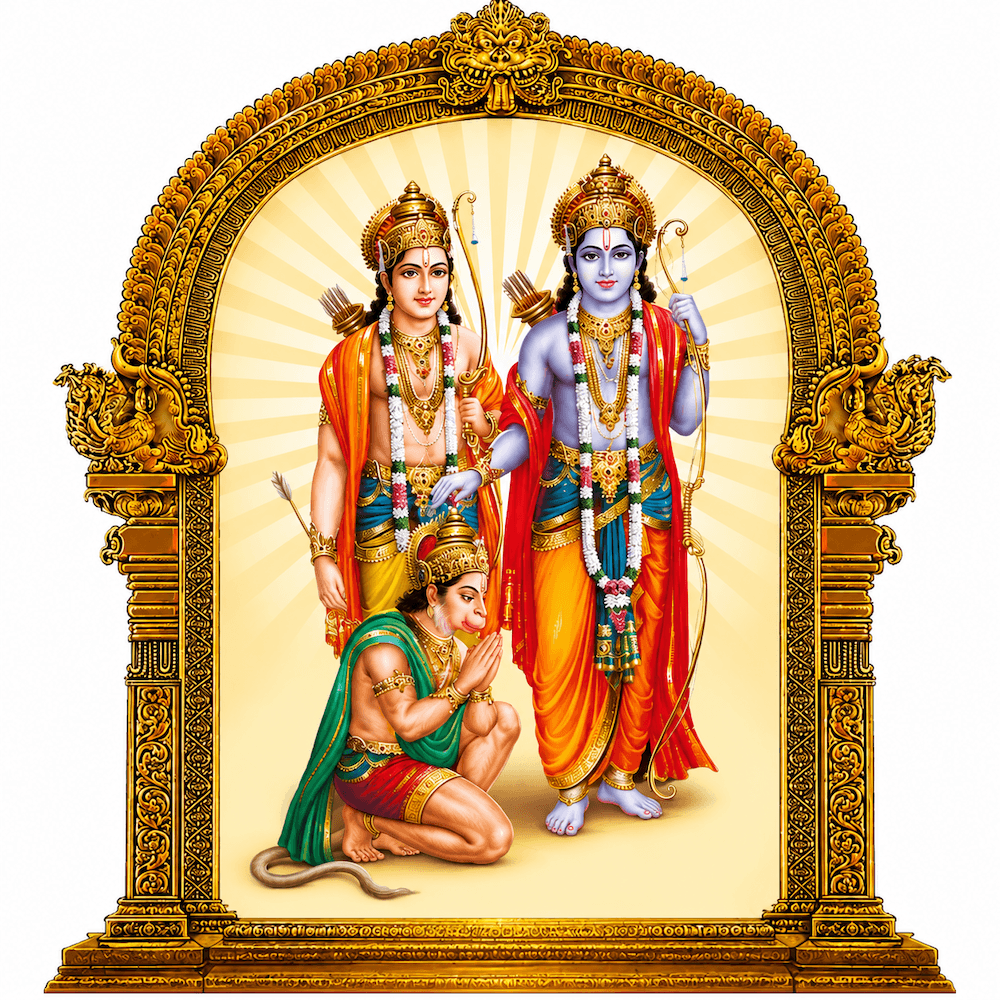 The ancient Vennimala Sree Rama Lakshmana Temple is situated in the heart of Vennimala village, near Pampady in Kottayam district, at an elevation of about 1,500 feet above sea level. This unique temple enshrines both Lord Rama and Lakshmana in a four-armed stone idol of Lord Mahavishnu.
The temple is traditionally believed to have been built by the Chera ruler, Cheraman Perumal Bhaskara Ravi Varma (c. 9th–11th century AD). Legend has it that the King constructed the temple under the guidance of Kapila Maharshi. The temple’s immense regional significance is documented in the 13th-century literary classic Unnuneelisandesam, which recorded its prominence just before the site became the official royal headquarters of the powerful Thekkumkur Dynasty. Vennimala remained a fortified capital and thriving cultural center for centuries until 1749 AD, when the territory was conquered by King Marthanda Varma and integrated into the Travancore kingdom, paving the way for its modern status as a protected historical monument.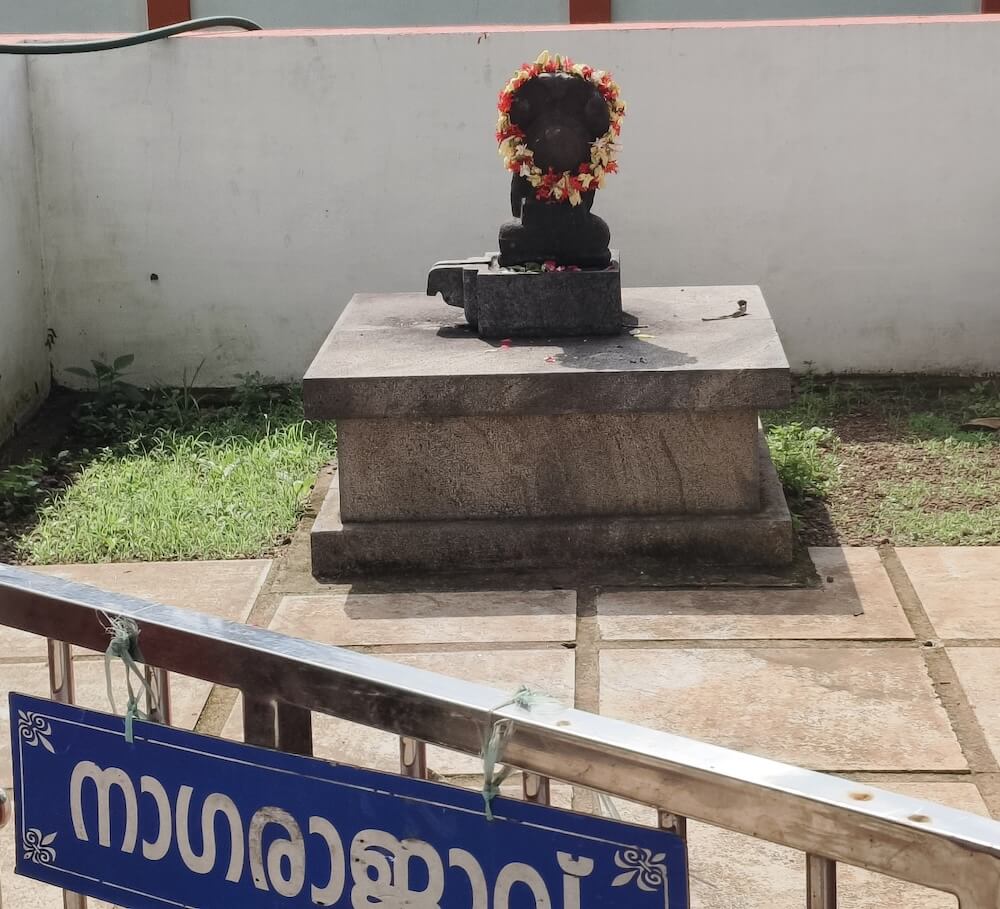
According to legend, the present temple site was once a dense forest where several great rishis, including Rishi Kapila, performed penance in a nearby cave. In time, Asuras began to disturb the rishis and disrupt their austerities. It was during this period that Lord Rama and Lakshmana passed through the region while travelling to Lanka in search of Sita. When the rishis learned of their arrival, they received the divine brothers with great reverence and informed them about the troubles caused by the Asuras. Lord Rama then sent Lakshmana to destroy them, accompanied by the rishis. Seeing Lakshmana approaching, the Asuras prepared for battle, but he defeated them effortlessly within moments. Delighted by his victory, the rishis praised Lakshmana and the place where he triumphed came to be known as Vijayadri (Hill of Victory). Over time, this name is believed to have evolved into Vennimala.
 Another popular legend is associated with Cheraman Perumal. One night, while travelling by boat across the Vembanad Lake, west of Kottayam, the king witnessed an extraordinary sight in the eastern sky. Among all the stars, only the Saptarshis appeared to be moving while chanting sacred hymns. Deeply intrigued by this divine phenomenon, he directed his boat towards the east. On reaching the western side of the present temple site, Cheraman Perumal was welcomed by Pazhoor Panicker, a local chieftain. When the king narrated the mysterious vision, Panicker informed him that an ancient and highly sacred Vaishnava presence, once worshipped by Rishi Kapila, existed on the eastern hill. He also related that a tribal hunter named Iravi had recently discovered this divine presence while digging for wild tubers.
  When his digging tool struck the ground, blood is said to have flowed from the spot, revealing the sanctity of the site. The king immediately proceeded to the hill, then covered by thick forest and met Iravi. After learning the details of the discovery, Cheraman Perumal circumambulated the sacred spot three times and proclaimed that the place would henceforth be known as Vennimala Kotta. He subsequently decided to construct a temple there. A Vishnu idol was specially prepared for consecration. However, shortly before the ceremony, an ascetic appeared and declared that the idol was unsuitable. When the king refused to believe him, the ascetic struck the idol with his staff, causing it to split open. To everyone’s astonishment, impure water flowed out, followed by a frog emerging from within.
  The ascetic then revealed that a highly sacred Vishnu idol, worshipped in ancient times by Rishi Kapila and other rishis, lay submerged in a nearby sacred pond. He instructed the king to retrieve the idol and consecrate it after ritually invoking within it the divine presence of Lord Rama and Lakshmana. He further explained that a Devi idol also remained submerged in the pond and should be retrieved and consecrated in the south-eastern corner of the temple. The ascetic foretold that a black eagle would appear at the auspicious moment of consecration. After revealing these instructions, he disappeared and it is widely believed that he was none other than Rishi Kapila himself. Following his directions, the king retrieved the sacred idols and performed the consecration. As foretold, a black eagle appeared and circled the temple, which was accepted as a highly auspicious sign. After completing the consecration, Cheraman Perumal entrusted the temple’s administration to the local people and returned to his kingdom.
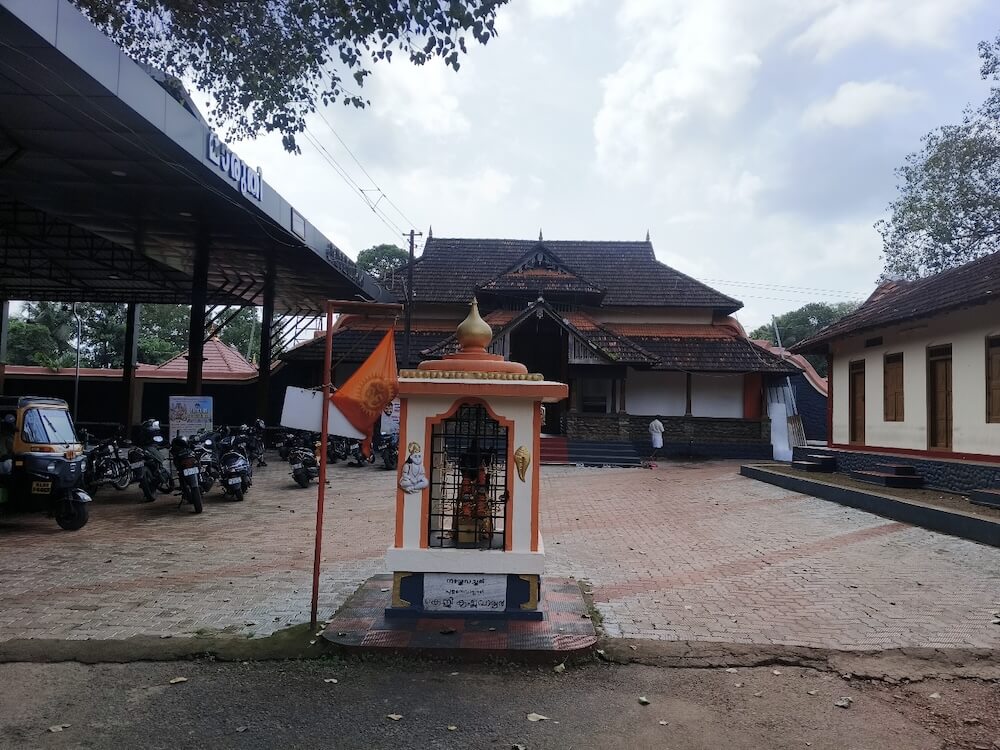
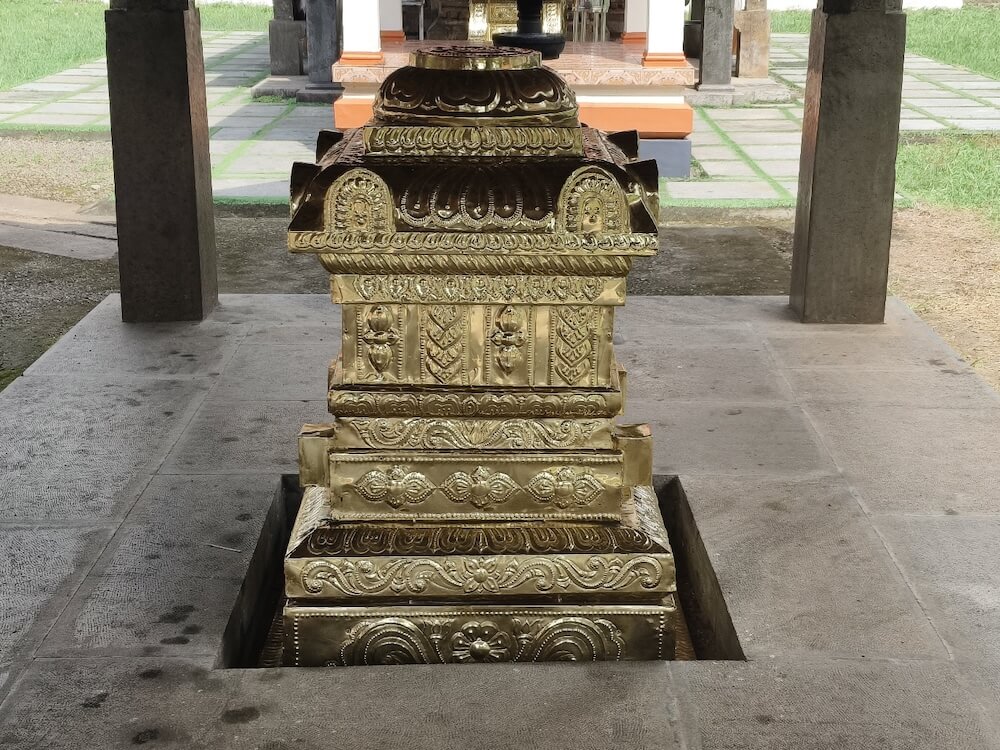
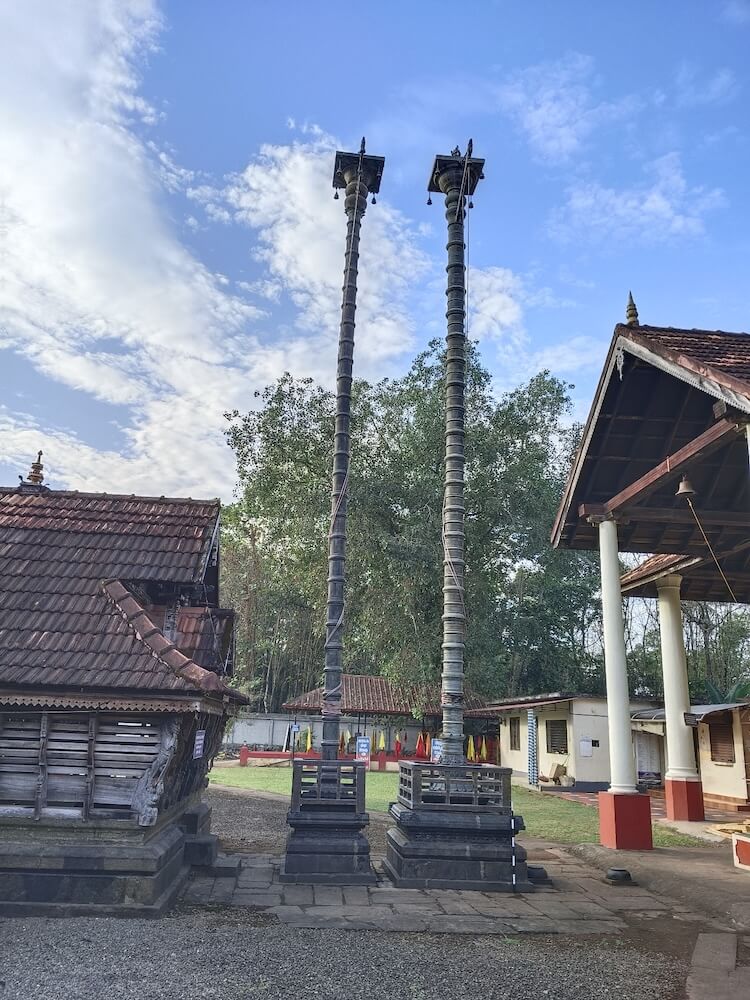
Vennimala Temple is surrounded by a large walled complex covering nearly six acres. Your journey begins on the western side, where you enter the west-facing temple through the main gopuram. As you step inside, a large sacred peepal tree stands slightly to your right, while the Devaswom office and other temple buildings are situated to the south. Walking further in, you first come to the spacious Anakkottil (elephant shelter). 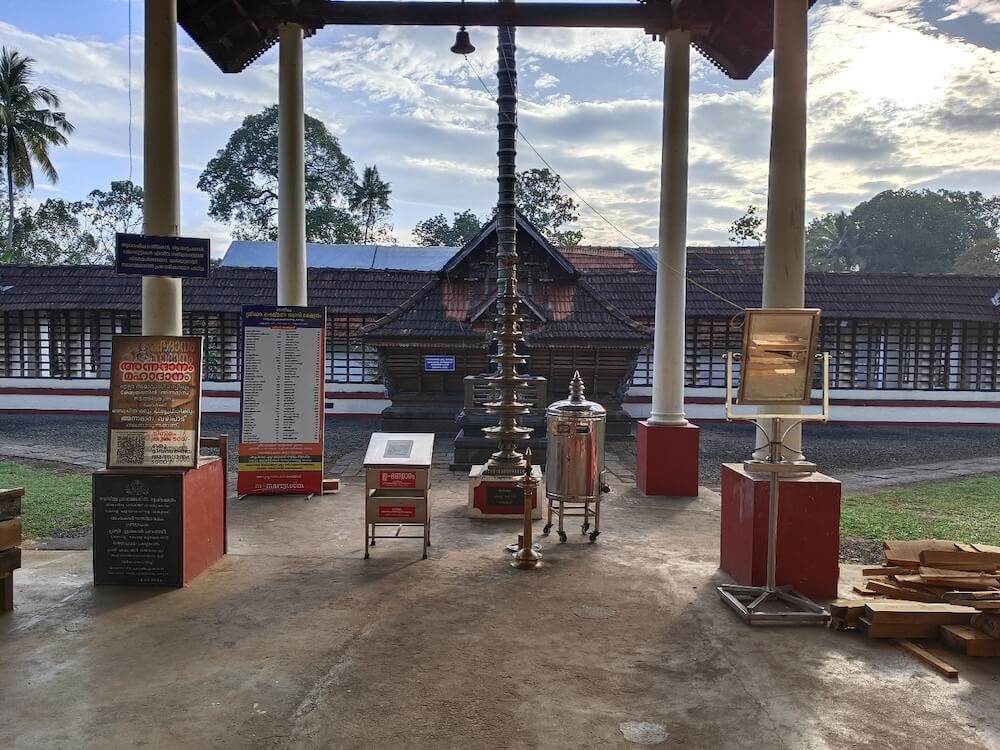 Beyond it stand two remarkable copper-clad Kodimarams (flagstaffs) topped with Garuda, the divine vehicle of Lord Vishnu. Continuing ahead, you reach the Balikkalpura, which houses the principal Balikkallu. As you walk through the pavilion, you can admire its finely carved wooden panels depicting Brahma, the Ashta Dikpalakas, Paalazhi Mathanam, the Kirata-Arjuna episode and various celestial beings. The ceiling is supported by beautifully carved figures of rishis standing on elephant pedestals. Beyond the Balikkalpura, you enter the tiled Nalambalam, which surrounds the inner courtyard. The northern gateway houses the Koothambalam, where Koothu and Koodiyattam are traditionally performed, while the southern gateway is believed to be the abode of Lord Hanuman, where a ceremonial lamp burns continuously in his honour.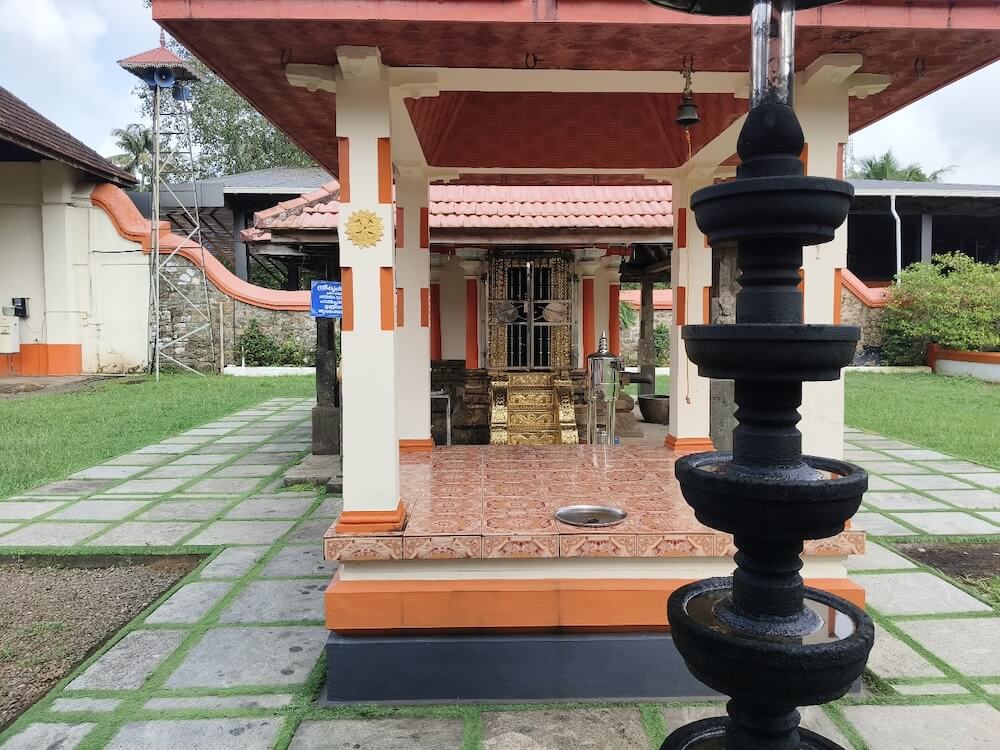
The temple well is located in the north-eastern corner, while the Thidappally (temple kitchen) stands in the south-eastern corner. Continuing towards the centre, you pass the square Namaskara Mandapam before reaching the Mukhamandapam (front hall), which is decorated with fine wooden sculptures mounted on elephant-head brackets. Finally, you arrive at the Sreekovil (sanctum sanctorum). Built in the rare Ghataprasadam style, this single-storeyed circular granite shrine has a copper-sheeted roof crowned with a golden finial. Inside the sanctum stands the majestic six-foot-high, four-armed idol of Lord Vishnu facing west. Although the temple is dedicated to Sree Rama and Lakshmana, it does not enshrine separate Idols of them. Instead, both are believed to be present in a single four-armed stone idol of Lord Mahavishnu, who is worshipped here as Lord Vaikunthanatha. 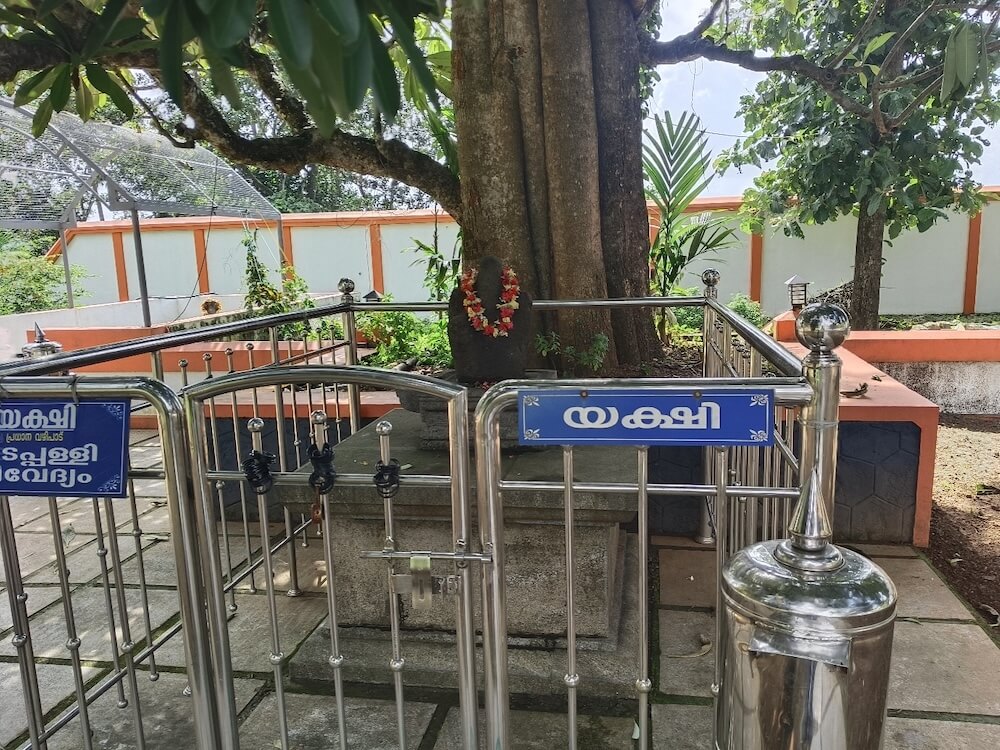 This unique concept symbolises the divine unity of Lord Vishnu and his incarnations, making the temple one of the most distinctive Rama temples in Kerala.
Within the temple complex are several Upadevata shrines. The north-western section houses a beautiful shrine of Goshala Krishna, believed to predate the main temple. Yakshiyamma is worshipped beneath a pala tree in the north-eastern corner in the form of a self-manifested stone. Separate Naga Sthanams (Nagadevata shrines) dedicated to Anantha and other Nagadevatas are situated in different parts of the complex. To the east stands the roofless shrine of Vanasastha (Lord Ayyappa). The Pithru Mandapam in the south-western section is dedicated to ancestral rites, where Bali Tharpanam is performed daily. 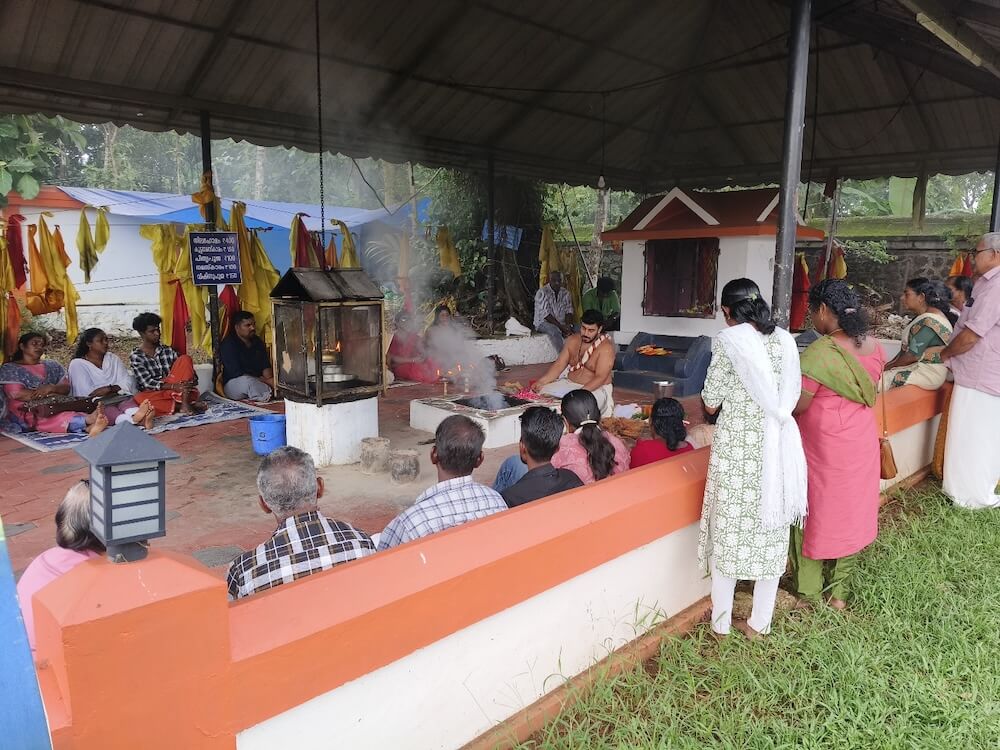 Within the Nalambalam are also west-facing shrines of Lord Ganapathi, Goddess Bhagavathi and Lord Shiva, the latter enshrined in the form of a powerful Shiva Linga. The legendary Kapila Cave, associated with Rishi Kapila, lies a short distance north of the temple and the sacred pond from which the principal idol was retrieved is located along the path leading to the cave.
The annual Temple Utsavam (festival) is celebrated during the Malayalam month of Kumbham (February–March) and is one of the most important festivals of the temple. At present, the festival is observed over a period of ten days, although it was historically celebrated for twenty-eight days. The sixth day of the festival is considered the most significant, as it is traditionally observed as the birthday of the presiding deity.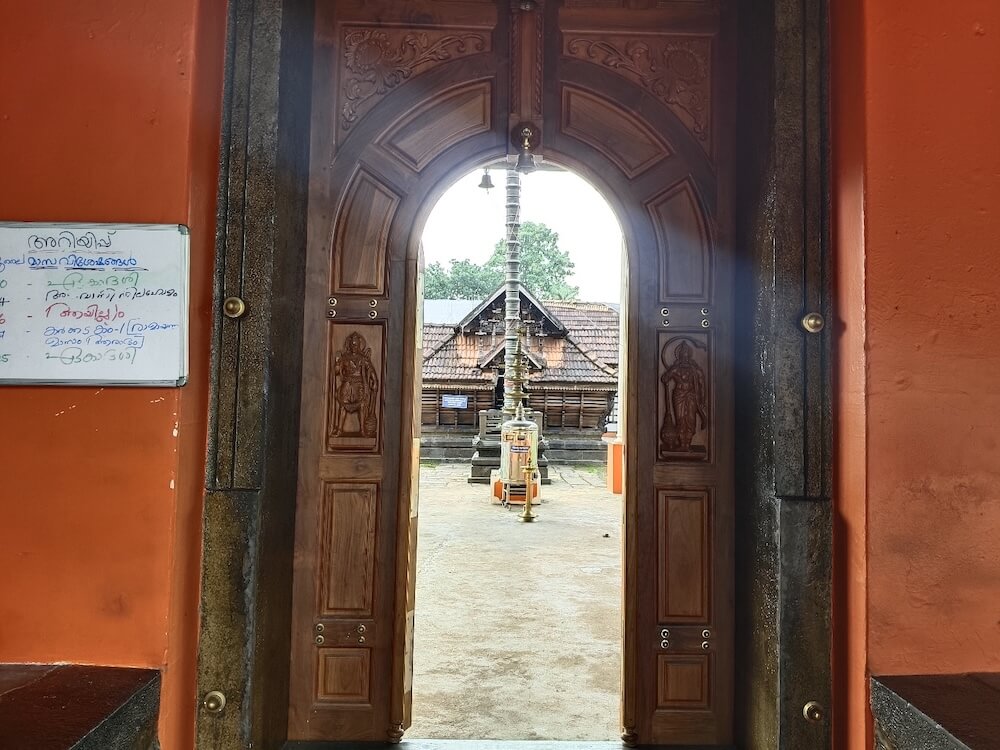 The celebrations include several important rituals such as Thrikkodiyettu (ceremonial flag hoisting), Chathushatha Nivedyam (special offering), Maha Prasada Oottu (community feast), Pallivetta (royal hunt ritual), and the concluding Arattu (holy ceremonial bath). A distinctive feature of the Arattu procession is that, on the journey to the Arattu Kulam (waterbody), the idol of Lord Lakshmana leads the procession followed by Lord Rama, while on the return journey, Lord Rama leads and Lord Lakshmana follows. The festival is further enriched by traditional temple arts and cultural performances.
The principal offerings made to Lord Rama and Lord Lakshmana include Palpayasam (sweet milk pudding), offering of jasmine garlands, oil abhishekam and Kodanda Samarpanam (offering of a ceremonial bow). Major offerings to Goddess Bhagavathi include Bhagavathi Seva, Kumkumarchana and the offering of silk cloth and Thali. Important offerings to Lord Shiva include Dhara, garlands made of Koovalam leaves, Thumba flower garlands and Bhasmabhishekam. For Lord Krishna, the principal offerings are Palpayasam, Thrikkai Venna (sacred butter offering) and Sahasranamarchana. Although Balitharpanam (ritual offerings to ancestors) is performed here on every Amavasya (new moon day), the Karkidaka Vavu Bali observed during the Malayalam month of Karkidakam is considered especially important and highly sacred. The rituals, including Pithrutharpanam and Thilahomam, are conducted mainly on the banks of the temple tank known as Sree Rama Theertham. This is also a sacred place where ancestral rites have been performed for centuries under the guidance of Rishis. Consequently, tens of thousands of devotees visit the temple every year during Karkidaka Vavu Bali to offer rites to their ancestors.
Vennimala Sree Rama Lakshmana Temple follows the traditional Kerala temple system of worship, with three daily poojas and three Sreevelis conducted every day. The temple opens at 5.00 a.m. with Nirmalya Darshanam, during which devotees have the opportunity to behold the deity adorned with the previous day’s offerings. This is followed by the ritual ablution (Abhishekam). The Usha Pooja is performed at 6.00 a.m., followed by the Usha Sreeveli at 6.30 a.m. The Ucha Pooja (midday worship) takes place at around 10.00 a.m., followed by the Ucha Sreeveli at 10.30 a.m. The temple closes at 11.00 a.m. The temple reopens at 5.00 p.m. The evening Deeparadhana is performed at sunset. The Athazha Pooja takes place at 7.00 p.m., followed by the Athazha Sreeveli at 7.30 p.m. The temple closes for the day at 8.00 p.m.
Key Highlights
- Located 12 km from Kottayam town.
- 12 km from Kottayam railway station.
- KSRTC and local buses are available up to the nearby road, which is located 2 km from the temple. From there, local transport facilities are available to reach the hill on which the temple is situated.
- Vehicles can be parked in the temple’s dedicated parking area.
Accommodation and dining facilities are available near the temple.
वेन्नीमाला श्री राम लक्ष्मण स्वामी मंदिर
पंपडी, जिला. कोट्टायम
मंदिरे
Temples
मंदिर
મંદિરો
கோவில்கள்
దేవాలయాలు
ക്ഷേത്രങ്ങൾ
ದೇವಾಲಯಗಳು
মন্দিরসমূহ
ਮੰਦਿਰ
-
वेल्लूर श्री सुब्रह्मण्य स्वामी मंदिर पामपाडी, जि. कोट्टायम
अधिक माहितीVelloor Sree Subrahmanya Swamy Temple Pampady, Dist. Kottayam
View Detailsवेल्लोर श्री सुब्रह्मण्य स्वामी मंदिर पंपडी, जिला. कोट्टायम
विवरण देखेंVelloor Sree Subrahmanya Swamy Temple Pampady, Dist. Kottayam
વિગત જુઓVelloor Sree Subrahmanya Swamy Temple Pampady, Dist. Kottayam
விவரங்களைக் காண்கVelloor Sree Subrahmanya Swamy Temple Pampady, Dist. Kottayam
వివరాలను చూడండిVelloor Sree Subrahmanya Swamy Temple Pampady, Dist. Kottayam
വിശദാംശങ്ങൾ കാണുകVelloor Sree Subrahmanya Swamy Temple Pampady, Dist. Kottayam
ವಿವರಗಳನ್ನು ವೀಕ್ಷಿಸಿVelloor Sree Subrahmanya Swamy Temple Pampady, Dist. Kottayam
বিস্তারিত দেখুনVelloor Sree Subrahmanya Swamy Temple Pampady, Dist. Kottayam
ਵੇਰਵੇ ਦੇਖੋ -
पुलियान्नूर शिव मंदिर पाला, जि. कोट्टायम
अधिक माहितीPuliyannur Siva Temple Pala, Dist. Kottayam
View Detailsपुलियान्नुर शिव मंदिर पाला, जिला. कोट्टायम
विवरण देखेंPuliyannur Siva Temple Pala, Dist. Kottayam
વિગત જુઓPuliyannur Siva Temple Pala, Dist. Kottayam
விவரங்களைக் காண்கPuliyannur Siva Temple Pala, Dist. Kottayam
వివరాలను చూడండిPuliyannur Siva Temple Pala, Dist. Kottayam
വിശദാംശങ്ങൾ കാണുകPuliyannur Siva Temple Pala, Dist. Kottayam
ವಿವರಗಳನ್ನು ವೀಕ್ಷಿಸಿPuliyannur Siva Temple Pala, Dist. Kottayam
বিস্তারিত দেখুনPuliyannur Siva Temple Pala, Dist. Kottayam
ਵੇਰਵੇ ਦੇਖੋ -
परिपू महादेवाचे मंदिर आयमनम, जि. कोट्टायम
अधिक माहितीParippu Mahadeva Temple Aymanam, Dist. Kottayam
View Detailsपरिप्पु महादेव मंदिर अयमानम, जिला. कोट्टायम
विवरण देखेंParippu Mahadeva Temple Aymanam, Dist. Kottayam
વિગત જુઓParippu Mahadeva Temple Aymanam, Dist. Kottayam
விவரங்களைக் காண்கParippu Mahadeva Temple Aymanam, Dist. Kottayam
వివరాలను చూడండిParippu Mahadeva Temple Aymanam, Dist. Kottayam
വിശദാംശങ്ങൾ കാണുകParippu Mahadeva Temple Aymanam, Dist. Kottayam
ವಿವರಗಳನ್ನು ವೀಕ್ಷಿಸಿParippu Mahadeva Temple Aymanam, Dist. Kottayam
বিস্তারিত দেখুনParippu Mahadeva Temple Aymanam, Dist. Kottayam
ਵੇਰਵੇ ਦੇਖੋ