
वेल्लूर श्री सुब्रह्मण्य स्वामी मंदिर
पामपाडी, जि. कोट्टायम
Velloor Sree Subrahmanya Swamy Temple
Pampady, Dist. Kottayam
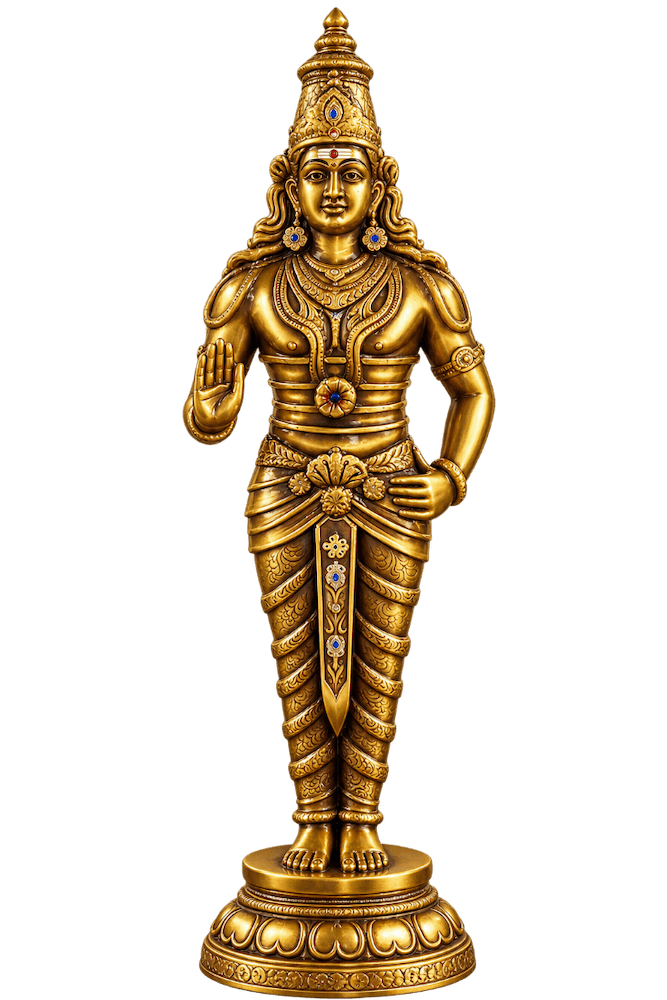 Velloor Sree Subrahmanya Swamy Temple is an ancient temple dedicated to Lord Subrahmanya, located at Velloor in Pampady Panchayat, Kottayam district, Kerala. The principal deity is Lord Subrahmanya, locally revered as Velloor Velayudhan. The deity is traditionally regarded as the Paradevatha (guardian deity) of a Chaathira group associated with the region.
The exact date of the temple’s foundation is not known. However, records associated with Kaithamattom Illam provide evidence of the antiquity of the shrine. Documents dating to Kollam Era 352 (AD 1176) refer to Velloor and indicate that the Subrahmanya temple associated with the illam was already considered ancient at that time, suggesting that its origins predate the surviving records.
Velloor was traditionally regarded as one of the three historic divisions of the Pampady region and the temple remained associated with Kaithamattom Illam, a Namboothiri household belonging to the ancient Chaathira groups of Kerala. Kaithamattom is described in the records of the Chaathira groups of Paravur Kazhakam as the southernmost Illam, with the traditional expression “From Kaithamattam to Karanam” referring to the geographical extent of these households. According to local tradition, there were no Chaathira Namboothiri households beyond the K.K. Road in the Kottayam region. Another tradition connects the temple and its surrounding area with the production of iron obtained from a nearby village stream, which is said to have been used in making swords associated with the Chaathira Namboothiris. 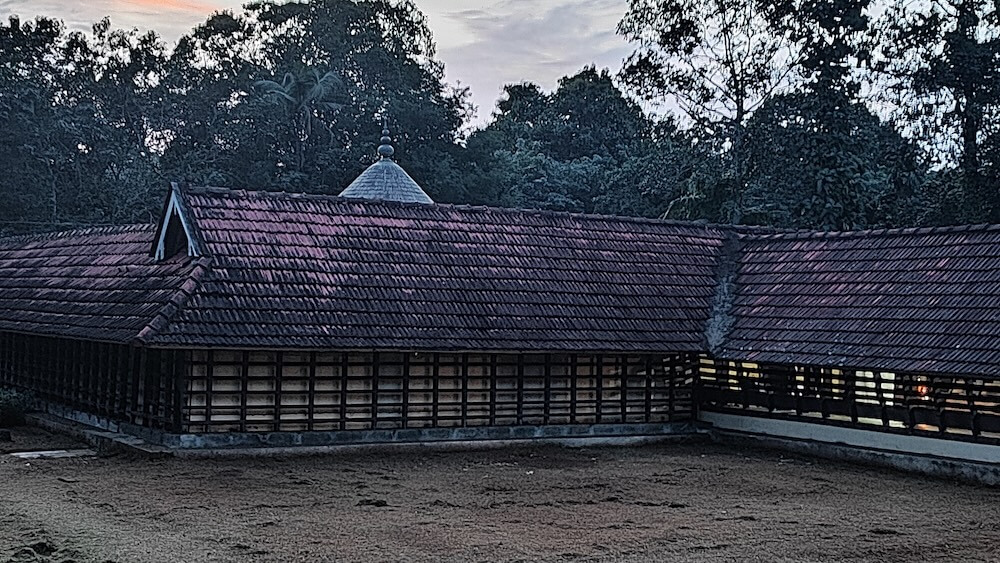 The wider area also contains other temples traditionally connected with Namboothiri households. Cheruvallikkavu Temple in Pampady was associated with the Nanthiyattu Namboothiri of Irinjalakkuda, while Velloor Shiva Temple was traditionally associated with the Puthussery Namboothiri family and is now administered by a local community committee.
The temple follows the characteristic architectural principles of traditional Kerala temple architecture. It is enclosed within a laterite compound wall and faces east. The complex retains a number of traditional architectural and ritual elements,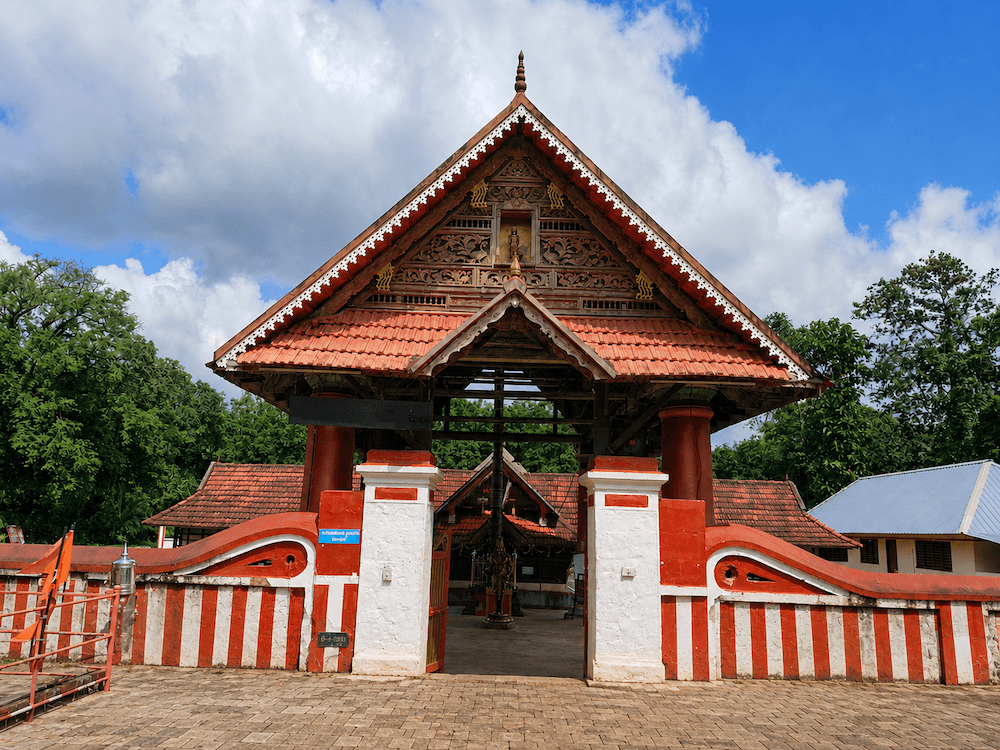 arranged along the principal east-west axis. The entrance is marked by a traditional Padippura, or gateway structure. The gateway has a steeply pitched tiled roof supported by substantial timber members, with decorative wooden detailing and carved elements. The gable includes an image of Lord Subrahmanya, making the entrance an important visual feature of the temple. Inside the courtyard stands a Deepasthambham, positioned along the main axis towards the sanctum. Its pedestal incorporates sculptural representations of Hindu deities and forms both a ritual and architectural focal point of the outer precinct. Further along the axis is the Balikkal, followed by the Namaskara Mandapam.
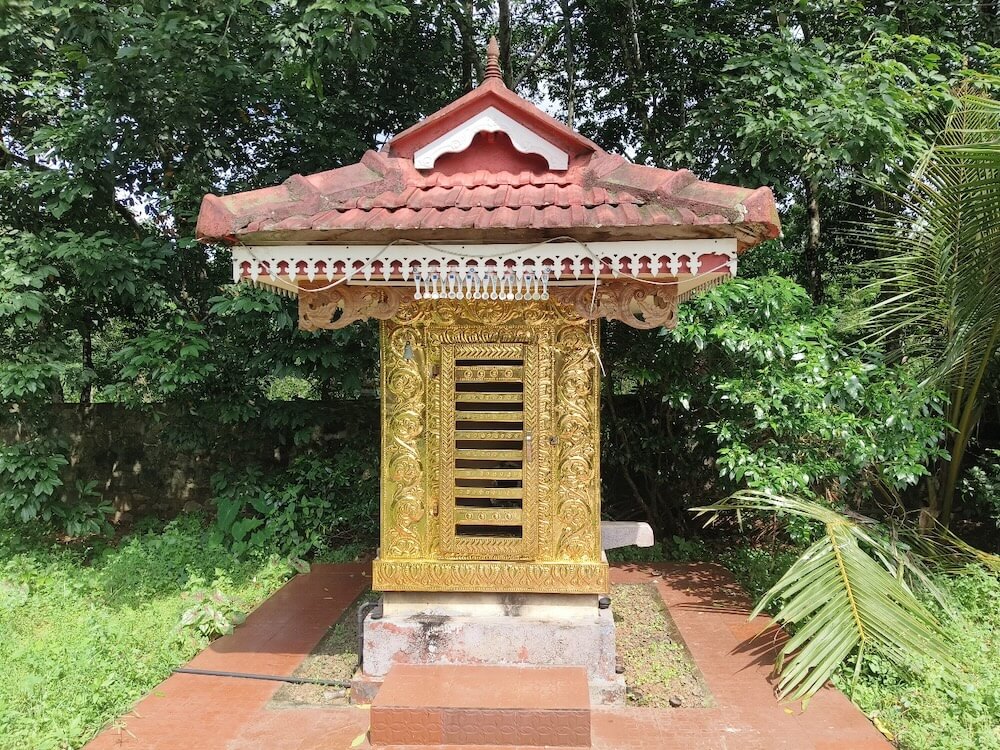
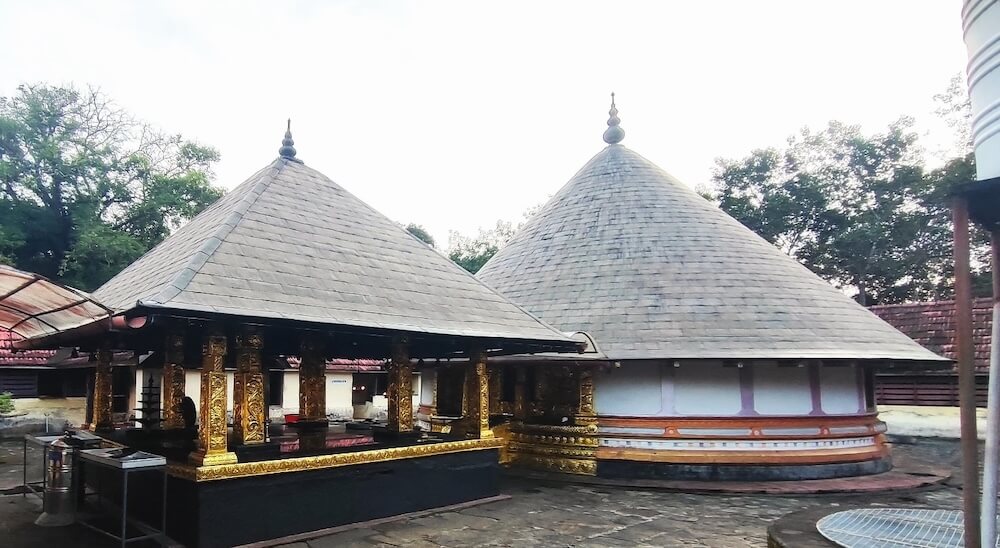
The mandapam is constructed in the traditional Kerala manner, 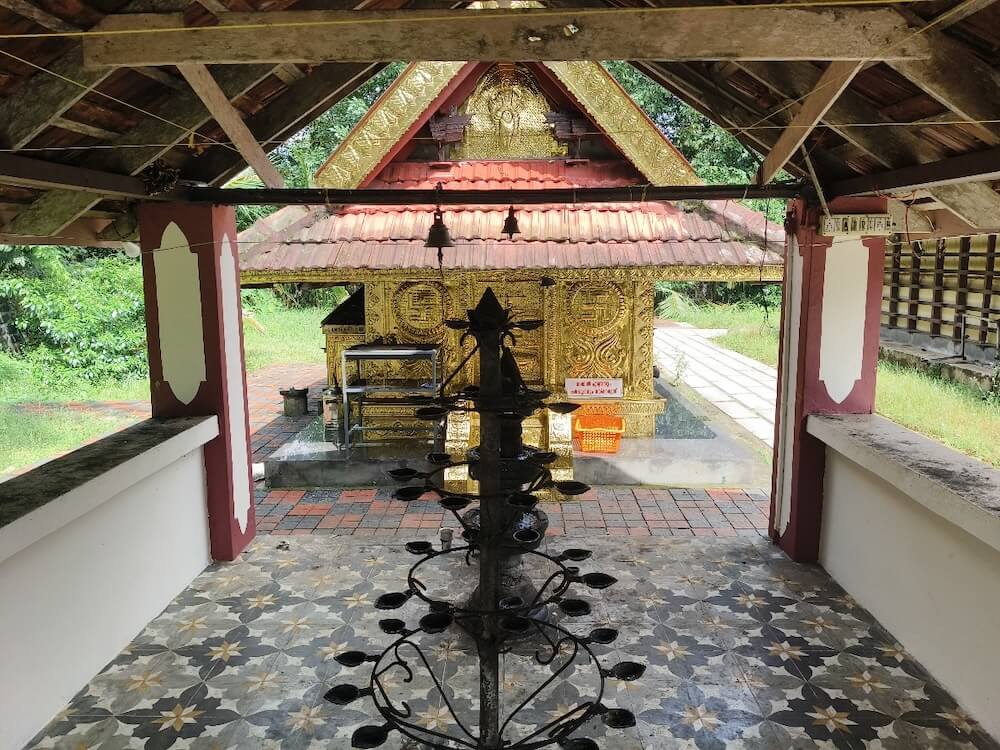 with timber pillars and a tiled roof and provides the principal space for ritual observances immediately before the sanctum. The inner sacred precinct is enclosed by the Chuttambalam. At its centre is the Sreekovil, or sanctum sanctorum, which is circular in plan (Vatta Sreekovil). The sanctum retains the characteristic Kerala form, with a pyramidal tiled roof. The exterior of the Sreekovil is presently protected with decorative gold-plated metal cladding, while the traditional architectural profile remains intact. The eastern gable is also ornamented with a representation of the presiding deity. The Deity, approximately three and a half feet in height, is notable for holding a Nagapasham, or snake-noose, in one of its hands—an unusual feature in representations of Subrahmanya. A separate shrine dedicated to Lord Ganapathi is located within the temple precinct, forming part of the temple’s traditional ritual arrangement.
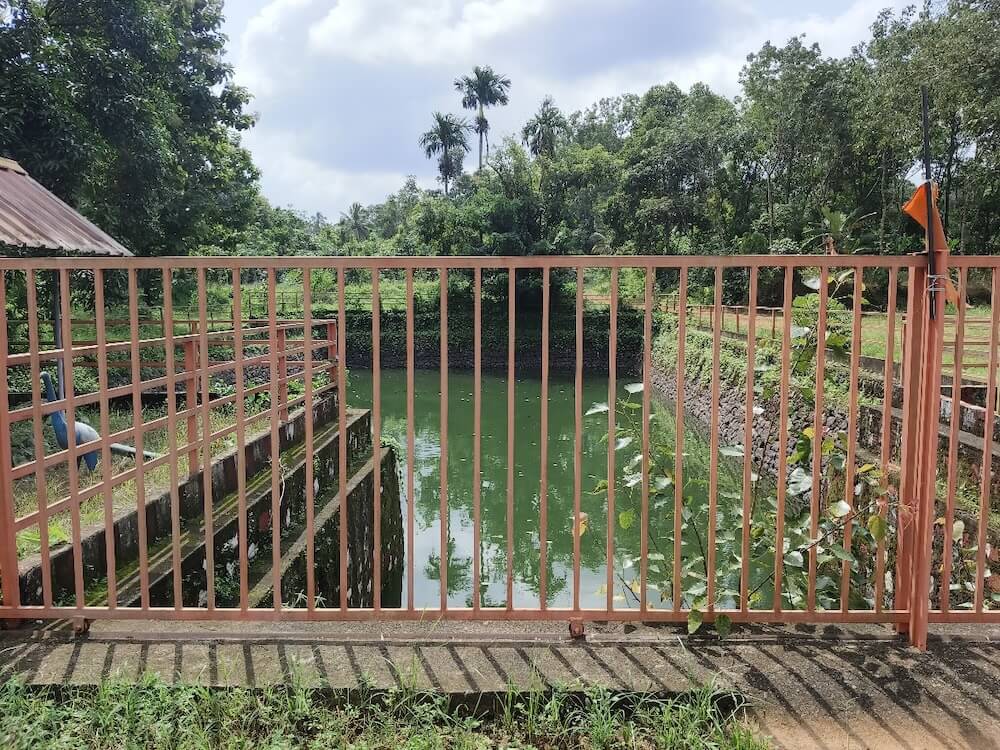
  The complex also includes a sacred pond (Kulam), with laterite masonry forming its embankments. The pond forms an important element of the traditional temple environment and is associated with ritual purification and temple observances. The temple’s principal sub-deity is Lord Ayyappan. Lord Ganapathi also has a separate shrine within the main temple precinct.
The principal annual festival of the temple is an eight-day Utsavam, traditionally arranged so that the Aarattu falls on Shashti in the Malayalam month of Vrischikam. This observance is particularly associated with the worship of Lord Subrahmanya. It is also traditionally noted that the corresponding festival at Thrippunithura falls on the same day. 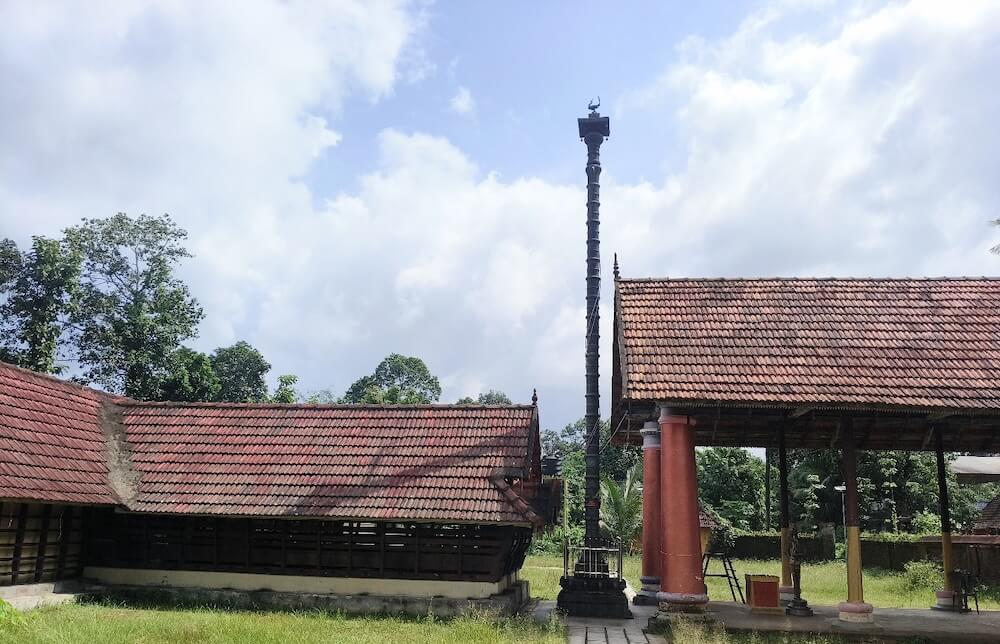 Other important observances associated with the temple include, Thaipooyam, Skanda Shashti, Karthika. These festivals and daily rituals continue to preserve the temple’s longstanding traditions and its connection with the religious life of the surrounding communities.
The temple offers a variety of traditional Vazhipadus (devotional offerings), including Archana, Visheshal Archana, Ganapathi Homam, Bhagavathi Seva, Panchamritham, Thrimadhuram, Milk Abhishekam, Panchamrithabhishekam, Bhasmabhishekam, Daily Pooja, Arunazhi Payasam, Appam Nivedyam, Shashti Pooja and Kumarasooktharchana. These offerings form part of the temple’s customary devotional practices and are performed according to its established ritual traditions.
Daily worship is conducted three times a day in accordance with the established ritual traditions of the temple. The temple opens at 5:00 AM and remains open for the morning poojas until approximately 10:30 AM. It reopens at 5:00 PM and closes by 7:30 PM, following the Athazha Pooja and Deeparadhana. However, these timings may vary and are often extended considerably during special festival occasions, particularly Thaipooyam and Skanda Sashti.
Key Highlights
- Located 11 km from Kottayam town.
- About 11 km from Kottayam Railway Station.
- KSRTC and local bus services are available.
- Dedicated parking is available for private vehicles.
- Accommodation and dining facilities are available nearby.
वेल्लोर श्री सुब्रह्मण्य स्वामी मंदिर
पंपडी, जिला. कोट्टायम
मंदिरे
Temples
मंदिर
મંદિરો
கோவில்கள்
దేవాలయాలు
ക്ഷേത്രങ്ങൾ
ದೇವಾಲಯಗಳು
মন্দিরসমূহ
ਮੰਦਿਰ
-
पुलियान्नूर शिव मंदिर पाला, जि. कोट्टायम
अधिक माहितीPuliyannur Siva Temple Pala, Dist. Kottayam
View Detailsपुलियान्नुर शिव मंदिर पाला, जिला. कोट्टायम
विवरण देखेंPuliyannur Siva Temple Pala, Dist. Kottayam
વિગત જુઓPuliyannur Siva Temple Pala, Dist. Kottayam
விவரங்களைக் காண்கPuliyannur Siva Temple Pala, Dist. Kottayam
వివరాలను చూడండిPuliyannur Siva Temple Pala, Dist. Kottayam
വിശദാംശങ്ങൾ കാണുകPuliyannur Siva Temple Pala, Dist. Kottayam
ವಿವರಗಳನ್ನು ವೀಕ್ಷಿಸಿPuliyannur Siva Temple Pala, Dist. Kottayam
বিস্তারিত দেখুনPuliyannur Siva Temple Pala, Dist. Kottayam
ਵੇਰਵੇ ਦੇਖੋ -
परिपू महादेवाचे मंदिर आयमनम, जि. कोट्टायम
अधिक माहितीParippu Mahadeva Temple Aymanam, Dist. Kottayam
View Detailsपरिप्पु महादेव मंदिर अयमानम, जिला. कोट्टायम
विवरण देखेंParippu Mahadeva Temple Aymanam, Dist. Kottayam
વિગત જુઓParippu Mahadeva Temple Aymanam, Dist. Kottayam
விவரங்களைக் காண்கParippu Mahadeva Temple Aymanam, Dist. Kottayam
వివరాలను చూడండిParippu Mahadeva Temple Aymanam, Dist. Kottayam
വിശദാംശങ്ങൾ കാണുകParippu Mahadeva Temple Aymanam, Dist. Kottayam
ವಿವರಗಳನ್ನು ವೀಕ್ಷಿಸಿParippu Mahadeva Temple Aymanam, Dist. Kottayam
বিস্তারিত দেখুনParippu Mahadeva Temple Aymanam, Dist. Kottayam
ਵੇਰਵੇ ਦੇਖੋ -
तिरुनाक्कारा महादेवाचे मंदिर कोट्टायम टाउन, जि. कोट्टायम
अधिक माहितीThirunakkara Mahadeva Temple Kottayam Town, Dist. Kottayam
View Detailsतिरुनक्कारा महादेव मंदिर कोट्टायम टाउन, जिला। कोट्टायम
विवरण देखेंThirunakkara Mahadeva Temple Kottayam Town, Dist. Kottayam
વિગત જુઓThirunakkara Mahadeva Temple Kottayam Town, Dist. Kottayam
விவரங்களைக் காண்கThirunakkara Mahadeva Temple Kottayam Town, Dist. Kottayam
వివరాలను చూడండిThirunakkara Mahadeva Temple Kottayam Town, Dist. Kottayam
വിശദാംശങ്ങൾ കാണുകThirunakkara Mahadeva Temple Kottayam Town, Dist. Kottayam
ವಿವರಗಳನ್ನು ವೀಕ್ಷಿಸಿThirunakkara Mahadeva Temple Kottayam Town, Dist. Kottayam
বিস্তারিত দেখুনThirunakkara Mahadeva Temple Kottayam Town, Dist. Kottayam
ਵੇਰਵੇ ਦੇਖੋ