
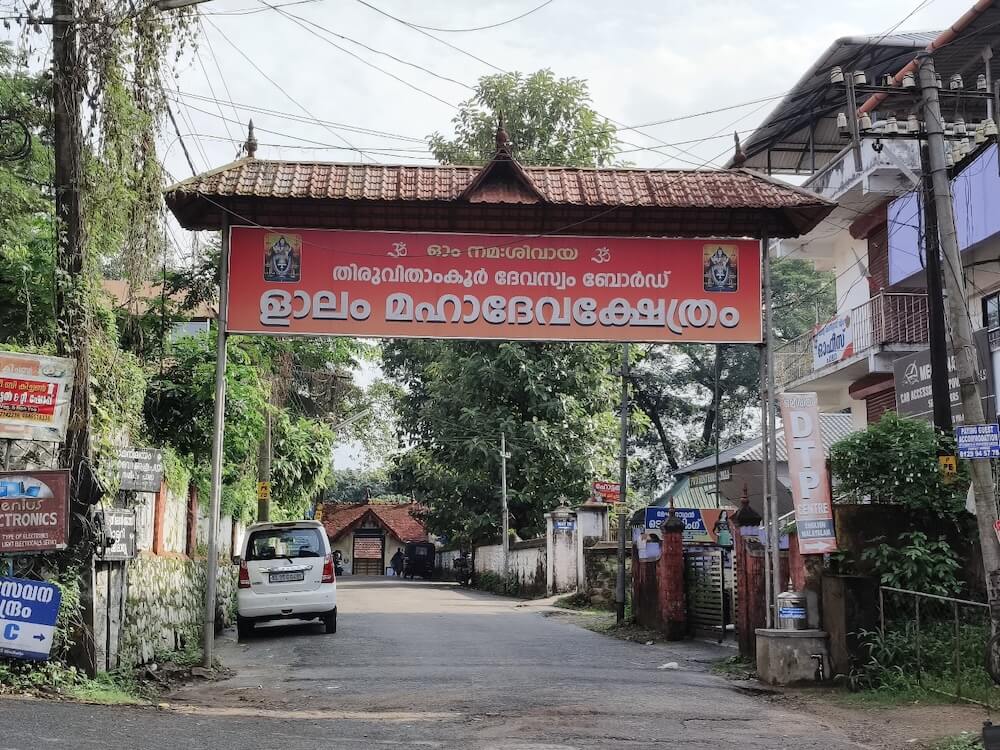
लालम महादेवाचे मंदिर
पाला, जि. कोट्टायम
Lalam Mahadeva Temple
Pala, Dist. Kottayam
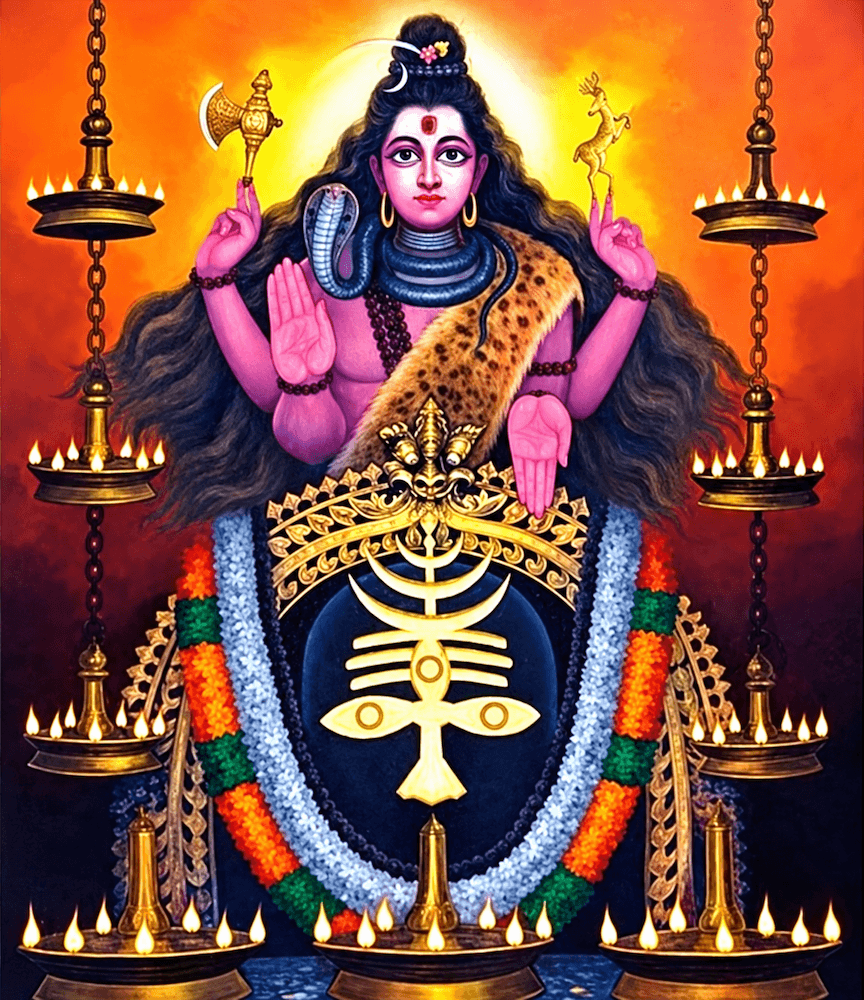 Lalam Mahadeva Temple, situated in the heart of Pala town in Kottayam district, on the banks of the Meenachil River, is one of the oldest Shiva temples in the region. The temple is also known as Dakshina Kashi or the Kashi of the South.
The legendary and historical significance of Lalam Mahadeva Temple is deeply intertwined with the cultural heritage of the region. According to historical records, Lalam Mahadeva Temple was once the only major place of worship serving all 56 karas (villages) of Meenachil Taluk. It therefore occupied a central position in the social and cultural life of the region. At one time, the entire area that is now Pala town is said to have belonged to the temple. The temple is currently administered by the Travancore Devaswom Board. For a complete pilgrimage, devotees traditionally visit the nearby Ambalappurath Kavu Devi Temple as well. At this Devi temple, Bharani Pooja and Bharani Oottu are conducted on the Bharani day during the month of Dhanu.
The temple is regarded as being comparable in sanctity to the Kashi Vishwanath Temple and is therefore known as Dakshina Kashi (Kashi of the South). There are mainly two reasons for this association.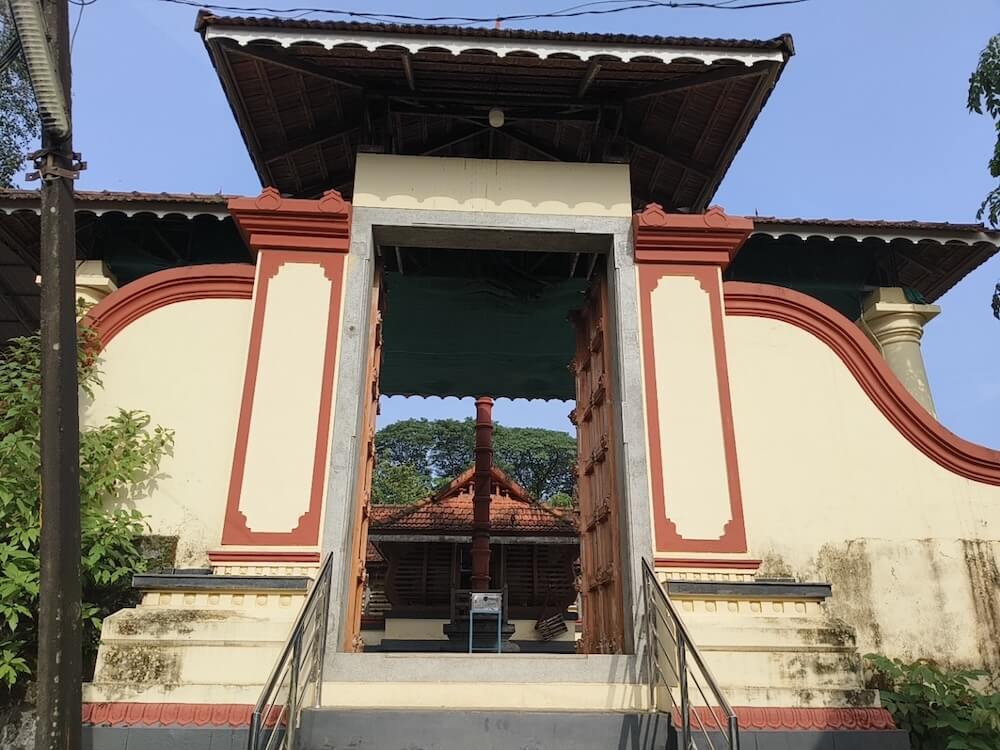 The eastward-flowing river: In Kashi, the sacred Ganga flows eastwards. Similarly, the Meenachil River, which flows past Lalam Temple, turns eastwards at this location. This is regarded as an unusual and sacred geographical feature. The presence of a cremation ground: As in Kashi, a public cremation ground is situated directly opposite the temple. Since Lord Shiva is revered as Shmashana Natha, the Lord of the cremation ground, devotees believe that worship at this sacred site, where an eastward-flowing river and a cremation ground come together, is equivalent in sanctity to worshipping Kashi Vishwanath.
The temple is approached through a traditional Kerala-style entrance pavilion with a tiled roof, timber gable and ornamental wooden detailing. 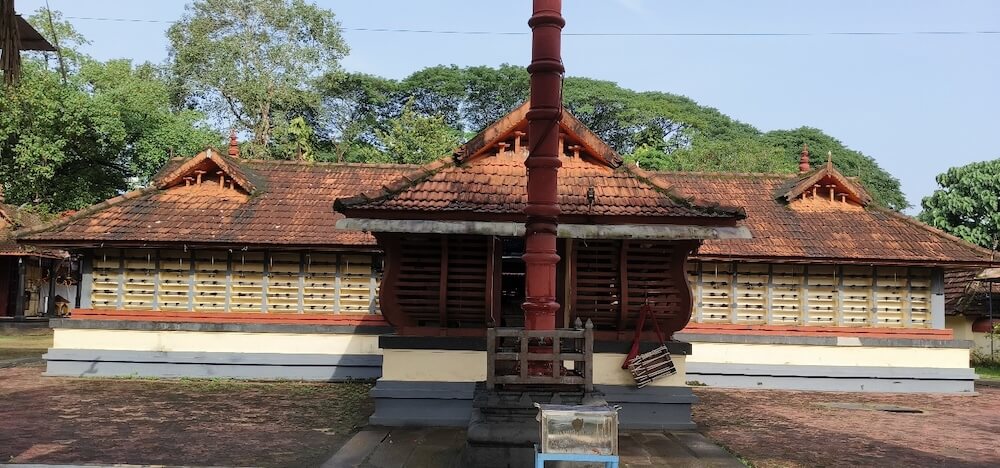 The inner gateway has a broad tiled roof, curved wall forms and red-and-cream ornamental detailing, opening towards the temple courtyard. The Balikkalpura stands along the central axis, with the copper-clad Kodimaram rising prominently in front of it and aligned towards the Sreekovil. The courtyard is surrounded by tiled-roof structures, with extensive wooden latticework, curved timber supports and a spacious paved area connecting the different parts of the temple. The rectangular two-tiered Sreekovil has a traditional Kerala-style tiled roof with prominent gables,
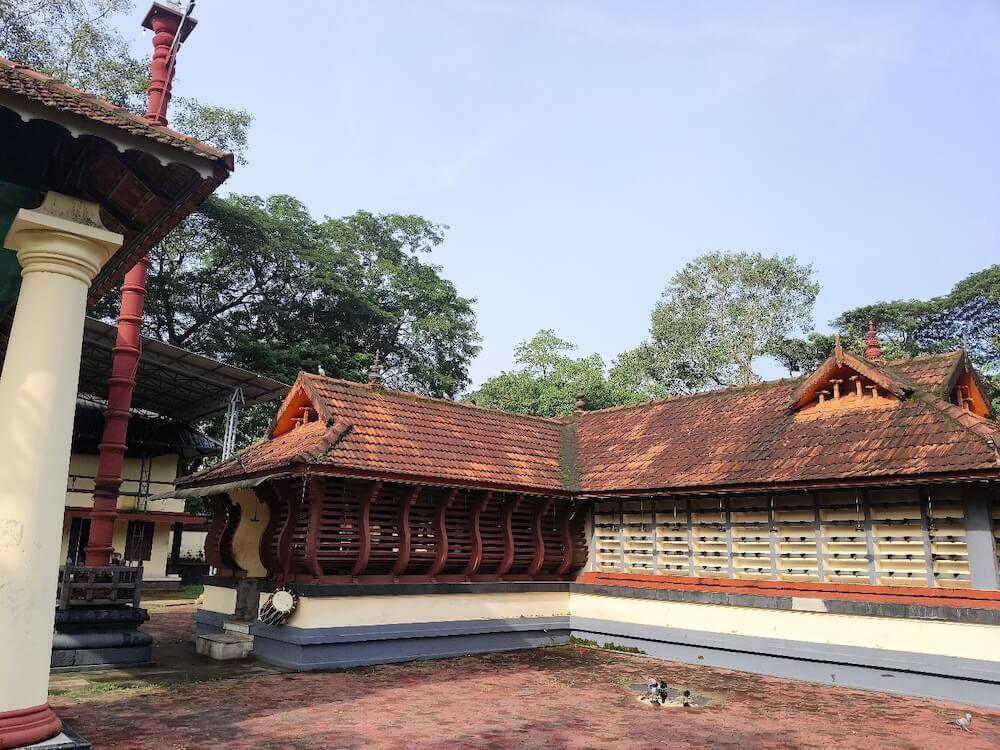 deep projecting eaves and wooden lattice screens along its sides. Two smaller gopurams are situated on the eastern and southern sides, complementing the principal entrance and completing the architectural composition of the temple complex. The presiding deity Lord Shiva (Mahadeva) is enshrined in the sanctum sanctorum facing east. The principal sub-deities (Upadevatas) include Ganesha, Ayyappa, Yogeeshwara, Rakshas, Yakshi and the Naga devatas.
The festivals and celebrations at Lalam Mahadeva Temple are conducted on a grand scale and with great devotion. Among the most important are the Thiruvathira Festival in the month of Dhanu and Maha Shivaratri. The temple’s principal annual celebration is the ten-day Thiruvathira Festival, held during the month of Dhanu (December–January). The festival begins with the ceremonial hoisting of the temple flag (Kodiyettu) on the Chathayam nakshatra. 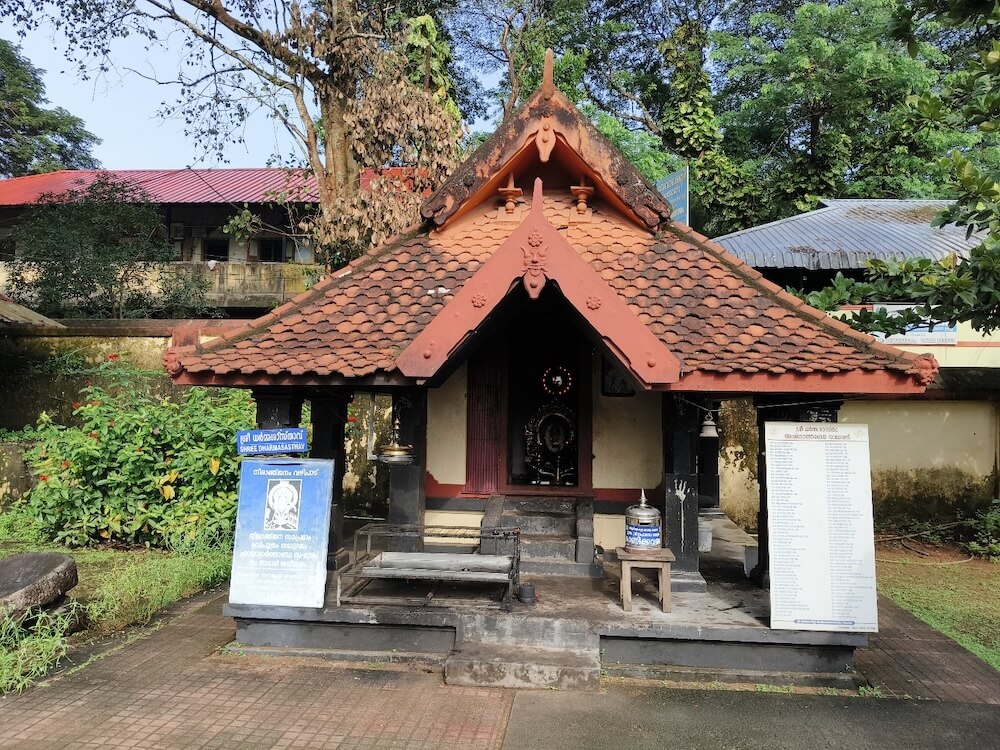 Throughout the festival, special daily poojas, Sree Bhootha Bali, Utsava Bali and Kazcha Seeveli are conducted. A variety of cultural programmes, including Kathakali, Chakyar Koothu, Theyyam and classical music concerts, are also held. On the tenth day, under the Thiruvathira nakshatra, the festival culminates in the grand Aarattu ceremony. The deity is ceremonially taken to the Aarattu Kadavu on the Meenachil River, near the temple, where the sacred bathing ritual is performed.
Following the Aarattu, the deity is ceremonially brought back to the temple, marking the conclusion of the festival. Maha Shivaratri, one of the most significant observances for devotees of Lord Shiva, is celebrated on a grand scale at Lalam Temple.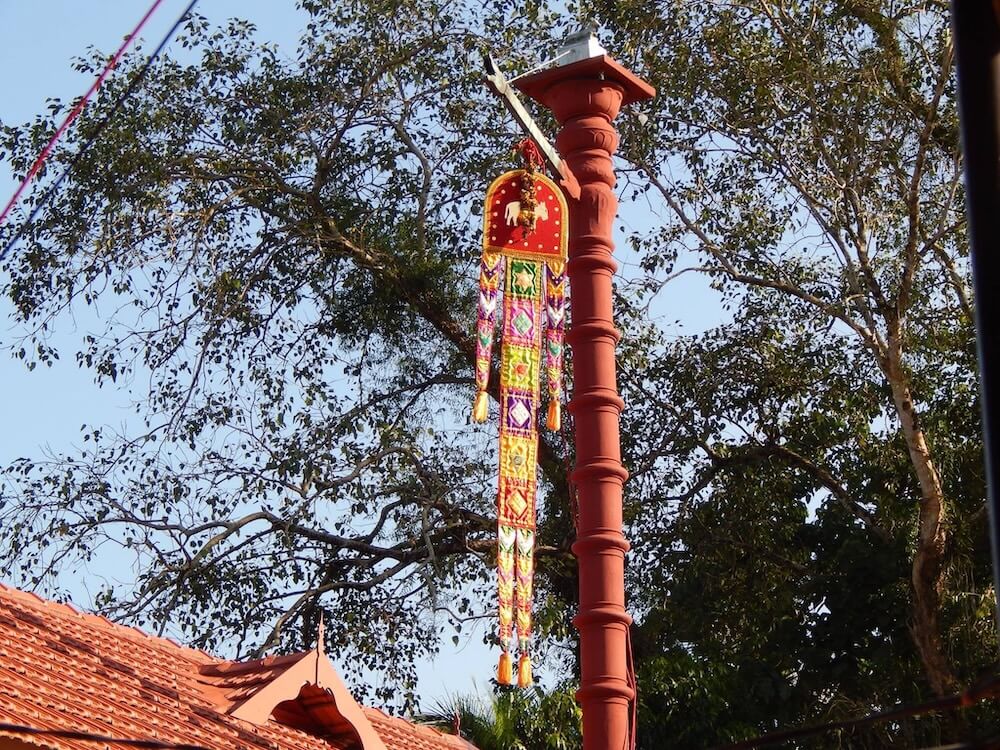 Thousands of devotees from distant places visit the temple on Shivaratri to offer worship to the Lord and observe the prescribed vows and fasts. Special Yaama Poojas are performed at midnight, along with Laksharchana. On this sacred night, the temple traditionally remains open throughout the night without closing its doors, allowing devotees to offer worship. Beyond its importance as a centre of religious and cultural celebrations, the Aarattu Kadavu at Lalam on the Meenachil River is also one of the prominent sacred riverbanks in Kottayam district where large numbers of people gather during Karkidaka Vavu, the new moon day in the month of Karkidakam, to perform Pitru Tarpanam (ritual offerings to departed ancestors).
The temple offers Dhara – Ksheeram, in which milk is continuously offered over Lord Shiva,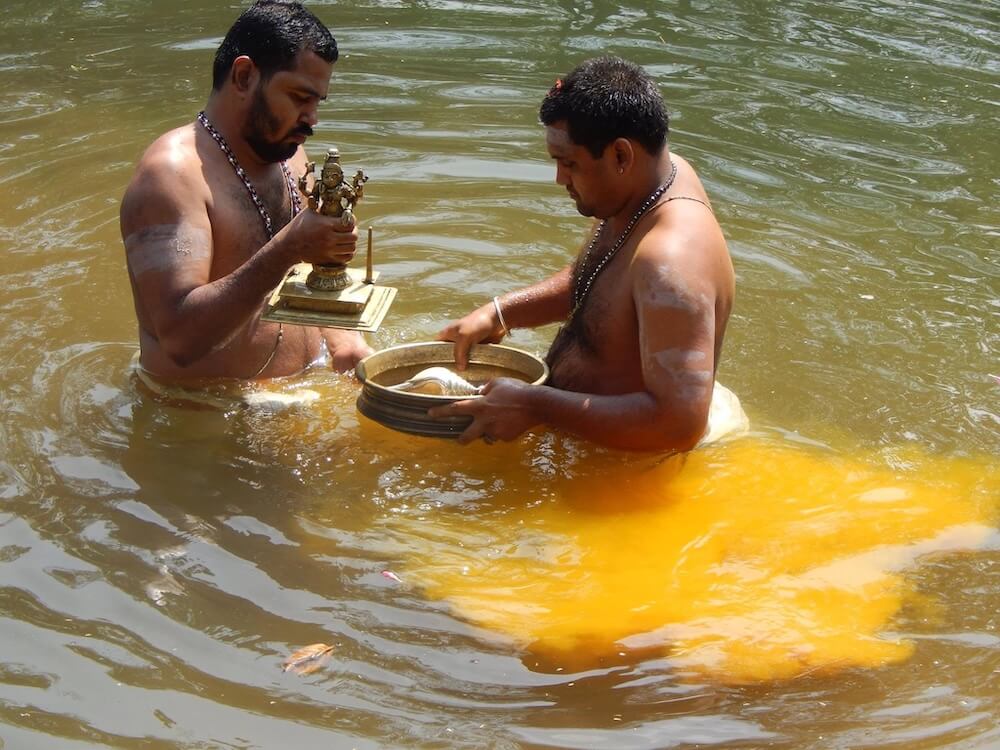 traditionally believed to promote peace of mind, purification and relief from mental disturbances; Dhara for Sivan, a continuous ritual offering to Lord Shiva, traditionally performed seeking spiritual purification, removal of obstacles and divine grace; Ilaneerabhishekam, the offering of tender coconut water as abhishekam, traditionally believed to bring purity, cooling and relief from difficulties; Palabhishekam, the offering of milk as abhishekam, traditionally associated with purity, well-being and the fulfilment of sincere prayers and Enna Abhishekam, an oil offering traditionally performed seeking relief from physical difficulties and general well-being. Other offerings include Ganapathy Homam, traditionally performed for the removal of obstacles, success in undertakings and auspicious beginnings; Karuka Homam, associated with protection, purification and overcoming difficulties; Mruthyunjaya Homam, dedicated to Lord Shiva in his Mrityunjaya form and traditionally performed seeking longevity, health, protection and freedom from fears; Kadum Payasam – Bhagavathi, a sweet offering to Bhagavathi traditionally made seeking the Goddess’s blessings, prosperity and fulfilment of prayers; Kedavilakku, a continuously burning lamp traditionally associated with divine protection, prosperity and the removal of difficulties; Koottu Payasam, offered seeking blessings, prosperity and fulfilment of prayers; Noorum Palum, a traditional offering of rice flour and milk associated with purification, protection and divine blessings and Oru Divasathe Pooja, through which the devotee sponsors the day’s worship and associated rituals, traditionally seeking the overall well-being of oneself and one’s family and the fulfilment of sincere prayers.
The temple opens at 5:00 AM with Nada Thurakkal, followed by Nirmalyam at 5:15 AM, Abhishekam at 5:45 AM, Usha Pooja at 6:10 AM, Ethrithu Pooja at 6:30 AM, Ethrithu Sreebeli at 6:45 AM, Pantheeradi Pooja at 8:00 AM, Ucha Pooja at 10:15 AM and Ucha Sreebeli at 10:50 AM. The temple closes at 11:00 AM and remains closed until 5:00 PM. In the evening, the temple reopens at 5:00 PM, followed by Deeparadhana at 6:20 PM, Athazha Pooja at 7:30 PM and Athazha Sreebeli at 7:50 PM. The temple closes at 8:00 PM.
Key Highlights
- Located 4 km from Pala town.
- About 25 km from Kottayam Railway Station.
- KSRTC and local bus services are available.
- Dedicated parking is available for private vehicles.
- Accommodation and dining facilities are available nearby.
लालम महादेव मंदिर
पाला, जिला. कोट्टायम
मंदिरे
Temples
मंदिर
મંદિરો
கோவில்கள்
దేవాలయాలు
ക്ഷേത്രങ്ങൾ
ದೇವಾಲಯಗಳು
মন্দিরসমূহ
ਮੰਦਿਰ
-
पणमत्तम श्रीभागवती मंदिर पोनकुन्नम, जि. कोट्टायम
अधिक माहितीPanamattam Sree Bhagavathi Temple Ponkunnam, Dist. Kottayam
View Detailsपनमट्टम श्री भगवती मंदिर पोनकुन्नम, जिला. कोट्टायम
विवरण देखेंPanamattam Sree Bhagavathi Temple Ponkunnam, Dist. Kottayam
વિગત જુઓPanamattam Sree Bhagavathi Temple Ponkunnam, Dist. Kottayam
விவரங்களைக் காண்கPanamattam Sree Bhagavathi Temple Ponkunnam, Dist. Kottayam
వివరాలను చూడండిPanamattam Sree Bhagavathi Temple Ponkunnam, Dist. Kottayam
വിശദാംശങ്ങൾ കാണുകPanamattam Sree Bhagavathi Temple Ponkunnam, Dist. Kottayam
ವಿವರಗಳನ್ನು ವೀಕ್ಷಿಸಿPanamattam Sree Bhagavathi Temple Ponkunnam, Dist. Kottayam
বিস্তারিত দেখুনPanamattam Sree Bhagavathi Temple Ponkunnam, Dist. Kottayam
ਵੇਰਵੇ ਦੇਖੋ -
इदयाझम सुब्रह्मण्य स्वामी मंदिर एडायझम, जि. कोट्टायम.
अधिक माहितीEdayazham Subrahmanya Swamy Temple Edayazham, Dist. Kottayam.
View Detailsएडयाज़म सुब्रह्मण्य स्वामी मंदिर एडयाज़म, जिला। कोट्टायम.
विवरण देखेंએડાયાઝમ સુબ્રહ્મણ્ય સ્વામી મંદિર, એડાયાઝમ, જિલ્લો કોટ્ટાયમ.
વિગત જુઓஇடையாழம் சுப்ரமண்ய சுவாமி திருக்கோயில், இடையாழம், கோட்டயம் மாவட்டம்.
விவரங்களைக் காண்கఎడయాళం సుబ్రహ్మణ్య స్వామి దేవాలయం, ఎడయాళం, జిల్లా: కొట్టాయం.
వివరాలను చూడండిഇടയാഴം സുബ്രഹ്മണ്യസ്വാമി ക്ഷേത്രം, ഇടയാഴം, കോട്ടയം ജില്ല.
വിശദാംശങ്ങൾ കാണുകಎಡಯಾಳಂ ಸುಬ್ರಹ್ಮಣ್ಯ ಸ್ವಾಮಿ ದೇವಸ್ಥಾನ, ಎಡಯಾಳಂ, ಜಿಲ್ಲೆ: ಕೊಟ್ಟಾಯಂ.
ವಿವರಗಳನ್ನು ವೀಕ್ಷಿಸಿএড়য়াজম সুব্রহ্মণ্য স্বামী মন্দির, এড়য়াজম, জেলা কোট্টায়ম।
বিস্তারিত দেখুনਏਡਯਾਝਮ ਸੁਬ੍ਰਹਮਣਯ ਸਵਾਮੀ ਮੰਦਰ, ਏਡਯਾਝਮ, ਜ਼ਿਲ੍ਹਾ ਕੋਟਾਯਮ।
ਵੇਰਵੇ ਦੇਖੋ -
पुमकवू देवी मंदिर थलायझम, जि. कोट्टायम.
अधिक माहितीPoomkavu Devi Temple Thalayazham, Dist. Kottayam.
View Detailsपूमकवु देवी मंदिर थलयाज़म, जिला। कोट्टायम.
विवरण देखेंPoomkavu Devi Temple Thalayazham, Dist. Kottayam.
વિગત જુઓPoomkavu Devi Temple Thalayazham, Dist. Kottayam.
விவரங்களைக் காண்கPoomkavu Devi Temple Thalayazham, Dist. Kottayam.
వివరాలను చూడండిPoomkavu Devi Temple Thalayazham, Dist. Kottayam.
വിശദാംശങ്ങൾ കാണുകPoomkavu Devi Temple Thalayazham, Dist. Kottayam.
ವಿವರಗಳನ್ನು ವೀಕ್ಷಿಸಿPoomkavu Devi Temple Thalayazham, Dist. Kottayam.
বিস্তারিত দেখুনPoomkavu Devi Temple Thalayazham, Dist. Kottayam.
ਵੇਰਵੇ ਦੇਖੋ