
इदयाझम सुब्रह्मण्य स्वामी मंदिर
एडायझम, जि. कोट्टायम.
Edayazham Subrahmanya Swamy Temple
Edayazham, Dist. Kottayam.
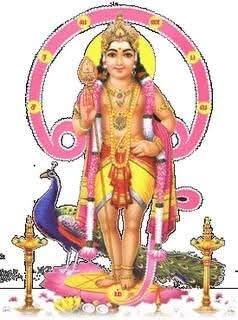 Edayazham Sree Subrahmanya Swamy Temple is an ancient Hindu place of worship located at Edayazham in Vechoor Grama Panchayat, Vaikom Taluk, Kottayam district, Kerala. Built in the traditional Kerala architectural style, the temple holds an important place in the local history and cultural life of the region. The main attraction of the temple is the peaceful form of Lord Subrahmanya Swamy.
Although the exact year of construction is not recorded, historians estimate that the temple is more than 500 years old based on its architectural style and construction methods. The structure of the temple and the traditional woodwork of the Sreekovil indicate the medieval Kerala temple architectural style. It is believed that the temple was built under the supervision of the Vadakkumkur royal family, which ruled the Vechoor region or prominent noble families such as the Madambis and Ooralans under their rule. From ancient times, it has also existed as an important sub-temple within the sphere of influence of Vaikom Mahadeva Temple. The granite foundation and the richly carved wooden work of the Chuttambalam are notable examples of the ancient Kerala temple architectural tradition.
In the early days, the administration of the temple was in the hands of Ooranma Sabha, a group of prominent Brahmin families in the region.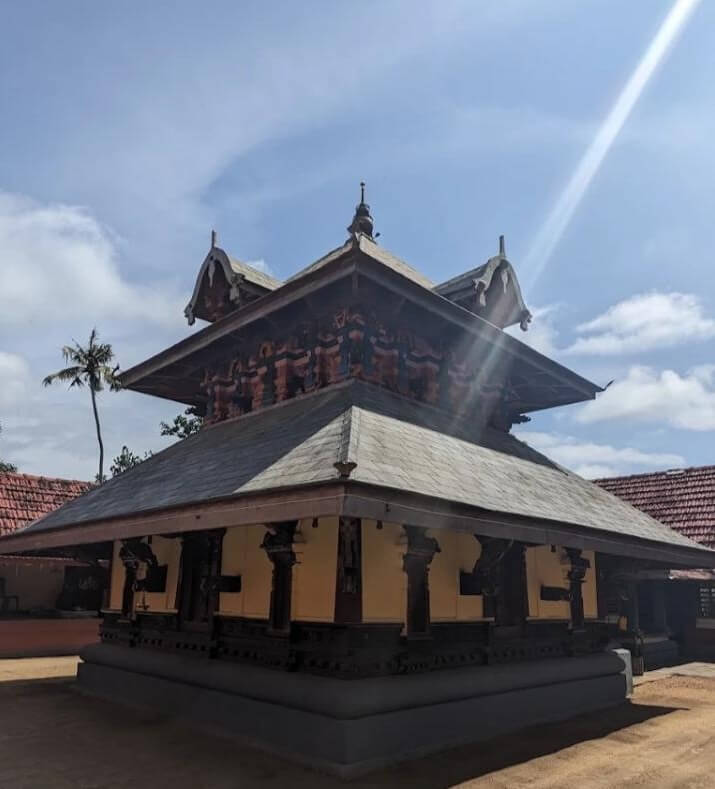 Later, after King Anizham Thirunal Marthanda Varma conquered the Vadakkumkur Kingdom, the temple came under the direct control of the Travancore Kingdom during AD 1749–1750. The Vadakkumkur Kingdom was incorporated into Travancore during this period. The temple was then managed by officials appointed as representatives of the King. At present, the Travancore Devaswom Board has full administrative control of the temple. As part of the Board’s administrative decentralisation, the Edayazham Temple functions under the Vaikom Group. A Sub Group Officer appointed by the Devaswom Board looks after the daily administration, along with a Temple Advisory Committee made up of local devotees.
According to the main legend, the idol of Lord Subrahmanya Swamy was found in a large pond that once existed in this area. After the local people realised that there was a divine presence in the pond, they brought the idol to the shore. It is believed that, following astrological guidance, they examined the signs and built a temple at the chosen site, where the idol was installed. The large pond where the idol was found is still known as Edayazham Kulam and is located near the temple. Local tradition also connects the name ‘Edayazham’ with this pond.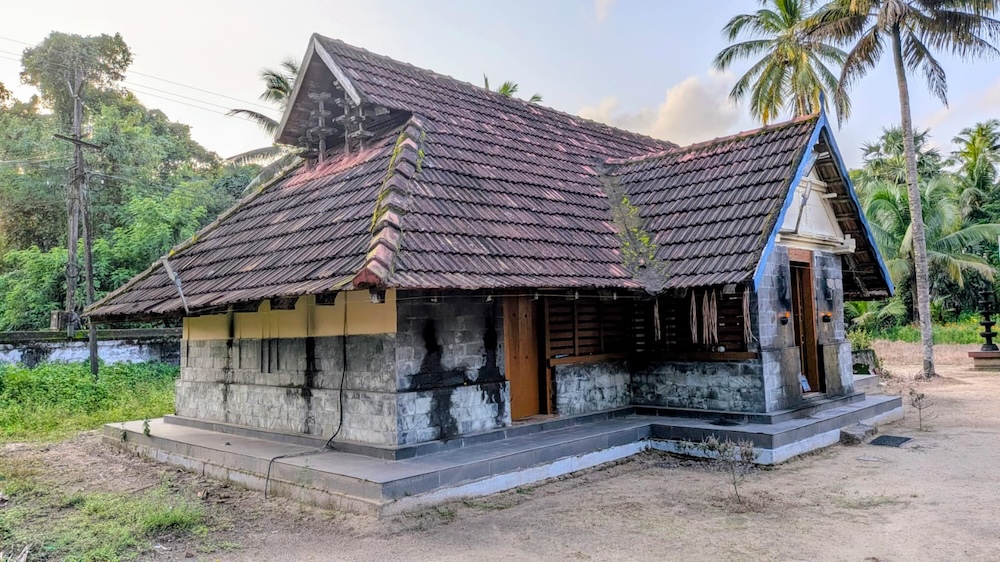 According to the legend, the idol was found in the deep central part of the pond, which is believed to have given the place its name. Lord Subrahmanya Swamy is worshipped here in the form of Bala Subrahmanya and is regarded as a peaceful deity who listens to the prayers of devotees. Childless couples also visit the temple and pray for children, while devotees seek blessings for the well-being of their children.
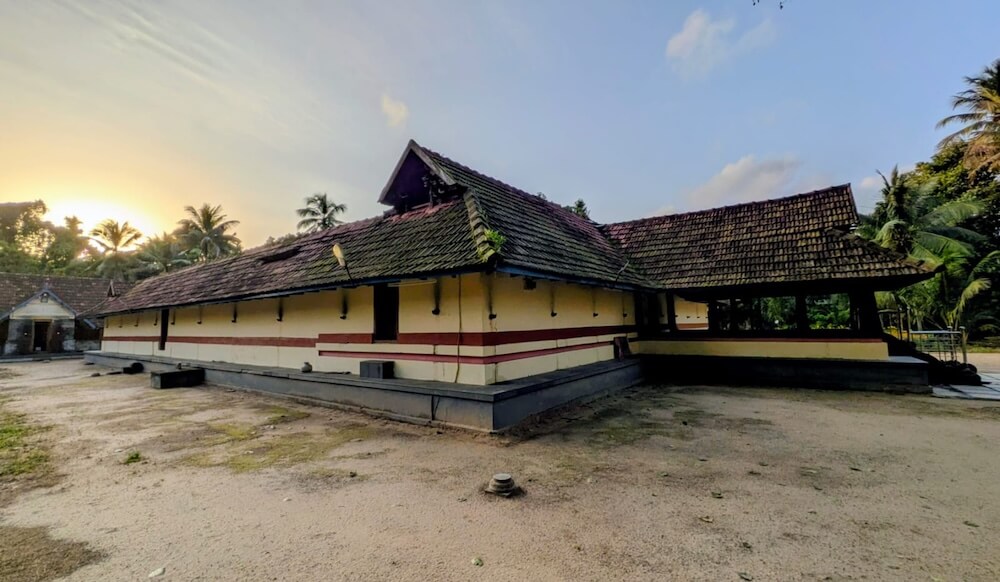
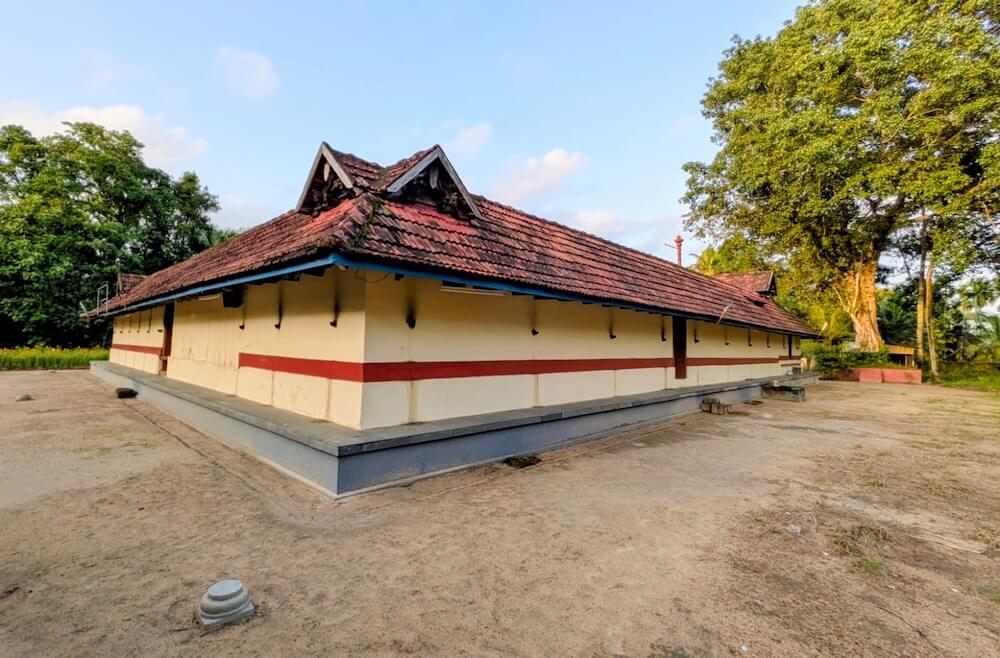
An entrance gate (Gopuram) with a traditional Kerala-style Padippura can be seen beside the main road.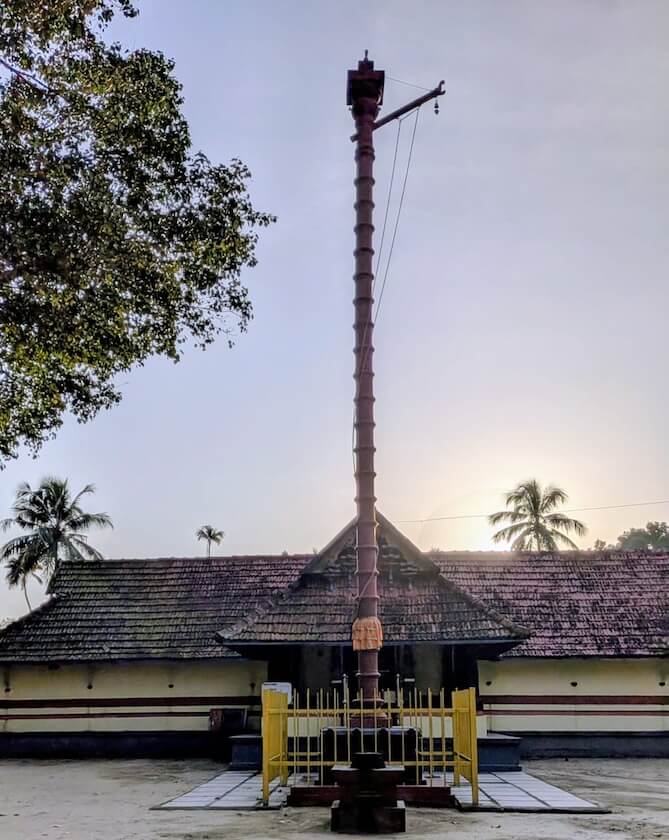 The temple is enclosed by an old-style Aanapalli wall (compound wall). One of the main attractions is the large Edayazham Kulam (pond) located beside the road. This is the deep pond mentioned in local legends and believed to be the place where the idol of Lord Subrahmanya Swamy was found. The temple is surrounded by a peaceful rural setting with greenery and large trees. Just beyond the main entrance is the Balikkalpura, which houses a large Balikkallu. Its roof features beautiful traditional woodwork. A spacious Chuttambalam surrounds the Sreekovil, with a granite foundation, a wooden structure and a tiled roof. The walls also have provisions for placing traditional oil lamps, known as Vilakkumadam.
The main Sreekovil is square in shape, a common and sacred form of temple structure in Kerala. Built in the Ekathala style, it has a single-tiered roof covered with traditional clay tiles. The Adhishtana (base) of the Sreekovil is made entirely of granite. The darkened granite blocks, which have aged over time, reflect the antiquity of the temple. The Sopana, the granite steps directly in front of the sanctum, has traditionally carved handrails with fine stonework. A square-shaped Namaskara Mandapam, made of wood with a tiled roof, stands directly in front of the Sreekovil. The wooden work on its roof reflects the skill of traditional Kerala craftsmanship.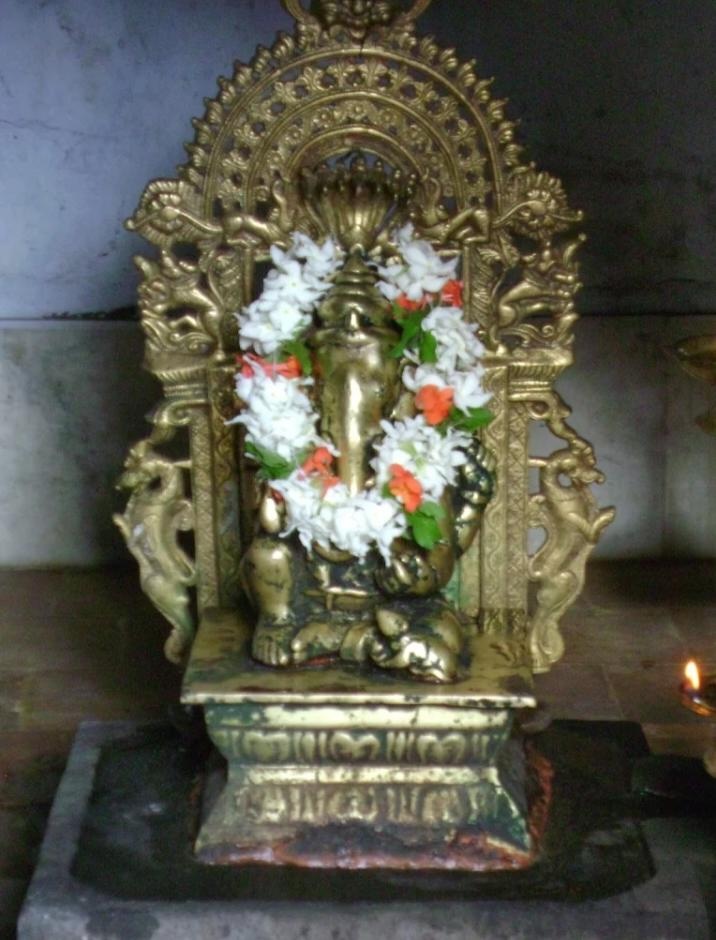 The main deity is worshipped in the form of Bala Subrahmanya. Unlike the fierce or warrior form often seen in some Subrahmanya temples, the deity here has a calm and peaceful appearance. The idol is carved from hard black stone, with the Shakthivel in one hand and the other hand raised in Abhaya Mudra, the gesture of blessing devotees. The deity faces east and it is believed that the first rays of the rising sun fall on the feet of the deity.
In addition to the main Sreekovil, the temple has several sub-shrines dedicated to other deities. The shrine of Lord Ganesha is located inside the Nalambalam, at the south-western corner of the main Sreekovil, known as the Kannimoola. Lord Shastha (Ayyappan) is worshipped in the southern prakara, outside the Nalambalam. The shrine of Bhagavathi (Vanadurga) is located in the north-western part of the temple or close to the western side. She is worshipped here in a peaceful form as a motherly deity. In the north-eastern corner, known as the Eeshana Kona, the Nagathara is situated in a green and shaded area. Naga deities such as Nagaraja and Nagayakshi are worshipped here. There is also a separate shrine dedicated to Brahmarakshas, a protective deity that has been worshipped at the temple since ancient times.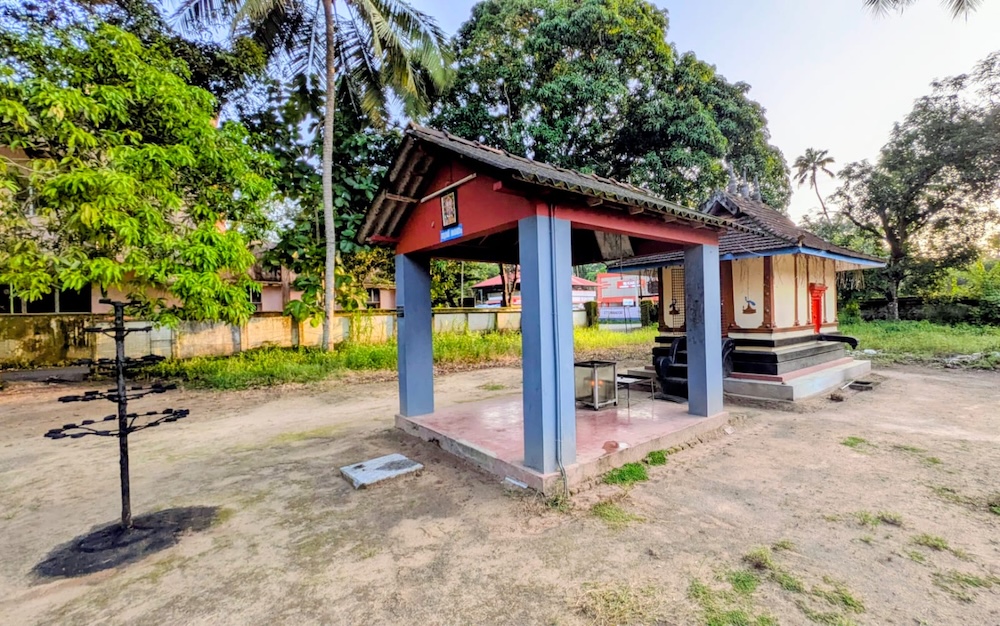
The main festival of the temple is the Thaipooyam festival, held in the Malayalam month of Makaram (January/February). The Kavadi Attam on Thaipooyam day is the main attraction, with hundreds of devotees bringing offerings such as Paalabhishekam Kavadi, Panineer Kavadi and Bhasma Kavadi as a mark of devotion to Lord Subrahmanya. Special Panchamrithabhishekam and Paalabhishekam are performed for the deity on this day, along with a large-scale Annadanam for devotees. Skanda Sashti is also observed with importance in the Malayalam month of Thulam (October/November), when devotees observe the Sashti Vratham and offer prayers for relief from difficulties and for blessings of children.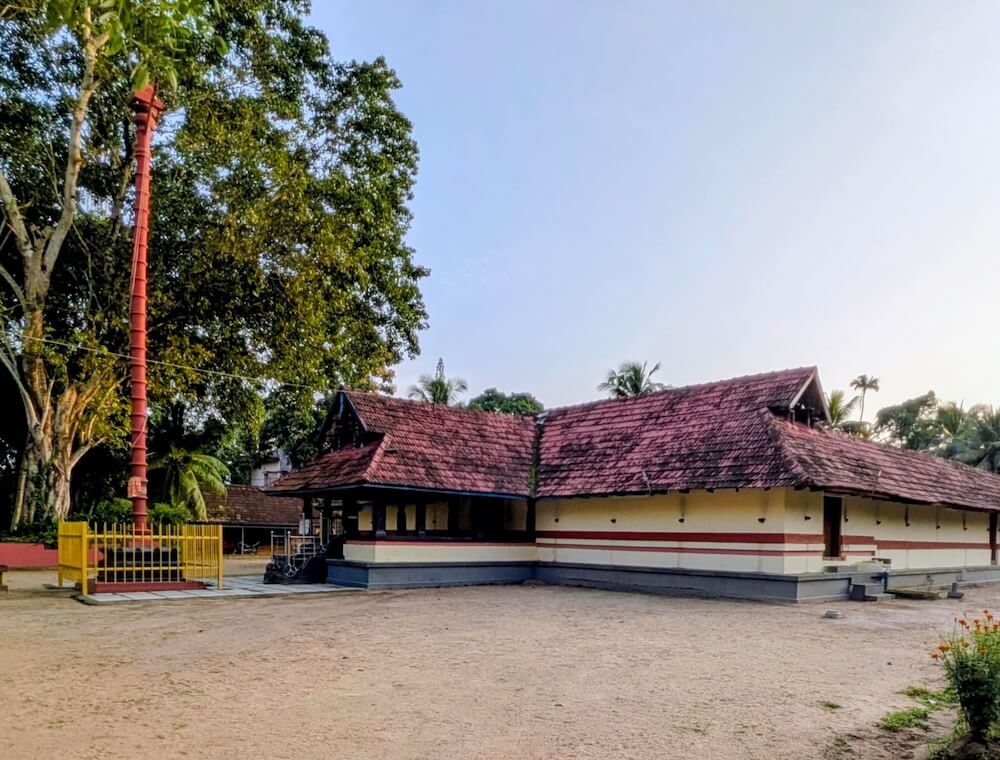 Thrikarthika, observed in the month of Vrischikam (November/December), is another special day, when clay lamps are lit around the temple and Chuttambalam in the evening. During the 41-day Mandala season, from the first day of Vrischikam to the 11th day of Dhanu, special poojas and Charadu Japam are performed for Lord Shastha and the main deity. Sashti, the sixth day of the waxing fortnight in every Malayalam month, is also observed with special Abhishekam and offerings. Tuesdays are considered especially auspicious for Lord Subrahmanya and special poojas are performed on these days, attracting many devotees.
Among the main offerings at the temple, Paalabhishekam is one of the most important. 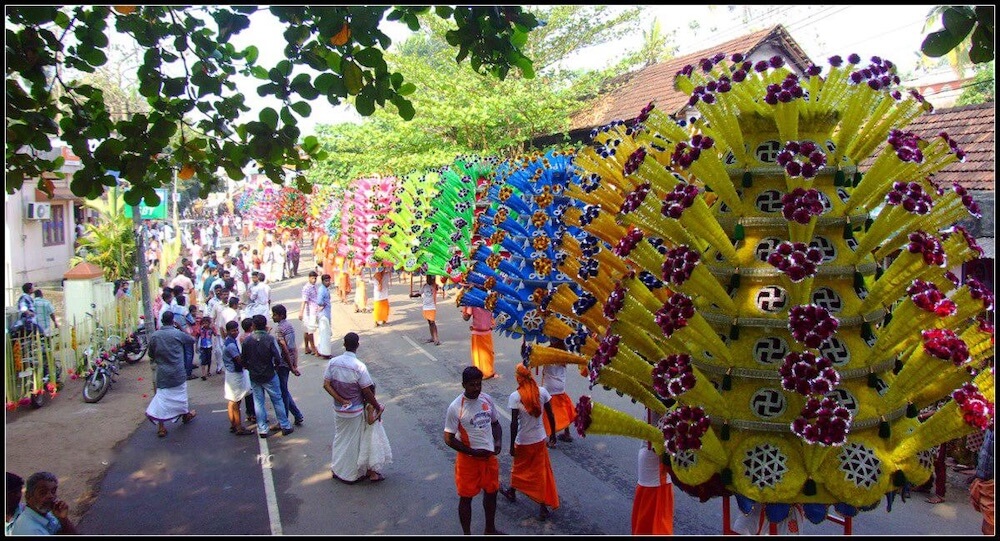 Devotees perform Paalabhishekam for Lord Subrahmanya seeking relief from health difficulties and peace of mind and it has special importance on Thaipooyam day. Panchamritham, made with banana, jaggery, ghee, rock sugar and honey, is another important offering. As the deity is worshipped in the form of Bala Subrahmanya, devotees also offer butter seeking blessings for the intellectual development, good health and speech of children. Sashti Oottu or Annadanam is considered an important offering, especially for childless couples praying for children on Sashti days.
 Thulabharam is also performed using items such as sugar, jaggery, coconut and paddy, seeking relief from long-lasting health difficulties and blessings for the health and well-being of children. During the Thaipooyam festival, devotees offer Kavadi filled with milk or rose water as a prayer for the fulfilment of their wishes. Among the offerings to the other deities, Ottayappam, Ganapathi Homam and Karukamala are offered to Lord Ganesha to remove obstacles; Elluthiri and Neerajanam are offered to Lord Shastha for relief from the effects of Shani Dosha. Lalitha Sahasranama Archana and Pattu Samarpanam are offered to Bhagavathi for marital blessings and family prosperity.
 On Ayilyam days, offerings such as Paalpayasam and Noorum Paalum are made to the Naga deities seeking relief from Sarpa Dosha.
The daily poojas at the temple begin at 05:00 AM with the opening of the shrine and Nirmalya Darshan. Abhishekam and Malar Nivedyam are performed at 05:30 AM, followed by Usha Pooja at 06:30 AM. The Ucha Pooja is performed at 09:30 AM, after which the shrine closes. In the evening, the shrine reopens at 05:00 PM, followed by Deeparadhana at 06:30 PM and Athazha Pooja at 07:15 PM. The day’s poojas conclude with Thrippuka at 07:30 PM, after which the shrine closes. Devotees who wish to book offerings directly at the counter or attend the Abhishekam are advised to arrive at the temple before 08:30 AM. On special days and during the Thaipooyam festival season, the afternoon and night closing times may change.
Key highlight :-
- Located 7 km from Vaikom and 12 km from Cherthala.
- The nearest railway station is Cherthala railway station, about 12 km away.
- KSRTC and local bus facilities are available to the temple from Vaikom and Cherthala.
- Private vehicles can be parked in the temple’s parking area.
- Accommodation and food facilities are available in the nearby towns.
एडयाज़म सुब्रह्मण्य स्वामी मंदिर
एडयाज़म, जिला। कोट्टायम.
मंदिरे
Temples
मंदिर
મંદિરો
கோவில்கள்
దేవాలయాలు
ക്ഷേത്രങ്ങൾ
ದೇವಾಲಯಗಳು
মন্দিরসমূহ
ਮੰਦਿਰ
-
पुमकवू देवी मंदिर थलायझम, जि. कोट्टायम.
अधिक माहितीPoomkavu Devi Temple Thalayazham, Dist. Kottayam.
View Detailsपूमकवु देवी मंदिर थलयाज़म, जिला। कोट्टायम.
विवरण देखेंPoomkavu Devi Temple Thalayazham, Dist. Kottayam.
વિગત જુઓPoomkavu Devi Temple Thalayazham, Dist. Kottayam.
விவரங்களைக் காண்கPoomkavu Devi Temple Thalayazham, Dist. Kottayam.
వివరాలను చూడండిPoomkavu Devi Temple Thalayazham, Dist. Kottayam.
വിശദാംശങ്ങൾ കാണുകPoomkavu Devi Temple Thalayazham, Dist. Kottayam.
ವಿವರಗಳನ್ನು ವೀಕ್ಷಿಸಿPoomkavu Devi Temple Thalayazham, Dist. Kottayam.
বিস্তারিত দেখুনPoomkavu Devi Temple Thalayazham, Dist. Kottayam.
ਵੇਰਵੇ ਦੇਖੋ -
गोविंदापुरम श्रीकृष्ण मंदिर वेचूर, जि. कोट्टायम.
अधिक माहितीGovindapuram Sree Krishna Temple Vechoor, Dist. Kottayam.
View Detailsगोविंदपुरम श्री कृष्ण मंदिर वेचूर, जिला. कोट्टायम.
विवरण देखेंGovindapuram Sree Krishna Temple Vechoor, Dist. Kottayam.
વિગત જુઓGovindapuram Sree Krishna Temple Vechoor, Dist. Kottayam.
விவரங்களைக் காண்கGovindapuram Sree Krishna Temple Vechoor, Dist. Kottayam.
వివరాలను చూడండిGovindapuram Sree Krishna Temple Vechoor, Dist. Kottayam.
വിശദാംശങ്ങൾ കാണുകGovindapuram Sree Krishna Temple Vechoor, Dist. Kottayam.
ವಿವರಗಳನ್ನು ವೀಕ್ಷಿಸಿGovindapuram Sree Krishna Temple Vechoor, Dist. Kottayam.
বিস্তারিত দেখুনGovindapuram Sree Krishna Temple Vechoor, Dist. Kottayam.
ਵੇਰਵੇ ਦੇਖੋ -
कुप्पीडिक्कवू देवी मंदिर थोटकम, वायकोम, जि. कोट्टायम
अधिक माहितीKuppedikkavu Devi Temple Thottakam, Vaikom, Dist. Kottayam
View Detailsकुप्पेडिक्कावु देवी मंदिर थोट्टाकम, वैकोम, जिला। कोट्टायम
विवरण देखेंKuppedikkavu Devi Temple Thottakam, Vaikom, Dist. Kottayam
વિગત જુઓKuppedikkavu Devi Temple Thottakam, Vaikom, Dist. Kottayam
விவரங்களைக் காண்கKuppedikkavu Devi Temple Thottakam, Vaikom, Dist. Kottayam
వివరాలను చూడండిKuppedikkavu Devi Temple Thottakam, Vaikom, Dist. Kottayam
വിശദാംശങ്ങൾ കാണുകKuppedikkavu Devi Temple Thottakam, Vaikom, Dist. Kottayam
ವಿವರಗಳನ್ನು ವೀಕ್ಷಿಸಿKuppedikkavu Devi Temple Thottakam, Vaikom, Dist. Kottayam
বিস্তারিত দেখুনKuppedikkavu Devi Temple Thottakam, Vaikom, Dist. Kottayam
ਵੇਰਵੇ ਦੇਖੋ