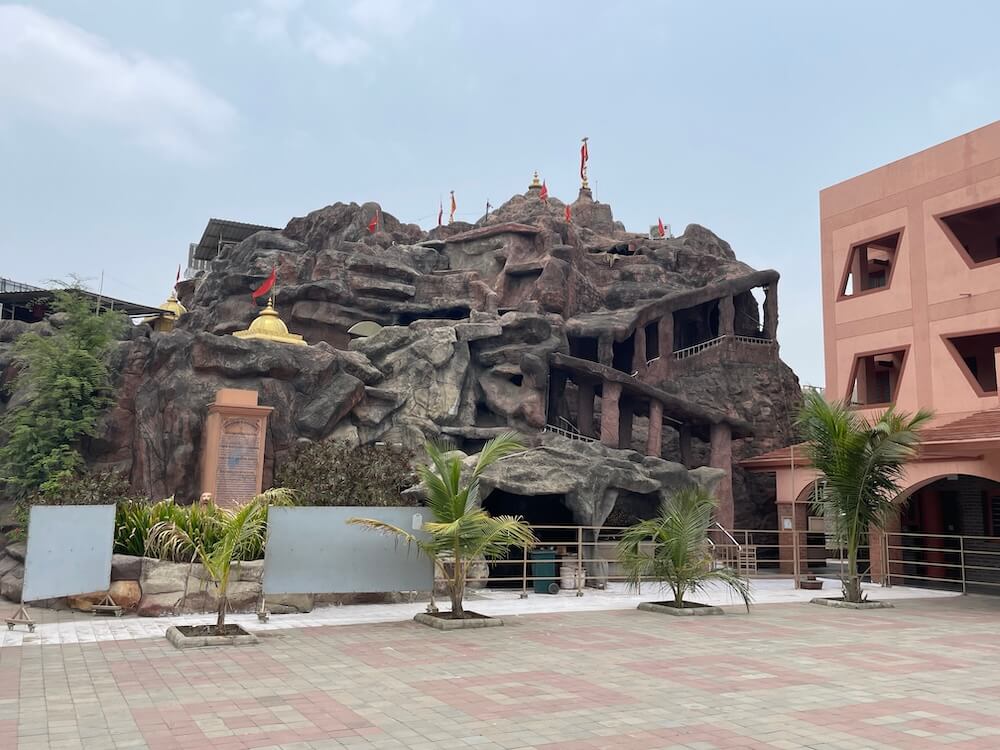
 Located in Khodiyar, Ahmedabad, this Tirthdham is a replica of the sacred Vaishnodevi Temple, one of the holiest pilgrimage sites for Hindus. Here the goddess is enshrined within a man-made cave made from yellowish-brown sandstone. Devotees who are unable to travel to the original Vaishnodevi Temple in Katra, Jammu & Kashmir come here to seek blessings. It is widely believed that keeping the kumkum (vermilion) and silver coin given as prasad by the temple priests in one’s home brings prosperity and wealth.
Known by names such as Matarani and Vaishnavi, Vaishnodevi is considered as one of the form of Durga. Her original abode is a natural cave on the Trikuta Hills. According to mythology, the forms of Mahalakshmi, Mahakali and Mahasaraswati,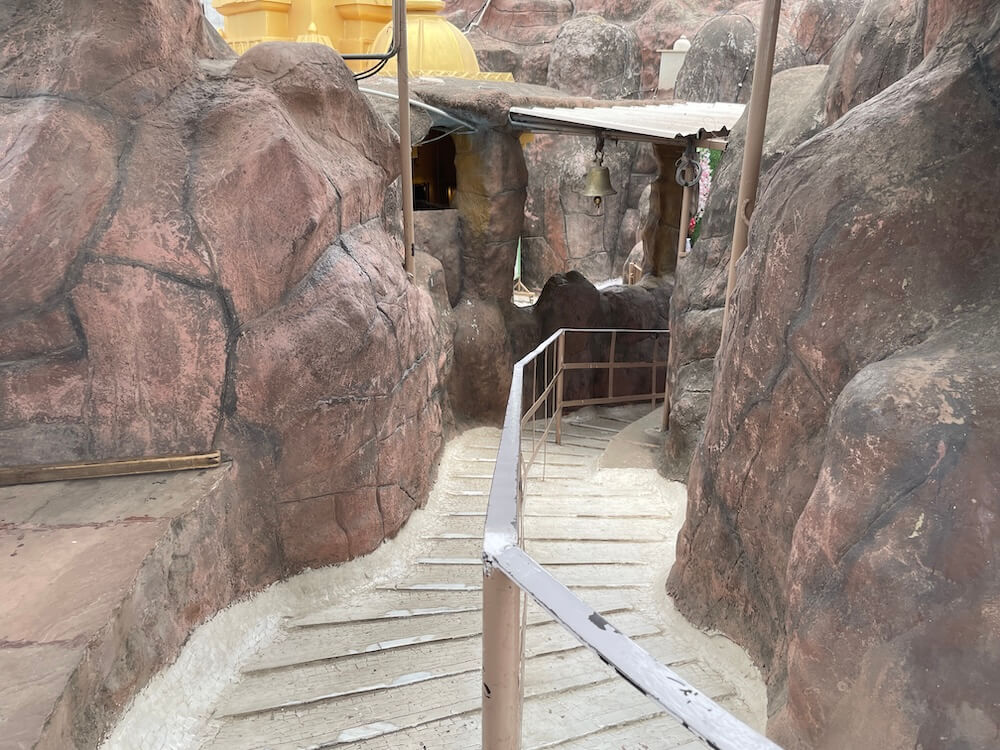 as Adishakti, have been residing in that cave since the Treta Yuga, in the form of sacred pindis. Vaishnodevi is present there in her eternal, formless essence.
One popular legend tells of Pandit Shridhar, a devout Brahmin from the village of Hansali near Katra, who once dreamt of the goddess appearing as a young girl and asking him to host a feast (bhandara). A yogi named Bhairavnath, along with 360 disciples, came to the feast and demanded food. Though Pandit Shridhar lacked the resources, the goddess appeared in the form of the young girl and miraculously arranged everything. Seeing her divine powers, Bhairavnath pursued her with impure intentions. She fled to Trikuta Mountain, assumed the form of Mahakali and killed him. She then merged herself into the rocks of the cave, 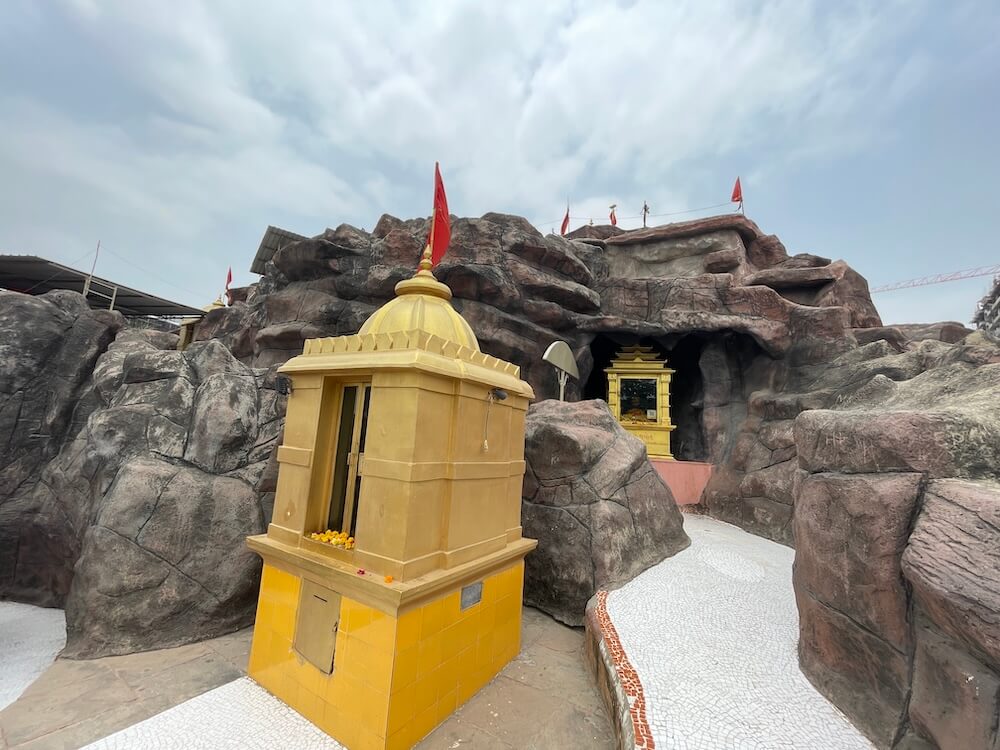 which was rediscovered around 700 years ago. This site is now considered one of the 108 Shakti Peethas, located at an altitude of 5,200 feet, requiring a challenging 14 km trek.
To make her darshan (viewing) more accessible for those who are elderly, ill, financially constrained, or short on time, this replica temple was established in Ahmedabad in 2007. A man-made circular hill was constructed, housing the 50-foot-diameter cave-temple. Located near Vaishnodevi Circle on the Sarkhej-Gandhinagar Highway, the temple is easily accessible. At the entrance, there is a designated area for removing footwear. A few steps ahead are food stalls.
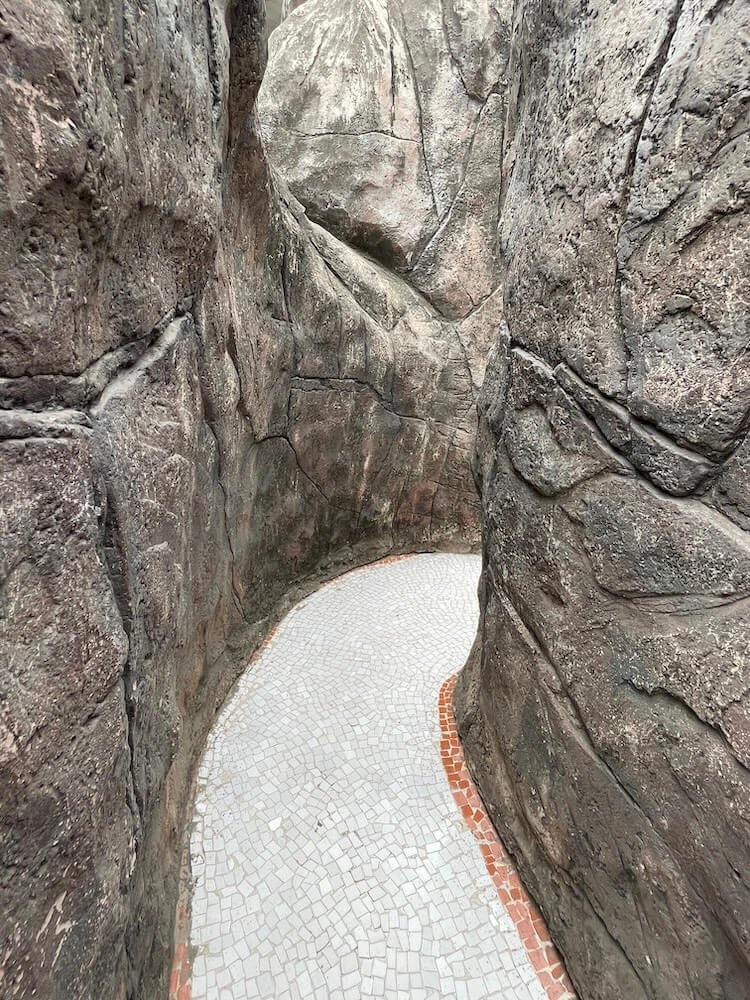
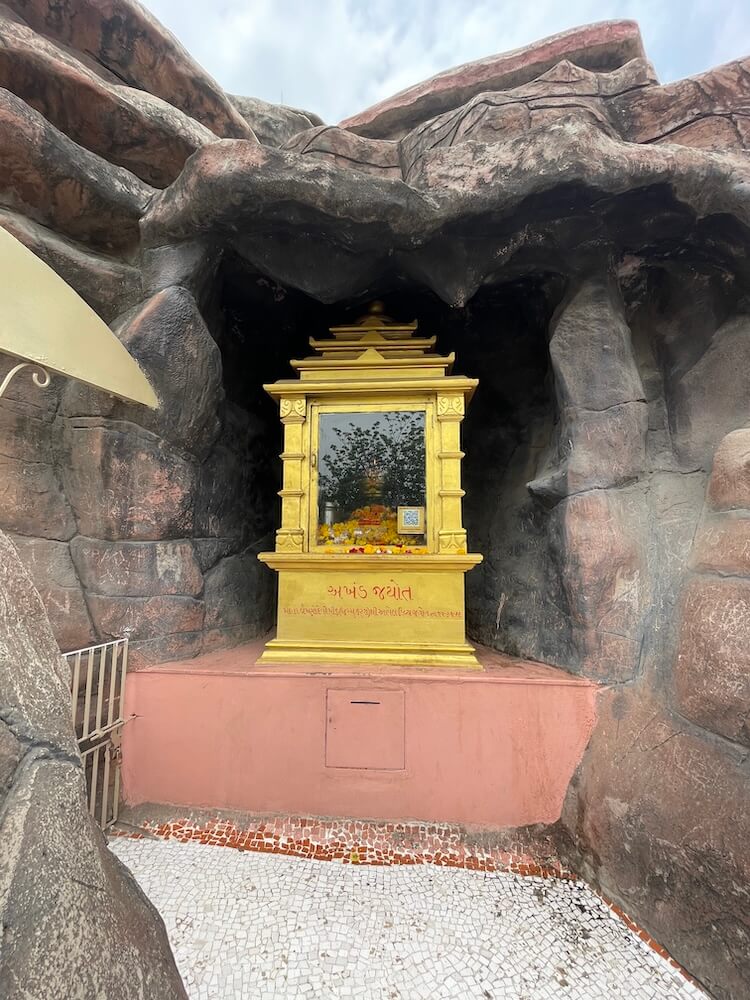
In the paved courtyard, the artificial hill dominates the view. Flags on top of smaller shrines built into the hill are visible. 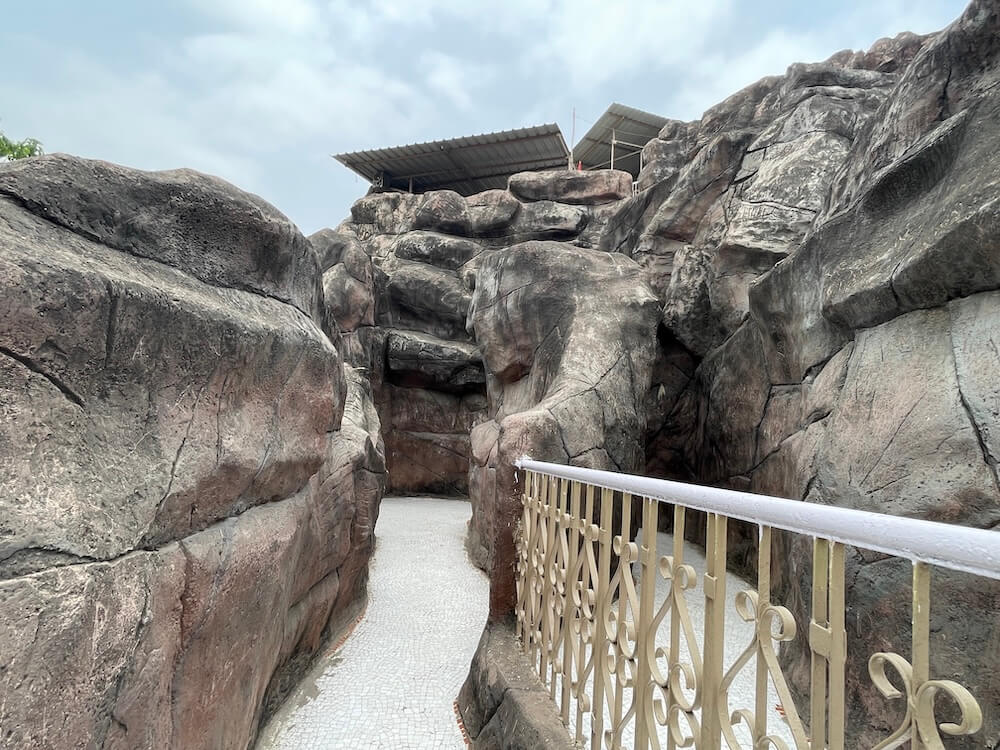 On the right of the hill is a two-storey building with a 1,350 sq. ft. auditorium, accommodating about 5,000 people. A covered walkway leads up to the cave, mimicking the journey through the original cave in Katra. Upon entering, the first stop is Ban Ganga, followed by Charan Paduka (holy footprints). A few steps further is a small shrine housing the eternal flame (Akhanda Jyot). Continuing upwards, devotees reach ‘Saanjhi Chhat’, with a metal railing running through the center of the path.
Just like in the original temple, there is a ‘Garbhjuno Cave’, through which devotees must crawl to reach the sanctum. Only one person at a time can enter and pregnant women are not permitted for safety reasons. The wooden entrance to the sanctum features intricate carvings. 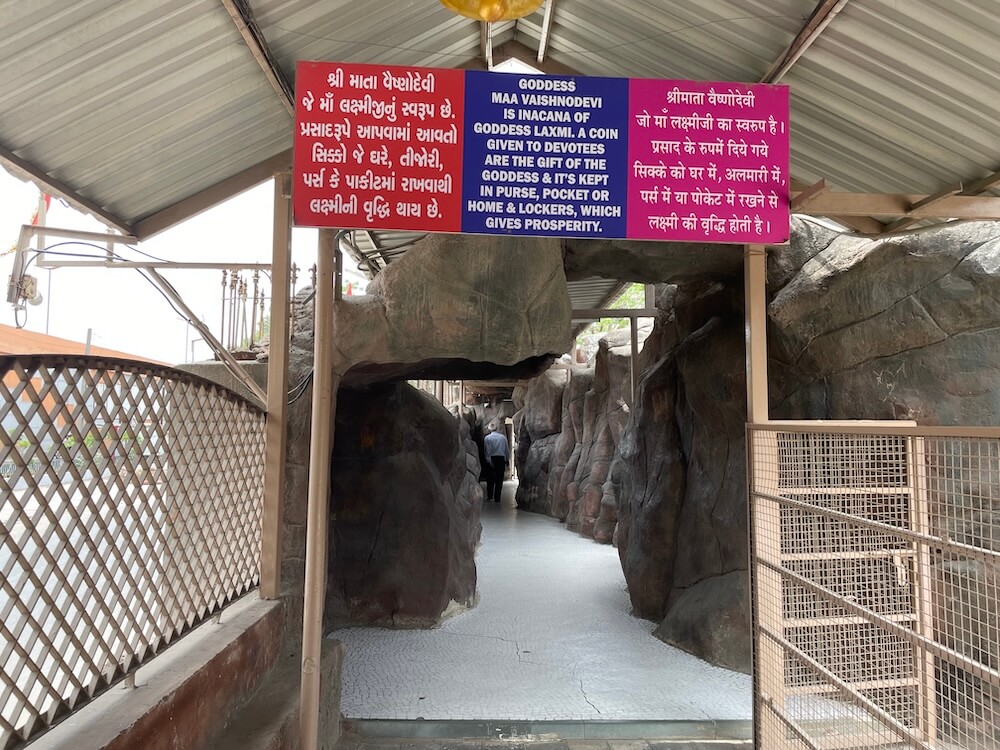 Inside, on a pedestal, are the three sacred pindis representing Mahalakshmi, Mahakali and Mahasaraswati, just like in the original shrine.
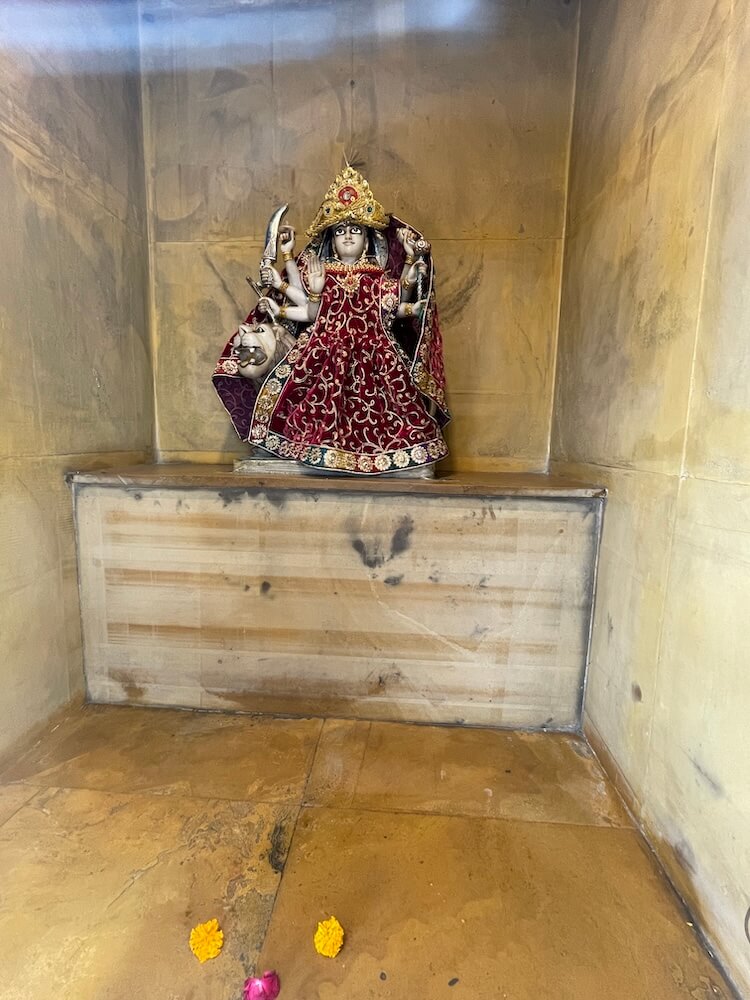
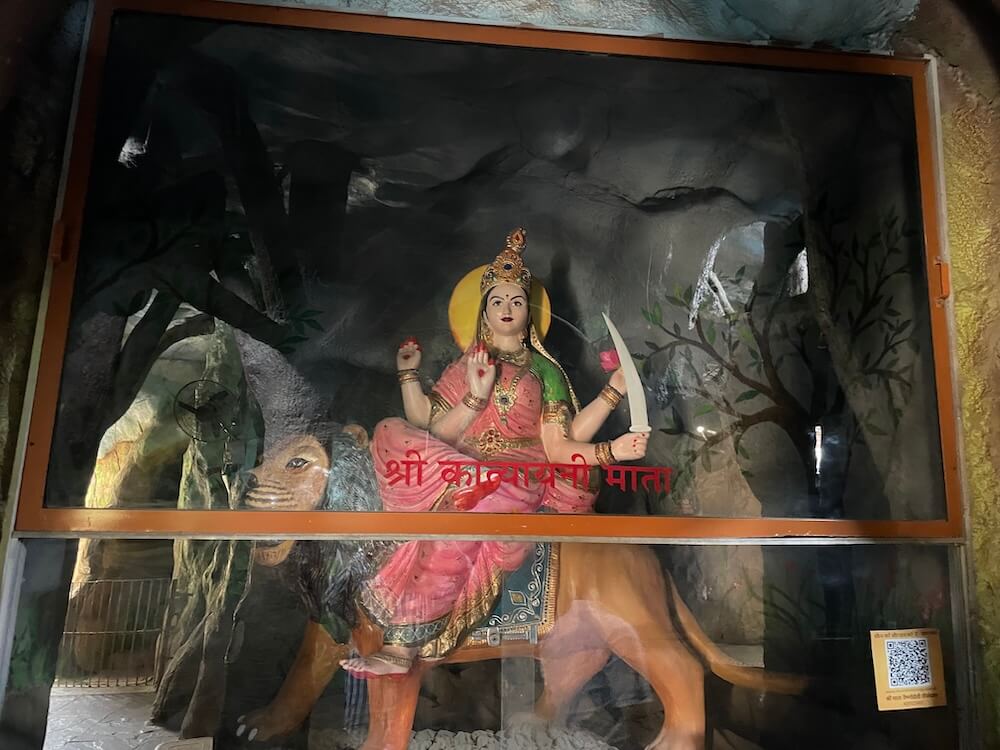
Outside the cave is the shrine of Ardh Kuwari Mata. A short distance away is the mask of Bhairavnath and within another cave are beautiful idols of goddesses like Brahmacharini, Katyayani, Mahagauri, Kalimata and a small Shiva temple.
The temple is open daily from 5:00 AM to 10:00 PM. Hundreds of devotees visit each day. On Saturdays, Sundays and holidays, the temple sees large crowds. Devotees often offer dupattas (scarves), sarees, traditional offerings, dry fruits and gold or silver jewelry to the goddess. During aarti and prasad offering, darshan is momentarily paused. Festivals, especially Navratri, are celebrated with great enthusiasm and the temple is beautifully decorated during such occasions.