 The goddess, known fondly as Matarani and Vaishnavi, is revered as a powerful form of Durga. The original shrine of Vaishno Devi is in the natural cave atop the Trikuta mountains at Katra, Jammu. Every year, millions of devotees from across India and abroad undertake the arduous journey to seek her blessings there. The Vaishno Devi Temple in Guru Nanak Colony, Indore, is a replica of the original cave shrine. Countless devotees who are unable to travel to Katra find solace here by surrendering at the feet of the goddess, believing firmly that worship here fulfills their deepest wishes.
The legend of Vaishno Devi tells of Shridhar Pandit, a devout follower of the goddess who once lived in Hansali village near Katra. One day, the goddess appeared to him in a dream and instructed him to organize a grand feast. At that time, a yogi named Bhairavnath arrived with 360 disciples demanding food. Shri Dhar did not have the means to feed so many, but the goddess descended in the form of a young girl and arranged the meal herself. Recognizing her divine power, Bhairavnath wickedly attempted to capture her. She fled towards the Trikuta mountain, where she revealed her form as Mahakali and slew him. Thereafter, the goddess chose to merge into the rock within the sacred cave, manifesting eternally in the form of three holy pindis.
According to religious belief, the divine forms of Mahalakshmi,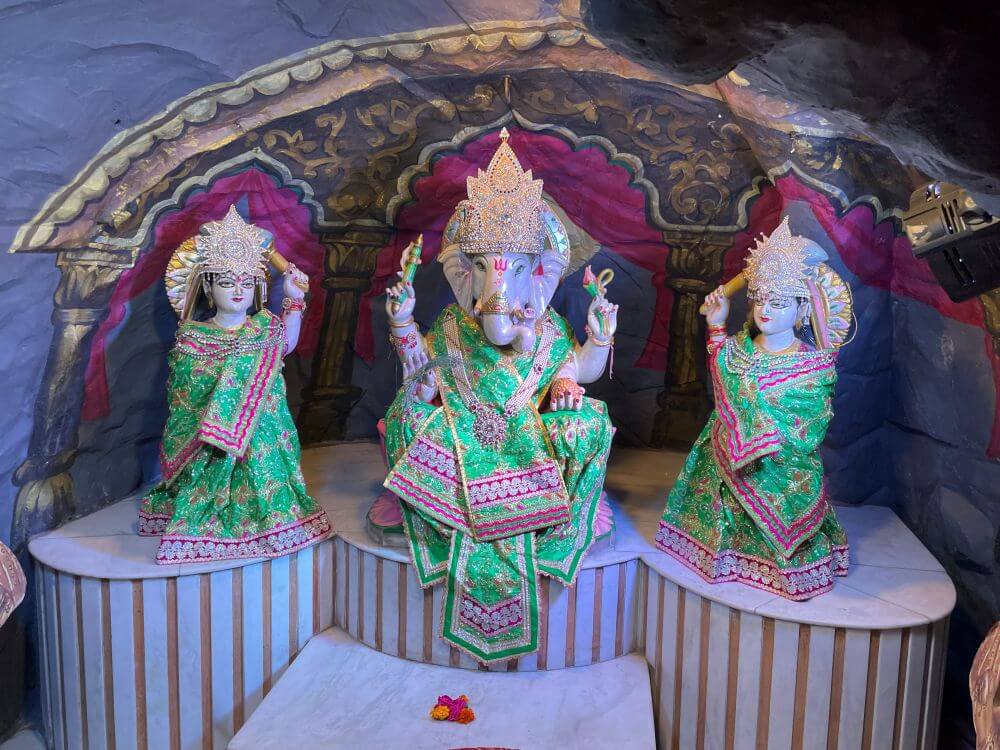 Mahakali and Mahasaraswati have resided in that cave since the Treta Yuga, enshrined as the three pindis. Vaishno Devi is thus worshipped in her eternal, formless essence. It is said that the cave was discovered nearly 700 years ago. The temple there is one of the 108 Shakti Peethas. Situated at an altitude of 5,200 feet, devotees must climb 14 kilometers to reach it. A long-held belief is that no one can visit unless they receive a divine call, the ‘bulawa’, from the goddess herself. Due to illness, financial constraints, or lack of time, many devotees cannot make the pilgrimage to Katra. To offer them the same blessings with greater ease, the magnificent cave temple of Vaishno Devi was built in Indore.
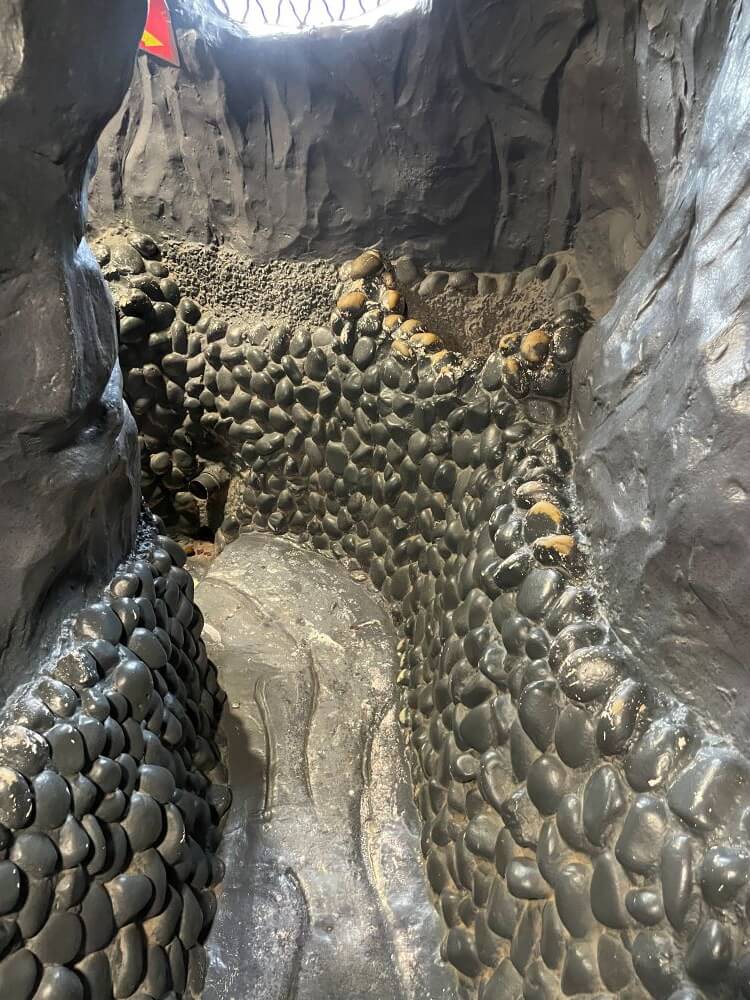
The story of the Indore temple begins with Surender Kaur Grover, a resident of Guru Nanak Colony, who had unshakable devotion to the goddess. Constantly absorbed in chanting Vaishno Devi’s name,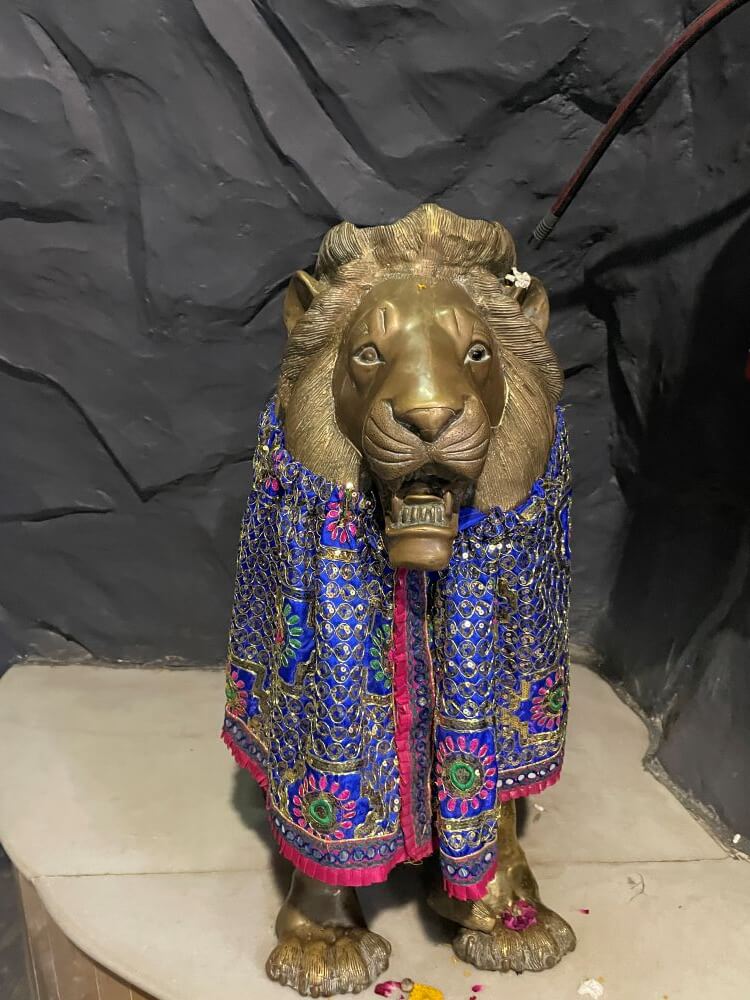 she once had a vision of the goddess in her dream, commanding her to build a temple there. Inspired, she undertook the mission in 2009. Modeled exactly after the Katra shrine, the temple was built on a plot of ten thousand square feet, with artificial mountains constructed at great expense. Within this man-made cave, the deity was enshrined. Remarkably, the entire temple was completed in just six months.
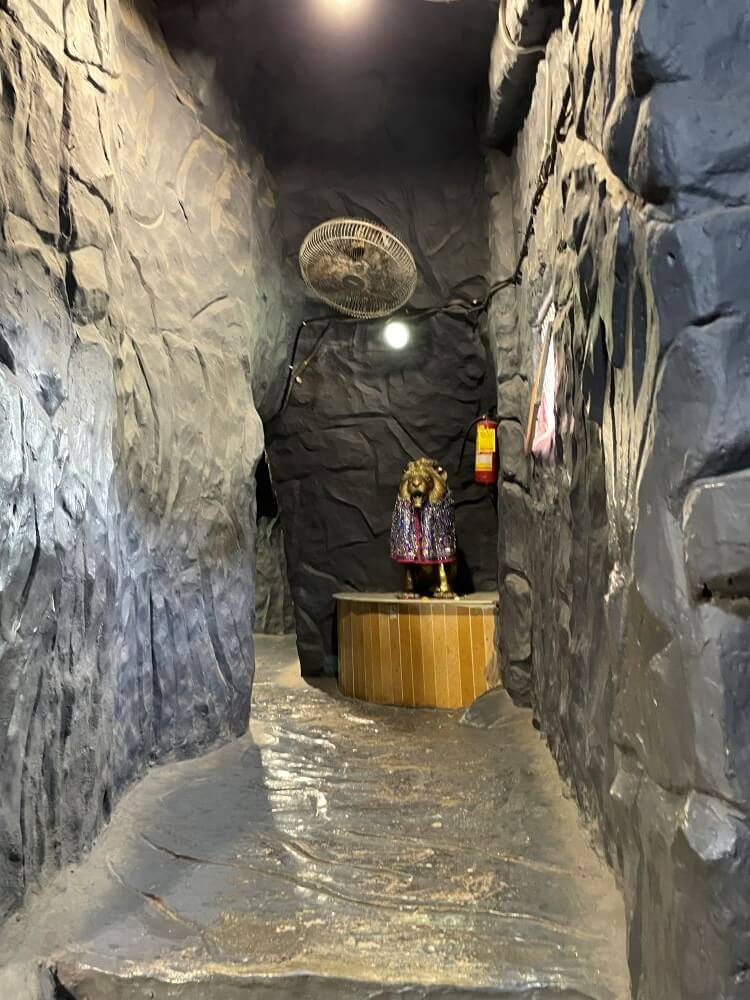
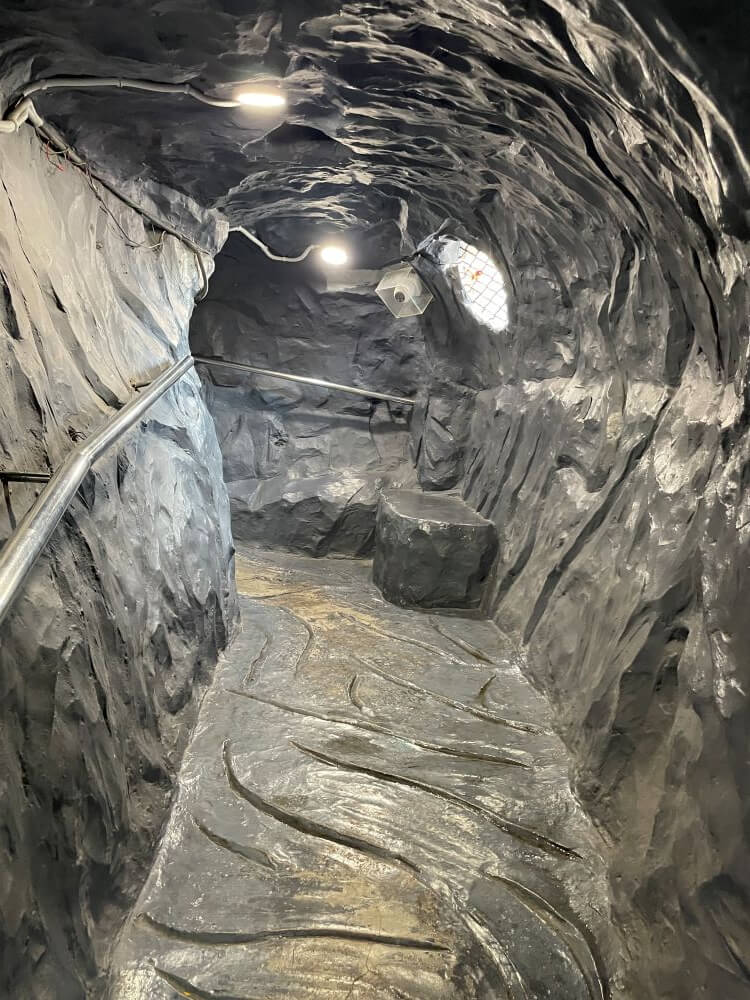
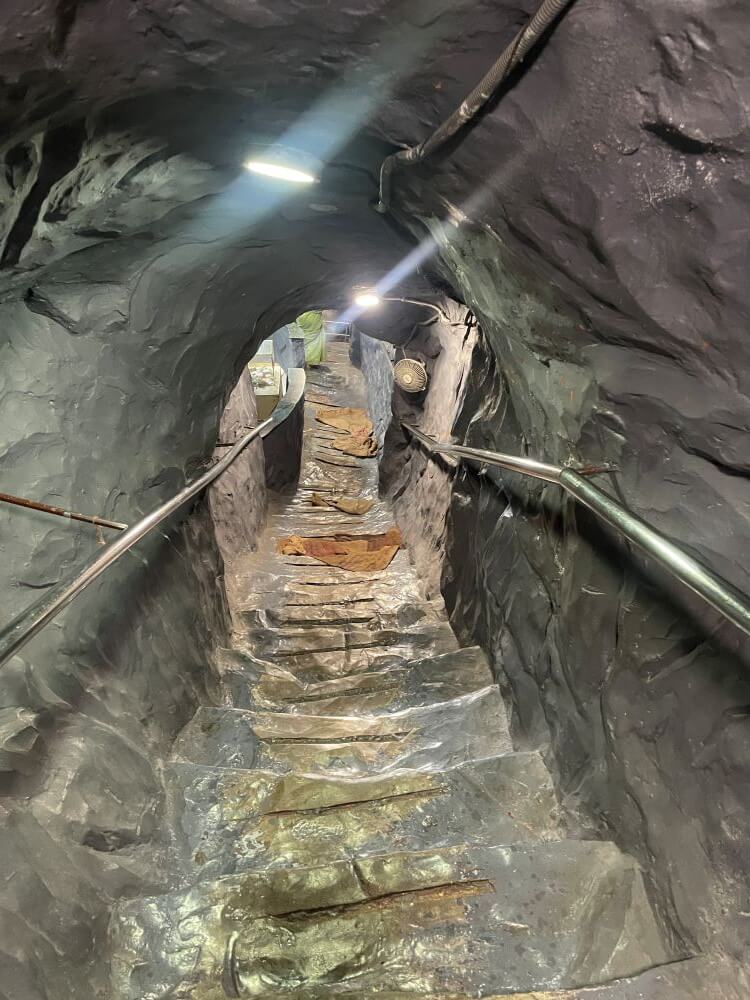
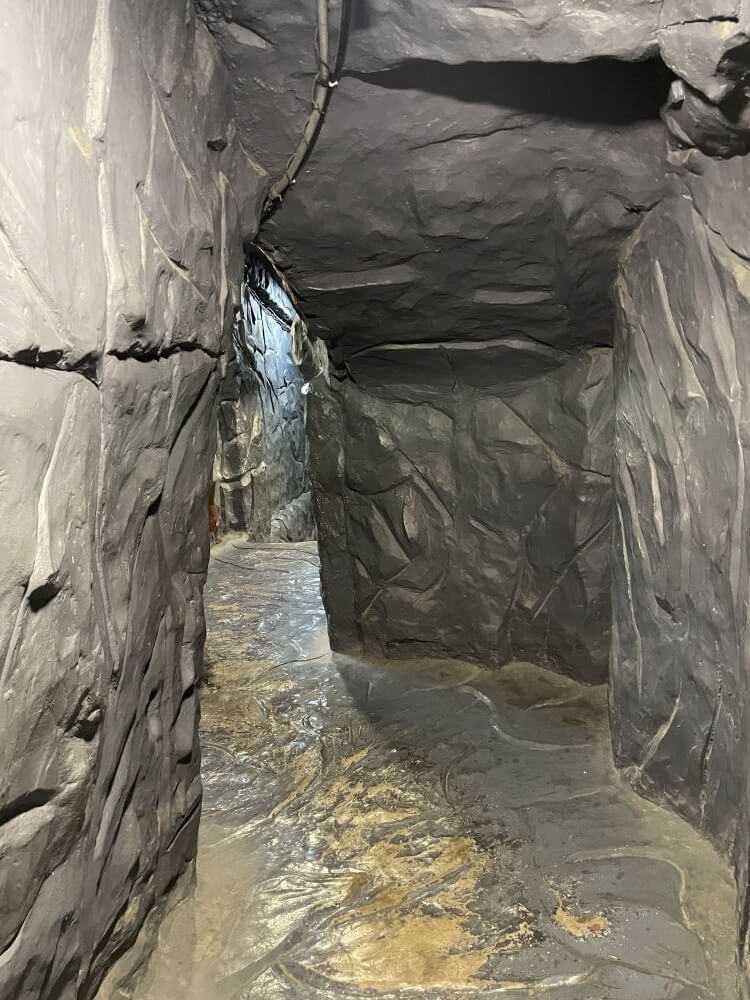
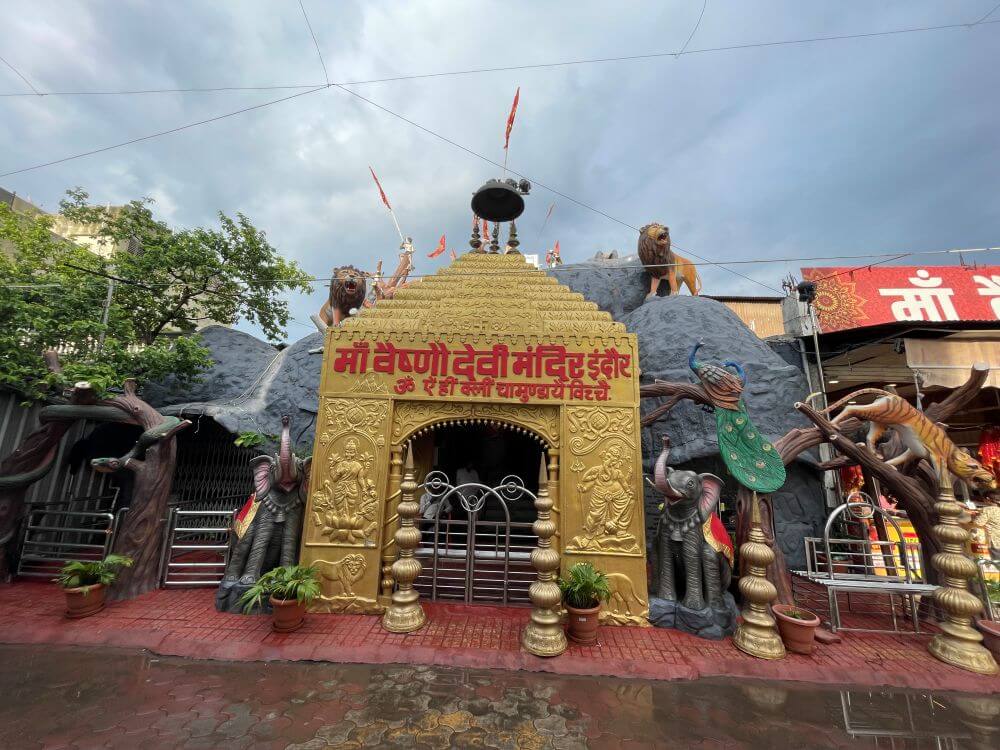
The entrance of the temple is a grand golden gate adorned with artistic carvings. On one side of the gate wall is a large idol of Lakshmi, while on the other is Ganesha. Flanking the entrance are statues of elephants and golden urns, with a pyramid-like spire above it, crowned by three kalashas. Artificial peacocks perch upon cement trees, while at the rear, a replica of a mountain crafted from concrete stands, decorated with two statues of lions. Entering through this splendid gateway, visitors walk along a narrow cave path, sometimes flat, sometimes with steps. Within, there are shrines of Ganesha with Riddhi and Siddhi, as well as an idol of the eight-armed goddess Durga. Ascending further, one comes to a grand cave hall where the divine family of Lord Shiva resides—Shankar, Parvati, Ganesha and Kartikeya, all seated together in a single magnificent sculpture. At their feet lies a large Shiva linga, sheltered by a serpent’s hood. Nearby stands an idol of Goddess Durga and beside it, a photograph of Surender Kaur Grover, the temple’s creator.
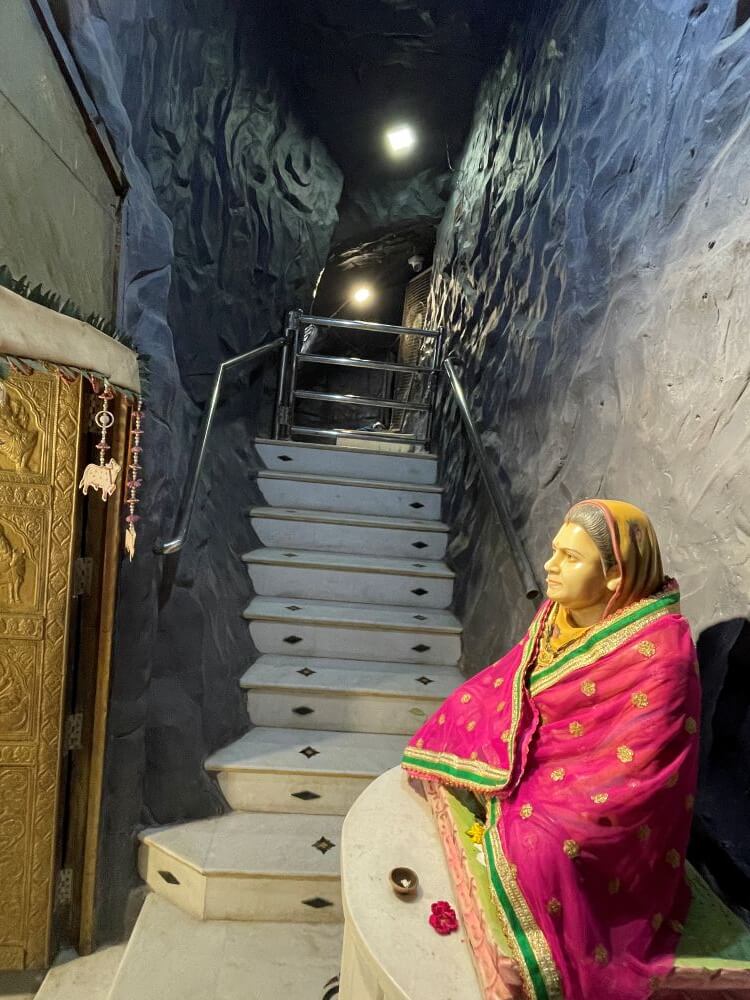
 Deeper within lies a subterranean passage leading to the sanctum of Vaishno Devi. Here, in the sacred cave hall, three stone pindis of the goddess rest upon a raised platform. It is said that these pindis were brought from Katra itself. Behind them are idols representing the three forms—Mahakali, Mahalakshmi and Mahasaraswati. Two eternal flames burn steadily in the corners, also believed to have been brought from the original shrine at Katra. Before the pindis, silver lotus-pedestal padukas of the goddess are enshrined. To the left, a marble statue of the devoted Surender Kaur Grover has been placed, honoring her devotion and vision.
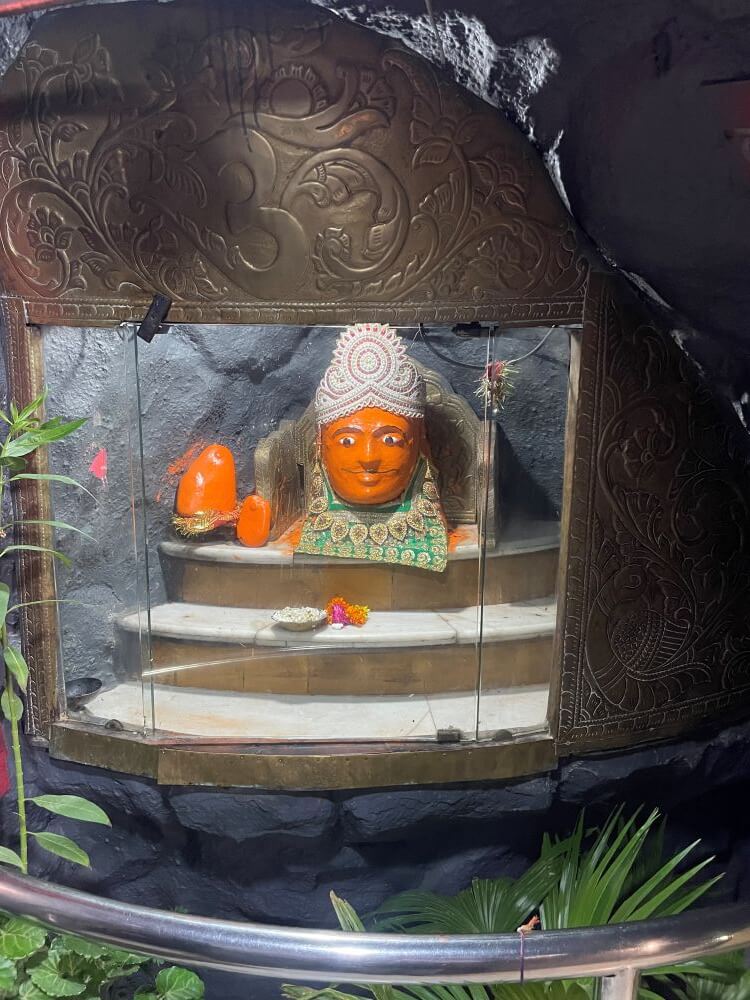
On the return path stands the shrine of Bhairav. In a niche carved into the cave wall, his face is worshipped, as the darshan of Vaishno Mata is considered incomplete without first beholding Bhairavnath. Further along, an idol of Sai Baba awaits the devotees’ prayers. The temple remains open for darshan from 6 a.m. until 10:30 p.m. daily. Just as at Katra, five aartis are performed here each day and offerings are made three times. The festival of Navratri is celebrated with tremendous fervor, drawing nearly one and a half lakh devotees during the nine days of devotion.