
बहुचरा माता मंदिर
बोभा, ता. कापडवंज, जि. खेडा
The Bahuchara Mata Temple
Bobha, Tal. Kapadvanj, Dist. Kheda
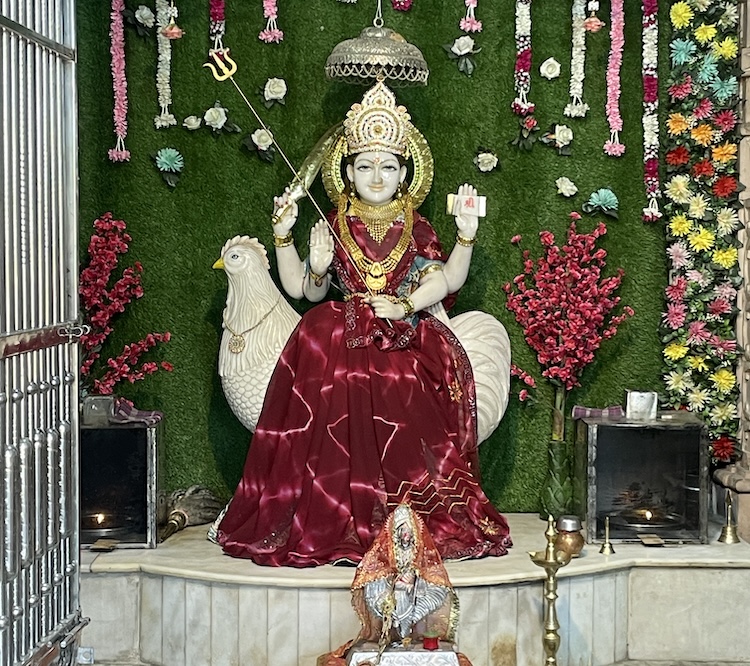 The supreme manifestation of Adishakti, who vanquished numerous demons and restored cosmic order, Bahuchara Mata stands as the patron deity of the ‘Pavaiya’ (transgender) community across the nation. Simultaneously, she is the revered household deity for countless families throughout Gujarat. Devotees hold a profound belief that the Goddess, who first manifested in her childhood form at Shankhalpur in the Mehsana district, remains ever-responsive to the fervent calls of her followers. Thousands of childless couples seek her divine intervention, making solemn vows in the hope of being blessed with a son. While the principal Shaktipeeth of the Goddess is situated at Bahucharaji (Becharaji), several temples dedicated to her are scattered across the country. Amongst these, a prominent and celebrated shrine is located at Bobha in the Kapadvanj taluka.
 The mythological lore regarding the origin of the Goddess recounts that Bahuchara Devi was born into the Charan (Detha) community in the village of Ujlan, within the Jaisalmer district of Rajasthan. She was the daughter of Bapaldanji Detha, a renowned poet and his consort Deval. Bapaldanji Detha eventually migrated to Saurashtra, where he founded the village of Bapalka. Bahuchara Devi was one of eight sisters, named Buta, Balad, Viru, Hiru, Rameshwari, Khetu and Patu. On one occasion, while travelling with her sisters, their caravan was ambushed by a marauder named Bapaiya. In the Charan tradition of that era, it was deemed far more honourable to end one’s own life than to be captured alive by an enemy—a practice known as ‘Tragu’.
 To safeguard their chastity, Bahuchara and her sisters embraced the path of ‘Tragu’, sacrificing themselves by severing their breasts. Before drawing her final breath, the Goddess cast a divine curse upon Bapaiya, condemning him to impotence. This poignant narrative finds mention in the scholarly works of the acclaimed author Pupul Jaykar, specifically in ‘The Earth Mother’ and ‘The Children of Barren Women’.
Rendered impotent by the divine curse, the marauder Bapaiya was compelled to relinquish his masculinity and don feminine attire. It was only after he offered sincere and heartfelt devotion to the Goddess in her feminine form that he was liberated from the curse. This mythological event laid the foundation for the tradition of worshipping the Goddess within the ‘Pavaiya’ community.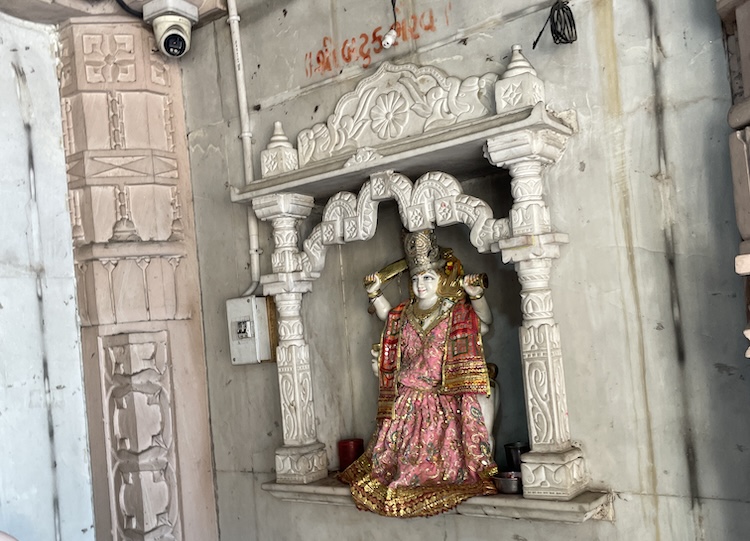 According to religious and spiritual tenets, Bahuchara Devi is considered an incarnation of Hinglaj Mata from the Balochistan province of Pakistan; she is also revered as an avatar of ‘Bala Tripura Sundari’.
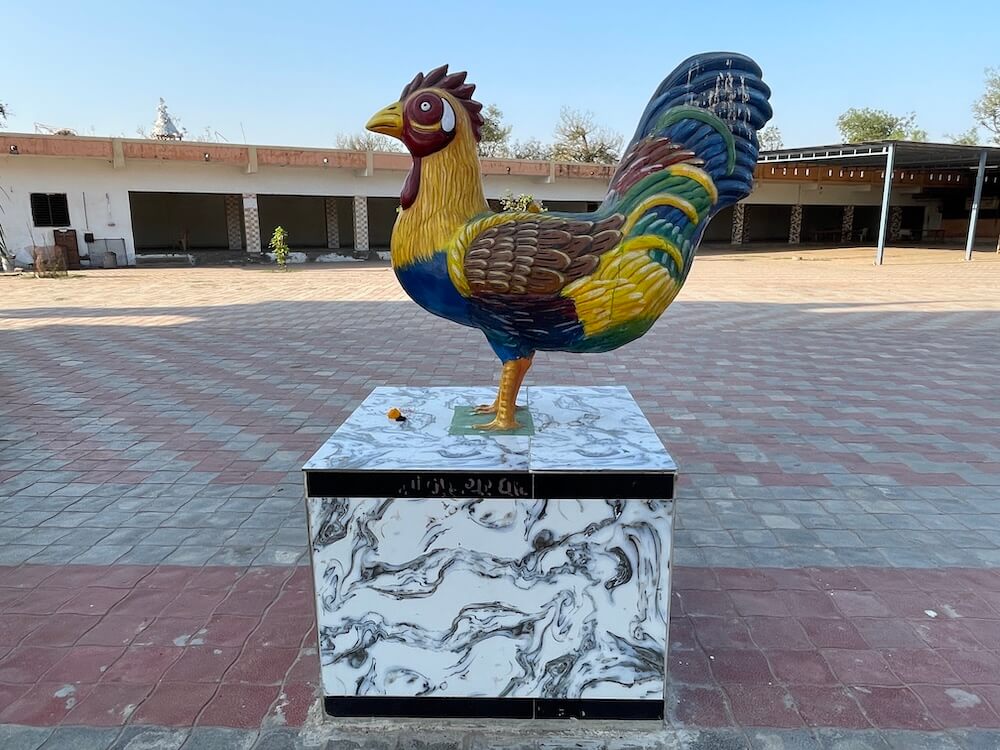
Numerous legends surround the Goddess. One such tale speaks of a demon named Dandasur, who resided in the vicinity of Daityarajpur and had secured a boon from Lord Shiva. Having unleashed chaos across the three worlds, the gods, goddesses and sages implored the Divine Mother for protection. In response, the Goddess assumed the form of an eight-year-old girl and, engaging the demon in a fierce battle, slew him with her trident. Having destroyed a multitude of demons within the forest, she earned the title ‘Bahuchara’ (the one who slays many). 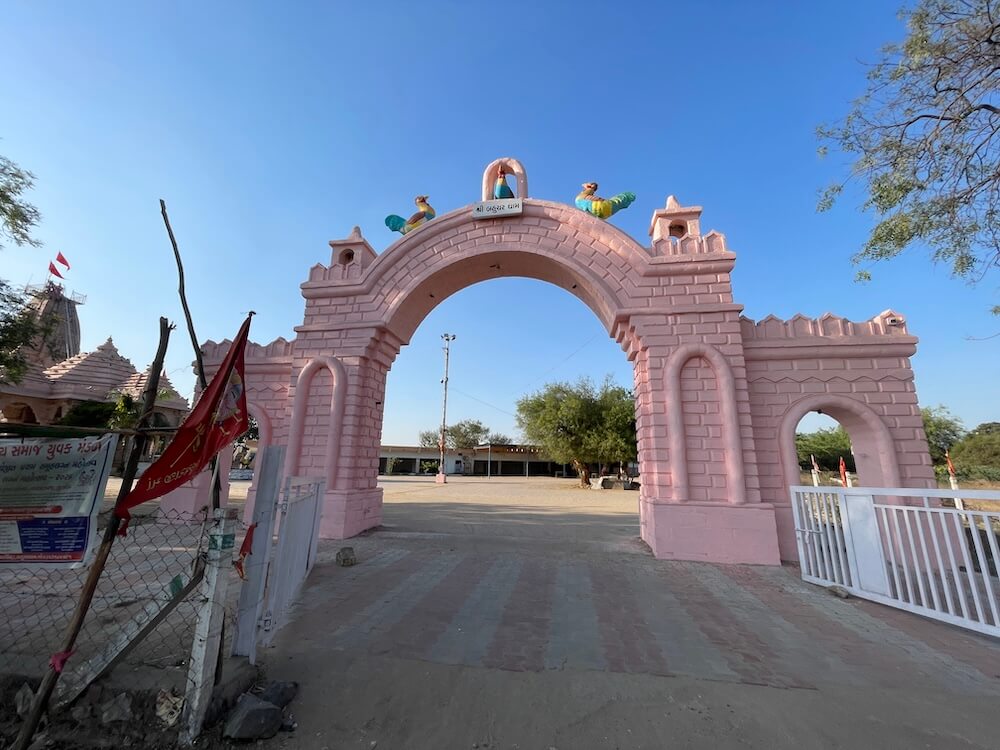 The Goddess first appeared at Shankhalpur and subsequently vanished beneath a Varkhadi tree in Bahucharaji. It is said that the town itself derived its name, ‘Bahucharaji’, from the Mother. The shrine at Bahucharaji is counted amongst the 108 Shaktipeeths of the Adi Mata. Scholars suggest that the worship of Bahuchara Devi, the clan deity for communities such as the Koli, Bhil and Pavaiya, was also prevalent during the Solanki dynasty of Gujarat. It is claimed that the royal standard of the Solanki house bore the image of a cock (Kukkut), which is the divine vehicle of the Goddess. Consequently, Bahuchara Devi is also affectionately known as ‘Kukdawali Mata’.
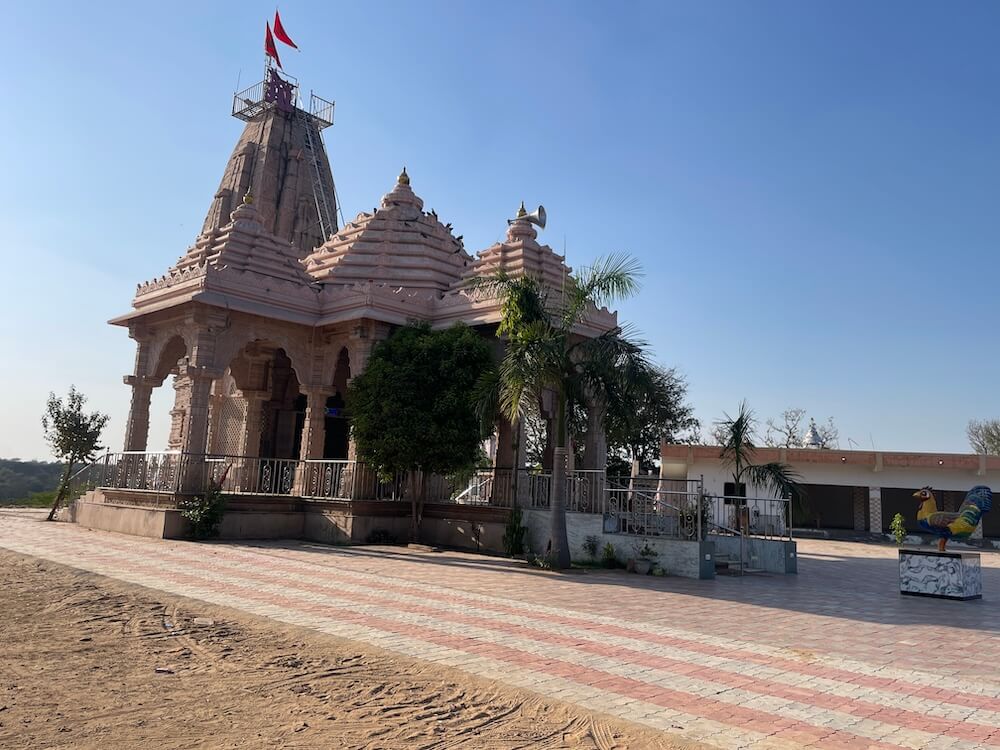
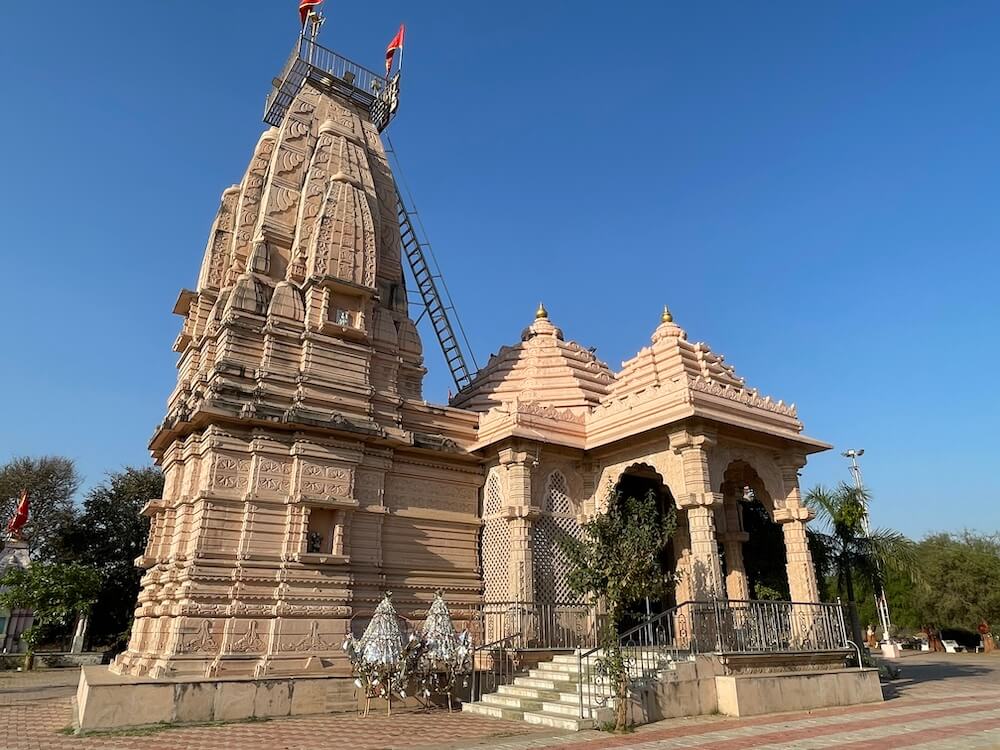
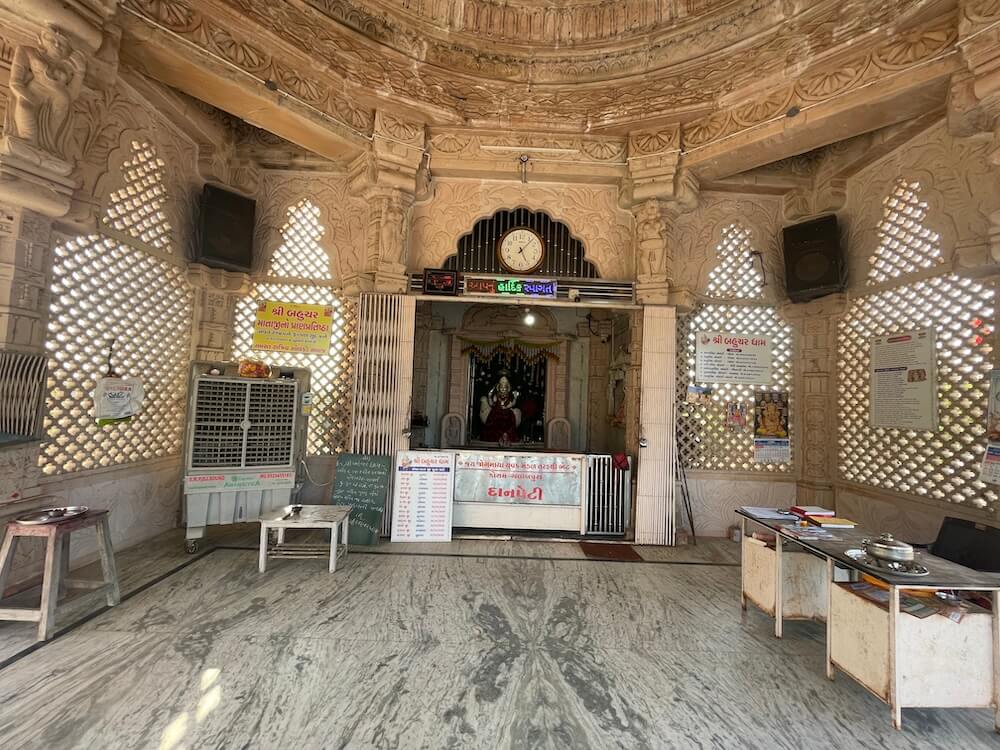
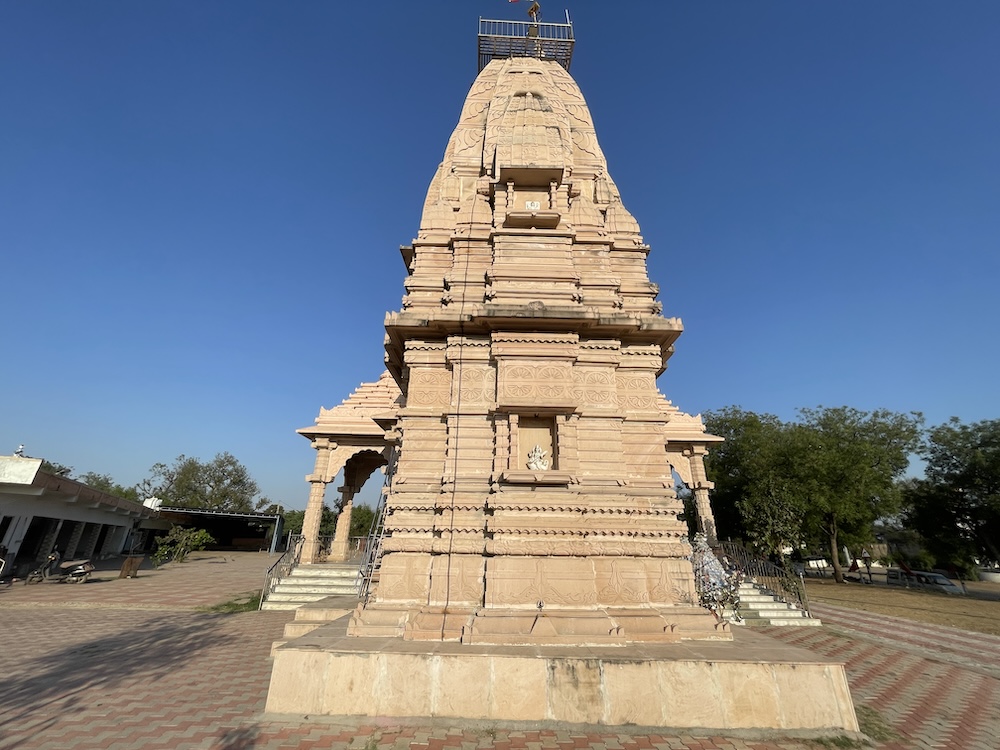
Situated a short distance from Kapadvanj city, the beautiful temple of Bahuchara Mata in Bobha village invites the faithful. 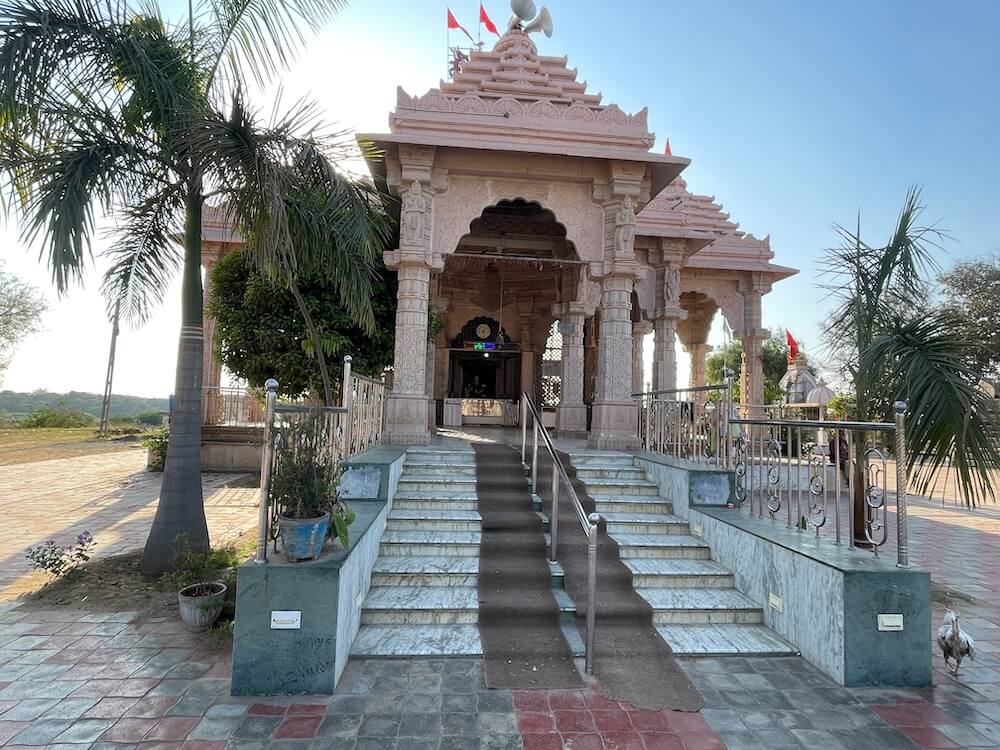 Upon passing through the entrance arch set within the perimeter wall, one enters a spacious courtyard paved with neat blocks. Adorning the top of this arch are three sculptures of the cock, the Goddess’s mount. In the centre of the courtyard, positioned directly before the main sanctum, stands a large and exquisite marble sculpture of a cock atop a pedestal. Ascending nine steps from the courtyard, one reaches the ‘Darshanmandap’, situated on an elevated plinth. The architectural layout of the temple comprises three porticos (Darshanmandap), an assembly hall (Sabhamandap), a vestibule (Antarala) and the inner sanctum (Garbhagriha). The porticos and the assembly hall are designed with an open-air aesthetic. Every pillar is adorned with intricate carvings, while the assembly hall’s ceiling showcases magnificent craftsmanship.
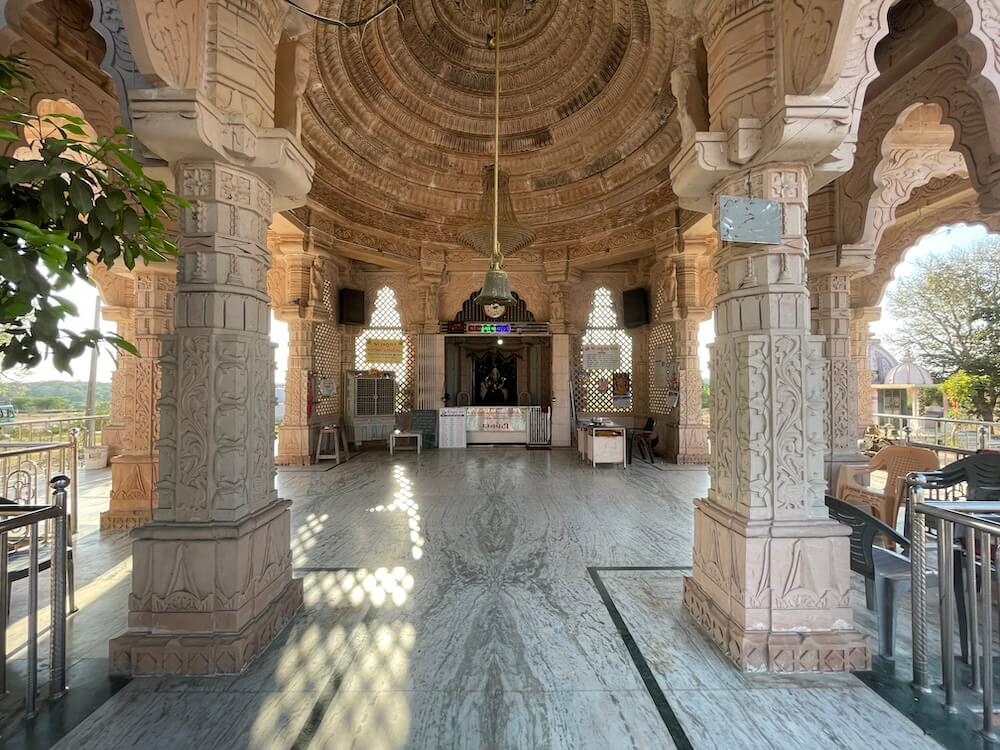 Sculptures of ‘Sursundaris’ (celestial maidens) engaged in singing and playing musical instruments grace the upper sections of the pillars. Within the vestibule reside the idols of Batuk Bhairav and Lord Ganesha. The doorframe of the inner sanctum is flanked by doorkeepers (Dwarpals), while an image of Goddess Lakshmi adorns the lintel.
Within the hallowed sanctum, a serene white marble idol of Bahuchara Mata, seated upon a cock, rests on a marble ‘Vajrapitha’. Arrayed in fine raiment and jewellery, the Goddess wears a crown upon her head and holds a trident (Trishul), a goad (Ankush), the Vedas (holy scriptures) and a water pot (Kalash) in her hands.
The ritual of ‘Aarti’ is performed daily at the temple, both at dawn and dusk. 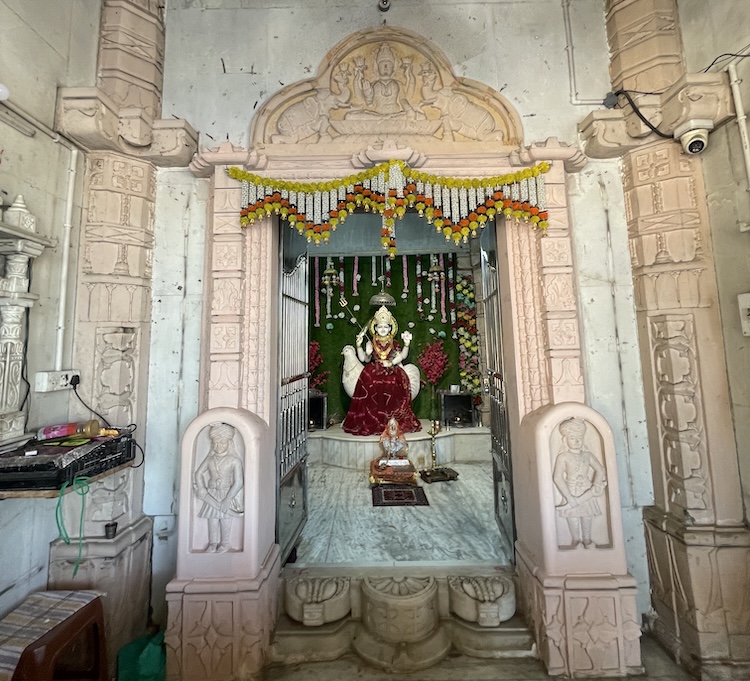 Full moon days (Purnima) are considered of paramount importance in the worship of the Goddess, marked by special prayers and sacred rituals.
On the occasion of Chaitra Purnima, a grand festival is celebrated, during which the temple teems with a vast concourse of devotees.
The Sharadiya Navratri festival is likewise celebrated with immense zeal and jubilation, accompanied by various religious programmes.
Many pilgrims make vows here seeking the gift of a child. As a token of fulfilment of these vows, there exists a tradition of offering a cock to the Goddess.
Furthermore, once a child is born by her grace, it is customary to perform the first hair-cutting ceremony (Babari or Chaulakarma) at the shrine. The temple remains open for ‘Darshan’ daily from 5.30 am until 9.30 pm.
Useful Information
- Located at 20 km from Kapadvanj and 26 km from Kheda.
- GSRTC bus facilities are available from Kapadvanj and Kheda.
- Private vehicles can reach the temple directly.
- Lodging and breakfast facilities are available in the vicinity.
- Contact – Bahuchar Dham, Mob.- 9879095798
बहुचरा माता मंदिर
बोभा, ताल. कपडवंज, जिला. खेड़ा
मंदिरे
Temples
मंदिर
-
भूमपुरा हनुमान मंदिर भूमापुरा, मोडज, ता. महेमदावाद, जि. खेडा
अधिक माहितीBhumapura Hanuman Temple Bhumapura, Modaj, Tal. Mahemdavad, Dist. Kheda
View Detailsभूमापुरा हनुमान मंदिर भूमापुरा, मोडाज, ताल. महेमदावाद, जिला. खेड़ा
विवरण देखें -
भाथीजी महाराज मंदिर फागवेल, ता. कापडवंज, जि. खेडा
अधिक माहितीBhathiji Maharaj Temple Phagvel, Tal. Kapadvanj, Dist. Kheda
View Detailsभथीजी महाराज मंदिर फागवेल, ताल. कपडवंज, जिला. खेड़ा
विवरण देखें -
केदारेश्वर महादेव मंदिर महादेवपुरा, ता. कठालाल, जि. खेडा
अधिक माहितीKedareswar Mahadev Temple Mahadevpura, Tal. Kathlal, Dist. Kheda
View Detailsकेदारेश्वर महादेव मंदिर महादेवपुरा, ताल. कठलाल, जिला. खेड़ा
विवरण देखें