
केदारेश्वर महादेव मंदिर
तेलनार, ता. कापडवंज, जि. खेडा
Kedareshwar Mahadev Temple
Telnar, Tal. Kapadvanj, Dist. Kheda
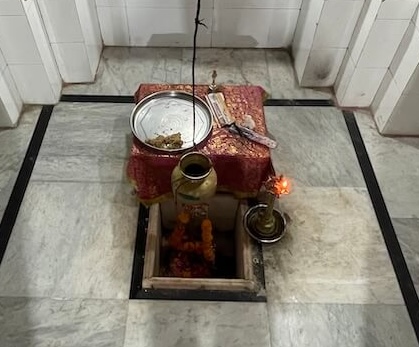 On the banks of the Vatrak River, at the tri-junction of the Kheda, Aravalli and Gandhinagar districts near Telnar village in Kapadvanj taluka, lies the ancient and illustrious Kedareshwar Mahadev Temple. This sacred site marks the confluence of the Vatrak and Meshwo rivers; the latter being a principal tributary of the Vatrak and part of the Sabarmati basin. The Vatrak River, held in profound religious esteem, originates in the hills of Dungarpur in Rajasthan and meanders across 243 kilometres through Gujarat. As a tributary of the Sabarmati, it enhances the natural splendour of the temple precincts, which are nestled amidst the vast earthen mounds formed by the river’s flow—known locally as ‘kotar’.
The history of this temple is said to span a millennium and the Shivalinga here is considered ‘Swayambhu’, having manifested naturally from the earth. 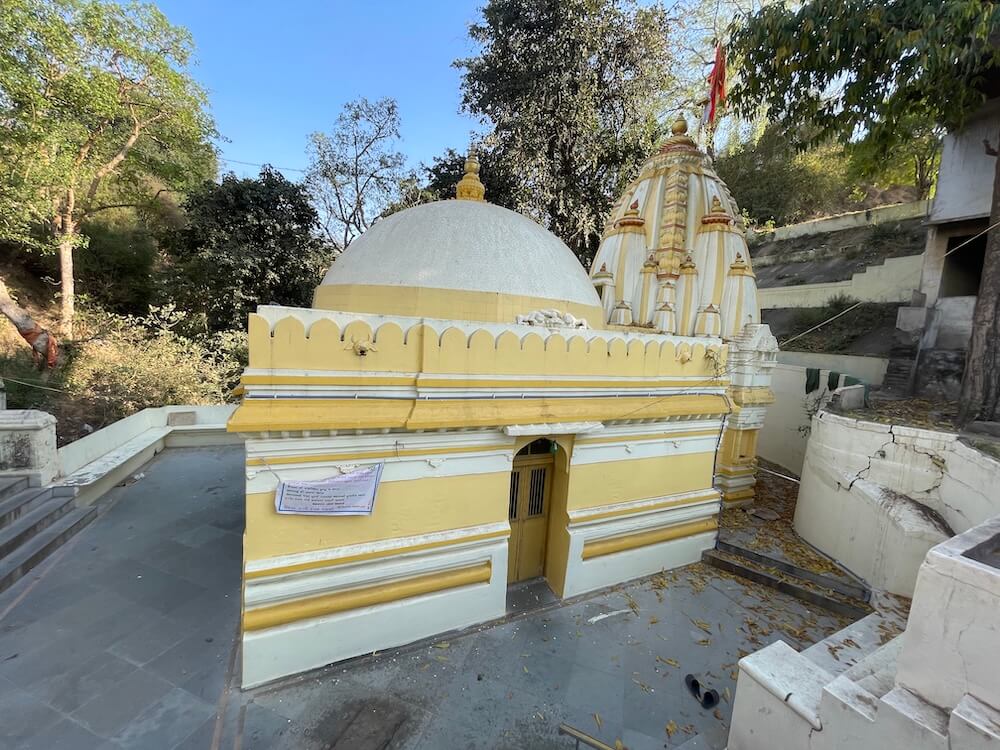 The name Kedareshwar evokes a spiritual association with Kedarnath in the Himalayas and it is commonly believed that a pilgrimage here confers merit equal to visiting Kedarnath. According to legend, the Pandavas resided in the dense forests of this region during exile and installed the Shivalinga. Another story recounts that during a severe drought, Arjuna struck the earth with five arrows, diverting the river’s course in five places to provide water. In earlier times, a natural waterfall performed a perpetual ‘abhisheka’ of water on the Shivalinga, but this flow was unfortunately severed by a powerful earthquake in Gujarat.
This site is renowned as a ‘Tapobhumi’, a land of penance for ascetics and ‘Paramahamsas’ of the highest order. 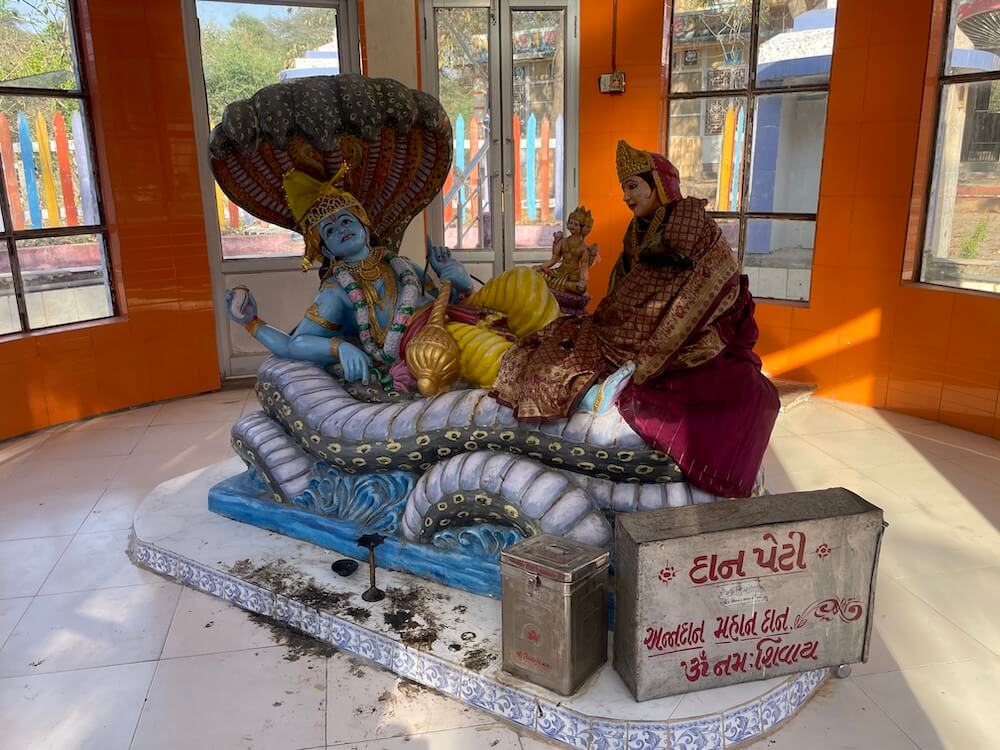 In antiquity, this territory was part of the Hidimbavan region and was home to the hermitage of Sage Dadhichi. The Sage is believed to have established the Shivalinga within the sanctum for his daily devotions. According to mythology, Sage Dadhichi sacrificed his life for the preservation of ‘Dharma’, so his bones could be used to create Indra’s ‘Vajra’ (thunderbolt). This act was needed to defeat Vritrasura, a demon created from a sacrifice by Sage Twashta after Indra killed Vishwarupa, Twashta’s powerful son. Vritrasura was invincible to weapons of wood, metal, fire or water. After the gods were exiled, Lord Brahma revealed that only a weapon from Sage Dadhichi’s bones could defeat Vritrasura. Dadhichi gave up his life. Kamadhenu, the celestial cow, purified his bones. The Vajra made from these bones ended Vritrasura’s reign and restored the gods to heaven.
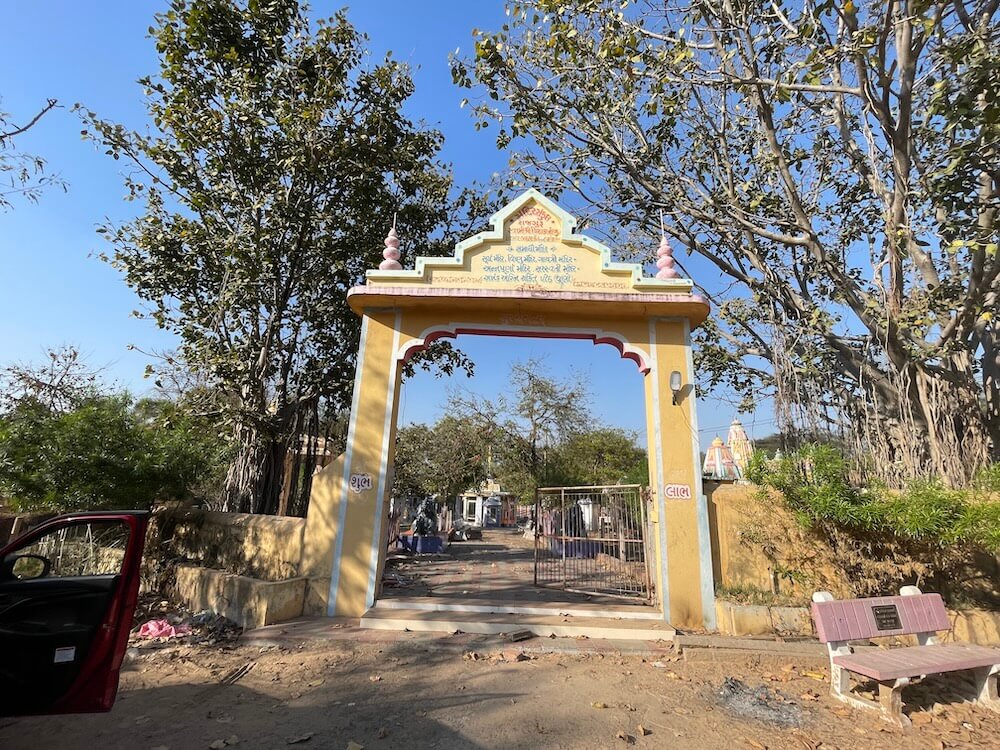 In the twentieth century, Saint Rang Avadhoot Maharaj of the Datta Sampradaya stayed at the temple in 1939 and wrote the philosophical treatise ‘Bodhmalika’.
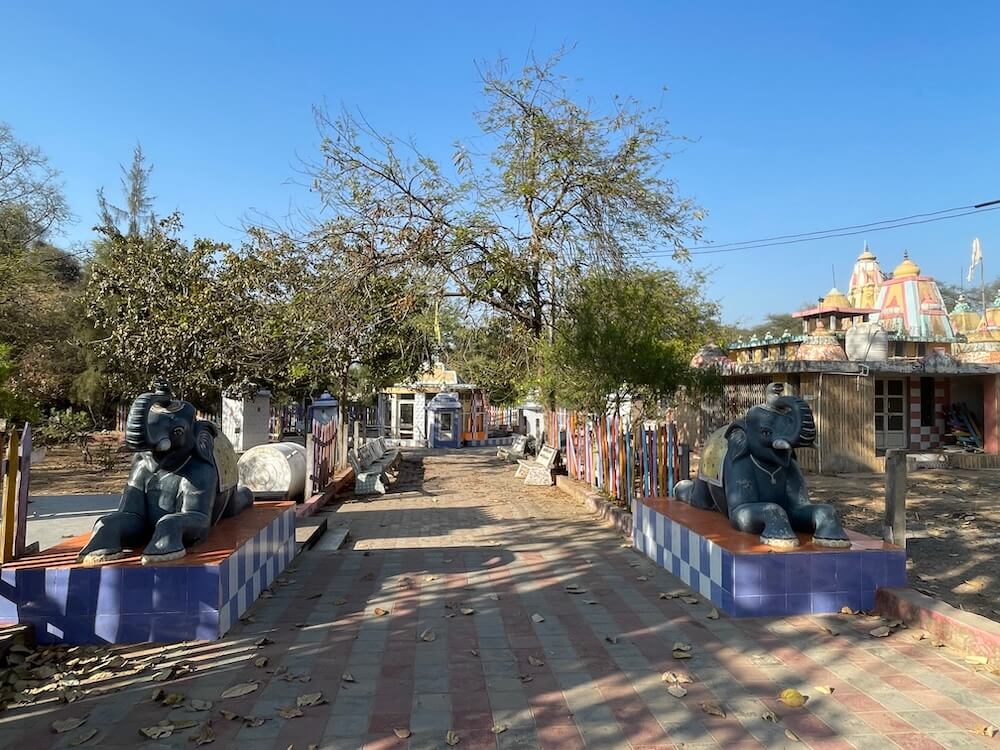
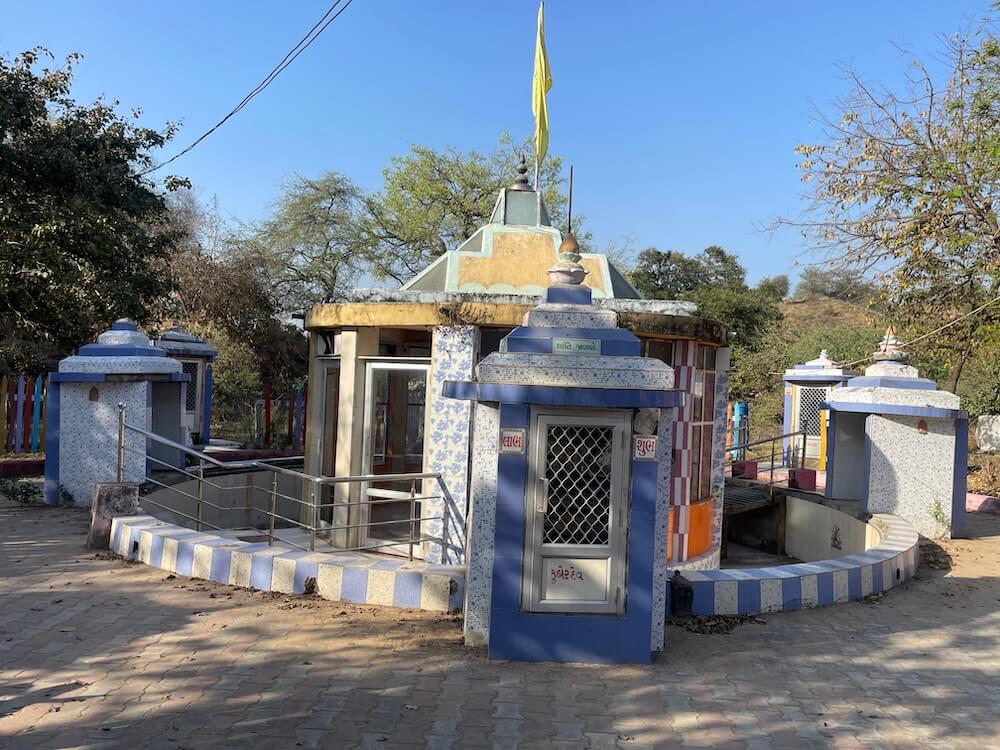
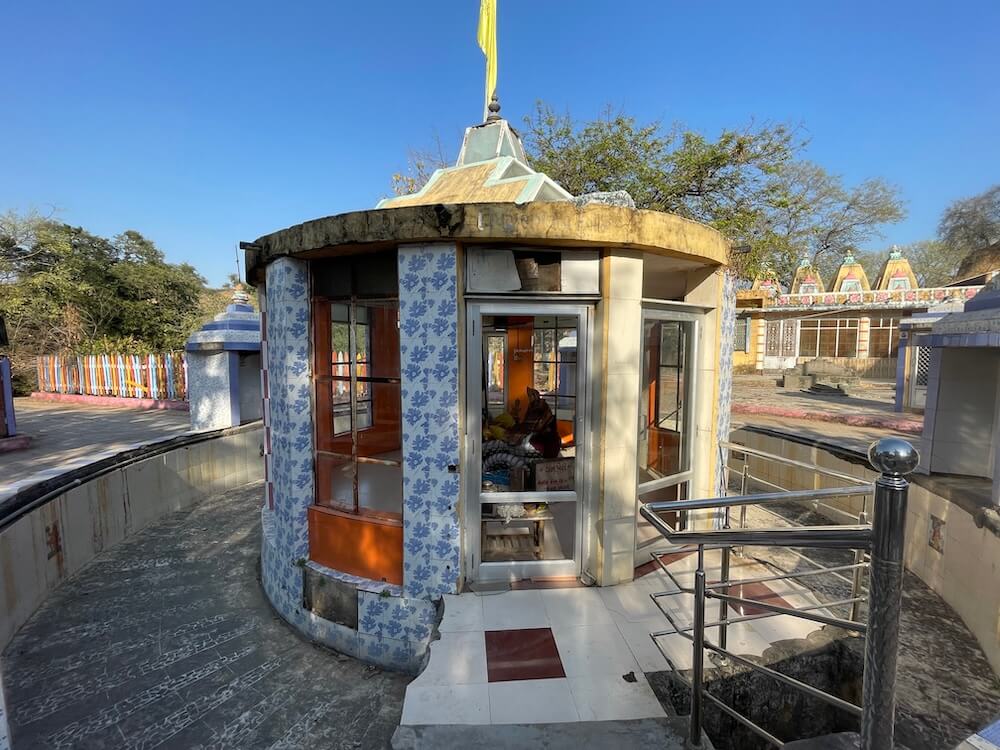
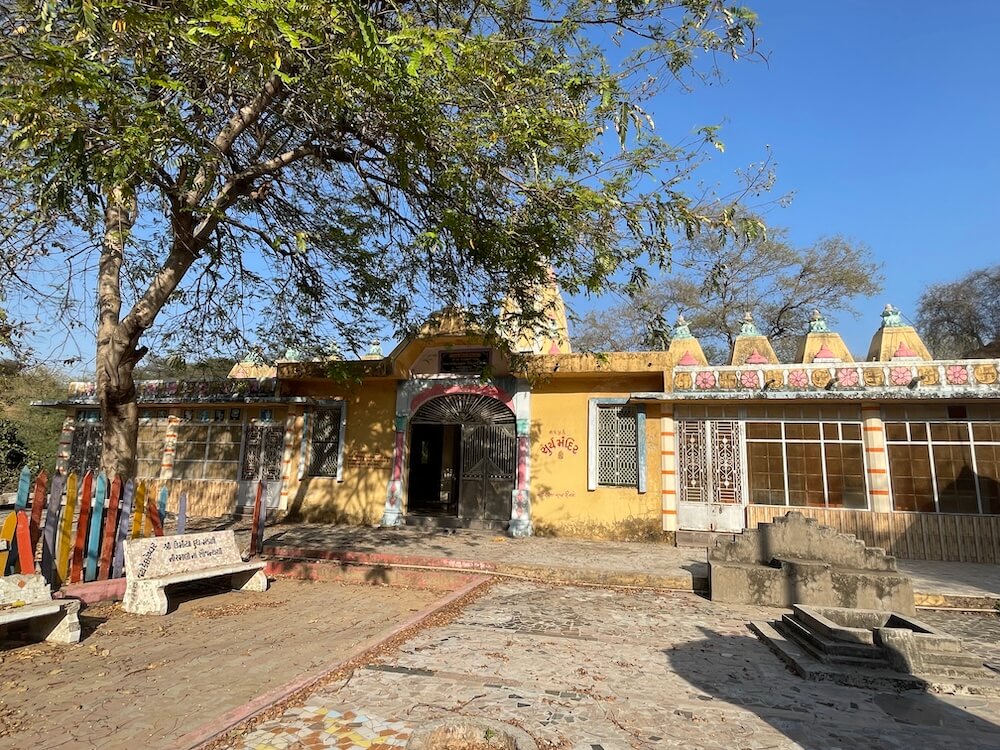
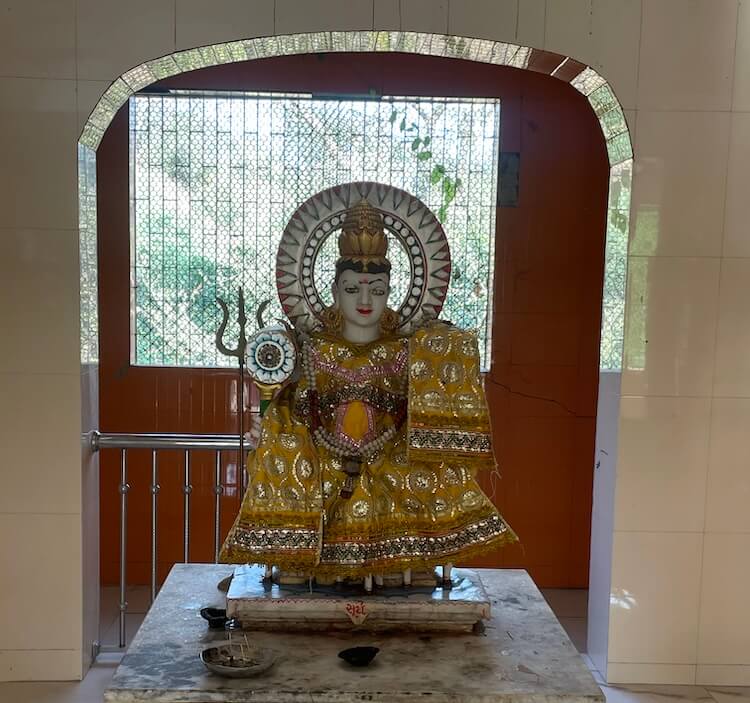
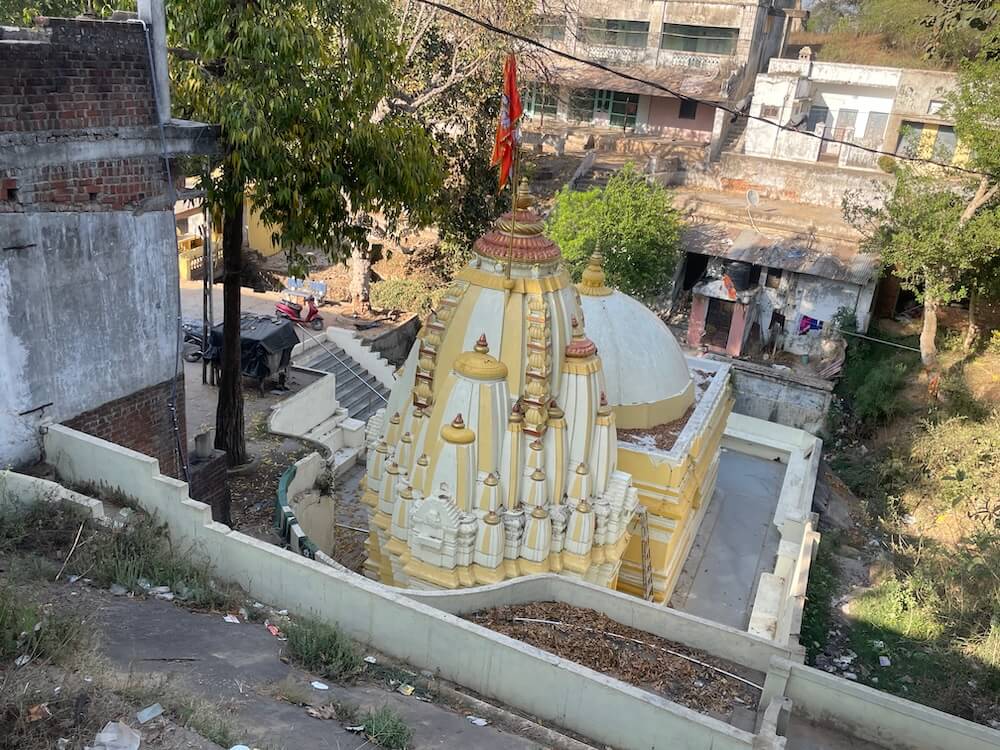
A well-maintained, winding road leads to this riverside temple and ends at a parking area before the shrine. The temple complex features smaller shrines for both local and principal deities, such as the Sun Temple, Navagraha temples and Annapurna. Shrines for Vishnu, Gayatri and Saraswati stand with independent idols and temples for the ‘Ashtadikpalas’—the guardians of the eight directions. They are Kubera, Agni, Varuna, Yama and Vayu. After a short descent, one enters the verdant courtyard. An altar for sacrificial fire (‘Yajnakunda’) stands before the main structure.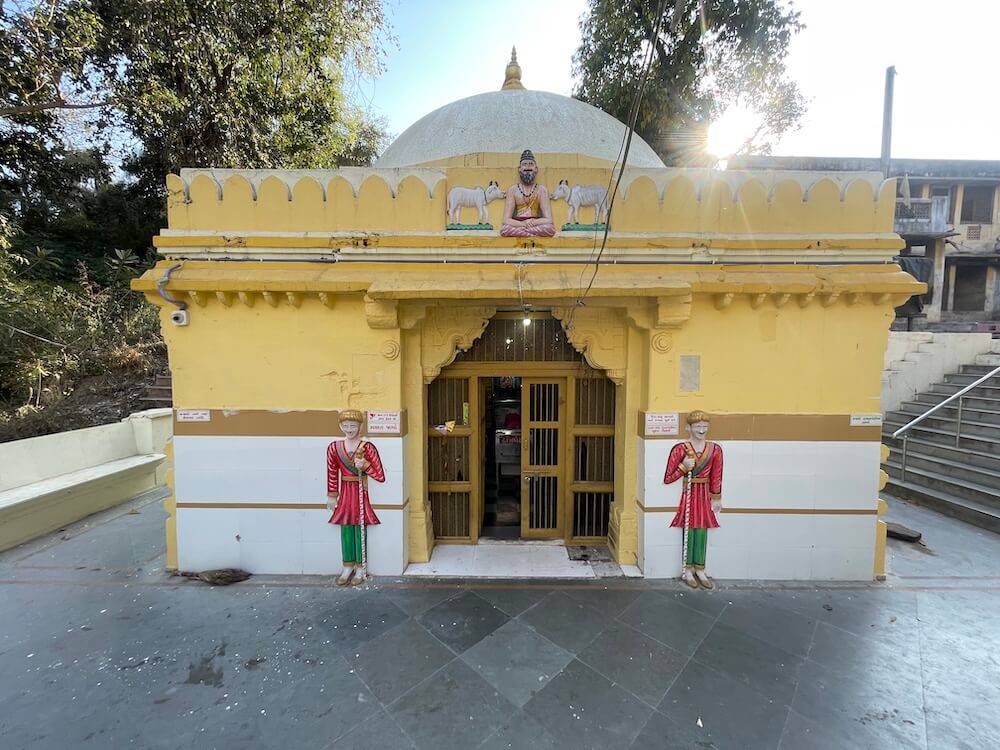 The layout includes an assembly hall (‘Sabhamandap’), a vestibule (‘Antarala’) and the sanctum sanctorum (‘Garbhagriha’). The entrance to the assembly hall is flanked by sculptures of gatekeepers (‘Dwarpalas’). Above is a carving of Sage Dadhichi and the cow. The hall has three entrances and a central pedestal holding an idol of Nandi and a tortoise sculpture. The interior of the domed ceiling is painted with various deities. In the vestibule, niches on each side house idols of Ganesha and Hanuman. The doorframes and lintel of the sanctum are ornately carved with images of ‘Dwarpalas’, the river goddesses Ganga and Yamuna, Yakshas, Kinnaras and other divine beings. The sanctum lies slightly lower than the vestibule and requires a descent of a few steps. Here, nearly two feet below ground, rests the ‘Swayambhu’ Shivalinga, adorned with a copper serpent, trident and ‘damru’.
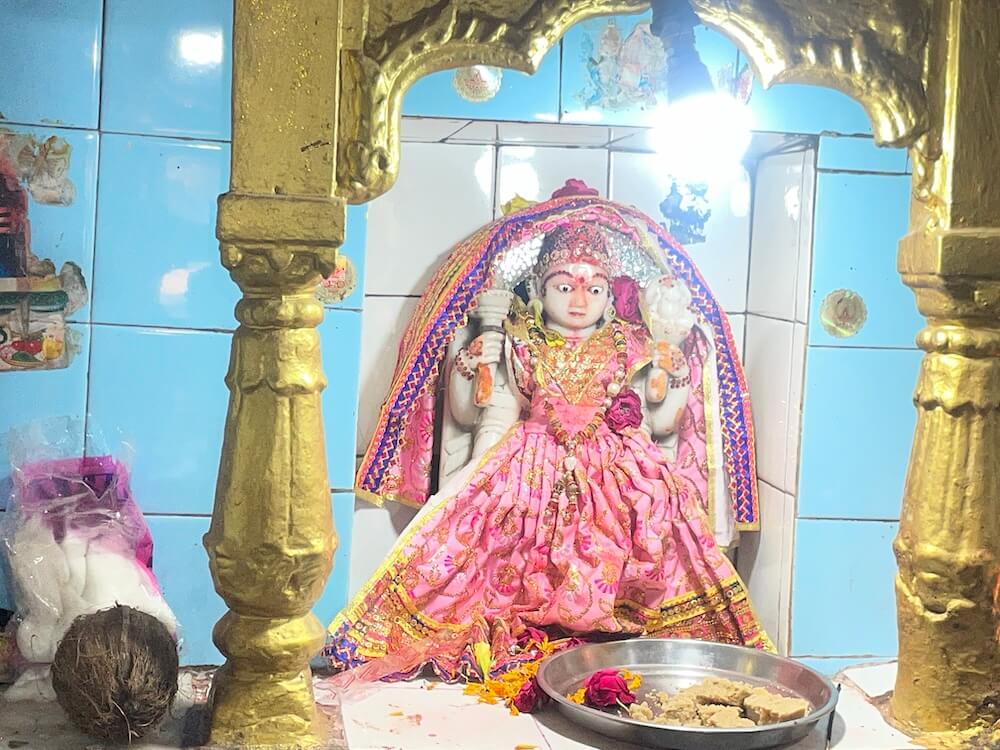
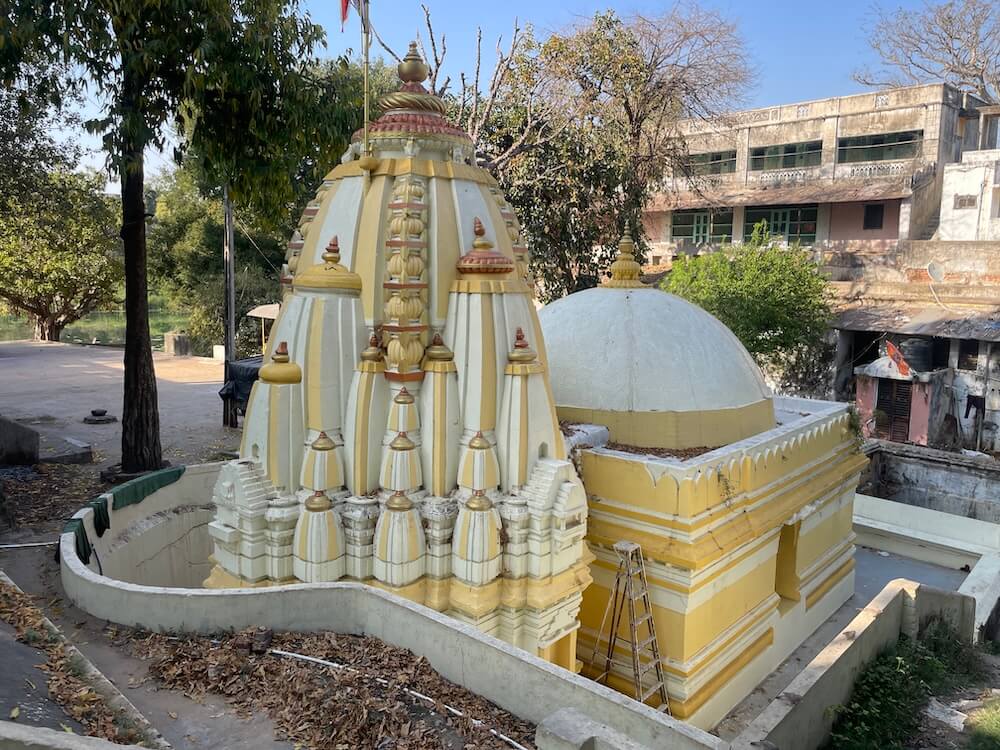 Idols of Parvati and Ganesha are also present. The sanctum is topped by an ‘Urushringa’ spire and the assembly hall features a domed roof.
Mahashivratra is the pre-eminent annual festival of this temple. It is marked by a seven-day sacrificial rite (‘Yajna’). During the night of Mahashivratra, special worship is conducted across the four ‘praharas’. This is accompanied by ‘Rudrabhisheka’ and grand illuminations. Every Monday of the holy month of Shravan, the temple is thronged by devotees, taking on the vibrant air of a fair. A grand fair is also held on ‘Shravan Vadya Ashtami’, the occasion of Janmashtami. Furthermore, Krishna Janmotsav, Dussehra, Diwali and both Navratri festivals are celebrated with great zeal. In the month of Kartik, the ‘Deepotsav’ or festival of lights is observed on Tripurari Purnima. The temple is open for devotees daily from 6 am to 7 pm.
Useful Information
- Located at 18 km from Kapadvanj and 74 km from Kheda city
- GSRTC bus services available from Kapadvanj
- Private vehicles can reach the temple parking area
- No accommodation or breakfast facilities available in the immediate vicinity
- Contact – Girish Maharaj 9898751565, Navinbhai 9427541159
केदारेश्वर महादेव मंदिर
तेलनार, ताल. कपडवंज, जिला. खेड़ा
मंदिरे
Temples
मंदिर
-
भूमपुरा हनुमान मंदिर भूमापुरा, मोडज, ता. महेमदावाद, जि. खेडा
अधिक माहितीBhumapura Hanuman Temple Bhumapura, Modaj, Tal. Mahemdavad, Dist. Kheda
View Detailsभूमापुरा हनुमान मंदिर भूमापुरा, मोडाज, ताल. महेमदावाद, जिला. खेड़ा
विवरण देखें -
भाथीजी महाराज मंदिर फागवेल, ता. कापडवंज, जि. खेडा
अधिक माहितीBhathiji Maharaj Temple Phagvel, Tal. Kapadvanj, Dist. Kheda
View Detailsभथीजी महाराज मंदिर फागवेल, ताल. कपडवंज, जिला. खेड़ा
विवरण देखें -
केदारेश्वर महादेव मंदिर महादेवपुरा, ता. कठालाल, जि. खेडा
अधिक माहितीKedareswar Mahadev Temple Mahadevpura, Tal. Kathlal, Dist. Kheda
View Detailsकेदारेश्वर महादेव मंदिर महादेवपुरा, ताल. कठलाल, जिला. खेड़ा
विवरण देखें