
सूर्य मंदिर
बोरसद, तालुका बोरसद, जिल्हा आनंद
Surya Temple
Borsad, Taluka Borsad, District Anand
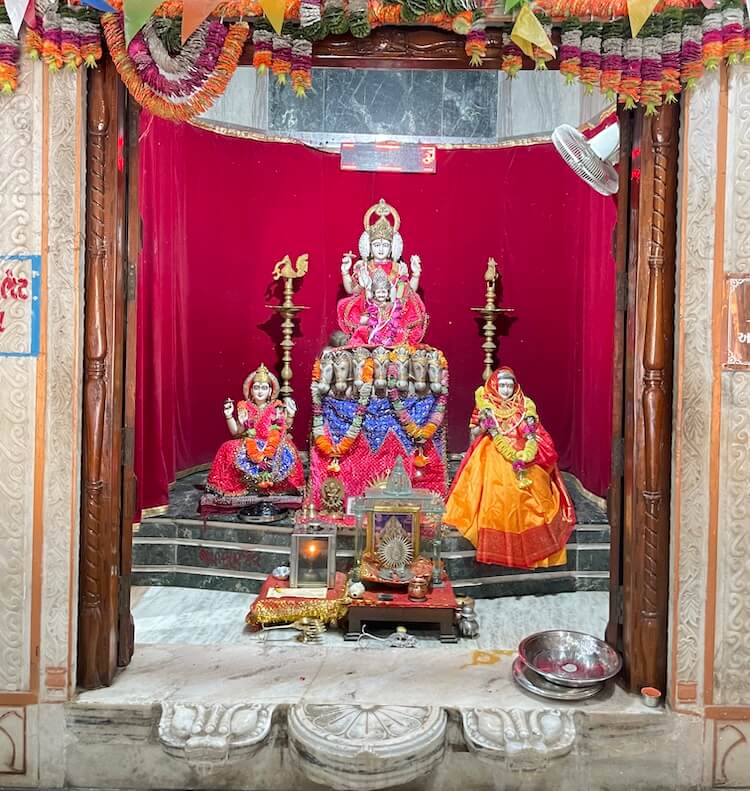 The Suryanarayan Temple, situated in Borsad taluka of Anand district, is regarded as one of the foremost centres of ‘Saur’ (solar) worship in the modern era. Dedicated to Surya Deva, the divine source of light and energy that sustains the universe, this temple is believed by devotees to grant fulfilment of heartfelt wishes and particularly to bestow relief from ailments. When viewed from a distance, the temple resembles the chariot of the Sun God. Ratha-Saptami is the grandest festival observed here. It is celebrated with great fervour and in the presence of thousands of devotees as the birthday of Surya. One of the most remarkable features of the shrine is that on certain days of the year, the rays of the rising sun fall directly upon the idol of Surya within the garbhagriha (sanctum).
The history of the town of Borsad stretches back to very ancient times. According to a traditional account, the settlement was established in the second century CE through the efforts of an ascetic sage. Possessing considerable historical importance, 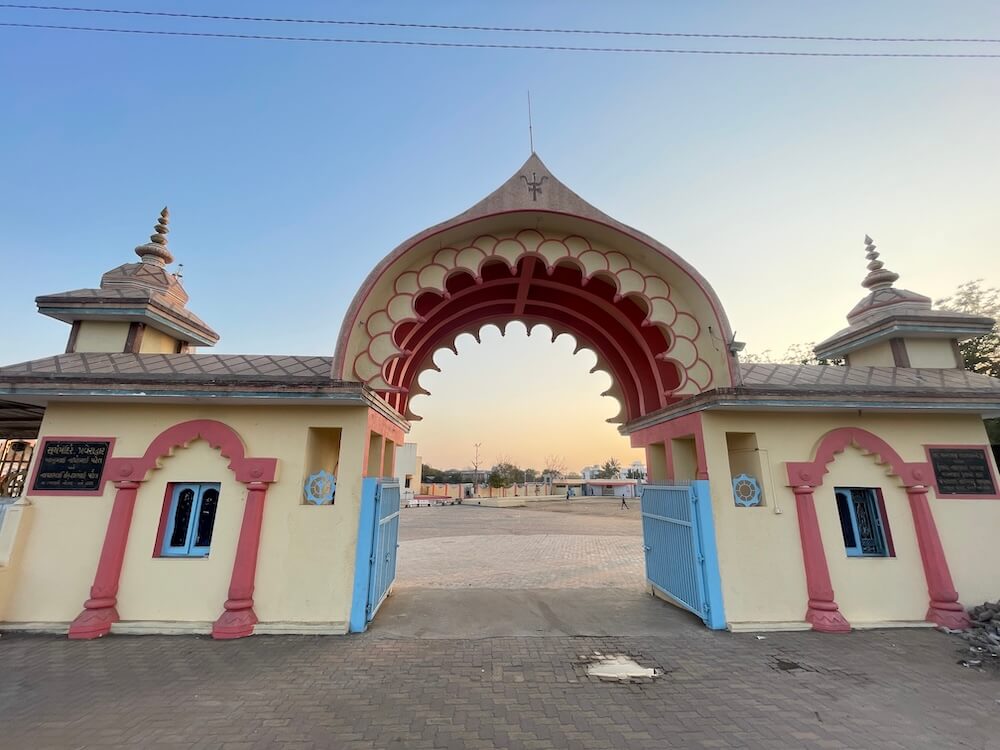 the town was granted municipal status in 1888 and later played a significant role in India’s struggle for independence. Between 1922 and 1923, the historic ‘Borsad Satyagraha’ was conducted here under the resolute leadership of Vallabhbhai Patel. This movement was a successful campaign against the oppressive tax imposed by the colonial government.
The principal founder of the Suryanarayan Temple at Borsad was Advocate Ramanbhai M. Patel, who, after retiring from the legal profession, dedicated his entire life to the worship of the Sun God. In the year 1972, he had gone to a local temple for darshan along with an infant named Kalpesh, who was only five months old. During this visit, he experienced a profoundly mystical moment. For a brief instant, Surya Deva himself appeared upon the child’s forehead in the form of a round mark of kumkum and at that very moment, Ramanbhai heard clear words declaring that a grand temple of Surya should arise at this very place.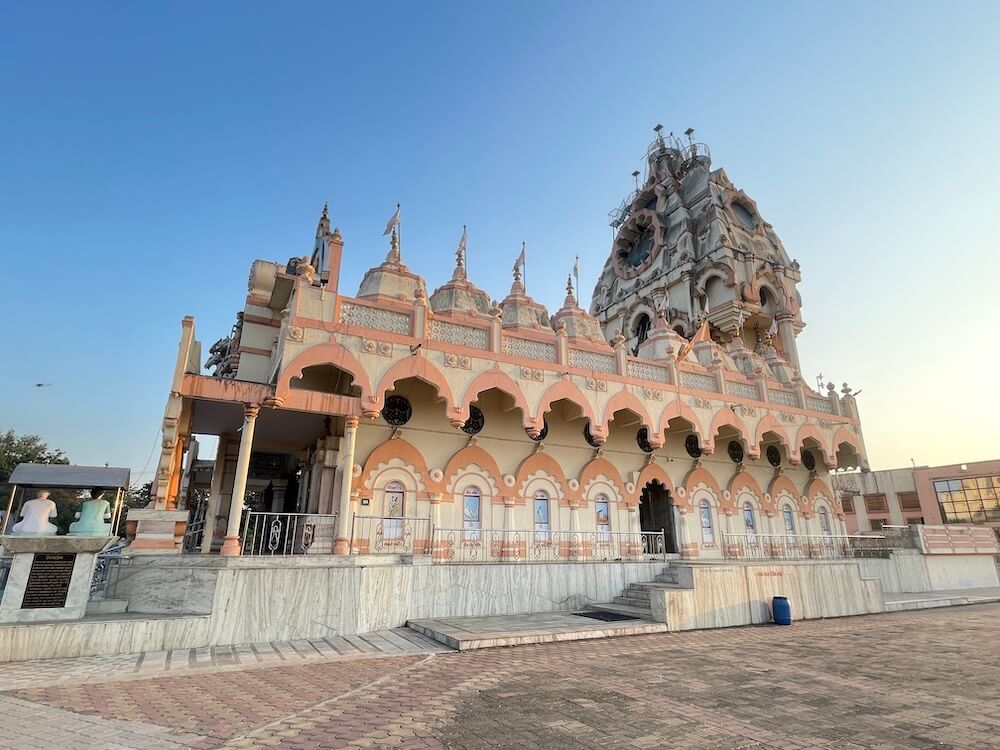 Following this extraordinary experience, he resolved firmly to build a Surya temple here. Around the same time, the original landowner voluntarily offered his land for this sacred undertaking without any request being made to him. Through the active cooperation of the entire village, the temple was finally completed in 1986. Ramanbhai himself resided within the temple precincts for fourteen continuous years, guiding the spiritual growth of the sacred site. Possessing long experience of social life through his legal career, he later expanded the temple complex around 1993 and regularly organised recitations of sacred Kathas and yajnas based on various Puranas, thereby establishing the place as a centre of considerable spiritual significance.
 Ramanbhai maintained an unshakeable faith that the temple had come into existence solely through the will of Surya Deva.
In Puranic thought, Surya is described as ‘chakshu’, meaning the eye of the universe. He is regarded as the fundamental source of energy for all living beings. At this temple, regular recitations of 37 Kathas based upon sacred texts such as the Surya Purana, the Bhagavata Purana, the Ramayana, the Devi Bhagavata Purana and the Ganesha Purana have been successfully conducted. Nearly fifty yajnas have also been completed here, including the powerful ‘Atimaha Rudra Yajna’, which continued uninterrupted for twenty-one days. Individuals suffering from skin ailments or disorders of the eyes visit the temple with deep faith, seeking relief.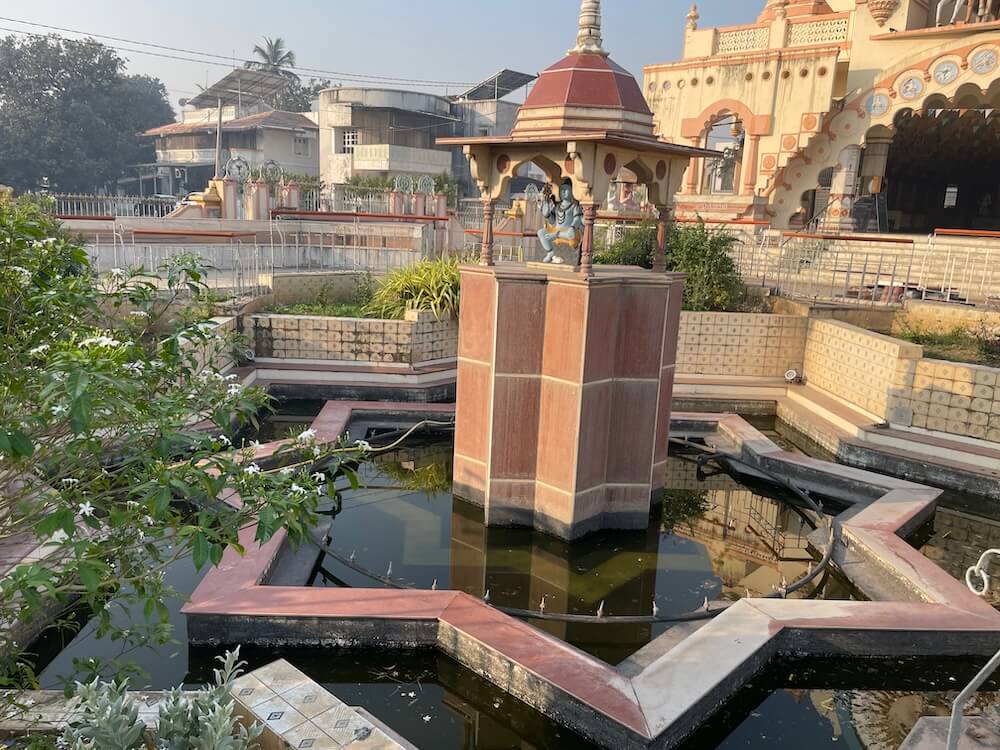
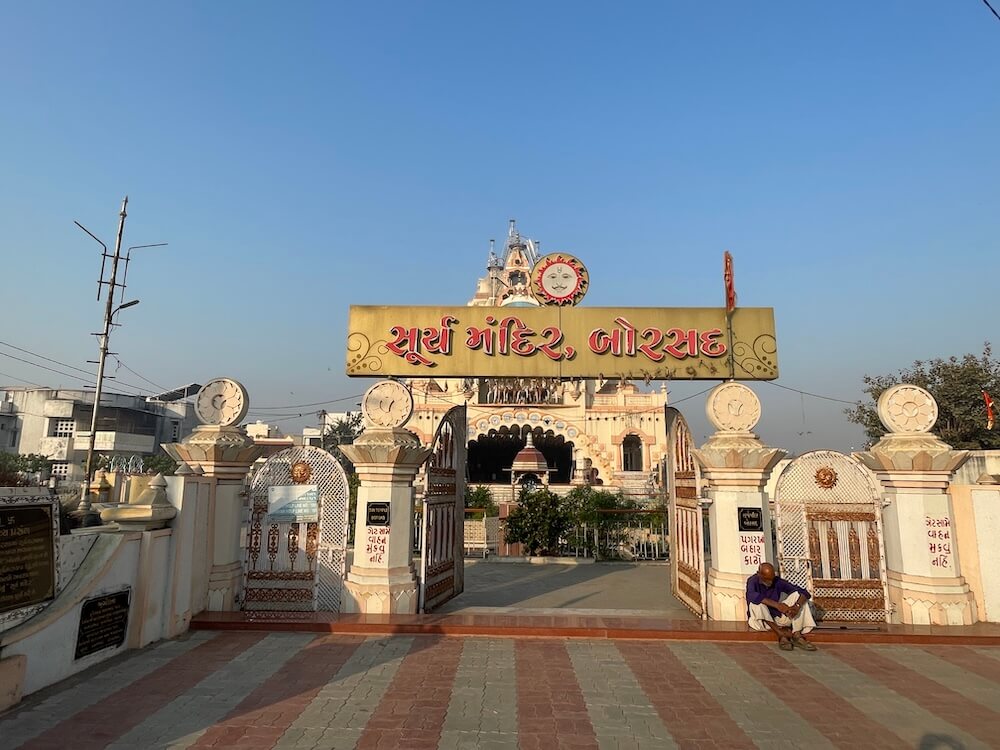
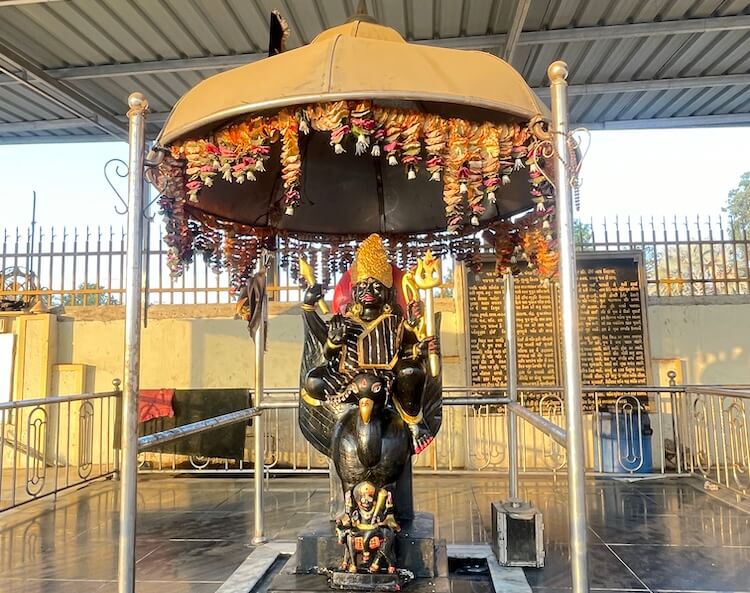
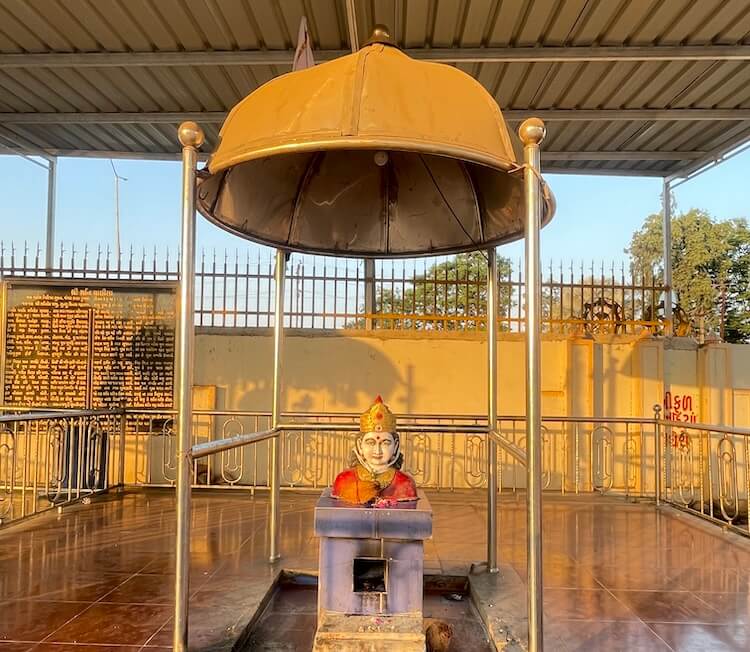
Located in the central part of Borsad town, the temple stands within a compound enclosed by boundary walls that contain two grand gateways. Passing through these gateways, one enters the spacious courtyard of the temple. The principal gateway facing the temple is supported by four carved pillars and contains three doorways. Ahead of this gateway in the courtyard and directly before the main temple stands a water vessel designed in the form of a Surya Yantra. Around this vessel, various ornamental and flowering plants have been planted. In the centre stands a tall shrine containing the idol of Lord Mahadev. Seating arrangements for devotees are provided around the water vessel. Further ahead, near the steps of the temple, is a large Havan kund used for sacred fire rituals. From the courtyard, nine steps lead upward to the elevated jagati (temple platform), where the darshan mandap is situated. 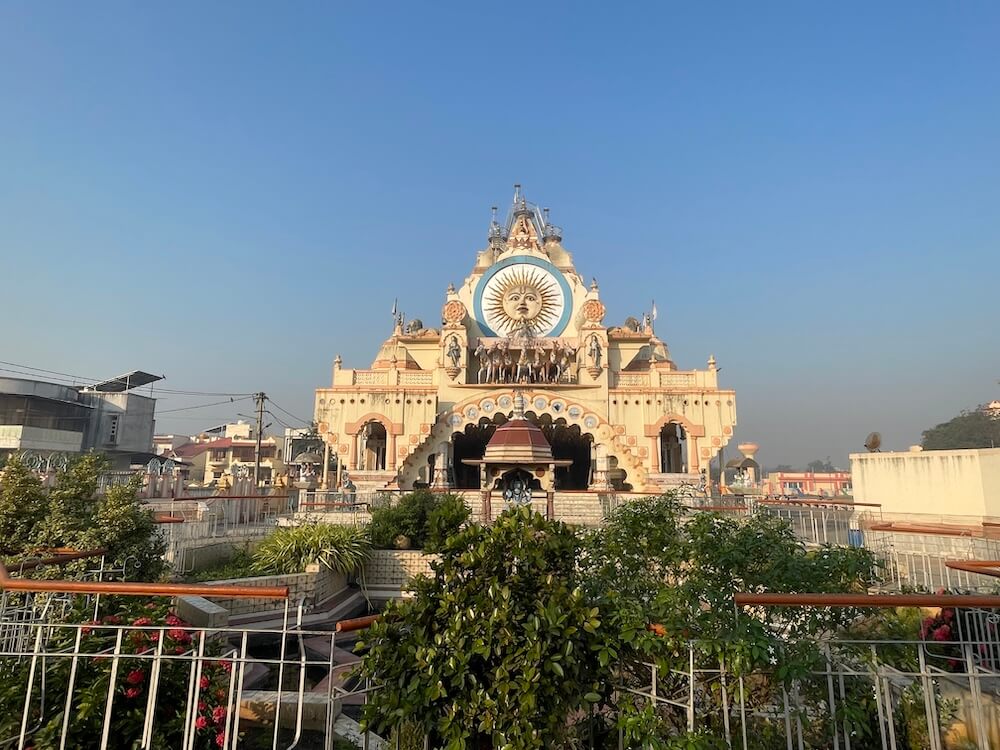 On either side of the stairway are sculpted images of Gajaraj (elephants) placed upon pedestals.
The entrance to the darshan mandap has a semicircular design and the upper portion is adorned with various auspicious motifs. Above this semicircular structure is depicted the radiant form of Surya riding in his chariot drawn by seven swift horses. These seven horses are named Gayatri, Brihati, Ushnik, Jagati, Trishtubh, Anushtubh and Pankti. They are regarded as symbols of positivity, strength and progress. On both sides of this entrance stand sculptures of the dvarapalas (guardian figures). Within the darshan mandap, large niches on the right and left contain idols of Ganapati and Hanuman.
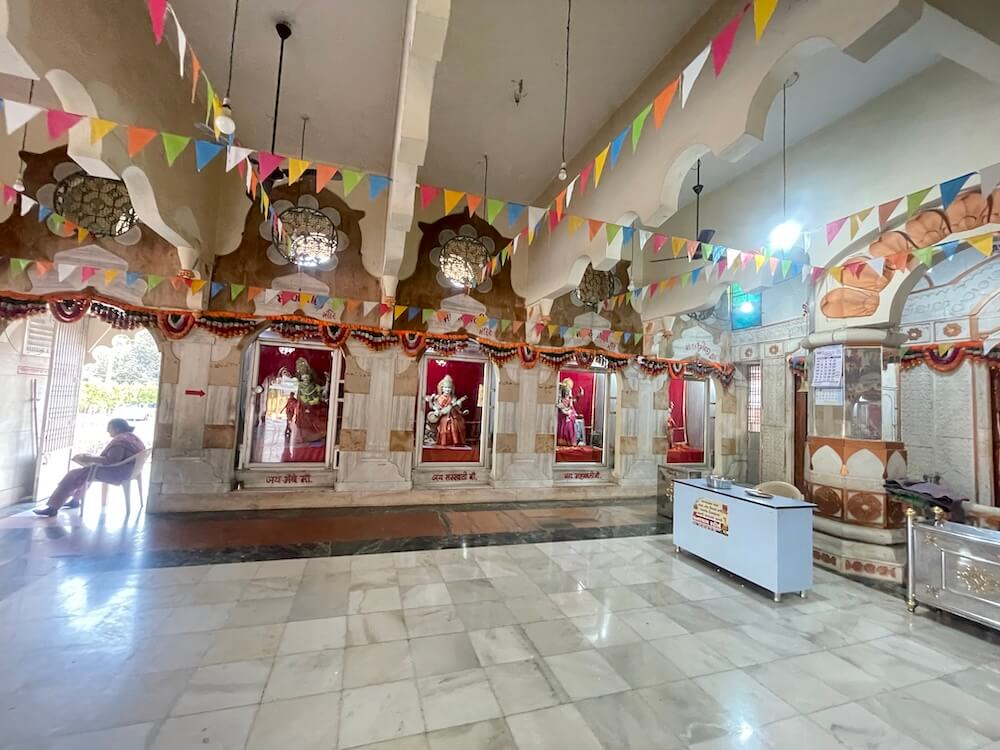
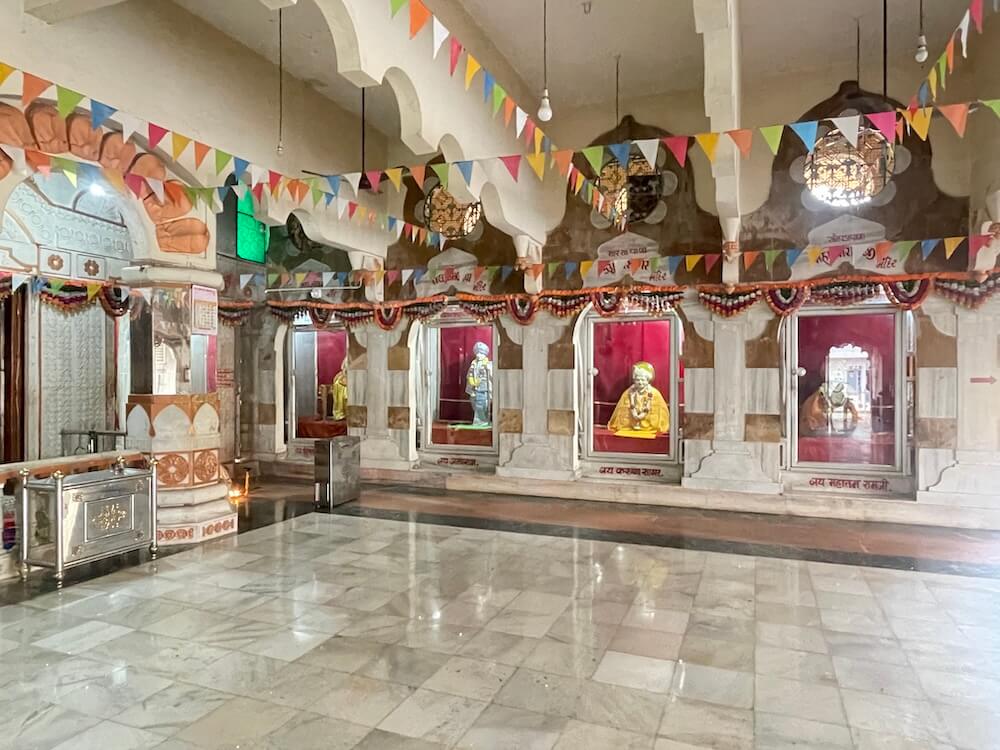
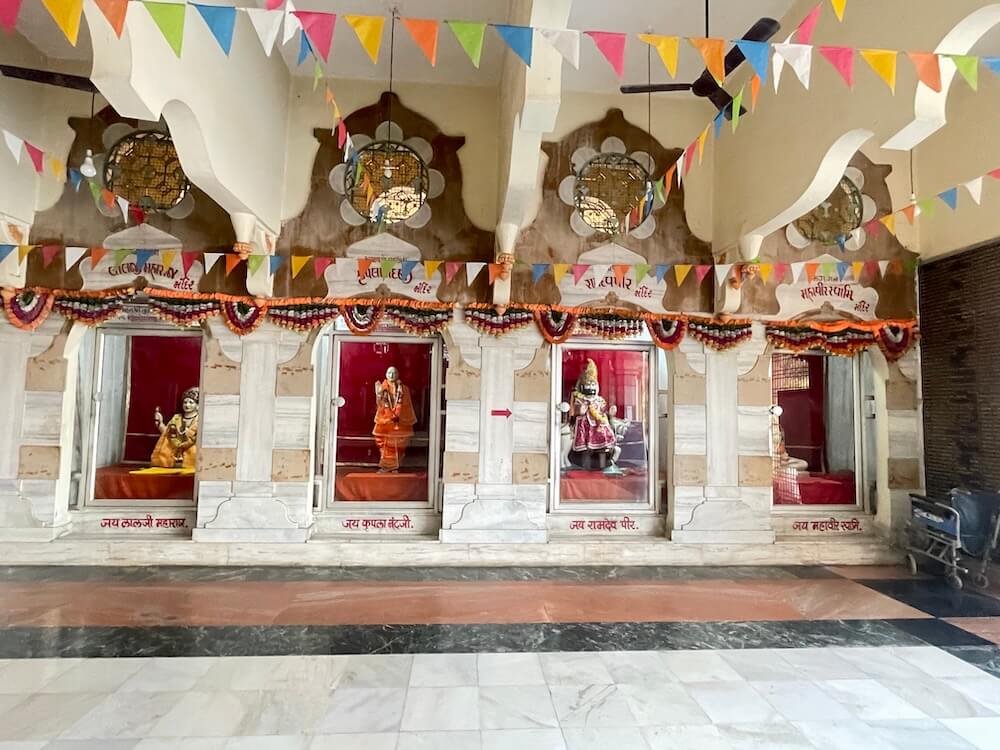
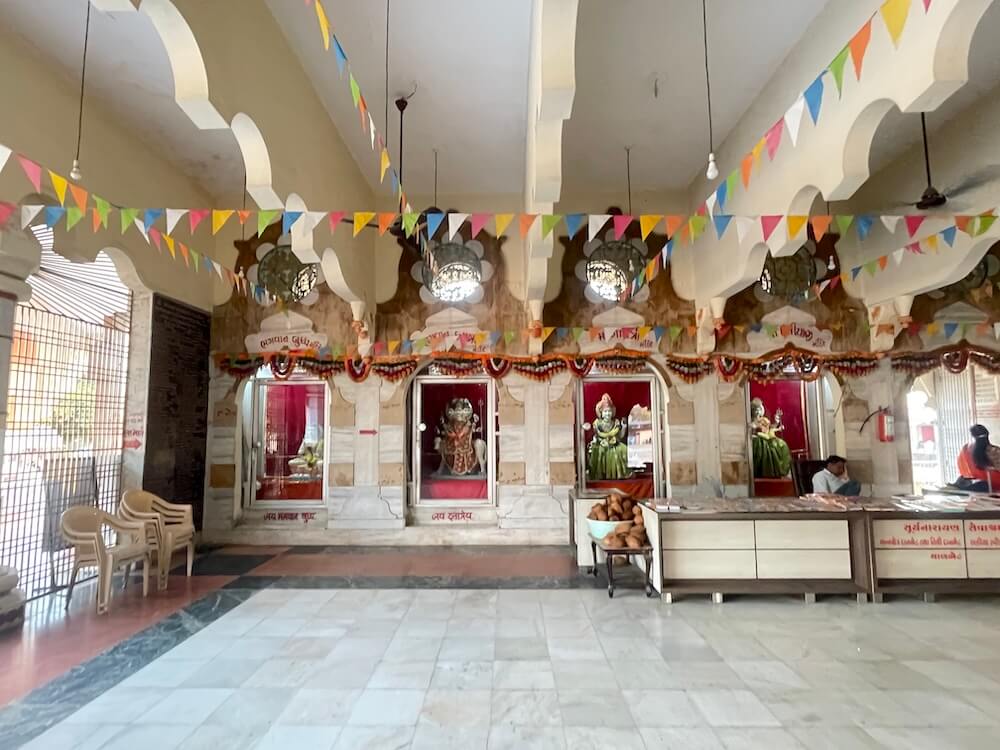
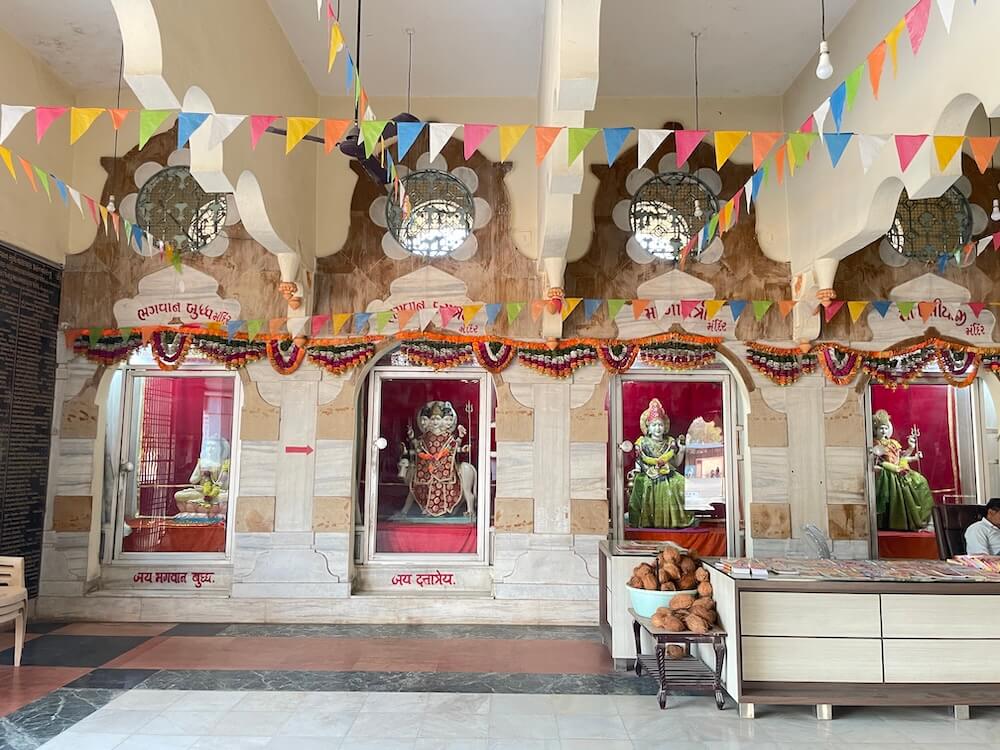
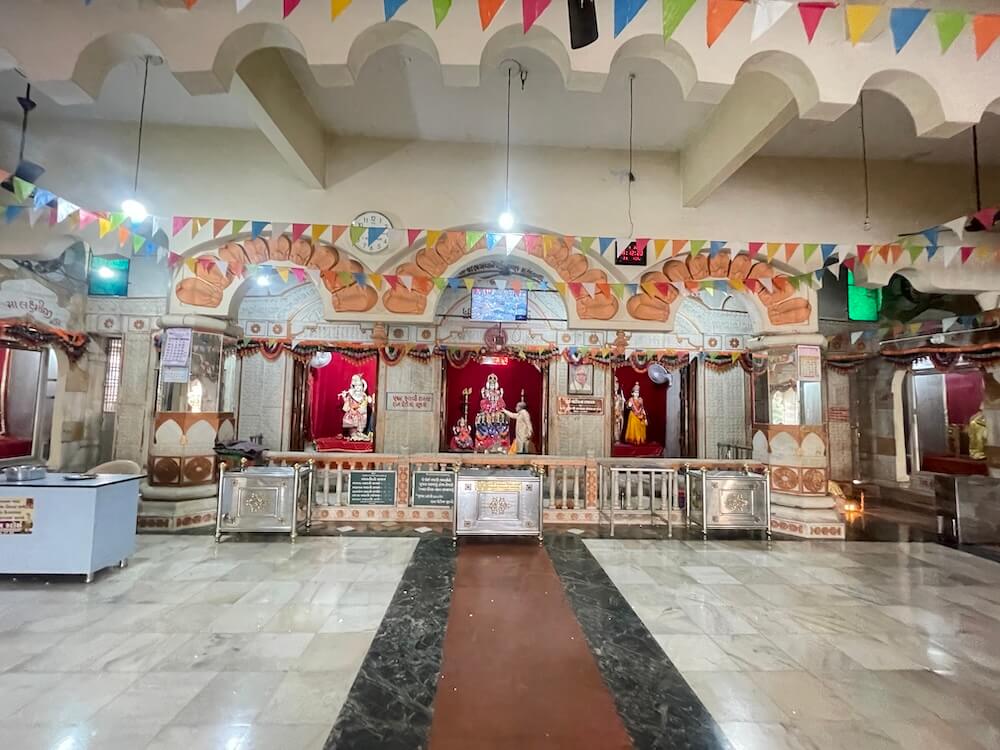 From the darshan mandap, a pradakshina path (circumambulatory passage) runs around the temple. From here, one enters the spacious sabhamandap (assembly hall). Along the left and right walls of this hall are structures resembling subsidiary sanctums in which numerous idols of deities and revered saints have been installed. Among them are images of Bhagavan Buddha, Sai Baba, Dattatreya, Ambamata, Saraswati, Mahakali Devi, Lalji Maharaj, Kupla Nandji Maharaj, Ramdev Pir Baba, Mahavir Swami, Mahatam Ramji, Karuna Sagar and Jalaram Bappa.
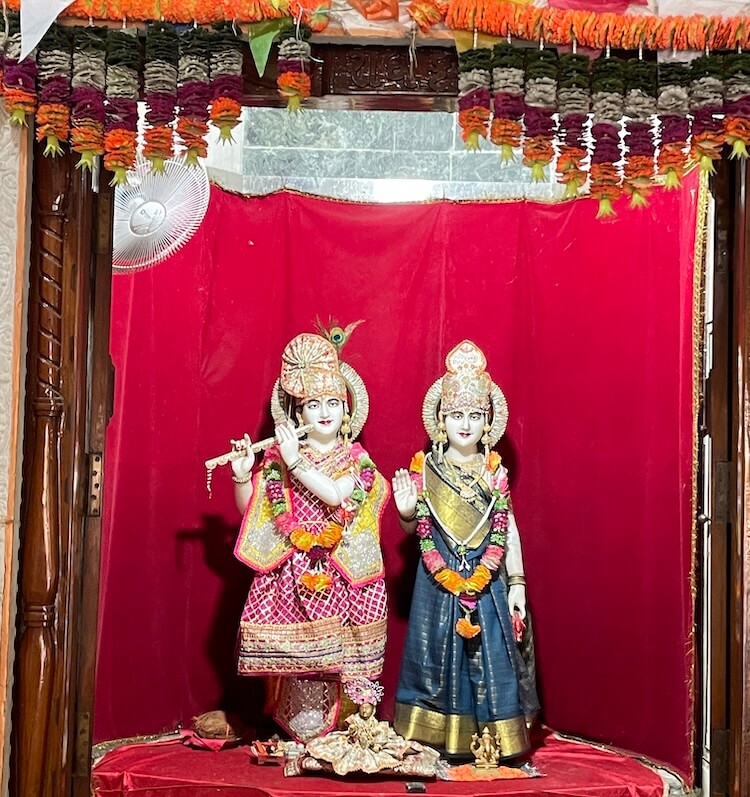
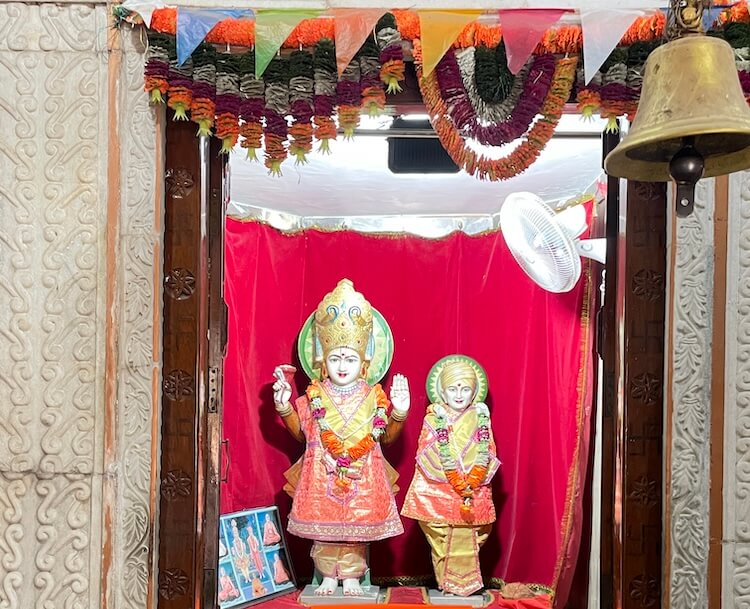
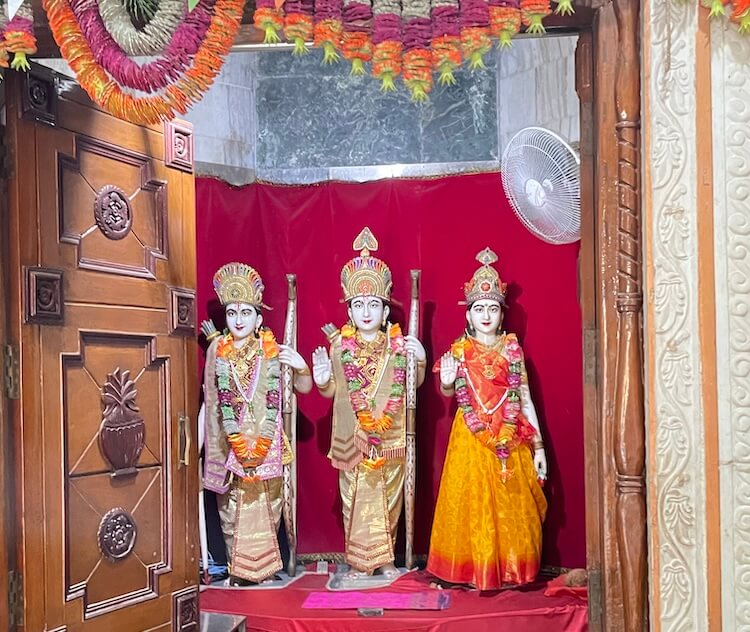
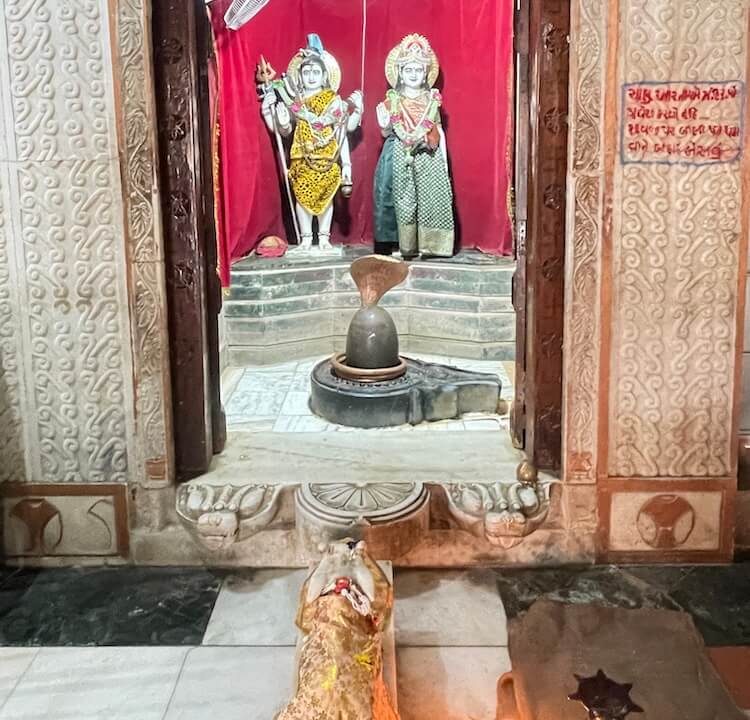
In the front portion of the sabhamandap, there are five garbhagrihas in total. The principal garbhagriha at the centre houses the idol of Suryanarayan seated upon a chariot drawn by seven horses. 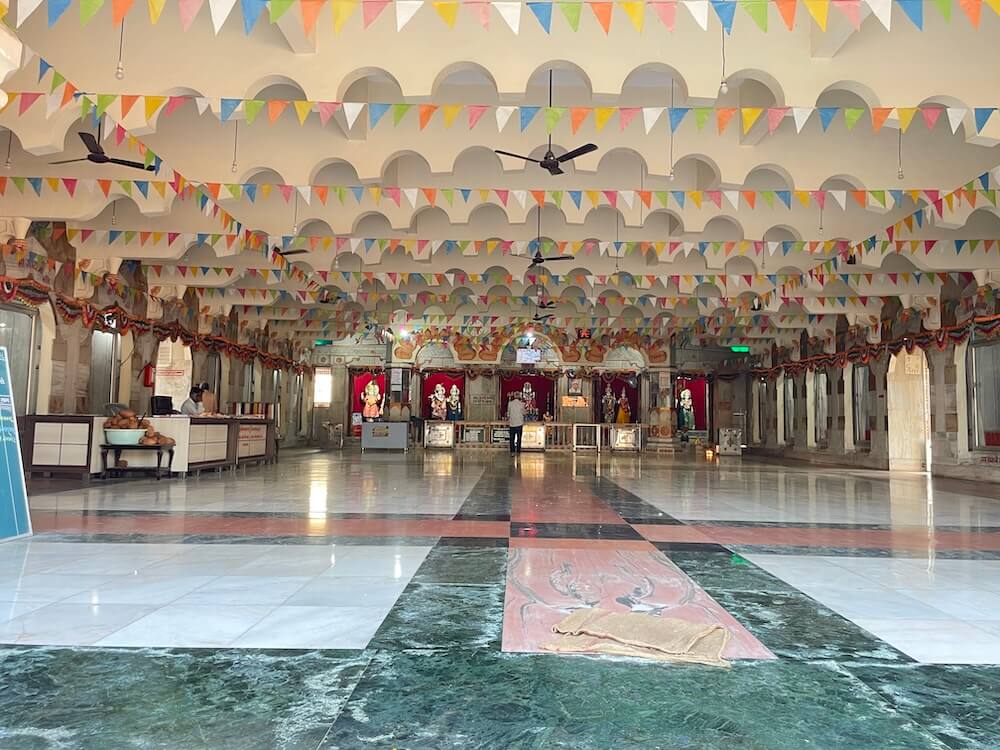 On either side of the deity stand the images of his consorts, Sanjna and Chhaya. In the garbhagriha to the left of the main sanctum are the pure white marble idols of Shri Ram, Lakshmana and Sita. In the adjoining sanctum stands a Shivpinda and before it, upon a vajrapith, are the images of Lord Shiva and Parvati. Outside this sanctum, upon a pedestal, is placed the idol of Nandi. In the first garbhagriha to the right of the principal sanctum are the beautiful marble images of Radha and Krishna. In the sanctum next to it are the idols of Lakshmi and Narayan.
This temple is an excellent example of modern temple architecture. Its shikhara is extraordinarily tall, majestic and designed in multiple tiers. Slightly below the uppermost portion of the shikhara is a large circular Surya Chakra, which forms one of the distinctive features of the temple and symbolises Bhagavan Surya. 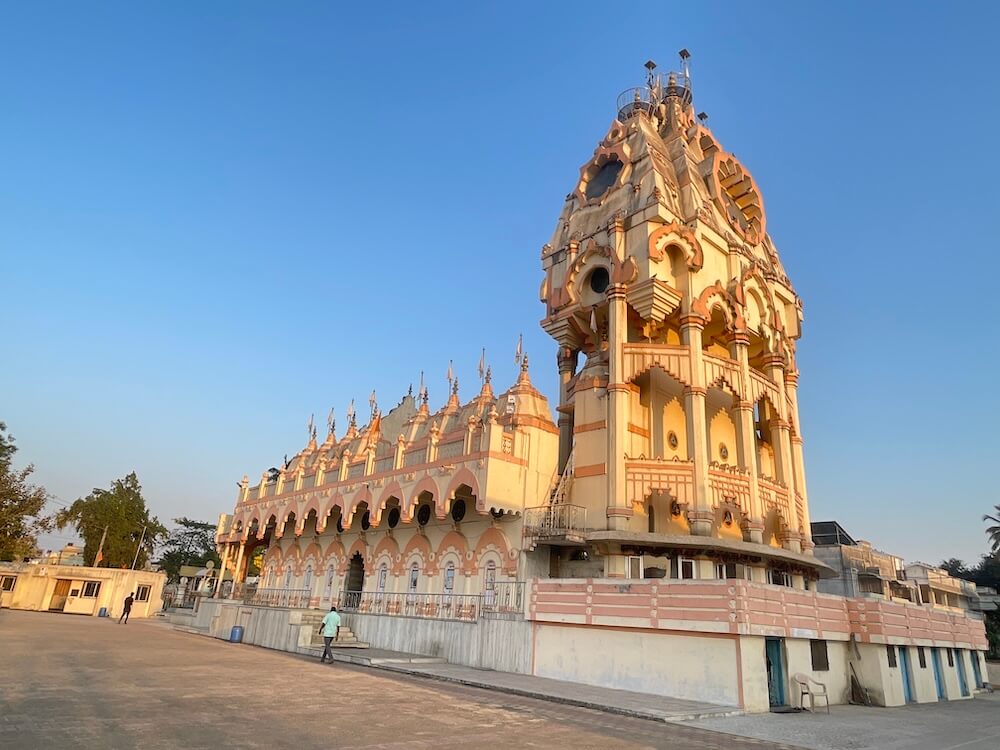 Each tier of the shikhara is adorned with small pillars and semicircular arches carved above them. At the very summit stands the kalasha finial. Beside the main shikhara and above the sabhamandap are several smaller shikharas. Seen from afar, the temple appears like a grand chariot.
Every day, five principal aratis are performed in the temple from early morning until night, namely Mangal, Shringar, Rajbhog, Sandhya and Shayan. The day begins with the Mangal arati at 6 o’clock in the morning and concludes with the Shayan arati at a quarter past 9 at night when the temple doors are closed for devotees. On Sundays, a special worship of Surya is performed. Devotees believe that offering Surya Puja on this day brings prosperity, abundance and blessings. Ratha-Saptami is the largest festival of the temple and is celebrated with great splendour as the birthday of Surya. On the day of Makar Sankranti, a special worship is conducted to mark the transition of the Sun from one zodiac sign to another. During the month of Kartik, the festivals of Chhath Puja and Samb Dashami for the attainment of good health are observed here. In addition to these, other festivals based on the solar calendar are also celebrated at this temple.
Useful Information –
- Located at 1 km from Borsad bus stand and 23 km from Anand city.
- State transport bus services operate to Borsad from many towns in the district.
- Private vehicles can reach up to the temple parking area.
- Several facilities for accommodation and breakfast are available in the surrounding area.
सूर्य मंदिर
बोरसद, तालुका बोरसद, जिला आनंद
मंदिरे
Temples
मंदिर
-
भीमनाथ महादेव मंदिर लिंबळी, ता. सोजित्रा, जि. आनंद
अधिक माहितीBhimnath Mahadev Temple Limbali, Tal. Sojitra, Dist. Anand
View Detailsभीमनाथ महादेव मंदिर लिम्बाली, ताल. सोजित्रा, जिला. आनंद
विवरण देखें -
मेलडी माता मंदिर मालताज, ता. सोजित्रा, जि. आनंद
अधिक माहितीMeldi Mata Temple Malataj, Tal. Sojitra, Dist. Anand
View Detailsमेलडी माता मंदिर मालताज, ताल. सोजित्रा, जिला. आनंद
विवरण देखें -
चंद्रमौलेश्वर महादेव मंदिर उमरेठ, ता. उमरेठ, जि. आनंद
अधिक माहितीChandramouleshwar Mahadev Temple Umreth, Tal. Umreth, Dist. Anand
View Detailsचंद्रमौलेश्वर महादेव मंदिर उमरेठ, तहसील उमरेठ, जिला आनंद
विवरण देखें