
भरेश्वर महादेव मंदिर
भाडभुत, ता/जि. भरुच
Bhareshwar Mahadev Temple
Bhadbhut, Tal/Dist. Bharuch
 In the final reaches of the sacred Narmada river before it merges with the Arabian Sea lies the holy pilgrimage site of Bhadbhut. According to the ‘Reva Khanda’ of the ‘Skanda Purana’ this is considered an ancient and sin-cleansing Tirtha (holy place). In the Reva Khanda this site is referred to as ‘Bharbhuti’. Here stands the venerable temple of Lord Shiva known as Bhareshwar or Bhadheshwar. The most significant feature of this sanctuary is the ‘Narmada Kumbh Mela’ which is held here every eighteen years. It is said that hundreds of thousands of ascetics and devotees from across the nation participate in this grand fair.
The ‘Reva Khanda’ was originally a part of the ‘Vayu Purana’ and was subsequently incorporated into the ‘Skanda Purana’. 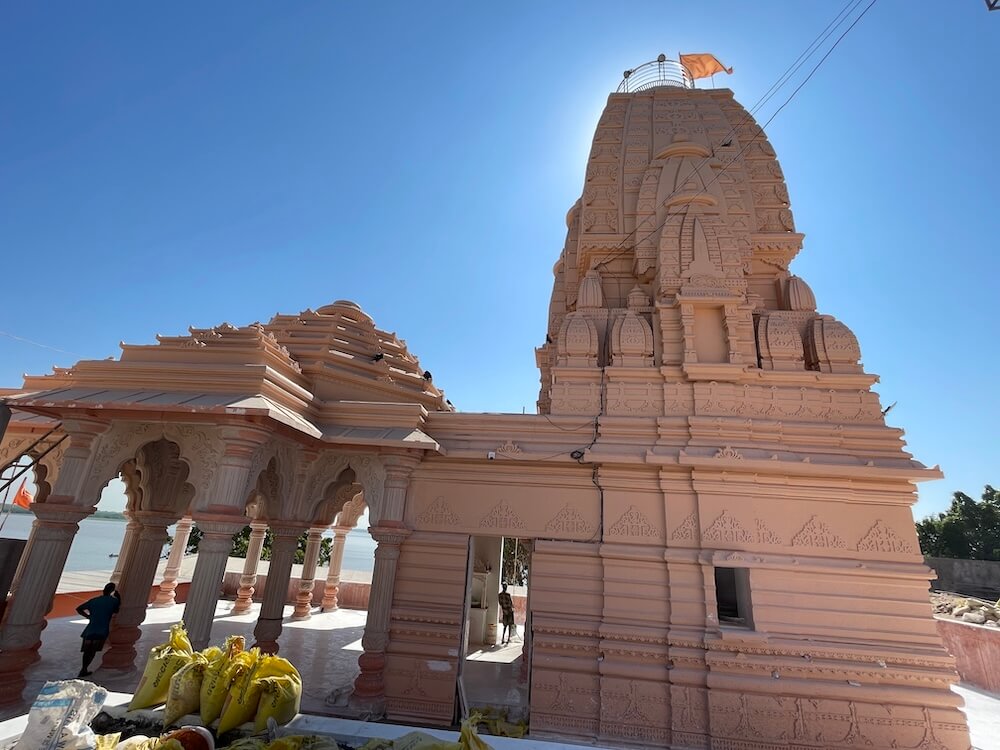 The 209th chapter of this volume which chronicles the legends and significance of the sites along the Narmada river extols the greatness of the Bharbhuti Tirtha. It states that Rudra Maheshwar himself resides at this spot and is called ‘Bharbhuti’ because he was manifested from a ‘Mahan Bhara’ (a great burden). The legend of this site dates back to the ‘Krita Yuga’ (the first epoch) when a learned Brahmin named Vishnusharma who was well-versed in the ‘Vedangas’ lived here. He sustained himself through the ‘Shiloccha’ practice – the virtuous act of subsisting only on grains left behind in the fields after the harvest. To test the Brahmin’s devotion Lord Maheshwar himself took the form of a ‘Batu’ (a young celibate student) and arrived at his ashram where he began his studies.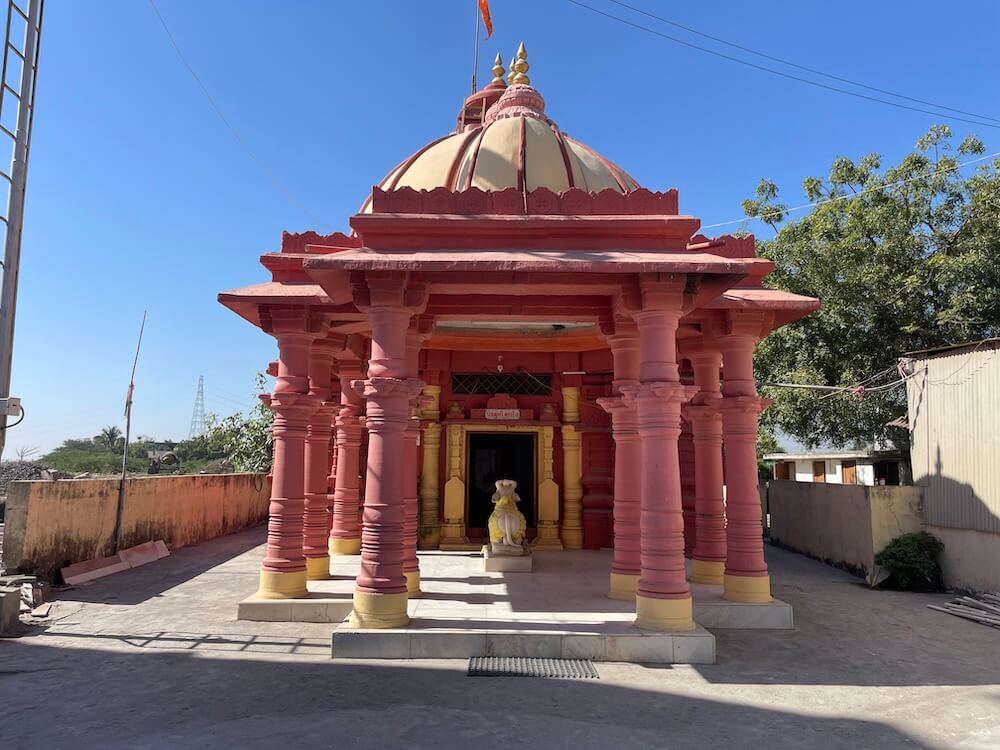
In this ashram it was customary for every student to perform daily chores. One day the other disciples assigned the task of cooking to the young Batu (Shiva). The youth agreed and went to the village of Bhargram where he meditated upon all vegetation and commanded the food to manifest. When the teacher and the other disciples returned they found the boy engrossed in play. Angered they exclaimed “We are famished and you have prepared nothing? You have been untruthful.” The Batu calmly replied “Do not be distressed. The food is ready in the ashram.” The disciples laid a wager saying “If the food is not ready we shall bind you and cast you into the Narmada; but if it is ready you may cast us in.” Upon entering the ashram they were astonished to find a magnificent feast awaiting them. The following day when everyone went to play in the Narmada the Batu reminded them of the wager. 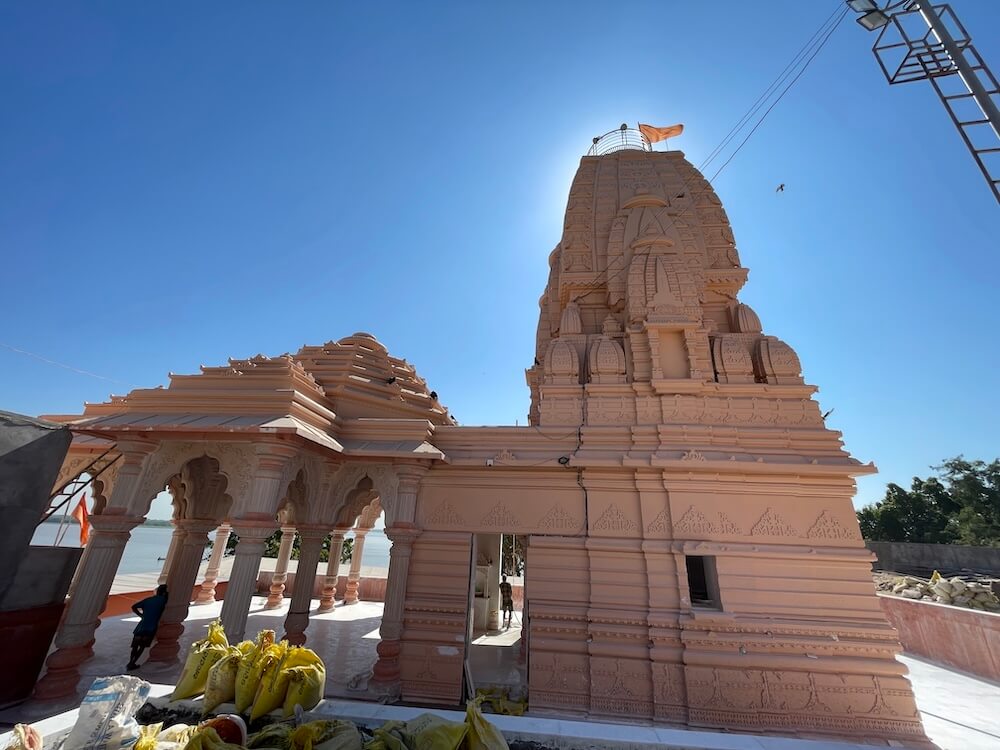 He bound all the disciples together and threw them into the river. Witnessing this Vishnusharma was terrified and cried “What have you done? How shall I answer their parents? If they perish you will incur the sin of ‘Brahma-hatya’ (slaying of a Brahmin).” Maheshwar smiled and drew the disciples safely from the water. At that moment, Vishnusharma realised that the Batu was none other than Lord Shiva himself. After this at that very spot the Linga (emblem of Shiva) known as ‘Bharbhuti’ was established.
Precise records regarding the original founding of this temple are unavailable. However according to the ‘Gazetteer of the Bombay Presidency – Surat and Broach’ published in 1877 a temple stood here with an Antarala (antechamber) of 11.5 square feet and a Garbhagriha (sanctum sanctorum) measuring 11 by 10.5 feet. 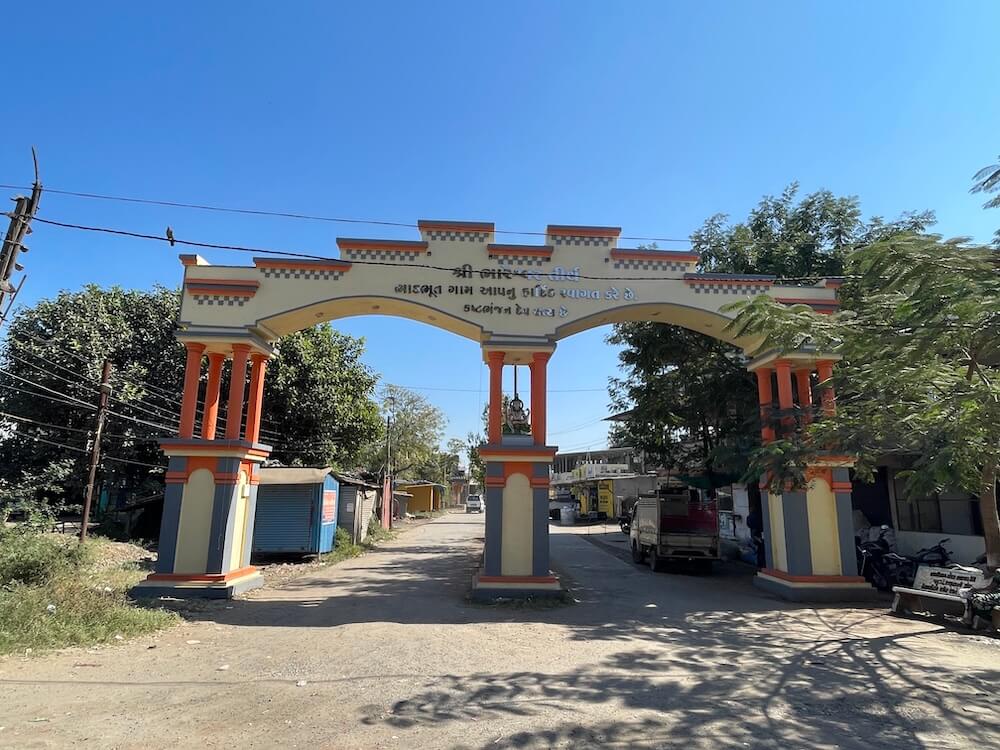 The entrance to the sanctum was five and a half feet high and half a foot wide. During that era the British government provided an annual grant of eighteen shillings (equivalent to 14,000 rupees approximately in today’s terms.) for the temple’s maintenance. In subsequent years the temple underwent various restorations and it has recently been completely renovated.
The temple is situated within an expansive compound on the banks of the Narmada. Entry is through a small iron gate and the shrine can also be reached by ascending steps constructed from the riverbank. Built in the Nagara architectural style using Rajasthani sandstone the temple comprises a Mukhamandap (entrance porch), Sabhamandap (assembly hall), Antarala and Garbhagriha. 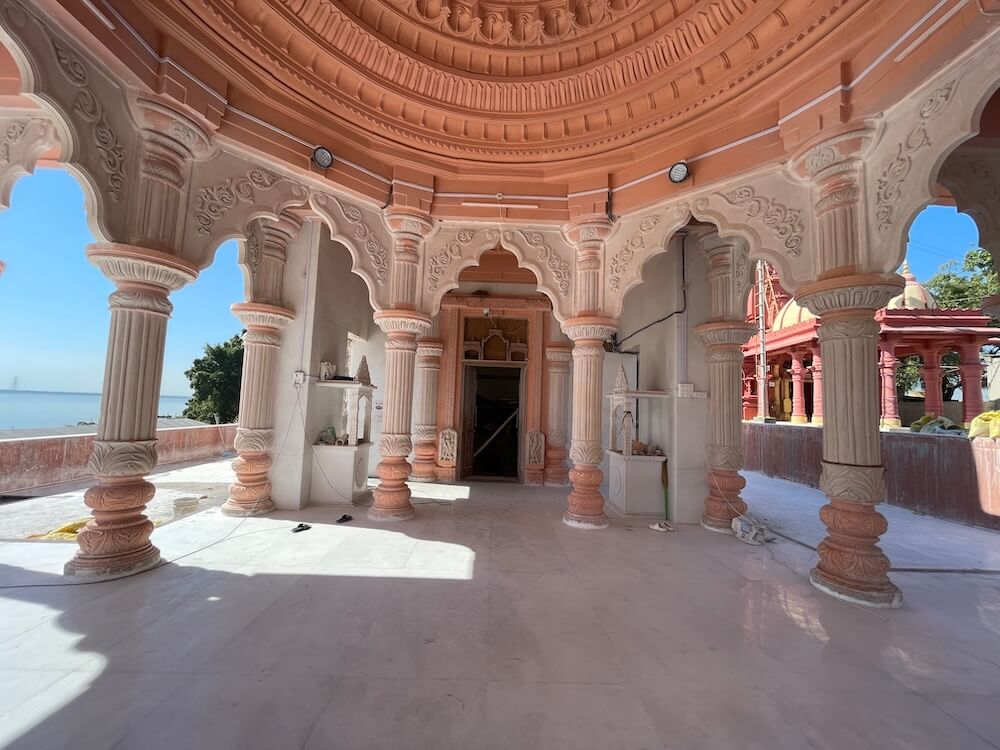 The entrance and assembly halls are topped with pyramid-shaped roofs while the sanctum features a soaring Urushringa style spire adorned with a two-tiered Amalaka (fluted stone disc) and a Kalash (pinnacle). The pillars and ceilings of the halls are embellished with exquisite carvings and the columns are connected by elegant scalloped arches. The assembly hall is of an open design. Niches within the antechamber house images of Ganesha and Hanuman. Inside the sanctum the Swayambhu (self-manifested) Shivaling of Bhareshwar Mahadev is enshrined within a large metal base with a serpent canopy overhead. A graceful idol of Mother Parvati resides in a niche at the rear.
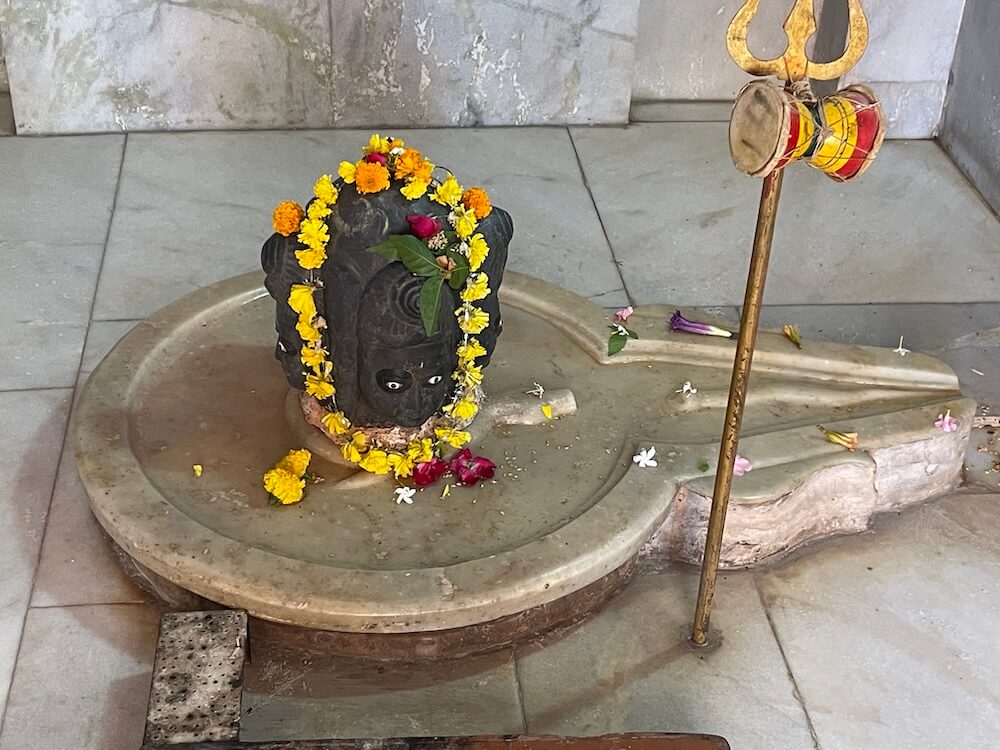
The Bhareshwar temple complex also includes shrines dedicated to Mother Narmada and Suryanarayan and Baliyadev. 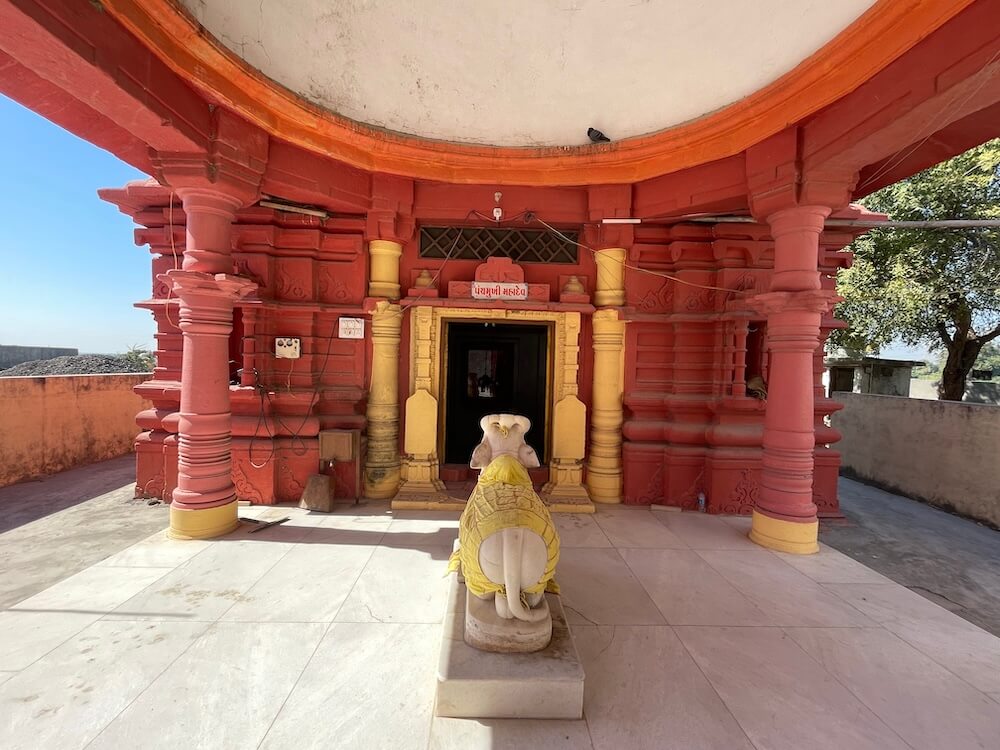 Nearby stands the Panchmukhi Mahadev Temple which is also said to be ancient. This shrine also follows the Nagara style and consists of an entrance porch, antechamber, assembly hall and sanctum. The sanctum features an Urushringa spire while the halls have domed roofs. Painted in a vibrant red this temple’s open assembly hall houses a large marble Nandi on a pedestal. The sanctum enshrines a magnificent Shivaling within a metal base featuring four carved faces of Lord Shiva, while the fifth face remains ‘Gupta’ (hidden).
Adjacent to Bhareshwar Mahadev is the Someshwar Mahadev Temple similarly constructed in the Nagara style. It features an Urushringa spire over the sanctum and a domed roof over the assembly hall which houses a Nandi. The sanctum is unique as it enshrines seven Shivalingas each varying in size and colour. 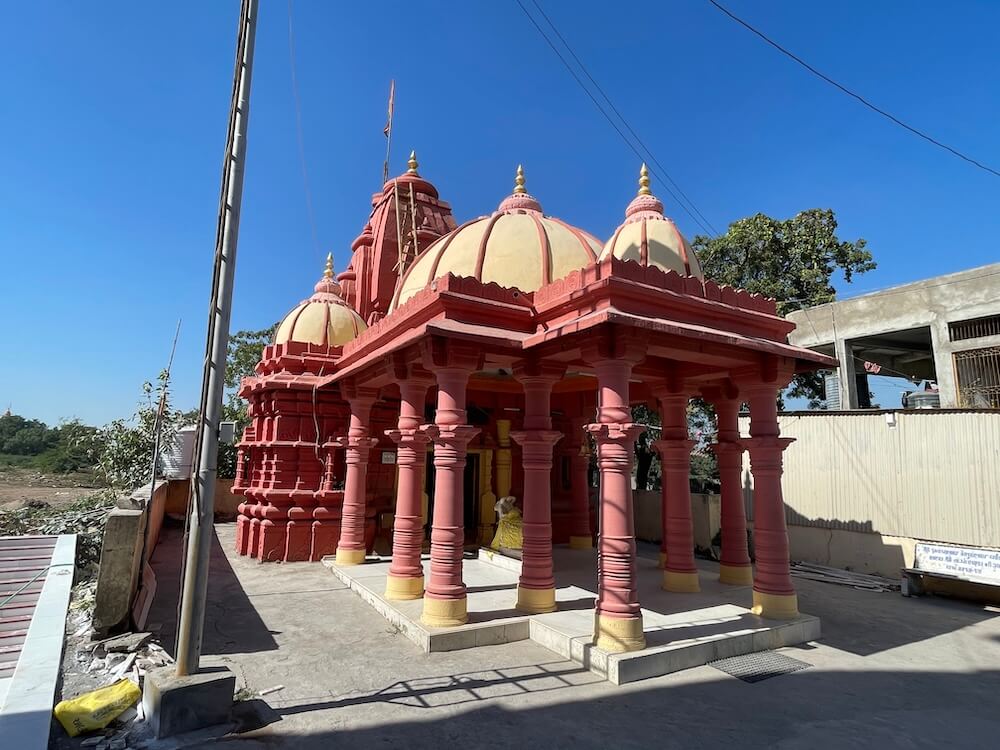 All seven lingas are set in marble bases and protected by serpent canopies. The Shivaling of Someshwar Mahadev is marked by a central line making it appear as two distinct parts. Because of this, this Linga is also revered as the ‘Ardhanarinateshvara’ (the composite form of Shiva and Parvati). An idol of Mother Parvati is also enshrined in a niche on the sanctum wall.
According to Puranic lore Lord Shiv came to this place in the form of a student to study the Vedas during the intercalary month of Bhadrapad (Adhik Bhadrapad). Consequently a grand fair is organised in the temple precincts during the month of Adhik Bhadrapad which occurs every eighteen years. This festival known as the ‘Mini Kumbh Mela’ or the ‘Narmada Kumbh Mela’ attracts millions of devotees and ascetics from various parts of Gujarat. The Gazetteer records a fair held here from 17 August to 14 September 1871 noting that while ten to fifteen thousand devotees attended in the first five days. The numbers eventually swelled to sixty thousand.
Useful Information
- 20 km away from Bharuch
- ST (State Transport) bus facility available from Bharuch
- Private vehicles can reach up to the temple parking
- Accommodation and breakfast facilities are available in the vicinity
- Contact : Mahendrabhai Desai, Mo. 8155926845
भारेश्वर महादेव मंदिर
भडभुत, ताल/जिला. भरूच
मंदिरे
Temples
मंदिर
-
भीमनाथ महादेव मंदिर लिंबळी, ता. सोजित्रा, जि. आनंद
अधिक माहितीBhimnath Mahadev Temple Limbali, Tal. Sojitra, Dist. Anand
View Detailsभीमनाथ महादेव मंदिर लिम्बाली, ताल. सोजित्रा, जिला. आनंद
विवरण देखें -
मेलडी माता मंदिर मालताज, ता. सोजित्रा, जि. आनंद
अधिक माहितीMeldi Mata Temple Malataj, Tal. Sojitra, Dist. Anand
View Detailsमेलडी माता मंदिर मालताज, ताल. सोजित्रा, जिला. आनंद
विवरण देखें -
चंद्रमौलेश्वर महादेव मंदिर उमरेठ, ता. उमरेठ, जि. आनंद
अधिक माहितीChandramouleshwar Mahadev Temple Umreth, Tal. Umreth, Dist. Anand
View Detailsचंद्रमौलेश्वर महादेव मंदिर उमरेठ, तहसील उमरेठ, जिला आनंद
विवरण देखें