
डोसली माता मंदिर
धुवरण, ता. खंभात, जि. आनंद
Dosli Mata Temple
Dhuvaran, Tal. Khambhat, Dist. Anand
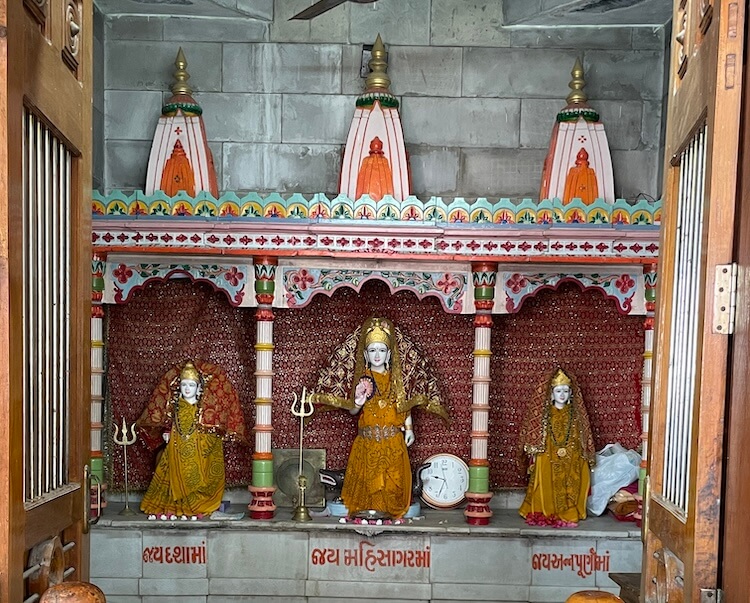
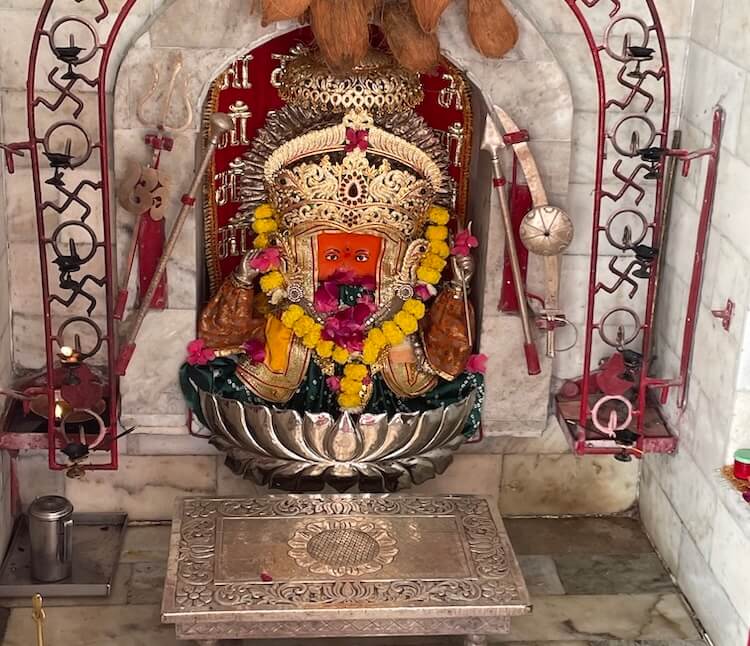 The renowned temple of Dosli Mata situated at the confluence of the Mahisagar River and the sea at Dhuvaran is a place of deep devotion for countless devotees. At this shrine the mother of the Pandavas, Kunti, is worshipped under the name Dosli Mata. Devotees who visit the temple believe that through the blessings of the goddess the boon of progeny is granted. The idol of the Goddess here is said to be from an ancient era.
Historical and religious references connected with this sacred place are recorded in the work ‘Charotar Sarvasangrah’ and also in the British era ‘Khambhat Gazetteer’. According to these accounts the region was once known as ‘Indradyumna Ran’, named after the legendary king Indradyumna. In the course of time the name gradually evolved into Dyumanyarnya and eventually became Dhuvaran. 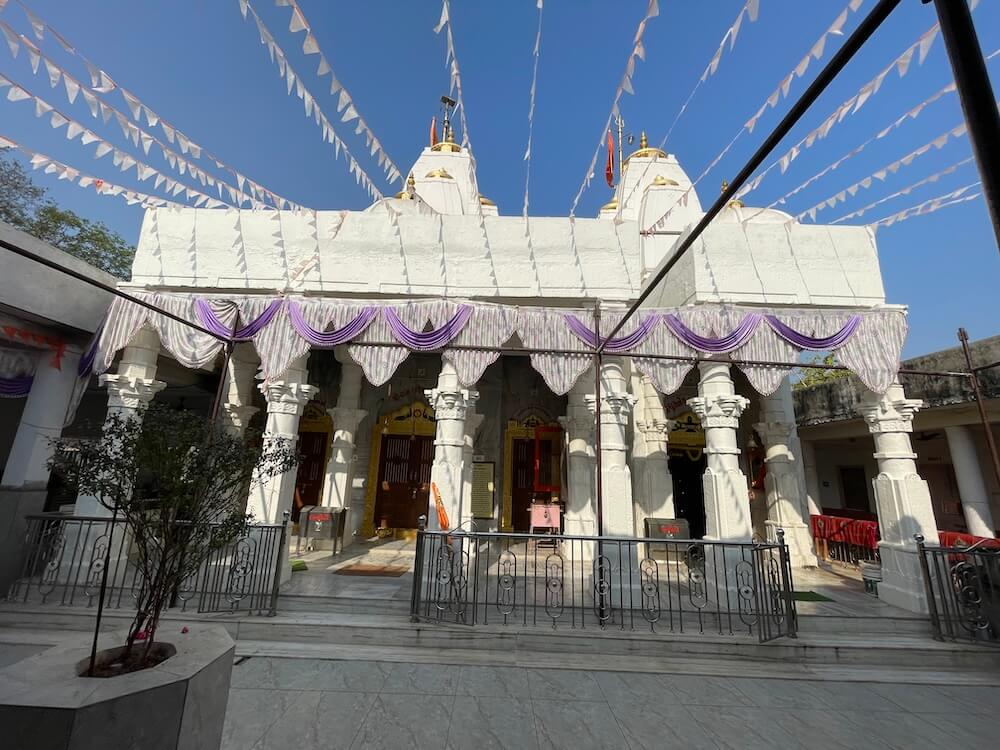 During the medieval period the region formed part of the dominion of the Nawab of Khambhat and it was widely known as an important port and trading centre of global significance. Around the year 1960 when excavation work was underway for the construction of the Dhuvaran Power Plant an ancient idol was discovered buried beneath the ground. Soon afterwards a temple was constructed at the site and the idol was ceremoniously installed there.
In the ‘Adi Parva’ of the ‘Mahabharata’ there is mention of Pritha, the daughter of the Yadava king Shurasena. As she was adopted by the childless king Kuntibhoja she came to be known as Kunti. During her childhood she served the sage Durvasa with great devotion. Pleased by her devotion the sage granted her a divine mantra through which she could invoke any deity and obtain a son. Kunti was later married to Pandu, the king of Hastinapur. 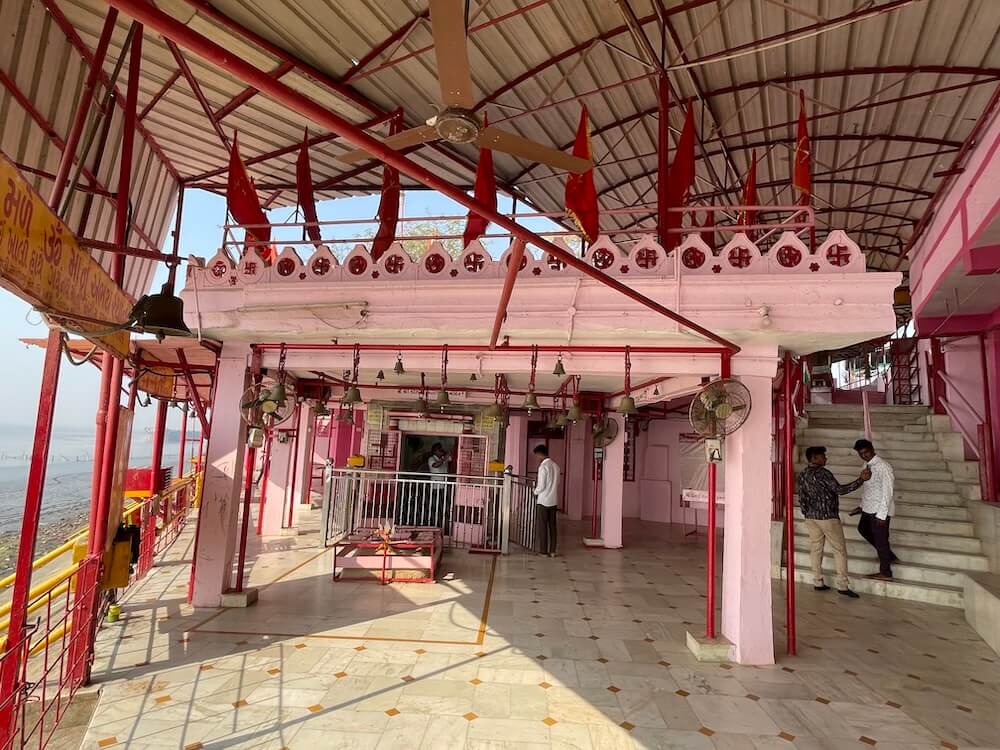 During a hunting expedition Pandu accidentally committed an act that brought upon him a severe curse. Because of this curse if he approached a woman for conjugal relations he would immediately die. At Pandu’s request Kunti used the sacred mantra and thus gave birth to three heroic sons : Yudhishthira through the grace of Yama, Bhima through Vayu Deva and Arjuna through Indra. With the same mantra Pandu’s other wife Madri invoked the Ashwini Kumaras and gave birth to Nakula and Sahadeva. Tradition holds that during the period of exile the Pandavas spent some time in this very region of the Mahisagar Sangam along with their mother Kunti. As the heart of Kunti found peace at this sacred spot she is believed to have remained here in the form of Dosli Mata.
  Owing to these Puranic associations devotees who seek the blessing of progeny visit this shrine and pray with deep reverence before the goddess.
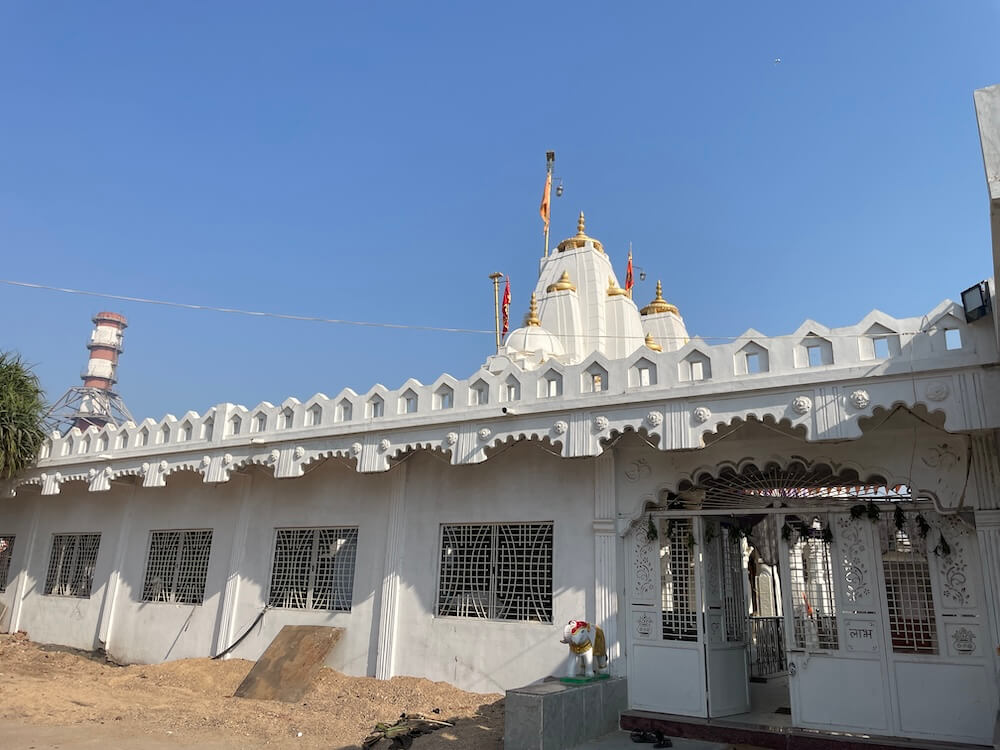
Within the boundaries of Dhuvaran village the temple stands near the confluence of the river and the sea in the sacred Mahisagar Sangam area. A road leading through the extensive grounds of the Dhuvaran Power Station provides access to the temple. At the entrance gate of the power station it is compulsory to register both personal and vehicle details before proceeding further. About five to six hundred metres from this gate the temple stands within the protective sea embankment along the shoreline. The temple courtyard contains large shade-giving trees and on the right side there is a children’s garden equipped with various play structures. Alongside the main temple stands the shrine of Mahisagar Mata. 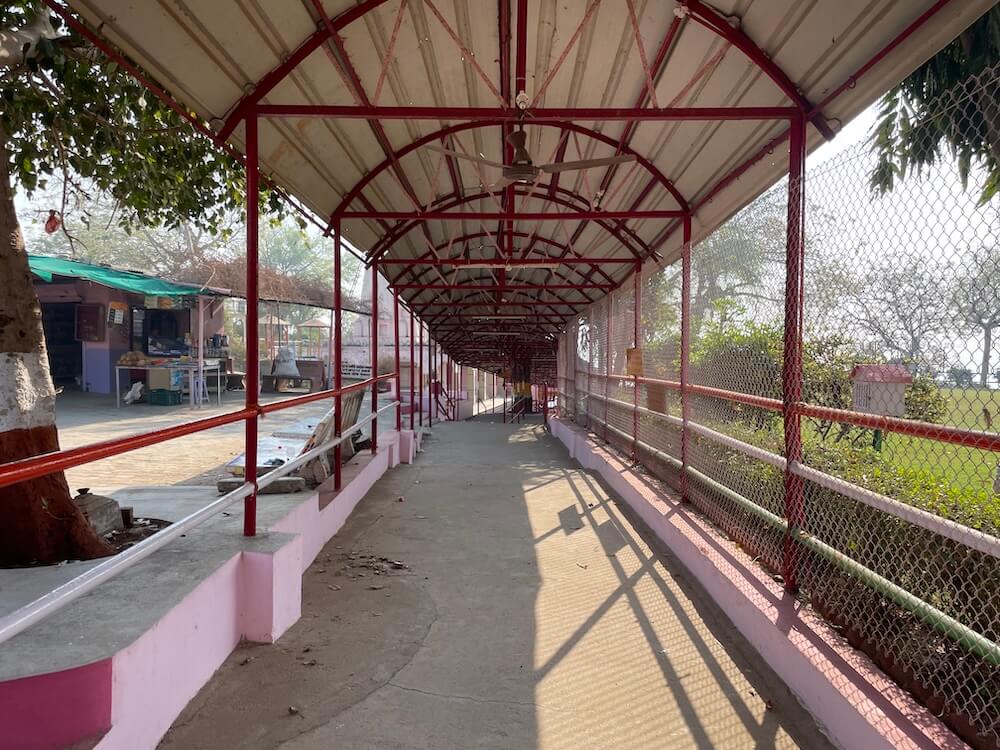 This temple dedicated to the divine personification of the Mahisagar River is also especially revered by devotees.
The sanctity of the Mahisagar Sangam where the river believed to be the daughter of the Earth meets the sea is described in detail in the ‘Kaumarika Khand’ of the ‘Skanda Purana’. It is said that the merit obtained from visiting 68 thousand sacred tirthas such as Kashi, Kurukshetra, the Ganga, Narmada and Saraswati is gained merely by bathing at this Mahisagar Sangam. In ancient times Swami Kartikeya and the sage Narada are believed to have resided here and it was on Narada’s advice that King Indradyumna settled in this region. It is also said that Shani Deva declared that anyone who performs ritual bathing, charity and shraddha rites here on a Saturday coinciding with Amavasya will attain inexhaustible spiritual merit. 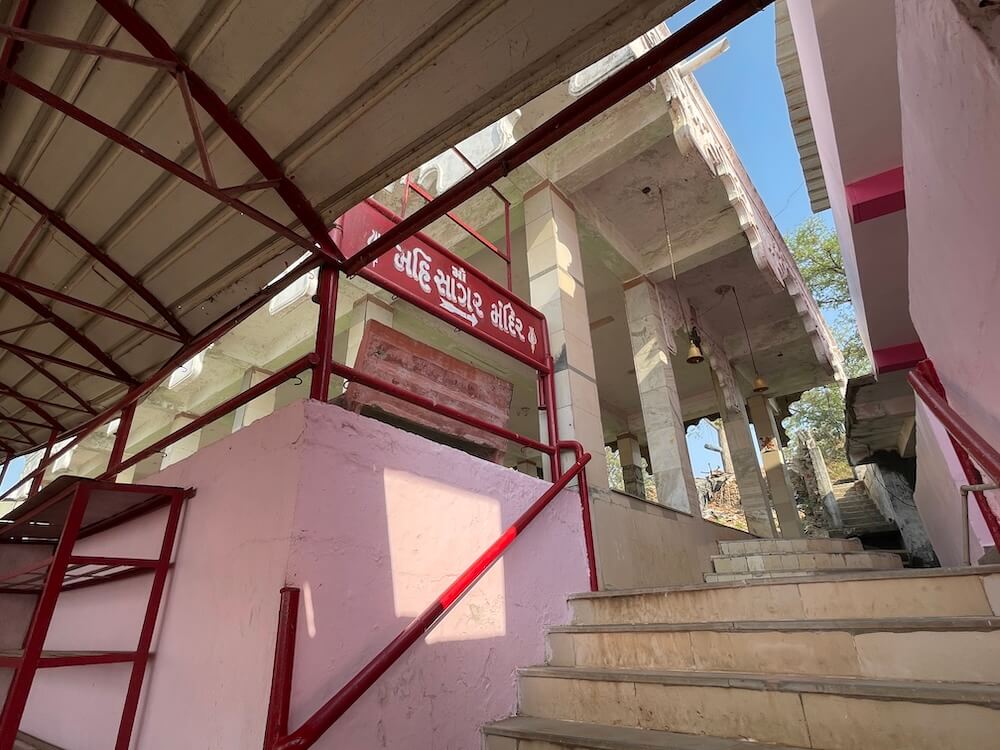 Bathing at this confluence during an eclipse is also believed to yield merit multiplied many thousands of times. For performing rites dedicated to the ancestors this place is regarded as sacred as the renowned Gaya tirtha. Devotees believe that by offering arghya to Surya Narayan here and performing shraddha for the departed ancestors, they attain eternal satisfaction in heaven.
Devotees who come here offer a richly adorned sari and ‘oti’ (a traditional offering made to a goddess consisting of cloth and sacred items) to the idol of the goddess. Near the Mahisagar Temple stand relatively recent shrines dedicated to Shri Ram, Lakshmana and Janaki. Within a subsidiary sanctum of this Shri Ram Temple, idols of Amba Mata, Hanuman and the pinda of Indradyumneshwar Mahadev have also been installed.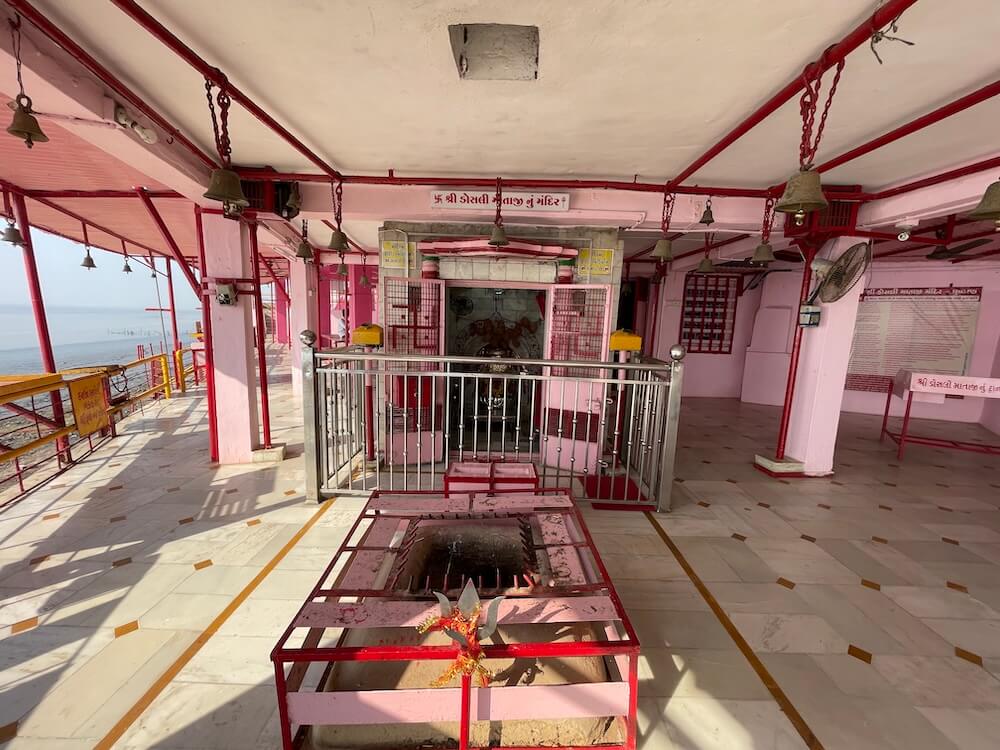
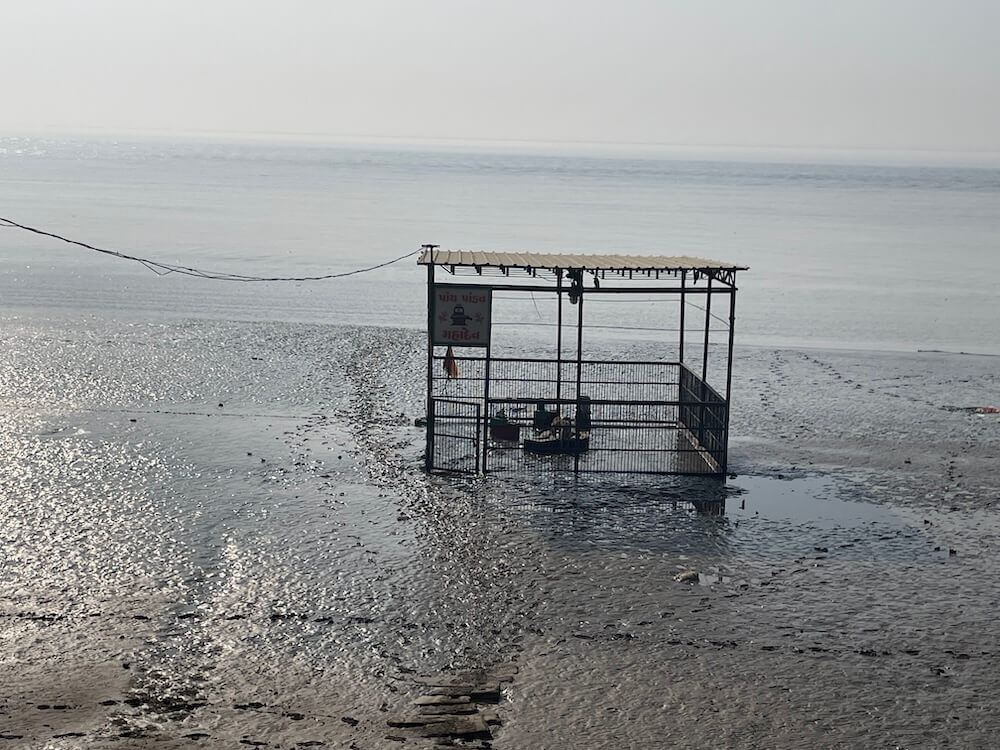
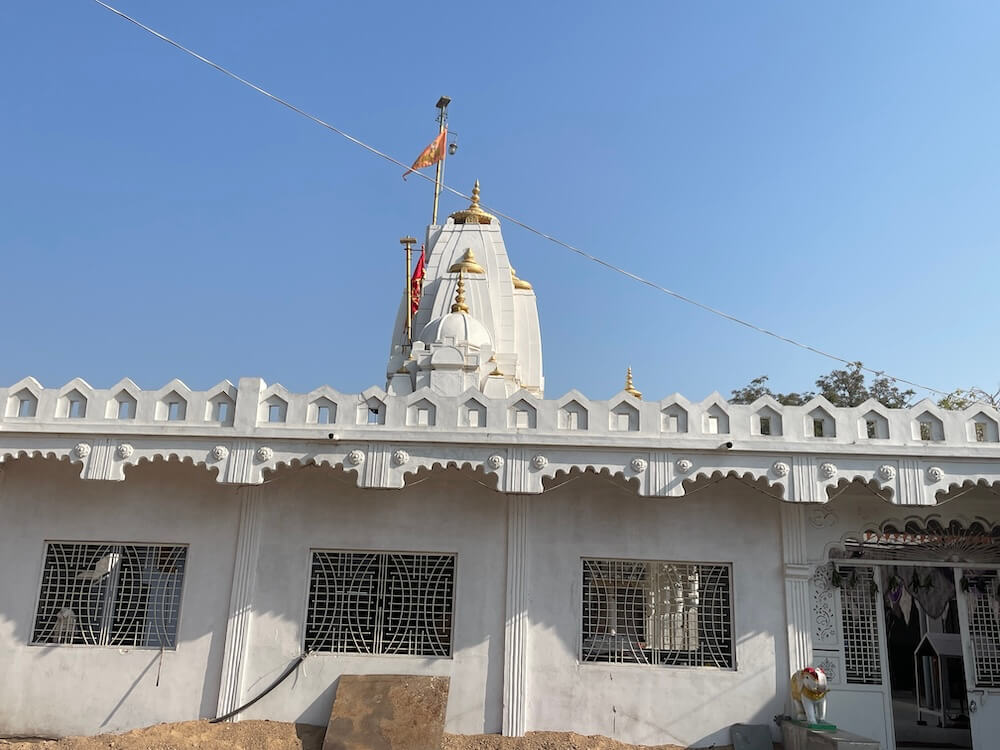
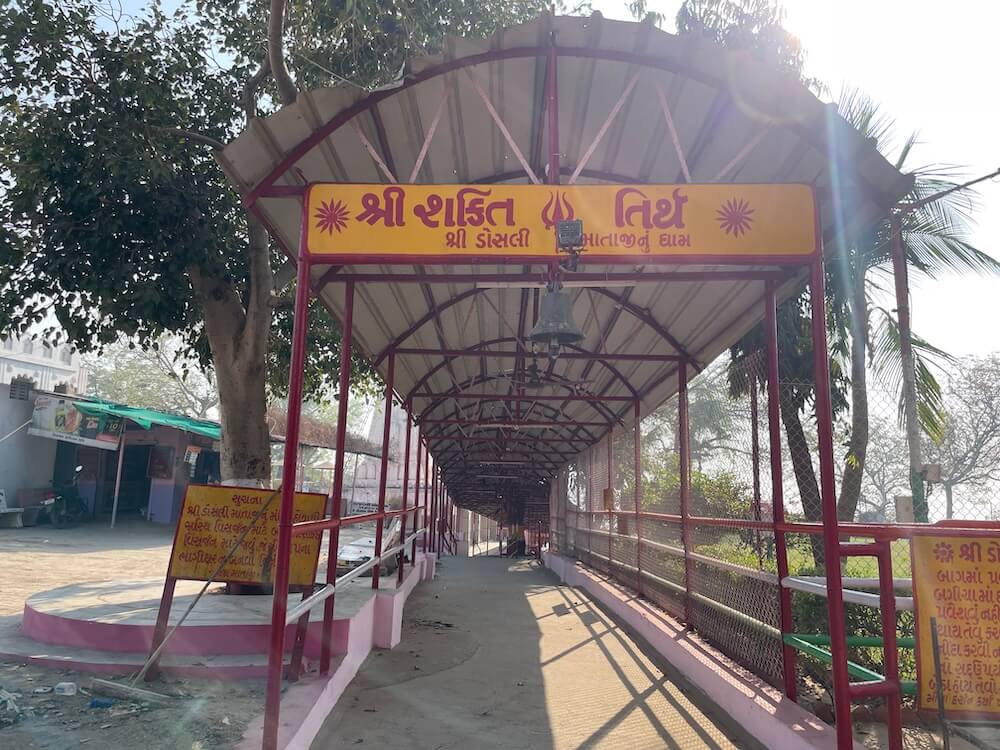
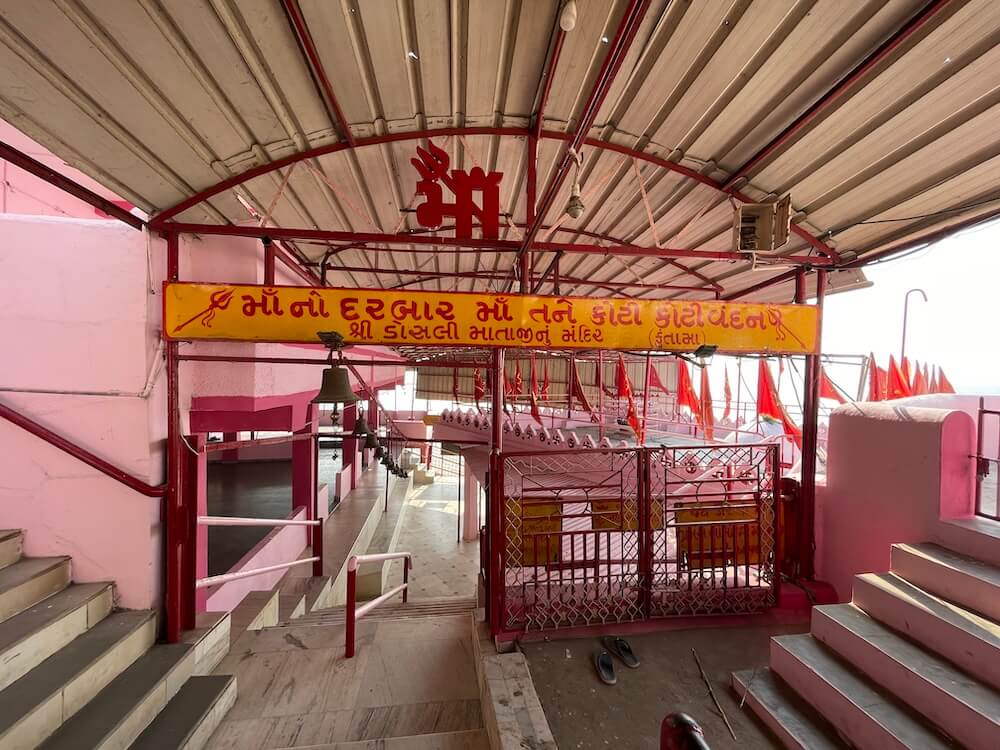
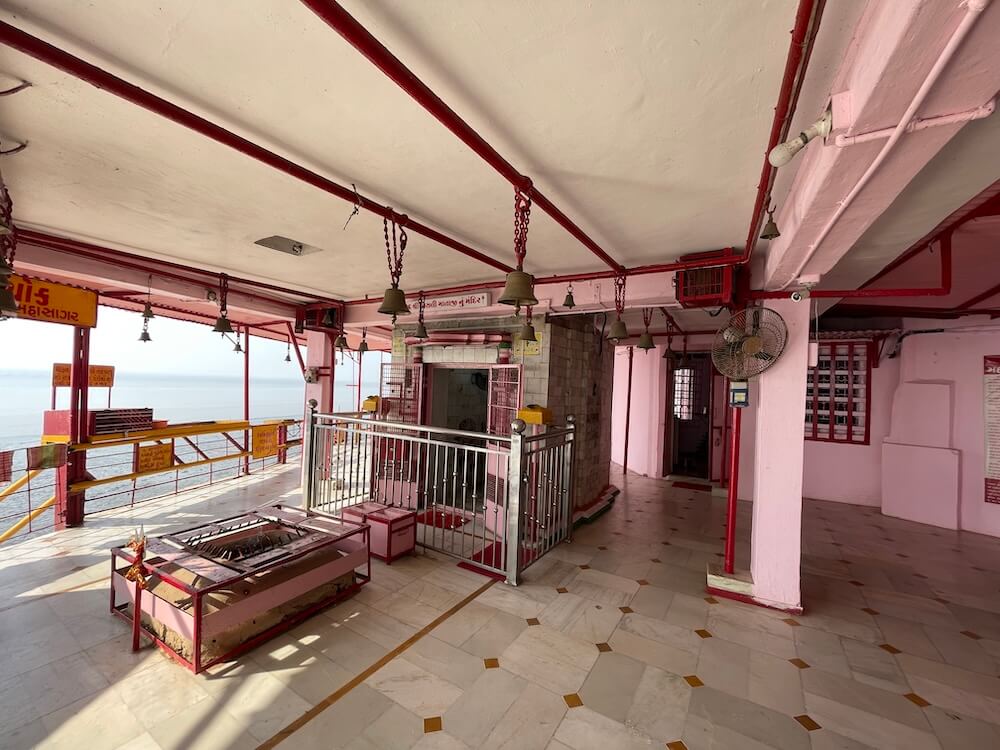
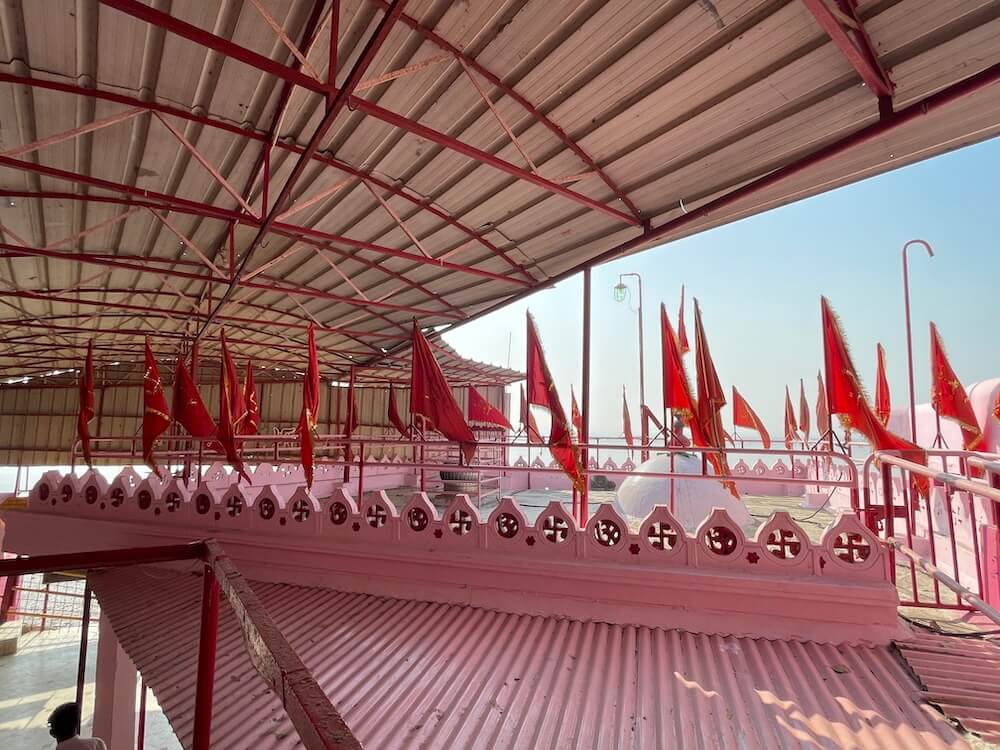
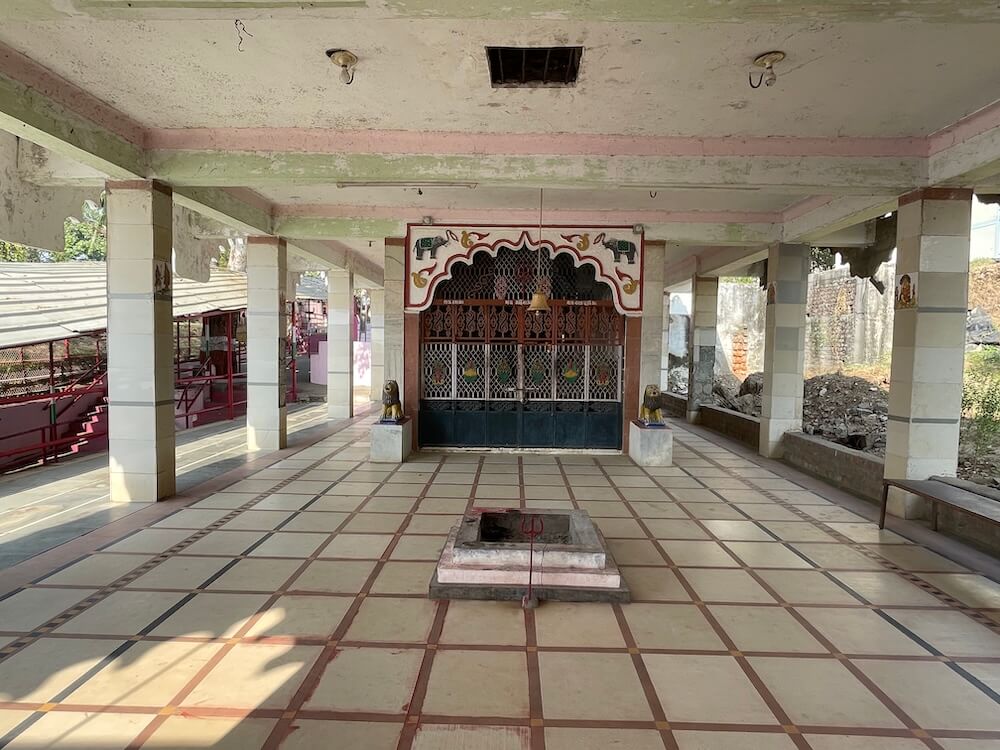
The Dosli Mata Temple itself lies in a lower level than the main courtyard and to reach it devotees must descend about sixty steps. Along the stairway a protective shed shaped like the curved back of an elephant has been constructed to shield visitors from sun and rain. At the end of the steps on the left stands the Dosli Mata Temple built in a modern architectural style using cement and concrete. The structure consists of a semi open sabhamandap and the garbhagriha. Within the sabhamandap there is a yajna kund. From the staircase leading to the temple roof one can behold a panoramic view of the sea. The stone idol within the sanctum is seated in padmasana and is coated with vermilion radiating a striking spiritual presence. In one hand the goddess holds a trishul, while the other hand is raised in the gesture of blessing. 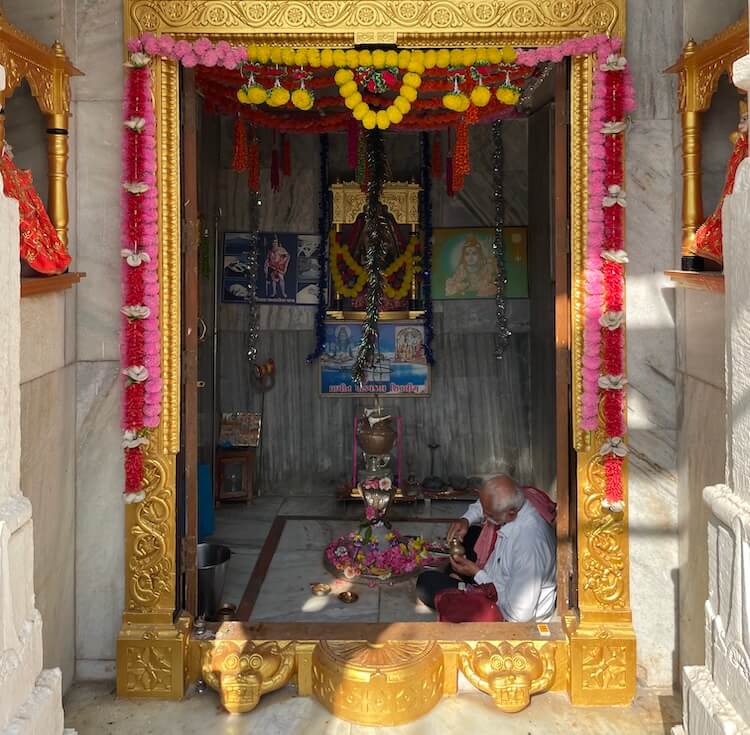 The temple’s ornate shikhara is crowned with an amalaka and kalasha. Adjacent to this temple along the seashore stands the ‘Panch Pandav Mahadev Temple’, believed to have been established by the Pandavas and forming one of the ancient landmarks of the area.
Several religious festivals are celebrated here with great enthusiasm including Chaitra Navratra, Sharadiya Navratra and Mahashivaratra. During the nine days of Navratra the goddess is adorned each day with different ornaments and garments.
Large crowds of devotees gather at the temple on every full moon day and on Amavasya. On Tuesdays and Fridays too hundreds of devotees come for darshan of the goddess. During festival occasions it is customary to offer the goddess a sari, choli, auspicious ornaments associated with married women and sweets as prasad.
Many devotees also visit the Panch Pandav Mahadev Temple situated on the seashore which becomes partially submerged during high tide.
Useful Information
- Located at 25 km from Khambhat and 50 km from Anand
- State transport buses operate from Khambhat to Dhuvaran village
- Private vehicles can reach up to the temple parking area
- No facilities for accommodation and breakfast are available in the vicinity
- Contact: Temple Office, Mobile 94273 85270, 99245 4484
दोसली माता मंदिर
धुव्रण, ताल. खंभात, जिला. आनंद
मंदिरे
Temples
मंदिर
-
भीमनाथ महादेव मंदिर लिंबळी, ता. सोजित्रा, जि. आनंद
अधिक माहितीBhimnath Mahadev Temple Limbali, Tal. Sojitra, Dist. Anand
View Detailsभीमनाथ महादेव मंदिर लिम्बाली, ताल. सोजित्रा, जिला. आनंद
विवरण देखें -
मेलडी माता मंदिर मालताज, ता. सोजित्रा, जि. आनंद
अधिक माहितीMeldi Mata Temple Malataj, Tal. Sojitra, Dist. Anand
View Detailsमेलडी माता मंदिर मालताज, ताल. सोजित्रा, जिला. आनंद
विवरण देखें -
चंद्रमौलेश्वर महादेव मंदिर उमरेठ, ता. उमरेठ, जि. आनंद
अधिक माहितीChandramouleshwar Mahadev Temple Umreth, Tal. Umreth, Dist. Anand
View Detailsचंद्रमौलेश्वर महादेव मंदिर उमरेठ, तहसील उमरेठ, जिला आनंद
विवरण देखें