
सूर्य मंदिर
मोढेरा, ता. बेचराजी, जि. मेहसाणा
Sun Temple
Modhera, Tal. Becharaji, Dist. Mehsana
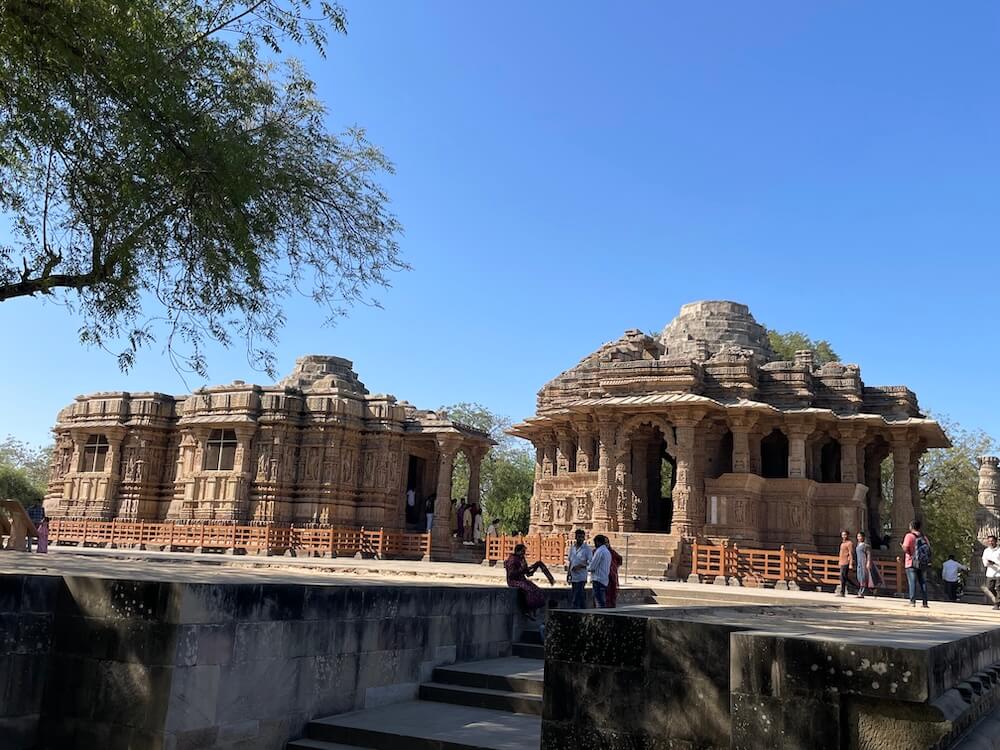
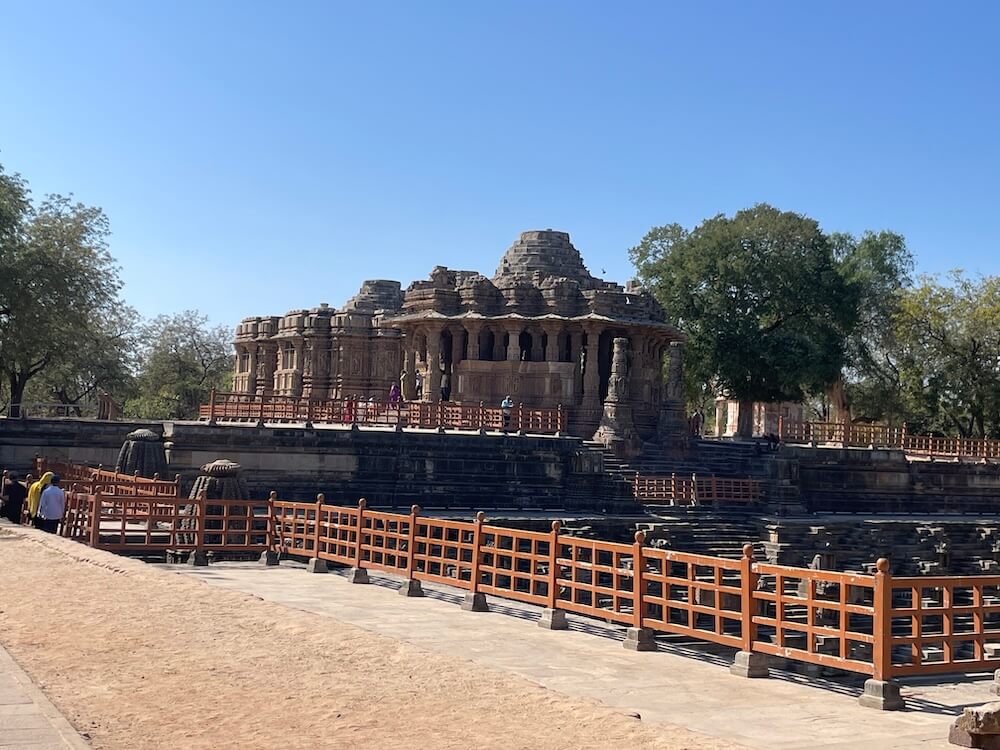
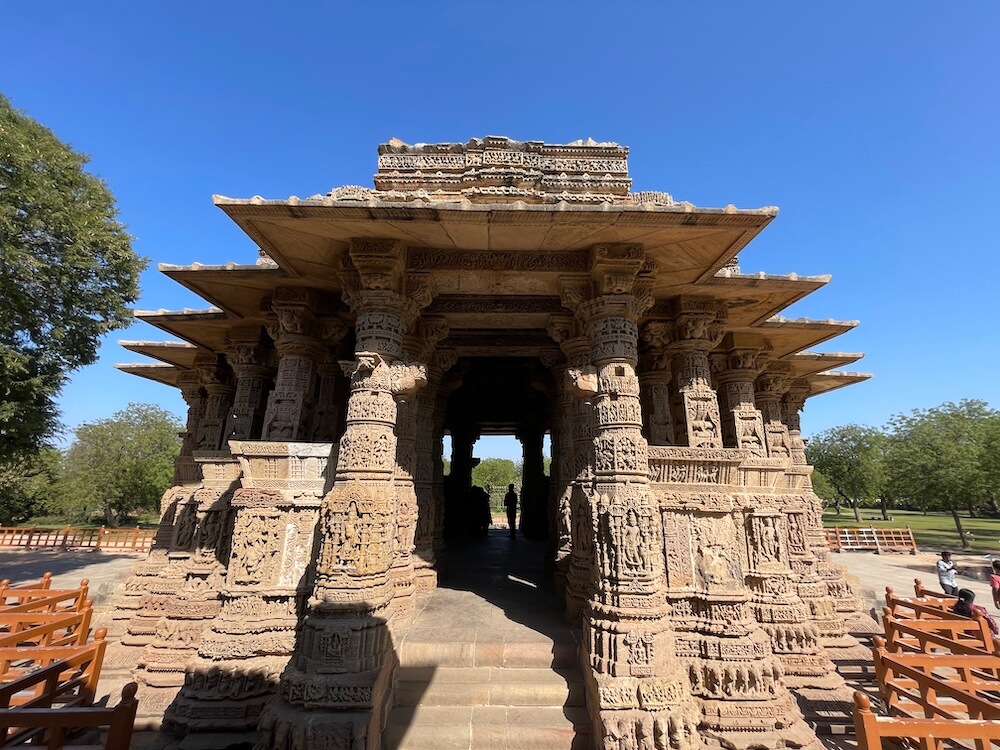
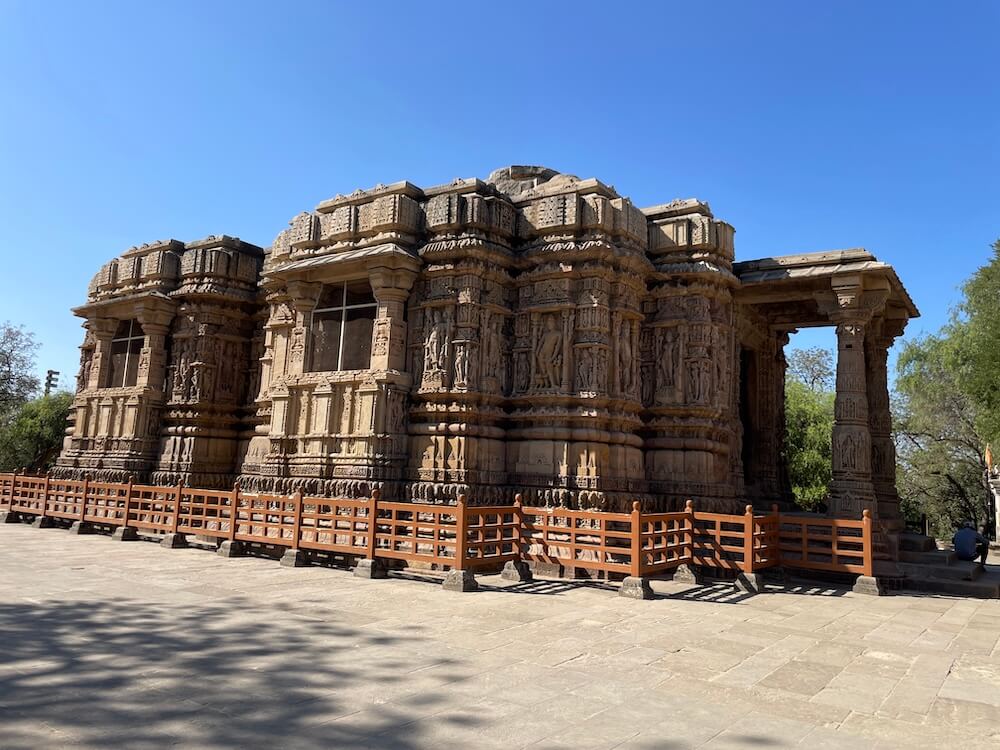
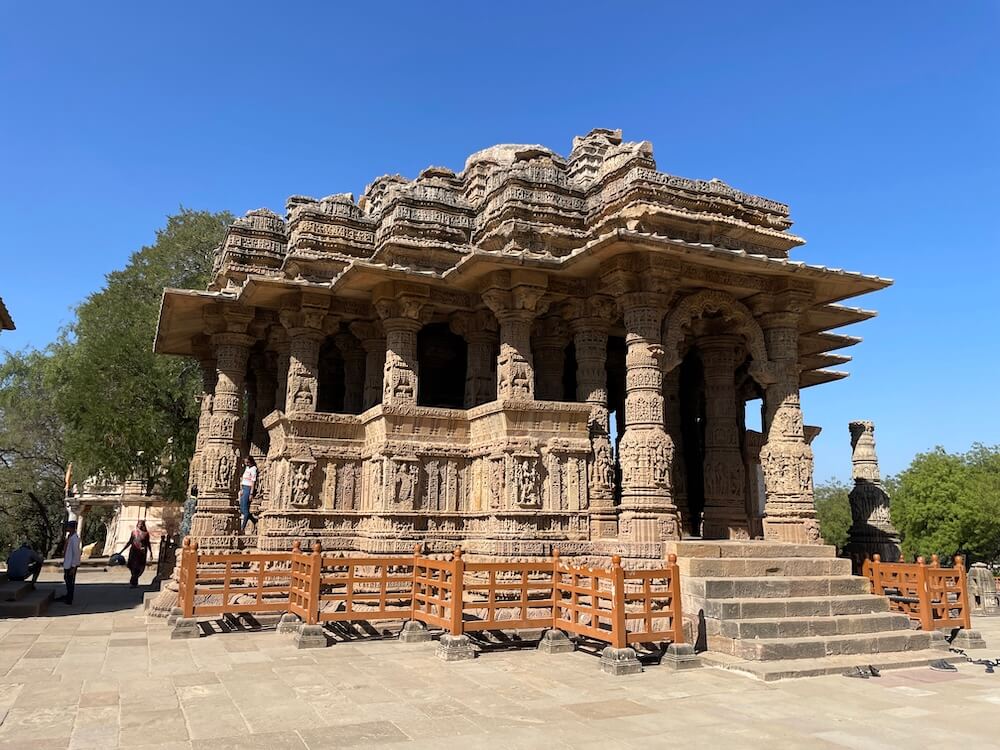
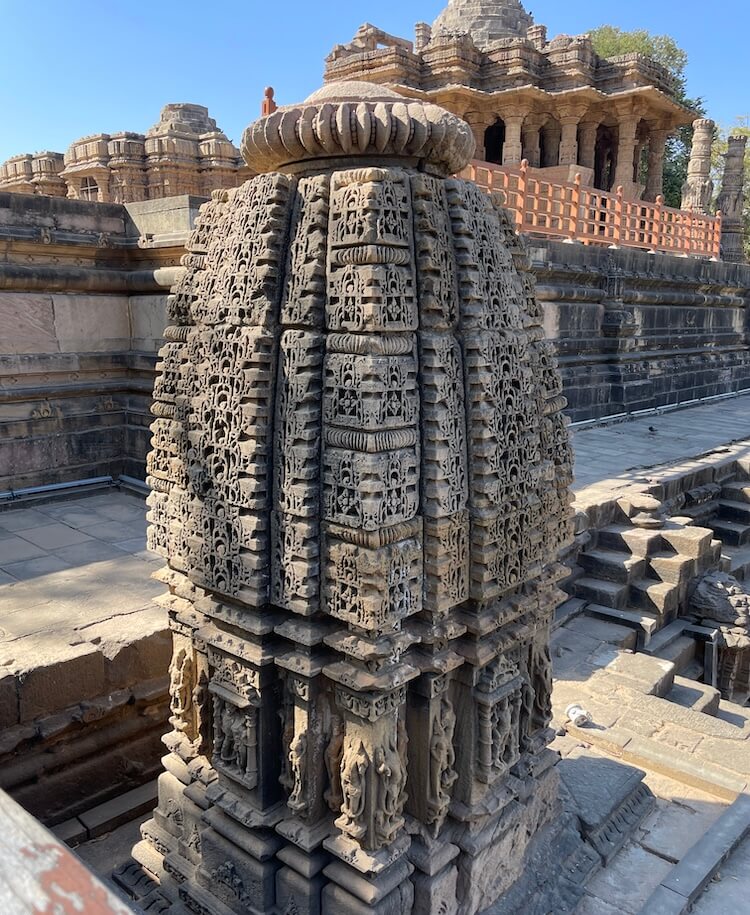 The Sun Temple of Modhera is majestically situated on the banks of the Pushpavati River in the Becharaji Taluka of Mehsana district. Seated precisely at 23.6 degrees latitude near the Tropic of Cancer, this east-facing edifice is revered as one of India’s most profound ancient architectural treasures. In 2014, UNESCO designated this sanctuary as a World Heritage Site. Furthermore, officially designated as a ‘Monument of National Importance’ by the Archaeological Survey of India, this structure is held in equal esteem to the Konark Sun Temple in Odisha and the Martand Sun Temple in the Kashmir Valley. Mehsana distinguishes itself as India’s first city to be powered entirely by solar energy; in harmony with this distinction, the Modhera Sun Temple also operates completely on solar power.
During the ‘Treta Yuga’, the region of Modhera was known as ‘Satyamandir’. In the ‘Dvapara Yuga’, it was called ‘Vedbhuvan’ and at the dawn of the ‘Kali Yuga’, it was identified as ‘Moherakpur’. It is said to have been the original settlement of Modha Brahmans. According to mythological chronicles, Lord Brahma and Dharmaraja performed ‘Tapa’ (penance) upon this soil for many centuries. 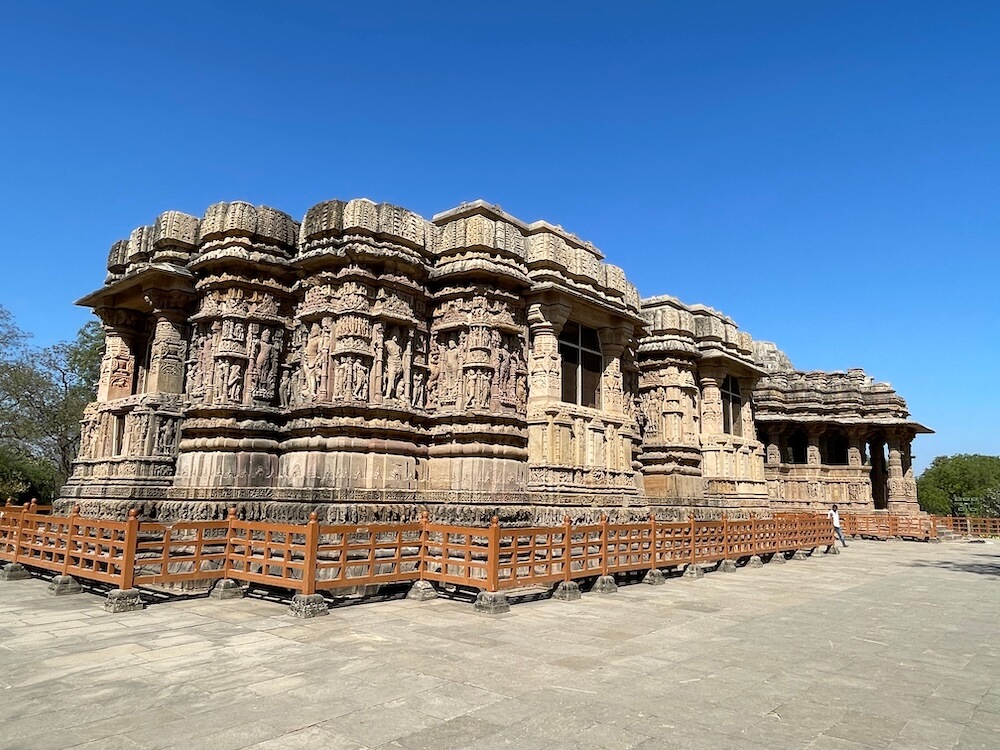 It was due to the penance of Dharmaraja that the precinct received the appellation ‘Dharmaranya’. Maharishi Ved Vyas had imparted to the sages that in the entire universe, only two locations were truly conducive for attaining ‘Moksha’ (salvation): Naimisharanya in Uttar Pradesh and Dharmaranya in Gujarat. References in the ‘Skanda Purana’ and ‘Brahma Purana’ suggest that following the slaying of Ravana, Lord Ram sought the counsel of Maharishi Vashistha to cleanse himself of the sin of ‘Brahmahatya’ (the killing of a Brahmin). Accompanied by Sita and Lakshmana, Lord Ram arrived in Dharmaranya and performed a grand ‘Yagya’ (sacrificial ritual) in the village of Modherak on the banks of the Pushpavati.
Historical records indicate that around 1024–25 AD, during the formidable invasion by Mahmud of Ghazni, twenty thousand soldiers attempted to thwart his advance at Modhera. Following the recovery from this onslaught, 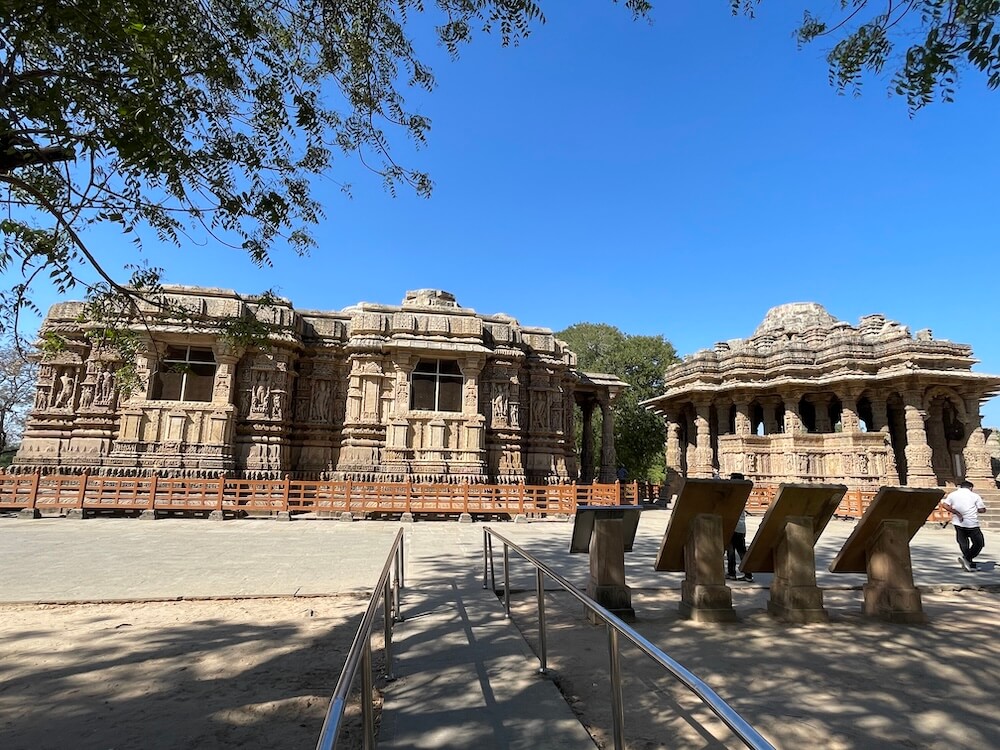 Chaulukya (Solanki) King Bhimdev I (1022-1063 AD) completed the construction of the main edifice in Vikram Samvat 1083 (1026–27 AD) as a monument of victory. According to some historians, this is a probable date and is not considered the date of construction.
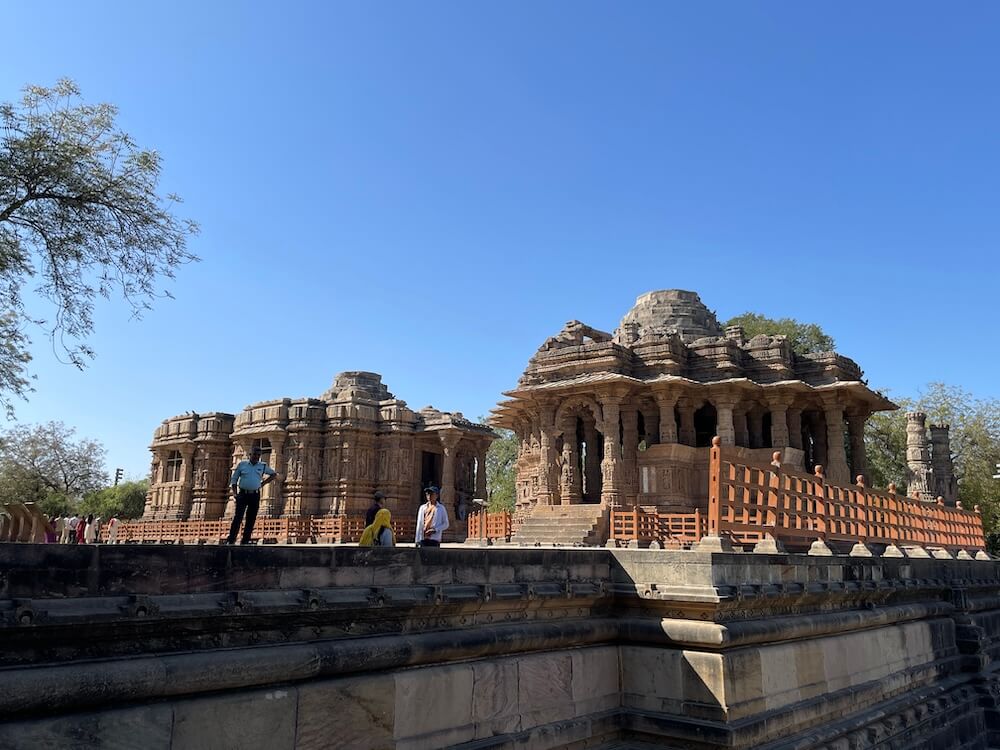
The Solanki monarchs regarded themselves as ‘Suryavanshi’ (descendants of the Sun). Using yellow sandstone and adhering to the Maru-Gurjara architectural style, they erected this robust temple to their ancestral deity without using lime or mortar. In the latter half of the twelfth century, during the reign of King Karna, the ‘Nritya Mandapa’ (dance hall), the entrance portal and new doors for the sanctum were added. In subsequent years, 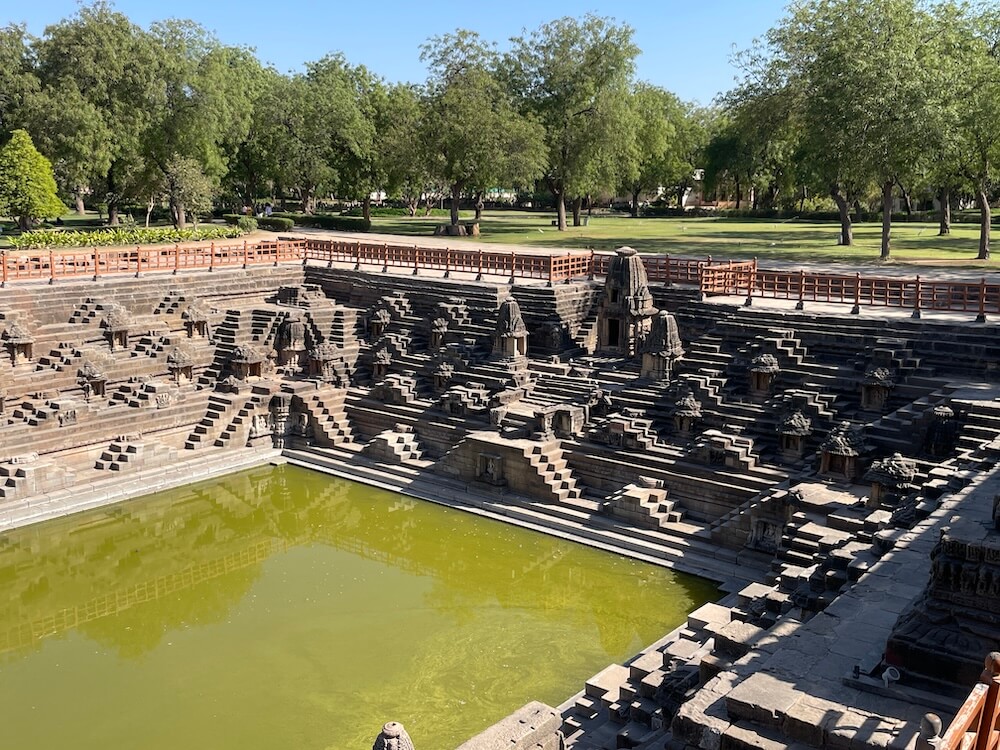 the armies of Alauddin Khilji attacked the structure, placing explosives within the ‘Garbhagriha’ (sanctum sanctorum). The invaders destroyed the main ‘Shikhara’ (spire) and plundered the precious idols. According to Hindu tenets, a ‘Khandit’ (desecrated or broken) idol is not worshipped; consequently, no daily ritualistic worship, or ‘Puja’, takes place in the temple today.
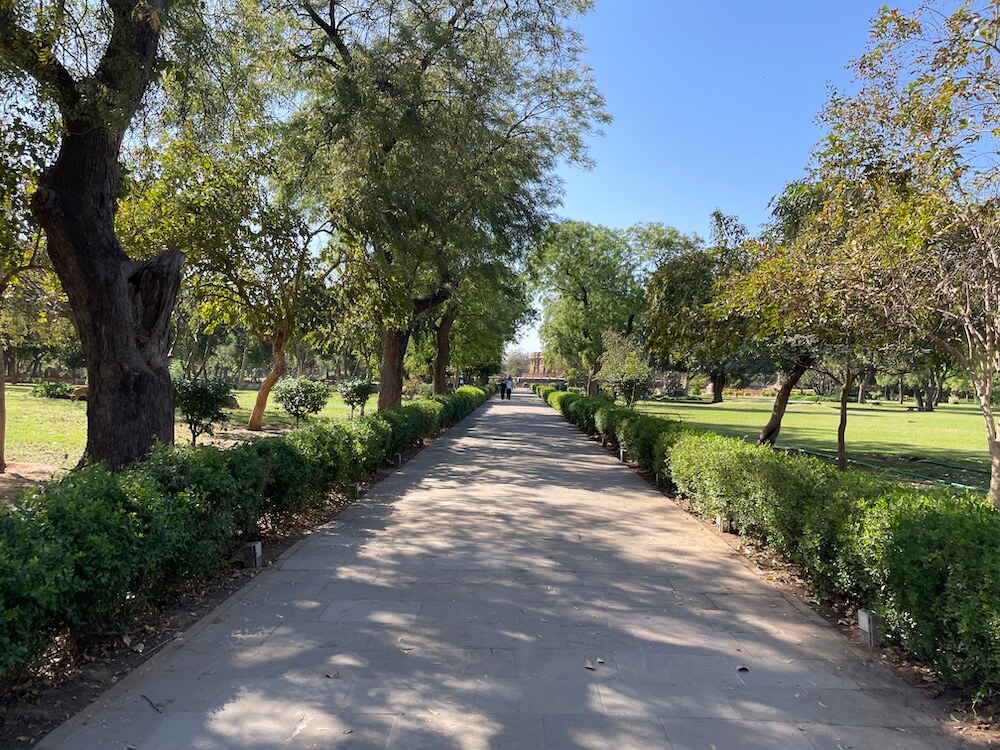
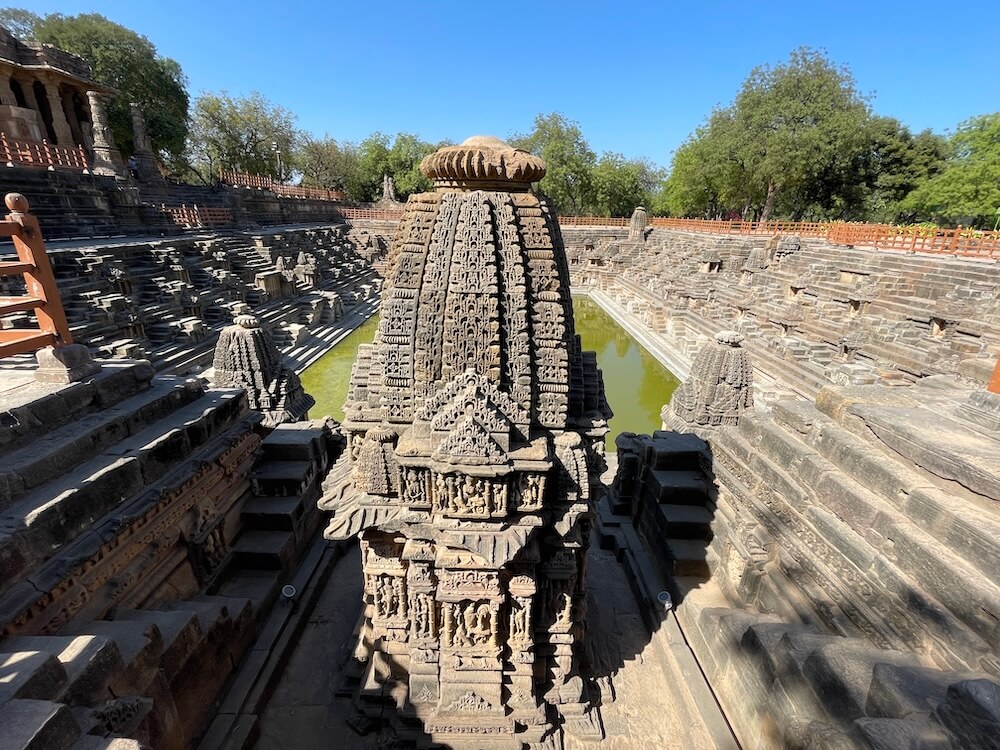
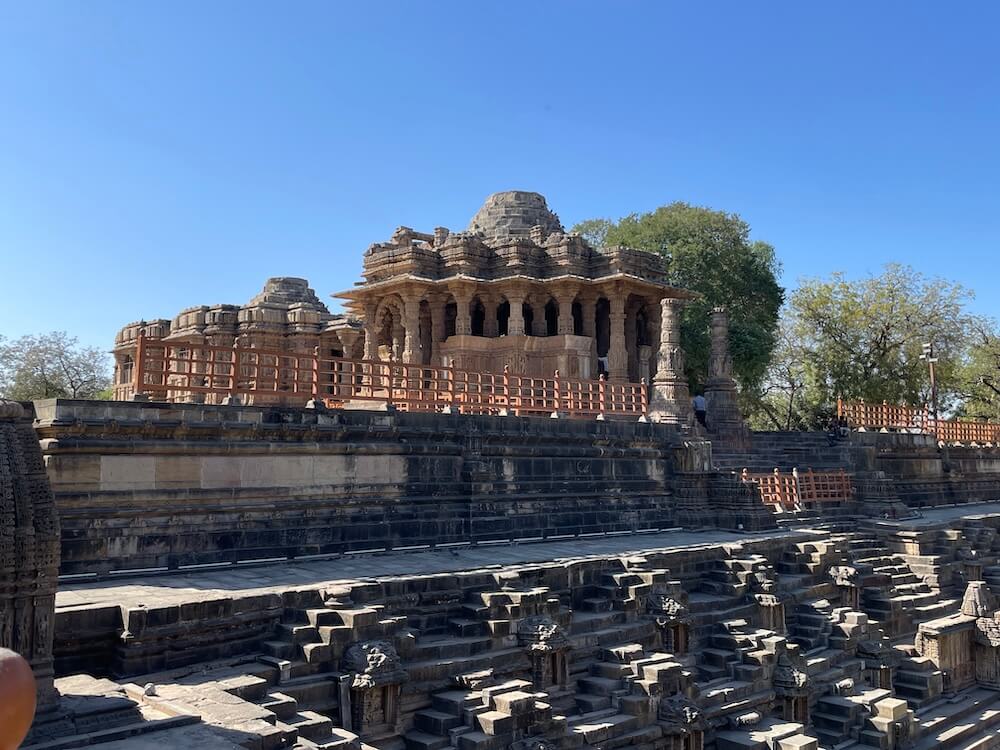
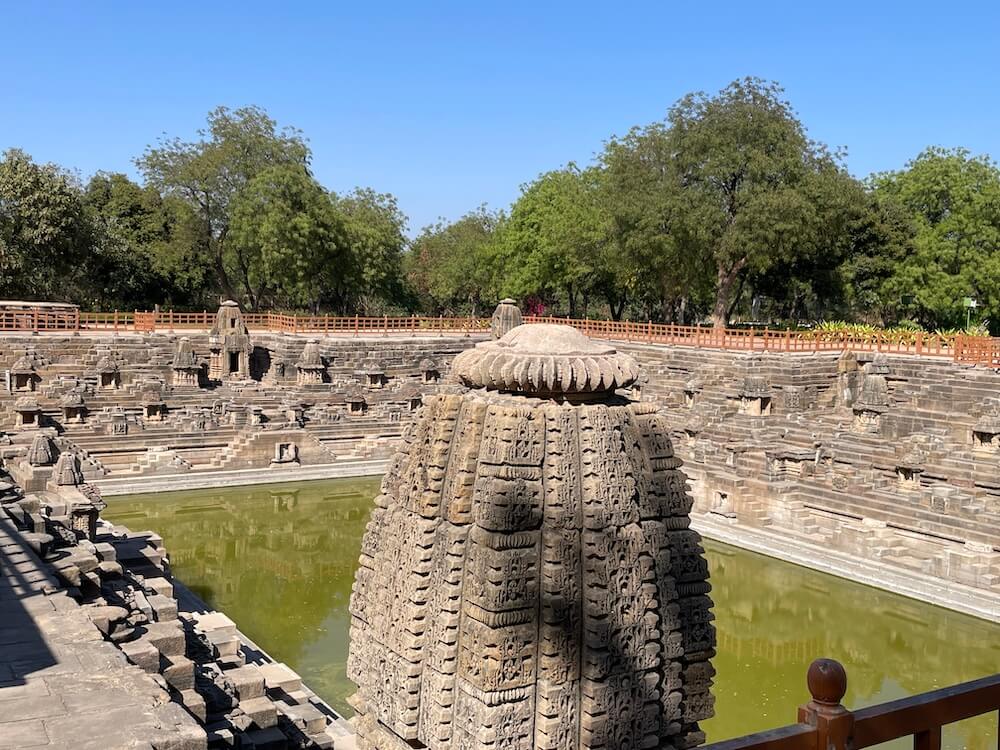
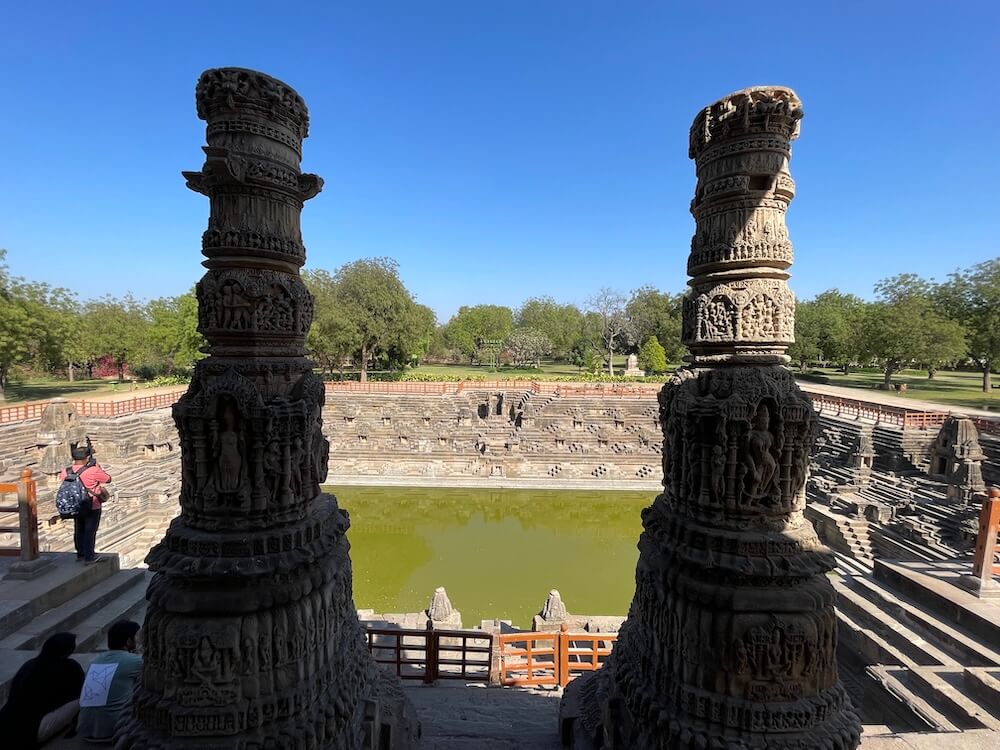
The temple, set within a pristine, well-planned and tranquil precinct, requires separate ticket fees for Indian and foreign nationals, with a ticket counter available near the entrance. Beyond the gates lie lush gardens, numerous trees and informative plaques detailing the temple’s history. Situated before the temple, which is built upon a high plinth, is the ‘Surya Kund’, a grand rectangular reservoir measuring 176 feet in length and 120 feet in width. Also known as ‘Ram Kund’, its waters are said to never run dry. 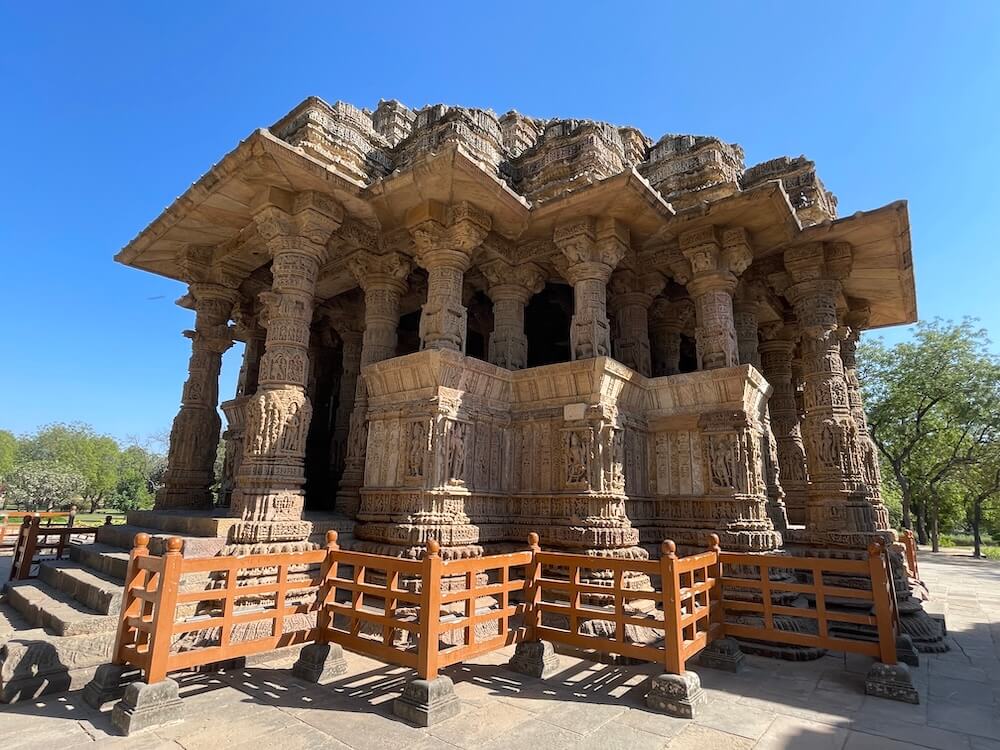 The reservoir features 28 steps and is adorned with 108 small and large shrines— a number derived from the multiplication of the twelve zodiac signs and the nine planets. Enshrined within the ‘Kund’ are icons of Vishnu reclining upon Sheshnag, Ganesha, Shiva in the ‘Nataraja’ (cosmic dance) posture and Shitala Mata mounted upon a donkey, holding a broom and neem branches. To the north-east of the reservoir stands the ‘Kirti Toran’, a triumphal arch supported by two magnificently carved pillars, though its upper section was destroyed during foreign invasions.
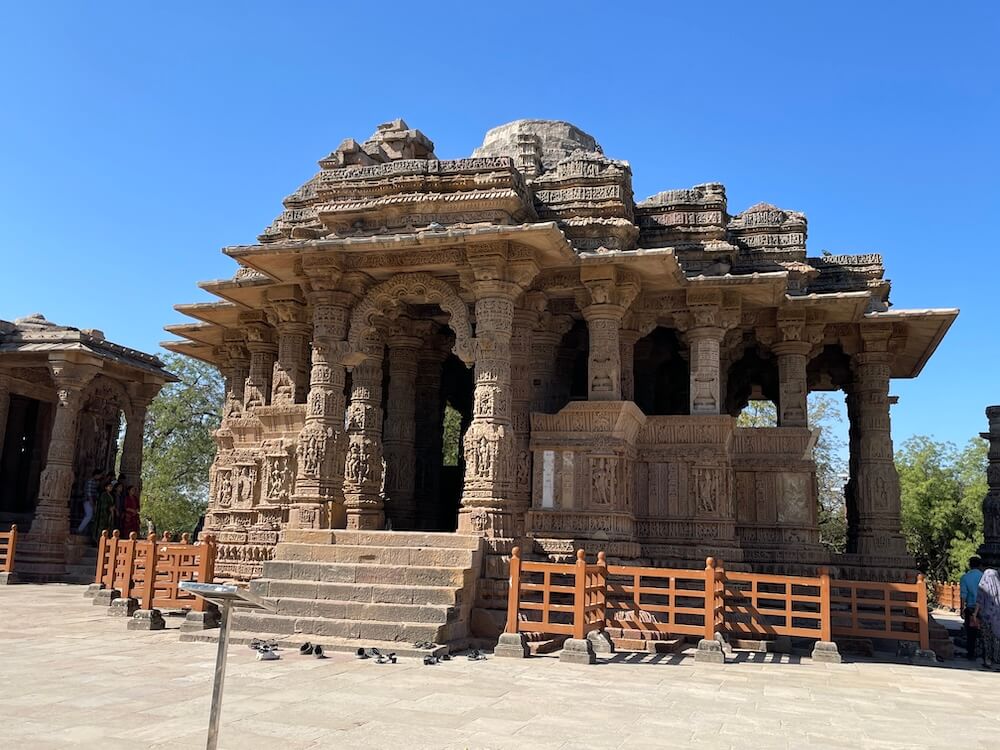
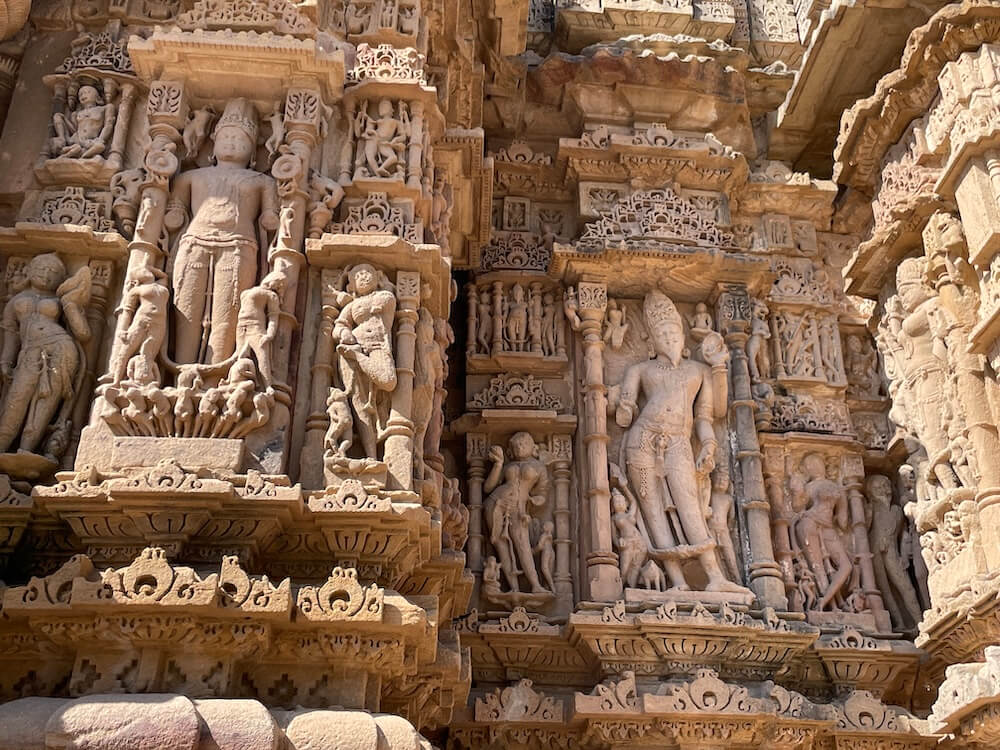
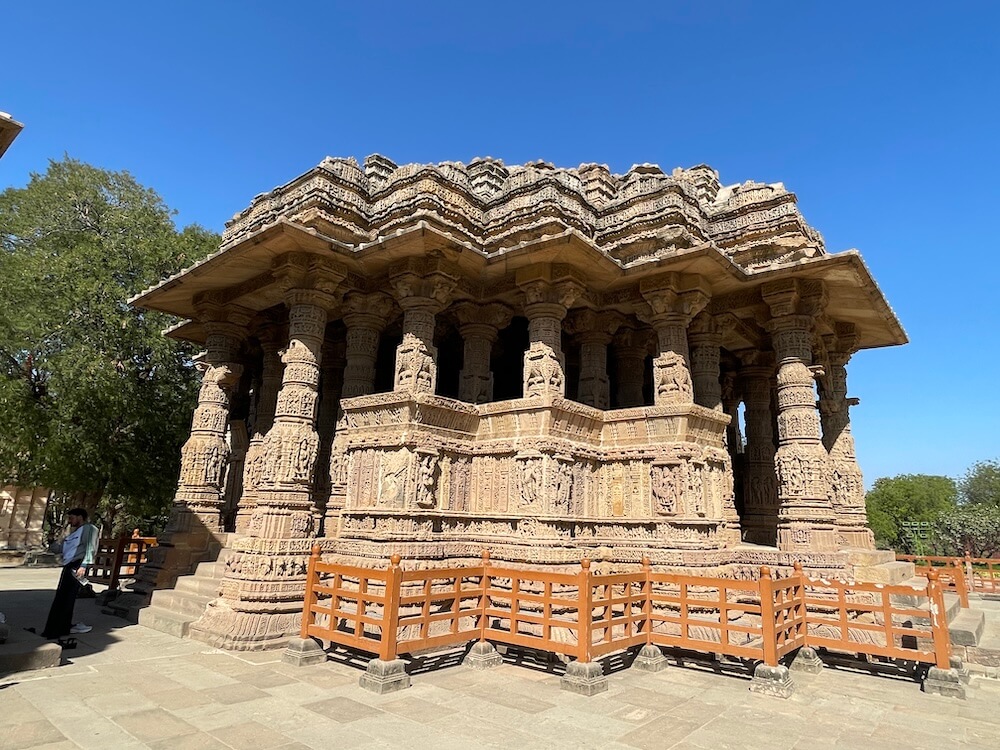
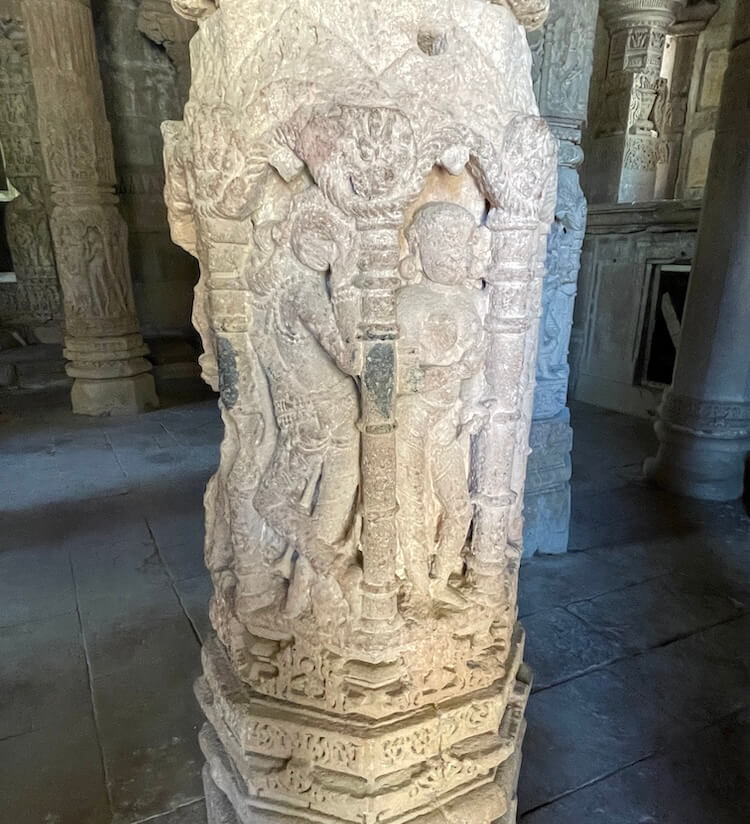
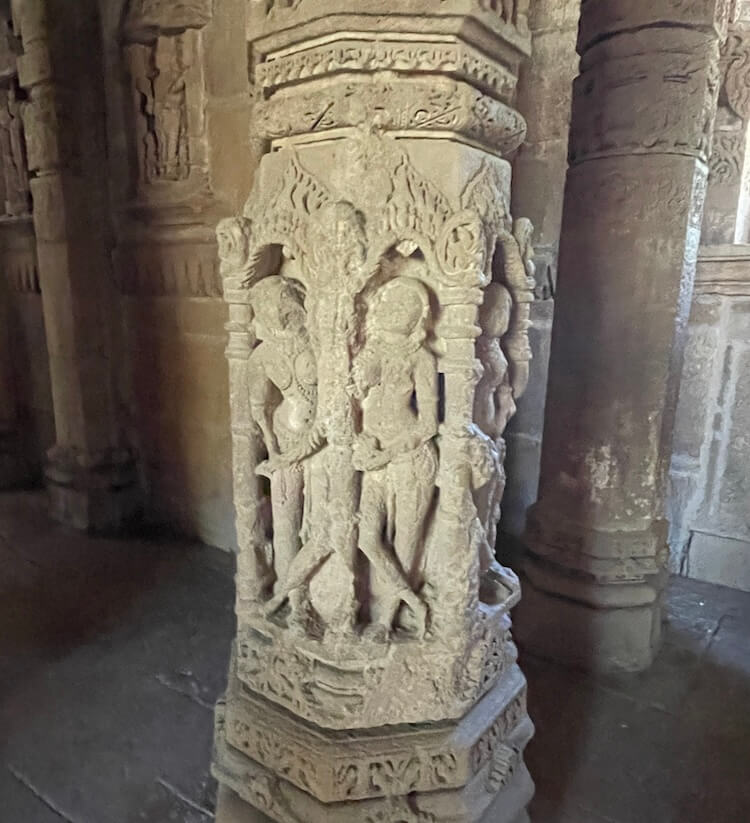
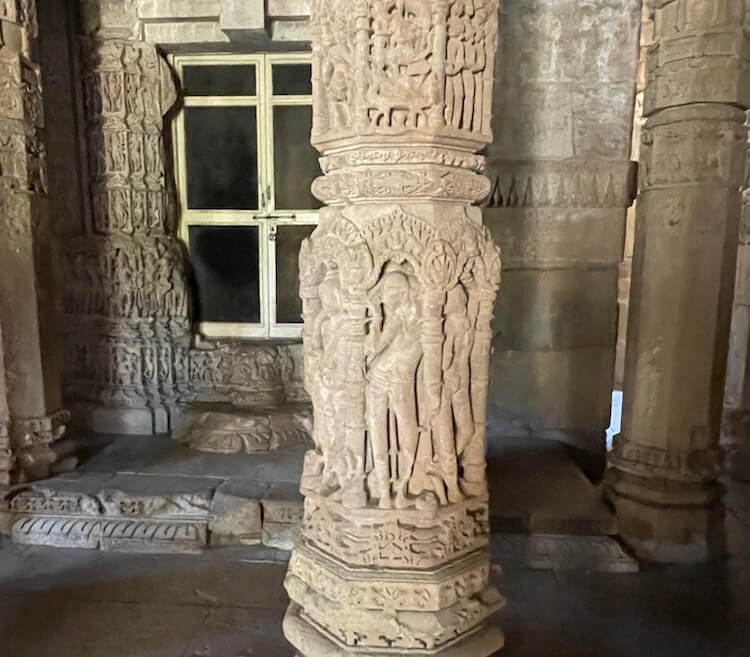
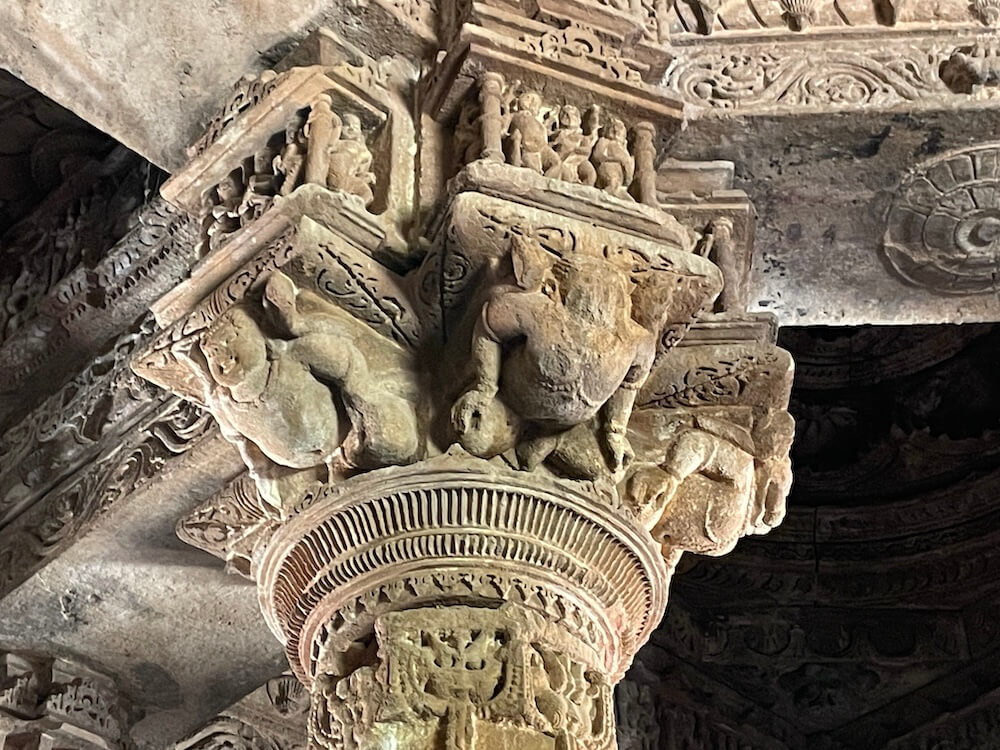
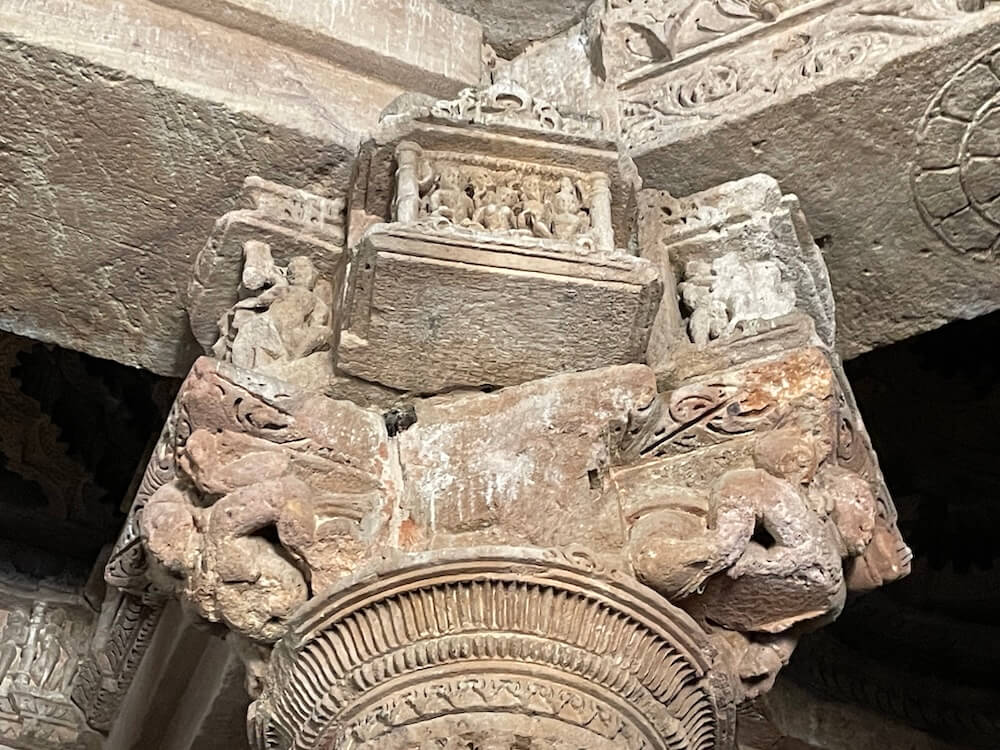
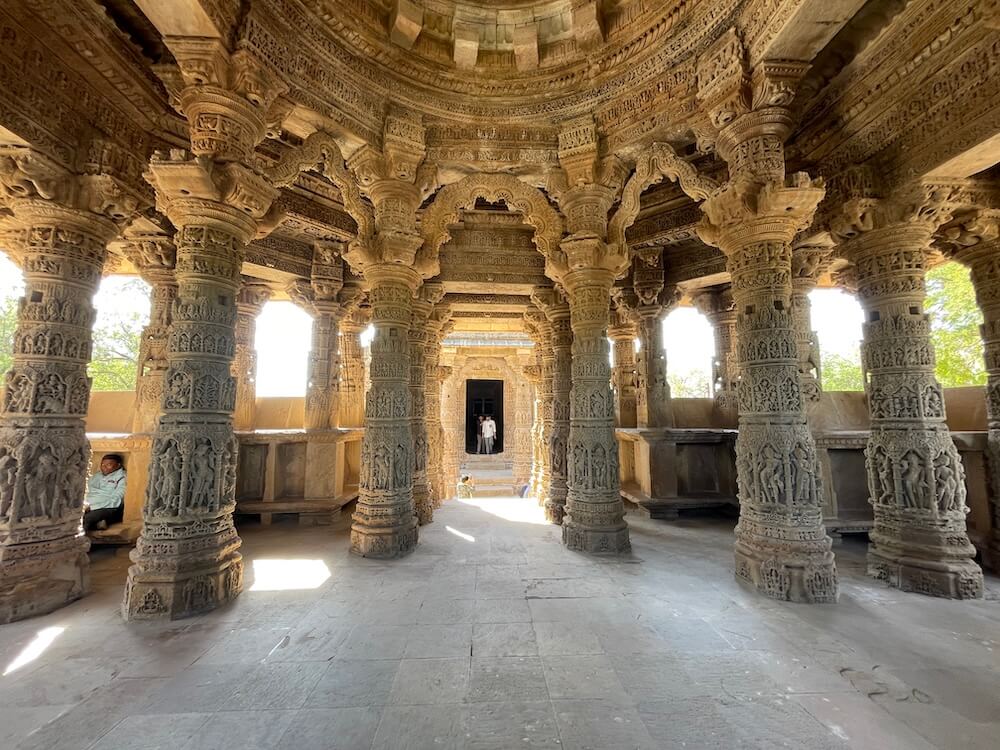
The octagonal ‘Sabhamandapa’ (assembly hall) of the main temple possesses entrances from all four directions. Its 52 pillars represent the 52 weeks of the year. These columns, 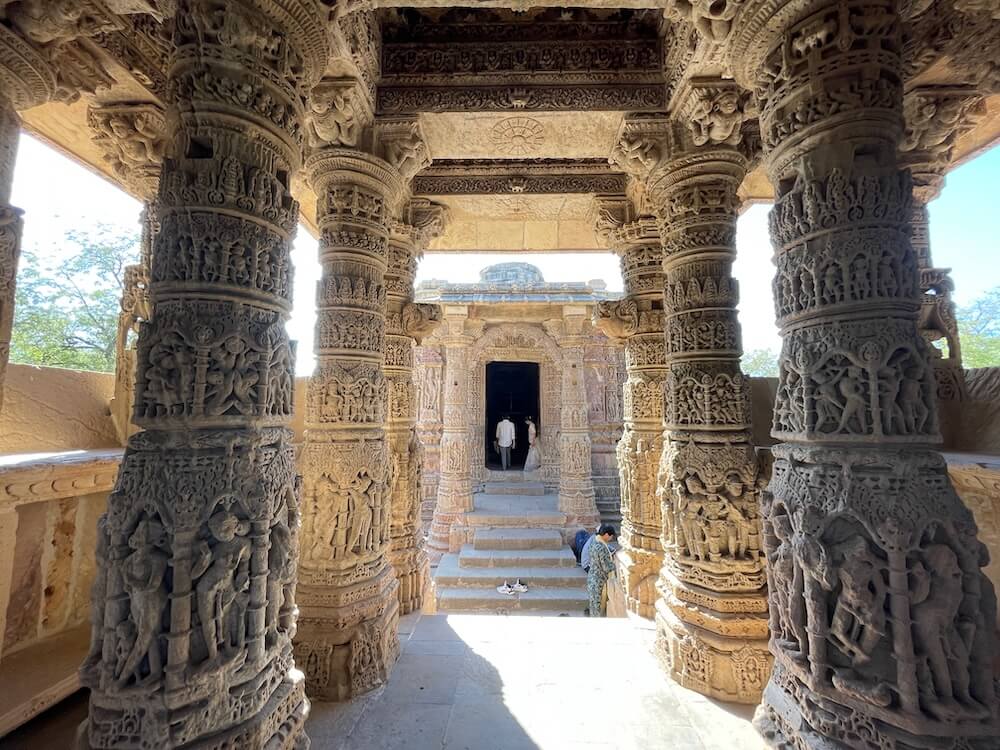 which appear circular from above but octagonal from the front, are intricately carved with scenes from the Ramayana, Mahabharata and ‘Krishna-Leela’, alongside the ‘Panchamahabhuta’ (five elements) and the ‘Mrityunjaya Yantra’. The capitals of the pillars feature ‘Yakshas’, the heavy-lifting celestial beings, depicted as bearing the weight of the temple; the face of one such ‘Yaksha’ resembles a ‘Varaha’ (boar). The ‘Vitan’ (ceiling) also displays exquisite carvings. Icons of Surya, Ganesha and Kubera are established at the entrance to the ‘Garbhagriha’.
Inside the sanctum, there are 24 pillars representing the 24 hours of the day. It is said that in antiquity, a ten-foot pit within this sanctum was filled with gold, upon which a golden idol of the Sun God, mounted on a chariot of seven horses and encrusted with a radiant diamond, would rotate. 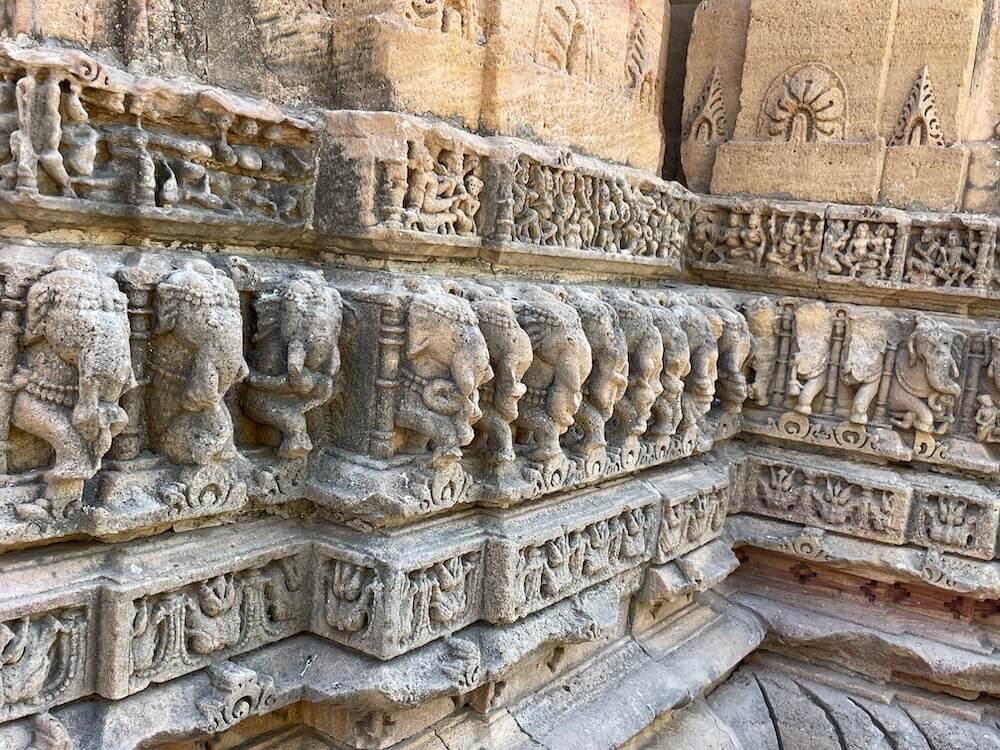 The sun’s rays would reflect off the diamond, illuminating the entire structure with celestial light. At present, that idol is missing.
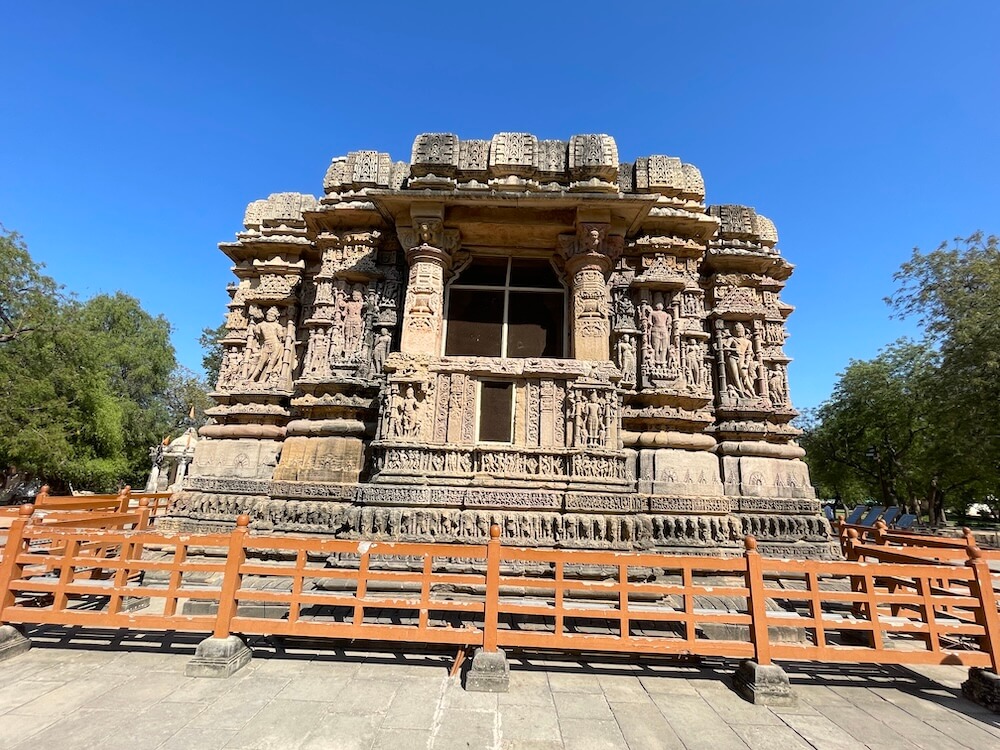
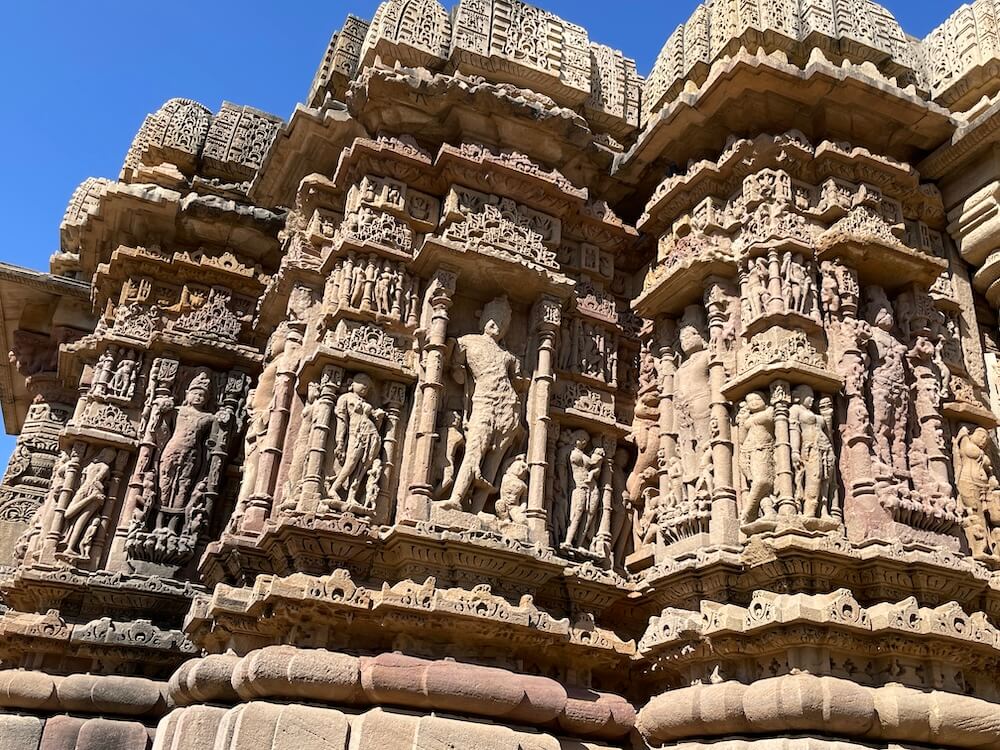
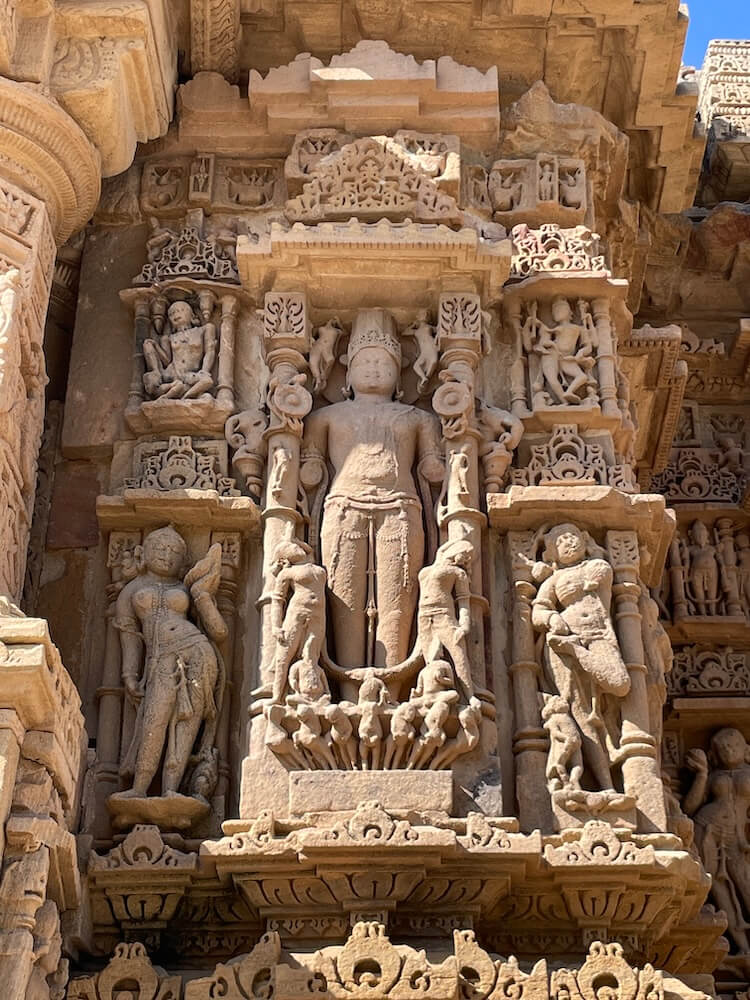
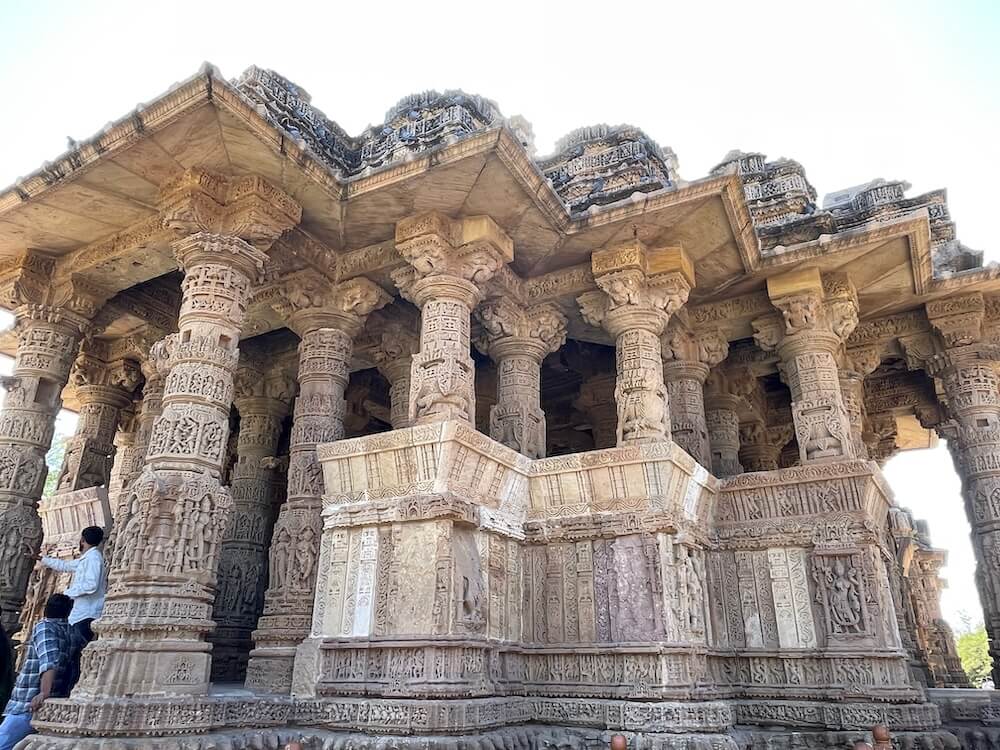
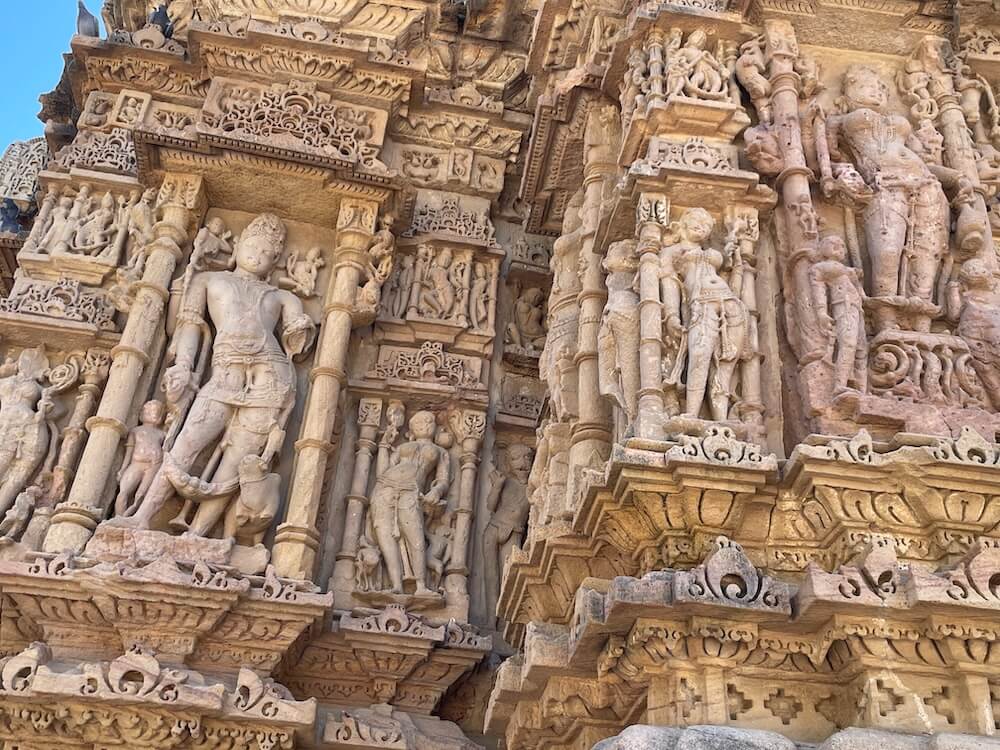
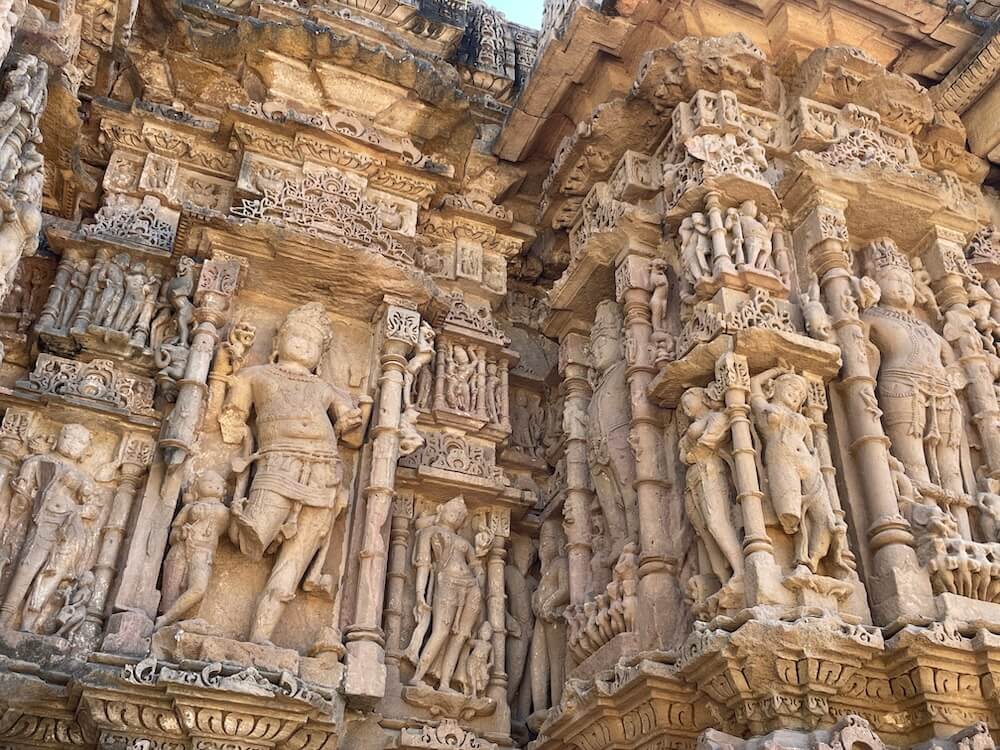
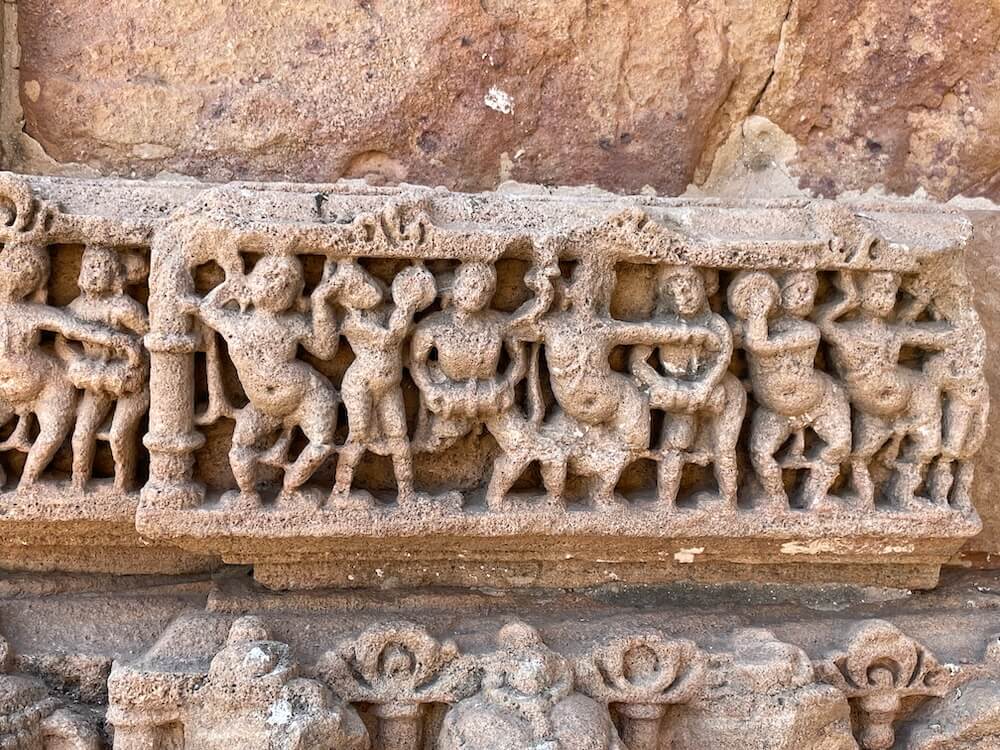
On the western wall of the sanctum, the inscription ‘Vikram Samvat 1083’ is found carved in reverse. The upside-down inscription suggests the destruction and subsequent reconstruction of the sanctum. The exterior walls, or ‘Mandovar’, feature the ‘Narathar’ (depictions of human life) and ‘Gajathar’ (elephant friezes), depicting the cycle of existence. The basement mouldings are carved with ‘Gajadhar’ and ‘Kirtimukha’ layers, portraying various battles and the ‘Samudra Manthan’ (churning of the ocean). A total of 108 elephants are carved around the four sides of the sanctum. The entire exterior wall features 364 elephants, 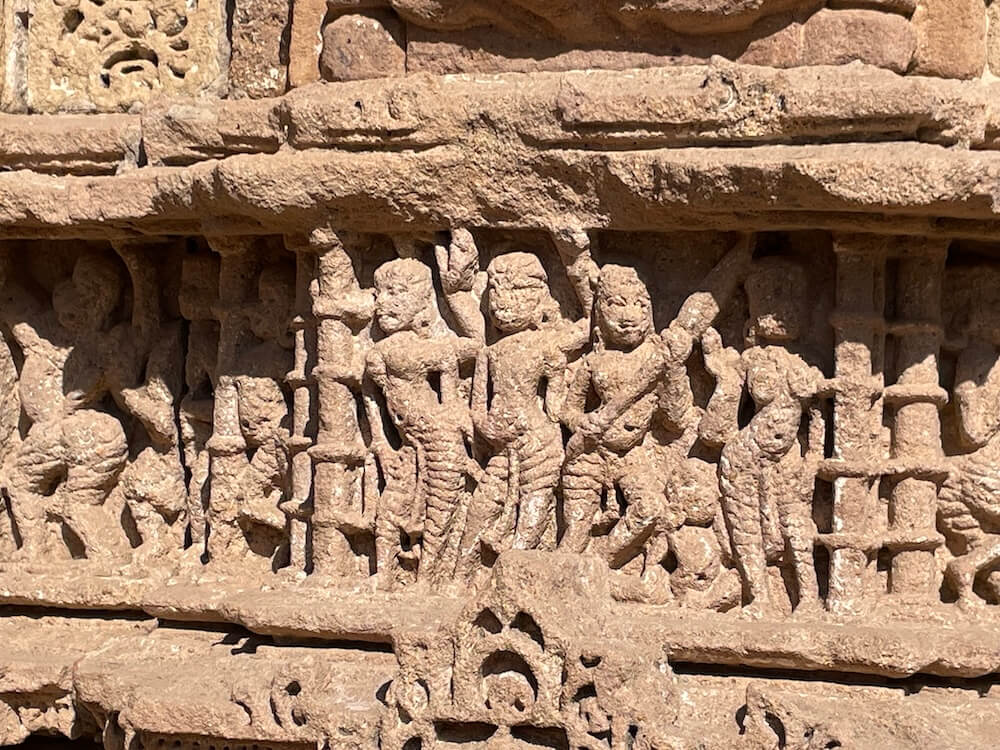 representing the days of a calendar year and a single lion sculpture. In the niches of the outer walls, the twelve ‘Aditya’ (solar) incarnations of the Sun, representing the twelve months, are enshrined. The Sun God is depicted standing on a seven-horse chariot, holding two lotuses and uniquely wearing long boots in the Iranian iconography style. In the Brahmanic pantheon of the first millennium AD, Surya is the only deity who wears shoes.
The twelve avatars correspond to the months: Dhata for Chaitra, Aryama for Vaishakh, Mitra for Jyeshtha, Varuna for Ashadh, Indra for Shravan, Vivasvan for Bhadrapada, Tvashta for Ashwin, Vishnu for Kartik, Anshuman for Margashirsha, Bhaga for Paush, Pusha for Magh and Parjanya for Phalgun. The exterior wall of the sanctum is divided into layers, including ‘Kumbha’, ‘Kalasha’, ‘Keval’,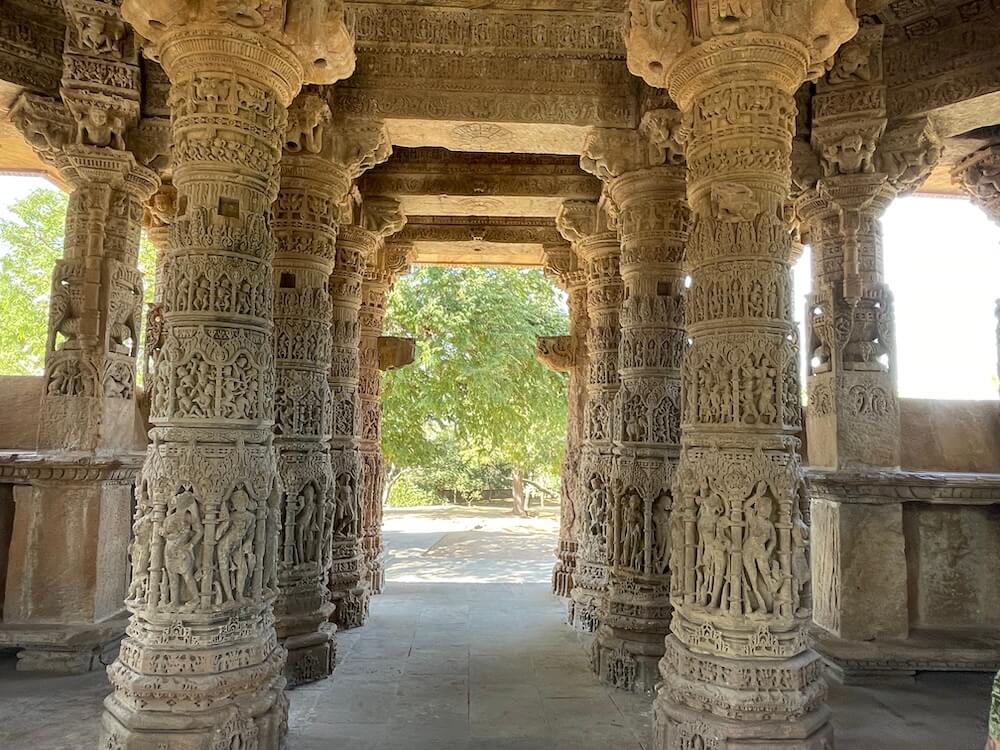 ‘Manche’ and the ‘Jangha’, which houses various deities. The triangular sections on the ‘Jangha’ are termed ‘Udgama’, topped by the ‘Chhajli’. The ‘Digpalas’, guardians of the eight directions, are established on the outer walls: Kubera in the north, Shivshankar (Rudra) in the north-east, Indra in the east, Agni in the south-east, Yama in the south, Nirriti and Vishwakarma (avatars of Shiva bearing serpents) in the south-west, Varuna with circular cloud patterns above his head in the west and Vayu holding an ‘Akshamala’ (rosary) and a ‘Padma’ (lotus) in the north-west. Though the head of the deer at the feet of Vayu is damaged, its horns remain beautifully carved. An idol of Saraswati is situated at the very top.
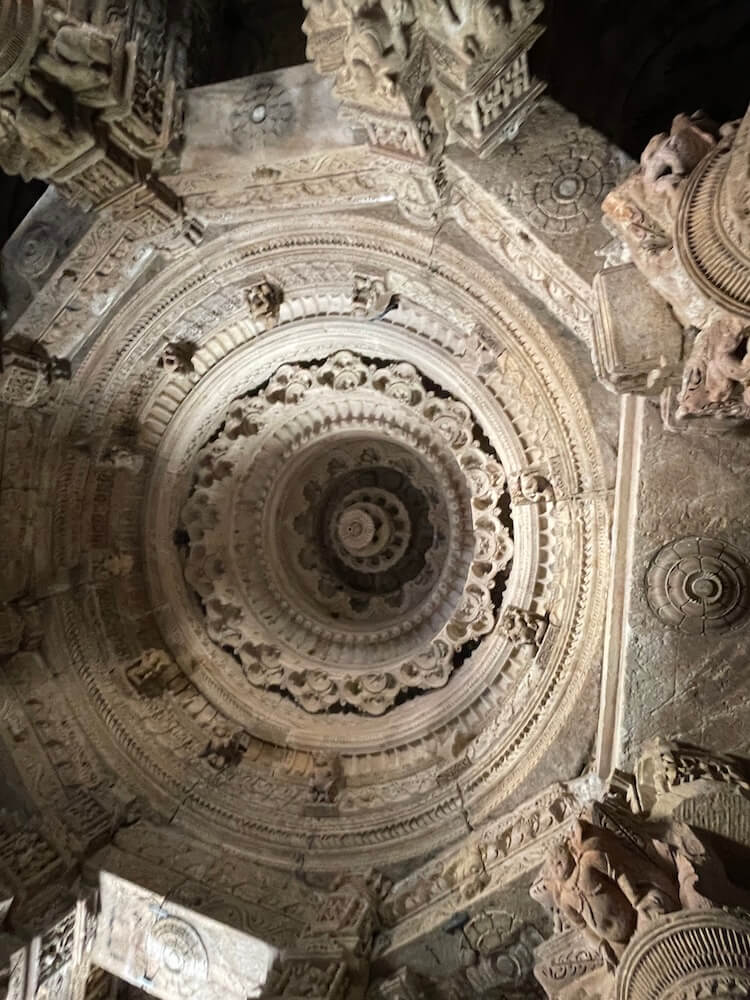 To the left in the courtyard, shaded by trees, is a ‘Shivalaya’ housing five ‘Lingas’. Due to its astronomical design, on 21 March and 23 September, the rays of the rising sun pass through the assembly hall to directly enter the sanctum. On 21 June, at high noon, the structure casts no shadow upon the ground.
The Tourism Corporation of Gujarat (TCGL) organises the three-day ‘Modhera Dance Festival’ (Uttarardh Mahotsav) annually in the third week of January, following Makar Sankranti. This festival, which revives the ancient tradition of ‘Nagar Utsav’, features a 3D Sound and Light show as its primary attraction. Against the historical backdrop of the illuminated temple, Indian classical dances such as Bharatanatyam, Kathak, Odissi, Manipuri, Sattriya and Kuchipudi are performed. The festival also hosts exhibitions of local handicrafts and cuisine. Renowned artists such as Raminder Khurana, Meenakshi Shriyan, Maya Kulshrestha, Peri Krishna Harshita, Shruti Bandopadhyay, Beena Mehta, Manikandan A., Khushbu Panchal, Jugnu Kiran Kapadia, Madhuri Mujumdar, Dimple Saikia, Pushpita Mishra and Arya Nande have graced this stage. Special religious programmes and folk music are also performed at the Modheshwari Mata Temple during Navratri.
The site is open to devotees and tourists daily from 8 am to 6 pm. Online tickets can be booked via the ‘ASI Pay’ portal or through QR codes available at the temple entrance.
Useful Information –
- Located at 15 km from the town of Becharaji and 29 km from Mehsana.
- GSRTC (State Transport) bus services are available from both Becharaji and Mehsana.
- Private vehicles can reach the temple’s parking area.
- Accommodation and breakfast facilities are available in the vicinity.
- Contact – Gujarat Tourism, Toll-Free Number: 1800 233 7951.
सूर्य मंदिर
मोढेरा, ताल. बेचराजी, जिला. मेहसाणा
मंदिरे
Temples
मंदिर
-
वैजनाथ महादेव मंदिर महादेवपुरा (गावडा), ता. विजापूर, जि. मेहसाणा
अधिक माहितीVaijnath Mahadev Temple Mahadevpura (Gavada), Tal. Vijapur, Dist. Mehsana
View Detailsवैजनाथ महादेव मंदिर महादेवपुरा (गावड़ा), ताल. विजापुर, जिला. मेहसाणा
विवरण देखें -
वैजनाथ महादेव मंदिर सोखडा, तालुका विजापूर, जिल्हा मेहसाणा
अधिक माहितीVaijanath Mahadev Temple Sokhada, Taluka Vijapur, District Mehsana
View Detailsवैजनाथ महादेव मंदिर सोखाडा, तालुका विजापुर, जिला मेहसाणा
विवरण देखें -
काशी विश्वनाथ महादेव मंदिर मेहसाणा, जि. मेहसाणा
अधिक माहितीKashi Vishwanath Mahadev Temple Mehsana, Dist. Mehsana
View Detailsकाशी विश्वनाथ महादेव मंदिर मेहसाणा, जिला. मेहसाणा
विवरण देखें