
जलाराम धाम
वडनगर रोड विसनगर, ता. विसनगर, जि. मेहसाणा
Jalaram Dham
Vadnagar Road Visnagar, Tal. Visnagar, Dist. Mehsana
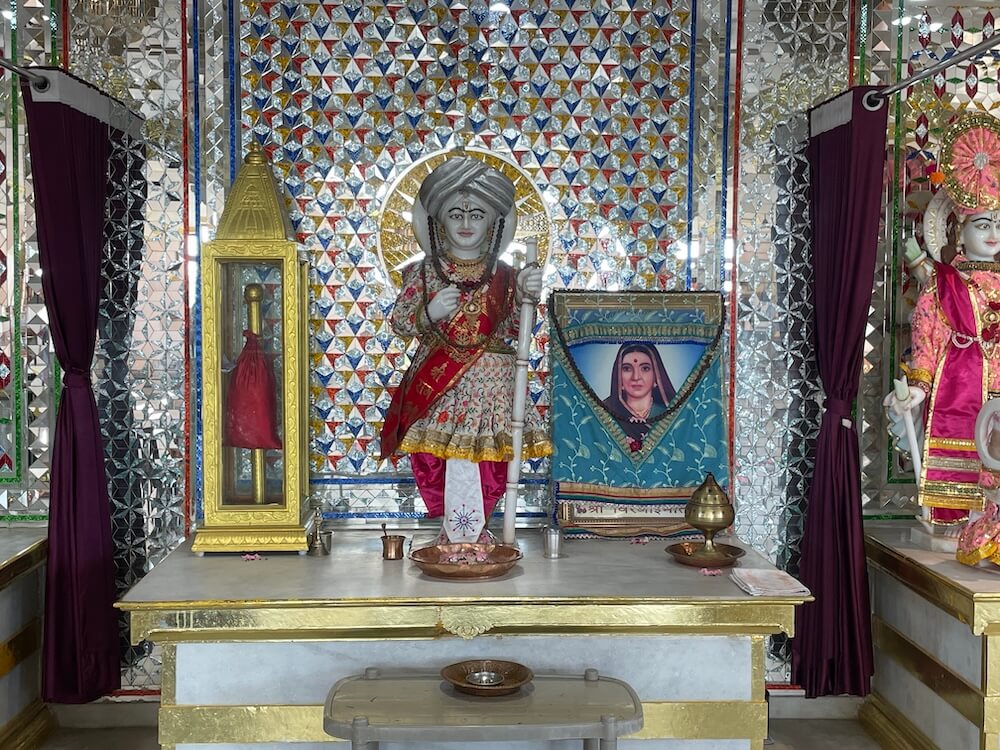 The synthesis of selfless service to society and unwavering faith in the Almighty finds its most luminous expression in Saint Jalaram Bapa, who is regarded as a radiant beacon in the spiritual heritage of Gujarat. A devout follower of Shri Rama, Jalaram Bapa is honoured across Gujarat through numerous temples, drawing millions of faithful devotees who seek the fulfilment of their deepest aspirations. The renowned Jalaram Temple in Visnagar stands as a prominent testament to this devotion. It is the firm conviction of the pilgrims that, should one call upon Jalaram Bapa with a pure and sincere heart even today, he hastens to their aid.
 The history of Jalaram Bapa dates back to his birth on 4 November 1799, on the auspicious day of ‘Kartik Shuddha Saptami’, into a Luhana family in the small village of Virpur, in the Rajkot district. During that era, Rajkot was a princely state governed by Thakore Saheb Ranmalji II. Born to Pradhan Thakkar and his wife Rajabai, Jalaram Bapa exhibited a deeply religious temperament from an early age. Much like his parents, he was naturally inclined to serve ascetics and saints. At the age of sixteen, he was married to Virbai Maa. A mere two years after his marriage, in the year 1817, his life reached a significant turning point when he accepted Bhojalram (Bhoja Bhagat) of Fatehpur as his spiritual preceptor.
Following his Guru’s mandate, he embraced the constant chanting of Rama’s name. As the spirit of service flowed through his very veins, he now dedicated himself entirely to the welfare of society. 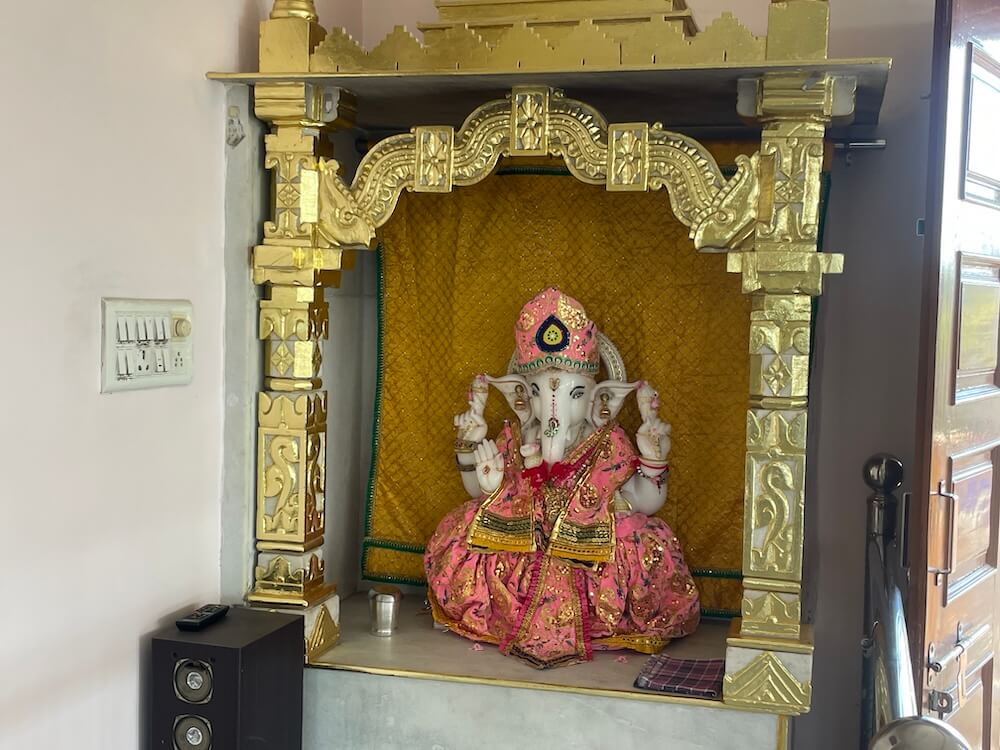 Under his preceptor’s guidance, he inaugurated a ‘Sadavrat’—a charitable almshouse—at Virpur. He remained untouched by the divisions of caste or creed, believing that his foremost religious duty was to provide sustenance to every hungry soul that crossed his threshold. Numerous miracles, locally referred to as ‘Parcha’, are attributed to the life of Jalaram Bapa. It is said that Bapa cured the ailments of many and that his almshouse continued to function without interruption even during the rigours of famine. Legends suggest that by the grace of Goddess Annapurna, his vessels of grain were never exhausted. Owing to this spirit of selfless altruism, he was revered as a saint by Hindus and Muslims alike, with many Muslims becoming his devoted followers. At the age of eighty-one, on 23 February 1881, he departed from his mortal coil while chanting the name of Rama.
  Much like Sai Baba of Shirdi, his countless devotees are today spread across the globe. Jalaram Bapa’s devotion to Rama, his respect for all religions and his charitable nature exerted a profound influence on the life of Mahatma Gandhi, akin to the impact of the great saint Narsi Mehta and the Pranami sect.
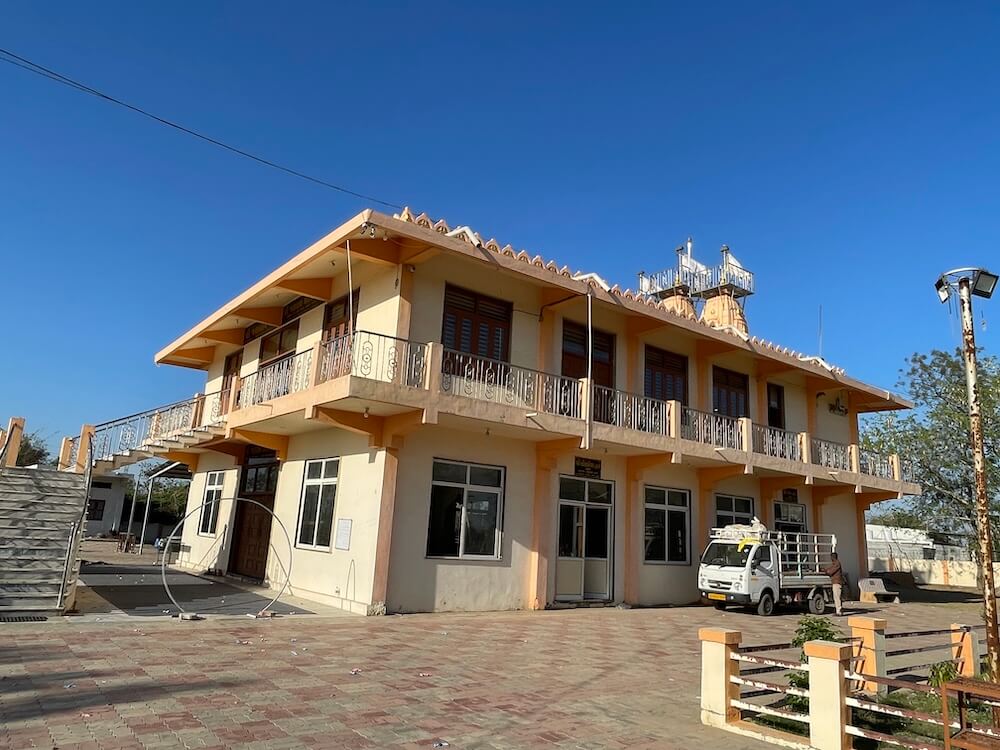
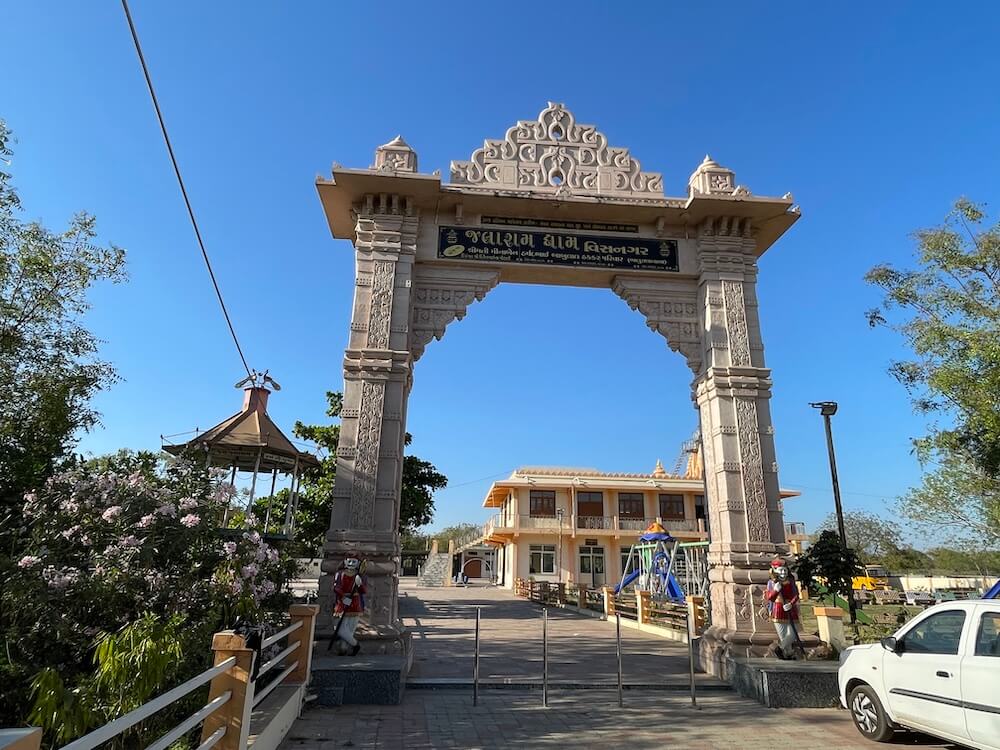
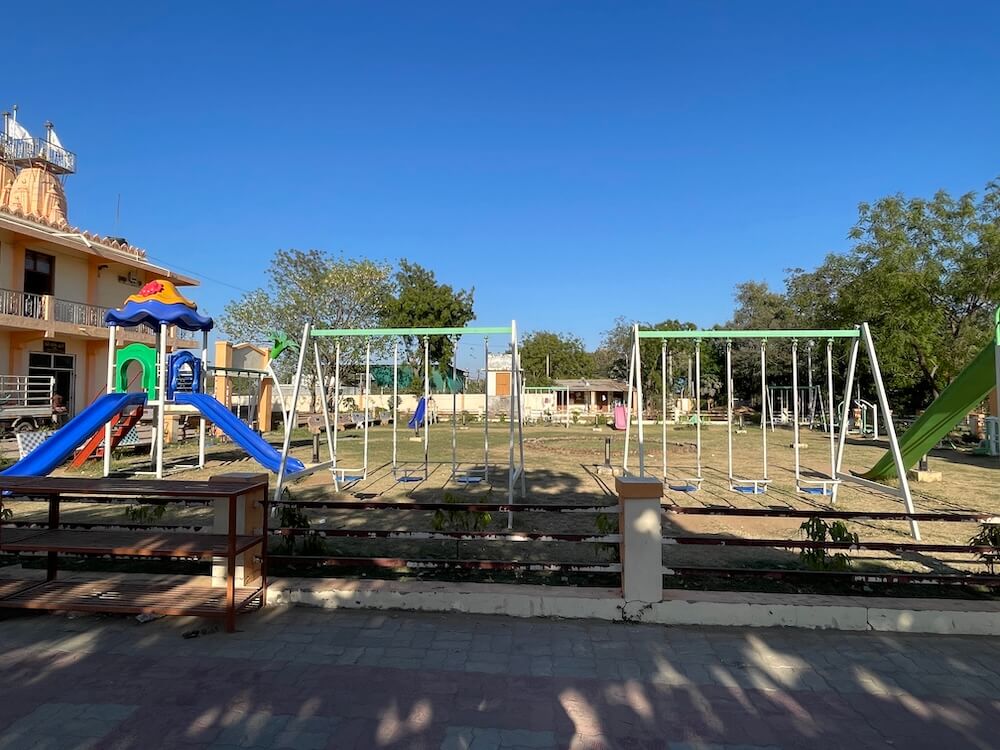
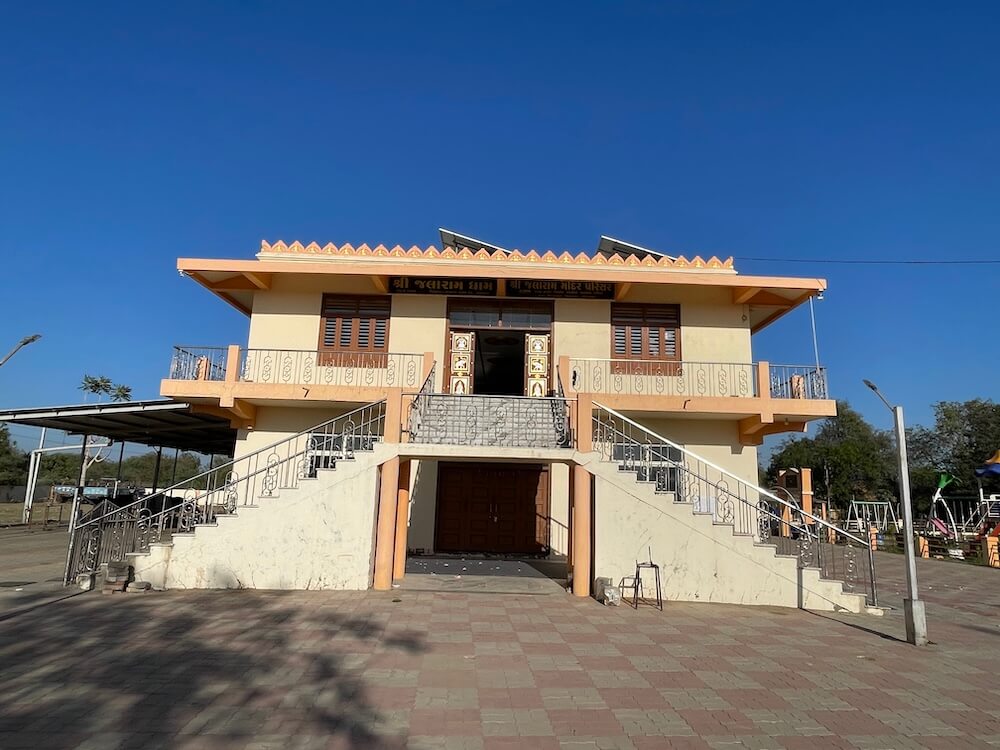
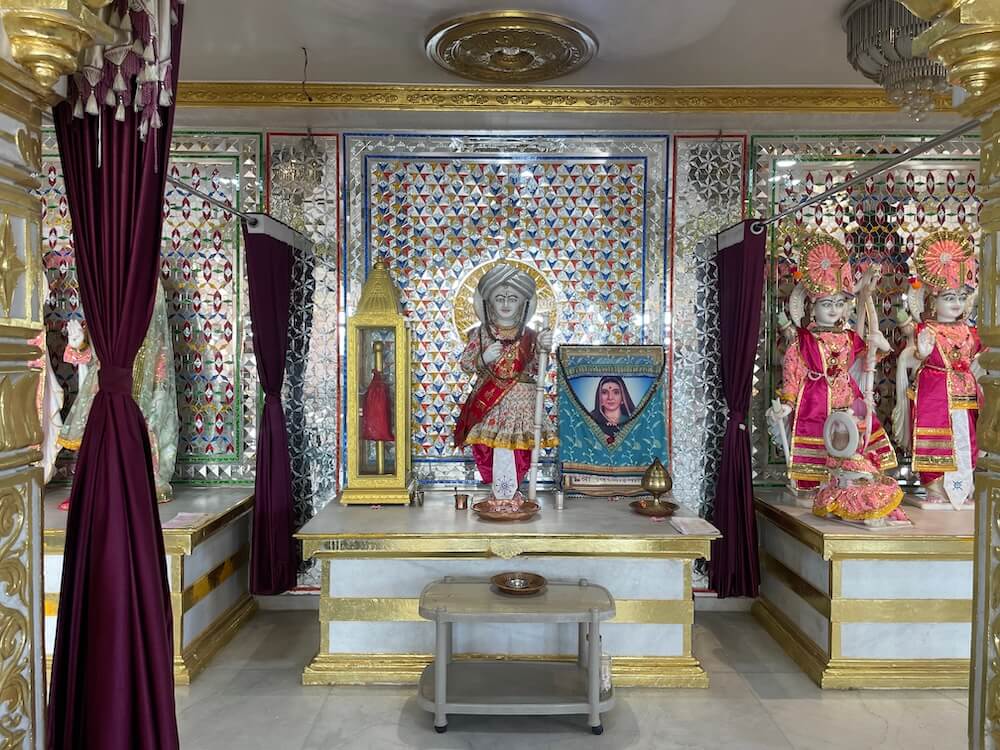
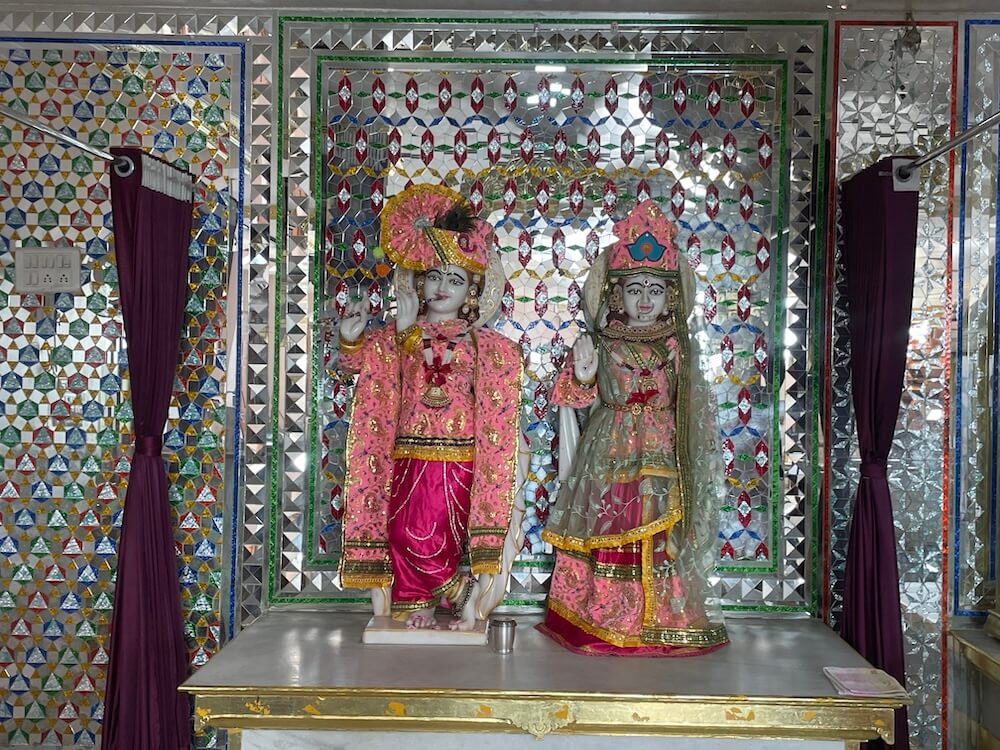
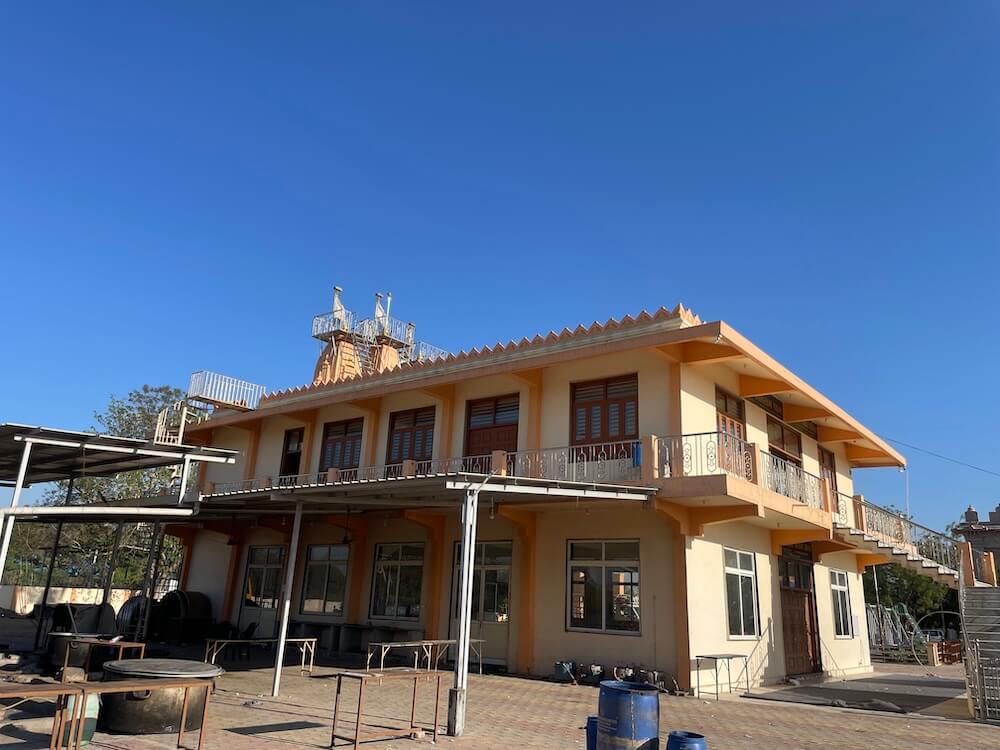
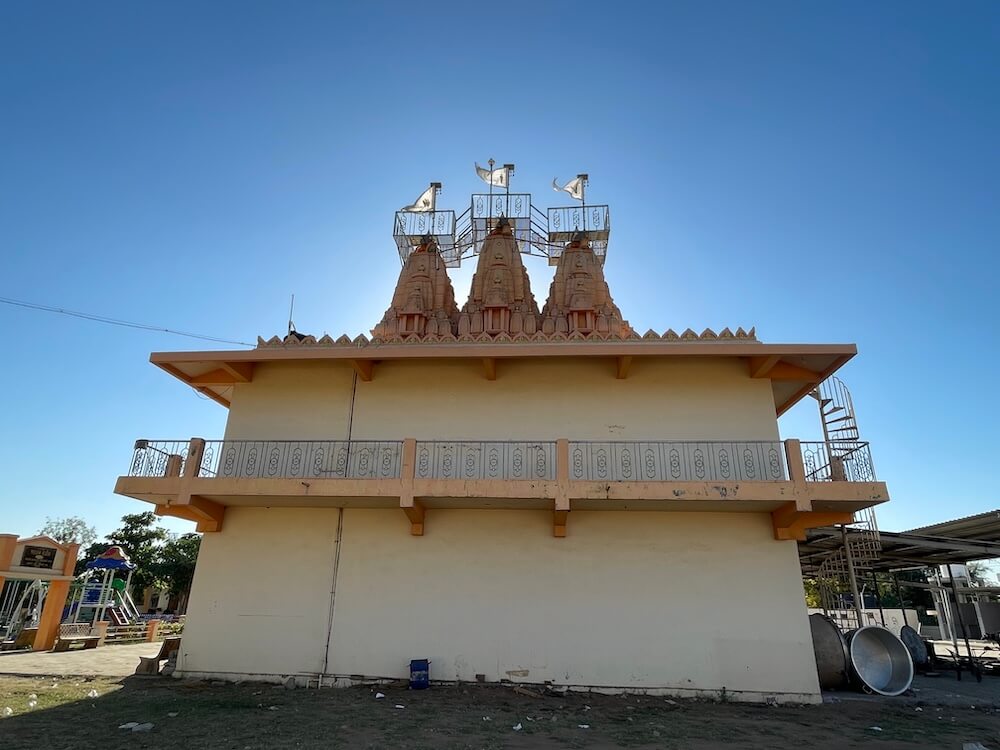
The present temple at Visnagar was established in 2017 by the Jalaram Seva Mandal Trust, an organisation founded by his local devotees. The sanctuary is enclosed by a fortified wall featuring a principal gateway. At the base of the two intricately carved pillars of this entrance stand the ‘Dwarpalas’ or celestial gatekeepers. This leads into the expansive courtyard of the temple, from which a concrete path extends towards the main structure. 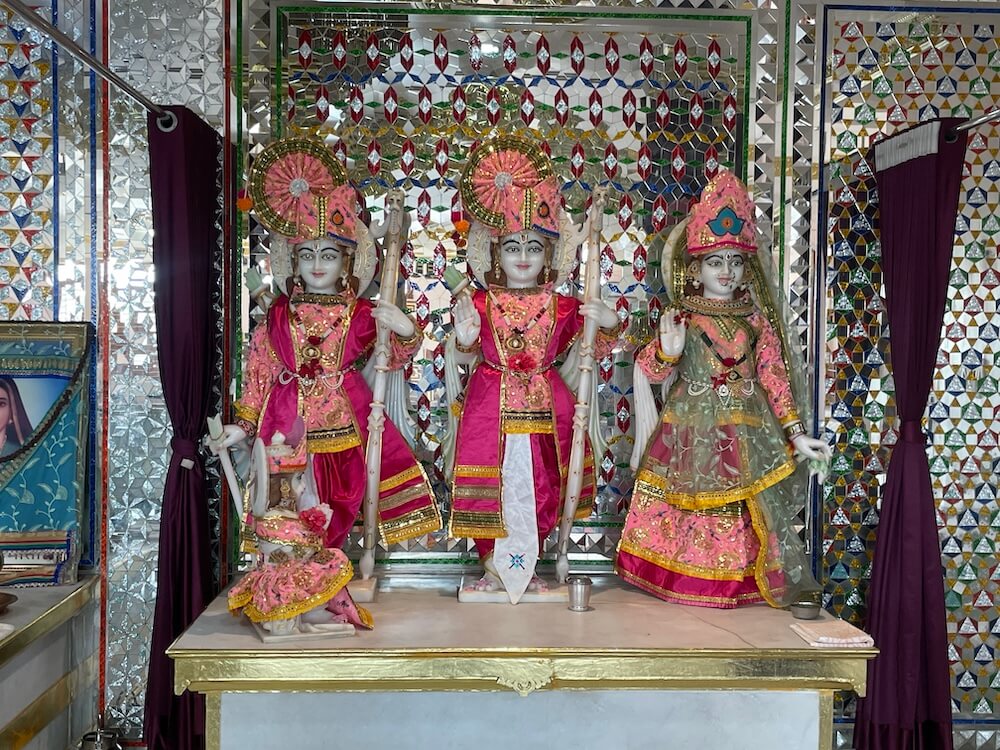 To the right of this path lies a garden equipped with various play structures for children. From the courtyard, one ascends approximately twenty-five steps to reach the main temple situated on the first floor. A circumambulatory path (‘Pradakshina Path’) encompasses the temple on this level. The architectural layout comprises a spacious assembly hall (‘Sabhamandap’) and a sanctum sanctorum (‘Garbhagriha’). Positioned before the assembly hall and within the niches on the frontal wall of the sanctum are marble idols of Lord Ganesha and Lord Maruti. Upon a central ‘Vajrapitha’ within the sanctum rests the marble idol of Jalaram Bapa. To the right of this pedestal are the figures of Radha-Krishna, while the left is graced by the idols of Shri Ram, Lakshman and Sita. The temple is crowned by three majestic spires.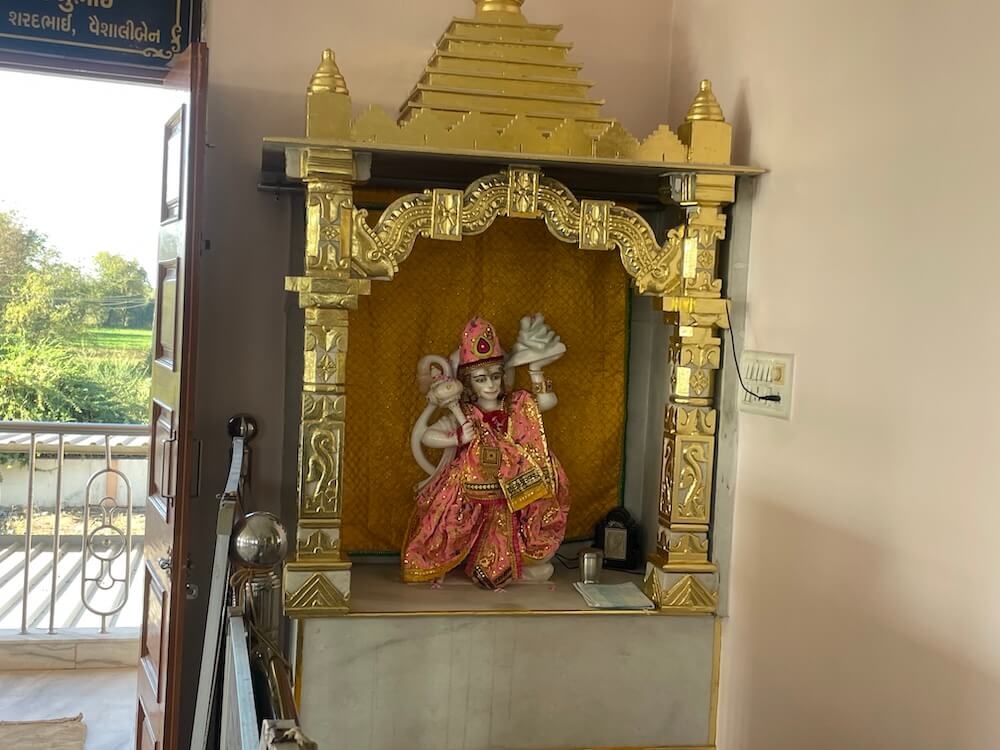
Every Thursday and Sunday, a multitude of devotees gather at the temple for the ‘Maha Aarti’ of Jalaram Bapa. The temple has meticulously preserved the legacy of ‘Sadavrat’ bequeathed by the Saint. On the third Sunday of every month, food is distributed to two to three thousand pilgrims and fodder is regularly provided to birds. Alongside various Hindu festivals, the birth anniversary of Jalaram Bapa is celebrated on a grand scale on ‘Kartik Shukla Saptami’. On this festive occasion, the entire temple complex is adorned with a vibrant array of flowers and illuminated with lamps. On this day, the temple serves meals to 6,000 to 7,000 devotees. The 26th of November marks the ‘Patotsav’ or the anniversary of the temple’s consecration. This foundation day is celebrated with immense enthusiasm, accompanied once again by the distribution of food to countless pilgrims. The temple is open for devotees from 7 am to 12 pm and from 4 pm to 8.30 pm.
Useful Information
- Located at 4 km from Visnagar Bus Station and 27 km from Mehsana
- GSRTC bus services available from Visnagar and Mehsana
- Private vehicles can reach the temple directly
- Accommodation and breakfast facilities are available in the vicinity
जलाराम धाम
वडनगर रोड विसनगर, ताल। विसनगर, जिला. मेहसाणा
मंदिरे
Temples
मंदिर
-
वैजनाथ महादेव मंदिर महादेवपुरा (गावडा), ता. विजापूर, जि. मेहसाणा
अधिक माहितीVaijnath Mahadev Temple Mahadevpura (Gavada), Tal. Vijapur, Dist. Mehsana
View Detailsवैजनाथ महादेव मंदिर महादेवपुरा (गावड़ा), ताल. विजापुर, जिला. मेहसाणा
विवरण देखें -
वैजनाथ महादेव मंदिर सोखडा, तालुका विजापूर, जिल्हा मेहसाणा
अधिक माहितीVaijanath Mahadev Temple Sokhada, Taluka Vijapur, District Mehsana
View Detailsवैजनाथ महादेव मंदिर सोखाडा, तालुका विजापुर, जिला मेहसाणा
विवरण देखें -
काशी विश्वनाथ महादेव मंदिर मेहसाणा, जि. मेहसाणा
अधिक माहितीKashi Vishwanath Mahadev Temple Mehsana, Dist. Mehsana
View Detailsकाशी विश्वनाथ महादेव मंदिर मेहसाणा, जिला. मेहसाणा
विवरण देखें