
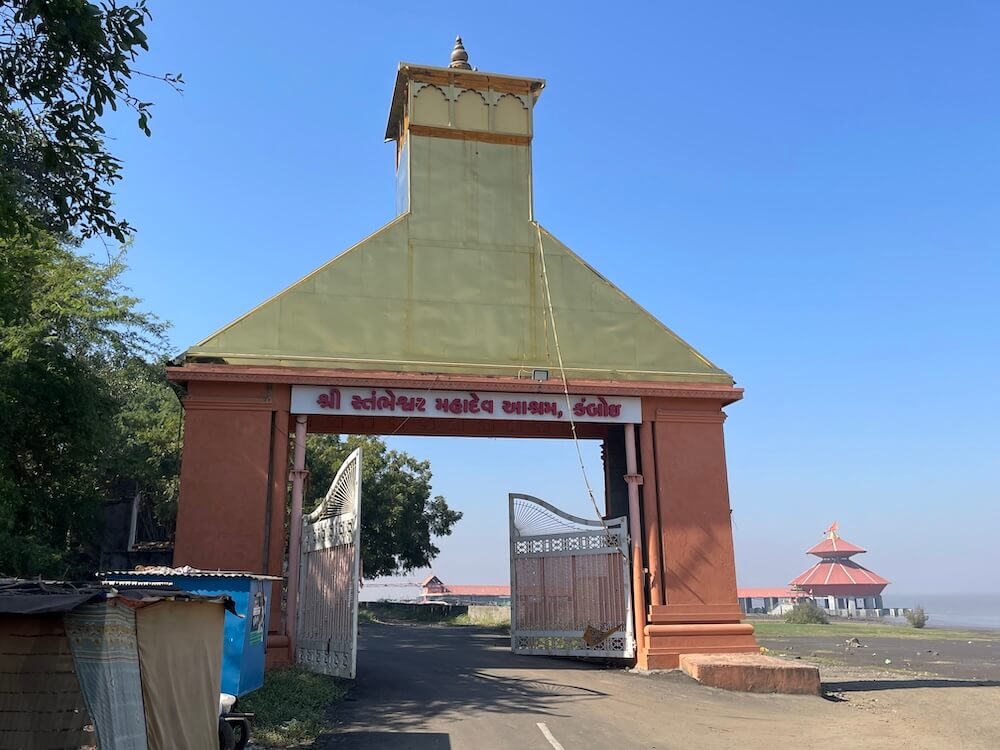
स्तंभेश्वर महादेव मंदिर
कावी कंबोई, ता. जंबुसर, जि. भरुच
Stambheshwar Mahadev Temple
Kavi Kamboi, Tal. Jambusar, Dist. Bharuch
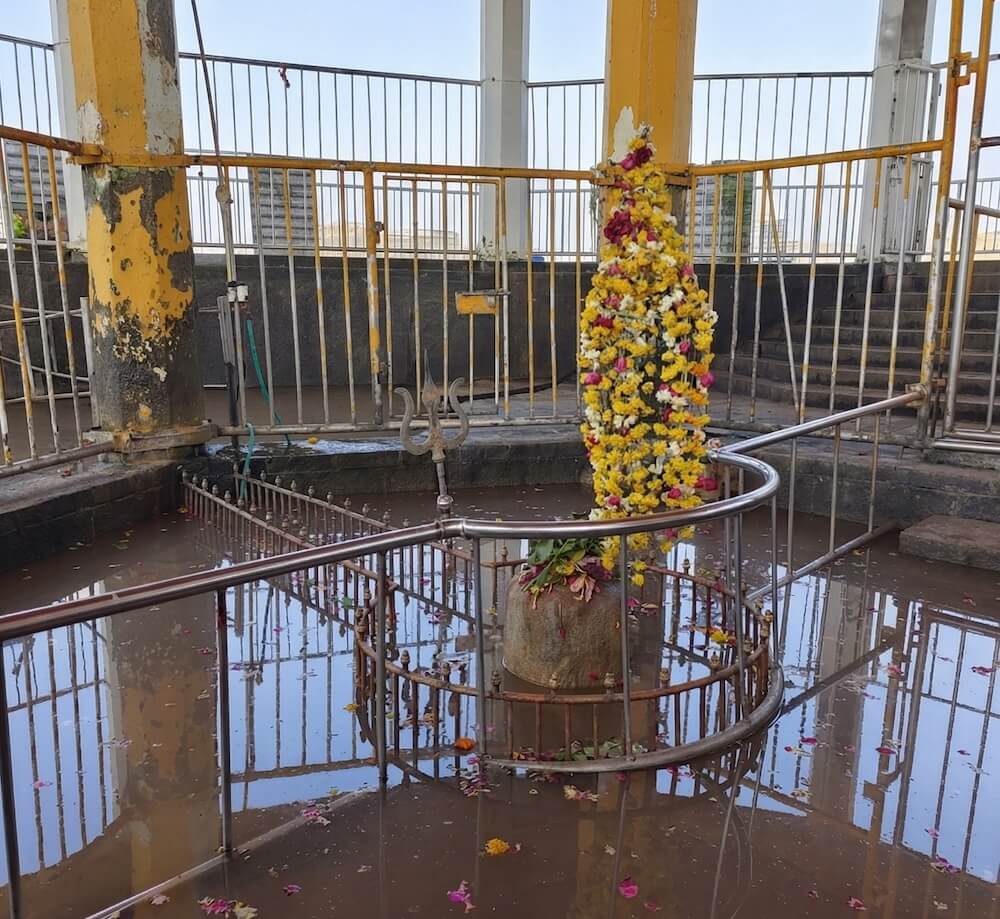 The Shivalinga upon which the Sea God himself comes to pour abhishek is none other than Stambheshwar Mahadev of Kavi Kamboi. In this kshetra, known as ‘Mahisagar Sangam Tirth’ and also as ‘Gupt Tirth’ (hidden sacred site), the temple of Stambheshwar Mahadev stands in the very waters of the sea. With each high tide, seawater enters the temple. According to a mythological account, after the slaying of Tarakasur, Shiva’s son Kartikeya performed tapascharya here and established this Shivalinga. Devotees hold it with unwavering faith that the deity here is jagrut (awake and spiritually responsive). On every Purnima, Amavasya and also on Mahashivratri and Shravan Somvar, a vast ocean of devotees streams into this temple.
In the ‘Skanda Purana’ within the ‘Kumarika Khanda’ and also in the ‘Shiv Purana’ within the ‘Rudra Samhita’, mention is made of Mahisagar Sangam Tirth. This tirth is linked with the narrative of Tarakasur-vadh. 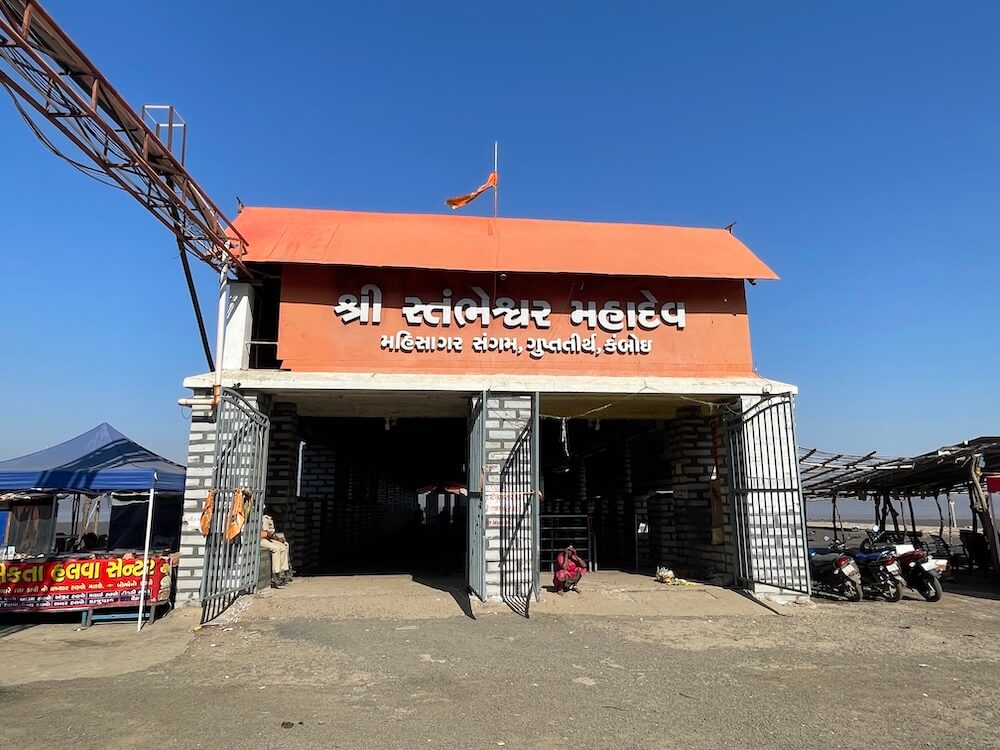 According to the ‘Rudra Samhita’ of the ‘Shiv Purana’, Diti was the wife of Kashyap Muni. She had two sons—Hiranyakashipu and Hiranyaksha. Vishnu slew both these sons. Thereafter, she sought of Kashyap Muni yet another son and accordingly, she conceived. At that time, Indra deceitfully tore her womb into pieces. After this, Diti again prayed to Kashyap Muni and from him, she bore a son, Vajrang. He was of extraordinary strength. To punish Indra for his treachery, Vajrang conquered heaven, though he later returned the kingdom to Indra upon his father’s counsel.
Tarakasur was the son of Vajrang. His mother commanded him to reclaim Indra’s kingdom. Thereupon, Tarakasur undertook fierce penance. Pleased by this, Brahmadev appeared before him. He asked Brahmadev for the boon of immortality. 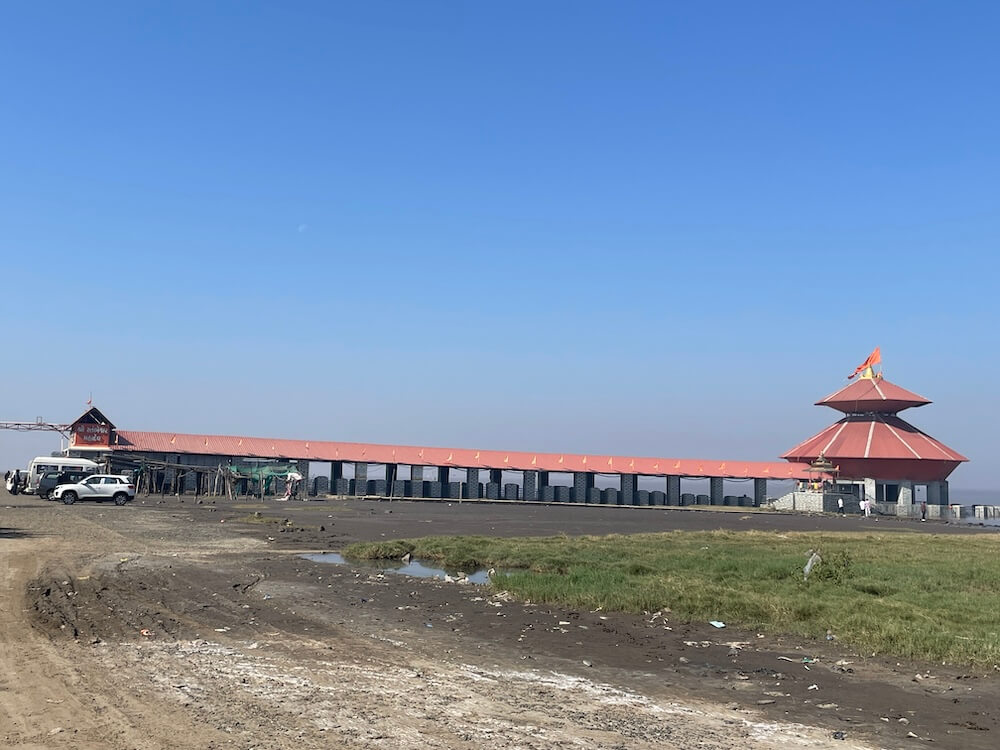 When Brahmadev replied that such a boon could not be granted to anyone, Tarakasur said, ‘Let my death come only at the hands of a child born of Bhagwan Shankar’s virya (divine seed). No one else should be able to slay me—grant me such a boon.’ Having received this boon from Brahmadev, Tarakasur conquered the three worlds. He began to oppress the gods and goddesses. It was then that Bhagwan Shankar and Parvati’s son Kartikeya slew him.
According to the ‘Kumarika Khanda’ of the ‘Skanda Purana’, after Tarakasur was slain, all the gods and goddesses began to praise Kartikeya. Yet Kartikeya himself was grieved by what he had done. He entreated the gods and goddesses, saying, ‘Though Tarakasur was a demon, he was a devout follower of Shiva. Therefore, by killing him, I have incurred a great sin. 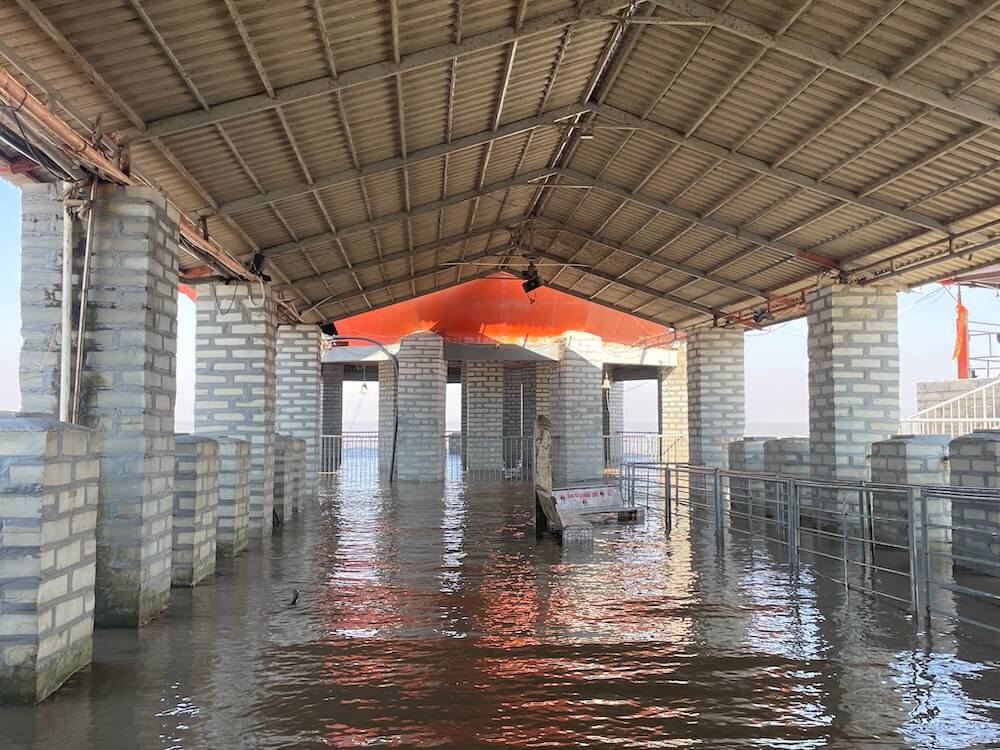 Show me the path to be freed of it.’ Vishnu advised him to establish a Shivalinga and worship it with heartfelt devotion. Thereafter, Kartikeya instructed Vishwakarma to fashion three sacred Shivalingas and later, in the presence of Parvati and other gods and goddesses, he consecrated these Shivalingas in three separate places and performed their worship according to proper rites. In the course of time, these three Shivalingas came to be known as ‘Pratidneshwar’ (‘Pratikeshwar’), ‘Kapaleshwar’ and ‘Kumareshwar Mahadev’. Before establishing Kumareshwar upon the shore of the Mahasagar at Kavi-Kambhoi, Kartikeya erected a ‘Vishwanandak Stambh’ at the very place where Tarakasur was slain. To the west of this stambh, he consecrated a Shivalinga. This very Shivalinga became renowned as ‘Stambheshwar Mahadev’. According to the description in the Kumarika Khanda, this stambh was made of gold and gems and on all four sides of it,
  a platform of excellent jewels had been raised. Declaring this tirth to be the greatest among all tirthas, Brahmadev himself had worshipped the Shivalinga here. Other gods and goddesses too had taken darshan of this Mahadev. Pauranic references also state that at the instruction of Shri Krishna, Barbarik too performed aradhana at Mahisagar Sangam Tirth.
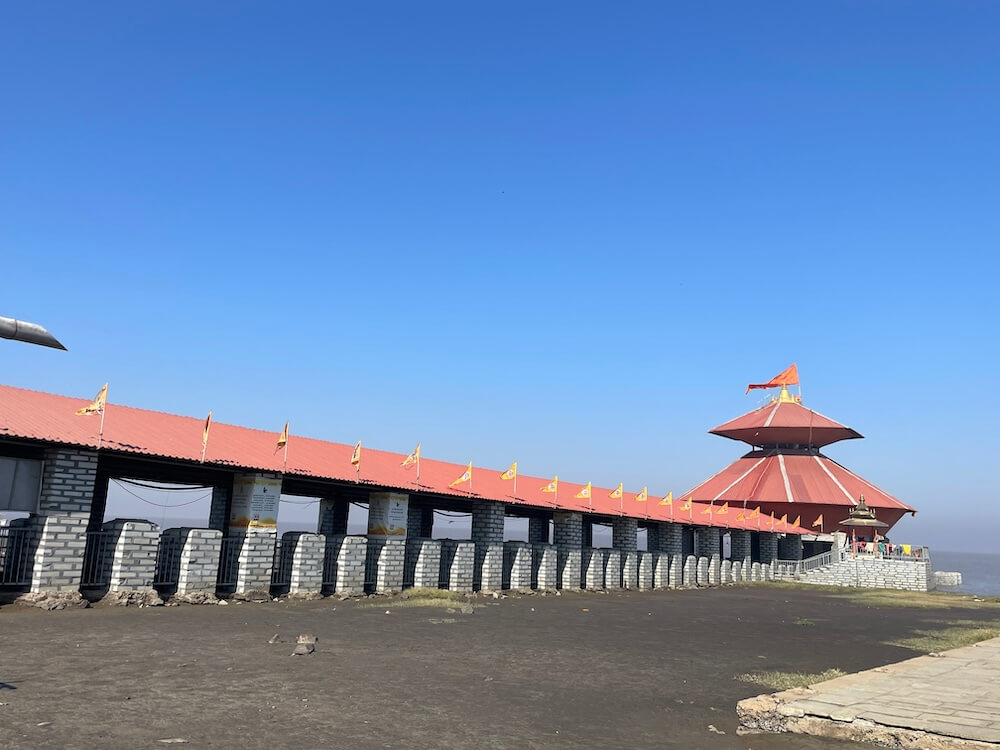
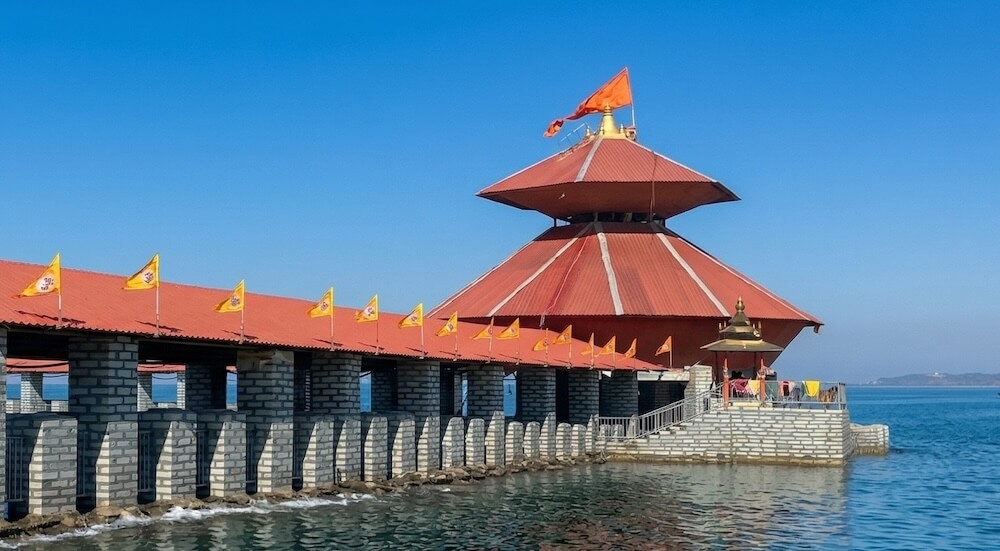
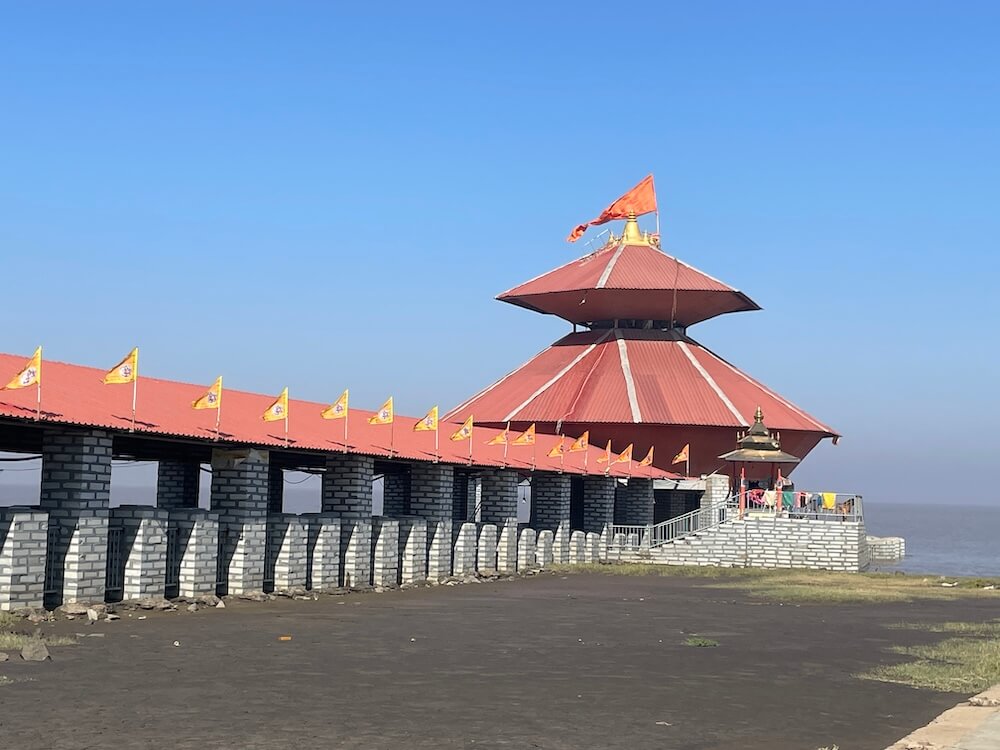
The precise historical origin of the current structure remains unknown. Old photographs preserved at the temple suggest that originally, only a solitary ‘shivalinga’ stood upon the shore alongside a tall flagstaff. A sadhu named Vidyanand Maharaj performed long-term worship there. In recent times, a grand temple of Stambheshwar has been constructed here. 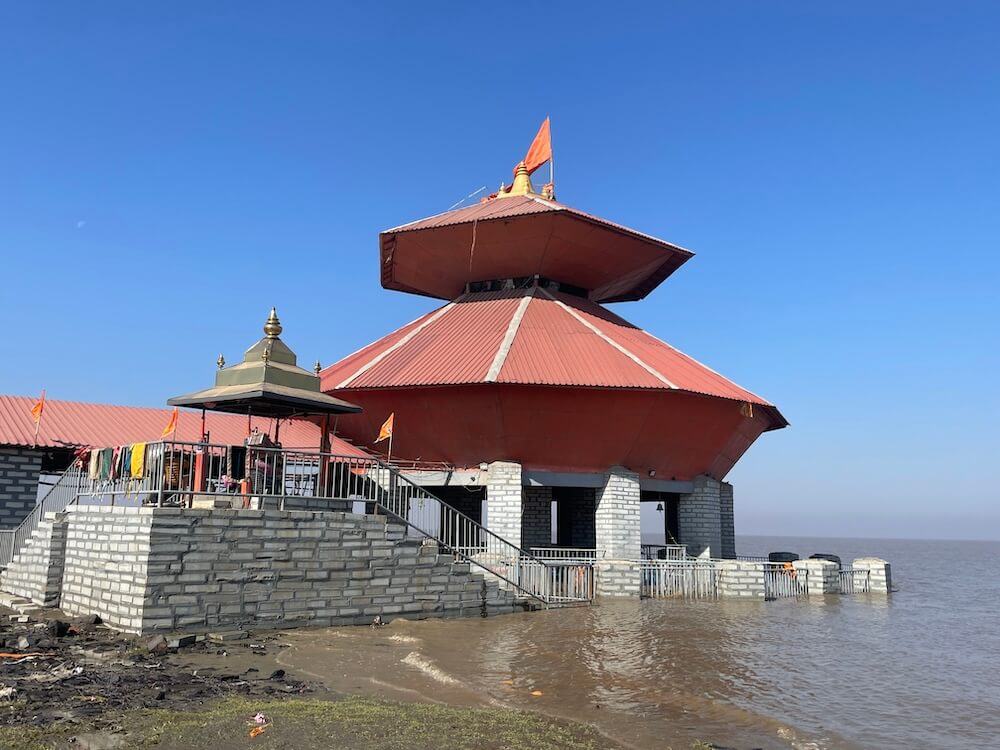 It is built using durable stone and materials that can resist corrosion from constant exposure to salt water. The structure resembles a jetty standing out in the sea. From the seashore to reach the temple, a broad walkway has been built. This walkway has stone paving and sturdy pillars. Above it is a corrugated roof.
At some distance ahead lies the garbhagriha (sanctum sanctorum). Around this garbhagriha on all four sides are large square pillars. True to its name (Stambh meaning pillar), it is primarily an open-sided structure supported by thick, sturdy stone pillars. This design allows seawater to flow freely through the structure during high tide, reducing the physical impact of the waves. The interior is stone-paved, with steps provided for entry. 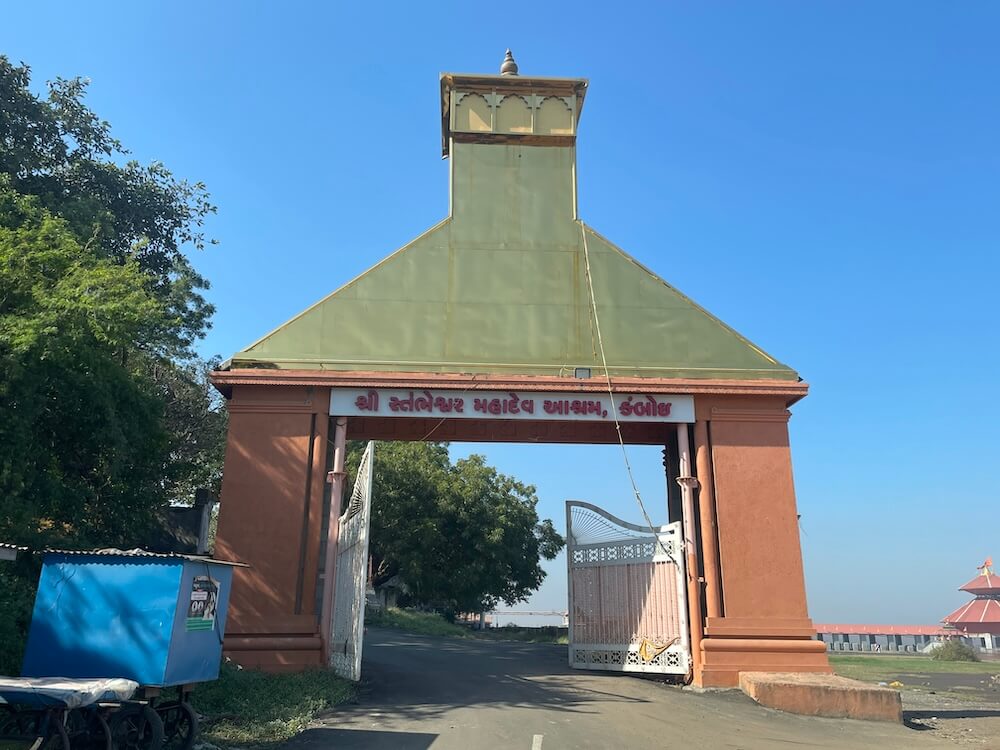 A railing surrounds the large ‘shalunka’ (base), within which sits a magnificent ‘shivalinga’ measuring four feet in height and two feet in diameter. It is sheltered by a large silver cobra. The temple features a tiered, pyramidal dome or ‘shikhara’ at the top. At the very peak, there is a large central spire surrounded by smaller ones, topped with a traditional saffron flag. During high tides, this is often the only part of the temple visible above the water.
On days such as ‘Purnima’, the force of the high tide is stronger. At such times, the garbhagriha becomes submerged up to a height of about twenty-eight feet. Once the force subsides, the water drains away. Thereafter, for cleaning the garbhagriha, nearly two lakh litres of water is used. Driven by the belief that the Sea God himself comes to bathe the Lord, hundreds of devotees wait until high tide to witness this sublime moment.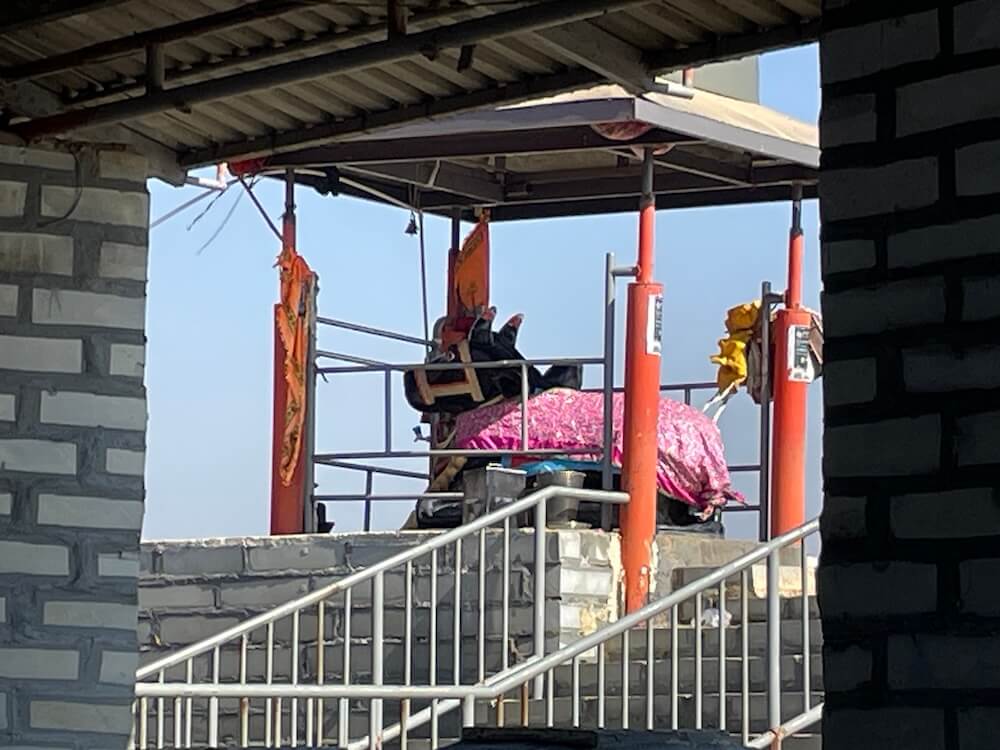
The place of Nandi in this shrine is outside the temple on the right-hand side. Here, upon a high pedestal stands the Nandi mandap and within it is enthroned a large idol of Nandi carved in black marble stone. It is accessible via the main temple walkway.
Upon the Shivalinga of Stambheshwar Mahadev, many times each day, abhishek is performed with the chanting of Rudrashtadhyayi mantras using pure water, milk, panchamrut, ikshuras (sugarcane juice) and also jal prepared from coconut water. Here, ‘Rudri Ekadashi puja’, ‘Homatmak Laghu Rudra’ and various other religious rites are performed. On the 13th day of the lunar fortnight, ‘Amavasya’, ‘Ekadashi’ and ‘Purnima’, a ‘Maharudrabhishek’ is performed to the sound of Vedic hymns. During the month of Shravan, Brahmins from Kashi perform the ‘Rudra Path’ 121 times and a ‘Laghurudra’ ritual is held in the ‘yagnashala’ (fire-ritual hall).
Devotees from Gujarat, Maharashtra, Rajasthan and across India visit this ‘jagrut’ (spiritually active) Mahadev. It is believed that worship on ‘Purnima’ or ‘Amavasya’ brings the blessings of ancestors and liberation from all sins. Consequently, hundreds bathe at the Mahisagar confluence and seek ‘darshan’ on these days. Visiting on ‘Shani Amavasya’ (Amavasya that falls on a Saturday) is considered particularly significant. A grand ‘yatra’ (religious fair) is held on Mahashivratri and the festivities continue throughout the month of Shravan. Performing ‘Pitrutarpan’ (ancestral rites) and ‘Shraddha’ here is said to yield the same spiritual fruit as rituals performed at Gaya.
Opposite the temple stands an ashram built by the management. This three-storey structure provides accommodation for pilgrims. The kitchen serves meals prepared from grains grown on the ashram’s own land. The complex also houses a ‘goshala’ (cow shelter) and a ‘vedshala’ (Vedic school) where students study the Vedas under the guidance of learned Brahmin teachers.
Useful Information
- 33 km away from Jambusar
- 80 km away from Bharuch
- ST (State Transport) bus facility available from Jambusar
- Private vehicles can reach up to the temple
- Accommodation and breakfast facilities are available in the vicinity
- Contact : Temple Office, Mo. 9723622200
स्तंभेश्वर महादेव मंदिर
कवि कम्बोई, ताल. जंबुसर, जिला. भरूच
मंदिरे
Temples
मंदिर
-
कोटेश्वर महादेव मंदिर कदोद, ता. भरुच, जि. भरुच
अधिक माहितीKoteshwar Mahadev Temple Kadod, Tal. Bharuch, Dist. Bharuch
View Detailsकोटेश्वर महादेव मंदिर कडोद, ताल. भरूच, जिला. भरूच
विवरण देखें -
धर्मेश्वर महादेव मंदिर धर्मशाळा-झानोर, ता. भरुच, जि. भरुच
अधिक माहितीDharmeshwar Mahadev Temple Dharmashala-Jhanor, Tal. Bharuch, Dist. Bharuch
View Detailsधर्मेश्वर महादेव मंदिर धर्मशाला-झानोर, ताल. भरूच, जिला. भरूच
विवरण देखें -
साईबाबा मंदिर रामवाटिका सोसायटी, झाडेश्वर, ता./जि. भरुच
अधिक माहितीSai Baba Temple Ramvatika Society, Zadeshwar, Tal./Dist. Bharuch
View Detailsसाईं बाबा मंदिर रामवाटिका सोसायटी, जादेश्वर, ताल./जिला. भरूच
विवरण देखें