
श्री कृष्ण स्वामी मंदिर
अंबालाप्पुझा, जिल्हा अलाप्पुझा
Sree Krishna Swami Temple
Ambalappuzha, Dist. Alappuzha
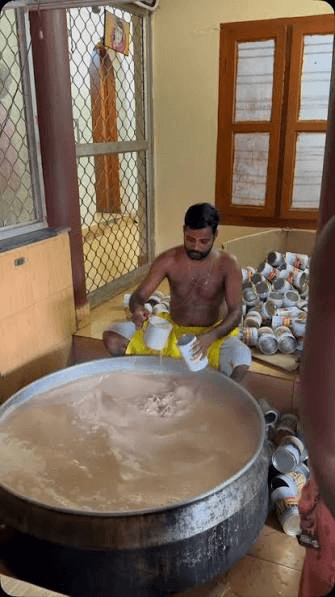
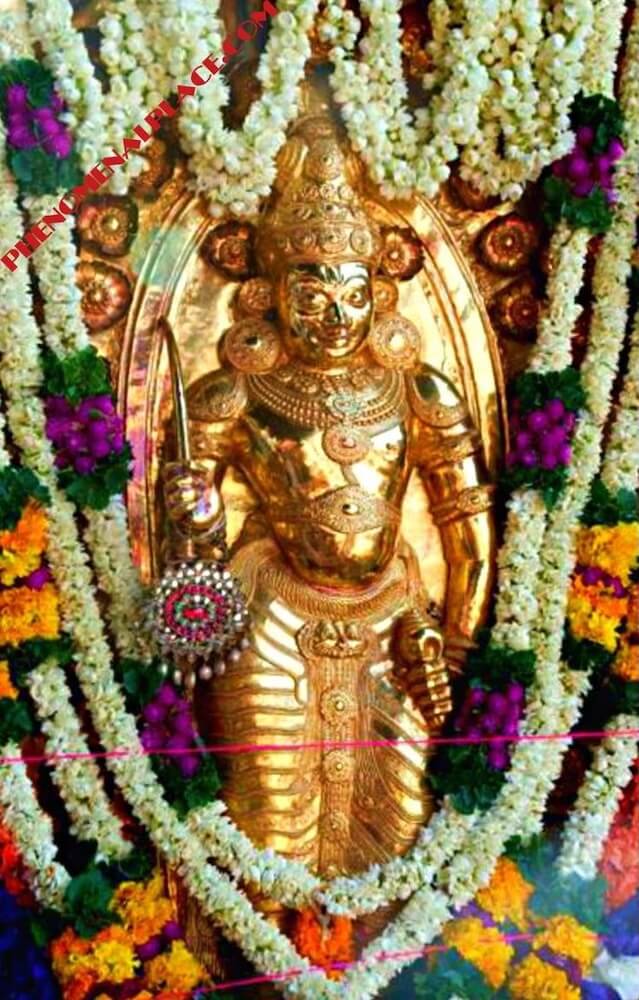 Ambalappuzha Sree Krishna Swamy Temple is one of the most revered temples in Kerala devoted to Lord Krishna. It is regarded as one of Kerala’s seven major Vaishnava temples, which is situated at Ambalappuzha, South of Alappuzha. The presiding deity Lord Krishna is in the form of Parthasarathy (the divine charioteer of Arjuna from the Mahabharata). Though it is in the form of Parthasarathy, he is widely regarded and worshipped as the Goshala Krishna. (Krishna in the form of a Child) This magnificent temple is widely known as the Dakshina Dwaraka and is included among the 108 Abhimana Kshetrams due to its sacredness and cultural heritage. The temple is renowned worldwide for its sacred Ambalappuzha Palpayasam, a sweet milk pudding offered to Lord Krishna. A large number of devotees travel to this temple seeking blessings of the Divine Lord Krishna for successful marital life and child birth.
The temple was built between the 15th and 17th centuries CE by Chembakassery Pooradam Thirunal Devanarayanan Thampuran, the ruler of the erstwhile Chembakassery kingdom. According to tradition, the king dedicated his kingdom to Lord Krishna and ruled as the deity’s representative. The king was a great devotee of Lord Krishna and dedicated his kingdom to the deity, considering himself merely the Lord’s representative while ruling the land. Under his patronage, the temple became an important centre of religion, art, literature and music in Kerala. Historical tradition states that the idol of Lord Krishna installed at Ambalappuzha was brought from Karinkulam Temple.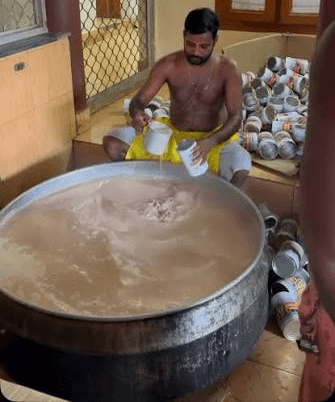 To commemorate the arrival and installation of this sacred idol, the famous Champakkulam Moolam Festival was established. Even today, this annual celebration recalls the ceremonial journey of the deity and reflects the temple’s deep historical roots. In 1950, the temple administration was handed over to Travancore Devaswom Board.
The temple is associated with the famous Chess and Rice Grains Legend. According to the legend, Lord Krishna appeared before the Chembakassery king disguised as a sage and challenged him to a game of chess. The sage requested a simple reward if he won: one grain of rice on the first square of the chessboard, doubling the number of grains on every subsequent square. The king accepted, believing it to be a modest request. However, as the grains doubled across all 64 squares, the quantity became unimaginably enormous—far exceeding the kingdom’s entire rice reserves. Realising that the sage was none other than Lord Krishna, the king surrendered. Instead of demanding the impossible amount of rice, Lord Krishna instructed the king to feed devotees daily with Palpayasam. This tradition continues even today, making the temple’s Palpayasam one of India’s most famous temple offerings.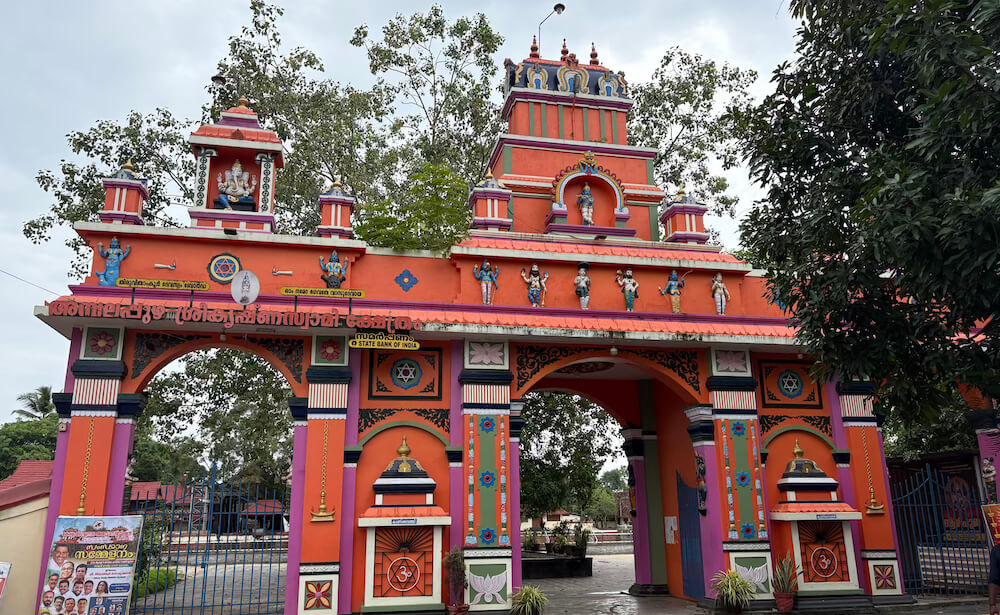
Another popular belief is that Lord Guruvayoorappan visits Ambalappuzha every day during the noon worship to partake in the Palpayasam Vazhipadu (offering). Poonthanam Namboothiri is one of Kerala’s greatest devotional poets and an ardent devotee of Lord Krishna. It is believed that he visited Ambalappuzha and said that “ Ivideyum Guruvayoorappan thanne aanu “ ( The Land Worshipped here is none other than Guruvayoorappan himself ). There is a belief that the idol of Guruvayoorappan was brought here during a time of war.
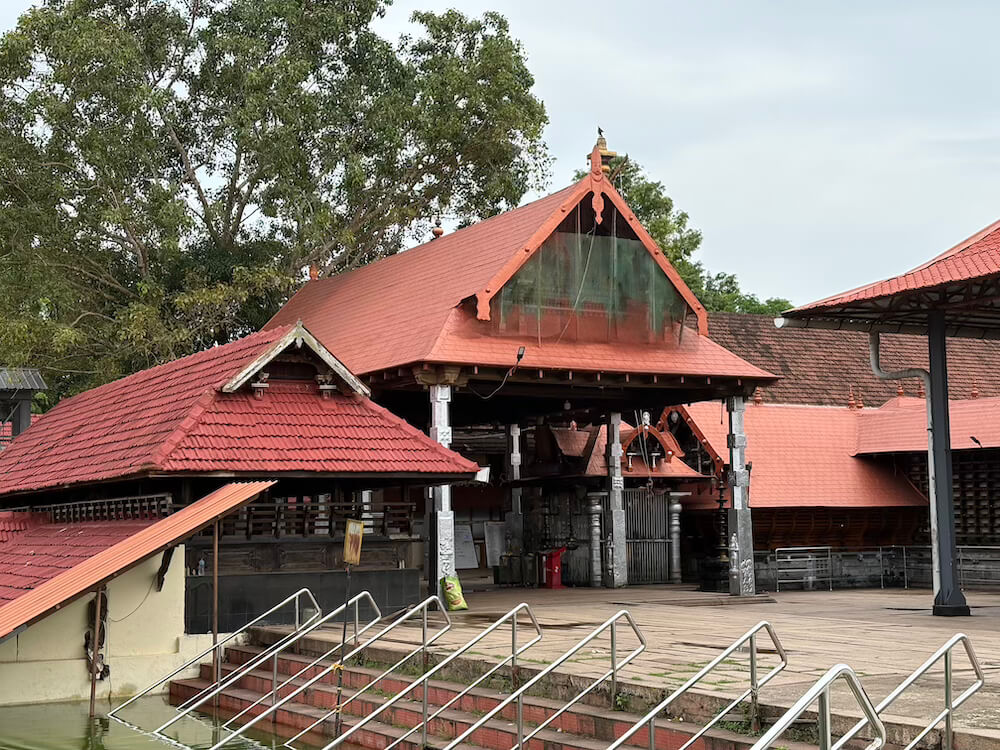
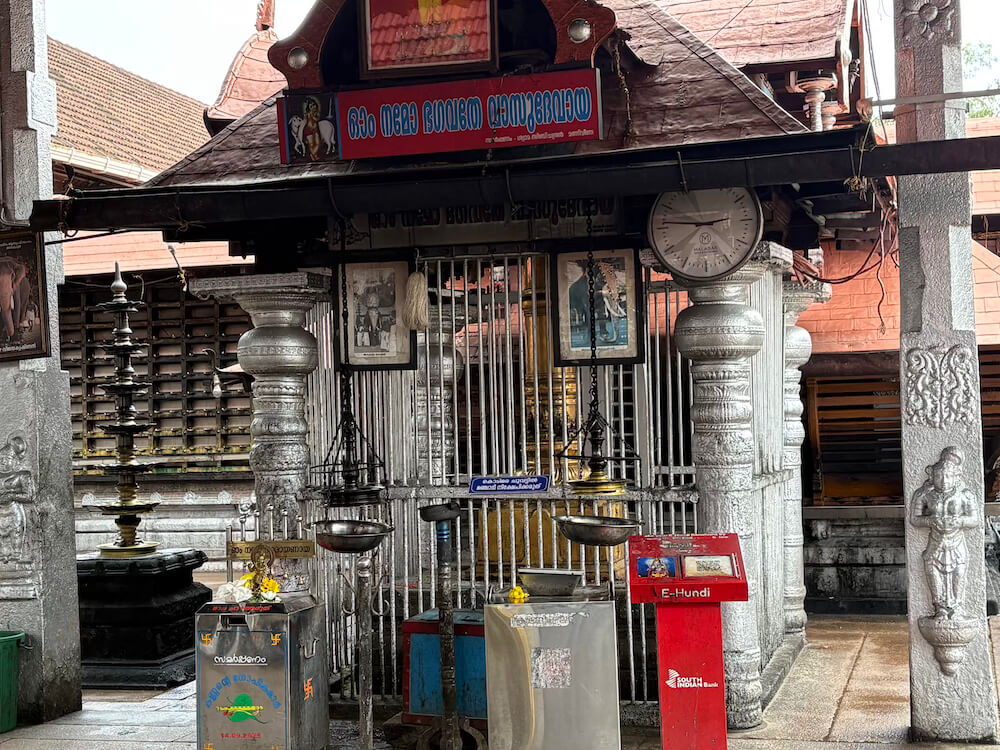
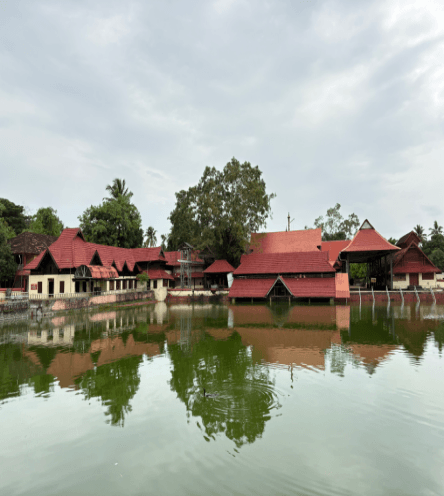 As you enter the temple through the East Nada, the first sight that welcomes you is a large and serene temple pond, adding to the peaceful atmosphere of the temple. Beyond the pond stand the Annakottil (elephant stable) and the Dhwaja Stambham (flagpole), marking the approach to the sacred inner precincts. Further ahead lies the Nalambalam, a traditional rectangular courtyard that forms the heart of the temple. Within it are the Balikallu (sacrificial stone used for placing ritual food and symbolic offerings) and the Deepa Stambham, a traditional lamp tower that adds a graceful presence to the courtyard. At the centre of the Nalambalam stands the Vatta Sreekovil, the circular sanctum where Lord Krishna is worshipped facing East. Bhagavan Krishna is depicted holding a whip in his right hand and a Shankhu (conch) in his left hand. The simple yet distinctive form of the deity reflects the unique spiritual character of the temple. Within the sanctum, rows of traditional Nilavilakku glow softly. In front of the Sreekovil is the Namaskara Mandapam, an exquisitely carved wooden pavilion where devotees offer their prayers and important temple rituals are performed.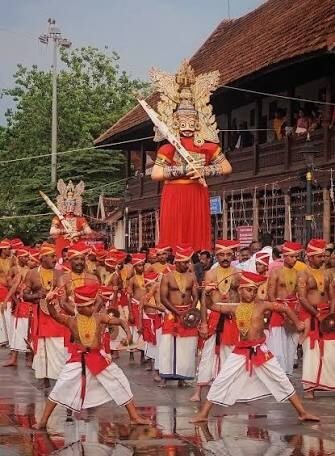
The intricate craftsmanship of the wooden structure adds a sense of warmth and traditional elegance to the temple’s sacred surroundings. The temple also houses a traditional theatre hall known as the Koothambalam, where Kerala’s classical temple art forms are performed. It stands as a beautiful reminder of the close connection between temple traditions and the performing arts of Kerala. Among the treasured cultural objects preserved within the temple premises is the Mizhavu, a large copper percussion instrument associated with the legendary Malayalam poet and performer Kunchan Nambiar, the founder of Ottamthullal. Carefully preserved as a symbol of Kerala’s rich performing arts heritage, the historic instrument is displayed at the Kalithattu (performance area) behind the Nalambalam.
The sub-deities inside the Nalambalam are Shiva and Devi, facing West. Lord Ganesha and Shiva are also placed in a shared Sreekovil outside the Nalambalam, facing East. On the South side of the Nalambalam, Lord Guruvayurappan is enshrined facing West. Additionally, Lord Nagaraja is enshrined in a traditional Sarpakavu (a sacred natural grove believed to be the abode of Nagaraja and the Naga Devatas) situated 200 metres from the temple premises. Here, Bhagavathi is placed in front of the temple pond, worshipped as the Divine Mother and a protective deity.
The temple celebrates a 10-day annual festival, the Aarattu Festival, in the month of Meenam (March/April). 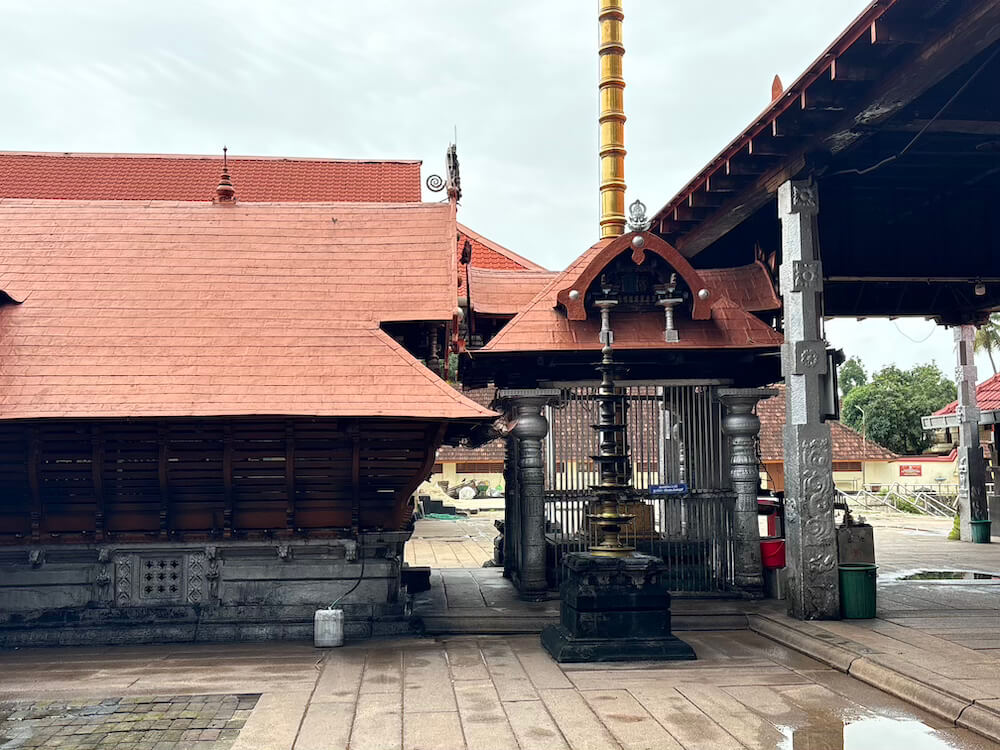 This festival begins with Kodiyettam (flag hoisting) on the Atham star and concludes with Aarattu on the Thiruvonam star. During these days, one of Kerala’s most famous ritualistic martial dances, Velakali, is performed to symbolise the battle of the Mahabharata. Decorated elephant processions, the Palli Vetta (royal hunt ritual) and Utsava Bali are also conducted during the festival.
A grand traditional fEast is served to A large numbers of devotees in the temple’s historic Nadakashala (performing arts theatre). Other festivals celebrated include Ashtami Rohini, the Champakkulam Moolam Festival and the Shankara Narayana Kalotsavam (a renowned music festival showcasing music, dance and devotional arts). 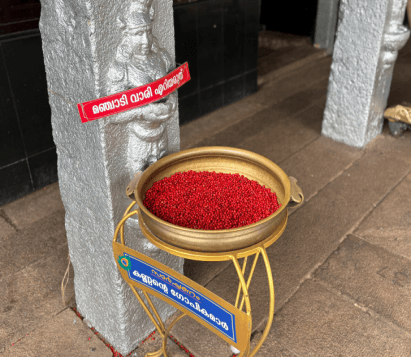 A rare and highly sacred ritual called Pallippana is conducted once every 12 years, with the most recent performance taking place in February 2026.
The main, iconic offering to Lord Krishna is the Palpayasam Vazhipadu. The Ambalappuzha Palpayasam is a sacred offering performed with the belief that it helps remove all family-related doshas and brings the blessings, protection and grace of Lord Krishna. Devotees must book well in advance to reserve a date for this offering. Kalabham, a sacred sandalwood paste, is applied to Lord Krishna’s idol as an offering of devotion, purity and reverence.
Thulabharam is another offering to Lord Krishna (the devotee offers an amount of a chosen item equivalent to their own body weight to the deity) as an expression of devotion. Other offerings include Udayasthamana Pooja (a major offering covering the entire day’s ritual sequence), 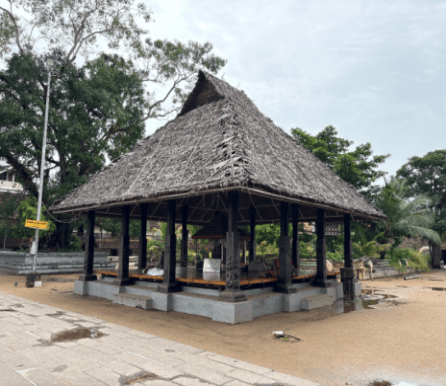 Venna Nivedhyam (butter offering to seek blessings and protection from misfortunes), Thrikala Pooja (offering made during the three daily worship sessions) and Archana (offering flowers while reciting prayers to seek blessings).
The temple awakens at the gentle hour of 4:00 am with the sacred rituals of Nirmalyam and Palli Unarthu. The morning worship continues until 12:00 pm, concluding with the Ucha Pooja and Seeveli. As the evening sets in, the temple reopens at 5:00 pm and at 6:30 pm, the soft glow of Deeparadhana illuminates the sanctum, offered to both the main and sub-deities. The day comes to a peaceful close with the Athazha Seeveli, after which the temple closes at 8:00 pm. Throughout the day, regular poojas and offerings are performed for the sub-deities along with the main deity. Together, these rituals form a beautiful rhythm of prayer, devotion and tradition, preserving the divine atmosphere of the temple from the first light of dawn until the quiet of night.
Key Highlights
- Located 14 km from Alappuzha Bus stand and 15km from Alappuzha Railway station
- KSRTC and local bus facilities are available to Ambalappuzha.
- Private vehicles can be parked at the designated parking areas.
- Accommodation and food facilities are available in nearby areas.
- Contact information : 0477 2272090
श्री कृष्ण स्वामी मंदिर
अंबलप्पुझा, ज़िला अलाप्पुझा
मंदिरे
Temples
मंदिर
મંદિરો
கோவில்கள்
దేవాలయాలు
ക്ഷേത്രങ്ങൾ
ದೇವಾಲಯಗಳು
মন্দিরসমূহ
ਮੰਦਿਰ
-
अरवुकड श्रीदेवी मंदिर आरवुकड, जि. अलप्पुझा
अधिक माहितीAravukad Sridevi Temple Aravukad, Dist. Alappuzha
View Detailsअरवुकाड श्री देवी मंदिर अरवुकाड, जिला. अलाप्पुझा
विवरण देखेंAravukad Sridevi Temple Aravukad, Dist. Alappuzha
વિગત જુઓAravukad Sridevi Temple Aravukad, Dist. Alappuzha
விவரங்களைக் காண்கAravukad Sridevi Temple Aravukad, Dist. Alappuzha
వివరాలను చూడండిAravukad Sridevi Temple Aravukad, Dist. Alappuzha
വിശദാംശങ്ങൾ കാണുകAravukad Sridevi Temple Aravukad, Dist. Alappuzha
ವಿವರಗಳನ್ನು ವೀಕ್ಷಿಸಿAravukad Sridevi Temple Aravukad, Dist. Alappuzha
বিস্তারিত দেখুনAravukad Sridevi Temple Aravukad, Dist. Alappuzha
ਵੇਰਵੇ ਦੇਖੋ -
कार्त्यायनी देवी मंदिर कोडाठीकावला, चेरथळा, जि. अलप्पुझा.
अधिक माहितीKarthyayani Devi Temple Kodathikavala, Cherthala, Dist. Alappuzha.
View Detailsकार्त्यायनी देवी मंदिर कोडथिकावाला, चेरथला, जिला। अलाप्पुझा.
विवरण देखेंKarthyayani Devi Temple Kodathikavala, Cherthala, Dist. Alappuzha.
વિગત જુઓKarthyayani Devi Temple Kodathikavala, Cherthala, Dist. Alappuzha.
விவரங்களைக் காண்கKarthyayani Devi Temple Kodathikavala, Cherthala, Dist. Alappuzha.
వివరాలను చూడండిKarthyayani Devi Temple Kodathikavala, Cherthala, Dist. Alappuzha.
വിശദാംശങ്ങൾ കാണുകKarthyayani Devi Temple Kodathikavala, Cherthala, Dist. Alappuzha.
ವಿವರಗಳನ್ನು ವೀಕ್ಷಿಸಿKarthyayani Devi Temple Kodathikavala, Cherthala, Dist. Alappuzha.
বিস্তারিত দেখুনKarthyayani Devi Temple Kodathikavala, Cherthala, Dist. Alappuzha.
ਵੇਰਵੇ ਦੇਖੋ -
वेलोरवट्टम श्री महादेवाचे मंदिर वेलोरवट्टोम, चेरथळा, जि. अलप्पुझा.
अधिक माहितीVelorvattom Sree Mahadeva Temple Velorvattom, Cherthala, Dist. Alappuzha.
View DetailsVelorvattom Sree Mahadeva Temple Velorvattom, Cherthala, Dist. Alappuzha.
विवरण देखेंVelorvattom Sree Mahadeva Temple Velorvattom, Cherthala, Dist. Alappuzha.
વિગત જુઓVelorvattom Sree Mahadeva Temple Velorvattom, Cherthala, Dist. Alappuzha.
விவரங்களைக் காண்கVelorvattom Sree Mahadeva Temple Velorvattom, Cherthala, Dist. Alappuzha.
వివరాలను చూడండిVelorvattom Sree Mahadeva Temple Velorvattom, Cherthala, Dist. Alappuzha.
വിശദാംശങ്ങൾ കാണുകVelorvattom Sree Mahadeva Temple Velorvattom, Cherthala, Dist. Alappuzha.
ವಿವರಗಳನ್ನು ವೀಕ್ಷಿಸಿVelorvattom Sree Mahadeva Temple Velorvattom, Cherthala, Dist. Alappuzha.
বিস্তারিত দেখুনVelorvattom Sree Mahadeva Temple Velorvattom, Cherthala, Dist. Alappuzha.
ਵੇਰਵੇ ਦੇਖੋ