
कार्त्यायनी देवी मंदिर
कोडाठीकावला, चेरथळा, जि. अलप्पुझा.
Karthyayani Devi Temple
Kodathikavala, Cherthala, Dist. Alappuzha.
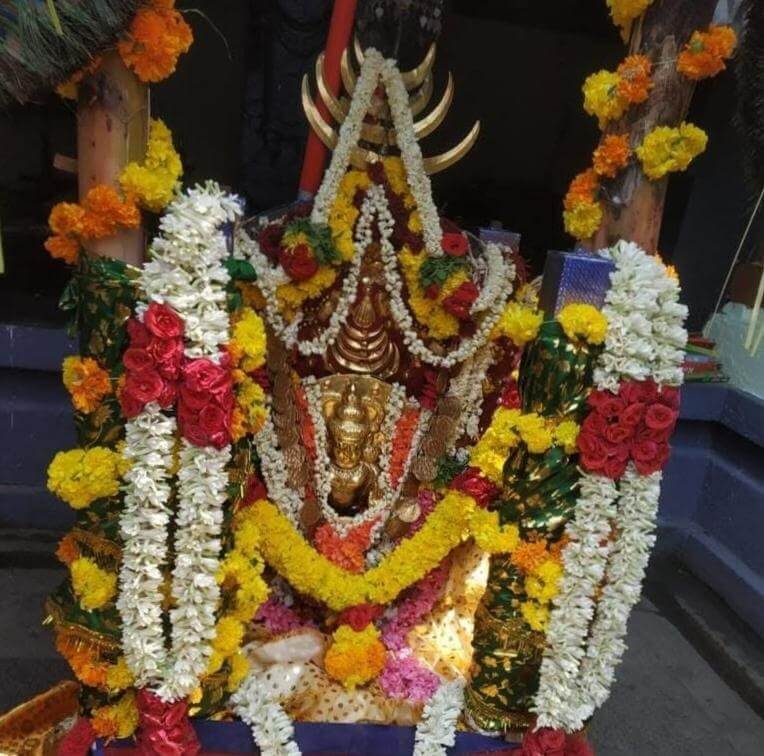
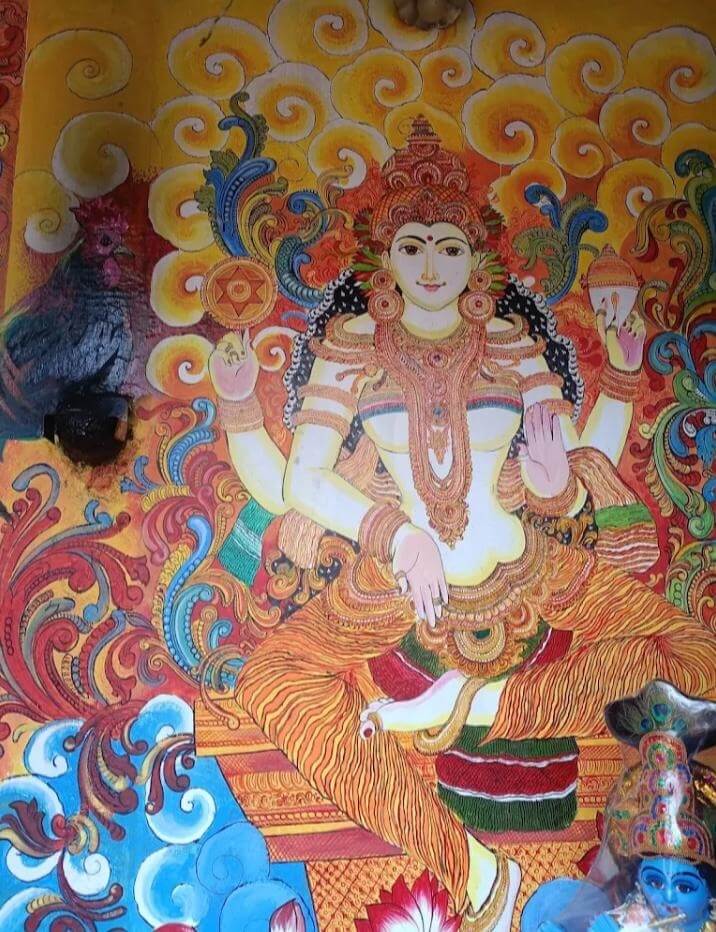 Cherthala Karthyayani Temple is a well-known Bhagavathy temple located beside the road in the heart of Cherthala town in Alappuzha district, Kerala. The main deity is Goddess Karthyayani, one of the Navadurga forms and a gentle manifestation of Adi Parashakti. Regarded as one of the 108 Durga temples of Kerala, this ancient temple is an important place of worship for devotees. A distinctive feature of the temple is the large number of roosters that roam freely within the temple grounds.
According to historical estimates, Karthyayani Temple is around 1,000 to 1,300 years old. It is believed to have been established between AD 800 and AD 1000, during the period associated with the tradition of Kerala’s 108 Durga temples. The temple is believed to have been founded under the patronage of local rulers and chieftains of the ancient Chera Kingdom. In AD 1762, when the Cherthala region became part of the Kingdom of Travancore, the temple received royal patronage, underwent restoration and was developed into its present form.
Following the historic Temple Entry Proclamation of 1936, Mahatma Gandhi visited the temple on 18 January 1937 and addressed the public in the temple courtyard. 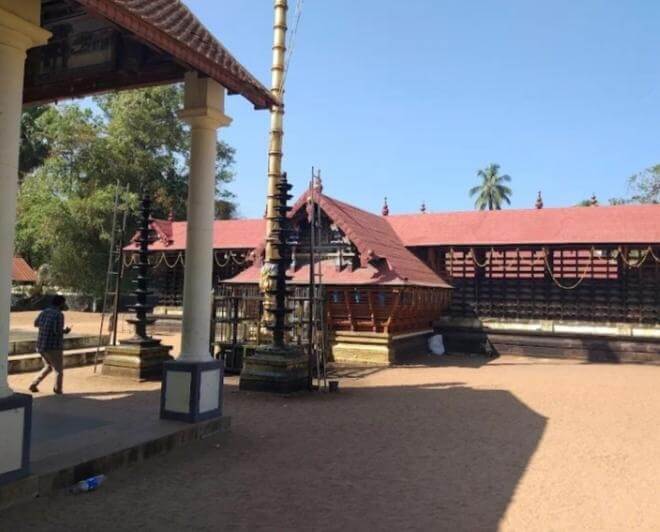 The temple became one of the important venues where the message of social equality and freedom of worship was shared with the people. Once closed to certain sections of society, the temple later became a symbol of the social reforms that ensured the right to worship for people regardless of caste. Today, it is one of the major temples administered by the Travancore Devaswom Board.
According to the main legend, Vilwamangalam Swamiyar was travelling through this area when he saw a divine light in a nearby muddy pond. On reaching the spot, he found a seven-armed idol of the Goddess buried in the mud. As he tried to lift the idol, it began to sink deeper into the ground. It is believed that he placed a handful of mud on the Goddess’s head and consecrated the idol at the same spot. According to the legend, the place came to be known as Cherthala, from the Malayalam words ‘cher’ (mud) and ‘thala’ (head), referring to the mud placed on the Goddess’s head.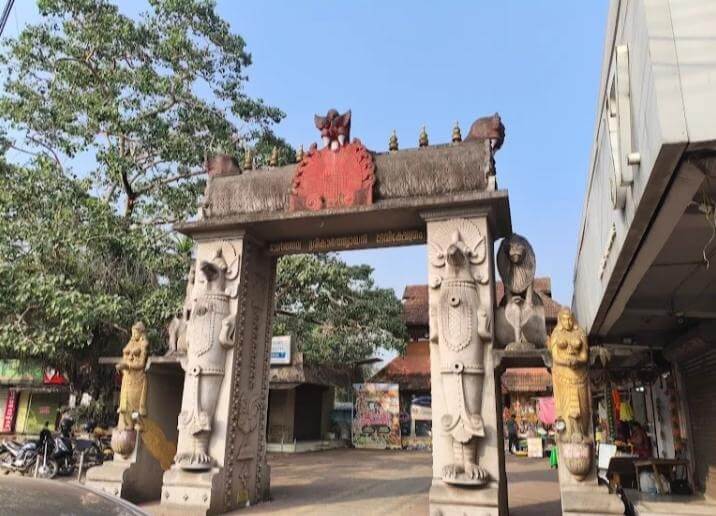 The sanctum is also believed to have been built below ground level in memory of this event. Another legend says that Goddess Karthyayani is one of seven sister goddesses. While travelling through the sky, she is believed to have chosen Cherthala as her abode because of its beauty. Goddesses such as Kodungallur Amma, Attukal Amma and Chottanikkara Amma are traditionally regarded as her sisters and the ritual bathing ceremony in seven ponds during the Cherthala Pooram festival is associated with this belief. The custom of offering live roosters in the temple is also believed to have originated from an old local belief in which devotees prayed for protection from deadly diseases such as smallpox.
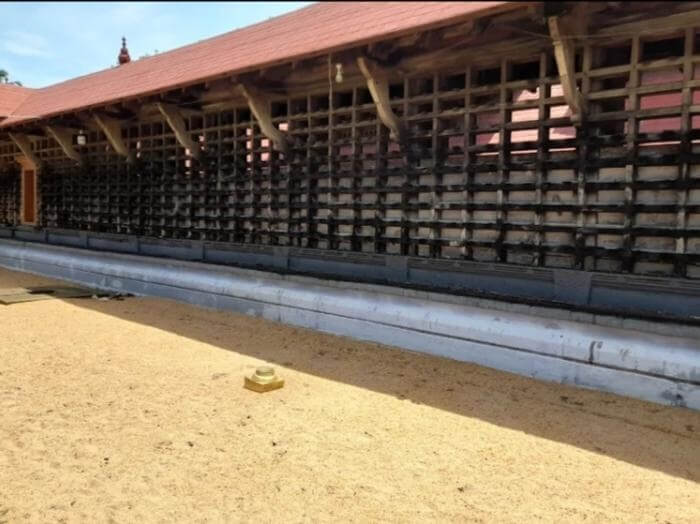
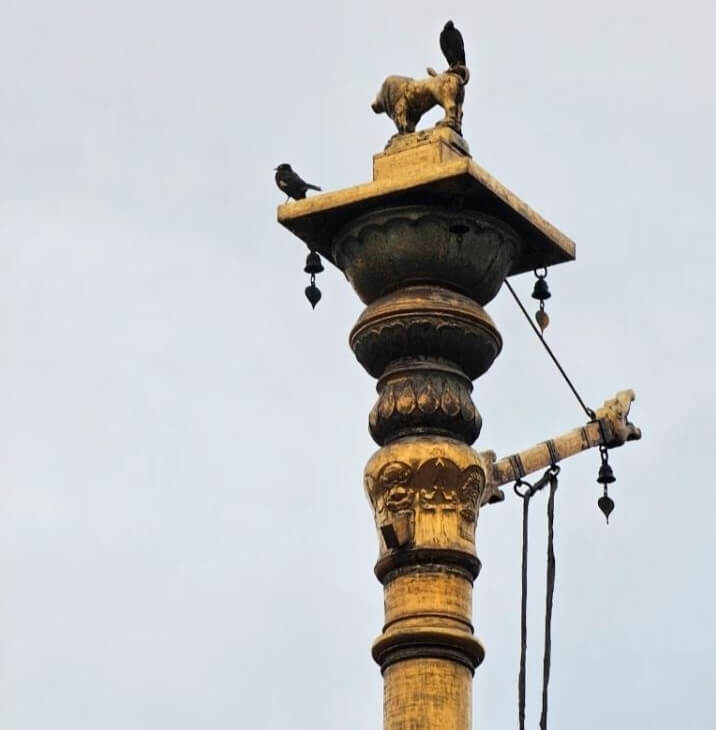
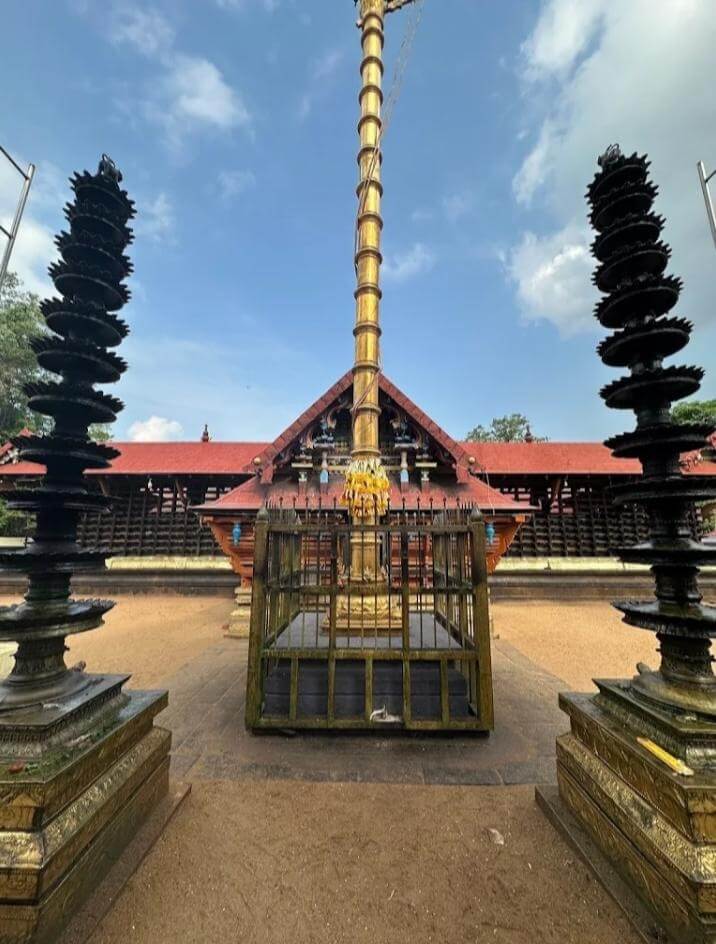 The temple is known for its spacious natural sand courtyard and traditional Kerala temple architecture. Approaching through the eastern entrance, visitors first see the large Anappanthal (elephant shelter) with its finely carved stone pillars, followed by the Dwajasthambam (flagstaff). Passing through the traditional two-storeyed, tiled entrance gateway, devotees can see hundreds of roosters roaming freely within the temple grounds, offered as part of a temple vow. Entering the tiled Nalambalam (inner courtyard), rows of wooden oil lamp holders can be seen along the outer walls. In front of the sanctum stands the beautifully carved wooden Namaskara Mandapam, which is one of the notable architectural features of the temple.
The main sanctum of the temple is a rare circular Sreekovil (Vatta Sreekovil) built in the traditional Kerala-Dravidian style of architecture. It is a two-storeyed structure with a timber roof covered in copper sheets and topped with a golden finial. The east-facing sanctum is approached by a finely carved granite Sopanam (steps), with stone Dwarapalaka (guardian) sculptures and a Mukha Mandapam (front hall) in front. One of the temple’s most distinctive architectural features is that the Garbhagriha (sanctum sanctorum) is situated about four feet below the floor level of the Nalambalam. According to legend, the sanctum was built at the same level where the self-manifested deity appeared. 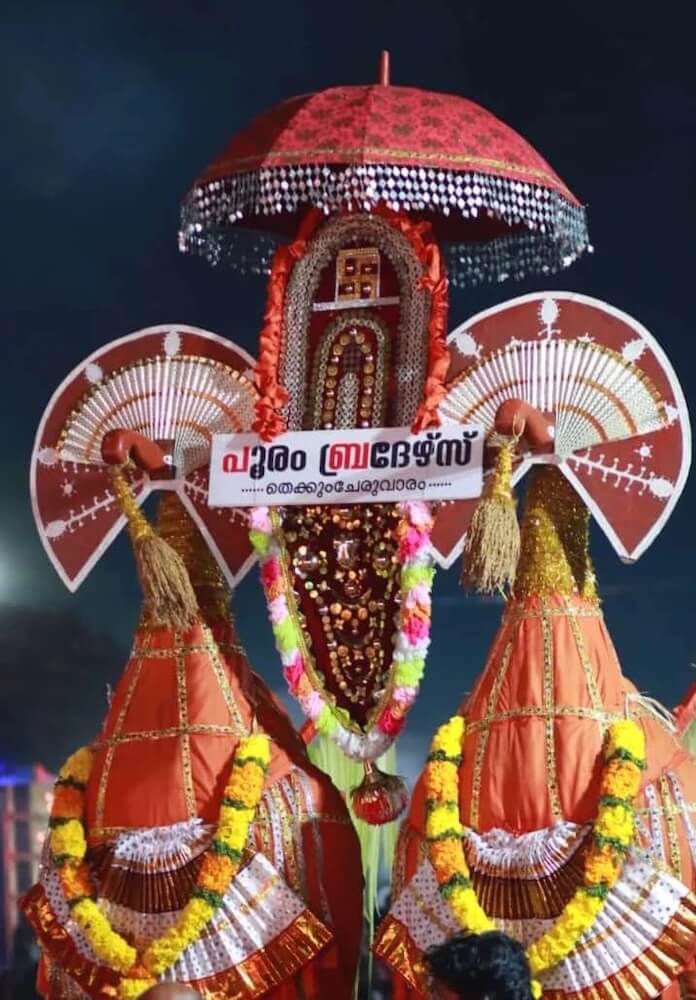 The main deity is worshipped as Goddess Karthyayani, the gentle form of Adi Parashakti. Unlike the usual anthropomorphic forms of the Goddess, the self-manifested idol has a Shiva Linga-like form, with only the upper part of the idol visible, in keeping with the legend associated with Vilwamangalam Swamiyar. After the Abhishekam (ritual bathing), this visible portion of the idol is gently wiped with a silk cloth as part of the temple’s traditional ritual.
Adjacent to the main Sreekovil is the shrine of Lord Ganesha. Outside the Nalambalam are separate shrines dedicated to Lord Shiva and Lord Vishnu. Lord Dharma Sastha (Kavudayon) is enshrined in a separate shrine outside the main temple. A Nagathara (sacred serpent grove) with naga deities is located on one side of the temple complex.
The temple’s most important annual festival is Cherthala Pooram. This eight-day festival begins with the Kodiyettam (flag hoisting) on the Makayiram star in the Malayalam month of Meenam (March–April) and concludes with the Arattu (ceremonial holy bath) on the Uthram star. One of the unique features of the festival is the double Arattu, held every morning and evening, as well as the ceremonial bathing rituals conducted in seven different temple ponds. The celebrations begin two days before the flag hoisting with the Thalappoli procession, in which women participate in large numbers. 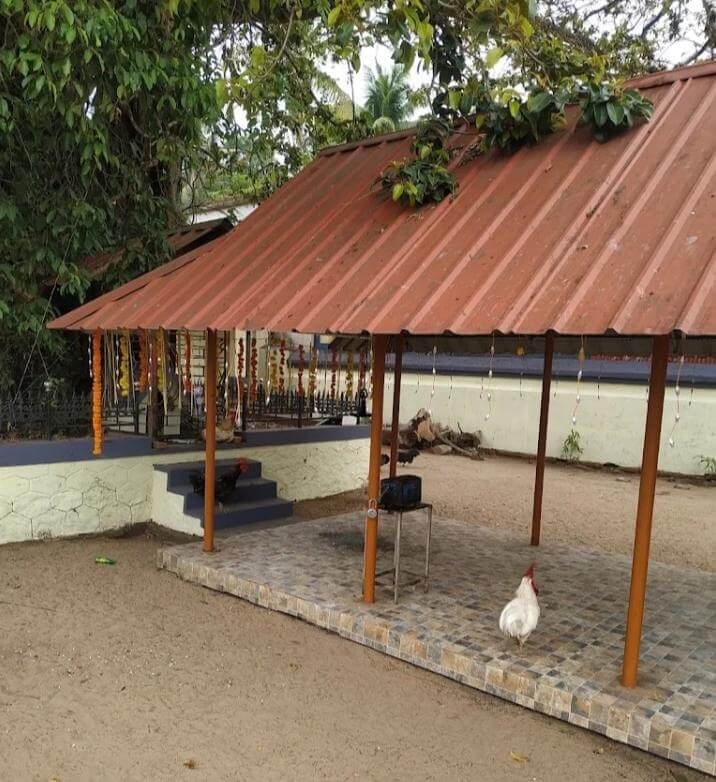 Traditional art forms such as Velathullal and Padayani are also performed during the festival. Other important observances at the temple include Thrikkarthika in the Malayalam month of Vrischikam (November–December), Navaratri in Kanni (September–October) and the Mandala season, observed from Vrischikam to Dhanu.
One of the most distinctive offerings at the temple is the ritual of releasing live roosters into the temple grounds. Devotees perform this offering while praying for relief from illness and protection from negative influences. Other important offerings include Thadi Vazhipadu to Lord Dharma Sastha for relief from physical ailments and pain in the limbs, Iratti Payasam to Goddess Karthyayani for the fulfilment of wishes and Swayamvara Pushpanjali for those seeking marriage and marital harmony.
The temple is open for darshan daily from 05:00 AM to 12:00 PM and from 05:00 PM to 08:00 PM. The temple opens at 05:00 AM, followed by the Usha Pooja at 05:30 AM and the Ucha Pooja at 12:00 PM, after which the temple closes for the afternoon. It reopens at 05:00 PM, followed by Deeparadhana at sunset and the Athazha Pooja at 06:30 PM. The temple closes for the day at 08:00 PM. Darshan and pooja timings may vary on festival days and during the Mandala season.
Key highlight :-
- Located 21 km from Alappuzha, 32 km from Ernakulam and 22 km from Vaikom.
- The nearest railway station is Cherthala Railway Station, located about 3 km from the temple.
- KSRTC and local bus services are available to the temple from Kottayam, Ernakulam and Vaikom.
- Private vehicles can be parked in the temple’s designated parking area.
- Accommodation and dining facilities are available in the nearby towns.
कार्त्यायनी देवी मंदिर
कोडथिकावाला, चेरथला, जिला। अलाप्पुझा.
मंदिरे
Temples
मंदिर
-
वेलोरवट्टम श्री महादेवाचे मंदिर वेलोरवट्टोम, चेरथळा, जि. अलप्पुझा.
अधिक माहितीVelorvattom Sree Mahadeva Temple Velorvattom, Cherthala, Dist. Alappuzha.
View Detailsविवरण देखें -
मन्नार थ्रिक्कुरट्टी महादेवाचे मंदिर मन्नार, जि. अलप्पुझा.
अधिक माहितीMannar Thrikkuratti Mahadeva Temple Mannar, Dist. Alappuzha.
View Detailsमन्नार थ्रिक्कुरत्ती महादेव मंदिर मन्नार, जिला. अलाप्पुझा.
विवरण देखें -
कंदीयूर महादेवाचे मंदिर मावेलीक्कारा, जि. अलप्पुझा
अधिक माहितीKandiyoor Mahadeva Temple Mavelikkara, Dist. Alappuzha
View Detailsकंडियूर महादेव मंदिर मावेलिक्कारा, जिला. अलाप्पुझा
विवरण देखें