
कंदीयूर महादेवाचे मंदिर
मावेलीक्कारा, जि. अलप्पुझा
Kandiyoor Mahadeva Temple
Mavelikkara, Dist. Alappuzha
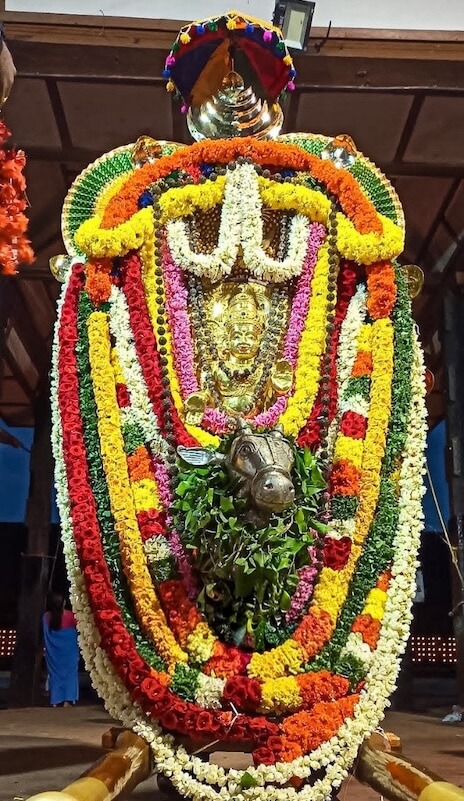 Kandiyoor Mahadeva Temple is an ancient Shiva temple situated on the southern bank of the Achenkovil River, near Mavelikkara in Alappuzha district. Also known as Dakshina Kashi (Southern Kashi), the temple is dedicated to Lord Shiva in the form of Kirata Moorthy. The principal deity, known as Kandiyoorappan, is one of the most revered among Kerala’s 108 Shiva temples. The temple flourished under the patronage of the Odanad kings.
The Kandiyoor Sree Mahadeva Temple is the earliest known temple in Kerala to preserve a stone inscription recording its historical origin. Early epigraphical evidence indicates that the primary stone structure of the temple was established or reconstructed in 823 AD during the reign of the Second Chera King, Rajasekhara Varman, also known as Cheraman Perumal Nayanar. This event also marks the beginning of the local Kandiyoorabdam calendar era. The renowned historian Elamkulam Kunjan Pillai identified this inscription as firmly establishing the temple’s documented history and dating it to 823 AD. Sivavilasam, written by Damodara Chakyar, the court poet of Kerala Varma, who ruled from Kandiyoor during the 14th century CE, records that the Odanad Raja and the Madathumkoor Raja shared equal authority over the temple. Shared authority over the Kandiyoor Mahadeva Temple between the Odanad and Madathumkoor Rajas was established under a joint trusteeship (Uralma) system, balancing supreme regional sovereignty with local administrative control. While Odanad retained sovereignty after shifting its capital to Kayamkulam, the local Madathumkoor Raja managed the Mavelikkara region, resulting in a co-trusteeship that combined legitimizing power with daily administration. It also states that the temple administration was once managed by Devadasis. 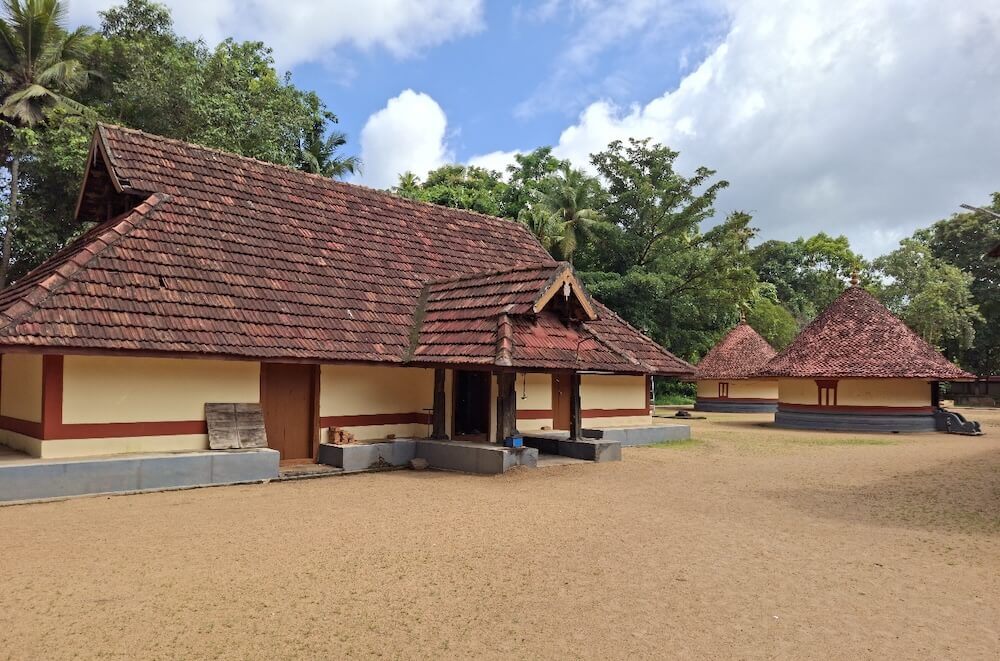 One of them, Cherukara Kuttathi, was married to the Raja of Kandiyoor Matham, reflecting the prominent position of the Devadasi community in the Mavelikkara region. Odanad remained an independent kingdom for several centuries before it was annexed to the Kingdom of Travancore by Maharaja Anizham Thirunal Marthanda Varma in AD 1746. Tradition holds that, during the annexation, the Kayamkulam Raja offered his sword before the deity at Kandiyoor Mahadeva Temple and escaped through the western entrance. Since then, the western entrance of the Nalambalam has remained closed. The temple is also well known for its numerous inscriptions, which have made a significant contribution to the study of Kerala’s history.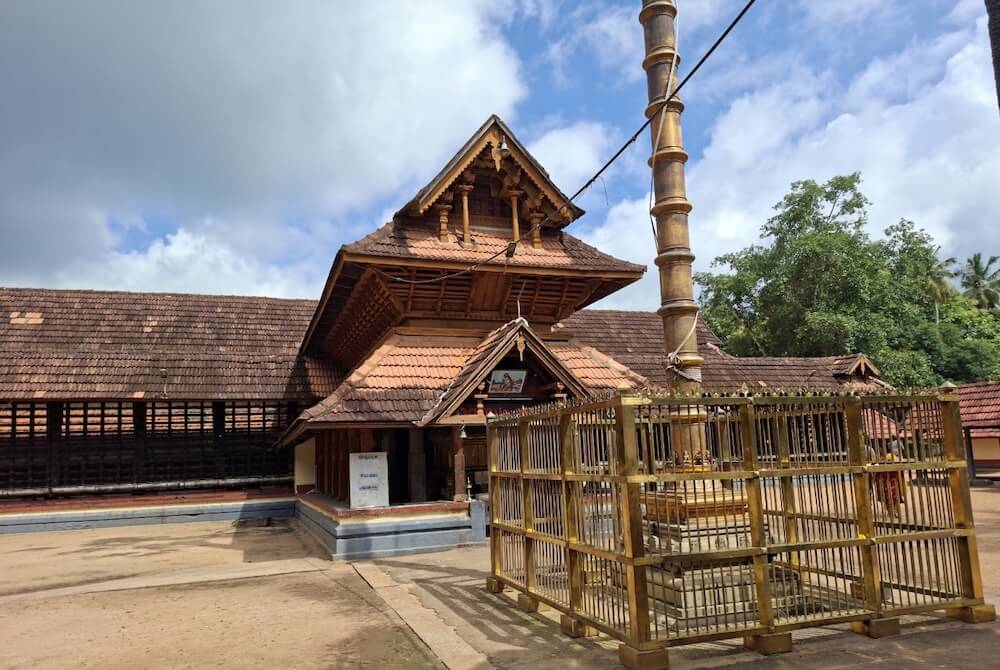
Kandiyoor Mahadeva Temple is associated with several legends. One relates to Sage Mrigandu, the father of Sage Markandeya. Tradition holds that Sage Mrigandu obtained an idol of Kirata Moorthy and wished to worship it daily at the holiest place on earth. He eventually chose the beautiful banks of the Achenkovil River and consecrated the Shiva Linga there. As he regarded it as the finest place he had seen (Kandathil Nalla Oor), the name is said to have gradually evolved into Kandiyoor. Another legend concerns Lord Brahma. When Brahma attempted to defeat Lord Vishnu by speaking falsely, Lord Shiva is believed to have severed one of Brahma’s five heads with His little finger, thereby becoming known as Sreekandan. 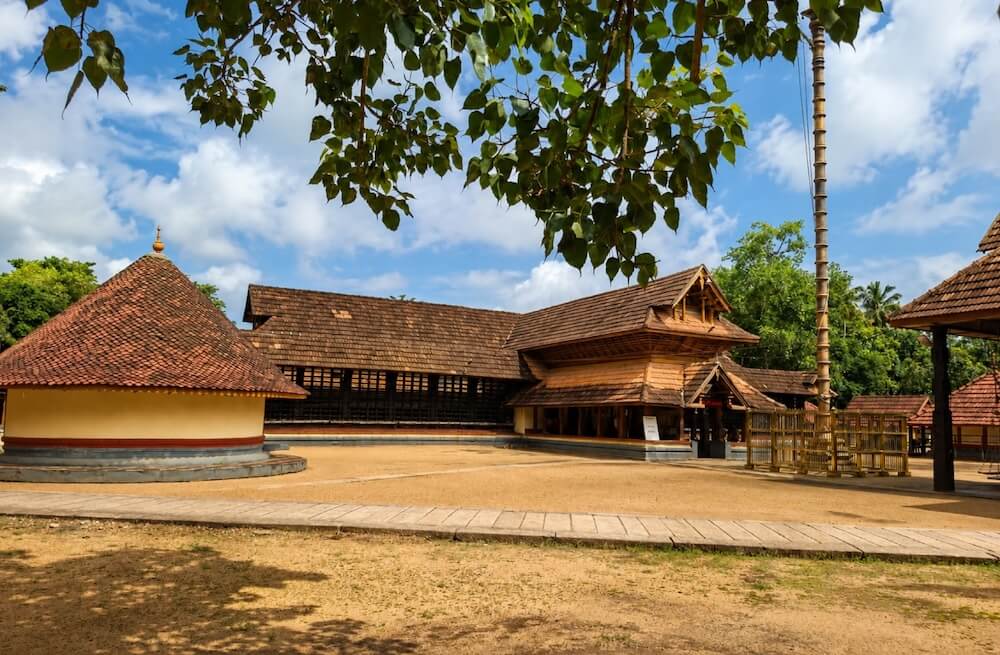 This event is said to have taken place on the banks of the Achenkovil River at the present temple site. The place consequently came to be known as Sreekandiyoor, which later evolved into Kandiyoor. Tradition further holds that Parasurama, the sixth incarnation of Lord Vishnu, later consecrated the Shiva Linga here.
In terms of its size and layout, Kandiyoor Mahadeva Temple ranks among the largest temple complexes in Kerala. The temple stands within a walled compound covering about seven and a half acres on the Harippad Road in Mavelikkara. The enclosure has four gopurams, one on each side. The eastern gopuram is adorned with fine wooden carvings depicting scenes such as Gajendra Moksham and Krishna Avataram. 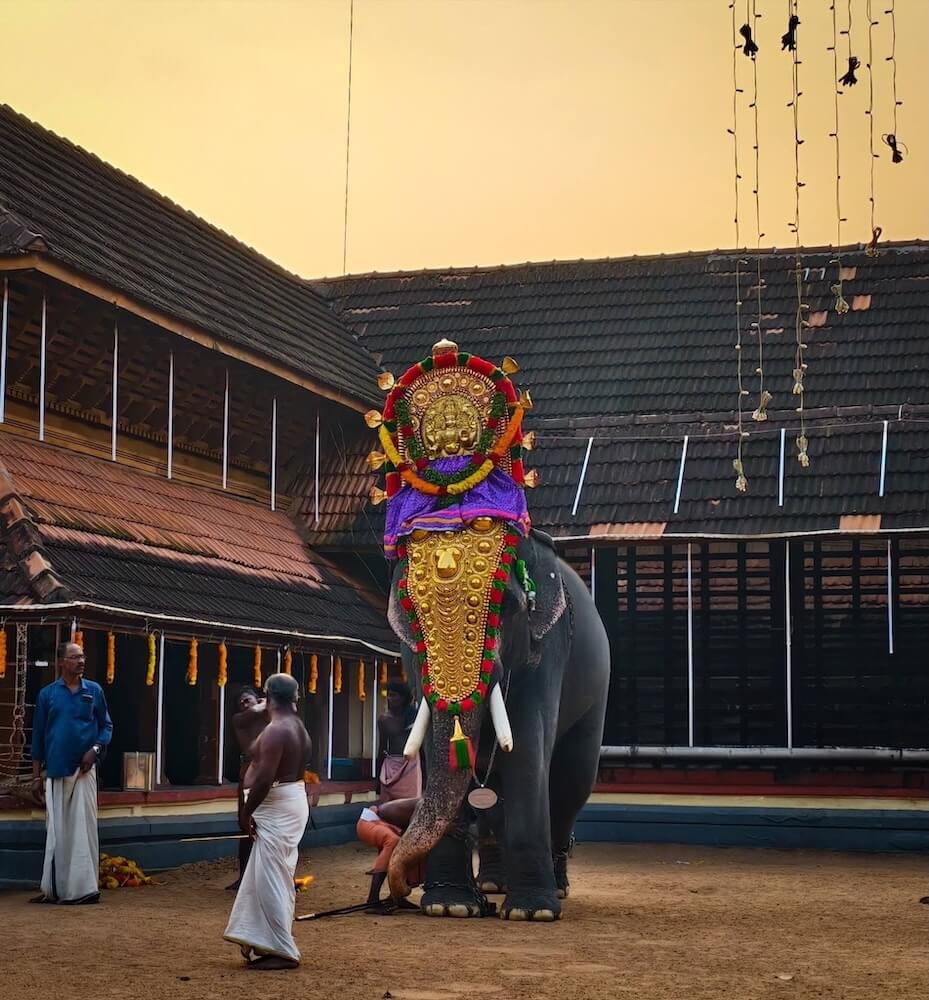 The present gold-plated flag mast was installed on the 15th day of Makaram in Malayalam Era 1103. The Sreekovil is an impressive two-storeyed structure with a circular lower storey and a square upper storey. It is built of granite and clay. Numerous Vattezhuthu inscriptions can be seen throughout the temple, including on the granite base of the Sreekovil.
The principal deity, Kandiyoorappan- Lord Shiva, grants darshan in three different forms during the daily worship. In the morning He appears as Dakshinamurthy, the bestower of knowledge; at noon as Uma Maheswara, the giver of marital happiness; and in the evening as Kirata Moorthy, the destroyer of evil. The temple rituals are performed by the Nedumpilly Tharananalloor family of Irinjalakuda, regarded as one of Kerala’s oldest Tantric families.
One of the temple’s distinctive features is its large number of sub-shrines, which is rare in Kerala. The spacious temple complex contains shrines dedicated to several deities, reflecting its rich ritual traditions. 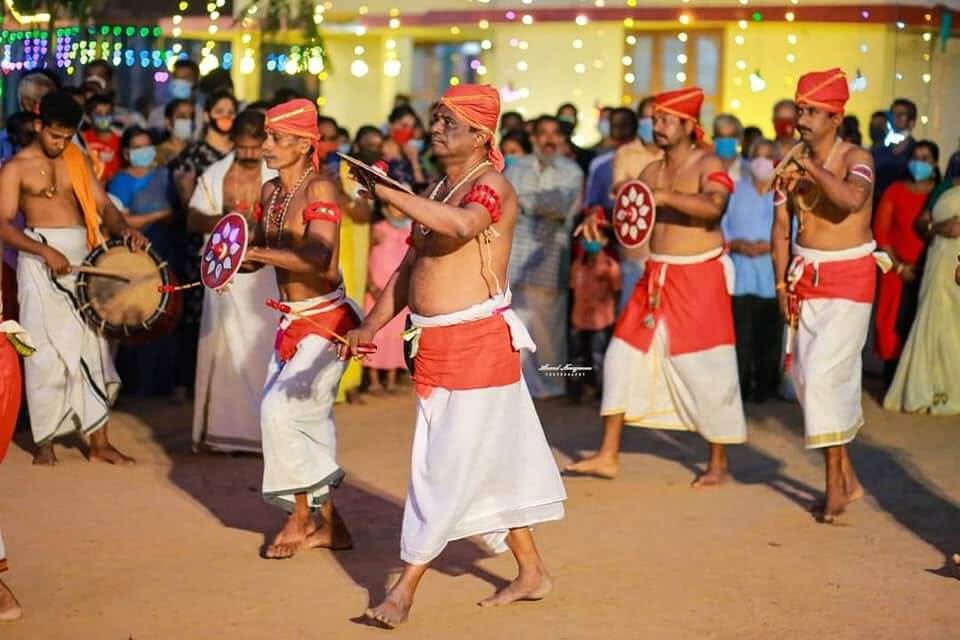 Five of these are dedicated to different manifestations of Lord Shiva—Parvatheesan, Sankaran, Sreekandan, Vadakkumnathan and Mrityunjayan—highlighting the temple’s importance as a major Shaiva centre. Other sub-shrines are dedicated to Mahavishnu, Nagaraja and Nagayakshi, Sastha, Goshala Krishna, Ganapathi, Subrahmanya, Moola Ganapathi and Annapoorneswari, a manifestation of Goddess Parvathi.
The principal annual festivals are the ten-day flag-hoisting festival culminating in Arattu on the Thiruvathira day in the Malayalam month of Dhanu and Maha Shivaratri, observed on Karutha Chathurdashi in the month of Kumbham. Other important observances include the monthly Muppettu Monday rituals, Pradosha Vratham and Thiruvathira star days.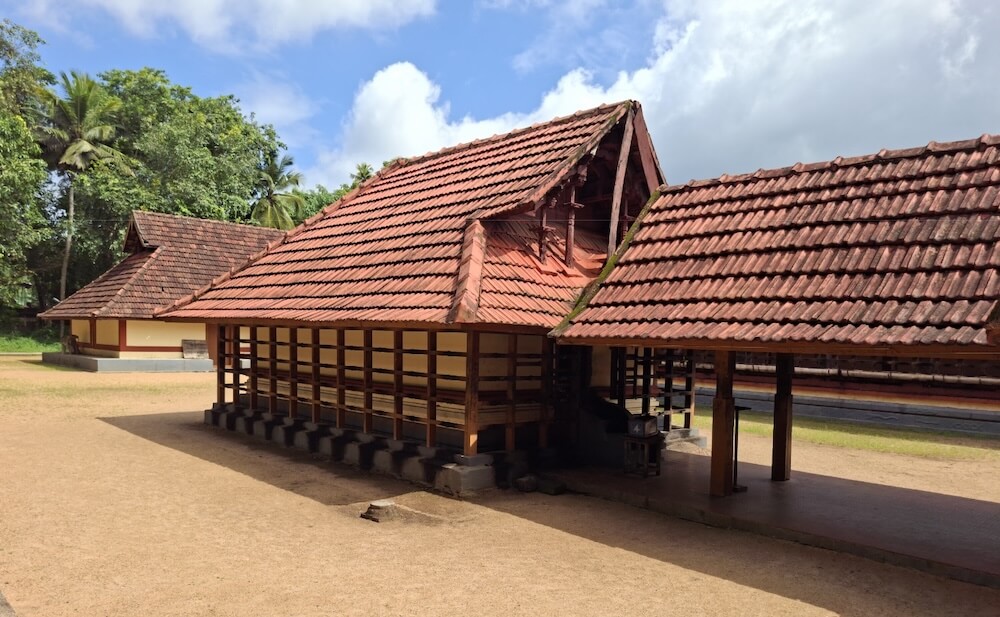
Jaladhara, Ksheeradhara, Shankhabhishekam and Rudrabhishekam are the principal ablution offerings performed to seek the blessings of Lord Shiva. Mrityunjaya Homam is conducted for long life, good health, well-being and protection from untimely dangers. Anthipooja is a special evening worship offered to Lord Kandiyoorappan. Swayamvara Archana is performed to remove obstacles to marriage and to seek a suitable life partner. Nirapara is a traditional offering in which measures (paras) are filled with paddy, rice and other grains, symbolising prosperity and abundance. Tulabharam is a votive offering in which devotees offer items equal to their body weight in fulfilment of their prayers.
The temple opens at 5:00 am for Nirmalya Darsanam, which continues until 5:45 am, followed by Usha Pooja from 5:45 am to 7:00 am. Usha Sree Bali is performed at 7:30 am, Panthiradi Pooja at 8:30 am, Mrithyunjaya Homam at 9:30 am, Navakam Kalasha Pooja at 10:00 am and Ucha Pooja at 10:30 am. The temple closes at 11:00 am. It reopens at 5:00 pm, with Deeparadhana taking place from 6:30 pm to 7:00 pm, followed by Athazha Pooja at 7:30 pm and Athazha Sree Bali at 7:45 pm. The temple closes for the day at 8:00 pm.
Key Highlights
- Located about 2 km from Mavelikkara on the Harippad Road.
- Around 15 km from Chengannoor Railway Station and the KSRTC Bus Station.
- Local buses are available to the temple.
- Parking facilities are available within the temple premises.
- Accommodation and dining facilities are available nearby.
कंडियूर महादेव मंदिर
मावेलिक्कारा, जिला. अलाप्पुझा
मंदिरे
Temples
मंदिर
મંદિરો
கோவில்கள்
దేవాలయాలు
ക്ഷേത്രങ്ങൾ
ದೇವಾಲಯಗಳು
মন্দিরসমূহ
ਮੰਦਿਰ
-
पाझवेदु श्रीभागवती मंदिर पाळावेडू, जि. अलप्पुझा
अधिक माहितीPazhaveedu Sree Bhagavathy Temple Pazhaveedu, Dist. Alappuzha
View Detailsपझावीडु श्री भगवती मंदिर पझावीडु, जिला. अलाप्पुझा
विवरण देखेंPazhaveedu Sree Bhagavathy Temple Pazhaveedu, Dist. Alappuzha
વિગત જુઓPazhaveedu Sree Bhagavathy Temple Pazhaveedu, Dist. Alappuzha
விவரங்களைக் காண்கPazhaveedu Sree Bhagavathy Temple Pazhaveedu, Dist. Alappuzha
వివరాలను చూడండిPazhaveedu Sree Bhagavathy Temple Pazhaveedu, Dist. Alappuzha
വിശദാംശങ്ങൾ കാണുകPazhaveedu Sree Bhagavathy Temple Pazhaveedu, Dist. Alappuzha
ವಿವರಗಳನ್ನು ವೀಕ್ಷಿಸಿPazhaveedu Sree Bhagavathy Temple Pazhaveedu, Dist. Alappuzha
বিস্তারিত দেখুনPazhaveedu Sree Bhagavathy Temple Pazhaveedu, Dist. Alappuzha
ਵੇਰਵੇ ਦੇਖੋ -
पथ्यामकुलंगारा देवी मंदिर कालारकोड, जि. अलप्पुझा
अधिक माहितीPathiyamkulangara Devi Temple Kalarcode, Dist. Alappuzha
View Detailsपथियामकुलंगरा देवी मंदिर कलारकोड, जिला. अलाप्पुझा
विवरण देखेंPathiyamkulangara Devi Temple Kalarcode, Dist. Alappuzha
વિગત જુઓPathiyamkulangara Devi Temple Kalarcode, Dist. Alappuzha
விவரங்களைக் காண்கPathiyamkulangara Devi Temple Kalarcode, Dist. Alappuzha
వివరాలను చూడండిPathiyamkulangara Devi Temple Kalarcode, Dist. Alappuzha
വിശദാംശങ്ങൾ കാണുകPathiyamkulangara Devi Temple Kalarcode, Dist. Alappuzha
ವಿವರಗಳನ್ನು ವೀಕ್ಷಿಸಿPathiyamkulangara Devi Temple Kalarcode, Dist. Alappuzha
বিস্তারিত দেখুনPathiyamkulangara Devi Temple Kalarcode, Dist. Alappuzha
ਵੇਰਵੇ ਦੇਖੋ -
श्री राजराजेश्वरी मंदिर मुल्लक्कल, जि. अलप्पुझा
अधिक माहितीSree Rajarajeswari Temple Mullakkal, Dist. Alappuzha
View Detailsश्री राजराजेश्वरी मंदिर मुल्लाक्कल, जिला. अलाप्पुझा
विवरण देखेंSree Rajarajeswari Temple Mullakkal, Dist. Alappuzha
વિગત જુઓSree Rajarajeswari Temple Mullakkal, Dist. Alappuzha
விவரங்களைக் காண்கSree Rajarajeswari Temple Mullakkal, Dist. Alappuzha
వివరాలను చూడండిSree Rajarajeswari Temple Mullakkal, Dist. Alappuzha
വിശദാംശങ്ങൾ കാണുകSree Rajarajeswari Temple Mullakkal, Dist. Alappuzha
ವಿವರಗಳನ್ನು ವೀಕ್ಷಿಸಿSree Rajarajeswari Temple Mullakkal, Dist. Alappuzha
বিস্তারিত দেখুনSree Rajarajeswari Temple Mullakkal, Dist. Alappuzha
ਵੇਰਵੇ ਦੇਖੋ