
पथ्यामकुलंगारा देवी मंदिर
कालारकोड, जि. अलप्पुझा
Pathiyamkulangara Devi Temple
Kalarcode, Dist. Alappuzha
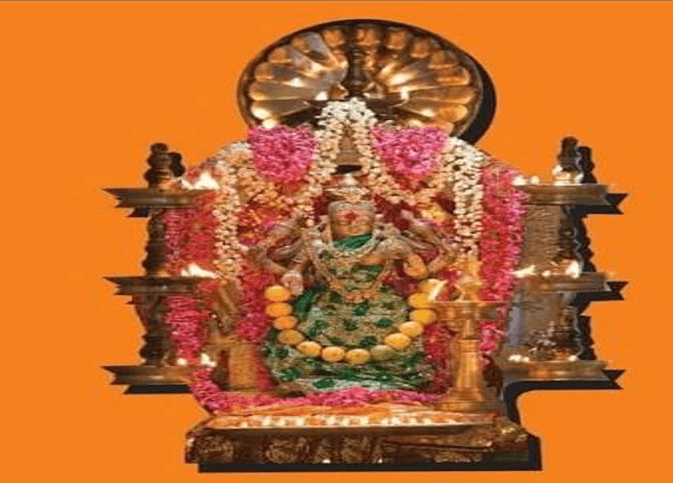 Pathiyamkulangara Temple is a revered Hindu temple located in the town area of Alappuzha, is known for its spiritual and cultural significance. The temple is dedicated to the worship of the divine Durga Devi and is an important place of worship in the region. The principal deity of the temple is Goddess Durga, worshipped in the form of Vana Durga (Powerful form of Goddess Durga associated with forests who protects devotees from dangers in nature). It follows traditional Kerala customs and rituals, reflecting the rich religious heritage of the State. Devotees visit the temple throughout the year to offer prayers and seek blessings and prosperity. The temple also becomes a vibrant centre of devotion and celebration during its annual festivals and special religious occasions.
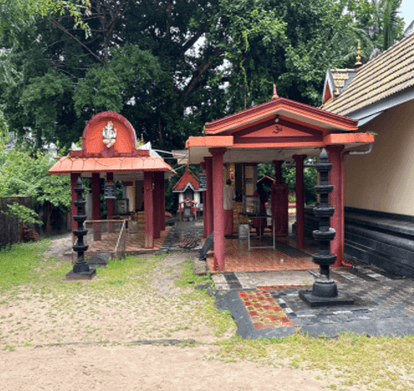 The recorded history of the Pathiyamkulangara Devi Temple spans several centuries and is deeply rooted in the rich cultural and religious heritage of Kalarcode in Alappuzha. The temple was built in 1848 under the patronage of Chembakassery King Devanarayanan Thirunal, who was the local ruler in the 1800s. This very same sacred idol of Durga Devi was worshipped by the Chembakassery royal family. During this period, Tippu Sultan tried to attack the kingdom. Hearing this news, the Chembakassery King escaped with Devi’s idol and reached a place near a pond surrounded by forest. He lived there for several months and Devi’s sacred presence saved him from the attack. At the time of his departure, he was unable to lift Devi’s idol and concluded that Devi wished to reside there and wanted to be the Kula Devata (Clan Deity) of that Desham; hence, the temple was built there.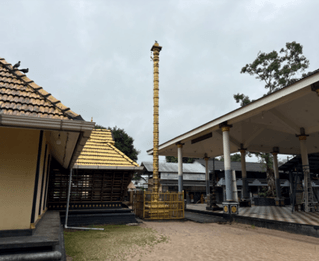
Dedicated to Durga Devi, the supreme manifestation of divine feminine energy, the shrine flourished as a vital centre of divine solace and community life in the region. In 1950, the temple was handed over to the Nair Service Society Karayogam, which was formed by Mannathu Padmanabhan and other prominent members. Later, the NSS Karayogam was subdivided into branches and it is now under the control of Pathiyamkulangara Karayogam (Branch Number 826).
According to popular belief, the divine Prathishta (consecration) of Devi Bhagavathy at Pathiyamkulangara was performed in ancient times by a revered sage who invoked the cosmic energy of the Divine Mother through intense Tapas (meditation). Captivated by his unyielding devotion, Devi manifested at this sacred spot as Swayamprabha, overflowing with self-manifest divine power.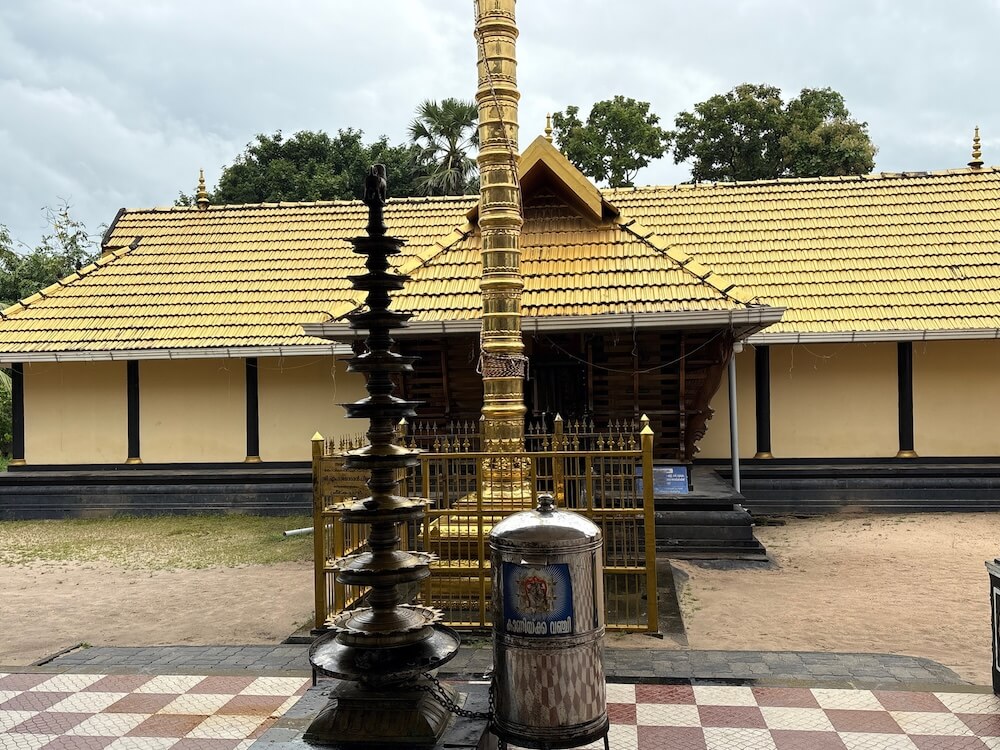 Devotees hold that the holy site was named ‘Pathiyamkulangara’ to honour the sacred pond (Kulam) and the consecrated courtyard (Angara) where the Devi’s presence (pathiyam) first blessed the land. The name itself continues to echo this legend, reminding pilgrims that the shrine remains as a living sanctuary of Devi’s eternal protection and grace.
As devotees enter the temple grounds, they first pass the Annakottil, the elephant stable, its carved stonework hinting at the craftsmanship found throughout the complex. Just beyond stands the Dhwaja Sthambham, the flagpole, rising at the centre of the outer courtyard and marking the boundary between the world outside and the sacred space within. Passing through this courtyard, one enters the Nalambalam, the rectangular enclosure surrounding the sanctum. Here stand the Balikkallu, the stones used for ritual offerings and the Deepa Sthambham, a tiered lamp tower that is lit during worship, its flames casting light across the stone courtyard.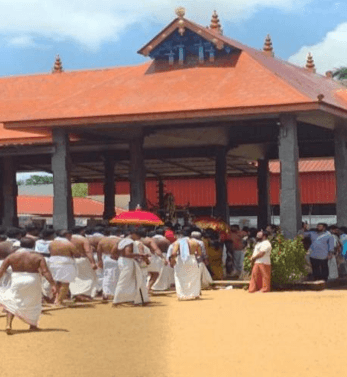 Inside the Nalambalam, at the centre stands the Chathurasra Sreekovil, a square sanctum housing the presiding deity, affectionately known as Devi. The Goddess is depicted in her four-armed form, standing close to two feet in height, holding the Shankha and the Chakra in two of her hands. Inside the sanctum, traditional Kerala style Nilavilakku (oil lamps) can be seen lit with ghee, adding to the sacred and serene ambience.
The temple reflects classical Kerala architecture, built with laterite stone walls, detailed woodwork and a conical tiled roof over the sanctum, topped with a bronze Thazhikakkudam to enhance the overall beauty of the temple. In front of the sanctum stands the Namaskara Mandapam, a raised, pillared hall with wood carvings, where priests perform prostrations and rituals as part of the daily worship. Outside the Nalambalam is the temple pond, recently renovated, which continues to serve its traditional purpose — its water used in temple rituals and in the Bali Karmas, the rites performed for ancestors during the Malayalam month of Karkidakam (July–August).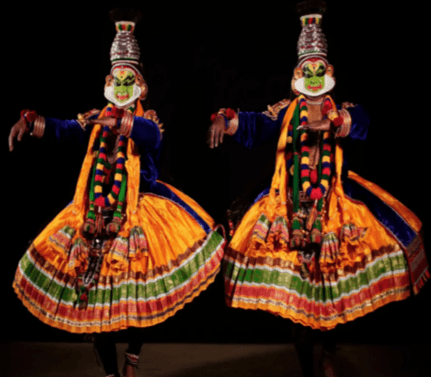
The sub-deities are consecrated in dedicated shrines positioned around the main sanctum. Durga Devi and Lord Ayyappa, both facing East, reside within the inner enclosure (Nalambalam), showering their blessings upon all who enter. Outside the Nalambalam, dedicated Sree Kovils are set up for Lord Murugan (Subrahmanya), Lord Ganapathy and Lord Krishna, all of which face East in accordance with traditional Kerala architectural principles. Yakshi Devi is also placed right beside the Krishna shrine, facing East. Beside these, a sacred lush Sarpa Kavu (a traditional sacred natural space believed to be the residence of Nagaraja and Naga Devatas) is preserved on the temple grounds for Lord Nagaraja and the Naga Devatas, where periodic Naga Pooja and Noorum Palum (a special offering made with turmeric milk) offerings are performed. All sub-deities receive regular daily offerings (poojas) and rituals, keeping the divine energy of the entire temple complex vibrant and balanced.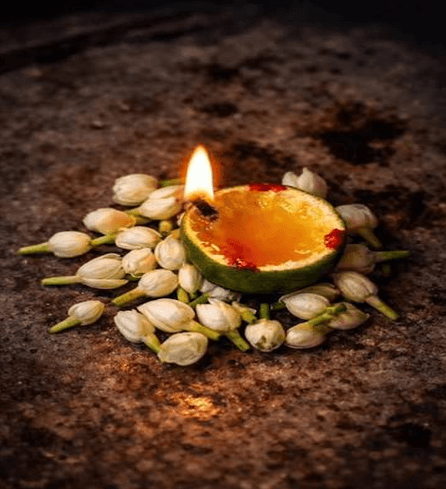
The principal festival of the temple is the ten-day Pathamudaya Maholsavam, celebrated with great religious fervour in the Malayalam month of Medam (April–May). The festival begins with the ceremonial Kodiyettu (flag hoisting) and culminates in a Kodiyirakkam (flag lowering), marked by special poojas and rituals. Throughout the festival days, the shrine is beautifully adorned with traditional decorations, plantain stems and rows of illuminated lamps, while the temple premises resonate with sacred chants, classic temple arts and cultural programmes that draw large gatherings of devotees from near and far. Another prominent annual observance is the sacred Narangavilakku Samarpanam, which is celebrated throughout the year, when large numbers of devotees gather to offer lit lime lamps to Devi Bhagavathy as a heartfelt prayer for divine grace and fulfilment of their aspirations.
Other important observances of the temple include the highly auspicious Navaratri festival in the month of Kanni (October–November), culminating in Pooja Veypu, Ayudha Pooja and Vidyarambham for initiating young children into letters. 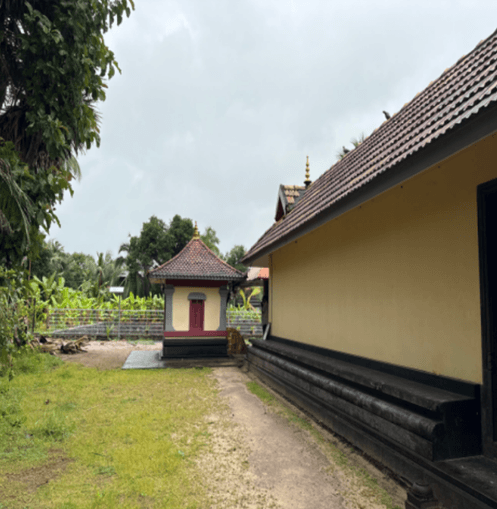 The temple observes the sacred Mandala Pooja (pooja for Lord Ayyappa) season throughout Vrischikam (November–December) and Dhanu (December–January), along with Vishu and Vishukkani in Medam (April–May), bringing scores of devotees seeking the Mother’s blessings for a prosperous new year. The holy month of Karkidakam (July–August) is marked by Ramayana Masacharanam (recitation of the Ramayana) and special Ganapathy Homam (pooja for Lord Ganapathy). while Vinayaka Chaturthi (submerging festival of Ganapathi idols), Deepavali (festival of lights) and Ayilyam Pooja (special pooja for Nagaraja, celebrated on the Malayalam star of Ayilyam every month) at the Sarpa Kavu are celebrated with ritualistic splendour.
The holy month of Karkidakam (July–August) is marked by Ramayana Masacharanam (recitation of the Ramayana) and special Ganapathy Homam (pooja for Lord Ganapathy), while Vinayaka Chaturthi (submerging festival of Ganapathi idols), Deepavali (festival of lights) and Ayilyam Pooja (special pooja for Nagaraja, celebrated on the Malayalam star of Ayilyam every month) at the Sarpa Kavu are celebrated with ritualistic splendour.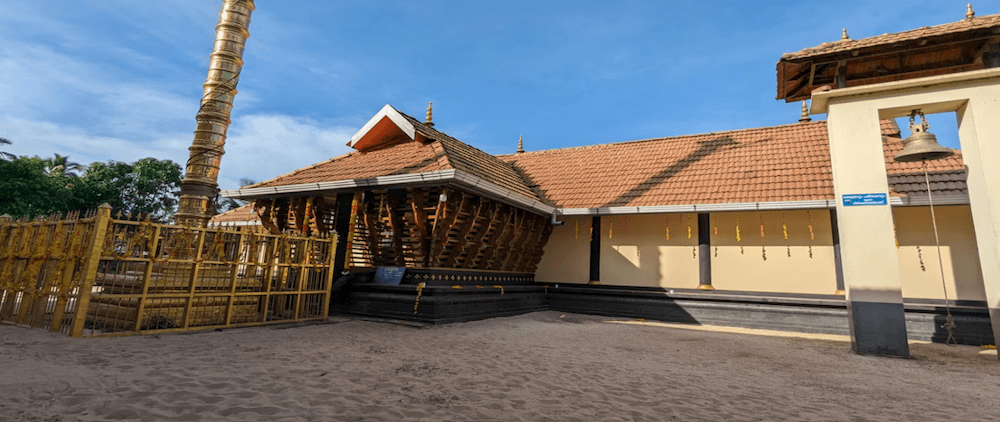
The most important offering (vazhipadu) to Pathiyamkulangara Devi is the Narangavilakku, where lamps carved out of halved limes filled with ghee are lit before the Devi to dispel darkness, remove obstacles, seek early marriage and prosperity. The Pushpanjali (offering flowers to the idol) and Swayamvara Pushpanjali (offering flowers to the idol for marriage), performed with fresh sacred flowers and powerful Vedic chants, are offered for peace of mind, marital harmony and general well-being. The Kadumpayasam and Therali (sweet rice and jaggery delicacies prepared in bay leaves) are prized sacred offerings dear to the Divine Mother, distributed as prasadam for health and longevity. Additionally, the Ashtadravya Maha Ganapathy Homam (pooja for Lord Ganapathy performed with eight sacred items) is regularly conducted to eliminate all hindrances, while the periodic Noorum Palum (turmeric milk) offering at the Sarpa Kavu is performed to please the Naga deities for family protection and relief from Sarpa Dosha. These vazhipadus (offerings) are devoutly performed by pilgrims seeking divine grace, protection and fulfilment.
The temple wakes early, around 5:30 am, when the doors open for Nada Thurakkal and devotees get their first glimpse of Devi in Nirmalya Darshanam — just as she was left the night before. Abhishekam follows at 6:00 amand by 8:30 am, the morning Usha Pooja is underway. Ucha Pooja is offered at 10:30 amand by 11:00 am, the doors close for the afternoon. As the evening approaches, the temple opens again at 5:30 pm. Lamps are lit for Deeparadhana at 6:30 pmand the shrine settles into a soft, quiet glow. Athazha Pooja, the last worship of the day is performed at 8:00 pm. Once the final prayers are done, the doors close for the night at 8:30 pm — and the temple grows still until morning.
Key Highlights
- Located 5.5 km from Alappuzha Bus Stand.
- Located 4 km from Alappuzha Railway Station.
- Kerala Road Transport and local bus facilities are available.
- Private vehicles can be parked in the designated temple parking area.
- Accommodation and dining options are available in the surrounding area.
- Contact information: 0477 2267866
पथियामकुलंगरा देवी मंदिर
कलारकोड, जिला. अलाप्पुझा
मंदिरे
Temples
मंदिर
મંદિરો
கோவில்கள்
దేవాలయాలు
ക്ഷേത്രങ്ങൾ
ದೇವಾಲಯಗಳು
মন্দিরসমূহ
ਮੰਦਿਰ
-
पाझवेदु श्रीभागवती मंदिर पाळावेडू, जि. अलप्पुझा
अधिक माहितीPazhaveedu Sree Bhagavathy Temple Pazhaveedu, Dist. Alappuzha
View Detailsपझावीडु श्री भगवती मंदिर पझावीडु, जिला. अलाप्पुझा
विवरण देखेंPazhaveedu Sree Bhagavathy Temple Pazhaveedu, Dist. Alappuzha
વિગત જુઓPazhaveedu Sree Bhagavathy Temple Pazhaveedu, Dist. Alappuzha
விவரங்களைக் காண்கPazhaveedu Sree Bhagavathy Temple Pazhaveedu, Dist. Alappuzha
వివరాలను చూడండిPazhaveedu Sree Bhagavathy Temple Pazhaveedu, Dist. Alappuzha
വിശദാംശങ്ങൾ കാണുകPazhaveedu Sree Bhagavathy Temple Pazhaveedu, Dist. Alappuzha
ವಿವರಗಳನ್ನು ವೀಕ್ಷಿಸಿPazhaveedu Sree Bhagavathy Temple Pazhaveedu, Dist. Alappuzha
বিস্তারিত দেখুনPazhaveedu Sree Bhagavathy Temple Pazhaveedu, Dist. Alappuzha
ਵੇਰਵੇ ਦੇਖੋ -
श्री राजराजेश्वरी मंदिर मुल्लक्कल, जि. अलप्पुझा
अधिक माहितीSree Rajarajeswari Temple Mullakkal, Dist. Alappuzha
View Detailsश्री राजराजेश्वरी मंदिर मुल्लाक्कल, जिला. अलाप्पुझा
विवरण देखेंSree Rajarajeswari Temple Mullakkal, Dist. Alappuzha
વિગત જુઓSree Rajarajeswari Temple Mullakkal, Dist. Alappuzha
விவரங்களைக் காண்கSree Rajarajeswari Temple Mullakkal, Dist. Alappuzha
వివరాలను చూడండిSree Rajarajeswari Temple Mullakkal, Dist. Alappuzha
വിശദാംശങ്ങൾ കാണുകSree Rajarajeswari Temple Mullakkal, Dist. Alappuzha
ವಿವರಗಳನ್ನು ವೀಕ್ಷಿಸಿSree Rajarajeswari Temple Mullakkal, Dist. Alappuzha
বিস্তারিত দেখুনSree Rajarajeswari Temple Mullakkal, Dist. Alappuzha
ਵੇਰਵੇ ਦੇਖੋ -
मारुथर्वट्टम श्री धन्वंतरी मंदिर मारुथोरवट्टोम, जि. अलप्पुझा
अधिक माहितीMaruthorvattom Sree Dhanwanthari Temple Maruthorvattom, Dist. Alappuzha
View Detailsमरुथोरवट्टम श्री धन्वंतरि मंदिर मारुथोरवाट्टम, जिला. अलाप्पुझा
विवरण देखेंMaruthorvattom Sree Dhanwanthari Temple Maruthorvattom, Dist. Alappuzha
વિગત જુઓMaruthorvattom Sree Dhanwanthari Temple Maruthorvattom, Dist. Alappuzha
விவரங்களைக் காண்கMaruthorvattom Sree Dhanwanthari Temple Maruthorvattom, Dist. Alappuzha
వివరాలను చూడండిMaruthorvattom Sree Dhanwanthari Temple Maruthorvattom, Dist. Alappuzha
വിശദാംശങ്ങൾ കാണുകMaruthorvattom Sree Dhanwanthari Temple Maruthorvattom, Dist. Alappuzha
ವಿವರಗಳನ್ನು ವೀಕ್ಷಿಸಿMaruthorvattom Sree Dhanwanthari Temple Maruthorvattom, Dist. Alappuzha
বিস্তারিত দেখুনMaruthorvattom Sree Dhanwanthari Temple Maruthorvattom, Dist. Alappuzha
ਵੇਰਵੇ ਦੇਖੋ