
अरवुकड श्रीदेवी मंदिर
आरवुकड, जि. अलप्पुझा
Aravukad Sridevi Temple
Aravukad, Dist. Alappuzha
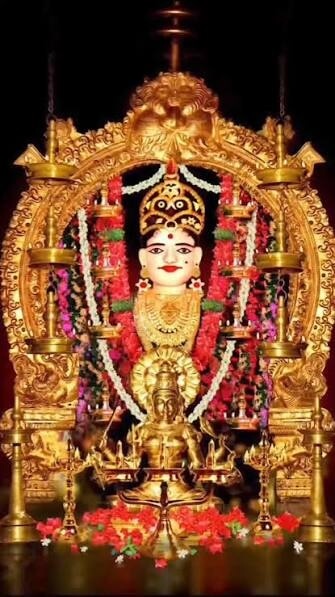 Located in Punnapra, approximately 8 km South of Alappuzha town in Kerala, the Aravukad Sreedevi Temple is an ancient shrine. Dedicated primarily to Goddess Bhadrakali in a powerful manifestation, the temple serves as a revered spiritual centre and the protective deity (“Desha Devata Aravukad Amma”) for the local Punnapra community. The idol depicts the Goddess in her fierce aspect, assumed after slaying the formidable Asura Darika.Tuesday and Friday are the auspicious days for Amman’s darshan. This temple is beautifully surrounded by lush, majestic banyan trees, enhancing the overall beauty of the temple. People from different religious backgrounds can be seen visiting this temple to seek the blessings of Aravukad Amma. The temple comes alive during its annual festivities drawing large number of devotees across Kerala.
According to historical records, the temple was initially under the care of Brahmins who vacated the region during Tipu Sultan’s invasion of Kerala by 1789-1792 period. This 300 years old temple administrative responsibility subsequently fell to the local Komarathussery family. Facing difficulties in managing the shrine and its properties, the family transferred control in 2009 to the Aravukad Kshetrayogam, originally formed under five branches of the Sree Narayana Dharma Paripalana (SNDP) Union. Oversight was later entrusted to the collective Hindu community of ten karas, stretching from Neerkunnam in the South to Kalarkode in the north.
According to legend, following her fierce battle and defeat of the Asura Darika, the Goddess returned to the temple precincts carrying her blood-stained sword. She cleansed the weapon in the pond situated behind the shrine, a body of water that remains preserved as a deeply holy site. 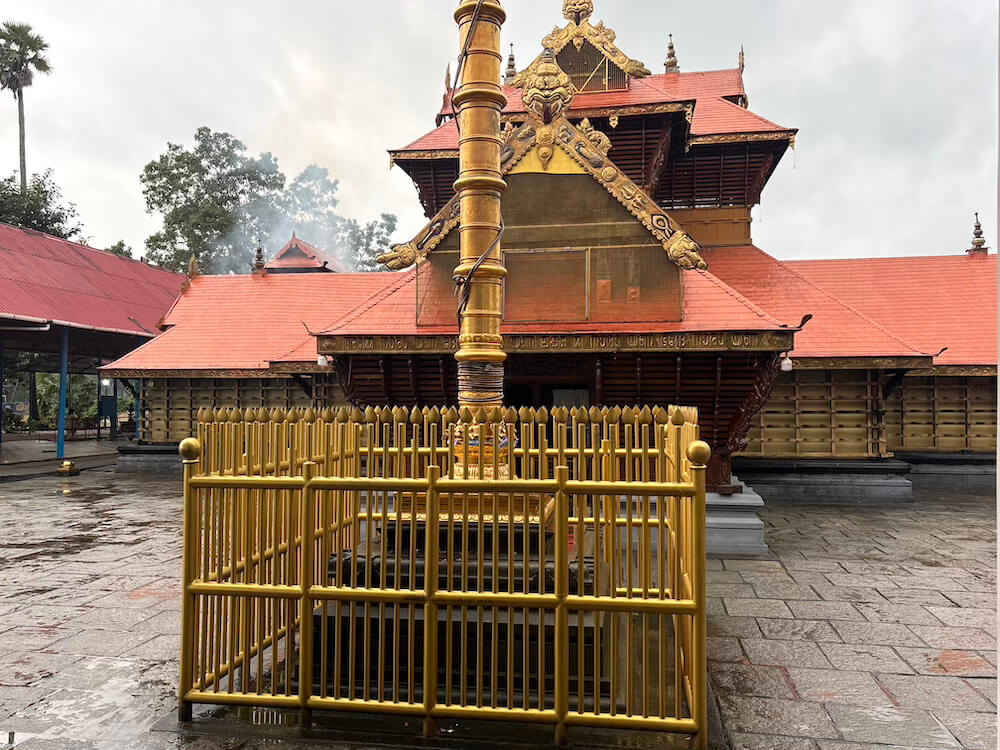 Local tradition further considers Aravukad Amma to be the sister of the Devi of Kanichukulangara and the Devi of Kodungallur, connecting the temple to the wider network of prominent Bhagavathy shrines in central Kerala.
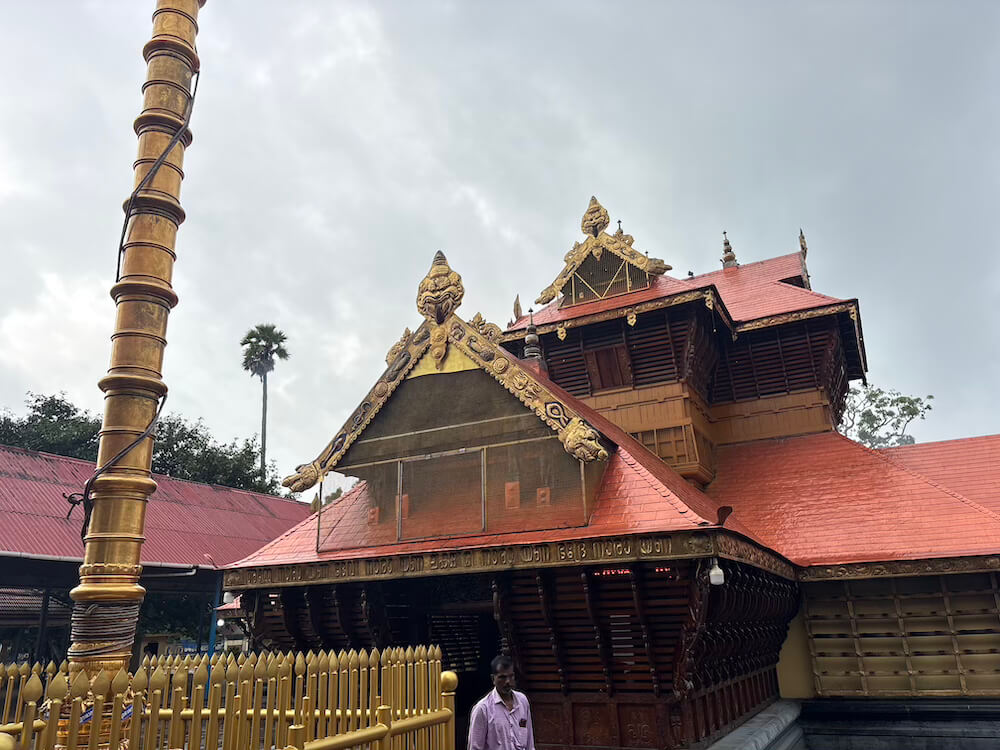
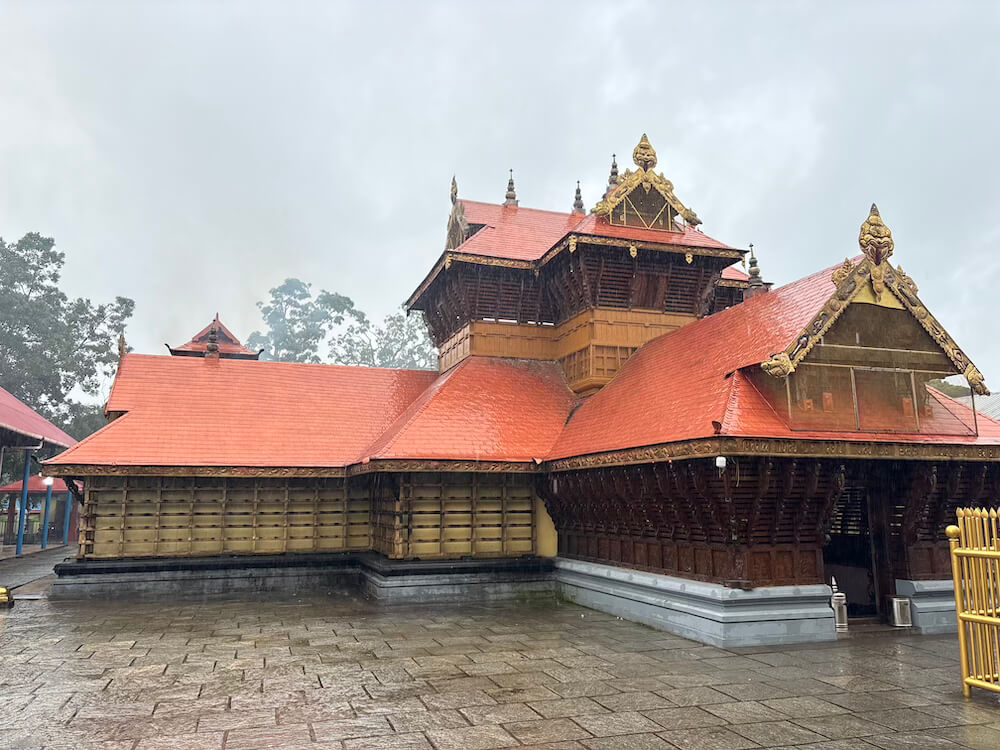
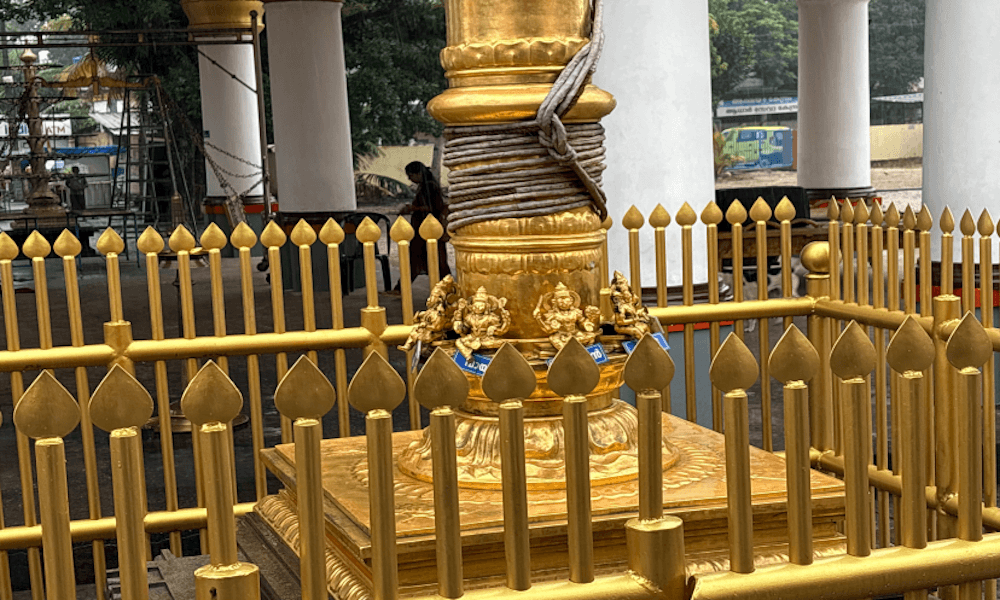
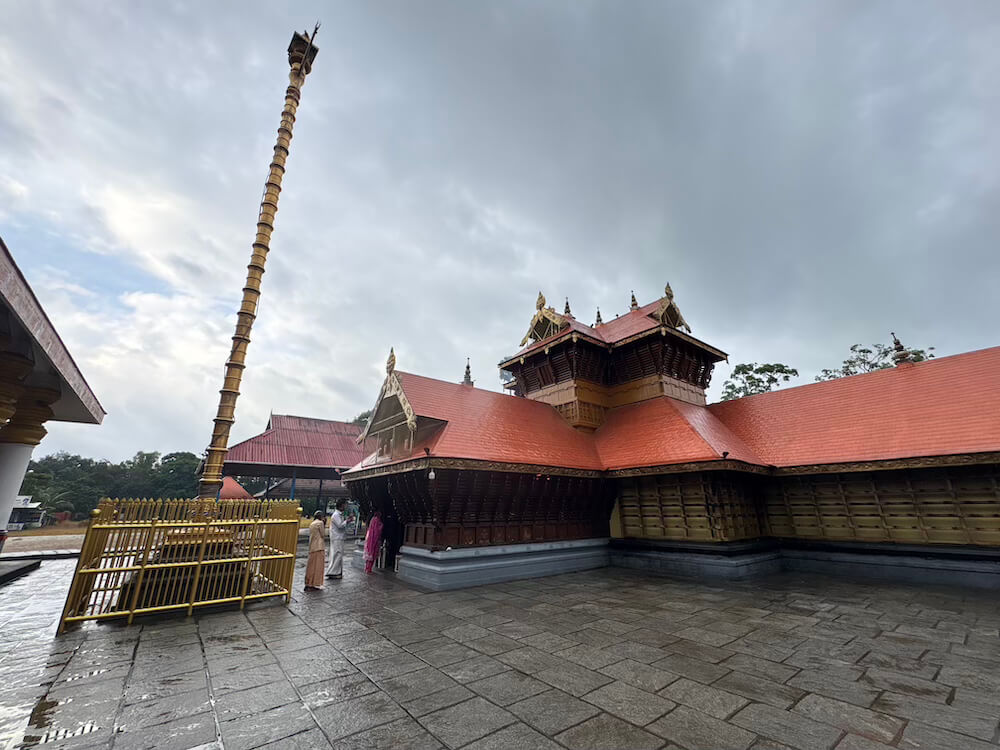
Characterised by its sloped tiled roofs, traditional wooden elements and compact sanctum, the temple reflects classic Kerala architectural principles. Its layout and ritual enclosures strictly conform to traditional regional temple-design guidelines. Upon entering the temple, we see the Annakottil (elephant stable) and Dhwajastambham (flagpole) at the front. Beyond this lies the Nalambalam, a traditional rectangular courtyard containing the Balikallu (a sacrificial stone used for placing ritual food and symbolic offerings to the deity) and the Deepasthambham (a traditional lamp tower). 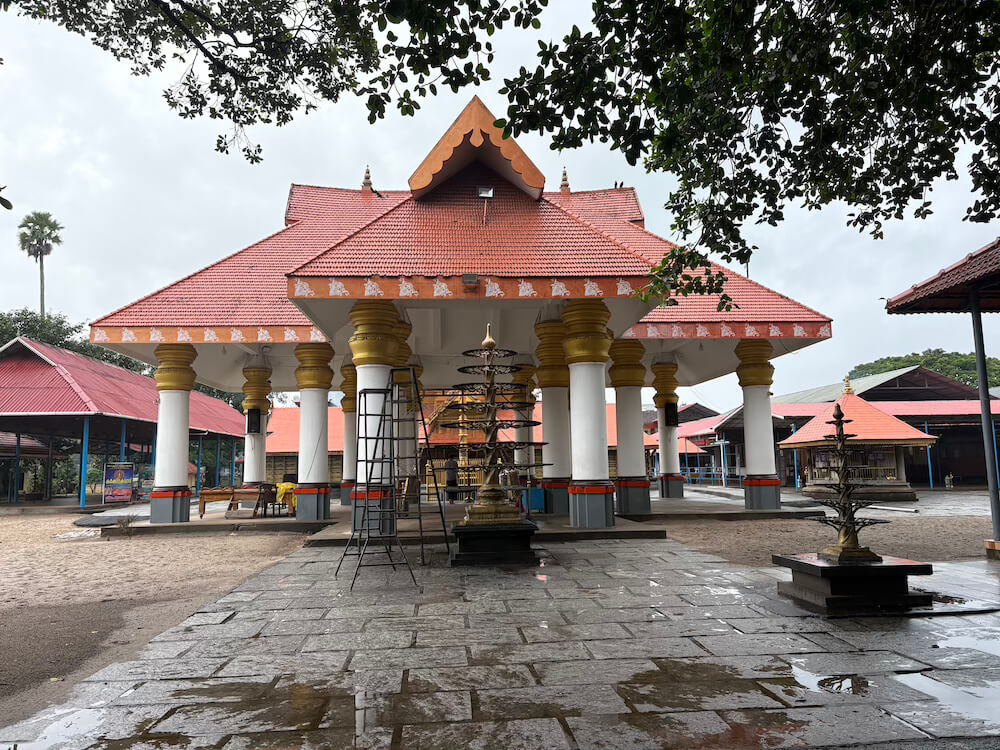 In front of the Nalambalam, the Dwarapalakas (guardian deities) stand on either side, keeping watch over the Sreekovil and symbolically guarding the sanctum. Here, Aravukad Amma resides in a Chaturasra Sreekovil (square sanctum sanctorum) within the Nalambalam, facing East. The roof of the Sreekovil is crowned with a metal finial (Tazhikakkudam), crafted entirely of copper. The idol of Amma is depicted with four arms, each holding a sacred weapon or symbol — trident (Trishula), sword, discus (Chakra)and conch (Shankh). Beautiful Kerala-style oil lamps burn in front of Amma, creating a serene, atmospheric glow. The idol is crafted from Krishna Sila. In front of the Sreekovil stands the Namaskara Mandapam, a sacred rectangular hall built as per traditional Kerala Hindu temple architecture, featuring a raised platform supported by four or more carved pillars.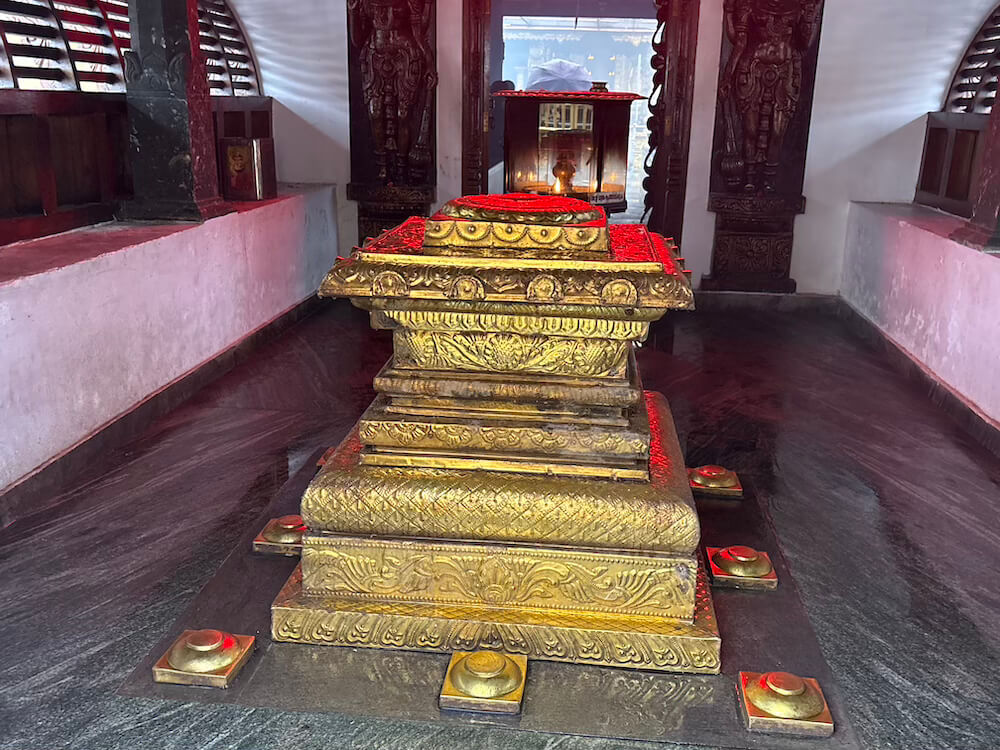
In addition to the main shrine, the temple complex houses several sub-deities (Upadevathas) positioned according to traditional orientation guidelines: Lord Shiva facing West, Lord Subramanya Swami facing East, Goddess Saraswathi facing West, Goshala Krishnan facing East and Navagraha and Kodum Kali Amma facing West. Along with all sub-deities, Lord Nagaraja is enshrined in a sacred natural Sarpakavu. Following established Hindu temple customs, the chief priest completes all primary rituals and offerings for the main deity before systematically conducting poojas for each of these sub-deities in their respective shrines.
The Aravukad Sreedevi Temple comes alive with several major celebrations throughout the year, 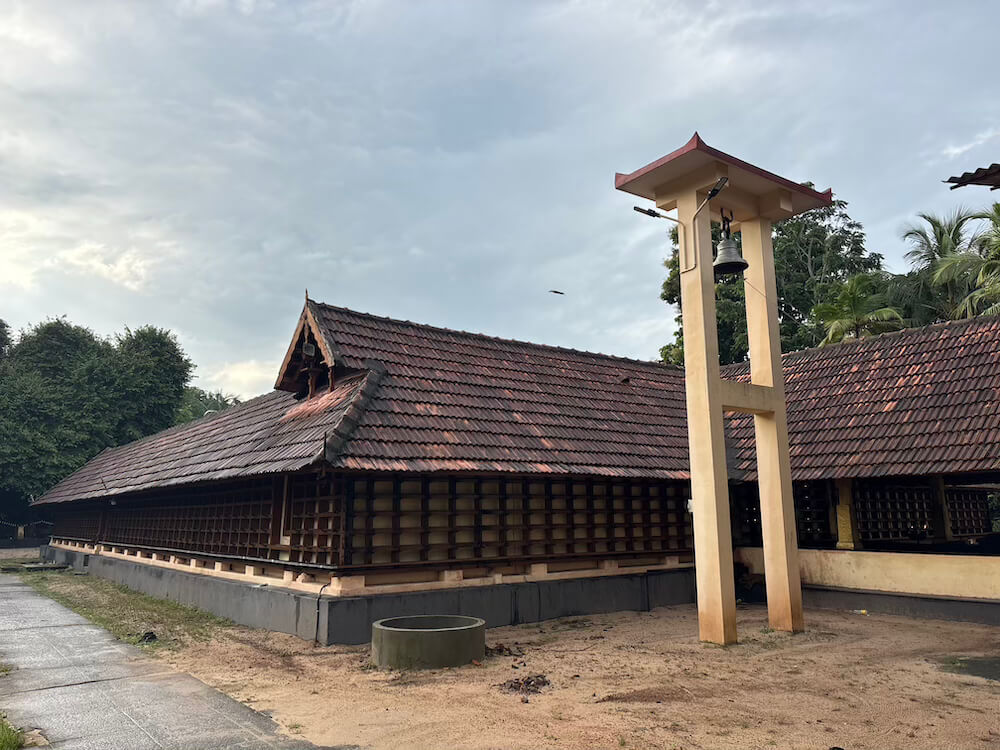 none bigger than the grand ten-day Pooram festival held in the month of meenam (March/April). During this time, the temple grounds fill with traditional drum performances, cultural shows and striking rituals—most notably the Thiripidutham, where worshippers take a dip in the sacred pond and walk around the shrine carrying lit torches to seek blessings before the festival concludes with a ceremonial bath for the deity. Earlier in the year, around January or February, large number of women gather for the Pongala festival to cook sweet rice offerings in earthen pots over open fires as an act of devotion. Additionally, a five-day Mandala festival takes place in the month of Vrishikam (Nov / Dec), bringing the local community together for religious talks, music and free community meals.
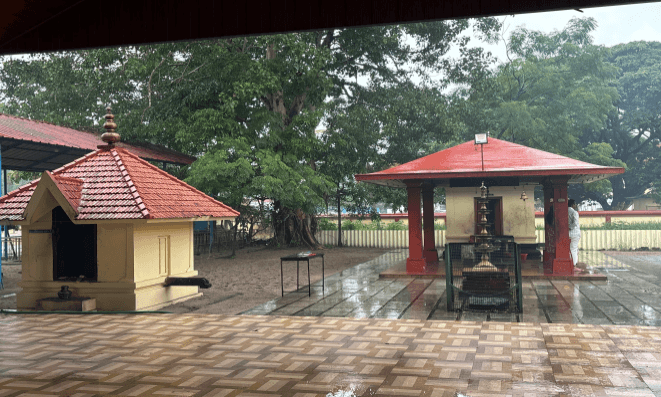 Here, devotees offer Arunazhi Payasam, a rich and delicious offering prepared with rice, jaggery and ghee, which is particularly favoured during the annual Pongala festival for Amma’s blessings. Pongala is predominantly a women’s ritual. It’s seen as an act of devotion where women directly connect with the Goddess as a maternal, protective force — she is invoked as a mother who shelters her devotees. Participating is believed to bring blessings for family wellbeing, fertility, protection and fulfillment of vows (nercha).
Devotees also perform Guruthi, a traditional ritual believed to ward off negative and evil influences.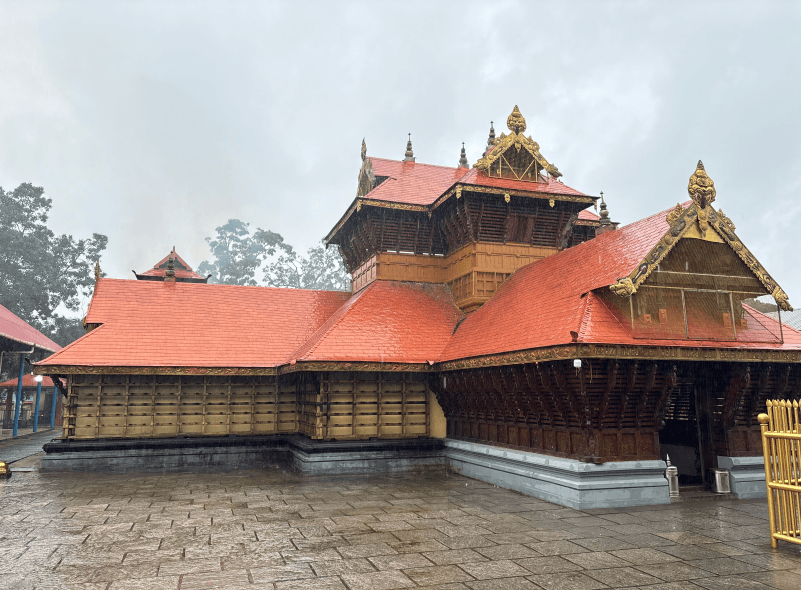 Kalam Pattu, featuring intricate sacred floor designs created with natural coloured powders and accompanied by devotional singing, is another important ritual offering.
Neyyavilakku, or the lighting of traditional ghee lamps, is also performed as an act of devotion. Other customary offerings include floral garlands, red silk (Pattu), glass bangles and coconuts. These offerings are made with prayers for the protection, good health, happiness and prosperity of devotees and their families, seeking the blessings of Aravukad Amma.
The temple day begins early. At 5:00 am, the doors open for Nirmalya Darshanam — the first sight of the Goddess, just as she is, before the morning rituals begin. Worship continues quietly through the morning until 11:00 am, when Ucha Pooja is performed and the temple closes so Amma can rest. In the evening, the doors open again at 5:00 pm. Oil lamps are lit at 6:30 pm for Deepa Aradhana, filling the sanctum with a warm, gentle light. At 7:30 pm, Athazha Pooja marks the last worship of the day, followed by the evening Shiveli at 7:45 pm — a short procession around the temple. By 8:00 pm, the doors close for the night and the temple grows still until morning.
Key highlights
- Located 8 km from Alappuzha Bus Stand and located 8.5 km from Alappuzha Railway Station.
- Just 7.5 km away from Alappuzha town.
- State transport and local transport buses are available.
- Private vehicles can be parked at the designated parking area.
- Accommodation and food facilities are available in nearby areas.
- Contact information : +91 7994487655
अरवुकाड श्री देवी मंदिर
अरवुकाड, जिला. अलाप्पुझा
मंदिरे
Temples
मंदिर
મંદિરો
கோவில்கள்
దేవాలయాలు
ക്ഷേത്രങ്ങൾ
ದೇವಾಲಯಗಳು
মন্দিরসমূহ
ਮੰਦਿਰ
-
पाझवेदु श्रीभागवती मंदिर पाळावेडू, जि. अलप्पुझा
अधिक माहितीPazhaveedu Sree Bhagavathy Temple Pazhaveedu, Dist. Alappuzha
View Detailsपझावीडु श्री भगवती मंदिर पझावीडु, जिला. अलाप्पुझा
विवरण देखेंPazhaveedu Sree Bhagavathy Temple Pazhaveedu, Dist. Alappuzha
વિગત જુઓPazhaveedu Sree Bhagavathy Temple Pazhaveedu, Dist. Alappuzha
விவரங்களைக் காண்கPazhaveedu Sree Bhagavathy Temple Pazhaveedu, Dist. Alappuzha
వివరాలను చూడండిPazhaveedu Sree Bhagavathy Temple Pazhaveedu, Dist. Alappuzha
വിശദാംശങ്ങൾ കാണുകPazhaveedu Sree Bhagavathy Temple Pazhaveedu, Dist. Alappuzha
ವಿವರಗಳನ್ನು ವೀಕ್ಷಿಸಿPazhaveedu Sree Bhagavathy Temple Pazhaveedu, Dist. Alappuzha
বিস্তারিত দেখুনPazhaveedu Sree Bhagavathy Temple Pazhaveedu, Dist. Alappuzha
ਵੇਰਵੇ ਦੇਖੋ -
पथ्यामकुलंगारा देवी मंदिर कालारकोड, जि. अलप्पुझा
अधिक माहितीPathiyamkulangara Devi Temple Kalarcode, Dist. Alappuzha
View Detailsपथियामकुलंगरा देवी मंदिर कलारकोड, जिला. अलाप्पुझा
विवरण देखेंPathiyamkulangara Devi Temple Kalarcode, Dist. Alappuzha
વિગત જુઓPathiyamkulangara Devi Temple Kalarcode, Dist. Alappuzha
விவரங்களைக் காண்கPathiyamkulangara Devi Temple Kalarcode, Dist. Alappuzha
వివరాలను చూడండిPathiyamkulangara Devi Temple Kalarcode, Dist. Alappuzha
വിശദാംശങ്ങൾ കാണുകPathiyamkulangara Devi Temple Kalarcode, Dist. Alappuzha
ವಿವರಗಳನ್ನು ವೀಕ್ಷಿಸಿPathiyamkulangara Devi Temple Kalarcode, Dist. Alappuzha
বিস্তারিত দেখুনPathiyamkulangara Devi Temple Kalarcode, Dist. Alappuzha
ਵੇਰਵੇ ਦੇਖੋ -
श्री राजराजेश्वरी मंदिर मुल्लक्कल, जि. अलप्पुझा
अधिक माहितीSree Rajarajeswari Temple Mullakkal, Dist. Alappuzha
View Detailsश्री राजराजेश्वरी मंदिर मुल्लाक्कल, जिला. अलाप्पुझा
विवरण देखेंSree Rajarajeswari Temple Mullakkal, Dist. Alappuzha
વિગત જુઓSree Rajarajeswari Temple Mullakkal, Dist. Alappuzha
விவரங்களைக் காண்கSree Rajarajeswari Temple Mullakkal, Dist. Alappuzha
వివరాలను చూడండిSree Rajarajeswari Temple Mullakkal, Dist. Alappuzha
വിശദാംശങ്ങൾ കാണുകSree Rajarajeswari Temple Mullakkal, Dist. Alappuzha
ವಿವರಗಳನ್ನು ವೀಕ್ಷಿಸಿSree Rajarajeswari Temple Mullakkal, Dist. Alappuzha
বিস্তারিত দেখুনSree Rajarajeswari Temple Mullakkal, Dist. Alappuzha
ਵੇਰਵੇ ਦੇਖੋ