
श्री स्वामीनारायण मंदिर
बोचासन, ता. बोरसद, जि. आनंद
Shri Swaminarayan Mandir
Bochasan, Tal. Borsad, Dist. Anand
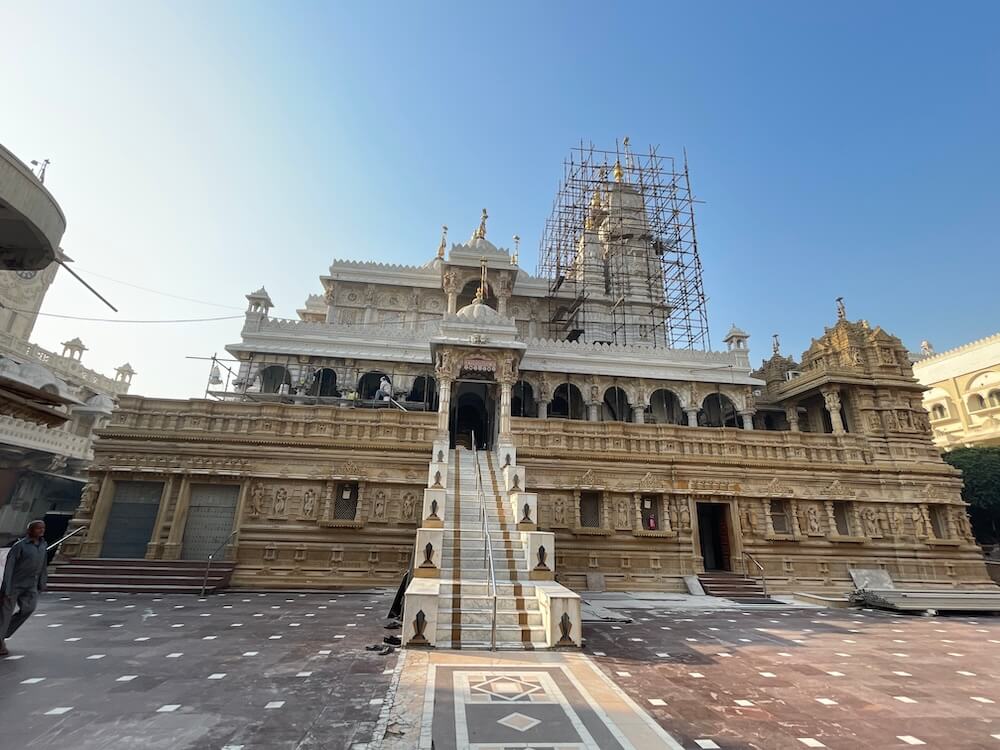
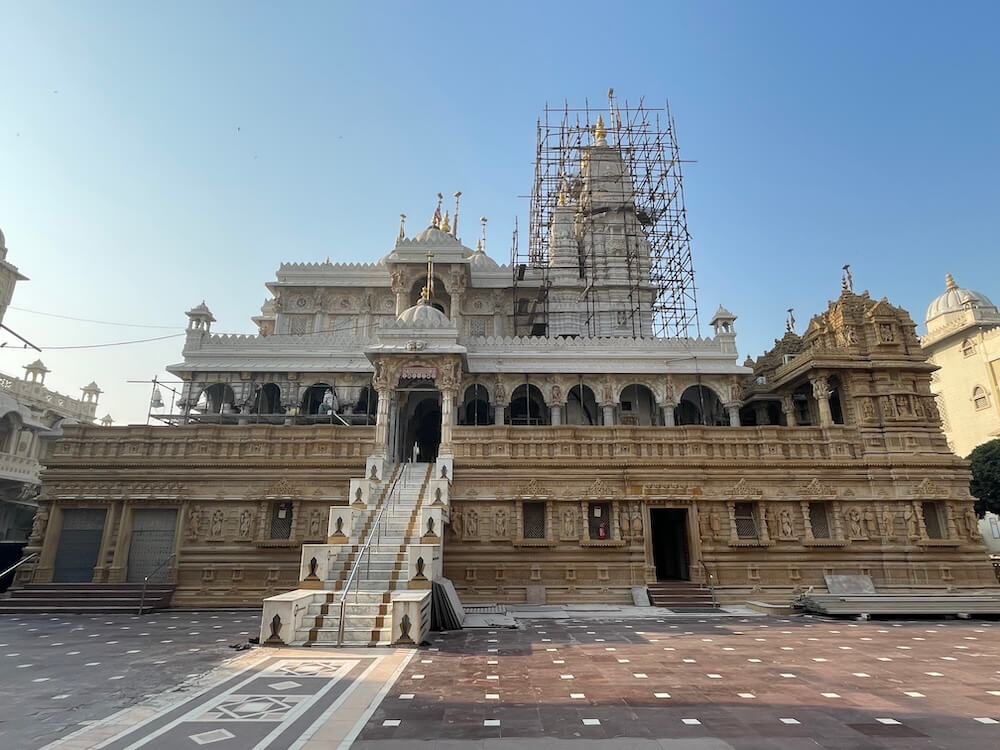
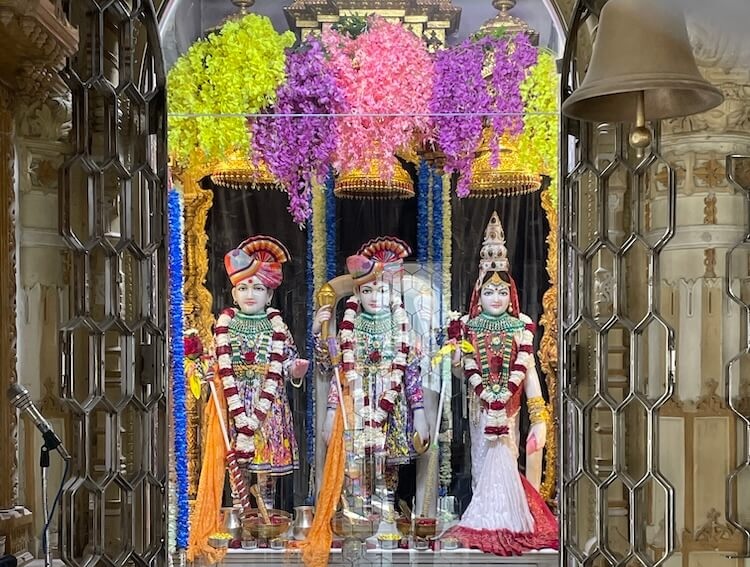 The edifice of Shri Swaminarayan Mandir in Bochasan, situated within the Borsad Taluka of Anand district, is regarded as a global centre of faith, culture and the Guru-Shishya (teacher-disciple) tradition. It was on this land, hallowed by the physical presence of Bhagwan Swaminarayan, that the first grand temple of the Bochasanwasi Shri Akshar Purushottam Swaminarayan Sanstha was established. It was from here that the expansion of this Sampradaya (religious tradition) across the world commenced. Consequently, this site has attained extraordinary importance in the eyes of devotees. Blessed with a long tradition spanning a century and a quarter, this temple is an exquisite specimen of ancient Indian architecture. Thousands of devotees from across the globe regularly visit this sacred pilgrimage site.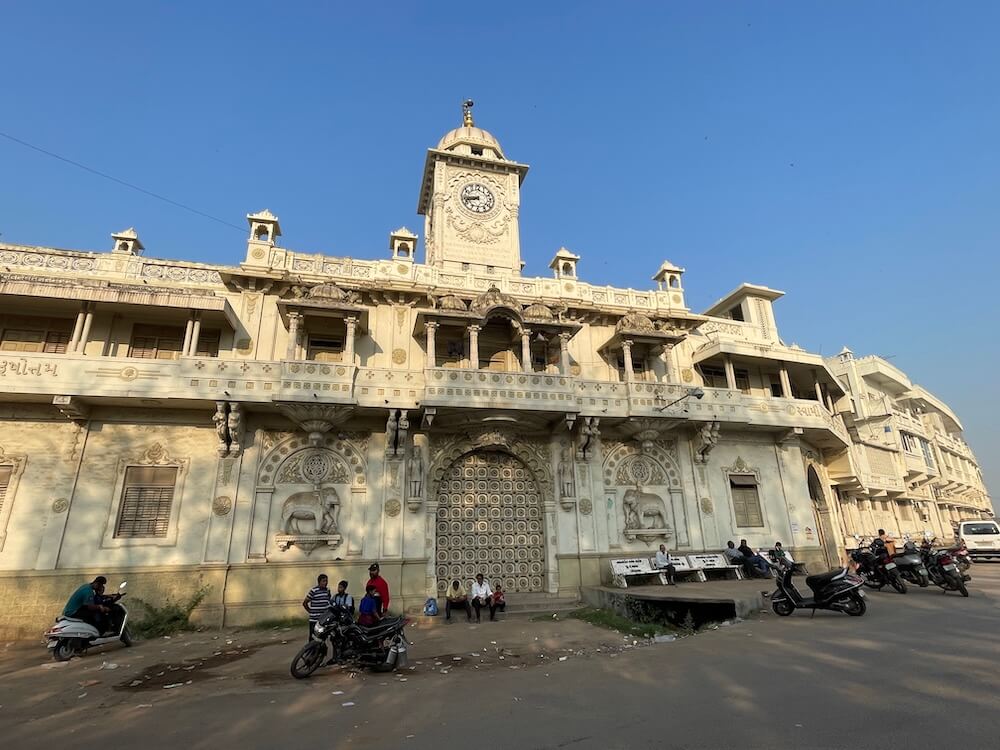
The historical journey of the temple begins from the childhood of Swami Sahajanand, originally named Ghanshyam Pande. He was born On 2 April 1781, in Chhapaiya village in the Gonda district of Uttar Pradesh. At the age of eleven, he renounced his home and travelled across the entirety of India. During this time, he was known as Neelkanth Varni. After this arduous seven-year journey, he arrived in Gujarat where he met Ramanand Swami, the head of the Uddhav Sampradaya. Ramanand Swami initiated him and bestowed upon him two names – Sahajanand Swami and Narayan Muni. Following the demise of his Guru, he gave his followers the ‘Mahamantra’ (great chant) ‘Swaminarayan’ and since then, he came to be known by this very name.
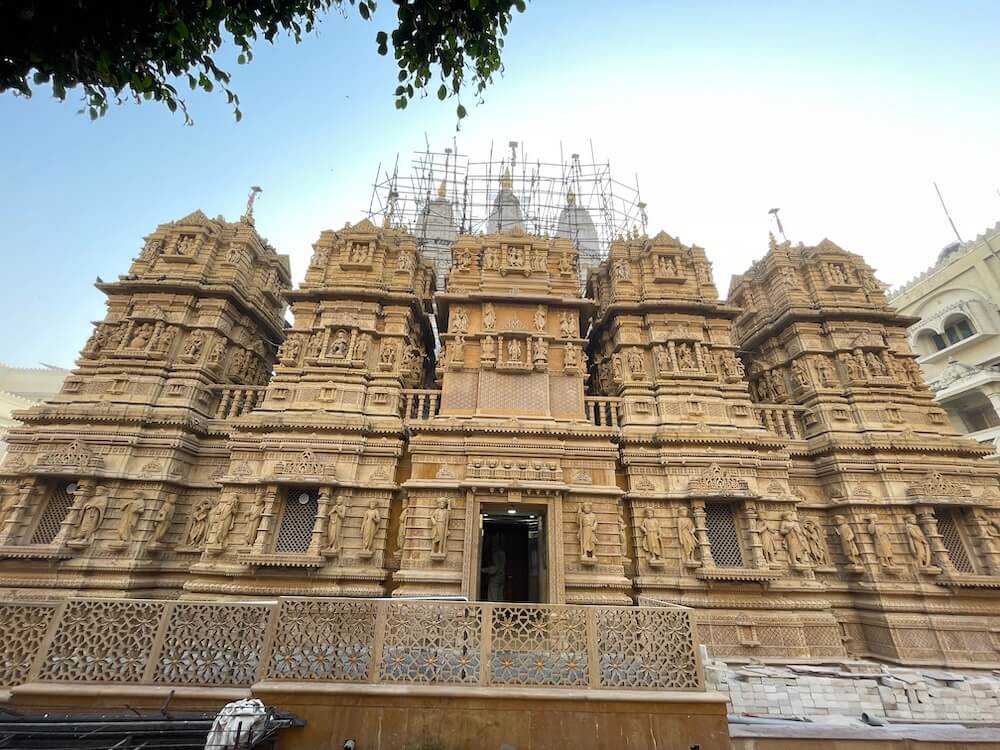 Bhagwan Swaminarayan had visited Bochasan village a total of 32 times during his life. In the year 1799, he first entered Bochasan village in the form of Nilkanth Varni and performed Aarti (ritual of light) at the local Shri Ram temple. At that time, beholding his divine radiance, a local devotee named Kashidas Mota made a heartfelt plea for him to reside in the village permanently. Honouring this request, Nilkanth Varni gave a promise, that ‘In the future, I shall reside here permanently along with my superior devotee.’ Bhagwan Swaminarayan reaffirmed his promise to build a temple to Kashidas in 1809 at Kariyani and in 1816 at Vadtal. In 1822, during the installation of the Nar-Narayan idols at the Kalupur temple in Ahmedabad, he made a clear statement: ‘In the future,
 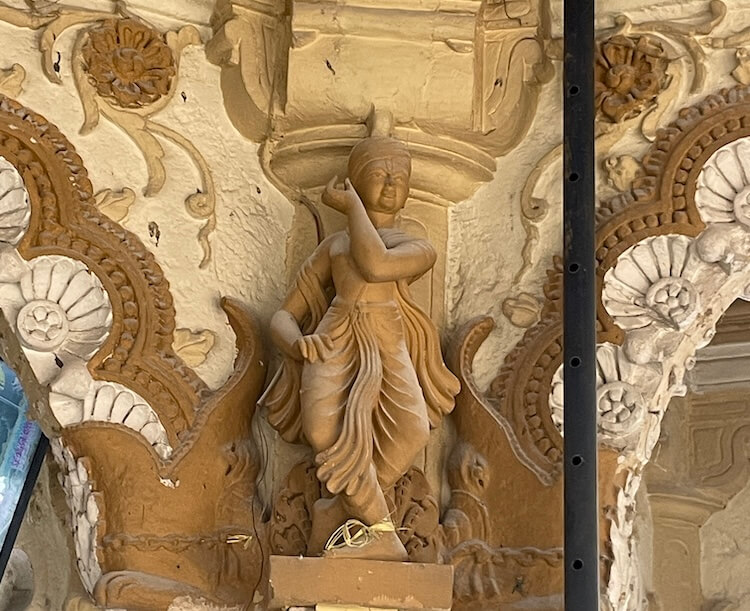 idols with a different name shall be installed in your village.’ Although he merged into the infinite in 1830, the promise he made was carried forward by his disciples.
The next stage of this historical legacy emerged in the form of Shastriji Maharaj. Born on 31 January 1865 in Mahelav, the childhood name of Shastriji Maharaj was Dungar Bhakt. In 1905, he left the original Sampradaya at Vadtal and began independent work for the propagation of the Akshar-Purushottam Upasana (philosophy of worship). To fulfil the word given by Bhagwan Swaminarayan to Kashidas Mota, he decided to build a temple at Bochasan. On 5 June 1907, Shastriji Maharaj completed this historic task by performing the Pratishthapana (consecration) of the idols of Akshar and Purushottam.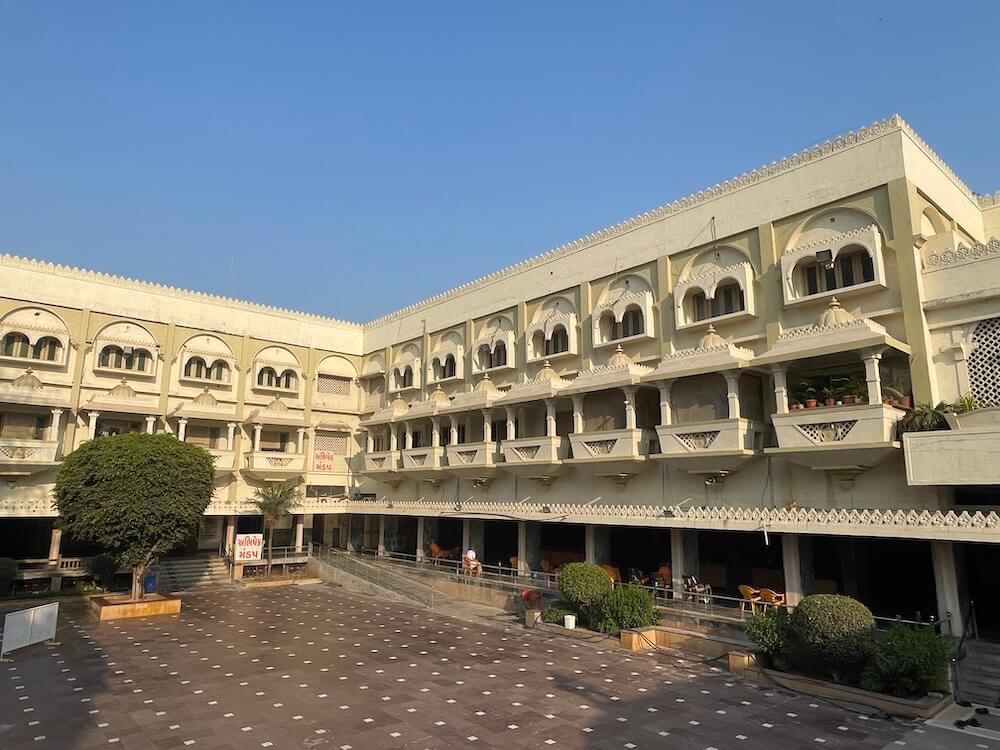
Considering the religious and spiritual contexts, this temple is regarded as the main centre of the Akshar-Purushottam principle. In this method of worship, Bhagwan Swaminarayan is worshipped as Paramatma (the Supreme Soul) and Gunatitanand Swami is worshipped as his greatest devotee, that is, Aksharabrahman. To attain Moksha (salvation), it is essential for a devotee to first become Brahmarup (god-like) and to reach this state, the guidance of a living Guru is required. The mention of this principle appears extensively in the scriptures ‘Vachanamrut’ and ‘Swamini Vato’.
Many mythological stories and legends related to the Bochasan temple are told within the Sampradaya. Amongst them, 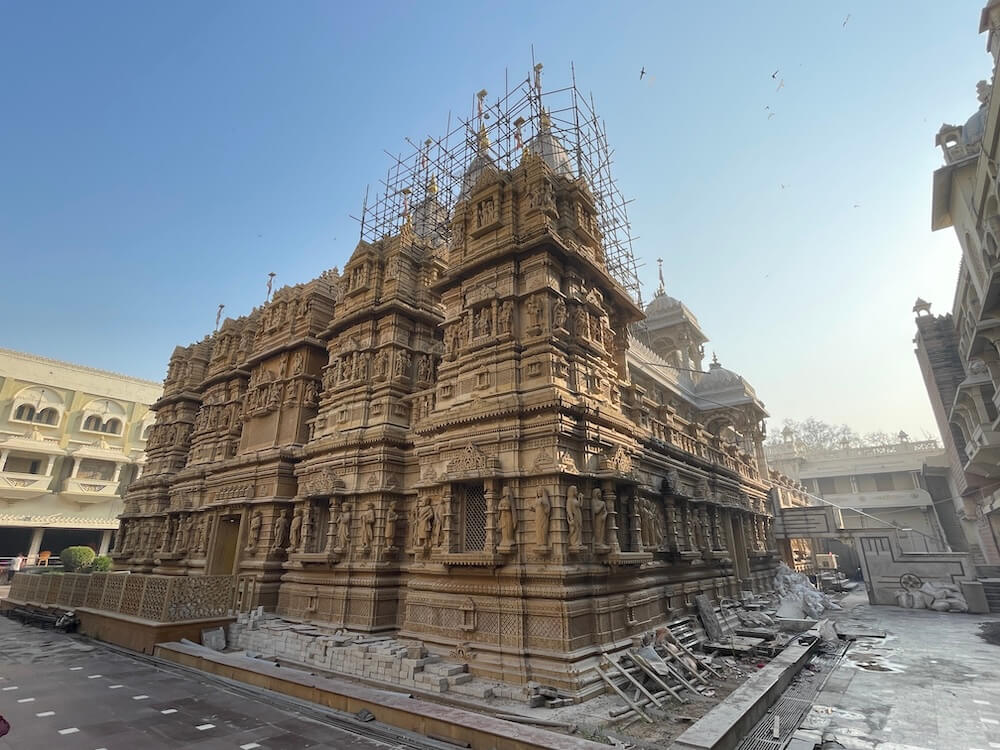 the story of finding pots filled with gold and silver underground while the excavation for the temple’s foundation was underway is prevalent. Seeing this wealth, the devotees felt that there would now be no shortage of money for the temple’s work. They conveyed this information to Shastriji Maharaj. Shastriji Maharaj refused to accept that wealth and instructed that those pots be buried back in the ground. His noble perspective was that the foundation of the temple should be based on pure devotion rather than wealth.
During the construction of the temple, opponents had sent a troublesome man named Hira Mukhi to create obstacles. Once, Hira Mukhi offered food to the Sadhus. However, Shastriji Maharaj did not accept it and appealed to him to abandon his immoral habits and become a Satsangi (a member of the holy fellowship). 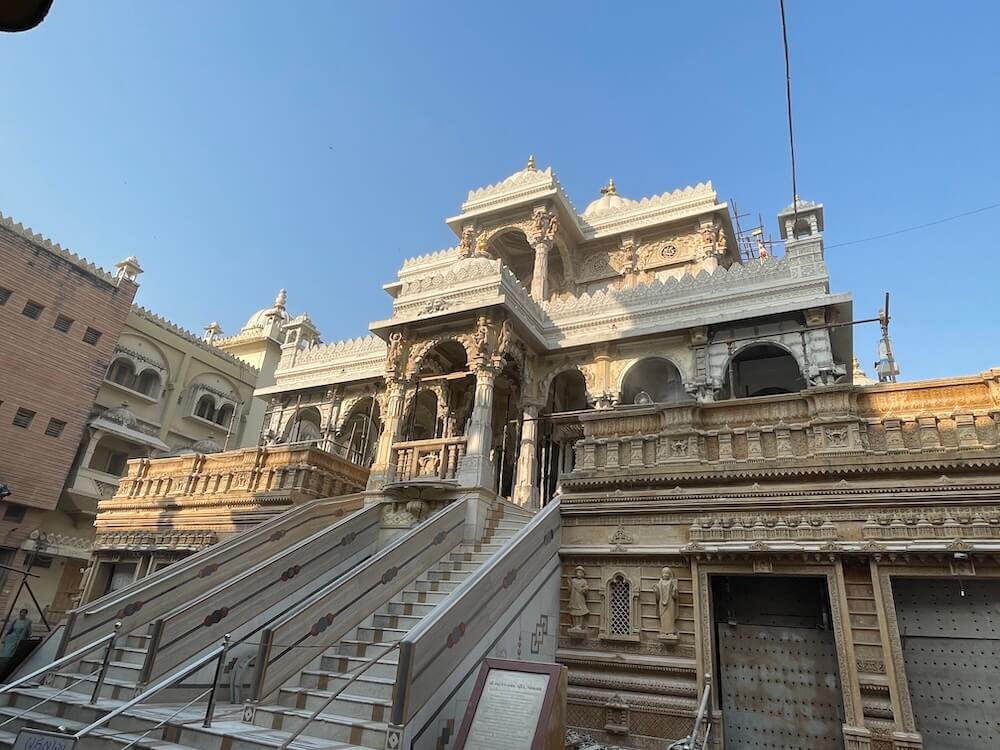 Due to the spiritual radiance of Shastriji Maharaj, Hira Mukhi underwent a transformation of heart and himself became a loyal follower of the Sampradaya. At the time of the consecration, it had become technically difficult to seat the idol of Gunatitanand Swami in the proper place. Shastriji Maharaj prayed before the idol and thereafter, the devotees experienced that the idol sat in its place with great ease. Due to all these events, this temple has acquired a special spiritual aura.
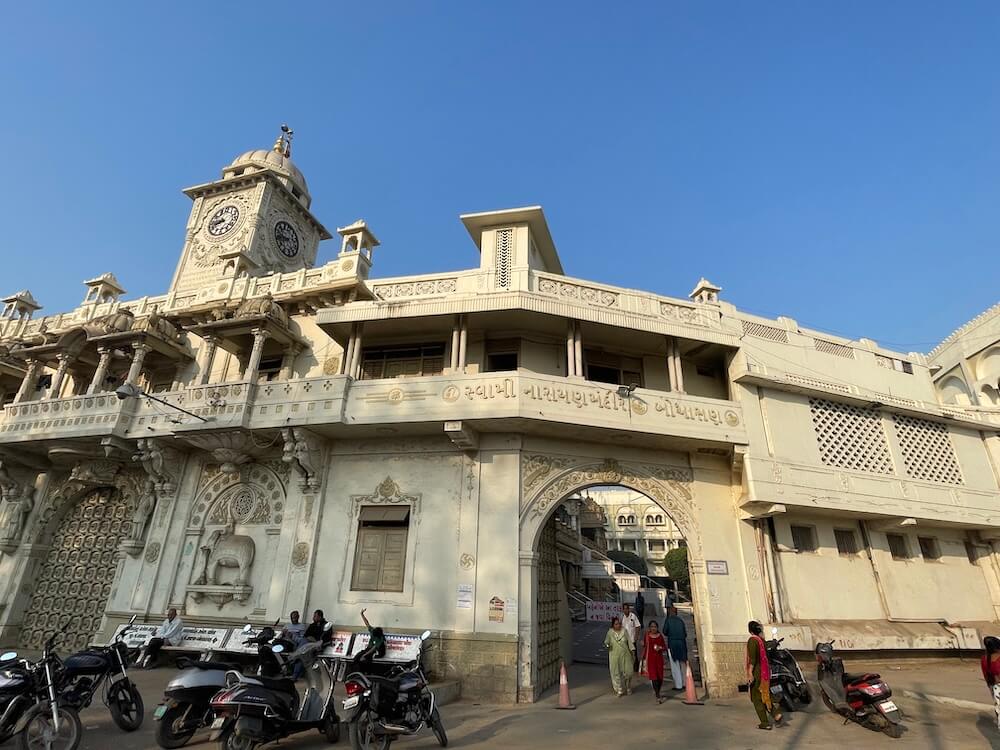
Bochasan village is nestled in the fertile region of Central Gujarat and the history of this village is extremely ancient. One can gain an idea of the grandeur of this temple from the ‘Yugpurush Entrance’ located on the boundary of the village. There is a path to reach the temple from this great gate. 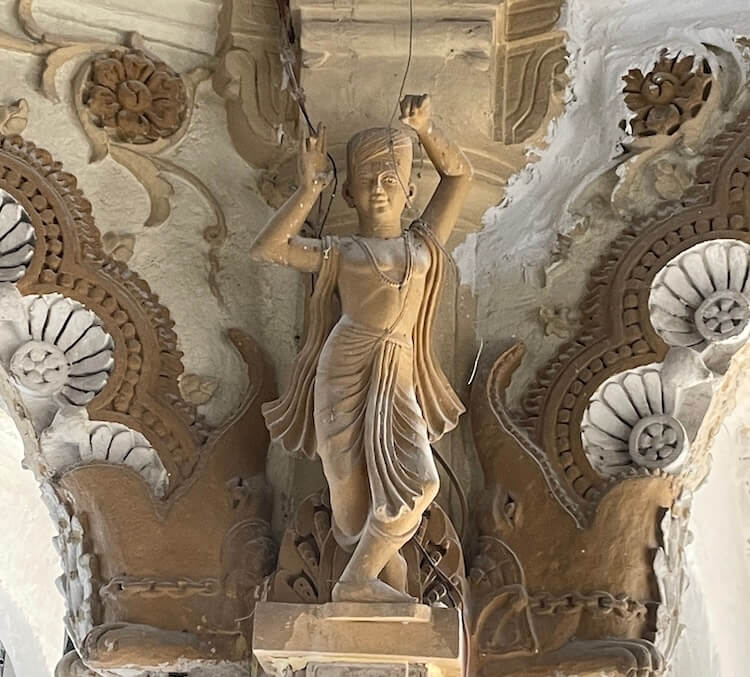 The temple is surrounded by a fortification of Bhakta Niwas (pilgrim rest house) buildings and there are massive gateways to enter the temple courtyard through these very buildings. Excellent arrangements for the stay of hundreds of devotees are available in the Bhaktaniwas here. An Annakshetra (charitable kitchen) is functional within the temple premises. Food is donated here daily. The wooden shutters of the gateway in the fortification are clad with metal sheets. Similar to the temple, the Bhaktaniwas and the Yugpurush Hall here are also rich in sculpture. There is unique carving on the walls, doorways and Gavaksha (oriel windows) of the buildings.
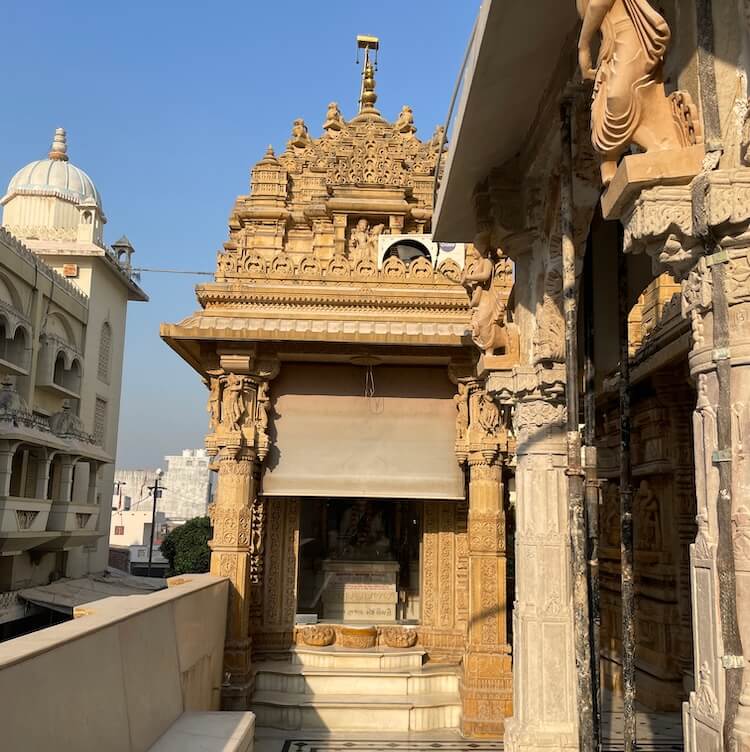
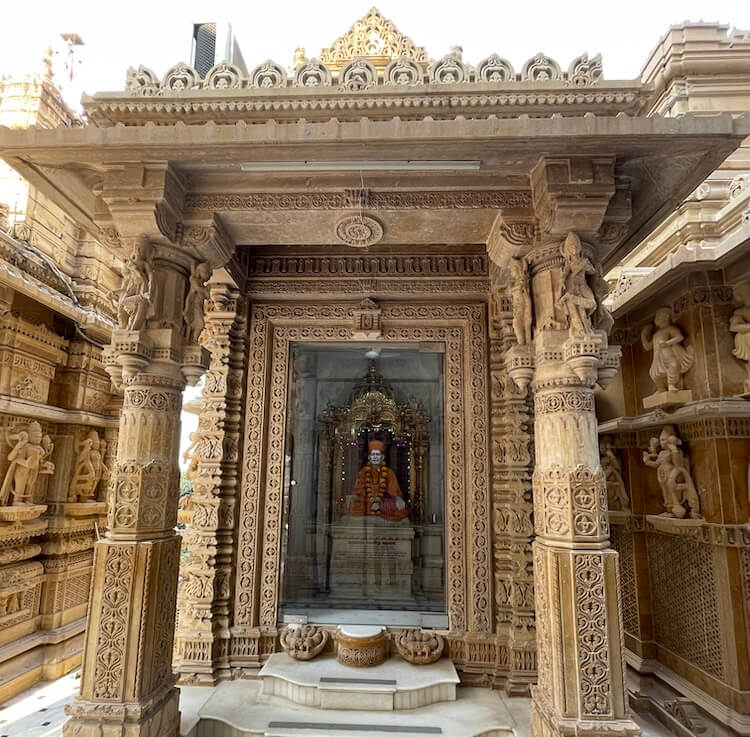
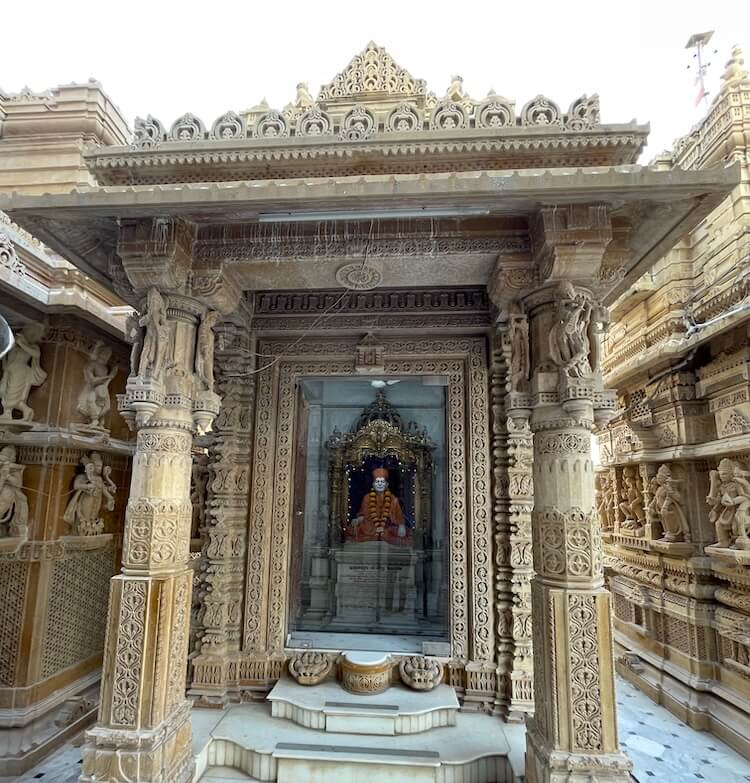
The architectural style of the temple is considered an excellent specimen of the Nagara style of Indian architectur. This temple has been crafted using marble and the pink sandstone of Rajasthan. This temple, which is approximately a century and a quarter old, stands on hundreds of pillars and appears like a grand palace.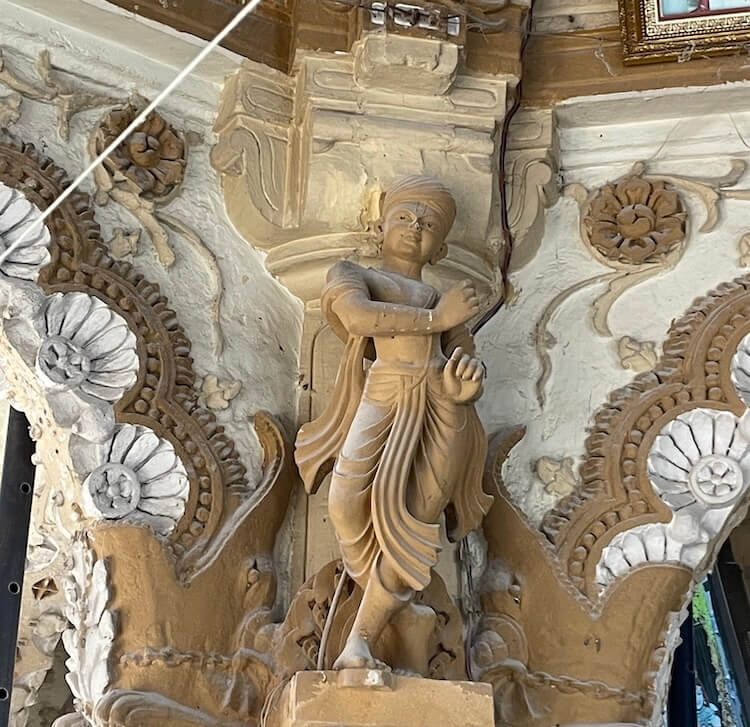 Sculptures of various deities, Yakshas (celestial spirits), Gandharvas (celestial musicians) and Sursundaris (celestial beauties) are carved upon the pillars and the arches above them, as well as the walls of the temple. Neither iron nor steel has been used anywhere in the construction. Along with the interior of the temple, the exterior walls are also adorned with sculptural beauty. One enters the Sabhamandap (assembly hall) through the Mukhamandap (entrance porch). The ceiling of this Sabhamandap is dome-shaped and features carvings of dancers and mythological scenes. Paintings underlining the greatness of the Swaminarayan Sampradaya and depicting various episodes from the life of the Swami are displayed on the walls of the Sabhamandap.
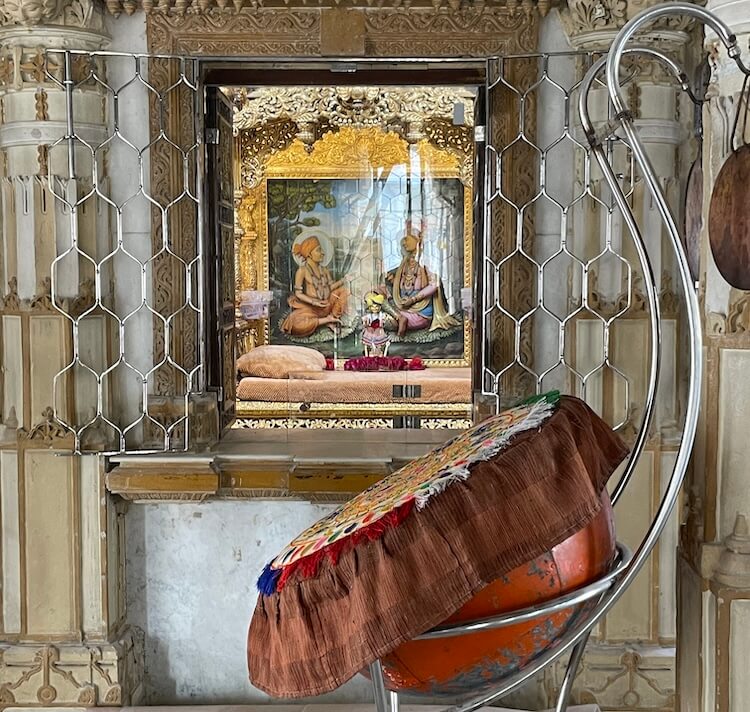
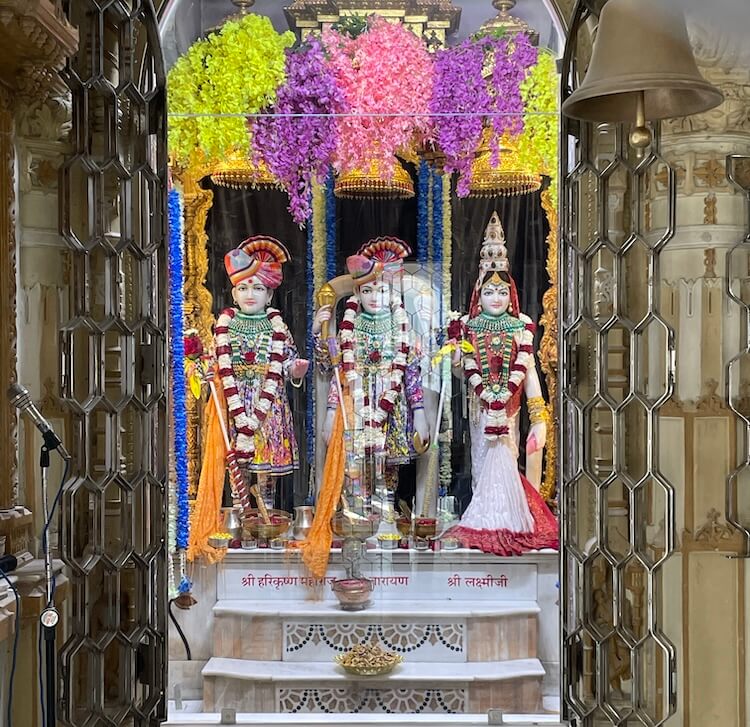
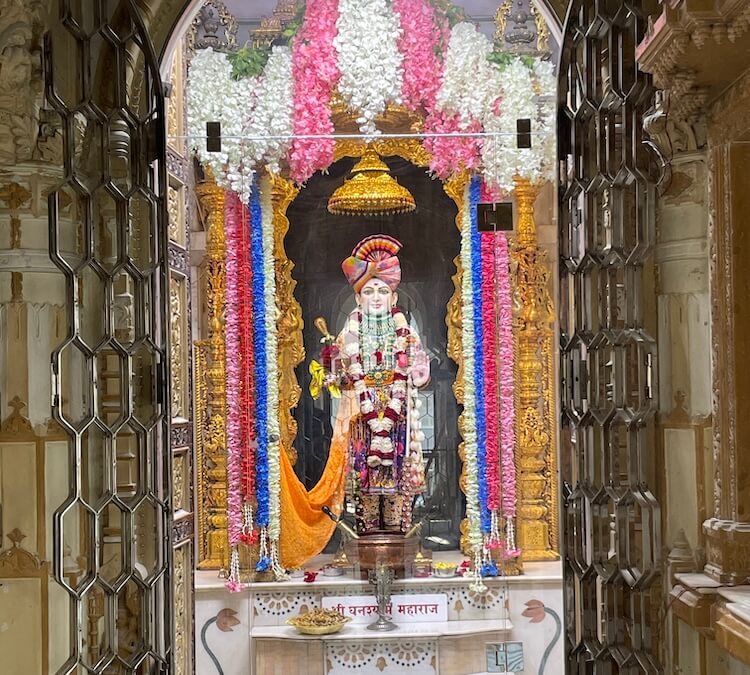
There are three Garbhagrihas (sanctum sanctorums) in this temple. In the main Garbhagriha located in the centre, Akshar-Purushottam Maharaj has been consecrated. Within this, the idols of Bhagwan Swaminarayan and his greatest devotee Gunatitanand Swami are seated. 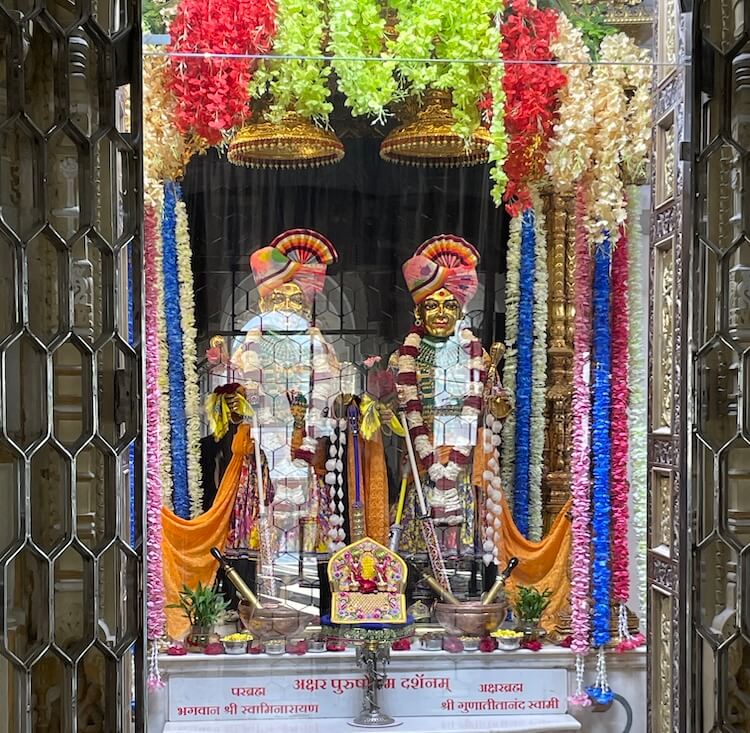 This is the first temple in the entire Sampradaya where both these idols have been consecrated together in the centre. To the left of this main Garbhagriha are the idols of Harikrishna Maharaj and Lakshmi-Narayan, while in the Garbhagriha to the right, the idol of Bhagwan Swaminarayan in his childhood form, that is, Shri Ghanshyam Maharaj, is consecrated.
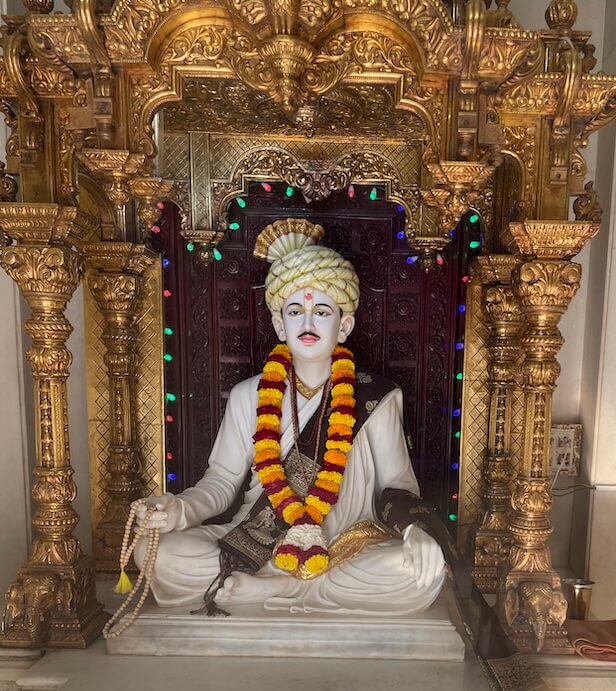
Besides these main idols, there are many other important shrines within the temple premises. Amongst these, the idol of Nilkanth Varni (Bhagwan Swaminarayan in his teenage ascetic form) is distinctive. On the ground floor of the temple is the ‘Akshar Bhuvan’. The idols of the founders of the Sampradaya, Shastriji Maharaj and Yogiji Maharaj, are seated there. In this very place, the sacred objects used by Bhagwan Swaminarayan and the saints of the Guru lineage, known as ‘Prasadi’, have been preserved with great care. There are also idols of Hanuman and Ganpati near the temple entrance and there is an old and small temple of Hanuman outside the temple premises. 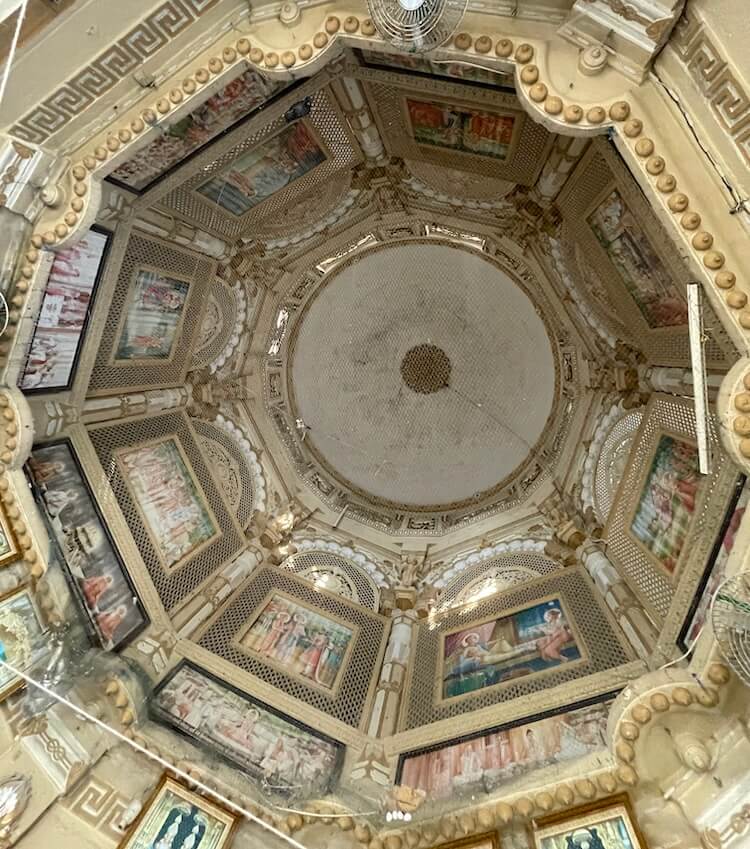 It was at this spot that Nilkanth Varni stayed during his first visit. There are tall Shikharas (spires) on the roof of the temple. There are Suvarnakalash (golden urns) upon the Amalaka (notched stone disk) of these spires.
Many festivals and holy days are celebrated in the temple throughout the year in an extremely disciplined manner. Guru Purnima and Kartik Purnima are the main annual festivals here. On these occasions, thousands of devotees come here for Darshan (sacred viewing). On Guru Purnima, a special Puja and Aarti of the Gurus are performed. A special Deepotsav (festival of lights) is organised on Kartik Purnima. At this time, about a hundred thousand oil lamps are lit, illuminating the entire premises with light. The anniversary of the temple is called ‘Patotsav’ and on this day, the idols are anointed with sacred waters. On the day following Deepavali, a variety of food offerings, known as ‘Annakut’, are presented to the deity and through this, gratitude towards God is expressed. The Hindola festival is celebrated in the month of Ashadh. During this period, the deity is placed in various types of decorated cradles and swung. During festivals, the ceremonial reading, interpretation and discourse of religious scriptures are organised. On such occasions, a Maha Annakshetra is operated for the devotees present.
For the devotees coming for Darshan at the Swaminarayan Mandir, entry is permitted from 7.30 am to 12.00 pm and from 4.00 pm to 8.15 pm. The temple’s main gate remains closed for darshan between 12:00 PM and 4:00 PM for the deity’s rest and the offering of ‘Thal’ (food offering). Five aartis are performed daily in the temple. The schedule begins at 6:00 AM with the Mangala Aarti. This is followed by the Shringar Aarti at 7:30 AM and the Rajbhog Aarti at 11:15 AM. In the evening, the Sandhya Aarti is performed around 7:00 PM (depending on the sunset), and the final ritual of the day, the Shayan Aarti, takes place at 8:15 PM.
Useful Information
- Located at a distance of 6 km from Borsad and 27 km from Anand city
- ST (State Transport) bus facility available from many cities in the district to reach Borsad
- Private vehicles can come up to the temple parking lot
- Many facilities for accommodation and breakfast in the vicinity
- Contact: Temple Office, Telephone : 02697-252201, 252202
श्री स्वामीनारायण मंदिर
बोचासन, ताल. बोरसद, जिला. आनंद
मंदिरे
Temples
मंदिर
-
भीमनाथ महादेव मंदिर लिंबळी, ता. सोजित्रा, जि. आनंद
अधिक माहितीBhimnath Mahadev Temple Limbali, Tal. Sojitra, Dist. Anand
View Detailsभीमनाथ महादेव मंदिर लिम्बाली, ताल. सोजित्रा, जिला. आनंद
विवरण देखें -
मेलडी माता मंदिर मालताज, ता. सोजित्रा, जि. आनंद
अधिक माहितीMeldi Mata Temple Malataj, Tal. Sojitra, Dist. Anand
View Detailsमेलडी माता मंदिर मालताज, ताल. सोजित्रा, जिला. आनंद
विवरण देखें -
चंद्रमौलेश्वर महादेव मंदिर उमरेठ, ता. उमरेठ, जि. आनंद
अधिक माहितीChandramouleshwar Mahadev Temple Umreth, Tal. Umreth, Dist. Anand
View Detailsचंद्रमौलेश्वर महादेव मंदिर उमरेठ, तहसील उमरेठ, जिला आनंद
विवरण देखें