
श्री सीमंधर स्वामी जैन तीर्थ
मोढेरा सर्कल, मेहसाणा, जि. मेहसाणा
Shri Simandhar Swami Jain Tirth
Modhera Circle, Mehsana, Dist. Mehsana
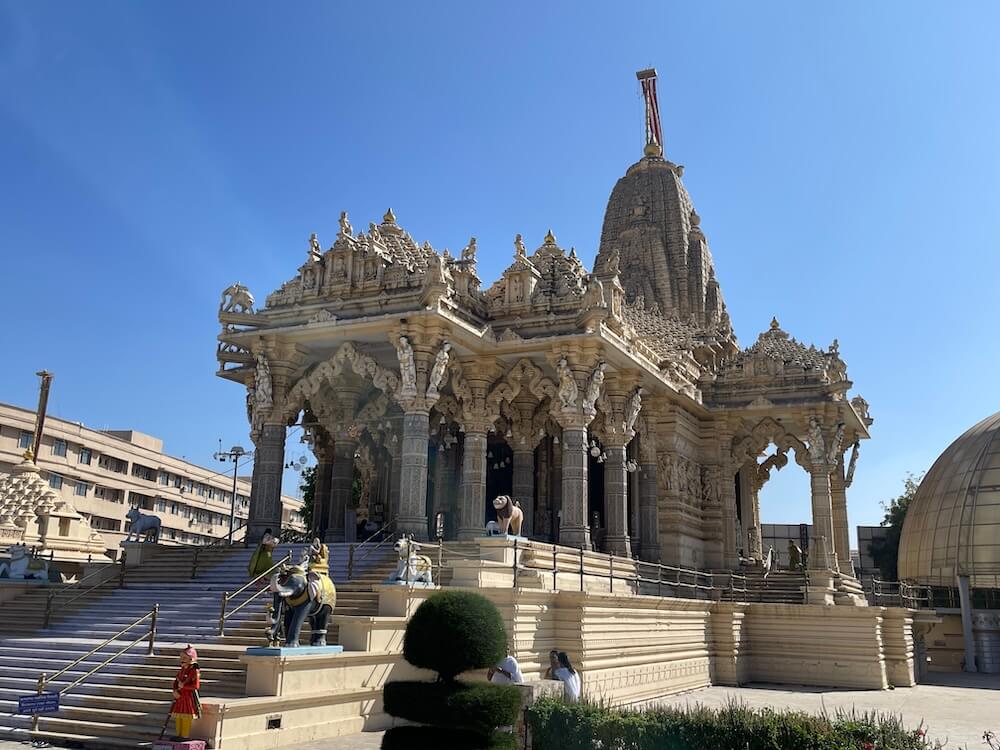
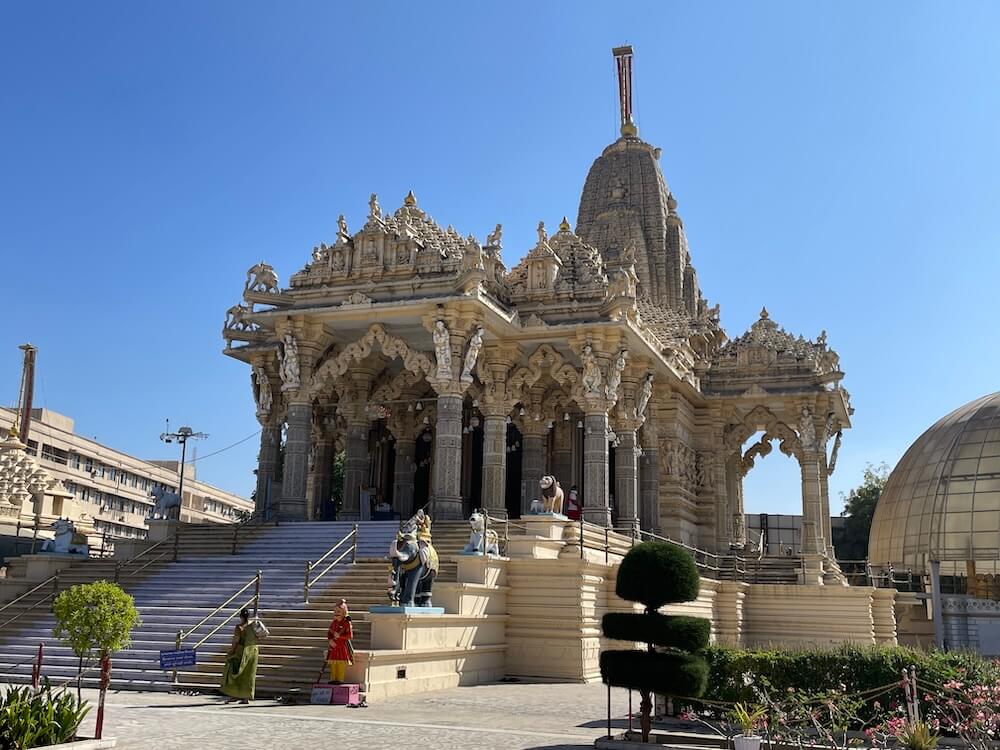
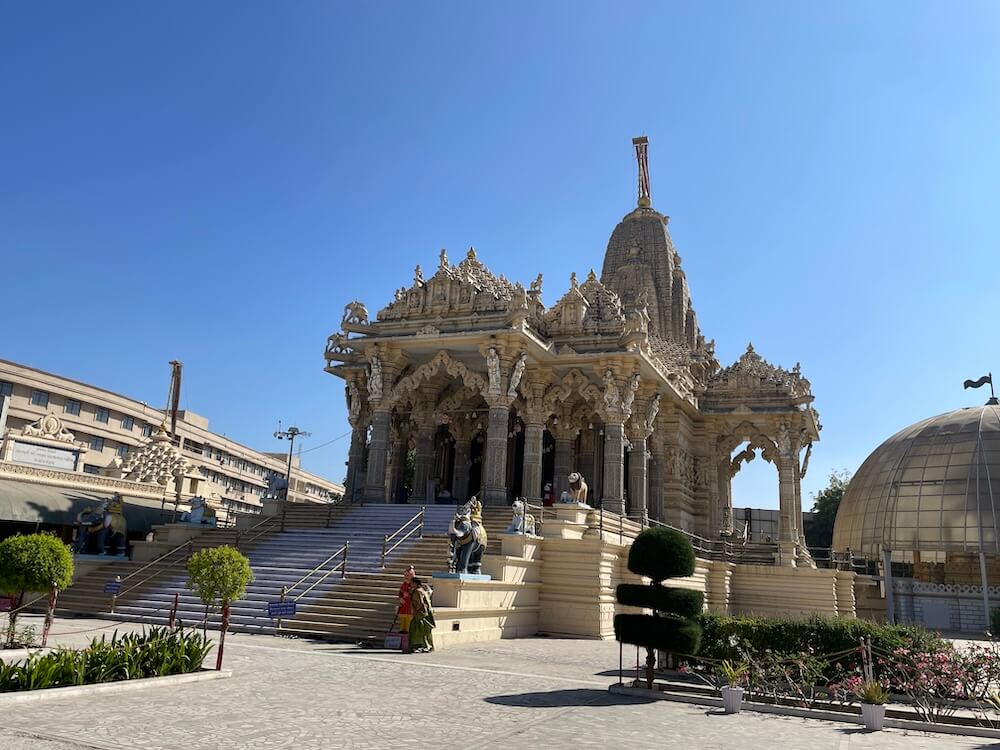
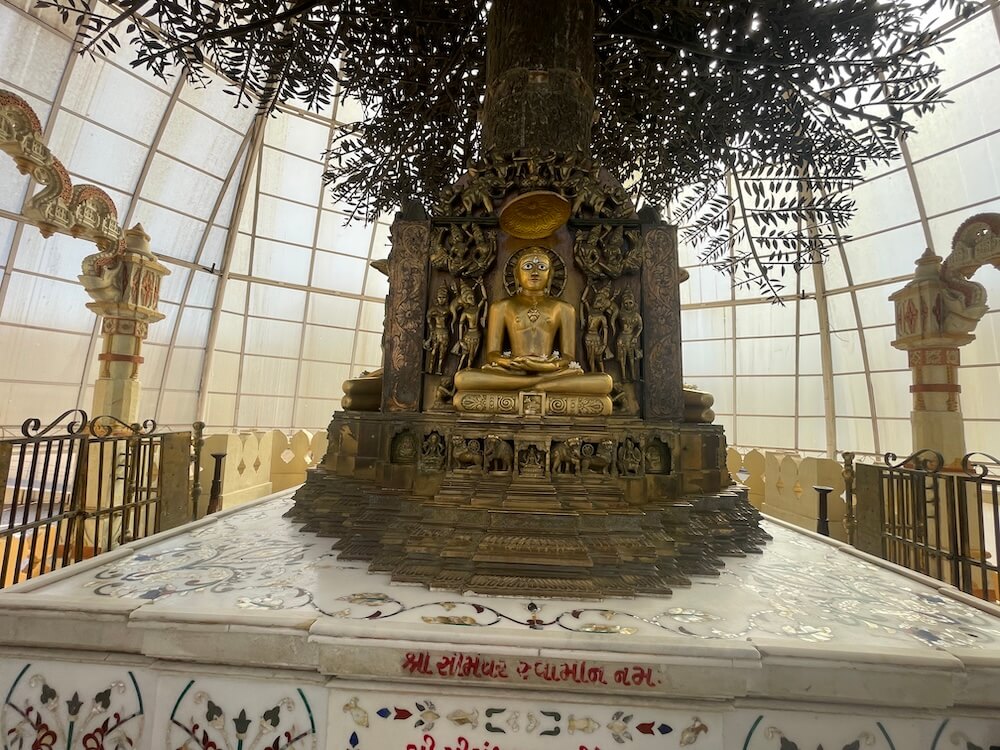 Situated upon the Ahmedabad-Mehsana Highway, near the Modhera Circle in the city of Mehsana, stands the Shri Simandhar Swami Jain Temple. This architectural masterpiece was brought to fruition under the spiritual inspiration of Acharyashri Kailashsagar Surishwarji, a profound scholar of Shilpashastra. The formal ‘Anjan-shalaka’ and consecration of the idols were performed in Vikram Samvat 2028 and the temple celebrated its Golden Jubilee in May 2022. Serving as a pre-eminent centre of faith for Jain followers in North Gujarat and across India, the temple enshrines a magnificent white marble idol of the current Tirthankara, Lord Simandhar Swami, which stands approximately 12 feet tall. Within the temple precincts stands a 60-foot-tall Ashoka tree, cast from 10 tonnes of brass.
 A singular attraction of this sanctuary is that, at night, the entire edifice is illuminated not by electric lights, but by the ethereal glow of ‘ghrita’ (ghee) lamps.
According to Jain mythological tenets, Lord Simandhar Swami is a ‘Viharman Tirthankara’, currently residing in the ‘Mahavideh Kshetra’. Jain cosmology divides the universe into regions such as Bharat Kshetra, Airavat Kshetra and Mahavideh Kshetra. It is believed that in Bharat Kshetra, no Tirthankara shall arise for the next 82,000 years following Lord Mahavira. However, Tirthankaras exist in the present age within Mahavideh Kshetra. Lord Simandhar Swami was born during the era of the 17th Tirthankara, Lord Kunthunath and took initiation during the period of the 18th Tirthankara. Born in the city of Pundarikgiri to King Shreyans and Queen Satyaki, his advent was heralded by the fourteen auspicious dreams witnessed by his mother. Scriptural ‘Agamas’ describe the Swami as possessing a golden complexion, a height of 500 ‘dhanushya’ (approximately 1,500 feet) and the bull as his ‘lanchhan’ (emblem). 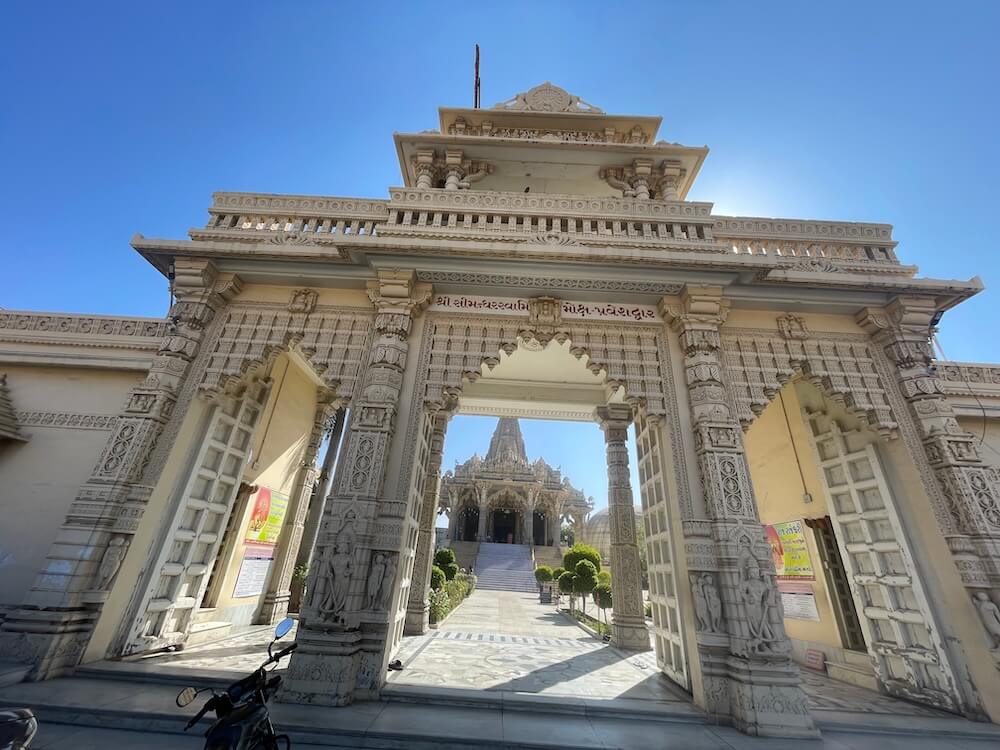 Presently aged 1,50,000 years, he is destined to preach the Dhamma in Mahavideh Kshetra for another 1,25,000 years. Devotees harbour a profound belief that by worshipping Simandhar Swami in this realm, a seeker gains the opportunity to be reborn in Mahavideh Kshetra, where the direct ‘darshan’ of the Swami leads to ‘Moksha’ or liberation.
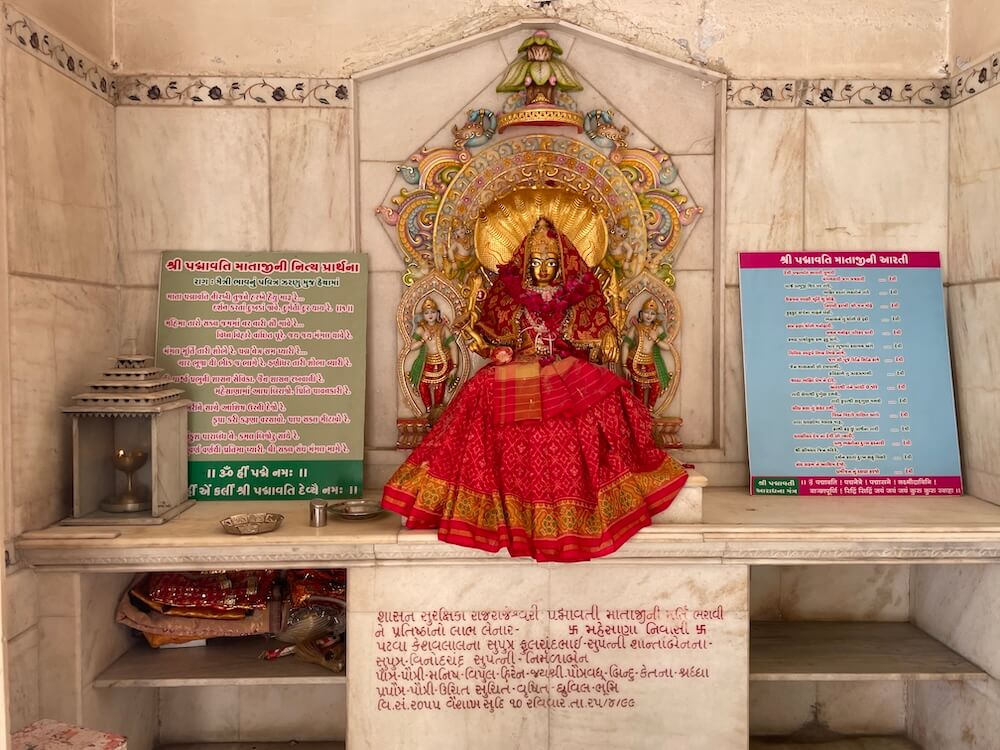
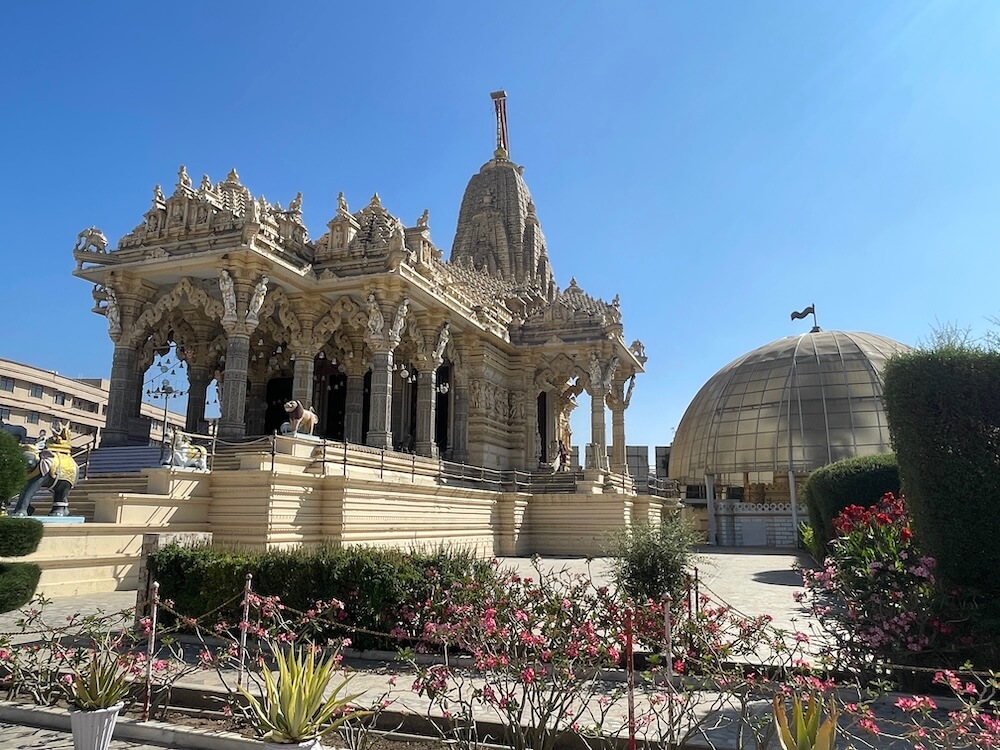
Architecturally, the temple at Mehesana is a majestic manifestation of Indian Jain structural design, crafted in the specific ‘Kailas Prasad’ style. The edifice is constructed using premium white marble. The main gateway is embellished with carvings of Jain Tirthankaras and auspicious symbols. Flanking this entrance are two ‘devkulikas’ (subsidiary shrines), one dedicated to Manibhadraveer Maharaj and the other to Raj Rajeshwari Padmavati Mata.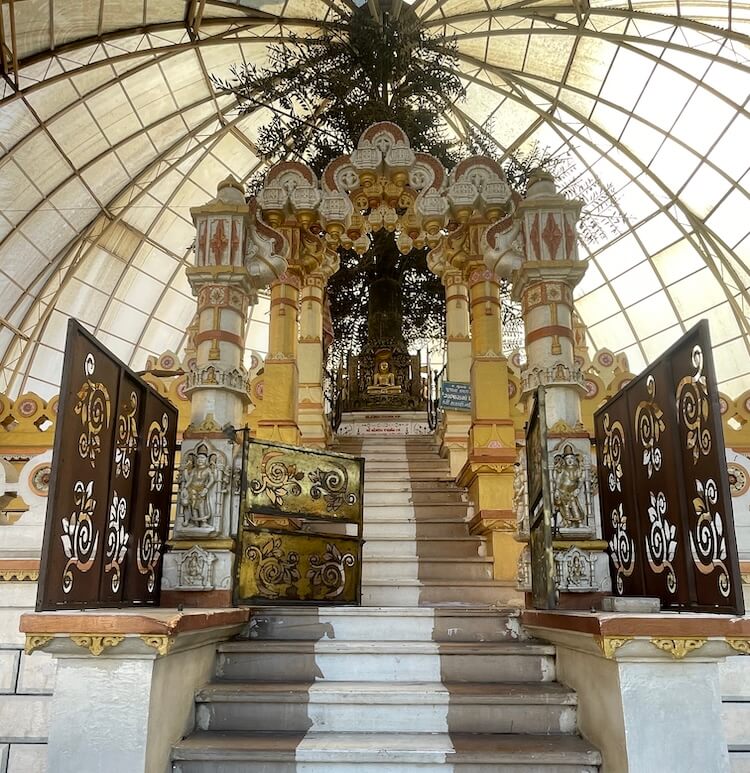 This grand portal leads into an expansive courtyard, from which one must ascend twenty-five steps to enter the temple. Sculptures of ‘Dwarpalas’ (gatekeepers) and lions greet the faithful on either side of the stairway. At the summit of the steps, one encounters rare sculptures : on one side, a lion cub suckling from a cow and on the other, a calf nursing from a lioness. These figures serve as poignant symbols of ‘Ahimsa’ (non-violence). The temple layout comprises a ‘Mukhamandapa’ (entrance porch), ‘Arndhamandapa’ and an open ‘Sabhamandapa’ (assembly hall). The assembly hall is supported by numerous grand pillars, each featuring intricate carvings of human figures, ‘apsaras’ and musical instruments. The domed ceiling is adorned with delicate floral creepers and geometric patterns, while the pillars are interconnected by exquisitely carved cusped arches.
The entrance to the ‘Garbhagriha’ (sanctum sanctorum) is finely carved, featuring various sculptures at the base on both sides. Inside, the white marble idol of Lord Simandhar Swami, measuring approximately twelve feet (145 to 154 inches), is seated in the ‘Padmasana’ (lotus) posture. 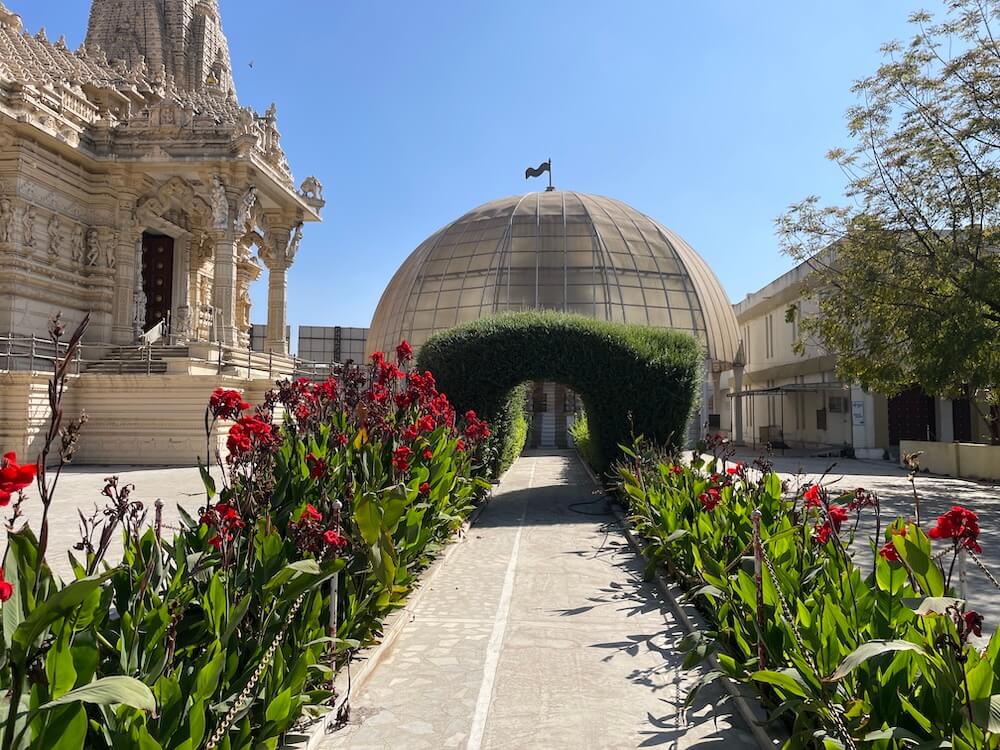 This is considered one of the largest idols of Simandhar Swami in the country. To preserve and beautify the idol, an ‘Angi’ (armour) crafted from 160 to 170 kilograms of silver has been prepared. Outside the sanctum, one finds idols of other Jain Tirthankaras, along with consecrated images of Padmavati Mata, Manibhadraveer and Ghantakarna Mahavir. The spire above the sanctum is elaborately carved, featuring multiple subsidiary spires and topped with the Jain flag.
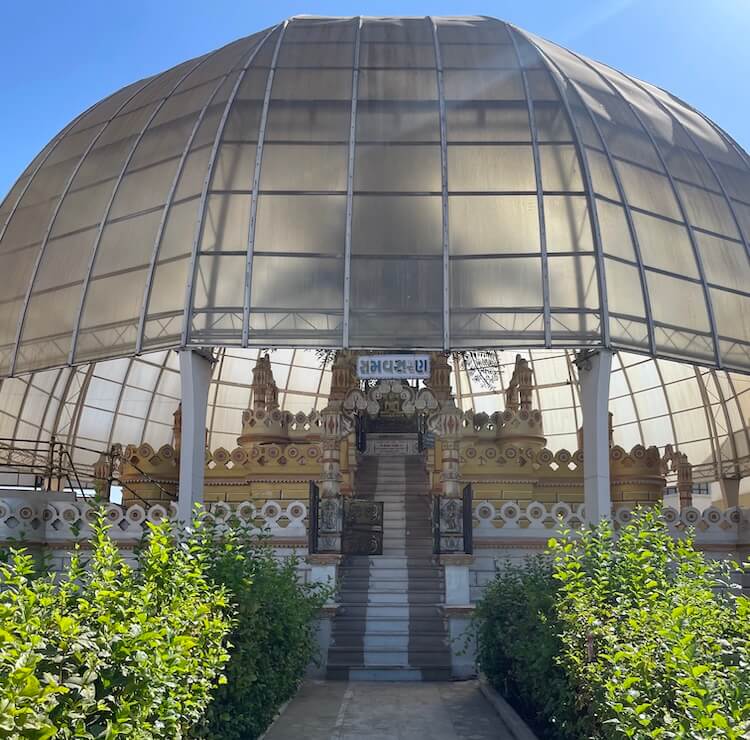
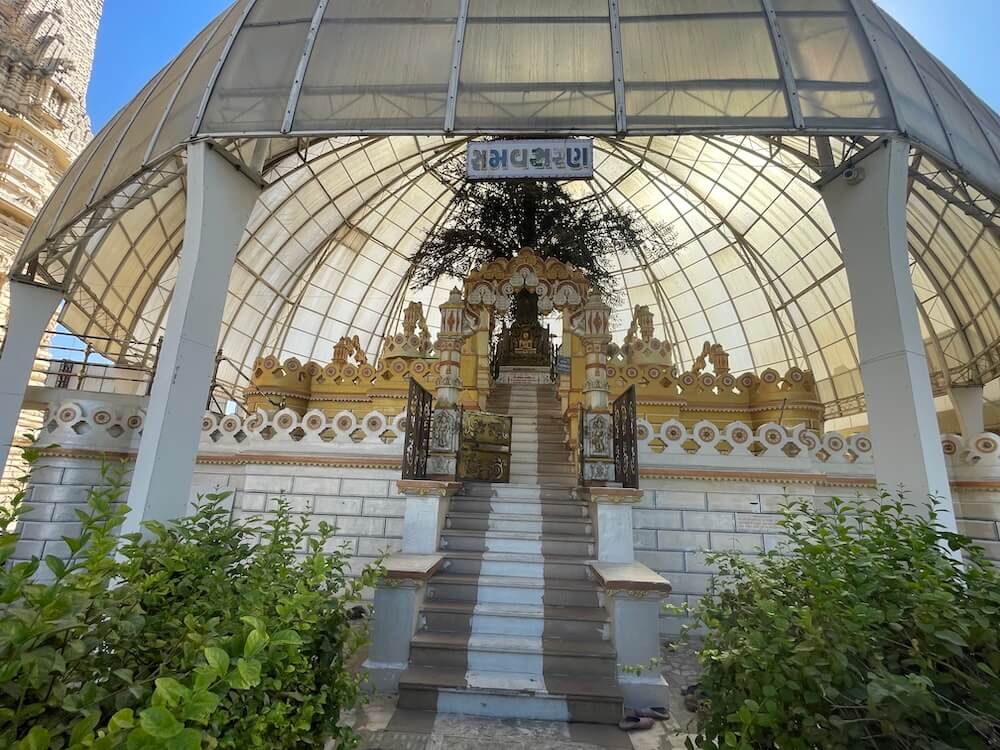
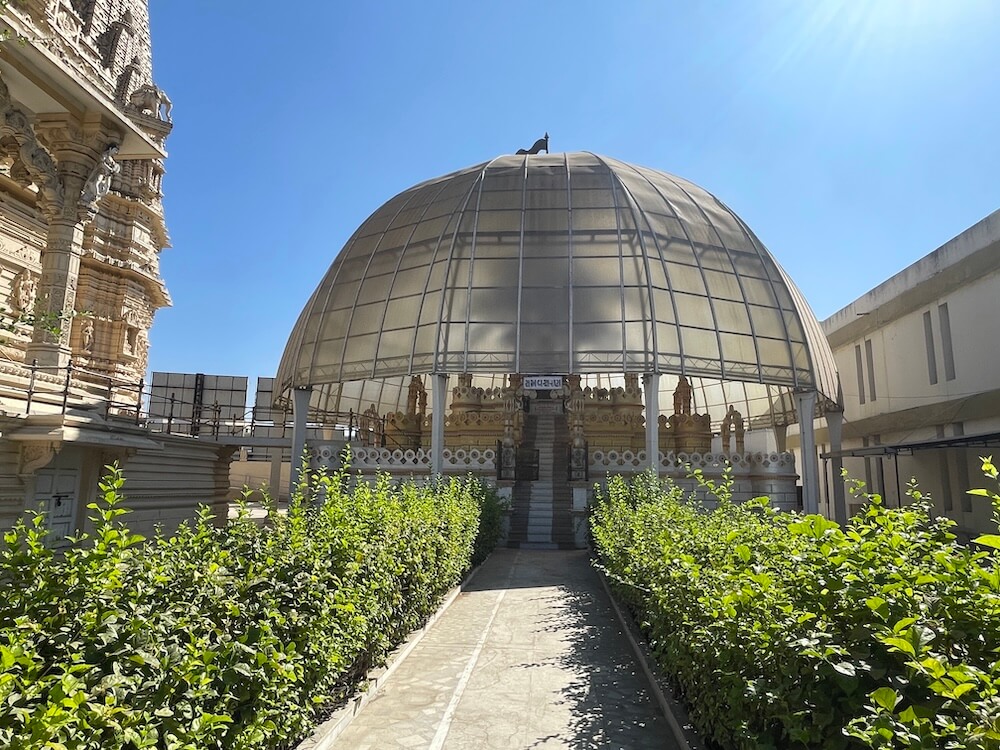
A few paces from the temple stands the magnificent brass ‘Ashoka tree’ within a ‘Samavasaran’ (preaching hall) structure. Completed in 1987, this tree is cast entirely from brass and stands 60 feet tall, including an 8-foot underground foundation. 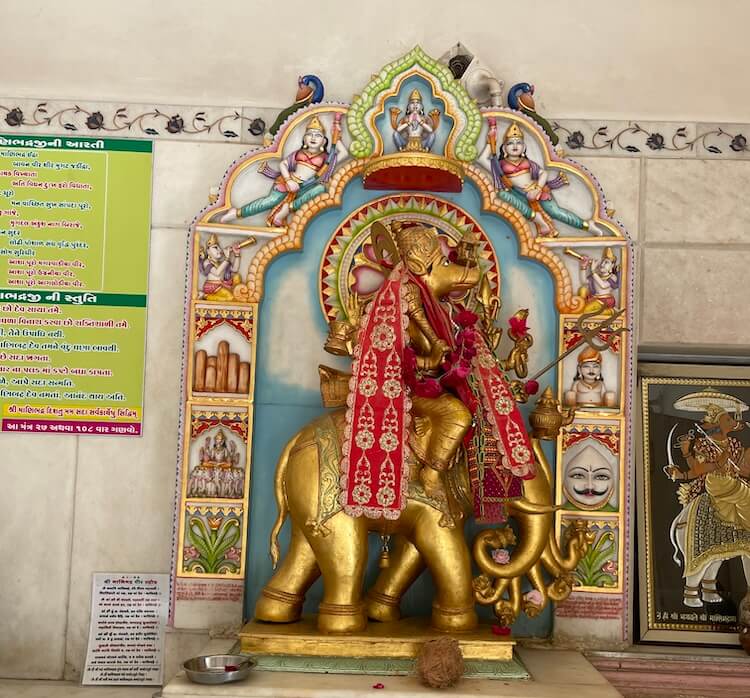 This massive structure utilised approximately ten tonnes of brass, featuring 5,35,000 minute brass leaves and 3,000 larger leaves, each small leaf weighing 80 grams. The primary trunk, thirty-three inches in diameter, supports a complex arrangement of 22 main branches and 5,000 sub-branches, with each major branch weighing 800 kilograms. Surrounding the tree are four idols of Simandhar Swami made of ‘Panchdhatu’ (five-metal alloy), each weighing over 300 kilograms, with a pedestal (‘Prabhavali’) exceeding 500 kilograms. This entire masterpiece was crafted by the Makwana brothers of Vasai, Mumbai. The area is enclosed by a transparent domed roof and is reached via twenty-one steps from the courtyard.
The precinct also houses a Ganadhar temple, a Guru temple and a grand Aradhana Bhavan, where hundreds of devotees can engage in spiritual meditation and chanting simultaneously. The grounds include a large garden and a children’s play area. For pilgrims travelling from afar, a ‘Bhaktanivas’ (rest house) with 170 rooms is available. The ‘Bhojanalaya’ serves pure vegetarian meals in South Indian,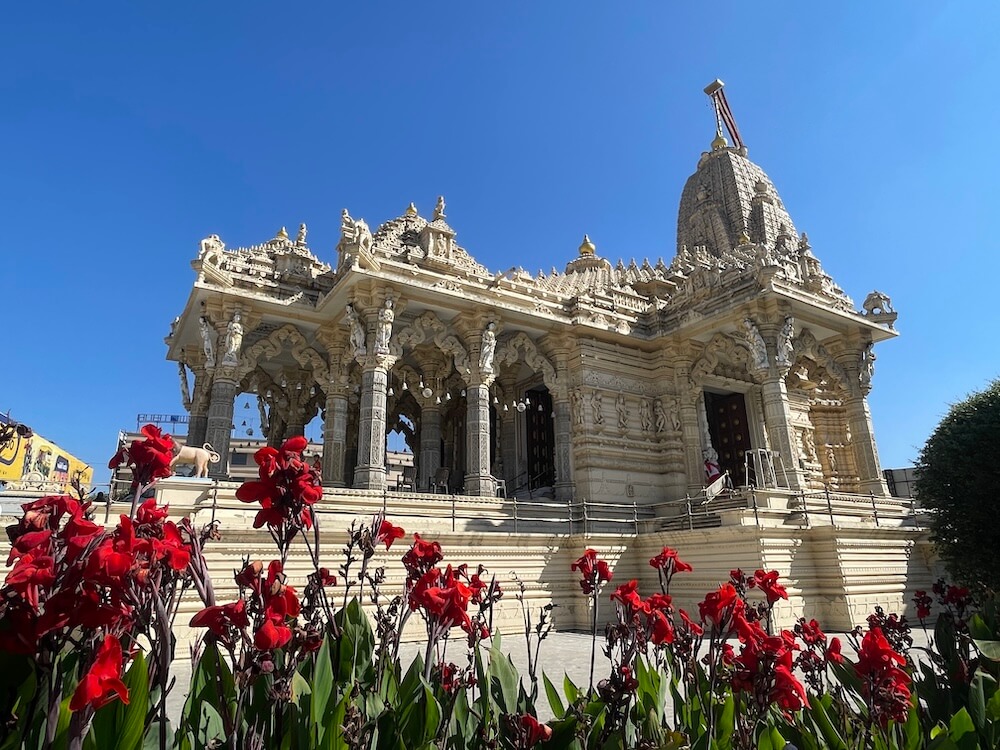 Gujarati and Rajasthani styles, accommodating 400 devotees at a time. The temple opens at 5:30 am, followed by ‘Vasakshep’ puja between 6:00 and 7:00 am. The ‘Pakshal’ puja (ritual bathing of the idol) takes place between 8:30 and 9:00 am. ‘Maha-Aarti’ is performed at 10:00 am and again between 7:30 and 8:00 pm. The doors close at 9:30 pm. Notably, no electric lights are used inside the sanctum at night. Instead, the temple is bathed in the traditional light of earthen lamps.
Various religious festivals are observed here throughout the year, with the ‘Paanch Kalyanaks’ (five auspicious events) of Simandhar Swami holding paramount importance. They are – ‘Chyavan’ (conception) on Shravan Vadya 1, ‘Janma’ (birth) on Vaishakh Vadya 10, ‘Diksha’ (initiation) on Phalgun Shuddha 3 and ‘Kevalgyan’ (omniscience) on Chaitra Shuddha 13. The ‘Paryushan’ Mahaparva, the most significant period in Jainism, is celebrated with profound devotion, featuring daily discourses and rituals. Furthermore, the temple witnesses large congregations on Mahavir Jayanti, Chaitra Purnima, Akshaya Tritiya, Ashadh Chaturdashi, Navpad Oli, Diwali, Gyanchapanchami, Kartik Purnima and Maun Ekadashi. The Golden Jubilee celebrations in May 2022 remain the grandest event in the temple’s history.
Useful Information
- Five-minute walk from Mehesana Bus Station.
- GSRTC bus services connect Mehesana to numerous cities across the state.
- Private vehicles can reach the temple premises directly.
- Several accommodation and breakfast options are available in the vicinity.
- Contact – Temple Office, Mob. – 9825316353.
श्री सीमंधर स्वामी जैन तीर्थ
मोढेरा सर्कल, मेहसाणा, जिला। मेहसाणा
मंदिरे
Temples
मंदिर
-
वैजनाथ महादेव मंदिर महादेवपुरा (गावडा), ता. विजापूर, जि. मेहसाणा
अधिक माहितीVaijnath Mahadev Temple Mahadevpura (Gavada), Tal. Vijapur, Dist. Mehsana
View Detailsवैजनाथ महादेव मंदिर महादेवपुरा (गावड़ा), ताल. विजापुर, जिला. मेहसाणा
विवरण देखें -
वैजनाथ महादेव मंदिर सोखडा, तालुका विजापूर, जिल्हा मेहसाणा
अधिक माहितीVaijanath Mahadev Temple Sokhada, Taluka Vijapur, District Mehsana
View Detailsवैजनाथ महादेव मंदिर सोखाडा, तालुका विजापुर, जिला मेहसाणा
विवरण देखें -
काशी विश्वनाथ महादेव मंदिर मेहसाणा, जि. मेहसाणा
अधिक माहितीKashi Vishwanath Mahadev Temple Mehsana, Dist. Mehsana
View Detailsकाशी विश्वनाथ महादेव मंदिर मेहसाणा, जिला. मेहसाणा
विवरण देखें