
भुवनेश्वरी मंदिर
गुंजा, ता. विसनगर, जि. मेहसाणा
Bhuvaneshwari Mata Temple
Gunja, Tal. Visnagar, Dist. Mehsana
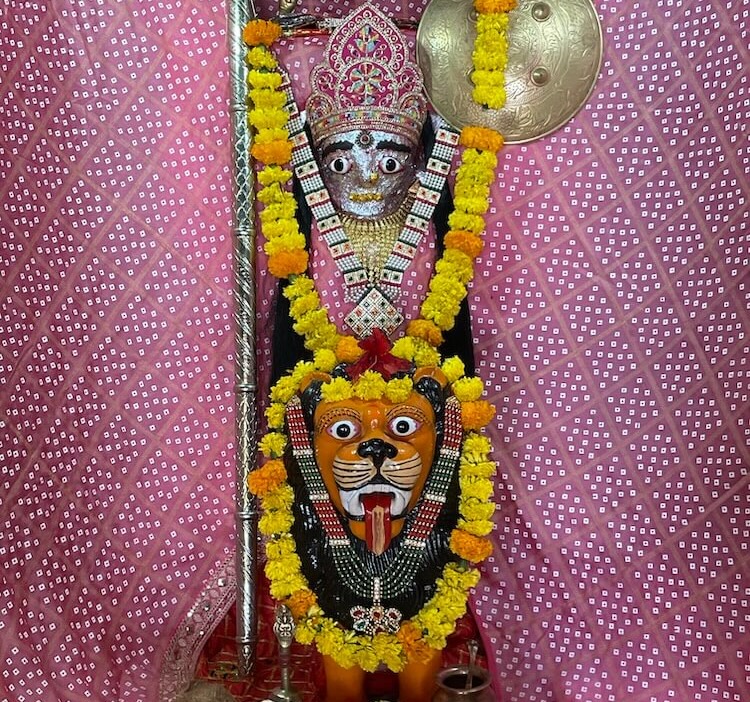 The entire earth is considered a ‘Bhuvan’ or abode and the deity who reigns over this realm is Goddess Bhuvaneshwari, the benevolent guardian of the world. It is believed that the very cycle of existence is sustained by Her divine energy. According to the ‘Devi Bhagavata’ Purana, She is one of the ten ‘Dasha-Maha-Vidyas’. While Her most renowned temple is situated in Bhubaneswar, Odisha, several shrines dedicated to Her are found across the nation. Amongst these, a significant temple is nestled in Gunja, within the Visnagar Taluka. Devotees hold a firm conviction that worshipping the Mother here blesses the childless with the gift of progeny.
The shrine at Gunja is regarded as one of the oldest Bhuvaneshwari temples in North Gujarat. Although the famous Bhuvaneshwari temple in Gondal (Saurashtra) was established in 1946 by Acharya Charantirthji Maharaj, 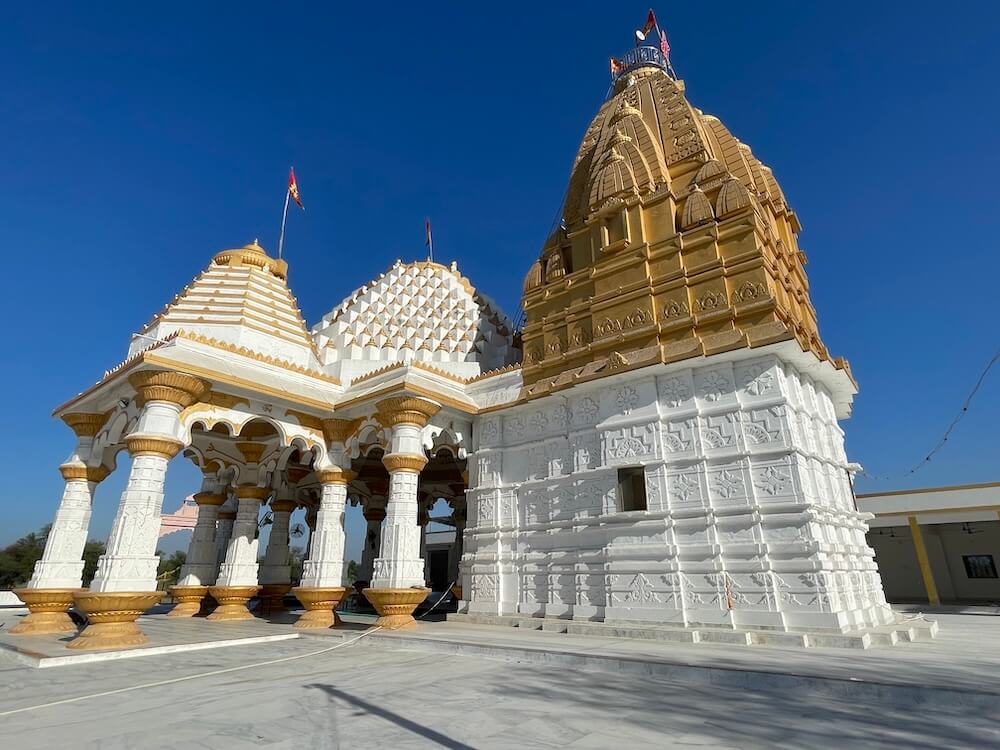 historical evidence suggests that the Gunja temple predates it by centuries. The temple’s sanctity remained immense even during the British Raj.
In Hinduism, the group of Tantric goddesses is known as the ‘Maha Vidyas’, comprising ten forms : Kali, Tara, Chinnamasta, Shodashi, Bhuvaneshwari, Tripura Bhairavi, Dhumavati, Bagalamukhi, Matangi and Kamala. The treatise ‘Dasha-Maha-Vidya’, published by Gita Press, describes Bhuvaneshwari as the presiding deity of ‘Manidvipa’, as detailed in the ‘Devi Bhagavata’. She is the primordial power of the ‘Hrim’ (Hridlekha) mantra and is considered the feminine half of Lord Shiva.
According to Sage Gargayan, a universe is formed by the Sun and seven to eight satellites. 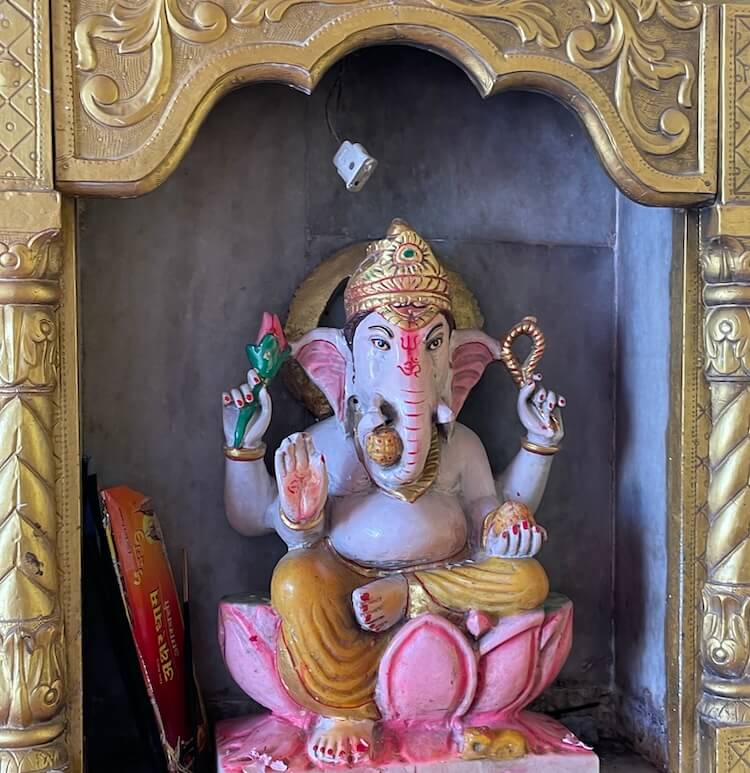 Seven such universes constitute a ‘Jagat’, a thousand ‘Jagats’ form a ‘Vishwa’ and fifteen million such ‘Vishwas’ comprise a ‘Maha ishwa’. This ‘Mahavishwa’ consists of fourteen ‘Bhuvans’ or realms, including the seven netherworlds (Patal) and the seven celestial realms : Bhuloka, Bhuvarloka, Swarloka, Maharloka, Janaloka, Tapoloka and Satyaloka. As the sovereign of these fourteen realms, Goddess Bhuvaneshwari possesses a gentle demeanour. Her primary emblems are the ‘Pasha’ (noose) and the ‘Ankusha’ (goad). Symbolically, the ‘Pasha’ represents the bonds of ‘Maya’ (illusion), while the ‘Ankusha’ signifies the divine inspiration that leads to liberation.
The ‘Devi Bhagavata’ recounts a legend where a demon named Durgam caused widespread chaos and suffering. Distressed by his atrocities, the deities sought refuge in the Himalayas and offered prayers to Bhagwati Bhuvaneshwari. Pleased by their devotion, the Goddess appeared holding arrows, a lotus and vegetables (taking the form of Shakambhari). Thousands of tears flowed from Her eyes, 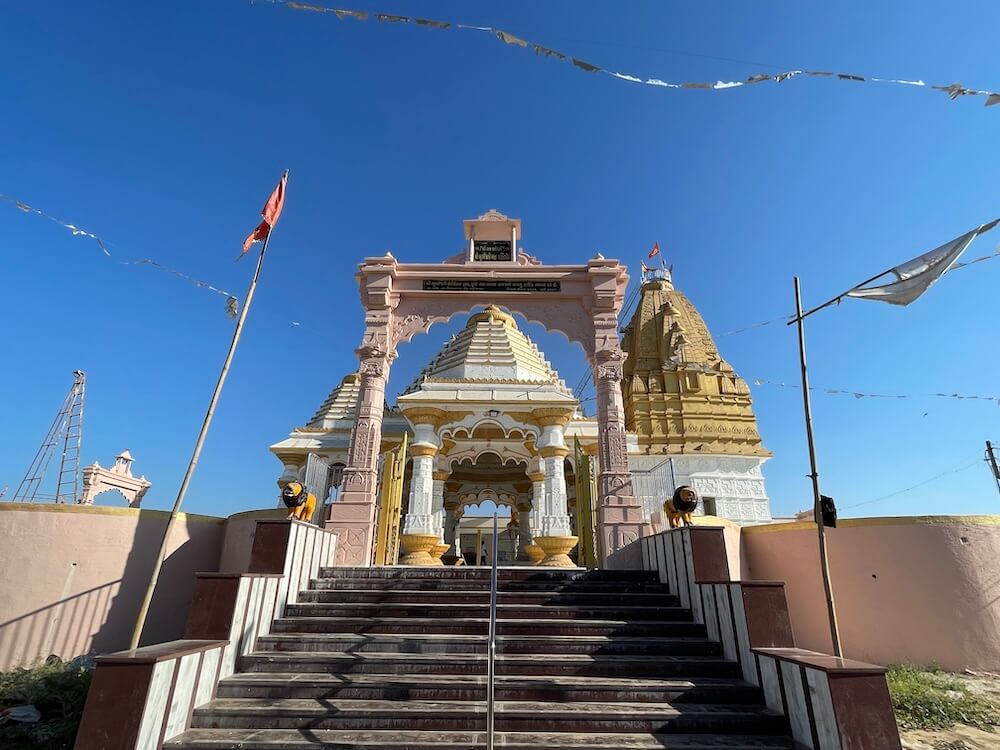 replenishing the earth’s parched water sources. She subsequently vanquished the demon Durgam in battle and restored the stolen Vedas to the gods. Apart from Bhubaneswar in Odisha, Udaipur in Tripura, Gondal in Rajkot and Gunja in Gujarat, there exist ancient sites dedicated to Bhuvaneshwari in the Solanki–Chalukya period town of Gunja. Following a recent renovation, the temple has attained its current magnificent form.
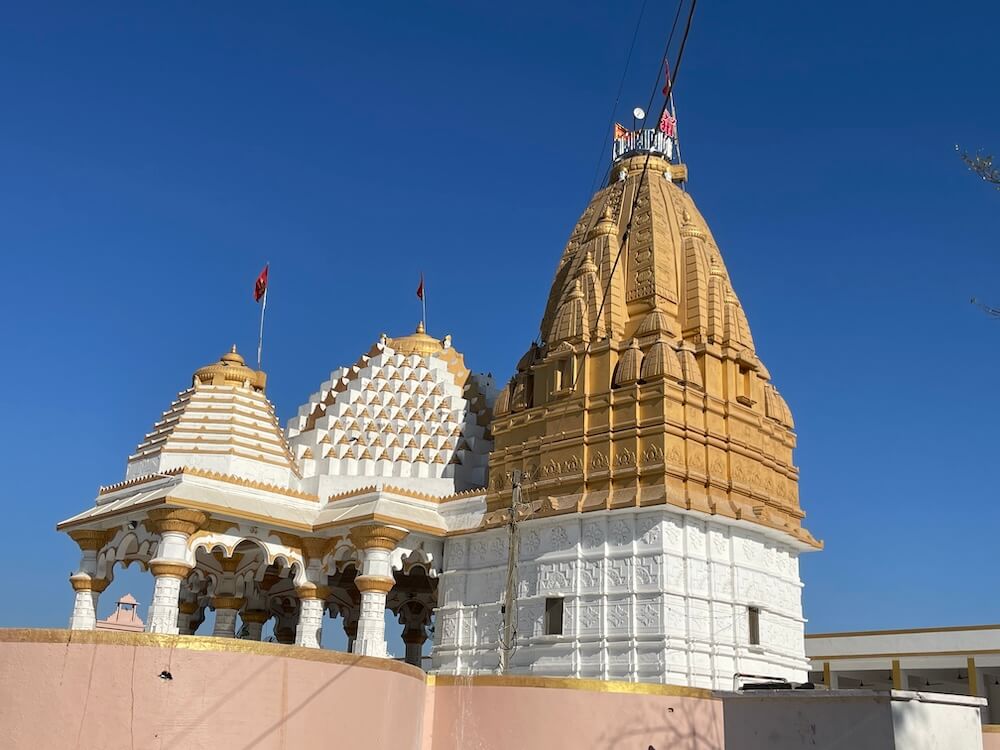
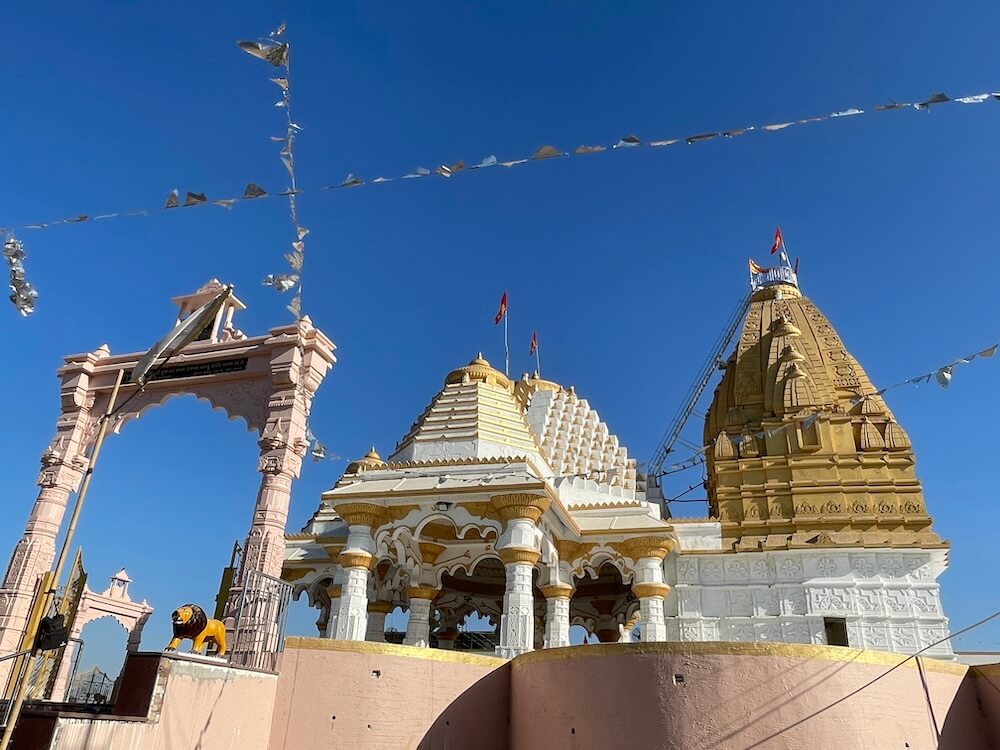
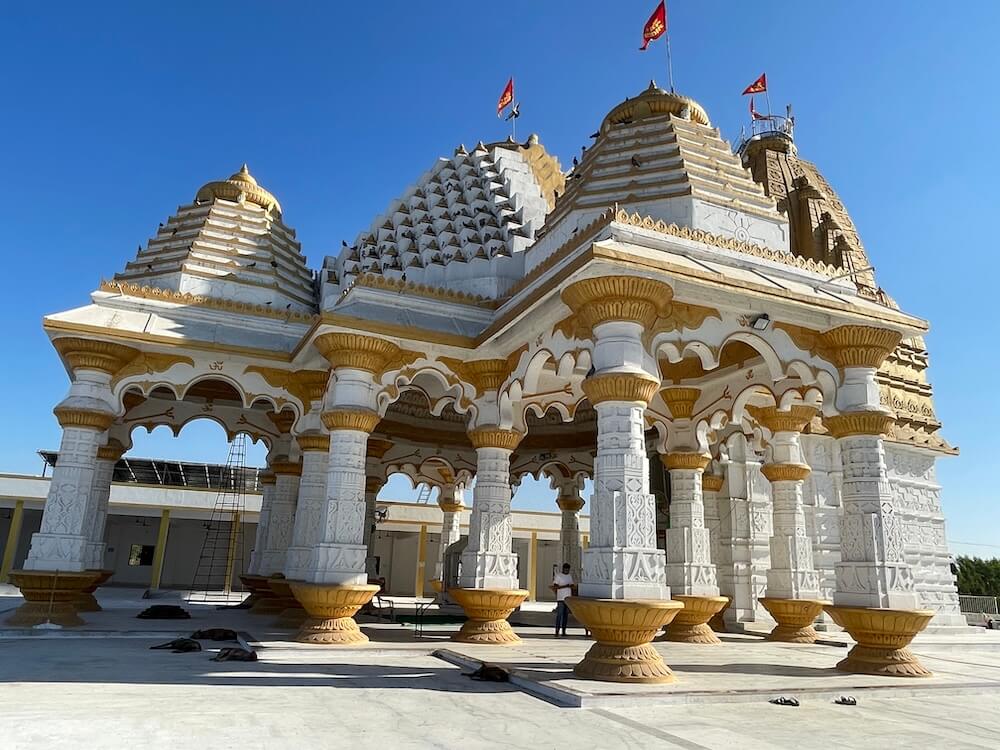
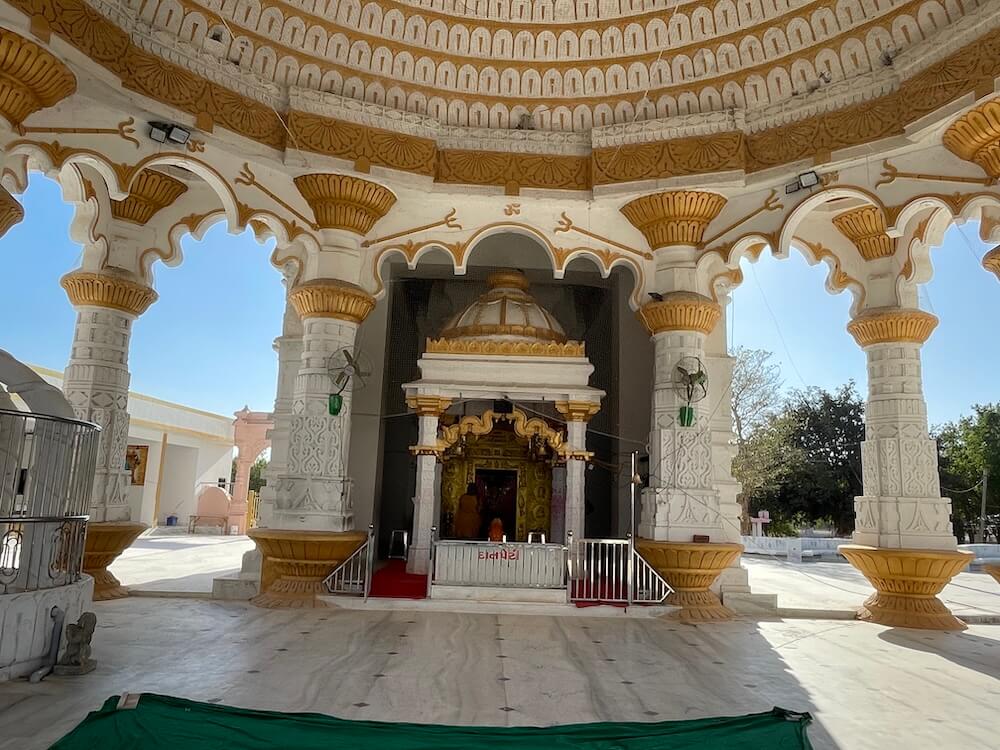
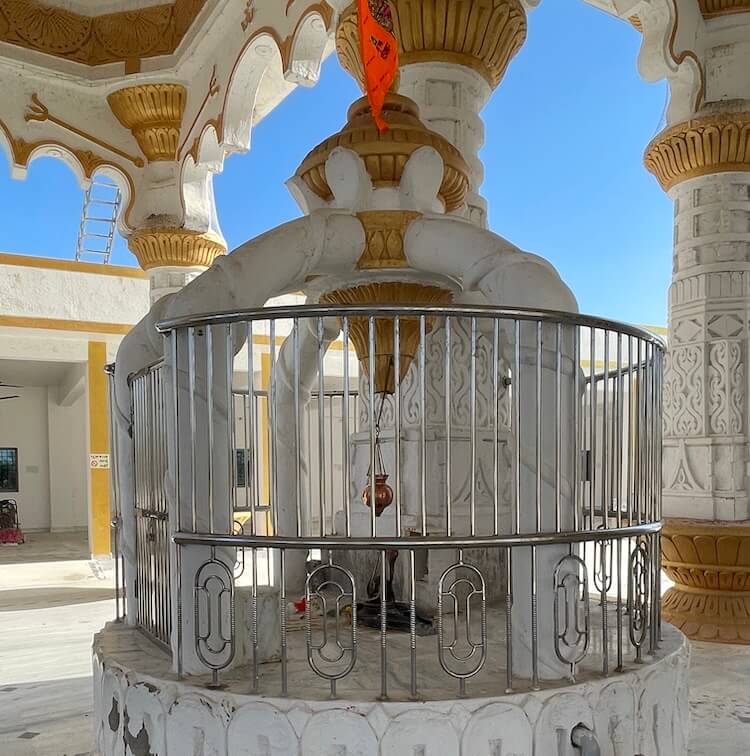
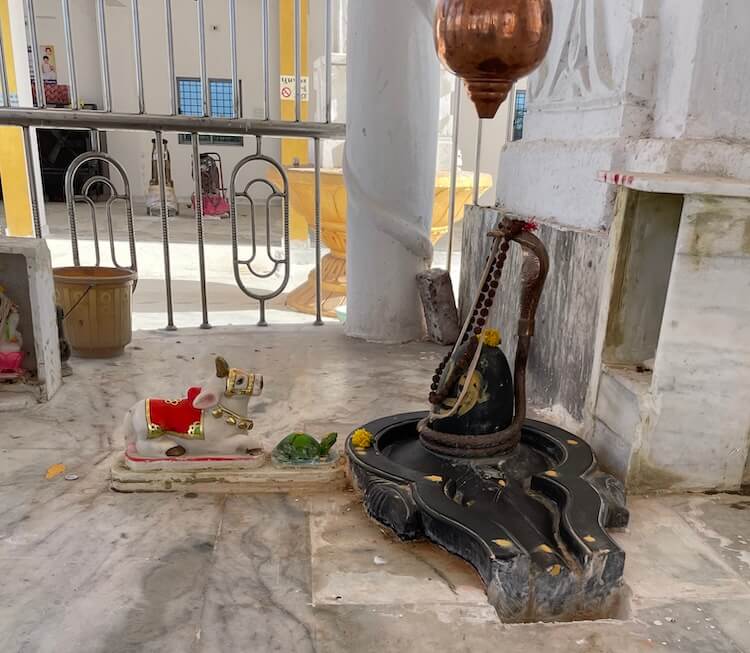
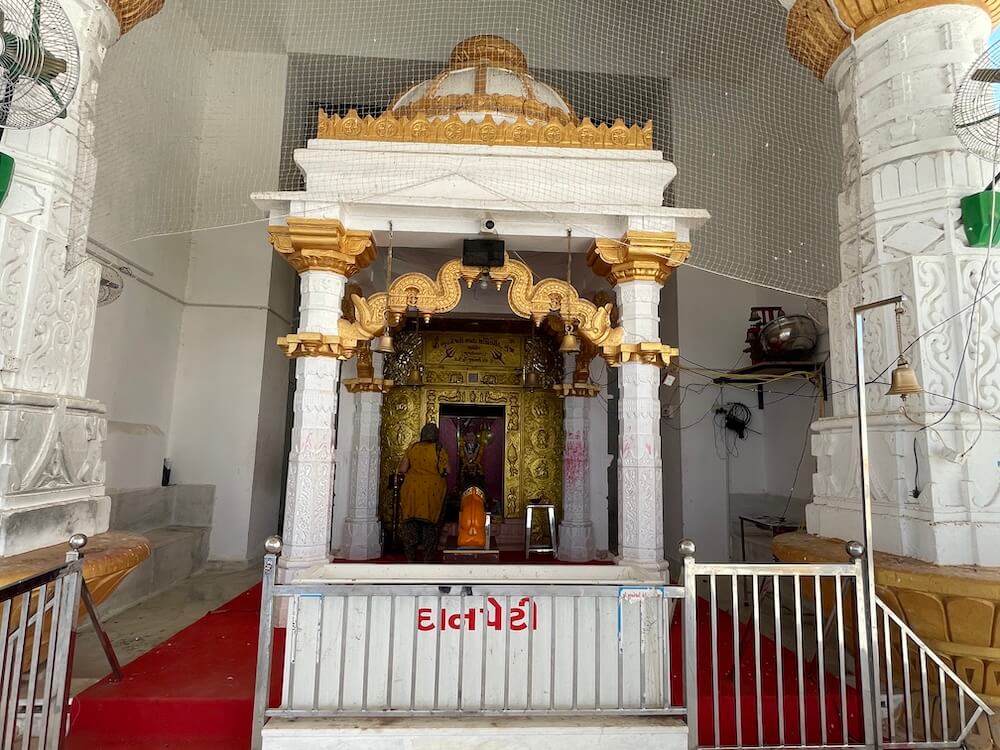
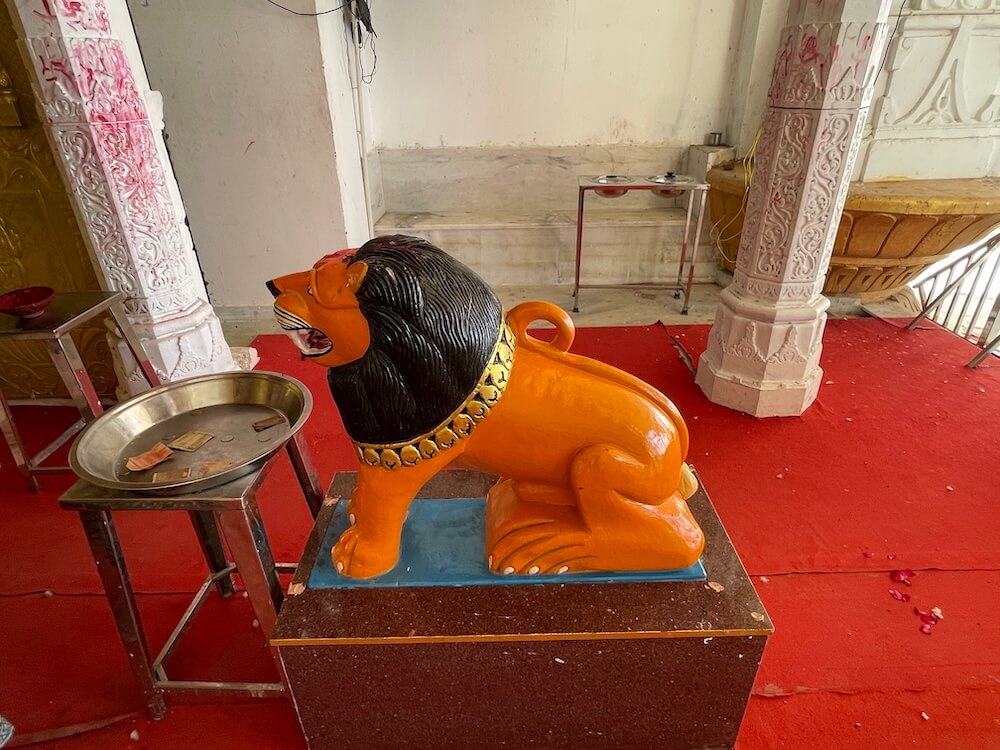
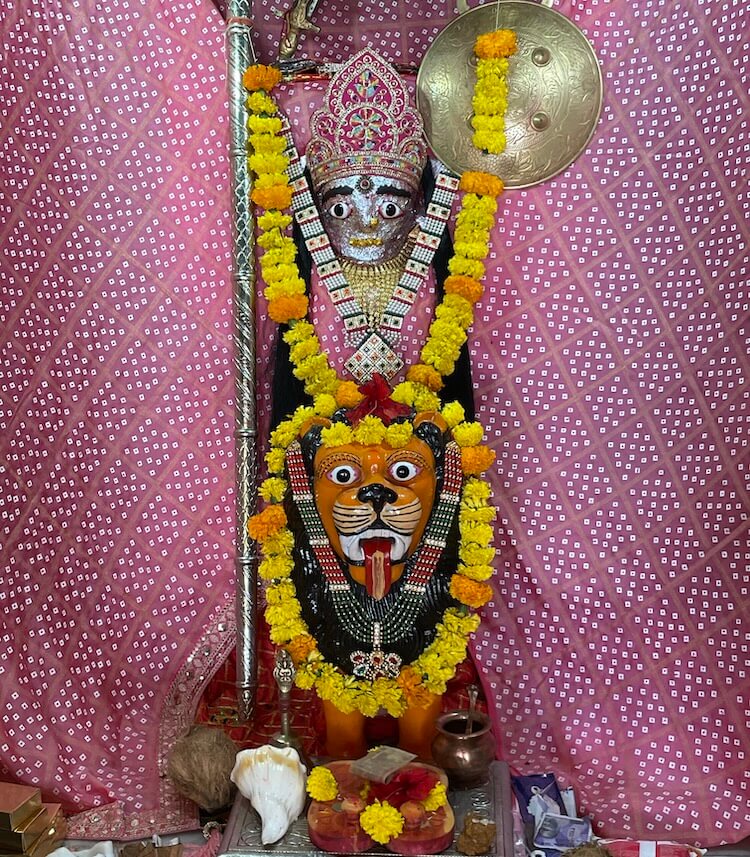
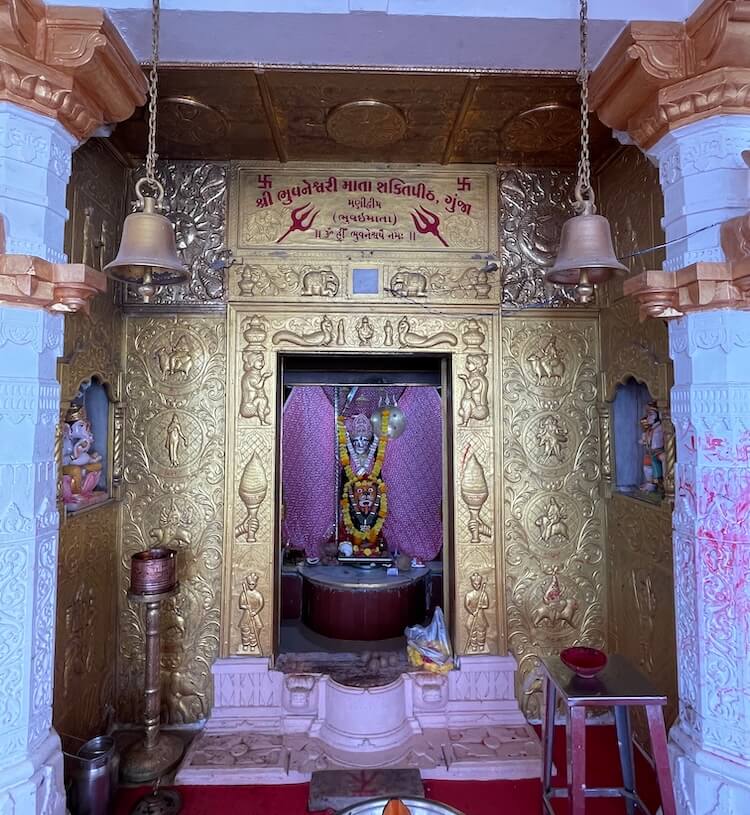
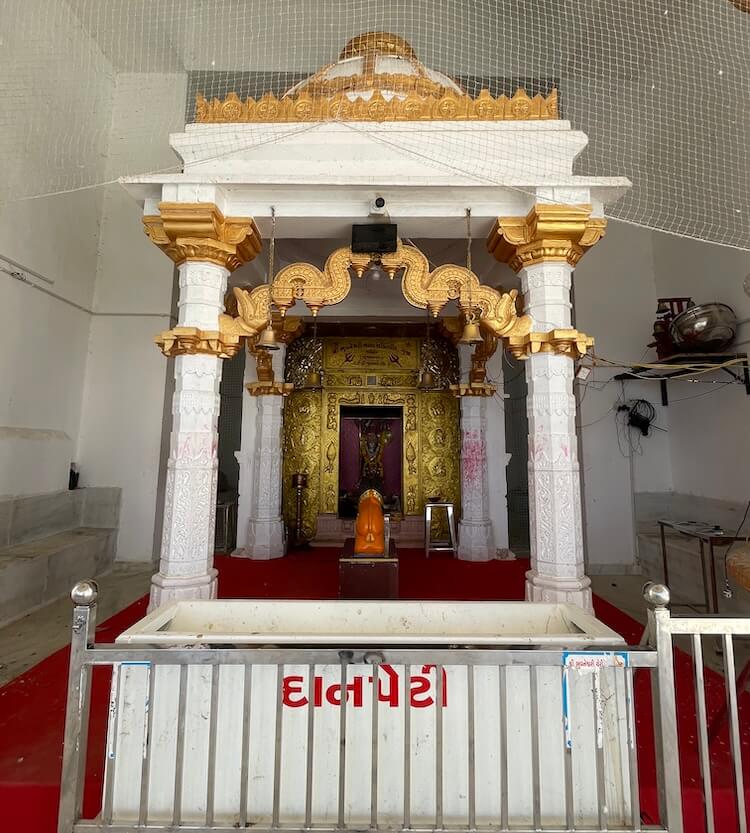
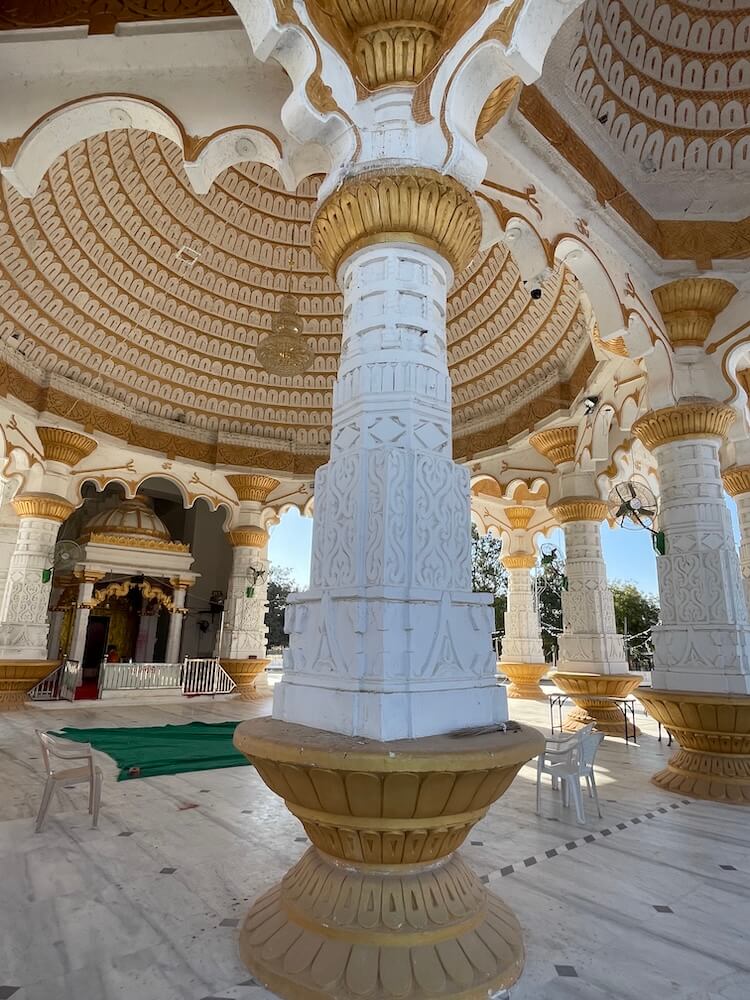
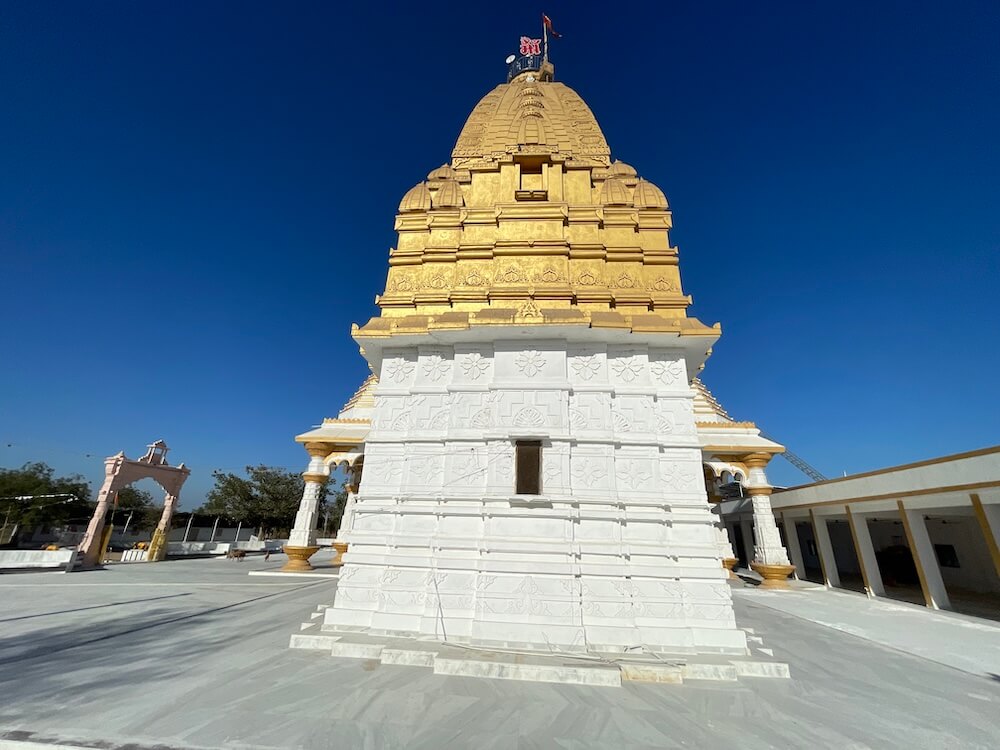
Located at the periphery of Gunja village, the temple complex is expansive. One enters the courtyard through a gate set within the surrounding fortified walls. Approximately fifteen steps lead to the elevated ‘Jagati’ (platform) of the temple. The architectural design follows the traditional pattern, consisting of three ‘Mukhamandapas’ (entrance porches), 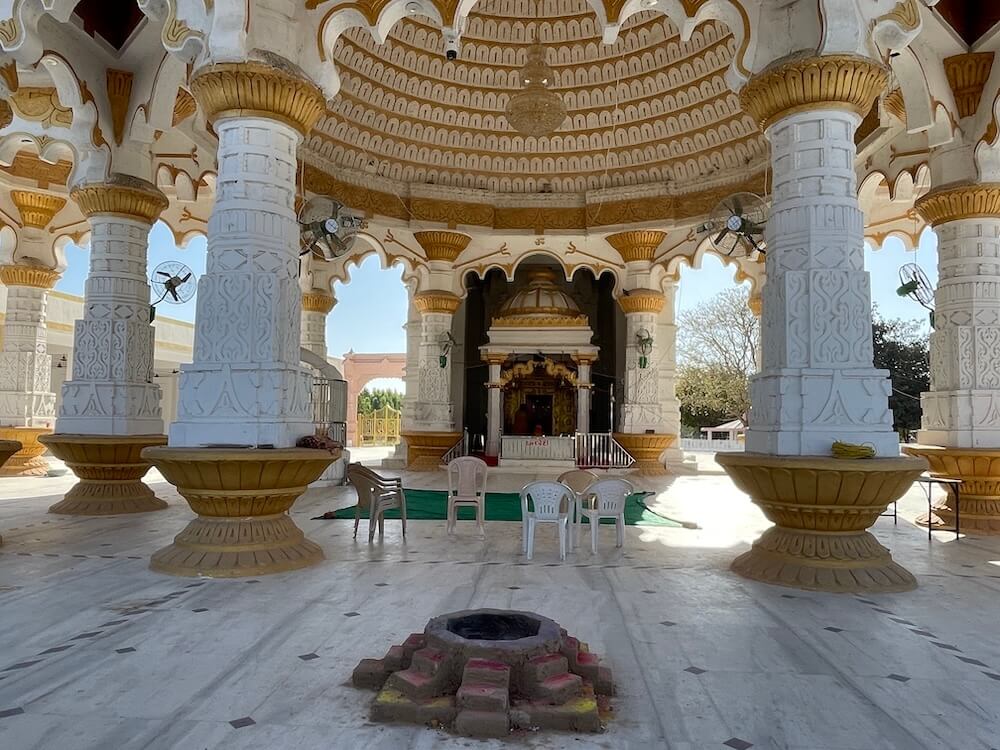 a ‘Sabhamandap’ (assembly hall), an ‘Antarala’ (vestibule) and the ‘Garbhagriha’ (sanctum sanctorum). The entrance and assembly halls are open structures, featuring pillars adorned with exquisite carvings and bases shaped like lotus petals. The ‘Sabhamandap’ houses a shrine dedicated to Lord Shiva, featuring a Shivalinga and Nandi. The ‘Antarala’ contains a ‘Simhamandap’ supported by four pillars, where a statue of the lion, the Goddess’s mount, is installed. The lintel of the sanctum is decorated with two peacocks and a central figure of Lord Ganesha, while the upper frieze depicts carved elephants. Inside the sanctum, a beautiful idol of the Goddess seated on a lion rests upon a ‘Vajrapitha’, adorned with a silver mask and crown. The main spire is in the ‘Urushringa’ style, embellished with numerous smaller replicas of it.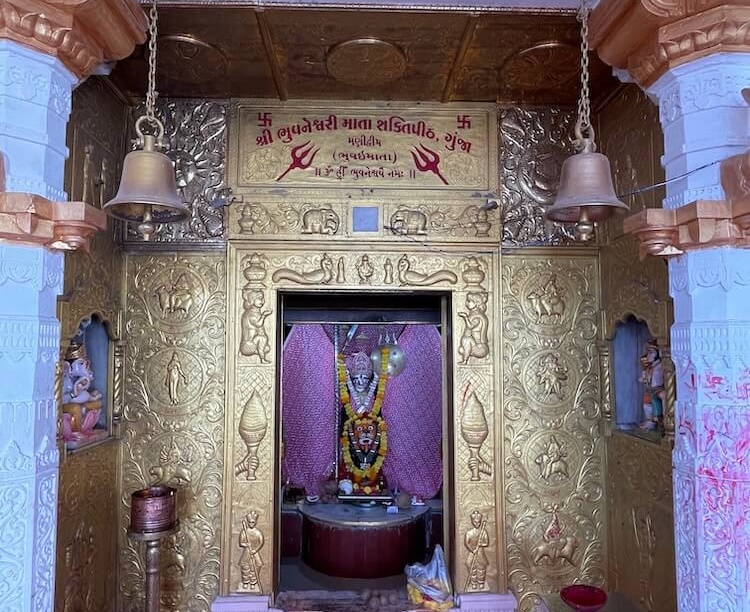
Every year, the residents of Gunja celebrate the ‘Aso’ (Ashwin) Navratri festival with great fervour. Along with the Autumnal Navratri, the Chaitra Navratri is also observed. A grand fair is held on ‘Aso Sud Atham’ (the eighth day of the bright half of Ashwin). The highlight of this celebration is the ‘Palli Festival’. The ‘Palli’ is a specially crafted wooden chariot carrying five lit lamps. The ancient tradition of anointing the Mother’s ‘Palli’ with pure cow’s ghee is still meticulously followed, with hundreds of kilograms of ghee offered on this single day. Devotees also offer ‘copper Garbas’ (pots) upon the fulfilment of their vows. During Makar Sankranti, the village hosts a unique folk festival called the ‘Gend Mela’, which is a cultural hallmark of the region. On Bhuvaneshwari Jayanti, recitations of the ‘Trailokya Mangal Kavach’ and ‘Bhuvaneshwari Kavach’ are performed.
Useful Information
- Located at 9 km from Visnagar and 34 km from Mehsana
- GSRTC bus services available from Visnagar and Mehsana
- Private vehicles can reach the temple premises
- Accommodation and breakfast facilities available in the vicinity
भुवनेश्वरी मंदिर
गुंजा, ताल. विसनगर, जिला. मेहसाणा
मंदिरे
Temples
मंदिर
-
वैजनाथ महादेव मंदिर महादेवपुरा (गावडा), ता. विजापूर, जि. मेहसाणा
अधिक माहितीVaijnath Mahadev Temple Mahadevpura (Gavada), Tal. Vijapur, Dist. Mehsana
View Detailsवैजनाथ महादेव मंदिर महादेवपुरा (गावड़ा), ताल. विजापुर, जिला. मेहसाणा
विवरण देखें -
वैजनाथ महादेव मंदिर सोखडा, तालुका विजापूर, जिल्हा मेहसाणा
अधिक माहितीVaijanath Mahadev Temple Sokhada, Taluka Vijapur, District Mehsana
View Detailsवैजनाथ महादेव मंदिर सोखाडा, तालुका विजापुर, जिला मेहसाणा
विवरण देखें -
काशी विश्वनाथ महादेव मंदिर मेहसाणा, जि. मेहसाणा
अधिक माहितीKashi Vishwanath Mahadev Temple Mehsana, Dist. Mehsana
View Detailsकाशी विश्वनाथ महादेव मंदिर मेहसाणा, जिला. मेहसाणा
विवरण देखें