
श्री राम / सर्वधर्म समन्वय मंदिर
मंगळेश्वर, ता./जि. भरुच
Shri Ram / Sarvadharma Samanvay Temple
Mangleshwar, Tal./Dist. Bharuch
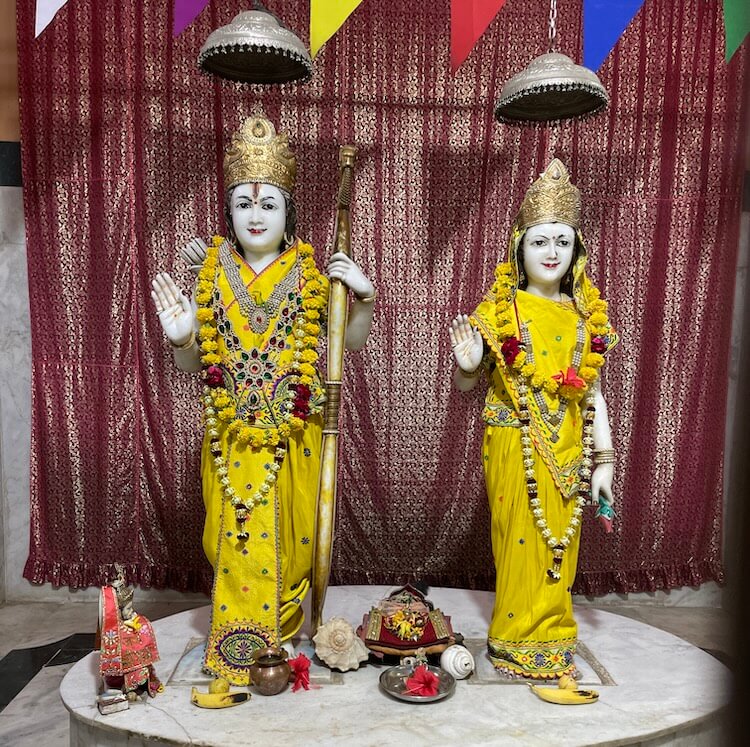 The Divine is a singular, universal principle. In the ‘Shrimad Bhagavad Gita’, Lord Krishna proclaims that Ishwara (the Supreme Lord) dwells within the hearts of all living beings. Every religion is essentially a quest for that same Divinity. Consequently, the ideology underpinning the concept of ‘Sarvadharma Samabhav’ (equal respect for all religions) is that all faiths are equivalent and truthful. Adhering to this noble philosophy and expressing profound reverence for all creeds, the ‘Shri Ram Sarvadharma Samanvay Temple’ is situated within the Bhardwaj Ashram of Swami Sampurnanand at Mangleshwar.
The various religious philosophies born of India’s sacred soil describe the Divine as an omnipresent entity. Since the same Ishwara resides in every heart, all of humanity is considered the progeny of the Divine. Although the paths of Sadhana (spiritual practice) to attain God may differ, they ultimately converge at the same destination. This philosophical outlook has made a deep-seated respect for other religions and sects a defining characteristic of Indian heritage. 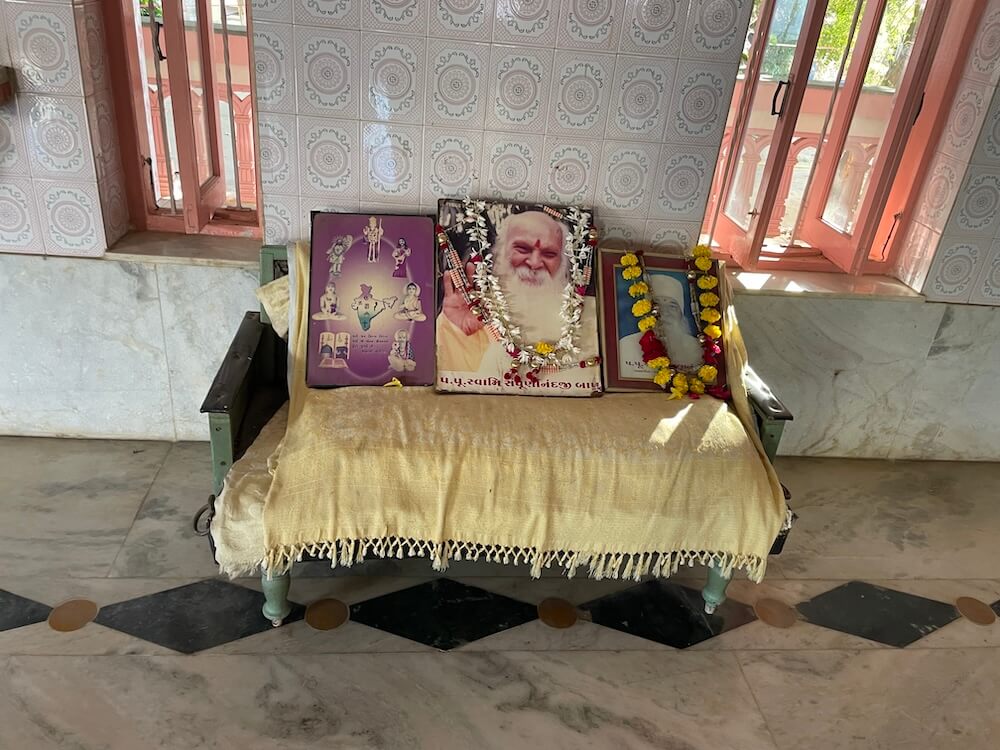 Numerous theologians have asserted that, at a spiritual level, all religions are equal. In 1893, Swami Vivekananda addressed the ‘World’s Parliament of Religions’ in Chicago, expounding the greatness of Hinduism to the world. He underscored the principle of fraternity by commencing his speech with the words, ‘Sisters and Brothers of America’.
In that very discourse, Swami Vivekananda declared, ‘I am proud to belong to a religion which has taught the world both tolerance and universal acceptance. We believe not only in universal toleration, but we accept all religions as true.’ Through these words, he highlighted the inherent tolerance of Hinduism. His guru, Ramakrishna Paramahansa, also advocated the harmony and synthesis of all faiths. In antiquity, saints like Kabir and, in historical times, Sai Baba of Shirdi, put this thought into practice.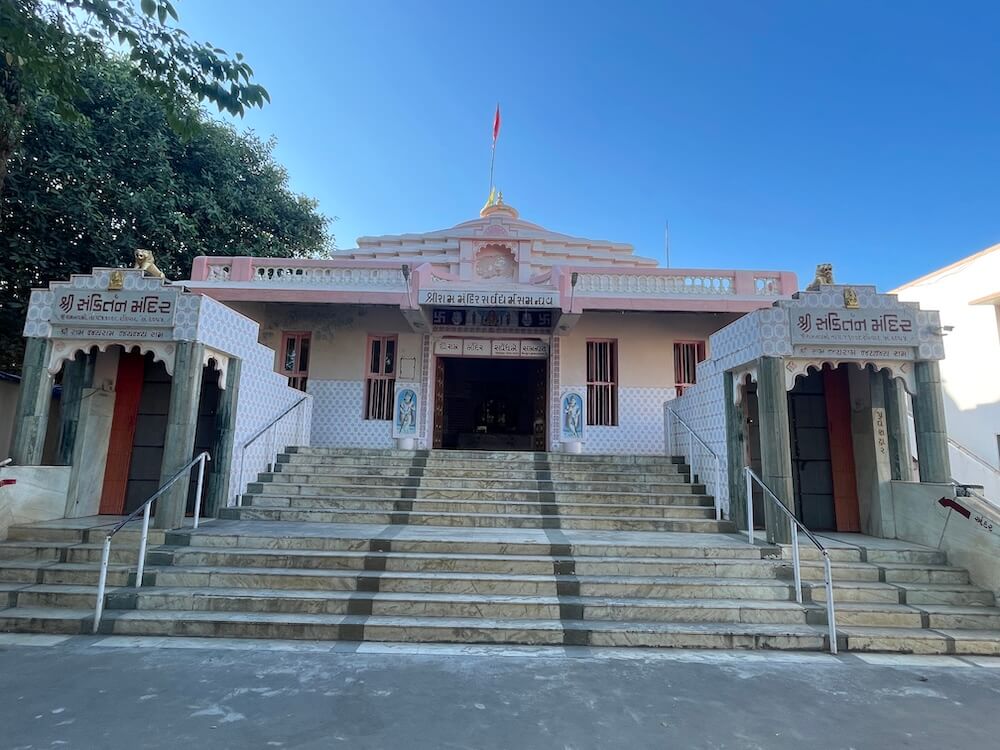 The Pranami Sampradaya (Nijanand Sampradaya), popular in Gujarat and Madhya Pradesh, also upholds the great principle of religious tolerance. Mahatma Gandhi, a son of Gujarat’s soil, taught through his life that there should be tolerance and equality towards all religions. It is said that his thoughts were shaped by the values of the Vaishnav and Pranami sects prevalent in Gujarat. Sant Dada Bhagwan of Gujarat also taught that there should be mutual respect for all faiths. His teaching states, ‘People have divided God and religion. Rather than choosing just one God, we should understand and practice the core principles of all religions. All deities have told us the importance of the Atma (soul) and Atmasakshatkar (self-realisation).’ He built many temples based on these ideas. In modern times,
  Swami Sampurnanand carried this legacy forward through the Sarvadharma Samanvay Temple.
The early history of Swami Sampurnanand Bapu remains elusive. He never mentioned his pre-monastic name or birthplace. However, his conversations often alluded to his education at the Banaras Hindu University. It is recounted that in his youth, he was greatly fascinated by the occult sciences. He once observed a yogi performing feats such as consuming glass and blades. Seeing the public acclaim, Sampurnanand desired to learn such arts. After completing his college education, he met the yogi, who accepted him as a disciple. However, the master resolved to impart divine knowledge instead of trivial feats. He sent Sampurnanand to the Hanuman Temple at Gopal Guha in Devprayag, 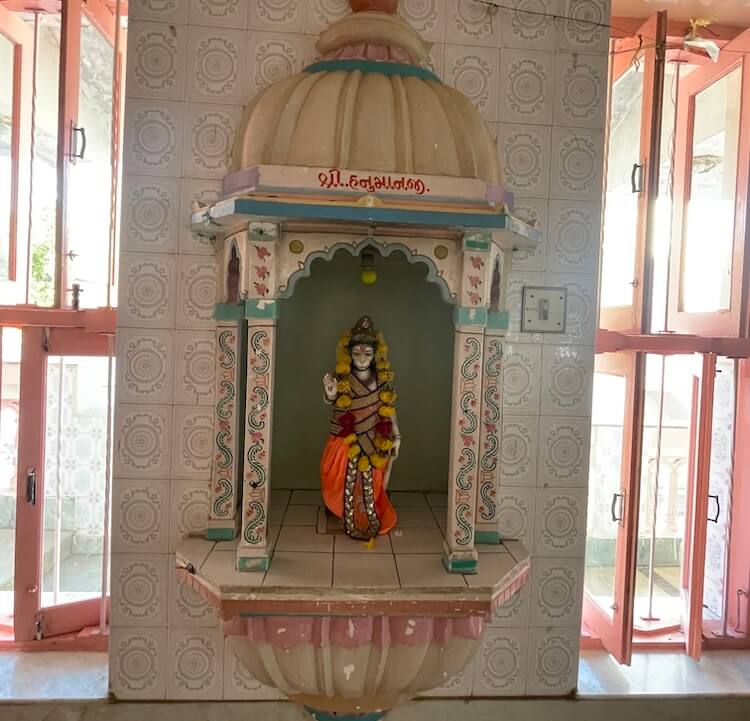 Himalayas. There, as per his guru’s instructions, Sampurnanand chanted the Gayatri Mantra for nearly seven to eight years. When his spiritual queries remained unanswered, he sought out other sages, including Swami Sivananda of the Divine Life Society in Rishikesh, the perfected saint Kali Kamliwale and Tapovanji of Punjab. After several years, he met Nima Guruji, who sent him to Vrindavan to recite the Vishnu Sahasranama and study the Bhagavad Gita. The philosophical tenets of the Gita fortified Swami Sampurnanand’s spiritual foundation.
While wandering in search of truth, he met an eminent saint on 14 January 1954. Though he never named this master, he credited this encounter as the true beginning of his spiritual journey. Following the saint’s command, he renounced his garments, took a vow of silence and travelled across India as a Digambar (sky-clad) ascetic. In 1972, he arrived in Gujarat. While travelling the route from Ahmedabad to Wadhwan-Surendranagar, he sat near a water tank by an electrical sub-station. Distressed by his ascetic appearance, 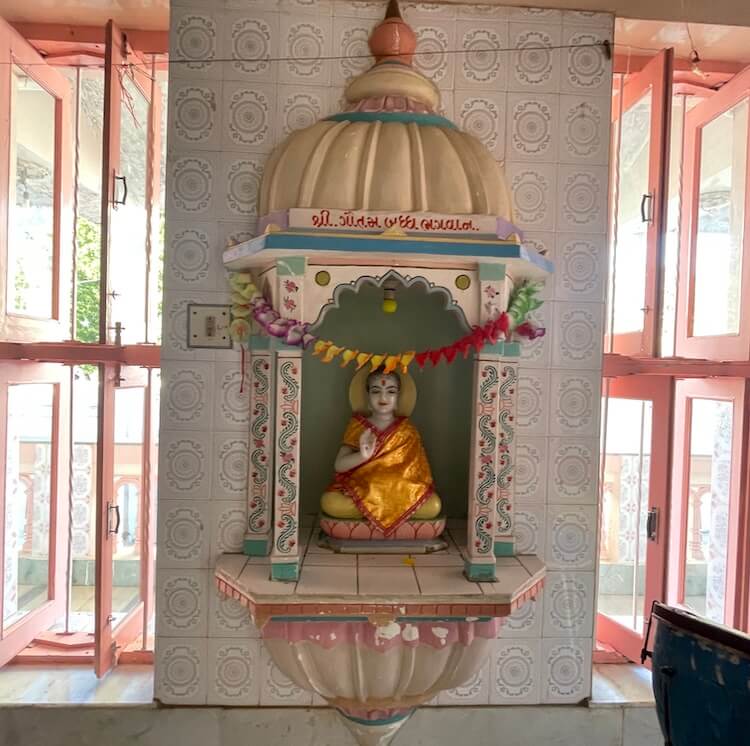 some locals harassed him, causing his head to bleed. In this state, a devotee named Kishorbhai Trivedi found him. As Sampurnanand was in Mauna (silence), they communicated through gestures. Kishorbhai invited him to Wadhwan, where, at the ‘Popatbhai Sant Kutir’ on the banks of the Bhogavo river, the Swami began his Satsang (spiritual discourse), communicating with devotees by writing on a chalkboard. After
travelling to Kuwadva and Bamandore, he eventually reached Mangleshwar village on the banks of the Narmada. He established the Bhardwaj Ashram on land near the cremation ghat. Here, he initiated Dolubha Darbar, who became known as Gopalanand. Gopalanand developed the ashram and, in 1999, constructed the Sarvadharma Samanvay Temple.
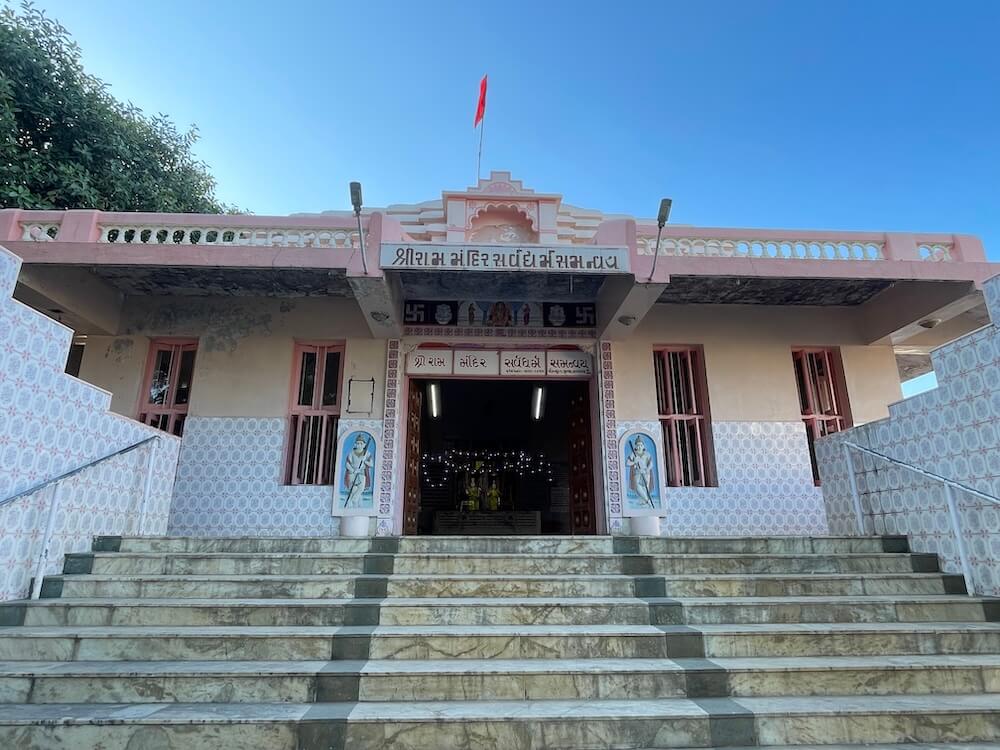
The Bhardwaj Ashram is nestled in a scenic locale on the banks of the Narmada river. The ashram features two entrance arches, with an idol of Hanuman enshrined atop the taller gateway. 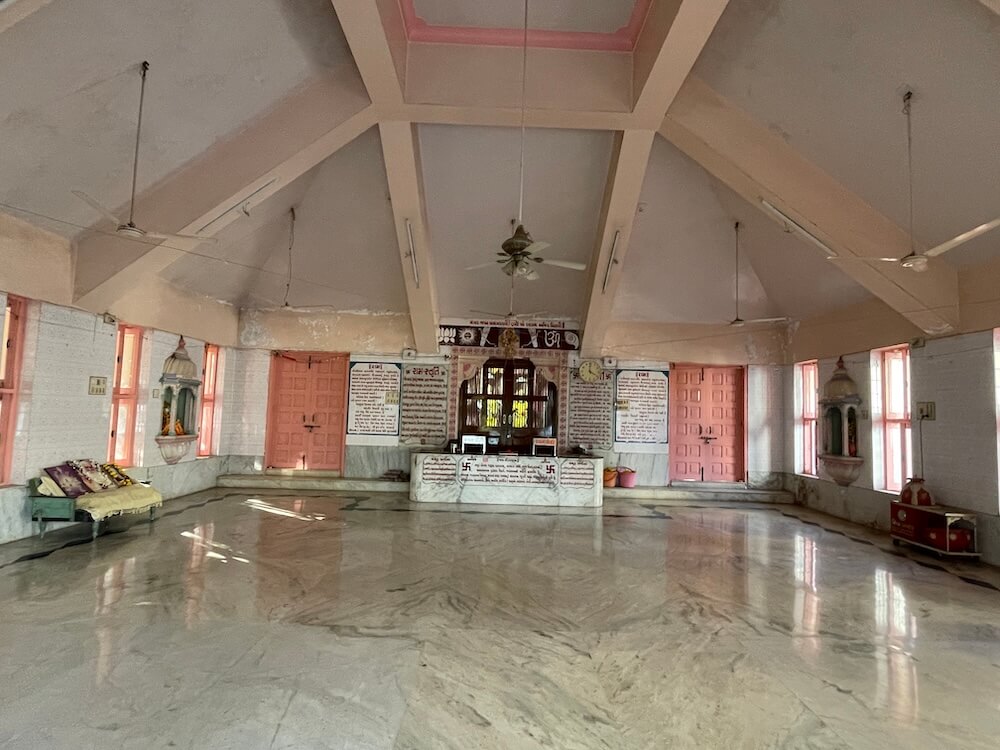 A short distance ahead stands the magnificent temple, bearing a board that reads ‘Shri Ram Mandir – Sarvadharma Samanvay’. The temple is constructed upon a high Jagati (plinth). Beneath the main shrine lies the Shri Sankirtan Temple. Thirteen steps lead up to the main temple, flanked by entry and exit paths for the Sankirtan hall. Brass idols of Ganesha and lions adorn the porches of these paths.
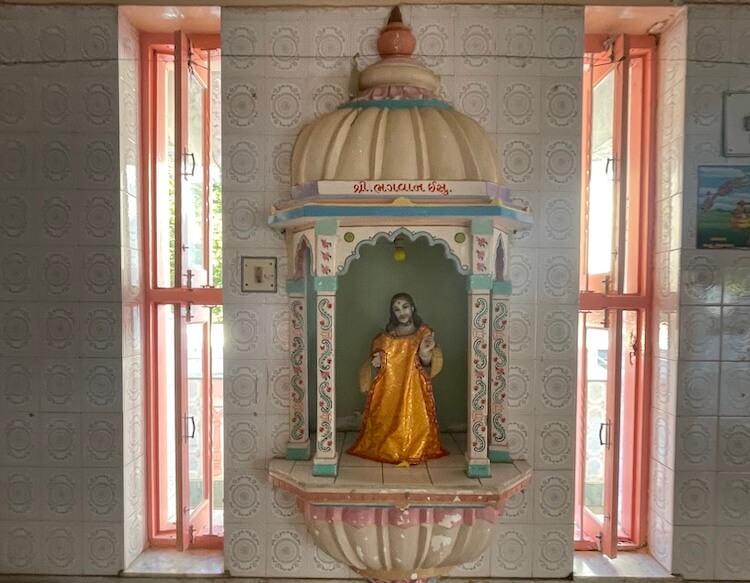
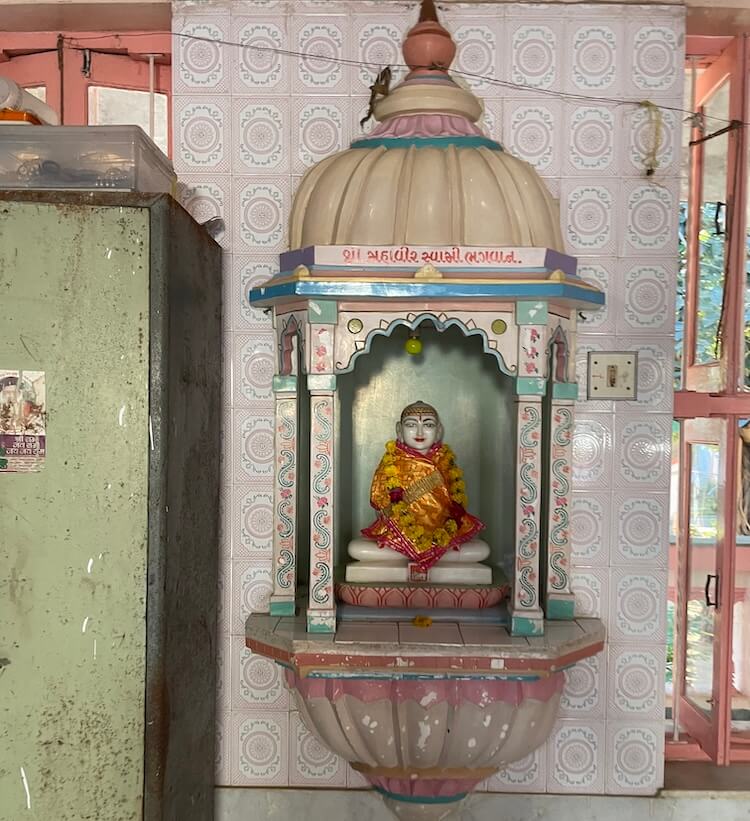
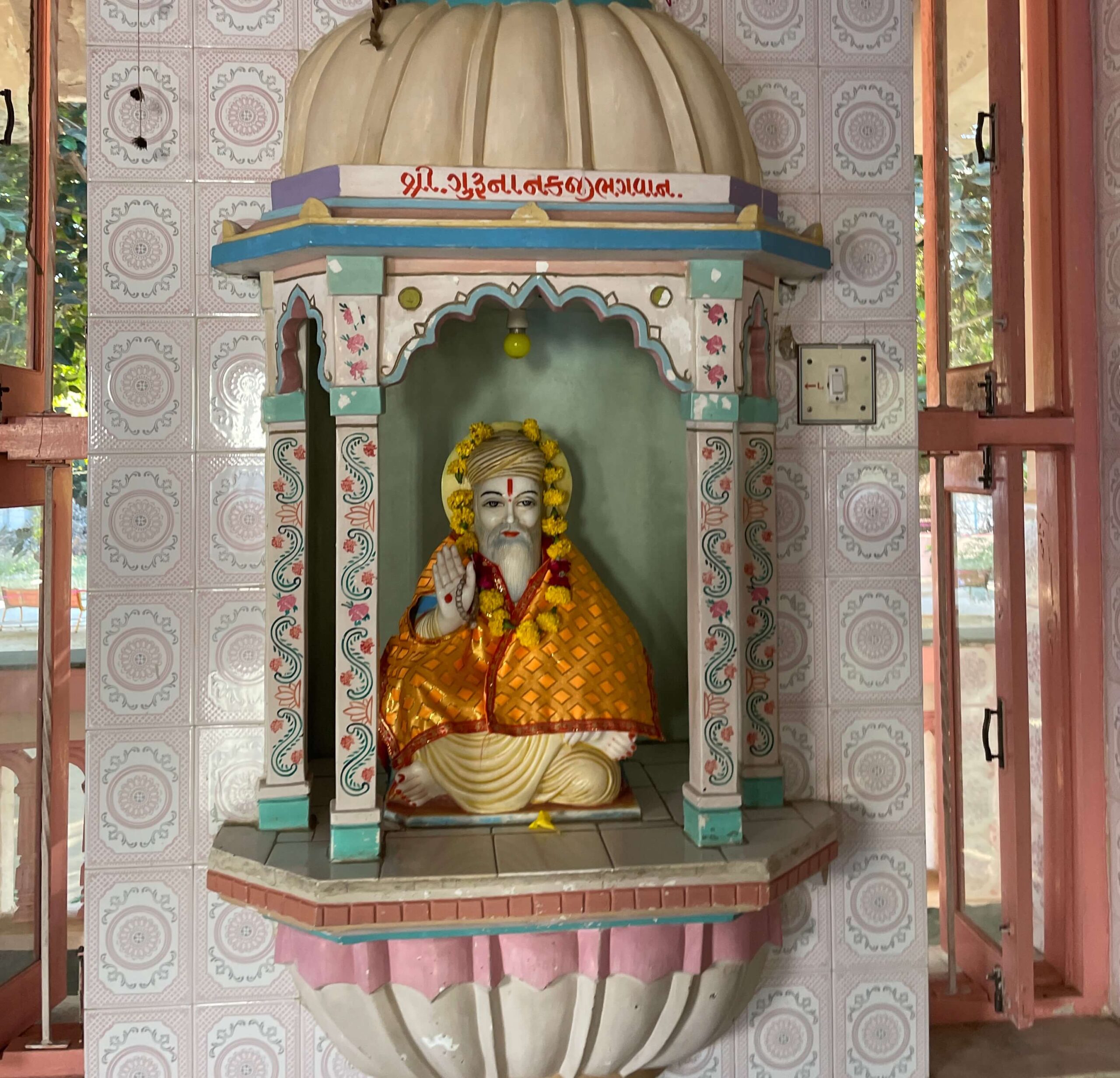
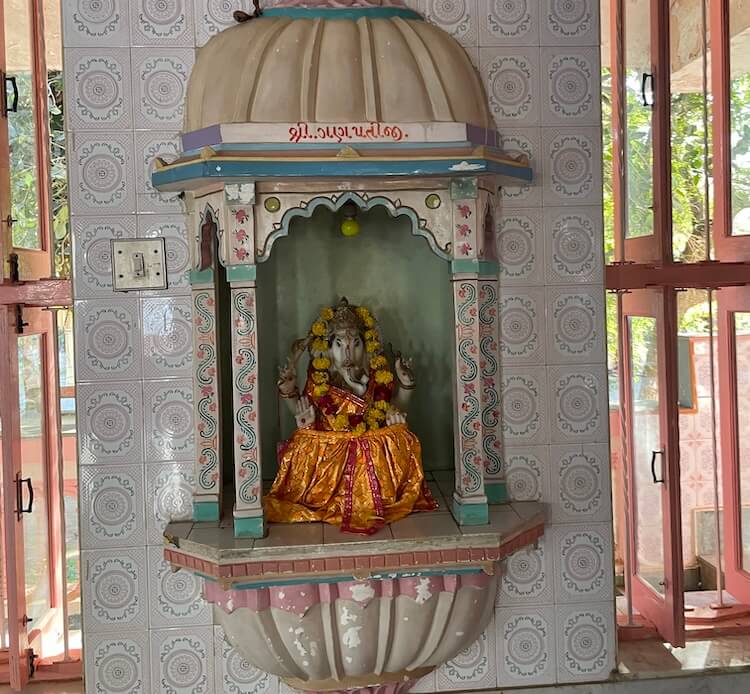
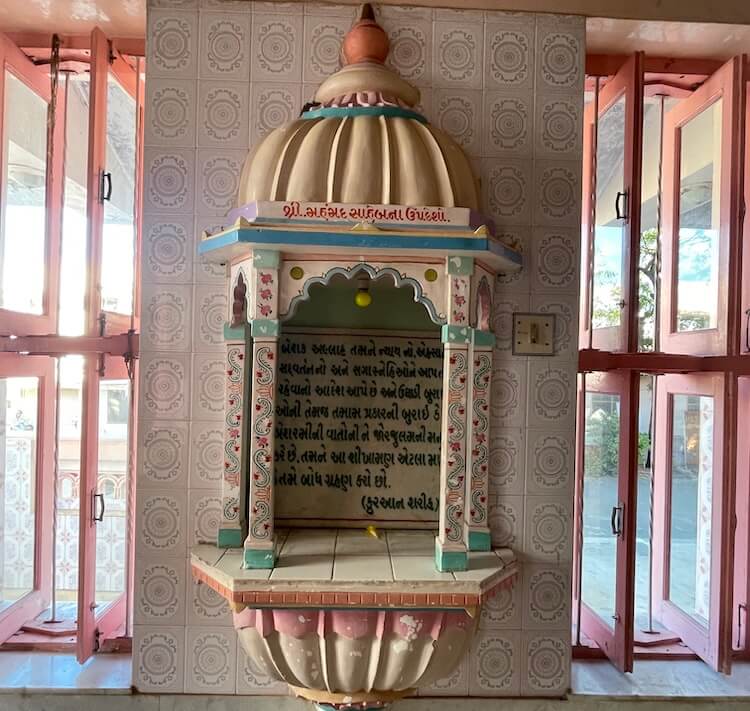
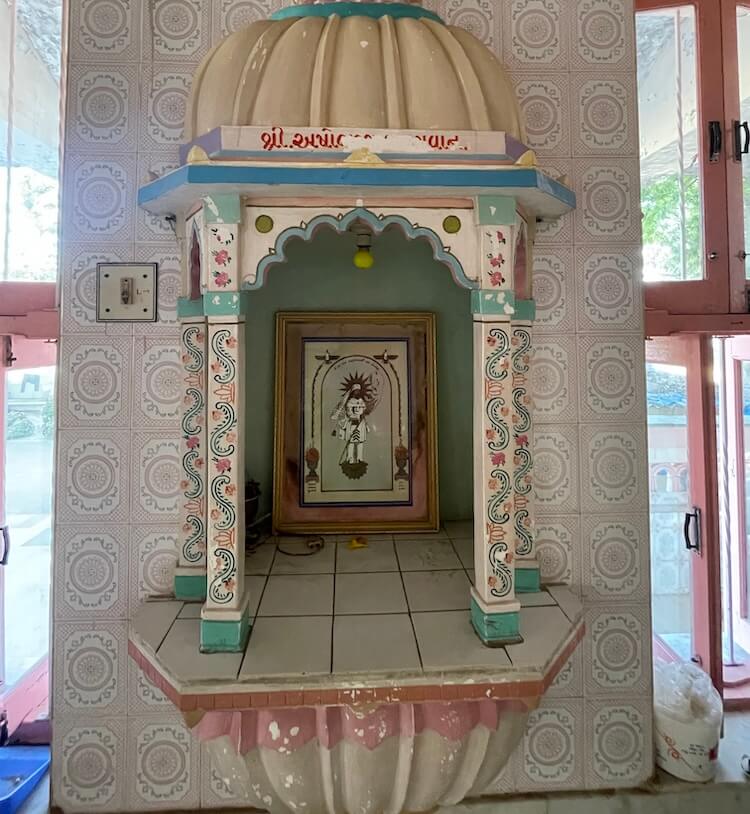
The architectural form of the Shri Ram – Sarvadharma Samanvay Temple consists of a Sabhamandap (assembly hall) and a Garbhagriha (sanctum sanctorum). Elaborate sculptures of Dwarpals (gatekeepers) guard the entrance to the hall. The Sabhamandap is spacious, with marble flooring and decorative niches along the walls. These niches house marble idols of Gautama Buddha (founder of Buddhism),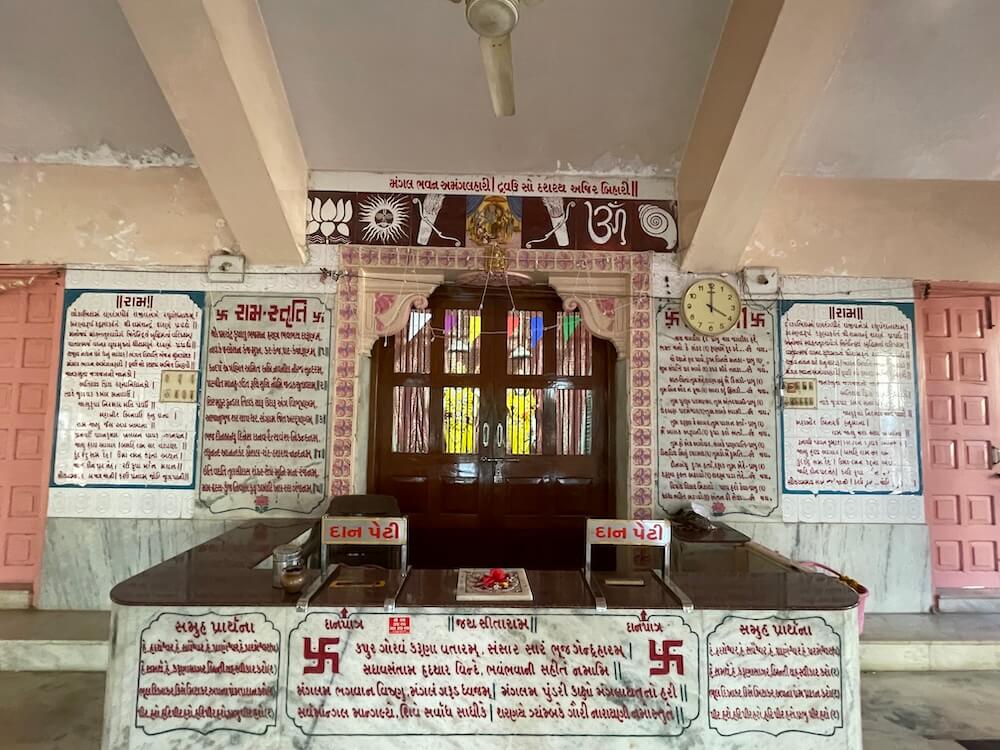 Lord Mahavira (founder of Jainism), Guru Nanak (founder of Sikhism) and Jesus Christ (founder of Christianity). Similarly, one niche contains a portrait of Zoroaster, the founder of the Parsi faith. As idol worship is prohibited in Islam, one niche features an inscription of a verse from the Quran Sharif as a symbol of Prophet Muhammad. This is Verse 16:90 from Surah An-Nahl, which states: ‘Indeed, Allah commands justice, grace, as well as generosity to close relatives. He forbids indecency, wickedness and aggression. He instructs you so perhaps you will be mindful.’ The hall also enshrines idols of Ganesha and Hanuman. To the left, photographs of Swami Sampurnanand Bapu and his disciple Gopalanand are placed upon a pedestal, alongside a map of India which has portraits of the nation’s major religious founders.
 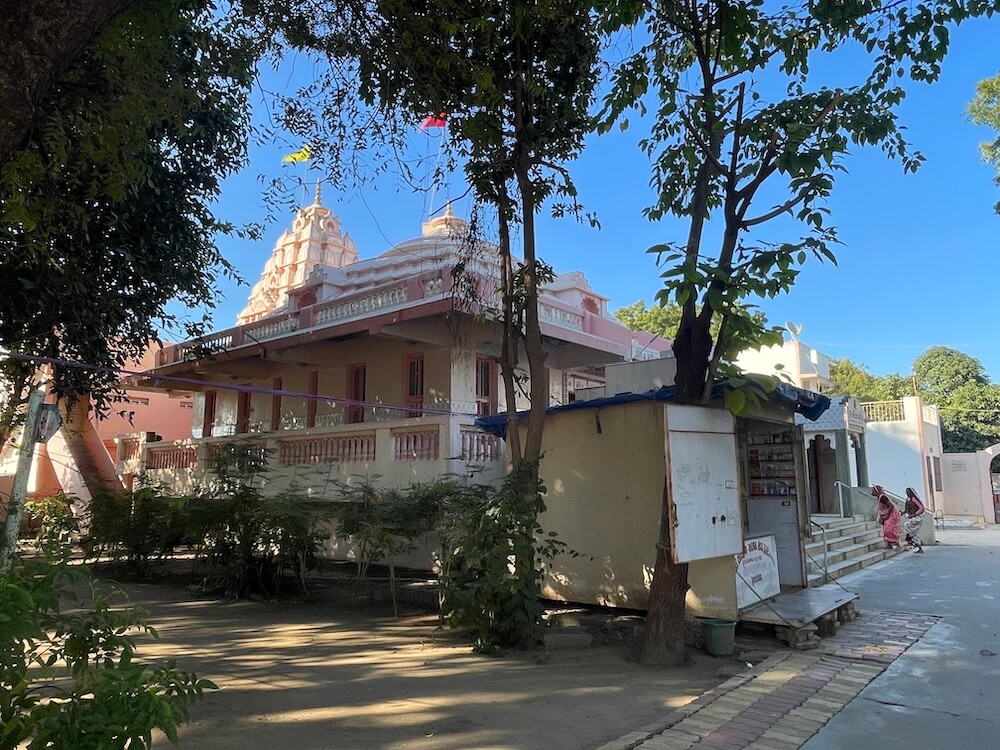 An idol of Ganesha graces the lintel of the sanctum entrance. Inside, upon a central circular pedestal, stand the marble idols of Shri Ram and Sita in the ‘Abhaya Mudra’, adorned with silken clothes and floral garlands, beneath a silver canopy. A small idol of Hanuman sits nearby. The temple’s assembly hall is topped with a large pyramid-shaped spire, while the sanctum features a soaring Urushringastyle spire. A circular Amalaka (stone disc) and a tall Kalash (pinnacle) crown the spire, beside which the Dharmadhvaja (religious flag) flutters.
The Bhardwaj Ashram also houses a grand Samadhi temple for Sant Sampurnanand, where his marble idol is enshrined within an open sanctum at the centre of a vast hall. An idol of Gopalanand Maharaj is also consecrated here. Additionally, the ashram comprises the Sampurnanand Memorial Temple and the large Shri Ram Bhojanalaya building. The ashram manages a Goshala (cowshed) and provides lodging and board for Narmada Parikramavasis (pilgrims performing the Narmada circumambulation).
Main Features :
- 15 km away from Bharuch
- ST (State Transport) bus facility available from Bharuch
- Private vehicles can reach up to the parking
- Accommodation and breakfast facilities are available in the vicinity
- Contact : Temple Office, Phone : (02642) 281416, 697870
श्री राम/सर्वधर्म समन्वय मंदिर
मंगलेश्वर, ताल./जिला. भरूच
मंदिरे
Temples
मंदिर
-
कोटेश्वर महादेव मंदिर कदोद, ता. भरुच, जि. भरुच
अधिक माहितीKoteshwar Mahadev Temple Kadod, Tal. Bharuch, Dist. Bharuch
View Detailsकोटेश्वर महादेव मंदिर कडोद, ताल. भरूच, जिला. भरूच
विवरण देखें -
धर्मेश्वर महादेव मंदिर धर्मशाळा-झानोर, ता. भरुच, जि. भरुच
अधिक माहितीDharmeshwar Mahadev Temple Dharmashala-Jhanor, Tal. Bharuch, Dist. Bharuch
View Detailsधर्मेश्वर महादेव मंदिर धर्मशाला-झानोर, ताल. भरूच, जिला. भरूच
विवरण देखें -
साईबाबा मंदिर रामवाटिका सोसायटी, झाडेश्वर, ता./जि. भरुच
अधिक माहितीSai Baba Temple Ramvatika Society, Zadeshwar, Tal./Dist. Bharuch
View Detailsसाईं बाबा मंदिर रामवाटिका सोसायटी, जादेश्वर, ताल./जिला. भरूच
विवरण देखें