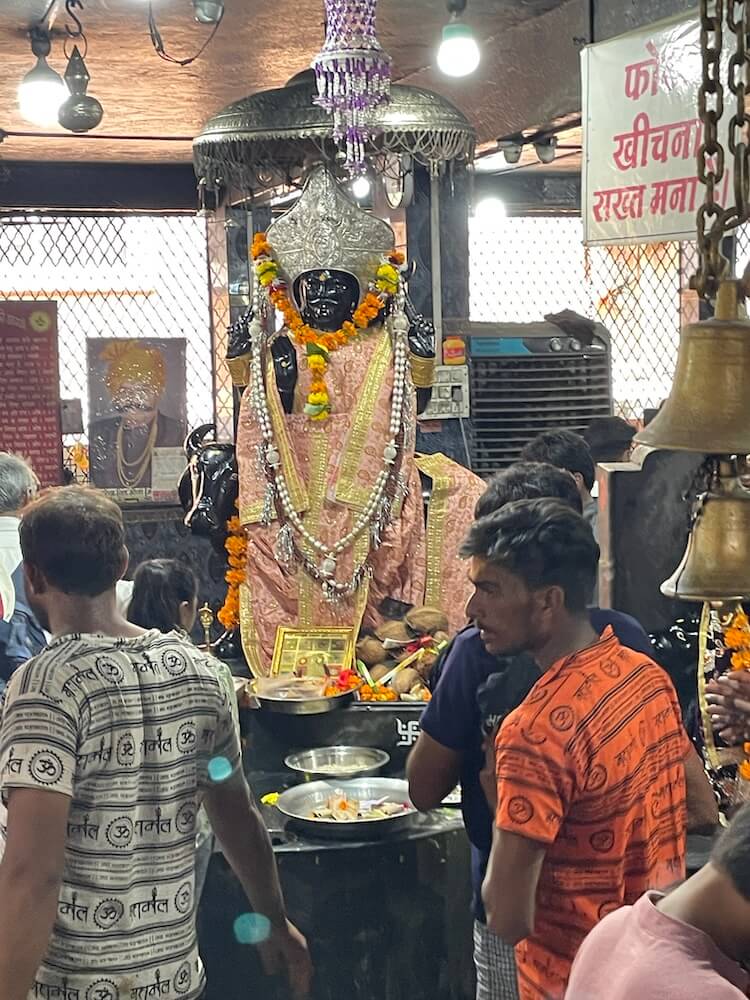
 Shani is that singular deity whom people propitiate so that he may refrain from afflicting their zodiac sign, for Shani is regarded as an intense and formidable god. Devotees believe that neglecting him invites hardship. Across Madhya Pradesh and indeed throughout India, villages are dotted with temples to Shani. Among them stands a grand shrine at Bai Gram in the Vindhyachal hills, a place that is claimed to be the largest Shani temple in the world. Here, along with Shani, the images of all nine planetary deities (the Navagrahas) have been installed.
The Skanda Purana tells the story of Shani as the son of Surya, the Sun. Daksha’s daughter Sanjna was Surya’s wife, but unable to bear his blazing radiance she left him and went away. Before departing, by the power of austerity she gave human form to her own shadow, naming her Chhaya and entrusted her children – Vaivasvata Manu, Yama and Yamuna – to Chhaya’s care. In time, Chhaya bore two sons and a daughter by Surya, named Manu, Shani and Bhadra (also known as Tapi or Tapti). Another legend says Chhaya was a devotee of Shiva. While Shani was in her womb she immersed herself so deeply in penance that she paid no heed even to food. The intensity of her prayer touched the child and he became dark of complexion. Seeing his son so dark, Surya suspected Chhaya’s fidelity and insulted her. Shani could not bear his mother’s humiliation.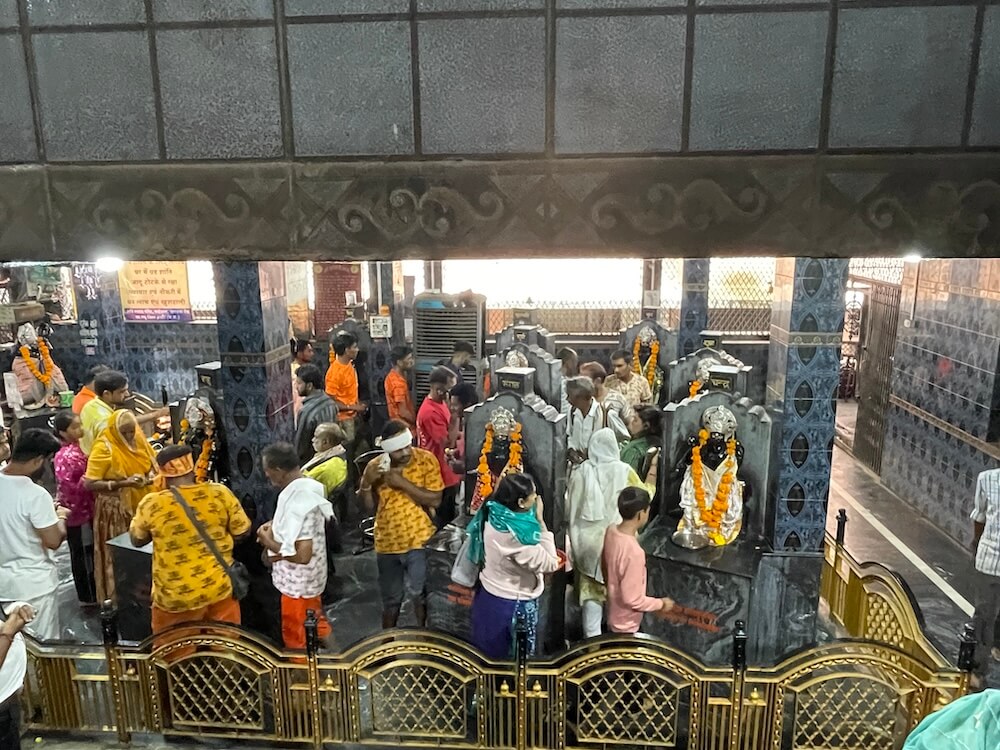 He cast such a fierce gaze upon his father that Surya’s body grew seared and blackened and the horses of his chariot halted. As the order of creation faltered, the gods appealed to Shankara. Shiva advised Surya to seek Shani’s forgiveness and when Surya repented, Shani restored his former radiance and the vigor of his steeds. The very name Shani means one who moves slowly. He takes about thirty years to circumambulate the Sun and is also called Manda. In the ‘Shanaishchara Stotra’ attributed to Poet Dasharatha, he is invoked by many names, like Konantaka, Raudra, Prabhu, Krishna, Pingala and Sauri. His vehicle is chiefly the horse, though at times a kite or a pigeon is also mentioned.
People fear Shani’s ‘sade-sati’, a concept of predictive astrology. Shani remains roughly two and a half years in each zodiac sign. When sade-sati befalls a person, Shani spends two and a half years in the sign before the person’s own sign,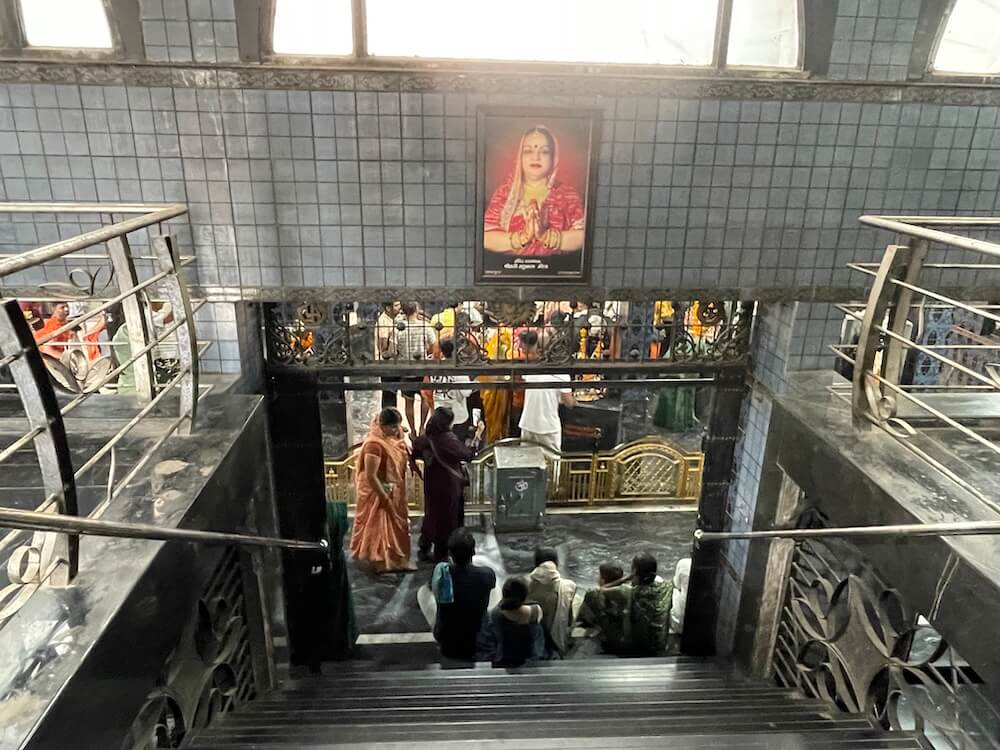 two and a half in the person’s sign and two and a half in the following sign, thus seven and a half years of influence in all.Tradition even tells that the mighty demon-king Ravana met his end under the sway of sade-sati.
The story of this temple’s origin is thus – A wealthy woman named Madhubala Surendrasingh Meena of Jaipur had her in-laws in Bai Gram. Wishing to provide for pilgrims, she resolved to build a large dharmashala here. During the excavation for that hostel, a stone idol of Shani was unexpectedly unearthed. Madhubala consulted many scholars and religious authorities and the final counsel was to build – at that very spot – not a hostel but a magnificent temple to Shani Dev. About two crore rupees were spent in raising the shrine and on April 27, 2002, the grand image of Shani Dev was ceremonially consecrated.
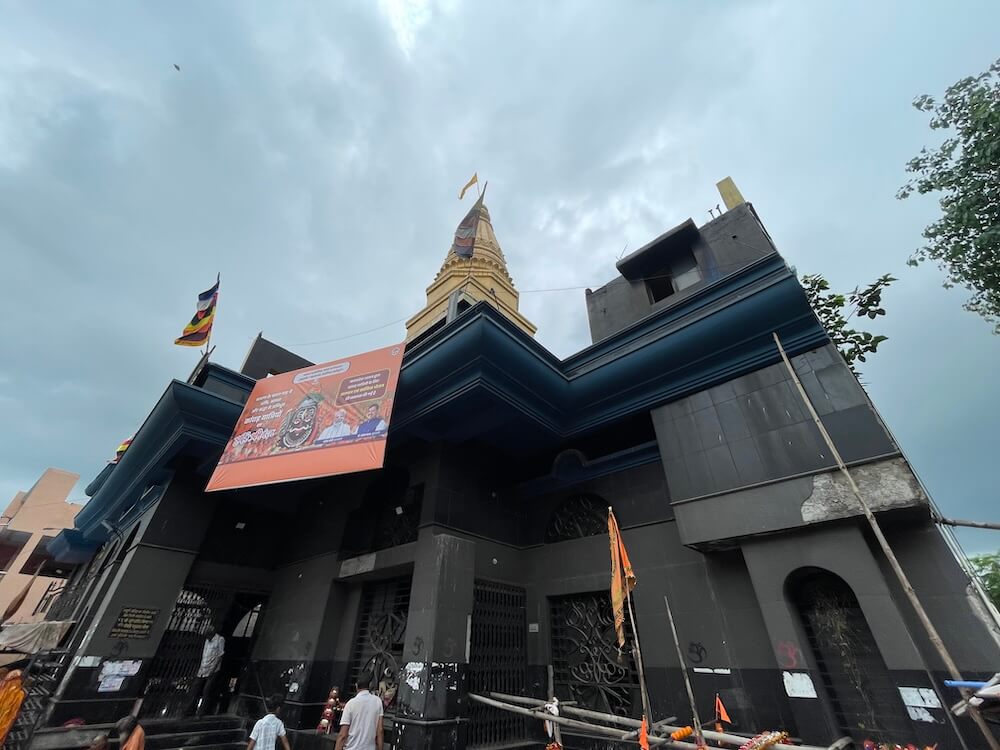
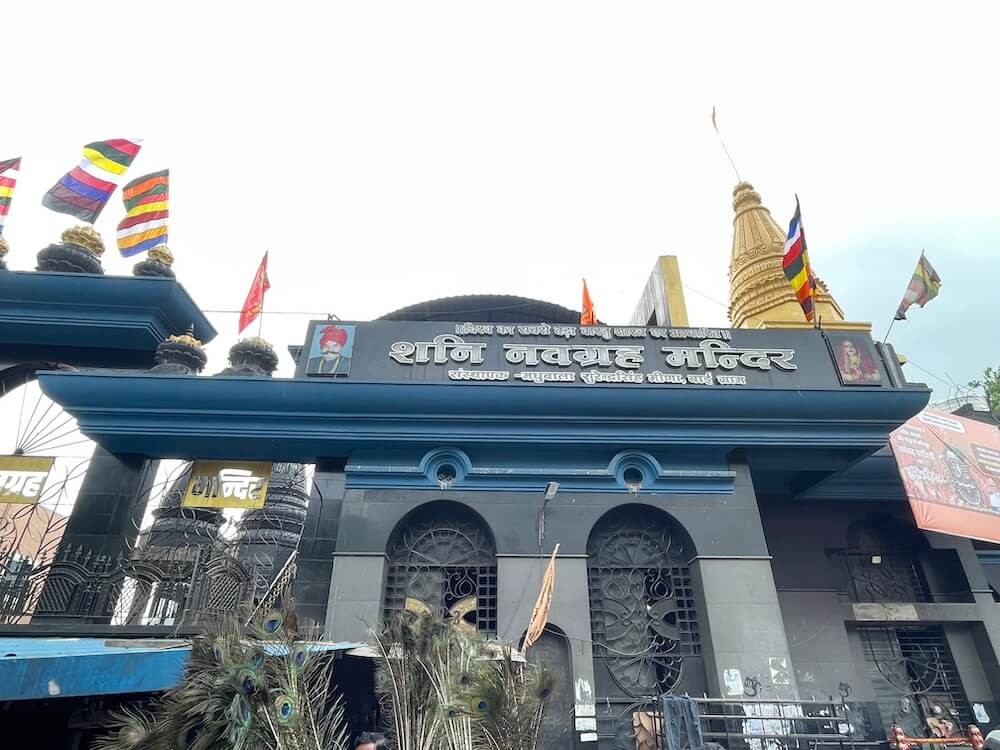
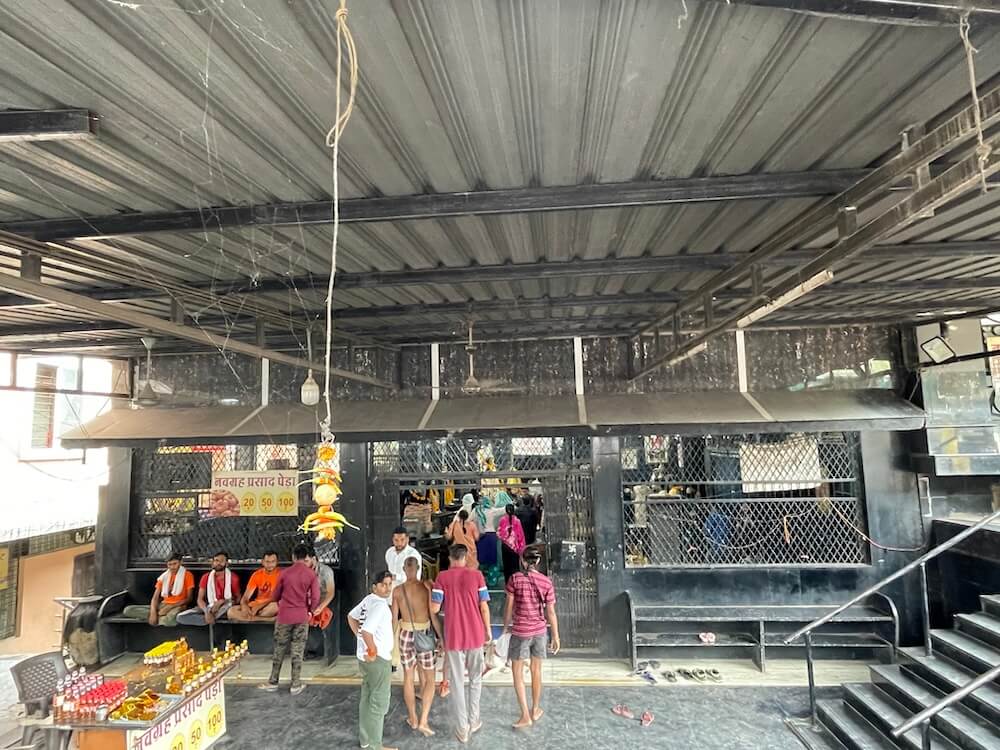
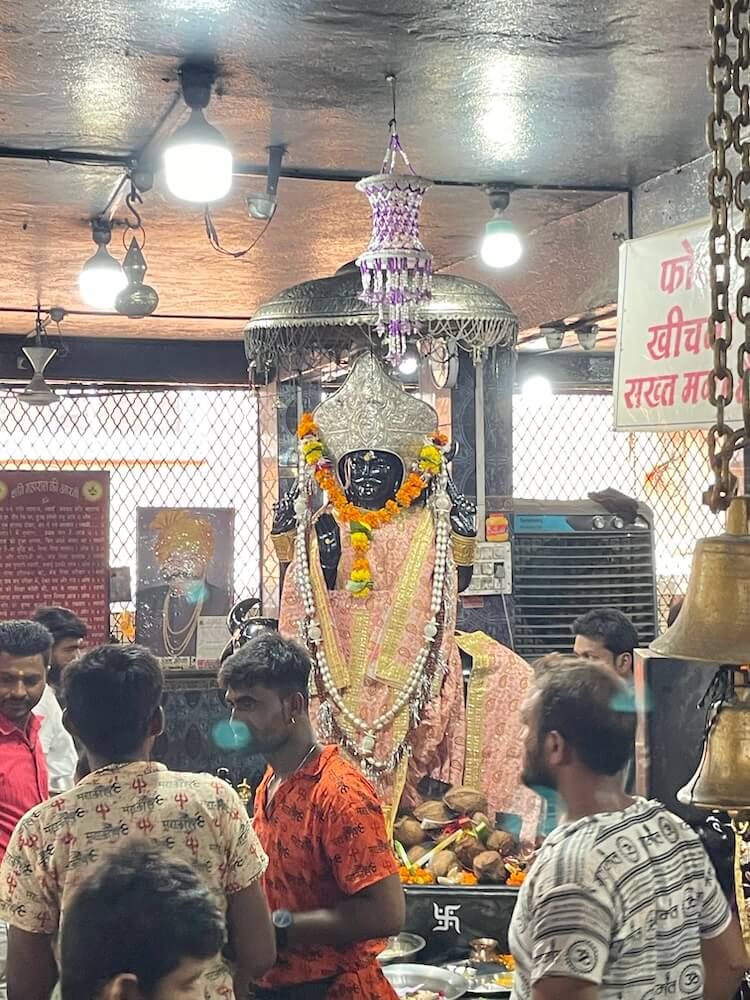
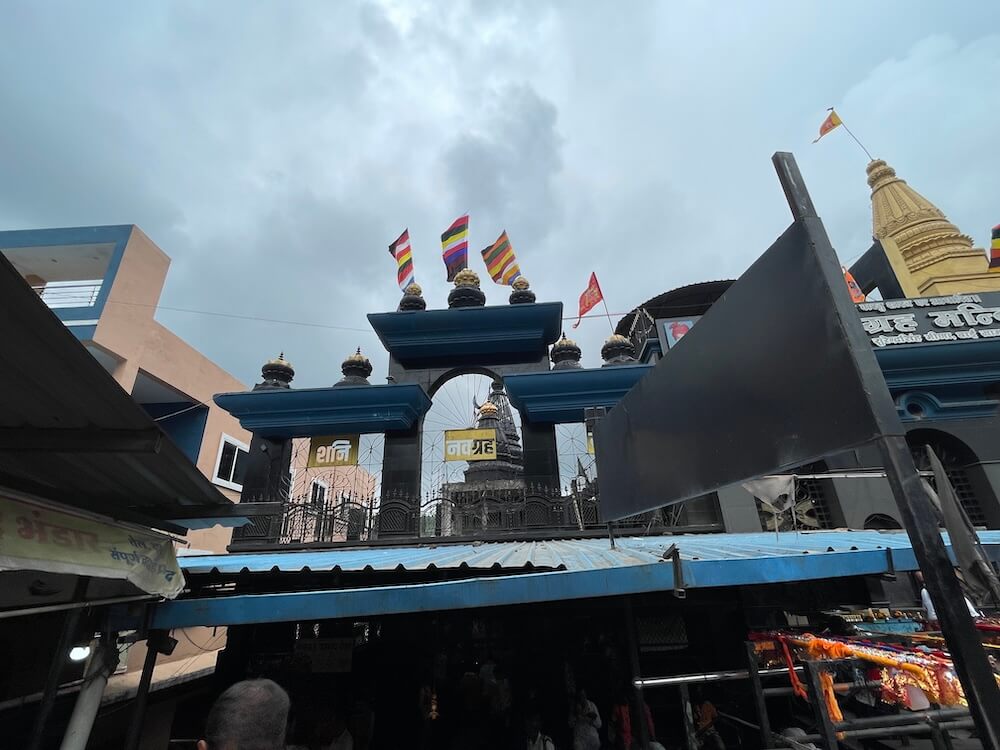
The temple stands along the highway from Indore to Omkareshwar. From the road, eight steps descend into the courtyard. A few yards ahead, upon a tall plinth, rises the modern shrine built in black marble. Over the entrance, a large square canopy crowns the roof, with small spires set upon it. The temple has a spacious assembly hall and toward the rear its ceiling is surmounted by a tapering gold-colored spire. At the center of the hall, upon a lofty platform, sits the majestic idol of Shani Dev – four-armed, mounted upon a buffalo, adorned with rich garments and ornaments and wearing a large silver crown. Directly before it stands the smaller Shani image unearthed during the excavation. Around the principal idol, upon raised pedestals, stand the images of the other grahas. They are Surya, Rahu, Ketu, Mangala, Budha, Guru, Shukra and Chandra. In the hall are also installed a north-facing Ganesh and a south-facing Hanuman. All these idols are carved from black stone and rest upon black marble bases with back-slabs.
Darshan for devotees is open on Saturdays and Sundays from 7 a.m. to 9 p.m. and on other days from 8 a.m. to 9 p.m. Large crowds gather every Saturday and Sunday and especially on Shani Amavasya. Each year, on Shani Jayanti, a five-day fair is held on a grand scale, drawing devotees in their hundreds of thousands. Pilgrims traveling from Indore to Omkareshwar make it a point to stop here for darshan.