Among the 108 Shakti Peethas of the divine primordial Mother Goddess (Adimaya Bhagwati) across India, three and a half Shakti Peethas are located in Maharashtra – Kolhapur, Tuljapur and Mahur being the full Peethas, while the Saptashrungi Mata temple at Vani in Nashik is considered the half or primary Peetha (Adya Peetha). A replica of the 9-foot-tall, vermillion-adorned (shendur-covered) idol of Saptashrungi Mata from Vani is enshrined at the Saptashrungi Temple in Salabatpura, Surat. Thousands of devotees visit this temple with the firm belief that the goddess here is awakened (Jagrut). While most temples perform aarti with ghee/oil lamps, at this temple the aarti is performed in a unique way, using a torch (mashaal).
About seven to eight decades ago, a woman named Narmadaben Chimanlal Jadhav, originally from Nandurbar, resided in the Dakshin Mohalla area of Surat. She was a devout follower of Saptashrungi Mata of Vani. Even after getting married and settling in Surat, she continued her pilgrimage to the Vani temple, traveling on foot each time. She maintained this devotion for 35 years. However, one year, due to ill health, she was unable to undertake the pilgrimage. Deeply pained, she prayed to the goddess, “O Mother, I cannot come to see you this time. Please come to Surat instead.” 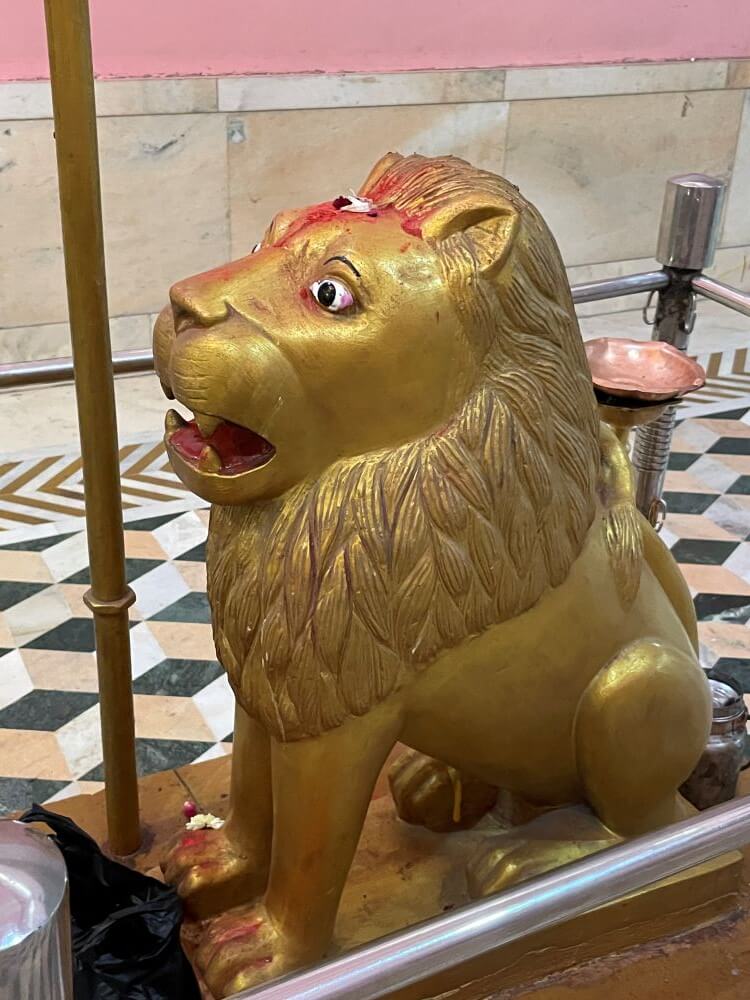 With that heartfelt request, she brought the padukas (sacred footprints) of the goddess in a palanquin to Surat and established them in the Dakshin Mohalla area.
Later, the goddess appeared to her in a divine vision, instructing her, “Build my temple in Reshamwad and consecrate me there.” Following the vision, she constructed a temple in the Reshamwad area and on Vaishakh Vadya Ekadashi in 1970, the idol of the goddess was consecrated in the temple.
Later, in 1997, within just eleven months, the current grand temple structure was completed. The idol of the goddess in this temple was beautifully crafted in Makrana marble from Jaipur.
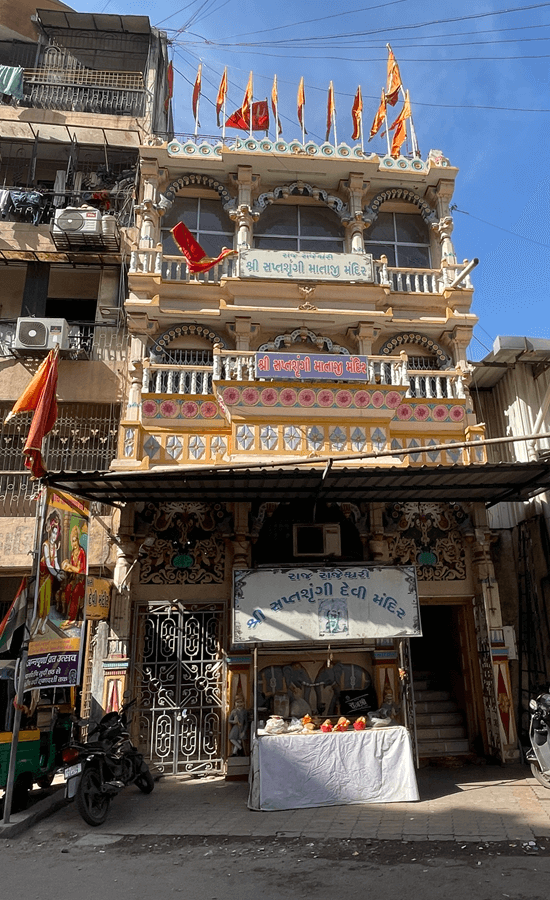
Located along a busy street in Surat, right beside residential buildings, stands the three-storey structure of this temple. At the ground level, there are two entrance gates. On the wall between these entrances, there is a high-relief sculpture of a pair of elephants (Gajarajs) – symbols of prosperity, with sculptures of doorkeepers (dwarapalas) on either side.
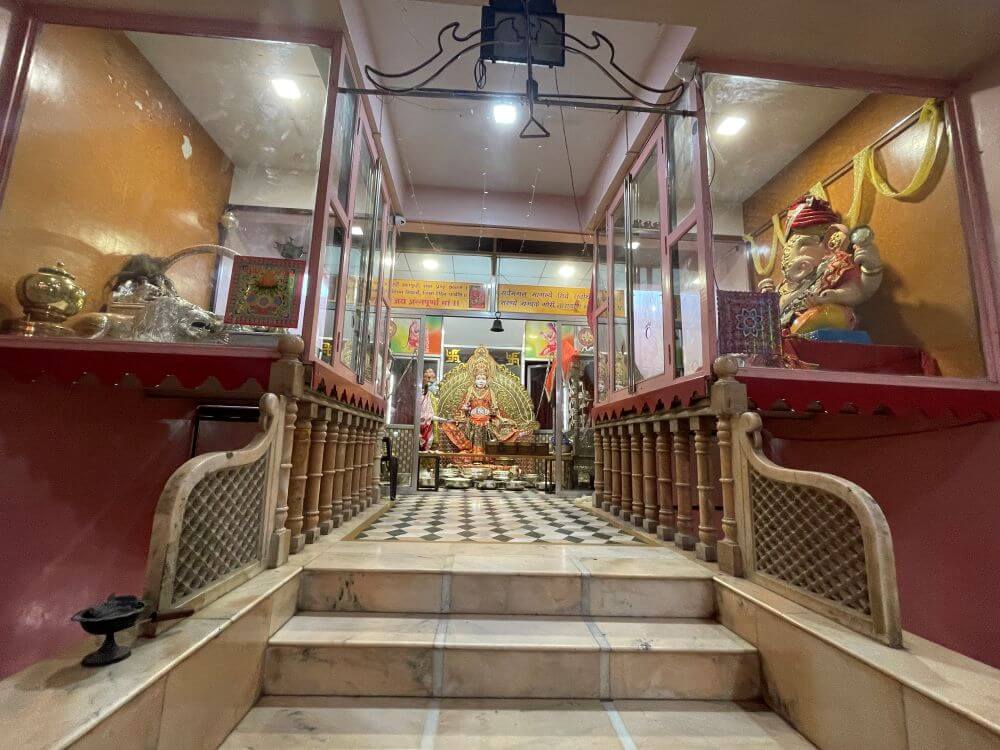
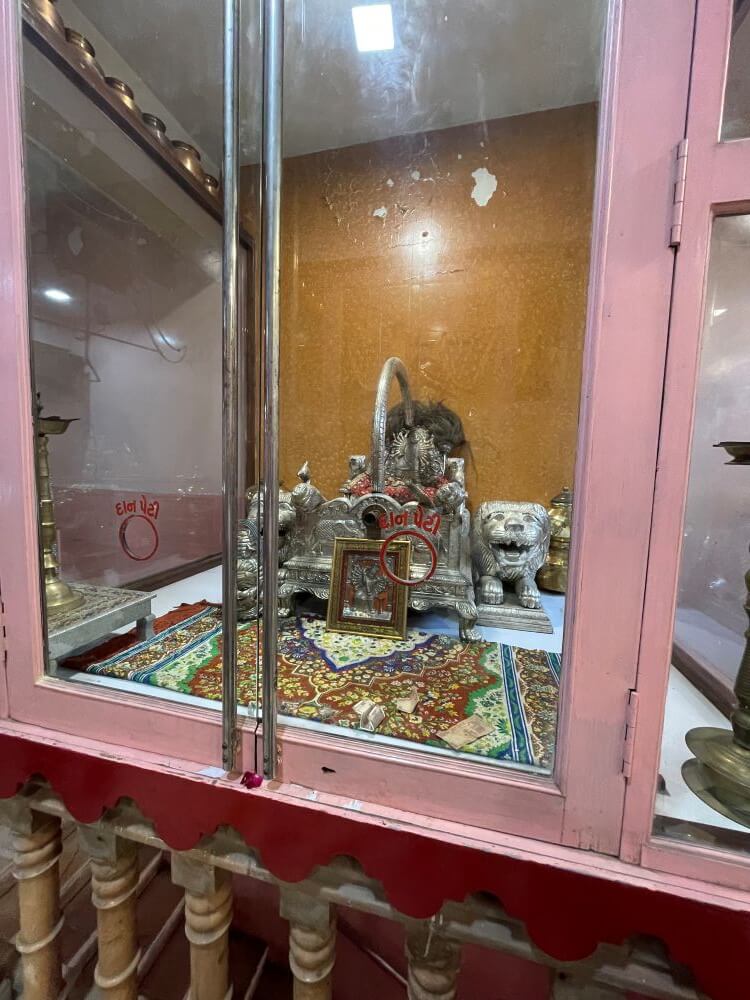
The left-side entrance leads to marble steps that take you up to the main sabhamandap (assembly hall) of the temple. The overall layout of the temple includes the sabhamandap, the garbhagriha (sanctum) and a circumambulatory path 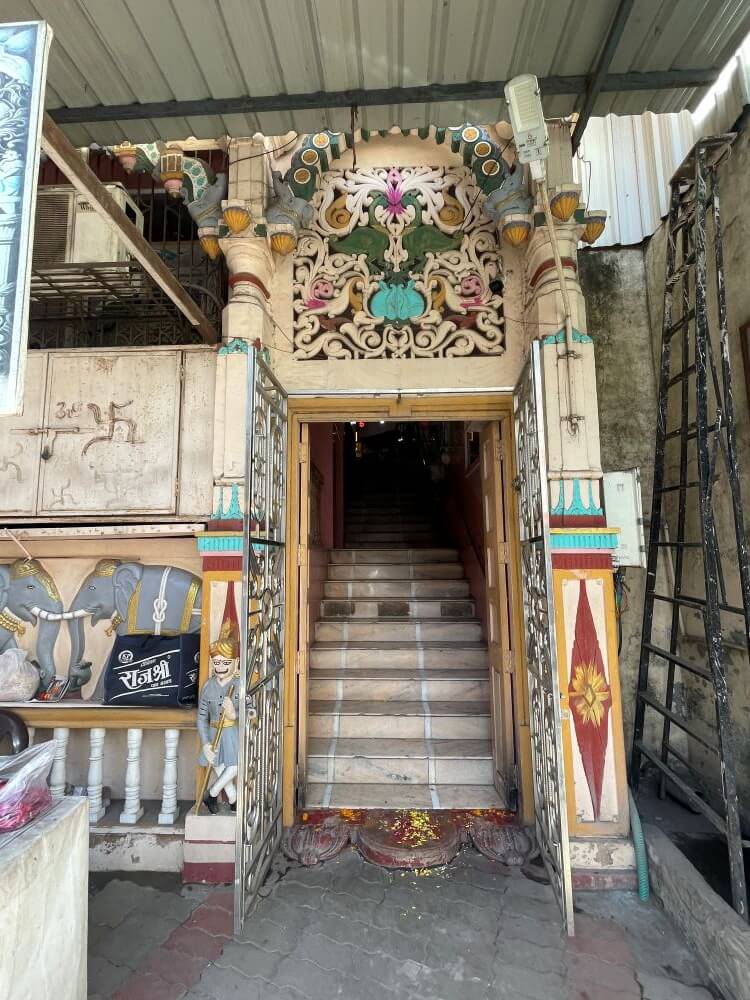 (pradakshina marg) that begins within the sabhamandap itself. At the center of the sabhamandap, there is a large idol of a lion, the vahana (divine mount) of the goddess. In front of it, on a large horizontal platform, are placed the sacred padukas (footprints) of the goddess.
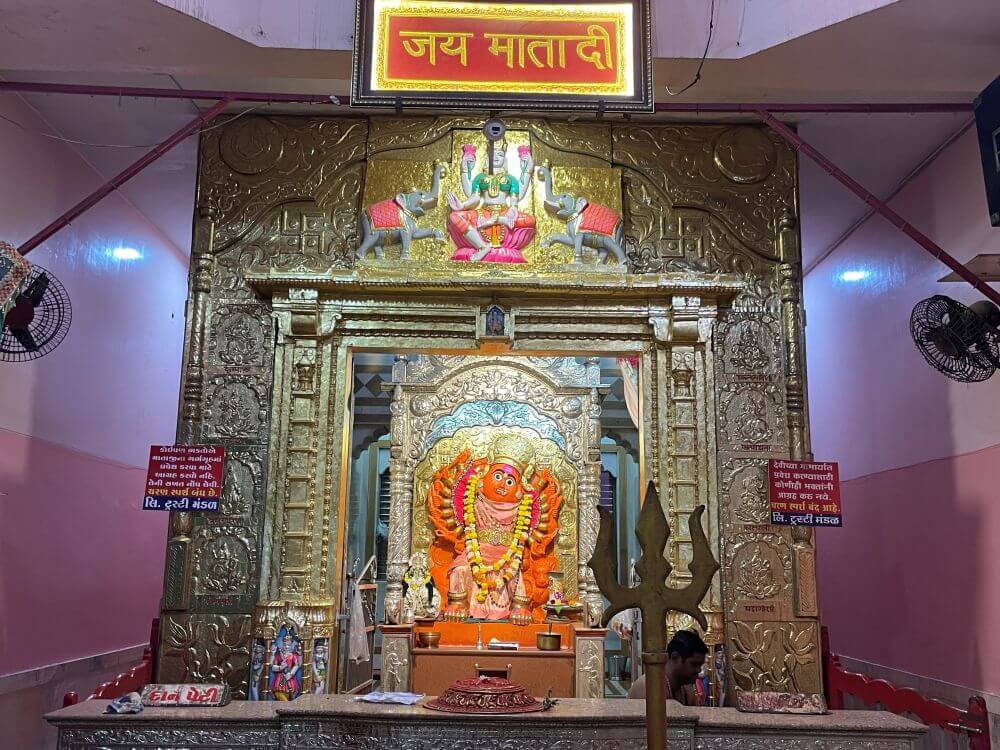
The outer wall of the sanctum (garbhagriha) is adorned with gold-plated embossed metal sheets intricately carved with beautiful designs. On either side of the door frame, eight forms of the goddess are engraved. At the base of the entrance pillars, there are marble idols of dwarapalas (temple guardians) and at the lintel, a sculpture of Lord Ganesha is installed. Above the doorframe, in the upper central section, there is a carving of Goddess Gajalakshmi seated on a lotus.
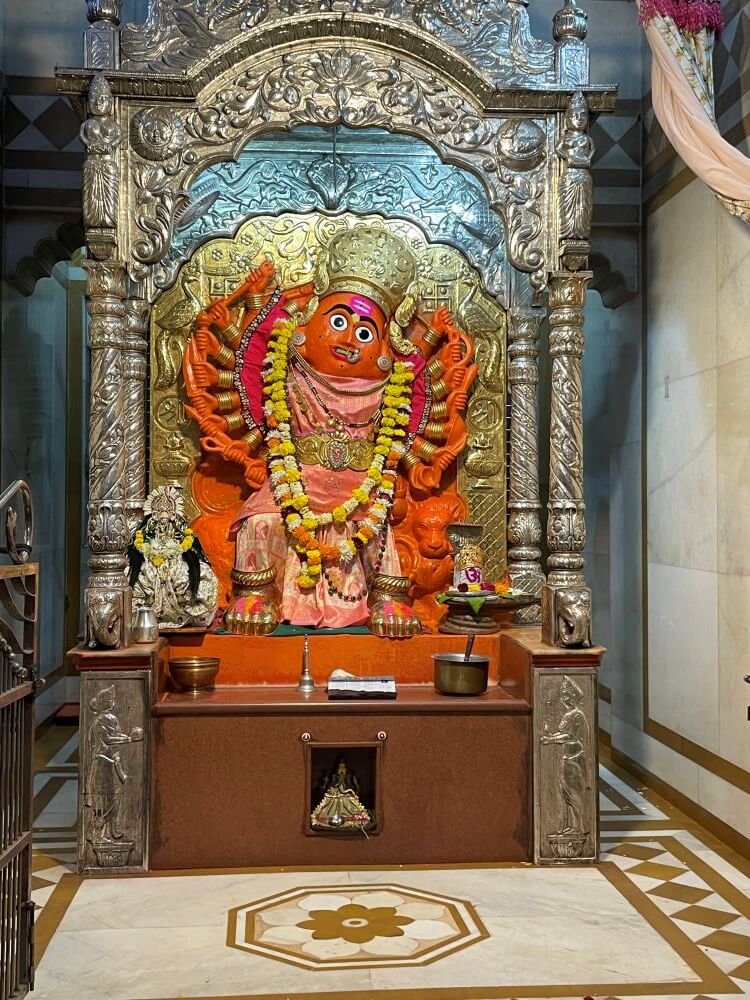
Inside the garbhagriha, on a raised, ornamented platform (vajrpeeth) within a beautifully carved canopy (makhar), is enshrined the elegant idol of Rajrajeshwari Saptashrungi Mata. The goddess wears a crown (mukut) and her feet are made of brass, adorned with anklets (tode). The aureole (prabhaavali) behind the idol is also intricately carved.
In the sabhamandap, at the rear and directly opposite the sanctum, is the shrine of Goddess Annapurna. It is accessed by ascending four steps. To the left, there is a large idol of 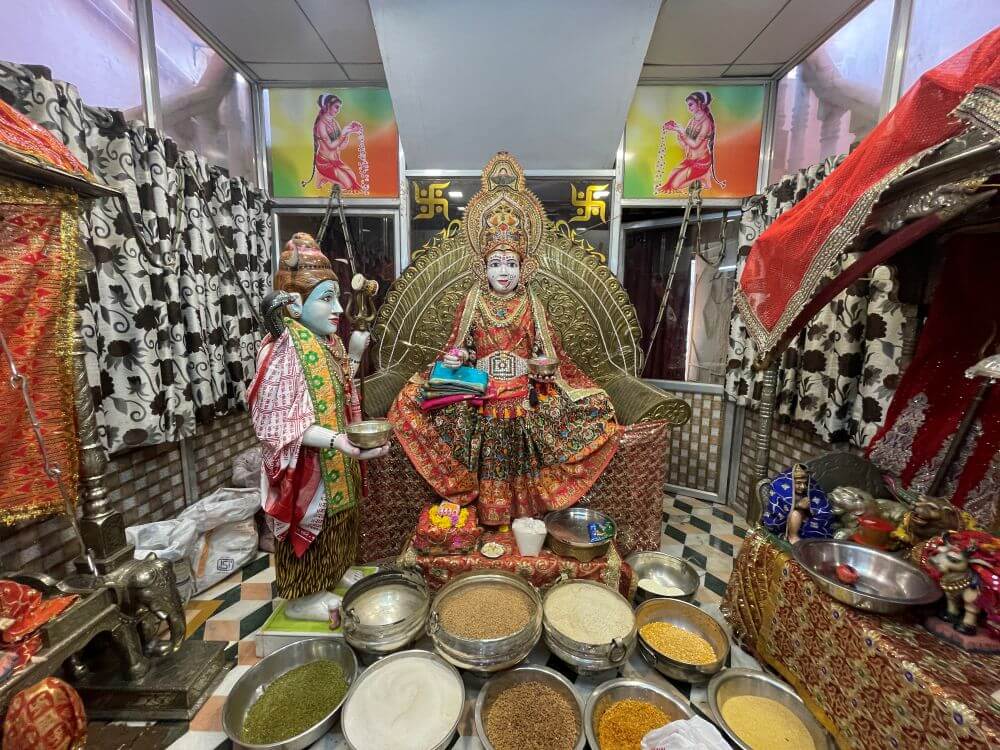 Lord Ganesha and to the right, a large palanquin (palkhi) adorned with silver plating, housing another idol of Saptashrungi Mata. Nearby, there is also a mask of Lord Shiv and a large lion idol, symbolizing the divine mount of the goddess.
A few steps from there is the idol of Goddess Annapurna, seated on a vajrpeeth (ornate pedestal). The idol features a large crown (mukut) on the head and is adorned with rich garments and ornaments. Beside her stands an idol of Lord Shiv, holding a food bowl (annapatra) in his hand, symbolizing his association with the goddess of nourishment.
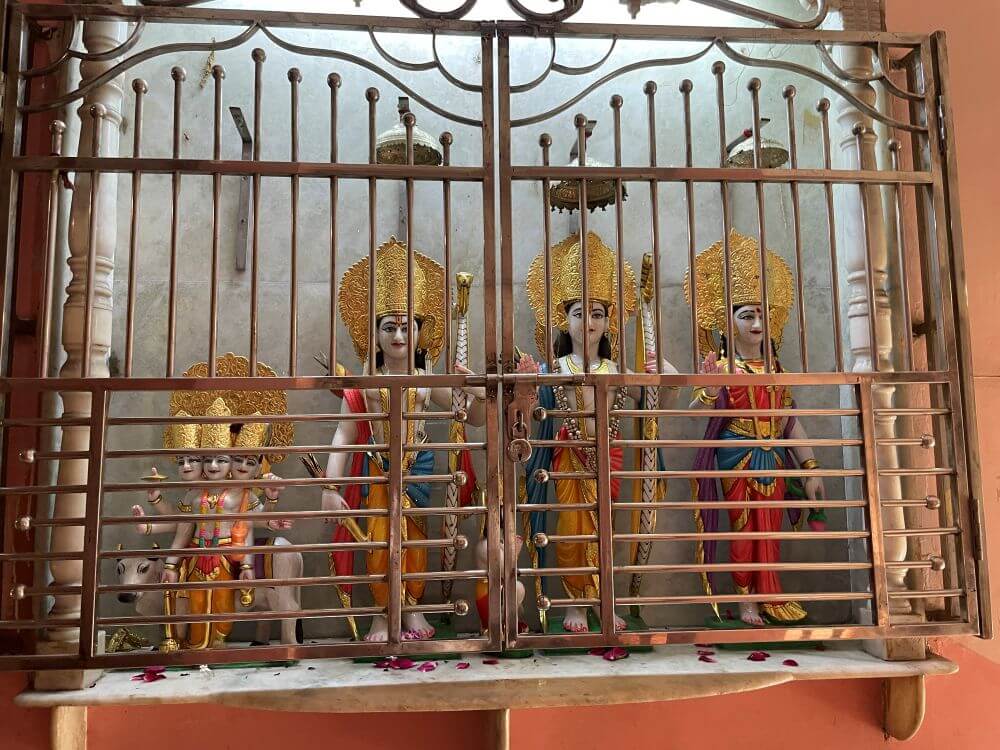
On the walls of the temple, there are depictions of other significant goddesses, including Tuljabhavani of Tuljapur, 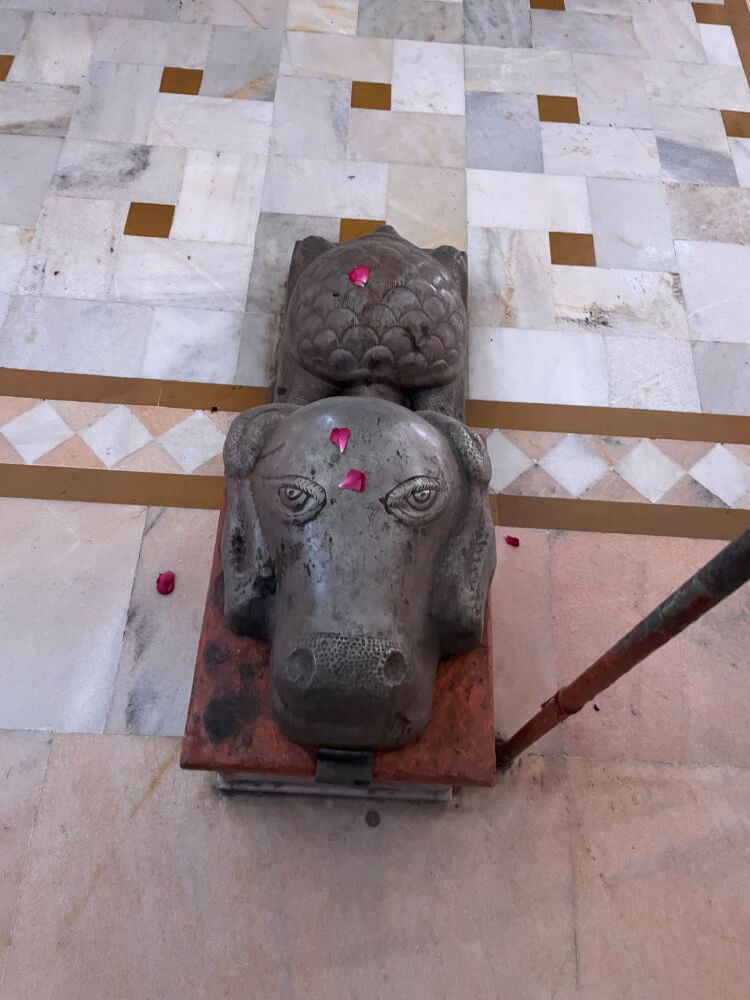 Mahalakshmi of Kolhapur and Renuka Mata of Mahur Fort.
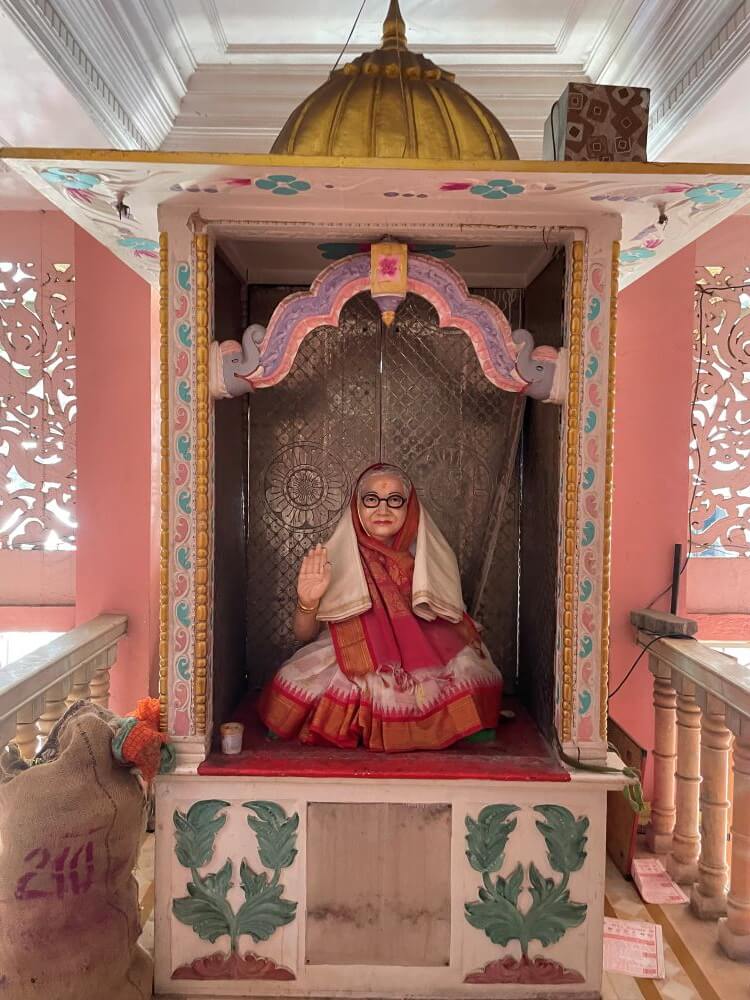
On the lower level of the sabhamandap, i.e. on the second floor, there is a shrine housing a statue of Narmadaben Jadhav, the temple’s founding devotee. In front of the statue are sculptures of a gomukh (cow’s mouth-shaped spout) and a tortoise, both symbolically significant in Hindu tradition.
The temple is managed by the Saptashrungi Public Charitable Trust. Every day, the idol of the goddess is bathed in Panchamrit (a sacred mixture of milk, curd, ghee, honey and sugar) and anointed with ritual offerings. After the main puja, sindoor (vermilion) is applied to the idol. As sindoor is considered warm, sandalwood paste is applied on the crown to balance the heat.
Uniquely, aarti (ritual worship with fire) is performed using a torch (mashaal). For the mashaal, red cotton cloth is used, soaked in edible oil and set alight. Each mashaal, made from about 25 meters of cloth, lasts around 15 days. Aartis at the temple are performed three times daily – at 7:00 AM, 9:00 AM and 7:30 PM.
All four Navratri festivals of the year are celebrated here with great fervor and devotion. During Chaitra Navratri, each day begins with a Panchamrut abhishek (ritual bathing 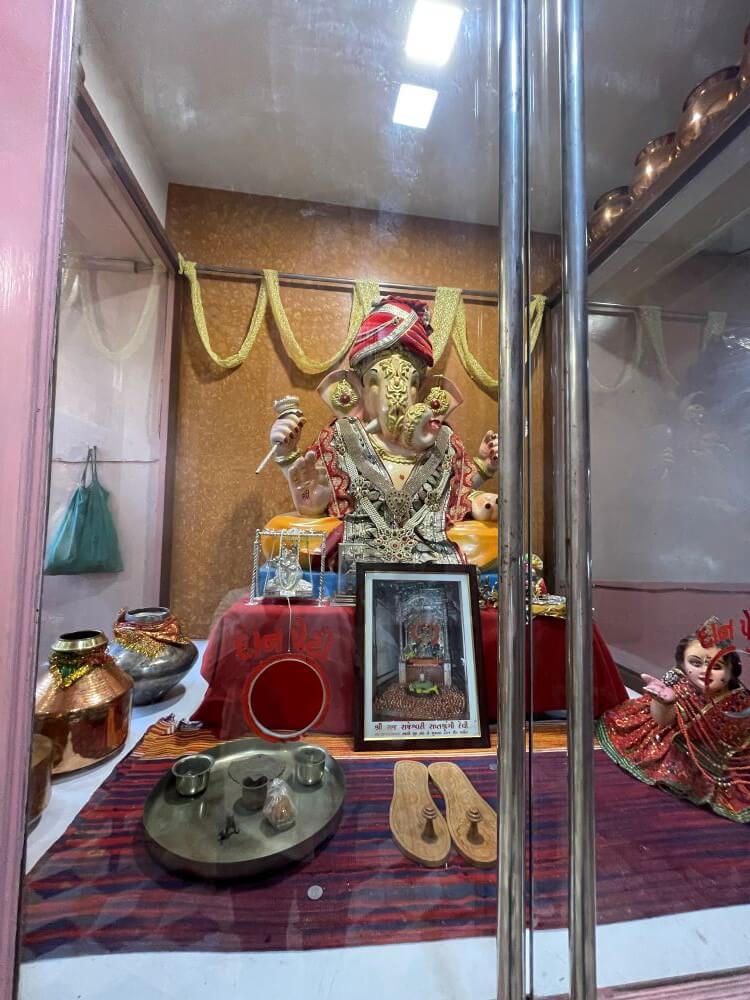 with five sacred substances) of the goddess, followed by worship (puja). Once the goddess is adorned (shringar), the aarti is performed. During this festival, a variety of religious programs are organized. Similarly, during Sharadiya Navratri, the goddess is bathed in Panchamrut and worshipped daily. Special rituals like Kumari Pujan (worship of young girls) and Suvasini Pujan (worship of married women) are also performed during this time. The goddess is also adorned in the forms of Mahalakshmi of Kolhapur and Tuljabhavani of Tuljapur during these celebrations.
Every three years, during the Gupt Navratri celebrated in the month of Ashadha, the special ritual of ‘Lal Kunkumarchan Vidhi’ (sacred red vermilion offering) is performed at this temple.
From Ashadha Shuddha Pratipada to Ashadha Shuddha Navami, the goddess is worshipped daily with rituals and offerings. On Ashadha Shuddha Panchami, devotee women offer sindoor (vermilion) to the goddess as a symbol of devotion. Sindoor is also distributed as prasad. It is strongly believed that performing this ritual removes sorrow from life and brings happiness and fulfillment. The Shakambhari Navratri, celebrated in the month of Paush, is observed with great enthusiasm at this temple.
Additionally, the temple celebrates the Annapurna Utsav from Margashirsha Shuddha Shashti to Margashirsha Vadya Ekadashi. During this festival a grand aarti is performed daily for Goddess Annapurna. A special Navchandi Yagna is also organized during this period.
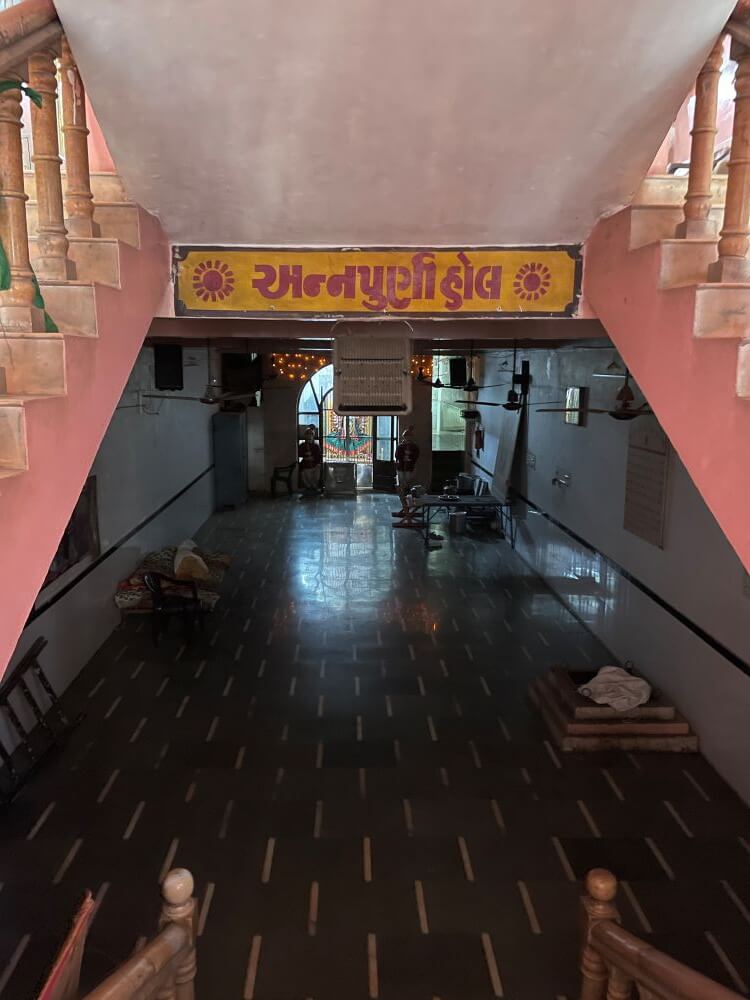
On the first floor of the temple, there is a large hall known as ‘Annapurna Hall’, where Mahaprasad (sacred meal) is served and various religious functions and celebrations are conducted.