
सधीमा/सिद्धेश्वरी माता मंदिर
गिलोसन, ता. मेहसाणा, जि. मेहसाणा
Sadhima / Siddheshwari Mata Temple
Gilosan, Tal. Mehsana, Dist. Mehsana
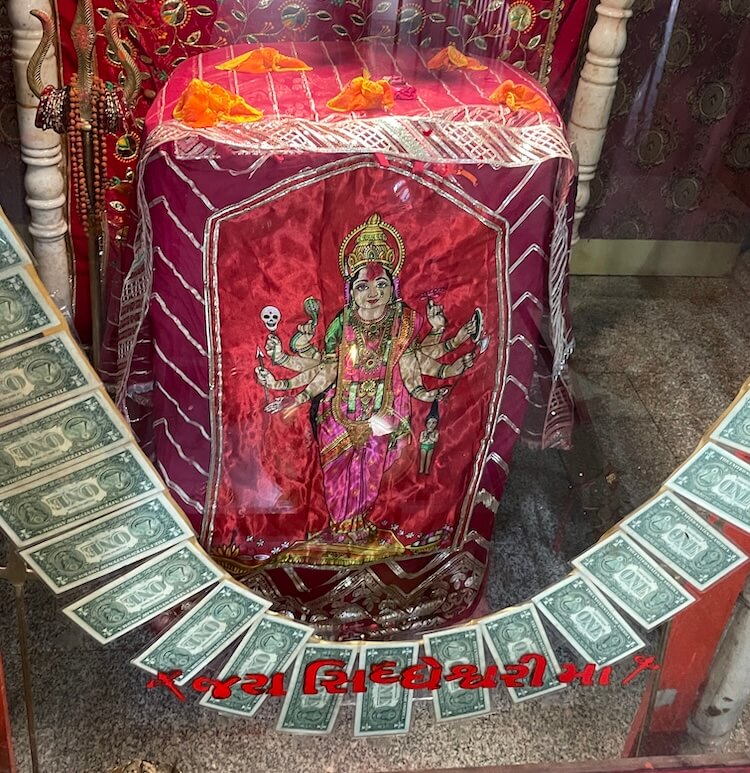
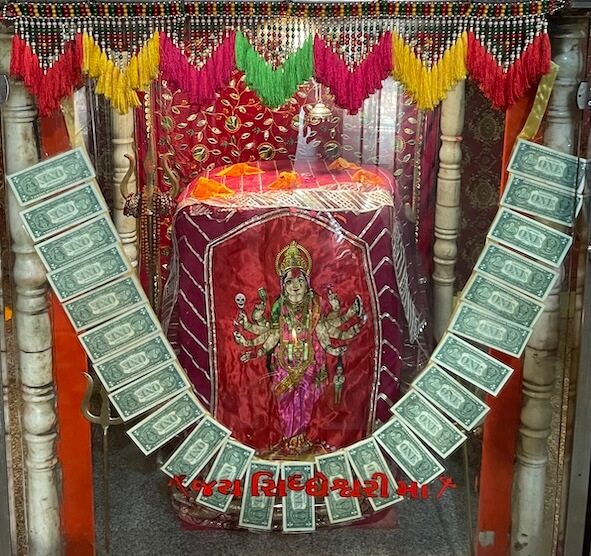 In the village of Gilosan within the Mehsana Taluka, lies the magnificent temple of Siddheshwari Mataji, a sanctuary of profound faith for devotees. Local inhabitants and pilgrims from the surrounding regions affectionately refer to this hallowed abode as the ‘Sadhima Temple’. Siddheshwari Mata is worshipped throughout Gujarat as an incarnation of the Adishakti Jagdamba. It is the cherished belief of the faithful that the Goddess descended upon the earth to dispel the darkness of ignorance. As a benevolent deity who bestows the fruits of the ‘Ashta Siddhis’ (eight spiritual perfections) and the ‘Navanidhis’ (nine treasures), she is revered as the auspicious protector who alleviates all sorrows of her devotees. In Gilosan, a village whose economy is rooted in agriculture and a vibrant dairy industry, the court of Mataji holds a singular and indispensable place in the daily lives of the villagers.
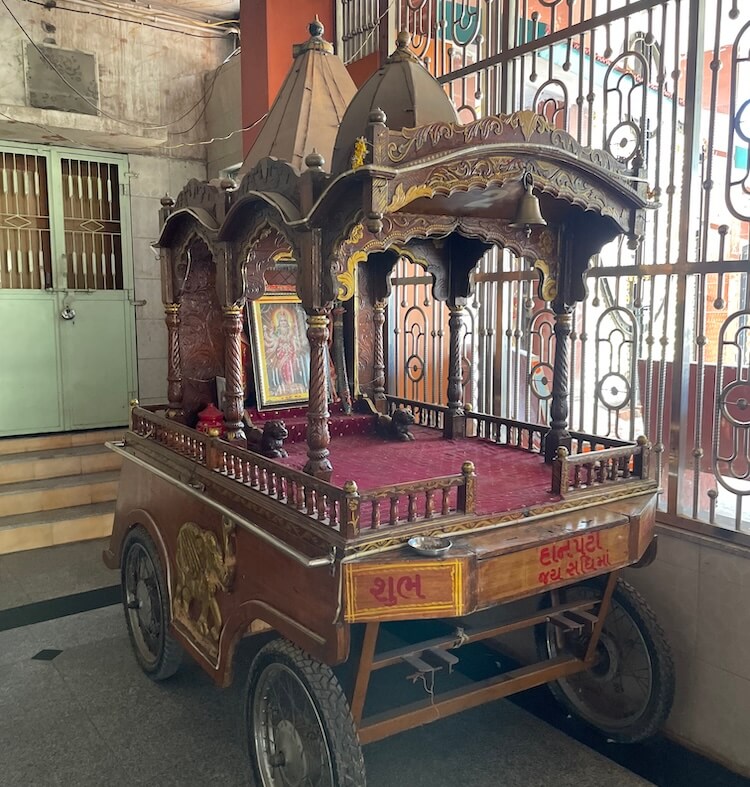 Sadhima or Siddheshwari Mata, who is venerated with great devotion across Gujarat, is primarily regarded as an exceedingly ‘Jagrut’ (spiritually awakened) local folk deity. The origins of the Mother are elucidated in local religious texts, the ‘Shri Siddheshwari Chalisa’ and through indigenous traditions. According to Hindu theology, the Adishakti has assumed various incarnations across different epochs to annihilate the wicked. Siddheshwari Mata is believed to be a manifestation of that very primordial power. Local chronicles suggest that Sadhima is the supreme energy associated with the ‘Navnaths’ (nine masters) and the ‘Chaurashi Siddhas’ (eighty-four perfected beings). She is considered the true disciple of the great Balnath.
 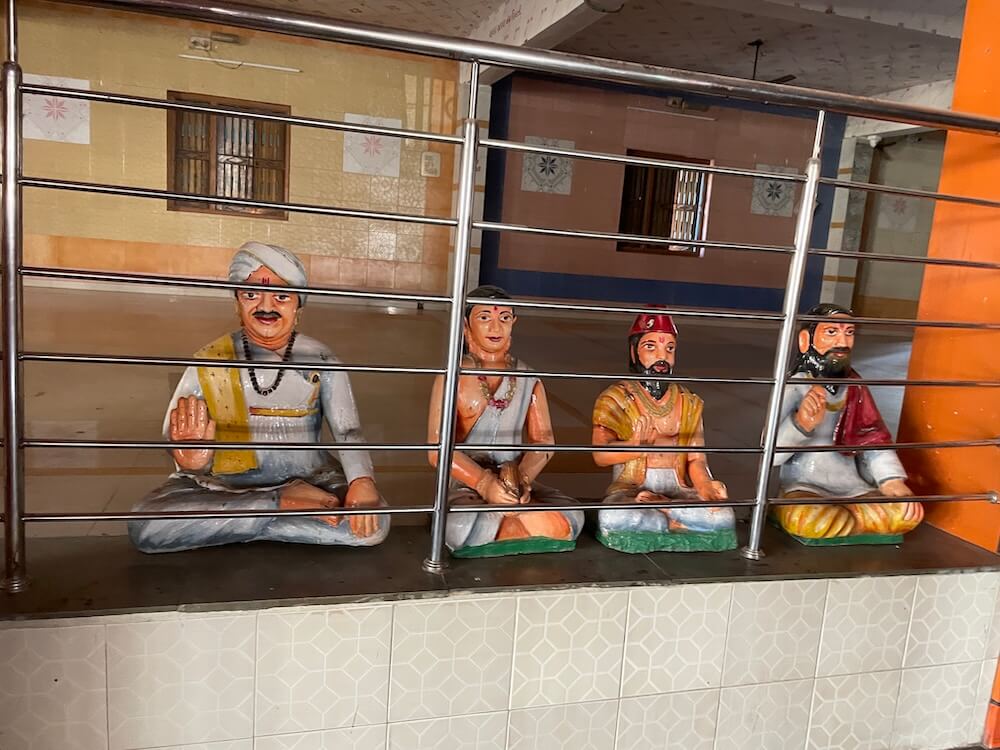 While the Mother’s essential form is entirely ‘Nirakar’ (formless), the Creatrix of the universe assumed a ‘Saguna’ (manifest) form on Earth for the welfare of her devotees. Much like the various avatars described in the Puranas, Mother Sadhima took birth to safeguard her followers. As described in the ‘Shri Siddheshwari Chalisa’, the Goddess revealed herself in a sweet and graceful form beneath a Babul tree (Bavaliyani Chhayadi), granting ‘Darshan’ (holy viewing) of her own accord.
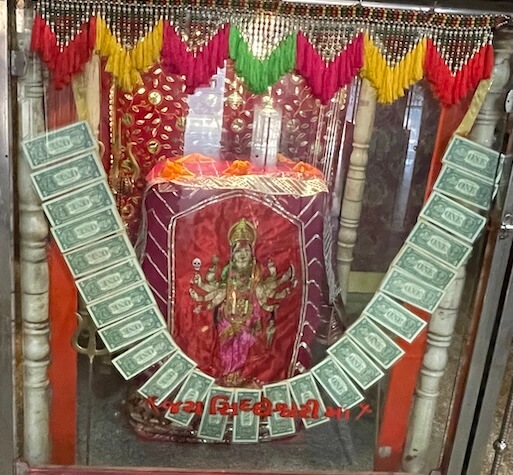
According to the convictions of local devotees, Siddheshwari Mata is a potent manifestation of the famous Harsiddhi Mata of Ujjain and the Miana Bet Wali Mata. Harsiddhi Mata is regarded as the Adishakti worshipped since mythological times. Her glory has spread far and wide since the reign of Emperor Vikramaditya. That same supreme power was incarnated in the sacred land of Gujarat as Sadhima. 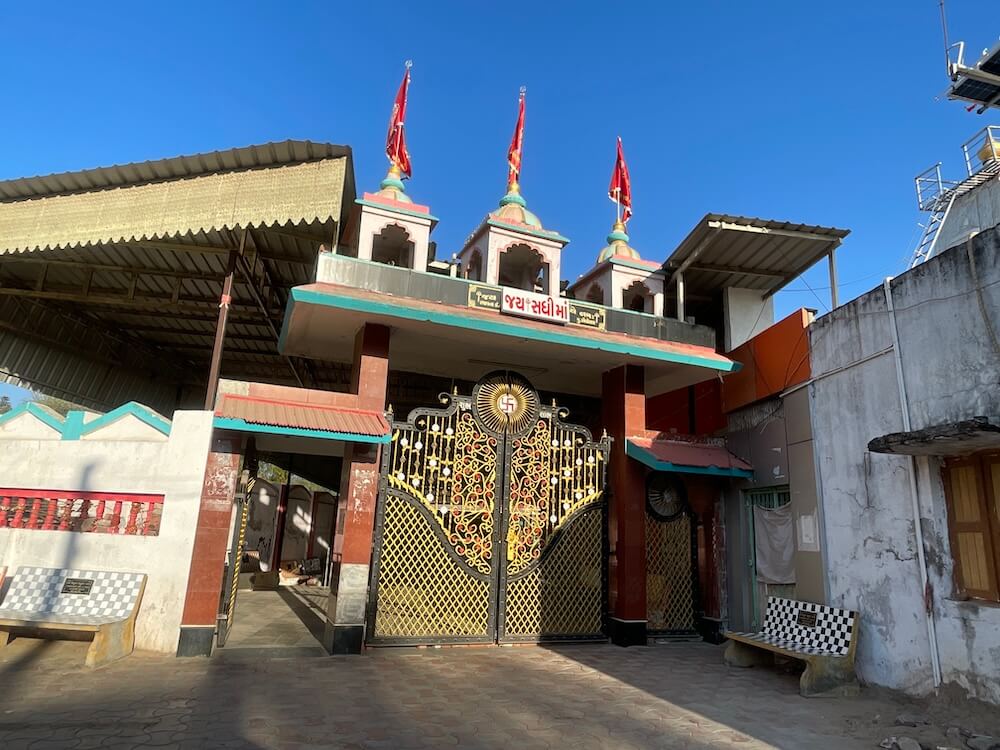 Just as the Puranas contain numerous tales of the Goddess’s valour, similar local legends of Sadhima Mata are celebrated in Gujarat. She is a ‘Ranragini’ (queen of the battlefield) who wields a ‘Trishula’ (trident) and decapitates her foes. It is said that ghosts and malevolent spirits flee instantly at her sight. The Goddess is also credited with the miracle of restoring verdant life to a withered Babul tree.
The historical context of the Siddheshwari Mata Temple is directly linked to the long-standing heritage of the Mehsana district. Having stood witness to centuries of political and administrative transitions, the village of Gilosan has preserved its traditional rural character to this day. Under the ‘Ganpat Volunteer Movement’ initiative of Ganpat University, schoolchildren have previously presented the history of Gilosan to the villagers, highlighting the significance of the village’s historical legacy.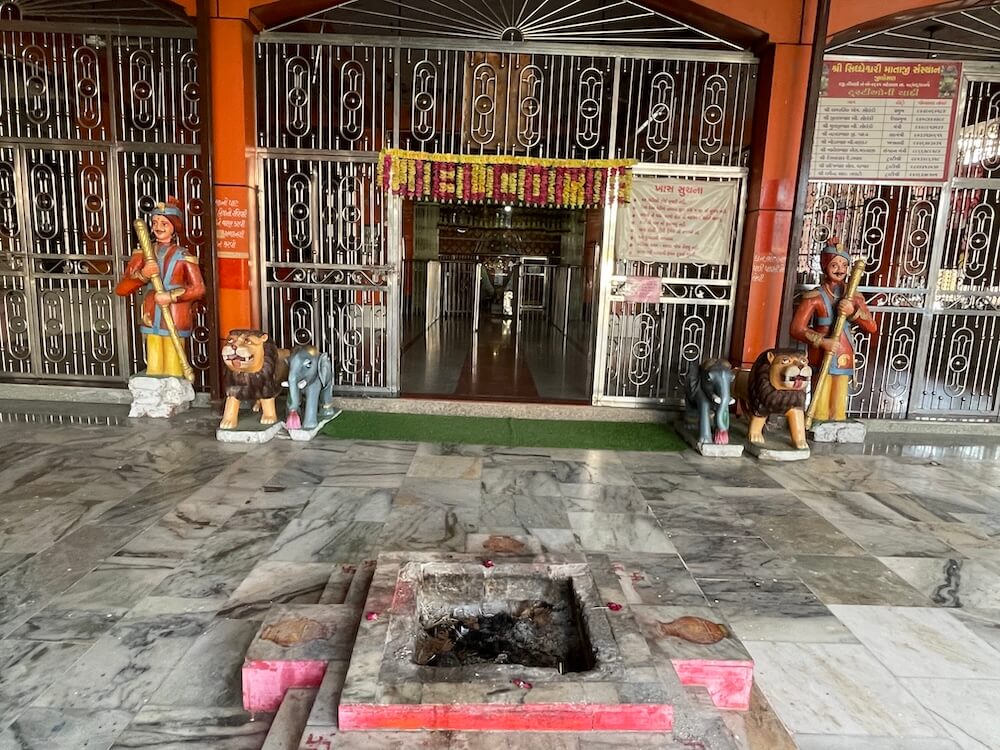
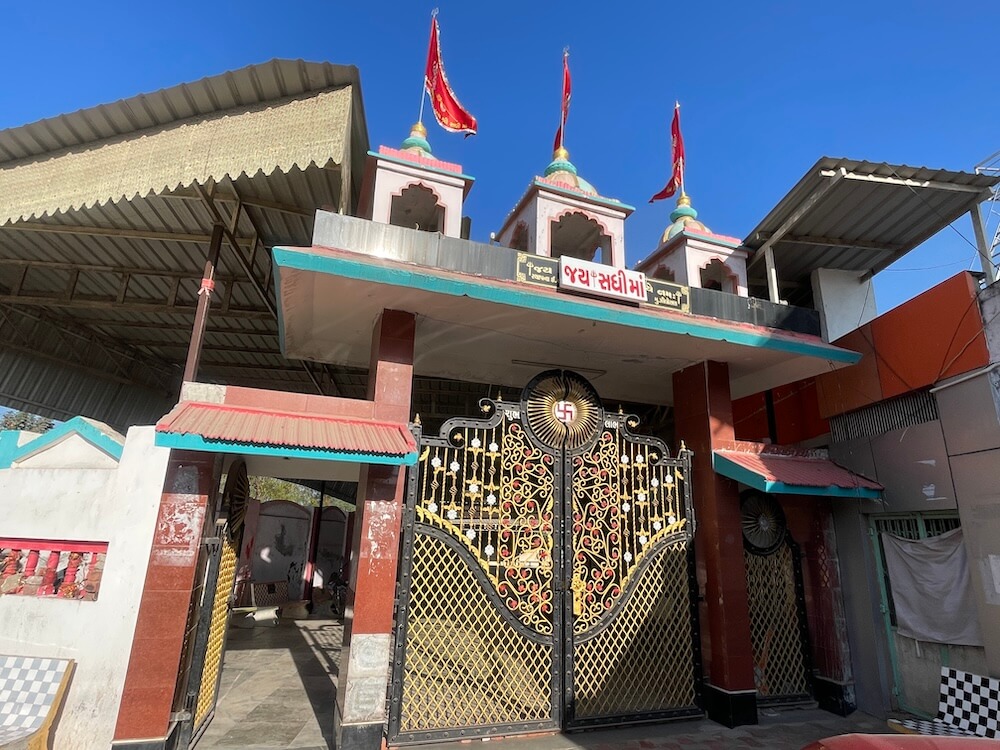
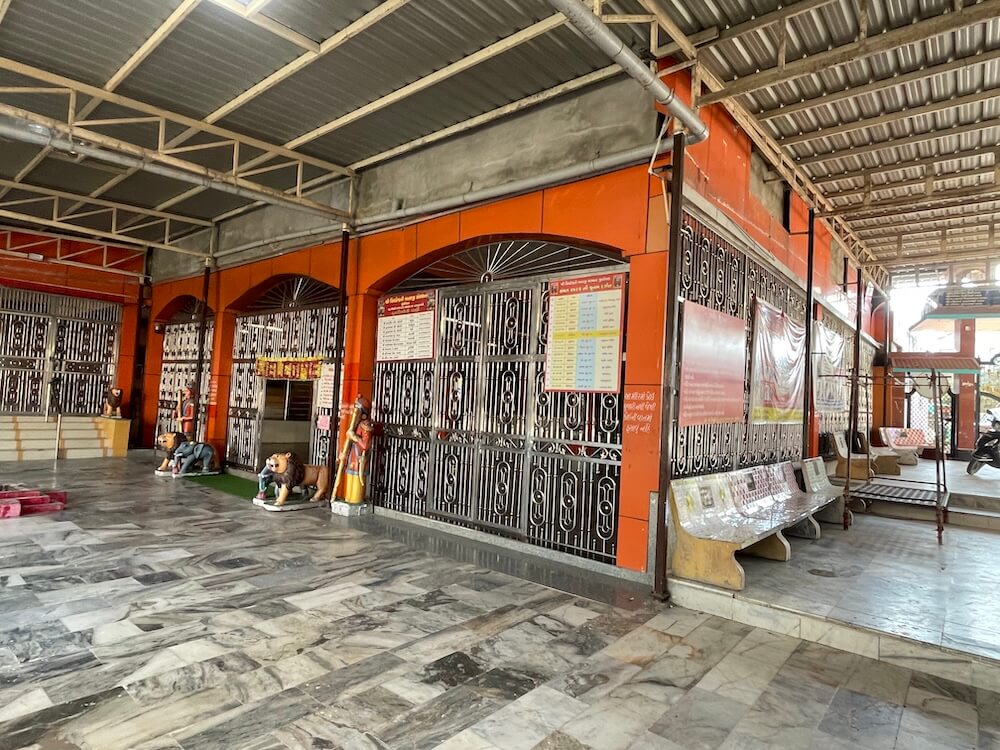
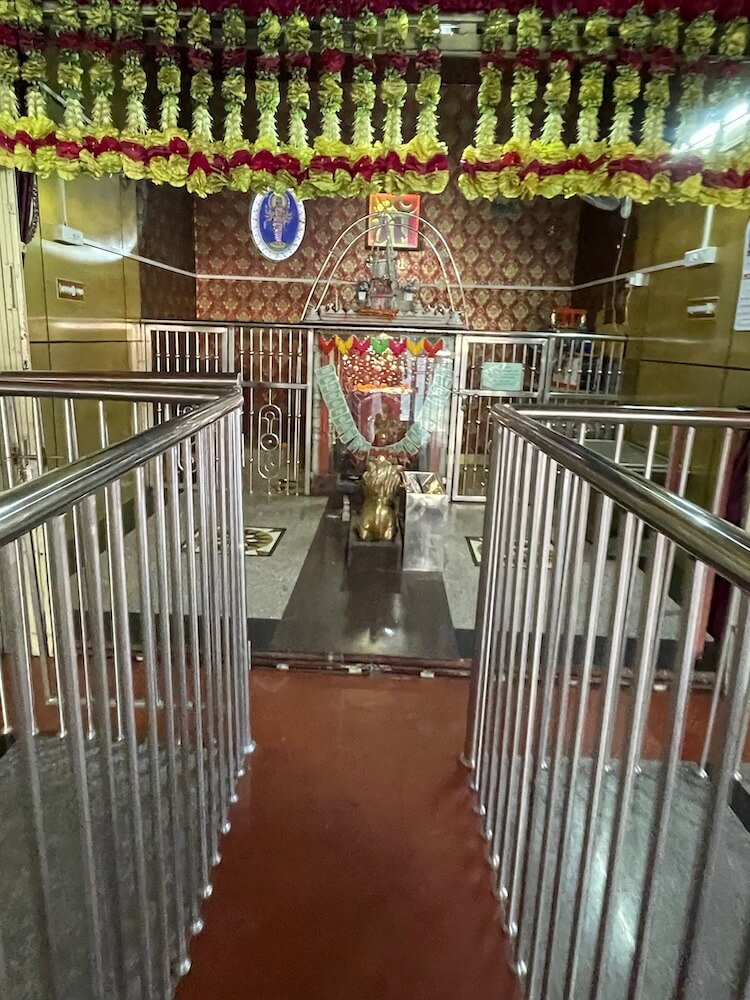
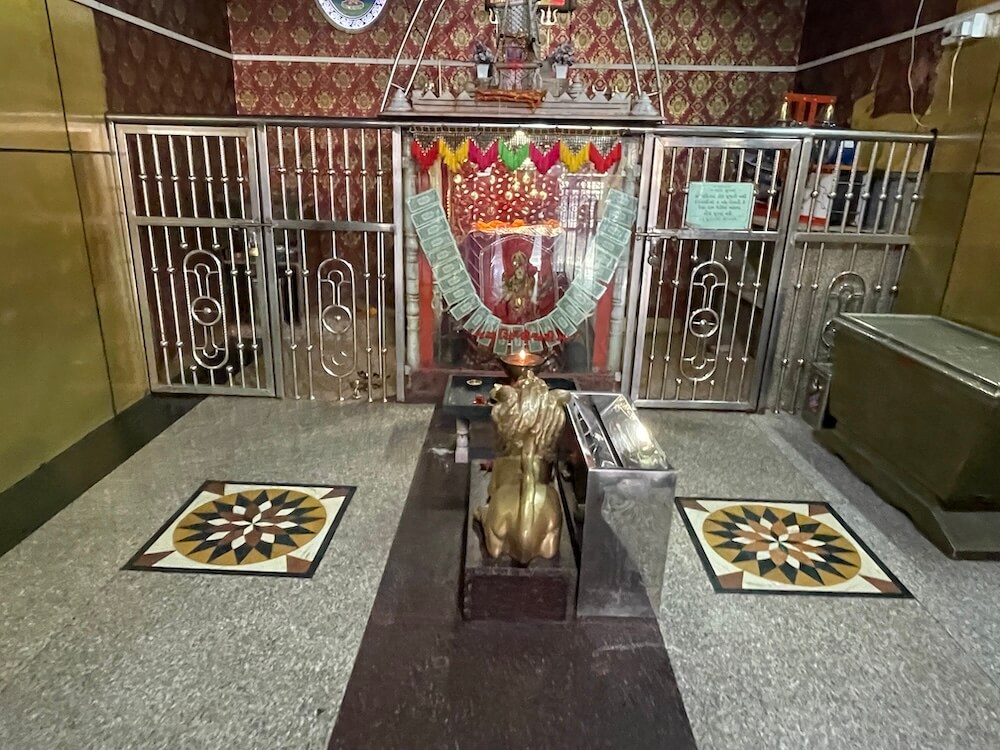
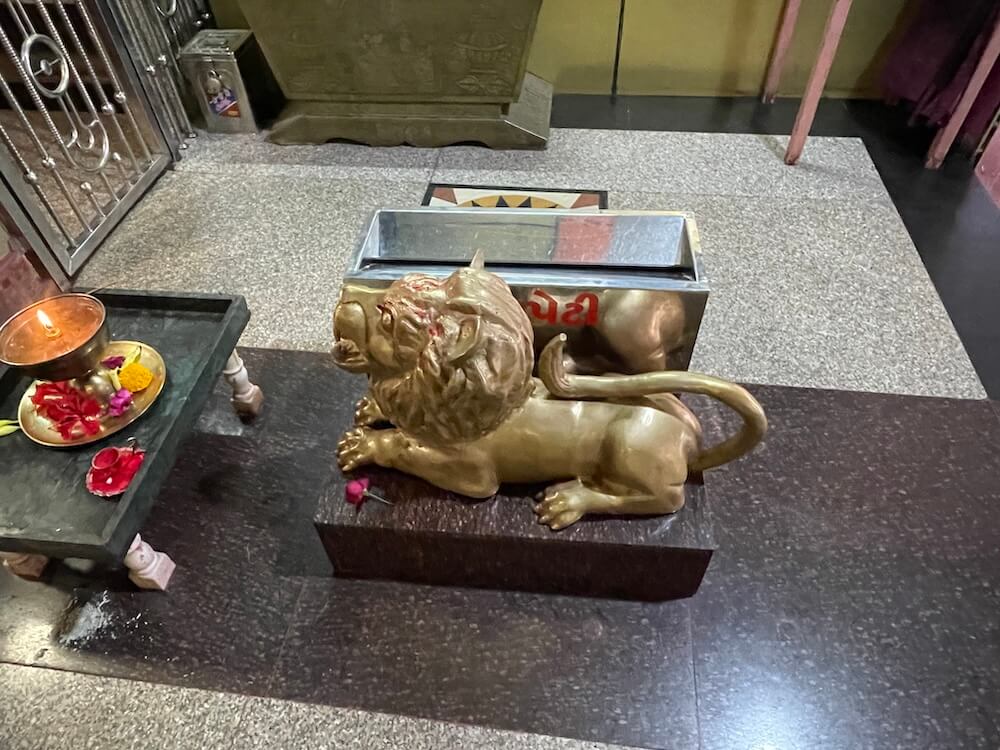
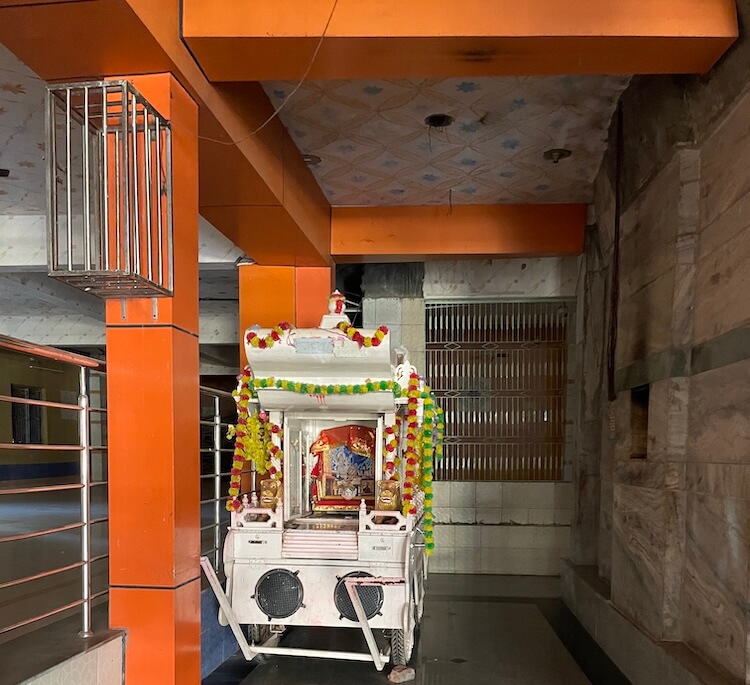
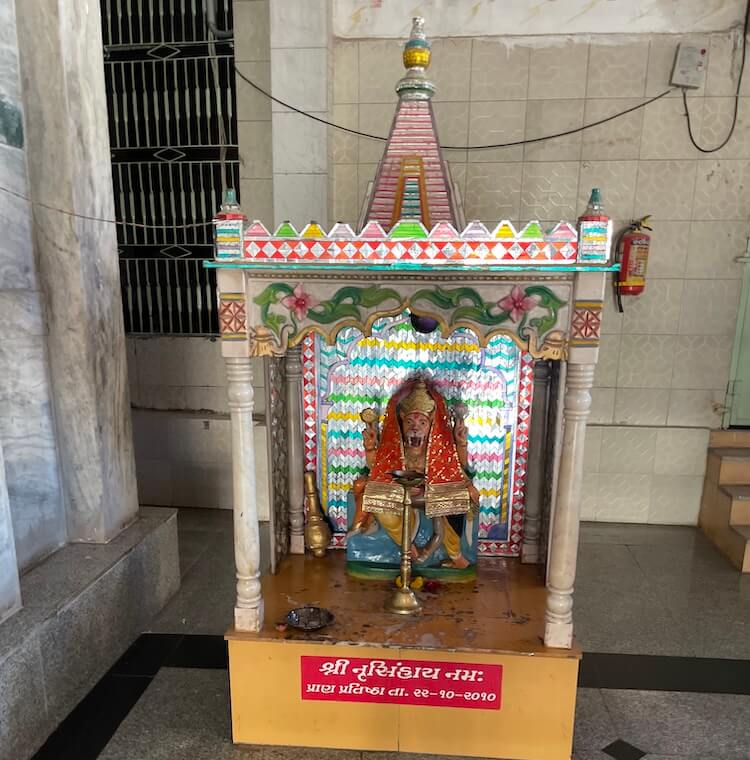
The architectural style of the Siddheshwari Mataji Temple is primarily founded upon the fundamental principles of North Indian ‘Nagara’ architecture. Situated in the central part of Gilosan village, the temple is accessed through a main gateway within a fortified perimeter, leading into a spacious courtyard. The courtyard, paved with marble, provides seating for devotees’ comfort. The structural composition of the temple consists of an open pavilion, a ‘Sabhamandapa’ (assembly hall) and the ‘Garbhagriha’ (sanctum sanctorum). A ‘Havankunda’ (sacrificial fire pit) is located near the entrance. Flanking the entrance are the ‘Dwarpalas’ (gatekeepers), along with sculptures of lions—the vehicle of the Goddess—and elephants. In the assembly hall, a queue system is in place for pilgrims’ convenience. 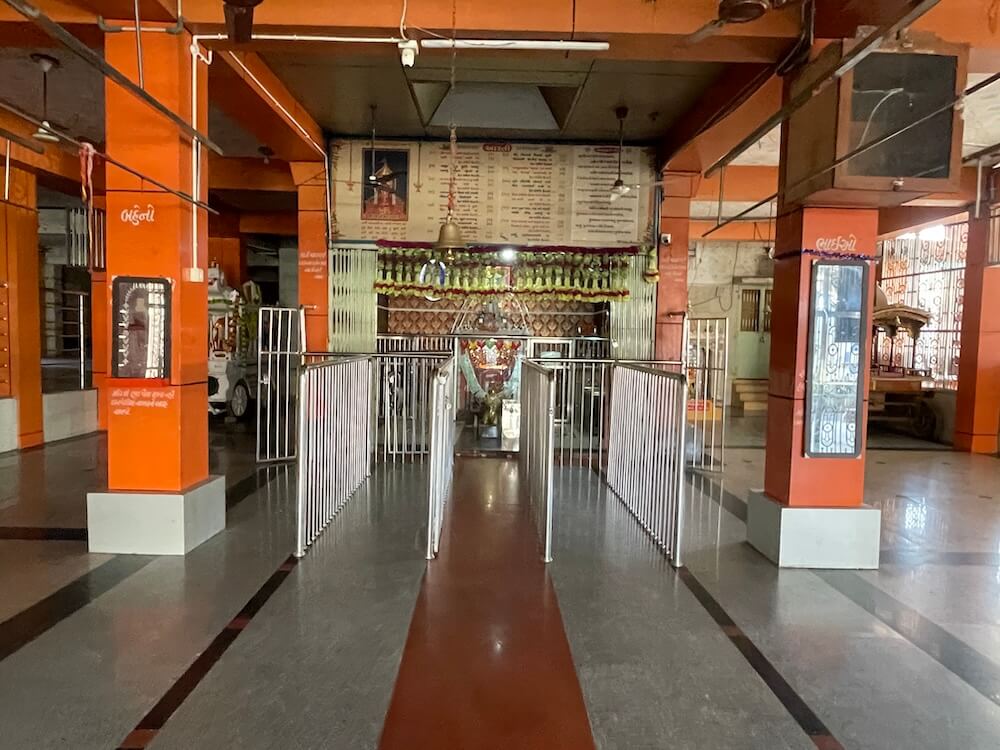 The sanctum is designed with a ‘Pradakshina’ (circumambulation) path surrounding it. At the entrance of the sanctum, a statue of a lion sits upon a pedestal and further inside, the Goddess resides within an exquisite marble ‘Makhar’ (ornate frame). Along the circumambulatory path, there is a small shrine dedicated to Lord Narasimha and the ceremonial ‘Palki’ (palanquin) of Mataji.
Various religious festivals and rites are celebrated at the Siddheshwari Mata Temple throughout the year. Devotees offer coconuts, ‘Chundadi’ (sacred scarves) and ‘Dhvaja’ (banners) at the Mother’s court with great piety. During the festival of ‘Norta’ (Navratra) in the month of Ashwin, special worship is conducted for nine consecutive days. During this period, men and women celebrate the festival with traditional ‘Garbo’ and ‘Dandiya’ dances. Major Hindu festivals such as Diwali, Holi, Dussehra and Makar Sankranti draw vast throngs of devotees to the temple. Religious programmes are organised at the Siddheshwari Mata Temple in a manner similar to the Jogni Mata fair in Palodar or the Modhera dance festival. Every Sunday and on full moon days, large crowds gather for the Goddess’s ‘Darshan’. Devotees may visit the temple daily from six in the morning until eight in the evening.
Useful Information
- Located at 9 km from Mehsana.
- GSRTC (State Transport) and private vehicle facilities are available from Mehsana.
- Private vehicles can reach the temple directly.
- Accommodation and breakfast facilities are available in the vicinity.
साधिमा/सिद्धेश्वरी माता मंदिर
गिलोसन, ताल. मेहसाणा, जिला. मेहसाणा
मंदिरे
Temples
मंदिर
-
वैजनाथ महादेव मंदिर महादेवपुरा (गावडा), ता. विजापूर, जि. मेहसाणा
अधिक माहितीVaijnath Mahadev Temple Mahadevpura (Gavada), Tal. Vijapur, Dist. Mehsana
View Detailsवैजनाथ महादेव मंदिर महादेवपुरा (गावड़ा), ताल. विजापुर, जिला. मेहसाणा
विवरण देखें -
वैजनाथ महादेव मंदिर सोखडा, तालुका विजापूर, जिल्हा मेहसाणा
अधिक माहितीVaijanath Mahadev Temple Sokhada, Taluka Vijapur, District Mehsana
View Detailsवैजनाथ महादेव मंदिर सोखाडा, तालुका विजापुर, जिला मेहसाणा
विवरण देखें -
काशी विश्वनाथ महादेव मंदिर मेहसाणा, जि. मेहसाणा
अधिक माहितीKashi Vishwanath Mahadev Temple Mehsana, Dist. Mehsana
View Detailsकाशी विश्वनाथ महादेव मंदिर मेहसाणा, जिला. मेहसाणा
विवरण देखें