
बहुचरा माता मंदिर
बेचरजी, ता. बेचरजी, जि. मेहसाणा
Bahuchara Mata Temple
Becharaji, Tal. Becharaji, Dist. Mehsana
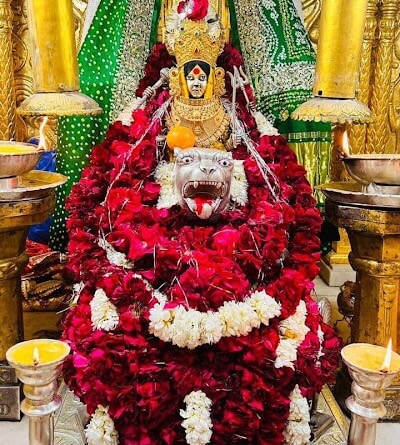 The Bahuchara Mata Temple is situated in Becharaji, within the Mehsana district of North Gujarat. It is revered as the 71st ‘Shaktipeeth’ (seat of divine power) among the 108 predominant shrines of the Adishakti, with its significance documented in the ‘Tantra Chudamani’ text. According to sacred lore, when Sati immolated herself in the sacrificial fire following the insult of her husband by King Daksha, an enraged Lord Shiva bore her body upon his shoulders and commenced the ‘Tandava’ dance. To calm the cosmic fury, Lord Vishnu used the ‘Sudarshan Chakra’ to dismember Sati’s body. Her left hand is believed to have fallen at Becharaji. Bahuchara Mata is also the ‘Kuldevi’ (ancestral family deity) of the transgender community.
According to a historical account, after recovering from a grave illness, King Manajirao Gaekwad of Baroda (1751-1793 CE) offered a precious necklace to the Goddess. Adorned with six blue sapphires and one hundred and fifty diamonds, this ornament is famously known as the ‘Navlakha Haar’. Valued at over 300 crore rupees today, this historic necklace is ceremoniously placed around the deity’s neck every year on the auspicious occasion of ‘Dussehra’.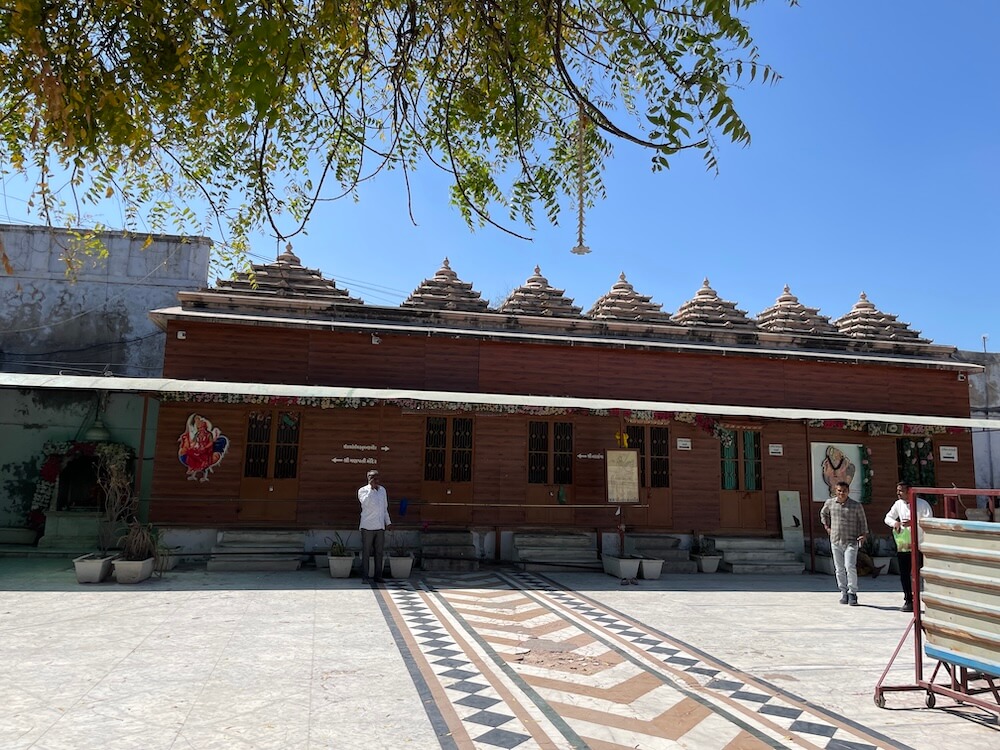
The state of Gujarat is home to three major ‘Shaktipeethas’: Arasur Mountain (Ambaji), Pavagadh and Becharaji. The original abode of Bahuchara Mata is in the village of Shankhalpur, three kilometres away, from where she is believed to have manifested beneath a ‘Varkhadi’ tree in Becharaji. In antiquity, a demon named Dandasur, who had obtained a boon from Lord Shiva, resided in nearby Daityarajpur and unleashed chaos across the three worlds. Upon the entreaties of the gods and sages, the Goddess assumed the form of an eight-year-old maiden and, after a fierce battle, slew the demon with her ‘Trishula’ (trident). Having vanquished numerous demons within the forest, she earned the title ‘Bahuchara Devi’ (The Goddess of Many Deeds/Wanderings) and the town itself derived its name, 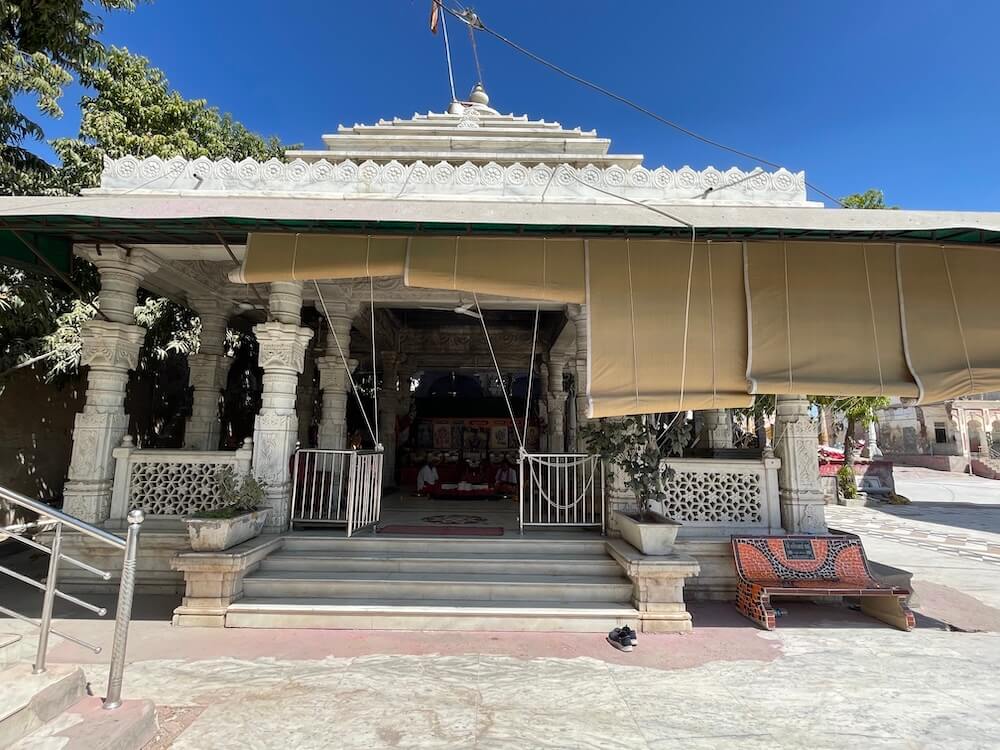 Becharaji, from her. Bahuchara Mata is also worshipped by the transgender community. They worship her with deep devotion as ‘Ardhanarishvara’ – the composite form of Shiva and Parvati.
A popular legend regarding this recounts that a Gujarati king was blessed with a son through the Goddess’s grace, but was saddened to find the prince was impotent. Following the King’s fervent prayers, the Goddess granted the prince virility and guided him towards the path of liberation. The prince subsequently became a staunch devotee, marking the beginning of the transgender community’s tradition of worshipping Bahuchara Mata as their patron deity. 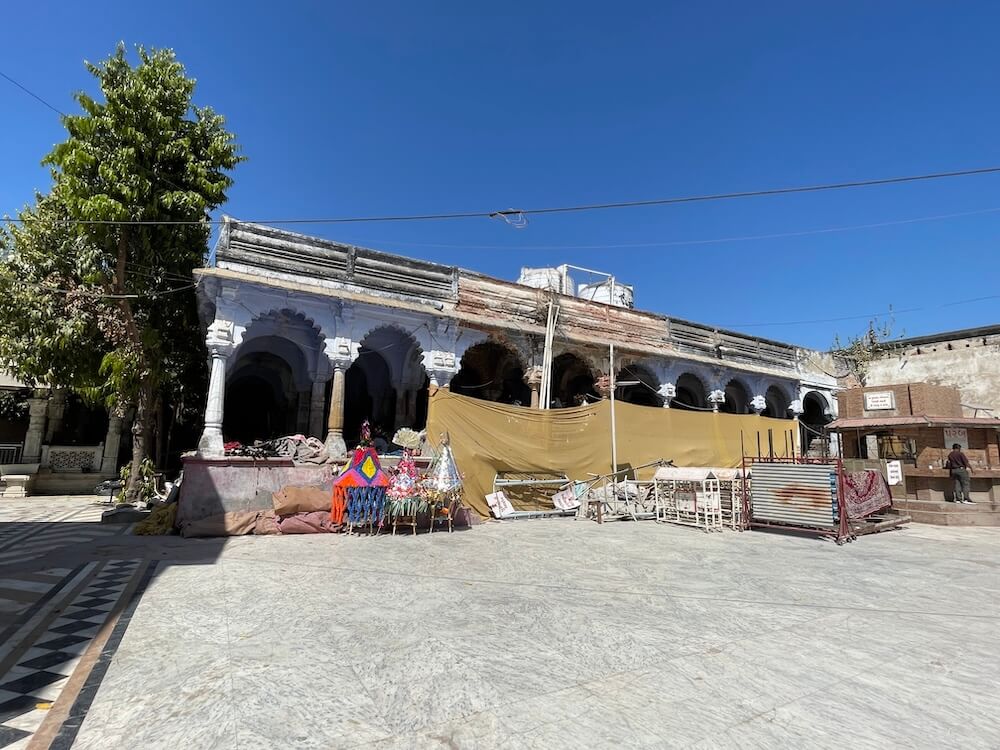 Countless members of the community travel to Becharaji from every corner of the country, praying that they may not be born into the transgender form in their next life. Further legends connect the site to the Mahabharata. During the ‘Agyatvas’ (period of incognito exile), Arjuna is said to have bathed in a local lake to conceal his identity, thereby assuming the form of Brihannada. Before this transformation, he hid his bow beneath a ‘Shami’ tree in the vicinity. To honour Arjuna’s valour and his faith in the Goddess, the tradition of worshipping the ‘Shami’ tree on Dussehra continues to this day. It is also believed that through Bahuchara Mata’s blessings, Shikhandi, who took birth to avenge Amba’s honour, attained manhood before battling Bhishma. Shikhandi is said to have offered prayers to the Mother prior to engaging Dronacharya in combat.
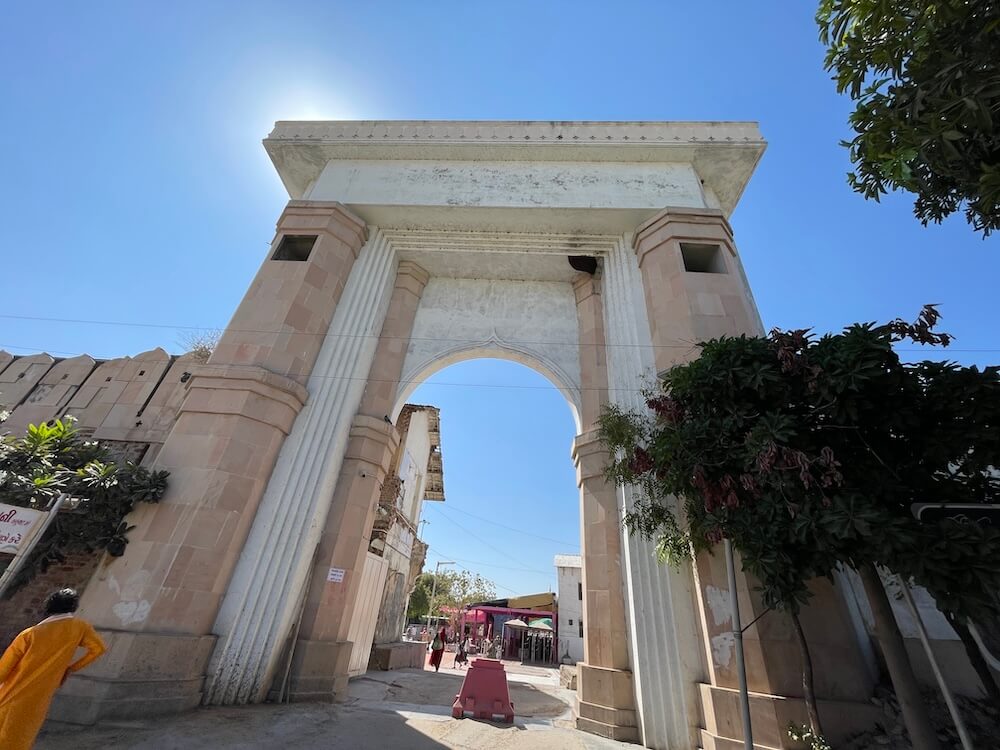 The Goddess’s ‘Vahana’ (divine vehicle) is the cock. Historically, many claim that the Solanki dynasty was an ardent devotee, as the cock was featured on their royal standard. Consequently, she is affectionately known as ‘Murgewali Mata’ (The Mother with the Cock). A local mythical story involving Alauddin Khilji tells that after conquering Patan, he arrived in Becharaji and, awestruck by the temple’s splendour, ordered his soldiers to plunder it. The hungry soldiers slaughtered and consumed the many cocks roaming the precinct, though one managed to escape. At dawn, when the surviving cock crowed, the consumed birds miraculously came back to life inside the soldiers, tearing through their stomachs to emerge. Witnessing this divine retribution, Khilji and his remaining troops fled in terror. This story is told to illustrate the divine power of this temple of Bahuchara Mata.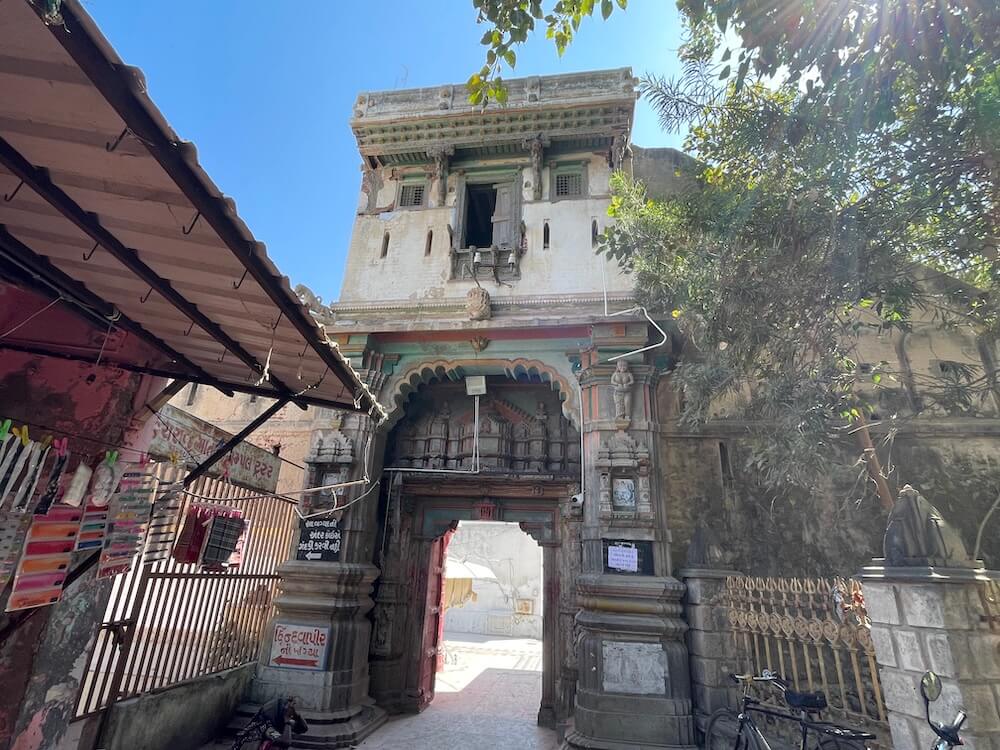
The original temple was erected in the twelfth century and its first major restoration was undertaken in the eighteenth century by King Manajirao Gaekwad of Baroda. In 1781, Manajirao suffered from a severe infectious ailment known as ‘Kalpuli’. When all treatments failed, he sought the blessings of Bahuchara Mata, vowing to spend 1.25 lakh rupees on the temple’s renovation if he recovered. Upon his healing, construction began in 1783 (Vikram Samvat 1839), as recorded on a wall inscription. To fund the annual maintenance of 10,500 rupees, he donated the villages of Bechar, Dodiwada and Shankhalpur. He also offered the ‘Navlakha Haar’, then valued at nine lakh rupees, which is now a priceless national treasure.
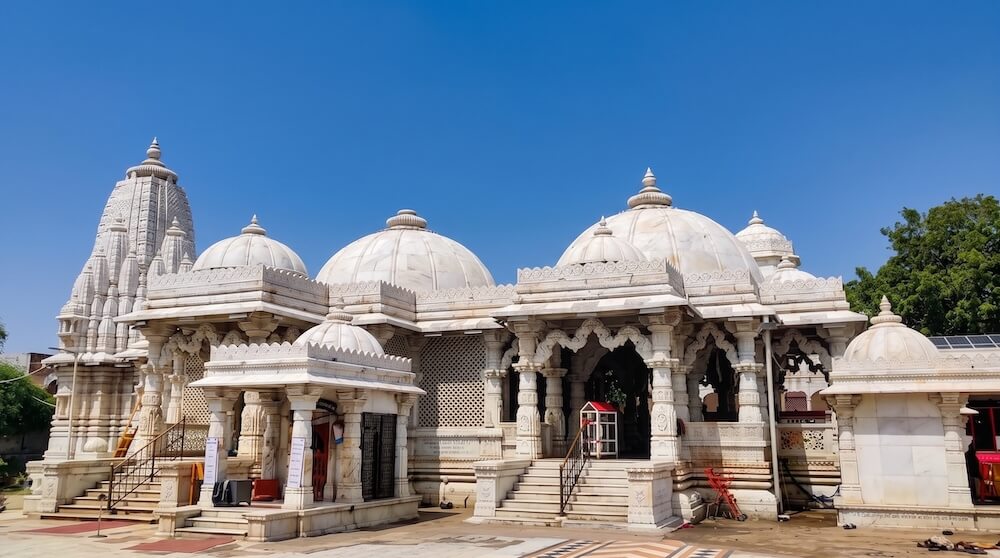
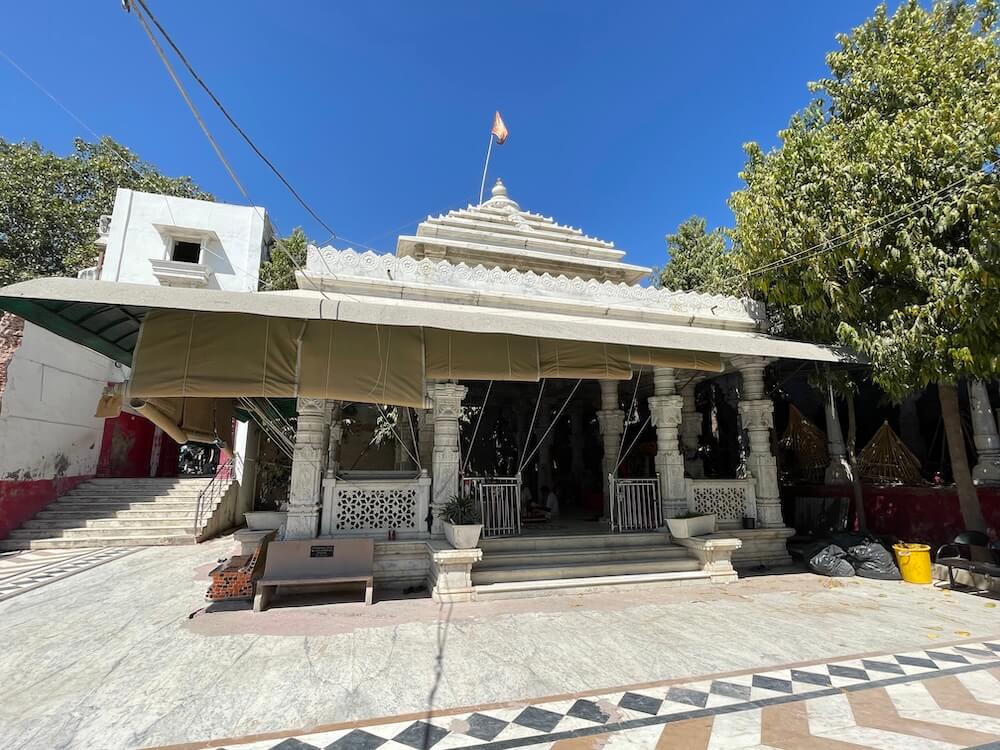
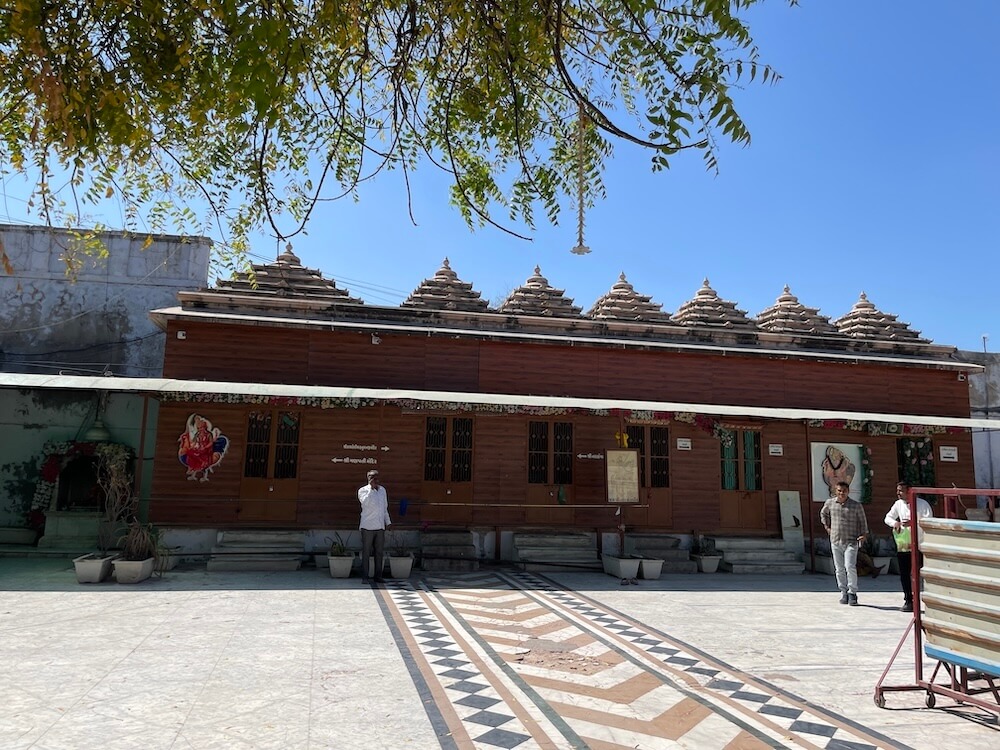
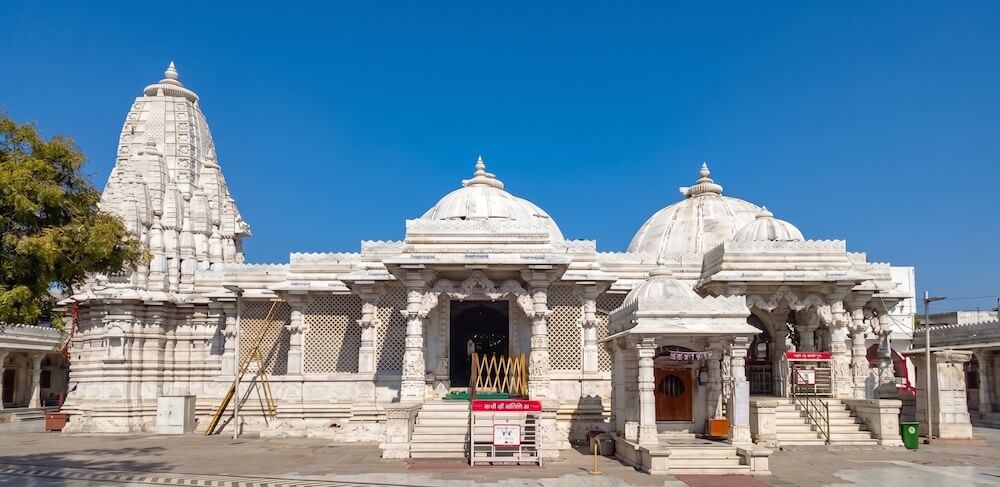
The Government of Gujarat recently restored the ancient temple, beautifying the expansive complex. The path to the shrine is lined with shops selling ritual offerings and ‘Prasad’ (sanctified food). At the main entrance, a niche to the right houses an idol of Ganesha. Within the courtyard stands a magnificent marble structure divided into three sections: the ‘Adyasthan’ (original site), ‘Madhyasthan’ (middle site) and ‘Mukhyasthan’ (main site). A statue of the cock sits upon a pedestal in the front. The temple features a grand ‘Sabhamandapa’ (assembly hall) adorned with arched gateways and pillars displaying exquisite carvings. Enshrined within the ‘Garbhagriha’ (sanctum sanctorum) is a captivating four-armed idol of Bahuchara Mata mounted on a cock, holding a sword, a sacred text and a trident, while her fourth hand is held in the ‘Abhaya Mudra’ (gesture of fearlessness).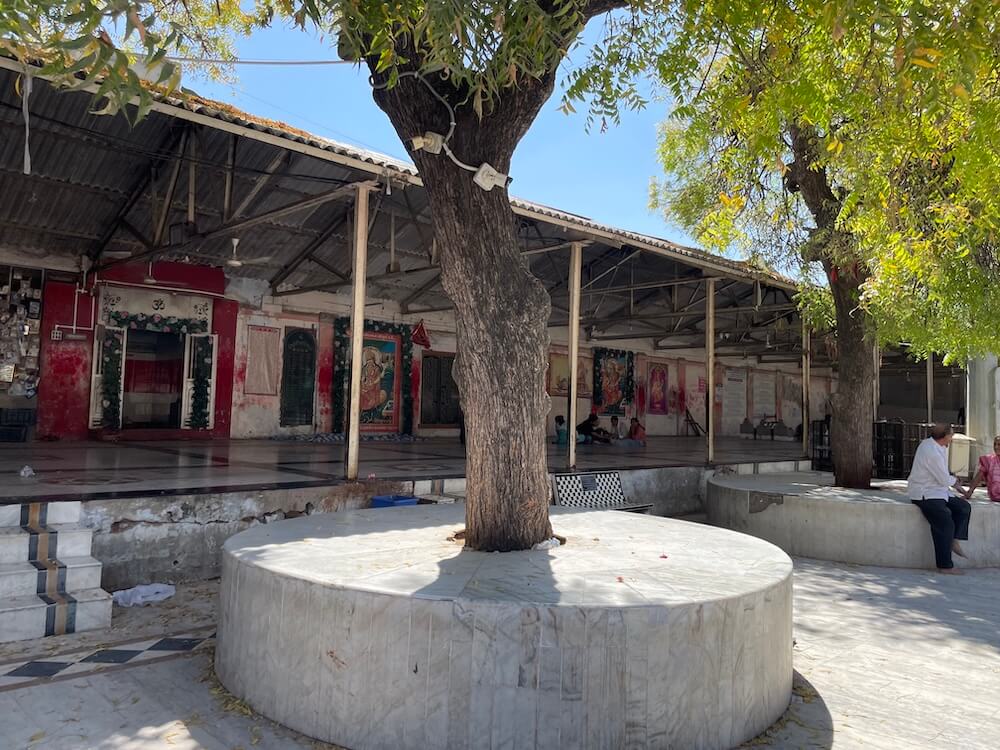
The Goddess’s original manifestation site remains near the ‘Varkhadi’ tree, where she is believed to have appeared on ‘Chaitra Purnima’. A ‘Balayantra’ fashioned from crystal is situated at this spot. The complex also encompasses shrines for Ganesha, Narsangveer, Neelkanth Mahadev, Saheria Mahadev, Siddhanath Mahadev and Kachoria Hanuman, along with an ancient ‘Yagyakunda’ (sacrificial pit). Behind the structure lies the ‘Mansarovar’ lake, which is steeped in local myth. To the east is the residence of Vallabh Bhatt, a supreme devotee and the composer of ‘Anand no Garbo’; his ninth-generation descendants continue to perform the ritual services. A well named ‘Vallabh Bhatt ni Vav’ is located nearby.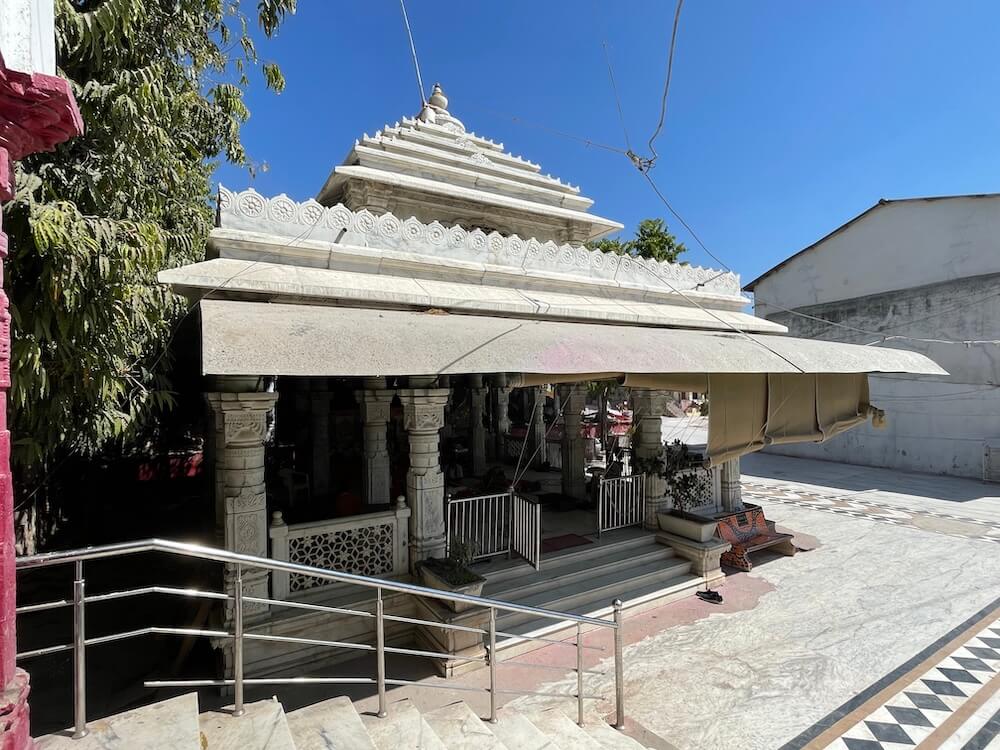 It is believed that the Goddess herself manifested the well to quench the thirst of her devoted follower, who had refused to drink until he had seen her.
As the ‘Kuldevi’ of the Solanki Rajputs, Kolis, Bhils and the transgender community, Bahuchara Mata commands immense reverence. Millions of pilgrims visit to fulfil vows. It is a tradition for parents blessed with children through her grace to perform the child’s first hair-cutting ceremony here. Devotees also offer silver replicas of body parts in gratitude for being healed of various ailments, while others offer live cocks.
On every full moon night, a silver palanquin procession is held. During the festivals of ‘Chaitra Purnima’ and ‘Ashwin Purnima’, the palanquin travels to Shankhalpur for a grand celebration before returning late at night. The five-day Chaitra festival and the nine days of ‘Sharadiya Navratri’ see the temple teeming with life. On Dussehra, the Goddess is carried to the ‘Shami’ tree for the worship of weapons and it is on this day that she wears the legendary ‘Navlakha Haar’. The temple is open for devotees from 5 am to 9 pm daily.
Useful Information
- Located at 500 metres from the Becharaji Bus Station and 42 km from Mehsana.
- GSRTC (State Transport) bus services are available from both Becharaji and Mehsana.
- Private vehicles can reach the temple’s parking area.
- Accommodation and breakfast facilities are available within the precinct.
- Contact – Temple Office, Telephone: 02734-286317, Mob: 9979996206.
मंदिरे
Temples
मंदिर
-
वैजनाथ महादेव मंदिर महादेवपुरा (गावडा), ता. विजापूर, जि. मेहसाणा
अधिक माहितीVaijnath Mahadev Temple Mahadevpura (Gavada), Tal. Vijapur, Dist. Mehsana
View Detailsवैजनाथ महादेव मंदिर महादेवपुरा (गावड़ा), ताल. विजापुर, जिला. मेहसाणा
विवरण देखें -
वैजनाथ महादेव मंदिर सोखडा, तालुका विजापूर, जिल्हा मेहसाणा
अधिक माहितीVaijanath Mahadev Temple Sokhada, Taluka Vijapur, District Mehsana
View Detailsवैजनाथ महादेव मंदिर सोखाडा, तालुका विजापुर, जिला मेहसाणा
विवरण देखें -
काशी विश्वनाथ महादेव मंदिर मेहसाणा, जि. मेहसाणा
अधिक माहितीKashi Vishwanath Mahadev Temple Mehsana, Dist. Mehsana
View Detailsकाशी विश्वनाथ महादेव मंदिर मेहसाणा, जिला. मेहसाणा
विवरण देखें