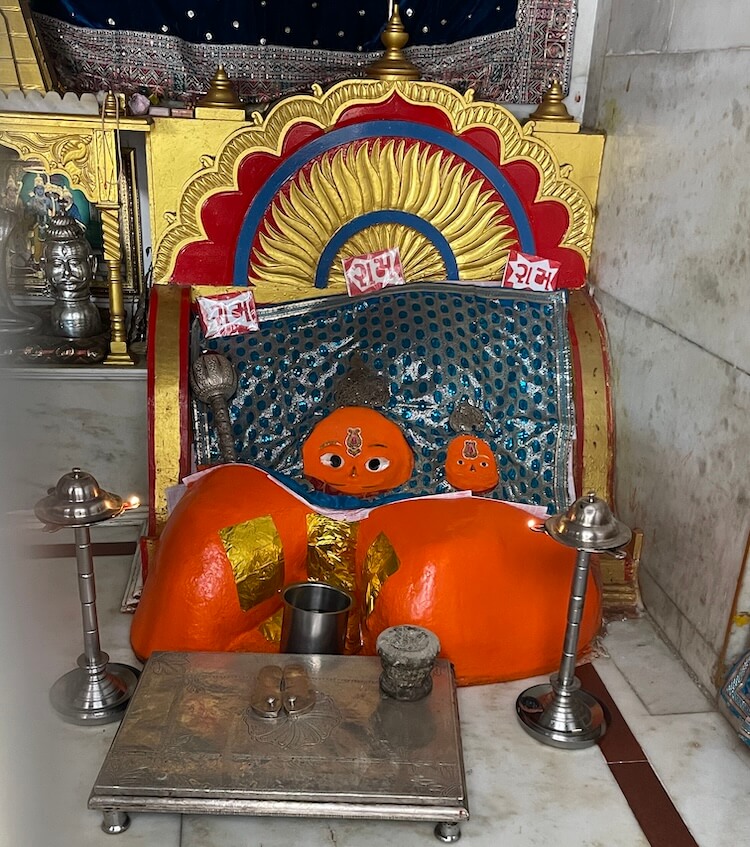
 Perhaps the only temple in India where the Pawanputra (Wind‑Son) Hanuman is worshipped alongside his mother Anjani and his son Makardhwaja is located in the historic city of Vadodara. It is believed to be over 500 years old, with the idols of Hanuman and Makardhwaja considered svayambhu (self-manifested). When heartfelt devotion is offered to the Hanuman idol here, devotees believe they receive ‘rokad’ (monetary) blessings, which is why this Hanuman is revered as Rokadnath. Pilgrims from across Gujarat and even abroad come here to pay homage. Within the same complex, a temple is also dedicated to Rokadnath Mahadev.
Known by many names such as Maruti, Bajrang, Balbheem, Ramdoot, Kesarinandan, Anjaneya, Vajrang, Sankatmochan, Mahavir, Maharudra and Hanumant, Hanuman is among the most revered deities. As one of the seven immortal beings (Saptachiranjiva), his legends are plentiful. The Valmiki Ramayana portrays him as supremely brave, celibate and morally impeccable. Though the epic does not mention his offspring, other texts, like the Jain epic Padmacharita and the 15th-century Anand Ramayana, describe his son Makardhwaja.
 The Puranic legend recounts that after setting Ravana’s Lanka ablaze, Hanuman sought to extinguish the fire that had caught alight on his tail by plunging into the sea. At that time a drop of his sweat fell into the ocean’s depths and was swallowed by a mighty sea creature known as the makara (crocodile). The divine radiance within that droplet impregnated the creature, and from this miraculous conception was born a being whose upper body was that of a monkey and whose lower body resembled the makara. He came to be known as Makardhwaja. Additionally, a second strand of the legend recounts that during the epic Shri Ram-Ravana war, the demon brothers Ahiravana and Mahiravana kidnapped Lord Ram and Lakshman. To rescue them, Hanuman ventured into the netherworld (Patala), where he first encountered Makardhwaja, who was standing guard at the gates.
  This intense reunion between father and son took place near the submerged realm. Another account suggests that when Rama performed the ashvamedha yajna, the sacrificial horse wandered into Patala and was captured by Ahiravana and Mahiravana. Sent to retrieve it, Hanuman confronted Makardhwaja at the entrance, marking their first dramatic meeting in that mystical realm at Bet Dwaraka. Temples dedicated to Hanuman and Makardhwaja exist together in Dwarka and Lucknow, but the only temple housing Hanuman with both his mother and son is believed to be the one in Vadodara.
There is evidence suggesting that human habitation in the Vadodara region dates back to prehistoric times. Gradually, settlements arose around forests of ankota trees (Alangium salviifolium), 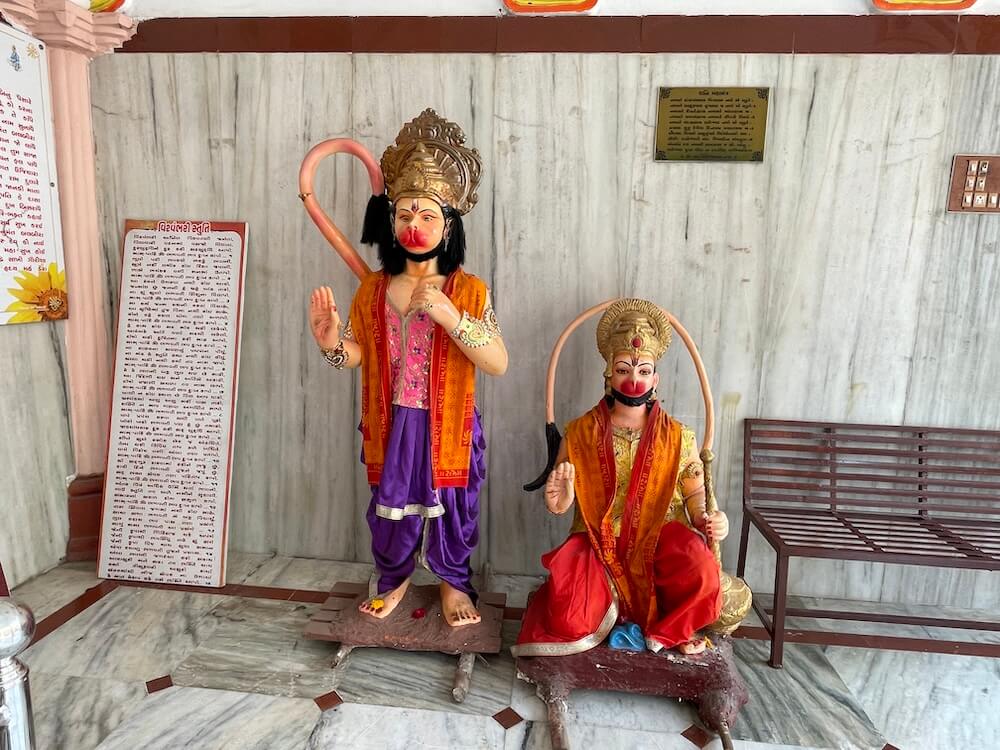 and this locale came to be known as Ankota or Akota. Over time, with the proliferation of banyan trees, the name evolved into Vatpatra or Vatpatra; records of this name exist from the 5th century. By the 10th century, the Chalukyas of Gujarat recognized the village as an administrative center. Historically, a small fort once stood there. In the 16th century, a laborer digging in this area unearthed buried coins. During further excavation, he discovered a self-manifested idol of Hanuman along with his son Makardhwaja. The villagers, filled with reverence, enshrined the idol and over time constructed a temple around it. Following recent renovation, the temple today stands in its grand and magnificent form.
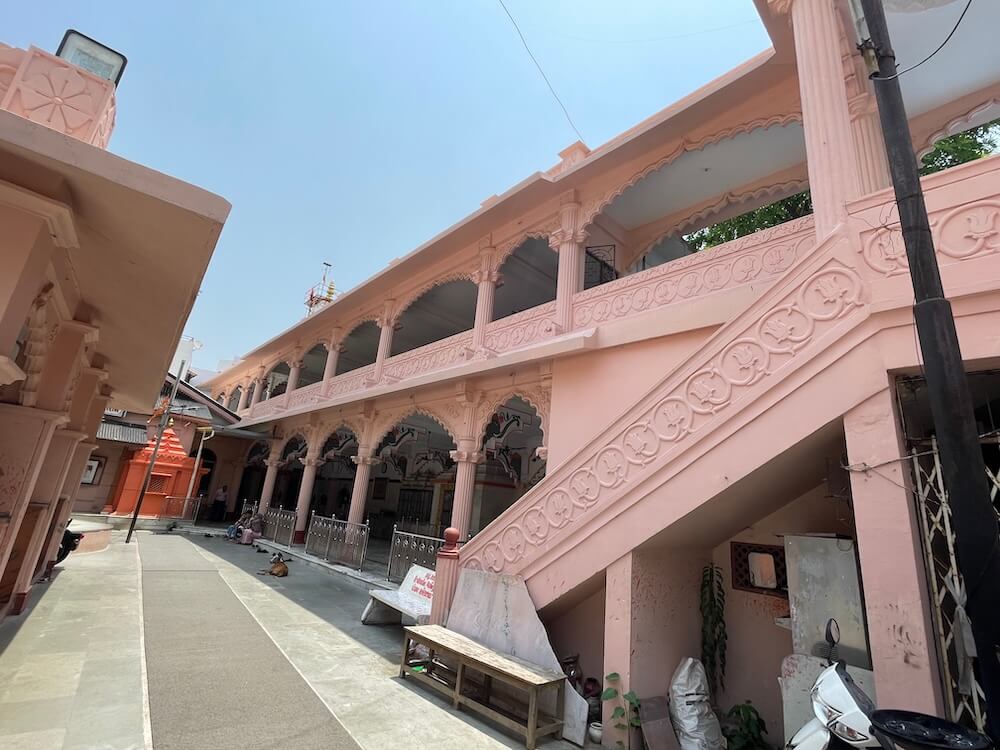
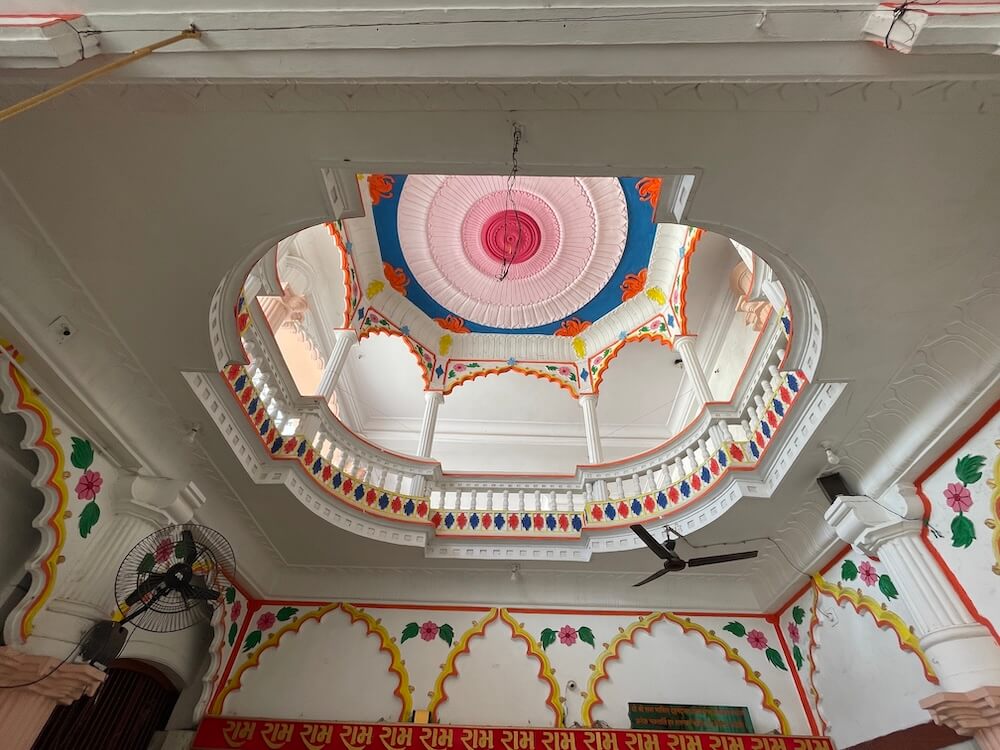
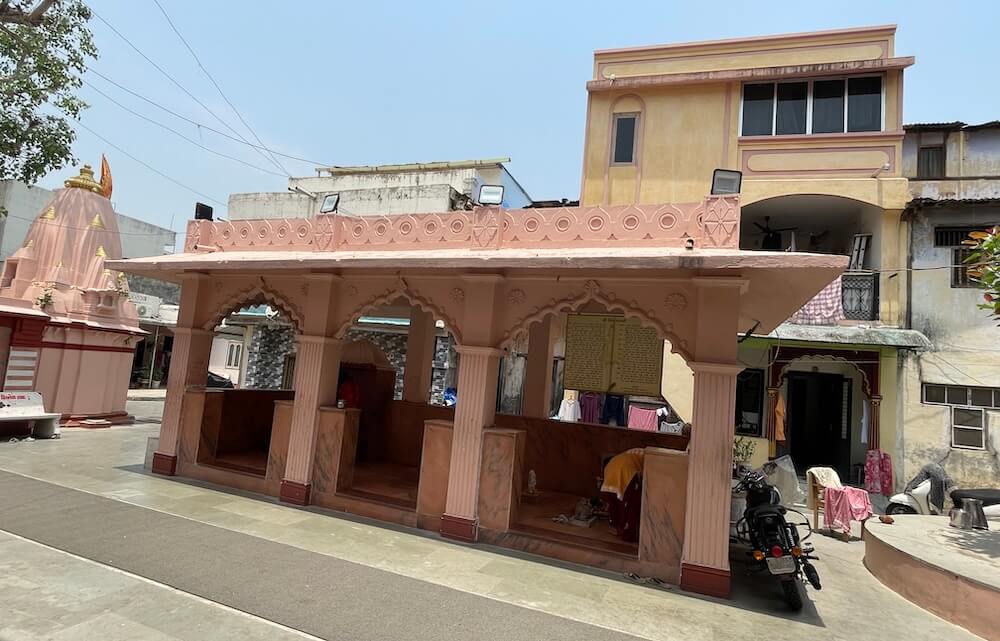
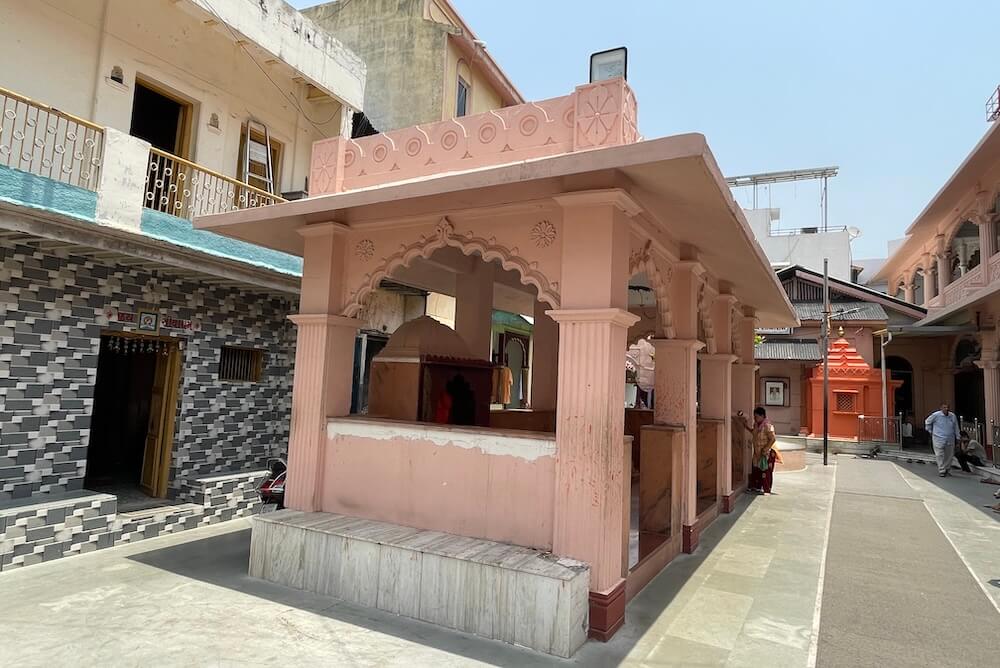
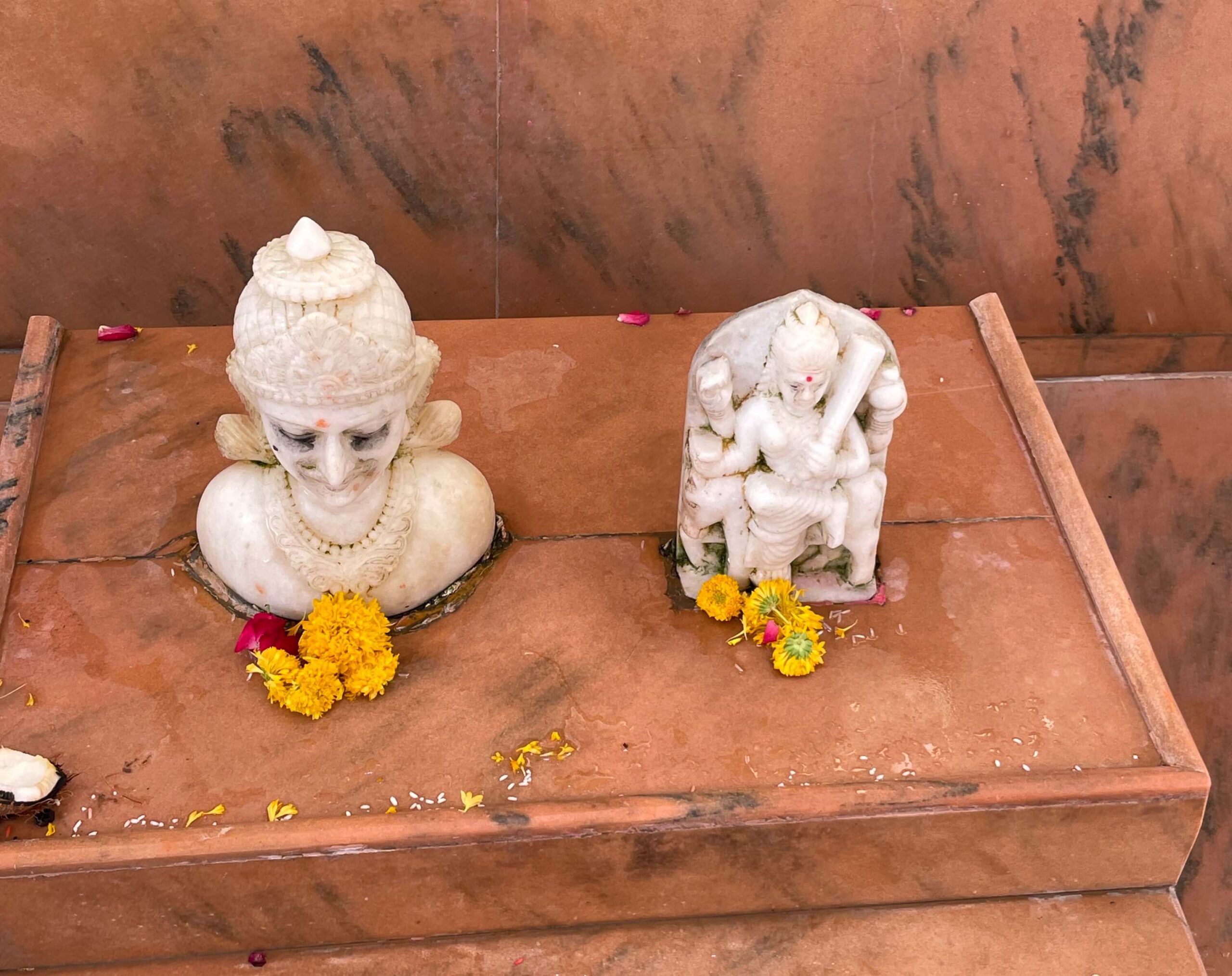
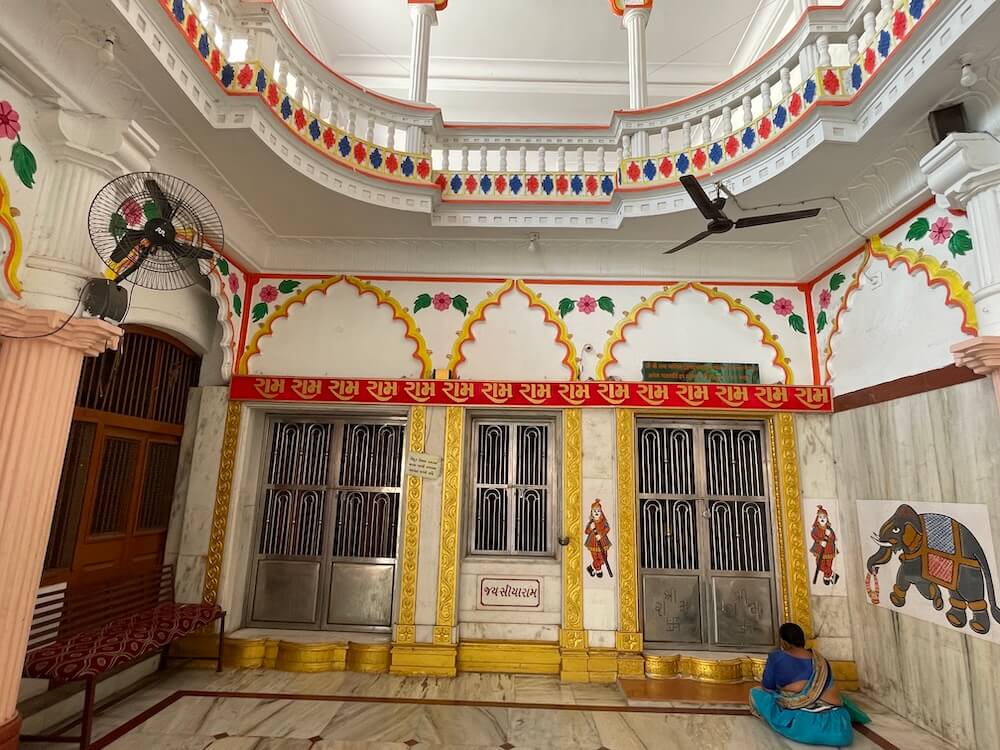
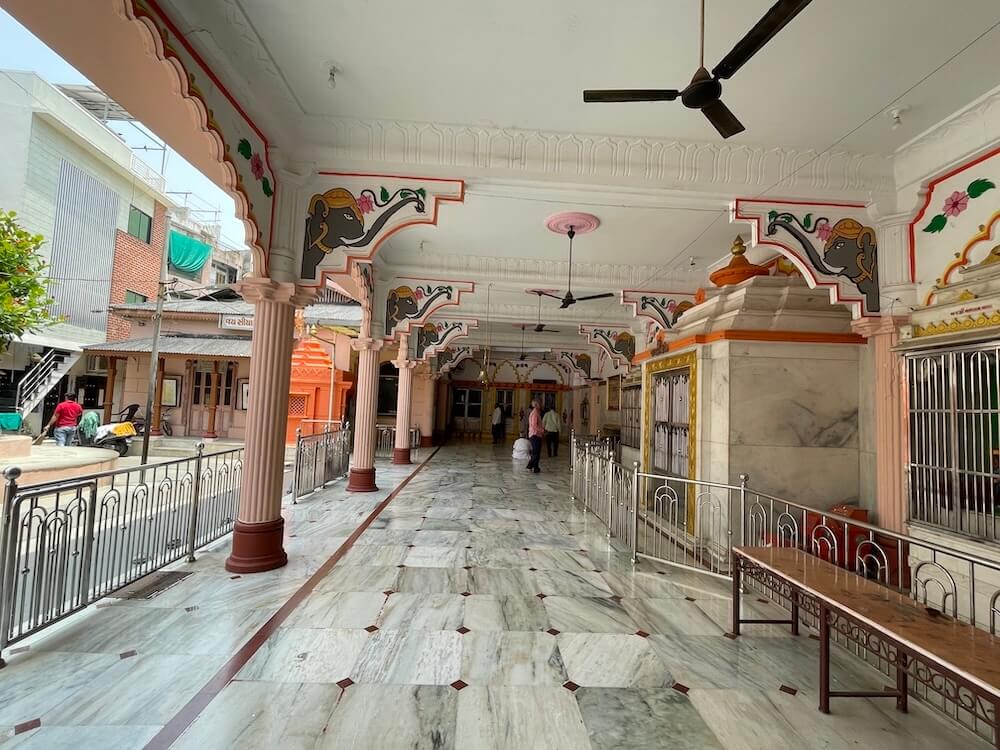
Situated opposite the Rokadnath police outpost in the bustling Nava Bazaar area, the temple complex is entered through the arched gateway. 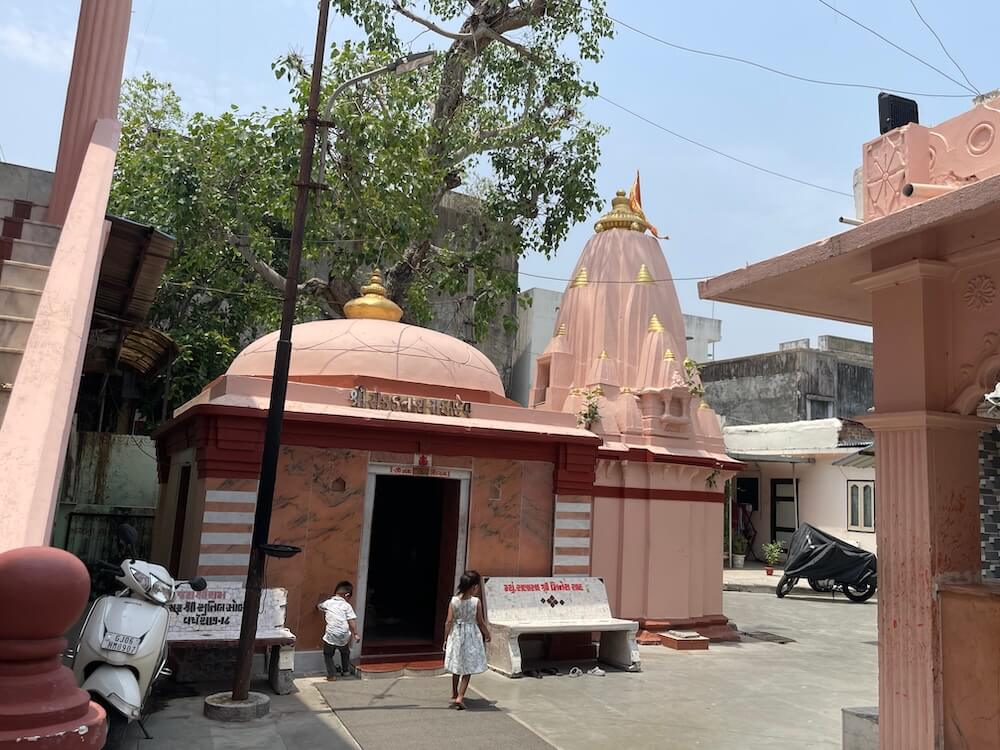 A courtyard shaded by banyan and pipal trees features a small shrine to Ganga Mata with a vessel of holy water. To the left stands the double-storied temple of Hanuman, composed of a spacious sabhamandap and the garbhagriha. The hall is topped with a dome-like roof. A small Shiva temple is located within the hall, alongside a shrine for Kaal Bhairav. Marble shrines to Jalaram Baba, Dattaguru and Sai Baba occupy the compound and two festival idols of Hanuman stand nearby. Within the sabhamandap, the entrance to the garbhagriha has two steel doors and a large window. On the right side inside, a marble statue of Hanuman and Makardhwaja – each with circular faces and smeared in vermilion – rests on a throne-like seat. The garbhagriha houses an idol of Anjani Mata in a niche.
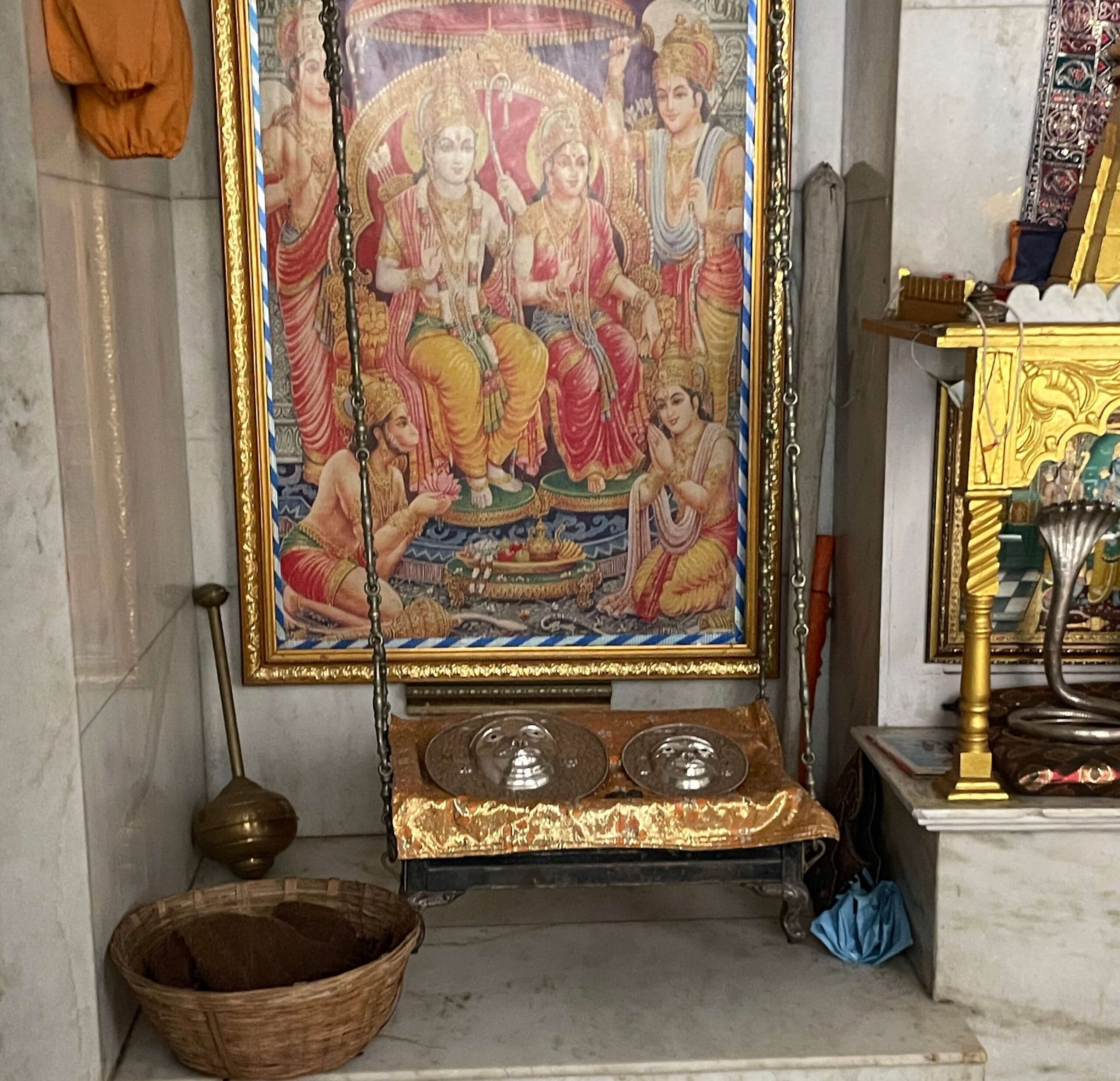
  Adjacent is a smaller chamber with a silver mask of Mahadev and a serpent idol on a swinging throne, flanked by large portraits of Sri Ram and Seeta.
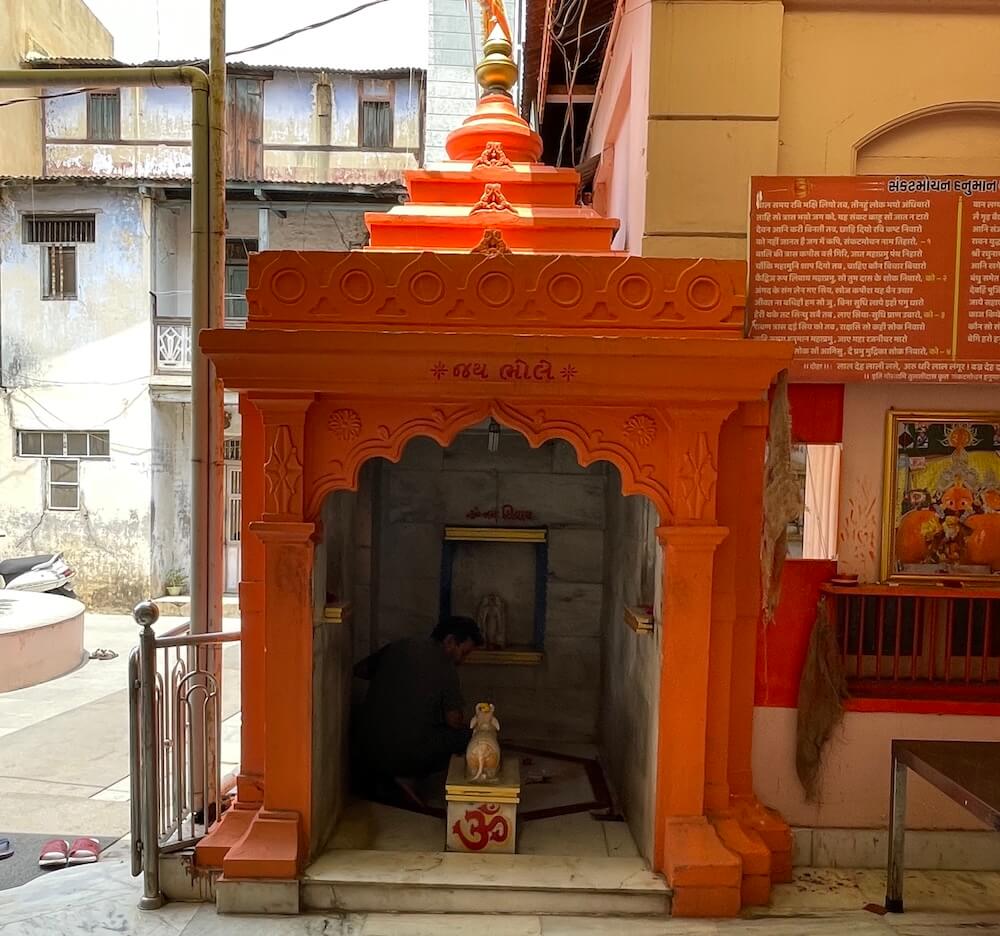
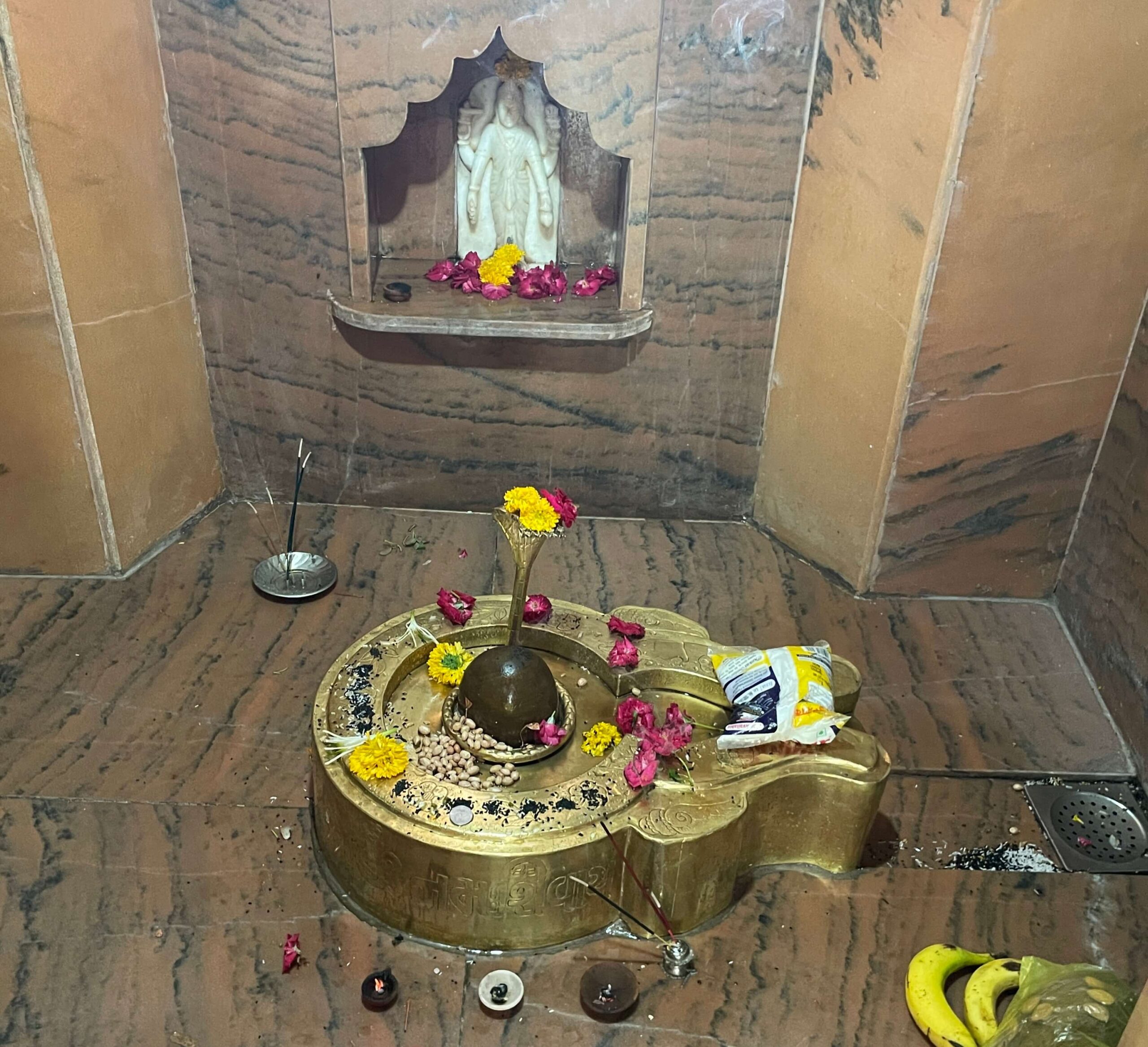
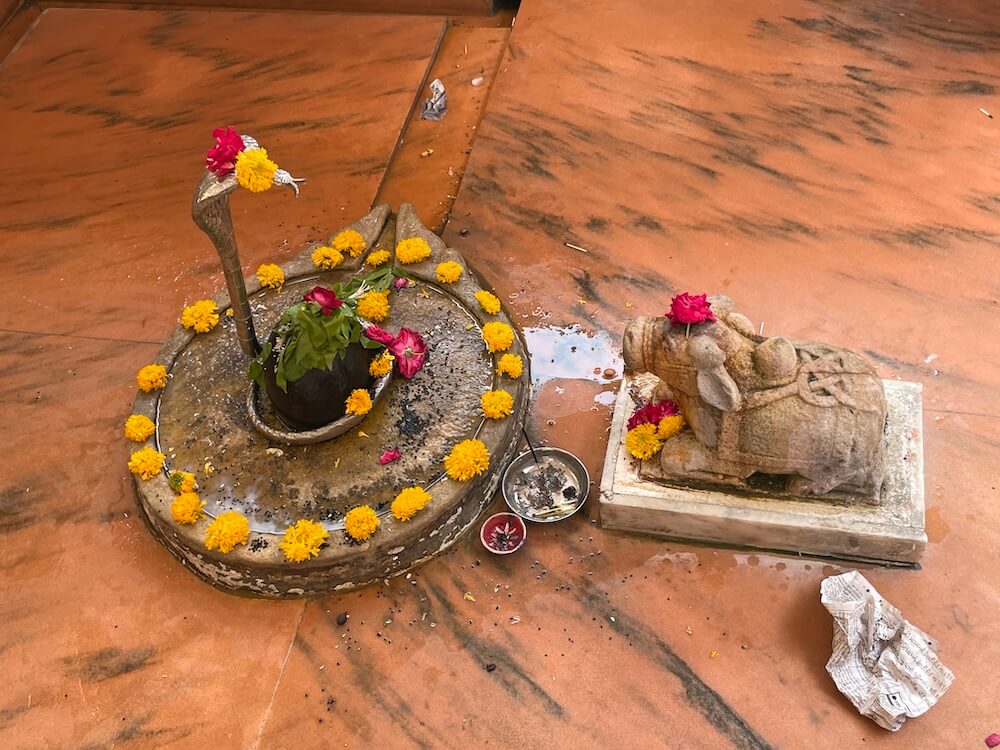
The temple complex also hosts the majestic Rokadnath Mahadev Temple, featuring a sabhamandap and garbhagriha. The assembly hall has a dome-shaped spire, while the sanctum features a soaring urushringa-style shikhara crowned with a golden amalaka and kalasha. A marble Nandi and tortoise carving adorn the hall. Within, a brass Shiva pindi sits beneath a brass serpent hood and a marble image of Parvati stands in a rear niche. The premises also host shrines to deities like Krishna, Ambamata, Mahakali, Satyanarayan, Baliya Dev, Sheetla Mata and Bhutdi Hanuman.
Devotional days are Tuesdays and Saturdays when large numbers of worshipers gather. Daily readings of the Shiv Purana, Garuda Purana and Vishnu Purana are conducted. On Hanuman Jayanti, a grand celebration includes 108 havans and the recitation of the Sundarakanda. An evening procession weaves through areas like Nani Chipwad, Champaner Darwaja, Bank Road, MG Road, Laheripura and Gandhinagar, returning to the temple for a grand closing ceremony and night maha-aarti. Devotees are given sunthvda (ginger-jaggery sweets). Many devotees also visit here on Saturdays during the month of Shravan. Several festivals, including Mahashivratri, Ram Navami, and Krishna Janmashtami, are celebrated here.