
रोकाडिया हनुमान मंदिर
आनंद शहर, ता. व जि. आनंद
Rokadiya Hanuman Temple
Anand City, Tal. and Dist. Anand
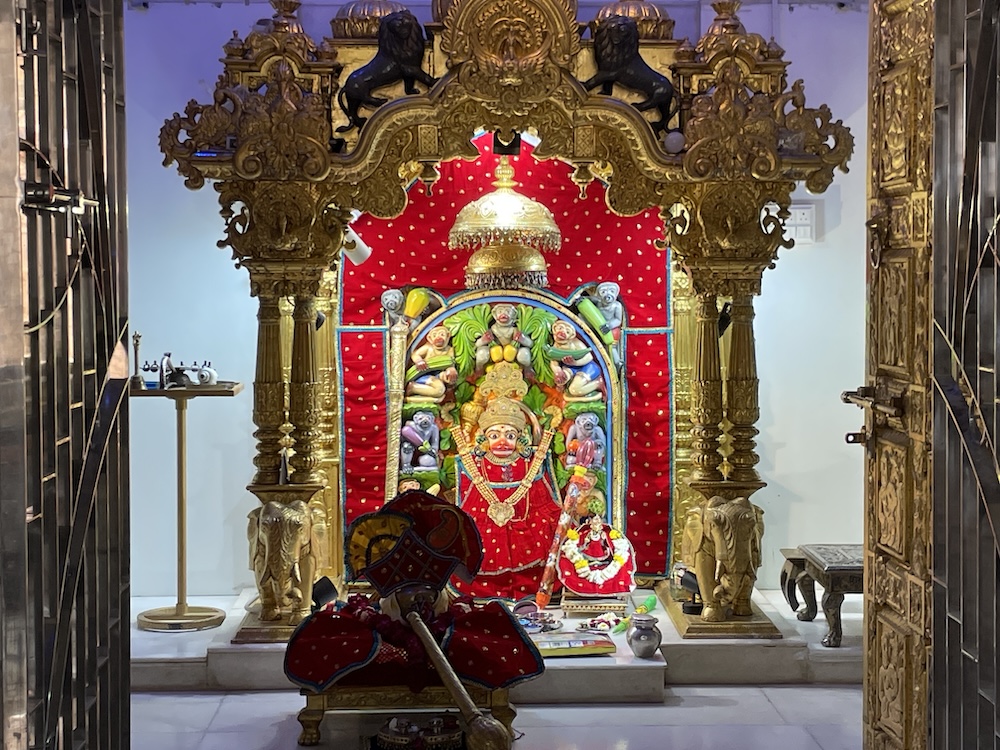 Although the Swaminarayan Sampradaya within the Vaishnava tradition primarily venerates Shri Krishna, according to established temple conventions the idols of Hanuman and Ganesha also occupy an important place within its temples. Among the many temples of this tradition spread across the world, two shrines in which Hanuman is the principal deity enjoy particular renown. Alongside the celebrated ‘Kashtabhanjak Hanuman’ at Sarangpur, the ‘Rokadiya Hanuman’ Temple in the city of Anand in Gujarat stands as a prominent centre of devotion. This form of Hanuman is especially revered as a deity who grants immediate blessings, a god believed to provide ‘rokad’ – that is, instant or direct relief from both the worldly and spiritual difficulties faced by devotees.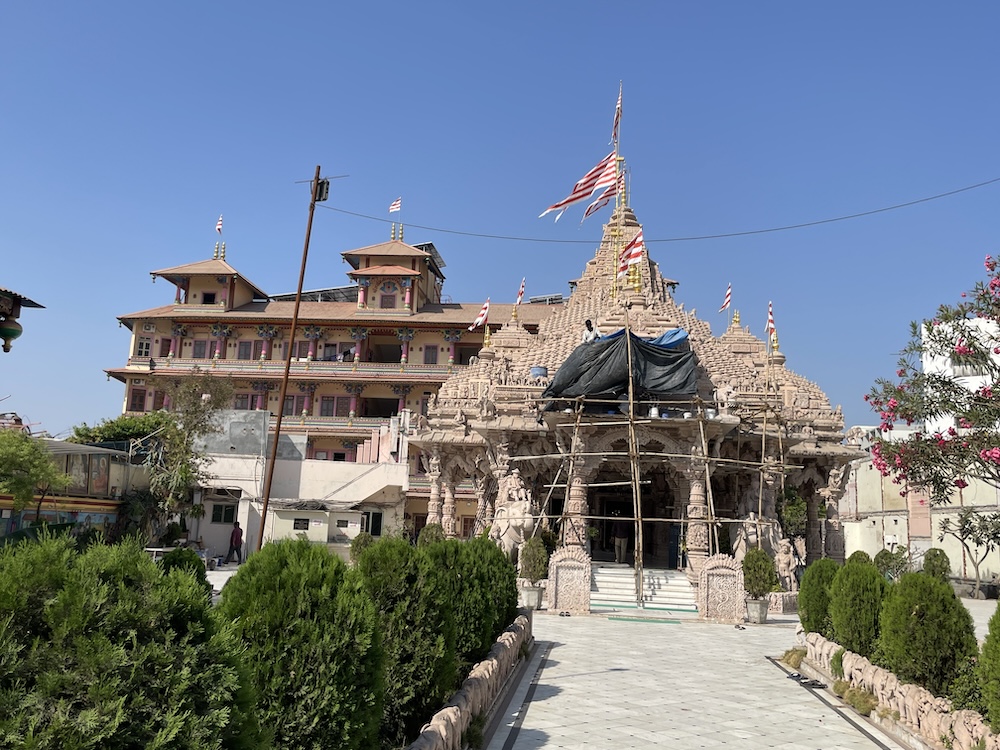
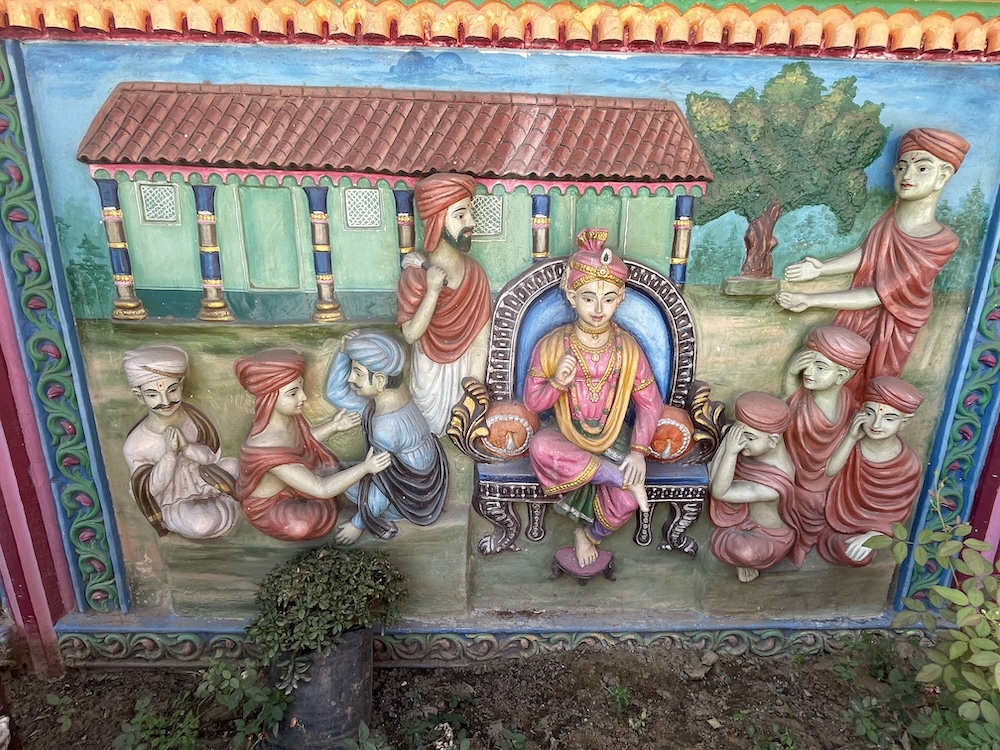
According to historical accounts, nearly two centuries ago a generous ruler named Mayurdhwaj constructed a small temple dedicated to Hanuman upon this hill, thereby laying the spiritual foundation of this sacred site. In the month of Vaishakh in Vikram Samvat 1874 (1817 CE), Bhagwan Swaminarayan arrived in Anand along with his community of devotees. After facing insult within the city, he was preparing to depart towards Vadtal when a devotee named Anandgiri Gosai earnestly requested him to stay. Bhagwan Swaminarayan bathed in the cool waters of a well situated in Anandgiri’s mango grove. There he offered spiritual guidance to the assembled devotees. On that occasion Anandgiri Gosai dedicated his entire orchard to Bhagwan Swaminarayan and upon this very land the present grand temple now stands. 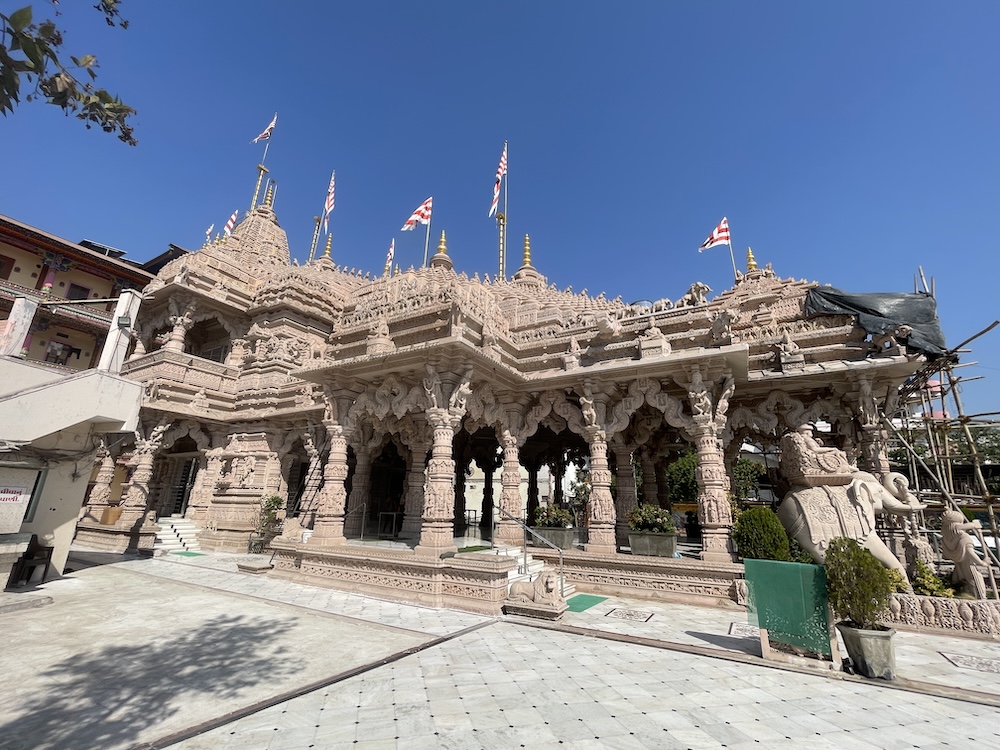 The sacred stone upon which Swaminarayan sat, as well as the well in which he bathed, have been carefully preserved as revered relics to this day.
Within the Swaminarayan tradition, a narrative is also recounted regarding the origin of the name Rokadiya Hanuman and the manifestation of the idol. According to this account, before the arrival of Bhagwan Swaminarayan a tamasic form of Bhairava was worshipped at this location. With the intention that devotees might receive sattvic (pure and spiritually uplifting) blessings, Bhagwan Swaminarayan placed his own silk shawl over that idol and instructed Gopalanand Swami to perform the Aarti after a specified interval. When the silk cloth was removed following the Aarti, it is believed that in place of the Bhairava idol there appeared a radiant image of Hanuman bearing a gentle smile. 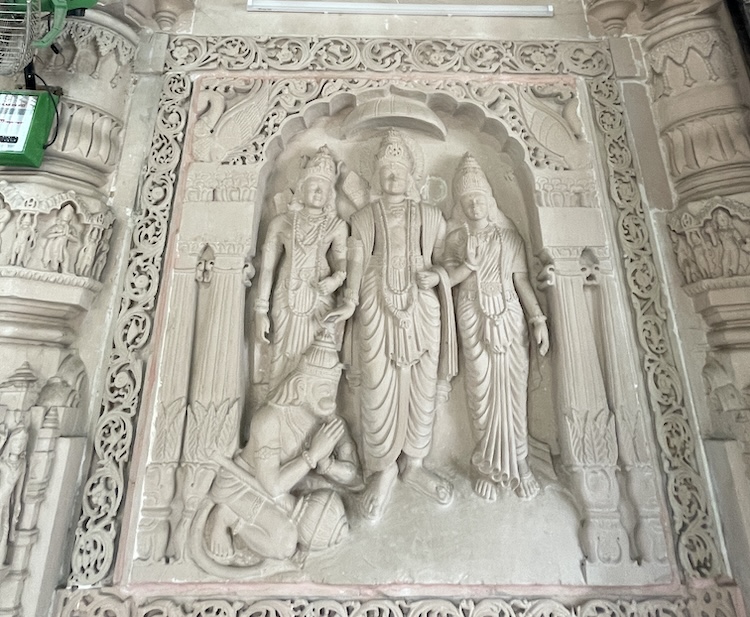 Because Gopalanand Swami described this deity as one who grants ‘rokad’, meaning immediate or direct fulfilment of prayers, the shrine came thereafter to be known as Rokadiya Hanuman.
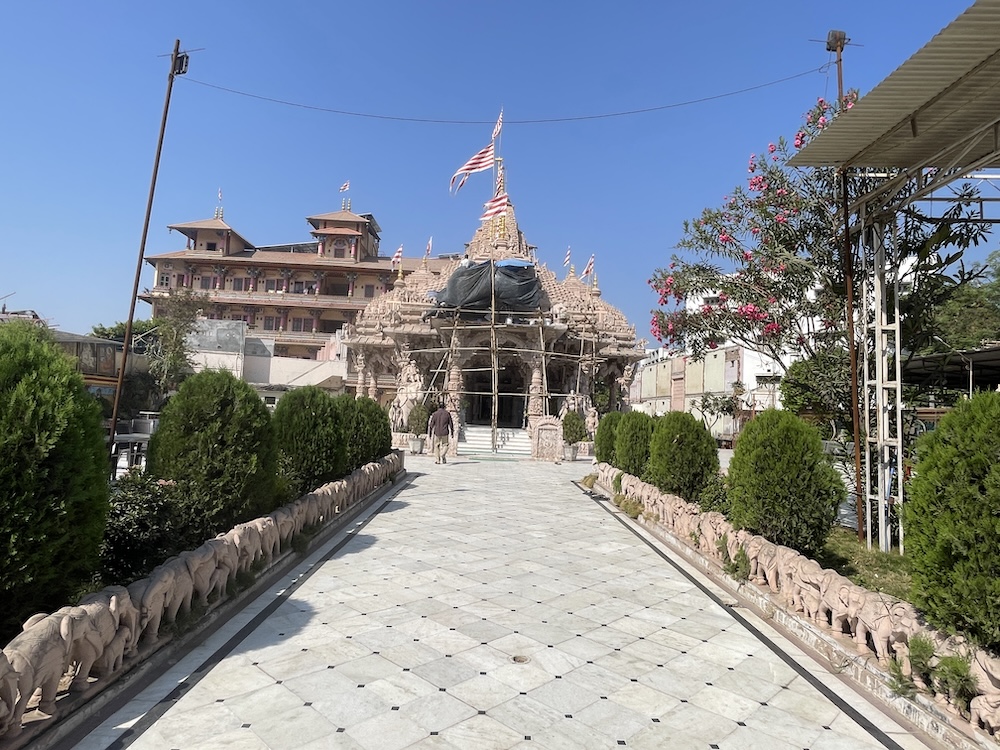
The temple complex stands upon a natural hill known locally as ‘Hanuman no Tekro’ in the central part of Anand city. It lies close to both the railway station and the bus terminus. Passing through the entrance gate set within the surrounding compound wall, one enters a spacious courtyard. Lined with a variety of trees and vegetation, the pathway leading from the courtyard to the temple features a Rangamandap marked by a welcoming arch. On the horizontal beams of the square pillars on either side of this arch are sculpted images of Shri Ram, Lakshmana, Janaki and Hanuman.
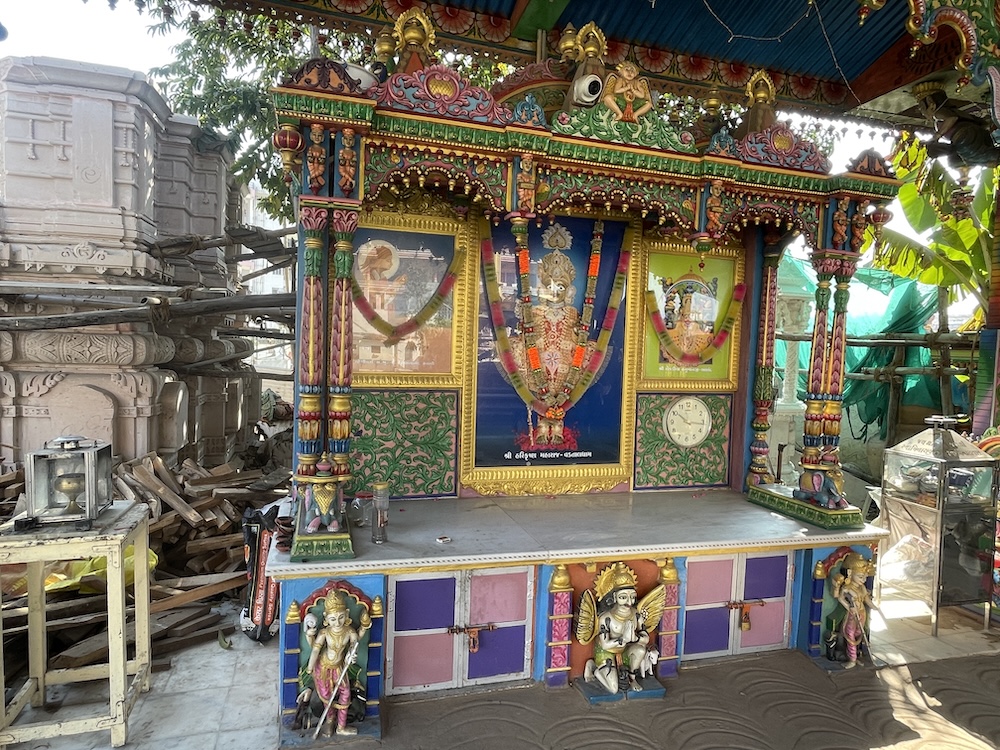
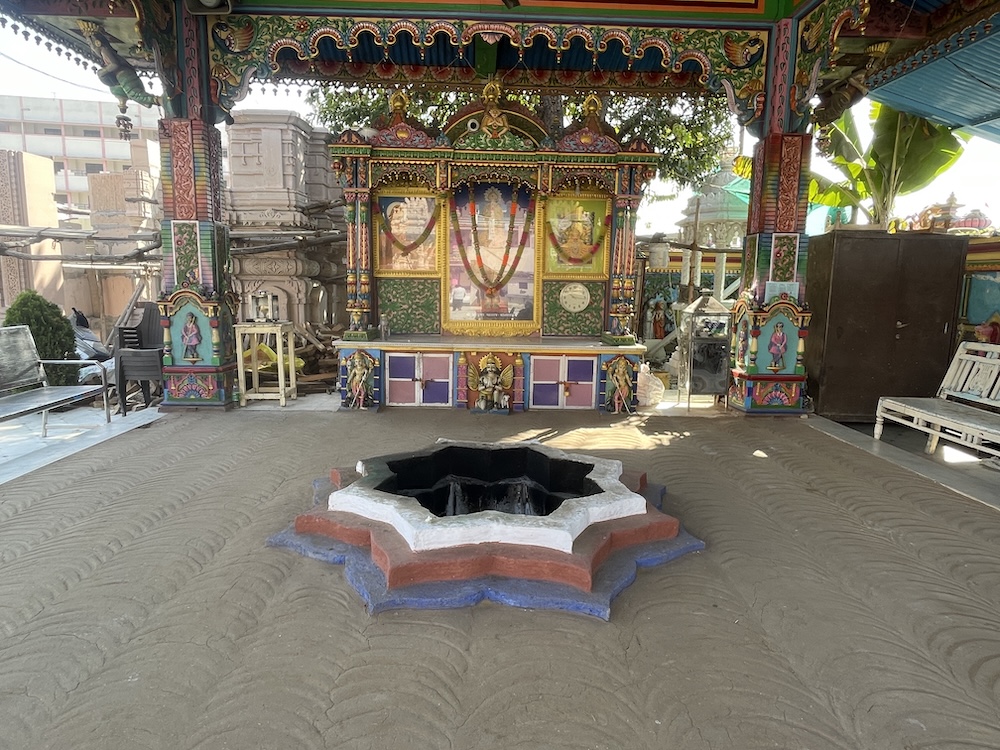 Within the courtyard stands a large Yajnamandap (pavilion for sacred fire rituals). Upon the Vajrapitha within this pavilion, beneath an ornate Makhar (decorative shrine frame), is a portrait of Shri Harikrishna Maharaj of Vadtaldham. At the front of the pedestal is the sculpture of Garuda, while sculptures of Yaksha guardians stand on either side. The pillars of the Makhar, balanced upon sculpted figures of Gajaraj (royal elephants), as well as the decorative Torana above them, are embellished with artistic carvings of Yakshas, Kirtimukhas and various deities. Behind the temple stands a building serving as Bhaktanivas (accommodation for devotees) and alongside the residence for saints a small Gaushala (cow shelter) is also maintained.
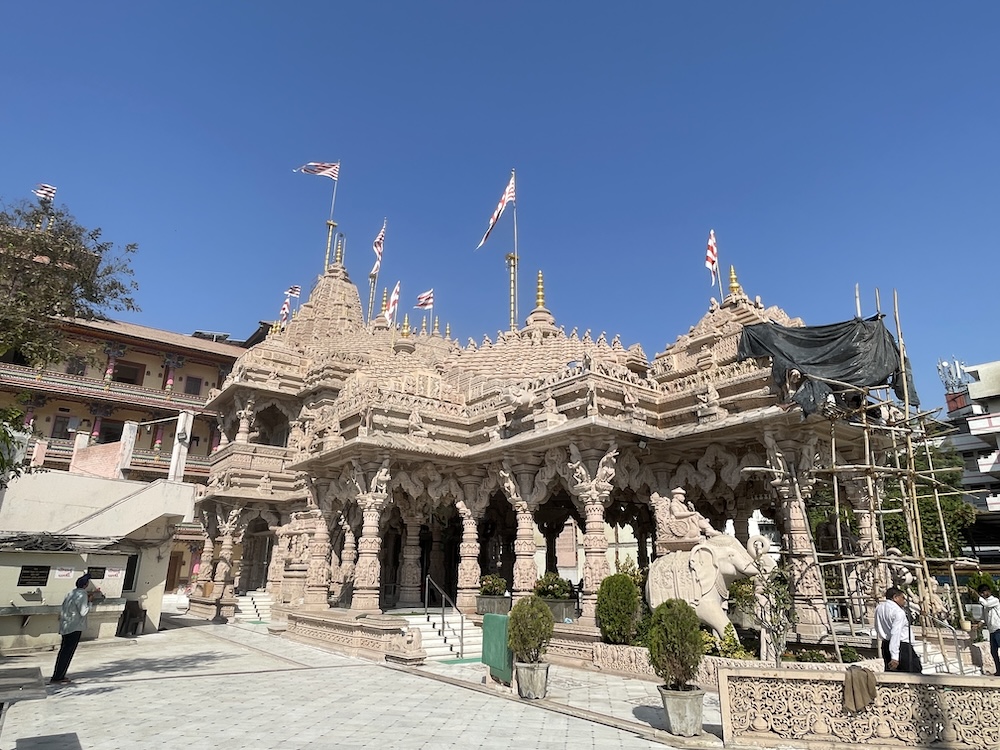
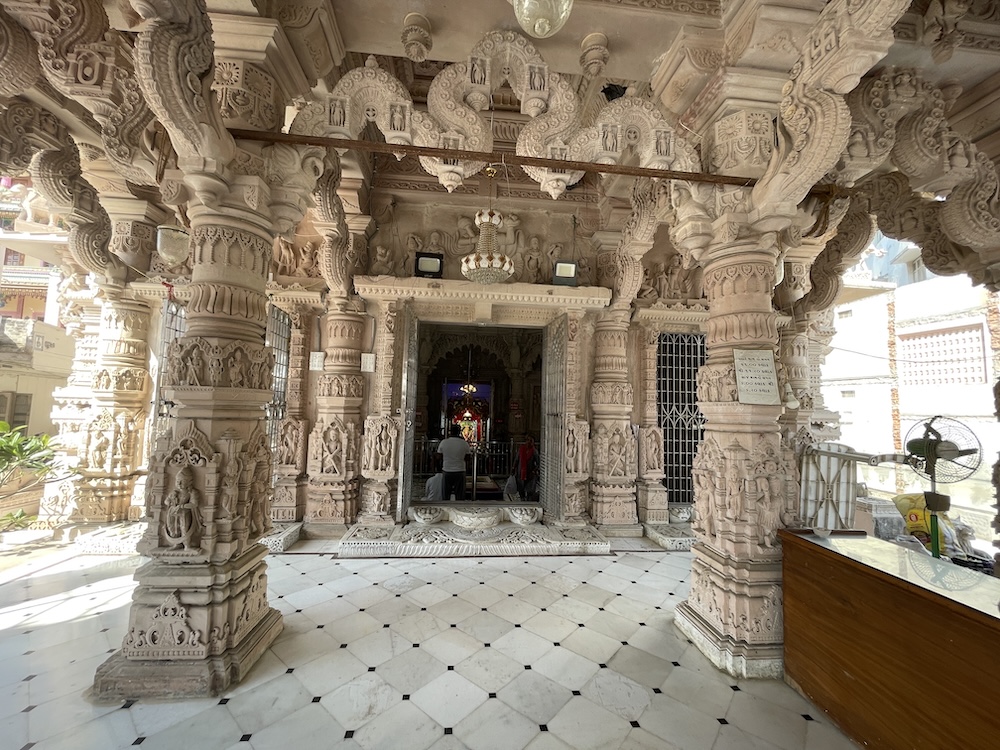
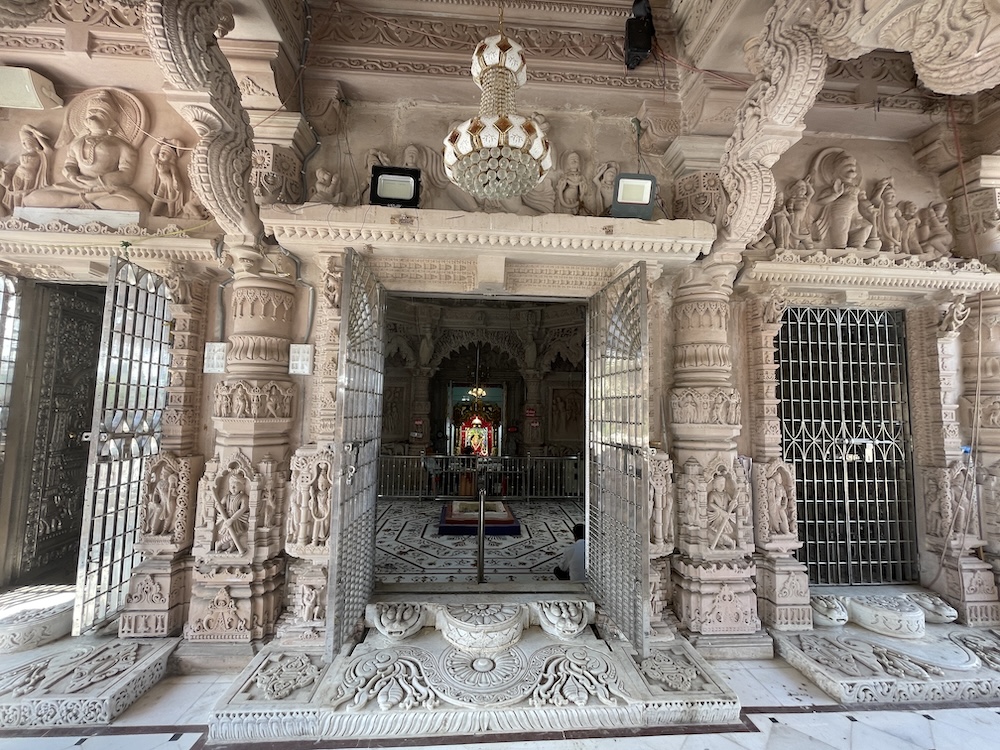
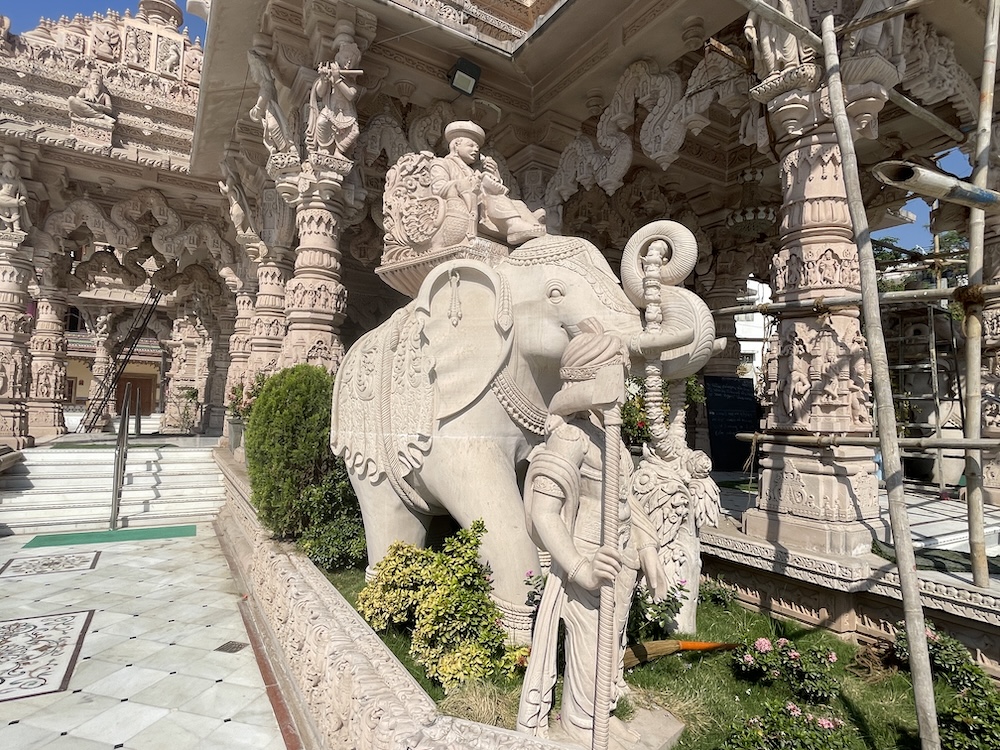
The temple itself, an impressive example of Rajasthani architectural style, has been constructed from the red sandstone quarried at Bansi Paharpur. 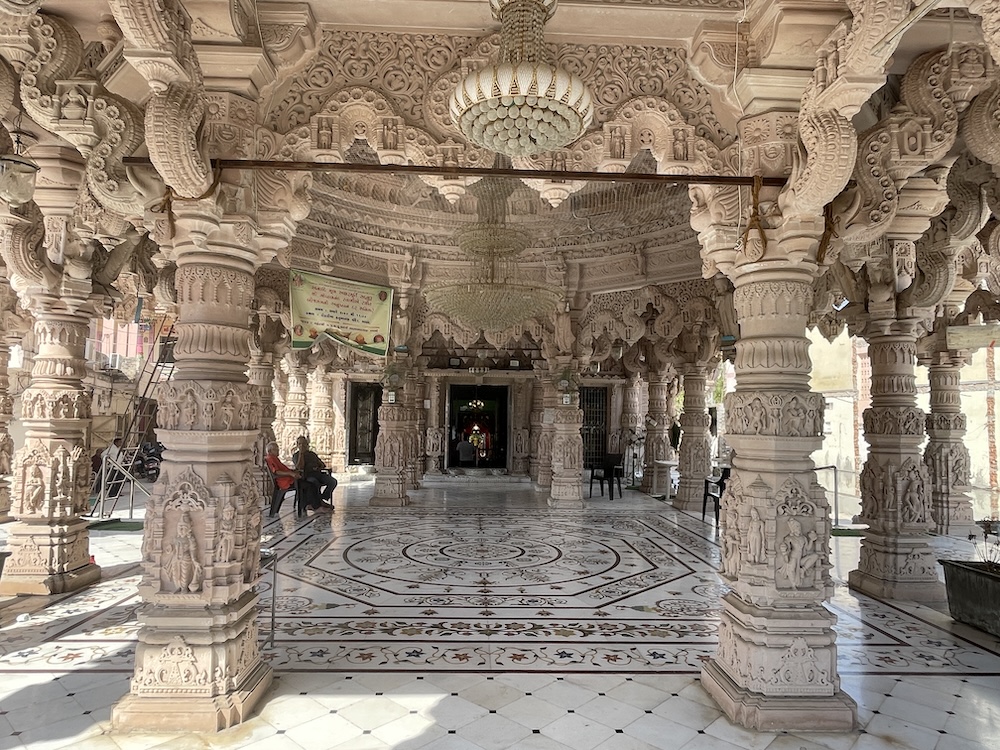 Its structural arrangement consists of a Mukhamandap (entrance pavilion), Mandap (hall), Sabhamandap (assembly hall), Antaral (vestibule) and Garbhagriha (sanctum). At the entrance stand sculpted figures of Gajaraj accompanied by mahouts and riders seated in ceremonial howdahs. Steps lead upward to the Mukhamandap, which is slightly elevated above the courtyard.
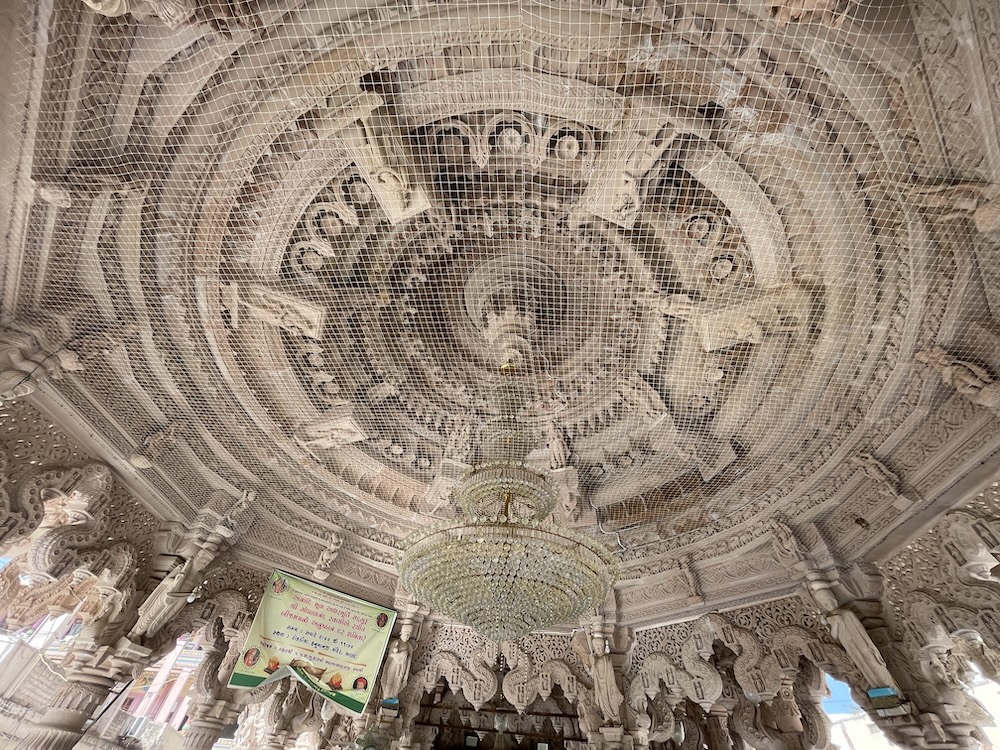
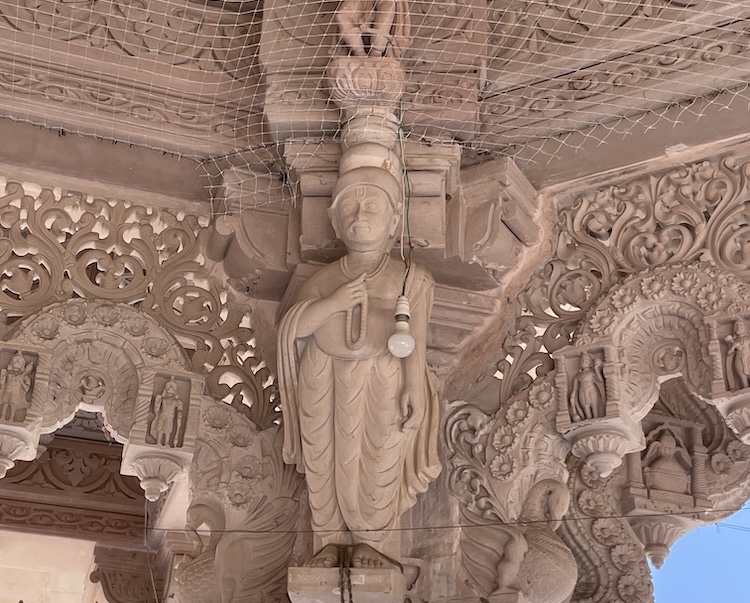
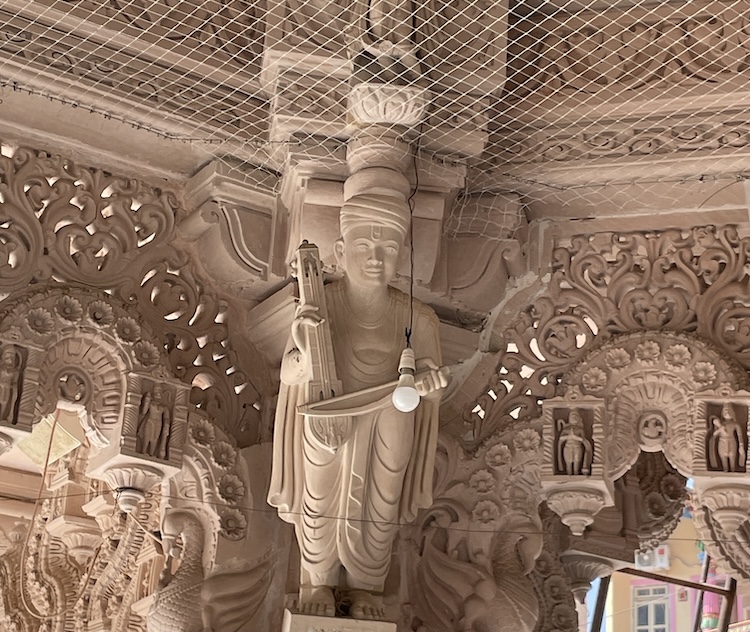
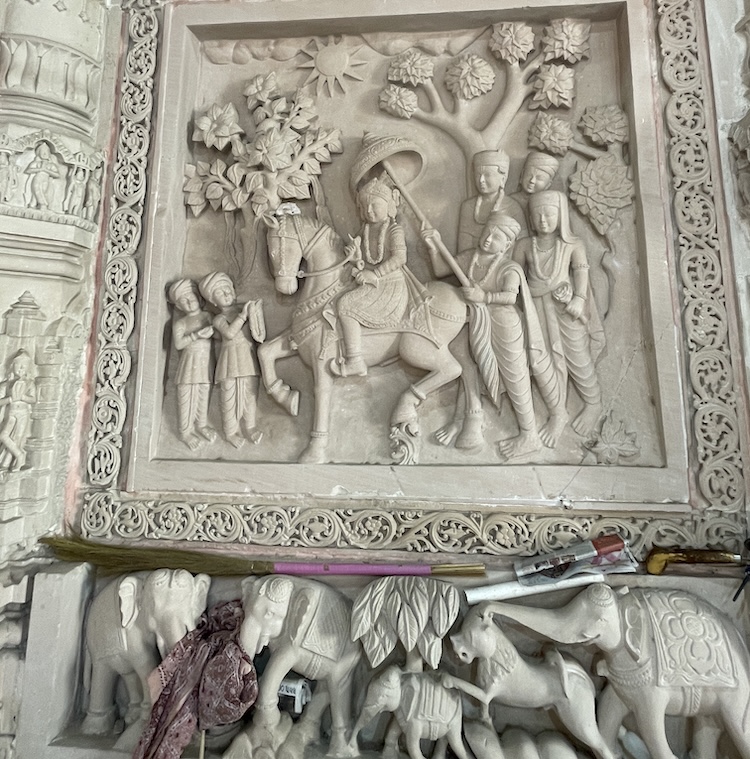
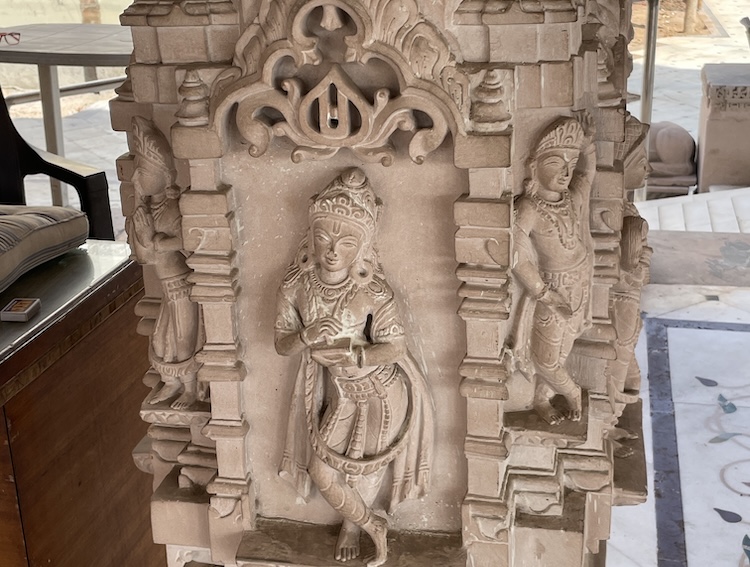
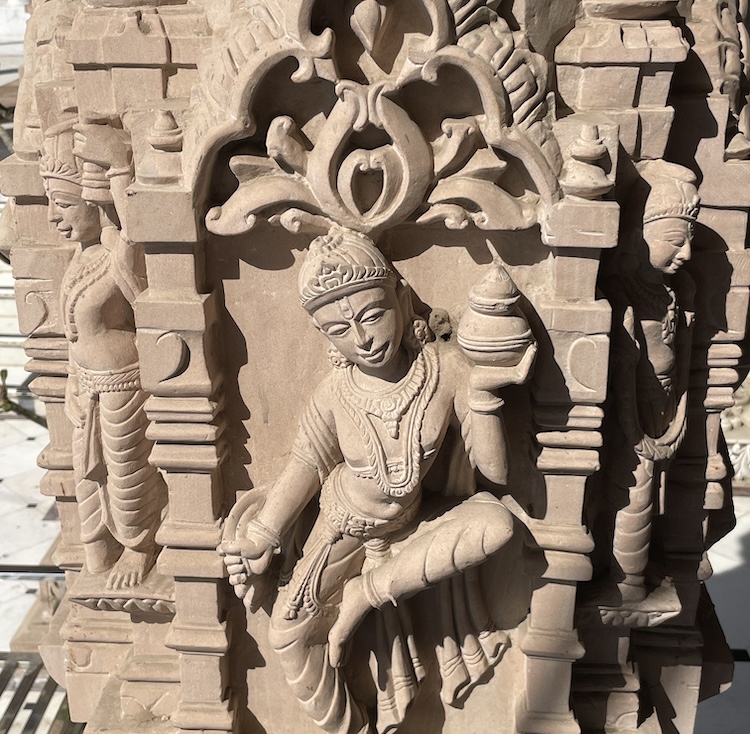
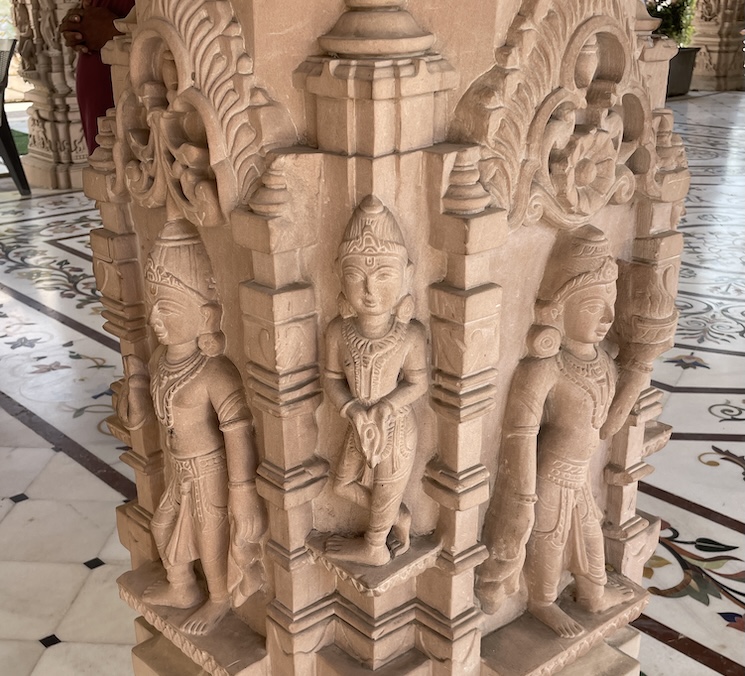
The temple’s artistic pillars, which greatly enhance its aesthetic splendour, are adorned with carvings depicting various deities, ascetics, sages, celestial maidens (Surasundaris) and episodes from sacred mythology. At the tops of the pillars and upon their brackets are sculptures of musicians, Yakshas, saints and divine figures. 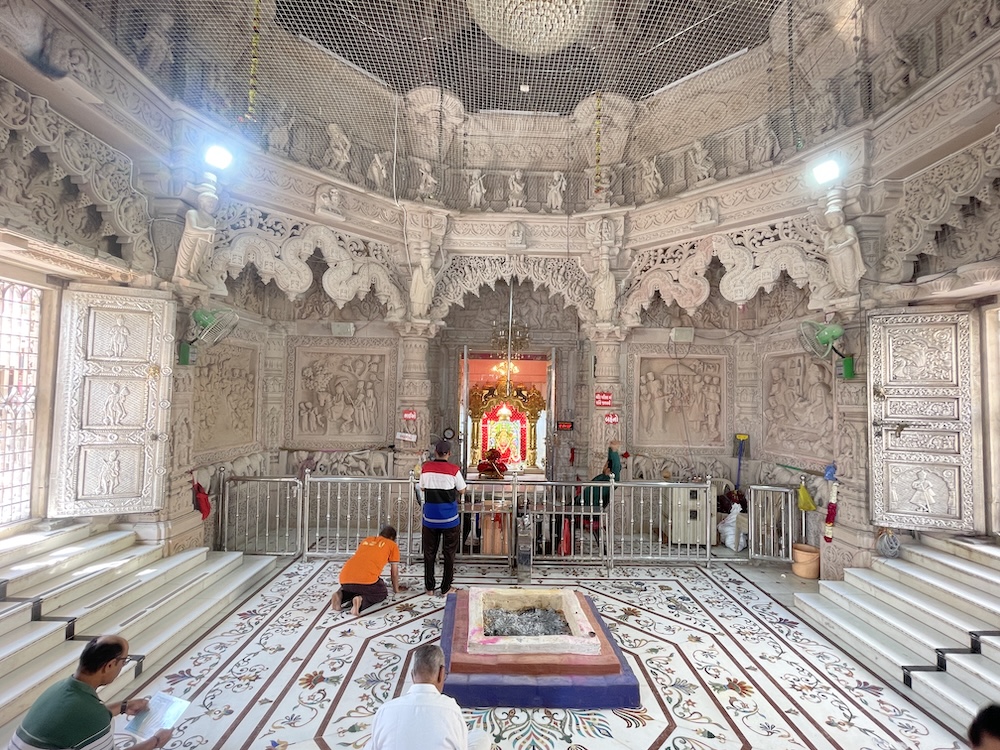 The beams supported by these brackets bear carvings of the Ashta Dikpalas (the eight directional guardians) and together they uphold an intricately ornamented ceiling. The Mukhamandap and Mandap are designed in a semi-open architectural style.
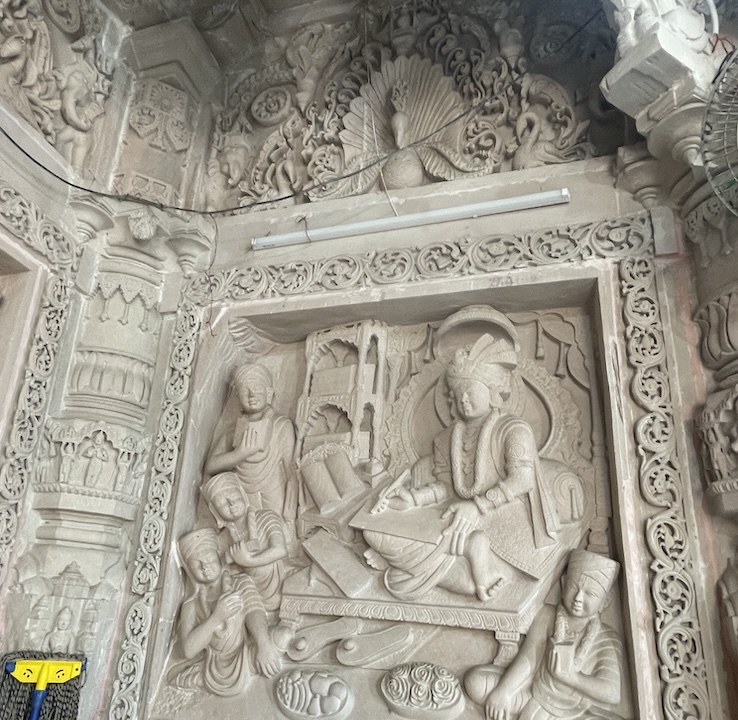
Further ahead lies the entrance to the Sabhamandap, whose ornate doorway is framed by intricately carved door jambs and crowned with a Lalata Bimba bearing the sculpted image of Ganapati. Two additional doorways are situated on the right and left sides of the assembly hall. From the Sabhamandap, steps descend to the main hall situated at a slightly lower level. Above the lintel of this doorway are the Chandrashila and the Kirtimukha motif. The pillars flanking the entrance are richly carved with sculptural figures and floral designs, while the upper wall displays a relief depicting a mythological scene.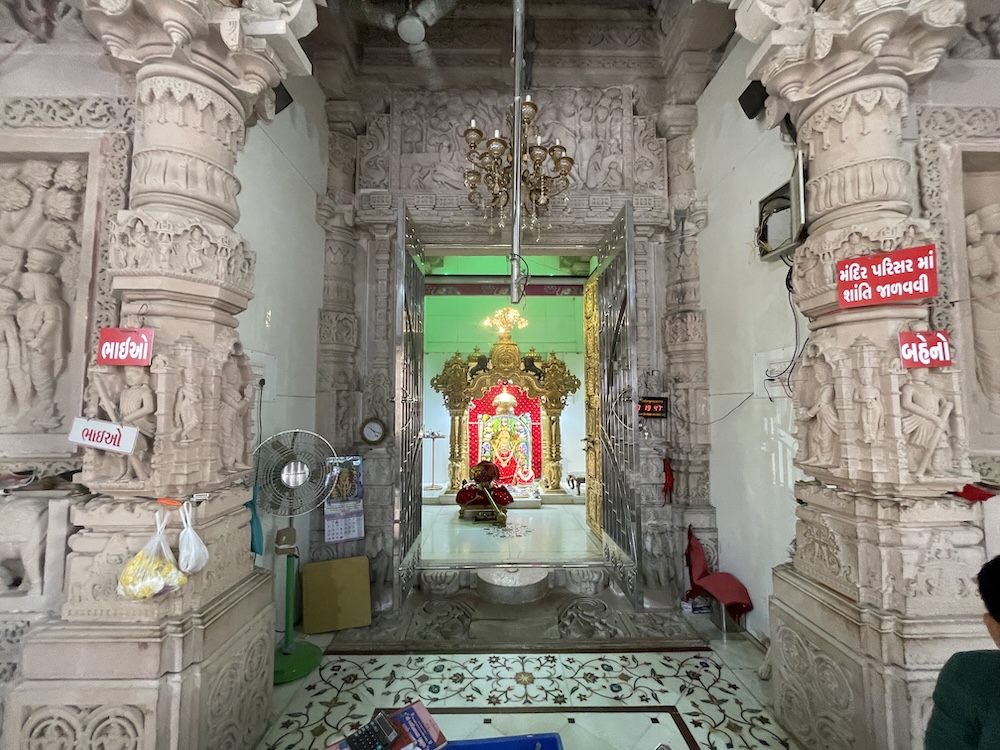
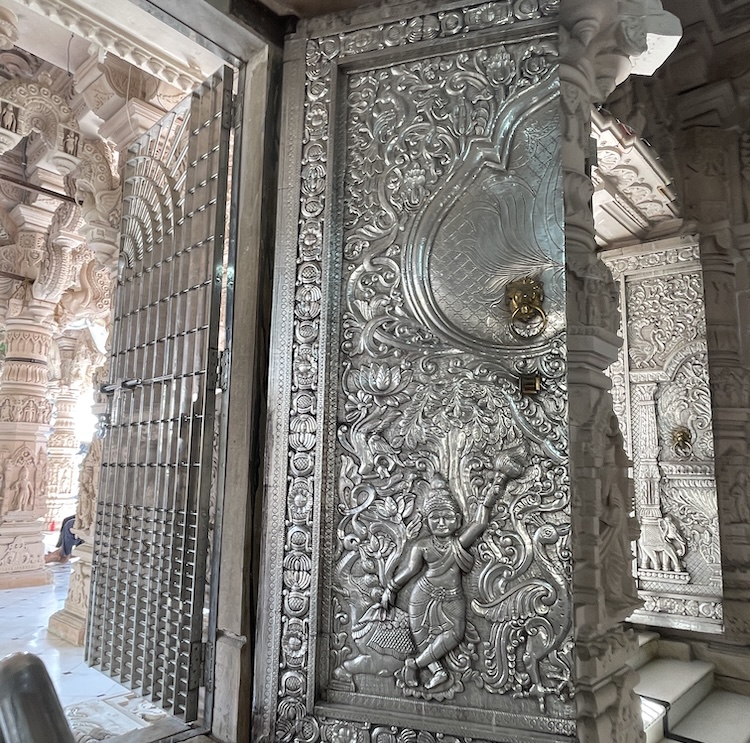
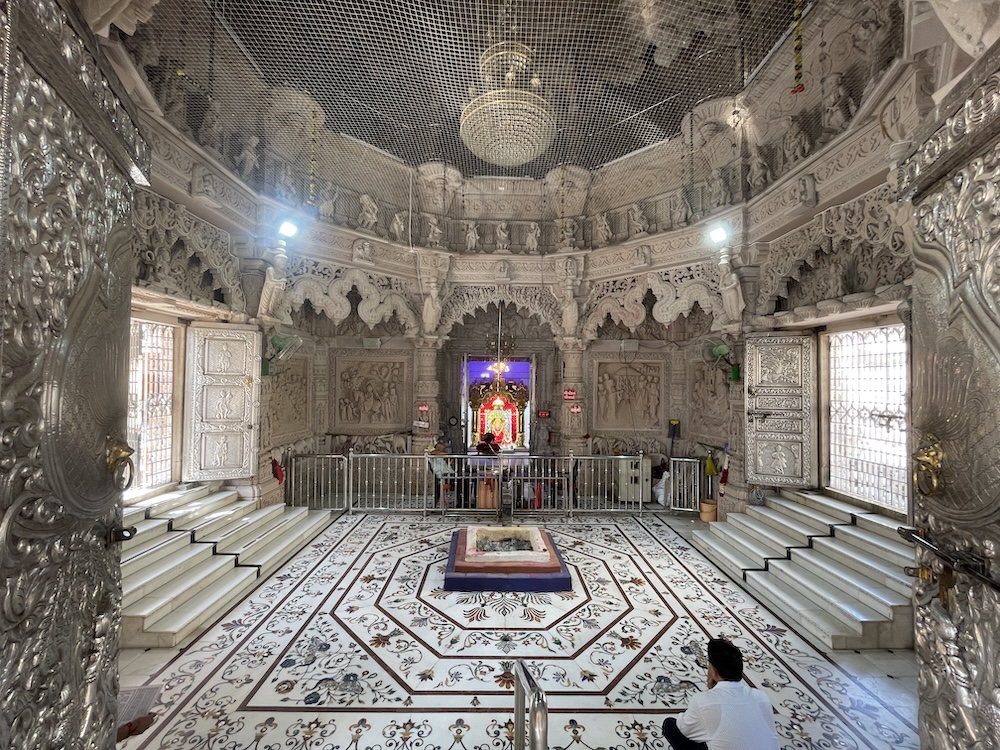
Beyond this lies the doorway to the Garbhagriha, distinguished by its unique ornamental carvings. Upon the Vajrapitha within the sanctum, beneath a golden Makhar, is the idol of Rokadiya Hanuman distinguished by a white beard. The deity, adorned with various garments and ornaments, holds a mace in his hand and wears a silver crown. A ceremonial canopy is suspended above the idol’s head. On the back slab behind the idol are carved figures of eight monkeys holding fruits and vegetables in their hands. The Makhar is supported by decorated pillars resting upon sculpted Gajaraj figures, while the ceiling on either side features lion sculptures. These pillars are connected by gracefully arched Toranas.
Above the roofs of the Mukhamandap, Mandap, 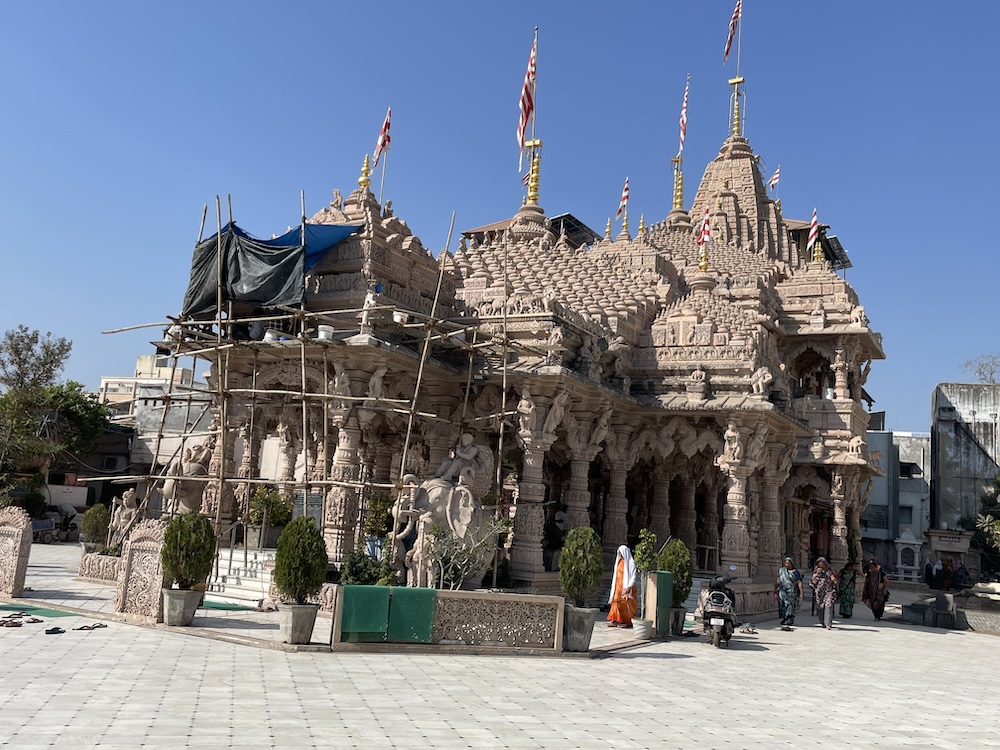 Sabhamandap, Antaral and Garbhagriha rise domed shikharas (temple spires), each crowned with an Amalaka and a Kalasha finial. Among these, the shikhara above the sanctum is the tallest and bears a ceremonial flag fluttering at its summit.
Hanuman Jayanti is regarded as the most important festival celebrated at this temple, drawing thousands of devotees who arrive for darshan on that day. In addition, festivals such as Ram Navami, Shri Krishna Janmotsav, the Diwali celebrations, Annakut and Dussehra are observed here with great enthusiasm. On these occasions Mahaprasad (sanctified food) is distributed to the devotees. On Tuesdays, Saturdays, Thursdays and on the day of the full moon (Purnima), special Hanuman Yajnas and recitations of the Sundarkand are organised.
Alongside religious observances, the temple also conducts health camps and educational initiatives. Within the temple courtyard stands a venerable banyan tree believed to be around 250 years old. Devotees continue to follow the tradition of tying sacred threads around this tree in fulfilment of their vows or prayers. Devotees may obtain darshan of Rokadiya Hanuman here daily from 6 a.m. to 1 p.m. and again from 4 p.m. until 8.30 p.m.
Useful Information
- Located at 1 km from Anand Bus Station.
- State Transport bus services to Anand are available from many cities across the state.
- Private vehicles can reach the temple parking area.
- Numerous accommodation and breakfast facilities are available in the surrounding area.
- Contact: Temple Office – Mobile: 8406601011
रोकड़िया हनुमान मंदिर
आनंद शहर, तहसील एवं जिला: आनंद
मंदिरे
Temples
मंदिर
-
भीमनाथ महादेव मंदिर लिंबळी, ता. सोजित्रा, जि. आनंद
अधिक माहितीBhimnath Mahadev Temple Limbali, Tal. Sojitra, Dist. Anand
View Detailsभीमनाथ महादेव मंदिर लिम्बाली, ताल. सोजित्रा, जिला. आनंद
विवरण देखें -
मेलडी माता मंदिर मालताज, ता. सोजित्रा, जि. आनंद
अधिक माहितीMeldi Mata Temple Malataj, Tal. Sojitra, Dist. Anand
View Detailsमेलडी माता मंदिर मालताज, ताल. सोजित्रा, जिला. आनंद
विवरण देखें -
चंद्रमौलेश्वर महादेव मंदिर उमरेठ, ता. उमरेठ, जि. आनंद
अधिक माहितीChandramouleshwar Mahadev Temple Umreth, Tal. Umreth, Dist. Anand
View Detailsचंद्रमौलेश्वर महादेव मंदिर उमरेठ, तहसील उमरेठ, जिला आनंद
विवरण देखें