
जलाराम बाप्पा मंदिर
आनंद शहर, ता. आणि जि. आनंद
Jalaram Bappa Temple
Anand City, Tal. and Dist. Anand
 Among the venerable saints of India who upheld the religion of humanity beyond the rigid boundaries of the Chaturvarnya system and caste distinctions, the name of Sant Jalaram Bappa is spoken with deep reverence. In an age marked by social inequality, he dedicated his entire life to the noble cause of sustaining compassion and service towards the poor and the distressed. In the city of Anand, considered both the heart of Gujarat’s Charotar region and the ‘Milk Capital’ of India, this temple dedicated to Bappa stands as a powerful centre of faith for countless devotees. Embodying the guiding principle ‘Janaseva hi Janardan Seva’ (service to humanity is service to God), this temple has become a sacred place of devotion for lakhs of followers. Within these walls, the legacy of Bappa’s compassionate work continues to be preserved with unwavering dedication.
 Sant Jalaram Bappa was born in the year 1799 in the village of Virpur in Rajkot district of Gujarat, to the devout couple Pradhan Thakkar and Rajbai. From childhood, the pure and virtuous values instilled by his mother nurtured within him an innate inclination towards Janseva (service of the people). Recognising Jalaram’s noble character and virtuous nature, Sant Raghuvir Dasji accepted him as his disciple. At the age of sixteen he was married to Virbai, yet even after entering household life his heart remained less inclined towards worldly concerns and more deeply engaged in the service of the suffering and the needy.
At the age of eighteen, Bappa accepted discipleship under Sant Bhojalaram of Fatehpur. Faithfully adhering to the Guru Mantra imparted to him, he continued his vow of selfless service to society without interruption. 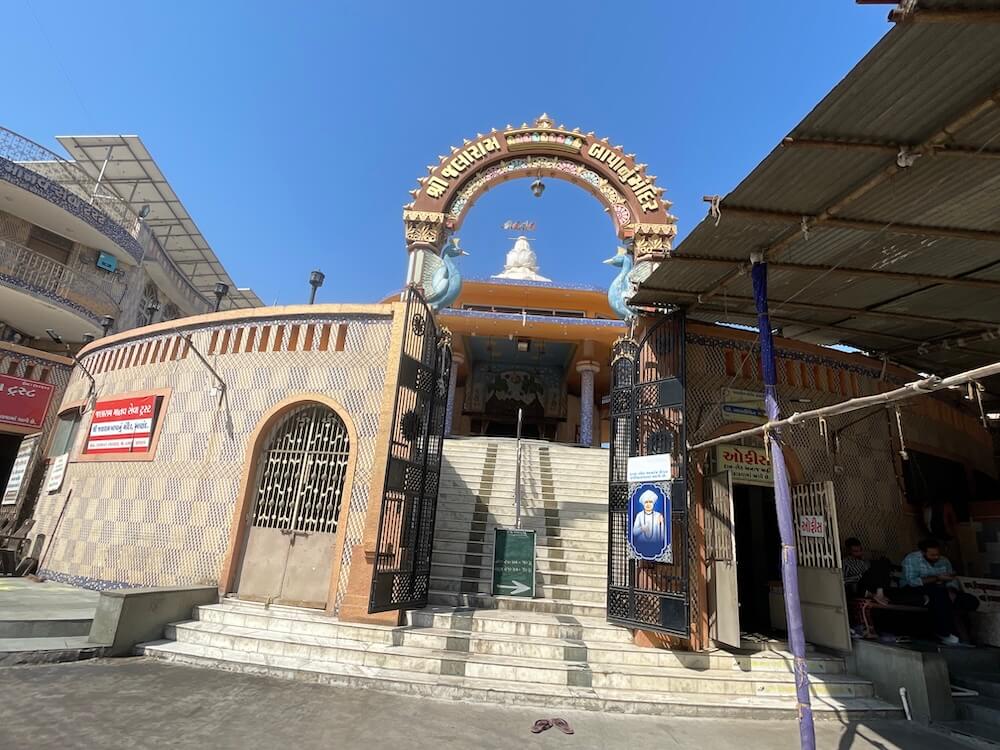 By the time he reached the age of twenty, his reputation for compassion and charity had spread far and wide. On 23 February 1881 he relinquished his mortal body and chose the path of merging into the eternal. The devotees of Bappa in the city of Anand laid the foundation for the construction of this temple between 1950 and 1960. Later in 1978, the structure was completed through the efforts of the ‘Shri Jalaram Janseva Trust’.
Several devotional narratives and miraculous episodes associated with Jalaram Bappa’s faith are linked with this spiritually significant temple. Bappa, who possessed profound devotion towards Shri Ram, regarded feeding the hungry as his life’s ‘Sadavrat’ (an eternal vow of charity through food).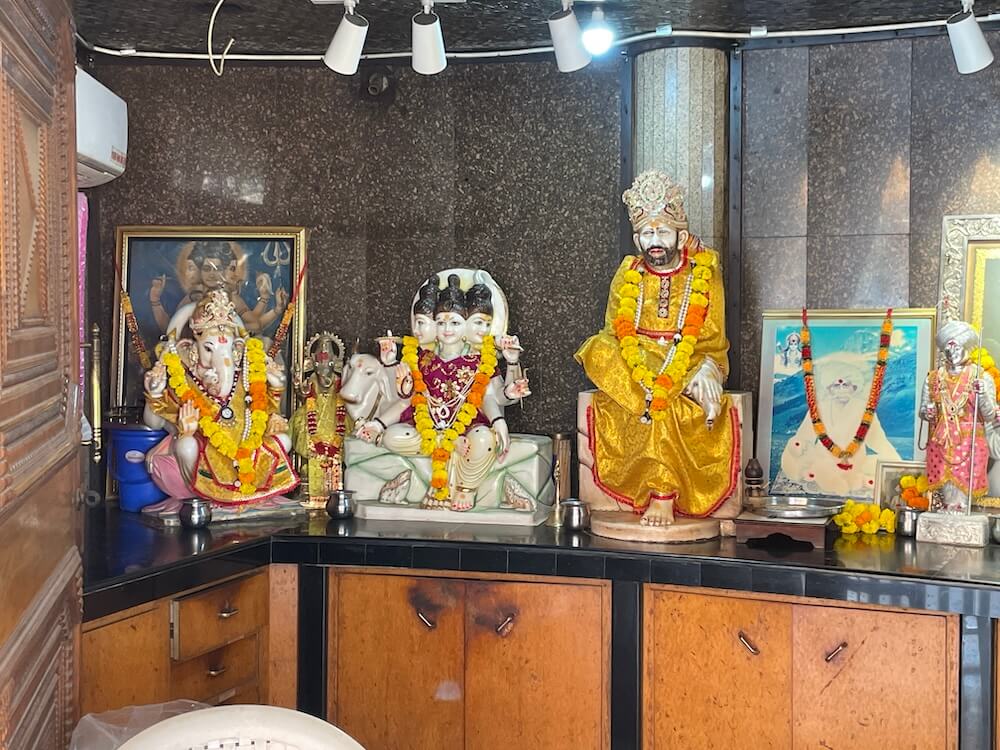 That tradition continues even today in this temple. One well-known story recounts how Shri Ram once arrived disguised as an elderly ascetic in order to test Bappa’s devotion and asked that Bappa’s wife serve him. Demonstrating extraordinary renunciation and faith, Bappa sent his wife along with the ascetic without hesitation. Another story often recounted with deep devotion tells of how certain young men once attempted to defile Bappa’s community kitchen by secretly placing the flesh of dead birds in the food. However, when Bappa touched the birds, they miraculously came back to life and flew away. Bappa also played an important role in fostering harmony between Hindu and Muslim communities. The story of how he restored life to the son of a Muslim merchant named Jamal is still remembered as a powerful symbol of social unity.
 This sacred temple stands in the central part of Anand city, in the culturally significant neighbourhoods of Mathiya Chora and Rahat Talav. Located along the main road, the temple adjoins the spacious building of the Manav Seva Trust. Within the Trust’s premises are a well-equipped office, a community kitchen that operates day and night, a modern kitchen facility and comfortable accommodation arrangements for devotees arriving from distant places. The temple itself is enclosed within a boundary wall approximately ten feet high and features an elegant entrance gateway. Two square pillars on either side of the gateway bear sculptures of peacocks, while a semicircular arch above them enhances the aesthetic charm of the structure.
 This two-storeyed complex houses a hall for cultural activities and the Annachhatra (community dining facility) on the lower floor, while the main temple is situated on the upper floor. Steps lead upward from the outer entrance towards the principal shrine.
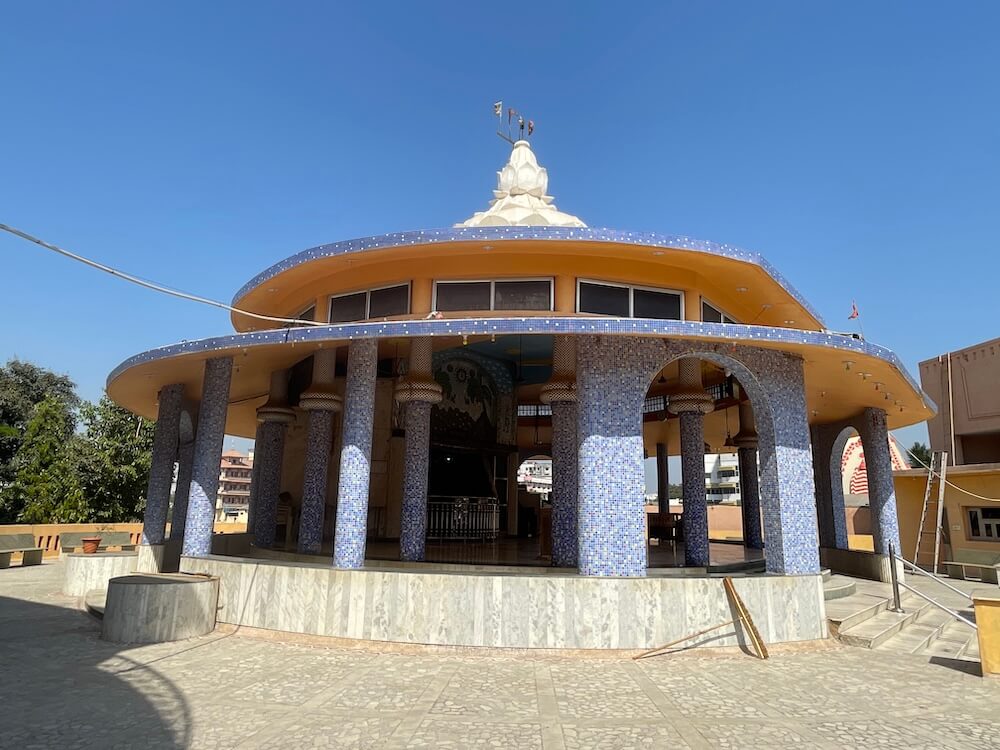
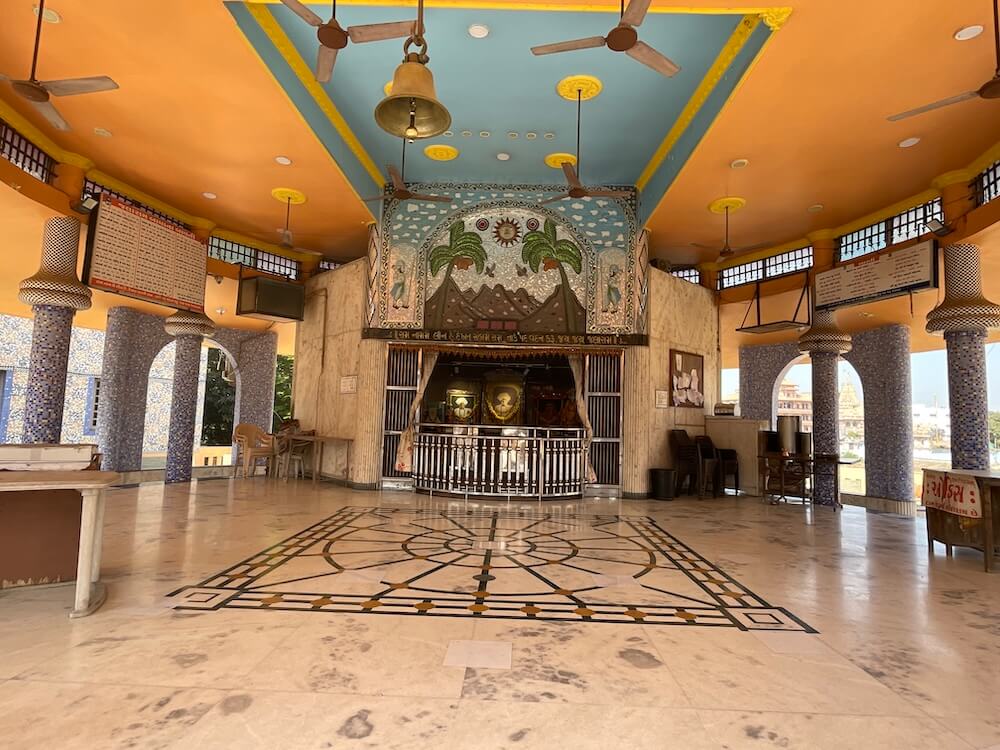
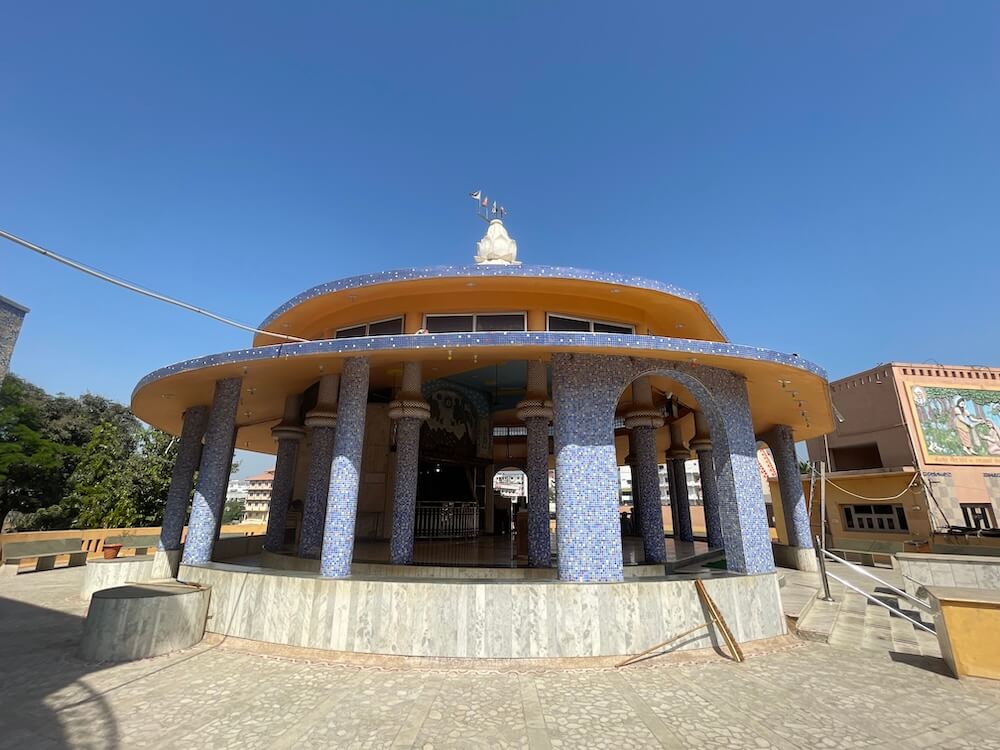
After ascending the steps, one enters an open area before the temple. Beyond this stands a circular temple structure comprising the Sabhamandap (assembly hall) and the Garbhagriha (sanctum). The Sabhamandap, which is semi-open in design, has entrances in the front as well as on the left and right sides. These entrances are situated at a slightly elevated level and are approached by small flights of steps. The roof of the Sabhamandap is divided into two sections – an upper and a lower portion – with glass windows arranged in the central section.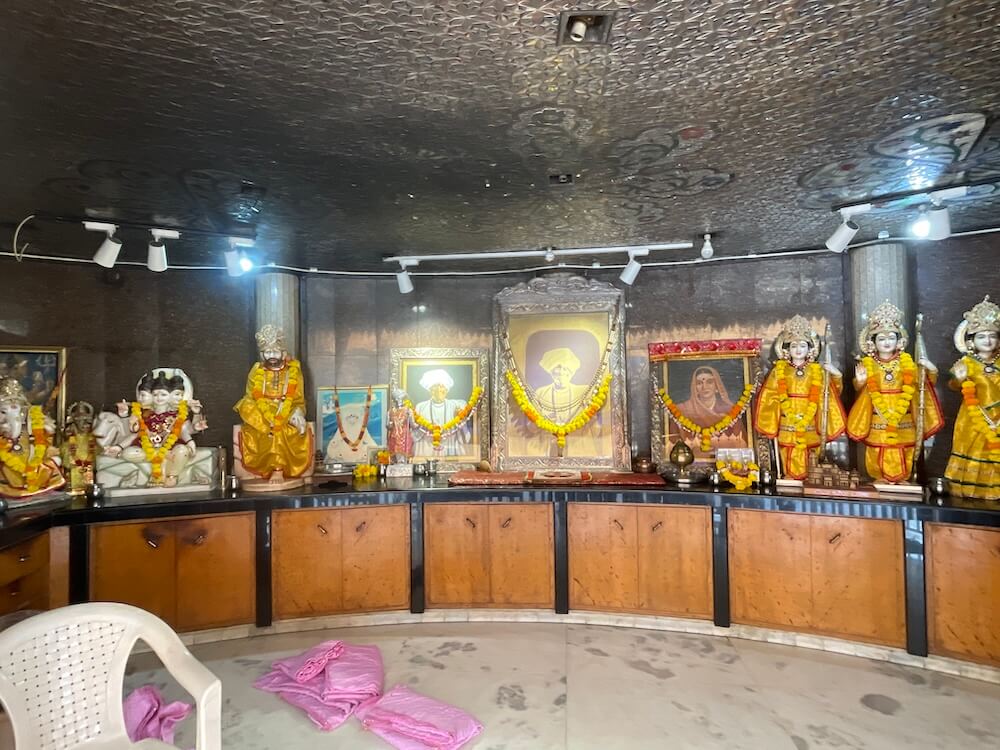
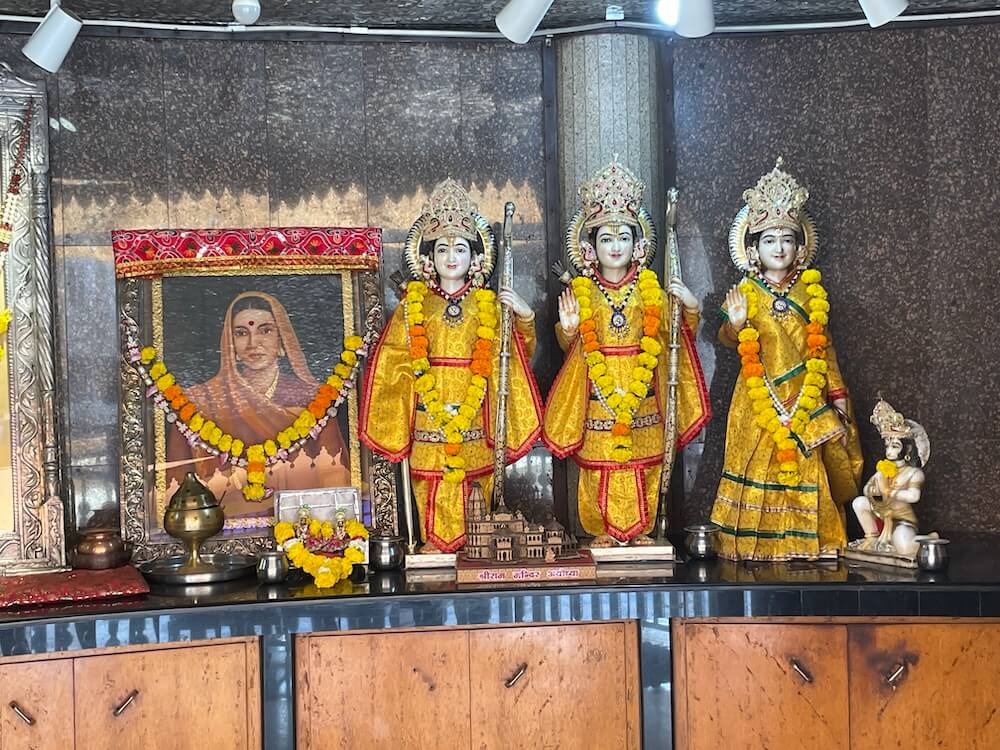
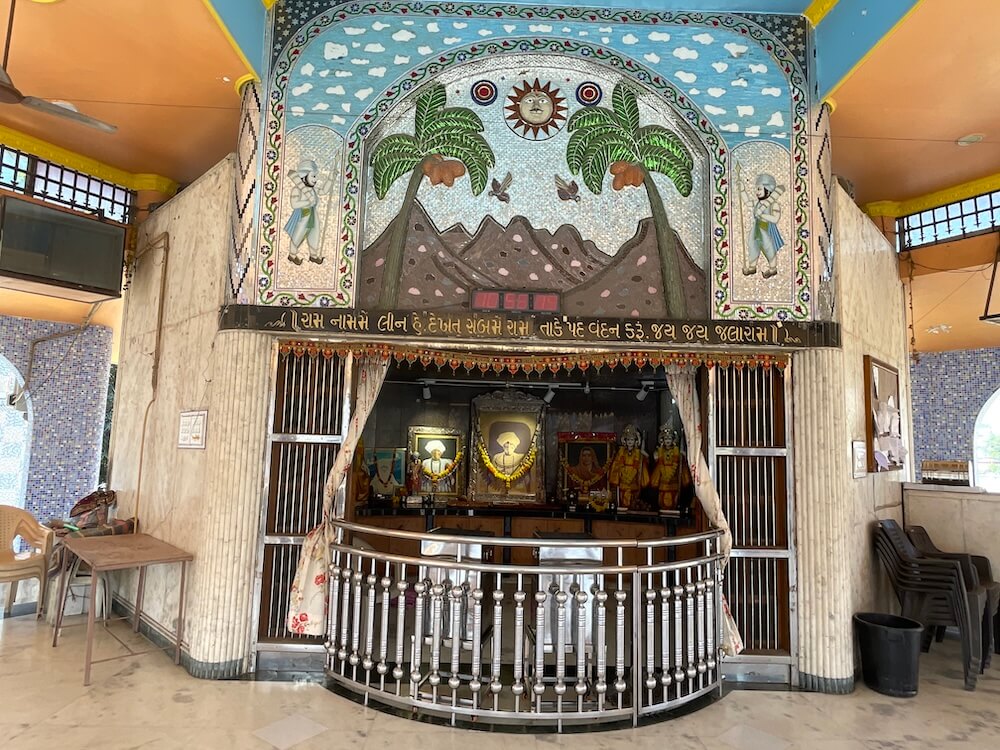
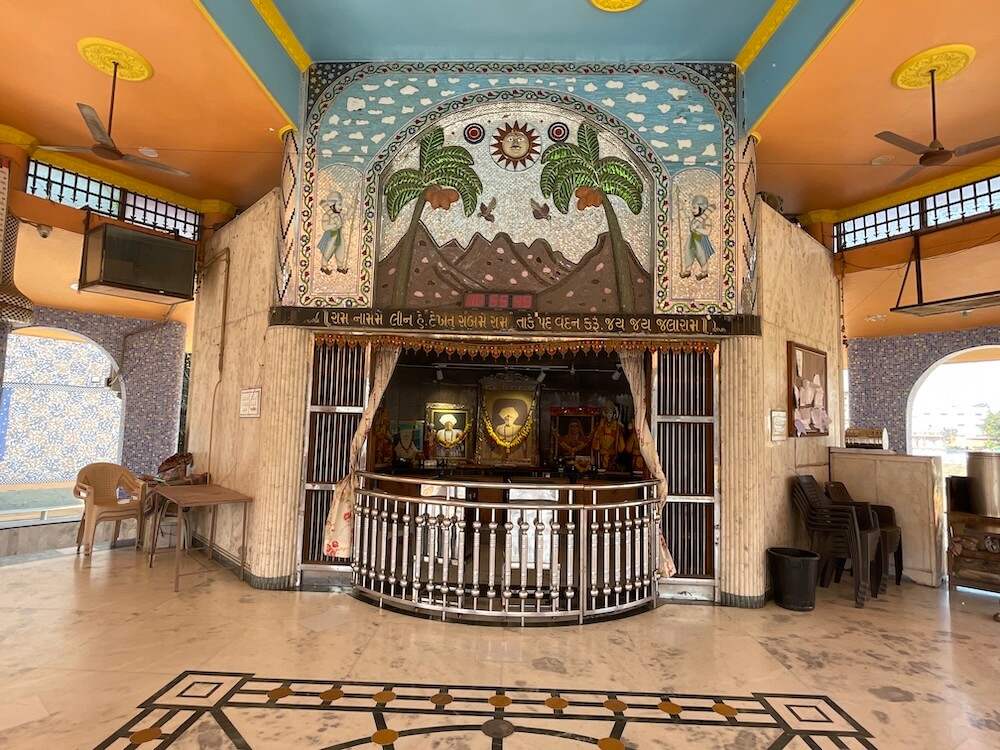
Ahead of the Sabhamandap lies the main entrance to the Garbhagriha. Upon a semicircular Vajrapitha (stone pedestal) within the sanctum are installed the idols of Jalaram Bappa, Shri Ram, Lakshmana, Sita, Hanuman, Ganesha and Dattatreya. Alongside these idols are also placed portraits of Jalaram Bappa, his wife Virbai and several revered saints. The ceiling of the Garbhagriha features a distinctive shikhara designed in the form of a lotus blossom. At the summit of this spire stands an Amalaka, above which is the sacred Kalasha finial.
The principal annual festival celebrated at this temple is the birth anniversary of Jalaram Bappa, observed on Kartik Shuddha Saptami. On this day various religious ceremonies,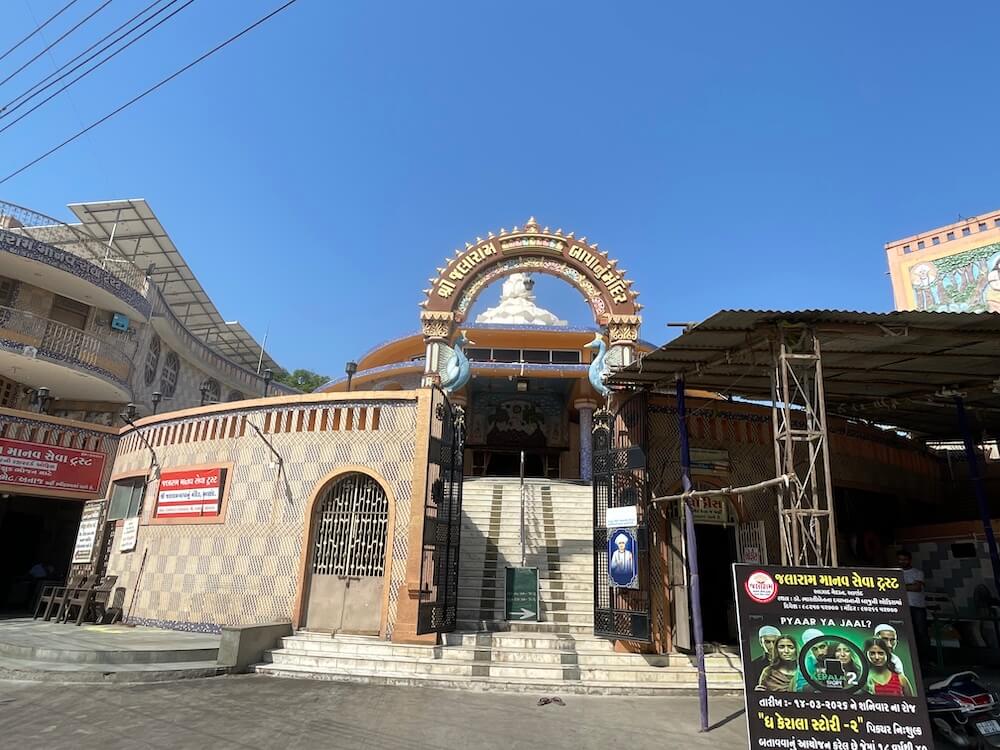 processions carrying the sacred palanquin and a grand ‘Maha Annadan’ (large-scale charitable food distribution) are organised from the early hours of the morning. During festivals such as Ram Navami and Hanuman Jayanti, the temple resonates with programmes of bhajan, kirtan, devotional singing and dance.
Special celebrations are also organised during the month of Shravan and on every Ekadashi. Each Thursday sees a large gathering of devotees who arrive for darshan. Every Saturday, the recitation of the Sundarkand is conducted here. Daily Aarti takes place at 6.30 in the morning and again at 7 in the evening. Devotees may have darshan of Bappa here between 6 am and 12 noon and again from 4 pm until 9 pm.
Useful Information
- Located at 1 km from Anand Bus Station.
- State Transport bus services to Anand are available from many cities across the state.
- Private vehicles can reach the temple parking area.
- Several accommodation and breakfast facilities are available in the surrounding area.
- Contact: Temple Office – Mobile: 9726240606
- Telephone: 02692 240606
जलाराम बप्पा मंदिर
आनंद सिटी, ताल. और जिला. आनंद
मंदिरे
Temples
मंदिर
-
भीमनाथ महादेव मंदिर लिंबळी, ता. सोजित्रा, जि. आनंद
अधिक माहितीBhimnath Mahadev Temple Limbali, Tal. Sojitra, Dist. Anand
View Detailsभीमनाथ महादेव मंदिर लिम्बाली, ताल. सोजित्रा, जिला. आनंद
विवरण देखें -
मेलडी माता मंदिर मालताज, ता. सोजित्रा, जि. आनंद
अधिक माहितीMeldi Mata Temple Malataj, Tal. Sojitra, Dist. Anand
View Detailsमेलडी माता मंदिर मालताज, ताल. सोजित्रा, जिला. आनंद
विवरण देखें -
चंद्रमौलेश्वर महादेव मंदिर उमरेठ, ता. उमरेठ, जि. आनंद
अधिक माहितीChandramouleshwar Mahadev Temple Umreth, Tal. Umreth, Dist. Anand
View Detailsचंद्रमौलेश्वर महादेव मंदिर उमरेठ, तहसील उमरेठ, जिला आनंद
विवरण देखें