
साई बाबा मंदिर
आनंद शहर, तालुका आणि जिल्हा आनंद
Sai Baba Temple
Anand City, Taluka and District Anand
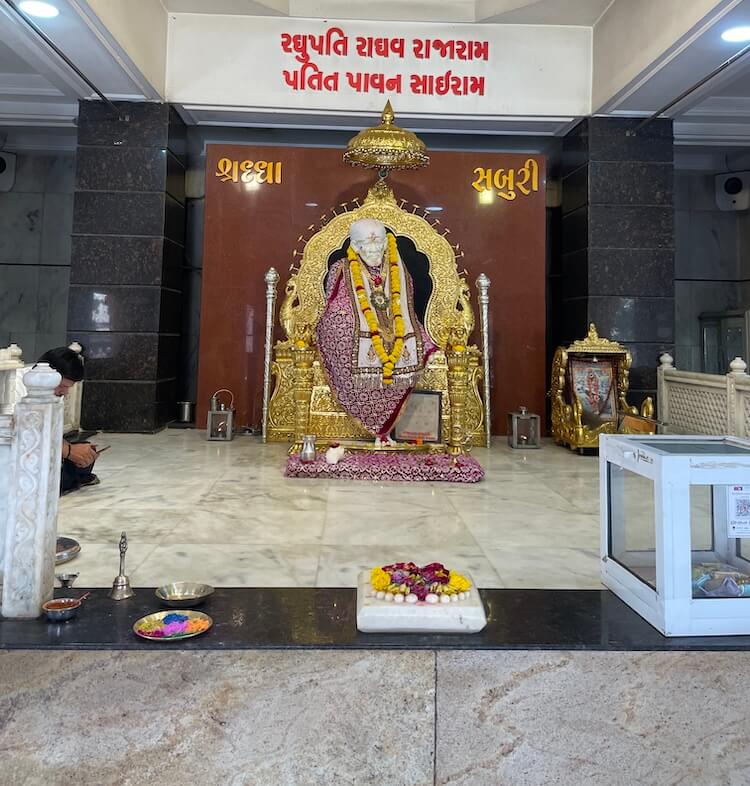
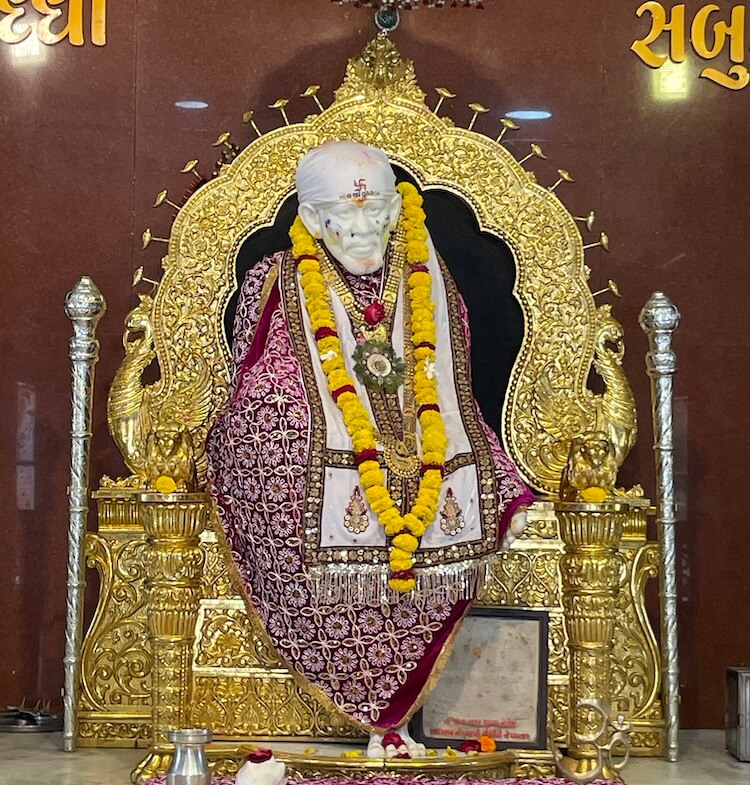 From the sixteenth century onward, Indian society witnessed periods of social unrest arising from divisions of caste and religion. During such times, many saints worked tirelessly for the welfare of humanity. Among the spiritual leaders who emerged to restore harmony and compassion within society, the name of Sai Baba of Shirdi, who lived during the nineteenth and early twentieth centuries, occupies a place of special prominence. The simple yet profound teaching he offered – ‘Shraddha and Saburi’ (faith and patience) – continues to inspire spiritual strength among ordinary people even today. His Samadhi Temple at Shirdi in Maharashtra remains an inexhaustible source of spiritual energy for devotees. The hundreds of Sai Baba temples spread across the country stand as testimony to this enduring devotion. In the city of Anand – regarded as the heart of Gujarat’s Charotar region and famed as the cradle of India’s milk revolution – the Sai Baba Temple located in the Vivekanand Wadi area represents a living continuation of this sacred tradition.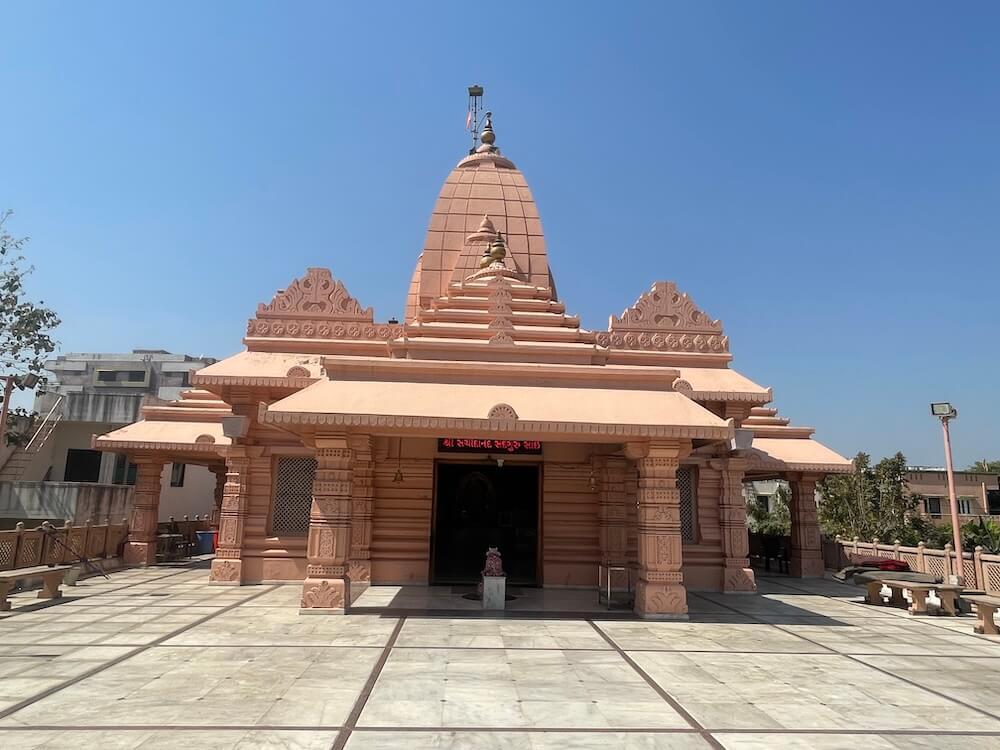
The district of Anand in Gujarat possesses a rich and ancient historical heritage. In earlier times this region was known by the name ‘Anandpur’. With the rapid expansion of the city and the formation of Anand as an independent district in 1997, the area known as ‘80 Feet Road’ emerged as a prominent and modern part of the city. It was in this locality, near Radhika Park and Vishwakarma Society, that the grand temple of Sai Baba was established. The principal initiative for the creation of this temple was undertaken by the ‘Anand Sai Shraddha Trust’. The land upon which the temple stands was generously donated for this noble endeavour by a devoted follower of Sai Baba named Bhikhubhai. The temple gradually took shape between 2007 and 2009 and the consecration ceremony (Pran Pratishtha) of the Sai Baba idol was performed with great devotion in 2009.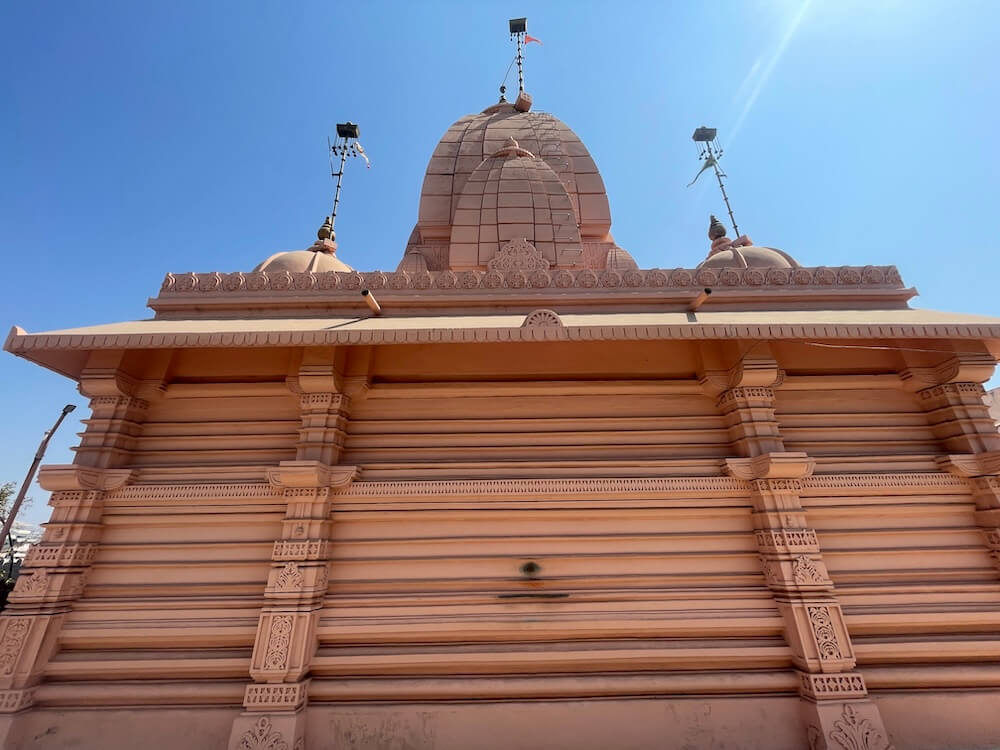 On this auspicious occasion, sacred ‘Saicharanraj’ – dust from the holy feet of Sai Baba – was ceremonially brought by devotees who travelled on foot from Shirdi in Maharashtra.
The history of Shirdi Sai Baba states that he was born in 1838 at Pathri in the Parbhani district of Maharashtra. It is said that this fact is mentioned in the ‘Sai Charitra’ (biography of Sai) published in 1974 by Govind Raghunath Dabholkar, who had the privilege of personal association with Sai Baba himself. However, the Shirdi Sai Sansthan maintains the position that the exact birthplace of Sai Baba remains unknown. According to scholars at Pathri, Sai Baba’s original name was Haribhau Bhusari. His father had placed him in a ‘fakir’s’ (Muslim ascetic) bag during his childhood.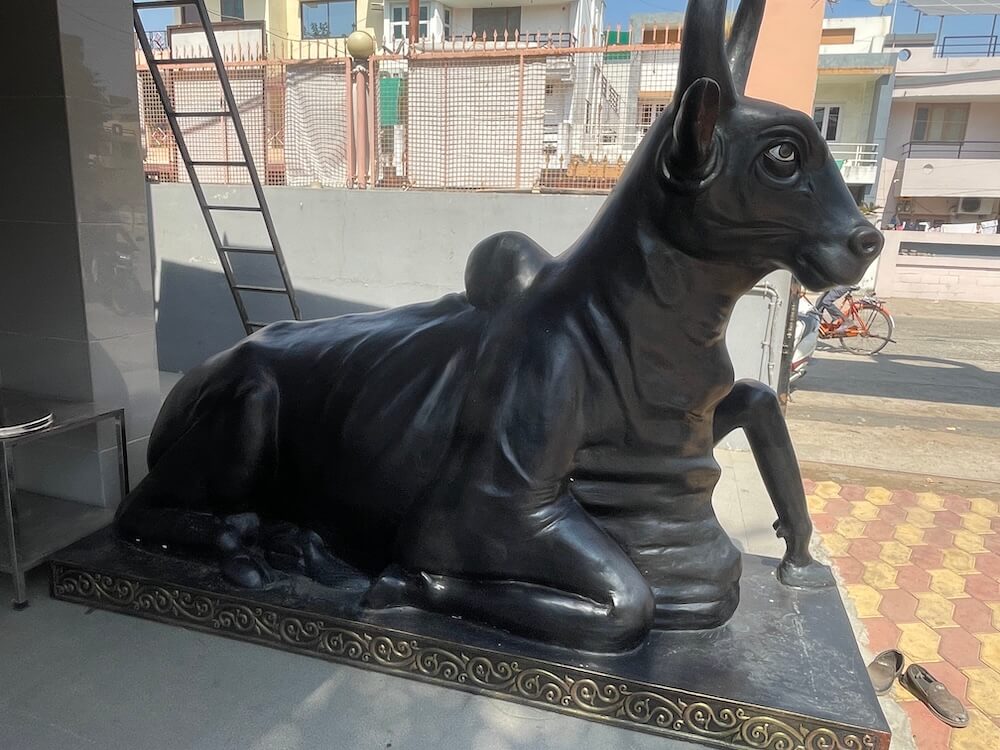 Sai Baba’s elder brother was also a ‘fakir’ and he exerted a profound influence on Baba. At the age of eighteen, Sai Baba arrived in Shirdi. He made his dwelling in a dilapidated mosque in Shirdi, which he named ‘Dwarkamai’ and he devoted his entire life to the service of the poor and the distressed. Living throughout his life as a fakir, Baba would collect alms and prepare food from the gathered provisions, which he distributed among the hungry.
After his passing, the first temple dedicated to Sai Baba was established in 1922 at Kavilgaon in the Kudal taluka of Sindhudurg district. This was the first place where an idol of Sai Baba was consecrated. Later, in 1954, the idol that currently graces the Samadhi Mandir in Shirdi was installed. Since then, Sai temples have been erected in various locations throughout the country.
 A remarkable local story connected with the Anand temple recounts that when sacred soil was being brought on foot from Shirdi for the temple, a dog named ‘Raja’ accompanied the pilgrims. The animal remained in this area for the rest of its life and a small memorial shrine marking its resting place still exists within the temple complex.
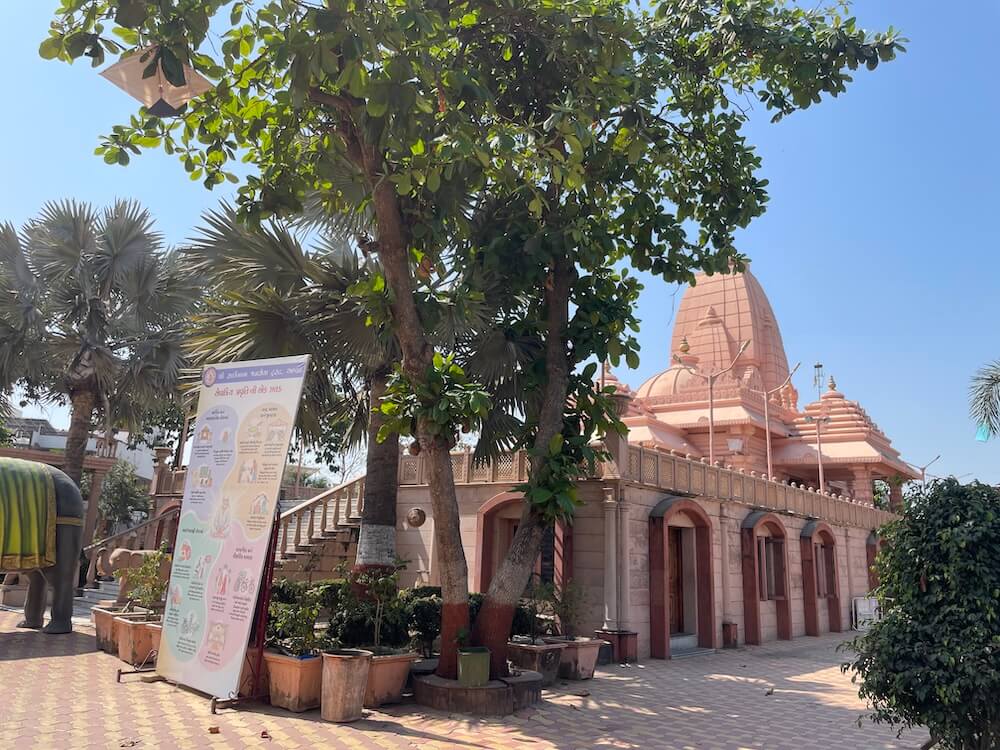
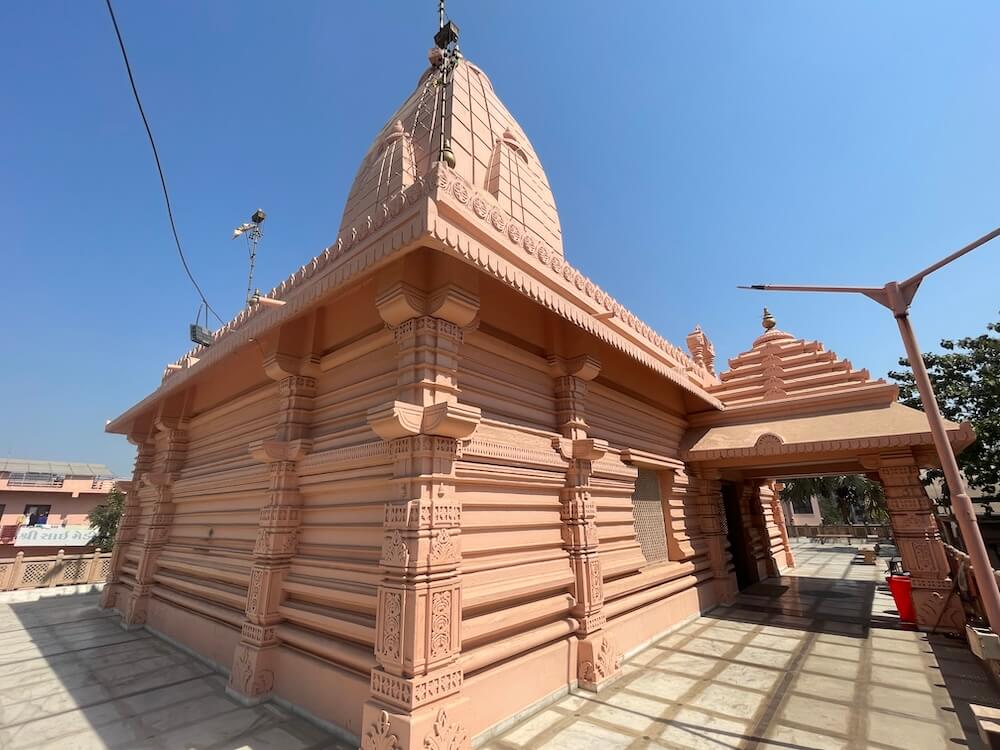
This temple stands in the central part of a large residential neighbourhood along the 80 Feet Road in Anand city. The temple complex is enclosed by a compound wall and an entrance gateway leads into a spacious courtyard paved with interlocking blocks. Within the courtyard are beautifully maintained gardens, seating arrangements for devotees and a platform dedicated to Shani Dev. Immediately to the right of the entrance stands a separate temple dedicated to Mahadev.
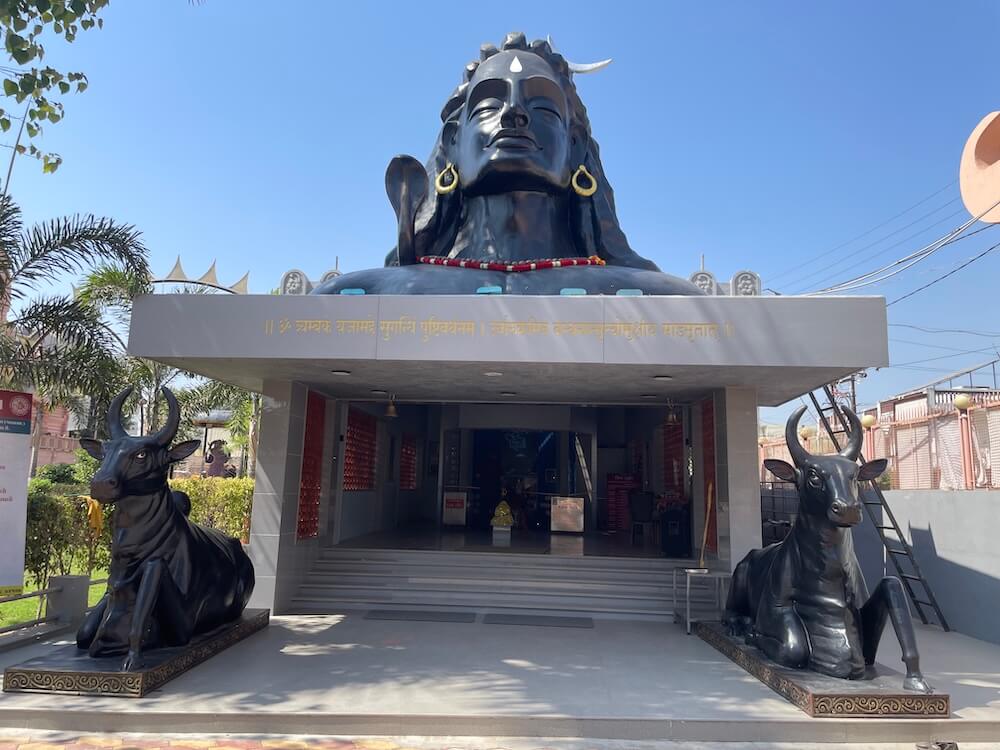
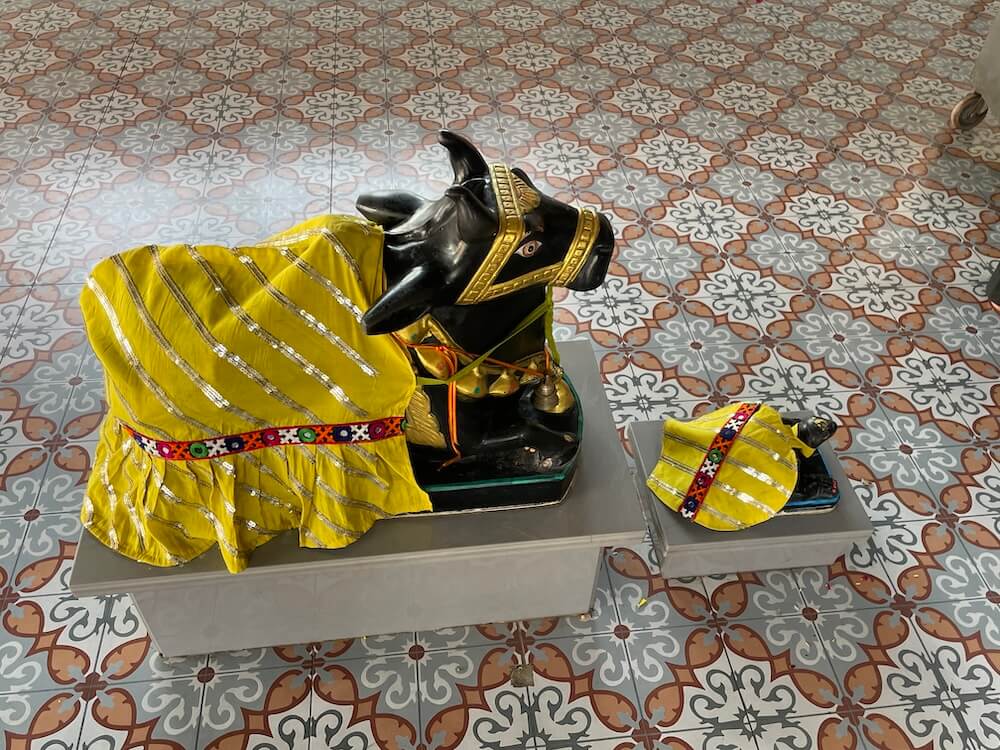
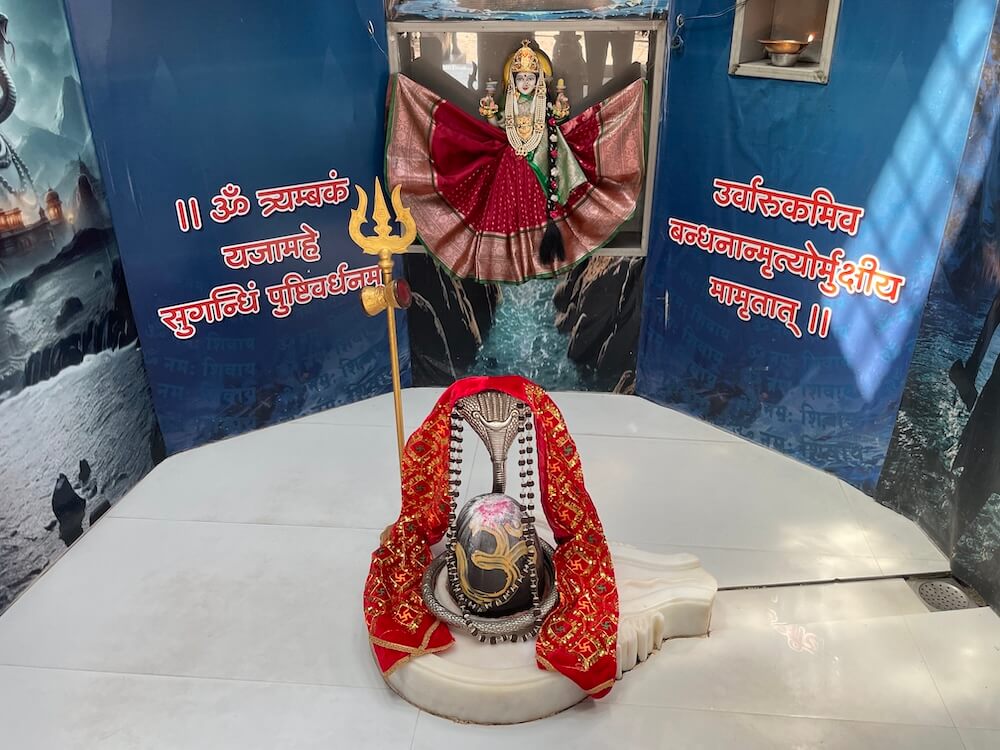
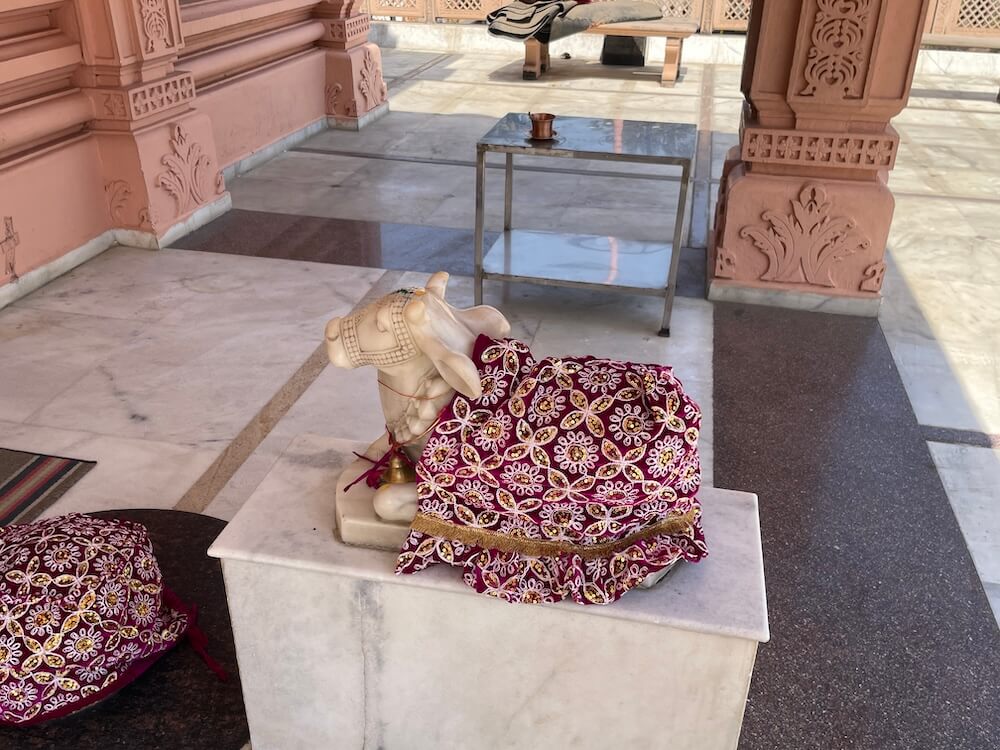
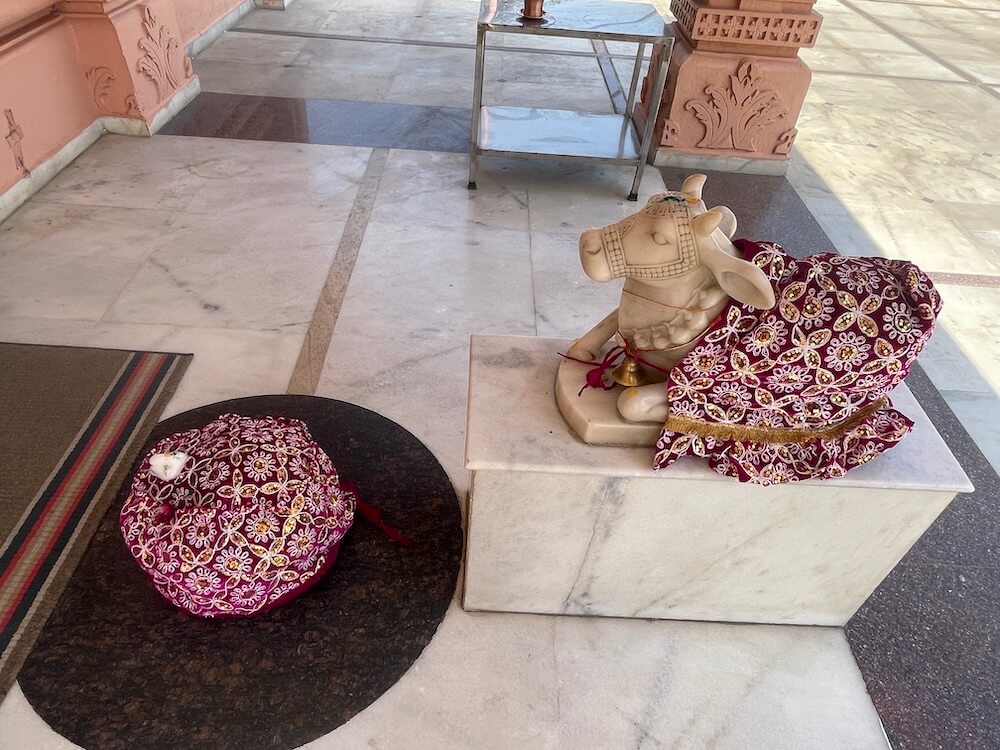
The Mahadev temple follows the traditional layout of a Sabhamandap (assembly hall) and 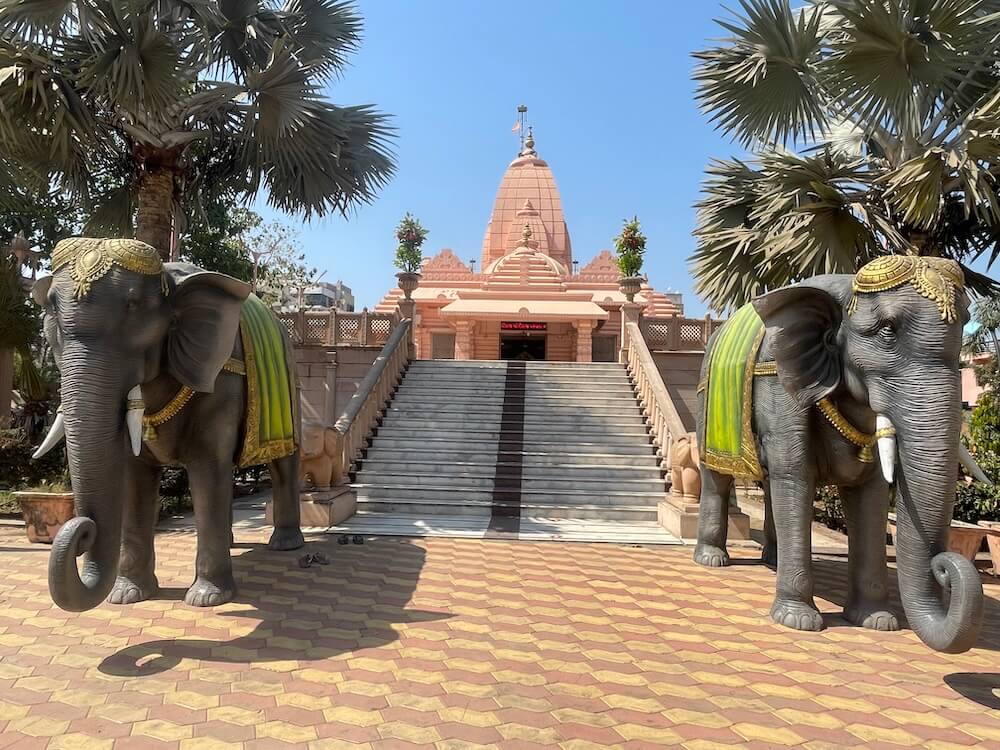 Garbhagriha (sanctum). On either side of the entrance are large and impressive sculptures of Nandi. Within the Sabhamandap, upon a platform, stands another idol of Nandi and in front of it is a sculpted figure of a tortoise. Inside the sanctum, the Shivapindi rests upon the ground, while in a niche in the rear wall stands the idol of Devi Parvati. The roof of this Shiva temple bears a large sculptural representation of Mahadev.
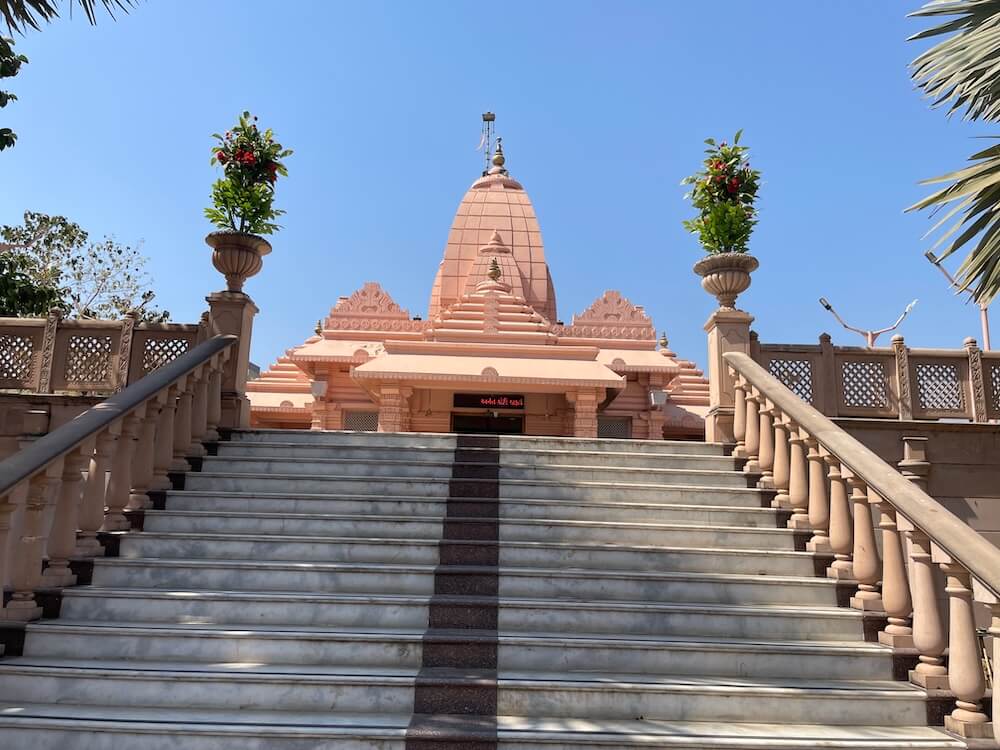
The principal structure of the Sai Baba Temple itself is two storeys in height. In front of the temple are large sculptures of Gajaraj (royal elephants). The ground floor contains a multipurpose hall used for various activities, while the main shrine is situated on the upper level. From the courtyard, devotees ascend a flight of steps to reach the temple on the second floor, with protective railings along both sides of the staircase.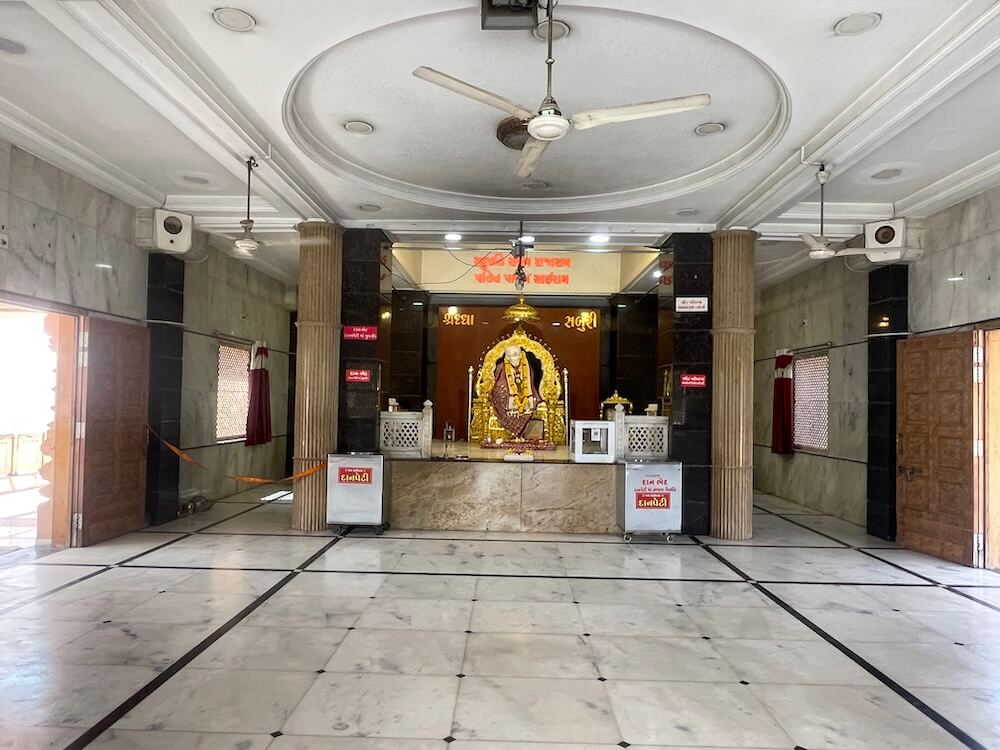
The temple consists of a Mukhamandap (entrance pavilion), Sabhamandap (assembly hall) and Garbhagriha (sanctum). The Mukhamandap is supported by decorative pillars whose capitals bear intricate carvings. At the entrance to the Sabhamandap, upon a Vajrapitha, stands an idol of Nandi. Additional doors are located on both the right and left sides of the assembly hall. The sanctum is designed as an open shrine, where upon a Vajrapitha is installed a distinctive idol of Sai Baba carved from pure white marble. The idol is adorned with a silver crown. A circumambulatory path runs around the exterior of the sanctum. The roof of the Sabhamandap is crowned by a pyramid-shaped shikhara formed by stepped tiers, while the sanctum itself rises into a tall shikhara in the Nagara style.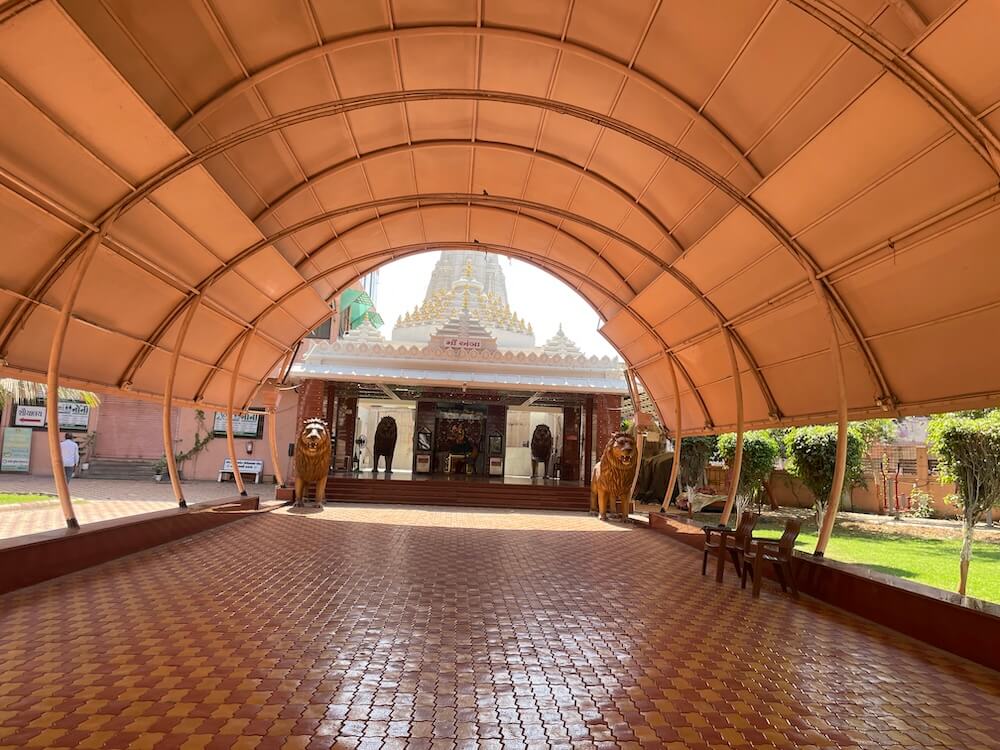
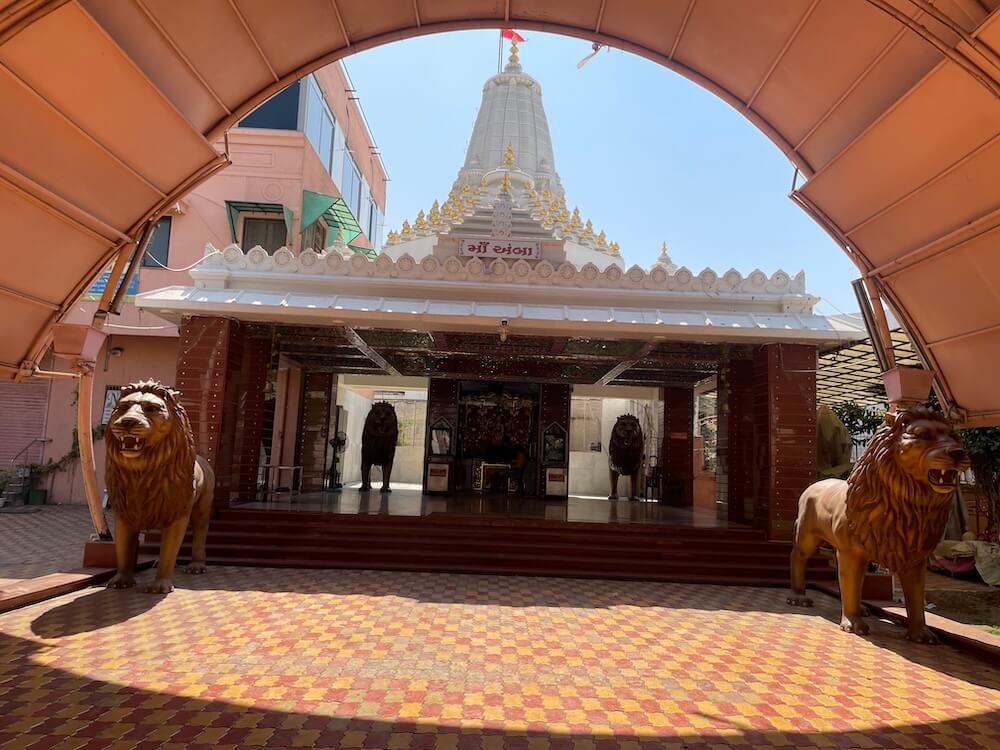
In front of the Sai Baba Temple stands a replica of the Dwarkamai mosque at Shirdi. Nearby are the memorial shrine of the dog ‘Raja’ and a Tulsi Vrindavan. Further within the courtyard stands a separate temple dedicated to Amba Mata. In front of this shrine is a Rangamandap with a roof shaped like the back of an elephant (Gajapristha form). Sculpted lions flank the entrance to the Sabhamandap and both sides of the sanctum doorway. Within the beautifully decorated Makhar of the sanctum is the idol of Ashtabhuja Amba Devi, seated upon a lion and bearing various divine weapons. In the niches along the outer circumambulatory path of this temple are installed the idols of Mahakali, Mahalakshmi and Mahasaraswati. The Sabhamandap of the Devi temple bears a domed roof, while the sanctum rises into a tapering circular shikhara.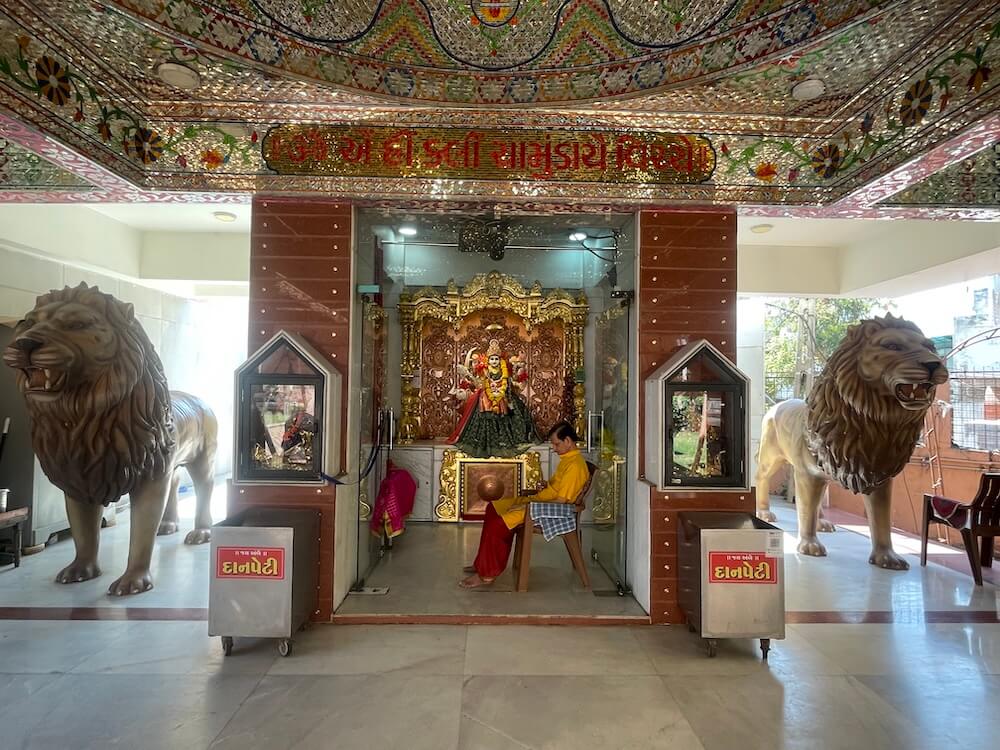
Among the principal festivals celebrated here with great enthusiasm are Ram Navami, Guru Purnima and Vijayadashami, which marks the Punyatithi (anniversary of passing) of Sai Baba. Special religious ceremonies are also organised during Chaitra and Sharadiya Navratri, as well as on Mahashivaratri, during the month of Shravan and on Shani Jayanti. On festive occasions the entire temple complex is beautifully decorated with flowers and illuminated with electric lights. The weekly palanquin procession held every Thursday is a special attraction of the temple. During this procession, accompanied by the resounding beats of drums, hundreds of devotees participate in devotion.
Each day begins with the early morning Kakad Aarti, followed by the Madhyahna Aarti at noon and the Dhoop Aarti at sunset. Alongside these religious activities, the Anand Sai Shraddha Trust also organises health camps and various social service initiatives. Devotees may obtain darshan of Sai Baba here daily from 5 a.m. until 10.30 p.m.
Useful Information
- Located at 1.5 km from Anand Bus Station.
- State Transport bus services to Anand are available from many cities across the state.
- Private vehicles can reach the temple parking area.
- Numerous accommodation and breakfast facilities are available in the surrounding area.
साईं बाबा मंदिर
आनंद शहर, तालुका और जिला: आनंद
मंदिरे
Temples
मंदिर
-
भीमनाथ महादेव मंदिर लिंबळी, ता. सोजित्रा, जि. आनंद
अधिक माहितीBhimnath Mahadev Temple Limbali, Tal. Sojitra, Dist. Anand
View Detailsभीमनाथ महादेव मंदिर लिम्बाली, ताल. सोजित्रा, जिला. आनंद
विवरण देखें -
मेलडी माता मंदिर मालताज, ता. सोजित्रा, जि. आनंद
अधिक माहितीMeldi Mata Temple Malataj, Tal. Sojitra, Dist. Anand
View Detailsमेलडी माता मंदिर मालताज, ताल. सोजित्रा, जिला. आनंद
विवरण देखें -
चंद्रमौलेश्वर महादेव मंदिर उमरेठ, ता. उमरेठ, जि. आनंद
अधिक माहितीChandramouleshwar Mahadev Temple Umreth, Tal. Umreth, Dist. Anand
View Detailsचंद्रमौलेश्वर महादेव मंदिर उमरेठ, तहसील उमरेठ, जिला आनंद
विवरण देखें