
रणछोदराय मंदिर
डाकोर, ता. थसरा, जि. खेडा
Ranchhodray Temple
Dakor, Tal. Thasra, Dist. Kheda
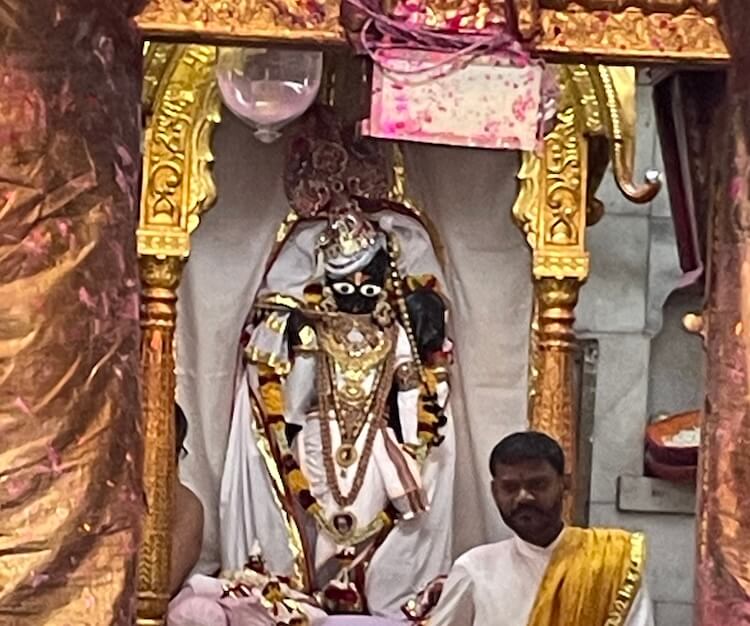 The town of Dakor, situated within the Kheda district, is revered as one of the ‘Panch Dwarkas’ (five abodes of Lord Krishna). Perched upon the banks of the Gomti Lake, the Ranchhodray Temple is dedicated to Lord Shri Krishna and holds a significance in the hearts of devotees comparable to the ‘Char Dham’ pilgrimage. Every year, millions of pilgrims from diverse states across the country journey to this soil to seek the ‘Darshan’ (sacred viewing) of Shri Krishna. This pilgrimage site has evolved into a prominent commercial hub for puja apparatus and articles related to religious rites. Historical chronicles suggest that this region was anciently known as ‘Dunkpur’ or ‘Dunkor’. Owing to the prolific growth of ‘Palash’ or ‘Khakhra’ (Butea monosperma) trees, the area was also known as ‘Khakharia’ village.
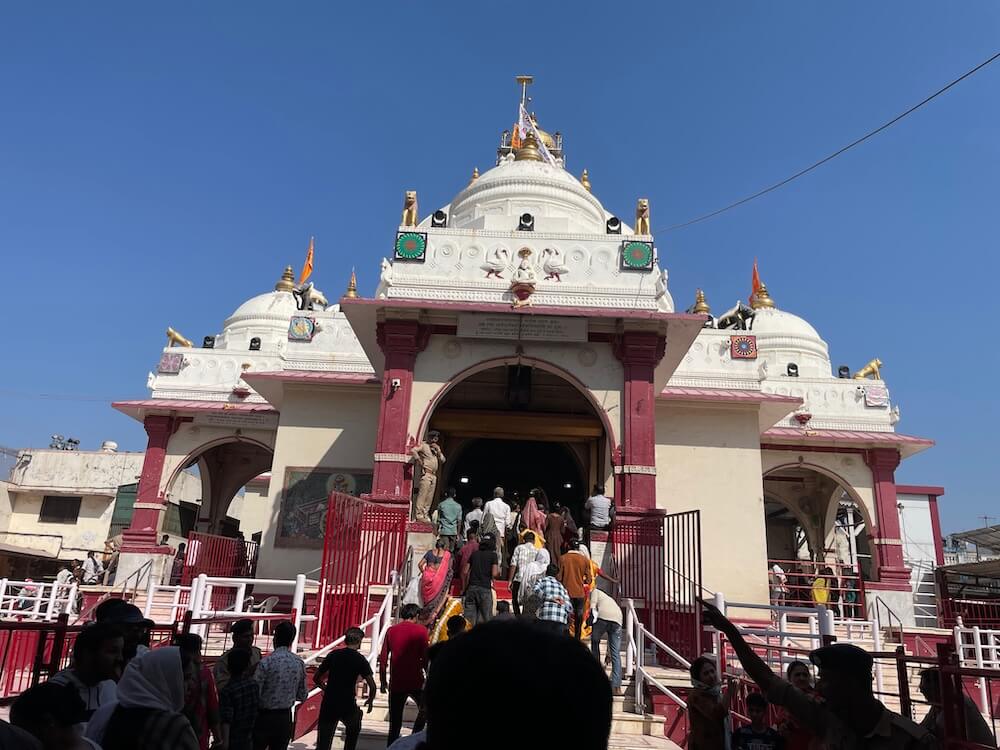 During the era of the Mahabharata, this vicinity was a dense forest region, opulent in water resources, known as ‘Hidimba Van’. In antiquity, it gained renown as a centre for the worship of Lord Shiva. It was within these woods that the sage Dunk Rishi established his ‘Ashram’ and performed rigorous penance for many years. In response to the sage’s earnest request, Lord Shiva left behind a ‘Shivalinga’ as his symbol, which subsequently became famous as ‘Dunknath Mahadev’. The town derived its name ‘Dunkor’ and eventually ‘Dakor’, from this deity. According to mythological lore, Lord Vishnu Himself performed prolonged penance at this site, during which Goddess Lakshmi assumed the form of a ‘Badri’ (jujube) tree to shield Him from the biting wind and cold. Consequently, Lord Vishnu named this sanctuary ‘Badrika Ashram’ and bestowed the title ‘Badri Vishal’ upon Goddess Lakshmi.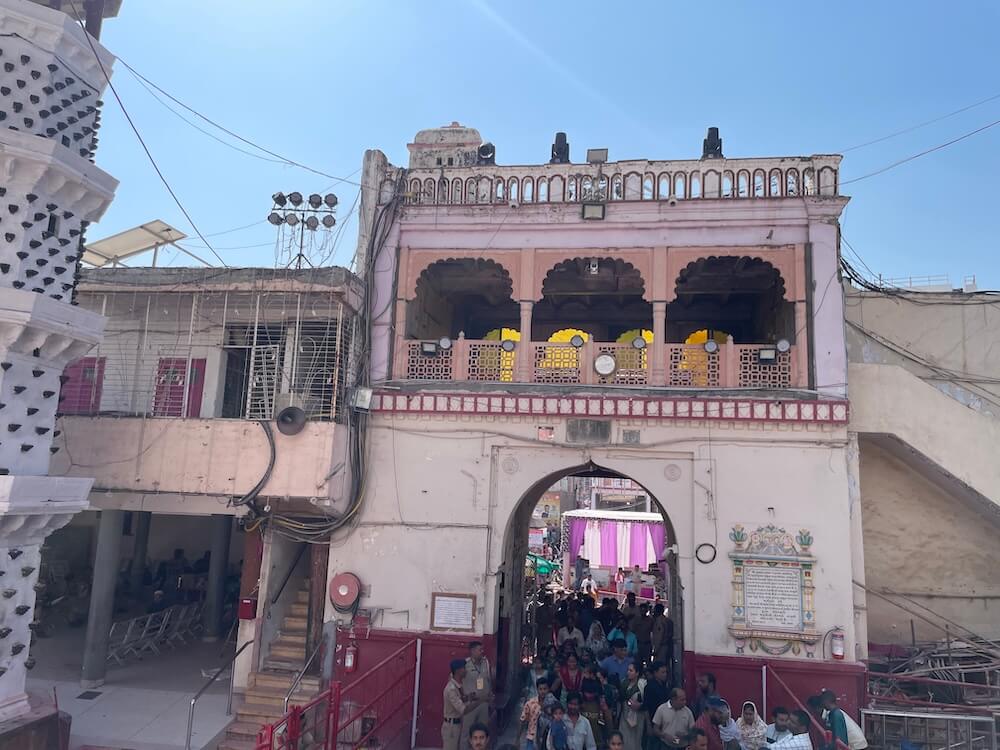
The character of this sacred site underwent a transformation in the eighteenth century with the reconstruction of the Ranchhodray Temple in 1772 AD. The temple was commissioned by Gopalrao Jagannath Tambwekar, a native of Tambwe village in the Satara district of Maharashtra and a financier in the Peshwa court at Pune. The construction incurred a cost of one lakh rupees at the time. To facilitate the daily administration of the temple, Peshwa Madhavrao Ballal and Maharaj Sayajirao Gaekwad granted the villages of Dakor and Kanjari as ‘Inam’ (hereditary grant). Administrative records indicate that the ‘Dakor Sansthan Scheme’ was implemented in 1879, followed by the establishment of an independent temple committee in 1905, which received approval from the Privy Council in 1916. 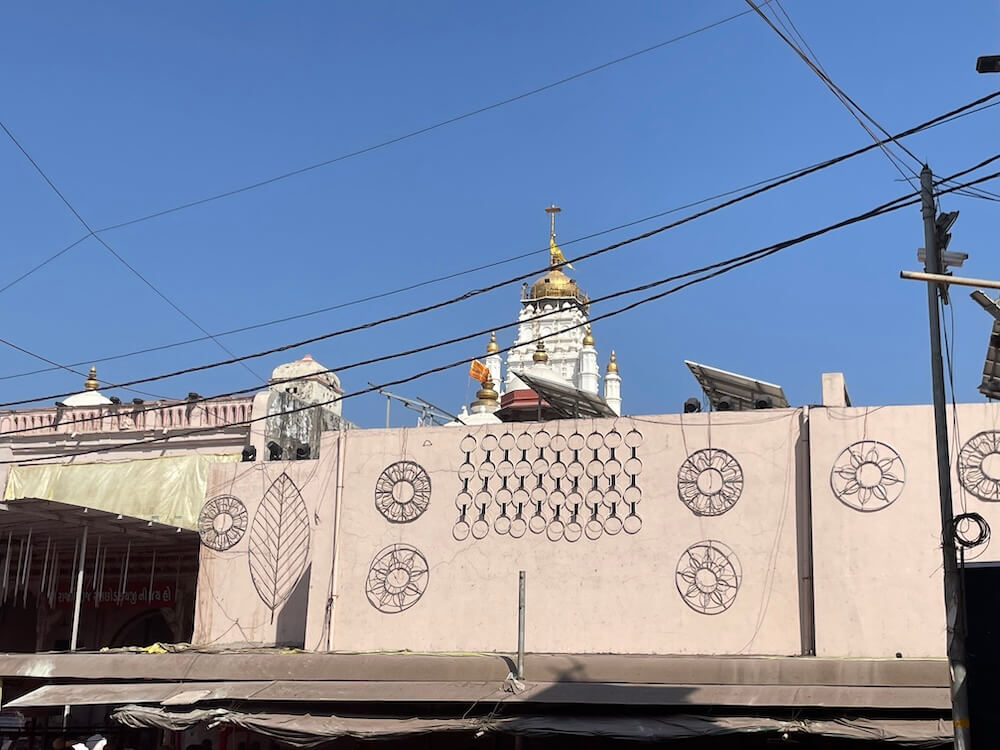 In 1952, the establishment was legally registered as a Public Religious Trust. Under this trust, a ‘Gaushala’ (cow sanctuary) nurturing over 1,200 cows is maintained today. The social reformer Ravishankar Maharaj spearheaded a movement against untouchability, leading to the enactment of the ‘Bombay Harijan Temple Entry Act’ in 1947. It opened the temple portals to people of all castes and creeds.
The legend of Ranchhodray states that King Jarasandha of Magadha was a powerful and cruel ruler who was also Kansa’s father-in-law. Jarasandha was notorious for his brutality. In the Sabha Parva of Mahabharata, Krishna mentions that – ‘ષડશીતિઃ સમાનીતાઃ શેષા રાજંશ્ચતુર્દશ । જરાસંધેન રાજાનસ્તતઃ ક્રૂરં પ્રવર્ત્સ્યતે ।। ’ (ṣaḍaśītiḥ samānītāḥ śeṣā rājaṃś caturdaśa | jarāsaṃdhena rājānastataḥ krūraṃ pravartsyate |) It means, 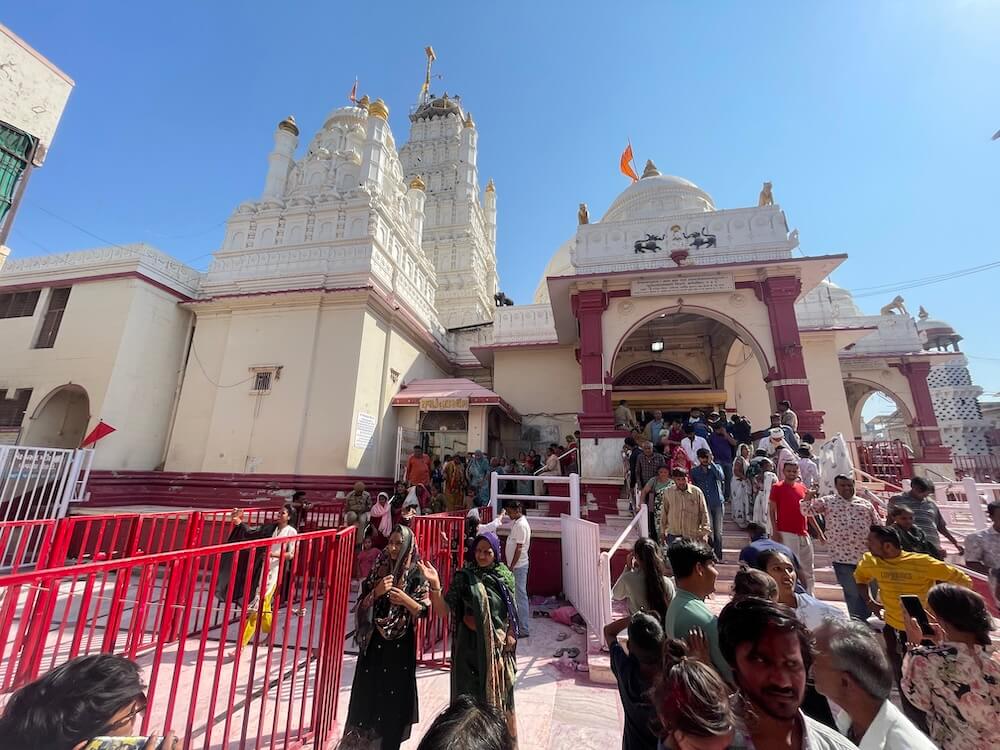 Jarasandha has captured 86 of 100 regional kings. Only 14 (percent) kings remained free. If he captured them too, his cruelty would escalate further. Angered by Kansa’s death at Krishna’s hands, Jarasandha attacked Mathura 18 times. Although no decisive victory was achieved in these battles, Mathura suffered greatly. Ultimately, for the welfare of his people, Krishna decided to abandon Mathura and migrated with the Yadava clans – Vrisnis andhakas and Bhojas – to Dwarka. This act of leaving the battlefield earned him the name Ranchhod; however, it was done for the greater good of his subjects.
According to another legend, a cowherd from Gokul named Vijayanand was reborn into a Rajput family in Dakor as Vijayanand Bodana, as per a boon from Shri Krishna. This Bodana would travel on foot to Dwarka every six months,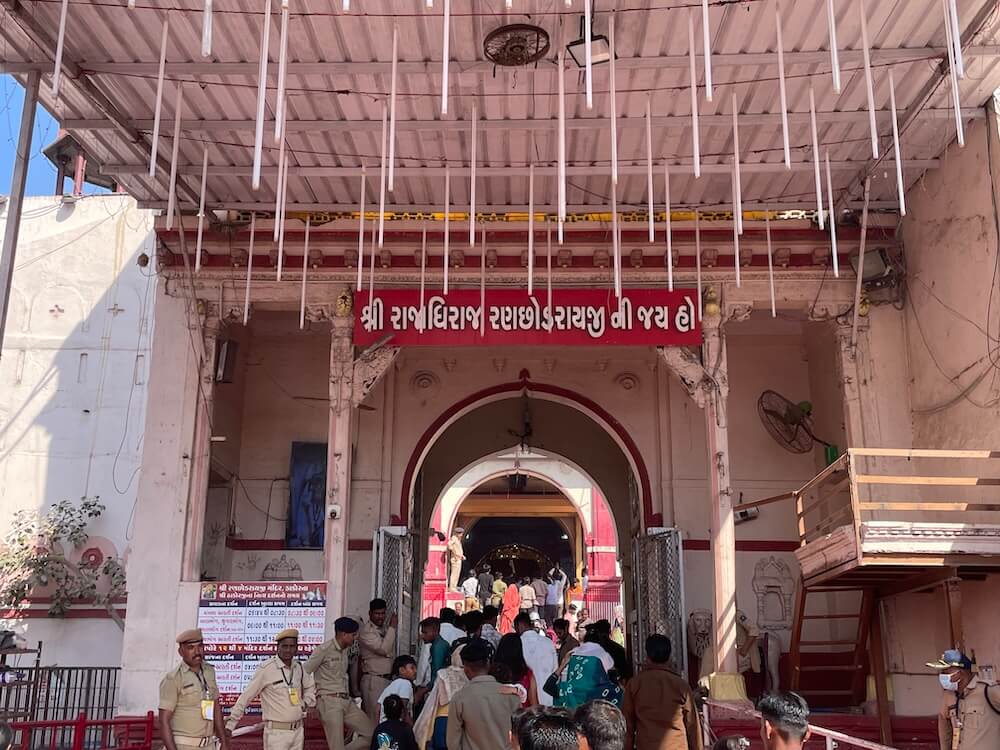 carrying a Tulsi plant in a clay pot upon his palm. At the age of seventy-two, when physical infirmity made the journey arduous, Shri Krishna commanded him to bring a bullock cart on his next visit. When Bodana reached Dwarka with the cart, the local Gugli Brahmins locked the temple doors at night. At midnight, Lord Shri Krishna broke the locks and taking the reins of the cart, journeyed with Bodana towards Dakor. They rested beneath a neem tree near the Bileshwar Mahadev Temple at Simlej, between Umreth and Dakor. It is said that a branch of this neem tree turned sweet to the taste due to the divine touch of Shri Krishna. Upon discovering the disappearance of the idol, the priests of Dwarka pursued Bodana. To protect the deity, Bodana hid the idol in the waters of the Gomti Lake.
  Bodana was slain by a spear hurled by the priests and as the same spear struck the submerged idol, the lake water turned red with the blood flowing from the deity.
An extraordinary event occurred at the Gomti Ghat where the colossal idol was found to be as light as the weight of the nose-ring of Bodana’s wife, Gangabai. Following this, the priests discovered another smaller idol in the ‘Sevaram Vav’ (stepwell) at Dwarka. These legends find mention in the ‘Dakor Mahatmya’, as well as the ‘Mirat-i-Ahmadi’ written by Muhammad Ali Khan in 1760 AD.
The expansive temple is situated in the centre of Dakor’s main market on the banks of the Gomti Lake. The principal ‘Mahadwar’ (grand gateway) faces east, opening directly onto the ghats and offering a view of the lake. 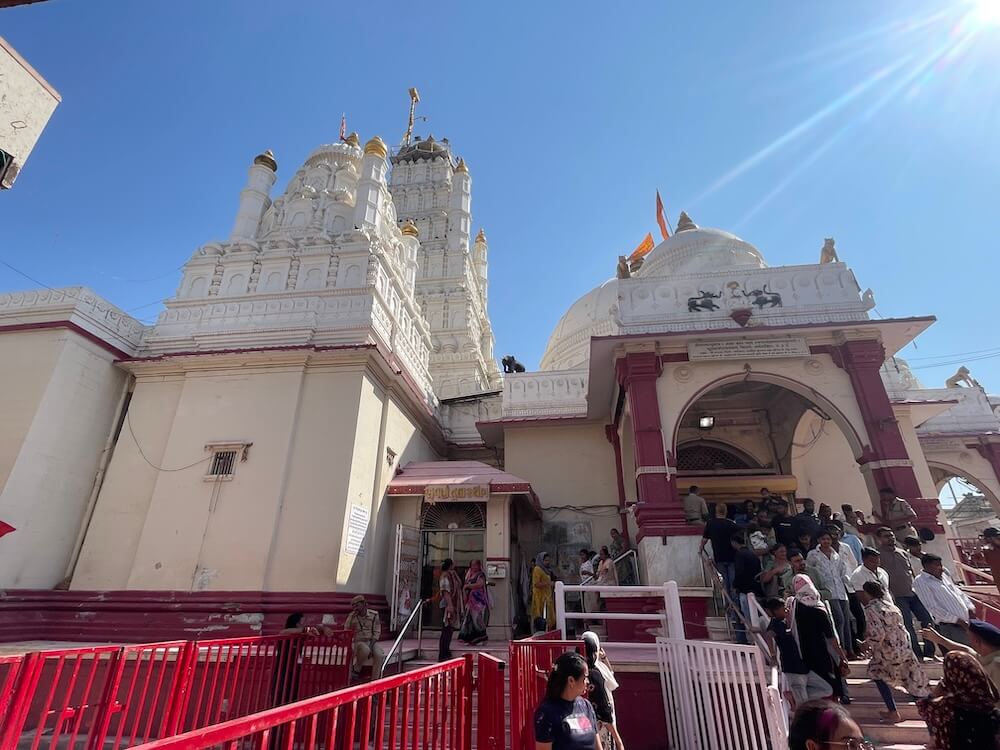 Beyond the gateway lies a spacious courtyard featuring two multi-storeyed ‘Deepstambhas’ (lamp towers) fashioned from marble. During festivals, over fifteen hundred lamps are lit upon these towers. A circumambulatory path surrounds the courtyard, lined with administrative offices and ‘Bhandargruhas’ (storehouses for offerings).
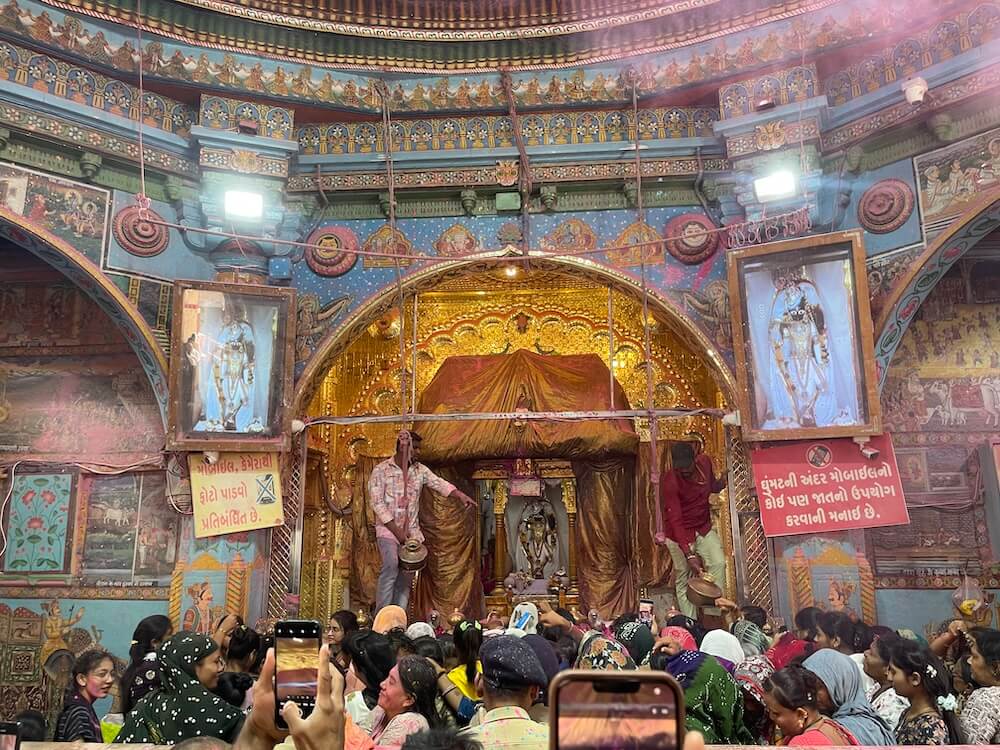
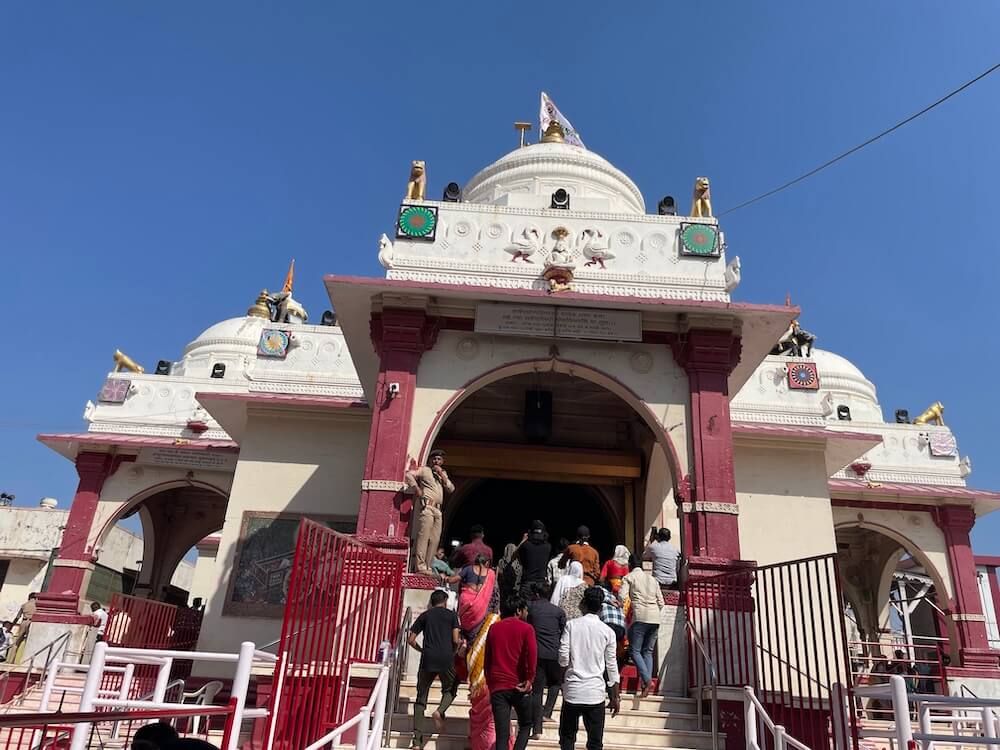
The architecture of the temple exhibits a fusion of Hindu and Islamic styles. The entire structure is elevated upon a high plinth, accessible via twelve stone steps on each side. The doors of the main gateway are encased in silver plating, engraved with figures of Ganesha, the sun and the moon. Above the gateway is the ‘Takorkhana’ (Nagarkhana), a music gallery where, according to tradition, drums and ‘Shehnai’ are played every three hours. Marble steps lead to a grand viewing hall known as the ‘Jagmohan’, 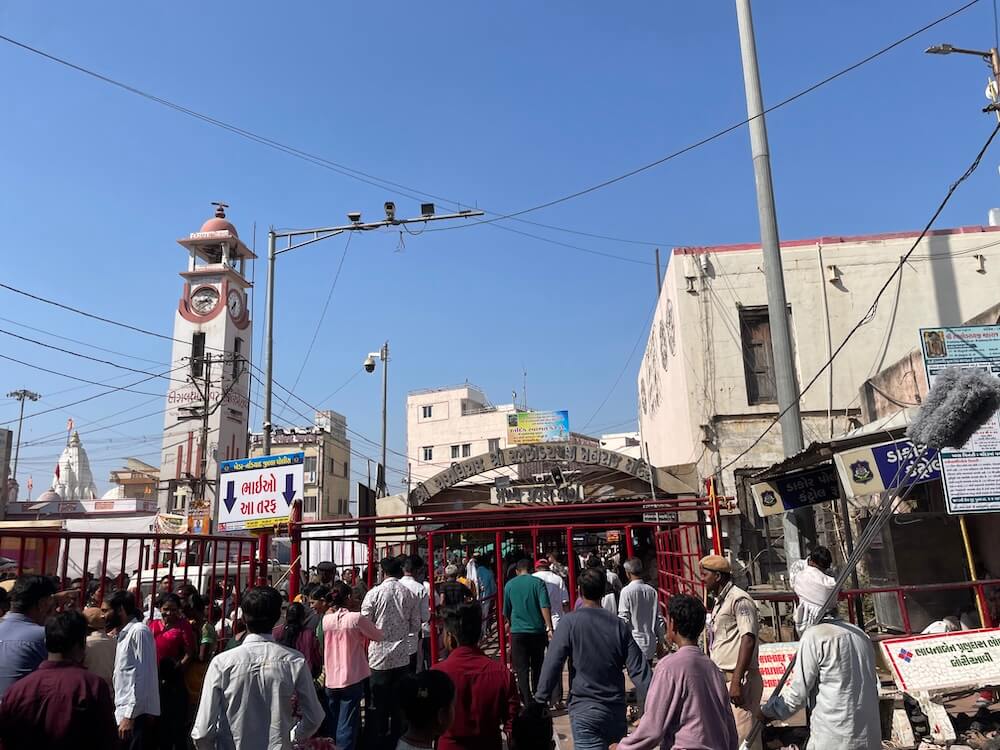 which features three entrances. The interior dome of this hall is decorated with glass ‘Minakari’ work, depicting episodes of Lord Krishna’s ‘Rasleela’ in the Bundi style of painting. The adjacent ‘Mukhamandap’ and ‘Sabhamandap’ (assembly hall) are supported by brick walls and carved stone pillars. These halls feature silver doors, reputedly a gift from the erstwhile Gaekwad dynasty of Baroda. Within the ‘Garbhagriha’ (sanctum sanctorum), Lord Ranchhodray is enshrined beneath the canopy of a ‘Suvarnamandap’ (golden pavilion). The idol, carved from black touchstone, dates back to approximately the eleventh century. This one-metre-tall, four-armed idol represents the ‘Trivikram’ form of Lord Vishnu, wielding a mace, Sudarshan Chakra and conch, with one hand in the ‘Abhaya Mudra’ (gesture of fearlessness) and a small golden flute. During festivals, the deity’s hands are adorned with gold gloves encrusted with gems. The temple roof is composed of eight domes and twenty-four spires, with the central dome rising ninety feet above the sanctum, crowned by a golden finial.
In the centre of the Gomti Lake, opposite the temple gateway, stands a small shrine called ‘Padmachinha’, marking the spot where Bodana hid the idol. A separate temple dedicated to Goddess Lakshmi is located in a residential area a short distance from the main market. Every Friday, a procession is taken out as Lord Ranchhodray visits the Lakshmi temple to meet His consort.
Over thirty-five festivals are celebrated here throughout the year. On the full moon days of the months of Kartik, Phalgun, Chaitra and Ashvin, over one lakh devotees arrive for ‘Darshan’. Following the ‘Pushtimarg’ tradition, service is performed through eight ‘Praharas’ (watches) daily, 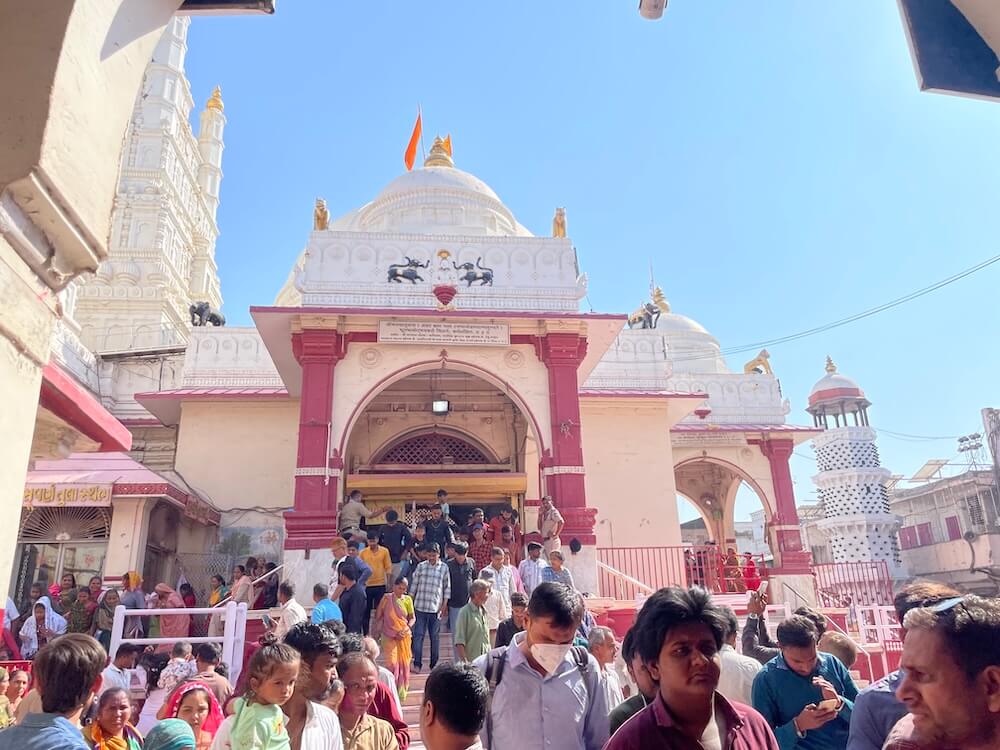 beginning with ‘Mangala Aarti’ at 6:45 am and concluding with ‘Shayan Aarti’ at 7:30 pm. Delicacies are offered
four times a day, with ‘Chhappan Bhog’ (fifty-six varieties of food) being offered during major festivals. ‘Kartik Purnima’ is of paramount importance, as it commemorates the day the idol was brought from Dwarka in 1212 AD. On ‘Phalguni Purnima’ (Holi), millions of pilgrims arrive on foot chanting ‘Jai Ranchhod, Makhan Chor…’. During this celebration, approximately one thousand kilograms of ‘Gulal’ (red powder) is showered upon the devotees and coloured water is sprayed from gold and silver ‘Pichkaris’.
The ‘Annakut’ festival, celebrated on the day following Diwali, is a distinctive event where three thousand kilograms of food is offered as ‘Mahaprasad’. Following the ‘Maha-Aarti’, the temple doors are opened and devotees from eighty surrounding villages rush to partake in the ‘Prasad’. During the month of Shravan, Janmashtami is celebrated with a ‘Rathyatra’ where the idol of Gopalji is taken out in a grand procession atop an elephant.
Day to day administration of this holy shrine is conducted by a temple committee, as per the provisions laid down under the Dakor Temple Scheme. The temple committee maintains a Gaushala here. It’s strength is round about 1200 cattle. Milk of the cows is utilized for the purpose of the deity and the surplus is disposed off by turning it into curd-butter milk and distributing it free of cost amongst the inhabitants of the town and vaishnava visitors and padyatris during full-moon days.
Useful Information
- Located at 10 km from Thasra and 56 km from Kheda city.
- State Transport (GSRTC) bus facilities available to Dakor from various cities in the district.
- Private vehicles can reach the temple’s designated parking area.
- Numerous options for accommodation and breakfast are available in the vicinity.
- Contact – Temple Office, Telephone: 02699244492.
रणछोड़राय मंदिर
डाकोर, ताल. थसरा, जिला. खेड़ा
मंदिरे
Temples
मंदिर
-
भूमपुरा हनुमान मंदिर भूमापुरा, मोडज, ता. महेमदावाद, जि. खेडा
अधिक माहितीBhumapura Hanuman Temple Bhumapura, Modaj, Tal. Mahemdavad, Dist. Kheda
View Detailsभूमापुरा हनुमान मंदिर भूमापुरा, मोडाज, ताल. महेमदावाद, जिला. खेड़ा
विवरण देखें -
भाथीजी महाराज मंदिर फागवेल, ता. कापडवंज, जि. खेडा
अधिक माहितीBhathiji Maharaj Temple Phagvel, Tal. Kapadvanj, Dist. Kheda
View Detailsभथीजी महाराज मंदिर फागवेल, ताल. कपडवंज, जिला. खेड़ा
विवरण देखें -
केदारेश्वर महादेव मंदिर महादेवपुरा, ता. कठालाल, जि. खेडा
अधिक माहितीKedareswar Mahadev Temple Mahadevpura, Tal. Kathlal, Dist. Kheda
View Detailsकेदारेश्वर महादेव मंदिर महादेवपुरा, ताल. कठलाल, जिला. खेड़ा
विवरण देखें