
Temple No. 280 (Gujarat)
Balaji Hanuman Temple
Kesra, Tal. Mahemdavad, Dist. Kheda
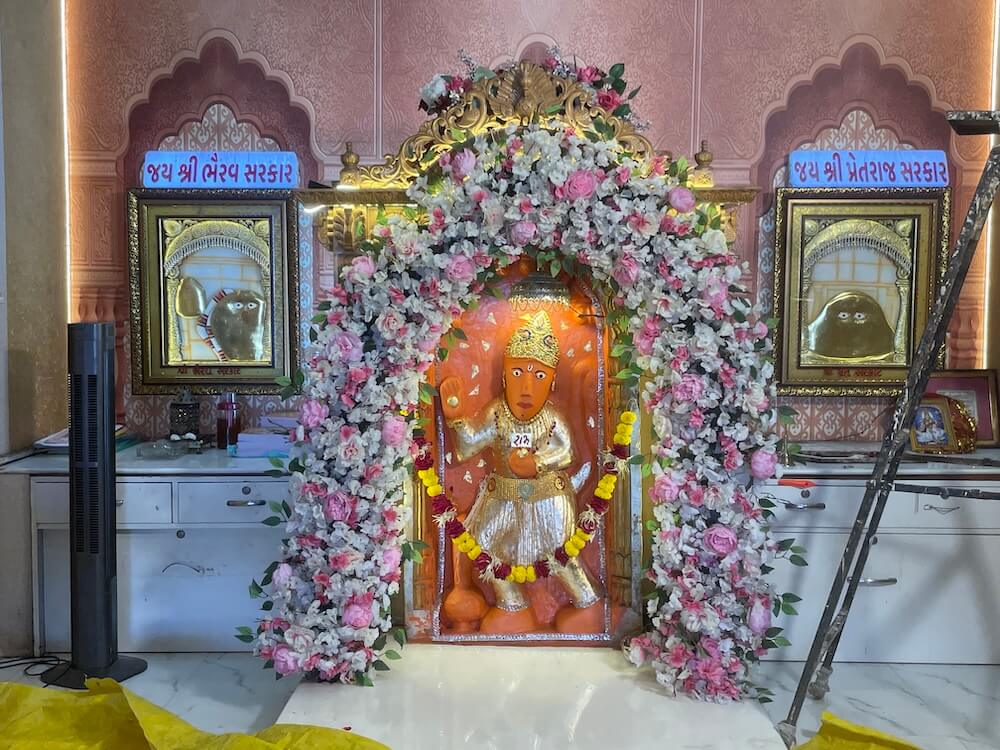 There exists a profound and steadfast belief among the faithful that the thoughts within a devotee’s heart are easily discerned by the Divine and that God silently listens to every prayer offered without a word being spoken. In certain sacred precincts, it is customary for people to commit their supplications to paper and deposit them into a sanctified box. Such letters of petition are famously offered at the Balaji Devasthan in Tirupati, the Sai Baba Temple in Shirdi, the Ambabai Devasthan in Kolhapur and the renowned Shabarimala in Kerala. A similarly unique tradition is observed at the Balaji Hanuman Temple in the village of Kesra within the Mahemdavad Taluka.
To ensure that devotees can submit a formal written entreaty to the Lord, the temple committee has made special arrangements for printed ‘Arjas’ (application forms). 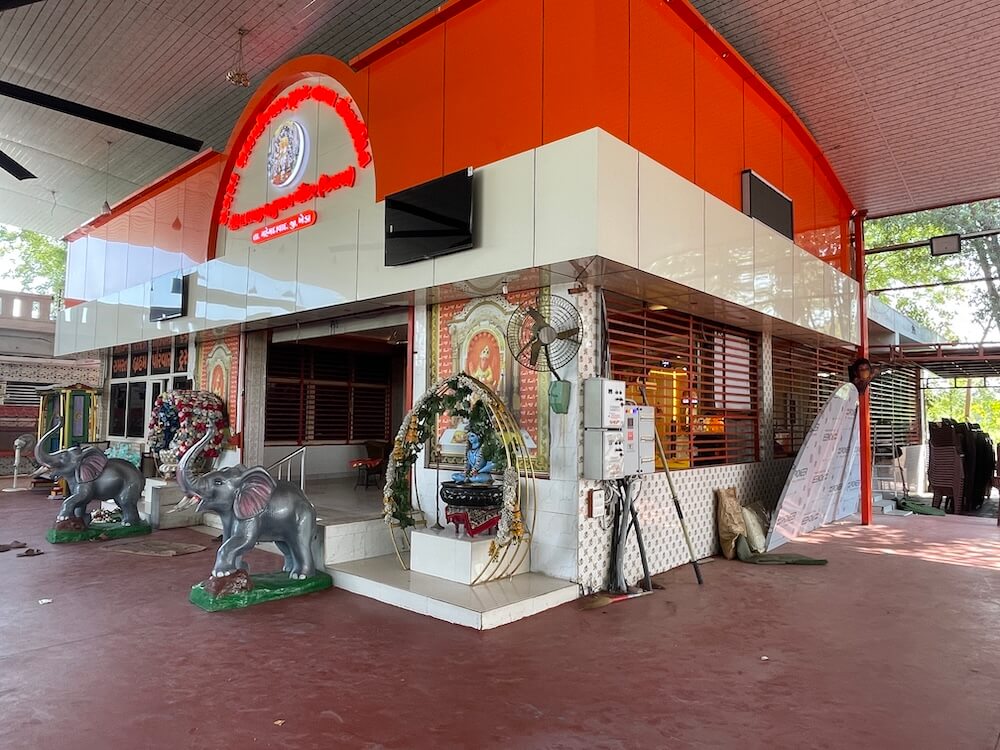 Devotees record all their desires and requirements upon these forms and place them in a box kept before the deity. It is the unwavering faith of the pilgrims that the Hanuman enshrined here listens to every prayer contained within these applications.
The history of the Balaji Hanuman idol in Kesra village spans approximately four hundred years. In antiquity, the original idol of Balaji Hanuman was established within a modest structure at the village outskirts. Having remained within this small shrine for centuries, the idol became the primary centre of local devotion. With the passage of time, the exterior of the edifice underwent several transformations. Approximately twenty years ago, a holy man named Namdevbhai Sanyasi Baba undertook the complete restoration of the entire structure. 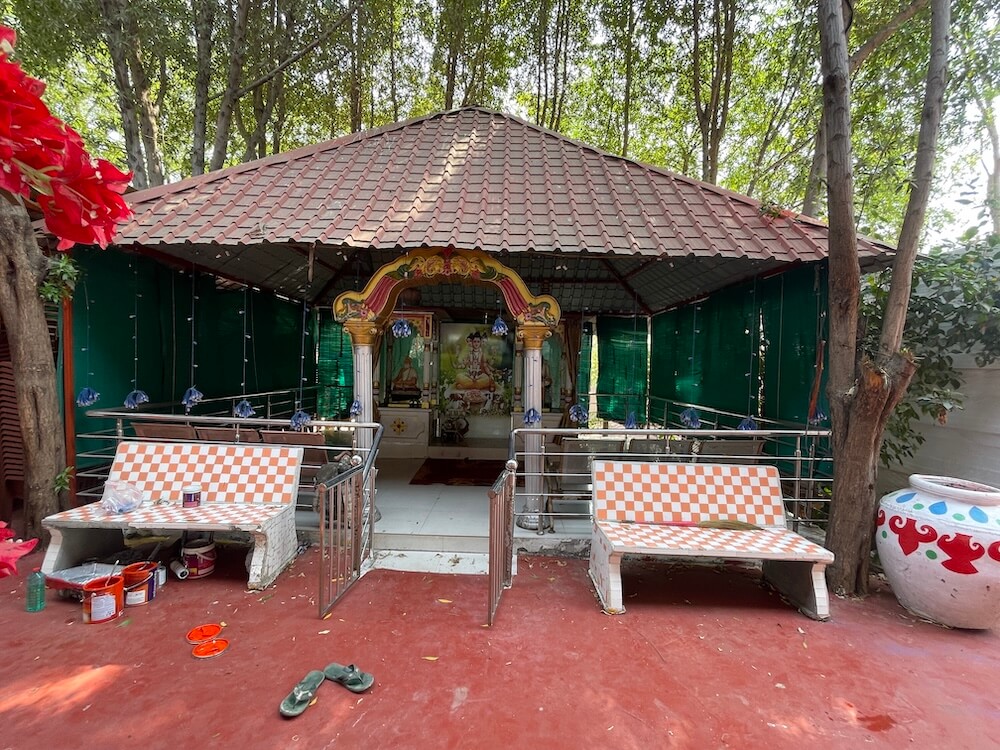 It is recounted that Namdevbhai Sanyasi Baba, a supreme devotee of Hanuman, remained perpetually immersed in the service of Balaji Hanuman. Pilgrims arriving for ‘Darshan’ (holy viewing) would often implore Sanyasi Baba to convey their personal grievances to the Lord. On occasions when the holy man was not present, people were compelled to wait for him. To ensure that the faithful were not kept waiting, Babaji began to provide blank pages and pens at the site. He instructed that during his absence, people should record their thoughts upon these sheets. Following his guidance, the devotees began depositing their wishes and demands into the box. This custom endured even after Babaji’s passing. In keeping with modern times, specially printed forms are now provided for these written requests.
  Many a devotee records their intent upon these printed papers before consigning them to the box.
Within the Hindu faith, Hanuman is revered as ‘Sankatmochan’ (the deliverer from distress). The primary vision behind the tradition established by Namdevbhai Sanyasi Baba was that devotees should communicate their complaints or grievances directly to the Divine. Amongst the local populace, the Hanuman who accepts these paper applications has earned the name ‘Arji Balaji’. There is a prevailing belief that a request committed to paper reaches the Lord more directly than a mere oral prayer.
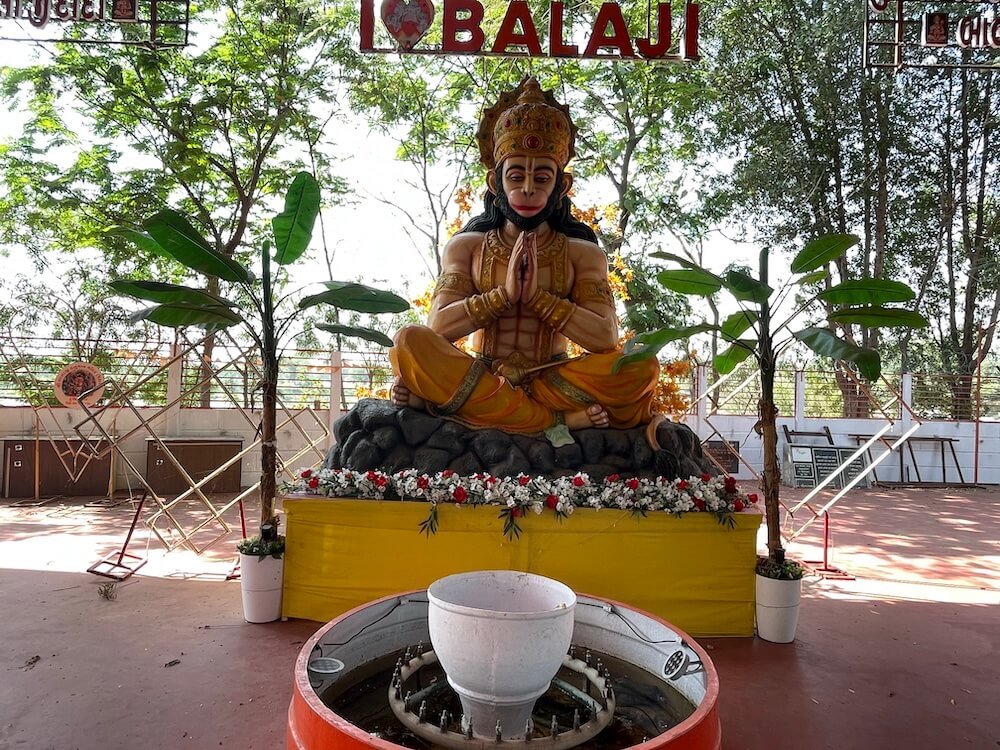
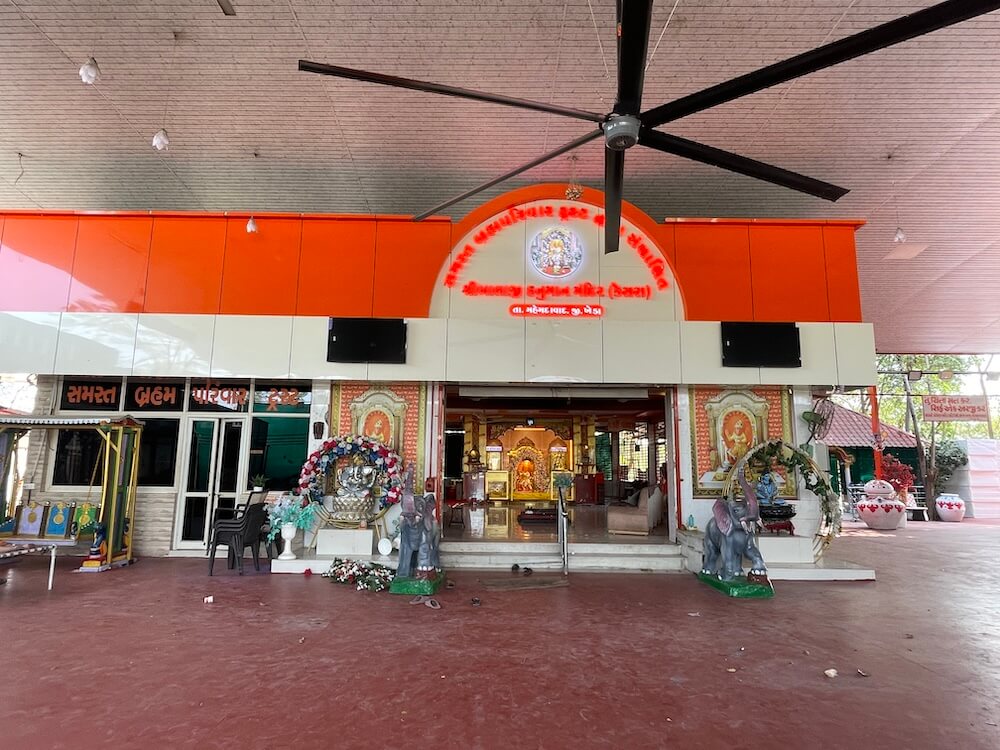
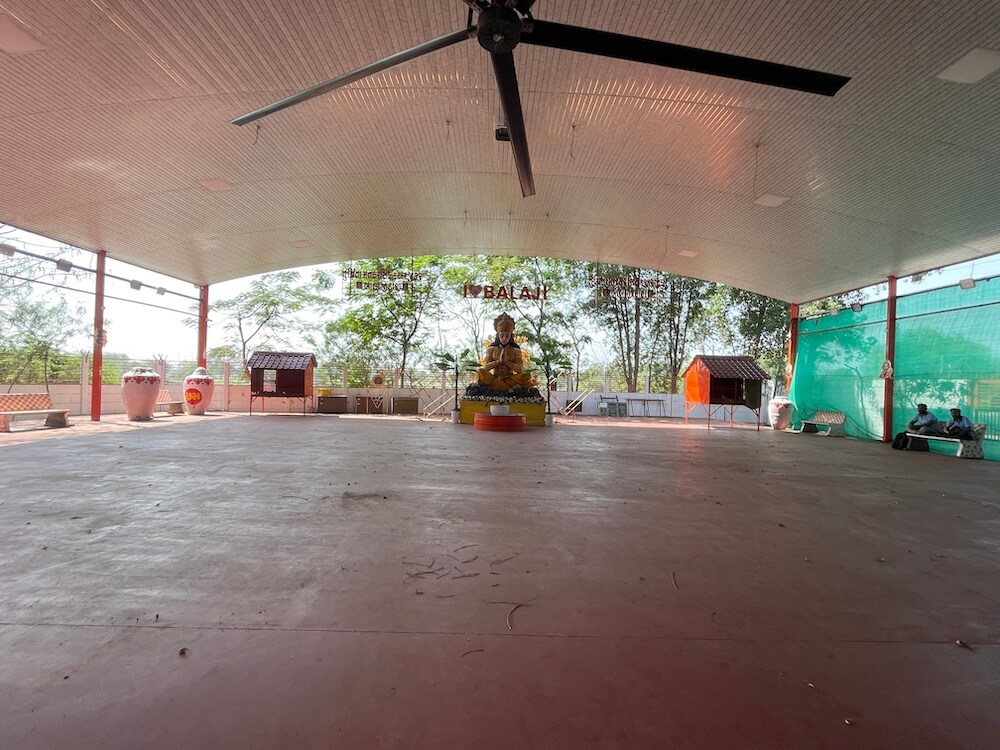
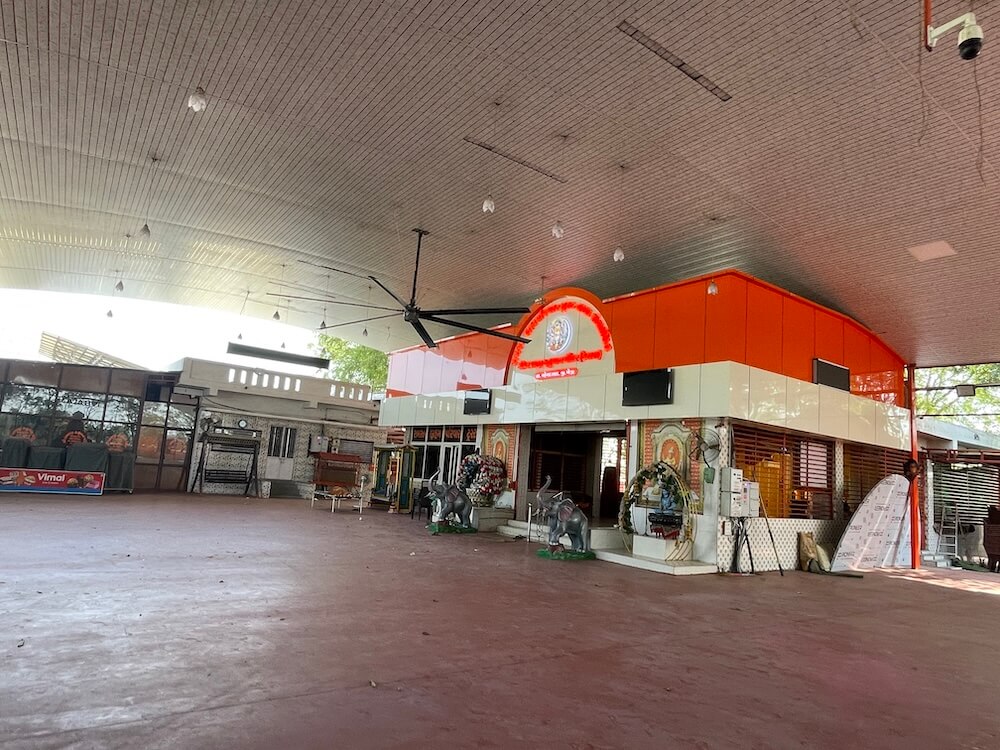
The temple, situated a short distance from the village alongside the highway, is fronted by a parking area.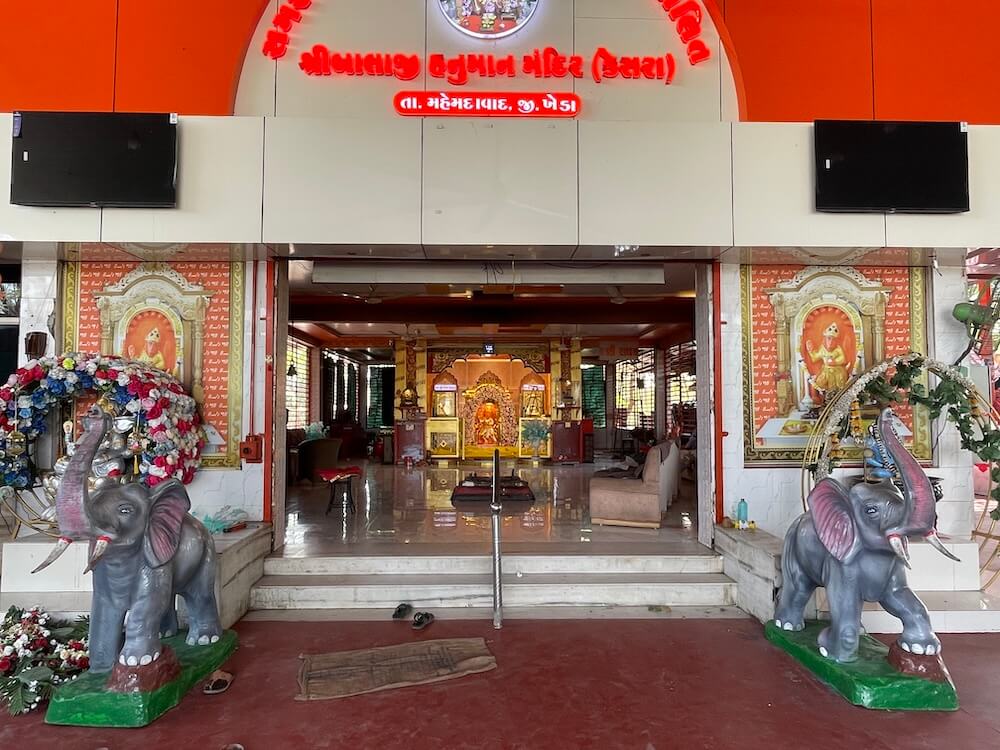 Enclosed by a perimeter wall, the shrine is accessed through a simple gateway. Upon entering the courtyard, one is greeted by a colossal idol of Hanuman in a ‘Namaskar’ (salutation) mudra, situated within a spacious pavilion. Adjacent to the temple are the Devasthan office and the residences of the priests. Within the courtyard, a ‘Shivpind’ (auspicious stone of Shiva) and an idol of ‘Nandi’ (the sacred bull) are established before the main shrine. The temple’s architectural layout consists of a Sabhamandap (assembly hall) and a Garbhagriha (sanctum sanctorum). The Sabhamandap, elevated above the courtyard level, features two ‘Gajraj’ (elephant) sculptures at its entrance. Within the hall, seating is provided for devotees along the sides, with a ‘Yagnakunda’ (sacrificial fire pit) at the centre.
 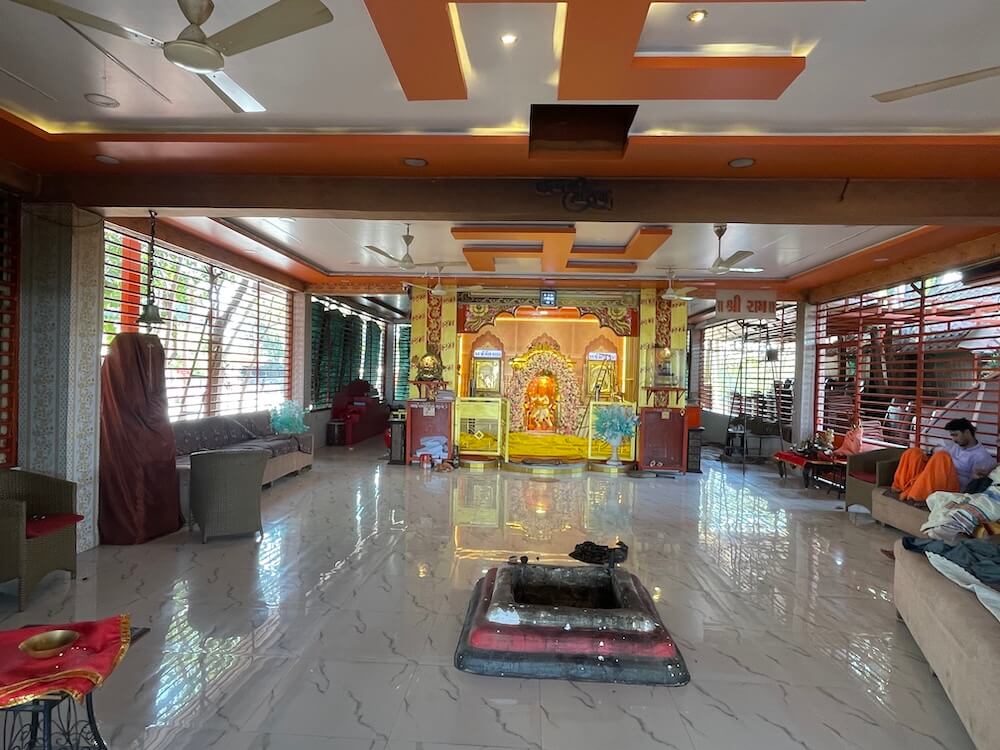 Beyond the assembly hall, the sanctum is designed with a surrounding ‘Pradakshina’ (circumambulation) path. A glass box is placed to the left of the sanctum entrance. It is here that devotees deposit their printed applications. To the right of the entrance are images of ‘Pretraj Sarkar’ and to the left, ‘Shri Bhairavnath Sarkar’. Inside the sanctum, upon a stone pedestal, resides the stone idol of Hanuman, consecrated with vermillion. The deity is adorned with silver raiment and a golden crown. The ‘Prabhaval’ (ornamental arch) behind the idol is intricately carved with a ‘Kirtimukha’ (glory-mask), elephant motifs, and floral patterns. Portraits of Lord Ram and Sita are placed behind the arch. Upon the pedestal, metallic idols of Shani, Ganesha, and ‘Panchmukhi’ (five-faced) Hanuman are displayed. Legend holds that Hanuman assumed his five-faced form to slay the demons Airavan (Ahiravan) and Mairavan (Mahiravan).
The mention of the tale of Airavan-Mairavan is not found in the original Valmiki Ramayana but first appears in the ‘Anand Ramayana’ and the ‘Krittivasi Ramayana’. According to ‘Anand Ramayana’, Airavan and Mairavan were denizens of the netherworld and friends of Ravana. Summoned by Ravana to fight Shri Ram, they arrived at Ram’s camp by the seashore at night. Shri Ram and Lakshman were sleeping upon a rock within an impenetrable fortress formed by Hanuman’s coiled tail. Airavan-Mairavan lifted the entire rock and secretly abducted them to the netherworld. Upon discovering this, Hanuman travelled to the netherworld to rescue them. The story of Hanuman’s ‘Panchmukhi’ form is linked to this rescue mission. It is said that Hanuman’s son, Makaradhwaja, served as the gatekeeper for Airavan. 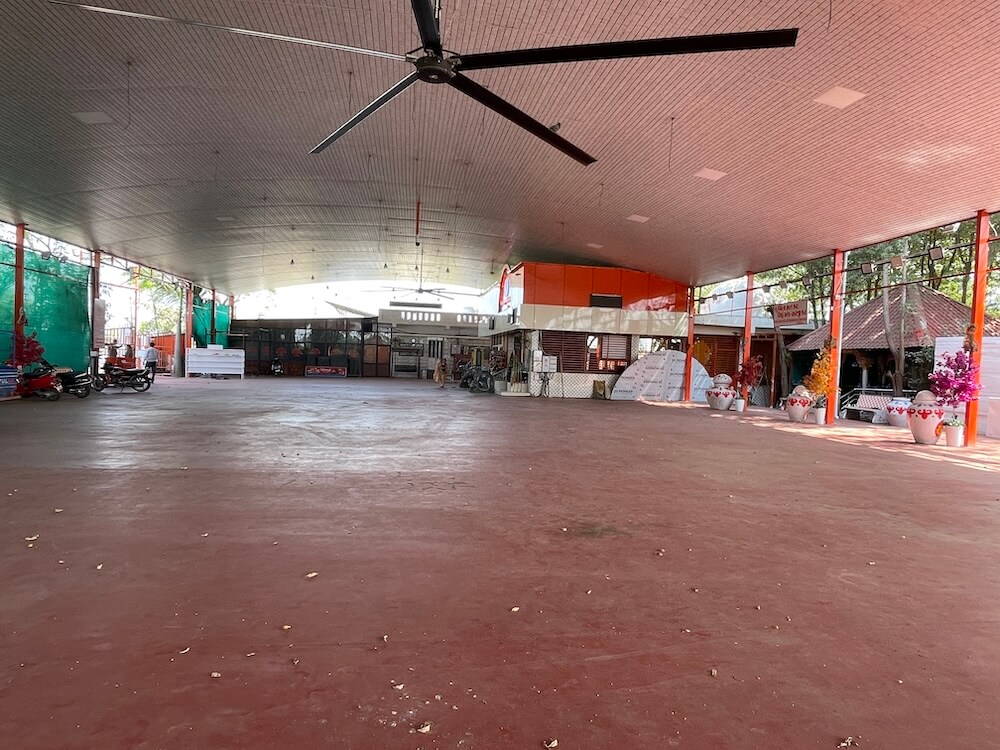 He informed Hanuman that Airavan could only be slain if five lamps hidden in a secret location were extinguished simultaneously. To achieve this, Hanuman assumed five faces and blew them out at once.
Throughout the year, numerous festivals and rites are observed here, with Hanuman Jayanti and Ram Navami being the two pre-eminent annual celebrations. From ‘Chaitra Shuddha Navami’ (Ram Navami) until ‘Chaitra Purnima’ (Hanuman Jayanti), the Devasthan organises various religious programmes. During the festival period, the precincts resonate with ‘Hom-havan’ (fire sacrifices), scriptural readings, recitations of the Ramayana, and the chanting of Hanuman mantras.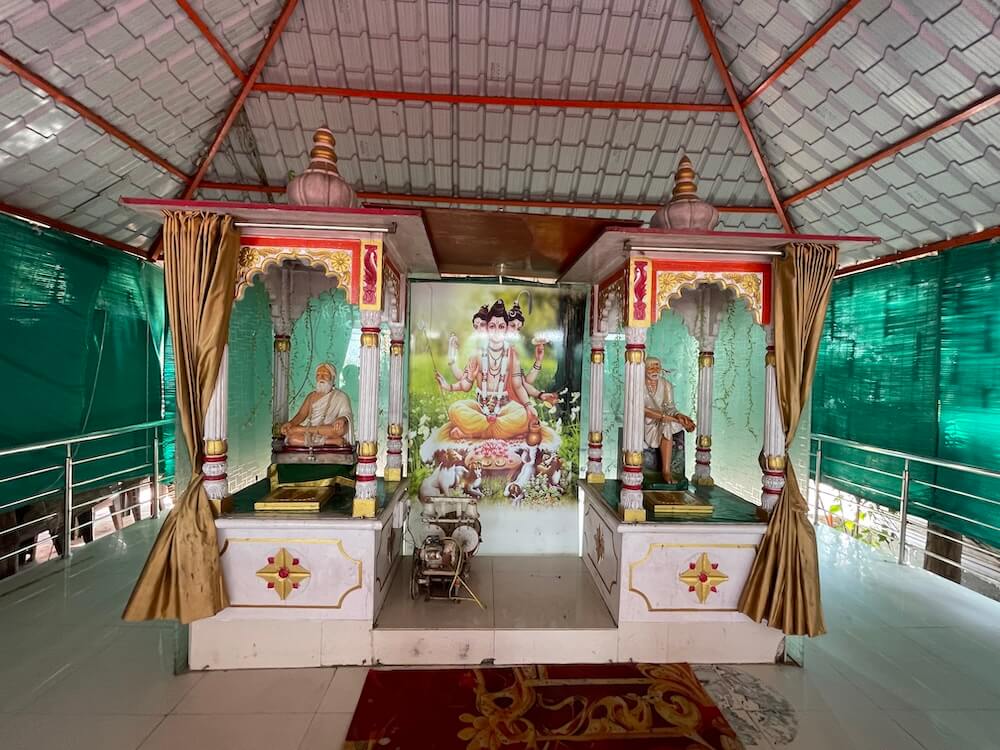 Thousands of pilgrims arrive during this time for ‘Darshan’ and to discharge their ‘Navas’ (vows). Other festivals celebrated include Chaitra Navratri, Dussehra, Diwali, and Sharadiya Navratri.
Every week, on Saturdays and Tuesdays, hundreds of people throng the temple to submit their written applications. Large crowds are also witnessed on full moon and new moon days.
Alongside religious activities, the Devasthan Committee conducts several social initiatives throughout the year, including financial aid for the schooling of underprivileged students, medical assistance for the ill, and guidance and financial support for unemployed youth to start businesses.
The temple is open for devotees daily from 6 am to 12 pm and from 4 pm to 8 pm.
Useful Information
- Located at 11 km from Mahemdavad and 21 km from Kheda
- State Transport (GSRTC) bus services available from Mahemdavad
- Private vehicles can reach the temple parking area directly
- Accommodation and breakfast facilities are available in the vicinity
- Contact – Temple Office, Mob. [Number not provided in tex
मंदिरे
Temples
मंदिर
-
भूमपुरा हनुमान मंदिर भूमापुरा, मोडज, ता. महेमदावाद, जि. खेडा
अधिक माहितीBhumapura Hanuman Temple Bhumapura, Modaj, Tal. Mahemdavad, Dist. Kheda
View Detailsभूमापुरा हनुमान मंदिर भूमापुरा, मोडाज, ताल. महेमदावाद, जिला. खेड़ा
विवरण देखें -
भाथीजी महाराज मंदिर फागवेल, ता. कापडवंज, जि. खेडा
अधिक माहितीBhathiji Maharaj Temple Phagvel, Tal. Kapadvanj, Dist. Kheda
View Detailsभथीजी महाराज मंदिर फागवेल, ताल. कपडवंज, जिला. खेड़ा
विवरण देखें -
केदारेश्वर महादेव मंदिर महादेवपुरा, ता. कठालाल, जि. खेडा
अधिक माहितीKedareswar Mahadev Temple Mahadevpura, Tal. Kathlal, Dist. Kheda
View Detailsकेदारेश्वर महादेव मंदिर महादेवपुरा, ताल. कठलाल, जिला. खेड़ा
विवरण देखें