
रणछोड मंदिर
पेटलाद, ता. पेटलाद, जि. आनंद
Ranchhod Temple
Petlad, Tal. Petlad, Dist. Anand
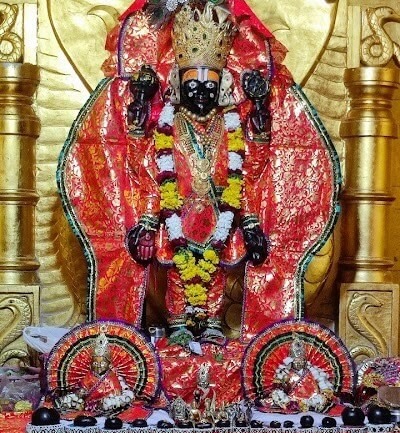 Shri Krishna, born at the juncture of the Dvapara Yuga and the Kali Yuga, is regarded within the Indian religious tradition as the ‘Purnapurusha’ (the complete and perfect divine being). Owing to the many divine exploits and qualities displayed throughout his life, he is known by numerous names. Among these, the name ‘Ranchhod’, literally meaning ‘one who left the battlefield’, enjoys special popularity among devotees. The fascinating legend behind this name and the profound principle of statecraft known as ‘Krishnaneeti’ (the strategic wisdom of Krishna) embodied within it, evokes deep reverence in the hearts of the faithful. Within the Vaishnava tradition of the region, this form of Krishna holds a position of great spiritual significance and the temple at Petlad stands as a focal centre of this devotion.
According to ancient records, the town of Petlad has long been recognised as a prosperous and ancient centre of trade. Located within the fertile Charotar region – so called for the productive lands spanning the districts of Anand and Kheda – 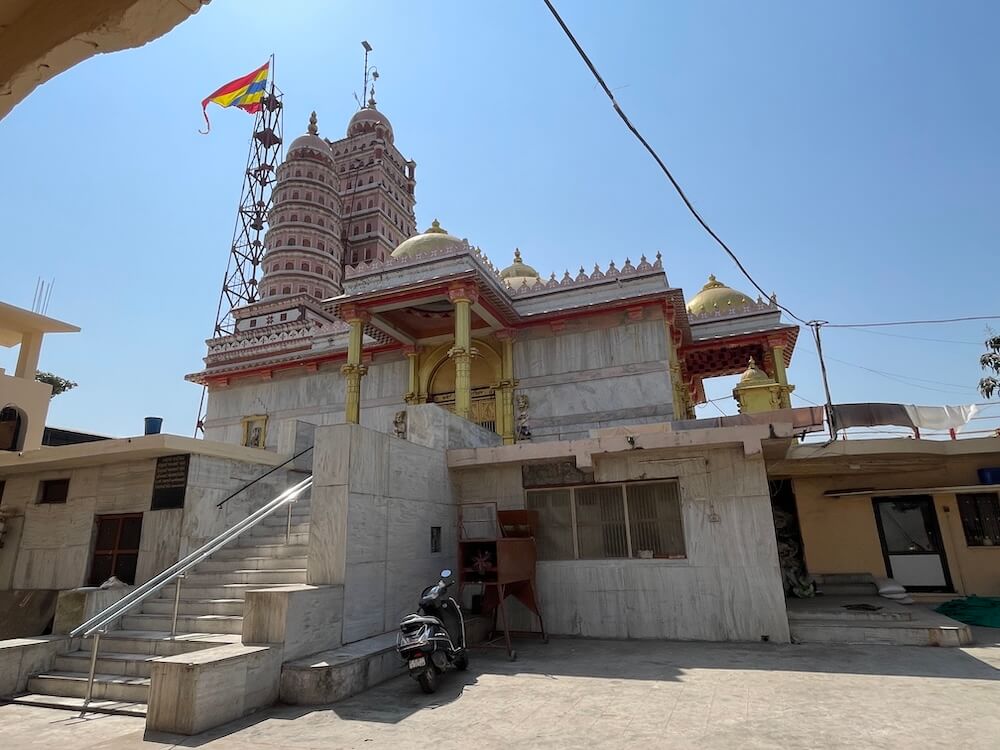 the town gained considerable importance during the medieval period. Historical references indicate that within the administrative structure of the Gaekwad rulers of the Baroda State, Petlad was known as an important pargana (administrative division). During the era of the Maratha Empire and in the period that followed, numerous temples in this region were constructed and restored. The Ranchhodji Temple at Petlad stands today as a symbol of that illustrious heritage. It is regarded as an excellent example of the religious architectural style prevalent in Gujarat during the eighteenth and nineteenth centuries.
The temple’s construction and continued maintenance were supported substantially by the local Patidar community and by affluent merchants associated with the court of the Peshwas. References to donations and grants of land bestowed upon the temple are also found in the annual administrative records of the Baroda State.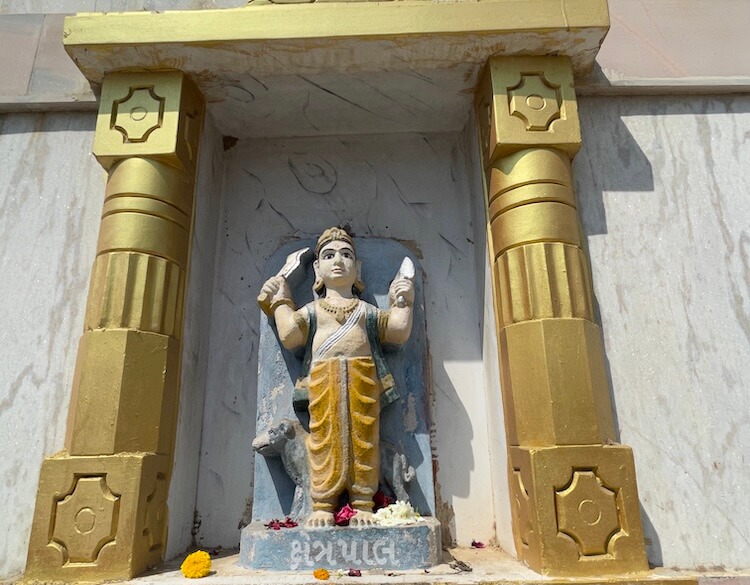
According to accounts found in the ‘Vishnu Purana’ and the ‘Bhagavata Purana’, after Krishna slew the tyrant King Kansa of Mathura, Kansa’s father-in-law Jarasandha attacked Mathura seventeen times. In order to prevent needless bloodshed and to safeguard the welfare of his subjects, Shri Krishna decided to leave Mathura and establish a new capital at Dwarka upon the shores of the sea. Because of this strategic withdrawal, he came to be known as ‘Ranchhodray’. It is believed that the idol in the Petlad temple is spiritually connected with the idol at Dwarka. Devotees hold the faith that those who are unable to undertake the pilgrimage to Dwarka receive equal spiritual merit by obtaining darshan at this temple in Petlad.
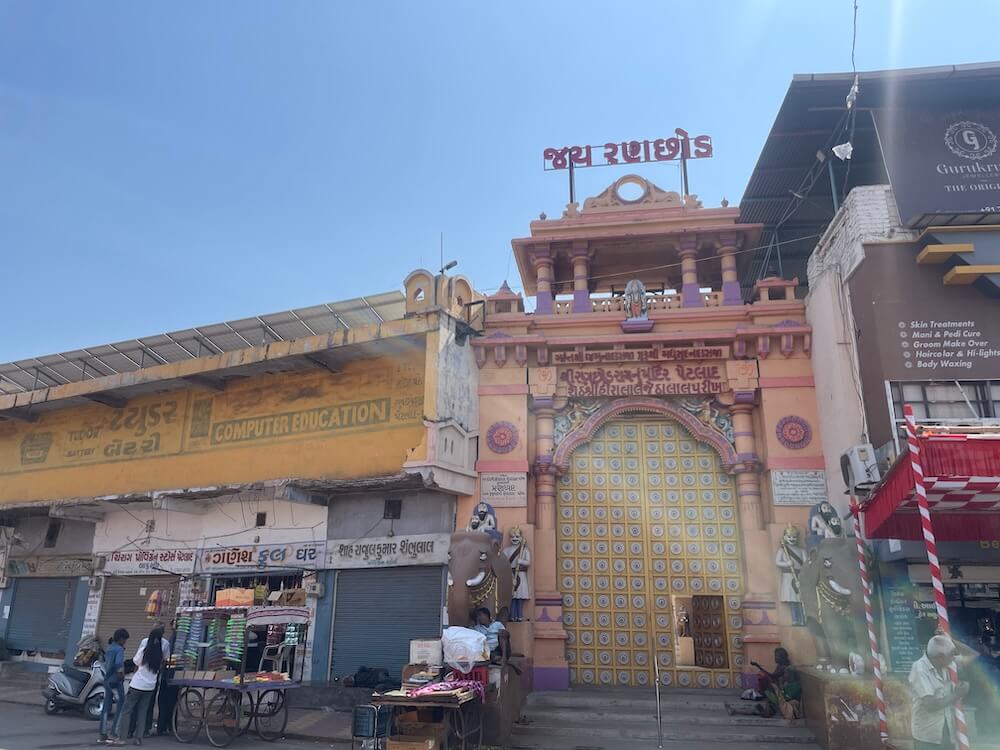
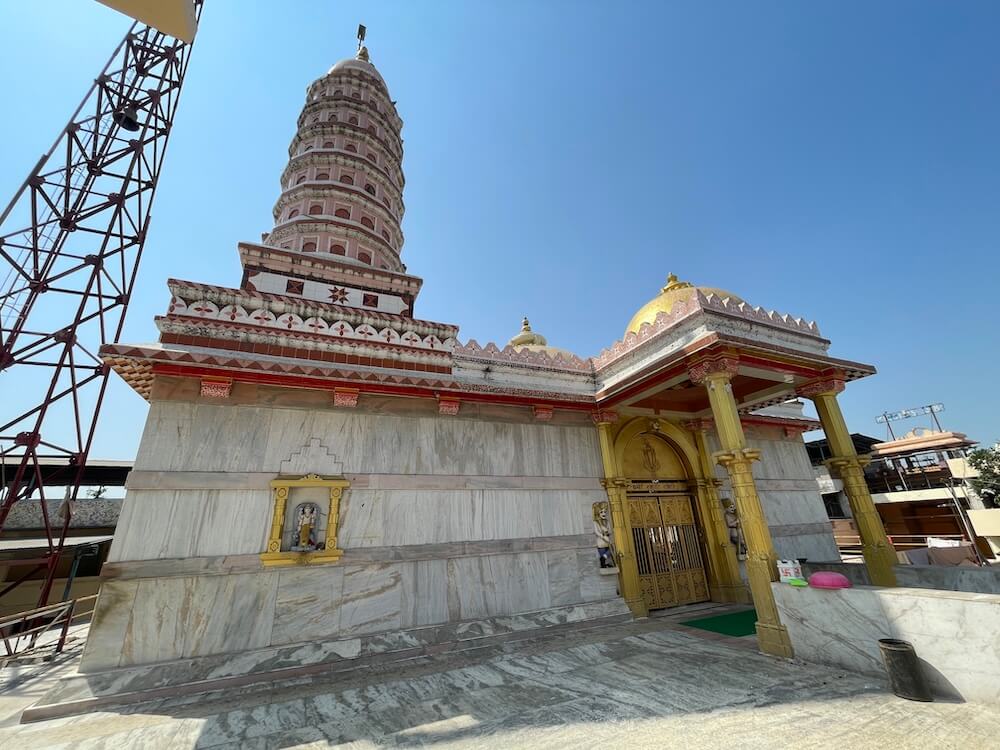
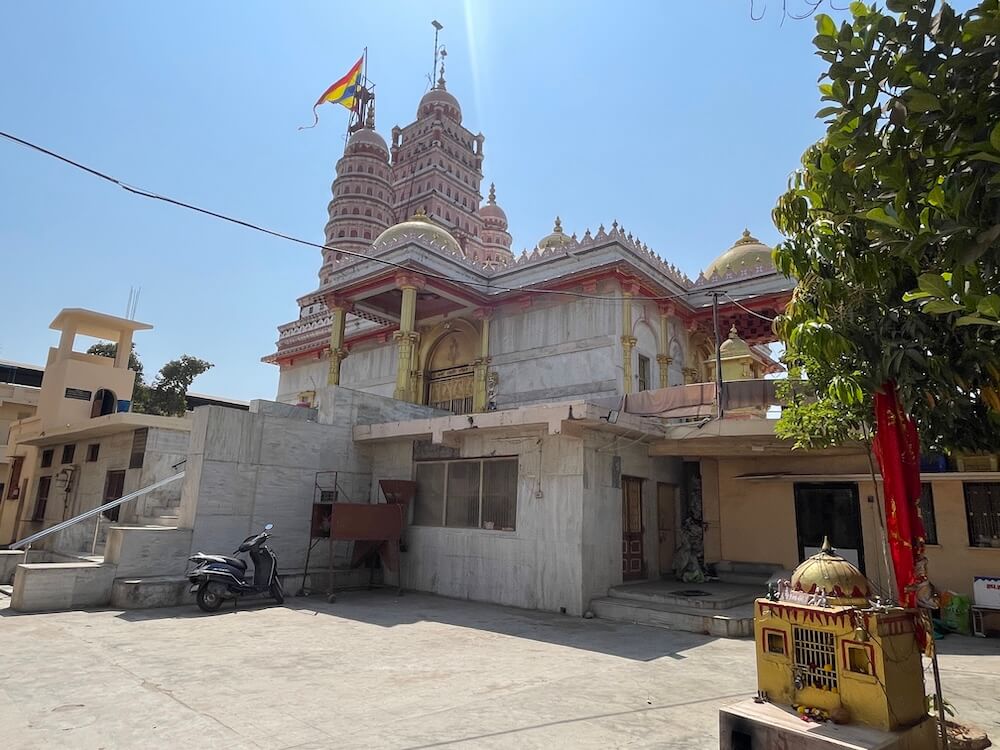
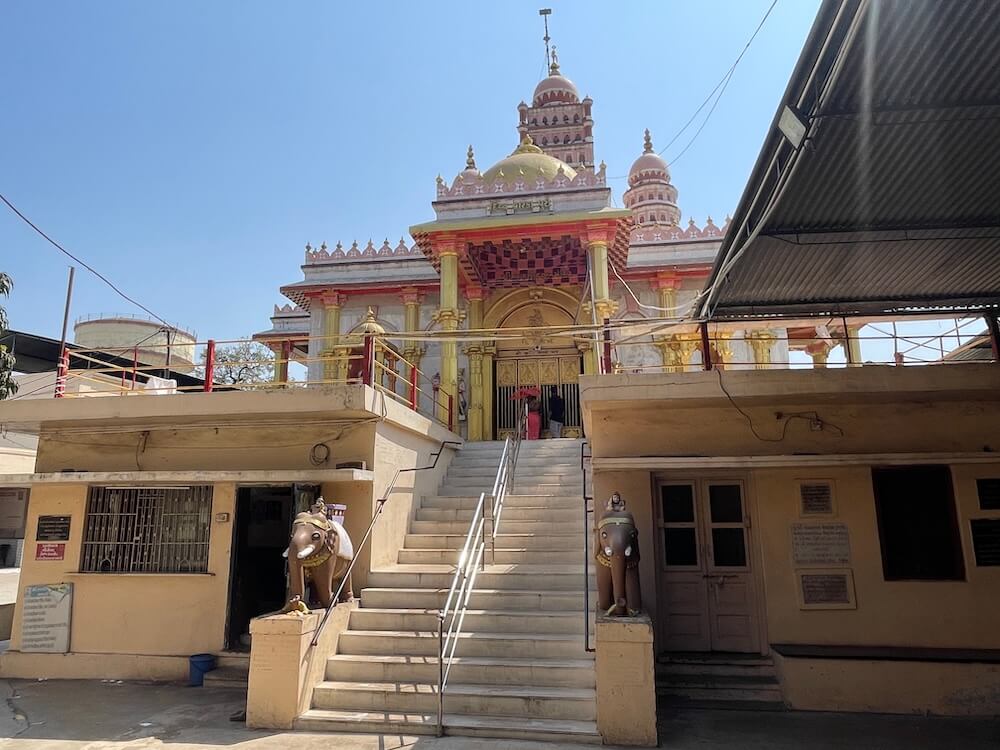
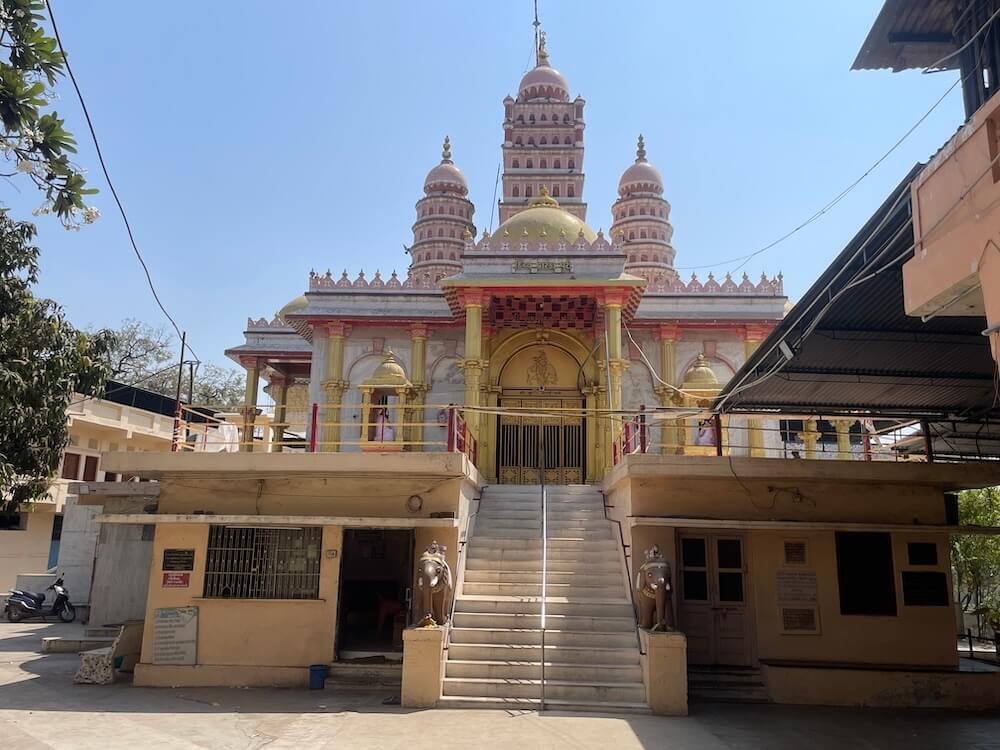 The temple stands in the central part of Petlad town. The two-storeyed gateway within the fortified enclosure of the temple is adorned with intricate carvings. On either side of the entrance stand sculptures of Gajaraj (royal elephants symbolising prosperity) and the traditional Dwarapalas (guardian figures). The upper storey houses the Nagarakhana, where ceremonial drums are played. Passing through this gateway leads into the paved courtyard of the temple. Within the courtyard stands a graceful Tulsi Vrindavan (a sacred pedestal for the worship of the holy basil plant).
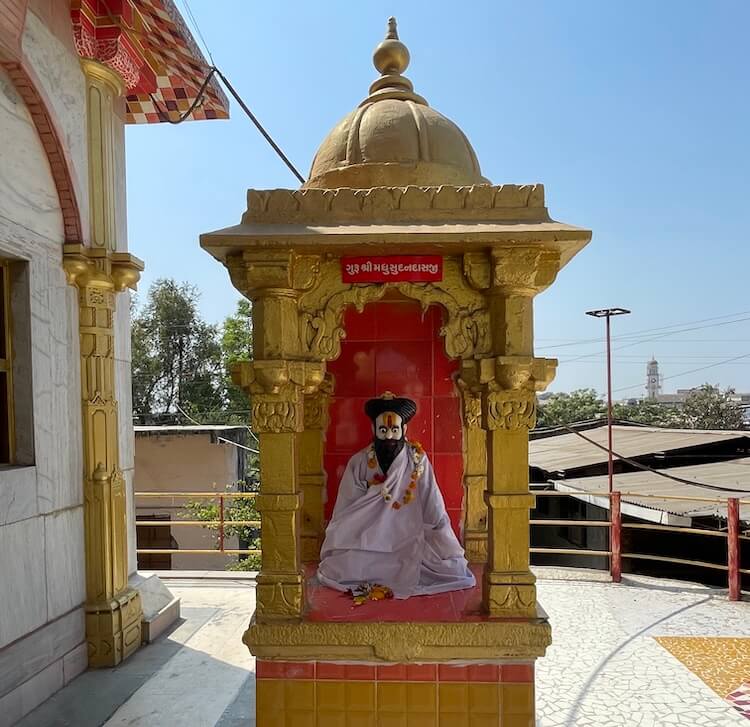
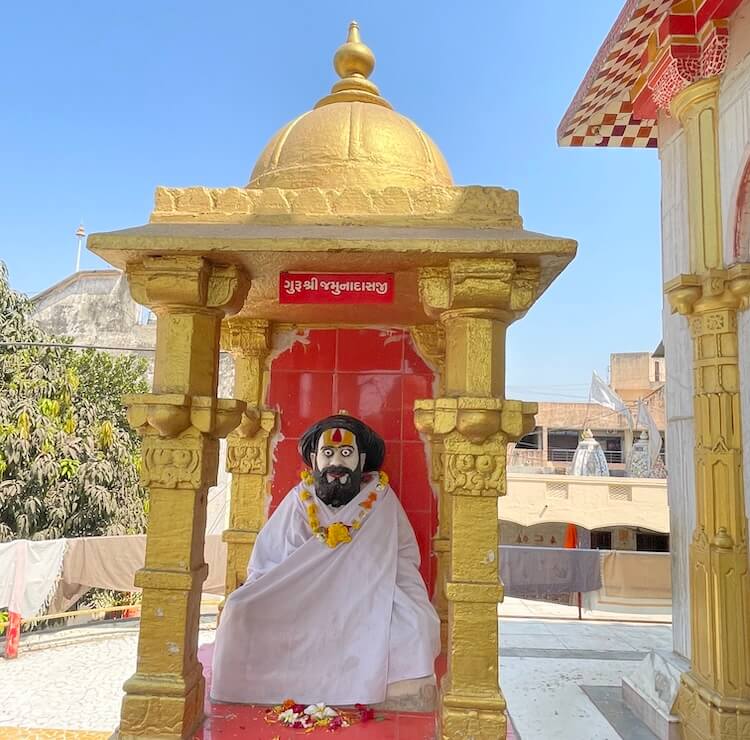
On the ground floor there is a spacious hall, while the main temple itself is located on the upper level. 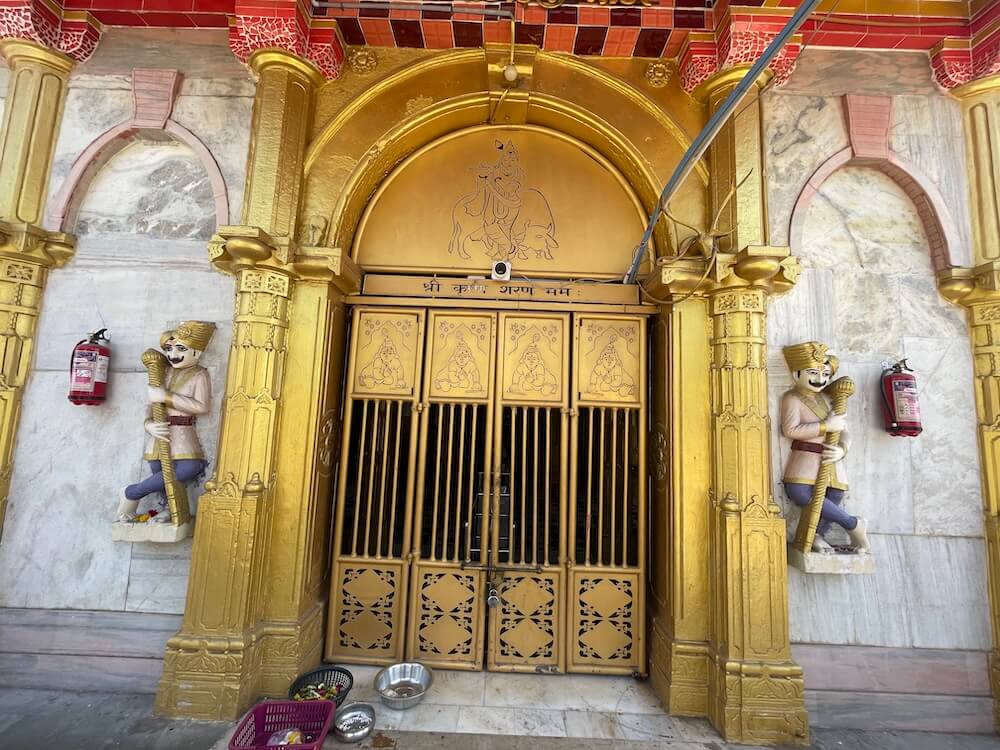 From the courtyard, devotees ascend eighteen steps to reach the Mukhamandap (entrance pavilion) of the temple. The structure of the shrine consists of the Mukhamandap, Sabhamandap (assembly hall), Antaral (vestibule) and Garbhagriha (sanctum). Within the decorative canopies (Meghadambaris) on the left side of the Mukhamandap is a sculpted image of Jamunadas Maharaj, while on the right is the figure of Madhusudandas.
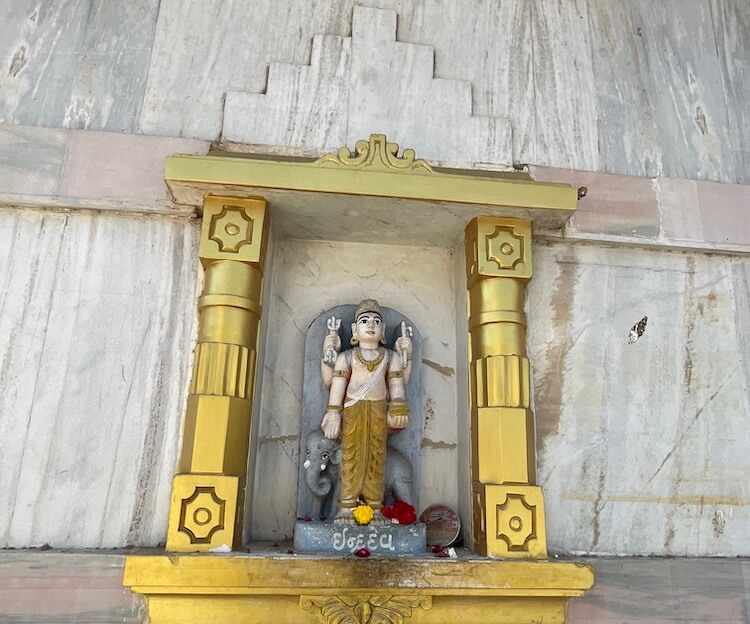
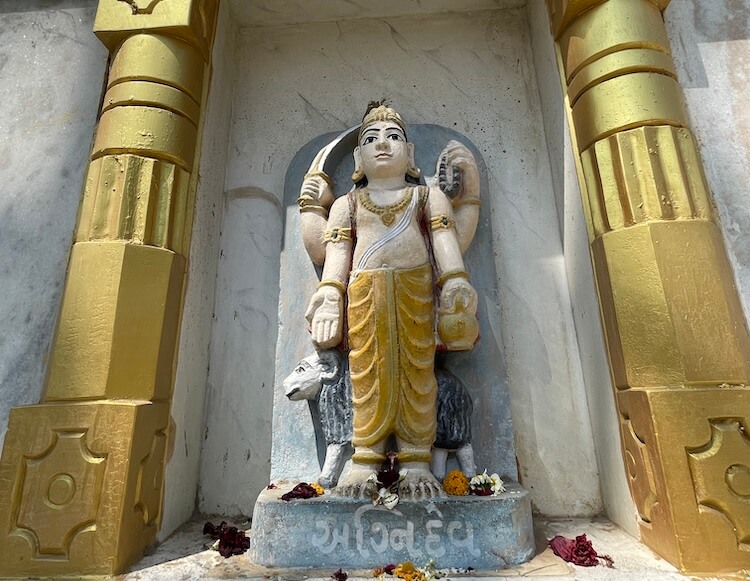
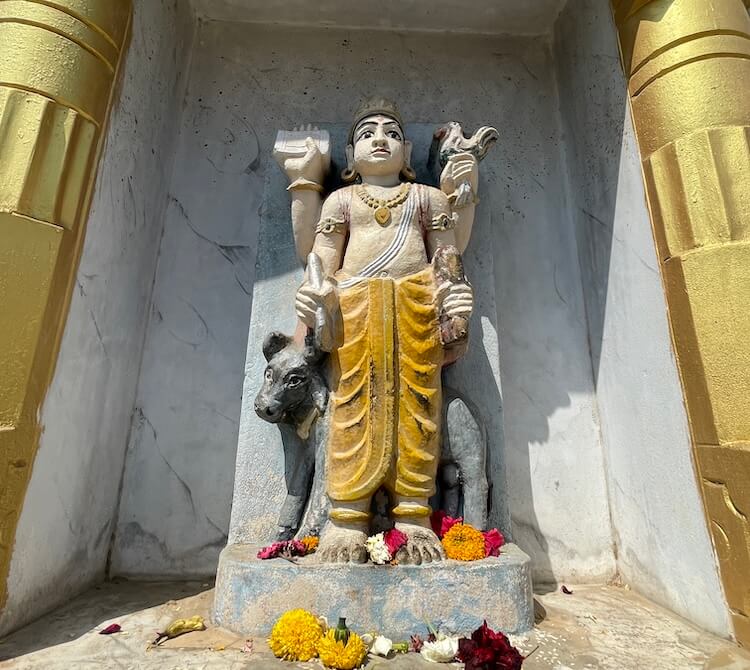
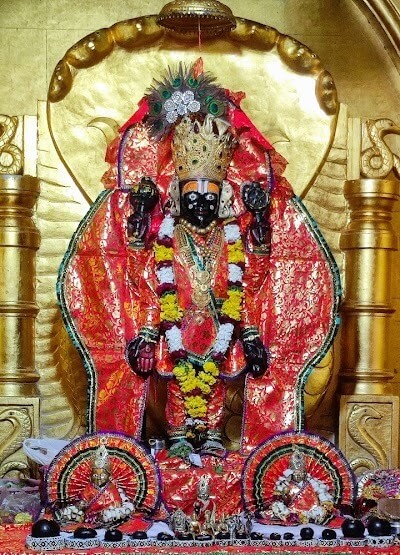
The pillars within the spacious Sabhamandap are adorned in their upper sections with sculptural depictions of women engaged in singing, playing musical instruments and dancing. On both the right and left sides of the assembly hall are Darshan Mandaps, from where devotees may behold the deity. 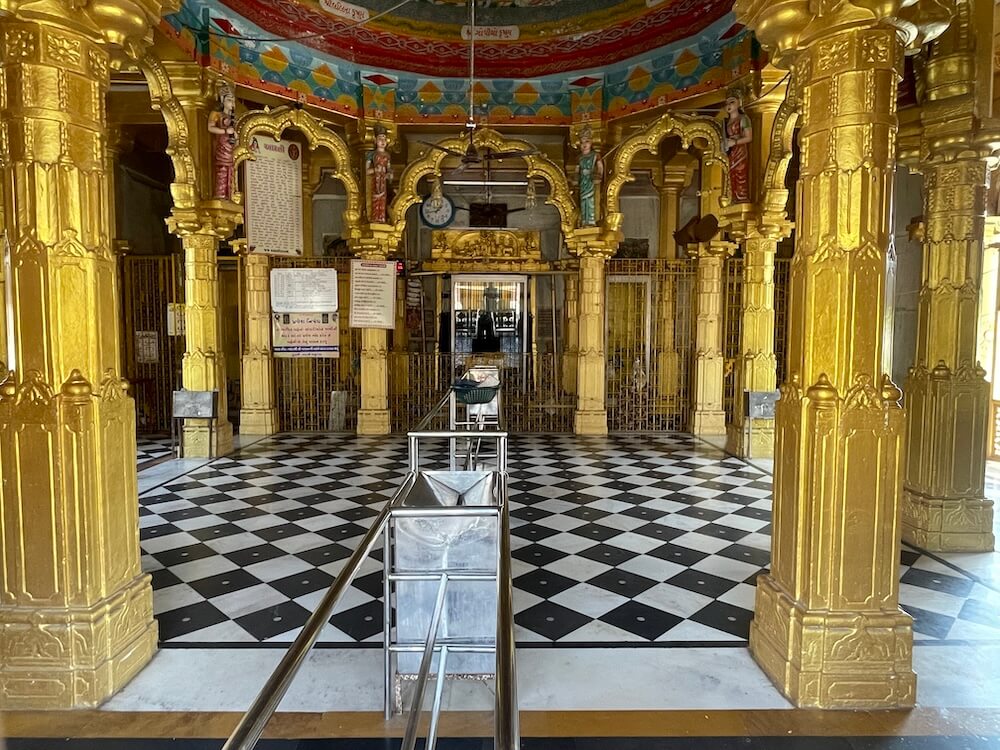 The ceiling of the Sabhamandap is decorated with painted representations of Krishna’s divine exploits, known as ‘Krishna Leela’. At the entrance to the Garbhagriha are sculpted figures of the Dwarapalas, while the upper section of the doorway bears carvings depicting scenes from the life of Krishna. Within the Garbhagriha, upon a Vajrapitha (stone pedestal), is enshrined the idol of Ranchhodray Krishna. The deity is adorned daily with a variety of garments and ornaments. Upon the head of the idol rests a golden crown, above which is placed a silver canopy. The walls of the sanctum are decorated with sculpted figures of swans. On the outer walls of the Garbhagriha, within niches facing three directions, are the idols of Indra, Agni and Kshetrapal.
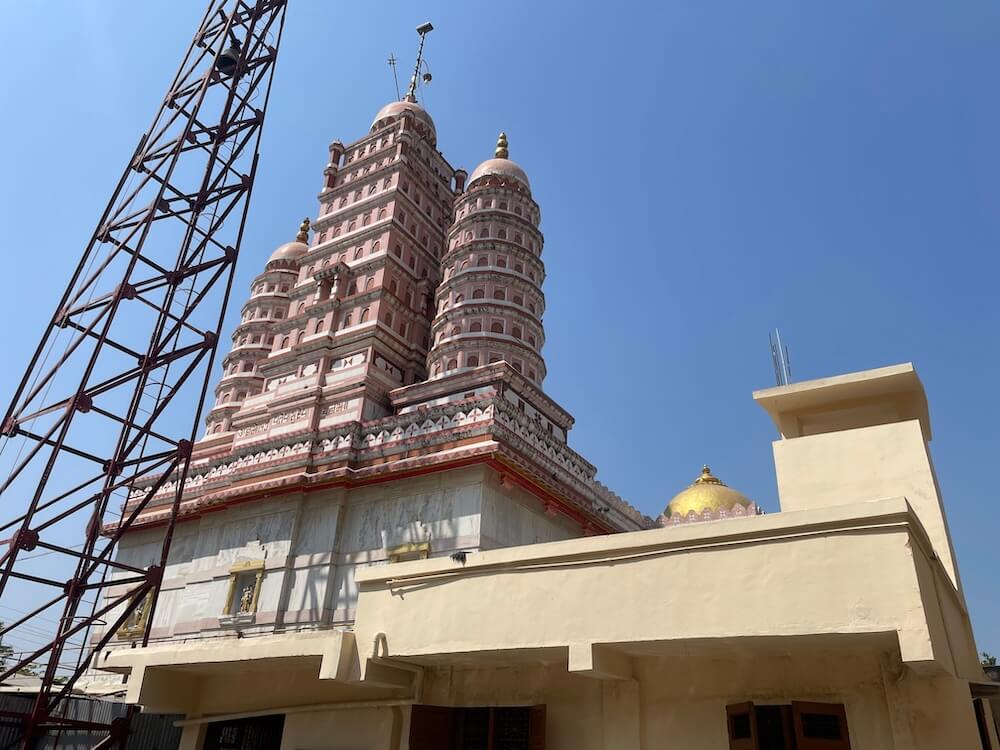
The domed shikharas (spires) rising above the roofs of the three Mukhamandaps are crowned with stupikas and kalash finials. 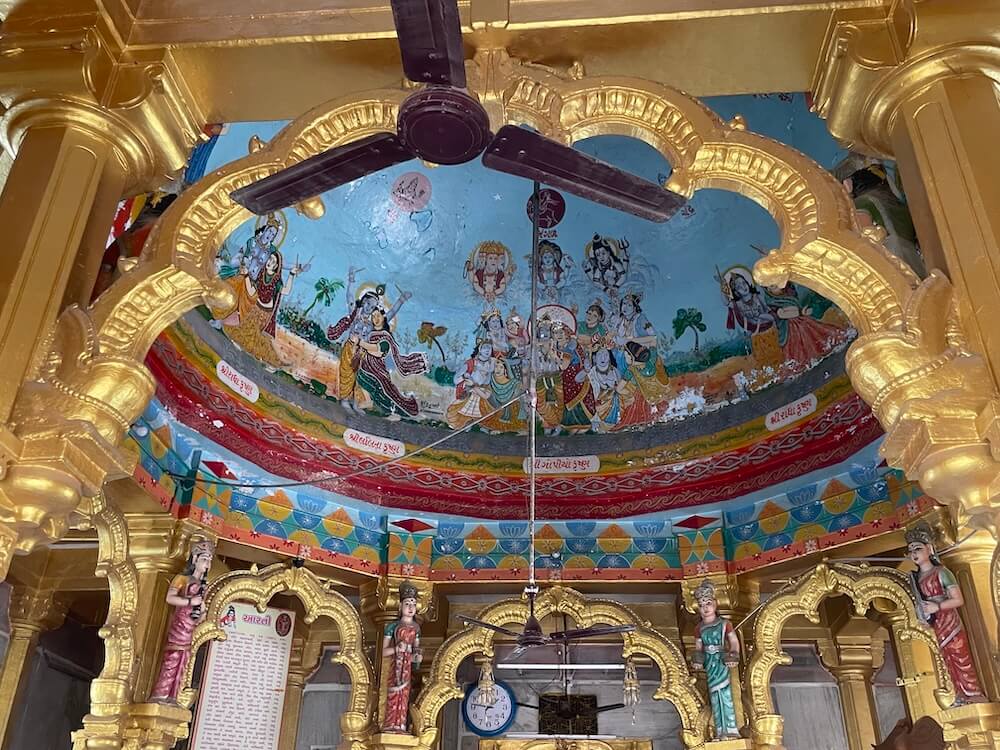 The roof of the Sabhamandap also carries a somewhat larger spire of a similar architectural style. Above the Garbhagriha rises the temple’s principal shikhara, an impressive square structure composed of eight successive tiers, which forms one of the temple’s most striking architectural features. On either side of this main spire stand circular shikharas of six tiers each. At the summit of all three spires, upon the Amalaka stones, are the sacred Kalasha finials.
The festival of Shri Krishna Janmotsav (Krishna’s birth celebration) is the most important and grand annual festival observed at this temple. Occurring during the month of Shravan, the temple is beautifully decorated for the occasion and the birth of Krishna is ceremonially celebrated at midnight. 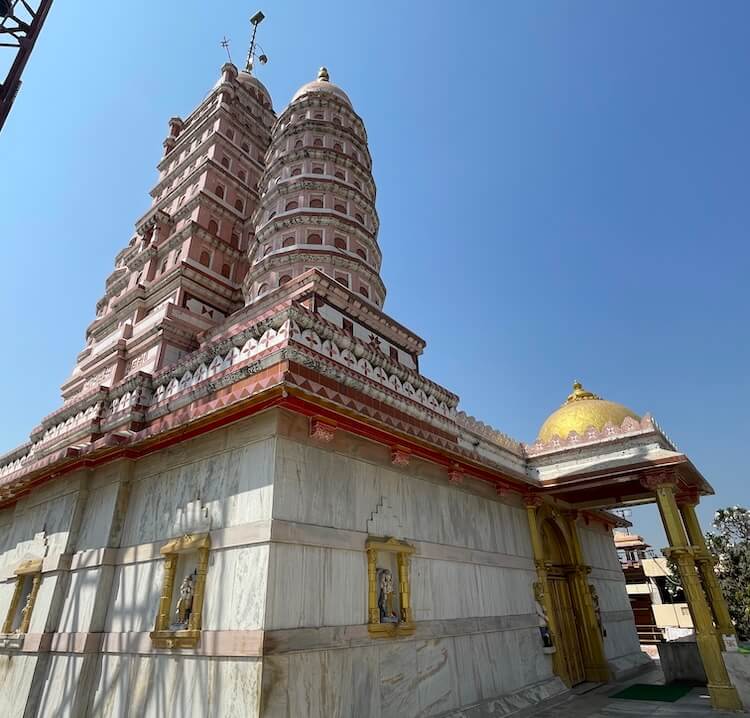 On this occasion, recitations of the ‘Bhagavad Gita’, along with kirtans and devotional bhajans, are organised in the temple.
During the months of Shravan and Purushottam Maas, large numbers of devotees arrive here for darshan. The ‘Dolotsav’, celebrated during the festival of Holi, forms an important part of the temple’s traditional observances, during which the deity is placed upon a floral swing.
On the sacred days of Ashadhi Ekadashi and Kartiki Ekadashi, religious scriptures are recited and large-scale Annadan (charitable distribution of food) is organised.
Every Thursday and on Ekadashi days, devotees gather here in large numbers for darshan. Each day begins with the Mangala Aarti in the early morning and the Rajbhog ritual at midday.
During the Aarti ceremony, the traditional ceremonial drums (Nagara) are played. Devotees may visit the temple for darshan daily from 6 am to 12 noon and from 4 p.m. to 8.30 pm
Useful Information
- Located at 1.5 km from Petlad Bus Station and 22 km from Anand City
- State Transport bus services to Petlad are available from many towns within the district
- Private vehicles can reach the temple directly
- Numerous accommodation and breakfast facilities are available in the surrounding area
- Contact: Temple Office – Tel: 02697-224458
मंदिरे
Temples
मंदिर
-
भीमनाथ महादेव मंदिर लिंबळी, ता. सोजित्रा, जि. आनंद
अधिक माहितीBhimnath Mahadev Temple Limbali, Tal. Sojitra, Dist. Anand
View Detailsभीमनाथ महादेव मंदिर लिम्बाली, ताल. सोजित्रा, जिला. आनंद
विवरण देखें -
मेलडी माता मंदिर मालताज, ता. सोजित्रा, जि. आनंद
अधिक माहितीMeldi Mata Temple Malataj, Tal. Sojitra, Dist. Anand
View Detailsमेलडी माता मंदिर मालताज, ताल. सोजित्रा, जिला. आनंद
विवरण देखें -
चंद्रमौलेश्वर महादेव मंदिर उमरेठ, ता. उमरेठ, जि. आनंद
अधिक माहितीChandramouleshwar Mahadev Temple Umreth, Tal. Umreth, Dist. Anand
View Detailsचंद्रमौलेश्वर महादेव मंदिर उमरेठ, तहसील उमरेठ, जिला आनंद
विवरण देखें