
जलाराम मंदिर
धर्मज, ता. पेटलाद, जि. आनंद
Jalaram Temple
Dharmaj, Tal. Petlad, Dist. Anand
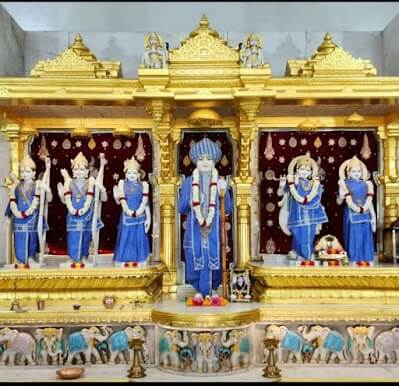 Sant Jalaram Bappa is regarded as a radiant beacon in the spiritual tradition of Gujarat. Service to humanity formed the central purpose of his life. Rising above distinctions of caste, creed and sect, this saint devoted himself wholly to the religion of compassion, believing firmly that ‘no one should remain hungry’. Today, numerous temples dedicated to Bappa are found across the world and countless devotees visit them with faith that their heartfelt wishes will be fulfilled. Among these important places of devotion stands the Jalaram Temple at Dharmaj in Anand district. Situated beside the highway, this temple has become a revered destination for thousands of devotees.
According to the book ‘Maru Dharmaj’ and the popular biographical work ‘Shri Jalaram Jyot’, which narrates the life of Sant Jalaram Bappa, the saint was born on 4 November 1799 on Kartik Shuddha Saptami in the village of Virpur in the Rajkot district of Saurashtra. 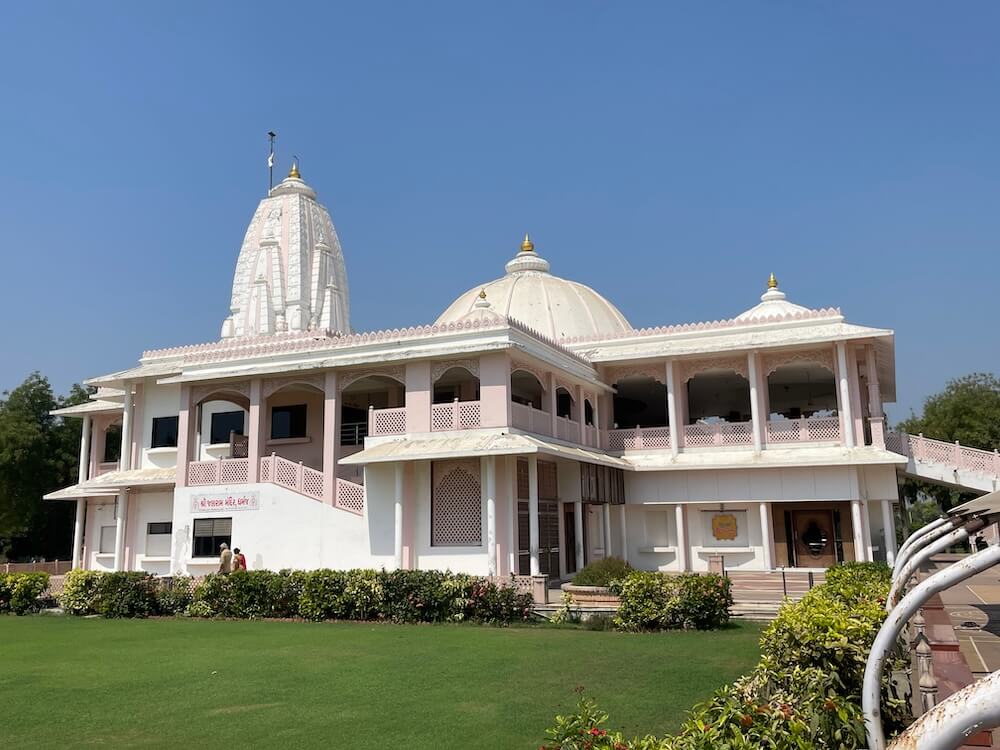 Born into the Lohana community, this noble soul was the son of Rajbai and Pradhan Thakkar, both of whom were deeply devoted to God. From early childhood, Bappa displayed a powerful inclination towards spirituality and was constantly engaged in serving wandering sadhus and saints. At the age of sixteen, he was married to Virbai, the daughter of Pragjibhai Thakkar. Yet, his heart was drawn more towards spiritual pursuit and service to people than towards worldly household life. When he was eighteen, he accepted discipleship under Bhojlaram Maharaj, also known as Bhoja Bhagat, of Fatehpur and received from him the sacred initiation of the ‘Ram mantra’. With the support of his devoted wife, Bappa established an annachhatra (free community kitchen for feeding people) called ‘Sadavrat’ at Virpur in the Rajkot district of Gujarat.
  This charitable kitchen continues to function there uninterrupted to this day. Sant Jalaram Bappa attained samadhi on 23 February 1881 and since then, his descendants have continued to uphold the spiritual seat associated with his legacy.
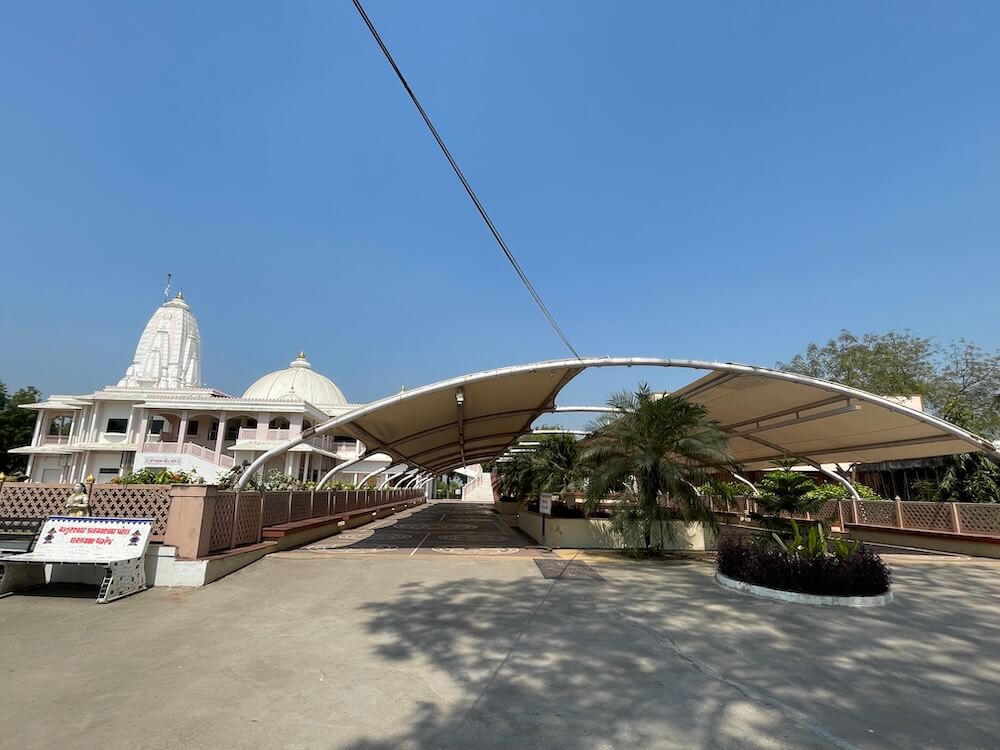
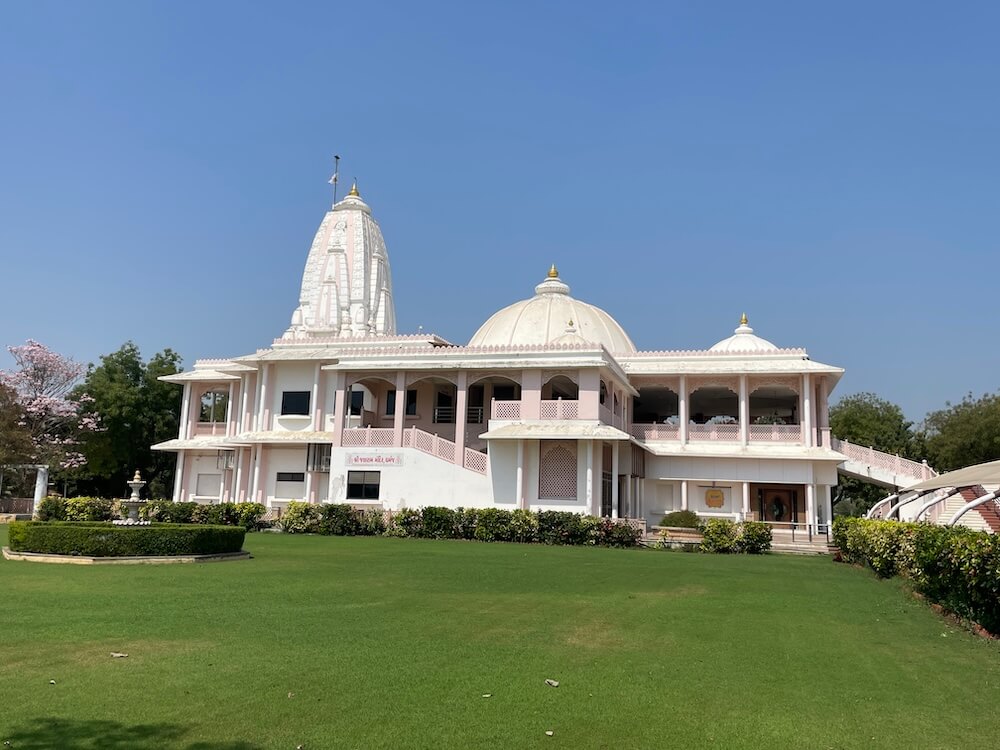
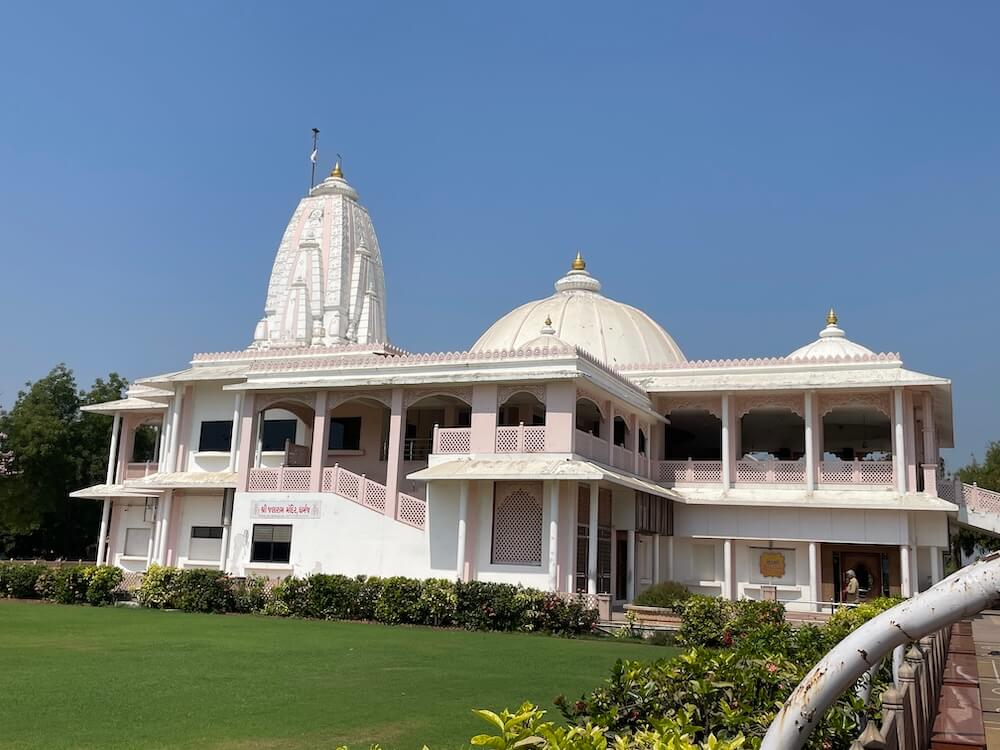
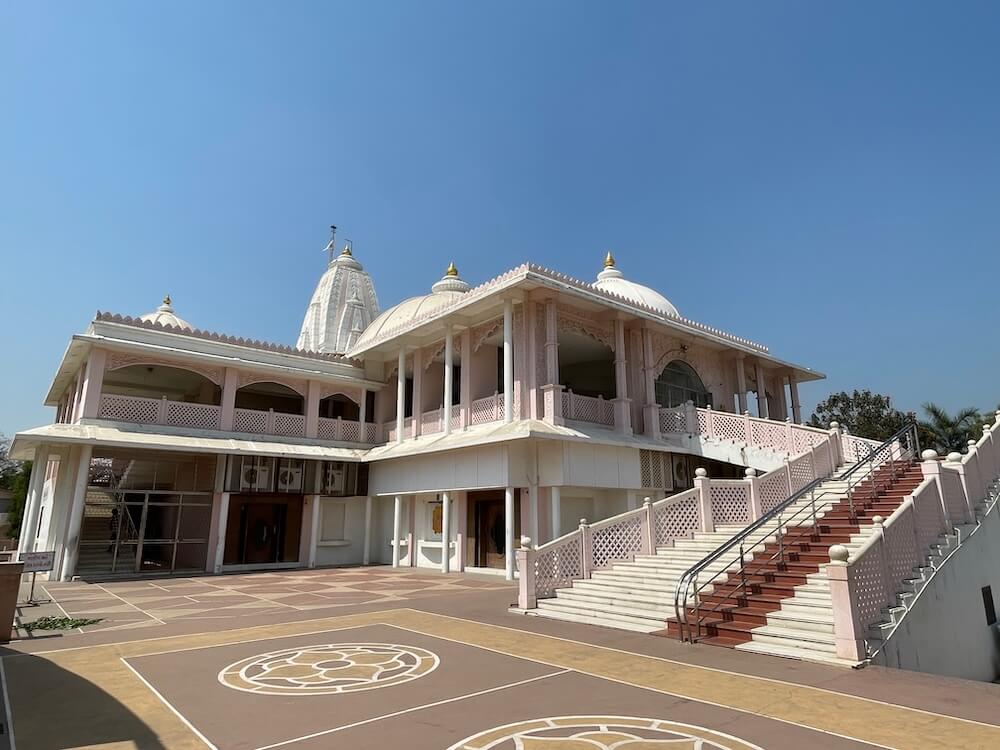
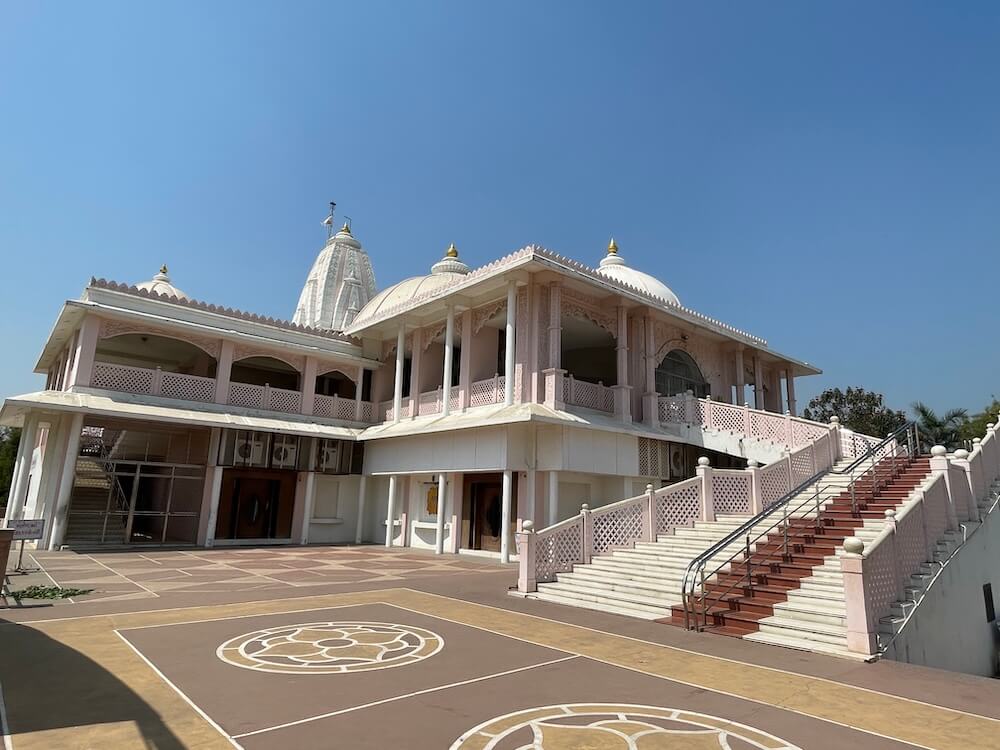
The grand temple at Dharmaj was established in 1978. It is an important shrine within the ‘Charotar’ region, a fertile tract comprising the districts of Anand and Kheda. The temple is administered through the ‘Shri Jalaram Satsang Mandal’ and the ‘Shri Jalaram Janseva Trust’. Dharmaj village is situated on the Tarapur–Vasad national highway. As travellers proceed along the highway, they first notice a large image of Jalaram Bappa standing near the principal entrance gateway of the temple. Passing through this gateway, one enters the spacious courtyard of the temple complex. 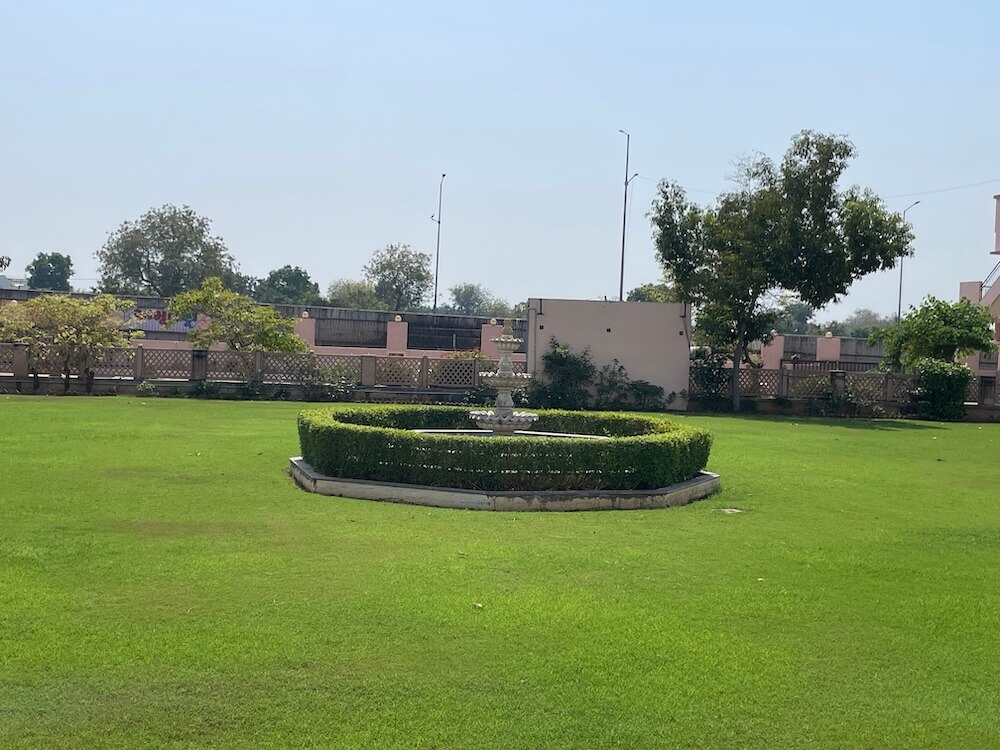 The pathway leading from this courtyard towards the temple is covered with a roof shaped in the form of a ‘gajprishtha’ (an architectural form resembling the curved back of an elephant). Both sides of the path are beautified with a variety of flowering plants. To the left of this pathway lies a well-maintained lawn at the centre of which stands a fountain. The boundary wall of this garden is adorned with sculpted figures drawn from mythology along with delicate ornamental carvings. Spacious rest houses have been provided here for the convenience of visiting devotees.
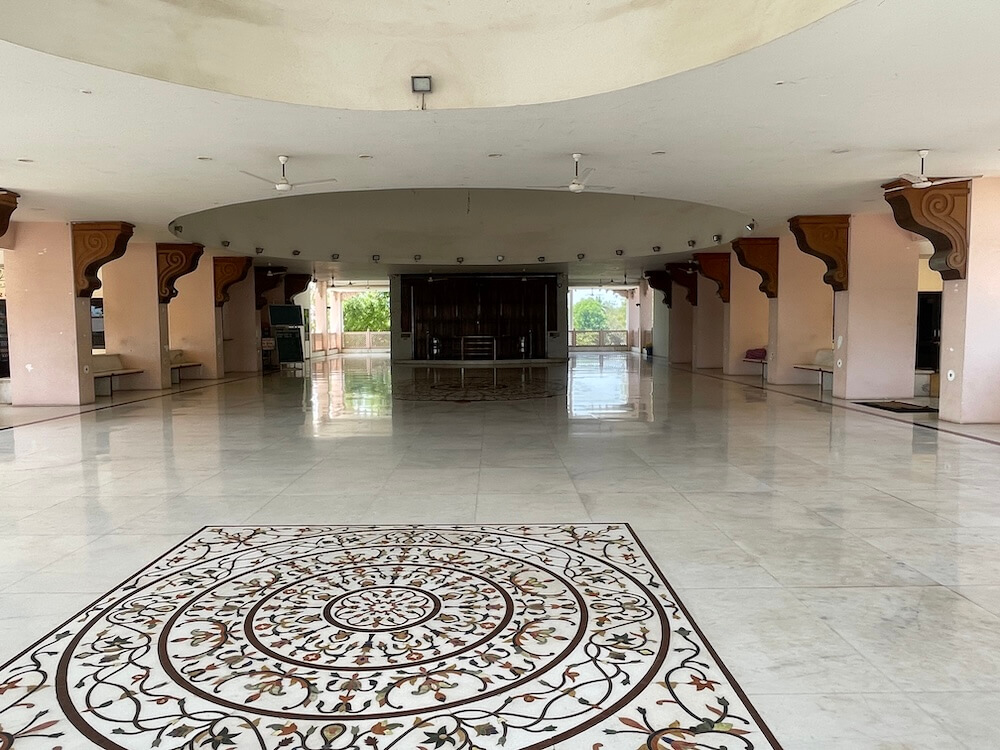
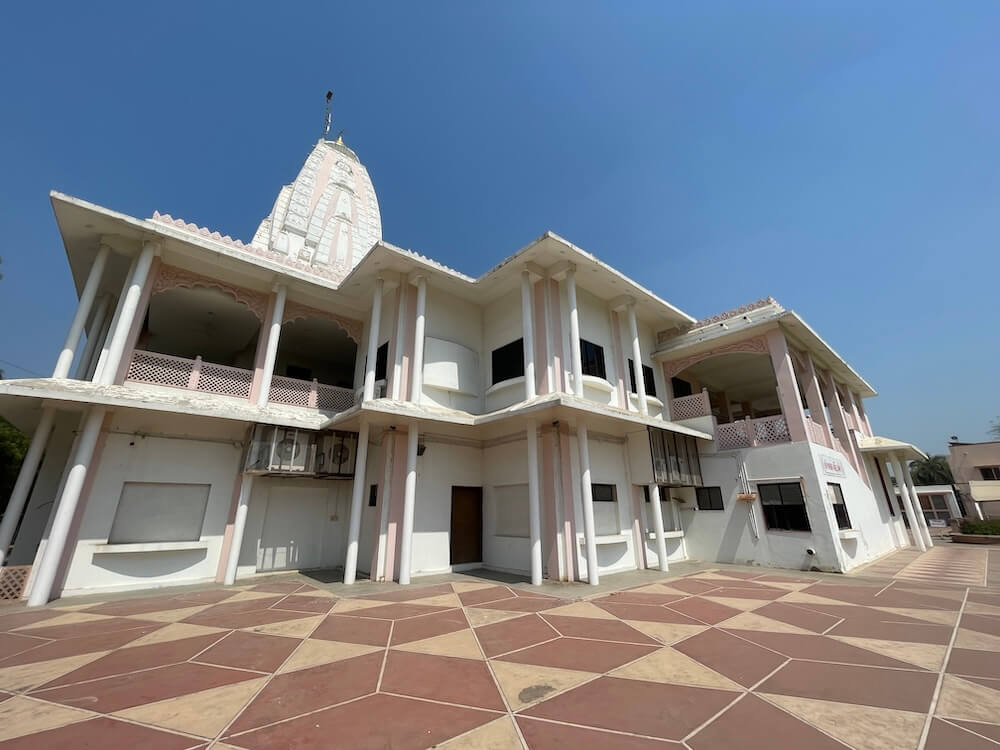
The temple, constructed in 1978, displays a modern architectural style and has been built using gleaming white marble. From the courtyard, a flight of thirty-one steps leads to the sabhamandap (assembly hall), situated on the second floor of this two-storeyed temple. 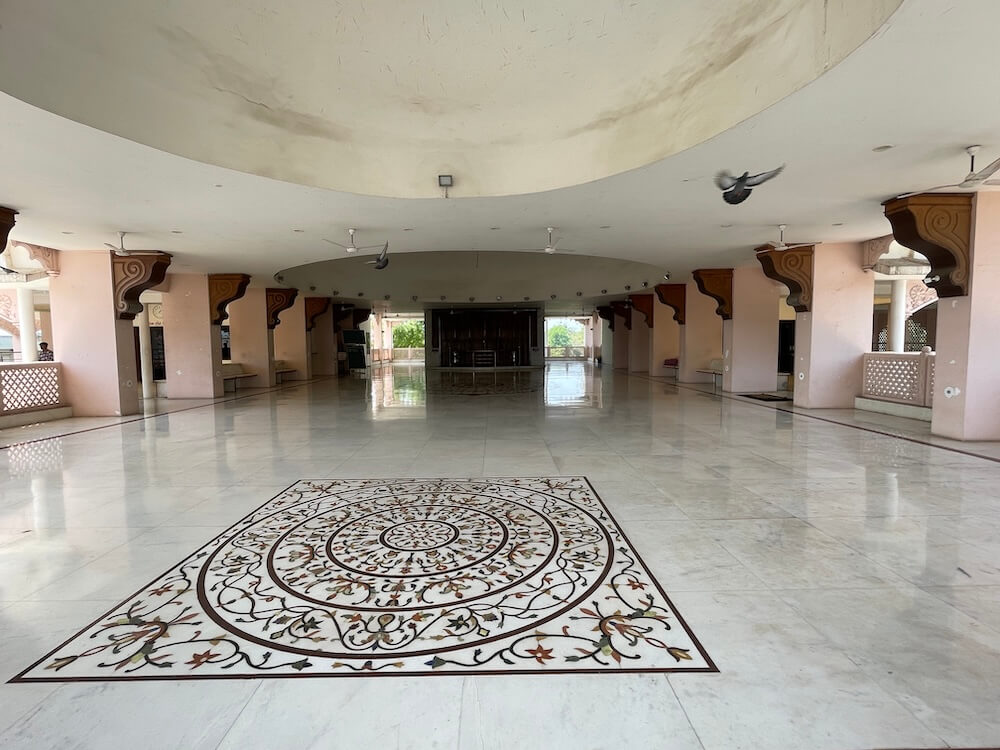 At the entrance of the sabhamandap stand sculpted figures of dwarpals (guardian sentinels) on either side. The hall itself is spacious, with projecting balconies along both sides. Its interior ceiling rises in a graceful dome. Beyond the sabhamandap, leaving a pradakshina path (circumambulatory passage), the structure leads to the garbhagriha (sanctum). Within the sanctum, upon a vajrapith (sacred pedestal), stands the upright idol of Jalaram Bappa. Upon Bappa’s head rests the traditional turban and in his hand, he holds a tulsi mala (rosary made from holy basil beads). To the left of the principal idol are the images of Shri Ram, Sita and Lakshman, while on the right stand the idols of Radha and Krishna. Along with the main temple,
 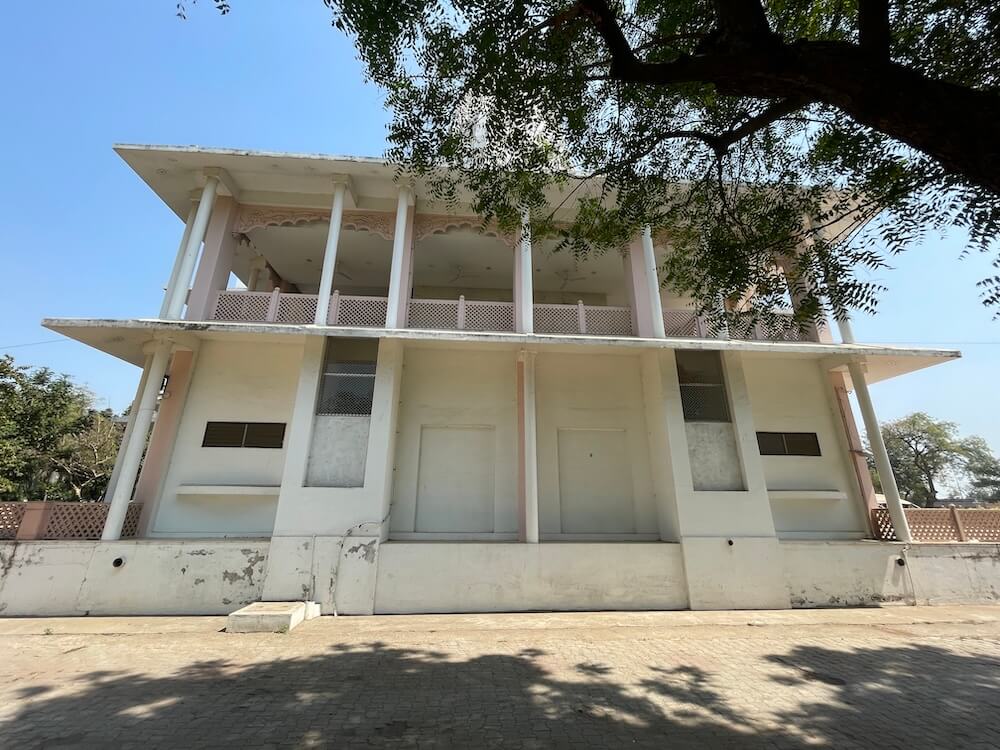 the complex also includes separate shrines dedicated to Ganesh and Hanuman.
The festival of ‘Jalaram Jayanti’, falling on Shukla Saptami in the month of Kartik, is celebrated here with great enthusiasm. On this occasion, the entire temple complex is decorated with colourful flowers and brilliant illuminations. During the celebrations, palanquins and devotional processions arrive at the temple from various parts of the district. In the month of Shravan, special worship of Lord Shiva is performed and the ritual known as homatmak laghurudrayag is organised. Every Thursday, devotional bhajan programmes are conducted in the temple sabhamandap by the women’s devotional group. On every full moon day, the sacred narrative of Satyanarayan is recited here and associated religious rites are performed. In the temple’s annachhatra, hundreds of devotees are served free meals every day. This charitable tradition is known as ‘Sadavrat’. On 23 February, the ‘punyatithi’ (death anniversary) of Bappa is commemorated with devotion, recalling his life of sacrifice and service. On the day of Makar Sankranti, special acts of charity are undertaken and assistance is extended to needy people in the surrounding area. Devotees may have darshan at this temple every day from 6 in the morning until 9 at night.
Useful Information
- Located at 9 km from Petlad and 30 km from Anand.
- State Transport bus service available from Petlad city.
- Private vehicles can reach directly up to the temple parking area.
- Accommodation and breakfast facilities are available within the premises.
- Contact: Temple Office – Telephone: 02697-244442, 245555
जलाराम मंदिर
धर्मज, ताल. पेटलाड, जिला. आनंद
मंदिरे
Temples
मंदिर
-
भीमनाथ महादेव मंदिर लिंबळी, ता. सोजित्रा, जि. आनंद
अधिक माहितीBhimnath Mahadev Temple Limbali, Tal. Sojitra, Dist. Anand
View Detailsभीमनाथ महादेव मंदिर लिम्बाली, ताल. सोजित्रा, जिला. आनंद
विवरण देखें -
मेलडी माता मंदिर मालताज, ता. सोजित्रा, जि. आनंद
अधिक माहितीMeldi Mata Temple Malataj, Tal. Sojitra, Dist. Anand
View Detailsमेलडी माता मंदिर मालताज, ताल. सोजित्रा, जिला. आनंद
विवरण देखें -
चंद्रमौलेश्वर महादेव मंदिर उमरेठ, ता. उमरेठ, जि. आनंद
अधिक माहितीChandramouleshwar Mahadev Temple Umreth, Tal. Umreth, Dist. Anand
View Detailsचंद्रमौलेश्वर महादेव मंदिर उमरेठ, तहसील उमरेठ, जिला आनंद
विवरण देखें