
मणिलक्ष्मी तीर्थ
माणेज, ता. पेटलाद, जि. आनंद
Manilakshmi Tirth
Manej, Tal. Petlad, Dist. Anand
 ‘Jin’ means ‘the Victor’. From this word arises the term Jain. Jainism is one of the most ancient and significant religions within Indian civilisation. Founded upon the principles of ahimsa (non-violence) and ‘live and let live’, this faith traces its spiritual lineage from the first Tirthankara Rishabhdev and continues in an unbroken stream through the twenty-fourth Tirthankara Bhagwan Mahavir. Since ancient times, numerous caves and temples have been constructed to propagate the teachings of Jainism. Sacred pilgrimage centres such as Sammed Shikhar, Rajgir, Pawapuri, Girnar, Shatrunjay and Pavagadh have long been revered places of devotion for the faithful. Among these revered centres stands Manilakshmi Tirth in Anand district, a magnificent modern temple that has become an important destination of pilgrimage. Every year, thousands of devotees visit this sacred place.
There exist differing opinions regarding the founder of Jainism. According to some scholars, much like Hinduism, Jainism too has no single founder. Others believe that the first Tirthankara, Rishabhanath, established the Jain religion. 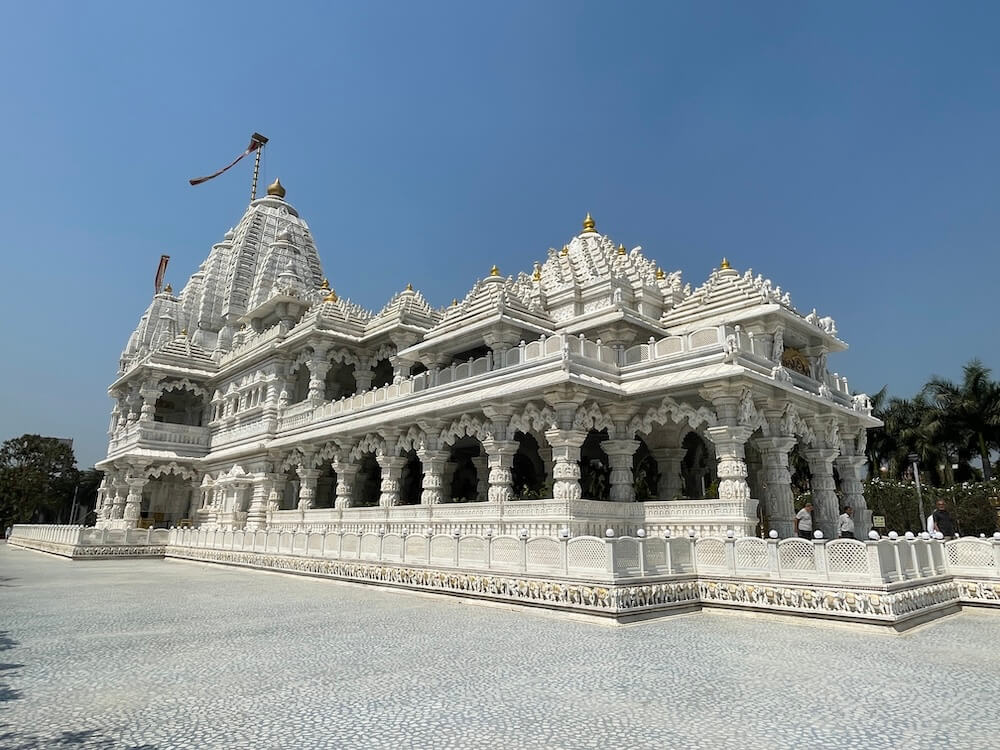 Bhagwan Vardhaman Mahavir was the twenty-fourth and final Tirthankara. It was during his time that Jainism assumed the form by which it is known today. His life story records that he was born in Kundagram (Kaundinyapur), a suburb near Vaishali in present-day Bihar. His father, Siddharth, was the chief of that settlement, while his mother, Trishala, was the daughter of a king belonging to the Licchavi dynasty of Vaishali. His childhood name was Vardhaman. From a very early age, his disposition inclined towards renunciation. After the death of his parents, he renounced worldly life and at the age of thirty embraced the path of asceticism. For the following twelve years, he performed severe penance. After the first year, he even abandoned clothing. He refused to harm even insects that might sting or bite him.
 During this period, ignorant people subjected him to great harassment, but he endured it with quiet composure. At the age of forty-two, he finally attained ‘Kevalgyan’ (absolute knowledge or omniscience). Thereafter, until the end of his life, he devoted the next thirty years to preaching religion. Having conquered worldly passions, he came to be known as ‘Jin’ meaning ‘the Victor’ and from this title, the term ‘Jain’ gradually gained wide currency. Mahavir challenged the rigid system of caste and accepted disciples from every community. He also acknowledged the right of women to embrace ascetic life. With the desire that ordinary people should understand his teachings, he chose to preach not in Sanskrit but in the Prakrit language known as Ardhamagadhi.
During his lifetime, Mahavir selected eleven principal disciples to assist in spreading the faith. Among these were Indrabhuti Gautam, Agnibhuti Gautam and Vayubhuti Gautam, 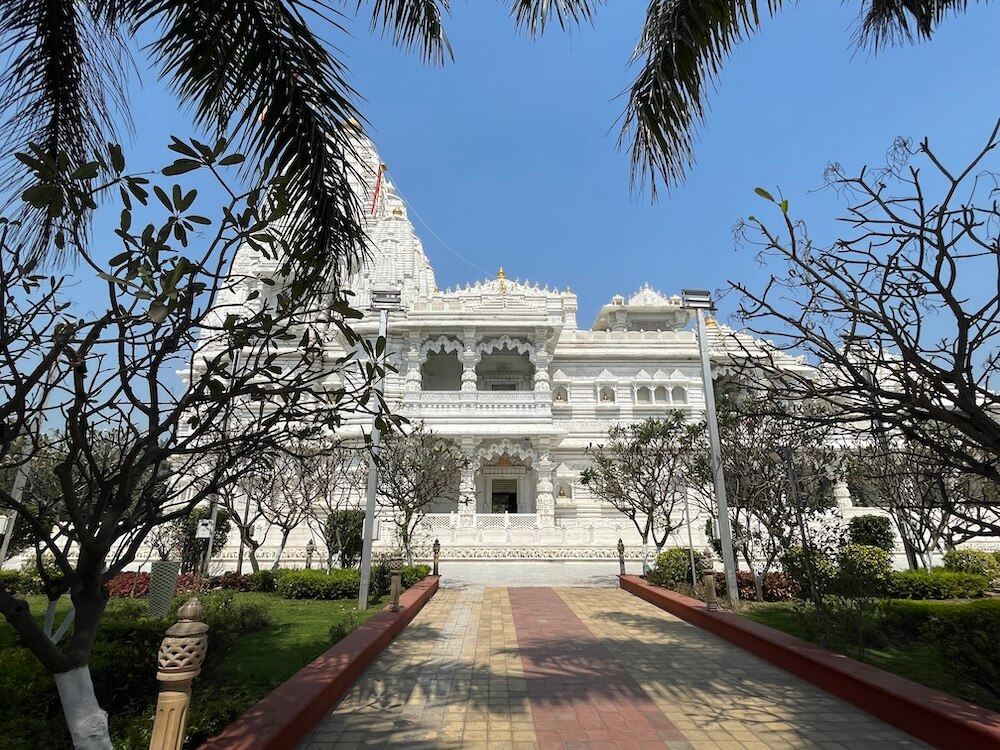 along with Vyakta Swami, Sudharma Swami, Manditputra, Mauryaputra, Akampit Gautam, Achalbhraata, Metarya Swami and Prabhas Swami. In order to propagate the teachings of Jainism, Bhagwan Mahavir established centres of religious activity in cities such as Rajgriha, Bhagalpur and Machhiya near Munger in Bihar, along with Vaishali and Mithila. He also preached the doctrine in places such as Banaras, Kaushambi, Ayodhya, Shravasti and Sthaneshwar in present-day Uttar Pradesh. The Magadhan emperors Bimbisara and Ajatashatru were greatly influenced by Mahavir’s teachings and became followers of Jainism. King Samprati Maurya, the grandson of Emperor Ashoka, is believed to have ruled around 224 to 215 BCE and was a devout follower of Jainism. Suhasti, the disciple of Acharya Mahagiri, initiated King Samprati into the Jain faith.
 This powerful ruler undertook extensive efforts to spread the religion by sending bards and royal messengers from his court to regions that now form the states of Maharashtra, Rajasthan and Telangana. In modern times, inspired by this historic legacy, the construction of a grand temple began in 2009 at Manej in Anand district and the work was completed in 2017. The entire pilgrimage complex is administered and managed in an orderly manner by the Shah Manilal Laxmichand Trust.
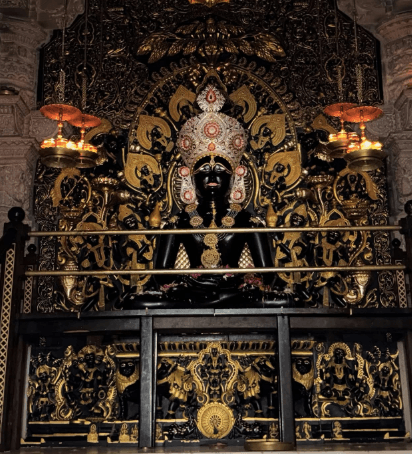
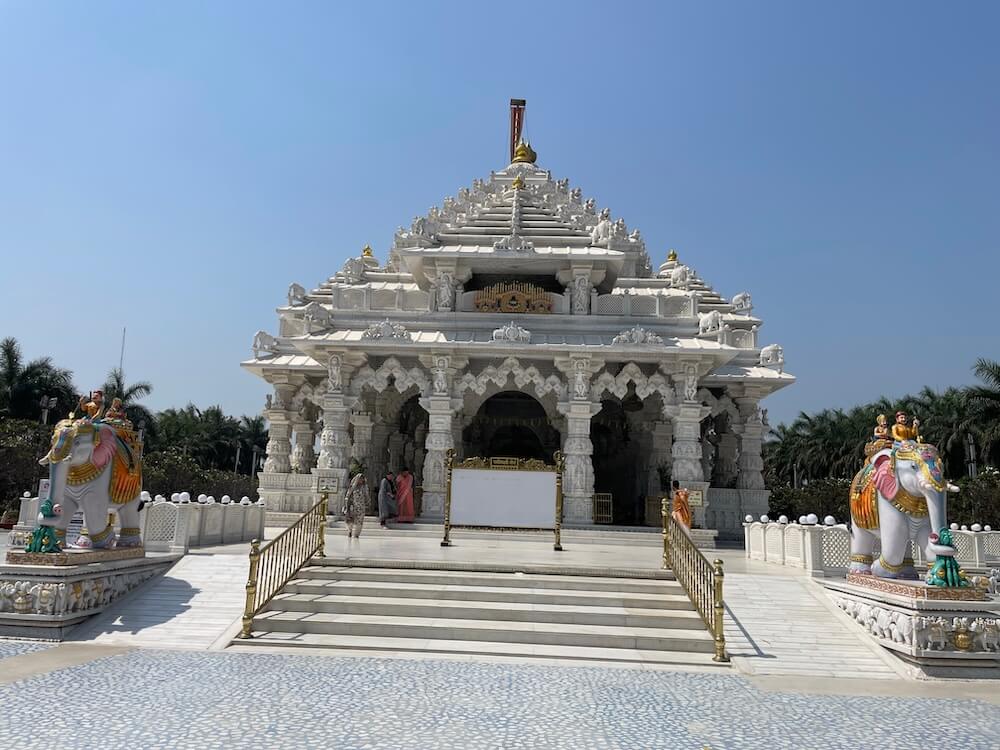
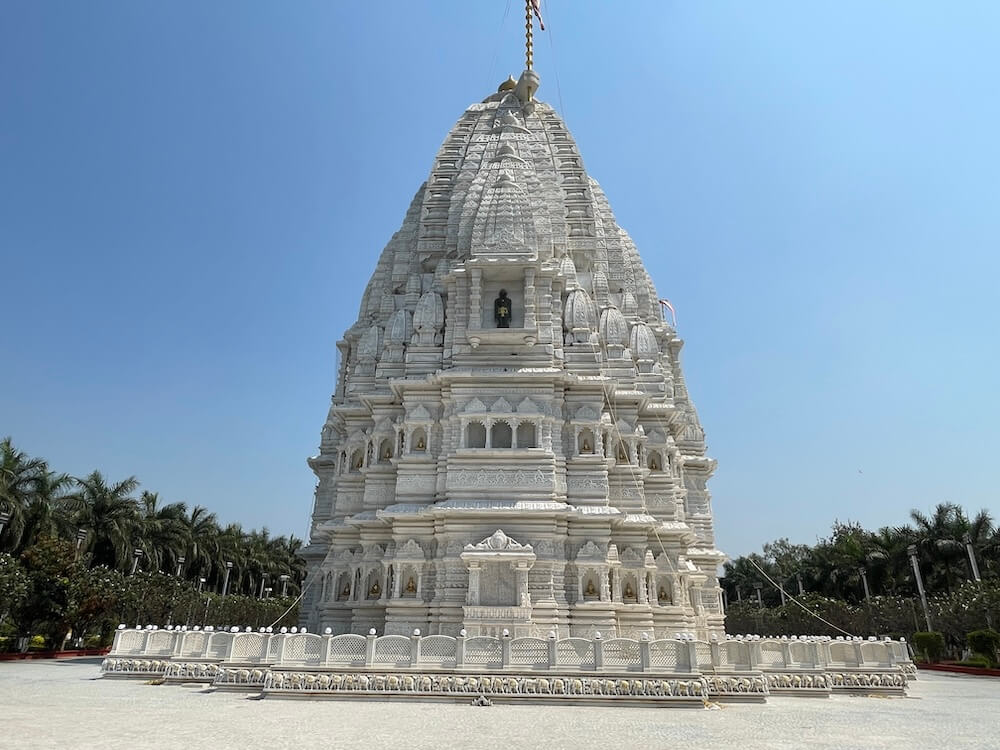
Manilakshmi Tirth occupies a place of exceptional importance. In the principal garbhagriha (sanctum) of the temple resides the idol of Bhagwan Munisuvrat Maharaj. Alongside him are worshipped the idols of Bhagwan Shantinath and other Tirthankars. Jain scriptures recount many instructive episodes from the life of Bhagwan Mahavir. 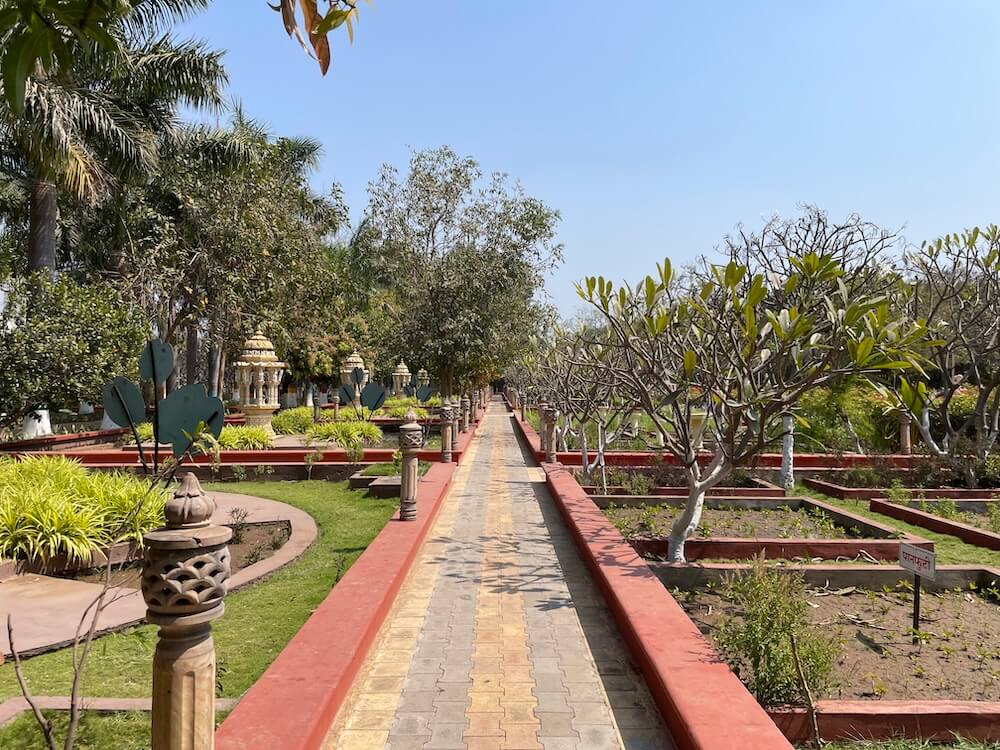 It is said that when Mahavir’s elder brother, King Nandivardhan, was grief-stricken by separation from him, his sister Sudarshana took him to her home and offered him comfort. Because of this legendary incident, the festival of ‘Bhaubeej’ (a sacred celebration of the bond between brother and sister) occupies a special place in Jain tradition. Among the observances that have continued since ancient times, the day of Akshaya Tritiya also holds great significance. It is believed that Bhagwan Rishabhdev concluded a year-long rigorous fast on this day by drinking sugarcane juice.
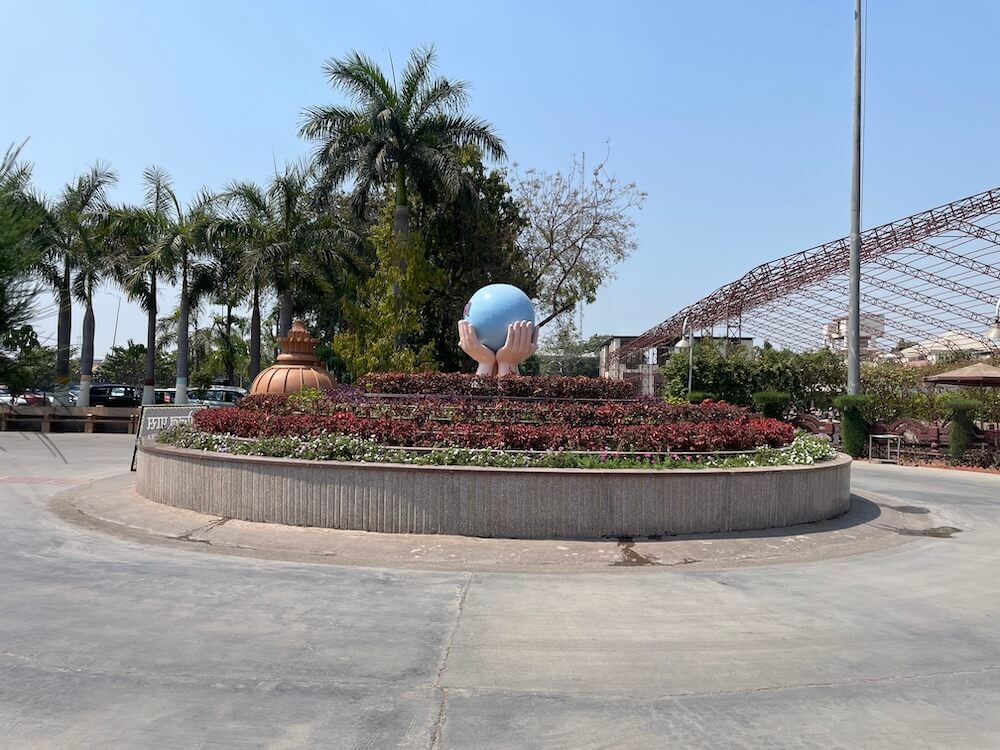
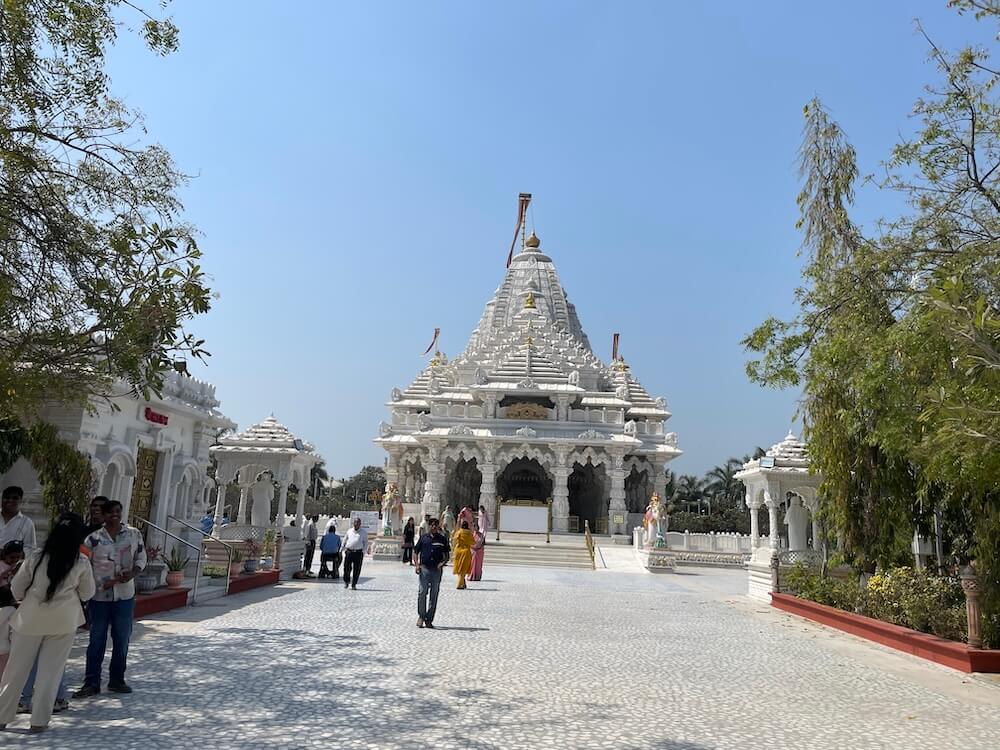
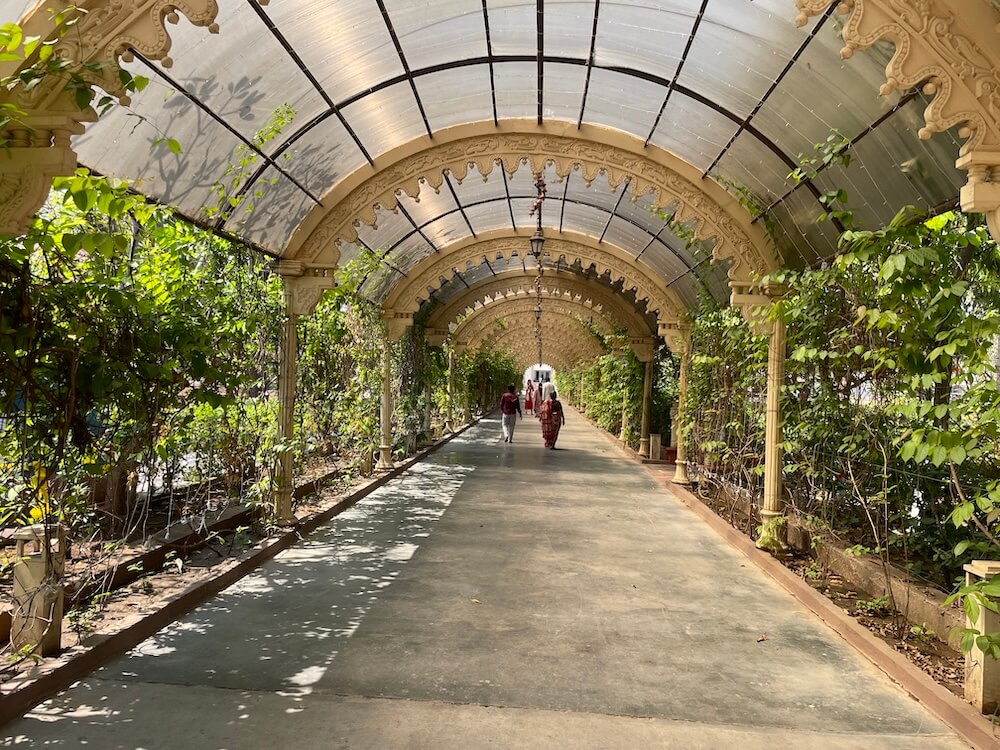
Situated along the highway connecting the cities of Vadodara and Ahmedabad, the temple complex spreads across an extensive area of about forty-four acres. 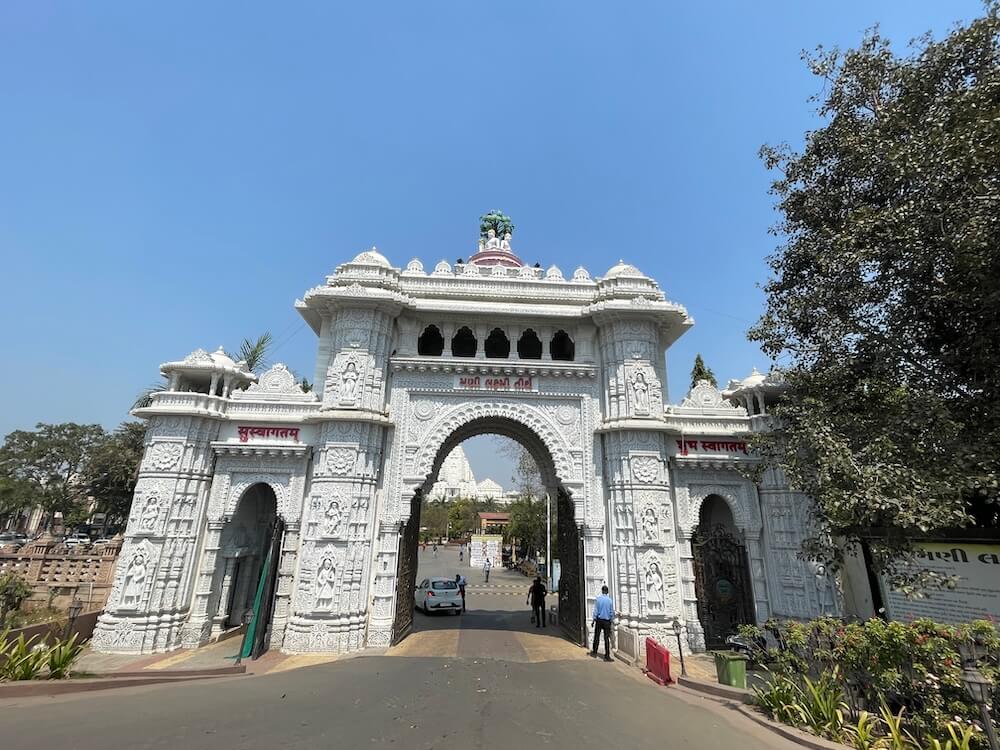 As one approaches along the highway, the magnificent two-storeyed fortress-like entrance gateway immediately draws attention. At this gateway, the entry of every devotee and vehicle is formally recorded before access is granted. A spacious parking facility capable of accommodating around three hundred vehicles at one time has been provided. Directional signboards are placed throughout the entire temple complex. For the convenience of children and elderly devotees, a free automated toy train service operates within the premises and remains available until six o’clock in the evening. Well-equipped accommodation buildings have been constructed to house visiting devotees and these can provide lodging for nearly one thousand people at a time. Meals are served twice daily along with refreshments. The temple dining hall is large enough for five hundred devotees to sit together and partake of ‘prasad’.
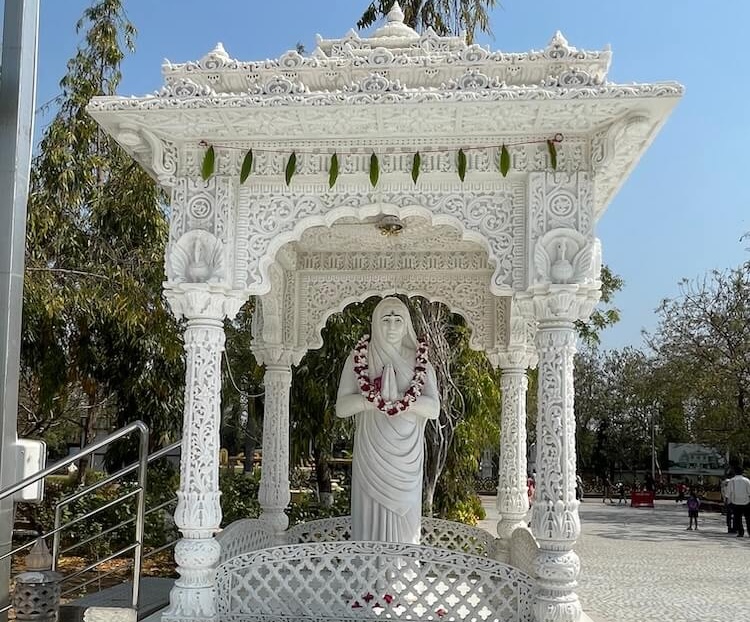
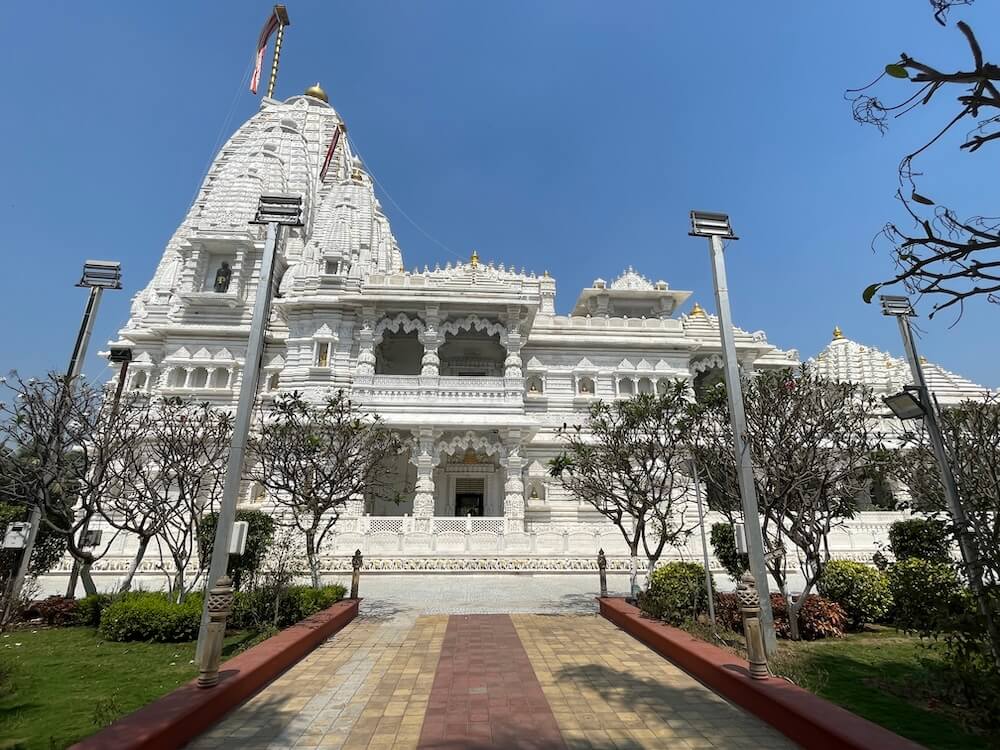
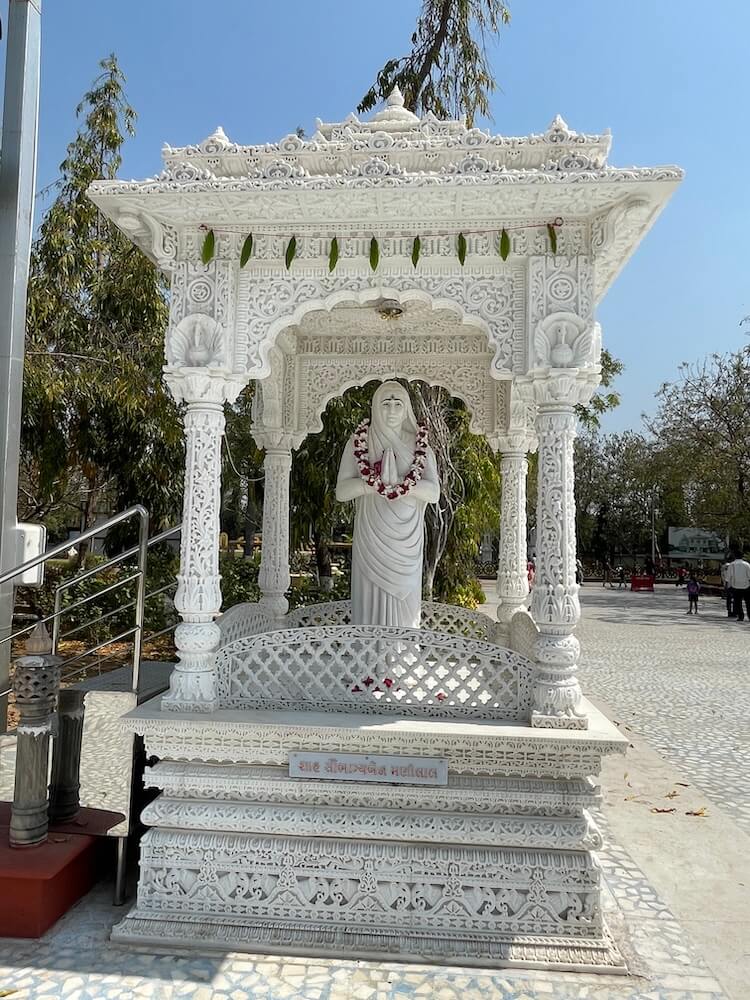
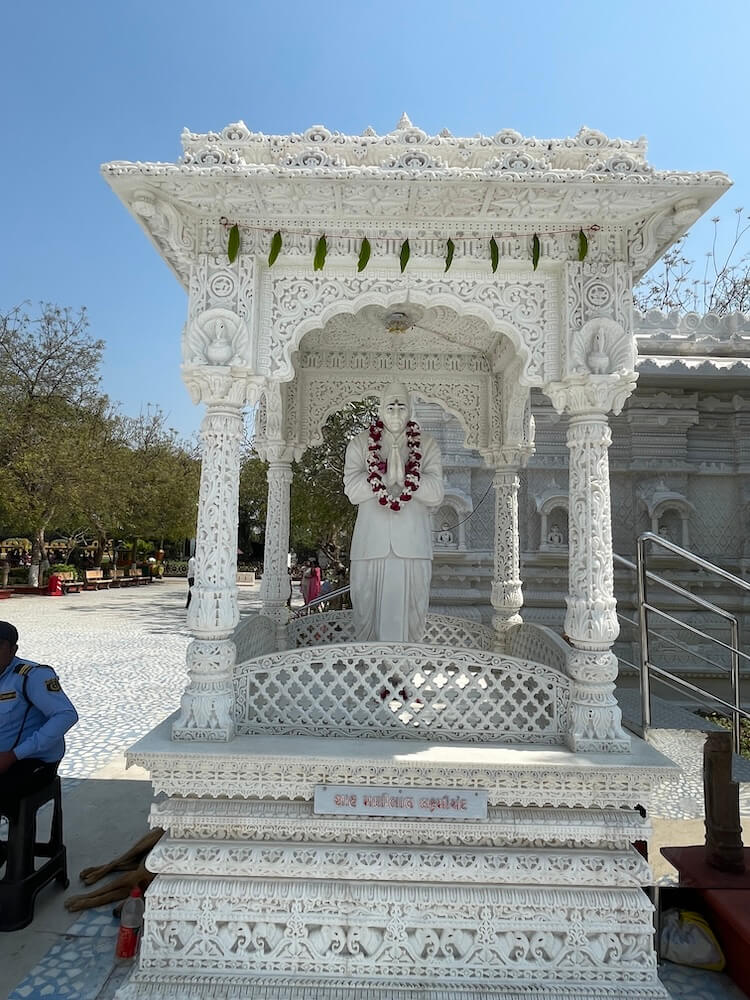
  In front of the temple lies a beautiful garden where a ‘24 Tirthankar Garden’ has been created, along with a section dedicated to rare medicinal plants. Within this garden, under a single canopy, stands a sculpted representation of the temple’s benefactors, Shah Manilal and his wife. In the evening, large numbers of devotees gather to witness the splendid illumination of the complex and the musical fountain displays. Built from gleaming white marble, the temple appears even more majestic and graceful than a royal palace.
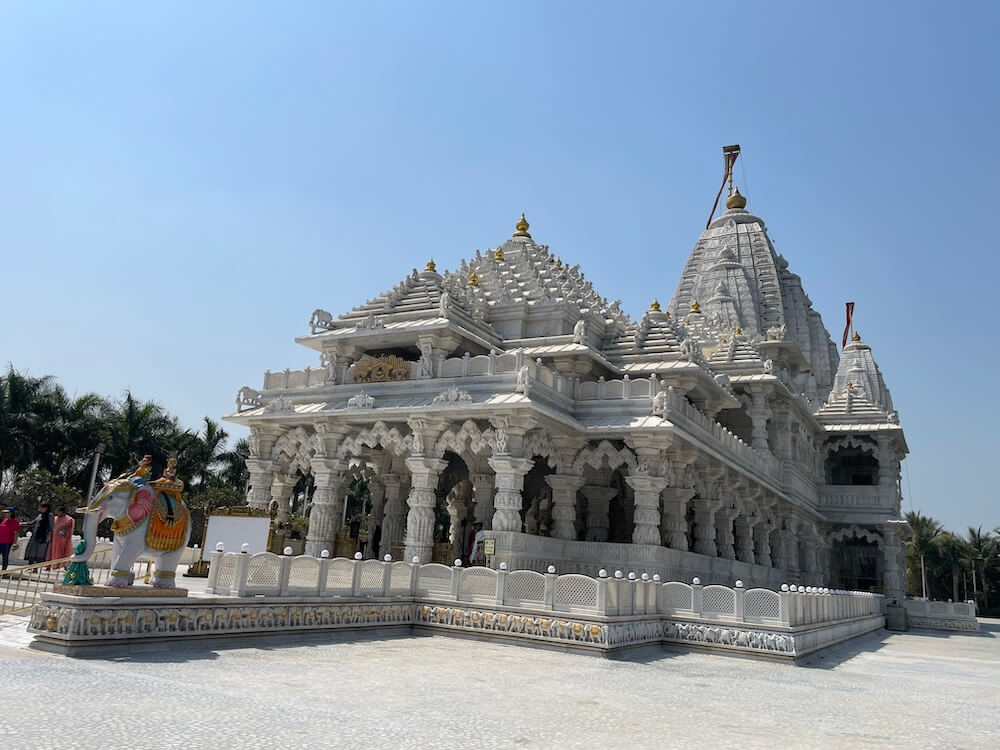
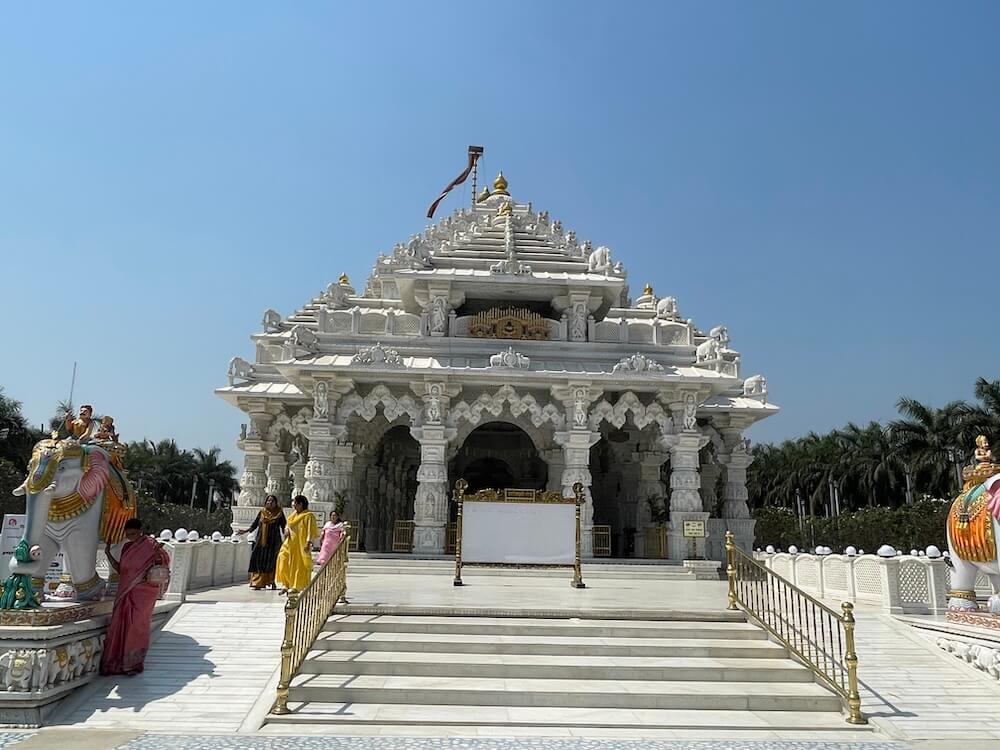
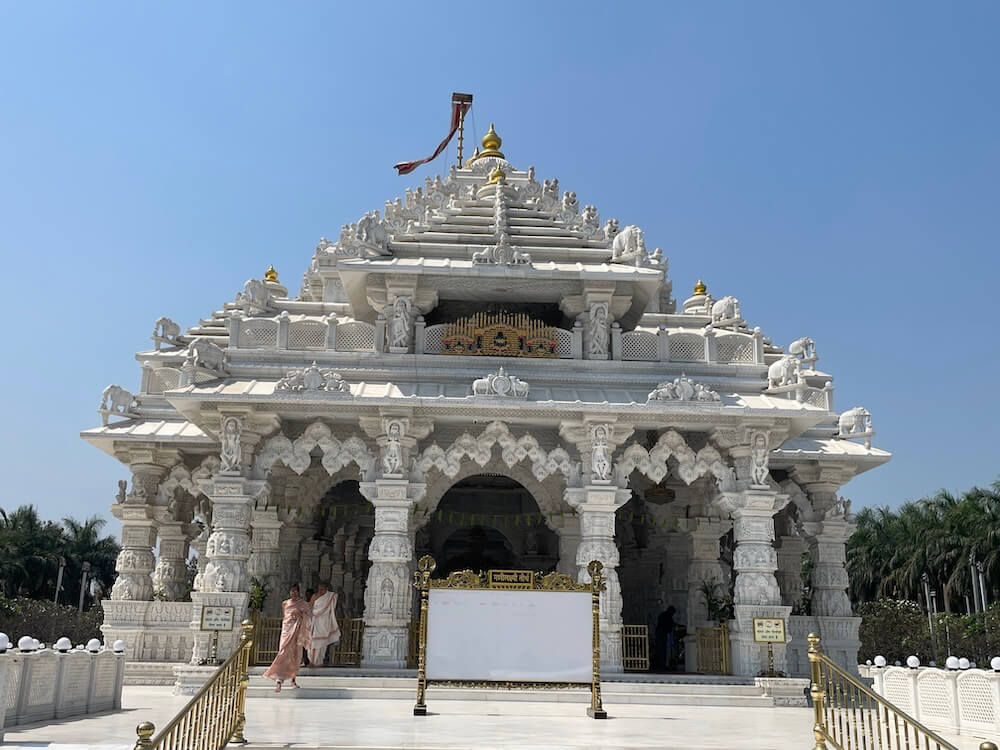
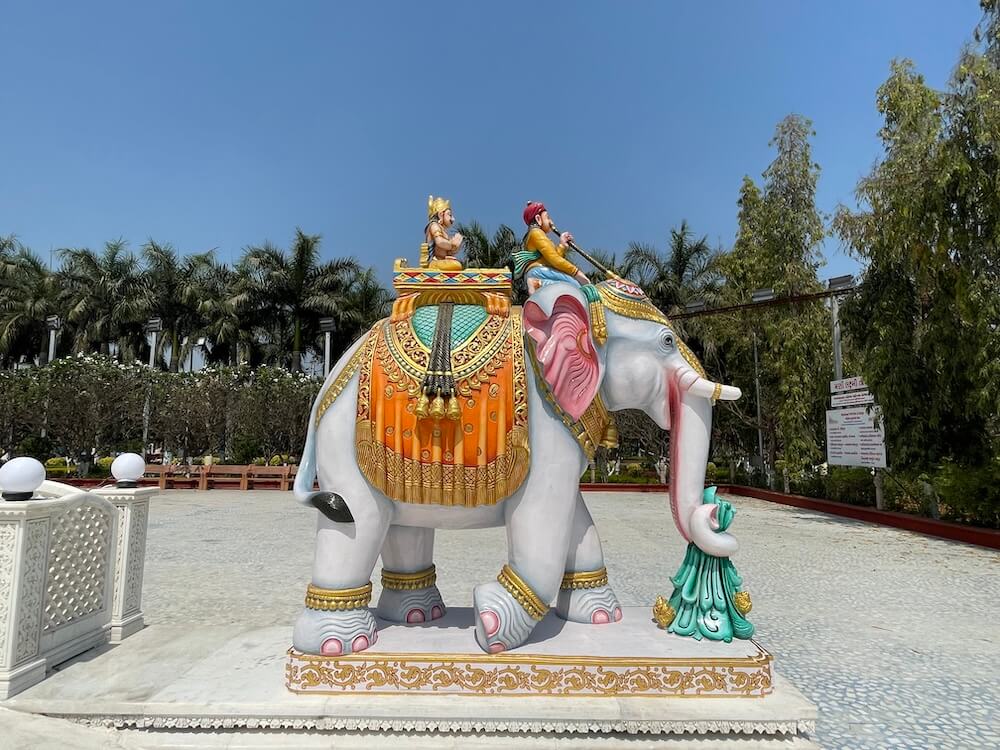
Spread across an area of thirty-one thousand square feet, this architectural marvel is regarded as an excellent example of Jain temple architecture. 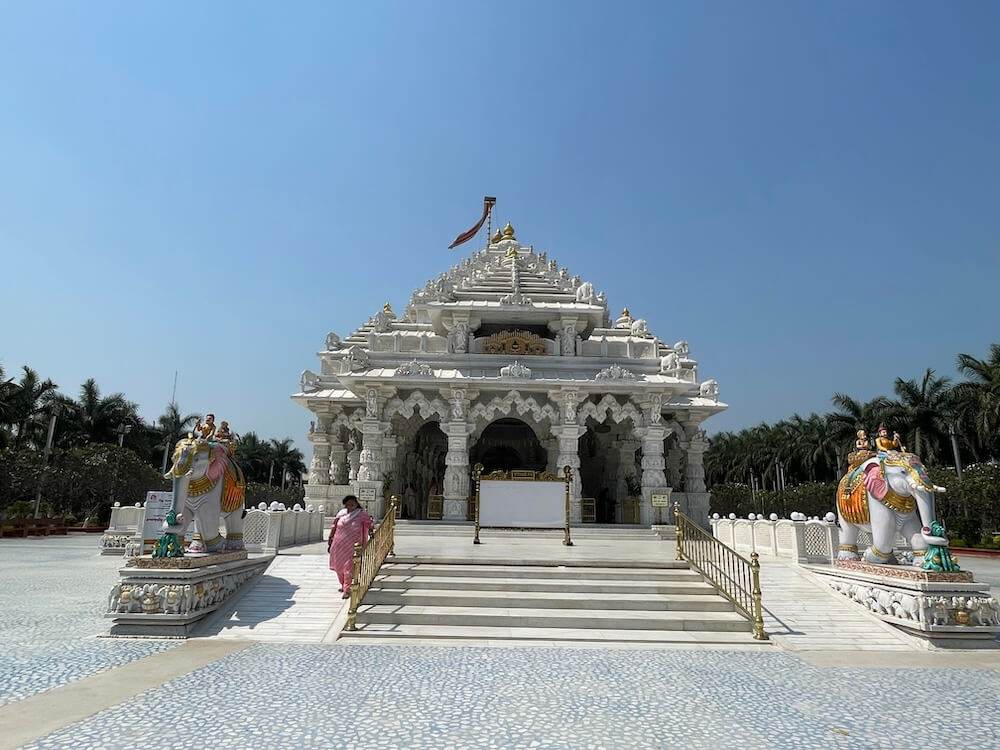 The structure follows the traditional layout, consisting of the ardhmandap (entrance hall), sabhamandap (assembly hall), antaral (vestibule) and the principal garbhagriha (sanctum). At the entrance, magnificent sculptures of elephants have been carved, symbolising prosperity and grandeur. The temple contains more than two hundred marble pillars, each adorned with distinctive ornamental carvings. On the ground floor, sculpted forms of the twenty-four Tirthankaras, four Shashwat Tirthankaras (eternal Tirthankaras) and twenty-four Yakshas have been created in relief. Along the walls, appear carvings of sixteen Vidyadevis (goddesses of knowledge), sixty-four Indras, sixty-four Indranis and fifty-six monks. The first floor also displays an equally rich variety of sculptures, including figures of celestial dancers captured in graceful postures.
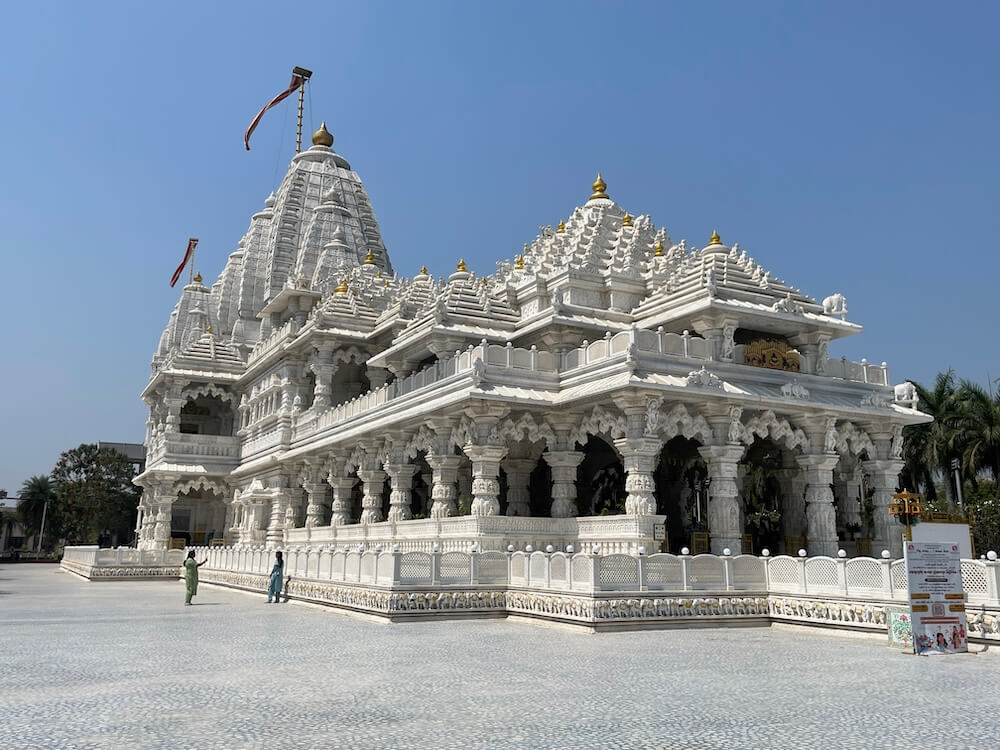 The main shikhara (spire) above the sanctum rises to a height of approximately 135 feet from the ground and is crowned with a gilded kalash (sacred finial). From the ardhmandap to the sanctum runs a continuous series of shikharas, each adorned with an amalaka (ribbed stone disc) and a dharmadhwaj (religious flag). The external walls of the temple contain devkoshtaks (niches), housing images of various sages and monks. Jain auspicious symbols and sacred motifs are intricately incorporated into every corner with remarkable artistry.
Festivals and traditions within Jainism are regarded as pathways of renunciation, penance and the pursuit of knowledge. Among them, the most significant festival is ‘Paryushan Mahaparva’. 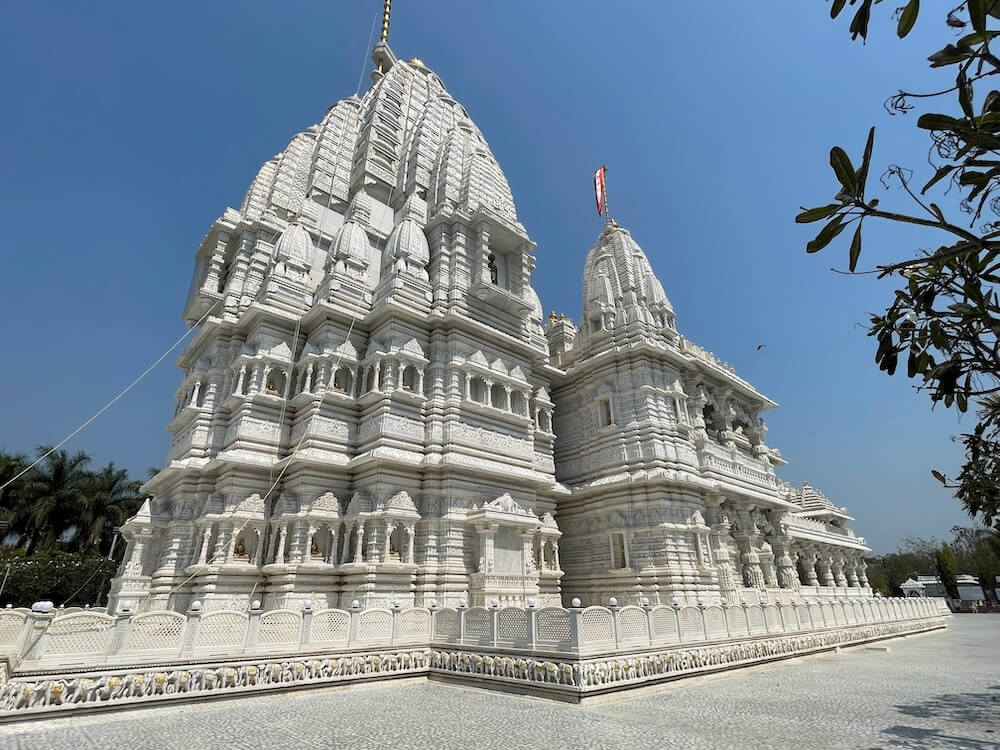 It is celebrated each year with profound devotion during the month of Bhadrapad. This sacred observance begins on Shravan Krishna Dwadashi and concludes on Bhadrapad Shuddha Chaturthi. During these eight days, members of the Jain community observe strict fasting. The sacred text ‘Kalpasutra’ is recited and explained in detail during this period. The principal purpose of the observance is to seek forgiveness for one’s own mistakes and to grant forgiveness to others. On Chaitra Shuddha Trayodashi, the festival of Bhagwan Mahavir Jayanti is celebrated with great enthusiasm and magnificent processions with decorated chariots are organised. On Kartik Amavasya, the day of Bhagwan Mahavir’s ‘Nirvana’ is observed and for the following three days, devotees remain absorbed in penance and meditation.
  On Kartik Shuddha Pratipada, special worship is offered to Gautam Swami, who attained complete knowledge on that day. Kartik Shuddha Panchami is celebrated as ‘Gyan Panchami’ during which sacred scriptures are worshipped and devotees undertake fasting.
The period of ‘Chaturmas’ begins in the month of Ashadh and continues until Kartik. During these four months, Jain monks remain in one place to perform religious rites and practices.
Margashirsha Shuddha Ekadashi is observed as ‘Mauni Ekadashi’ and on this day, the tradition of maintaining silence while remembering the name of God is followed.
Devotees may visit this temple every day from six in the morning until nine in the evening.
Useful Information
- Located at 18 km from Petlad and 38 km from Anand.
- State Transport bus service is available from Petlad city.
- Private vehicles can reach directly up to the temple parking area.
- Accommodation and breakfast facilities are available within the premises.
- Contact – Temple Office – Mobile: 9925202621, 9925202622,
- 6Telephone – 02697-235100
मणिलक्ष्मी तीर्थ
मनाेज, ताल. पेटलाड, जिला. आनंद
मंदिरे
Temples
मंदिर
-
भीमनाथ महादेव मंदिर लिंबळी, ता. सोजित्रा, जि. आनंद
अधिक माहितीBhimnath Mahadev Temple Limbali, Tal. Sojitra, Dist. Anand
View Detailsभीमनाथ महादेव मंदिर लिम्बाली, ताल. सोजित्रा, जिला. आनंद
विवरण देखें -
मेलडी माता मंदिर मालताज, ता. सोजित्रा, जि. आनंद
अधिक माहितीMeldi Mata Temple Malataj, Tal. Sojitra, Dist. Anand
View Detailsमेलडी माता मंदिर मालताज, ताल. सोजित्रा, जिला. आनंद
विवरण देखें -
चंद्रमौलेश्वर महादेव मंदिर उमरेठ, ता. उमरेठ, जि. आनंद
अधिक माहितीChandramouleshwar Mahadev Temple Umreth, Tal. Umreth, Dist. Anand
View Detailsचंद्रमौलेश्वर महादेव मंदिर उमरेठ, तहसील उमरेठ, जिला आनंद
विवरण देखें