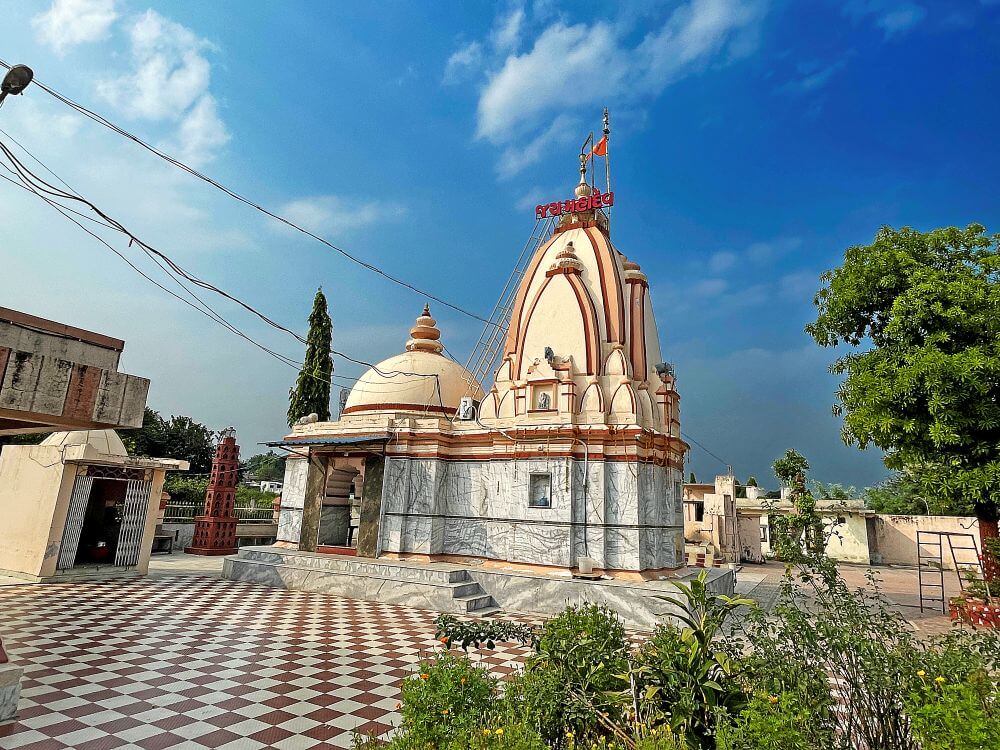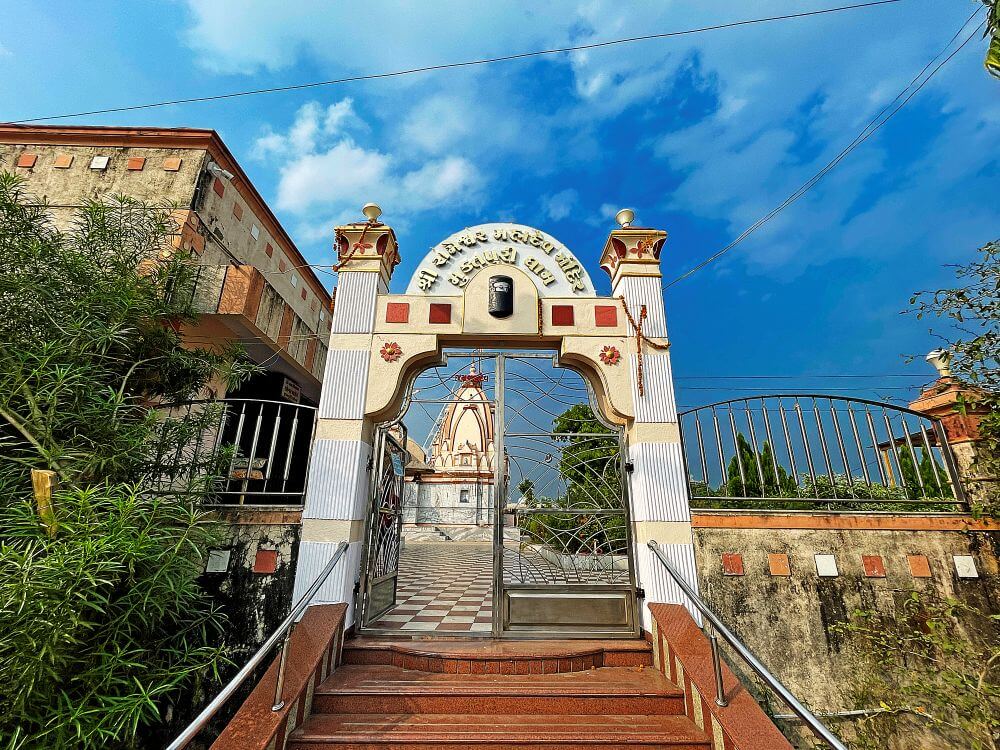
 The Rameshwar Mahadev Temple in Mota is one of Gujarat’s ancient temples with deep mythological significance. According to legend, after defeating Ravana, Lord Ram’s physical impurities were cleansed at this location. The temple houses a Shivling made from sand by Lord Ram himself. Devotees believe that offering heartfelt prayers at this temple eliminates all sins, fulfils wishes, and removes poverty. This belief draws thousands of devotees to the temple every year.
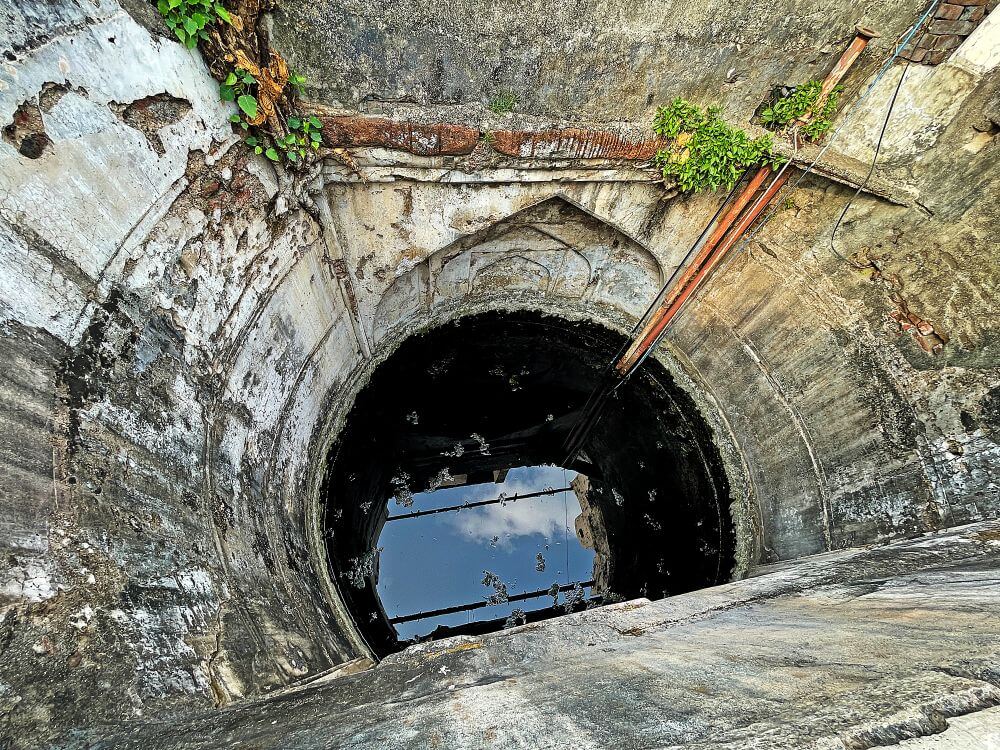
The Tapi Purana, in its 35th and 36th chapters, references the village and the temple. According to legend, after slaying Ravana, Lord Ram was burdened by impurities, causing two shadows to emerge from his body. To rid himself of these impurities, he embarked on a pilgrimage and arrived in this village. One of the shadows disappeared here, leading Ram to consider the place to be sacred. He performed a ritual and established a Shivling, naming the temple Muktameshwar, and the village Muktapuri. Continuing his journey, Lord Ram reached the site of the current Rameshwar Mahadev Temple. He arranged a feast for Brahmins but needed water for the rituals. He shot an arrow, creating a stream of the Ganga River at this location, later transformed into a well. Before the feast, he crafted a Shivling from the surrounding sand for worship. This Shivling is still present in the temple and is said to be the original one created by Lord Ram.
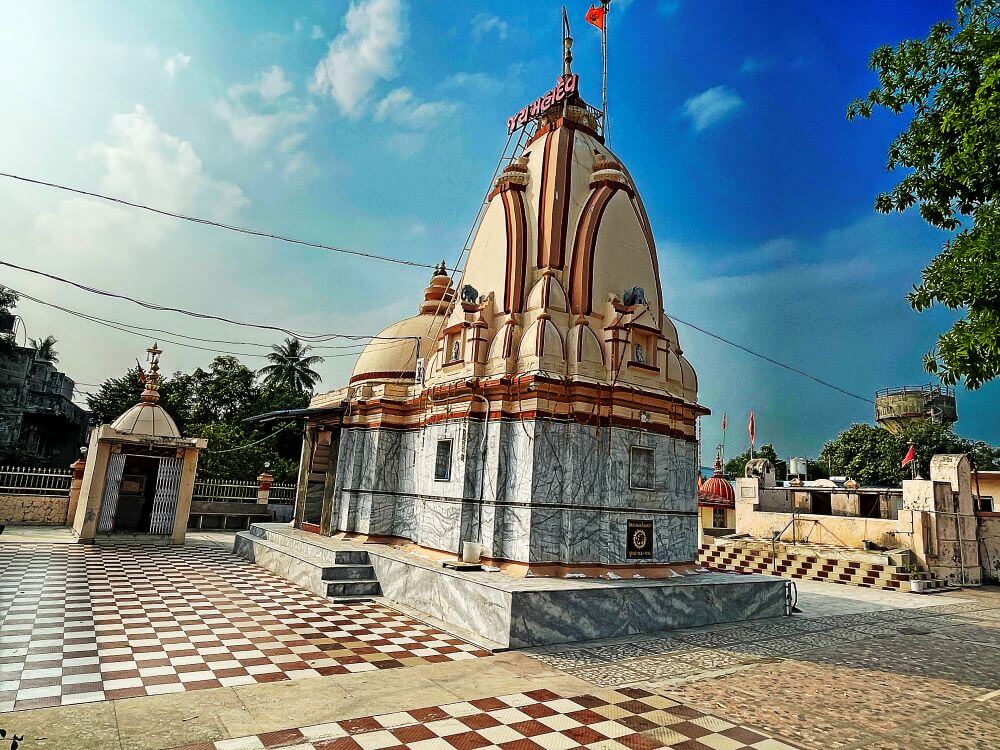
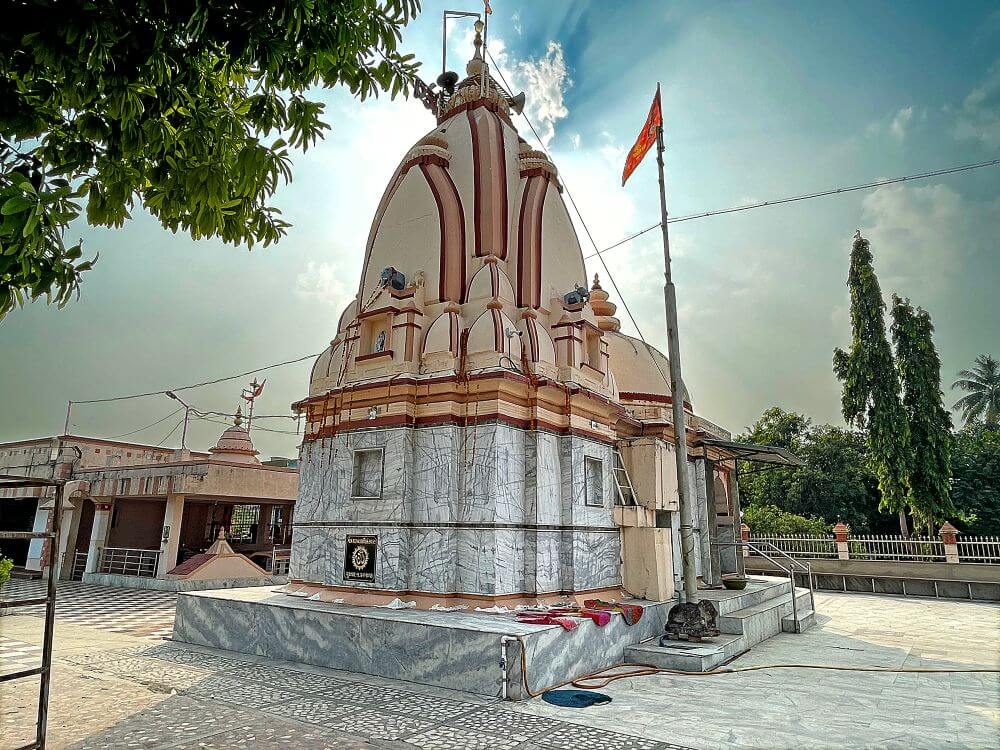
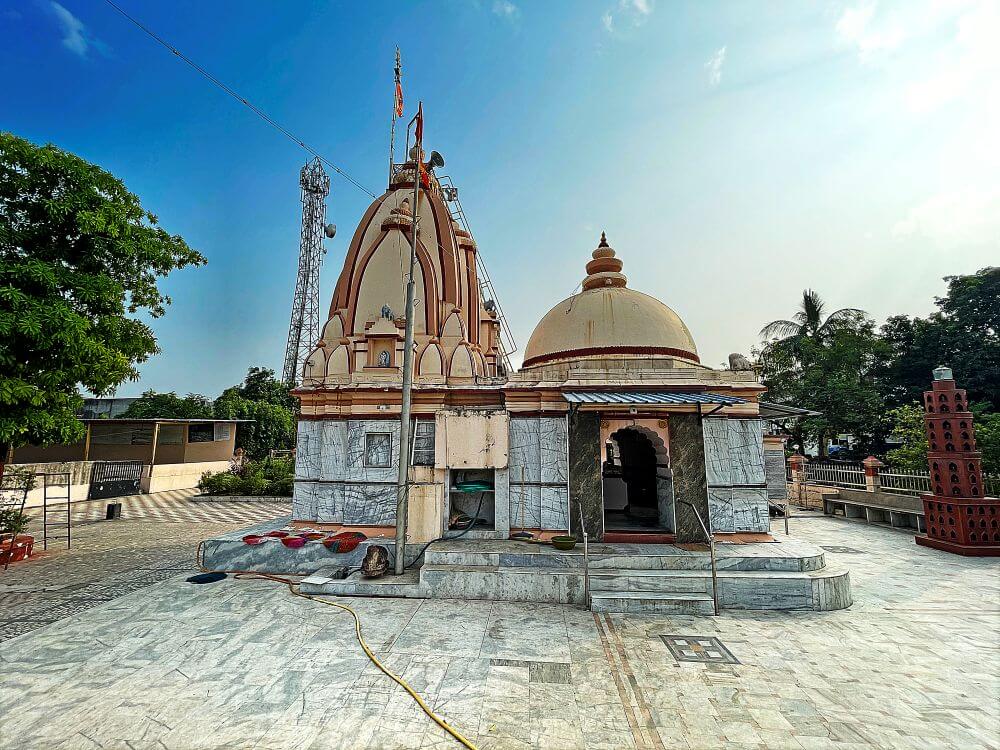
 The temple complex is elevated a few feet above ground level and surrounded by a boundary wall. The central temple sits on a tall Jagati (platform) in the middle of the vast courtyard. In front of the temple is a unique Deepmala (pillar of lamps), with a square base transitioning into an octagonal shape, adorned with niches for lamps now fitted with electric lights.
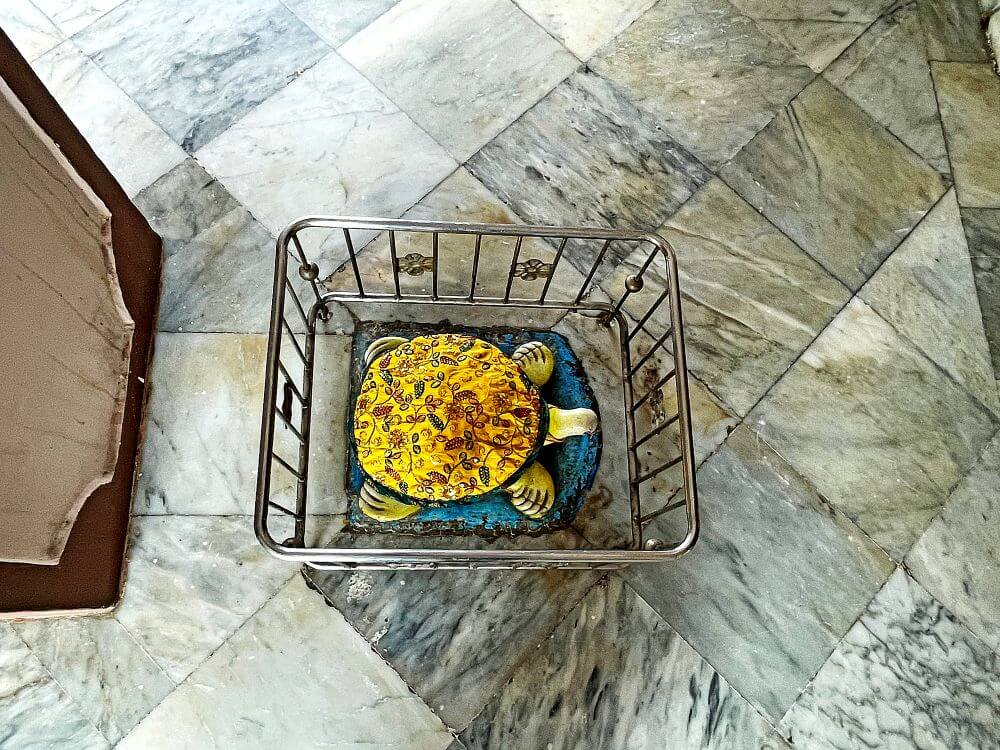
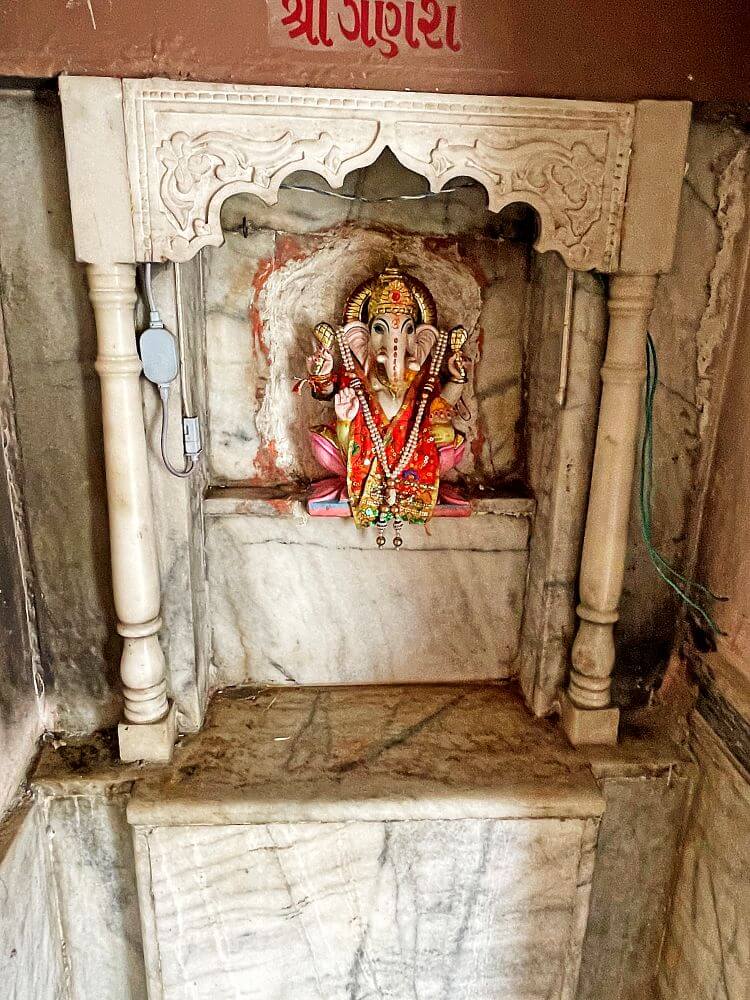
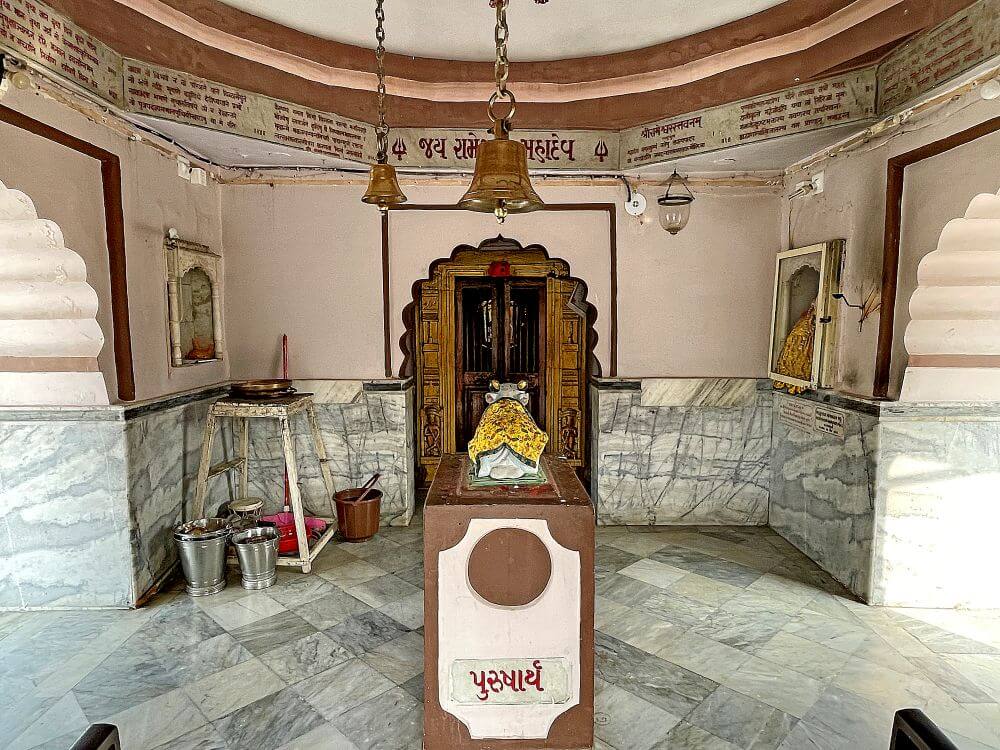
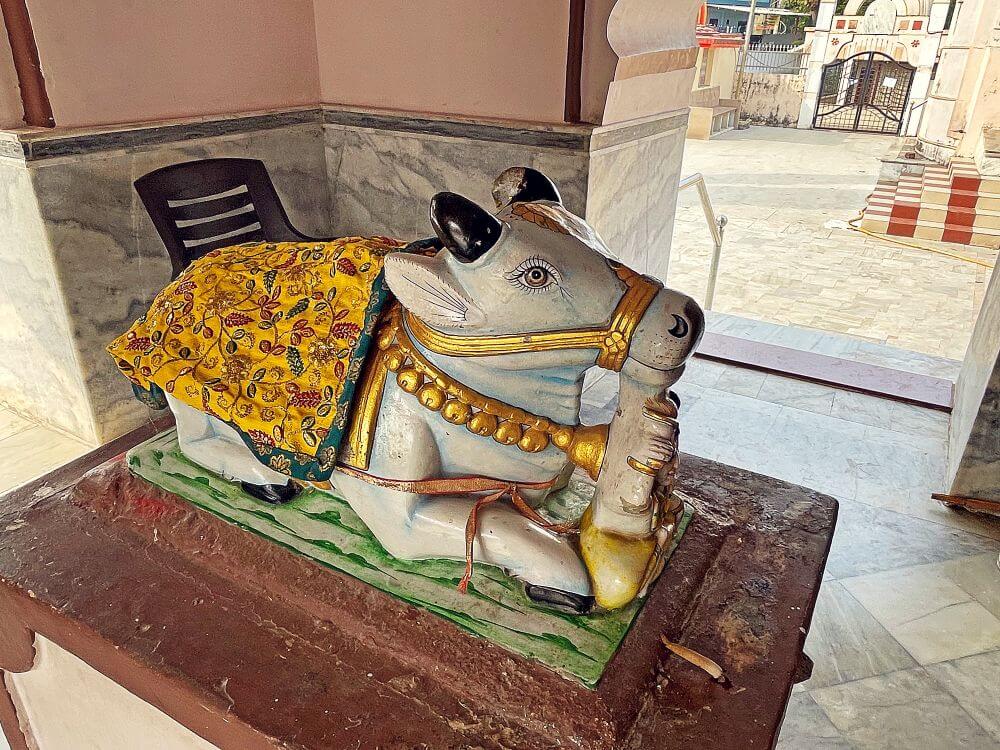
The temple features a Sabhamandap (assembly hall), a Garbha Griha (sanctum), and a tall shikhara (spire) above the sanctum. The Sabhamandap has three entrances, and a platform in the centre holds a Nandi idol. Below Nandi’s face is a carved figure of a seated devotee, and a tortoise idol is placed on the floor in front of the platform. Niches in the Sabhamandap walls house Shivlings and idols of Lord Ganesha.
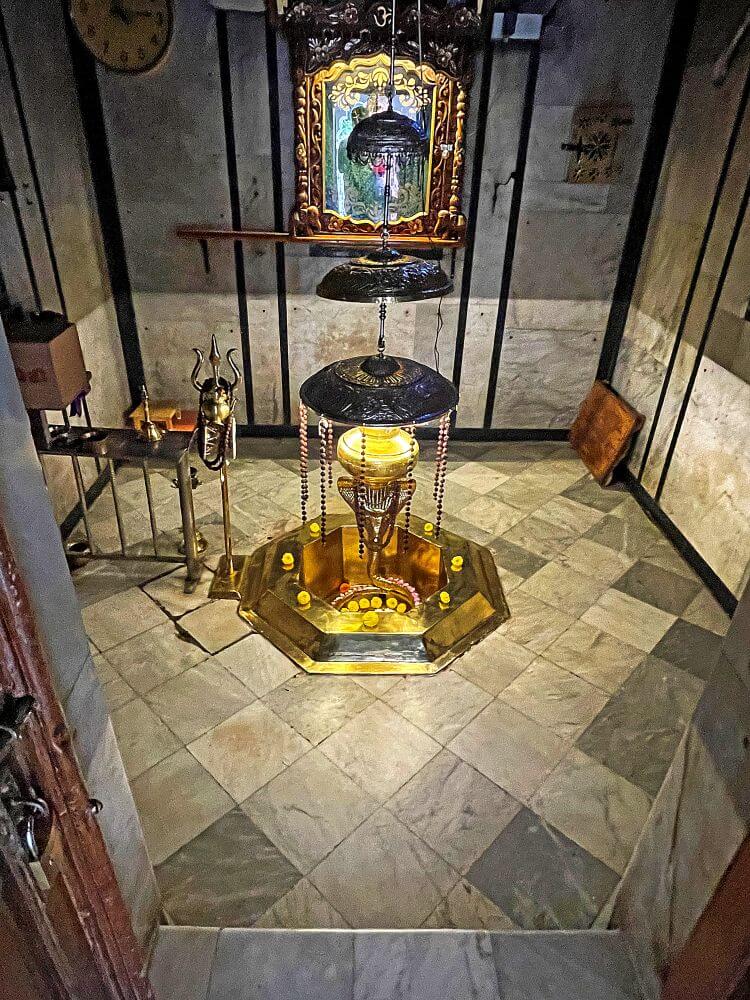
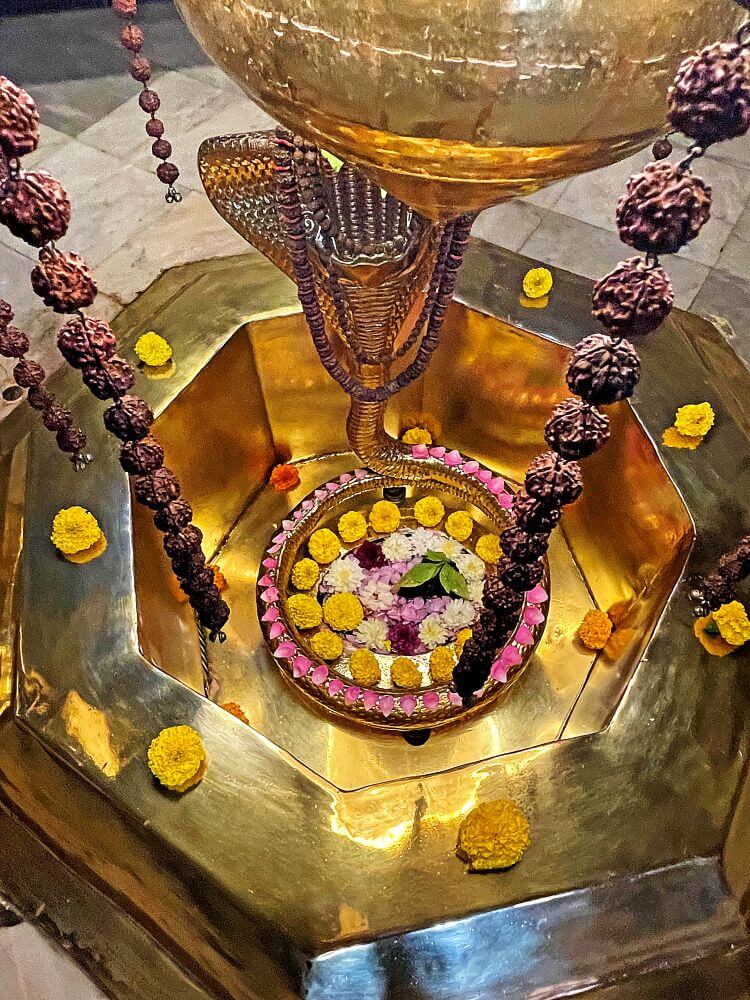
The sanctum’s stone entryway features a trishakhiya (three-section) design, with a vermilion-covered Ganesha idol above the lintel. Carvings of armed Dwarapalas (gatekeepers) adorn the door jambs, and motifs of Kirti Mukha and a crescent-shaped stone slab (ardha-chandra sheela) can be seen near the threshold. Within the sanctum lies the Patal Ling, encircled by a brass octagonal enclosure and protected by a snake’s hood. During festivals, a mask is placed over the Shivling. The back wall of the sanctum features an idol of Goddess Parvati.
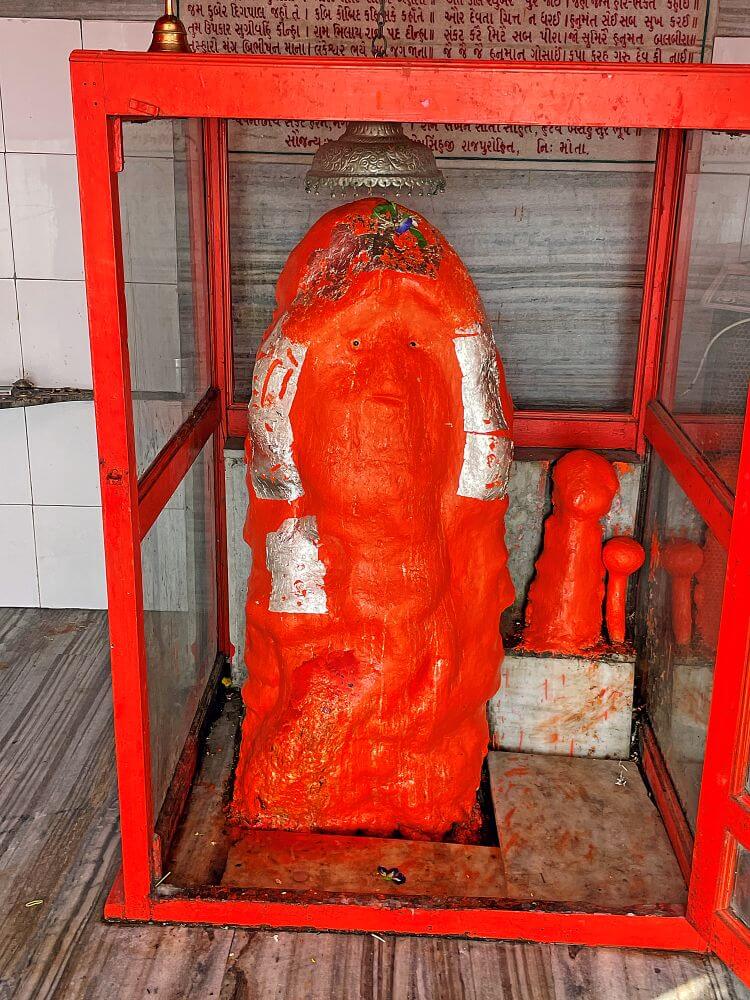
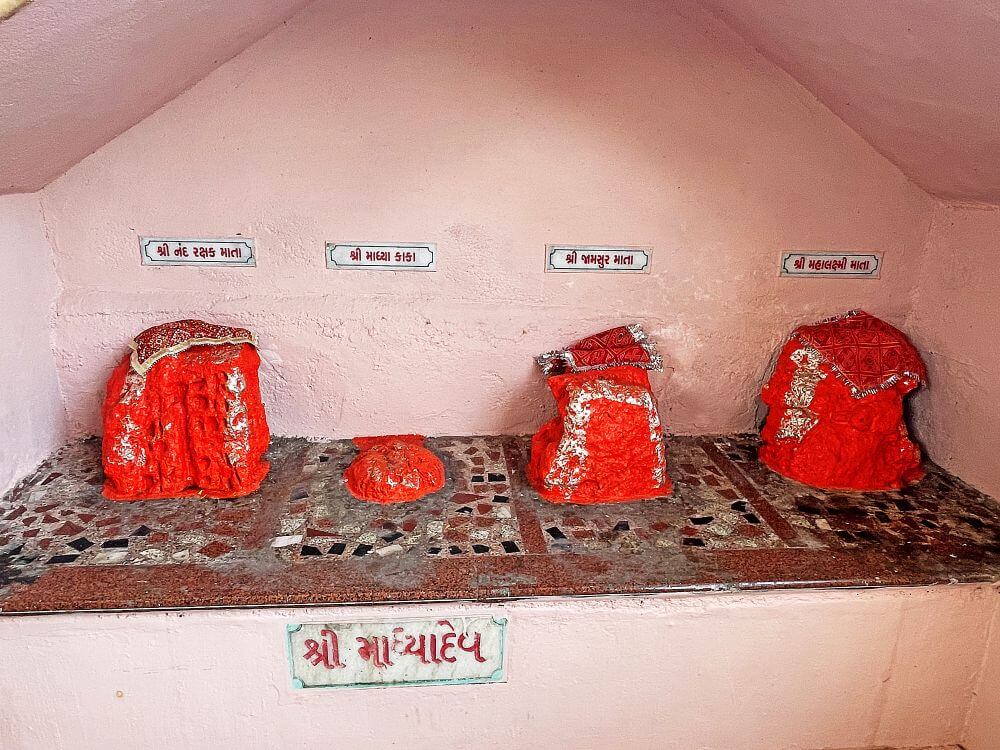
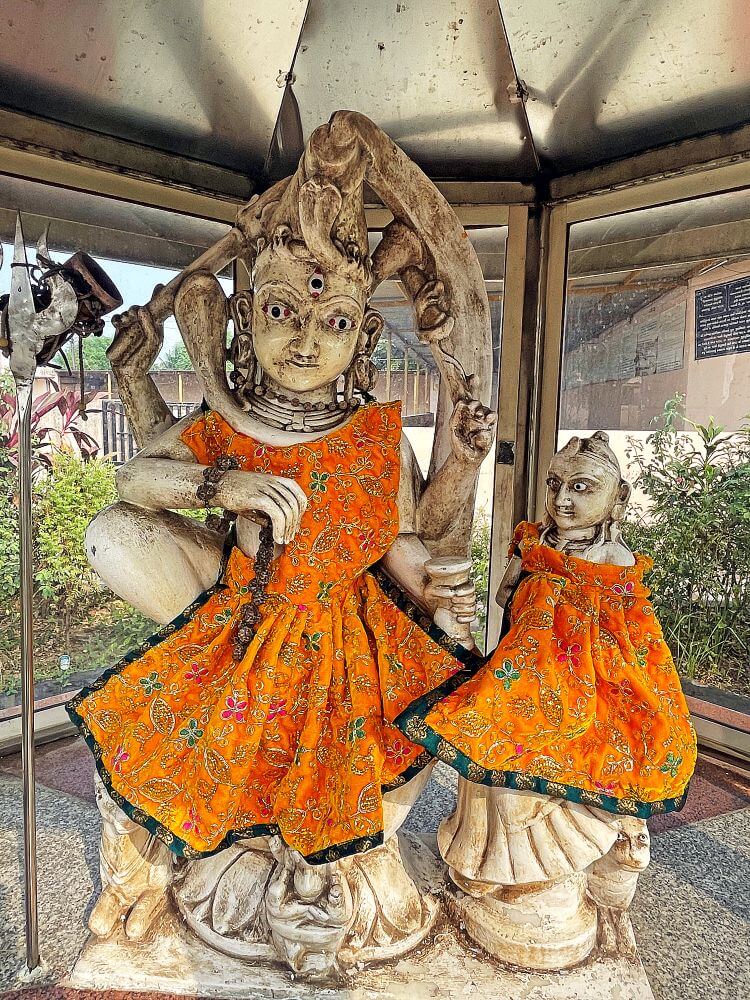
 Nearby, a well is believed to be the very spot where Lord Ram brought forth the Ganga with his arrow. The well still supplies water to many homes in the village. Close to the main temple stands a glass pavilion housing marble idols of Shiva and Parvati on an octagonal platform. Other smaller temples dedicated to Ghrushneshwar Mahadev, Narmadeshwar Mahadev, Amba Mata are also part of the complex. Inside this temple complex, one of the shrines houses an idol of Lord Ganesha. Additionally, the temple features sacred stones representing Nandrakshak Mata, Maghyakaka, Jamsur Mata, and Mahalakshmi Mata. These revered deities hold cultural and spiritual significance for the devotees visiting the temple. A small shrine for Hanuman is located at the back of the temple.
 Rameshwar Mahadev Temple hosts various religious events throughout the year. On Maha Shivaratri, hundreds of devotees gather for prayers, hymns, and a grand feast (Mahaprasad). A large fair is held on Tripurari Purnima, commemorating the day Lord Ram visited the site during his pilgrimage. This event attracts thousands of devotees, including non-resident Indians. The temple is beautifully illuminated, including the Deepmala, creating a festive atmosphere. The day concludes with a decorated Palkhi Yatra (palanquin procession) accompanied by hymns, music, and a grand procession through the village.
Mota village is home to other ancient temples, including Nilkanth Mahadev, Muktameshwar Mahadev, Sarveshwar Mahadev, Bahuchara Mata, Narmadeshwar Mahadev, Khodiyar Mata, Ram, Bhutnath, Khokhali Mata, and Mahalakshmi. This makes the village a hub for devotees and a small pilgrimage destination.