
पौर्णिमिकावू देवी मंदिर
चावडीनाडा, वेंगनूर, जि. तिरुवनंतपुरम.
Pournamikavu Devi Temple
Chavadinada, Venganoor, Dist. Thiruvananthapuram.
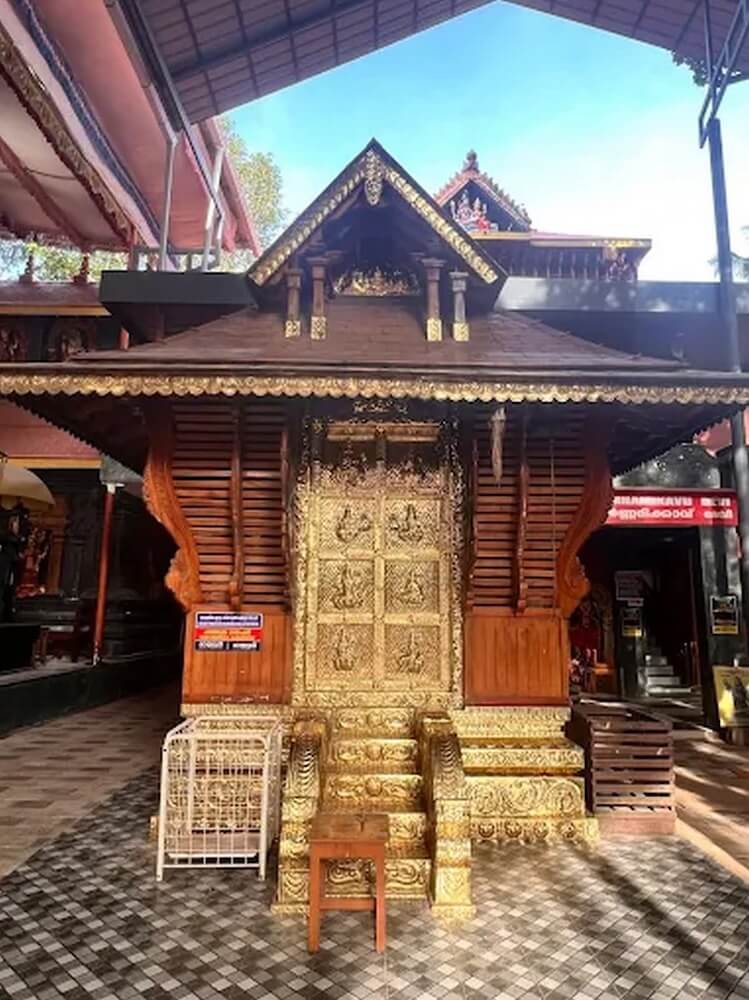
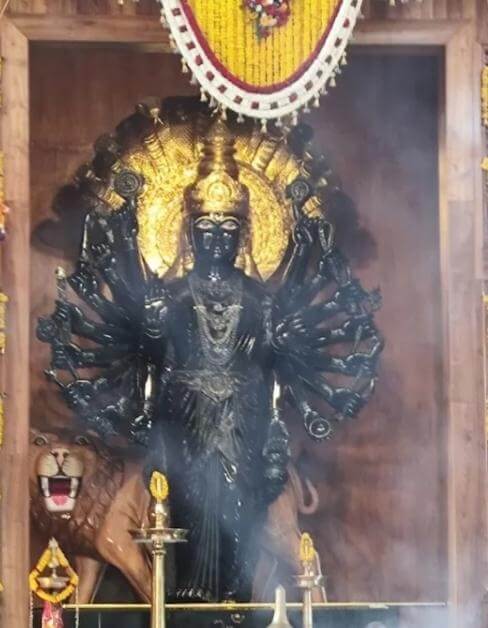 Pournamikavu Devi Temple is a Hindu place of worship with several unique features, located at Chavadinada near Venganoor in Thiruvananthapuram district. The main deity is Sree Bala Tripura Sundari Devi, the war goddess of the ancient Ay dynasty. The temple is known for its large Panchamukha Ganesha idol, a huge Nagaraja idol and the recently installed 27-foot-tall Hanuman Swami idol.
The temple land is about 1,100 to 1,200 years old. During the period of the ancient Ay dynasty, which ruled southern Kerala from the 8th to the 10th century, the worship of Padakaliyamma, their main war goddess, began at Vizhinjam. Following a Chola attack, the idol was moved from the temple at Vizhinjam to the kavu at Chavadinada in present-day Venganoor around AD 1000 for safety. For nearly 1,000 years, from AD 1000 to 2000, the idol remained forgotten, hidden under thick forest and vines. Over time, the kavu and surrounding land came into the possession of various private individuals and families. Later, local people prayed for the goddess’s blessings and decided to rebuild the temple according to the goddess’s wishes. In 2009, under the guidance of Brahmasree Poonjar Mithran Namboothiripad, the kulaguru of Poonjar Palace and a renowned tantri, Padakaliyamma, also known as Pournamikavu Devi, was ritually re-consecrated at Pournamikavu Temple.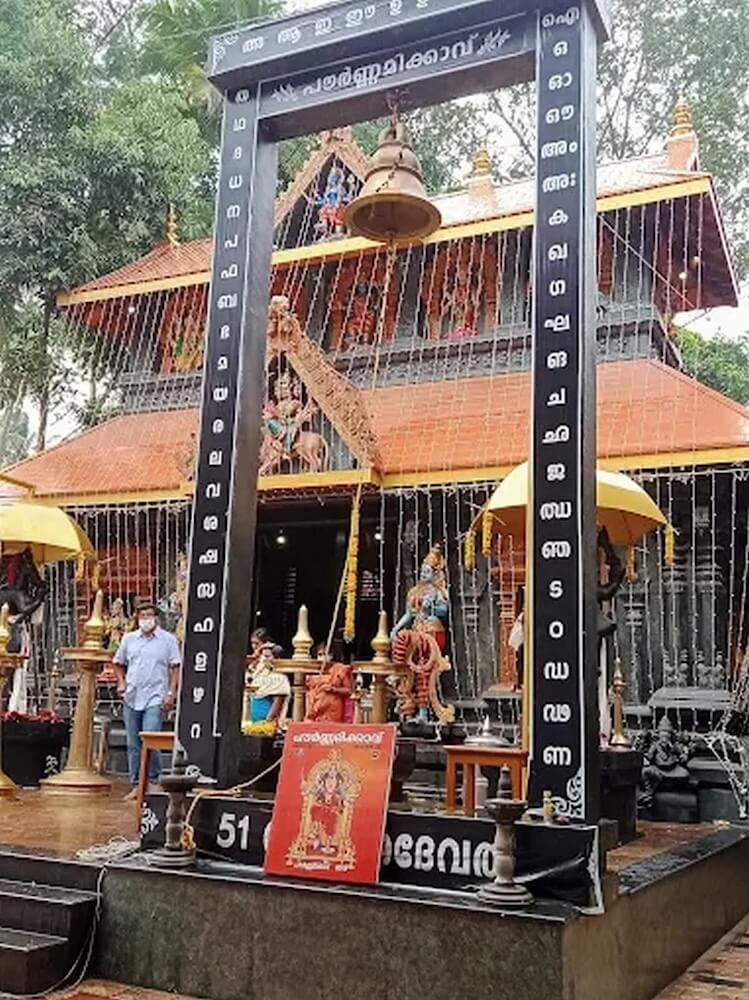 Worship then resumed and the temple again became an important place of worship.
Between 2018 and 2020, the idol of the main deity, Sree Bala Tripura Sundari Devi, underwent extensive renovation. This main idol, in the Krodhabhadra form, is 6.5 feet tall and weighs 1,300 kilograms. As the temple has separate idols for all 51 letters of the Malayalam and Sanskrit alphabets, it is known as an Akshara Temple. The 51 Akshara Devatha idols were consecrated at the temple on 4 October 2022, the day of Vijayadasami. The Krishna stone idols of the Akshara Devathas and Panchamukha Ganesha were carved by sculptors led by Madan Kumar, a renowned sculptor from Myladi near Kanyakumari in Tamil Nadu. The large marble idols of Adi Parashakti, Durga and Rajamatangi were made by skilled sculptors in Jaipur, Rajasthan. The 27-foot-tall Hanuman Swami idol was consecrated most recently, in July 2026. The temple is managed by a private trust.
Another important feature of the temple is that it is not open every day like most temples. It is mainly opened on the full moon day (Pournami) of each month. Therefore, regular darshan is available on only 12 or 13 full moon days in a year. In addition to the full moon days, the temple is also opened during Navaratri, Vidyarambham and special festival days such as Navaham.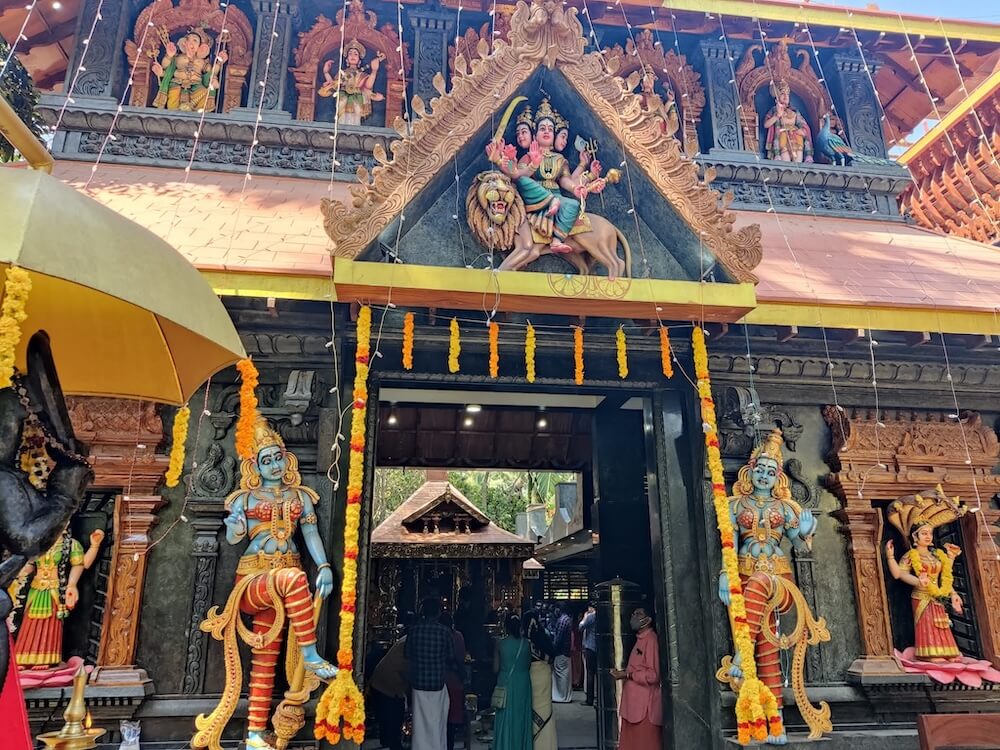
According to legend, after the idol was moved to the kavu at Venganoor, the Ay kings secretly performed worship here before leaving for war or trade. As generations passed, this practice was forgotten and worship stopped. The legend says that the goddess became angry, bringing poverty and disasters to the Ay dynasty and eventually causing its decline. Later dynasties, including Venad, performed rituals to please the goddess, but she was not satisfied. Even after the kavu and surrounding land came into the possession of private families, illnesses, financial difficulties and other problems continued. A later Devaprasnam, an astrological inquiry, identified these problems as the anger of Padakaliyamma, the war goddess of the Ay dynasty. 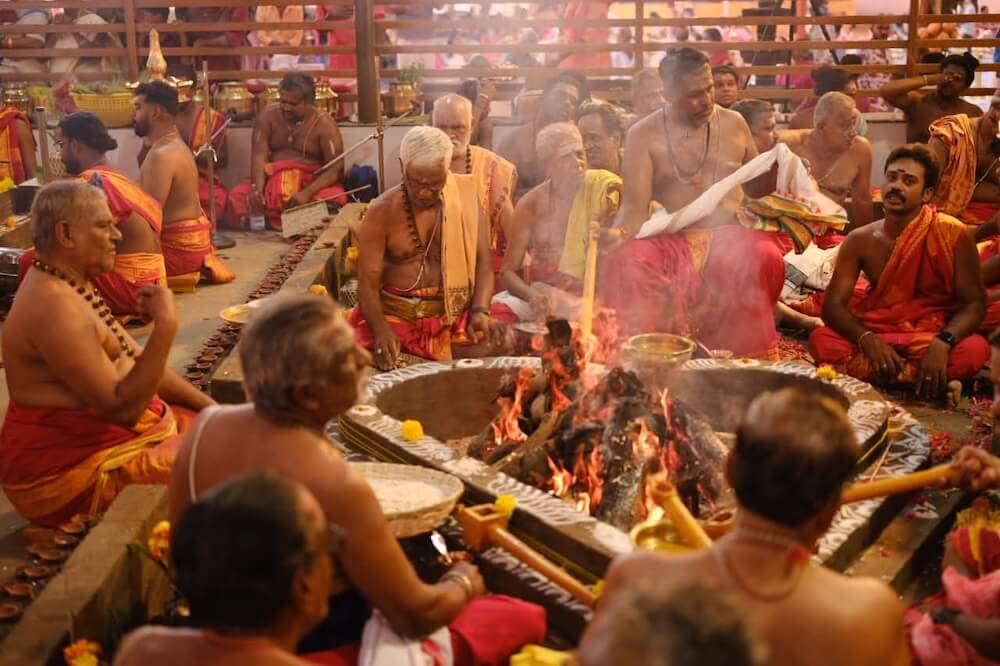 The people then prayed for the goddess’s blessings and rebuilt the temple according to her wishes.
The temple is not open every day and is mainly opened on the full moon day (Pournami) of each month. It is believed that the full moon represents the fullness of the feminine energy in the universe and that spiritual energy is stronger on this day due to the influence of the moon. Therefore, devotees believe that worshipping the fierce form of the goddess on this special day brings the full benefit of her blessings. The deity here was the war goddess of the Ay kings who ruled ancient Vizhinjam. Before going to war, the kings performed special worship to the goddess and if a flower fell from the garland placed on her shoulder during the ritual, it was taken as her blessing and a sign of victory. 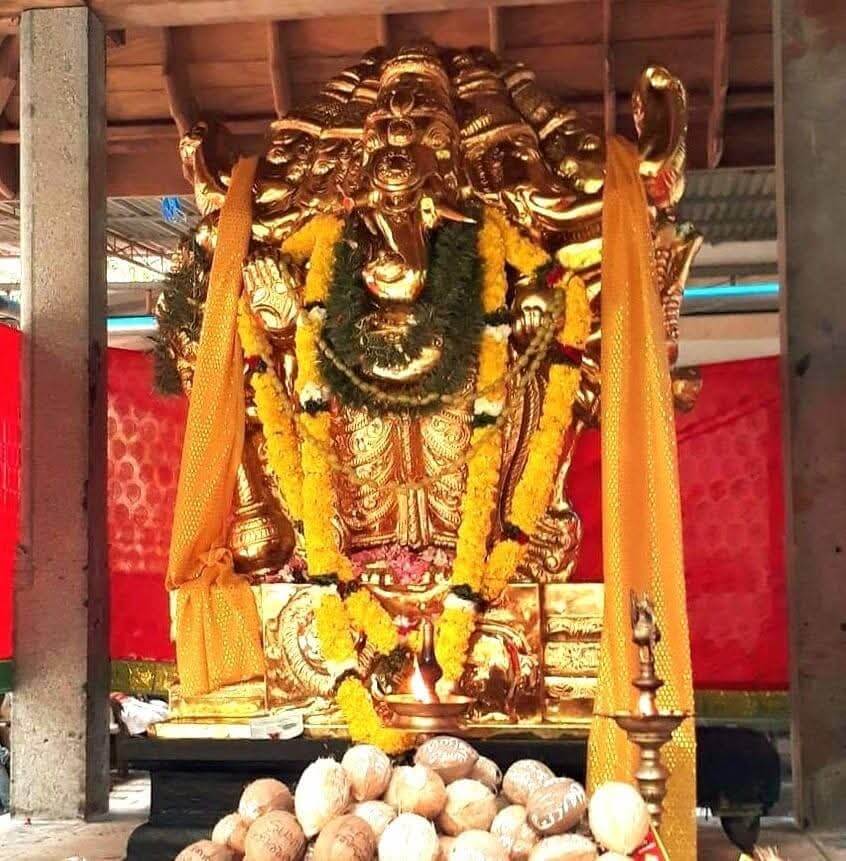 According to legend, during the final war with the Cholas, no flower fell from the garland, but the king still went to war, after which the Ay dynasty was defeated.
The installation of separate idols for the 51 letters is based on a Puranic concept. According to the Puranas, after Sati Devi sacrificed herself at Daksha’s yajna, Lord Shiva became enraged, carried her body on his shoulders and performed the Tandava. To protect the universe, Lord Vishnu used the Sudarshana Chakra to cut Sati’s body into 51 pieces, which later became the 51 Shakti Peethas. Based on the Tantric belief that these 51 body parts fell at the energy centres of the 51 letters, the 51 Akshara Devathas have been installed here. One of the main rituals during the temple festival is the Velichappad’s ‘boiling oil bath’. In this ritual, the Velichappad takes boiling coconut oil from a large cauldron with his hands and pours it over his head and body. Devotees believe that he does not suffer burns because the goddess herself enters his body during the ritual.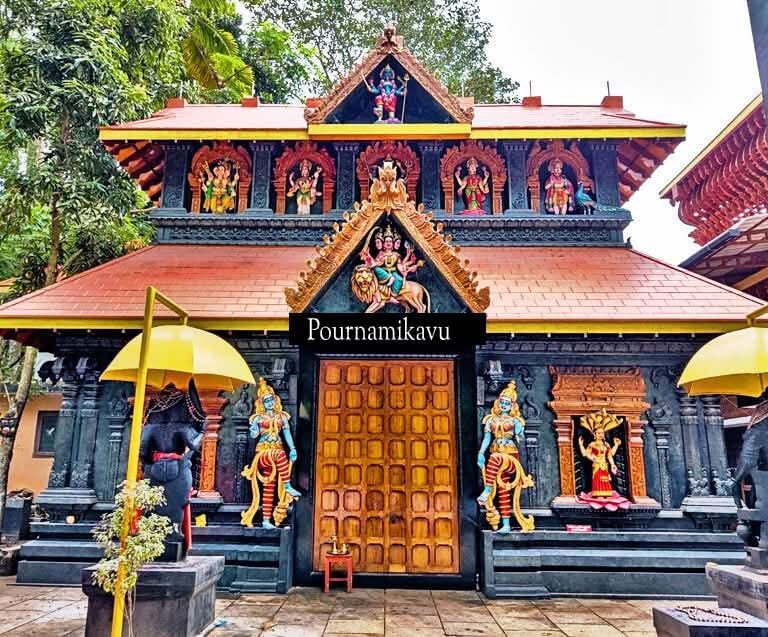
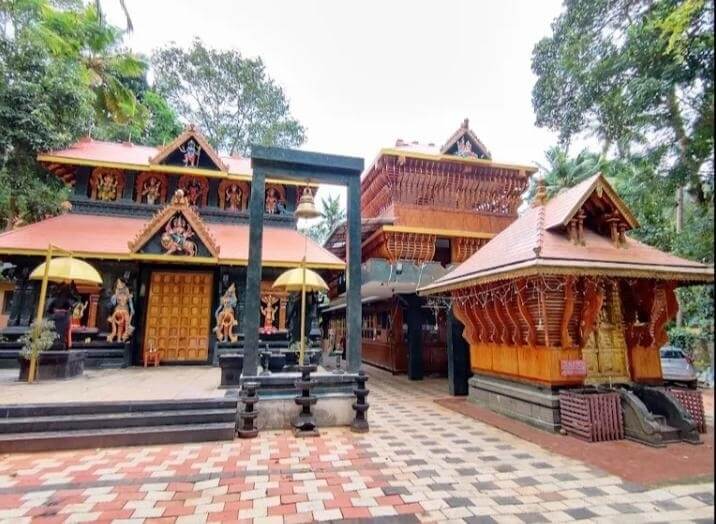
When viewed from the road, the first thing that can be seen is the large entrance gate, which combines Kerala and Dravidian architectural styles. Near the entrance is the 27-foot-tall Hanuman Swami idol, which can be clearly seen from a distance. The gopuram, with traditional Tamil-style carvings and the large courtyard below it are also visible from the road. Near the main temple is a large white marble idol of Adi Parashakti carved from a single block of stone. One of the main features inside the temple is the 51 Akshara Devatha Mandapam, where the 51 letters from ‘A’ to ‘Ksha’ of the Sanskrit-Malayalam alphabet are represented as deities and installed in rows. Devotees can touch and worship these Akshara Devatha idols and perform pradakshinam around them. The temple also has a huge Panchamukha Ganesha idol with five faces, carved entirely from Krishna stone.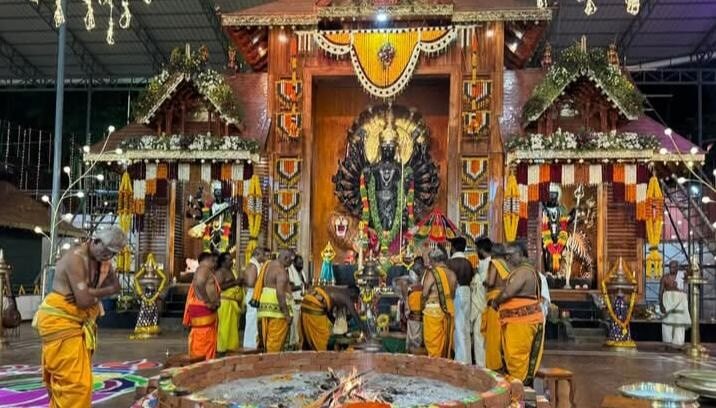
The most important architectural feature of the temple is that the main shrine and chuttambalam are built in the shape of a Sri Chakra. Building a temple based on the Sri Chakra, an important symbol in Tantric tradition, is rare. The main shrine faces east. There are large entrance gates and walls on all four sides. On entering through the eastern gate, a large golden flagstaff and the namaskara mandapam beside it can be seen. The main deity in the shrine is Sree Bala Tripura Sundari Devi, the war goddess of the ancient Ay dynasty. The deity is represented by a 6.5-foot-tall Panchaloha idol weighing 1,300 kilograms. 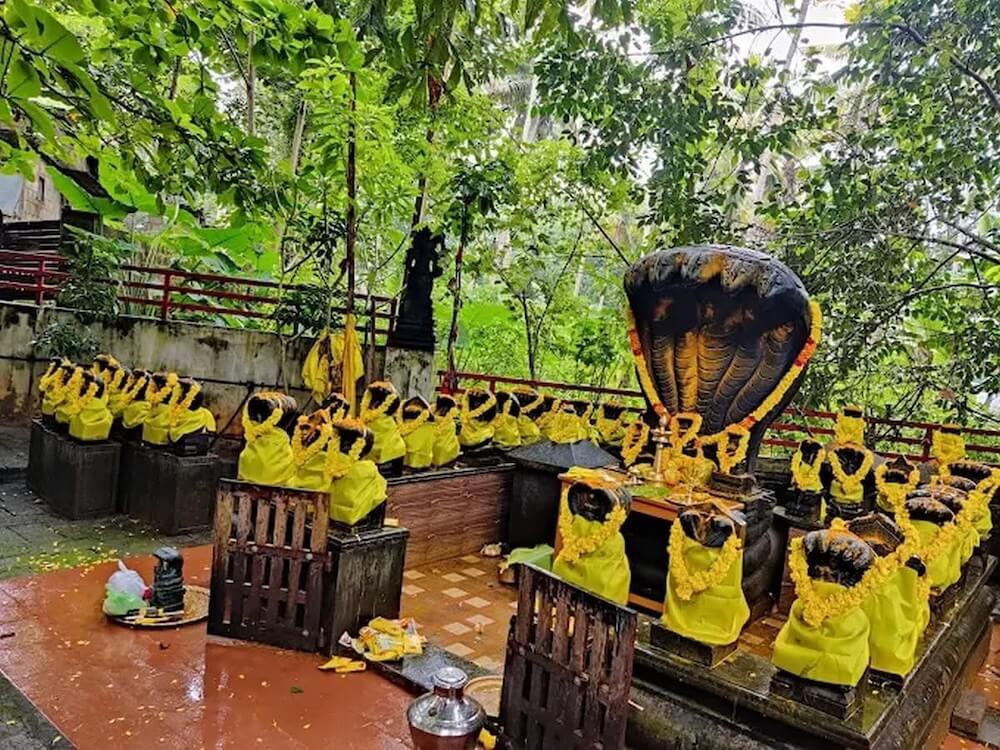 She is worshipped here in five fierce forms of Bhadrakali: Balabhadra, Saumyabhadra, Veerabhadra, Krodhabhadra and Samharabhadra.
In the south-western corner of the temple, a specially built mandapam houses an 8-foot-tall Panchamukha Ganesha idol carved from a single block of Krishna stone. A four-armed form of Mahavishnu is installed to the north-west of the main shrine. A huge Hanuman Swami idol is placed in the front of the temple, near the eastern entrance. The ancient naga kavu associated with the temple legend is located in the north-eastern corner, where large stone idols of Nagaraja and Nagayakshi are worshipped on separate platforms. On the northern side of the temple courtyard, specially built mandapams house the large idols of Adi Parashakti, Durga Devi and Rajamatangi Devi, including the 23-foot-tall idol of Adi Parashakti.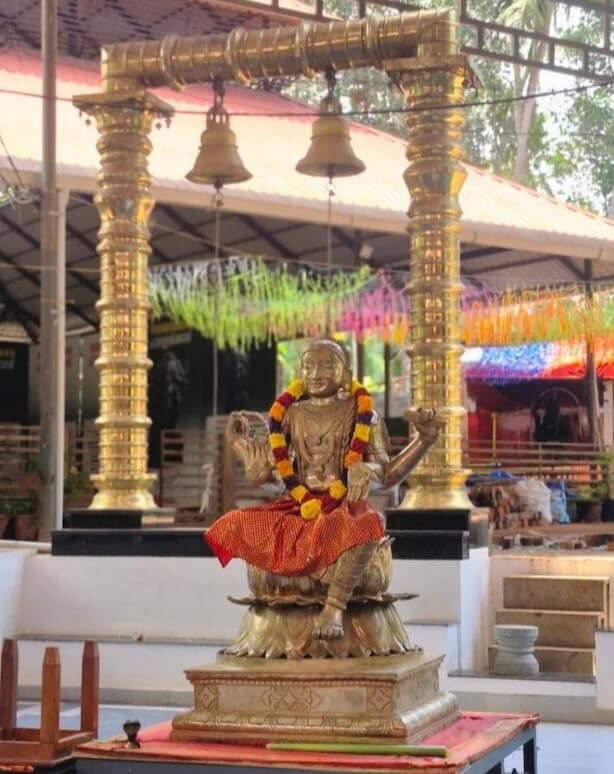 The idols of Yogeeswaran, Brahmarakshas and Madan Thampuran, regarded as the guardians of the temple, are located in the south-eastern part of the temple complex.
The main special day at the temple is Pournami (full moon), which is observed every month. The temple is fully open to devotees on this day, with darshan available from 4:30 am to 9:30 pm. Mahaganapathi Homam, Chandika Homam, special Panchashakti Poojas and extensive Annadanam are conducted on this day. The annual festival, Pournami Mahotsavam, is usually held for 7 to 10 days during September–October along with the Navaratri celebrations. The main rituals during the festival include the Velichappads’ Agni Vilayattam and the boiling oil bath, in which boiling coconut oil is scooped by hand and poured over the body. Navaratri and Vijayadasami are also important celebrations because of the presence of the 51 Akshara Devathas. Special poojas and cultural programmes are held during all nine days of Navaratri and Vidyarambham is conducted on a large scale on Vijayadasami. Lakshadeepam is usually held on the Pournami day in December, when tens of thousands of traditional clay lamps are lit across the temple complex. In addition to the annual festivals, major Tantric rituals such as Maha Kalika Yagam and Prapancha Yagam are also conducted at the temple at intervals of several years under the guidance of sannyasis and tantries.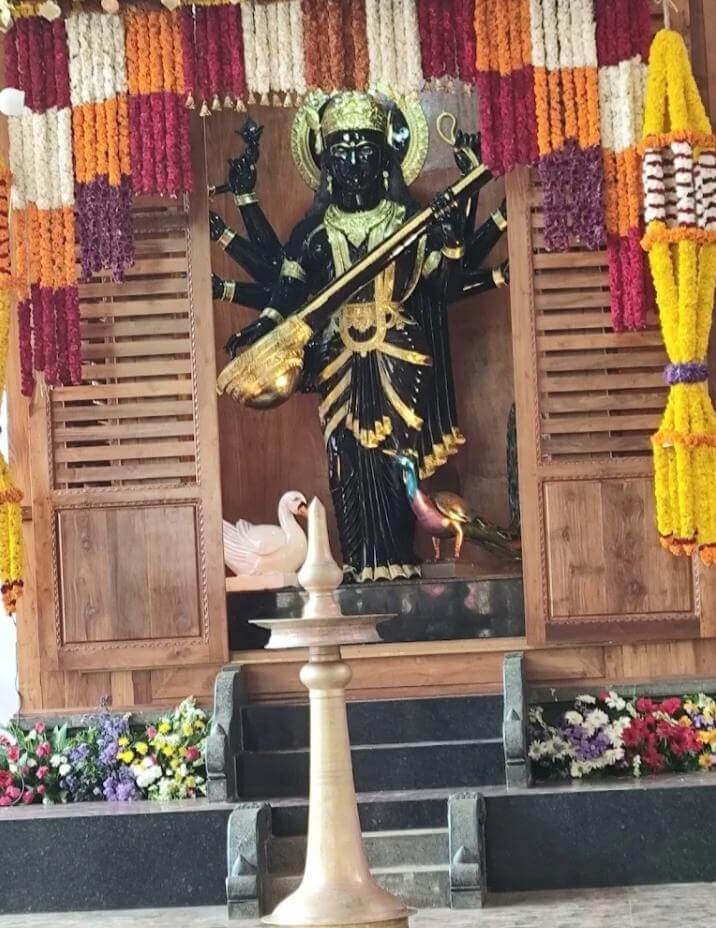
Among the offerings, Veena Samarpanam, in which small veenas are offered to the 51 Akshara Devathas, is performed for success in education and proficiency in the arts. Aksharalaksham Archana is a special archana performed by chanting the names of the Akshara Devathas for success in examinations and to obtain a new job. Panchashakti Pooja is conducted to please the five Bhadrakali forms of the main deity, Bala Tripura Sundari and is believed to help remove severe doshas. Deepara Pradakshinam, in which devotees carry ghee lamps in their hands and perform 21 rounds around the main shrine and the Akshara Devathas, is another important offering. Chandika Homam is conducted on Pournami days for relief from enemy-related doshas and for family prosperity. Offering garlands made of dried chillies to Hanuman Swami is a major offering performed to remove fear of enemies and illnesses. Mahaganapathi Homam is conducted on Pournami days in front of Panchamukha Ganesha to remove obstacles in business and life. At the naga kavu in the north-eastern corner, Ayilyam Pooja and offerings of milk and fruits are performed to remove Rahu-Ketu doshas and naga-related afflictions. Donations to the Annadanam fund, which provides food for devotees visiting the temple on Pournami days, are also considered an important offering.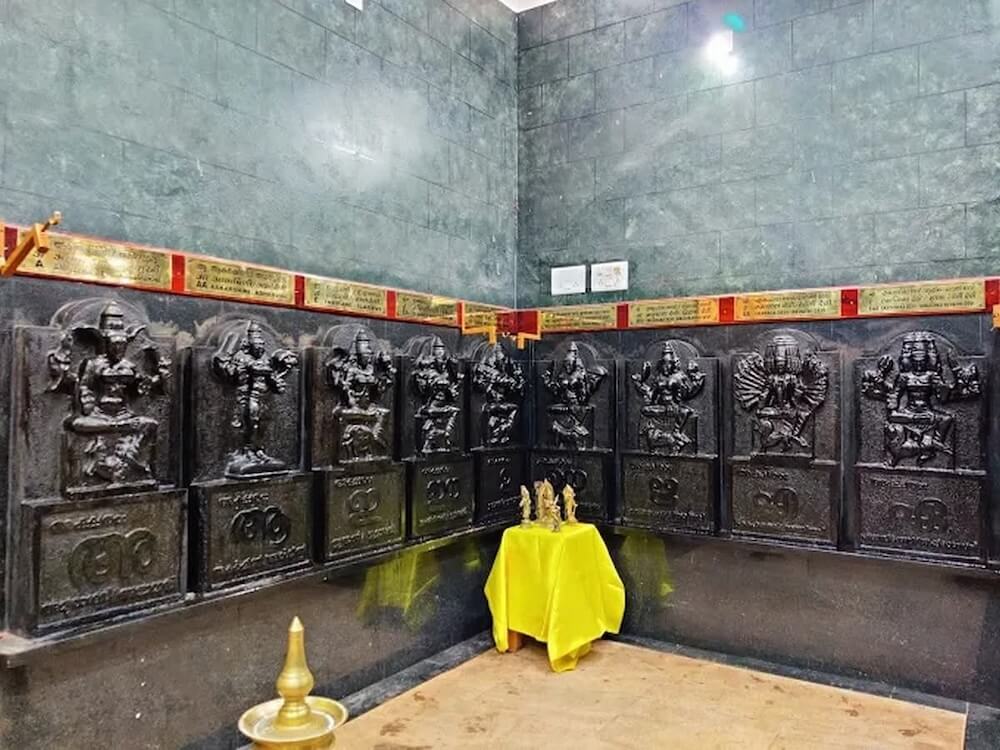
The temple is not open every day. It is open on the full moon day (Pournami) of each month, during the nine days of Navaratri and on special occasions such as Vidyarambham and the annual festival, Navaham. On Pournami days, the temple remains open throughout the day without closing at noon, allowing continuous darshan. The temple opens at 4:30 am and closes at 9:30 pm after the Thrippuka ritual. From 5:00 to 7:30 am, Nirmalya Darshan, Abhishekam and Ushapooja are conducted, along with Mahaganapathi Homam for the removal of obstacles. From 9:00 am to 1:00 pm, the main Tantric poojas and Chandika Homam are conducted, along with special archana for the Akshara Devathas. From 6:00 to 8:30 pm, Sandhya Deeparadhana, Deepara Pradakshinam and Athazha Pooja are conducted, followed by the closing of the temple at 9:30 pm.
Key highlight :-
- Located 5 km from Vizhinjam and 10 km from Neyyattinkara.
- 16 km from Thiruvananthapuram Central railway station.
- 18 km from Trivandrum International Airport.
- KSRTC and local bus facilities are available to the temple.
- Private vehicles can be parked in the temple’s parking area.
- Accommodation and food facilities are available near the temple.
- Contact number +91 9747772177.
पौर्णमिकवु देवी मंदिर
चावडीनाडा, वेंगनूर, जिला। तिरुवनंतपुरम.
मंदिरे
Temples
मंदिर
મંદિરો
கோவில்கள்
దేవాలయాలు
ക്ഷേത്രങ്ങൾ
ದೇವಾಲಯಗಳು
মন্দিরসমূহ
ਮੰਦਿਰ
-
श्री पद्मनाभ स्वामी मंदिर पश्चिम नाडा, पळवंगडी, जि. तिरुवनंतपुरम.
अधिक माहितीSree Padmanabha Swamy Temple West Nada, Pazhavangadi, Dist. Thiruvananthapuram.
View Detailsश्री पद्मनाभ स्वामी मंदिर पश्चिम नाडा, पझावंगडी, जिला। तिरुवनंतपुरम.
विवरण देखेंSree Padmanabha Swamy Temple West Nada, Pazhavangadi, Dist. Thiruvananthapuram.
વિગત જુઓSree Padmanabha Swamy Temple West Nada, Pazhavangadi, Dist. Thiruvananthapuram.
விவரங்களைக் காண்கSree Padmanabha Swamy Temple West Nada, Pazhavangadi, Dist. Thiruvananthapuram.
వివరాలను చూడండిSree Padmanabha Swamy Temple West Nada, Pazhavangadi, Dist. Thiruvananthapuram.
വിശദാംശങ്ങൾ കാണുകSree Padmanabha Swamy Temple West Nada, Pazhavangadi, Dist. Thiruvananthapuram.
ವಿವರಗಳನ್ನು ವೀಕ್ಷಿಸಿSree Padmanabha Swamy Temple West Nada, Pazhavangadi, Dist. Thiruvananthapuram.
বিস্তারিত দেখুনSree Padmanabha Swamy Temple West Nada, Pazhavangadi, Dist. Thiruvananthapuram.
ਵੇਰਵੇ ਦੇਖੋ -
पळवंगडी श्री महागणपती मंदिर पूर्व किल्ला, जि. तिरुवनंतपुरम
अधिक माहितीPazhavangadi Sree Maha Ganapathy Temple East Fort, Dist. Thiruvananthapuram
View Detailsपझावंगडी श्री महा गणपति मंदिर पूर्वी किला, जिला. तिरुवनंतपुरम
विवरण देखेंPazhavangadi Sree Maha Ganapathy Temple East Fort, Dist. Thiruvananthapuram
વિગત જુઓPazhavangadi Sree Maha Ganapathy Temple East Fort, Dist. Thiruvananthapuram
விவரங்களைக் காண்கPazhavangadi Sree Maha Ganapathy Temple East Fort, Dist. Thiruvananthapuram
వివరాలను చూడండిPazhavangadi Sree Maha Ganapathy Temple East Fort, Dist. Thiruvananthapuram
വിശദാംശങ്ങൾ കാണുകPazhavangadi Sree Maha Ganapathy Temple East Fort, Dist. Thiruvananthapuram
ವಿವರಗಳನ್ನು ವೀಕ್ಷಿಸಿPazhavangadi Sree Maha Ganapathy Temple East Fort, Dist. Thiruvananthapuram
বিস্তারিত দেখুনPazhavangadi Sree Maha Ganapathy Temple East Fort, Dist. Thiruvananthapuram
ਵੇਰਵੇ ਦੇਖੋ -
श्री परशुराम स्वामी मंदिर तिरुवल्लम, जि. तिरुवनंतपुरम
अधिक माहितीSree Parasurama Swamy Temple Thiruvallam, Dist. Thiruvananthapuram
View Detailsश्रीपरशुराम स्वामी मंदिर तिरुवल्लम, जिला. तिरुवनंतपुरम
विवरण देखेंSree Parasurama Swamy Temple Thiruvallam, Dist. Thiruvananthapuram
વિગત જુઓSree Parasurama Swamy Temple Thiruvallam, Dist. Thiruvananthapuram
விவரங்களைக் காண்கSree Parasurama Swamy Temple Thiruvallam, Dist. Thiruvananthapuram
వివరాలను చూడండిSree Parasurama Swamy Temple Thiruvallam, Dist. Thiruvananthapuram
വിശദാംശങ്ങൾ കാണുകSree Parasurama Swamy Temple Thiruvallam, Dist. Thiruvananthapuram
ವಿವರಗಳನ್ನು ವೀಕ್ಷಿಸಿSree Parasurama Swamy Temple Thiruvallam, Dist. Thiruvananthapuram
বিস্তারিত দেখুনSree Parasurama Swamy Temple Thiruvallam, Dist. Thiruvananthapuram
ਵੇਰਵੇ ਦੇਖੋ