
श्री पद्मनाभ स्वामी मंदिर
पश्चिम नाडा, पळवंगडी, जि. तिरुवनंतपुरम.
Sree Padmanabha Swamy Temple
West Nada, Pazhavangadi, Dist. Thiruvananthapuram.
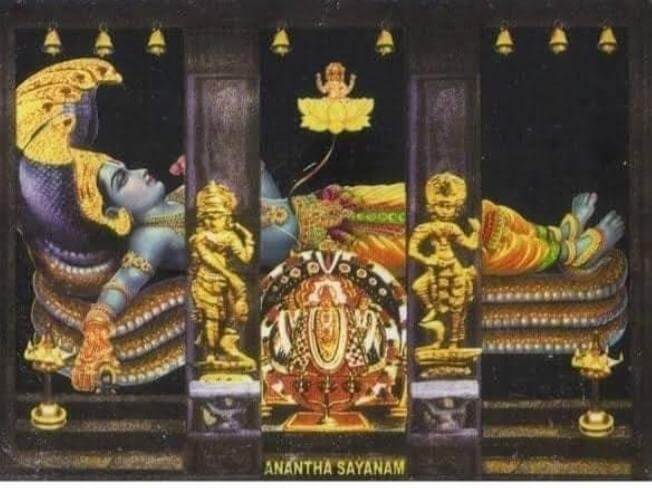 Located in Thiruvananthapuram, the capital of Kerala, the Sree Padmanabhaswamy Temple is one of the most famous and wealthiest Hindu places of worship in the world. Lord Vishnu is worshipped here in the reclining form of Anantha Sayana, resting on Anantha, the Naga king. This sacred centre is one of the 108 Divya Desams, which are highly important to Vaishnavite devotees and is dedicated to Padmanabhaswamy, the family deity of the Travancore kings. One of the temple’s main features is its rare architectural style, which combines traditional Kerala and Dravidian styles.
The early history of the temple is mentioned in various records dating from 300 BCE to the 9th century CE. The temple is clearly mentioned in Sangam literature and in the works of the 9th-century Tamil Alvar saint Nammalvar. 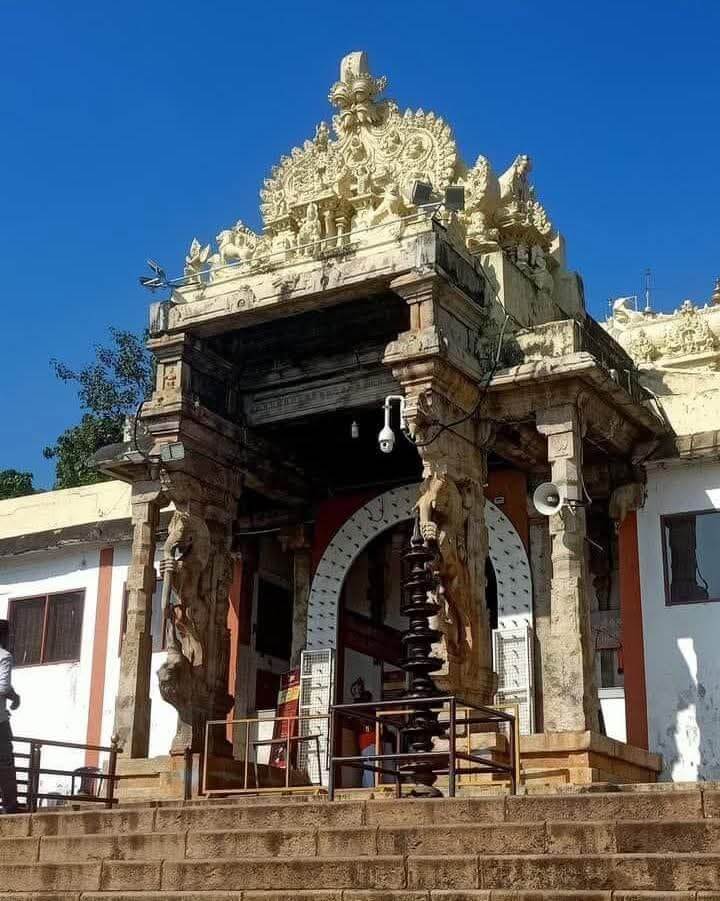 In its early period, when Thiruvananthapuram was a small village, there was a small wooden temple at this site. Powerful rulers who ruled Venad between 1335 and 1384 established their authority over the temple. In 1425, Venad ruler Veera Iravi Iravivarma established a record room within the temple complex. These palm-leaf records, which documented the temple’s daily affairs and accounts, are known as the ‘Mathilakam Records’. They are among the most reliable historical sources for the history of the temple and record that the idol was temporarily moved in 1459 to allow the temple roof to be rebuilt.
A major fire in 1686 completely destroyed most of the temple structures and a large part of the idol. The temple was rebuilt in its present form during the reign of Anizham Thirunal Marthanda Varma (1729–1758), the architect of modern Travancore. Between 1731 and 1733, the damaged old wooden idol was replaced with the present idol, made using 12,008 Salagramas brought from the Gandaki River in Nepal and a special mixture known as ‘Kadusharkara Yogam’. The large pillared corridor, supported by massive granite pillars, was completed in just six months with the work of 4,000 stone workers, 6,000 other workers and 100 elephants. The first five levels of the temple’s large eastern gopuram were built during the reign of Marthanda Varma,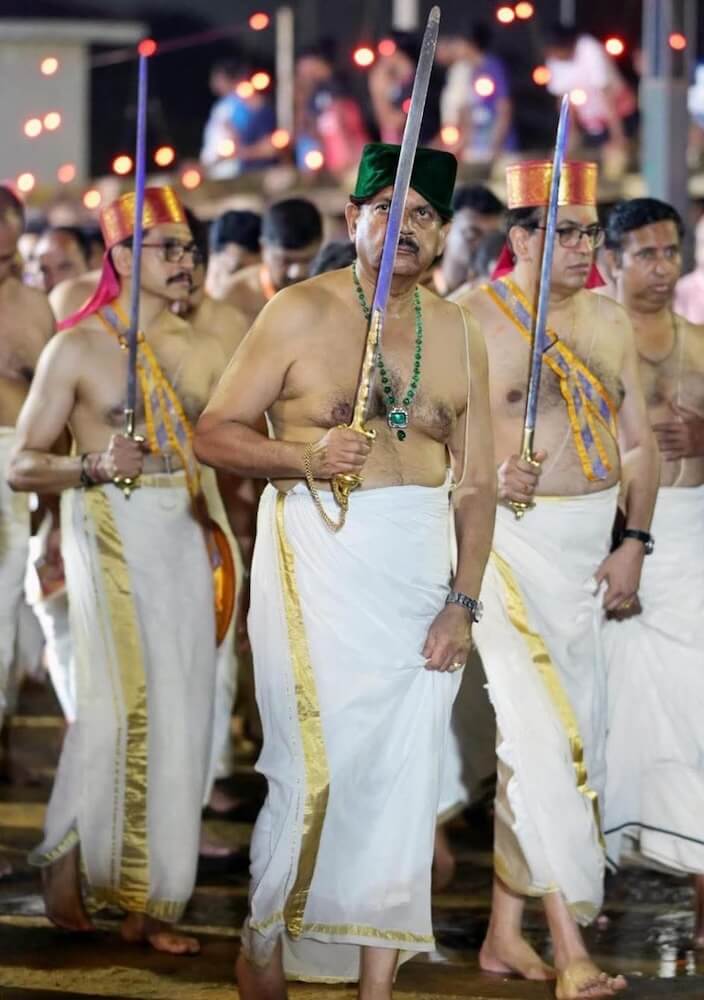 while the gopuram was completed later during the reign of Karthika Thirunal Rama Varma, known as Dharma Raja. On 3 January 1750, through the historic Thrippadidanam ceremony, Marthanda Varma dedicated his entire kingdom to Lord Padmanabhaswamy and placed his sword at the Lord’s feet. From then on, the Travancore kings ruled the kingdom as ‘Padmanabha Dasas’ or servants of Lord Padmanabhaswamy.
For centuries, war spoils, income from the spice trade, taxes from different regions and offerings from the kings were kept in the temple’s underground chambers. Historical and court records show that the temple treasury contained valuable items such as gold, silver, precious stones and ancient coins dating back several centuries. Following the Supreme Court proceedings in 2011, the temple vaults were opened and inspected, revealing large quantities of gold, jewellery, precious stones and ancient objects. Their value was widely reported to be more than ₹1 lakh crore. On 13 July 2020, the Supreme Court recognised the Travancore royal family’s right of Shebaitship and administration of the temple and directed the formation of an Administrative Committee and an Advisory Committee to oversee its day-to-day management.
The Sree Padmanabhaswamy Temple has a deep historical connection with the famous Temple Entry Proclamation of 1936. On 12 November 1936, the then Maharaja of Travancore, Sree Chithira Thirunal Balarama Varma, issued the proclamation at Kanakakunnu Palace, near the temple.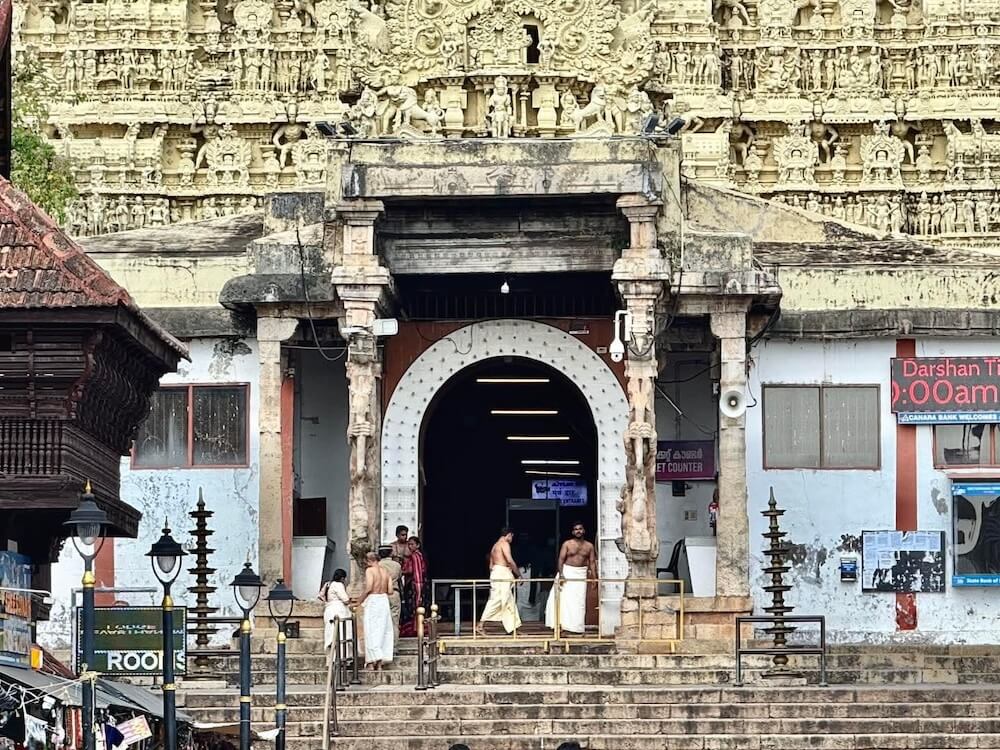 Its main aim was to open all government-controlled temples in Travancore, including the Sree Padmanabhaswamy Temple, to all Hindus without caste discrimination. Following the proclamation, Dalits and other socially disadvantaged communities gained the right to enter the temple and have darshan. During his visit to Thiruvananthapuram in January 1937, Mahatma Gandhi visited the temple and after seeing people of different castes standing together without discrimination, described it as “a miracle of modern times”. He also described Chithira Thirunal Maharaja as a “true Padmanabha Dasa”. The streets inside the fort and the temple premises, which had previously been closed to disadvantaged communities, were opened to all following the proclamation. This marked an important step towards social change against centuries-old caste discrimination in Travancore and became a major turning point in the social history of Kerala.
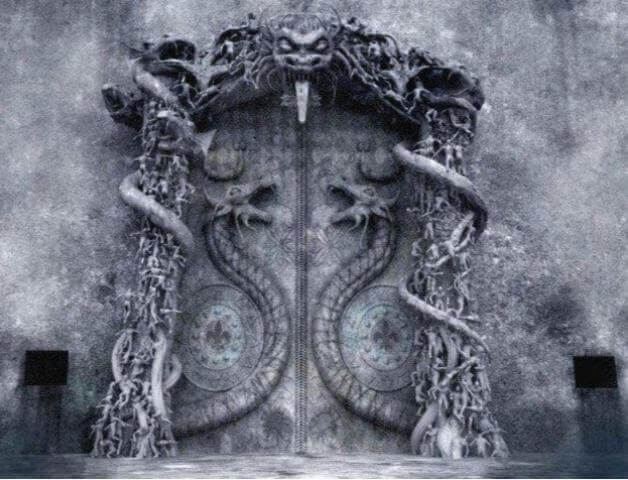
The temple’s ‘B’ Vault, also known as the ‘Bharatakon Chamber’, remains one of the great mysteries in the world. In 2011, following the Supreme Court’s directions, five vaults (A, C, D, E and F) were opened and their valuable contents were inventoried, while the main chamber of Vault B remained unopened. An expert committee appointed by the court found that the vault had three doors. The committee opened the first iron-grill door and the wooden door behind it. However, the third and final door is a massive stone door with no visible lock, keyhole or other latch and the main chamber lies behind it. The belief that Vault B has never been opened in history is not entirely correct. Reports in The Hindu from 1931 state that the front section or antechamber, of Vault B was opened when some of the temple vaults were opened under the supervision of the Travancore rulers. A report by Vinod Rai, who served as the Comptroller and Auditor General of India, also mentions that the antechamber of this vault had been opened several times in the past to take out silver vessels and other items required for temple festivals and special rituals. 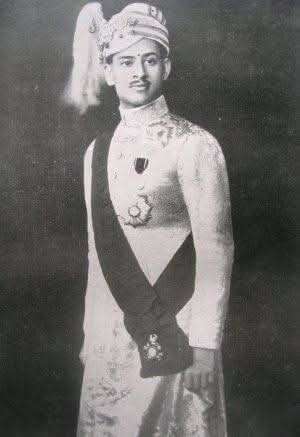 However, the innermost main chamber of Vault B has not been opened in modern times.
The Travancore royal family and devotees believe that opening the main chamber of Vault B would anger the Lord (Divine Wrath) and bring great danger to the country and the royal family. Considering these strong religious beliefs and the temple’s traditional practices, the Supreme Court did not direct that Vault B be forcibly opened. In its final judgment in 2020, the Court directed the temple’s Administrative Committee to consider whether Vault B should be opened and its contents inventoried; it did not directly order the vault to be opened.
The history of the temple is closely linked with Kerala’s history of European involvement and the cultural history of Travancore. After defeating the Dutch at the Battle of Colachel in 1741, Marthanda Varma kept the cannons and weapons captured from the Dutch army near the eastern entrance of the temple as symbols of victory. When the other vaults of the temple were opened in 2011, ancient gold coins from the Roman Empire, Napoleonic France and the East India Company were found. These coins are important historical evidence of Travancore’s centuries-old spice trade with European countries. The reign of the famous musician Swathi Thirunal Maharaja, who ruled Travancore in the 19th century, was an important period in the cultural history of the temple. The famous poet Ramapurathu Warrier first performed ‘Kuchelavritham Vanchippattu’ in the presence of Maharaja Marthanda Varma at the Padmatheertham pond near the temple. 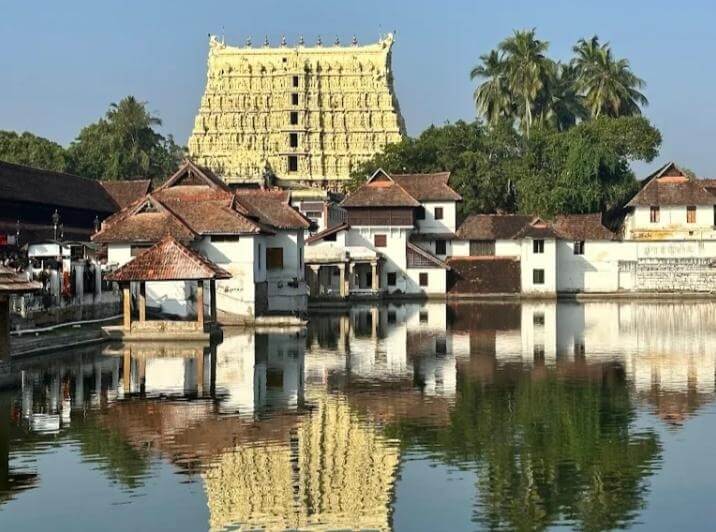 Several Carnatic music compositions and Navarathri Kritis composed by Swathi Thirunal in praise of Lord Padmanabhaswamy continue to be performed as part of the temple’s important traditions. The 56-day ‘Murajapam’, started by Maharaja Marthanda Varma in 1750, is held once every six years. The historic ‘Lakshadeepam’ festival takes place on the final day of Murajapam, when one lakh oil lamps are lit around the temple.
Ananthapura Lake Temple near Kumbla in Kasaragod district has a strong spiritual and legendary connection with the Sree Padmanabhaswamy Temple in Thiruvananthapuram. Ananthapura Lake Temple is regarded as the original abode of Lord Padmanabhaswamy. 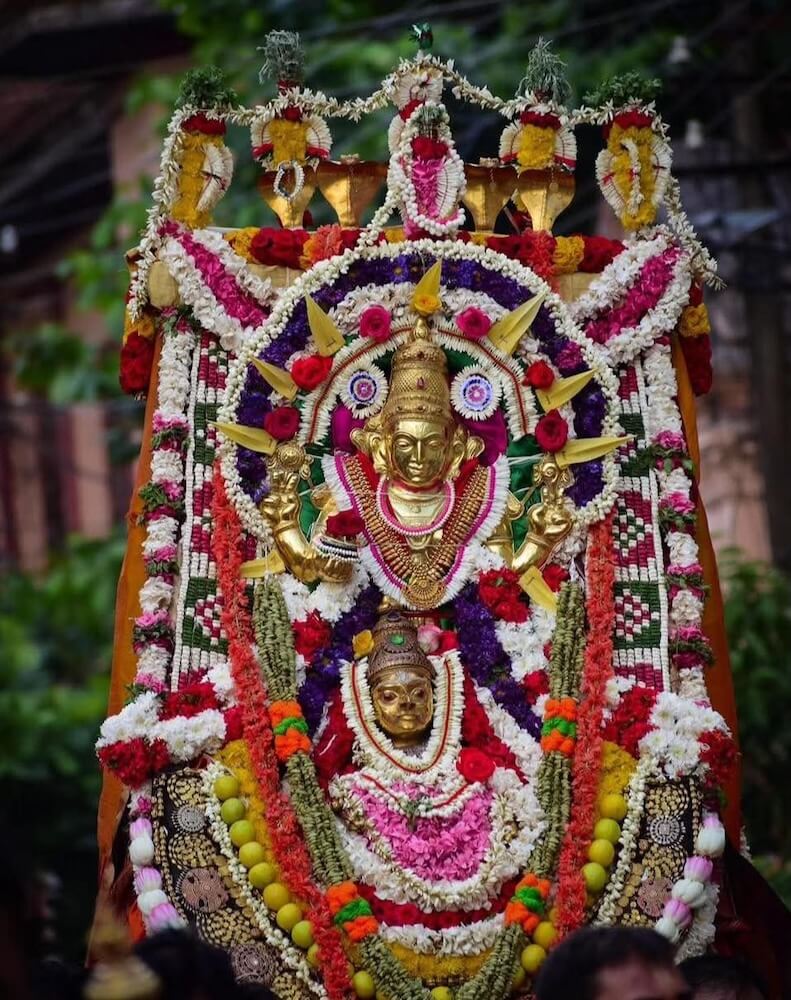 According to legend, Lord Vishnu first appeared before Vilwamangalam Swamiyar in the form of a young boy on the banks of Ananthapura Lake. The boy’s playful behaviour made it difficult for the Swamiyar to concentrate on his prayers, but he later allowed the boy to stay with him. One day, while the Swamiyar was performing his prayers, the boy touched and disturbed the offerings. Angered by this, the Swamiyar pushed him away with his left hand. The boy then disappeared, saying, “If you want to see me again, come to Ananthan Kadu.” Realising that the boy was Lord Krishna, whom he worshipped, the Swamiyar regretted his action and travelled south in search of the Lord. When he reached Ananthan Kadu in the present-day Thiruvananthapuram area, a large Ilanji tree fell to the ground. At that moment, Lord Vishnu appeared before him in the Anantha Sayana form. The Lord’s form was immense, with his head at Thiruvallam in the north, his feet at Thrippappoor in the south and his middle section at Thiruvananthapuram. As the Swamiyar could not see the entire form at once, he prayed to the Lord to reduce his form to three times the length of his walking staff. The Lord accepted his prayer and reduced his form. As the Swamiyar had nothing with him to offer the Lord, he picked a mango from a nearby tree, placed it in an earthen pot traditionally used to keep pickled mango and offered it to the Lord. As a reminder of this legend,
 Kannimanga is still offered to the Lord in an earthen pot during the Ucha Pooja. Vilwamangalam Swamiyar then established a small temple at the site and began worshipping the Lord there.
Several beliefs and legends are associated with the innermost secret chamber of Vault B. It is believed that two large Naga figures are carved on the stone door of the chamber and that the door has no ordinary lock or keyhole. These Naga figures are linked to the belief that Naga deities guard the vault. According to legend, the door is sealed by a powerful form of mantric practice known as ‘Nagapasham’ or ‘Nagabandham’ and cannot be opened using modern technology. It is also believed that the door can open by itself only when a highly accomplished priest or spiritual practitioner chants the ‘Garuda Mantra’ with perfect pronunciation and intonation. 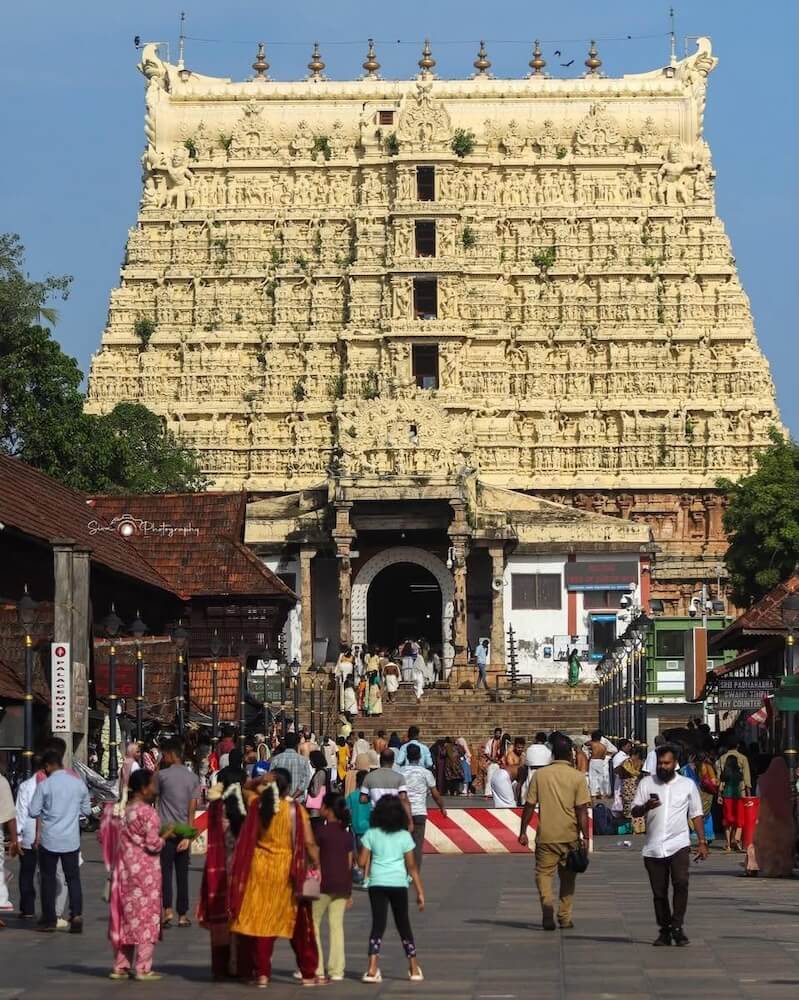 Devotees believe that the door cannot be opened because no one with such spiritual powers is currently alive. There are also various stories that a large natural underground tunnel lies inside the chamber and that large living Nagas guard the treasure. Some beliefs also hold that a sound like the roar of the sea or the hissing of Nagas can be heard when one places an ear near the chamber’s door.
Some submissions made before the Supreme Court in the early 21st century and popular books mention an old story associated with Vault B. According to the story, around 1908, during the Travancore rule, some people tried to obtain the treasure inside the vault. When they attempted to open the door, thousands of poisonous snakes appeared and drove them away and some of them are said to have died after being bitten by Nagas. There is also a strong belief that opening Vault B would cause Divine Wrath. According to this belief, as the vault is connected with the supreme authority of Lord Padmanabhaswamy, any attempt to force it open could bring major natural disasters and destruction not only to the Travancore royal family and the temple but also to the whole country. Some people also associate the sudden death of T. P. Sundararajan, who led the legal proceedings to open and inspect the temple vaults in 2011, with Divine Wrath.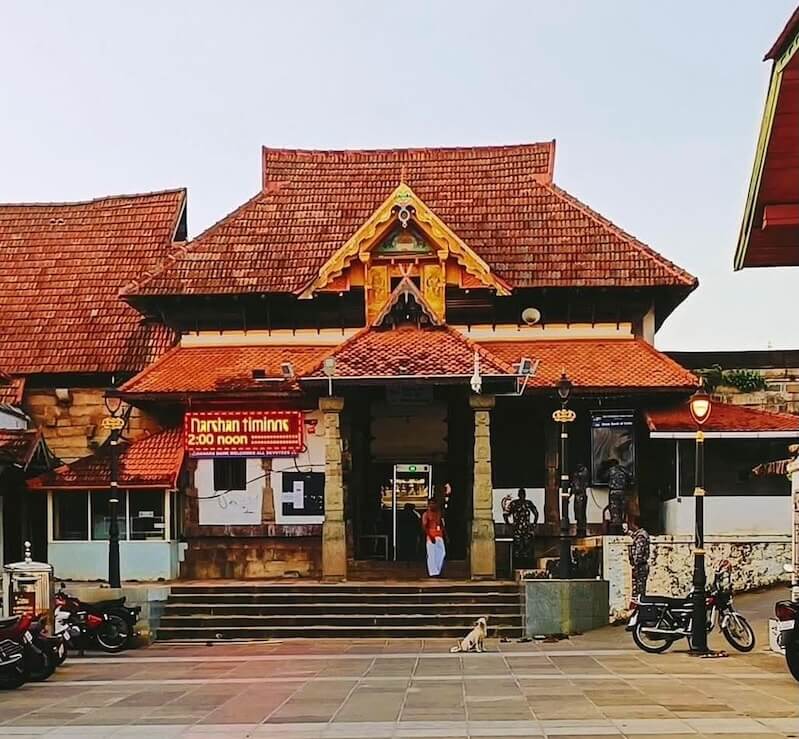
Thiruvambadi Sri Krishna is one of the main other deities in the temple complex. This shrine is believed to be older than the Padmanabhaswamy shrine. According to legend, this was the Krishna idol worshipped by the Yadavas in Dwarka, Gujarat. Before Dwarka sank into the sea, the Yadavas travelled south with the idol and installed it at Ambadi in the present-day Kanniyakumari district under the protection of the Venad kings. The idol was later brought to Thiruvananthapuram and installed separately inside the Sree Padmanabhaswamy Temple. In connection with this tradition, the priests at this shrine are Embranthis, Tulu Brahmins with Gujarati traditions. The main deity of the temple, Padmanabhaswamy, reclines in the Anantha Sayana form on Anantha Naga, the five-headed Naga king. According to legend, a large tunnel extends from directly beneath the sanctum to the underworld. It is believed that Ananthan, the Naga king, uses this tunnel to reach the Lord directly and guard him. 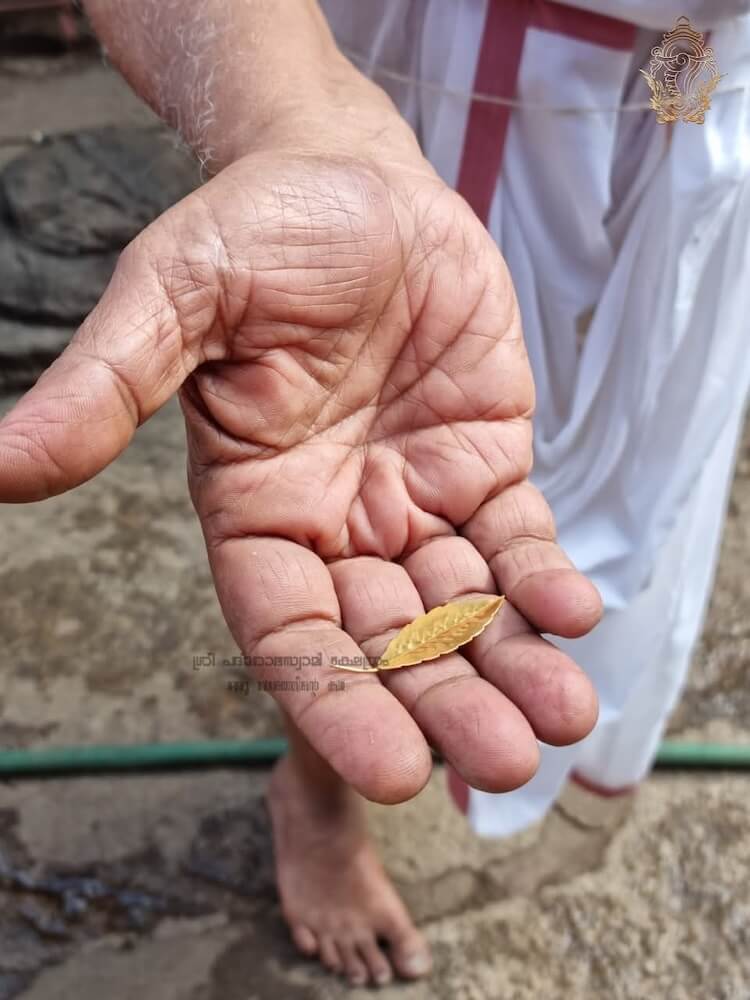 Another legend says that Vault B is the entrance to this underground tunnel, which is why a sound like the roar of the sea can be heard there.
Continuing the tradition of Vilwamangalam Swamiyar offering Kannimanga to the Lord in an earthen pot, a Travancore ruler ordered that the offering should instead be made in a beautiful golden pot. However, on the very day the offering was made in the golden pot, the king suffered severe stomach pain and discomfort. He then had a dream in which he was told that the Lord preferred the old earthen pot used by the devotee. The golden pot was therefore replaced and Kannimanga was again offered in an earthen pot. According to the legend, the king’s illness then disappeared. The large granite corridor around the temple, known as the Sreevelippura, has more than 300 granite pillars. These pillars feature carvings of Deepalakshmis, women holding lamps in their hands. An old popular belief says that after the temple closes at night, these Deepalakshmi sculptures come to life and perform worship by going around the Lord. The unusually lifelike appearance of the sculptures is believed to be the reason behind this tradition.
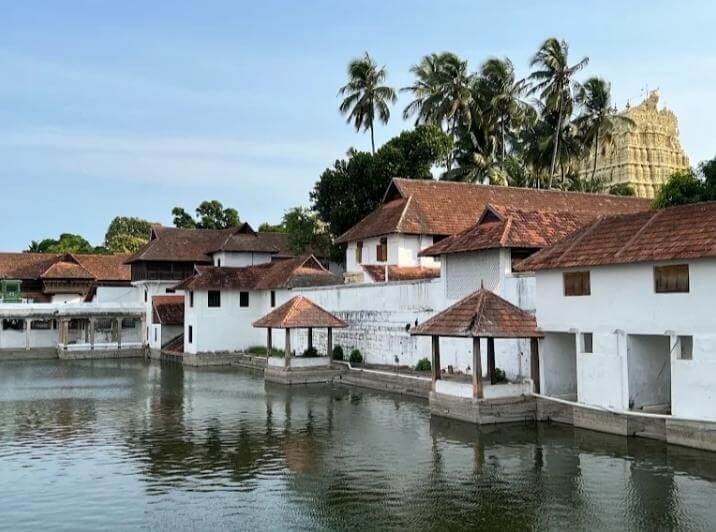
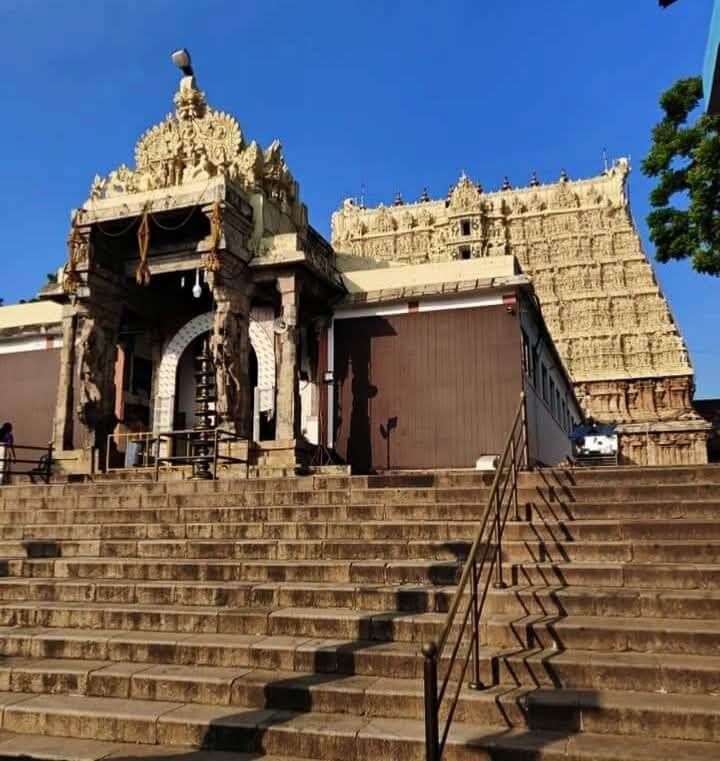
From the main road at the eastern entrance, the grandeur of the Sree Padmanabhaswamy Temple, located in the heart of the city with a palace-like appearance, can be clearly seen. The most striking feature visible from a distance is the seven-storey eastern Rajagopuram.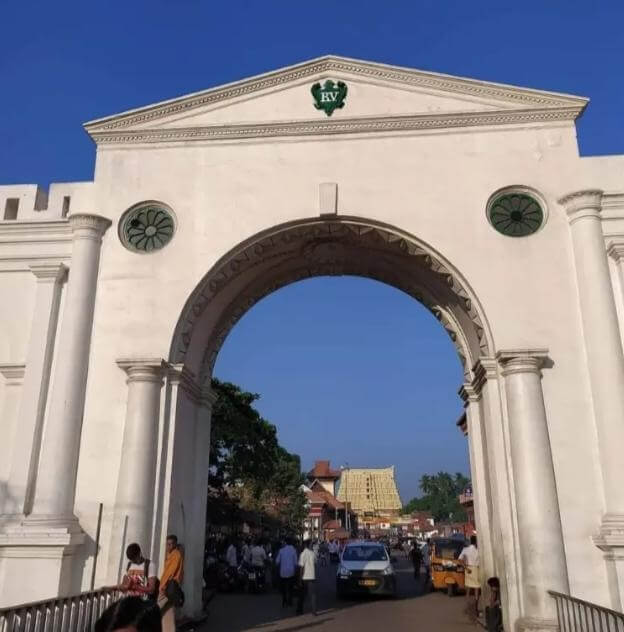 Built in the Tamil Dravidian style using granite and lime, the gopuram has hundreds of sculptures depicting figures from Hindu mythology. On the days of the equinox, which occur twice a year, the rays of the setting sun pass through the windows on each level of the gopuram, creating a distinctive view. Directly in front of the gopuram is the large Padmatheertham pond, where the reflection of the Rajagopuram can be seen in the calm water, creating a beautiful view from the road. The old-style Agraharam streets inside the fort and the massive granite walls surrounding the temple continue to preserve the historic atmosphere of the Travancore royal period.
When entering the temple, the first structure seen is the large Sreevelippura (The Pillared Corridor), with 365 granite pillars. These pillars represent the 365 days of a year. Each pillar has a beautiful carving of a Deepalakshmi, a woman holding a lamp and each sculpture has a different form. As devotees walk along the heavy granite-paved path through the Sreevelippura, the large gold-covered flagstaff or Dhwajastambha, can be seen in front of the main entrance.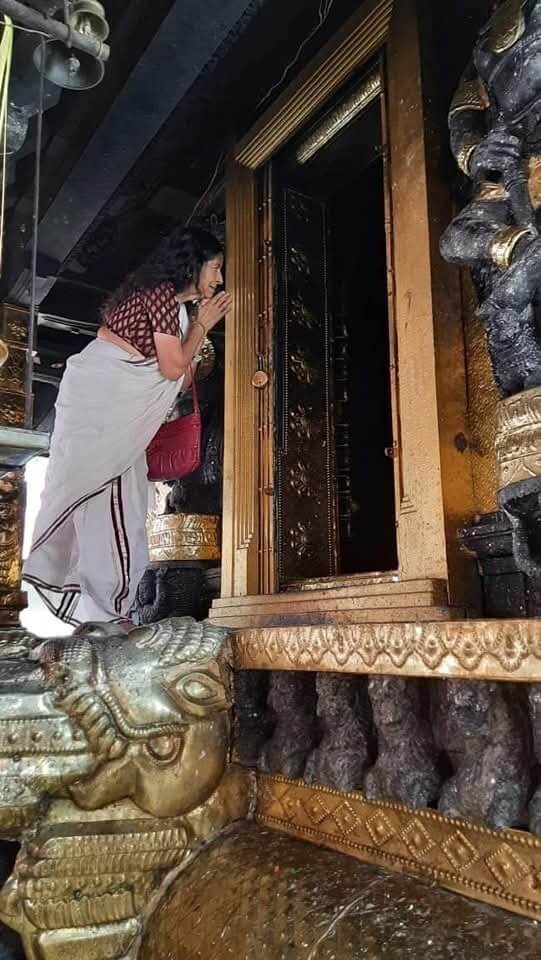 Further ahead, directly in front of the sanctum, is the Ottakkal Mandapam, a large mandapam made from a single piece of granite. The artistic carvings and architectural workmanship of this single-stone mandapam are among the main attractions of the temple.
Although the large gopuram outside the temple is built in the Tamil style, the main Sreekovil is constructed in the traditional Kerala temple architectural style. The square, two-storey Sreekovil has a granite foundation, heavy wooden work above it and a roof covered with copper sheets. Three golden stupikas can be seen above the roof. The outer walls of the Sreekovil feature Kerala murals painted with natural colours, depicting various stories from the life and deeds of Lord Vishnu. One of the most distinctive features of the Sreekovil is the three special viewing doors in front of the sanctum. Because of the size of the idol, the complete form of the Lord cannot be seen through a single door. Devotees can see the full form of the Lord only by viewing it through all three doors.
During the reign of Marthanda Varma, the idol was reconstructed using Kadusharkara Yogam, a special mixture made with more than 70 Ayurvedic ingredients, clay, sandalwood, natural gums and other natural materials. It also contains 12,008 Salagramas brought from the Gandaki River in Nepal. As the idol is made using Kadusharkara Yogam, regular abhishekam is not performed. The approximately 18-foot-long idol shows Lord Mahavishnu reclining in the Anantha Sayana form on Anantha Naga, the five-headed Naga king. Through the first viewing door, devotees can see the Lord’s head, face, crown and right hand. The right hand is shown offering flowers over the Shiva Lingam below, representing the Harihara concept. Through the second door, devotees can see Brahma, the creator, seated on a lotus flower growing from a lotus stem rising from the Lord’s navel. 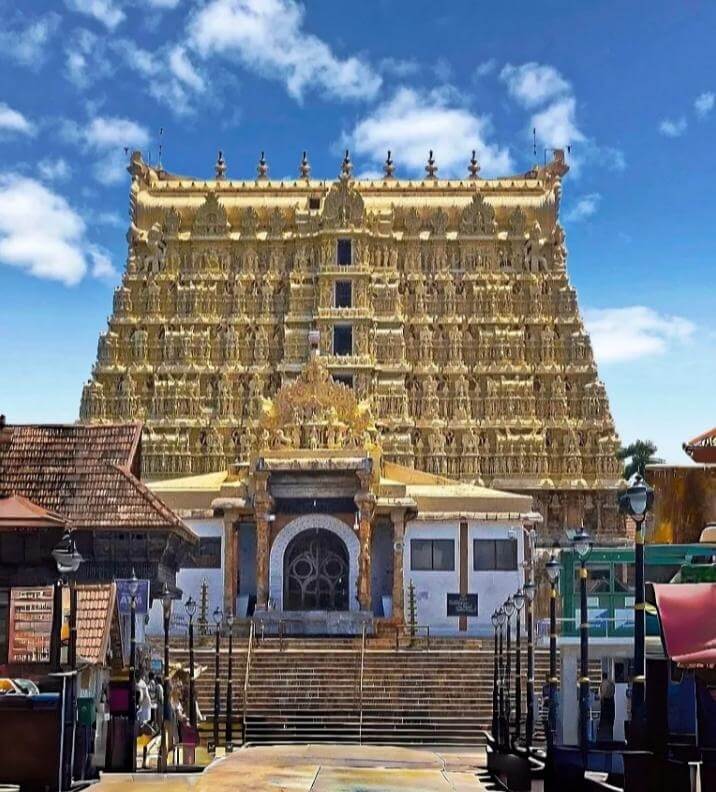 Through the third door, devotees can see the Lord’s feet, along with the figures of Bhumidevi and Lakshmidevi seated nearby as guardians.
Thiruvambadi Sri Krishna Swamy is the most important among the other deities in the temple. This shrine has an independent existence from the main temple and is located at the north-west corner, outside the inner enclosure wall. Lord Krishna in the Parthasarathi form is the main deity here. As it is considered a separate temple, it has its own Dhwajastambha. The shrine of Thekkedathu Narasimha Swamy, a very fierce form of Narasimha, is located inside the Chuttambalam on the southern side of the main Sreekovil. Devotees pray here before or after having darshan of Padmanabhaswamy. The shrine of Pathala Narasimha Swamy is located in a lower, underground-like area near the northern entrance. Behind the main Sreekovil, on the northern side, are the shrines of Sri Rama, Lakshmana, Sita and Hanuman. Small shrines of Sage Vyasa and Ashwatthama can be seen on the eastern side of the main Chuttambalam. Near the Sreekovil of Padmanabhaswamy is the idol of Vishvaksena, 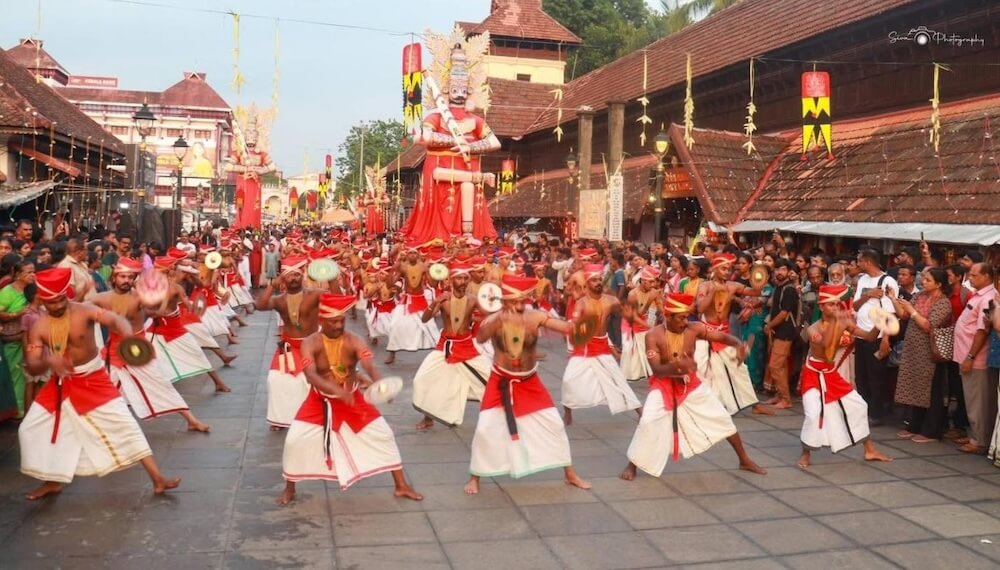 the bearer of the Lord’s Nirmalya and commander of his divine forces. Vishvaksena Pooja is performed before the main temple rituals begin. The shrine of Agrashala Ganapathi is located in the Agrashala, near the Agraharam and there is also a Ganapathi shrine inside the Chuttambalam. The Sreekovil of Sastha or Ayyappan, is located at the south-west corner, outside the temple’s large enclosure wall.
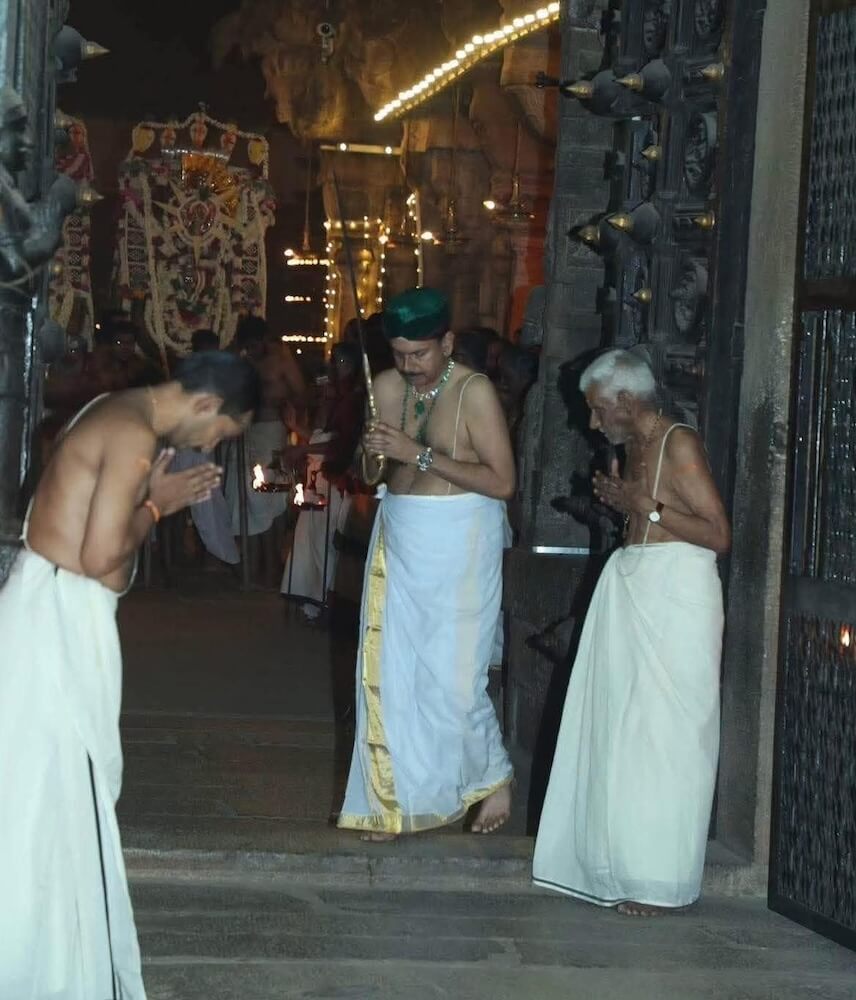
The temple hosts two major ten-day Thiruvutsavams every year. The Alpashi Festival is held in the month of Thulam (October–November), while the Painkuni Festival is held in the month of Meenam (March–April).  On the ninth night of both festivals, the Pallivetta ceremony is held, followed by the historic Aarattu ceremony on the tenth day. During the Aarattu procession, the Travancore King traditionally walks barefoot, carrying a ceremonial sword and accompanying the processional idols of the Lord. The Aarattu takes place at Shankhumukham Beach in Thiruvananthapuram. As the Aarattu procession passes through the runway of Thiruvananthapuram International Airport, flight operations at the airport are temporarily suspended during the ceremony. One of the temple’s most important festivals is the Lakshadeepam Mahotsavam, held once every six years. Lakshadeepam takes place on the concluding day of the 56-day Murajapam. On this day, one lakh ghee lamps are lit on the granite walls and pillars inside and outside the temple. Vishukkani Darshan, Sri Ramanavami, Vinayaka Chathurthi and Ashtami Rohini are also important special days.
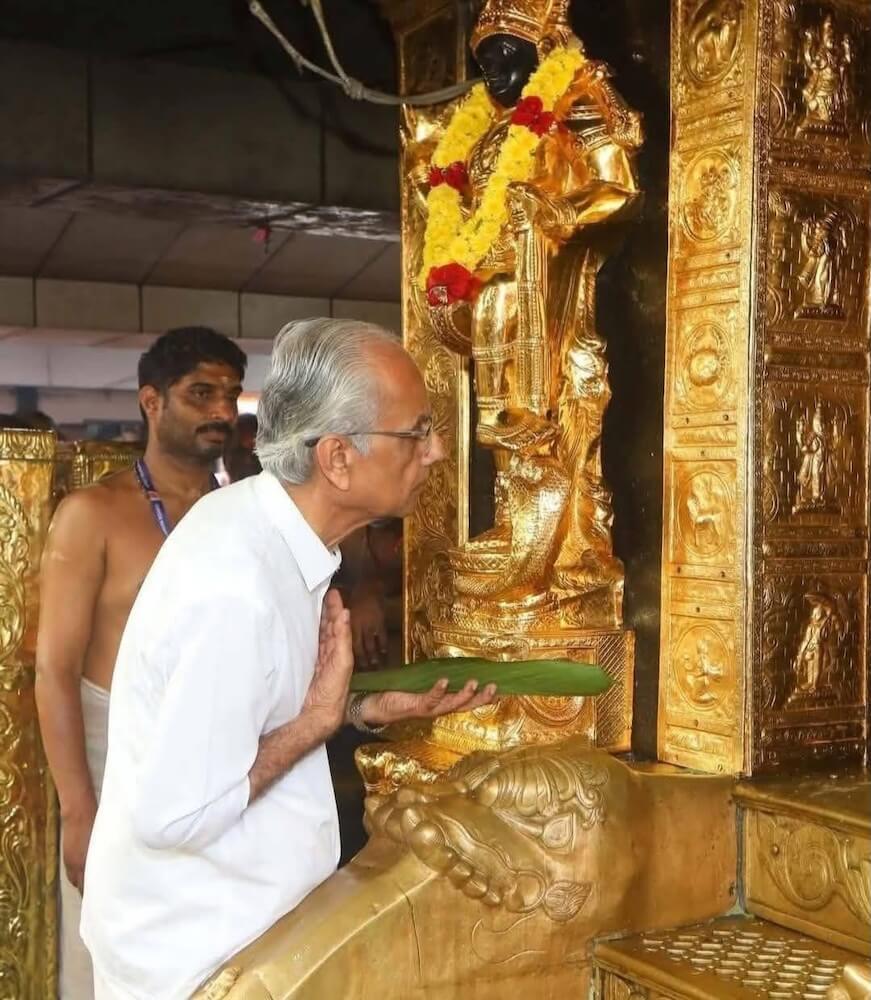 Vishukkani Darshan on the first day of Medam is especially important. Special poojas are performed at the shrines of Sri Rama and Ganapathi on Sri Ramanavami and Vinayaka Chathurthi. On Ashtami Rohini in the month of Chingam, special poojas and offerings are made at the shrine of Thiruvambadi Sri Krishna Swamy. The Navarathri music festival, which has continued since the time of Swathi Thirunal, is held at the Navarathri Mandapam near the temple and is one of its important cultural features.
One of the most popular offerings at the temple is Palpayasam. Prepared in the Agrashala using thick milk, raw rice and sugar in a special proportion, Palpayasam is offered to the Lord. Otta Unniyappam, in which one large Unniyappam is offered, is also an important offering. Devotees perform this offering to remove obstacles and fulfil their wishes. Kannimanga Nivedyam, associated with the legend of Vilwamangalam Swamiyar, is an important offering made during the Ucha Pooja. As part of the tradition, Kannimanga is still offered to the Lord in an earthen pot. Thulabharam, in which items equal to a person’s body weight are offered to the Lord, is another important offering.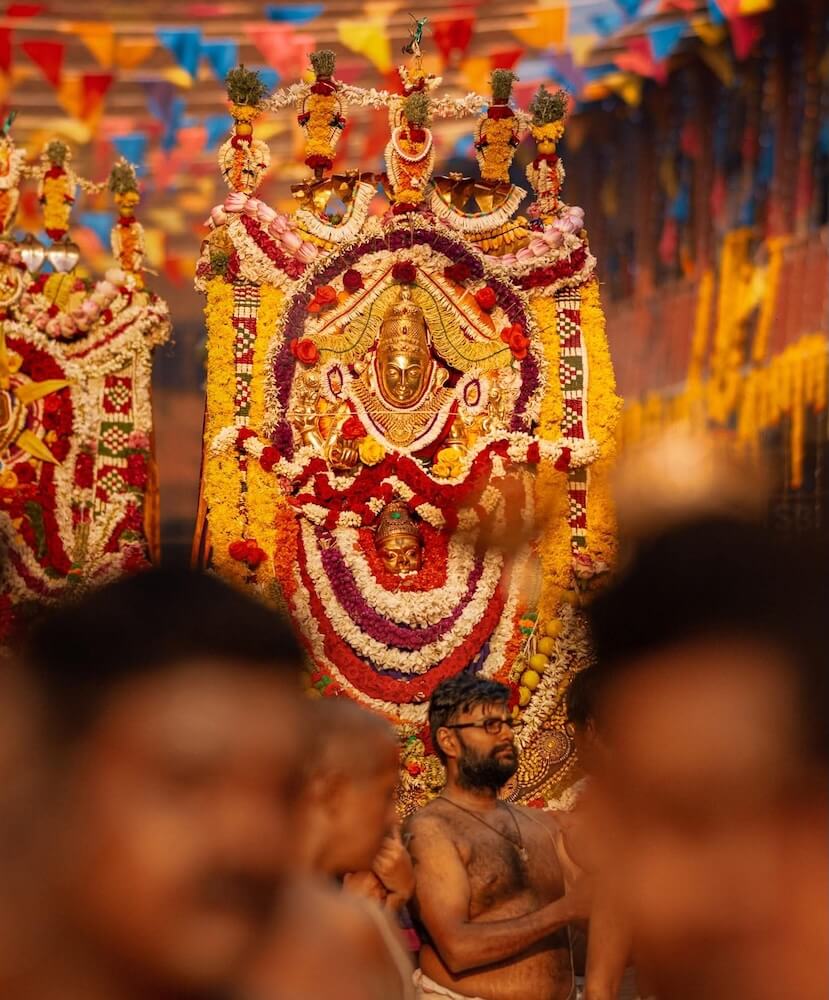 Rice bran, sugar, sugar candy, turmeric, toys, gold and silver coins are among the items used for Thulabharam. At the shrine of Thiruvambadi Sri Krishna Swamy, butter and Palpayasam are important offerings. Panakam, prepared with jaggery, dry ginger and cardamom, is offered to Thekkedathu Narasimha Swamy. Other important archana include Sahasranamarchana, in which Tulasi leaves are offered while reciting the Lord’s thousand names and Purushasooktarchana, which is performed according to traditional mantric practice. Offerings can be booked in advance through the counters inside the temple or through the temple’s official website.
The temple’s darshan timings are arranged in several sessions each day. In the morning, Nirmalya Darshan and the first poojas are held from 03:30 AM to 04:45 AM. Darshan is then available from 06:30 AM to 07:00 AM, 08:30 AM to 10:00 AM, 10:30 AM to 11:10 AM and 11:45 AM to 12:00 PM. In the evening, darshan is available from 05:00 PM to 06:15 PM, 06:45 PM to 07:20 PM and 07:45 PM to 08:30 PM. These timings may change during festivals such as Alpashi and Painkuni, the Mandalam period, Navarathri, lunar eclipses and solar eclipses and on other special days. As the idol of Padmanabhaswamy is made using Kadusharkara Yogam, 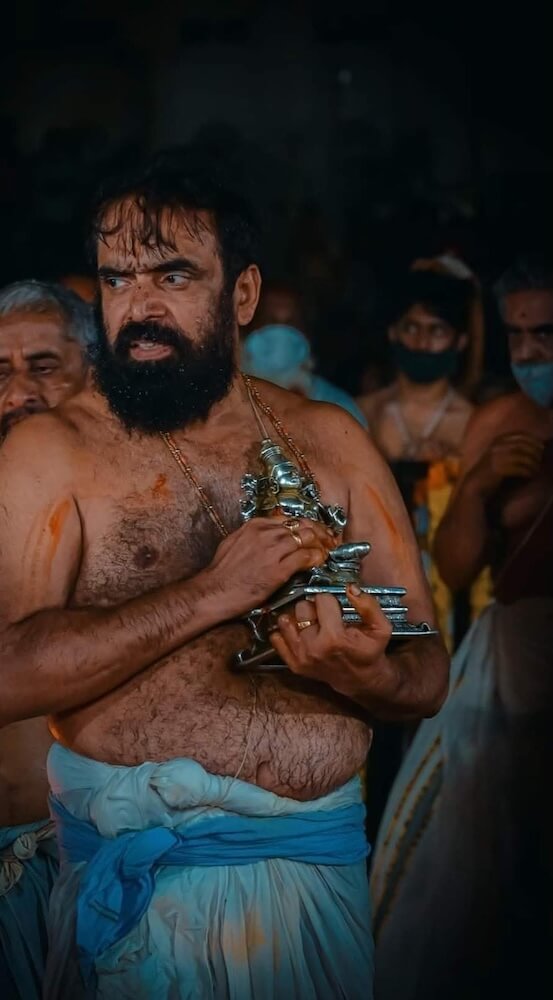 direct abhishekam is not performed; instead, poojas are mainly conducted according to Tantric traditions. The day’s rituals begin with Nirmalya Darshan at 03:30 AM, followed by Usha Pooja from 05:00 AM to 05:30 AM, Ethirettu Pooja at 06:00 AM, Panthiradi Pooja at 08:15 AM and Ucha Pooja from 11:15 AM to 11:45 AM. During Ucha Pooja, Kannimanga in an earthen pot and Palpayasam are offered to the Lord. Deepaaradhana is held at 06:30 PM, followed by Athazha Pooja at 07:30 PM. Athazha Pooja is the final major offering ritual of the day.
The Sree Padmanabhaswamy Temple has strict dress and entry rules. Men must wear a mundu and upper cloth to enter the temple; shirts, vests and T-shirts are not allowed inside. Women should wear a sari, mundum neriyathum or a skirt and blouse. Those arriving in modern clothing such as jeans, leggings, palazzo trousers, churidar or trousers can hire or buy a mundu outside the temple or at the entrance pavilion and wrap it over their clothes to enter. According to traditional practice, only Hindu devotees are allowed to enter the temple; non-Hindus are required to submit a special declaration for entry. Smartphones, cameras, smart watches, headphones and other electronic devices, as well as large bags, purses and leather belts, are not allowed inside the temple enclosure. A cloakroom facility is available at the eastern entrance for keeping these items. Footwear must be left at the designated counters outside the temple. As part of the temple’s security arrangements, checks including metal detector screening are carried out before entry. Photography and video recording are restricted inside the temple. Special darshan facilities and advance booking options are available to help devotees avoid crowds and have darshan more quickly.
Key highlight :-
- “Located in the heart of Thiruvananthapuram city.”
- Located 12 km from Kovalam and 16 km from Kazhakkoottam.
- The nearest railway station is Thampanoor Railway Station, located 1.5 km away.
- 4 km away from Trivandrum International Airport.
- KSRTC, TNSTC and local bus facilities are available to the temple from all major cities.
- Paid parking facilities are available near the temple.
- Accommodation and food facilities are available near the temple.
- Contact number +91 4712450233.
श्री पद्मनाभ स्वामी मंदिर
पश्चिम नाडा, पझावंगडी, जिला। तिरुवनंतपुरम.
मंदिरे
Temples
मंदिर
મંદિરો
கோவில்கள்
దేవాలయాలు
ക്ഷേത്രങ്ങൾ
ದೇವಾಲಯಗಳು
মন্দিরসমূহ
ਮੰਦਿਰ
-
पळवंगडी श्री महागणपती मंदिर पूर्व किल्ला, जि. तिरुवनंतपुरम
अधिक माहितीPazhavangadi Sree Maha Ganapathy Temple East Fort, Dist. Thiruvananthapuram
View Detailsपझावंगडी श्री महा गणपति मंदिर पूर्वी किला, जिला. तिरुवनंतपुरम
विवरण देखेंPazhavangadi Sree Maha Ganapathy Temple East Fort, Dist. Thiruvananthapuram
વિગત જુઓPazhavangadi Sree Maha Ganapathy Temple East Fort, Dist. Thiruvananthapuram
விவரங்களைக் காண்கPazhavangadi Sree Maha Ganapathy Temple East Fort, Dist. Thiruvananthapuram
వివరాలను చూడండిPazhavangadi Sree Maha Ganapathy Temple East Fort, Dist. Thiruvananthapuram
വിശദാംശങ്ങൾ കാണുകPazhavangadi Sree Maha Ganapathy Temple East Fort, Dist. Thiruvananthapuram
ವಿವರಗಳನ್ನು ವೀಕ್ಷಿಸಿPazhavangadi Sree Maha Ganapathy Temple East Fort, Dist. Thiruvananthapuram
বিস্তারিত দেখুনPazhavangadi Sree Maha Ganapathy Temple East Fort, Dist. Thiruvananthapuram
ਵੇਰਵੇ ਦੇਖੋ -
श्री परशुराम स्वामी मंदिर तिरुवल्लम, जि. तिरुवनंतपुरम
अधिक माहितीSree Parasurama Swamy Temple Thiruvallam, Dist. Thiruvananthapuram
View Detailsश्रीपरशुराम स्वामी मंदिर तिरुवल्लम, जिला. तिरुवनंतपुरम
विवरण देखेंSree Parasurama Swamy Temple Thiruvallam, Dist. Thiruvananthapuram
વિગત જુઓSree Parasurama Swamy Temple Thiruvallam, Dist. Thiruvananthapuram
விவரங்களைக் காண்கSree Parasurama Swamy Temple Thiruvallam, Dist. Thiruvananthapuram
వివరాలను చూడండిSree Parasurama Swamy Temple Thiruvallam, Dist. Thiruvananthapuram
വിശദാംശങ്ങൾ കാണുകSree Parasurama Swamy Temple Thiruvallam, Dist. Thiruvananthapuram
ವಿವರಗಳನ್ನು ವೀಕ್ಷಿಸಿSree Parasurama Swamy Temple Thiruvallam, Dist. Thiruvananthapuram
বিস্তারিত দেখুনSree Parasurama Swamy Temple Thiruvallam, Dist. Thiruvananthapuram
ਵੇਰਵੇ ਦੇਖੋ -
वेल्लमकुलथला श्रीभागवती मंदिर वेंपाकल, नेयट्टिनकारा, जि. तिरुवनंतपुरम.
अधिक माहितीVellamkulathala Sree Bhagavathy Temple Venpakal, Neyyattinkara, Dist. Thiruvananthapuram.
View Detailsवेल्लमकुलथला श्री भगवती मंदिर वेनपाकल, नेय्याट्टिनकारा, जिला। तिरुवनंतपुरम.
विवरण देखेंVellamkulathala Sree Bhagavathy Temple Venpakal, Neyyattinkara, Dist. Thiruvananthapuram.
વિગત જુઓVellamkulathala Sree Bhagavathy Temple Venpakal, Neyyattinkara, Dist. Thiruvananthapuram.
விவரங்களைக் காண்கVellamkulathala Sree Bhagavathy Temple Venpakal, Neyyattinkara, Dist. Thiruvananthapuram.
వివరాలను చూడండిVellamkulathala Sree Bhagavathy Temple Venpakal, Neyyattinkara, Dist. Thiruvananthapuram.
വിശദാംശങ്ങൾ കാണുകVellamkulathala Sree Bhagavathy Temple Venpakal, Neyyattinkara, Dist. Thiruvananthapuram.
ವಿವರಗಳನ್ನು ವೀಕ್ಷಿಸಿVellamkulathala Sree Bhagavathy Temple Venpakal, Neyyattinkara, Dist. Thiruvananthapuram.
বিস্তারিত দেখুনVellamkulathala Sree Bhagavathy Temple Venpakal, Neyyattinkara, Dist. Thiruvananthapuram.
ਵੇਰਵੇ ਦੇਖੋ